
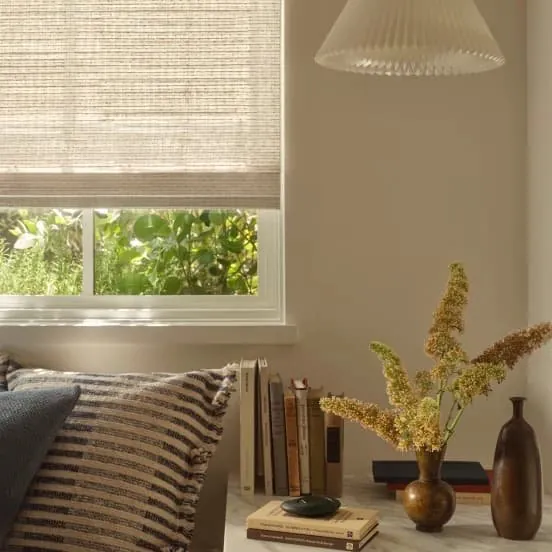
Summer cottages that became year-round homes
A lot of houses in Onset and around Swifts Beach began life as summer cottages, built for a few warm months by the water. Over the years most of them have been insulated, extended and turned into homes that are lived in every week of the year. The original windows usually stayed, though, and they are small: modest openings sized for a cottage, not a family house. Fitting roman shades in Wareham, MA, to those little openings, close to the shore and the salt, is a job of its own.
Along Main Street the village housing is older and more traditional, with proper double-hung sash and painted trim. Inland, the newer colonials have standard modern windows that are straightforward to dress.
So the town gives us three kinds of window: small and salty, old and traditional, new and regular. The right folded shade differs for each, and we plan them one house at a time.
Roman shades in Wareham for each kind of house
Hunter Douglas folded shades come from two families, Carole Fabrics and Vignette, in flat and folded styles. Here is where each tends to fit in town.
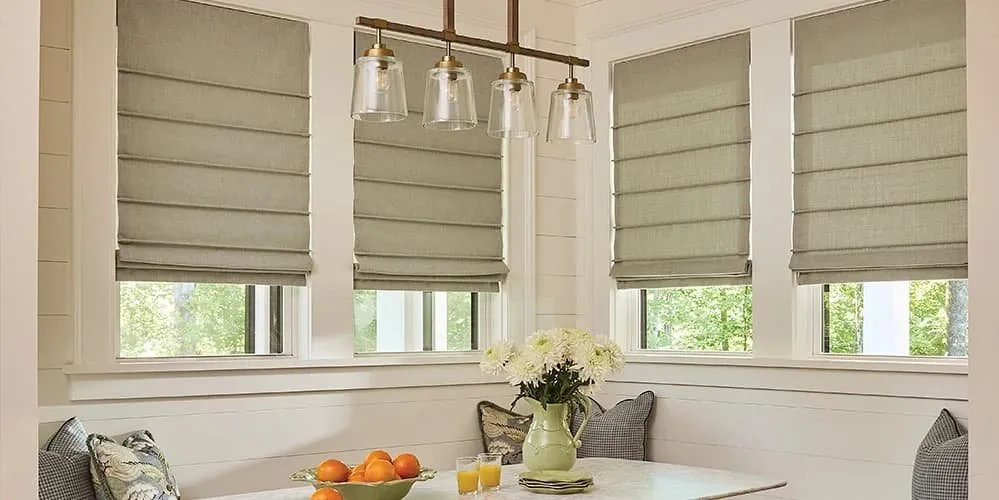
Converted shore cottages
Small original openings that need a compact stack. Vignette or a light flat fold, mounted inside, keeps the glass clear.
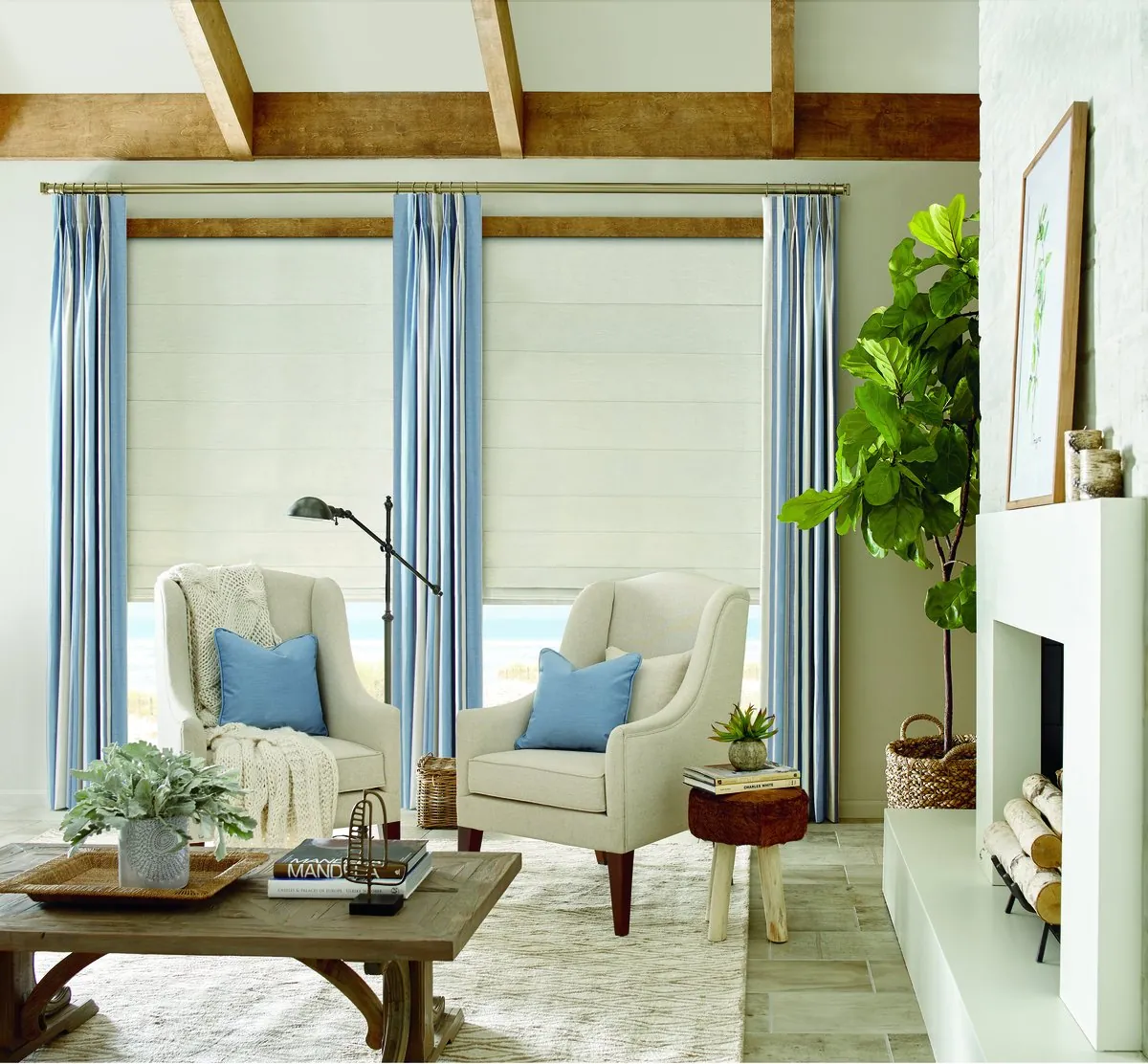
Village houses on Main Street
Traditional sash and painted casings. A tailored Carole Fabrics shade inside the frame leaves the old woodwork on show.
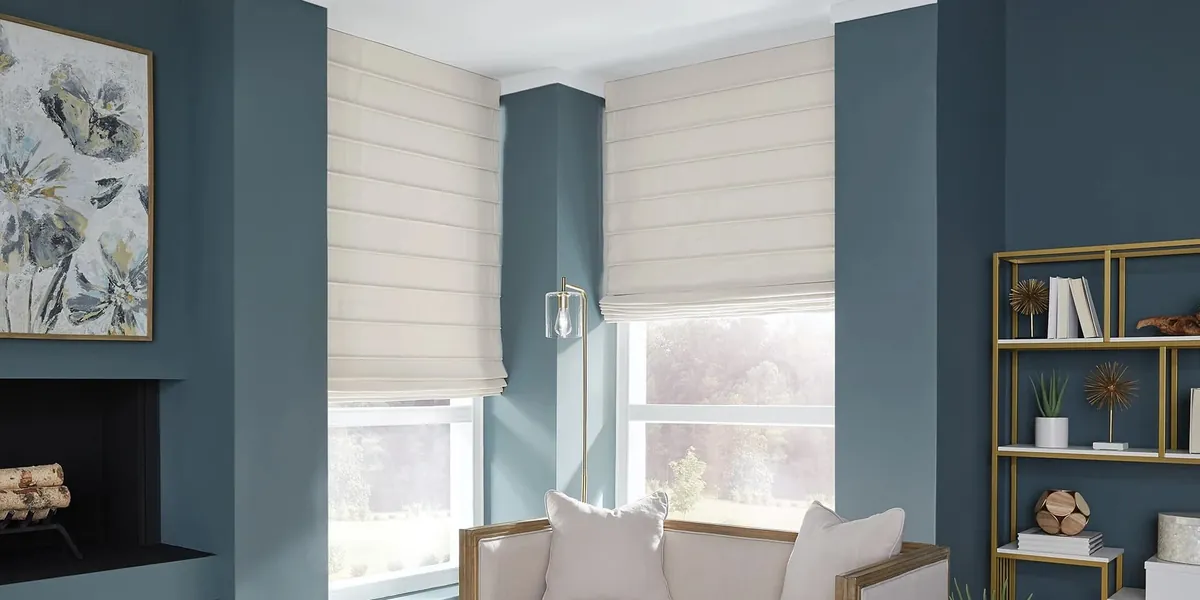
Newer colonials inland
Matching modern windows on two floors. One lining color on every street-side shade keeps the front of the house tidy.
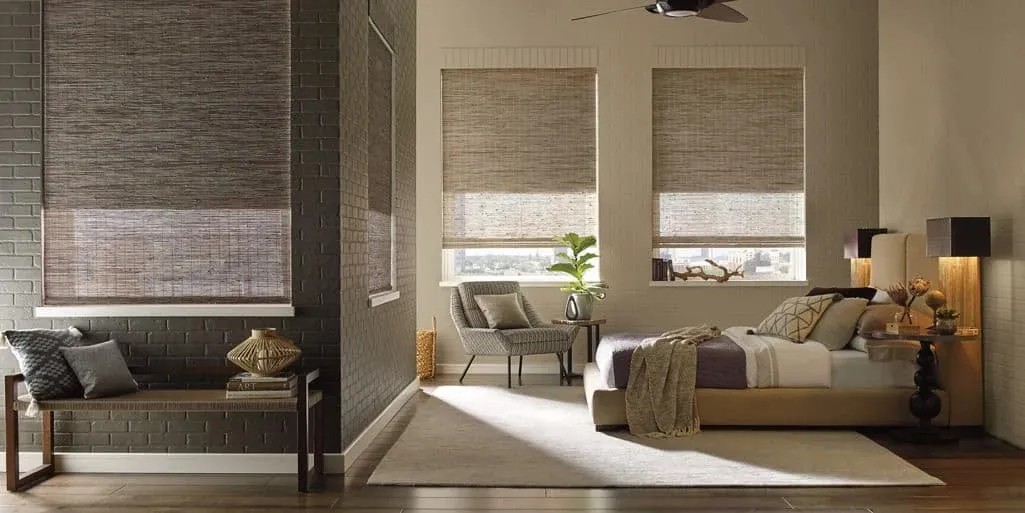
Bedrooms for sleeping in
A room-darkening lining behind a cloth you like, for a dark room on summer mornings.
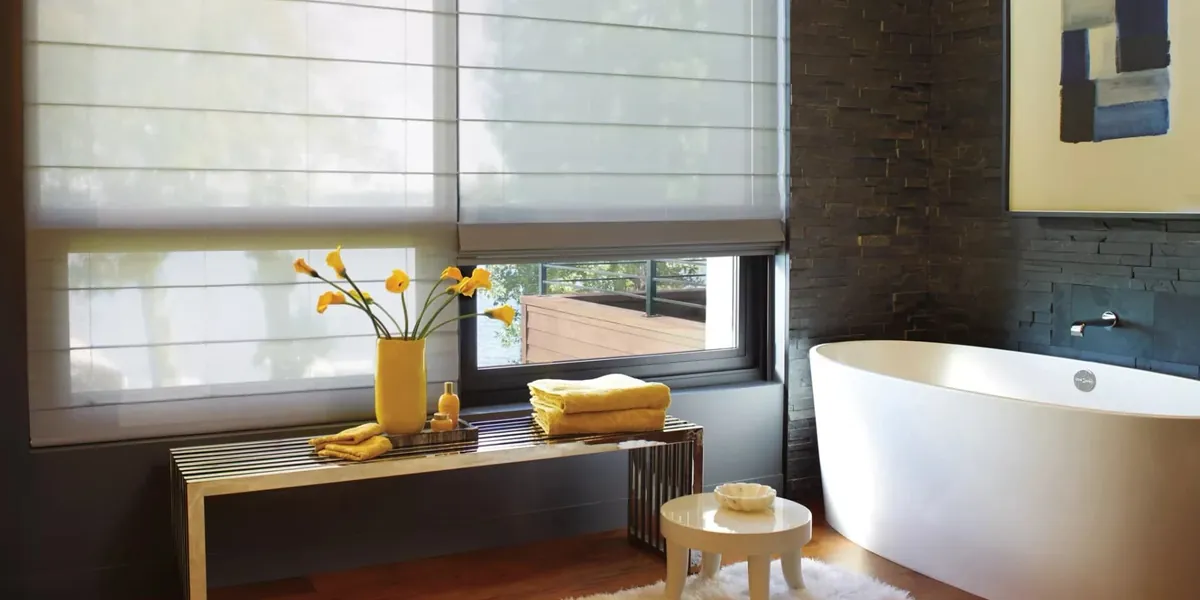
Cottage bathrooms
Cottages sit close together. A sheer or light-filtering fabric keeps privacy and daylight both.

Help pulling a room together
Our interior design consultations cover cloth, color and how the shades sit with the rest of the room.
The small openings in a converted cottage
When a summer cottage becomes a year-round house, the windows are usually the last thing to change. Many converted cottages in Onset and near Swifts Beach still have their original openings: short, narrow, sometimes set high in the wall, and often in three or four different sizes around the house where rooms were added on.
A folded shade suits these windows well. It keeps a small room soft and lived-in, and it fits inside a little frame where a bulkier covering would crowd it. But a small opening leaves a shade very little room to work.
The main issue is the stack. A sewn shade bunches its pleats near the head of the window as it rises, and on a short window those folds can cover a large share of the glass. In a cottage room that does not get much light to begin with, that matters. There are three good ways around it:
- Choose Vignette. Its cloth winds out of sight rather than bunching, so the glass is nearly all open when it is up.
- Choose a lighter cloth. An unlined linen or cotton folds into a much smaller stack than a heavy lined fabric.
- Mount above the window. If there is wall above the frame, a shade fixed there can rise clear of the glass entirely.
The other issue is depth. Cottage walls were often thin to begin with, and a conversion may have added interior trim, storm windows or new jambs that change how much room there is inside the frame. We measure each opening, top to bottom and side to side, before deciding on an inside or outside mount.
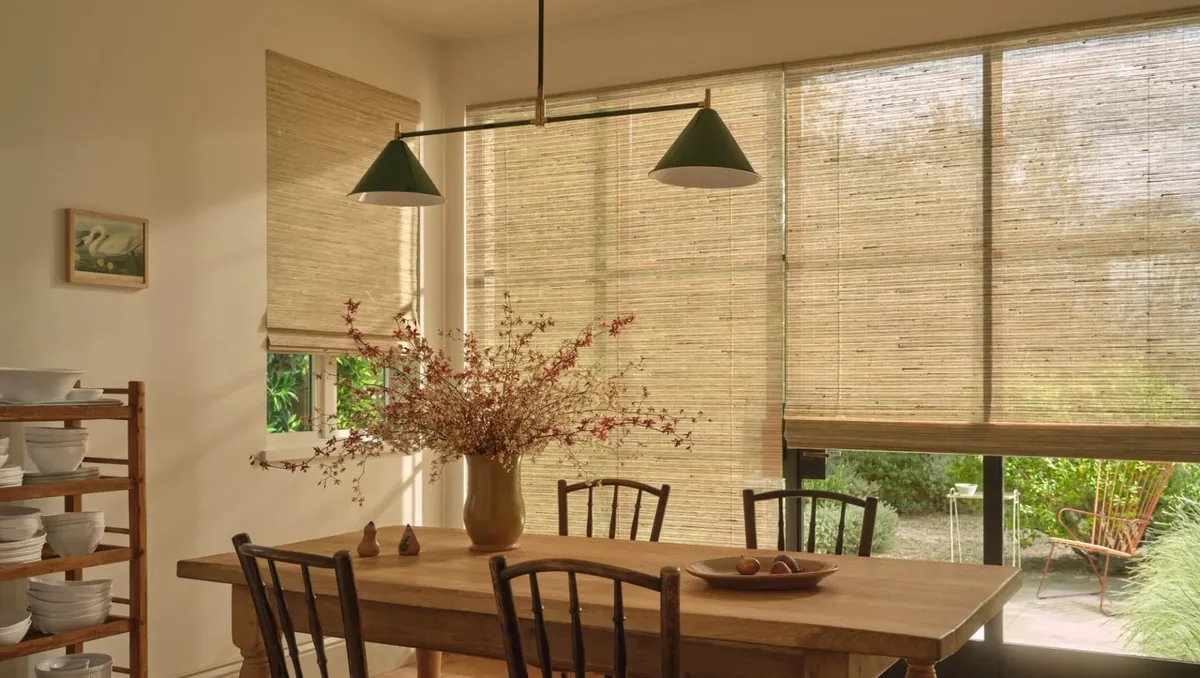
Salt on the shore streets
On the streets nearest the water in Onset and by the beach, the air carries salt whenever the wind is onshore. You see it as a film on the glass by August, and you feel it in any hinge, latch or screw that sits near a window left open for the breeze.
A folded fabric shade copes with that better than most. Its working parts are enclosed in the rail at the top. Go cordless and the dangling cord, its lock and their small fittings disappear too, so the side of the window stays bare and there is nothing out in the room for the salt to work on. On a cottage window that is opened every summer day, that simplicity is worth a lot.
The fabric matters too. Cloth that is easy to vacuum or brush down suits a house near the beach, where sand and salt find their way inside. We can point out the fabrics that cope well with a shore house when you are choosing.
At installation the brackets go into the timber of the frame, never just thin cottage panelling, which keeps a shade level through a summer of windows going up and down.
Village houses along Main Street
The older houses along Main Street were built as year-round homes from the start, with traditional double-hung windows, painted casings and the proportions of a proper village house. Their front rooms face the street, and the windows are part of how the house looks to everyone who passes.
A Carole Fabrics flat fold, mounted inside the frame, is often the natural choice here. It sits within the casing so the woodwork stays whole, hangs as a clean panel of cloth when lowered and pleats neatly when raised. In a front parlor with good trim and a mantel, it looks as if it has always been there.
Passers-by on Main Street see only the reverse of each shade. Give the whole front the same pale backing and the house reads as one, even if the parlor, the dining room and the bedrooms above each have a different cloth facing in. We usually suggest choosing the lining first for the street side, then letting each room have its own cloth.
Old frames are rarely perfectly square after this long, and the sash hardware takes up some of the depth. Where the opening is too shallow or too crooked for the rail to sit inside, mounting on the face of the casing is the tidier answer, and we will say so.
Making a year-round house comfortable
A house that used to be closed in September now has to feel good in January. Window coverings play a part in that.
A roman shade is not the warmest window covering Hunter Douglas makes; that is the honeycomb shade, whose cells hold a layer of air against the glass. But a lined folded shade, lowered on a winter evening, does put a layer of cloth between you and a cold pane, and it makes a small cottage room feel a great deal cosier. For a room that is genuinely cold, especially one with thin original sash, we will talk with you about whether a cellular shade in Wareham would serve you better, or whether the two could work together in different rooms.
Summer still matters in a converted cottage, too. Rooms facing the water take strong afternoon sun, and a light-filtering fabric lowered for the brightest hours keeps them pleasant without shutting out the breeze. In a cottage that now has a home office or a child’s bedroom where the old sleeping porch used to be, those small daily comforts add up, and they are worth talking through room by room at the visit.
Newer colonials inland
Away from the shore, the newer colonials are regular and well made, with matching double-hung windows across two floors, a slider or a bay at the back and plenty of wall above each window head. They are the simplest houses in town to dress, which opens up more choice.
With standard frames, most windows take an inside mount easily. Where you want a raised shade to clear the glass completely, there is wall above the window for an outside mount. A colonial’s front rooms often want a tailored Carole Fabrics shade in a cloth that ties in with the furniture; the kitchen wants an easy-care light-filtering fabric; the bedrooms want room-darkening linings.
Roman shades in a Wareham colonial also bring softness to rooms that can feel plain. A flat fold in a linen or a stripe adds color and texture without the weight of full drapery, and it keeps a family room looking finished.

Before, during and after the visit
Before we come. You request a consultation, online or by the call button, and choose a time. It helps to think about which rooms bother you most: the cottage bedroom that is light at dawn, the street-facing parlor, the room that is always cold.
While we are there. The van comes stocked with swatches of both Hunter Douglas families, which is how we bring the showroom to you. Room by room, cloths go up against the glass and you see the difference between a flat fold, a looped one and a Vignette in your own light. Then the tape measure comes out for every opening, with notes on depth, squareness and any latch or crank in the way.
Afterwards. A free estimate arrives, itemised by window, with no deadline on your answer. Once your order is made, Hunter Douglas certified installers hang each shade, square it up, try every lift and leave you confident with the controls.
The page on what happens at an in-home consultation covers the visit in more depth.
Cloth, lining and light
What a folded shade does to a room comes down to the fabric and what is behind it.
An unlined cloth lets the daylight glow through and shows the fold against the window. It suits a kitchen or a sitting room where you want softness rather than shade. A standard lining gives the shade more body, helps the folds hang neatly and gives privacy at night. For a bedroom, a room-darkening backing turns a bright morning into a dim one.
Linings also protect the face fabric. In a cottage room that takes hard afternoon sun off the water, a lined shade holds its color far longer than an unlined one. Pale, quiet colors such as oatmeal, stone and washed blue help as well.
Pattern works best on a flat fold, where the design stays readable when the shade is down. A soft fold, with its loops of fabric, suits a plain or textured cloth.
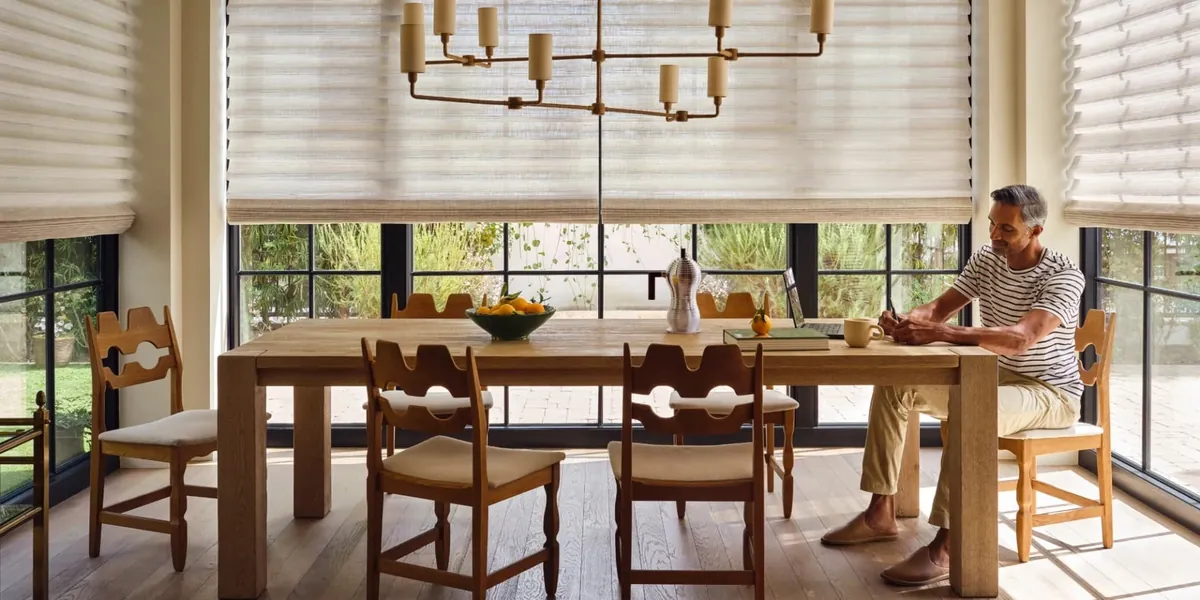
The two Hunter Douglas families
Carole Fabrics. Made up by hand from a large library of decorator cloth, in flat folds and softer folded styles. The choice of color, pattern and texture is enormous, so it is the family to start with when the shade needs to match a sofa, a cushion or drapery. Raised, the cloth gathers in pleats at the top of the window.
Vignette. Folds of equal depth down the whole shade, and a fabric that winds itself up into the rail when you raise it. On the small openings of a converted cottage that is often the deciding factor, because it leaves more glass clear. It also looks neat in a newer colonial.
Many houses use both, Carole Fabrics in the living rooms and Vignette in the small bedrooms. There is more on Vignette here, on the Carole Fabrics collection here, and on every style we fit on the roman shades page.
Porches, sunrooms and the rooms that were added on
Conversions rarely stop at insulation. Many Onset and Swifts Beach cottages have had a porch closed in, a back room built out or a second story raised, and each change brought its own windows. One house can have a run of porch windows on three sides, a modern slider in the new kitchen and the old small sash in the original bedrooms.
That patchwork is where roman shades in Wareham cottages really help. Each opening gets a shade made to its own size, but they can all share one cloth, so the house feels like one place rather than a string of additions. In an enclosed porch, separate shades on each window let you lower the sunny side in the afternoon and keep the shaded side open to the air. A woven texture or a natural linen looks right among wicker chairs and painted floors.
Porch windows were often framed by hand and are seldom identical, even when they look it. We size every one on its own and set the shades so their hems line up when they are all lowered, which is what makes a sunroom look finished. Where a porch window sits high over a built-in bench, a cordless lift or PowerView spares you the reach.
Hard-to-reach windows and PowerView
Converted cottages often have a window or two in an awkward place: high in a gable, above a kitchen counter, at the top of a stair. PowerView motorization lets you raise and lower those shades from a phone, a tablet or a remote, or set them on a schedule. How each motor gets its power is something we work out at your windows. See motorized blinds and shades in Wareham for more.
If some windows suit a different covering, such as a steamy bathroom or a slider, our plantation shutters in Wareham page covers another common choice, and our Wareham page lists everything we do in town.
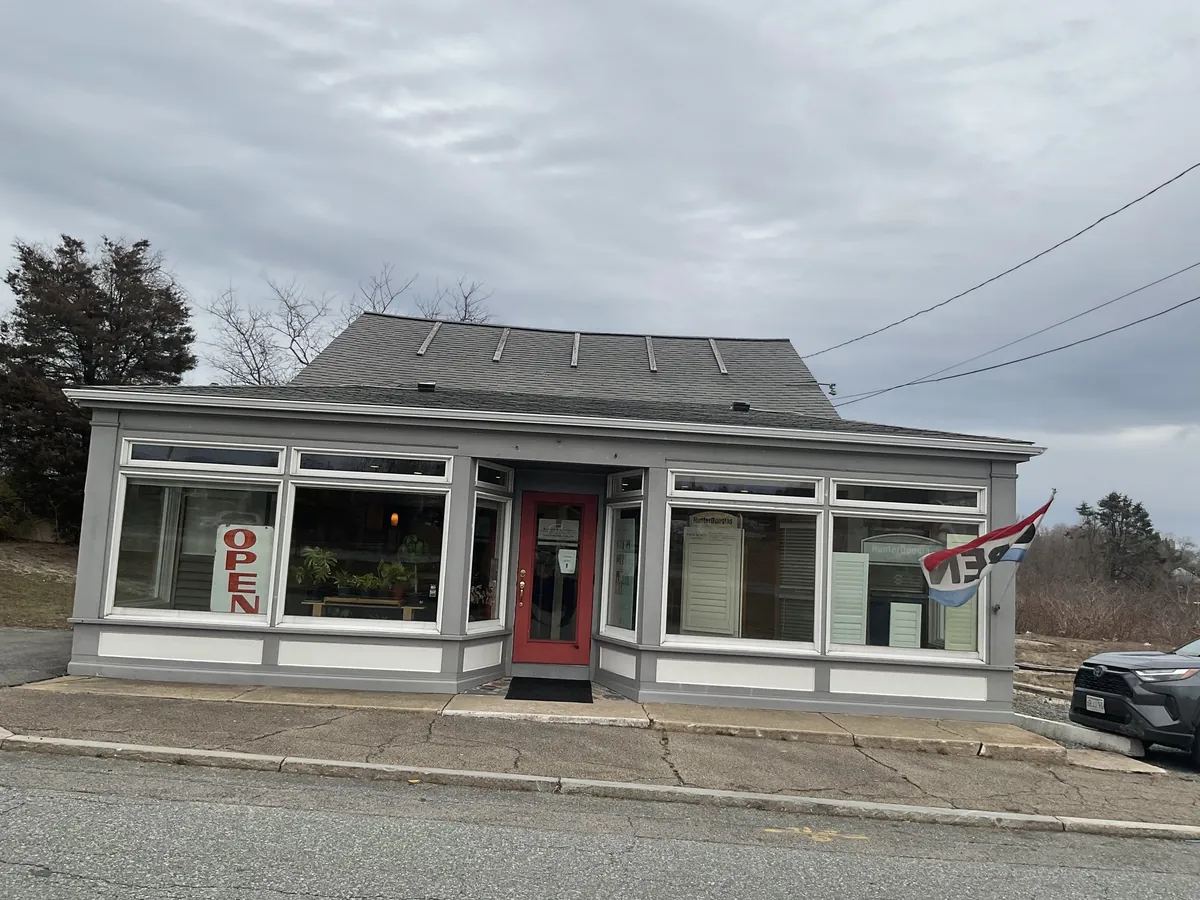
Just across the canal in Sagamore
Our Sagamore showroom is the closest to Wareham, a short drive along the canal, and you are welcome to come and try the shades in person. Or stay home, and we will bring every sample to your door.
Hunter Douglas reserves the Gallery title for dealers who meet its standards, and Blinds & Designs holds it, so nothing in the folded shade range is off the table for your house. Our installers carry Hunter Douglas certification, and that shows on a cottage opening that has drifted out of true.
Repairs to the blinds and shades already in your house, automation and design help are all part of what we do.
Questions from Wareham
My converted cottage has very small windows. Will a shade block the light?
It can if the folds stack on a short window. Vignette rolls its fabric away, and a light, unlined cloth makes a smaller stack. We will hang a sample so you can see how much glass stays clear.
How do roman shades cope with salt air near the beach?
Well. The mechanism is enclosed in the top rail, and a cordless version has no cord hanging beside the glass, so the salt has almost nothing to reach.
Will a roman shade keep my cottage warm in winter?
A lined shade adds a layer of cloth at the glass and makes a room feel cosier, but a honeycomb shade is the warmer choice. We will talk through both for any cold room.
Can the front of my house look uniform from the street?
Yes. We use one lining color on every street-facing shade, so the house looks even from outside while each room has its own face fabric.
What does the estimate cost?
Nothing. After we measure, you get a free estimate listing each window.
Start with a sample in your own window
The quickest way to choose roman shades in Wareham, MA, is to see the cloth against your own glass, in your own light. Ask for a consultation and the swatches come to your door, each opening gets measured and a free estimate stays with you. Prefer to look first? The Sagamore showroom is close by, and the call button is always there.