
Regular windows, short front yards
Most of Rockland is made of capes and ranches on modest lots, with a band of newer colonials off Union Street. Almost every one of those houses has standard modern openings, the square, regular windows builders have relied on for a long time. They also share short setbacks: the front door is a few steps from the sidewalk, and the front room sits close enough to the street that anyone walking by can glance in. Put those two facts together and you have the brief for plantation shutters in Rockland, MA.
The regular windows are the easy half. A square, standard opening takes a shutter cleanly, which means our time together goes on choices you can see, the blade width, the frame and the finish, rather than on working around an awkward window.
The short setback is the half that needs thought. Front rooms want daylight and privacy at once, and a shutter is one of the few coverings that can give both without a compromise.
Which Rockland house do you have?
Each of the three common house types in town brings its own set of windows. These are the ones we plan most.
The cape
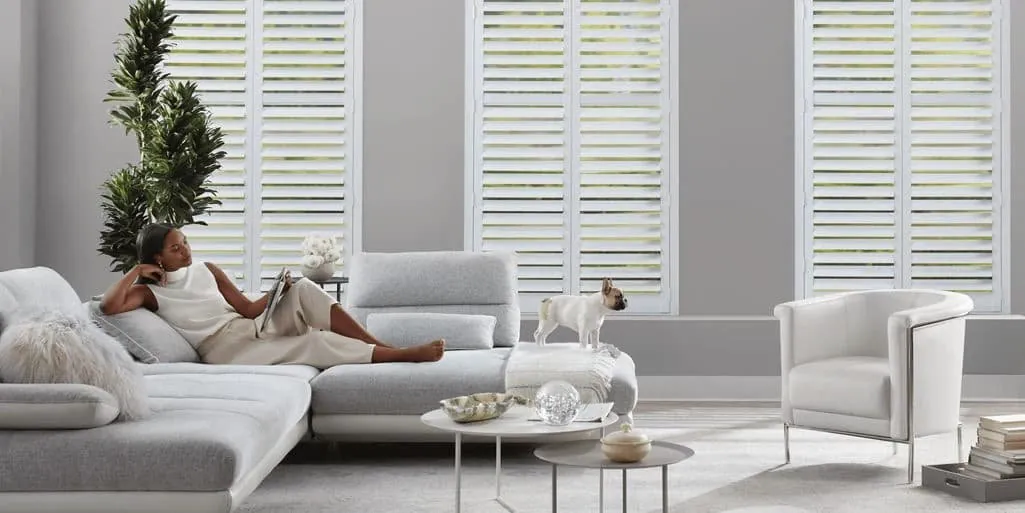
A front living room close to the walk, a kitchen at the back and dormer bedrooms upstairs. One look can run through the whole house.
The ranch
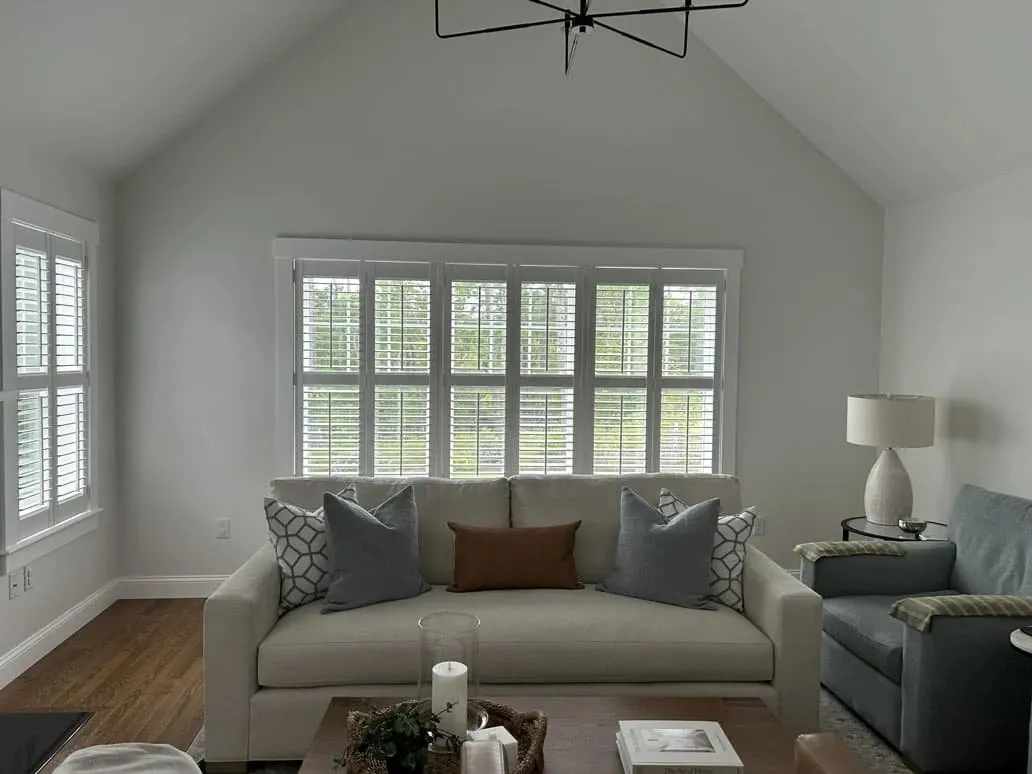
A broad front window, a long hallway of bedrooms and every room at ground level, with the street and the side yard both close.
The colonial off Union Street
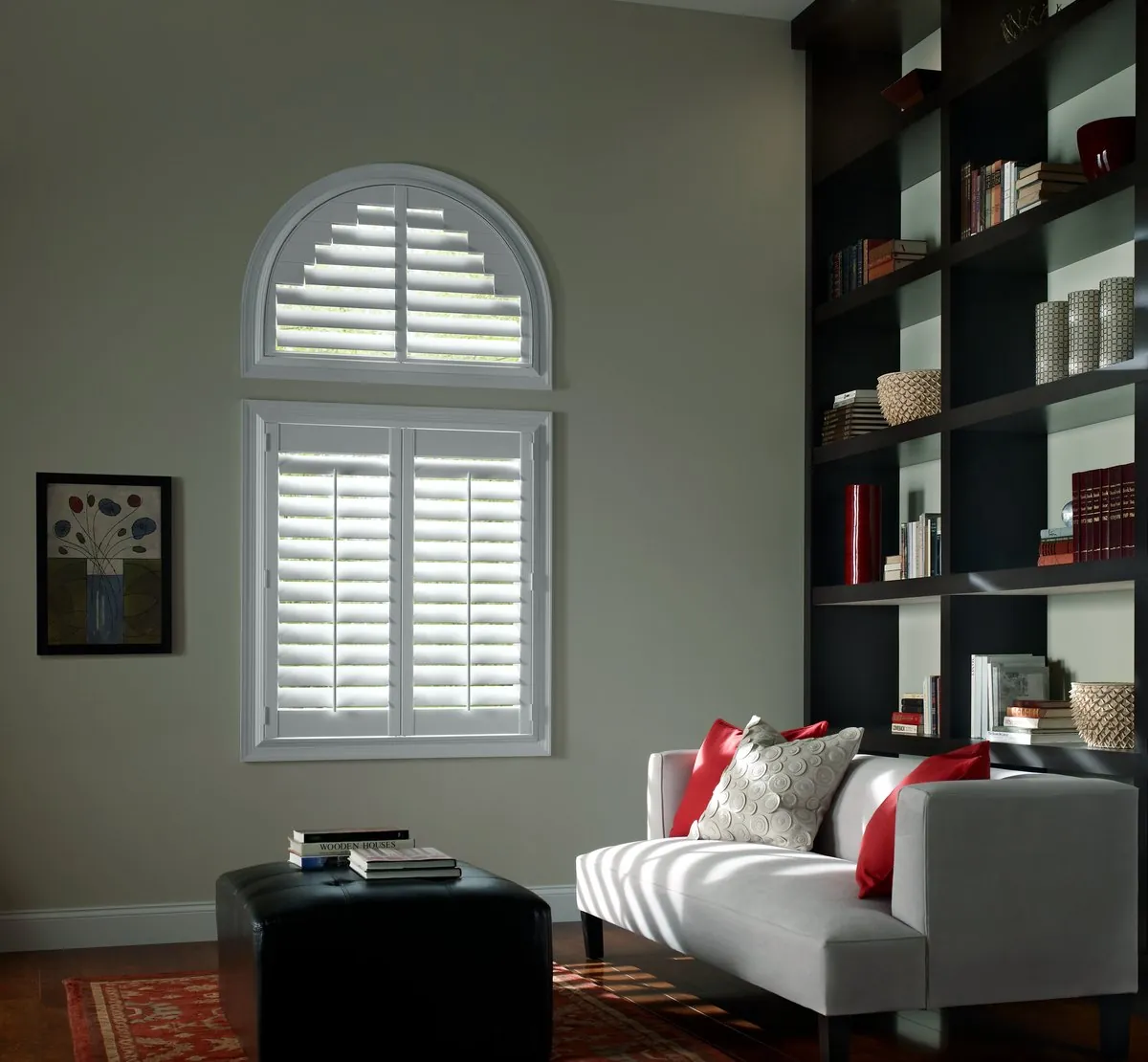
Two full floors of matching windows, a stair landing and front-to-back rooms, where consistency from the street matters most.
Your consultation, from our Canton team
Rockland homes are looked after by our Canton shop-at-home service. Rather than driving to a store, you book a time and a consultant comes to the house with a van stocked with Hunter Douglas samples. The Canton shop-at-home page has the details. We often put it as “we can bring the showroom to you,” and in practice that means every sample you consider is held up in your own window, beside your own trim, at the time of day you use the room.
The appointment itself has a simple shape:
- Choose a time using Request a Consultation, or reach us through the call button.
- The consultant brings in samples from each of the three Hunter Douglas shutter collections.
- We look at the front of the house first, since the short setback usually makes it the priority.
- You compare blade widths, frames and finishes in each window you are thinking about.
- We measure the windows you want shuttered.
- A free estimate comes to you afterward.
For a fuller description, read what happens at an in-home consultation.

The front room on a short setback
When a house sits only a few steps from the sidewalk, the front room is on display. In a Rockland cape, that is usually the living room; in a ranch, it might be the living room and a bedroom; in a colonial, it is the living room below and a bedroom above.
A shutter handles this through the angle of the blades. Tip the louvers so their top edges lean toward the room and the daylight is bounced upward onto the ceiling, while a passerby on the sidewalk sees the slats face on. The room stays bright, and the view in is blocked. Close the louvers at dusk and the front of the house is shut for the night.
On a short setback, that flexibility is what sets a shutter apart from other window coverings. A sheer curtain gives some privacy but loses the view out; a solid shade gives full privacy but darkens the room. The angle of a louver can sit anywhere between, and you can change it whenever the light or the street changes.
Plantation shutters in Rockland, MA, for a cape
A Rockland cape is a tidy, efficient house. Downstairs, the living room faces the street, the kitchen faces the back yard, and there may be a bedroom or den on the side. Upstairs, two bedrooms sit under the roof, each with a dormer.
Because every opening is a standard size, a cape suits one shutter look in every room. Same finish, same blade width, same frame: the house feels calm inside and looks finished from the street. In a small house where you can see from the living room into the kitchen, that sameness makes the rooms feel connected.
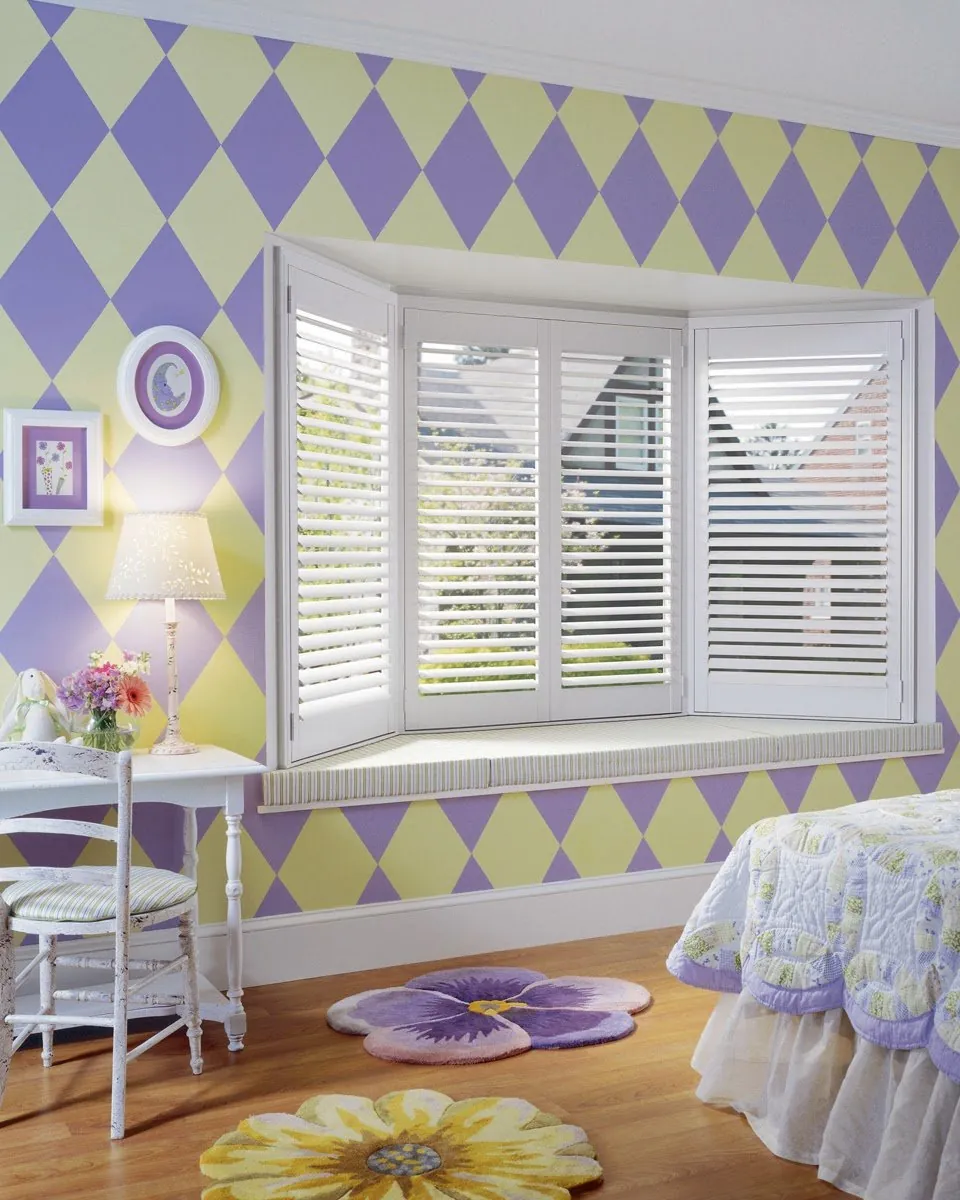
The dormers upstairs are small and set back into the roof. A shutter sized to the dormer opening sits neatly within it and leaves the sloped ceiling clear. In a dormer bedroom, closing the louvers makes the room snug; opening the panels lets in all the light that small window can give.
Ranches and the long side wall
A ranch puts everything on one floor. The living room is usually at one end with a wide front window, and the bedrooms run down the other end, each with its own window facing the street, the side yard or the back.
That long side wall is where privacy questions come up. On a modest lot, the bedroom windows on the side face the neighbor’s house or driveway, a short distance away. Louvers angled upward screen that view while still letting daylight in, and closed fully they make a bedroom dark enough for an early night.
The wide front window has a different job. It is usually the main source of light for the living room, and it may catch strong sun in the afternoon. A wider blade suits a broad ranch window, giving a clearer view when the louvers are open and a cleaner look from the street. Tilted partly closed, the louvers cut glare on a television without dimming the whole room.
Colonials off Union Street
The newer colonials off Union Street are bigger houses with two full floors. They have more windows, all in matching sizes, lined up across the front in a symmetrical pattern. That symmetry is what makes a colonial look the way it does from the street, and the window coverings either support it or break it.
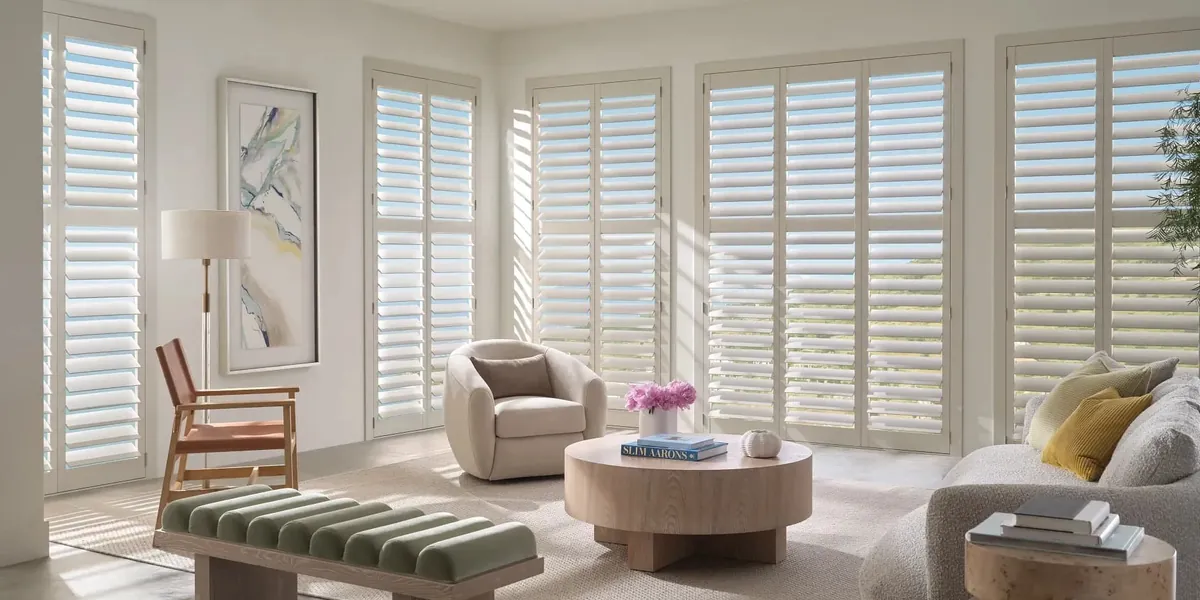
Shutters support it well. When every front window, upstairs and down, has the same shutter in the same finish with the same blade width, the front of the house reads as one composed elevation. Inside, a colonial often has rooms that run front to back, with windows at both ends, and shutters on both ends tie the room together.
Colonials also have a stair landing, often with a window halfway up. It is easy to forget, but on a short setback it may face the street or the neighbor. A shutter on the landing, matching the rest, finishes the job.
The front door, a few steps from the walk
A short setback brings the sidewalk close to the front door as well as the front room. Many Rockland capes and ranches have a small window beside the entry, or a glass panel in the door, and on a short walk that glass puts the hallway in plain view of anyone at the steps.
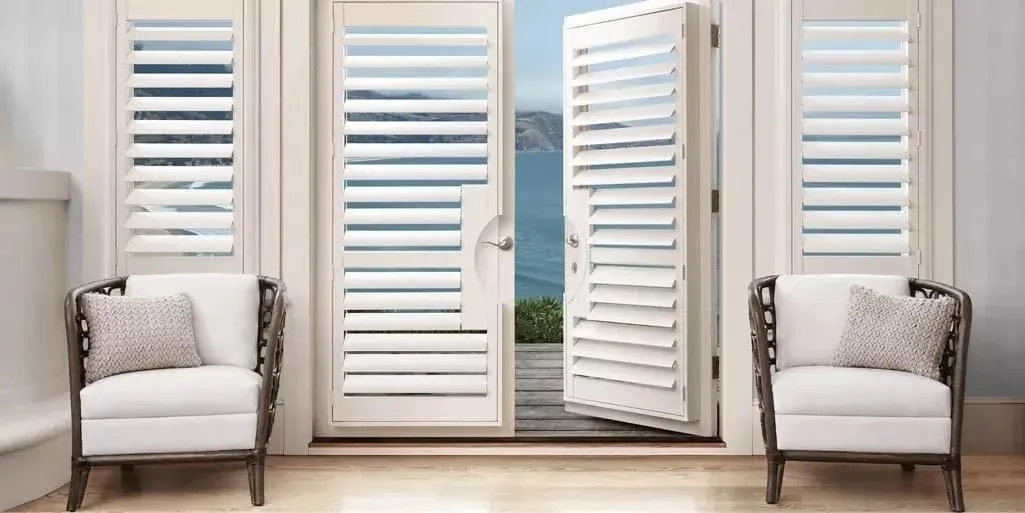
A slim shutter beside the door, in the same finish as the living room window, gives the entry the same privacy as the rest of the front. The blades can stay angled so the hall keeps its light. Glass set into the door itself is a different case, since anything covering it has to move with the door, and we look at that opening on its own during the visit.
Treating the entry along with the front windows means the whole street face of the house reads as one plan. Neighbors and visitors see a row of matching windows rather than one bare pane beside the door.
The yard side of the house
Behind a Rockland house, the mood changes. The back yard is private, the street is out of sight, and the windows can work for light and view rather than privacy. Kitchens often face this way, and so do family rooms and the back bedrooms of a ranch.
Here the panels can stand open for most of the day, folded back so the glass is clear. The louvers matter when the sun swings round, usually late in the day on a west-facing yard, and a partial tilt keeps glare off a table or a screen. At night, the back windows close like any others, since a lit room is easy to see from the next yard over.
With plantation shutters in Rockland, MA, on both front and back, the blades end up doing different jobs on each side of the same house, which is exactly what they are good at.
Home offices and children’s rooms
Many households now have a room that does double duty: a spare bedroom used as an office, or a child’s room that doubles as a playroom. These rooms ask more of a window covering than most.
An office needs glare control on a screen at certain hours, and a tilt of the louvers handles that without plunging the room into gloom. A child’s room needs a bright space for daytime play and a dimmer, calmer one at bedtime, and closing the louvers changes the room in a moment. We plan these rooms with their real use in mind, which is a question we ask at the visit.
Decision one: how wide the blades should be
Hunter Douglas shutters come with a choice of louver sizes. The width of the blade changes both the look and the view.
Wider blades mean fewer of them in each panel. The shutter looks cleaner and more contemporary, and when the louvers are flat you get a broader view through the gaps. Narrower blades mean more of them, a closer pattern and a more traditional look.
On Rockland’s standard openings, a middle size suits most rooms. The broad front window of a ranch or the bigger windows of a colonial often look best with a wider blade. A small dormer may suit something narrower. We bring sizes so you can hold them in your own frames.
Decision two: the frame
Every shutter is held in a frame that surrounds the panels at the window opening. The profile of that frame affects how the shutter sits with the trim around it.
Most Rockland houses have simple, modern casings. A modest frame suits those, and the shutter becomes the detail that gives the window some presence. Where the trim is more substantial, as in some of the colonials, a frame with a bit more weight can match it. We compare frame samples against your own trim during the visit.
Decision three: the finish
White matched to the existing trim is the usual choice, and in a cape or ranch it tends to look best throughout. It also reflects daylight back into the room, which helps on the side of the house where the sun does not reach for long.
There are other options. A den or dining room with darker walls might suit one of the painted colors in the Hunter Douglas range, while the rest of the house stays white. In a colonial, you might choose a slightly warmer white for the formal rooms and a crisp white for the kitchen. Seeing the color samples beside your trim, in your light, is the surest way to decide.
Decision four: which rooms first
Some households shutter the whole house at once. Others start with the rooms that matter most. In Rockland, with its short setbacks, that usually means the front of the house: the living room and any bedroom facing the street.
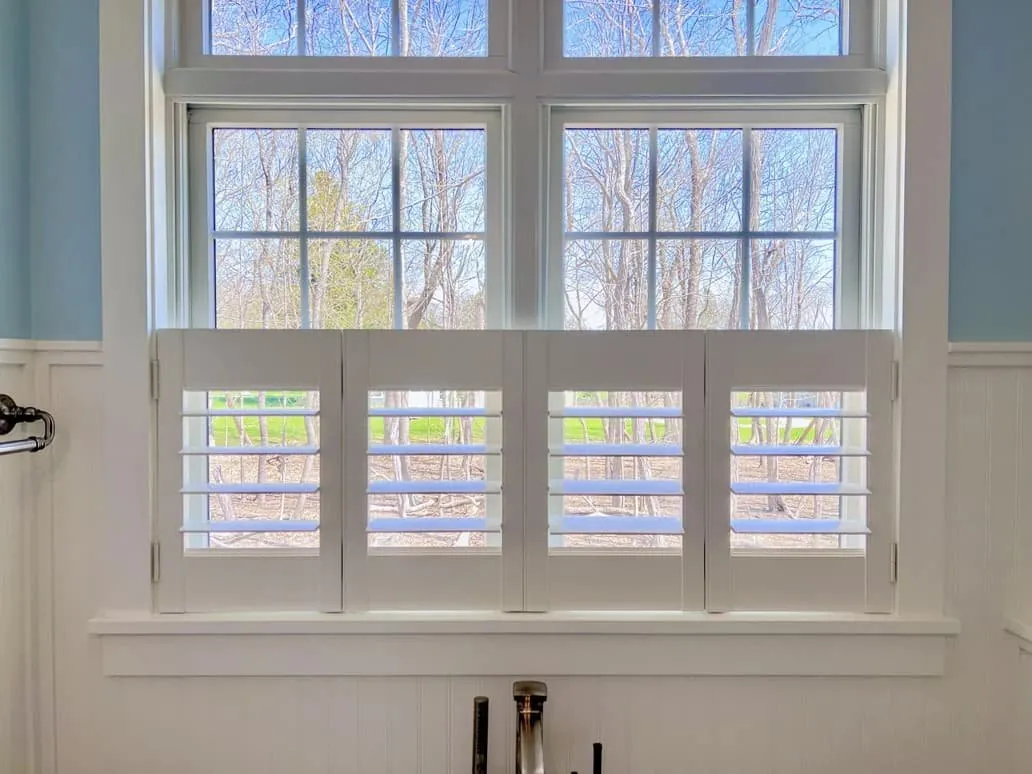
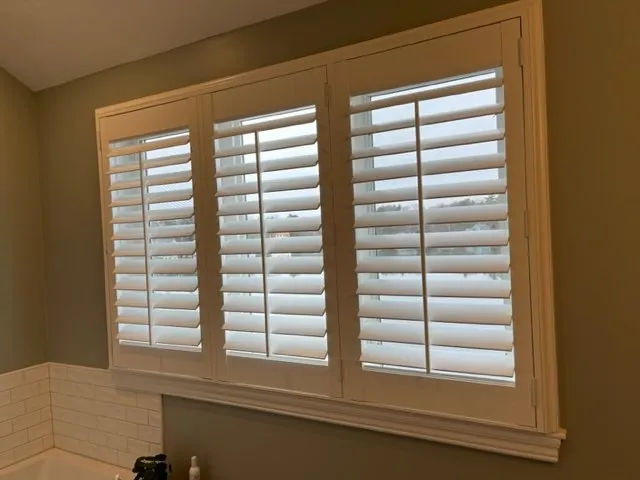
Kitchens and bathrooms are often next. A shutter covering only the lower part of the window, the cafe style you can see in our own portfolio photos, keeps the sink or tub private while leaving the top of the window open to the sky. A full-height shutter with louvers that close completely suits a bathroom where privacy matters at every hour.
If you start with a few rooms, settle the blade width and finish at the first visit, so the rooms that follow will match. With plantation shutters in Rockland, MA, on standard openings, that consistency is easy to keep.
Decision five: Palm Beach, NewStyle or Heritance
The last choice is the collection. Hunter Douglas makes three: Palm Beach, NewStyle and Heritance. Samples of all three come into your house on the visit.
We set the samples in your window, one after another, so you compare them in the room where they will live. Many houses use one collection throughout; others choose one for kitchens and baths and another for the main rooms. The main plantation shutters page explains more about the range.
Interior design advice while the samples are out
Shutters affect the whole look of a room, and in a cape or ranch the rooms are small enough that every choice shows. If you are also repainting, replacing flooring or rearranging furniture, ask about our interior design consultations when you book. The consultant can talk through how the shutter finish and blade width will sit with the rest of the room while the samples are already in your hands.
A Gallery dealer for the South Shore
Blinds & Designs is a Hunter Douglas Gallery dealer. The shutters we sell in Rockland go in through certified Hunter Douglas installation, and a careful fit is what keeps a row of front windows looking even from the street.
Since the samples come to your door, you never have to visit a store to choose. Should you want to see a showroom anyway, the nearest is our Franklin showroom. We also handle repairs on blinds and shades you already own and window covering automation.
More for Rockland windows
A shutter is not the only choice. For a bedroom that needs to go dark, cellular shades in Rockland are worth a look, and roman shades can soften a dining room. See our Rockland page for everything we offer in town.
Questions from Rockland
My house sits right on the sidewalk. How do shutters give privacy without darkening the room?
The louvers tilt so the slats bounce daylight up toward the ceiling while someone outside sees the faces of the blades. You keep the light and lose the view in.
Do standard windows make shutters simpler?
Yes. Square, regular openings take a shutter cleanly, so most of the visit is about blade width, frame and finish.
Should every window in my colonial match?
On the front, matching shutters support the symmetry of a colonial. Inside, you can vary rooms, but keeping the finish consistent ties the house together.
Where can I see the samples?
At home. Our Canton shop-at-home team brings them to Rockland houses. The nearest showroom, if you would like to visit one, is Franklin.
How much is the estimate?
It is free. We measure the windows you pick and send you the estimate.
Bring us your front window
In most Rockland houses, the window that matters most is the one closest to the sidewalk. Start there. Book a time, mention which room faces the street, and the consultant will set up at that window first with samples of all three collections. From one front window, the plan for plantation shutters in Rockland, MA, can spread to the rest of the house, at whatever pace suits you, with a free estimate to follow. Press Request a Consultation below, or tap the call button if you have a question.