
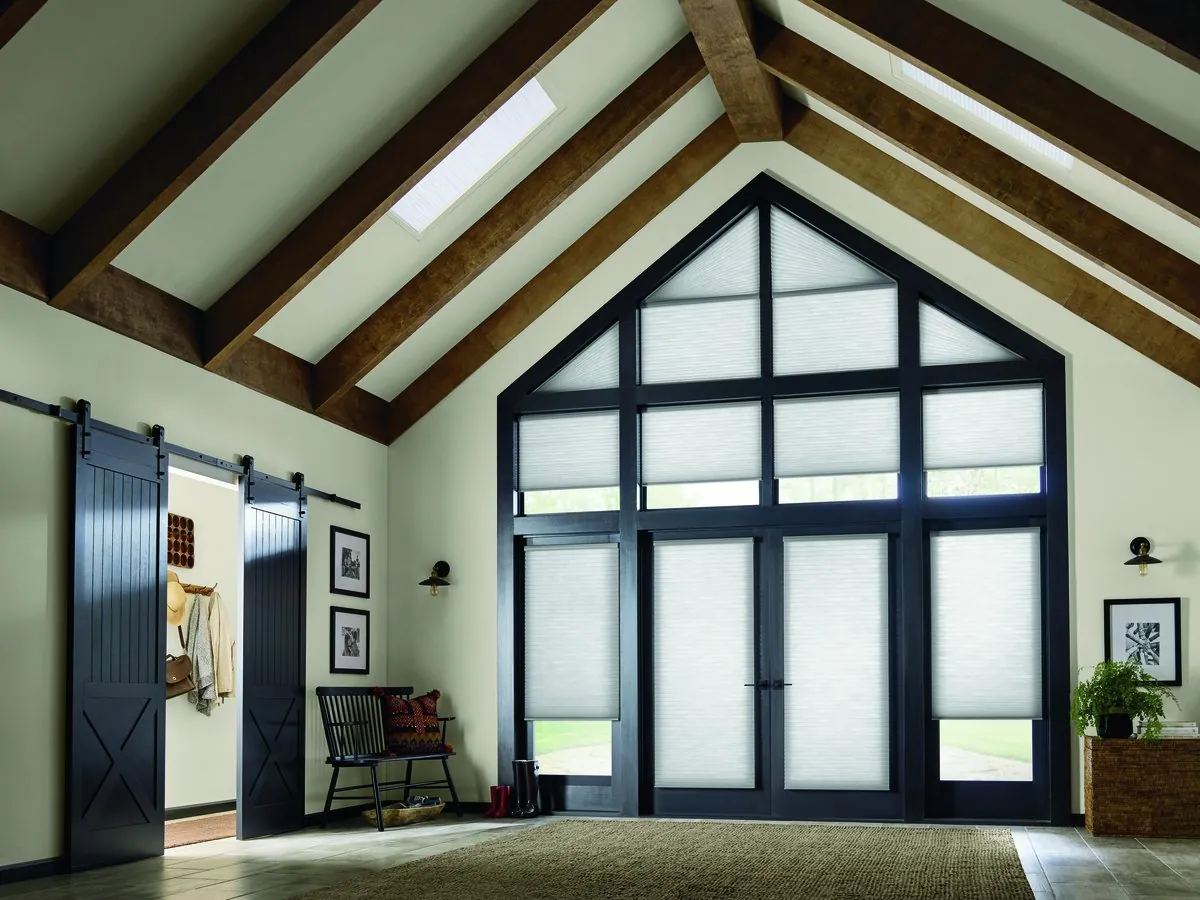
Walls of glass facing the water
Osterville’s houses are generous. Large shingled homes stand on wide lots around the village and out along the roads to Wianno and Oyster Harbors, and many of them were built or rebuilt to a high specification with the water in mind. The rooms facing the bay or the harbor are often walls of glass, floor to ceiling, with French doors and transoms above. Those are the rooms where cellular shades in Osterville, MA, have the most to do.
Glass on that scale brings three challenges at once. It loses heat quickly in the colder months, it lets in a great deal of sun and glare in the summer, and it sits right in the path of the salt air coming off the water. A honeycomb shade answers the first two directly and copes well with the third. Its fabric is formed into hollow cells, and the air trapped in those cells forms a still, insulating layer between the glass and the room.
Many Osterville houses are also seasonal, open for the summer and closed or lightly used the rest of the year, and the formal rooms are often expected to carry drapery as well. We plan around all of that.
Honeycomb choices for larger Osterville houses
These are the options that come up most often in Osterville, and every one of them travels with us on the sample van.
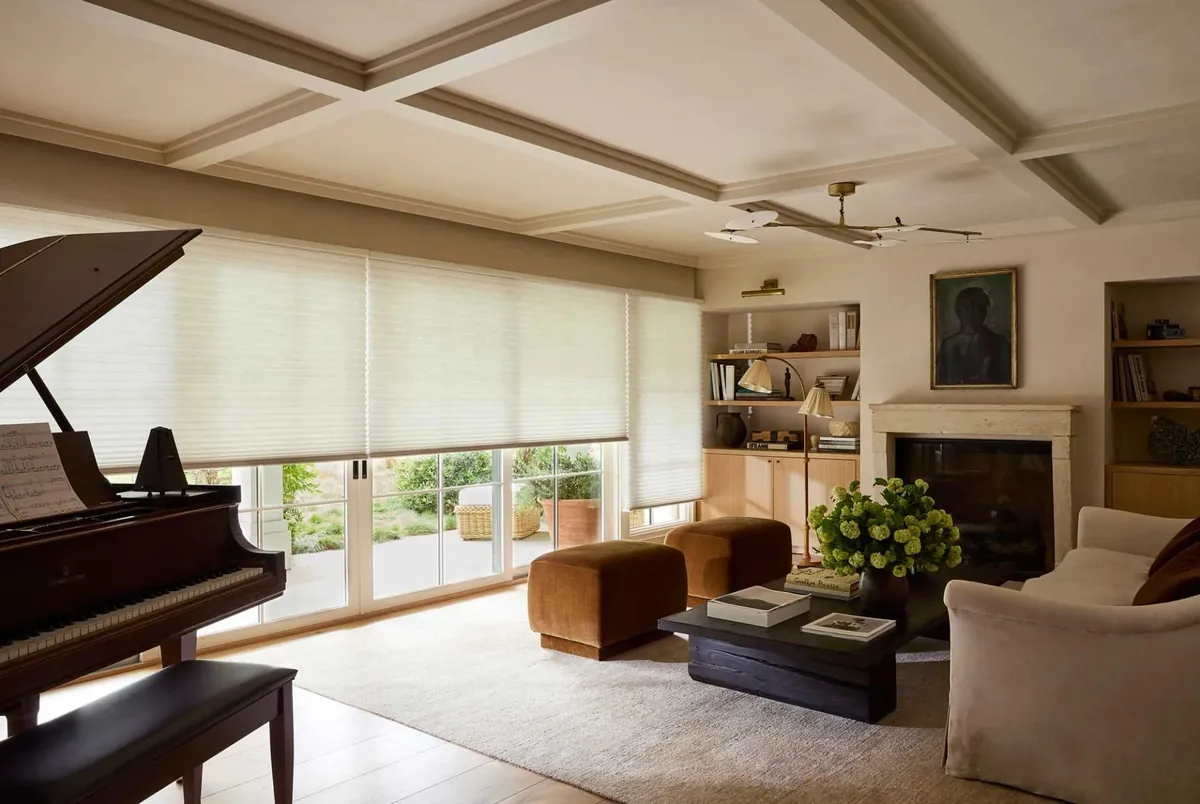
Duette for the big openings
The Hunter Douglas line with the largest sizes, the most fabrics and specialty shapes for arched and angled windows, suited to tall water-facing glass.
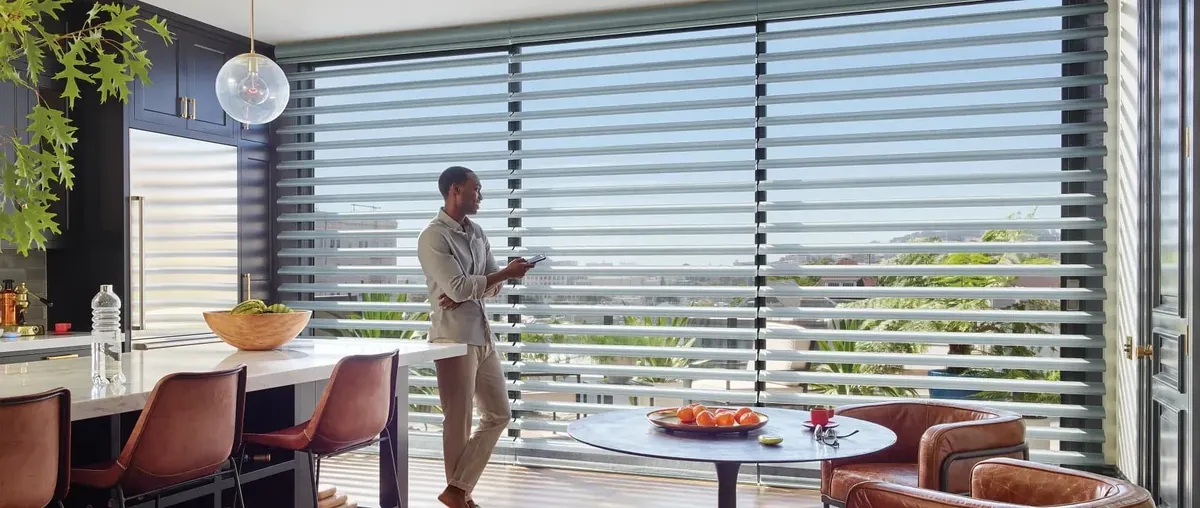
PowerView across the house
Motorized shades grouped by room or by wall, controlled from your phone or a remote, or run on schedules while the house is closed.
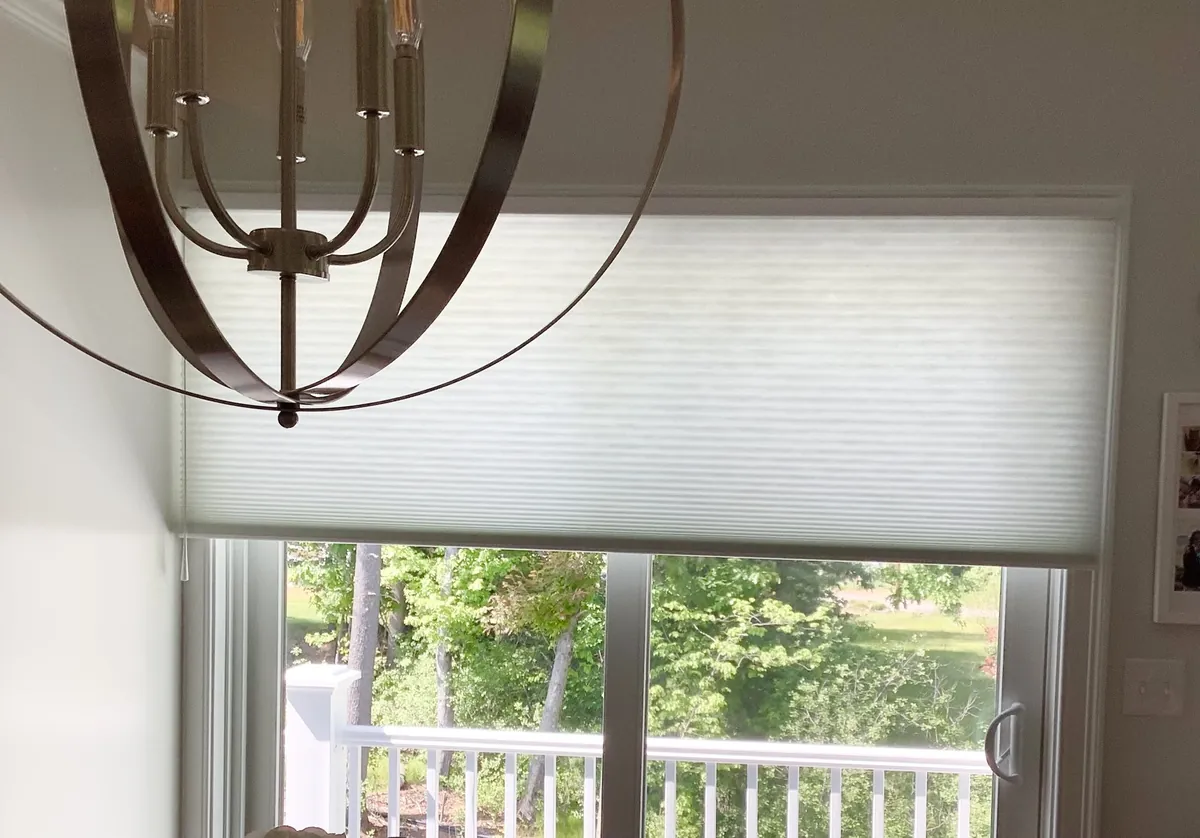
French doors and sliders
Honeycomb shades on doors to the terrace, or a vertical honeycomb that draws aside across a wide slider, so the doors match the windows beside them.
Great rooms built around the view
The defining room in many Osterville houses is the one that faces the water: a great room or family room with a wall of glass, often two stories high, opening onto a terrace or a lawn that runs down toward the bay. The view is the point of the room, so the window covering has to disappear when it is not needed and work hard when it is.
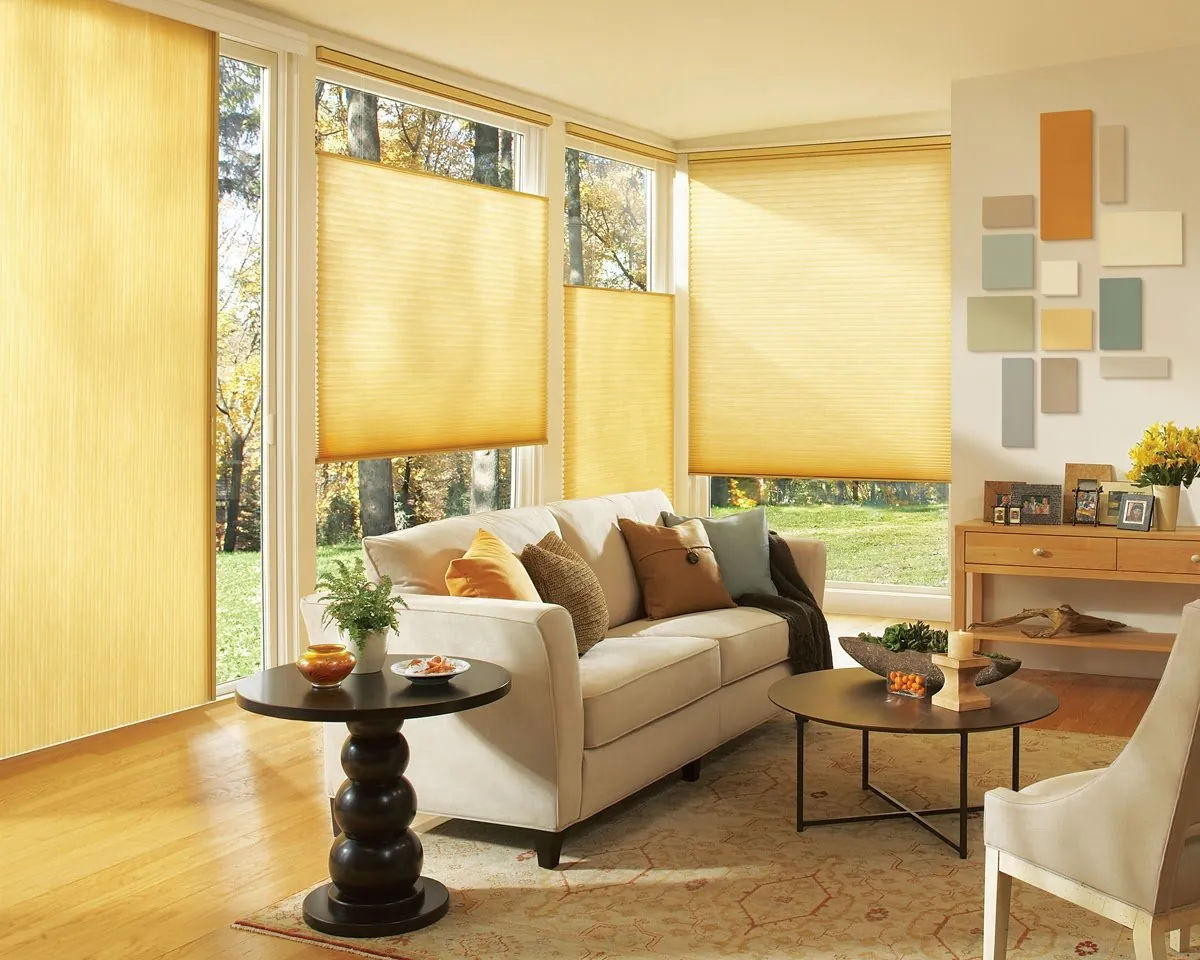
A honeycomb shade does that well. Raised, it folds into a slim stack at the head of each window and almost vanishes. Lowered, it covers the glass edge to edge in a soft, even fabric. On a wall with many windows we plan the shades as one design: several shades can share a headrail so they move as a unit and stop at the same line, or they can be split so you can shade one end of the room and leave the other open.
The upper windows on a two-story wall are out of reach, and that is where PowerView becomes essential rather than optional. Each shade, or each group, can be controlled from a phone, a wall-mounted remote or a schedule. At the visit we work out the power for every motor and where each connection will hide, so the wall looks finished, not wired.
Transoms and arched windows above French doors are common in these houses. Duette makes specialty shapes for arches and angles, so those windows can be covered in the same fabric as the rest of the wall rather than left bare.
Formal rooms where drapery is expected
Osterville’s larger houses often have formal living and dining rooms, and in those rooms drapery is part of the look. A honeycomb shade does not replace that; it works beneath it. The shade sits inside the window frame and handles warmth, light and privacy, while the drapery frames the window and dresses the room.
Layering like this solves a common problem. Drapery panels that are drawn every evening for warmth or privacy get handled constantly and can look tired in a few seasons. With a honeycomb shade doing the practical work, the drapery can stay open as a frame and be drawn only when you want the full effect.
The two need to be planned together. The shade’s mount, its headrail depth and the fabric color all affect how the drapery hangs and how the window looks from both inside and outside. We carry Hunter Douglas drapery as well as honeycomb shades, so both can be chosen at the same consultation, with the fabrics side by side. For rooms like these, our interior design consultations can help pull the whole scheme together.
A white or soft ivory backing on the honeycomb shade keeps the outside of the house consistent, which matters on a large shingled house where many windows face the road or the water. The room side of the shade can take a color that works with the drapery and the walls. Some owners prefer the shade to blend into the window trim so the drapery is the only thing the eye catches; others pick a tone from the drapery fabric itself so the two read as a pair. Both work, and seeing the samples against the actual fabric makes the decision quick.
Salt exposure on the waterfront
Houses on Wianno and around Oyster Harbors sit right on the water and live with salt air for much of the year. It settles on anything metal near a window that is opened in summer and slowly takes its toll.
A honeycomb shade is well suited to that. Everything that moves is boxed into the headrail, away from the damp, rather than running in exposed cords and pulleys. Choose cordless and the cord lock disappears; choose PowerView and there is no cord of any kind. That keeps the windows looking clean and leaves nothing to corrode or tangle.
Sun off the water is the other hazard. Fabrics on water-facing glass take strong, reflected light for hours a day. We point out the fabrics that hold their color best on bright windows, and we often suggest a lighter, neutral tone for the walls of glass that face south over the sound.
When we plan cellular shades in Osterville, MA, for a waterfront house, we think about the whole year at once: the months when the house is open and the windows thrown wide, and the months when it is closed and the shades hang still in the sun.
Bedrooms, guest wings and the rooms upstairs
Beyond the great room, an Osterville house usually has a run of bedrooms, many with views of their own and some tucked under the roof in dormers. Guest wings and rooms over the garage are common on the larger lots, and they tend to be the rooms nobody thinks about until a family weekend fills them.
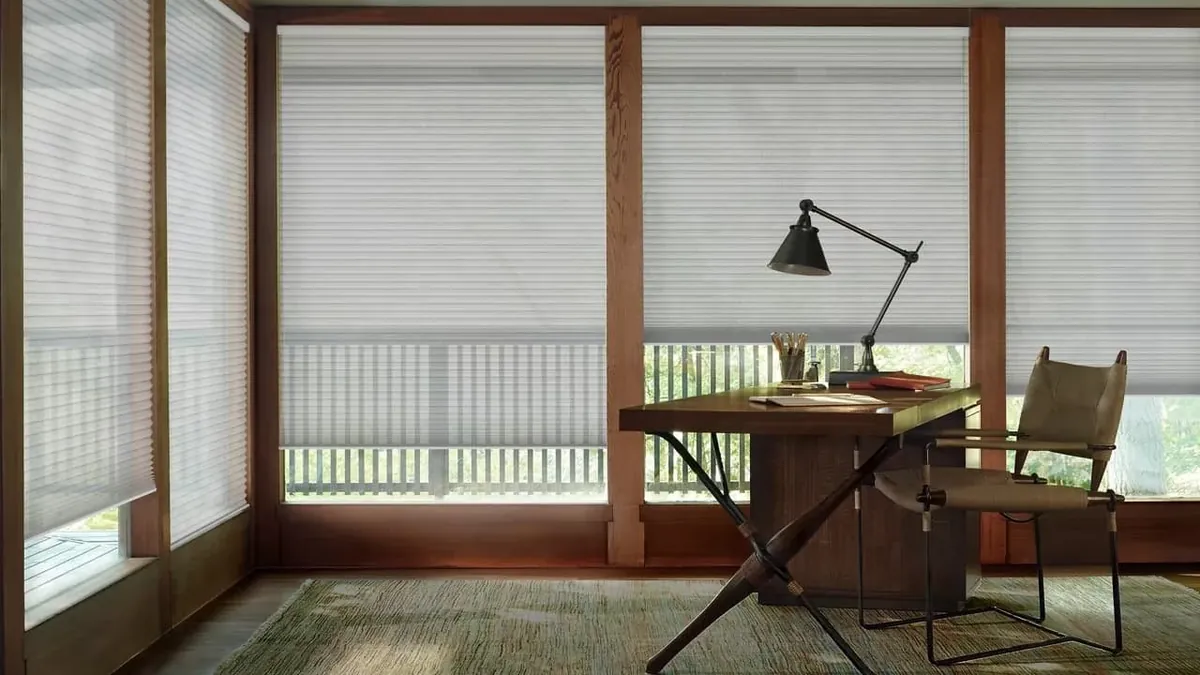
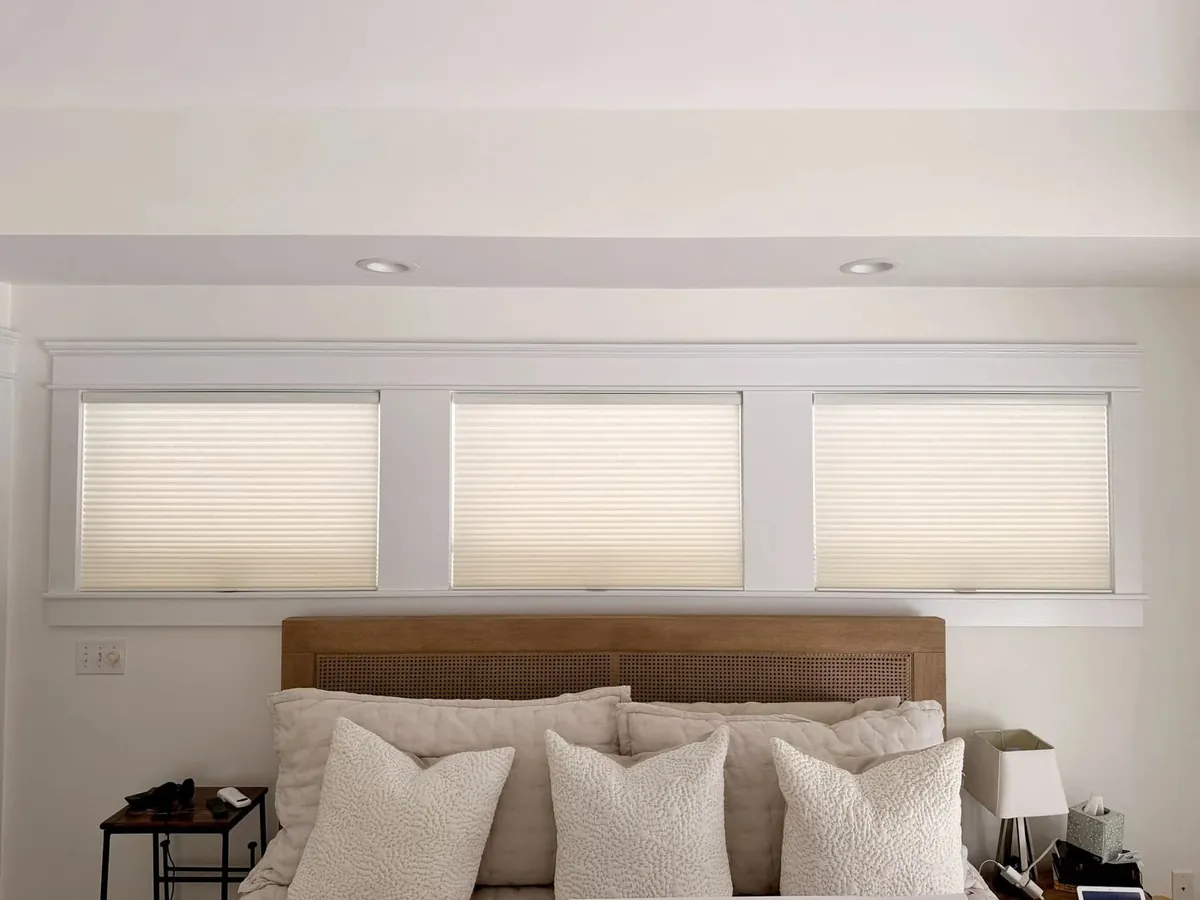
These rooms want something different from the living spaces. Sleep comes first, so a room-darkening honeycomb is the usual choice, especially on any window that catches the early sun over the water. In a dormer, where the window sits deep in a small alcove, an inside-mount shade fits neatly and keeps the alcove clear for a window seat. Bathrooms on the water side benefit from a top-down, bottom-up lift, which opens the top to light and sea air while keeping the lower glass private.
Because these rooms are often closed off for weeks, they also overheat or chill without anyone noticing. Choosing cellular shades in Osterville, MA, for the guest rooms at the same time as the main rooms means the whole house is ready when people arrive, and the upstairs does not need a separate project later.
A seasonal house that looks after itself
A high share of Osterville houses are lived in for the summer and closed, or used only now and then, for the rest of the year. A house like that has particular needs. Leave every shade down and the house looks shuttered from the road; leave them all up and months of sun go to work on rugs, floors and upholstery.
Motorized PowerView shades settle the question. Give the harbor-side rooms a noon-to-late-afternoon closing and an evening opening, and the house keeps a lived-in face while the furnishings stay out of the sun. Adjustments happen in the app from far away as easily as from the terrace, and on the day you drive down the shades can already be up to greet you.
In a house that is heated at a low setting over the winter, the cells help too. Lowered shades on the large windows help the rooms hold their temperature between visits, and the house warms up sooner when you arrive.
Smaller rooms, a bath or a back bedroom, rarely need motors. A cordless honeycomb with a top-down lift is enough there: drop the sunny ones before you lock up for the season and the room is protected until spring.
How the honeycomb holds warmth
The insulating power of a honeycomb shade comes from its shape. Cut through the fabric and you see a stack of hollow tubes running across the full width of the window. When the shade is down, each tube holds a narrow band of still air. Air passes heat along easily only when it moves, so that still layer slows the cold coming off the glass in winter and the heat coming through it in summer.
On a wall of glass the effect is larger than on a single window, simply because there is more glass. A great room that feels chilly at the edges on a winter evening becomes comfortable right up to the window, and a south-facing room in July stays cooler through the afternoon.
The amount a shade does depends on a few choices:
- Double cell adds a second row of pockets behind the first.
- Opacity ranges from sheer to room-darkening, with more light and heat held back the denser you go.
- Mount inside the frame, where depth allows, leaves the smallest gap at the edges.
- Lift: top-down, bottom-up lets you shade only the part of the window in the sun.
Duette and Applause in a high-specification house
Duette is the name most people know, and on a house of this size it does the heavy lifting: oversize panels for floor-to-ceiling glass, arch and angle shapes for transoms, a side-drawing version for sliders, and the deepest fabric library of any honeycomb Hunter Douglas makes. Applause is the companion line, a separate set of fabrics and textures that dresses standard windows handsomely. The cell inside works on the same principle either way.
A typical Osterville plan gives the great room, the arches and the terrace doors to Duette and lets Applause handle a guest wing or the bedrooms over the garage, with backing colors matched so the shingled exterior looks uniform. Each line has its own page, Duette and Applause, and the cellular shades page gathers the whole range. Whichever mix you settle on, cellular shades in Osterville, MA, are made to each opening, so even the largest panel sits snugly in its frame.
From the first visit to the last bracket
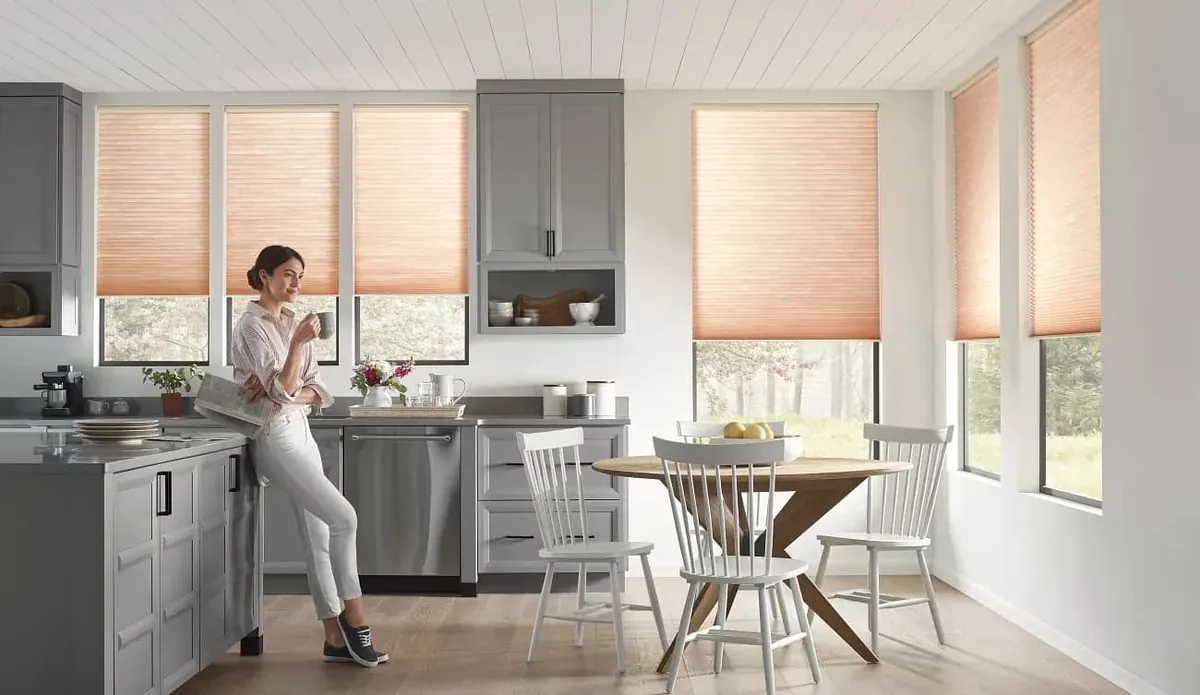
Large houses reward careful planning. We start at the house, room by room, because the light on a wall of glass facing the harbor is nothing like the light in a north bedroom. Our vans carry samples, so we bring the showroom to you.
- Pick a date you will be in residence and book it through Request a Consultation or the call button.
- The van brings Duette and Applause in every opacity from sheer to darkening, single and double cell, with cordless, top-down and PowerView demonstrators.
- Together we tour the waterside rooms and the formal rooms first, discussing who uses each and in which months.
- You see the samples against your own glass, walls and drapery fabrics, at the time of day that matters.
- We measure every opening, plan shared headrails on the big walls and note where motors will go.
- A free estimate follows, with no deadline attached.
- On installation day, Hunter Douglas certified installers hang and level every headrail, build the PowerView rooms and timetables, and hand over the controls with a walk-through.
There is more on what happens at an in-home consultation if you would like to read ahead.
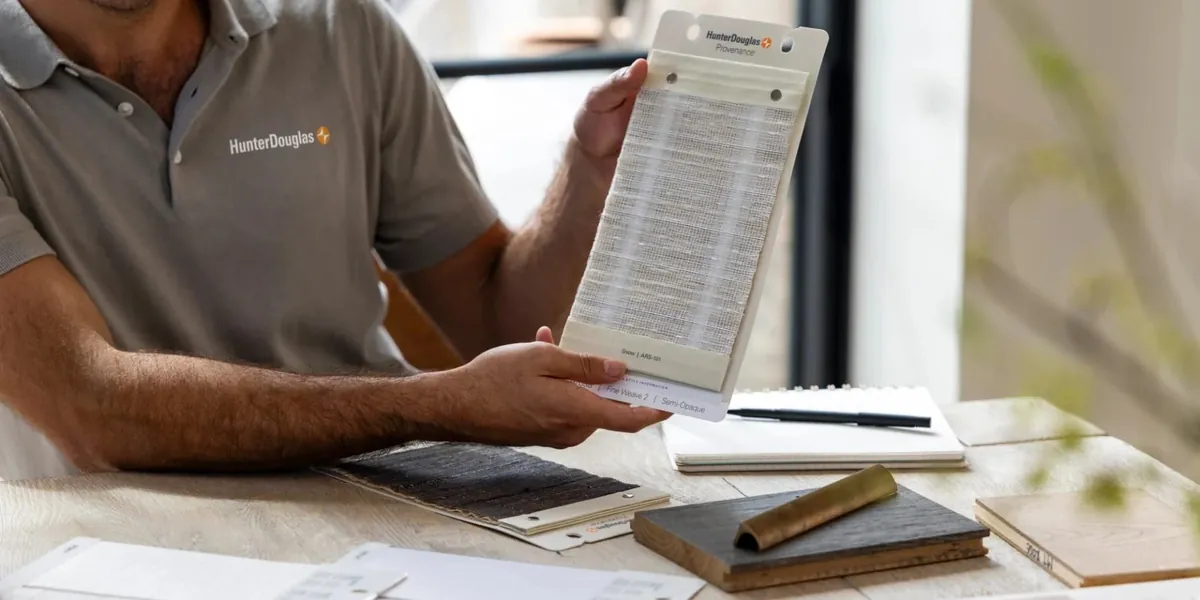
Designing the shades with the room
As a Hunter Douglas Gallery dealer, Blinds & Designs holds the standing Hunter Douglas gives only to dealers who meet its standards. For a house built to this standard the benefit is breadth: honeycomb shades, drapery, roman shades and PowerView all come from one source and can be specified together, fabric beside fabric, in one sitting.
Hunter Douglas certifies the people who hang our shades, which matters when a single headrail spans a great-room window. Should anything wear or break years on, repairs come back to us as well. The Hunter Douglas dealer page for Osterville sets out the rest.
Honeycomb shades often work alongside other treatments in the same house. Have a look at roman shades in Osterville for a bedroom, motorized blinds in Osterville for a whole-house system, or everything we offer on our Osterville page.
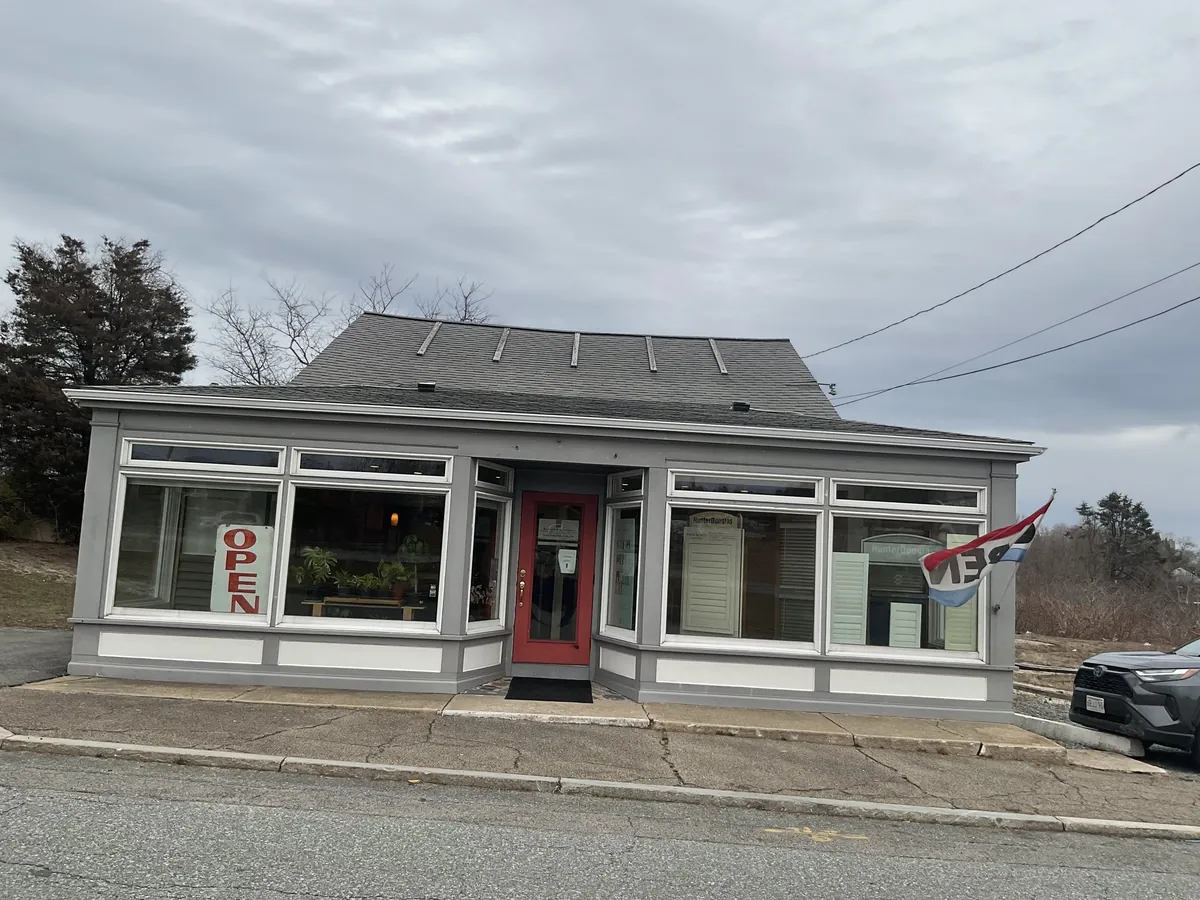
The Sagamore showroom is our nearest
Most Osterville projects start with a visit to the house, because the scale of the windows and the light off the water are impossible to judge anywhere else. That is the best place to choose cellular shades in Osterville, MA.
Some owners like to look before the van arrives. For them the Sagamore showroom, up at the canal, is the closest stop; plans or phone photos of the rooms make that conversation more useful.
Questions from Osterville
Can honeycomb shades work under drapery in a formal room?
Yes, and it is one of the best combinations. The shade sits inside the frame and handles warmth, light and privacy, while the drapery frames the window. We plan the two together so the shade’s mount and color suit the drapery.
How do you handle a two-story wall of glass?
We plan it as one design, with shades that share headrails or move separately, and PowerView motorization for the upper windows. You control them from a phone, a remote or a schedule.
Will the shades hold up on the waterfront?
The working parts sit inside the headrail, so far less is exposed to salt air than with corded blinds, and cordless or motorized lifts remove the cord altogether. We also suggest fabrics that keep their color on bright, water-facing glass.
Can the shades protect the house while it is closed?
PowerView timetables do it. The water-facing rooms close through the brightest hours and reopen toward evening, and any change can be made from the app, near or far.
What does the estimate cost, and when do you measure?
Nothing. Measuring is part of the consultation itself, and the free estimate that follows covers each shade we discussed.
Plan the shades while you are at the house
Choices like these are best made standing in the room, sample in hand, with the drapery fabric and the view beside you. Request a consultation for a date you will be in Osterville and we will arrive with the full honeycomb range, measure every opening and follow up with a free estimate. Questions before then go through the call button, and the Sagamore showroom is the nearest place to see shades in person.