
Wooded lots, a lake and the old common
Few towns put such different windows so close together. Around the common, antique colonials still have tiny original openings, some barely wider than a pair of hands. A short drive away, off Route 1A and around Lake Pearl, large newer houses sit far back on wooded lots, with two-story glass looking out into the trees or across the water. When we plan plantation shutters in Wrentham, MA, we are often working at both ends of that range in the same week.
The deep setbacks change the brief. On a big wooded lot, privacy from the road is rarely the main worry. What people want from a shutter there is control of the light: sun that comes in low through bare branches in winter, glare bouncing off the lake on a summer afternoon, and a dark bedroom when they want one.
Around the common the priorities flip. The houses sit closer to the road and to each other, the openings are small, and a shutter has to suit old trim and old glass without crowding them.
Ways to lay out plantation shutters in Wrentham, MA
The collection is only part of the decision. These layouts are the ones that come up most in Wrentham houses, and we bring examples of each to the visit.
A single panel for a tiny sash
The smallest antique openings take one panel hinged to one side, with slim louvers, so no center stile cuts across the glass.
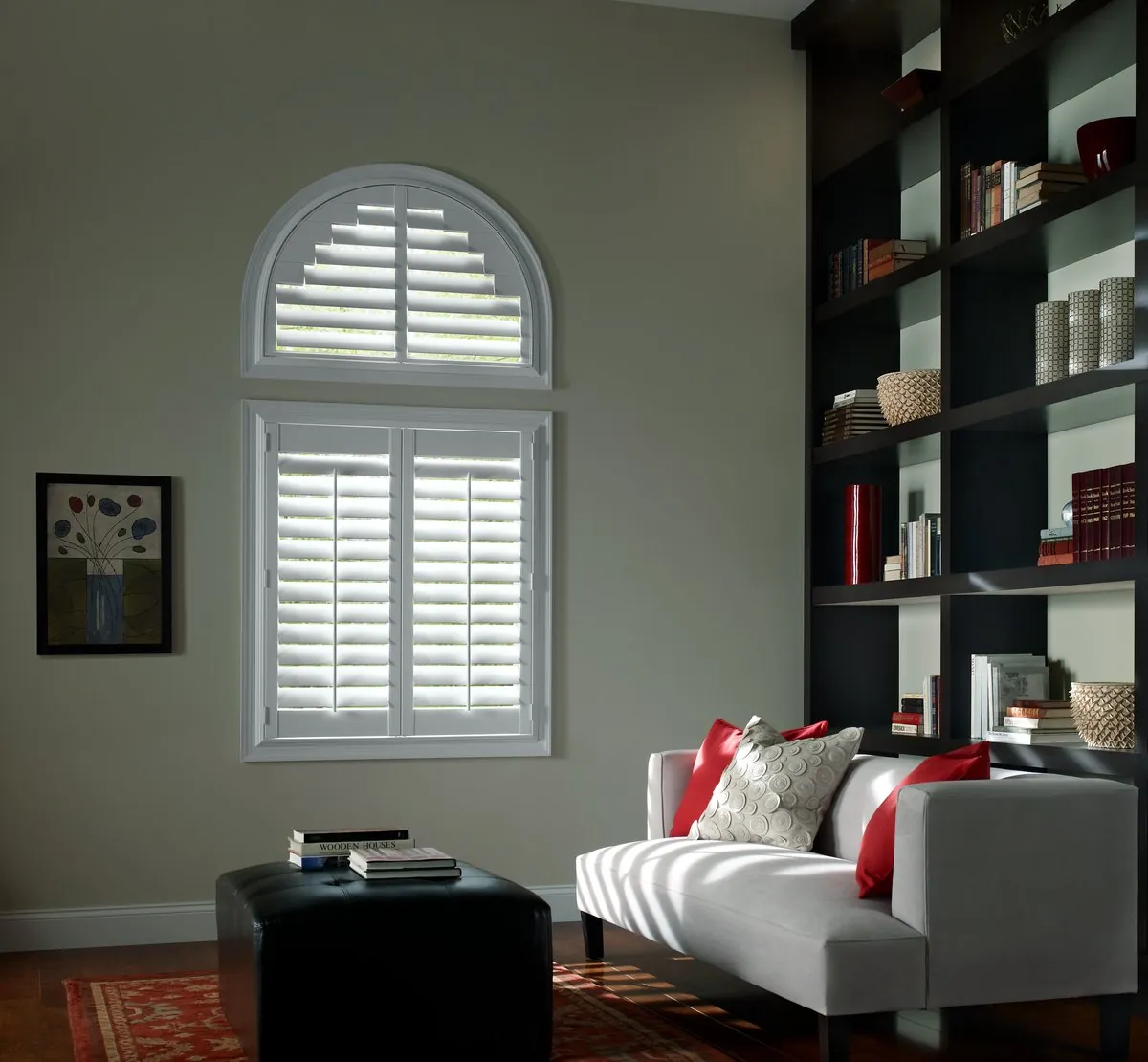
Tiers for tall glass
Two-story windows are divided into stacked rows of panels, each row working on its own, so the lower glass can open while the upper stays set.
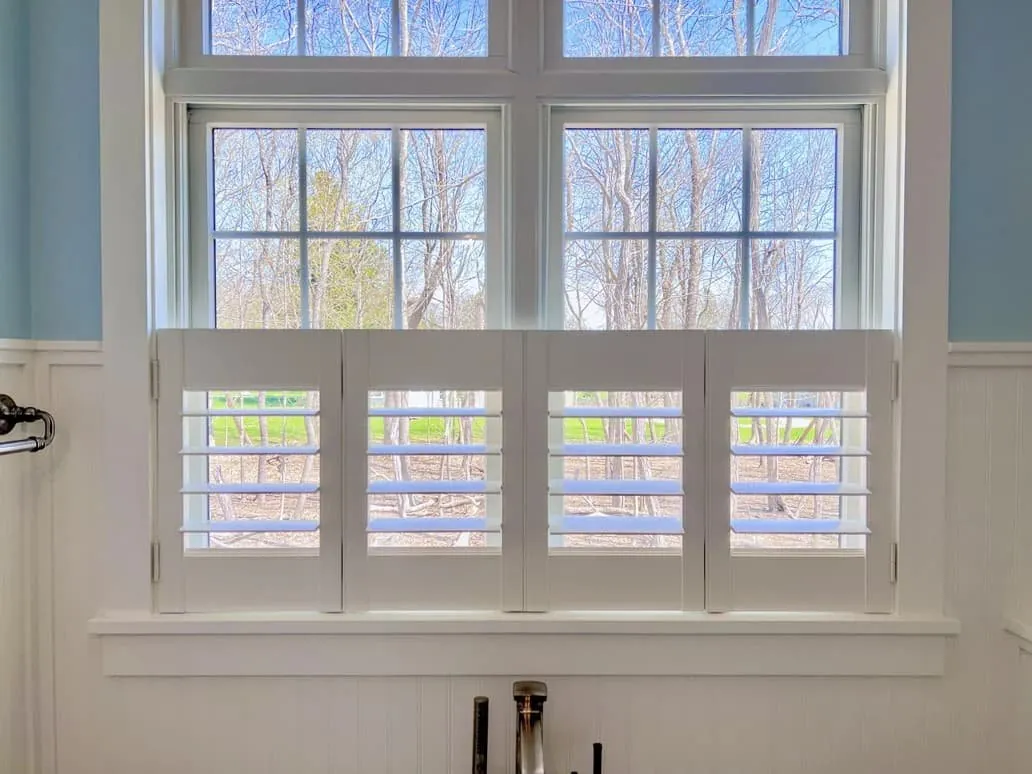
Cafe panels below
Shutters on the lower sash only. A kitchen keeps its view of the trees above while the counter is screened below.
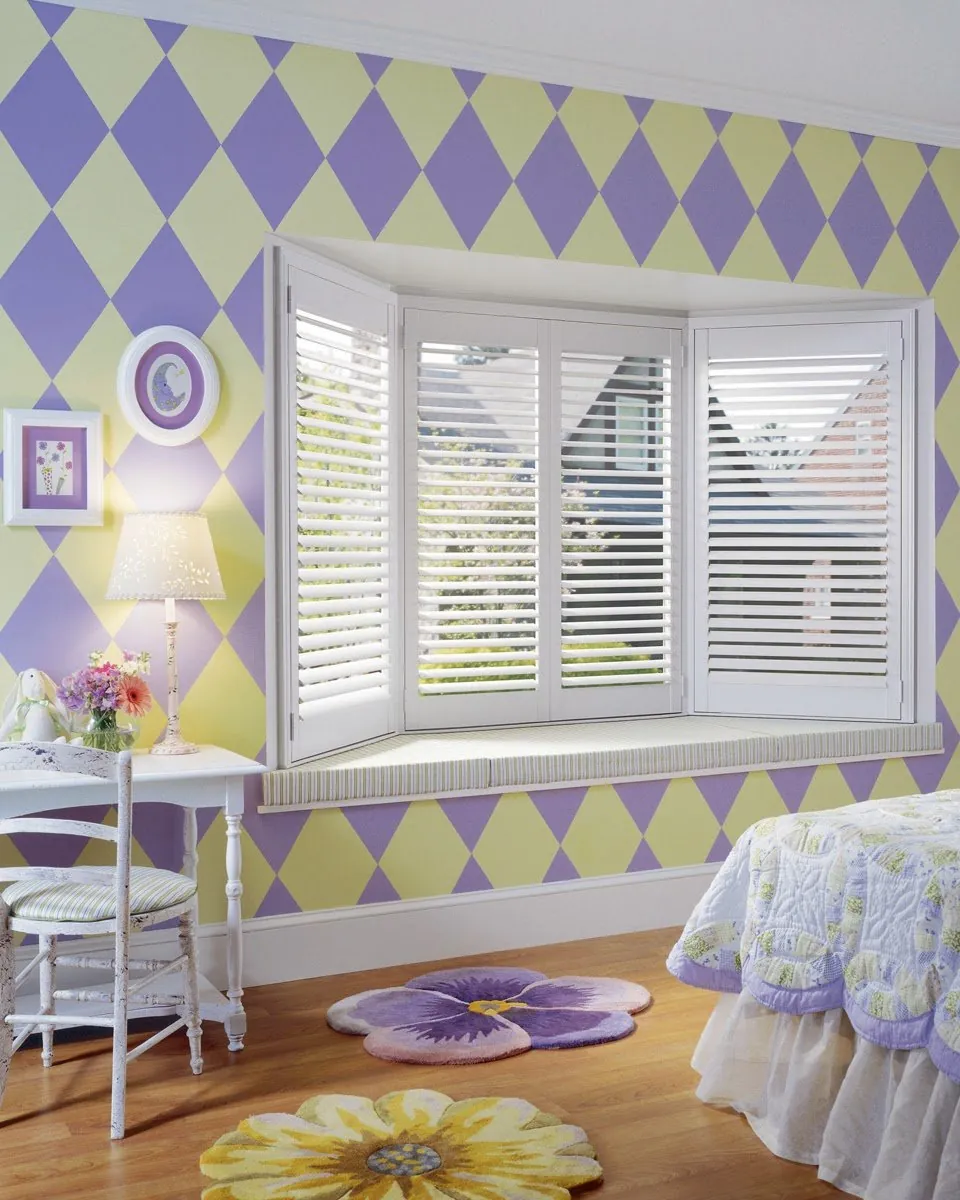
Window seats and bays
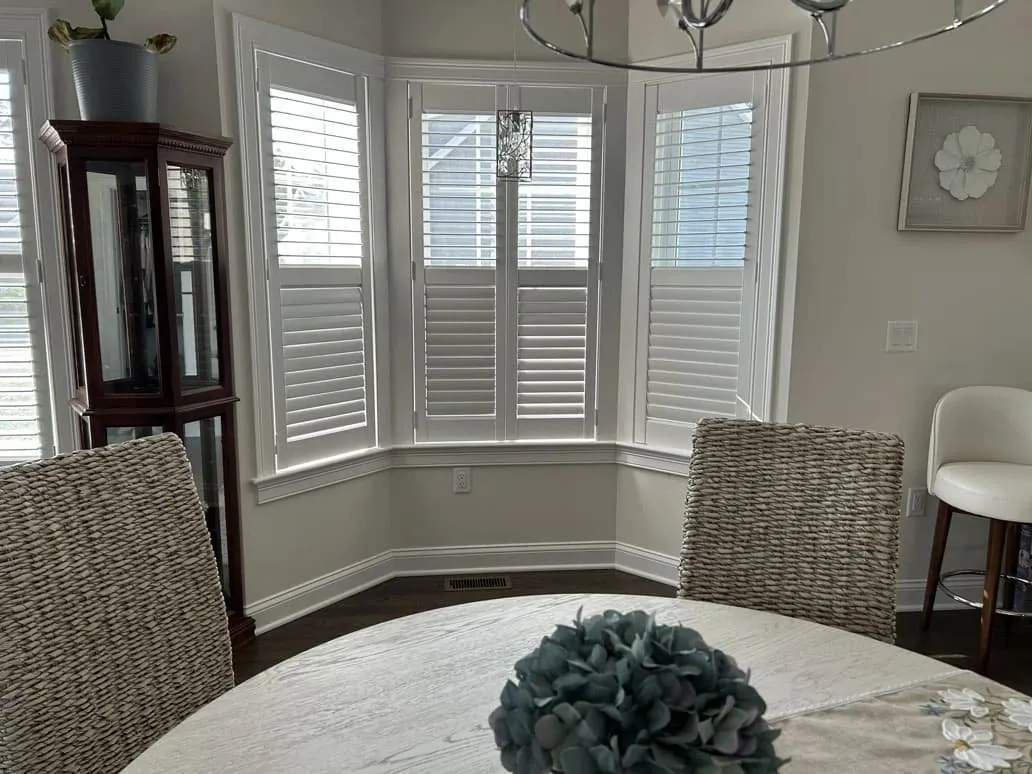
Each face of a bay gets its own shutter, joined at the angles, with the frame set so a window seat stays clear.
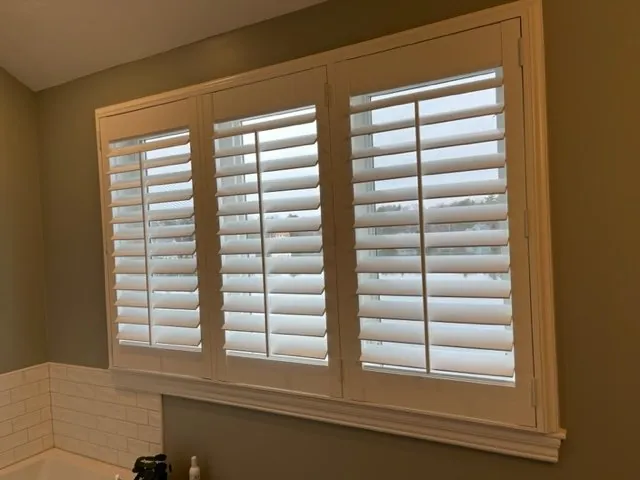
Polysatin for wet rooms
Palm Beach shutters have no wood inside, so a steamy bath or a laundry room by the garage is no trouble.
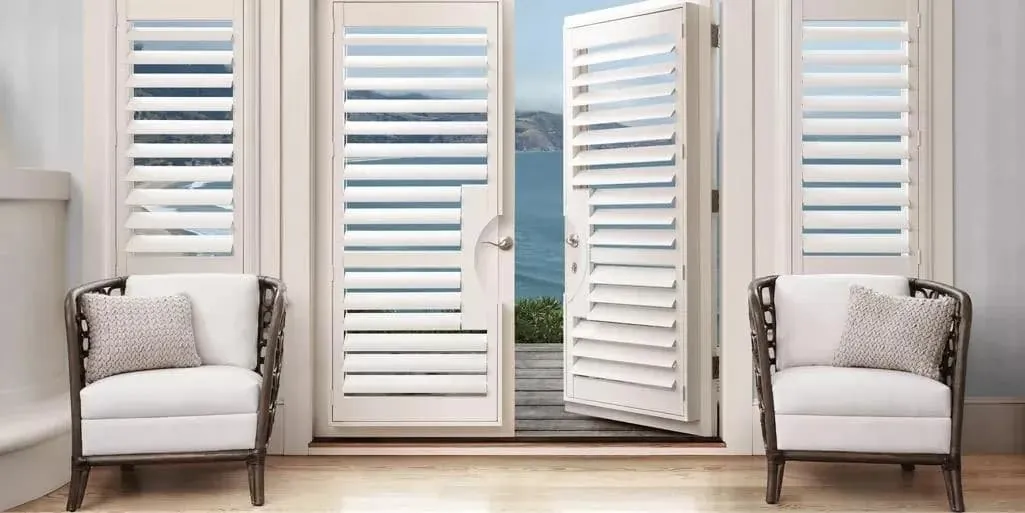
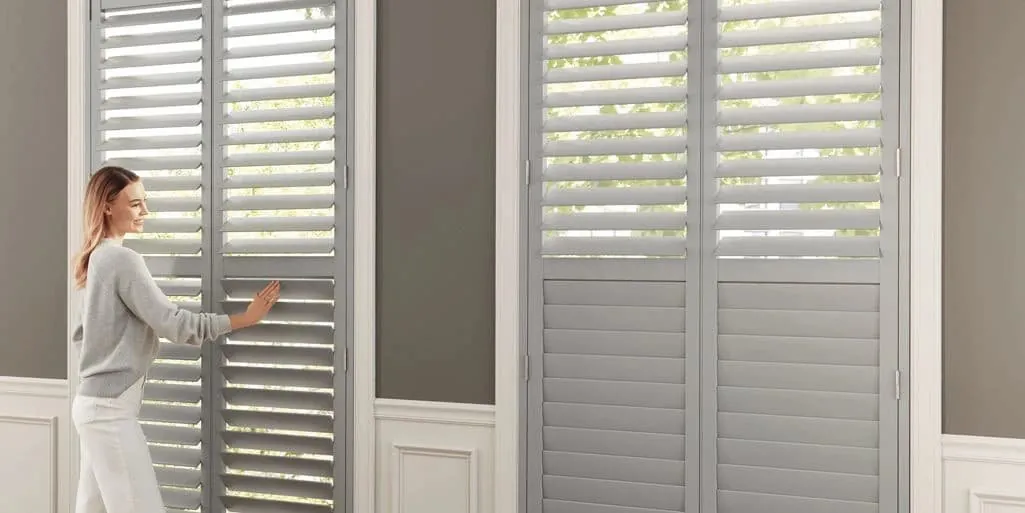
French doors to the deck
Shutters mounted on the doors swing open with them and tilt independently when the doors are shut.
The antique colonials around the common
The houses that face the common and line the roads leading off it are some of the oldest in town. Their windows are small, set in thick casings, and often fitted with original sash that has been painted and repaired many times. Some upstairs windows, tucked under the eaves, are tiny.
Small openings like these call for restraint. The louvers should be slim, so there are enough of them to look like a shutter rather than a few planks across the glass. The frame should be as narrow as the opening allows, so it does not eat into an already small pane. And the panels should close neatly inside the reveal, so the old casing stays fully visible.
Antique openings are also rarely square. We measure each one at the top, middle and bottom, check both diagonals and look at the depth at several points, because a reveal can taper. The frame is then built to absorb any lean, so the panel closes evenly even if the window does not. If sash locks or stops would catch the louvers, we look at a frame that sets the panel forward, or a slim outside mount on the casing. Our guide to shutters for older windows explains how those choices are made.
Many of these houses have natural wood trim, and stained Heritance is often the shutter that looks most at home beside it.
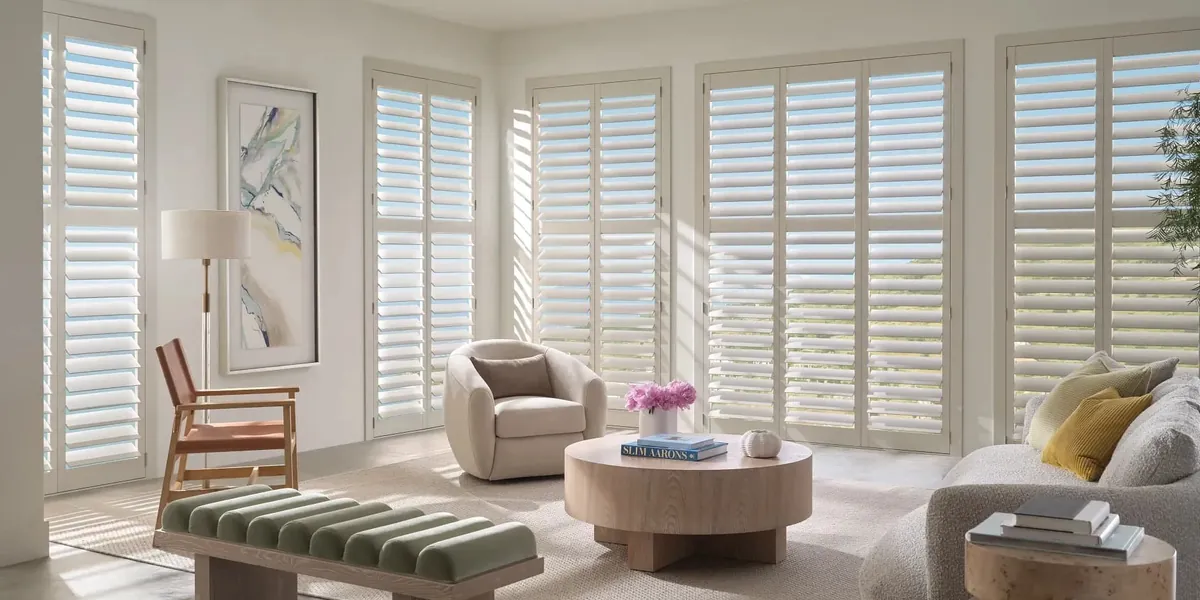
Great rooms with two-story glass
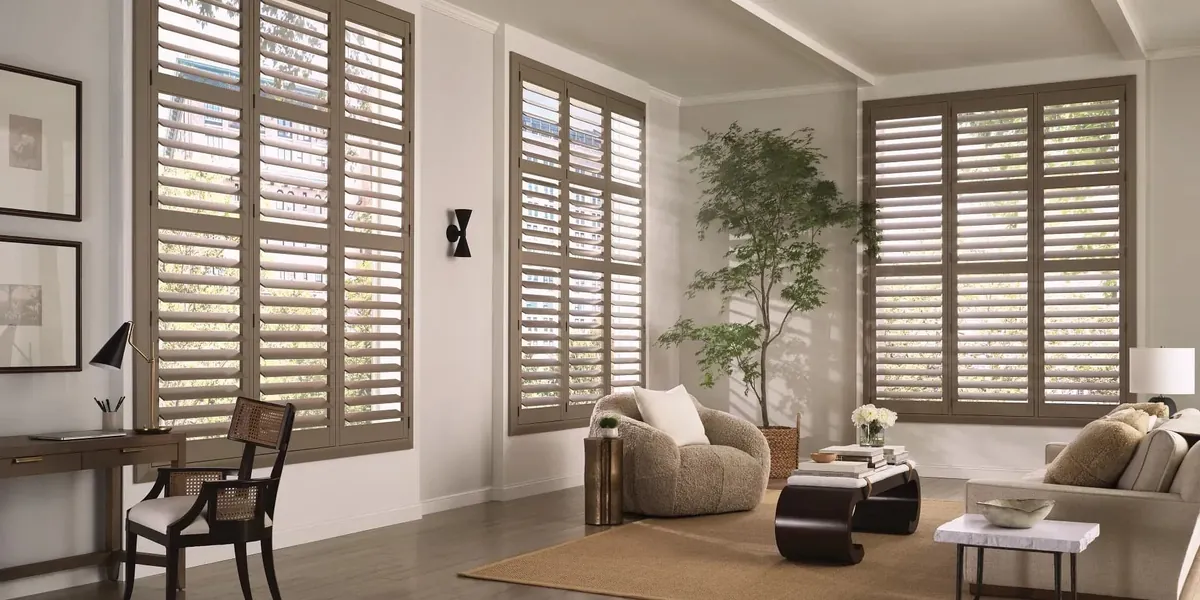
The larger newer houses off Route 1A and near the lake tend to put their tallest glass at the back, in a great room or family room with a high ceiling and a wall of windows looking into the woods or toward the water. It is the room people build the house around, and it is also the room that gets the most sun.
Shutters can cover that wall without turning it into a solid surface. We usually lay the lower windows out as working panels, with wide louvers that give a clear view when they are open flat. Above them, transoms or upper windows can take panels with louvers fixed at a single angle, letting light in while cutting the direct sun, or hinged panels if a balcony or a loft gives you a way to reach them.
Where the upper glass needs to open and close and nobody can reach it, a Hunter Douglas shade with PowerView motorization can cover that part and move on a schedule, while shutters cover the windows you can reach. The two sit together well when the colors match.
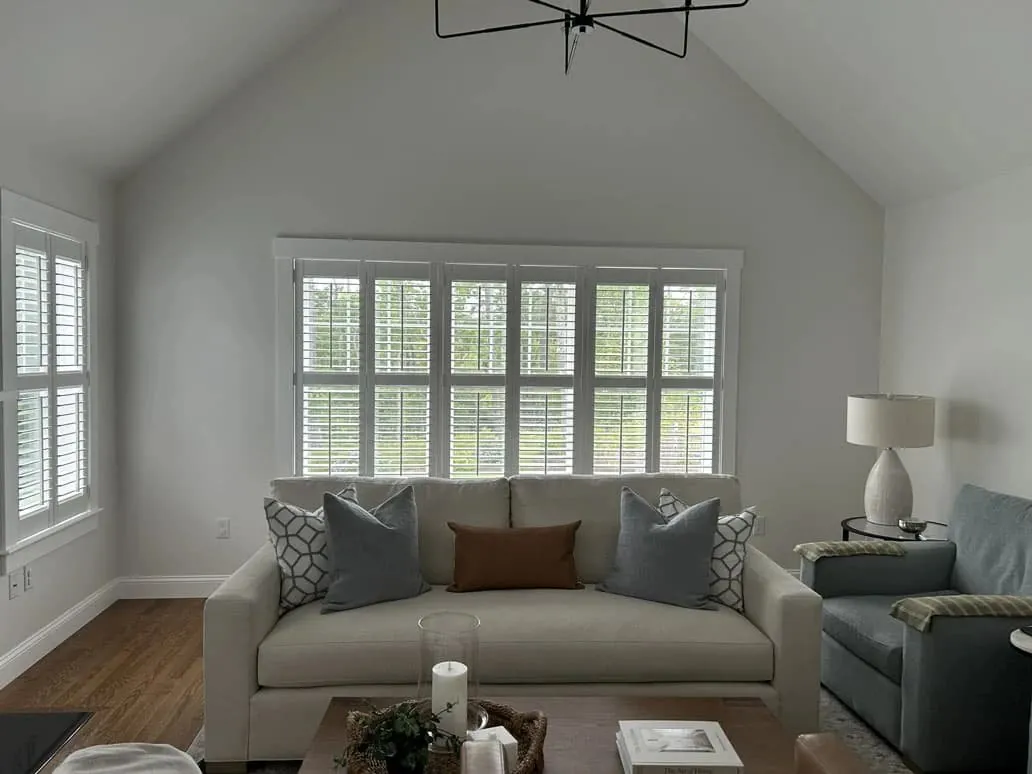
Glare off Lake Pearl
Houses that look over Lake Pearl get a second dose of sun on bright days. The light comes in from the sky and again off the surface of the water, low and straight into the room. It washes out a television, warms a sofa, and makes a lakeside room hard to sit in at certain hours.
Louvers are good at this kind of problem because you can aim them. Tilted slightly down, the blades block the sun coming in above the horizon while you can still look down to the water. Tilted up, they throw the light to the ceiling, so the room stays bright without the glare across the floor. Closed, they take the heat out of the hottest part of the day.
Wide louvers suit a lakeside room best, because when they are open you look through fewer blades and keep more of the view. A light finish reflects some of the heat back out. If the room has doors to a deck or a porch, matching shutters on the doors keep the whole wall in one style.
When privacy is not the point
On a deep, wooded lot, the house across the road may be out of sight altogether. People still choose shutters there, but for other reasons.
The first is light. Bare trees in winter let the low sun reach far into a room, and full trees in summer turn the same room green and dim. A shutter lets you fine-tune both, opening the louvers wide on a gray day and angling them against a bright one.
The second is sleep. A bedroom facing east into the woods gets the first light of the morning. Closed louvers darken a room well, and a divider rail lets you open the upper half for air and daylight later in the day.
The third is the look. On big windows with plain modern trim, a fitted shutter frame finishes each opening and gives the room a calm, architectural feel. For many people that is the reason they choose plantation shutters in Wrentham, MA, before anything else.
Louvers, rails and tilt
Three details make the biggest difference to how a shutter looks and works once it is up.
Louver size. Slim blades for the tiny sash around the common, medium for standard bedroom windows, wide for the great rooms and lake views. Mixing sizes across a house is fine as long as the finish matches.
Divider rails. A horizontal rail across a tall panel splits the louvers into two groups that tilt separately. It suits tall windows in both old and new houses and keeps long panels from looking stretched.
Tilt style. A classic tilt rod down the front moves all the blades at once and suits a traditional room. A hidden tilt works from the edge of the panel, leaving the face clear, and suits a modern great room where the view matters.
Planning a whole house on a large lot
The newer houses on the wooded lots are big, and big houses have a lot of windows: a primary suite with its own bath, several bedrooms, an office, a family room, a dining room, a mudroom and often a bonus room over the garage. Treating them all at once can feel like a large decision, so we break it down.
We start with the rooms that face the strongest light or matter most to you, usually the great room and the primary bedroom. Once the louver size, finish and tilt style are settled there, the rest of the house tends to follow, because one color and one louver width running through every room is what makes a large house feel calm and consistent.
Then we sort the windows by material. The baths, laundry and mudroom go to Palm Beach. The bedrooms, office and bonus room usually take NewStyle. The dining room or a front living room might take Heritance if you want the feel of real wood where guests sit. Painted the same white, all three look like one set from the hallway.
Some people order every room in one go; others start with two or three rooms and add more later. Either works, as long as the finish and louver are chosen with the whole house in mind, so later plantation shutters in Wrentham, MA, match the first ones exactly.
Stair halls and landings
Large newer houses usually have a generous front hall and a staircase with a window on the landing, sometimes a tall one, sometimes a round or arched one. Those windows light the stairs beautifully, but they are awkward to reach and they show the inside of the house to anyone coming up the drive at night.
For a landing window you can reach, a pair of hinged panels with a divider rail is the usual answer: the lower louvers closed for privacy, the upper ones open for light. For a round or arched window, a shaped panel follows the curve, with louvers fixed at an angle or a solid insert. For one high above the stairs, fixed louvers set once at install mean you never need to reach it at all.
Older houses around the common have their own stair windows, small and often set in a deep reveal on the turn of a narrow staircase. A single slim panel suits those, tucked into the reveal so it never catches a passing shoulder.
Picking a finish for old trim and new
Color looks different in every house, and the two kinds of Wrentham house light it very differently. A small room in an antique colonial, with low ceilings and small windows, is often dim, and a bright white shutter can glow against old painted trim that has gone soft and creamy with age. A warm white or an off-white usually settles in better. Where the trim is natural wood, a Heritance stain chosen against the casing can look as if it has always been there.
A great room under tall trees is a different story. The light is green in summer and gray in winter, and a crisp white shutter keeps the room bright and clean. Soft grays and taupes suit a house with darker walls or a more modern style.
We bring finish samples so you can see them in your own rooms, in daylight and under your lamps in the evening. It is the only reliable way to judge color, and it is quick to do while we are there measuring.
Three collections, three jobs
Palm Beach
Made from polysatin, with no wood in it. It is the right choice for bathrooms, the laundry, a mudroom and the window over the kitchen sink. In a large newer house that can be several rooms; in an antique colonial it is usually one small bath. More on Palm Beach.
NewStyle
A hybrid with the look of painted wood, strong enough for the wide panels a great room needs. It is the everyday shutter for bedrooms, family rooms and offices. More on NewStyle.
Heritance
Real hardwood, painted or stained, with the widest choice of finishes. It belongs in an antique house with natural wood trim, or a front room in a newer house where you want the warmth of real wood. More on Heritance.
The main plantation shutters page compares all three. Most houses use two of them, matched in color and louver size.
Measuring and fitting
Shutters are made to the measurements we take, so the measuring decides how the finished job looks. On the tall glass in a newer house we also plan how the tiers line up; on an antique window we plan how the frame takes up any lean.
- We measure each opening at three heights and three points across, and check the diagonals.
- We check depth at several points and note any hardware the louvers must clear.
- On tall glass we mark where the tiers and rails will fall, so they line up across the wall.
- You confirm collection, louver, frame and tilt for every window before we order.
- Our certified Hunter Douglas installer sets each frame, hangs the panels, adjusts the hinges and checks that every louver closes flush.

The Franklin showroom, or your own living room
The Franklin showroom is our nearest location to Wrentham, and you are welcome to stop in.
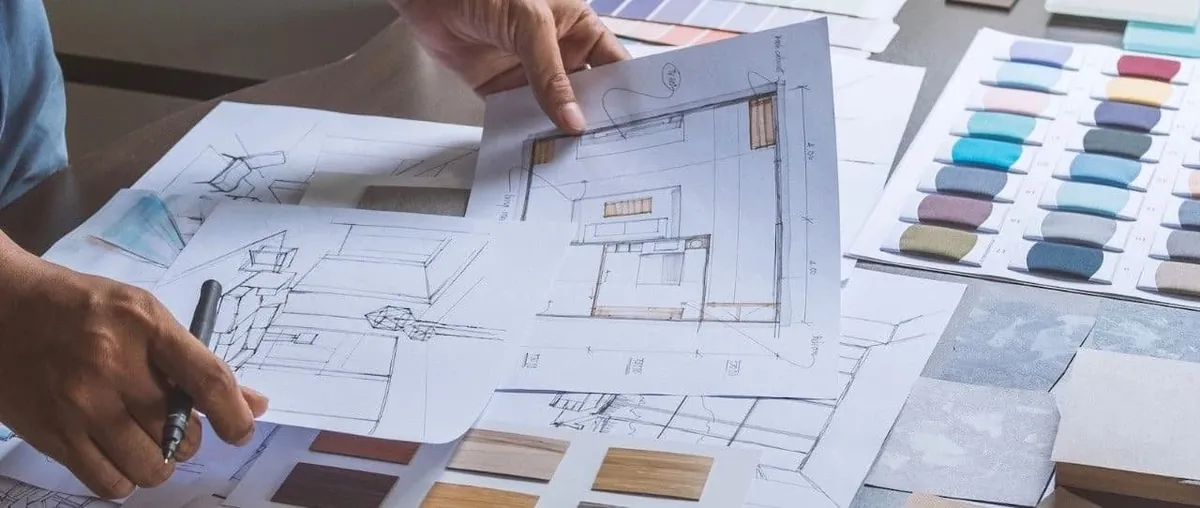
For shutters, though, most decisions are easier at home. You need to see a louver against your own trim, judge a color in your own light and picture a frame inside your own window. That is why our vans carry shutter samples in every collection and louver size. We can bring the showroom to you, whether the house is an antique on the common or a new build at the end of a long drive.
The visit covers whatever you want it to: one bedroom, the great room, or the whole house. We measure, talk through options and leave you with a free estimate. Read what happens at an in-home consultation for more.
Why choose a Gallery dealer for shutters

The full range
As a Hunter Douglas Gallery dealer, we offer Palm Beach, NewStyle and Heritance with every louver size, frame and finish.
Certified installation
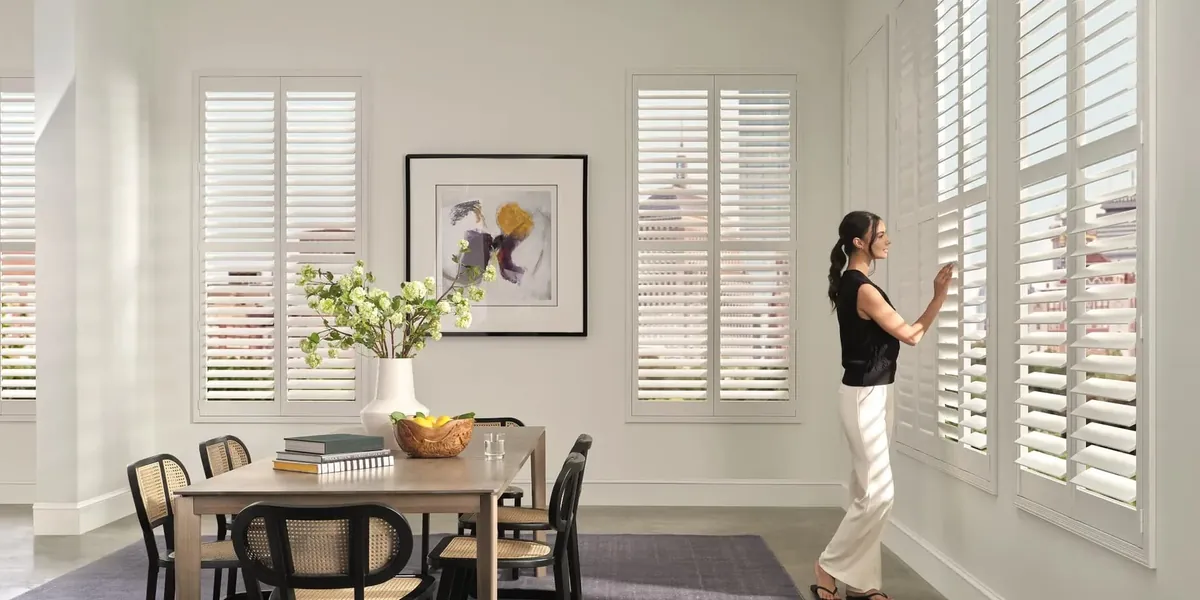
Our installers are certified by Hunter Douglas, and they set every frame square even when the opening is not.
Help for every room
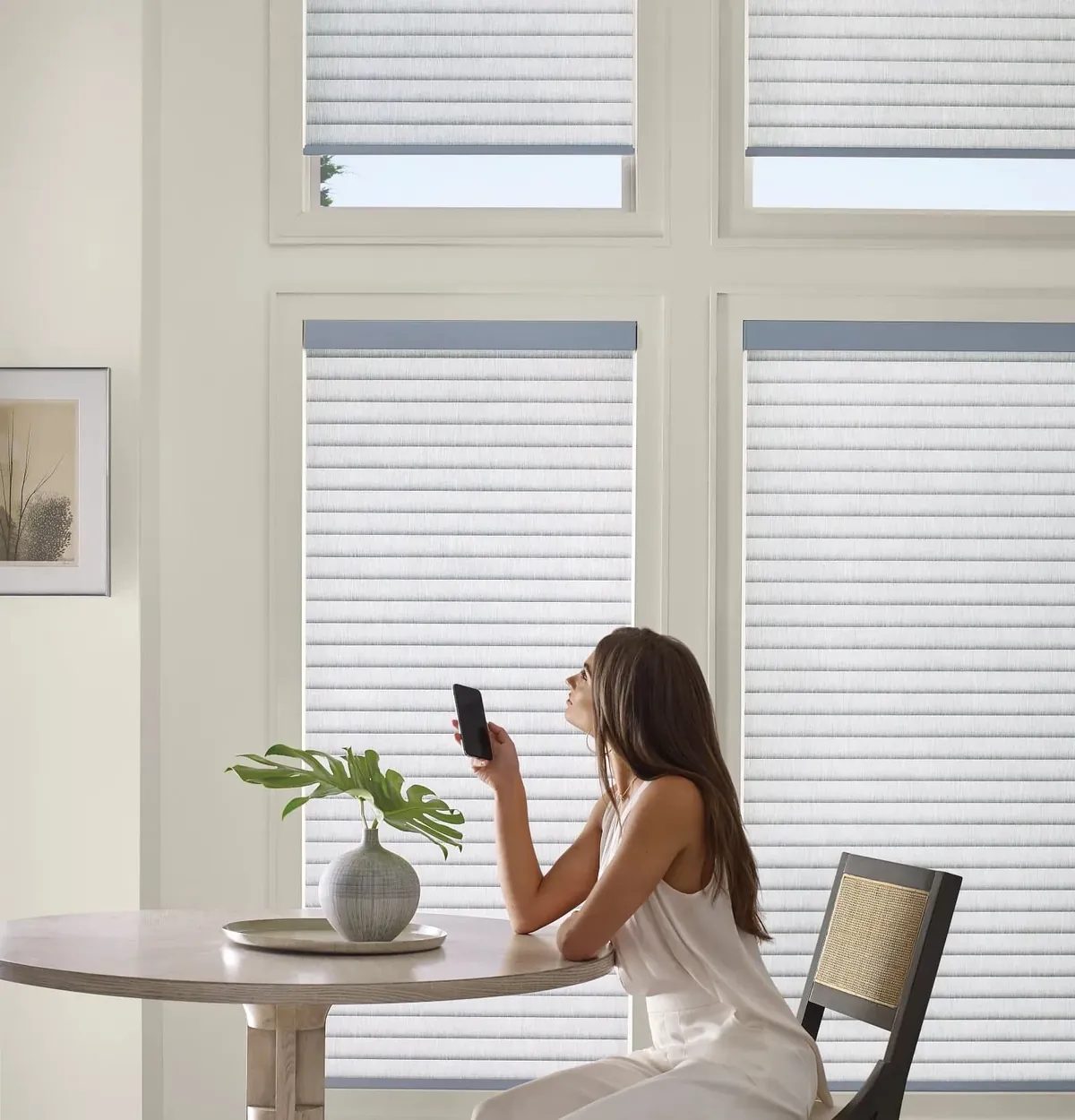
We also carry Hunter Douglas shades, blinds and motorization, offer interior design consultations, and repair blinds and shades.
If another room in the house suits a shade better, see our cellular shades in Wrentham or motorized blinds in Wrentham, or everything we offer on our Wrentham page.
Questions from Wrentham
Are my tiny antique windows too small for shutters?
Rarely. A small opening takes a single panel or a narrow pair, with slim louvers so there are enough blades to look right. We measure carefully and suggest a slim outside frame where the reveal is too shallow.
Can shutters cover the two-story glass in my great room?
Yes. The lower windows take working panels, and the upper glass can take panels with fixed louvers, hinged panels if you can reach them, or a PowerView shade if you want it to move on its own.
Will shutters help with glare from the lake?
They are one of the best ways to handle it. Tilt the louvers down to block the sun above the horizon and keep the view of the water below. Wide louvers keep more of the view when open.
Our house is set far back from the road. Are shutters still worth it?
Many people on deep lots choose them for light control, a darker bedroom in the morning and the finished look a fitted frame gives a large window.
What will the estimate cost?
Nothing. Once every window is measured, we give you a free estimate with no obligation.
Take the next step
Plantation shutters in Wrentham, MA, start with a look at your own windows. Request a consultation and we will bring samples, measure and leave you with a free estimate. You can also reach us through the call button, or visit the Franklin showroom.