
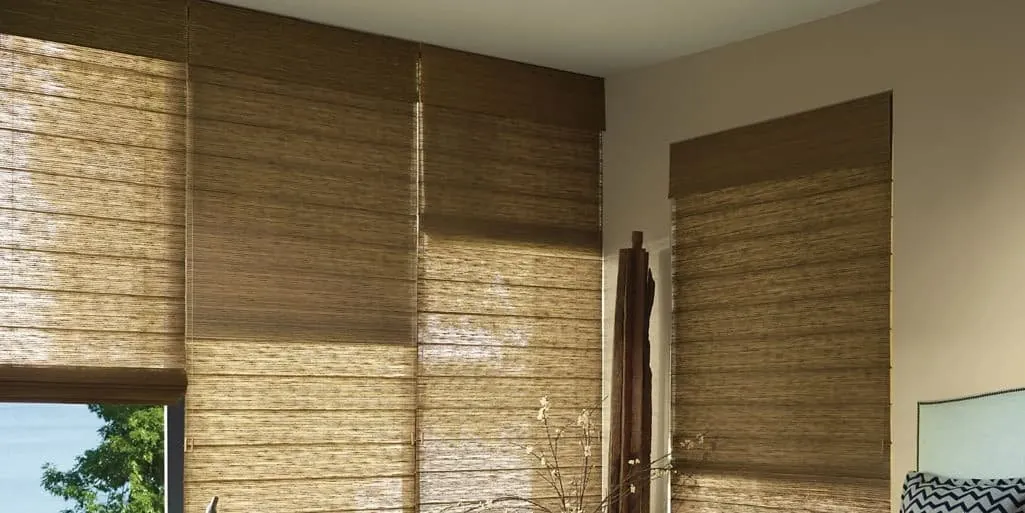
Rooms that take light from every side
Freetown houses have room around them. The capes and ranches spread across generous wooded lots toward Assonet and the edge of the state forest, and the river houses along the Taunton sit with water on one side and trees on the other. With that much space, builders put windows on two or three walls of a room rather than one, so most rooms get morning light from one direction and afternoon light from another. That is the first thing we think about with roman shades in Freetown, MA.
A room lit from several sides is a pleasure most of the day, but it is hard to control with a single kind of window covering. The east window wants something heavier at dawn, the west window needs glare control by late afternoon, and the north window may need nothing more than a touch of color. A roman shade is made one window at a time, so each opening can have the right fabric while the room still looks consistent.
The trees add their own twist. In summer the canopy filters the sun into moving patches of light; in winter the leaves are gone and the same windows take bright, low sun straight through bare branches. Good fabric choices cope with both.
Matching the fabric to the compass
The fold sets the style, but the fabric decides how a room feels. In a Freetown house, where one room may face three directions, we often start by asking which way each window looks.
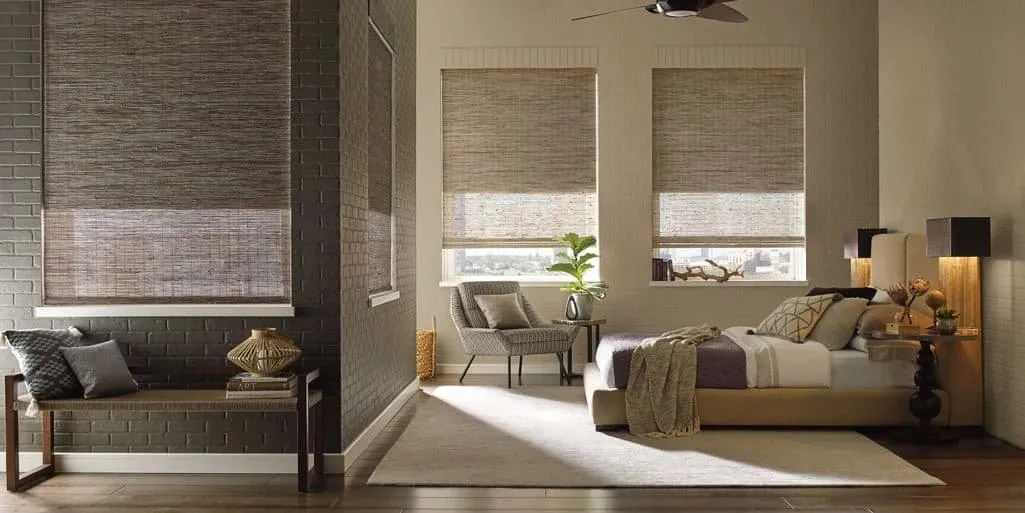
East windows and early sun
Bedrooms on the east side catch the first light through the trees. A lined or room-darkening fabric keeps them dim until you decide to raise the shade.
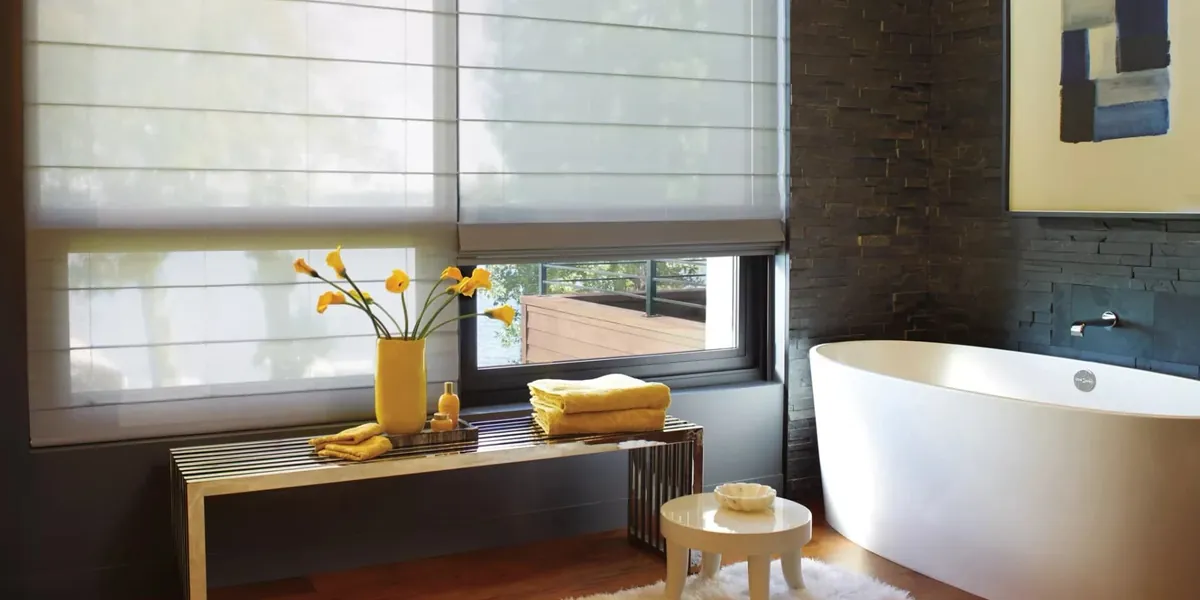
South and west glare
Sheer and light-filtering weaves soften the strong afternoon light and keep the room bright, so you are not drawing the shades and switching on lamps.
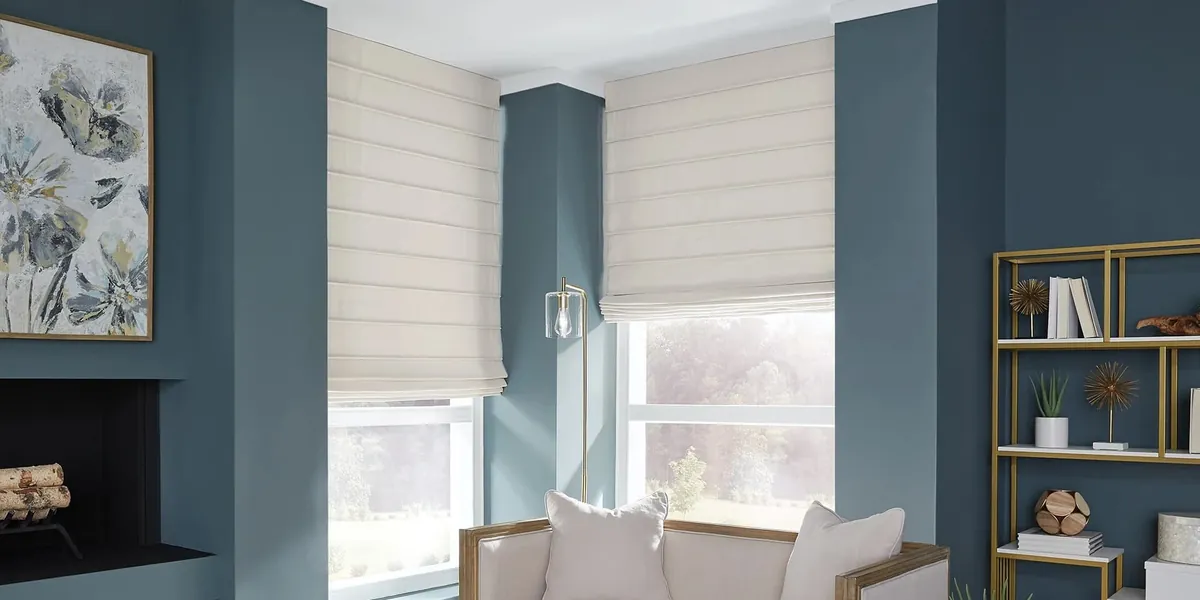
North windows and color
A north window gets steady, gentle light. It is the place for a richer color or a patterned Carole Fabrics flat fold, since the fabric is seen more than the light through it.
Capes on the wooded lots toward Assonet
The capes on the roads toward Assonet usually sit back from the road among trees, with a central front door, windows either side and dormers above. Downstairs, the front rooms often have windows on the front and on the gable end, so the living room and dining room each take light from two directions. Upstairs, the dormer windows are small and set into a sloped ceiling.
For the front rooms, we tend to suggest one fabric across both walls, perhaps lined on the side that takes the sun and unlined on the shaded side. From inside, the shades look matched; in use, each window does its own job. Inside mounts keep the trim visible, which suits the simple painted casings these houses usually have.
In the dormers, the stack height matters. When a roman shade is raised, its folds gather at the top of the window, and in a dormer with little room above the glass, a tall stack can hang across the view. A flat fold makes the smallest stack, so it is usually our first suggestion upstairs.
Ranches among the trees
Freetown’s ranches tend to sit on wide lots, long and low, with the living room and bedrooms along one side and a kitchen and family room at the back. Big living room windows face the front yard; the back rooms look into the woods. Light inside depends heavily on the trees.
In summer, a back room facing the forest can be dim enough that you want no shade at all during the day, only something for privacy at night. A light-filtering roman shade in a pale color, raised most of the day and lowered in the evening, suits that well. The front living room is a different story, taking the full sun across an open lawn, and usually needs a fabric that cuts more glare.
Bedrooms in a ranch are often at one end of the house with windows on two walls. A corner bedroom like that gets light early and late, so a lining is worth considering on both windows, not only the one facing east.
Corner rooms and light from three sides
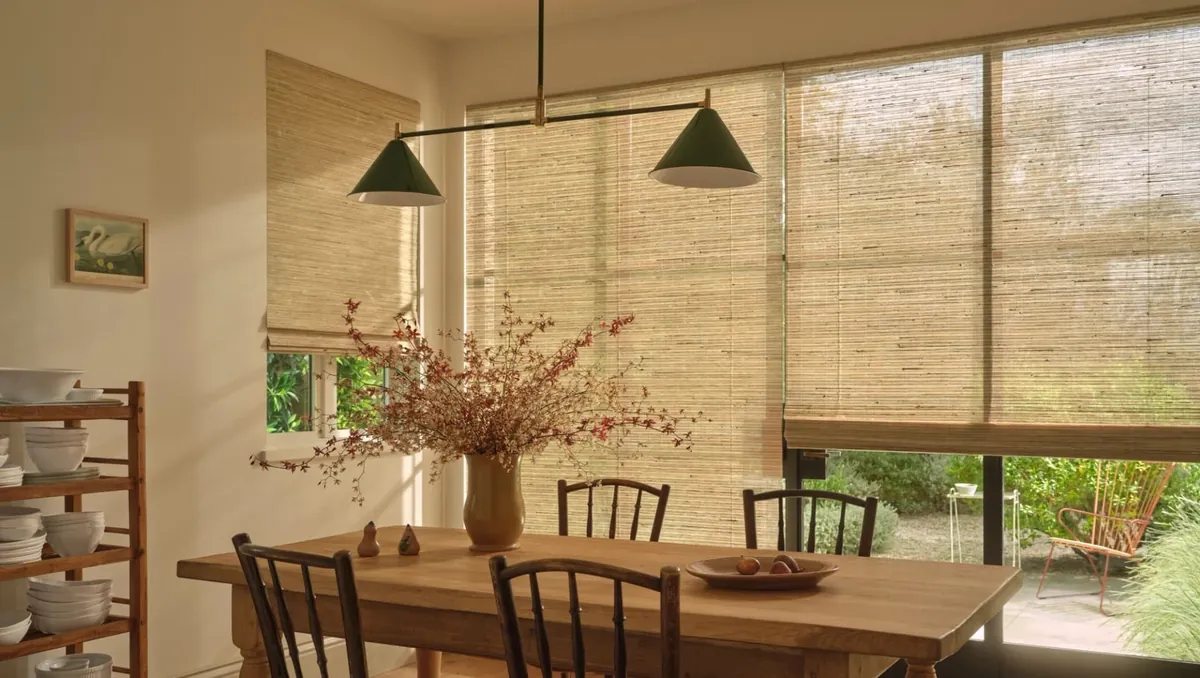
Some rooms in a Freetown house have windows on three walls: a sunny kitchen on the back corner, a family room added to the side, a breakfast nook pushed out into the yard. These rooms are bright and pleasant, but they are the hardest to get right, because the sun moves around them all day.
The trick is to treat each wall on its own merits while keeping the look unified. We usually choose one fabric family for the room, so the color and texture match, and then vary the weight: light-filtering on the windows you want open most of the day, a lined version where the sun is harshest. Because each roman shade is a separate panel, you can lower only the ones that need it at that hour.
Where windows meet at a corner, we make sure the shades clear each other when raised and that the headrails sit at the same height. It is a small detail, but it is what makes a corner look finished rather than fitted in.
River houses on the Taunton
The houses along the Taunton River face the water and are usually more open on that side, with a bigger window, a slider or a set of doors facing the river. Light comes in reflected off the water as well as directly from the sky, and in the afternoon it can be strong.
For these rooms, the first question is how much of the river you want to keep in view with the shade lowered. A sheer or light-filtering fabric lets you see the water through it while taking the glare away. When you want the whole view, the shade folds up into a neat stack at the top of the window. On a slider, we usually suggest a shade fixed above the door frame so the folds clear the opening entirely when raised.
The back of a river house, facing the road and the trees, is often shaded and quiet, and may only need a light shade for evening privacy. Planning roman shades in Freetown for a river house means treating the two sides as almost two different houses.
How the home visit goes
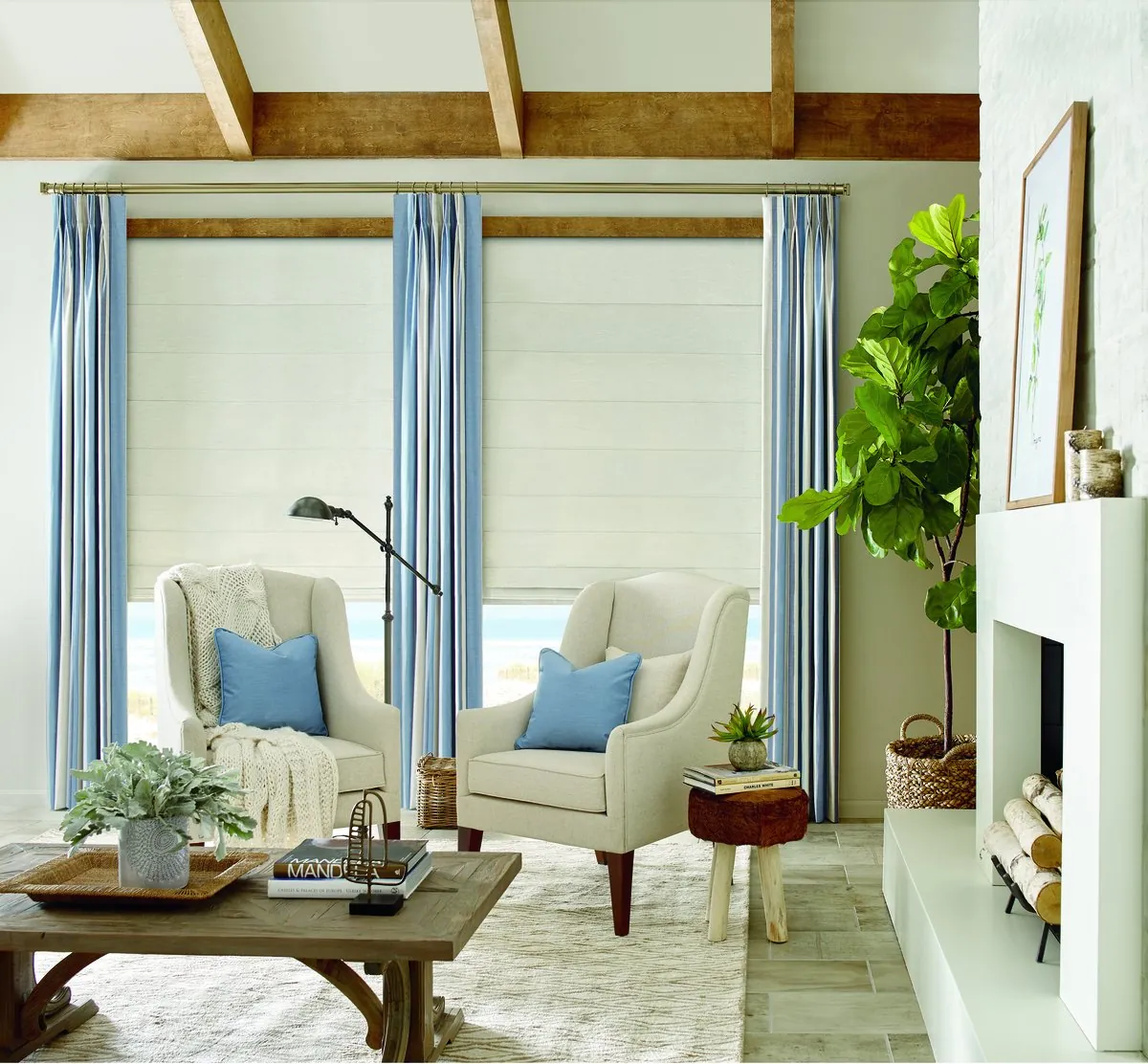
In a house where every room faces a different way, it helps to see fabric samples in the actual rooms, ideally at the time of day the light is most difficult. Our vans carry samples, so we can bring the showroom to you, and we will try to come at the hour that suits the problem.
- You ask for a consultation online or with the call button, and we agree on a time.
- We bring roman fabrics across the full range of weights, plus working samples of each fold and lift.
- We walk through the rooms, noting which way each window faces and how you use the room.
- You compare fabrics at the windows themselves, in morning or afternoon light.
- We measure every window, including dormers, sliders and corner pairs.
- You get a free estimate and can decide in your own time.
If you would like help choosing colors for the whole room, ask about our interior design consultations. There is more about what happens at an in-home consultation on its own page.
When the leaves come down
On a wooded lot, the light changes completely between summer and winter. A room that sits in green shade from May to October can be flooded with low sun by December, once the leaves have dropped. Windows that seemed to need nothing suddenly need glare control, especially in rooms facing south.
That is worth thinking about at the consultation, which may happen in a season when the trees are full. We ask what the room is like in winter, and if a window turns harsh once the leaves are gone, we may suggest a slightly heavier fabric than the summer light alone would suggest. A light-filtering fabric that seems generous in July is often just right in January.
Winter sun through bare branches is also when the warmth of a lined shade is most welcome. Lowered in the evening, a lined roman shade puts a layer of fabric between the cold glass and the room.
PowerView for rooms that change all day
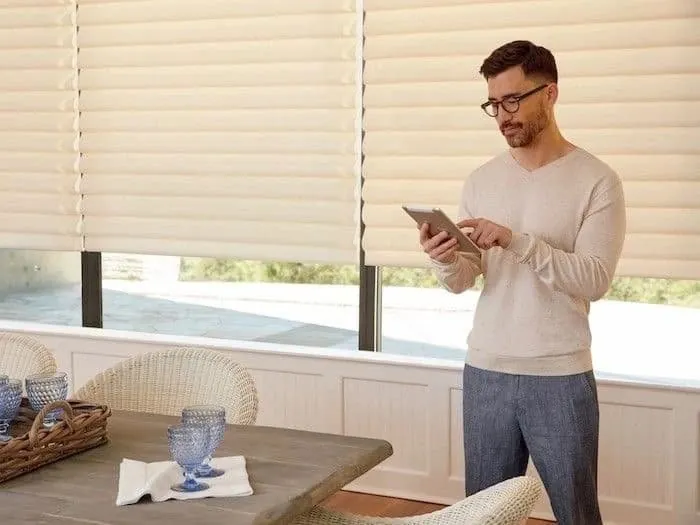
When the sun moves around a room from one window to the next, adjusting the shades by hand becomes a chore. PowerView motorization lets you lower the east shades in the morning, raise them by mid-morning and drop the west shades in the afternoon on a schedule, without anyone touching them. You can also move them with a remote or from your phone.
It is particularly useful on windows that are hard to reach, such as the high window in a family room addition or the shade over a kitchen sink. We show you the remote and the app on a working sample during the visit.
A home office with a view of the woods
A spare bedroom at the quiet end of a ranch, or a room over the garage of a cape, often becomes the place someone works from home. Those rooms tend to look straight into the trees, which is a lovely outlook for a long day at a desk. The trouble is the screen. Light from a window beside or behind a monitor washes it out, and in a room lit from two sides the glare moves as the day goes on.
Roman shades handle this better than most window coverings, because each window can be set on its own. The window behind the screen can sit lowered in a light-filtering fabric that evens out the brightness, while the window you face stays raised so the room keeps its view of the woods. A fabric with a little more weight on the sunny side keeps the light steady through the afternoon without leaving you working in a dim room.
Color matters in a workroom as well. A pale neutral bounces soft light around and keeps the room calm, while a strong color can tint the light that reaches your desk. We bring both kinds of sample so you can see the difference at the desk itself. Thinking about how a room is used, not only which way it faces, is a large part of choosing roman shades in Freetown, MA, and it is one of the reasons we prefer to see each room before suggesting anything.
Layering with side panels
In a larger living room, roman shades on the glass with fabric panels hung at the sides make a finished, comfortable room. The shade controls the light and the panels add color and soften the walls. On a river house, panels in a darker color can also frame the view of the water.
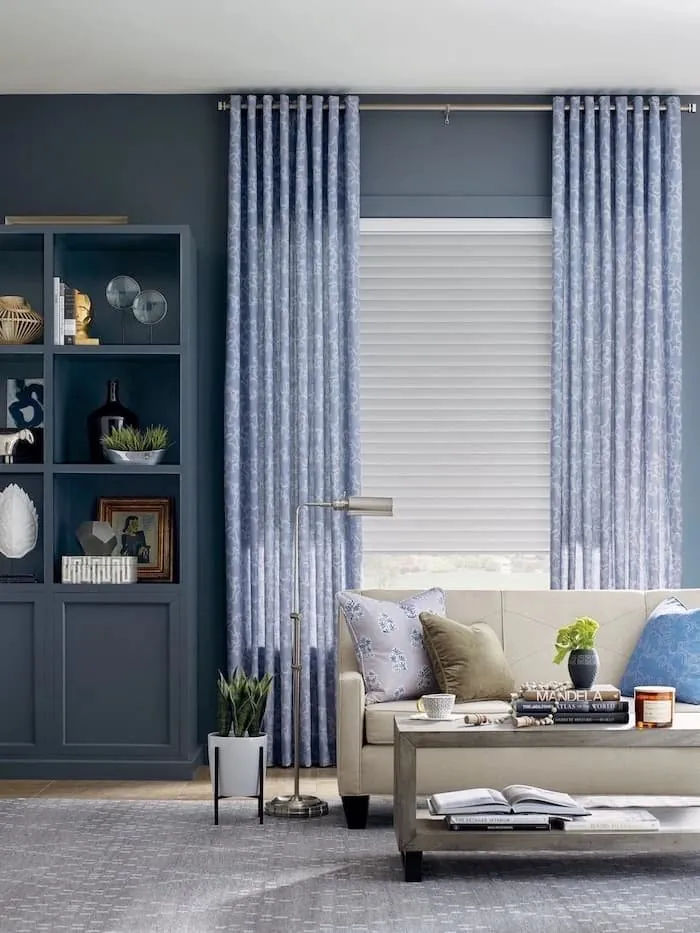
In a cape with small rooms and low ceilings, panels can make a window feel crowded, so we often leave the roman shade on its own there. We will tell you which rooms gain from the extra layer.
Vignette and Carole Fabrics compared
Vignette is Hunter Douglas’s modern roman shade: the fabric rolls into soft, even folds and there are no cords across the back, so the shade looks finished from outside. Carole Fabrics offers the traditional flat and soft folds in a very large fabric library, including patterns and textures that suit a cape or a farmhouse.
Many Freetown orders use both. A river house might take Vignette on the water side and Carole Fabrics flat folds in the bedrooms and kitchen. Our main roman shades page shows the range, and our Vignette modern roman shades and Carole roman shades pages go further into each.
Getting the size right
Each shade is made to the window, so the measurements have to be right. Here is how we take them.
- We measure each opening’s width at the top, middle and bottom, and its height at both sides and the center.
- We check frame depth for an inside mount, and note any latches or cranks in the way.
- We check how corner shades and slider shades will clear each other and the door.
- We confirm the mount, fabric, fold and lift for every window with you.
- Our certified Hunter Douglas installers hang the shades, level each headrail, test every lift and show you how to use them.
Taking the time to measure carefully is what makes roman shades in Freetown sit cleanly in their frames, with no light leaking down the sides.
A Gallery dealer for every room
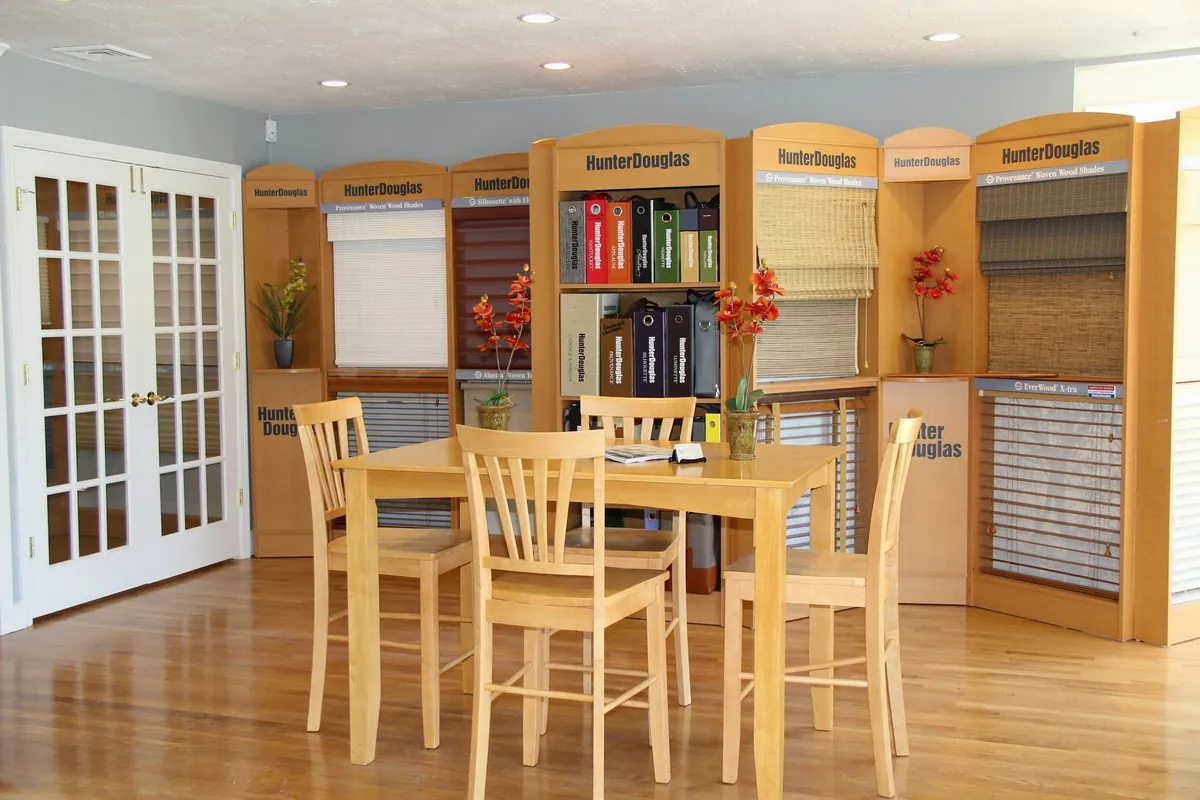
Blinds & Designs is a Hunter Douglas Gallery dealer, the designation Hunter Douglas gives dealers who meet its standards. That means the complete roman range is open to you: every Vignette and Carole Fabrics style, the Alustra Woven Textures roman, the lift systems and PowerView.
Our installers are certified by Hunter Douglas and mount each shade the way it was designed to go up. If a shade ever needs attention, we offer blind and shade repairs as well.
The same consultation can cover any other room, whether you want cellular shades in Freetown for a cold bedroom or custom blinds in Freetown for a mudroom. Everything we do in town is on our Freetown page.

We come out to the woods
A house at the end of a wooded drive is no harder for us to reach than one in a town center. We bring the sample books and working shades to your kitchen table and look at every window in its own light.
If you would rather see the range in person first, the North Dartmouth showroom is our nearest to Freetown, a short drive south.
Questions from Freetown
My living room has windows on two walls. Should both shades match?
They should look matched, but they do not have to be identical. We often use one fabric family across the room, with a lined version on the sunny side and an unlined version on the shaded side.
Will a roman shade block the view of the trees or the river?
Not if you pick the right weave. A sheer or light-filtering fabric lets you see out while cutting the glare, and raised, the shade folds into a short stack at the top.
Which fold suits a cape dormer?
Usually a flat fold, because it makes the smallest stack when raised and leaves more of the glass clear in a window with little room above it.
Can roman shades go on a slider facing the river?
Yes. We generally mount the shade above the door frame so the folds clear the opening completely when raised, and you can step out without touching it.
Is the estimate free?
Yes. After we measure, you receive a free estimate. Request a consultation and we will bring samples to your house.
See it in your own light
The surest way to choose is to hold the samples up at your own windows, on the sunny side and the shaded side. Request a consultation and we will bring Vignette and Carole Fabrics samples to your house, measure every window and give you a free estimate for roman shades in Freetown, MA. If you would like to talk first, use the call button, or visit the North Dartmouth showroom.