
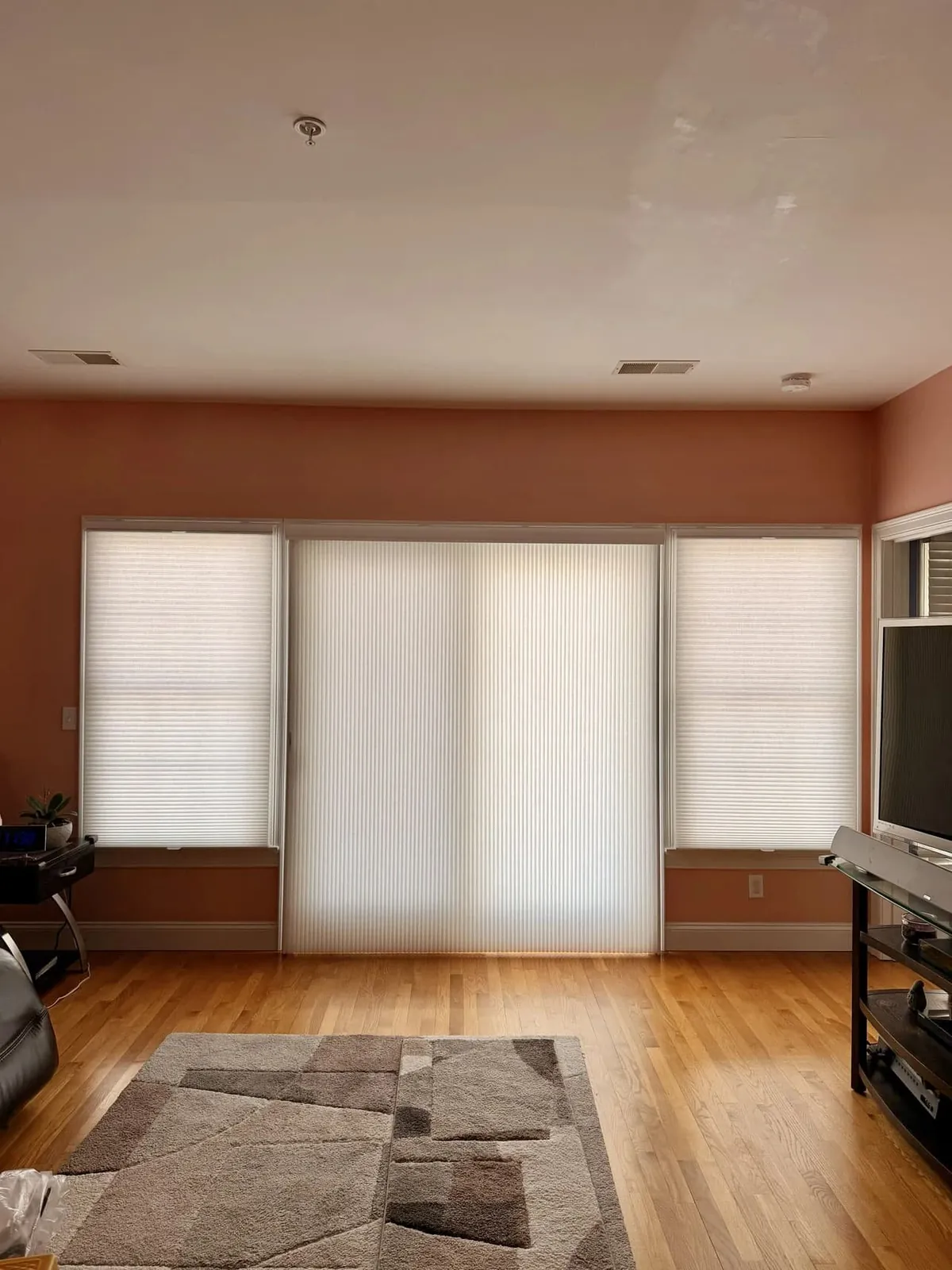
The smallest windows in the oldest houses
Upton spreads out. Antique colonials and farmhouses sit on large lots, set well back from the road, and newer colonials have been built on the roads off Route 140. The oldest houses have very small original window openings, some of the smallest we see anywhere, while the newer colonials have full-size modern windows. Any plan for cellular shades in Upton, MA, starts by sorting out which of those two jobs we are looking at.
Small panes in an old house let in less light than a modern window, so whatever covers them has to give back as much daylight as possible when it is open. They are also often single glazed and loose in the frame, so whatever covers them needs to hold warmth when it is closed. A honeycomb shade does both: it folds into a slim stack at the top of the window when raised and holds a layer of still air across the glass when lowered.
The deep setbacks change the brief, too. With the house far back from the road and neighbors some way off, privacy from the street is less often the first question. Light, warmth and how the shades look in a room full of old woodwork usually come first.
Three honeycomb choices for Upton
From a farmhouse parlor to a family room in a newer colonial, these are the options that come up most. We bring each as a sample.
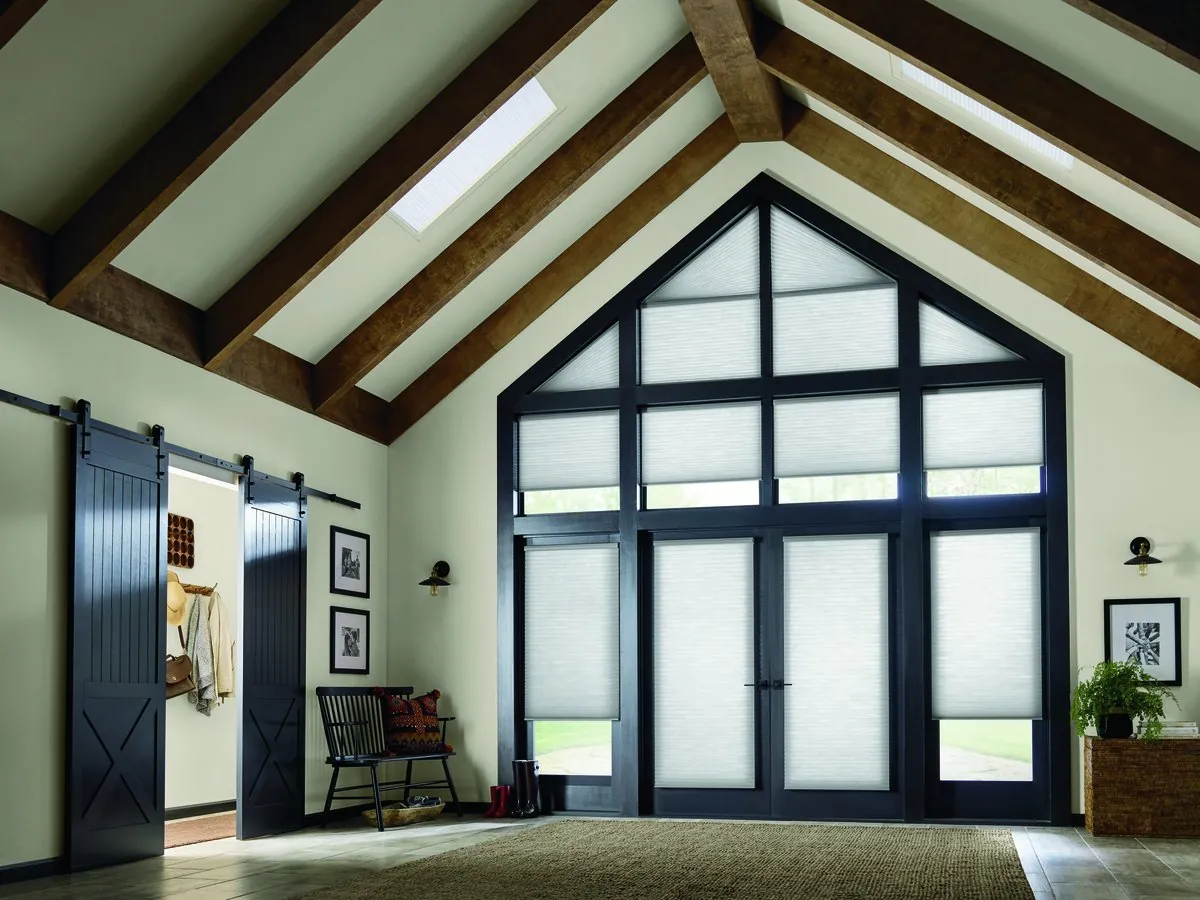
Made small for antique openings
Duette is made to the opening, however small, so a tiny old window gets a shade proportioned to it rather than one that looks oversized.
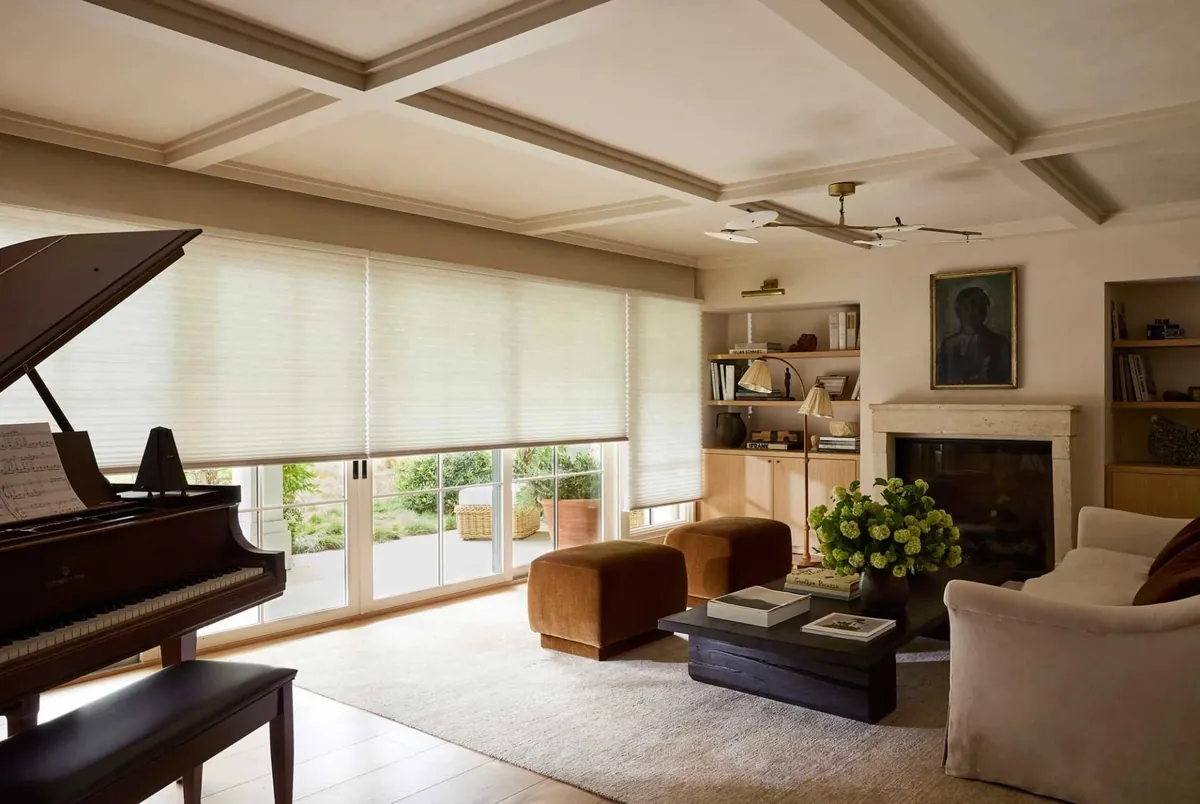
Wide shades for newer colonials
Applause and Duette fabrics in widths to suit a modern family room window or a pair of patio doors.
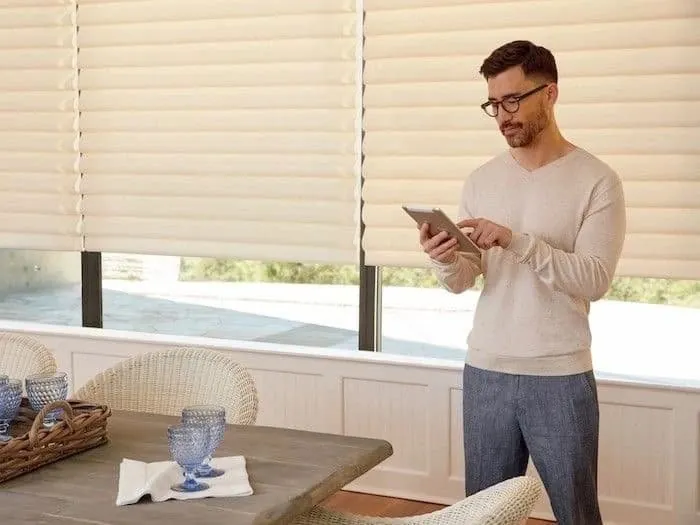
PowerView for a big house
In a two-story colonial with many windows, closing every shade from a tablet or a schedule saves a long walk round the house.
What makes a tiny window tricky
A very small original opening sounds easy to cover. In practice it raises questions a large window does not. The first is daylight. Every centimetre of glass in a small window matters, so a shade that hangs down into the opening when raised steals a noticeable share of the light. A honeycomb shade avoids this because its pleats collapse into a very short stack.
The second is proportion. A heavy treatment on a tiny window can make the window look smaller still and crowd a low-ceilinged room. A honeycomb shade is light in appearance, and in a pale fabric it all but vanishes against white trim when raised.
The third is the frame itself. Small antique openings were made by hand and have moved with the house, so the corners are rarely square and the depth varies. We measure each one at several points across and down. Where the opening is deep enough and true enough, an inside mount keeps the shade within the frame. Where it is not, a mount on the face of the casing can actually help: it lets the shade stack above the glass when raised, so the whole pane is clear, and covers the gaps round an old sash when lowered.
Antique colonials
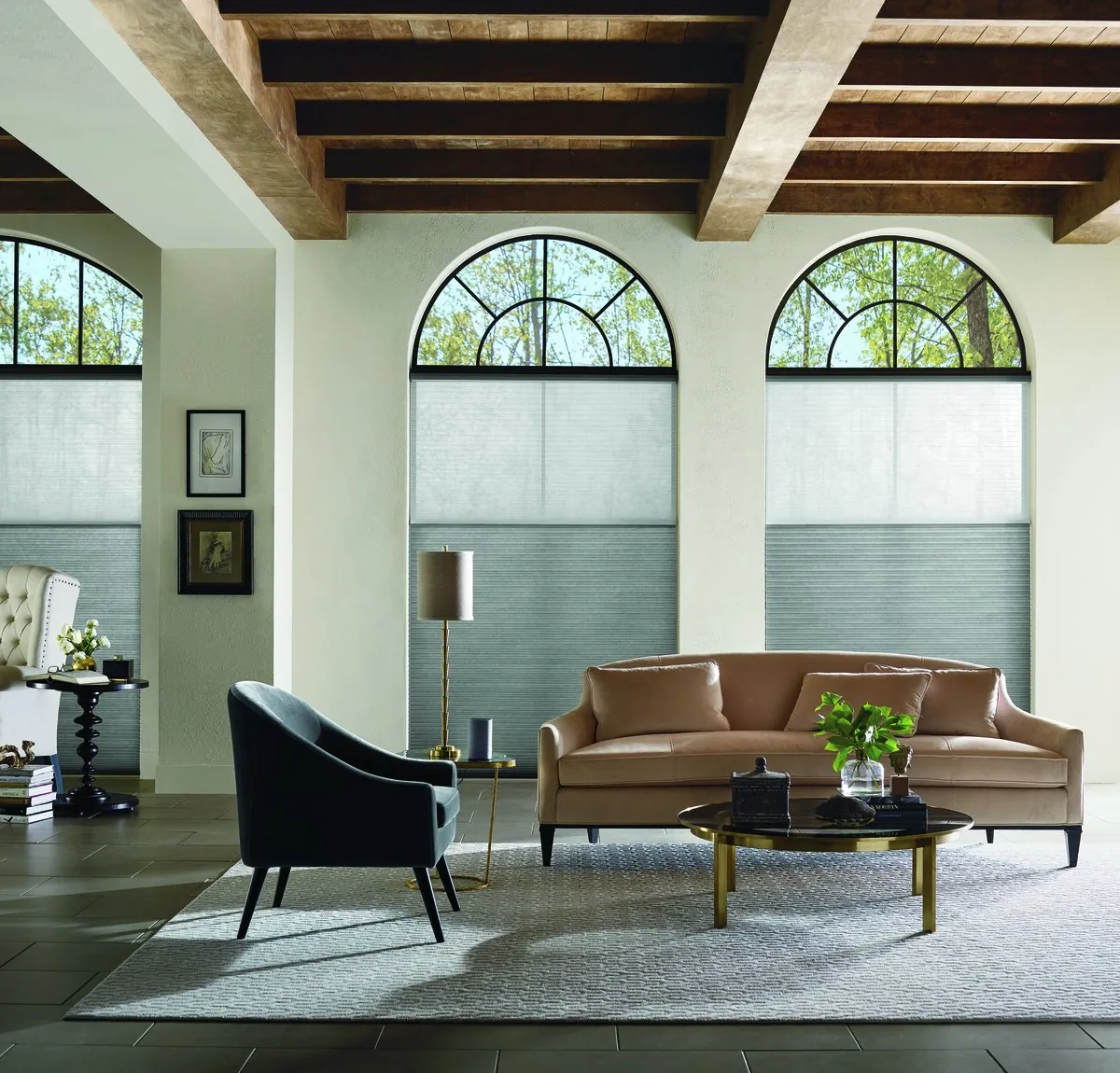
The antique colonials in town tend to have a symmetrical front with rows of small sash on both floors, often with wide boards, panelled surrounds and painted trim inside. Owners who have kept the original windows generally want to keep the look of the rooms as it is.
Honeycomb shades fit that aim because they are so quiet in a room. Chosen in a color that matches the trim, they look like part of the window when raised and like a soft panel of fabric when lowered. Cordless lifts keep the narrow sides of the window free of cords, which also suits the clean lines of an old room.
Warmth is the other reason. Small sash in an old house are often single glazed and can rattle slightly in their frames. A lowered honeycomb shade puts a cushion of still air across the glass and cuts the draught around the edges, so a parlor that was hard to keep warm becomes more comfortable on winter evenings.
Farmhouses on large lots
A farmhouse is usually a more relaxed building than a formal colonial, and many have grown over time with a kitchen extension, a back porch or a room over the shed. Windows vary from room to room: small old sash in the original core, larger units in the newer parts.
We treat each opening on its own terms, measuring and choosing a mount for each, while keeping the same fabric and color so the house hangs together. A kitchen with a sink window might take a cordless top-down shade so you can open the top for light while working. A back room with a slider takes a vertical honeycomb shade. The original rooms keep their small, carefully fitted shades.
Large lots also mean full exposure on some sides. With no house close by, a south or west wall can take sun for most of the day in summer, and a light-filtering honeycomb fabric keeps those rooms bright while slowing the heat at the glass.

Upstairs in an old house
The second floor of an antique colonial or farmhouse often has the smallest windows of all, set low in the wall under the eaves or tucked into the gable ends. Bedrooms up there can be the coldest rooms in the house in January and the warmest in August, because they sit right under the roof with little between the room and the weather.
A honeycomb shade helps both ways, and in a bedroom a room-darkening fabric adds a third benefit: a dark room on a summer morning when the sun is up early. Because the windows are low, a cordless lift is easy to reach and keeps the sill free. Where a window sits behind a bed or a chest, a top-down, bottom-up shade lets you open it for air and light without having to reach all the way to the bottom rail. When we plan cellular shades in Upton, MA, for an antique house, these upstairs rooms are often where the owners notice the change first.
Kitchens, baths and the working rooms
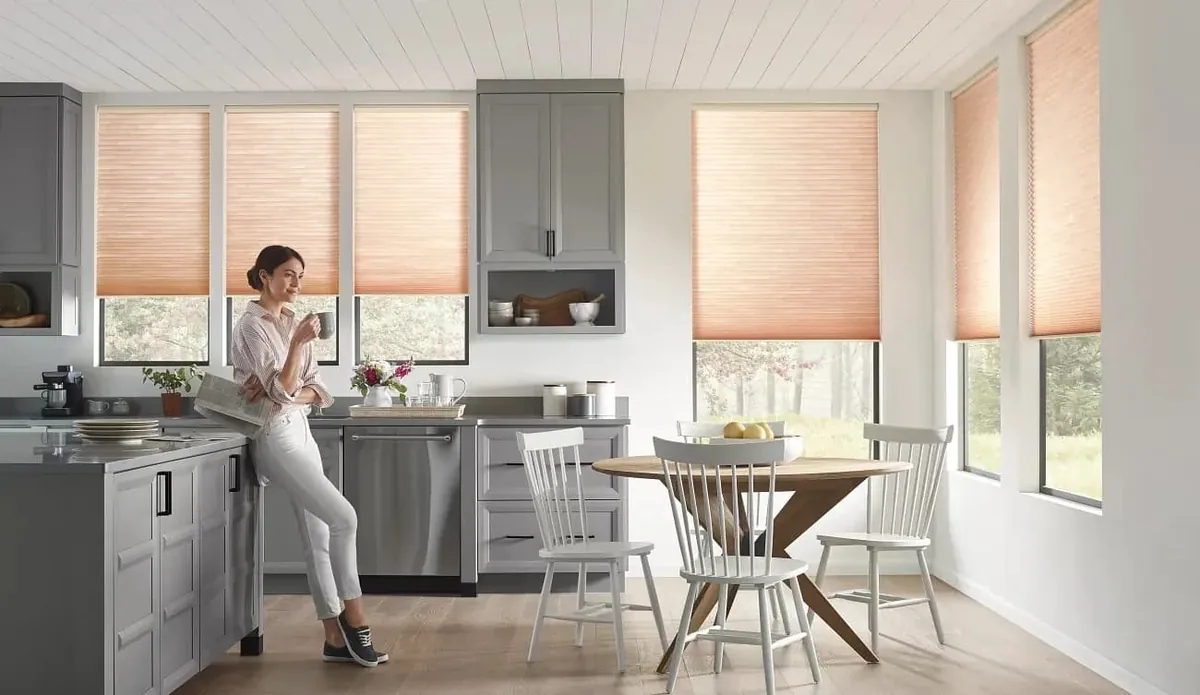
Kitchens and bathrooms ask different things of a shade from the formal rooms. A kitchen window over the sink needs to open for light while you work, and a bathroom window needs privacy at all hours, even when the house is far from the road. Top-down, bottom-up lifts suit both: the upper glass open for daylight and the lower glass covered.
In a farmhouse, these rooms are often in the newer part of the house, with larger windows than the original core. In a newer colonial, the kitchen may open onto a family room with a slider to the deck, so one long wall can carry a window shade, a vertical door shade and another window shade side by side. Choosing the same fabric for all three keeps that wall calm. Moisture is worth a mention too: we point out which fabrics suit a busy bathroom when you are choosing.
Newer colonials off Route 140
The newer colonials in Upton are a different job altogether. They have modern double-hung windows in standard sizes, often a larger window or two in the family room, a slider or French doors to a deck, and bedrooms on the second floor. Frames are square and usually deep enough for an inside mount, which makes the shades straightforward to fit.
The challenge with a newer colonial is usually scale. There may be many windows across two floors, so keeping a consistent look is important. We plan the house as a whole, with one fabric color for every window seen from the front, light-filtering fabrics in the living spaces and room-darkening fabrics upstairs. The bedroom shades can look the same as the rest from outside even though they block more light.
That kind of whole-house order is where PowerView becomes worth a look. Closing every west-facing shade at once on a hot afternoon, or having the bedroom shades lower on a schedule, is much easier than walking round two floors. We work out how each motor is powered at the visit, and how motorized shades are controlled explains the controls.
Cellular shades in Upton, MA, and the way the cell works
All honeycomb shades work on one simple idea. The fabric is formed into hollow cells that open when the shade is lowered, and each cell traps air. Trapped air moves very little, and air that does not move carries heat poorly. So the shade forms a soft layer between the glass and the room, slowing heat loss in winter and heat gain in summer.
Single-cell, double-cell and cell-within-a-cell fabrics give different amounts of that effect. We carry examples of each, and the visit is the time to hold them at your windows and feel the difference in the fabric, as well as to see how much light each lets through. On a very small antique window, a lighter fabric that keeps the room bright may matter more than an extra cell; on a big family room window facing west, the reverse may be true.
How a visit to your home works
Most Upton projects start at home, because samples only show their true color in your own light and beside your own trim. Our vans travel with the full honeycomb sample range, so the showroom comes to your door. A visit usually runs like this.
- Book a time through Request a Consultation or the call button.
- We arrive with honeycomb fabrics across a range of colors, textures, cell types and light levels.
- You take us round the house, starting with the rooms that matter most to you, whether that is a cold parlor, a bright family room or the bedrooms.
- Samples go up at your windows, so you can see each fabric against your woodwork and judge how much light it lets in.
- We measure each window and note the depth and any quirks of the frame.
- You receive a free estimate and take as long as you need to decide.
Our consultation guide goes into the visit in more detail. If the shades are part of a larger change to a room, an interior design consultation can cover color and furnishings in the same appointment.
Duette and Applause in Upton houses
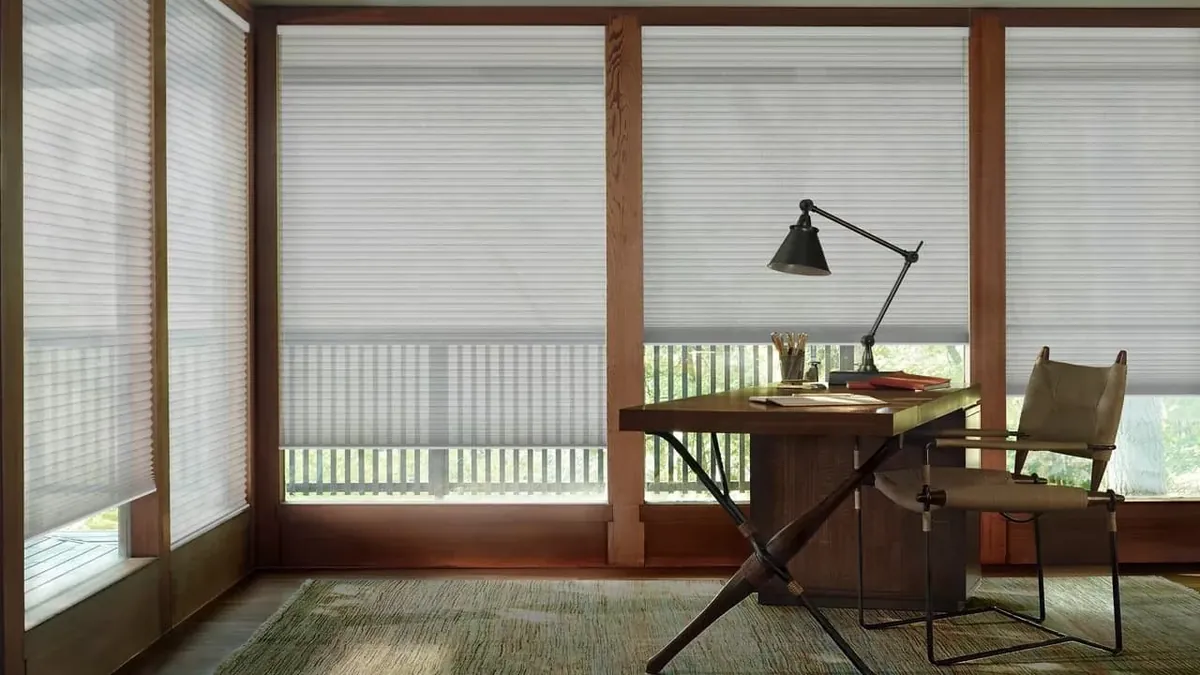
Hunter Douglas makes two honeycomb lines, Duette and Applause. Both trap air the same way. The differences are in the fabrics and textures, cell options and lift systems each offers. Duette has the broader range, including shapes for arched and angled windows, very small and very large sizes, and the vertical shade for doors. Applause has a separate palette that suits standard windows well.
In an antique colonial or farmhouse with very small openings, Duette is usually our starting point. In a newer colonial, Applause may cover most of the house, with Duette for the patio door or an unusual window. Our main cellular shades page lays out the whole range.
Light, views and deep setbacks
With the houses set well back from the road, many Upton rooms look out over a lawn, a field or woods rather than at another house. Those views are worth keeping. A light-filtering honeycomb fabric softens the light without hiding the view entirely, and a top-down, bottom-up shade lets you open the upper part of the window to see the trees and sky while covering the lower part against glare.
At night it is a different picture. A lit room in a house with no neighbors nearby can feel exposed after dark, even if no one is looking. A room-darkening fabric in the bedrooms, and a slightly heavier fabric in the living room, keep the evening feeling private. Plenty of houses mix the two, choosing colors that match from outside.
Choosing cellular shades in Upton, MA, for a house like this is mostly about balancing those daytime views with evening privacy, room by room.
Measuring, ordering and installation
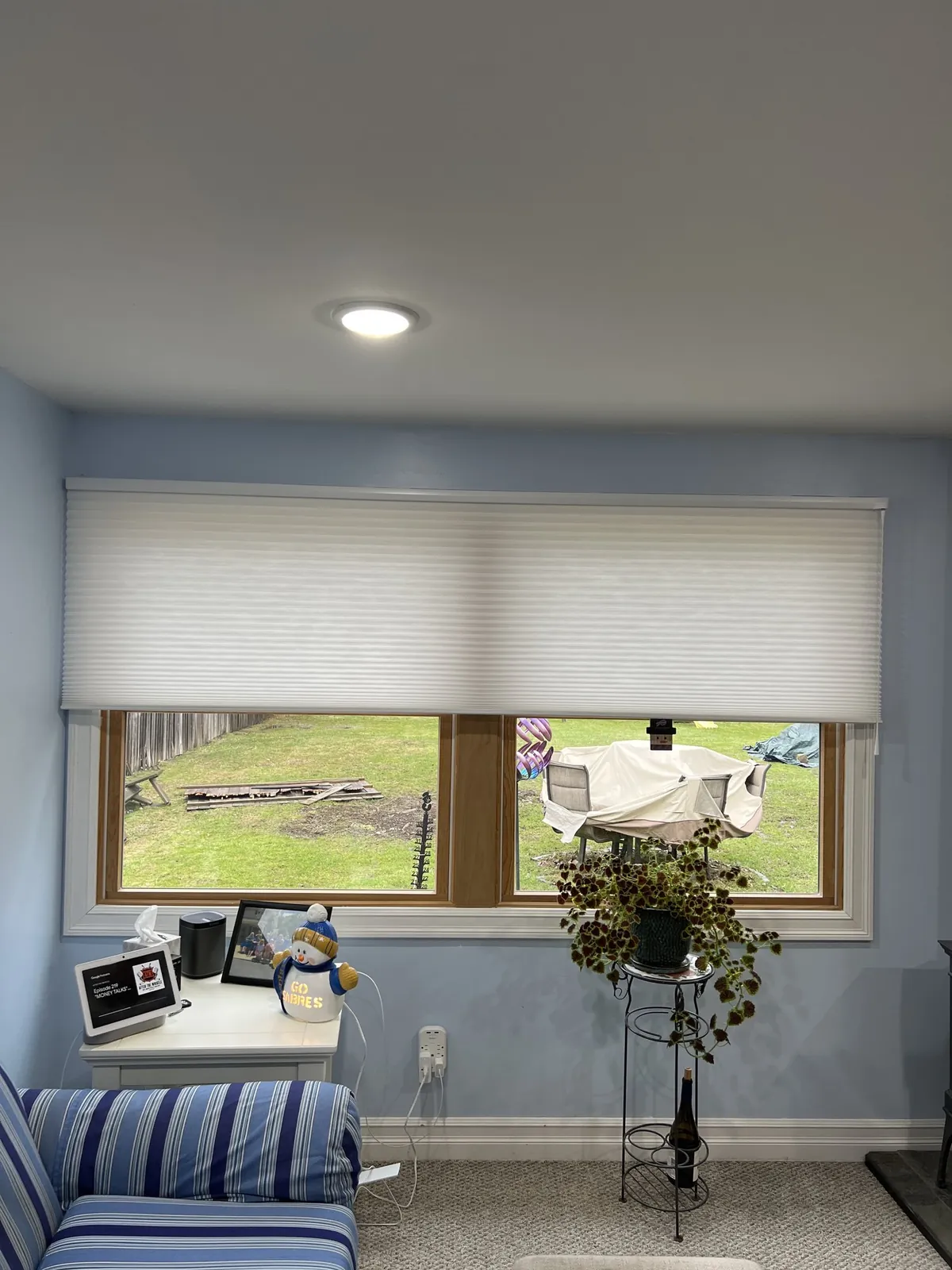
Shades made to the exact opening look built in, and on a small antique window that precision matters even more.
- Each opening is measured across at the top, the middle and the bottom, and the smallest figure is used for an inside mount.
- Height is measured at each side and in the center.
- Depth is checked at the head of the frame, with any old hardware noted.
- Mount, fabric, color and lift are agreed with you for every window before anything is ordered.
- When the shades arrive, our certified Hunter Douglas installers fix the brackets into wood, level each headrail, test each lift and show you how everything works.
A close fit at each side looks tidy and leaves less room for cold air to slip round the edges, which matters on old single-glazed sash.
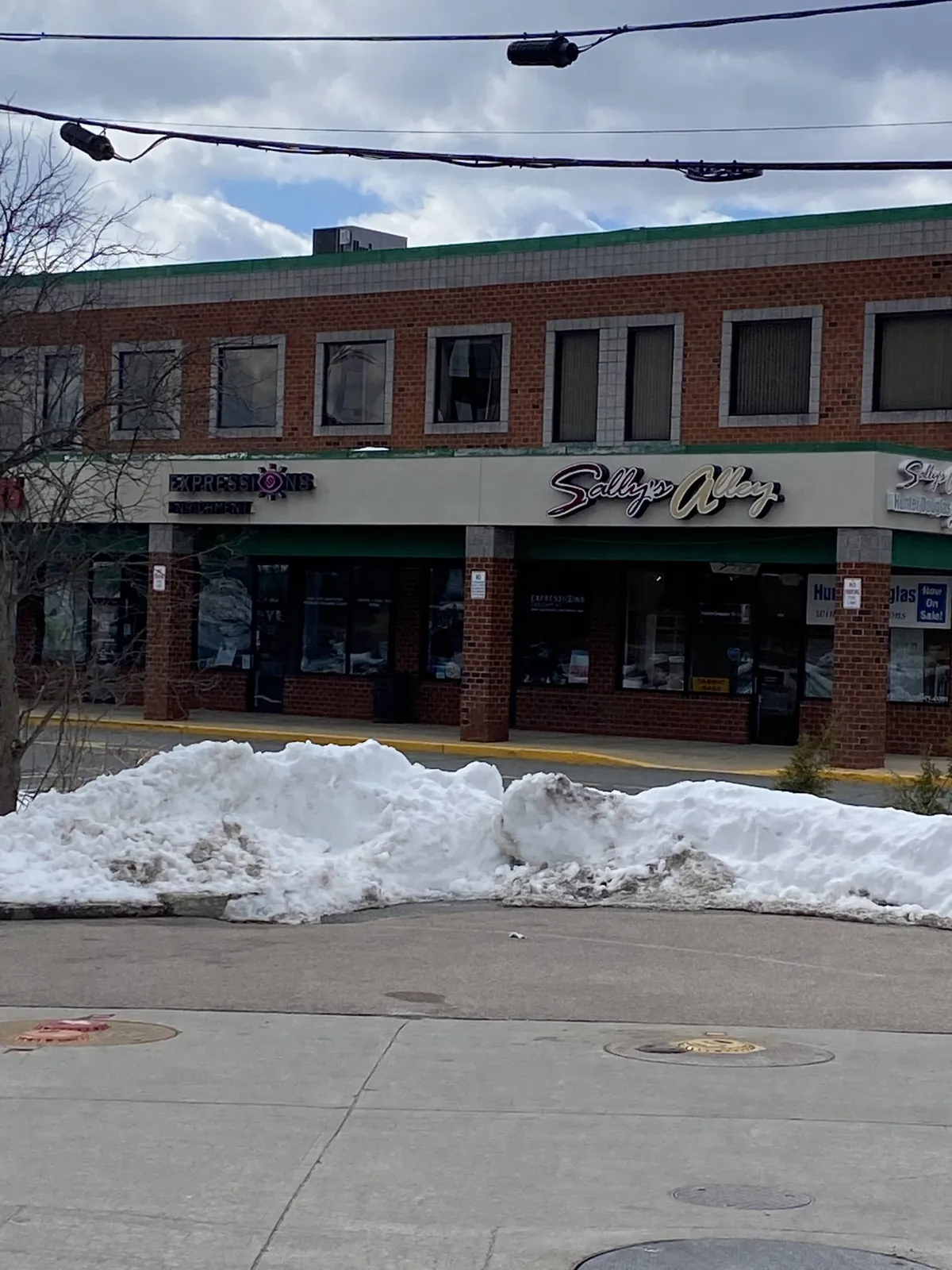
The closest showroom is Franklin
From Upton, the nearest Blinds & Designs location is the Franklin showroom. If you would like to look at honeycomb shades before a home visit, it is the place to start; photos of your windows, especially the very small ones, help us give useful advice.
For antique houses in particular, though, the home visit is where the decisions get made. The size, depth and condition of a small old opening need to be seen in person, and the visit includes measuring and a free estimate.
Gallery dealer status and certified installers
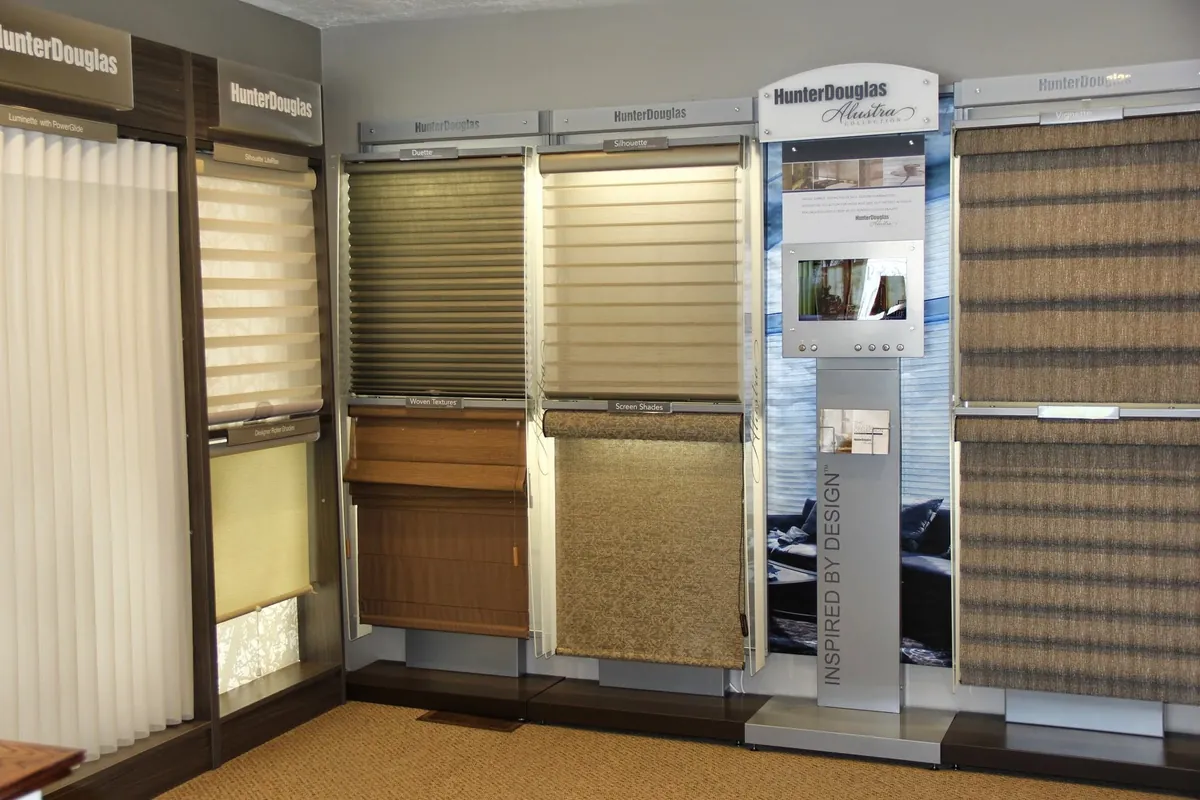
Hunter Douglas gives Gallery dealer status dealers who meet its standards, and Blinds & Designs is one. For your house that means access to the entire honeycomb range, including the smallest Duette sizes for antique openings and wide shades for newer colonials, plus PowerView.
Our installers are certified by Hunter Douglas, so each shade is hung as the maker intends, even on a frame that has moved over the years. If any shade or blind you already own needs attention, our blind and shade repair service welcomes it.
Other rooms might suit shutters, roman shades or roller shades, all of which we offer from Hunter Douglas. See plantation shutters in Upton or roller shades in Upton, or the full list on our Upton page.
Questions from Upton
The windows in my antique house are very small. Will a shade block the light?
Not much. A honeycomb shade folds into a very short stack when raised. On some small openings we mount the shade on the casing so it stacks above the glass, leaving the whole pane clear.
Can the shades match my old painted trim?
Yes. Honeycomb fabrics come in many whites, creams and soft colors, and we hold samples against your trim at the visit so the raised shade blends with the window.
What do you suggest for a newer colonial with lots of windows?
One fabric color for every window seen from outside, light-filtering in the living rooms and room-darkening upstairs. PowerView is worth considering if you want to close many shades at once.
We have a lovely view across the lawn. How do we keep it?
A light-filtering fabric softens the light without hiding the view, and a top-down, bottom-up shade lets you open the upper part of the window to the trees and sky while covering the lower part.
Is the estimate free?
Yes. After measuring, we give you a free estimate. Use Request a Consultation to choose a time for us to visit with samples.
When you are ready
Fabric is best judged beside your own glass, whether the opening is a tiny original one or a full-size modern unit. Request a Consultation brings the sample range out to the house; each window, large or small, gets measured, and the estimate is free. Talk first on the call button if you like, or see the Franklin showroom, our nearest location, before settling on cellular shades in Upton, MA.