
Open land, and light from every side
Carver is open country by the standards of the South Shore. Capes and ranches sit on large lots among the cranberry bogs, with fields and flat water stretching away from them, and the newer colonials off Tremont Street have generous yards of their own. There are few close neighbors, few tall trees right up against the house, and long sightlines in almost every direction. Fitting custom blinds in Carver, MA starts with that openness.
Openness is pleasant to live with and demanding on the windows. With nothing to screen them, rooms take light from several sides at once: morning sun through the east windows, the full midday glare from the south, and a long, low evening sun across the bogs from the west. A corner living room can be bright from breakfast to dinner, and the sun moves from one wall to the next through the day.
What the house needs, then, is control. Blinds that can be tilted by degree, window by window, let you follow the sun around the room instead of shutting it out altogether.
Custom blinds in Carver, MA, for the way your rooms face
Every blind we sell comes from the Hunter Douglas range and is made to fit its own window. Here are the three types we put up most often in Carver houses, and we bring samples of each when we visit.
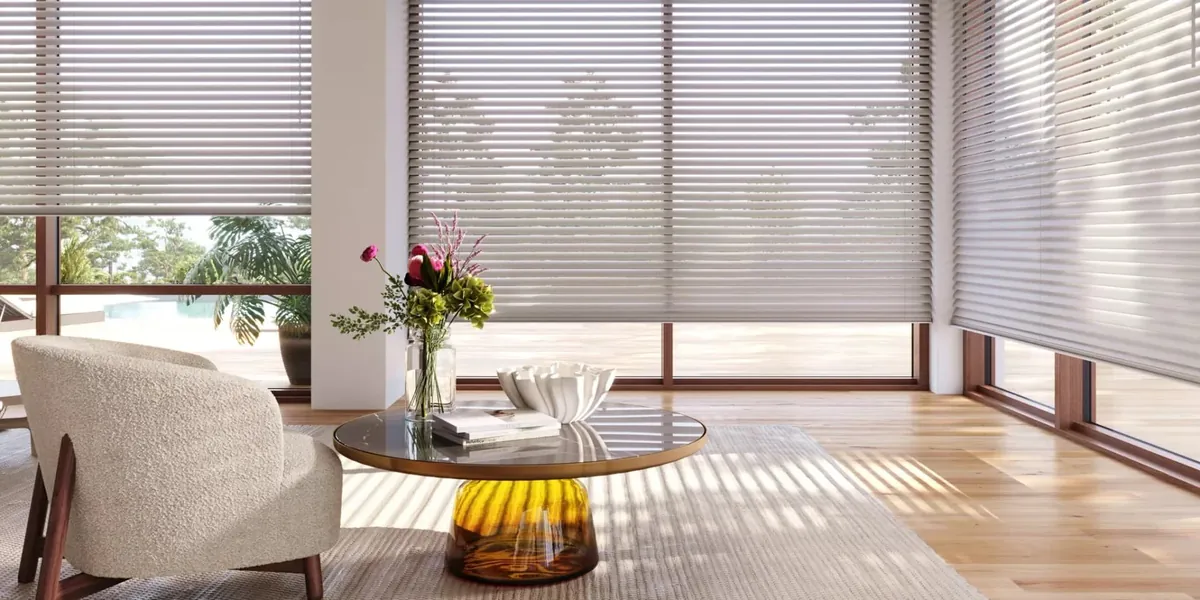
Wood for living rooms and dens
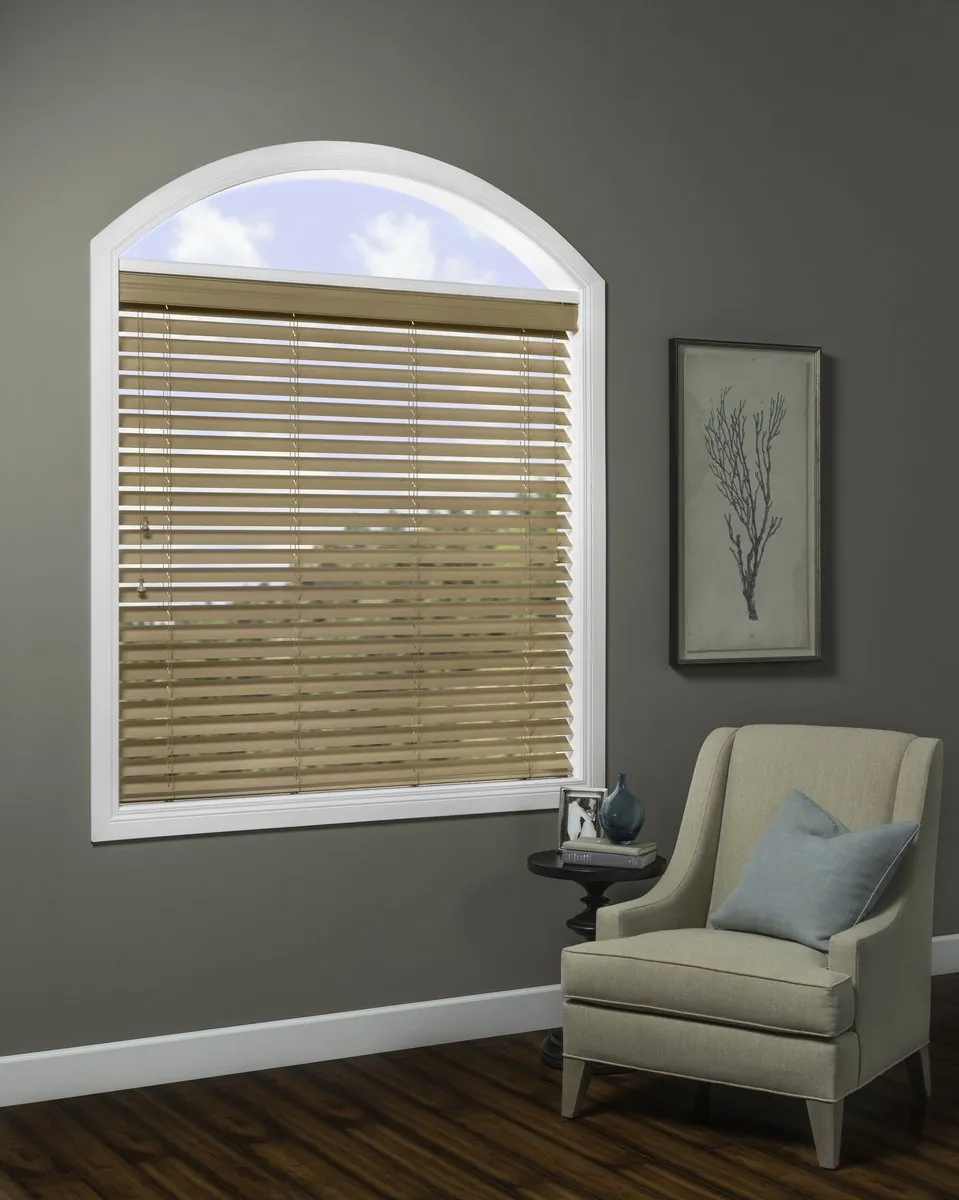
Real wood slats, painted or stained, for the main rooms of a cape or a colonial. Light to lift, warm to look at, and quick to tilt as the sun swings round.
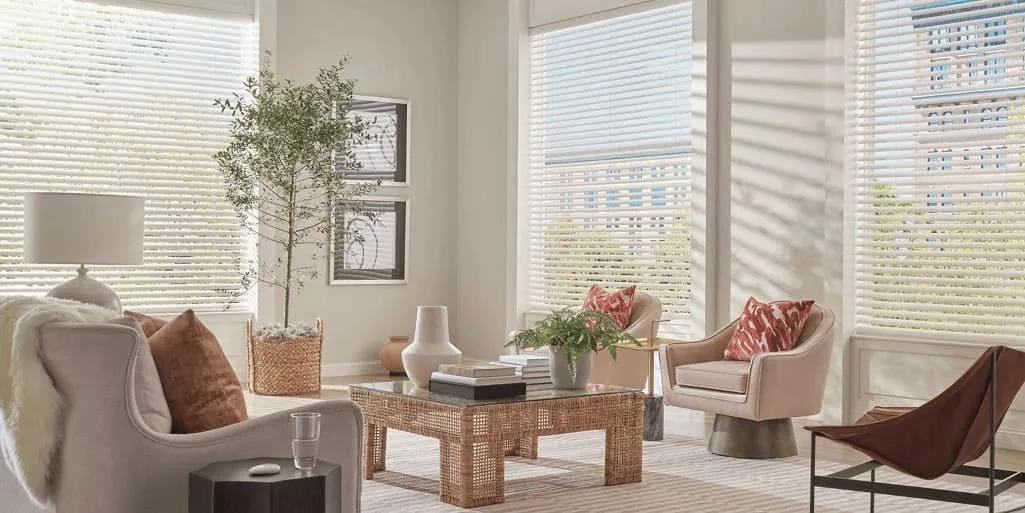
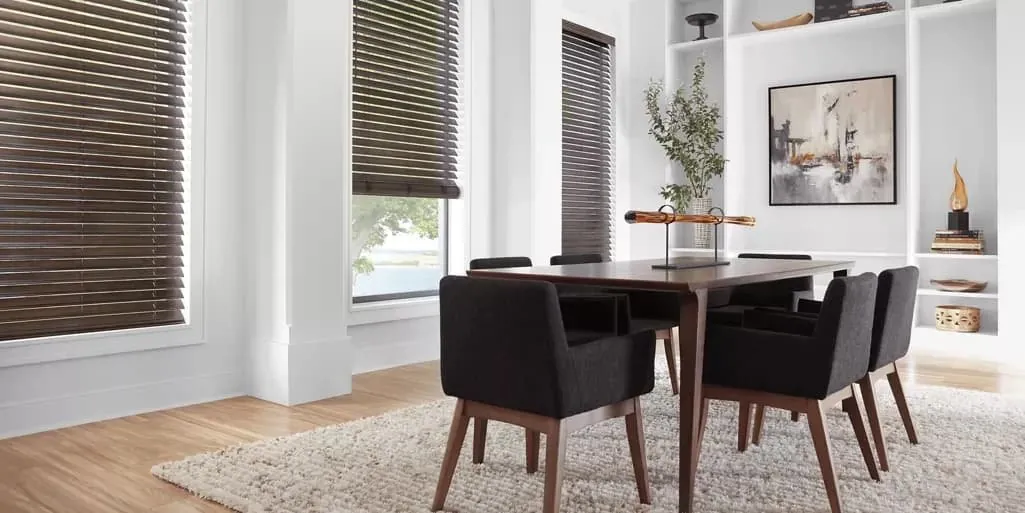
Faux wood for kitchens and baths
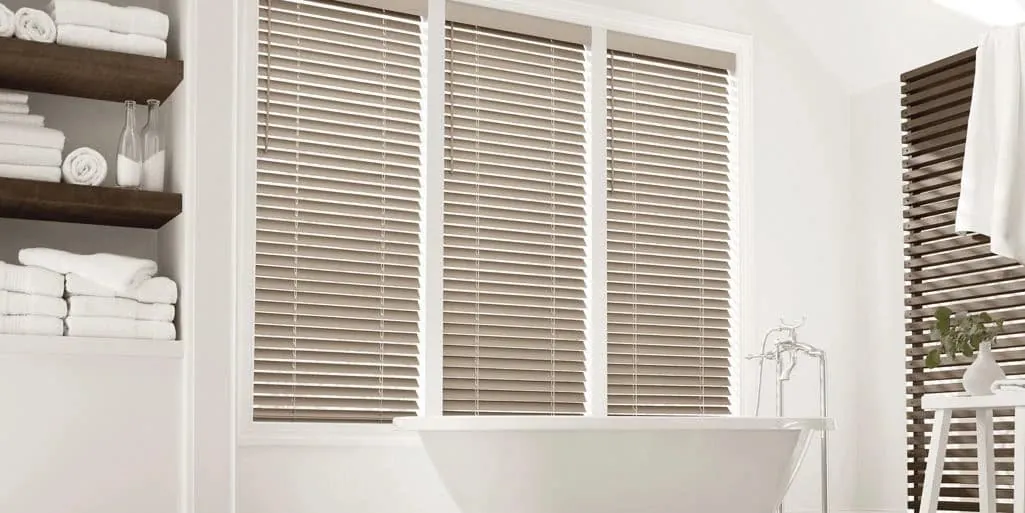
A painted-wood look in a tougher material that ignores steam and splashes. Ideal for the rooms with water in them and for sunny windows that take heat all day.
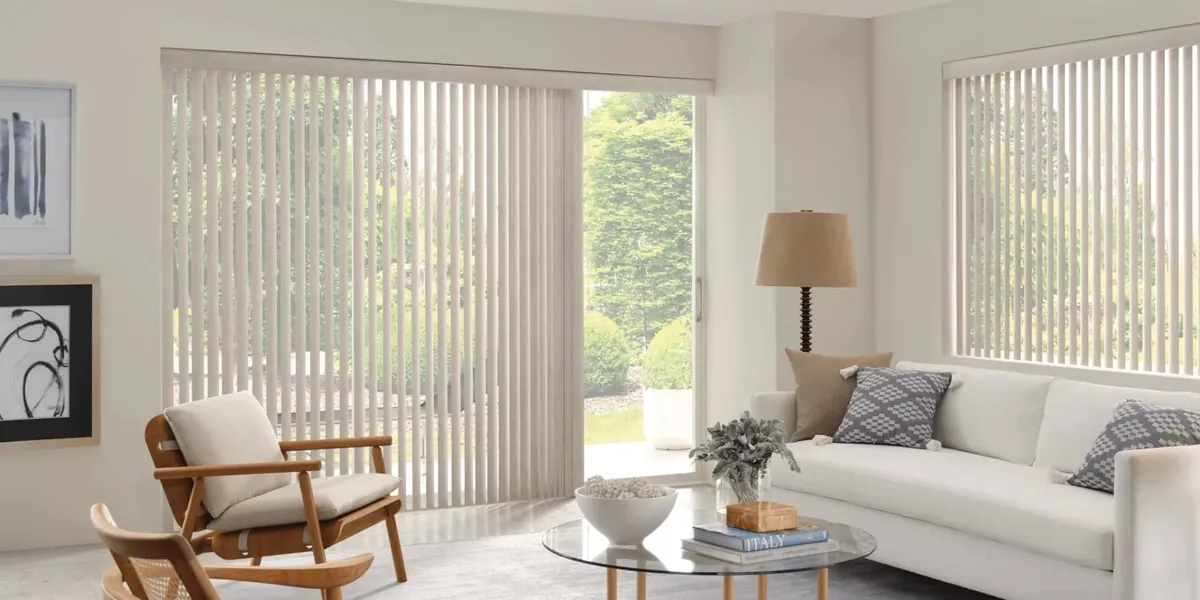
Vertical blinds for the slider
Vanes that turn to manage the sun and draw aside to clear the door, for the slider out to a back deck that faces open ground.
Long sightlines and nothing to screen the sun
On a tight street of houses, the building next door and the trees along the lot line shade a good share of the windows for much of the day. On a big lot beside a bog, that shade simply is not there. The sun reaches every window it can see, and from an open lot it can see a lot of them.
That changes how blinds get used. Instead of staying open most of the day and closing at night, blinds in an open house are adjusted as the sun moves. Morning rooms on the east side want the slats tilted against the early glare; by lunchtime the south rooms need the same; in the evening it is the turn of the west windows facing the bogs. Wood and faux wood blinds make that easy, because a turn of the wand changes the light in seconds without raising anything.
Tilt direction matters too. Slats tilted with the room side angled up throw the light toward the ceiling, which keeps a room bright without a hot patch on the floor. Slats tilted the other way give more privacy from below. In a house with no close neighbors, the upward tilt is usually the one you want during the day.
Corner rooms and windows on three walls
Many Carver living rooms, family rooms and bedrooms are corner rooms with windows on two or even three walls. That is lovely for daylight but means the sun is almost always coming in somewhere.
The answer is one blind per window, each working on its own, all in one color and slat size so the room still looks tidy. Then you can close the blind that is catching the sun and leave the others open, and change which one is closed as the day goes on. On a corner where two windows meet, we set the headrails close together so the corner does not leave a gap of light.
For a corner room you use all day, such as a family room or a home office, this simple arrangement does more than any single expensive window covering could, because it lets you respond to the light as it changes rather than choosing one setting for the whole room.
Capes on the bog roads
The capes scattered along Carver’s roads near the bogs range from older, more traditional houses to later versions built in the same style. Most have a symmetrical front, a center door, small-to-medium double-hung windows downstairs and dormers upstairs. Rooms are modest in size, and the dormer bedrooms have sloped ceilings and short walls.
Downstairs, painted wood or faux wood blinds in white or cream sit naturally against the trim of a cape and look neat from the road. On the older houses, we measure each window at more than one point because frames that have stood for a while are rarely perfectly square, and an inside-mounted blind is made to the narrowest measurement so it moves freely.
Dormer windows are smaller and set into the slope of the roof, which can leave limited space above the window for a headrail. We check each one. A slim blind with a compact headrail usually fits, and a cordless lift keeps the window clear of hanging cords, which helps in a small upstairs room.
Ranches on large lots
Carver’s ranches are typically long, single-story houses set well back on their lots. A big picture window in the living room, a kitchen window over the sink, bedrooms down a hallway, and a slider from the kitchen or family room onto a deck or patio: the layout is familiar, and the frames are usually square with enough depth for an inside mount.
The picture window is the one that needs the most thought. It is often the biggest single piece of glass in the house, facing the road or the view, and on an open lot it takes a lot of sun. Splitting it into two or three blinds on separate headrails lets you shade one part and leave the rest open. A single blind across a very wide window can be heavy to lift, so splitting it also makes everyday use easier.
The slider takes vertical blinds that stack to one side, or gliding panels if you prefer a softer look. In the bedrooms, darker slats that close tightly keep the early light out. Where a ranch faces the bogs, the long evening sun along that side of the house is worth planning for with a slat color that does not glare.
Colonials off Tremont Street
The newer colonials in the neighborhoods off Tremont Street have more windows than the capes and ranches, spread over two floors, and they tend to be regular in size and square in frame. Many have a family room with a big window or French doors to the yard, a kitchen with a slider, and sometimes a two-story entry with tall glass.
They are good candidates for a whole-house order. Choosing one color and slat size for every window on the front gives the house a consistent face from the road. Inside, the material can change by room while the color stays the same: wood in the living and dining rooms, faux wood in the kitchen and baths, darker slats in the bedrooms.
The upper glass in a two-story entry or a tall family room window is out of easy reach, and on an open lot it can take a lot of sun. That is where motorized blinds come in, covered below.
Kitchens, baths and the back door
The working rooms of a Carver house often face the back of the lot: a kitchen window over the sink looking across the yard, a mudroom or laundry by the back door, a bathroom on the side away from the road. They see steam, splashes and muddy boots, and on an open lot their windows take the sun just as hard as the front rooms do.
Faux wood is the material we suggest for all of them. It looks like painted wood, it does not swell or warp when a kitchen fills with steam or a bathroom stays humid, and it wipes clean in a moment. A cordless lift keeps the window over the sink free of a cord trailing into the basin. Keeping the color the same as the wood blinds in the front rooms means custom blinds in Carver kitchens and baths match the rest of the house, even though the material is different.
Summer heat and low winter sun
On an open lot, the sun works on a house all year round. In summer, the south and west windows bring in a lot of heat through the afternoon, and a room facing the bogs can become uncomfortably warm. In winter the sun sits lower, comes in flatter, and on a bright day it reflects off frozen bogs and snow-covered fields straight into the house.
Blinds help with both. In summer, closing the slats on the hottest windows through the afternoon keeps direct sun off the floor and furniture. In winter, tilting them upward lets the light in but stops the glare, and on a cold evening, closing them adds a layer between the room and the glass. Lighter slat colors reflect more of the sun back toward the window, which helps in summer and keeps a room bright when the blinds are partly closed.
For more on the sun, our guide to the best shades for sun and glare compares blinds with shades.
Evenings on open land
There is one more side to open country that is easy to overlook. After dark, a lit room in a house with no close neighbors can be seen from a long way off: from the road, from across a bog, from a car passing on a dark stretch. The same long sightlines that bring the sun in by day carry the view in by night.
Closing the blinds at dusk deals with it. Wood and faux wood slats close tightly, and when they are shut, the room cannot be seen from outside. A darker color gives a deeper sense of privacy in a bedroom. For anyone choosing custom blinds in Carver houses that stand alone on a big lot, this is often the reason the bedroom and bathroom blinds get chosen first.
Choosing color for a bright house
In a house that takes a lot of sun, the color of a blind shows more than it would in a shaded one. Bright white looks crisp and clean, and it reflects light well. Soft creams and grays are gentler on the eye in a room that is bright all day. Natural and medium wood tones add warmth, and they suit a cape with wood floors or a ranch with a country kitchen. Dark stains are handsome but absorb more heat on a sunny window.
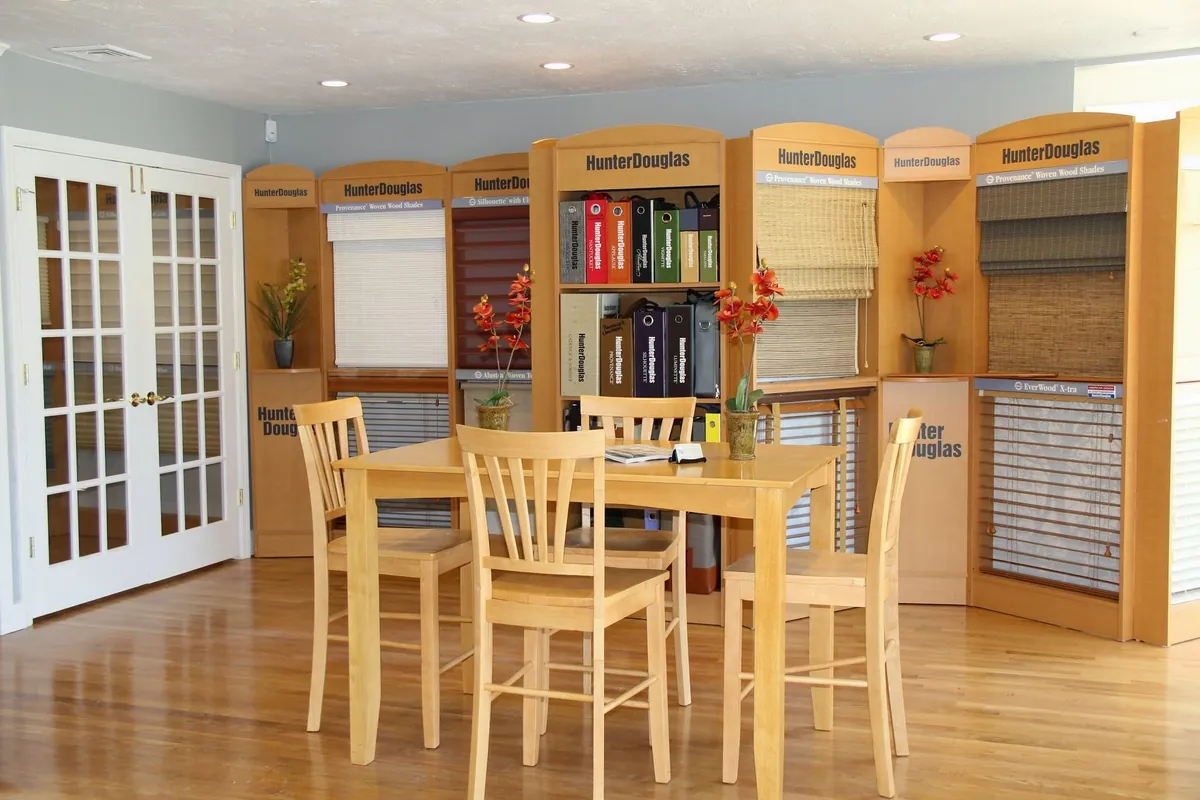
We bring a broad range of finishes on every visit, and we hold them against your trim on the sunny side of the house and the shaded side, so you can see how each one looks in your own light.
PowerView motorization
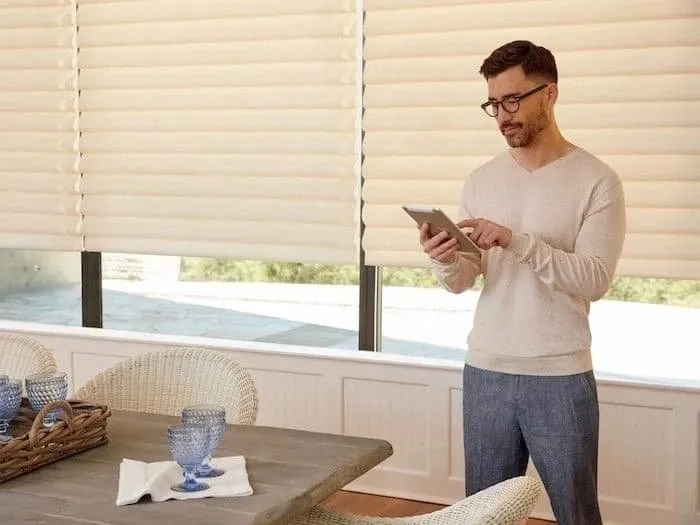
For windows that are out of reach, or for a house where the sun moves around every side through the day, Hunter Douglas PowerView motorization is worth considering. Motorized blinds tilt and lift from a remote control or an app on your phone, and they can run on a schedule: tilting the east windows in the morning, the south windows at midday and the west windows toward the bogs as the evening sun arrives.
That kind of routine is hard to keep up by hand in a corner room with windows on three walls. Set once, it runs every day without anyone thinking about it. We work out how every motor is powered and where controls go during the visit. See motorized blinds in Carver for more.
Your visit and the measuring
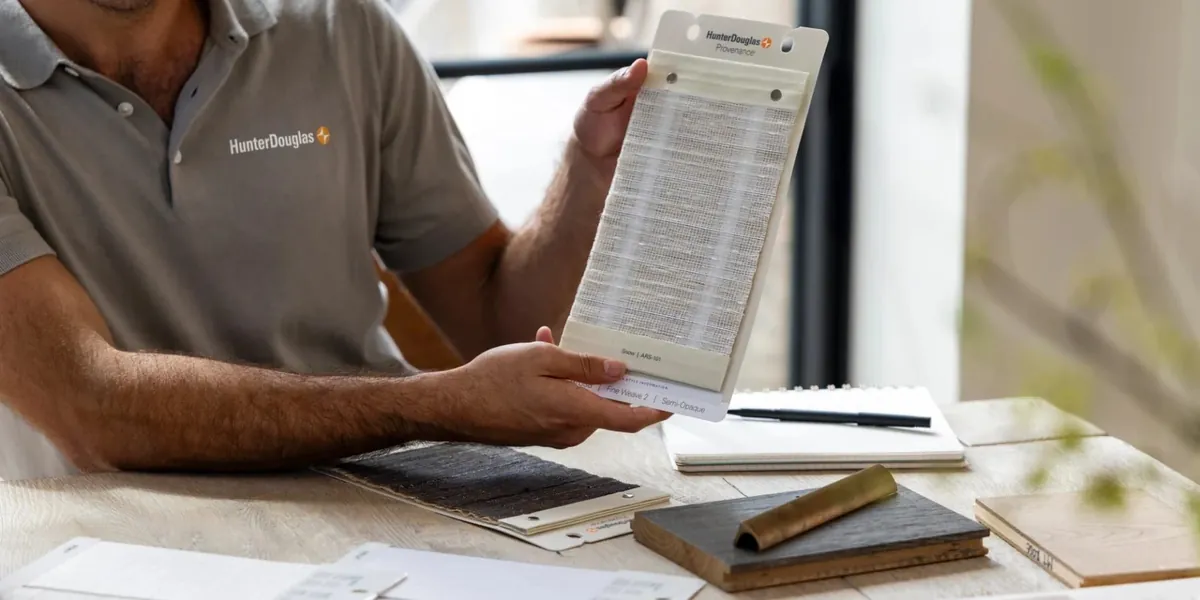
Our consultants travel with samples of every blind we sell, which is how we can bring the showroom to you. Here is what happens.
- Use Request a Consultation, or press the call button, to set a day.
- We walk the house with you, room by room, and talk about which way each window faces and when the sun becomes a problem.
- You try wood, faux wood, aluminum and vertical samples against your own windows and trim.
- Each opening is measured across the top, middle and bottom and on both sides, its depth is checked, and anything in the frame is noted.
- A free estimate for the blinds you are considering is yours before we leave, and you can take as long as you like to decide.
- When the blinds arrive, our certified Hunter Douglas installers fix every bracket into solid framing, level each blind, test every tilt and lift, and show you how they work.
Interior design consultations can be part of the same visit if you would like help with color or with how blinds work beside other window treatments. Read more about what happens at an in-home consultation and what happens on installation day.
For each material in more detail, see our wood blinds, EverWood, metal blinds and Verticals pages, or start at our main custom blinds page.
Sagamore is the nearest showroom
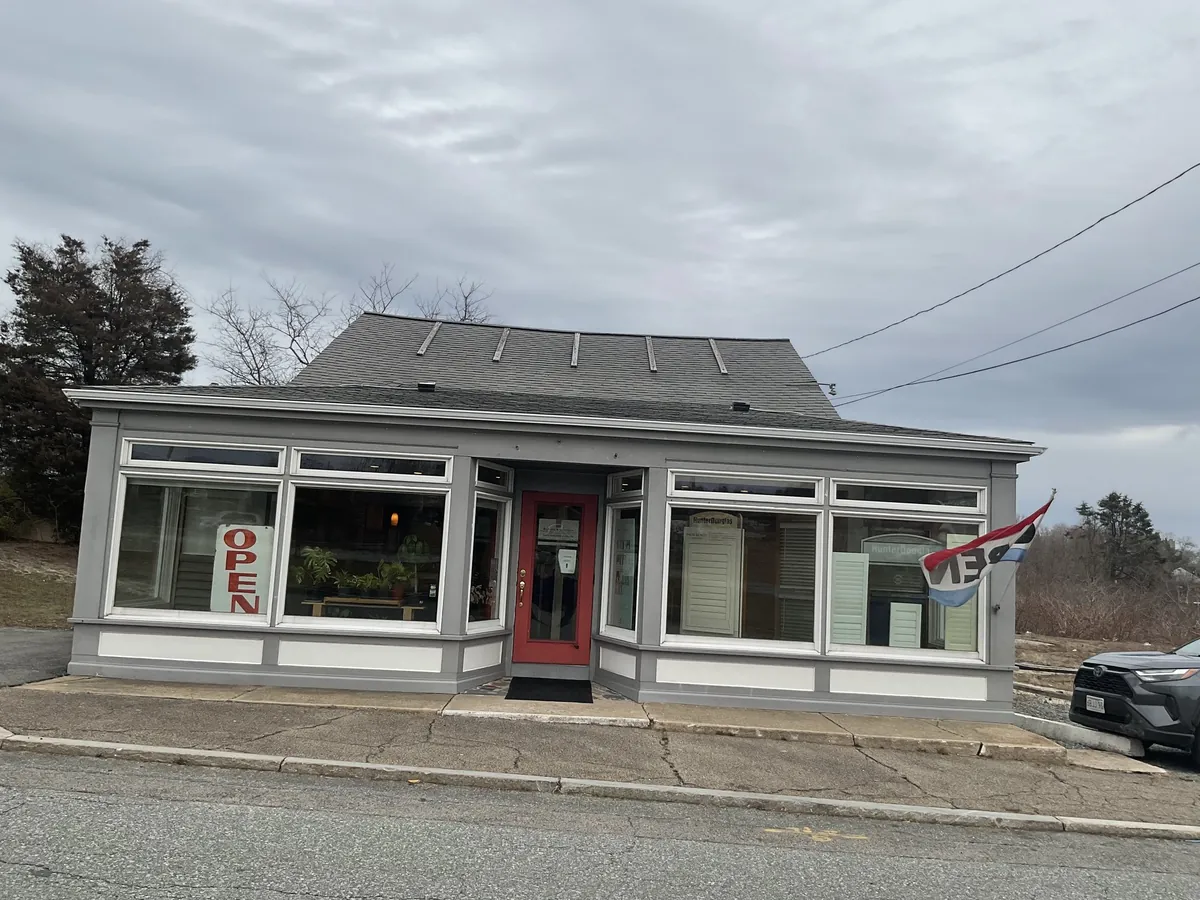
Our Sagamore showroom is the closest to Carver if you would like to see the blinds in person before a visit.
Blinds & Designs is a Hunter Douglas Gallery dealer, a title the brand gives dealers who meet its standards. You get access to the whole Hunter Douglas range of blinds, as well as shades, shutters and drapery, and our installers are certified by Hunter Douglas. For blinds already in your house that need attention, we offer blind and shade repair.
For other rooms, see cellular shades in Carver or roller shades in Carver, or everything we offer in town on our Carver page.
Questions from Carver
My living room has windows on three walls. How do I control the sun?
Put a separate blind on each window, all in one color, and close whichever one is catching the sun. As the day moves on, open that one and close the next. PowerView can do it on a schedule.
Which blinds suit a ranch picture window?
Two or three blinds side by side on separate headrails. Each lifts on its own, so you can shade part of the window, and each is lighter to raise than one very wide blind.
Will blinds give privacy at night in a house with no close neighbors?
Yes. Closed wood and faux wood slats block the view in completely, and a darker color gives bedrooms a stronger sense of privacy.
Do blinds fit dormer windows?
Usually. We check the space above each dormer window for the headrail, and a slim blind with a compact headrail and cordless lift tends to fit well.
Do I pay for the estimate?
No. Once we have measured, the estimate for the blinds you are considering is free.
Book your visit
A house that takes light from every side is best planned on site. Request a consultation and we will bring samples to your windows, measure each one and leave you a free estimate for custom blinds in Carver, MA. Or use the call button to reach our Sagamore showroom.