
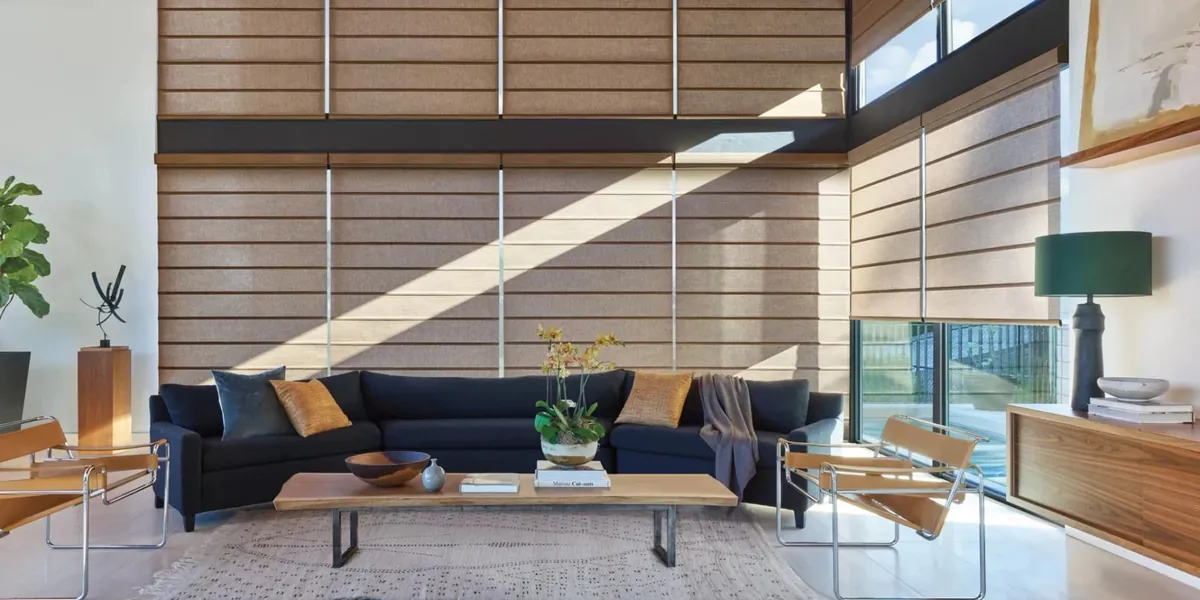
One town, three very different houses
Plymouth covers more ground than any other town in Massachusetts, and its houses span almost the whole history of building in the state. In the historic center stand antique colonials with small sash set deep into heavy walls. In the Pinehills, large newer houses are built around modern glass, sometimes two stories of it in a single room. In between, mile after mile, are post-war ranches with picture windows and sliders. No single treatment answer fits all of that. Roller shades in Plymouth, MA, come close to being the exception, because the same simple idea, a flat fabric on a tube, can be scaled from a tiny colonial window to a wall of glass.
What changes from house to house is everything around that idea: the fabric, the mount, the lift and how the shade is controlled. A deep-set antique window wants a shade that hides inside the reveal. A two-story window wall wants motors and careful alignment. A ranch picture window wants glare control without losing the yard.
So we never start with a product. We start with the house in front of us.
Roller shades in Plymouth, MA, for every kind of house
All of these are Hunter Douglas shades, and our vans carry samples of each.
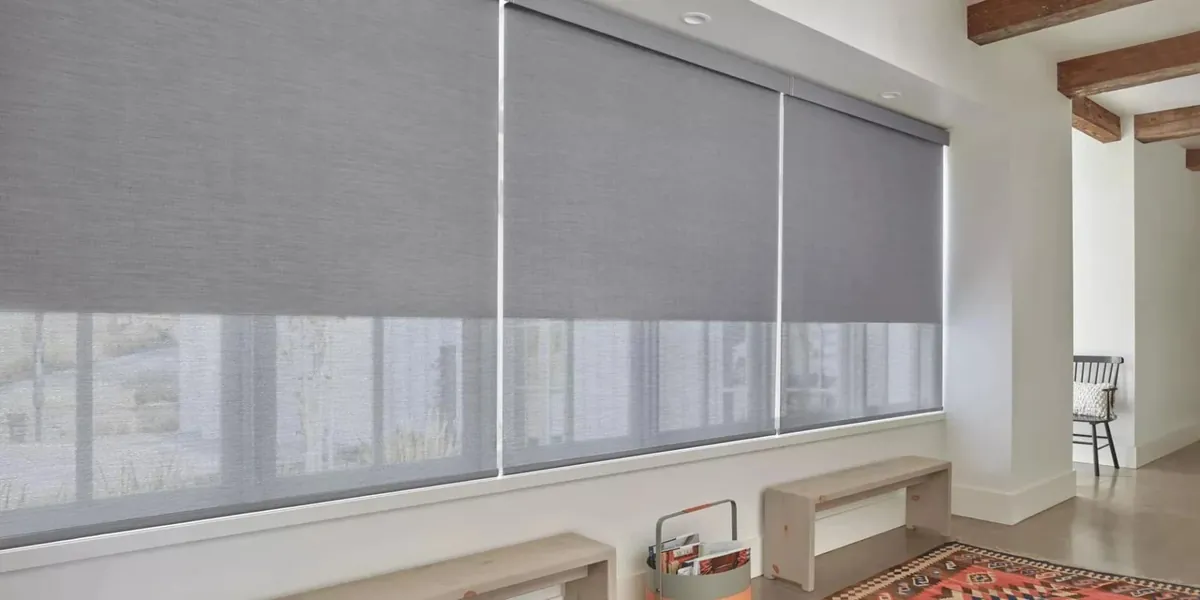
Screens for big glass
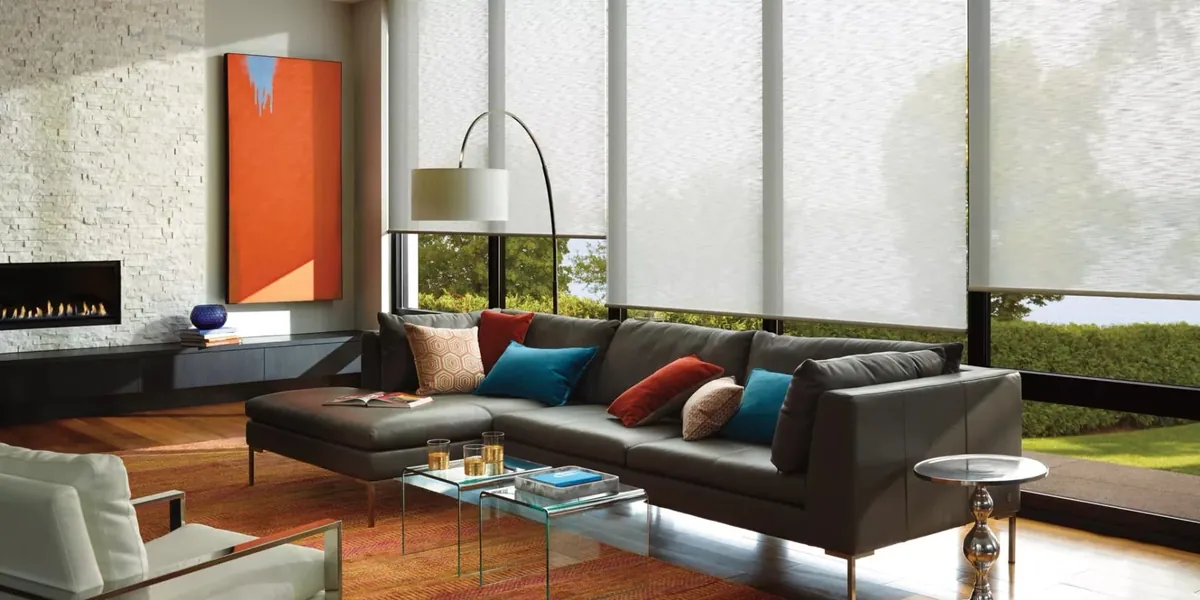
A Designer Screen or Alustra screen fabric on a Pinehills window wall softens the sun while the woods and the sky stay in view.
Light filtering kitchens
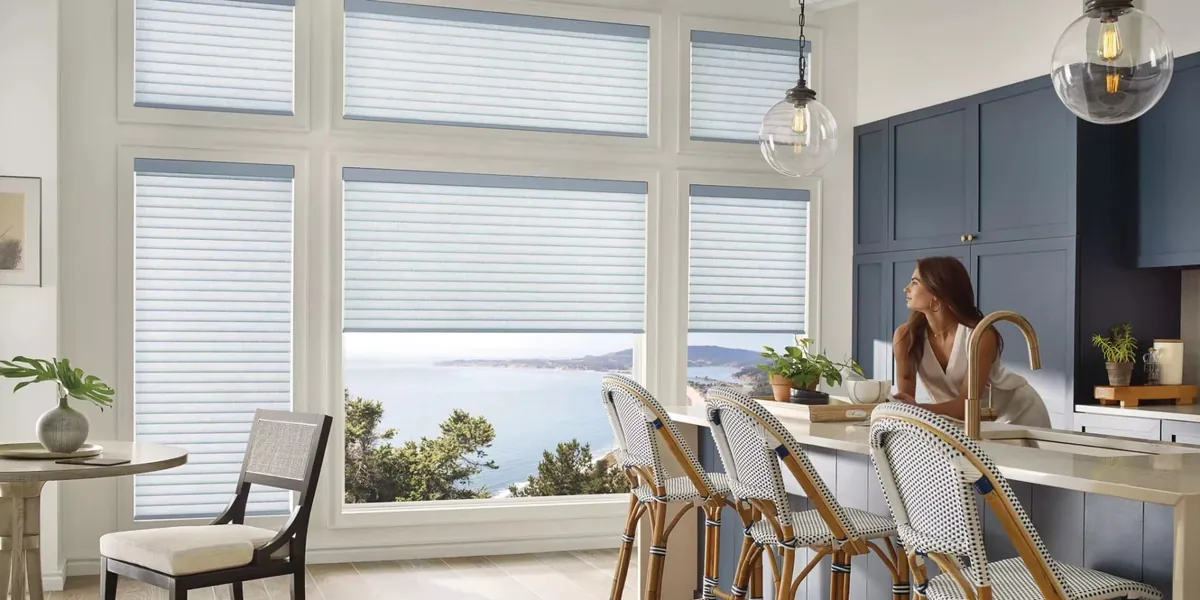
Bright, private, easy-clean fabric for kitchens and family rooms, whatever the age of the house.
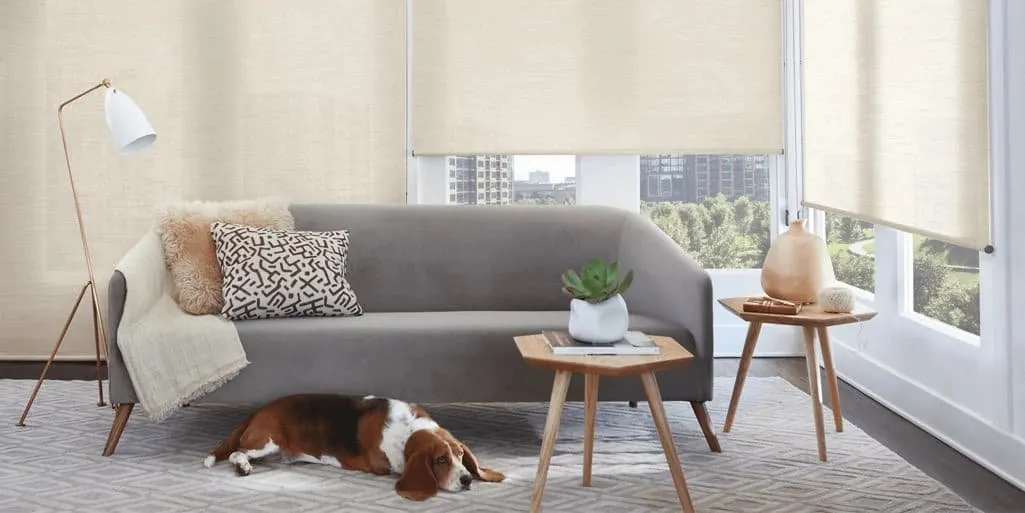
Banded shades
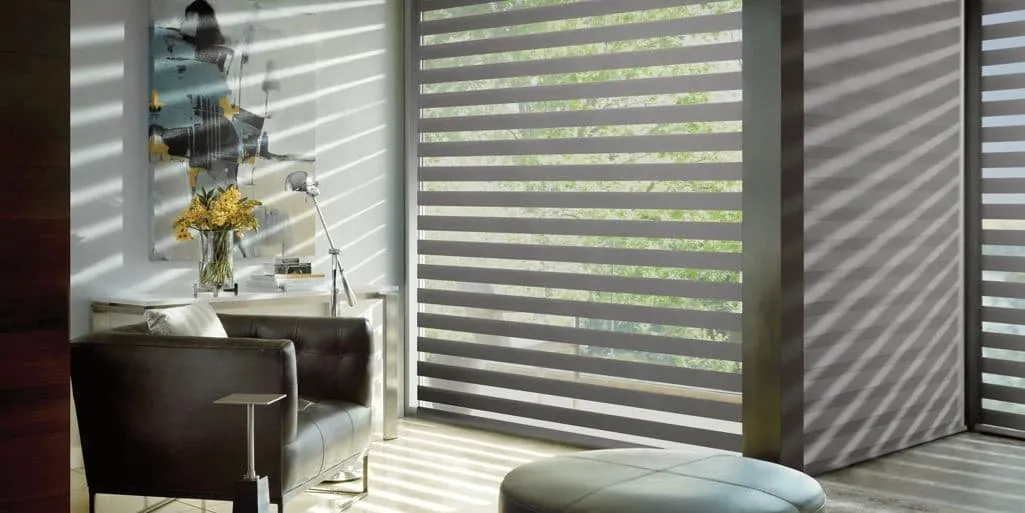
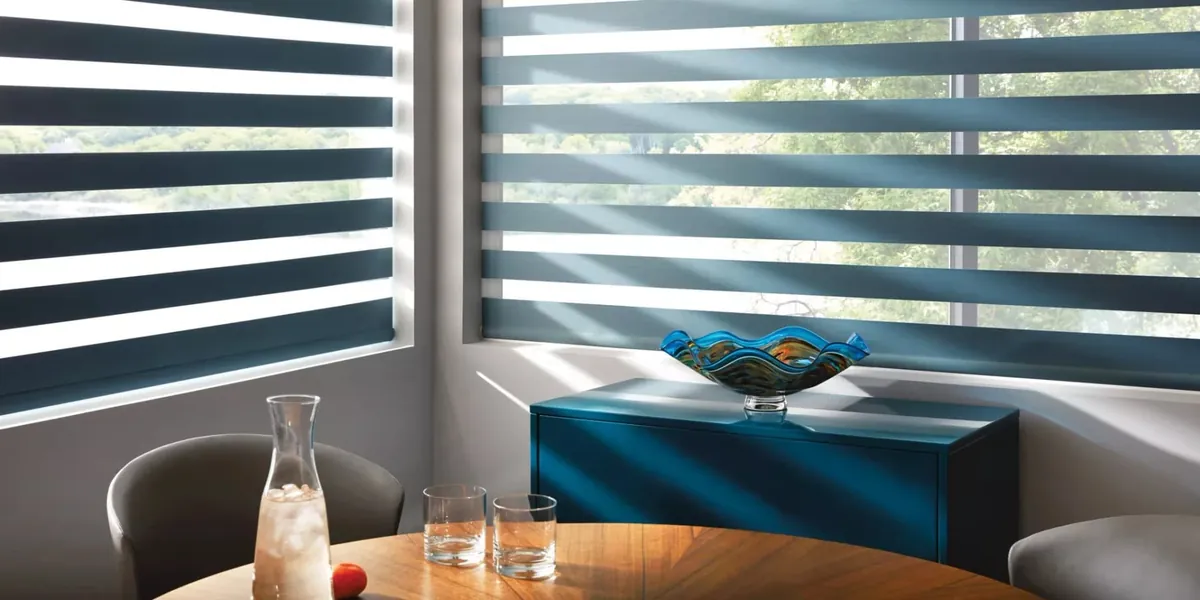
Sheer and solid stripes on one shade, shifted to open or close the view. Good in a ranch living room or a study.
Blackout for bedrooms
Opaque Designer Roller fabric for bedrooms, home theatres and any room that needs to be properly dark.
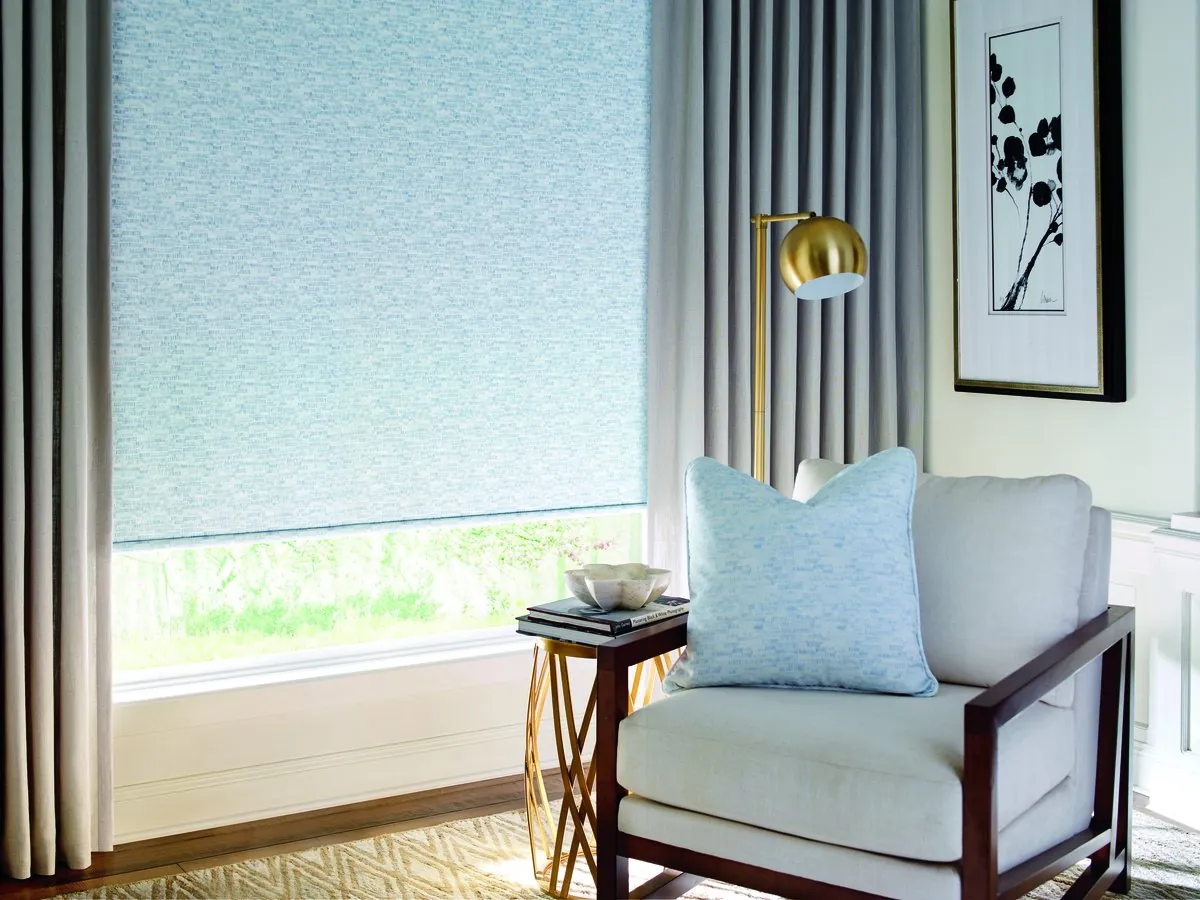
Patterned fabrics for older rooms
A pattern or texture from the Alustra range suits an antique dining room or parlor and pairs well with drapery.
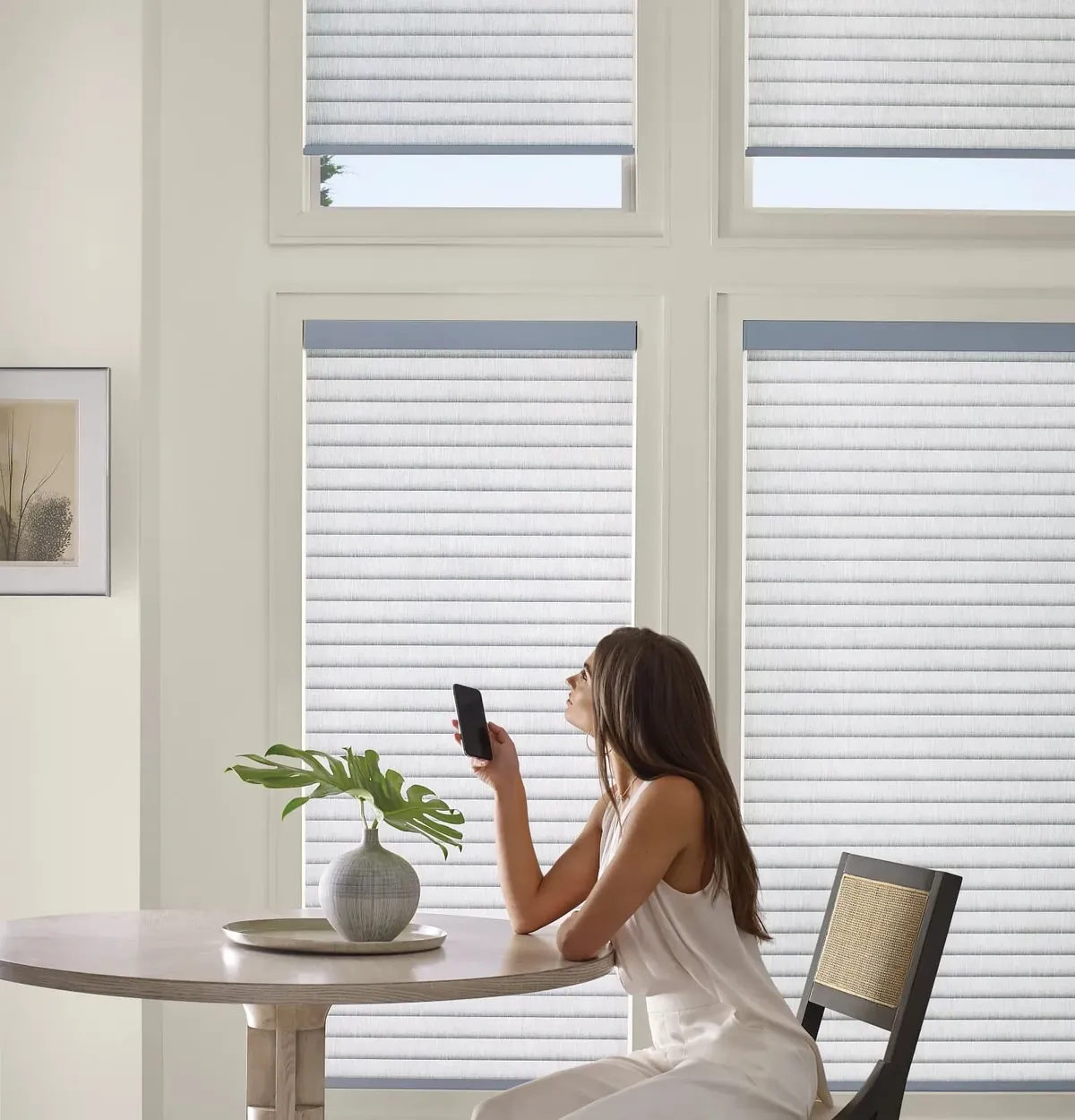
PowerView for high windows
Motors inside the tube move shades you could never reach, by remote, app or a daily schedule.
Antique colonials in the historic center
The oldest houses near the waterfront and up the hill from it were built with heavy timber frames and thick walls, and their small windows sit deep in those walls. That deep reveal is good news for a roller. The whole shade can sit inside the opening, tucked up against the head of the frame, so when it is raised you see the window and its splayed or panelled reveal and almost nothing else.
Old frames come with their own quirks. After so long, a window may be wider at the top than at the sill, or lean a little to one side. We measure each opening at the head, middle and sill and on both sides, and check how deep the reveal is all along the top. The shade is made to the tightest point, so it travels freely without brushing the frame.
Antique rooms are small and the windows are few, so light matters. A pale light filtering fabric keeps a parlor bright and private at once, and rolls away to almost nothing when you want the full window. For bedrooms tucked under the roof, a blackout roller gives a dark room at night, and an outside mount over the trim helps where an inside mount would let light leak at the edges.
In the historic center, the view from the street matters too. A light, neutral color facing out keeps the windows even and quiet from the road.
Pinehills glass: tall, wide and bright
The newer houses in the Pinehills are a world away from the historic center. Many are built around a great room with a wall of windows, sometimes running the full two stories, with transoms or clerestory glass above and sliders or French doors below. The light is wonderful in the morning and hard to live with on a bright afternoon.
Roller shades are the natural fit for this kind of glass. They are flat and quiet, so a whole wall of them reads as one calm surface, and they roll up almost out of sight. A solar screen is the usual fabric for a great room: it cuts glare and some of the heat while the trees and the sky stay in view. Upstairs bedrooms and a home office may take light filtering or blackout fabric instead.
Getting a large installation right takes planning. Where windows are wider than a single shade, two or three shades share a bracket and sit side by side with a narrow gap. On a two-story wall, the upper and lower shades are aligned so their hems line up when they are lowered to matching heights. A cassette or fascia at the top of each shade hides the roll for a clean, architectural finish.
Motors for the upper windows
On a two-story window wall, the top row of glass is far out of reach. A cord loop would hang halfway down the wall, and a cordless shade would need a ladder. PowerView solves it with a motor inside the roller tube.
You can move each shade, or a whole group, from a remote, from the app on your phone, or on a schedule. A common plan for a Pinehills great room is to have the upper screens come down when the sun swings onto the glass and go back up in the evening, while the lower shades are left for you to adjust as you like. If you are away, the schedule keeps working, so the room is shaded from strong sun every day. We explain how each motor is powered and where any power connection will sit. More is on how motorized shades are controlled.
Post-war ranches in between
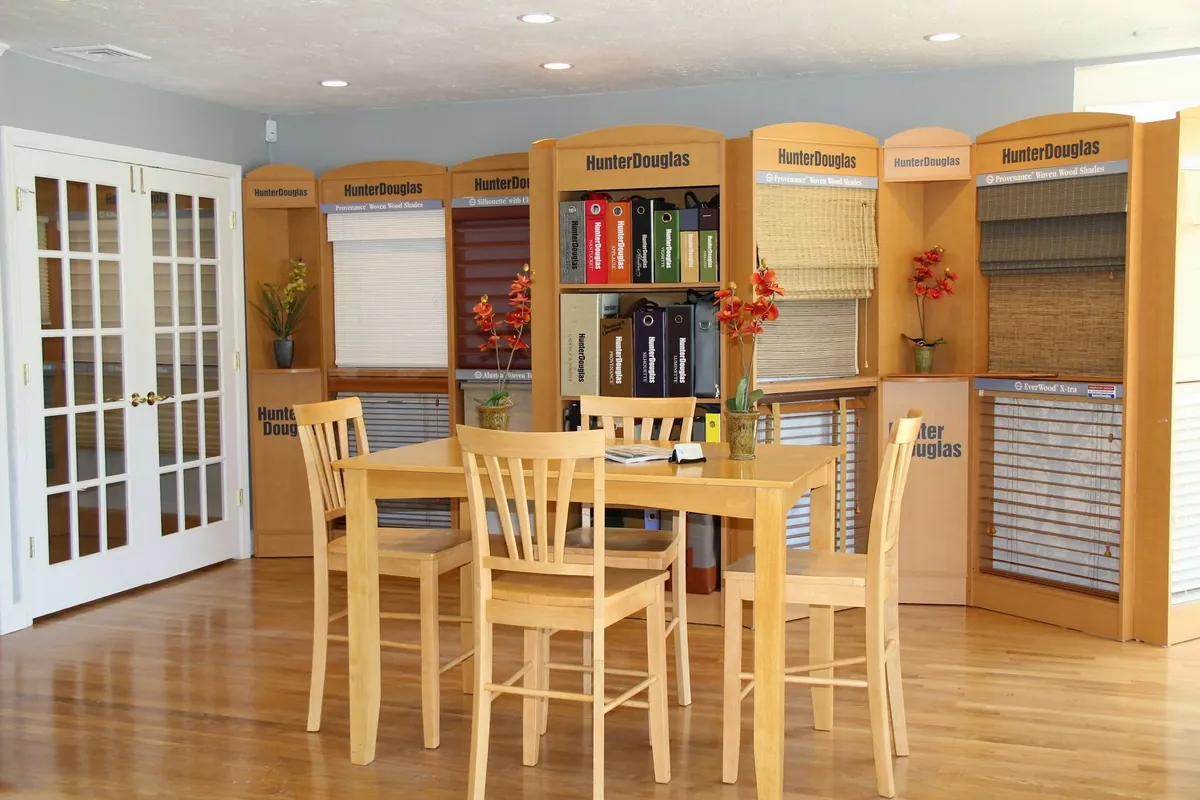
Most of the houses in Plymouth sit somewhere between the historic center and the Pinehills, and many of them are post-war ranches. Single-level and practical, they usually have a living room picture window, a slider to the back, a kitchen window over the sink and bedrooms with wide, shorter windows. Depending on how the house is turned, the picture window can take the full afternoon sun.
A roller shade suits a ranch well. The picture window takes a screen fabric to cut the glare while keeping the yard in view, or a light filtering fabric if privacy from the road matters more. A slider gets a shade mounted above the frame so it clears the handle. Bedrooms take a room-darkening or blackout fabric. Because the windows in a ranch are fairly regular, the whole house can share one fabric color on the street side, and the hems and headrails can be matched room to room.
Some ranches have had a sunroom or a family room added at the back, with more glass than the original house. Those rooms often face the yard and the afternoon sun, and a run of screen rollers, each on its own panel, lets you shade the bright side while leaving the rest open.
Kitchens and baths behind deep-set sash
In an antique colonial the kitchen and bathroom were often added or rebuilt long after the house went up, but they still sit behind the same small, deep-set windows as the rest of the house. That depth is useful. A roller tucked inside the reveal stays well back from the sink or the tub, out of the way of splashes, and the wide sill in front of it remains free for plants or soap.
For a bathroom, a light filtering fabric keeps the room bright and private, and a fabric that copes with damp is worth asking about. In a kitchen, a cordless lift is the easiest to live with, raised and lowered with one hand. Where a window sits behind a counter or above a sink that is hard to lean across, a motor saves the stretch.
Newer houses have the same rooms with different windows: a large kitchen window over a farmhouse sink in the Pinehills, or a ranch bath with a high, narrow window. Each gets its own fabric and lift, but the shades can share hems and headrail finishes, so roller shades in Plymouth, MA, look like they belong together through the whole house.
Openness: the screen choice that matters most
Every solar screen has an openness, the amount of open space between its threads. It is the main choice to make with a screen, and in a town with houses as different as Plymouth’s, the right answer varies.
A tighter weave blocks more sun, glare and heat, and the view through it is softer. A more open weave keeps the view clear and the room brighter but lets in more heat. Color shifts the balance as well. A darker screen is easier to see through and cuts glare well, while a lighter screen bounces more heat back out but glows in strong sun, softening the view.
On a Pinehills window wall facing south or west, a tighter weave in a darker color often makes sense. On a ranch picture window facing the yard, a medium weave may be enough. Remember that screens give privacy only by day: after dark, with lamps on, a lit room is visible through them. For rooms used in the evening, a dual shade, which carries a screen and an opaque fabric on one bracket, gives you both. The guide to choosing fabric for a sunny room explains more.
Lift options for every kind of window
Matching the lift to the window is part of getting a roller right.
- Cordless. Lift or lower the bottom bar by hand. Ideal for antique windows, kitchens and children’s rooms, with nothing at the side of the window.
- Continuous cord loop. A loop at one side turns the tube, held taut by a tensioner. Easier on a large or heavy ranch shade.
- PowerView. A motor in the tube, for high windows, large groups of shades and anyone who wants schedules.
Many Plymouth houses use more than one. A Pinehills house might motorize the great room and use cordless shades in the bedrooms, while an antique colonial might be cordless throughout.
Bedrooms and edge light
Bedrooms need darkness, and a blackout roller provides it. The weak point is the edge. An inside-mounted roller always leaves a thin line of light between the fabric and the frame on each side. In an antique bedroom with a deep reveal that may be barely noticeable, but in a newer bedroom facing the morning sun it can wake you.
An outside mount that overlaps the trim on each side narrows that line. A cassette headrail closes the top. Pairing the blackout roller with side drapery covers the edges and softens the room. For a Pinehills bedroom with a view you would like to keep by day, a dual shade with a screen and a blackout fabric on one bracket handles both.
A visit at home
With houses this varied, it is worth seeing fabrics at your own windows. Our vans carry roller, screen, banded and blackout samples, so we bring the showroom to you, whether your house is in the historic center, the Pinehills or anywhere in between.
We walk through the house with you and talk about each room: where the sun comes in and when, which windows need privacy, which rooms need to be dark and which windows are hard to reach. You hold fabrics up to your glass and see how they behave in your light. We measure every opening, check the depth of the reveal, and note anything that affects the mount, from old trim to a window crank to the height of a clerestory. You leave with a free estimate and decide in your own time. If you want help with color and fabric across a room, an interior design consultation can happen at the same visit.
Designer or Alustra
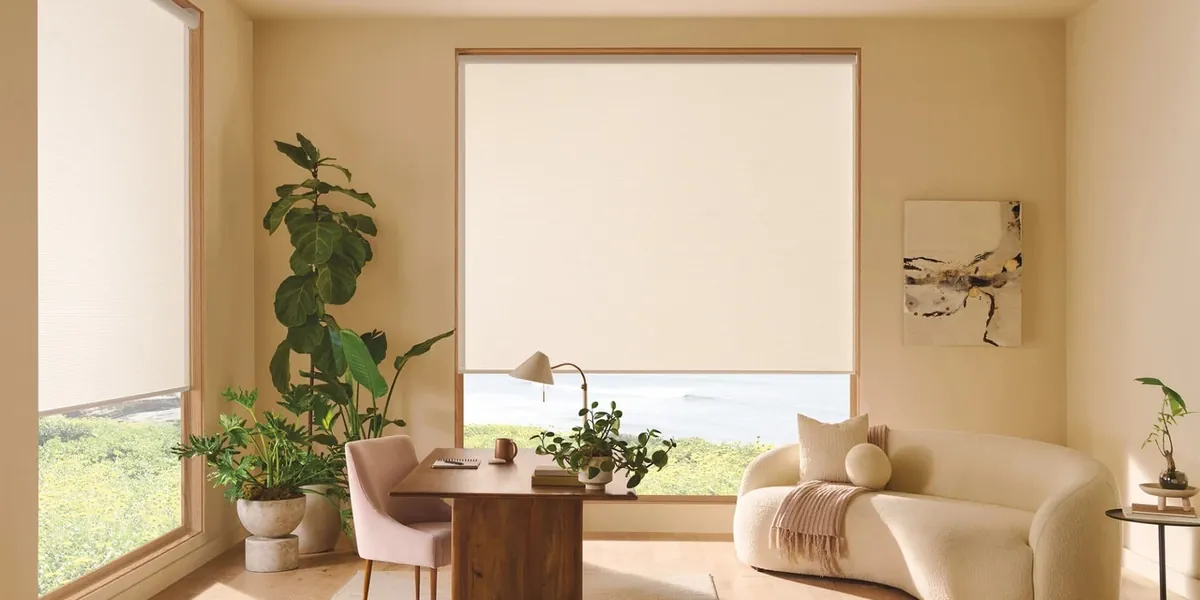
Hunter Douglas offers two main roller collections, and roller shades in Plymouth, MA, often combine them. Designer is the broad range, with a large choice of light filtering, blackout and screen fabrics and every lift option. Alustra is the premium collection, with more distinctive fabrics, woven textures and refined finishes on the headrail and hem.
A Pinehills great room might take an Alustra screen with a fascia for a clean architectural look, while the bedrooms take Designer. An antique parlor might take a patterned Alustra fabric, with Designer in the kitchen and upstairs. See Designer Screen, Alustra Architectural and Alustra Woven Textures, or the main roller shades page for the whole family.
Installation day
When the shades are ready, a certified Hunter Douglas installer returns to put them up.
- Each shade is checked against the window it was made for.
- Brackets go into solid framing, levelled across each window head.
- Shades on a shared bracket, or stacked on a two-story wall, are aligned so the hems match.
- Motorized shades are paired with the remote or added to the app, and any schedules are set.
- Every shade is run through its full travel and you are shown how each one works.
Read more on what happens on installation day.
From our Sagamore showroom
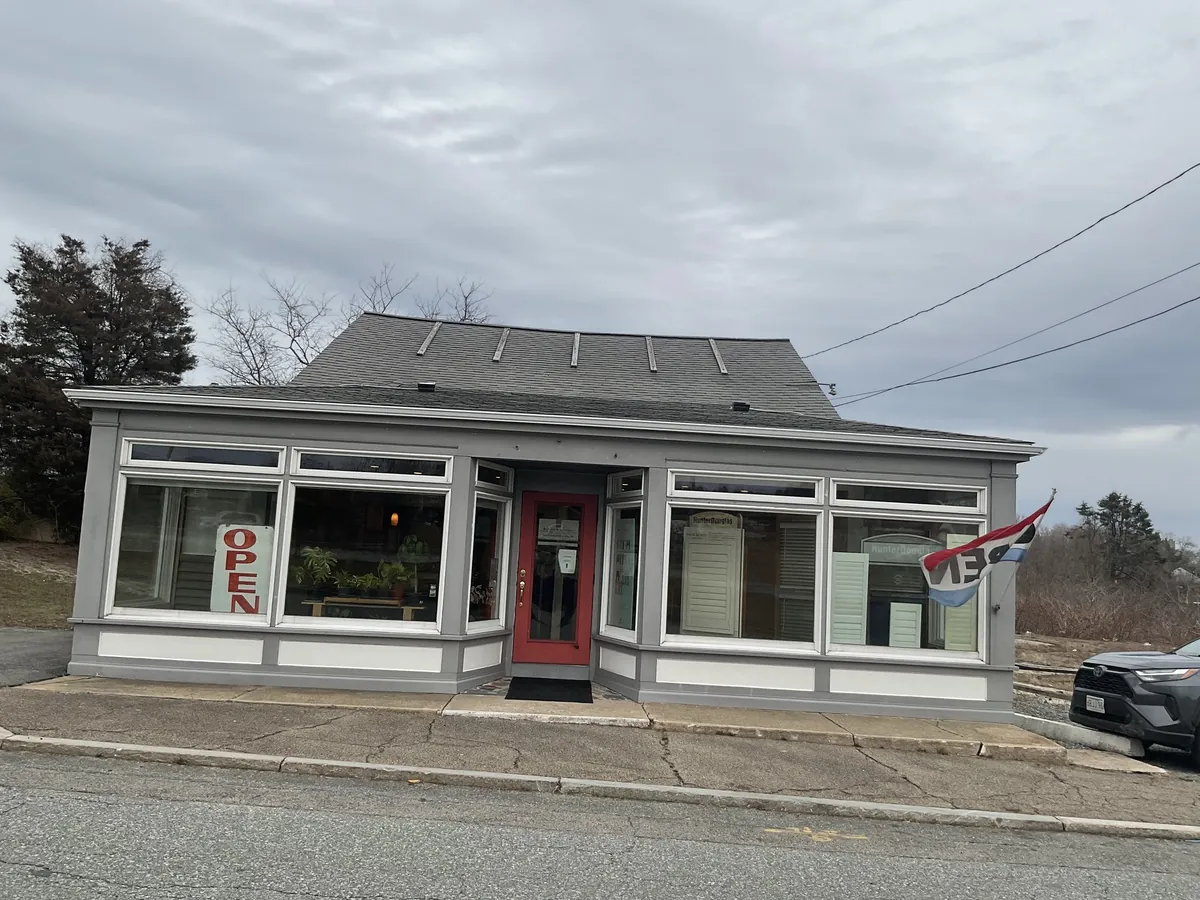
Our Sagamore showroom is the nearest to Plymouth, and you are welcome to see working roller and screen shades there before or after an in-home visit.
Blinds & Designs is a Hunter Douglas Gallery dealer, a designation Hunter Douglas gives to dealers who meet its standards. For roller shades in Plymouth, MA, that means the full Designer and Alustra ranges, banded and Sonnette shades and PowerView, through one consultation. Our installers are certified by Hunter Douglas, and we also repair blinds and shades.
For other rooms, see motorized blinds in Plymouth or roman shades in Plymouth, and everything we offer on the Plymouth page.
Questions from Plymouth
Can roller shades cover a two-story window wall?
Yes. Wide windows take two or three shades on a shared bracket, upper and lower shades are aligned, and PowerView motors move the ones you cannot reach.
Will a roller fit the deep-set windows in an antique colonial?
Deep reveals are ideal for an inside mount, with the shade tucked at the head of the frame. Old frames are often out of square, so we measure at several points and make the shade to the tightest one.
Which screen weave should I choose for the Pinehills?
On big south or west glass, a tighter weave in a darker color usually works best. We bring several weaves to compare at your window.
Can the shades move on their own?
With PowerView, yes. A schedule lowers and raises them at set times, even when nobody is home.
What does a consultation cost?
The estimate is free. After we measure at your home, you get a free estimate for the shades you are considering.
Start with a visit
Whatever kind of house you have in Plymouth, the right roller is easiest to choose at your own window. Request a consultation and we will bring samples, measure every opening and give you a free estimate, or stop by our Sagamore showroom to see working shades first.