
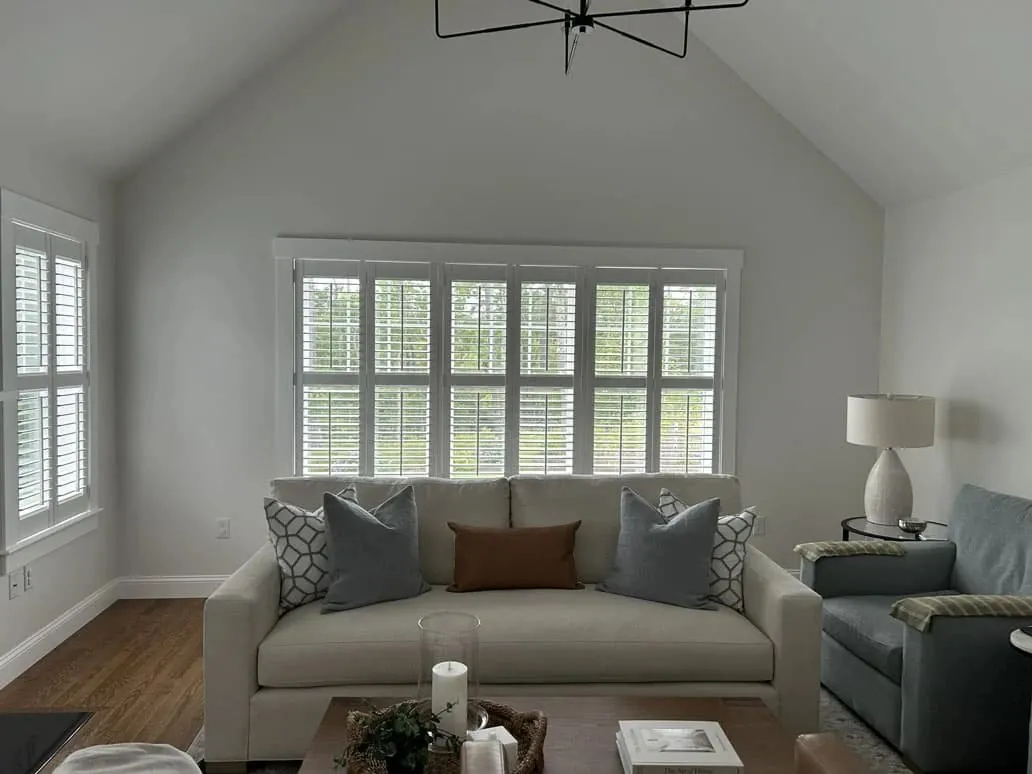
Old sash in the middle, newer windows on the edges
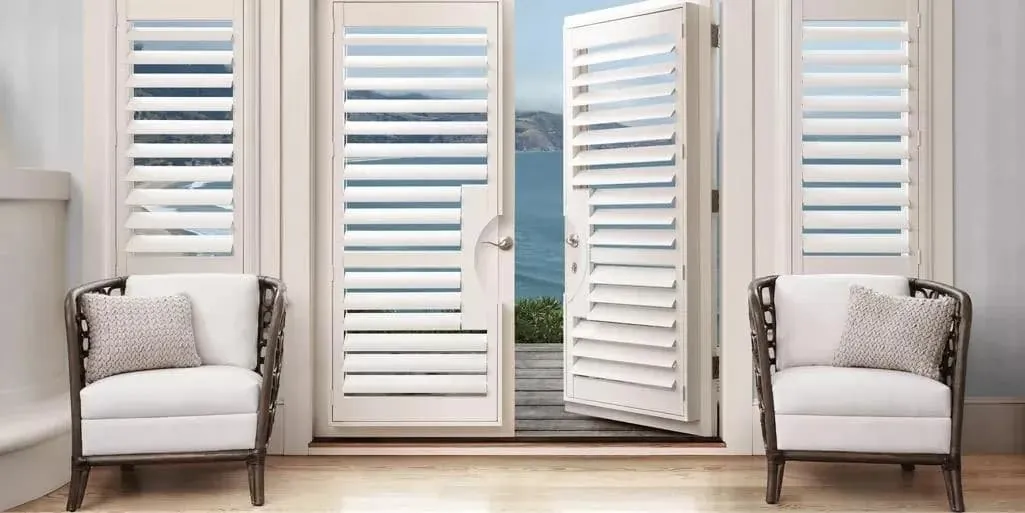
Abington has two kinds of window, and which one you have depends mostly on how close you live to the center. Around the middle of town, the Victorians still carry their tall original sash, set high in the wall with plenty of trim around them. Head outward and the streets fill with post-war capes and ranches on modest lots, where the openings are the standard sizes that builders used everywhere after the war. A good plan for plantation shutters in Abington, MA, starts by knowing which of the two you are dealing with, because they ask for different louvers, different frames and different panel layouts.
The lots in both parts of town are modest, so the neighbors are never far away. Shutters help with that, since the louvers can screen a side window from the house next door while still letting daylight in. They also give an older Victorian or a plain cape a finished look from the street.
We plan each window in person, with samples held up in the actual frame, so the shutter suits the house you have rather than a picture of one.
Three Abington house types, three starting points
Most homes we visit in town fall into one of these groups. Each one sets up the shutter conversation a little differently.
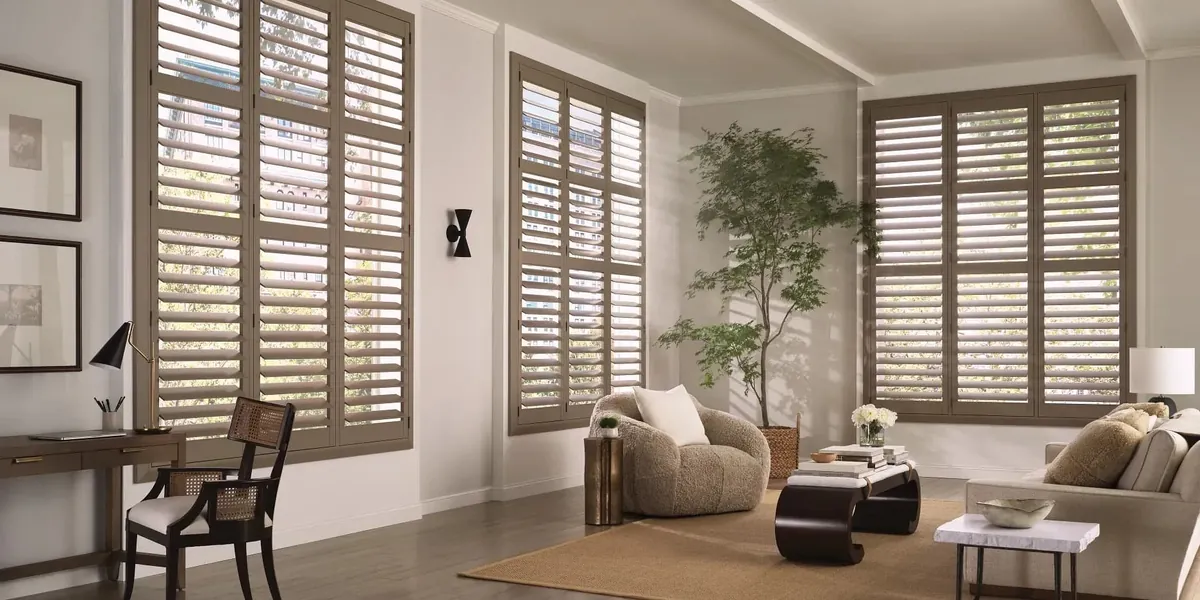
Victorians near the center
Tall, narrow sash with generous casings. The questions are about proportion, louver rhythm and keeping the old trim in view.
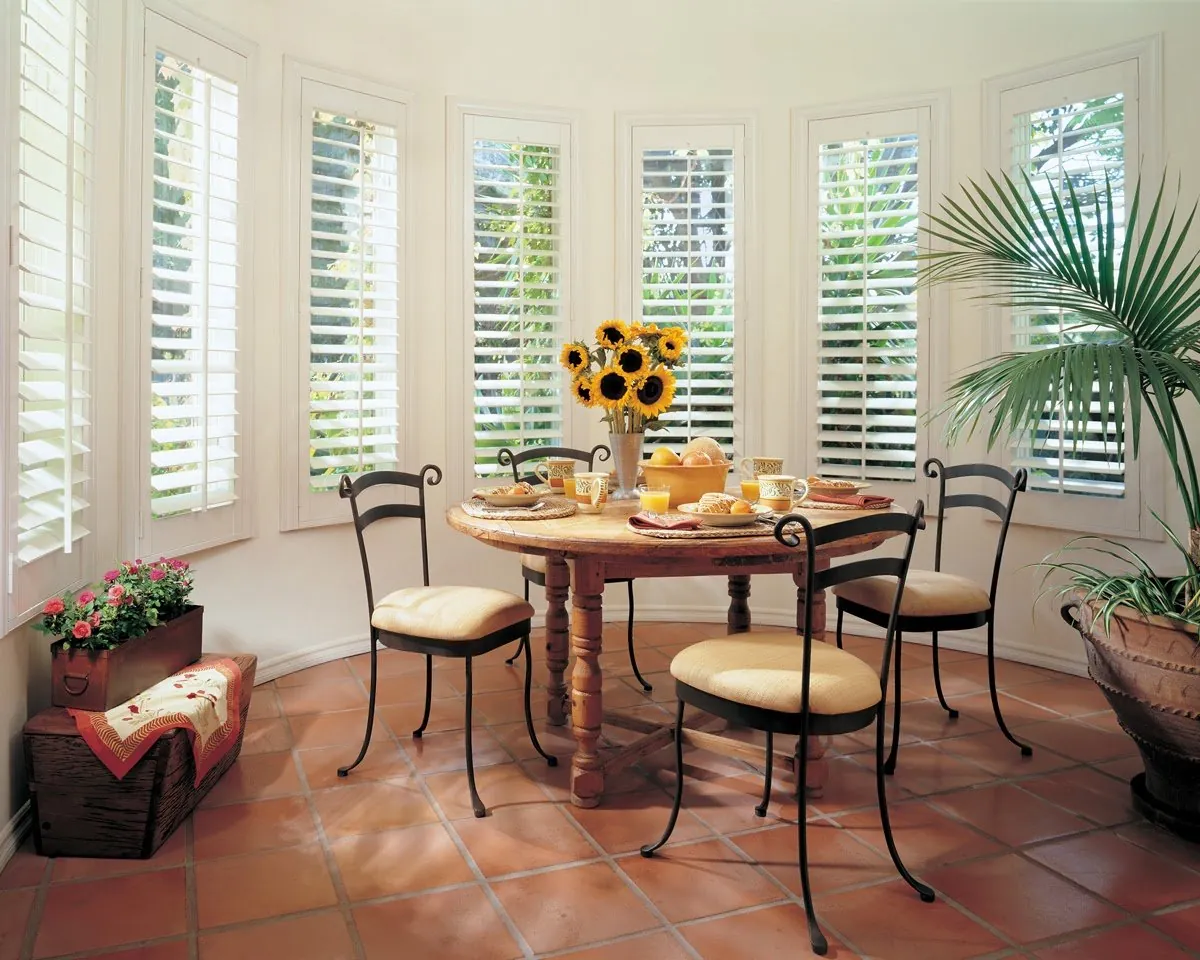
Post-war capes
Standard openings downstairs and small dormers under the roof. The plan is about consistency from room to room and making the upstairs feel snug.
Ranches on modest lots
Wider, lower windows on one floor, with bedrooms strung along one side. Glare and side-yard privacy usually lead the discussion.
A consultation that comes to your door
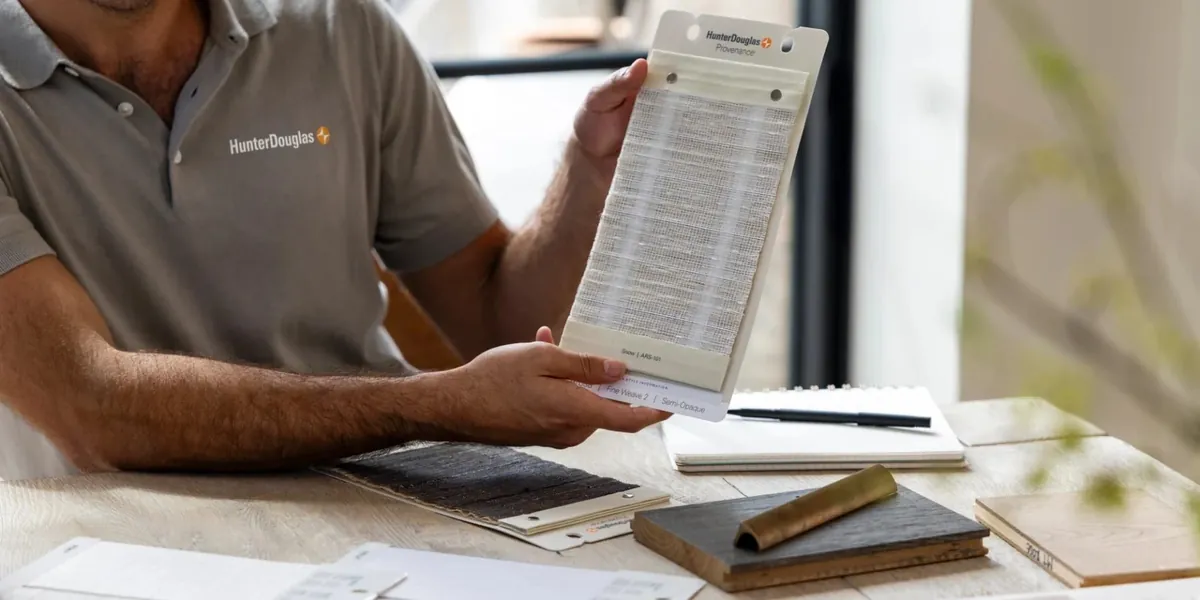
Abington sits inside the territory our Canton shop-at-home team covers. There is no store to drive to for this part of the South Shore; instead, a consultant comes to you with a van full of Hunter Douglas samples. You can read more on the Canton shop-at-home page. The short version is that we bring the showroom to you, and you make every choice at your own windows, in your own light.
Here is how a first appointment tends to unfold:
- Book a time with Request a Consultation, or use the call button.
- The consultant arrives and carries in shutter samples from Palm Beach, NewStyle and Heritance.
- We walk the rooms with you and note which windows face the street, the neighbors or the yard.
- You compare louver sizes, frames and colors in the frame of each window.
- Each window on your list is measured.
- A free estimate follows for the shutters you chose.
The guide to what happens at an in-home consultation covers the visit in more detail if you want to know what to expect.
The tall sash around the town center
A Victorian window near the middle of town is often more than twice as tall as it is wide. Covering it well means respecting that shape. Panels that are too wide for the opening look heavy, while panels that follow the height of the sash make the window look even taller and more elegant from inside.
We usually suggest panels that fold neatly to each side, sized so they clear the sill and any radiator when they swing open. On the louvers, a smaller size tends to look right on narrow old sash, because it gives the panel more blades and a finer pattern that matches the detail of the trim. The bigger louvers can look chunky on a slim window, although they suit some rooms where you want as much view as possible when the blades are open.
Old windows near the center are also rarely perfectly square. Years of settling leave openings slightly out of true, and the casings may have been repainted many times. That is one reason we measure each window individually and look at it closely during the visit. For more on this, our guide to shutters for older windows explains what to look for in an older opening.
Capes: one look from front door to dormer
A post-war cape is built around a simple, repeatable plan. Downstairs, the living room and kitchen have standard windows; upstairs, the bedrooms sit under the roof, lit by dormers. Almost every window in the house is a size you could find in a builder’s catalog of the time.
That regularity is good news. It means a cape can take one consistent shutter look throughout, which suits a smaller house where you can see from one room into the next. The same louver size and color in every room gives the house a calm, connected feeling, and from the street it makes the front of the house look complete.
Dormers deserve a little extra thought. The window is small and set into a deep opening with sloped ceiling on either side. A shutter fitted within that opening keeps the slope clear and leaves the knee wall free for furniture. Closed, it makes a dormer bedroom feel cozy; open, it lets in every bit of light that small window can offer.
Ranches: wide glass and the afternoon sun
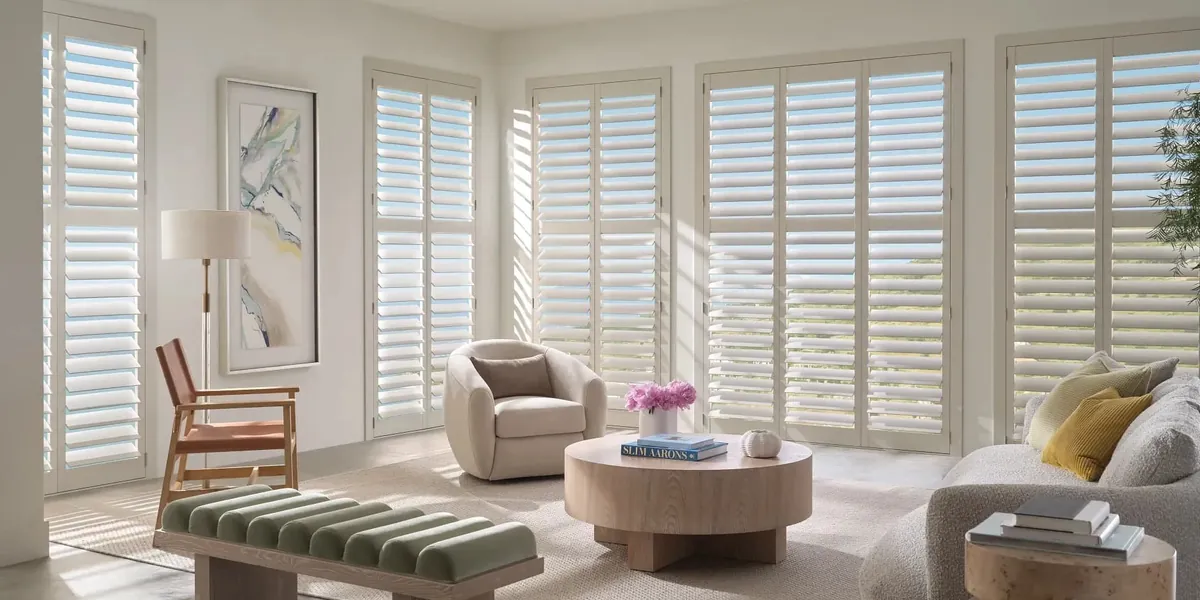
Abington’s ranches tend to have one large window in the living room, sometimes a picture window flanked by smaller ones, and a run of bedroom windows along one side. Because the house is one story, every window is at ground level, and on a modest lot that means the side windows are close to the neighbor’s driveway or fence.
The living room window is usually where glare is the biggest issue. A wide pane facing south or west catches the low sun in the late afternoon. Louvers deal with this neatly: tilt them partly closed and the direct sun is cut, while the room stays bright. A bigger louver suits a wide ranch window, opening up more view when the blades are flat.
For the bedrooms, privacy usually matters more than view. Louvers angled upward screen the side yard while letting daylight in, and closed fully they make a bedroom dark enough to rest in the evening. For plantation shutters in Abington, MA, on a ranch, we often suggest the same white throughout, with louver size adjusted to suit each window.
Picking a louver size for your windows
Louver size is one of the first decisions you make, and in Abington the answer depends on which part of town you live in.
For the tall sash near the center, a smaller louver often looks more at home. It suits the narrow proportions and the detailed trim of a Victorian, giving a traditional look.
For the standard openings of capes and ranches, a middle size works well in most rooms, and a larger size suits wide picture windows where you want a cleaner look and a clearer view when the blades are open.
We bring louver samples in more than one size and hold them up in your windows. Seeing the sample against your own sash is usually what settles the question.
Frames for new openings and old casings
The frame holds the panels and sits around the opening. Its style changes how the shutter relates to the trim.
On the standard modern openings found in most of Abington, trim is usually simple builder casing. A modest frame suits it, and the shutter adds the detail the window otherwise lacks. On older Victorian windows near the center, the casings are often deeper and more decorative. There the choice is between a slim frame that lets the original woodwork remain the focus and a frame with a bit more presence that tidies up a casing that has seen many coats of paint.
We compare frame samples at the window, against your own trim, rather than from a brochure.
Side yards on a modest lot
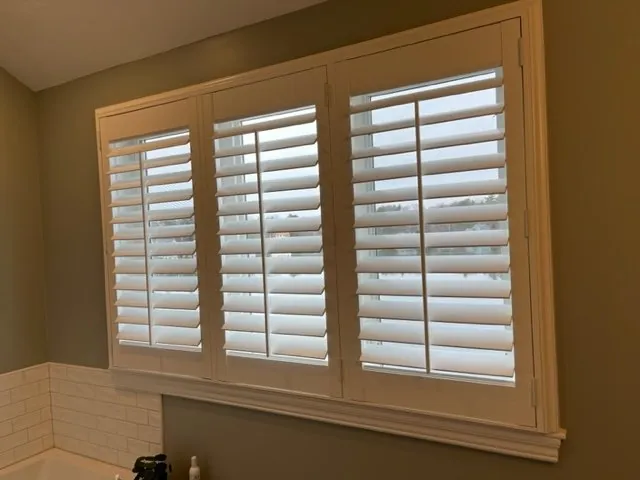
The thing that ties the two halves of town together is the lot size. Whether the house is a Victorian a short walk from the center or a cape farther out, the side yard is usually narrow, and the windows on that side look toward the next house rather than out over open ground. Some of those side windows are in rooms you use all day, like a kitchen or a home office, and some are in rooms you mostly use at night, like a bedroom.
For the daytime rooms, the aim is to keep the light while blocking the direct line of sight. Louvers tilted upward do that well: the person next door looks into the faces of the blades, while the slats send daylight up toward your ceiling. For the night rooms, the aim is simply to close the window completely once the lights go on, which a shutter does with one turn of the louvers.
Planning plantation shutters in Abington, MA, on the side of the house is mostly about knowing which room is which. We walk that side with you during the visit and agree how each window will be used before choosing anything.
Kitchens and baths on a modest lot
On a modest lot, the kitchen and bathroom windows often look straight across at the neighbor’s house. These rooms need privacy, but they also need light, because they are where you start and end the day.
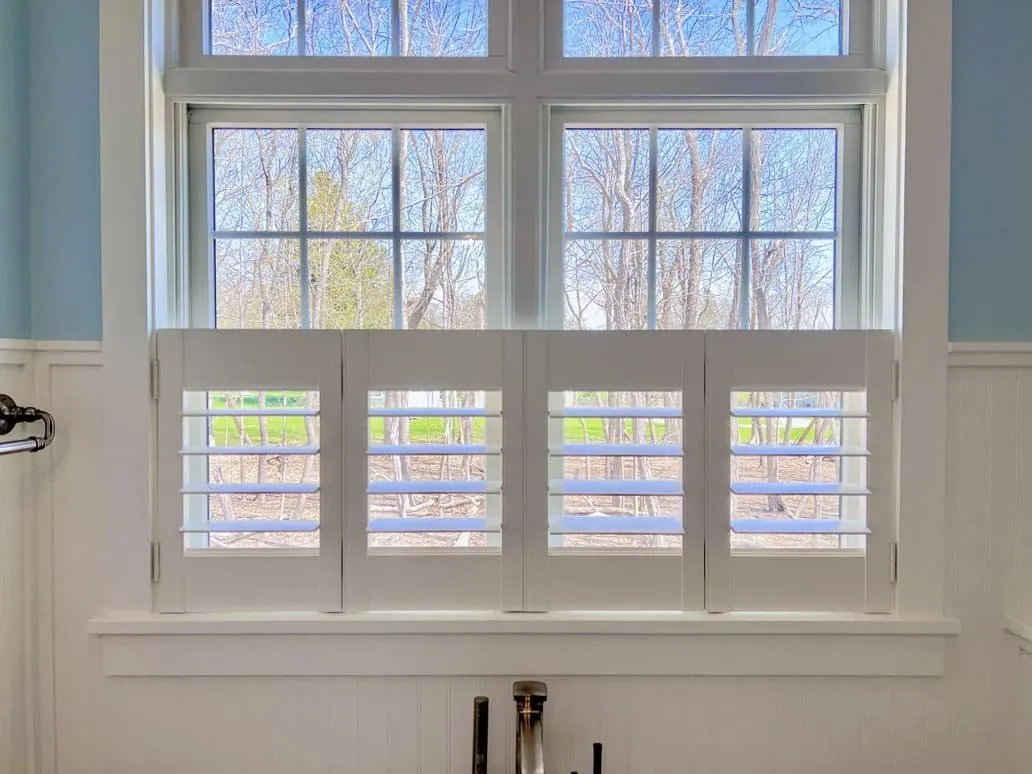
A shutter that covers only the lower part of the window, the cafe style shown in several of our own portfolio photos, is a common answer. It screens the counter, sink or tub from the view next door while leaving the upper glass open to the sky. A full-height shutter with louvers tilted up does a similar job and closes completely at night.
Bathrooms in older Victorians near the center may have a single tall window that faces a side yard. In those rooms, a full-height shutter in a soft white tends to look best, matching the trim and keeping the room bright.
One room now, the rest later
Some households do every window in one project. Others start with the room that bothers them most and add the rest over time. Either approach works, and shutters lend themselves to doing it in stages.
If you start with one room, it helps to settle on a louver size and color that will work everywhere, so later rooms match. In a cape or ranch, where most windows are the same standard size, that is easy. In a Victorian near the center, where window sizes vary more, we may suggest a louver size that suits both the tall front windows and the smaller ones at the back.
The free estimate lists the windows you chose, so you can see clearly what the first stage covers. Starting on the street side and finishing with the back of the house is a sensible order in most Abington homes.
How the light changes from season to season
A shutter is something you adjust, not something you set once. Over the course of an Abington year, the light that reaches your windows changes a great deal, and the louvers let you follow it.
In winter, the sun stays low and comes in deep across the room. On a south-facing window, opening the louvers fully lets that low light warm the floor and brighten a room that otherwise feels gray by mid-afternoon. In summer, the sun climbs higher and the long evenings bring strong western light into living rooms and kitchens. Tilting the louvers partly closed keeps that glare off screens and tables without shutting the room in.
Spring and fall sit between, and that is when most people find their own rhythm: open in the morning on the east side, angled on the west side by late afternoon, closed everywhere at night. On a Victorian with tall sash near the center, that rhythm uses more of the window; on a ranch farther out, it is mostly about the big front window. Either way, plantation shutters in Abington, MA, give you a simple way to keep a room comfortable through the year.
Interior design help for the whole room
Shutters are a big visual element, and in a smaller house they affect the feel of every room. If you are repainting, changing flooring or rethinking a room, our interior design consultations can help you choose a shutter color and style that works with the rest of the space. Ask about it when you book, and the consultant can talk through the room as a whole while the samples are in your hands.
Comparing Palm Beach, NewStyle and Heritance
Hunter Douglas makes three shutter collections, and all three come to your house on the visit: Palm Beach, NewStyle and Heritance. Within each one, we compare louver sizes, frames and colors with you.
Rather than describing them in the abstract, we put samples of each in your window frame so you can compare them in your own light. It is common to use one collection in kitchens and baths and another in the main rooms, while keeping colors and louver sizes consistent across the house. For an overview of the range, the main plantation shutters page has more.
A Hunter Douglas Gallery dealer for Abington
Blinds & Designs is a Hunter Douglas Gallery dealer. Your shutters are fitted through certified Hunter Douglas installation, which matters most on older openings near the center, where a careful fit is what lets the panels close evenly.
Along with shutters, we offer interior design consultations, repairs on blinds and shades you already own, and window covering automation. If you want to see a showroom as well as the samples we bring, the nearest is our Franklin showroom.
Other window treatments in Abington
A shutter is not the right answer for every window. A back bedroom that needs real darkness may suit cellular shades in Abington, and a wide kitchen window might be better with custom blinds. The Abington page lists every service we offer in town.
Questions from Abington
My house is a cape. Can every window take the same shutter?
In most capes, yes. The openings are standard sizes, so one louver size and color can run through the house, with dormers fitted inside their own deep openings.
Do tall Victorian windows near the center look right with shutters?
They do when the panels follow the height of the sash and the louver size suits the narrow shape. A smaller louver often matches the period trim best.
My ranch’s living room window gets strong afternoon sun. Will shutters help?
Yes. Tilting the louvers partly closed cuts the direct sun while the room stays bright, and closing them fully blocks it.
Can I start with one room?
Yes. We help you choose a louver size and color that will suit the rest of the house, so later rooms match.
Is there a showroom nearby?
Our Canton shop-at-home team brings samples to Abington homes. If you would like to visit a showroom too, Franklin is the nearest.
Pick a room and a time
Whether your windows are tall Victorian sash near the center or the standard openings of a cape or ranch, the first step is the same: a time for the consultant to come by with samples. Tell us which room you would like to start in, and we will plan plantation shutters in Abington, MA, around that window first, then the rest of the house if you wish, with a free estimate afterward. Press Request a Consultation, or use the call button if you have a question first.