
Capes, ranches and the colonials in between
Drive along Hartford Avenue or down South Main and the houses come in a steady rhythm: post-war capes with a pair of dormers, single-story ranches with a big front window, and newer colonials built on the lots that filled in between them. A few older village houses still stand among them with their small original sash. That mix is what we plan around when we fit plantation shutters in Bellingham, MA.
Most of these houses have standard modern openings, the kind a replacement window company put in at some point. That makes them straightforward to shutter, and it means a whole house can share one louver size and one finish from the front door to the back bedroom.
The exceptions are where the care goes: the low dormer windows upstairs in a cape, the wide picture window of a ranch, and the little sash in the oldest houses, which can be smaller than a shutter catalog expects.
What we fit most often in Bellingham
Shutters come in three Hunter Douglas collections and a long list of layouts. These are the ones that come up again and again in Bellingham houses, and we carry samples of each in the van.
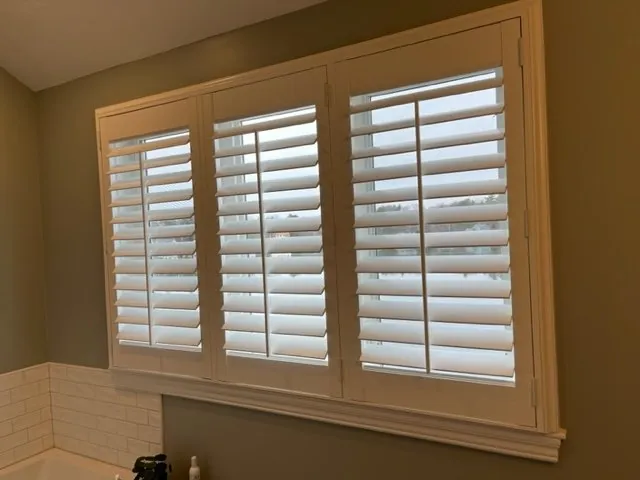
Palm Beach for baths
A polysatin shutter with no wood in it, so steam from a shower or splashes at a sink do it no harm.
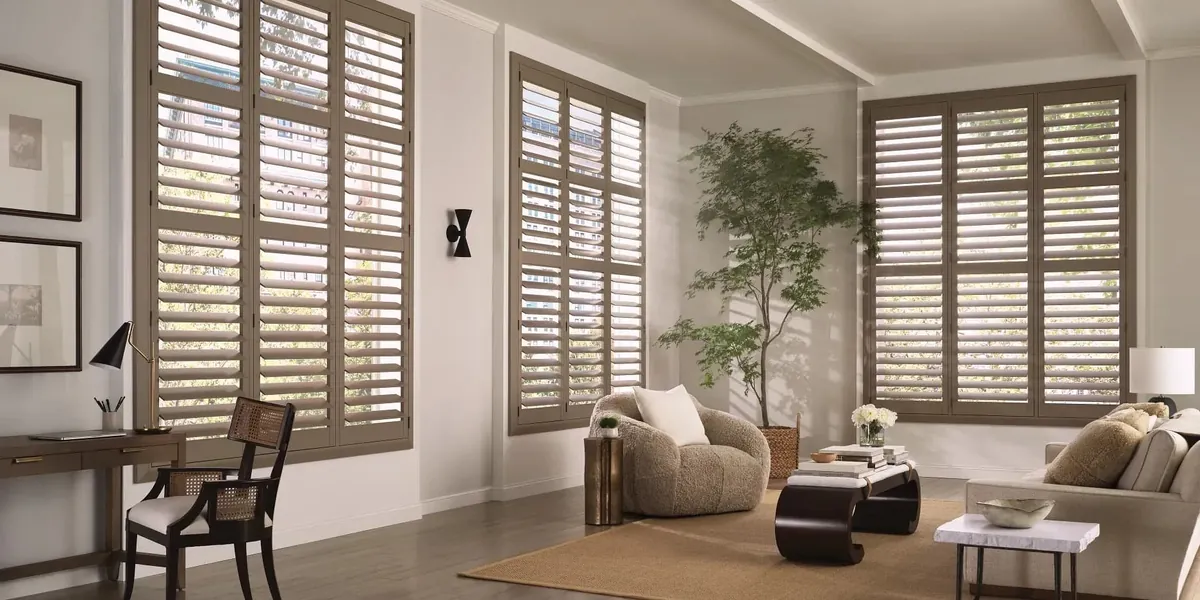
NewStyle for living rooms
The look of a painted wood shutter, in a hybrid material that suits the bedrooms and living areas of most houses.
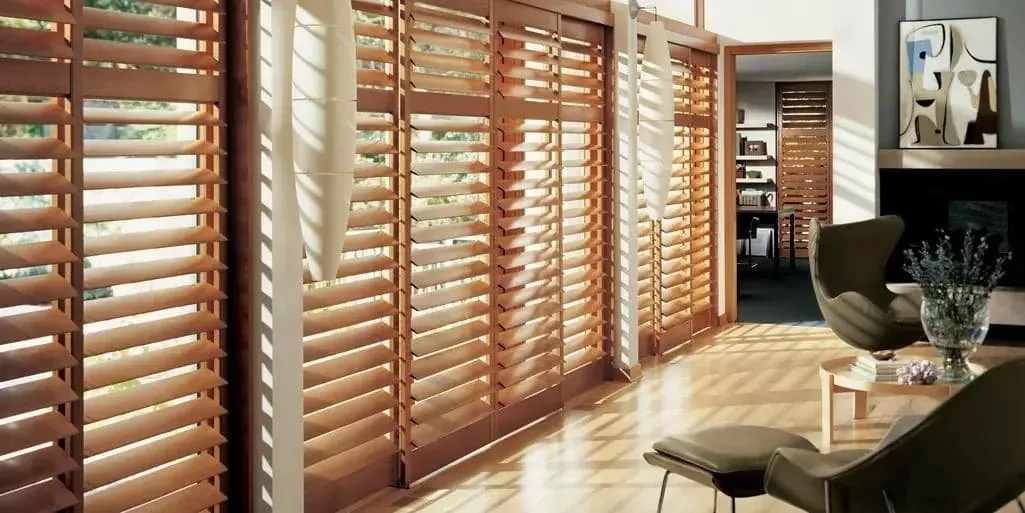
Heritance in real wood
Hardwood that can be painted or stained, for a room where you want the grain or the feel of solid wood.
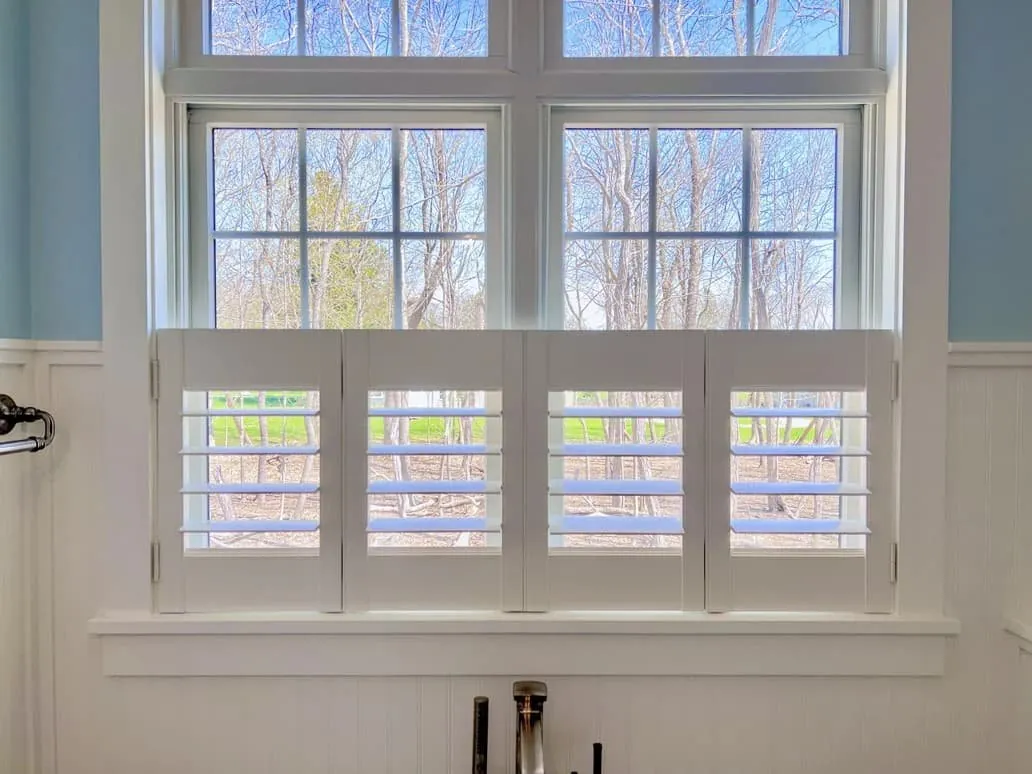
Cafe shutters over the sink
Panels on the lower half of the window only, so a kitchen keeps its daylight and the counter stays private.
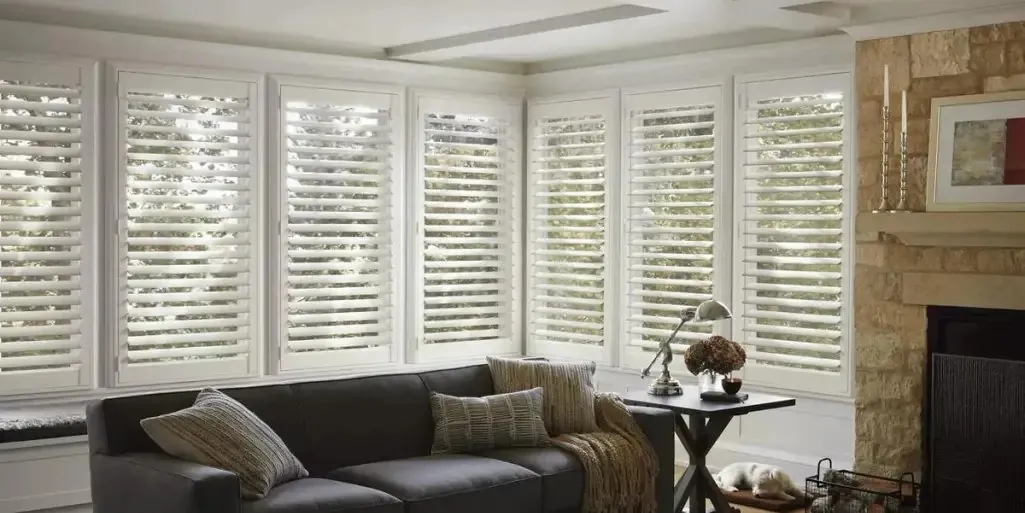
Bays and bows
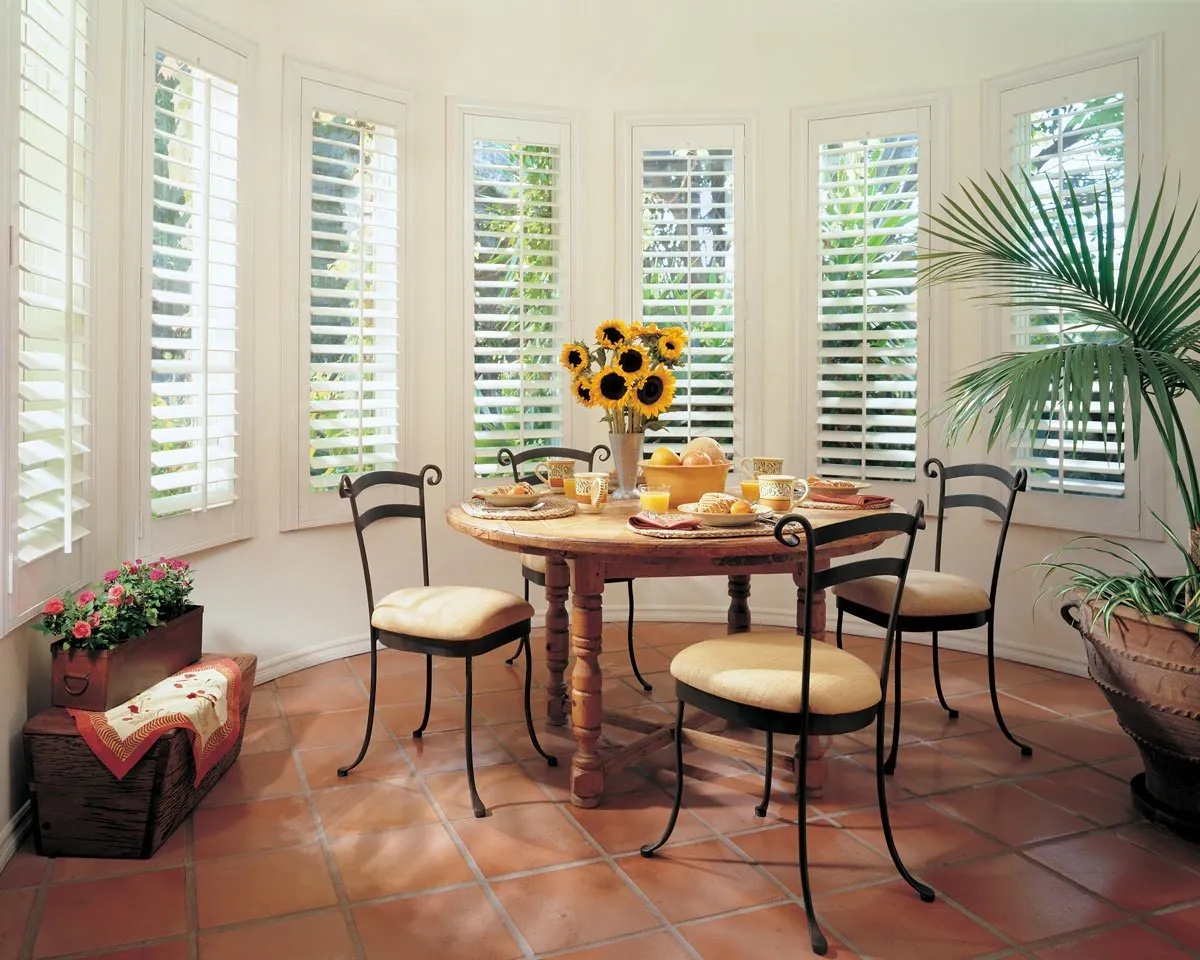
Each face of the bay gets its own shutter, joined at the corners so the whole curve reads as one.
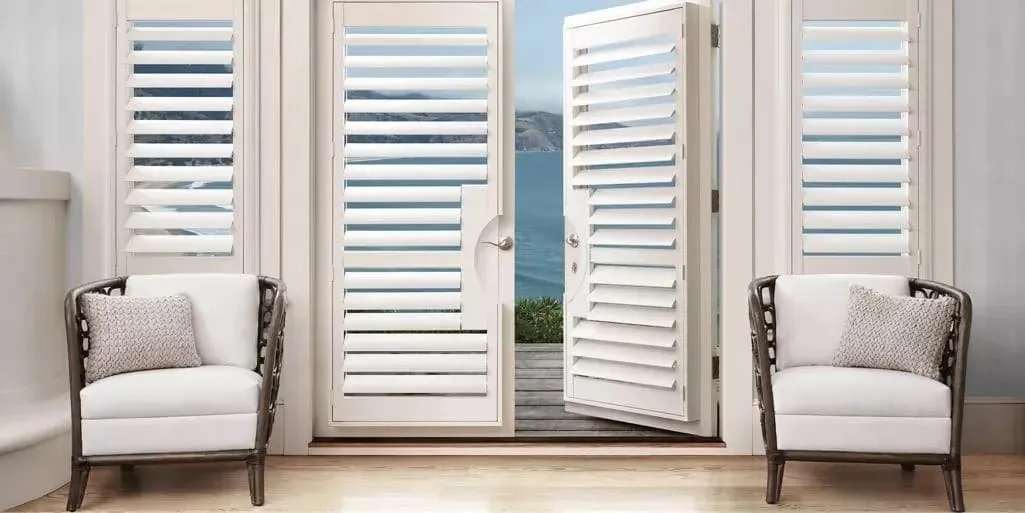
Doors to the deck
French doors take shutters that swing with the door. Sliders can take panels on a track that glide aside.
Capes and their dormer windows
A post-war cape is a tidy house with a predictable set of windows. Downstairs, double-hungs sit evenly either side of the front door, usually a living room on one side and a dining room or bedroom on the other. Upstairs, the bedrooms tuck under the roof, with a dormer window in each and knee walls that cut into the room.
Those dormer windows are the ones to think about. They are often short and set deep into the dormer, with sloping ceiling close above. A wide louver can look heavy in such a small opening, so a narrower blade usually suits it better and keeps the shutter in scale with the room. An inside mount works well because the dormer gives plenty of depth, and the shutter then sits neatly inside the little alcove rather than spreading onto the wall.
Downstairs, the front windows of a cape face the street at a short distance. Shutters with a divider rail let you keep the lower half closed while the upper half lets in light, which suits a living room that sees passers-by on the sidewalk. Matching the front windows exactly also makes the house look finished from outside, since every window shows the same clean line of louvers.
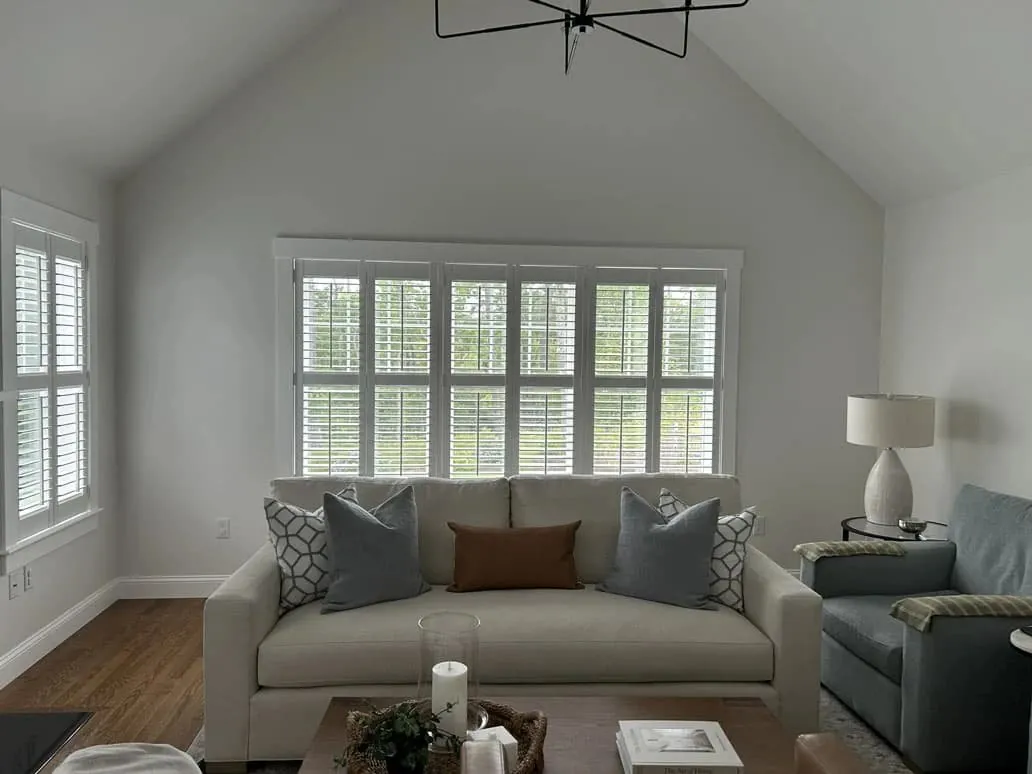
Ranches and the big front window
The ranches along South Main are long and low, and the front of each one is usually anchored by a big picture window or a bow in the living room. Bedrooms run down one side with matching windows, sometimes set a little high on the wall, and there is often a slider or a pair of doors to the back.
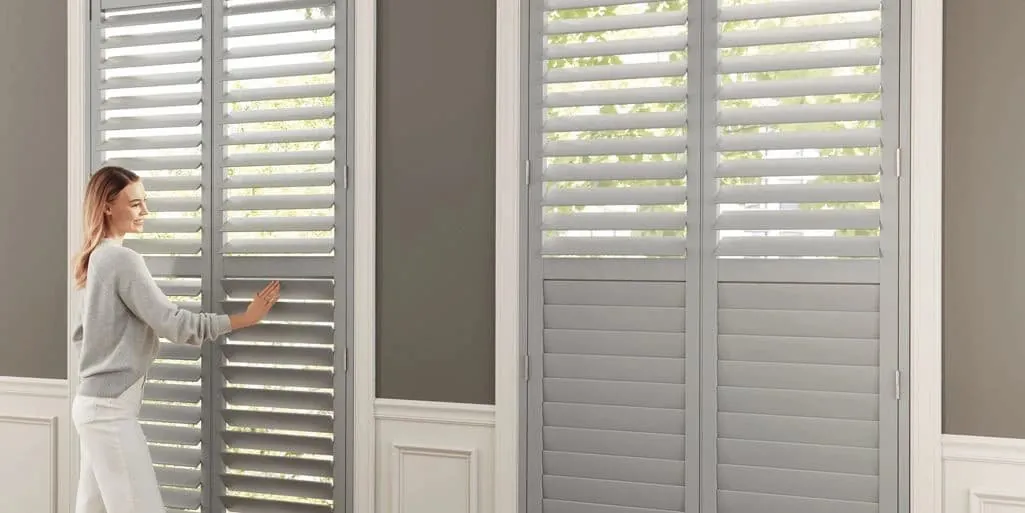
That picture window is the main event. It is usually too wide for a single pair of panels, so we divide it into three or four panels hinged in pairs. They fold back to the sides when you want the glass clear and close across when you want the room private. A wide louver suits it best: when the blades are open you look through fewer of them, and the view of the yard stays clean.
The bedroom windows in a ranch are easy by comparison, but their height is worth noticing. A shutter on a window set high can be mounted inside the opening so the sill stays free for a lamp or a plant. For the slider, a set of bypass panels on a track lets you open the shutters to step out without anything swinging into the room.
Newer colonials on the lots in between
As the open land between the older capes and ranches filled in, two-story colonials went up on many of those lots. They have more windows than either of their neighbors and more variety: a front hall with a window beside the door, a family room at the back with a run of glass or a slider, a kitchen with a window over the sink, and bedrooms upstairs with matching double-hungs on every wall.
Those houses are where a whole-house order makes the most sense. With so many windows of a similar size, one louver width and one color can run through every room, so the house looks consistent from the street and from the inside. The front rooms might take Heritance for the feel of real wood, the bedrooms and family room NewStyle, and the baths and laundry Palm Beach, all painted the same white.
The family room is often the one that needs the most thought. A run of three or four windows side by side can take matching shutters on each, with a slim post between them so the louvers line up across the whole wall. If there is a slider out to the deck, it gets panels on a track in the same finish. Planning plantation shutters in Bellingham, MA, for a colonial like that usually means walking every room once, so nothing is left out of the estimate.
Tilt rods, hidden tilt and the face of the panel
There are two ways to move the louvers, and they change the look of the shutter more than most people expect.
A traditional tilt rod runs down the front of each panel, connected to every blade. It is easy to grab, it moves the whole panel at once, and it gives the shutter a classic look that suits a cape or an older village house.
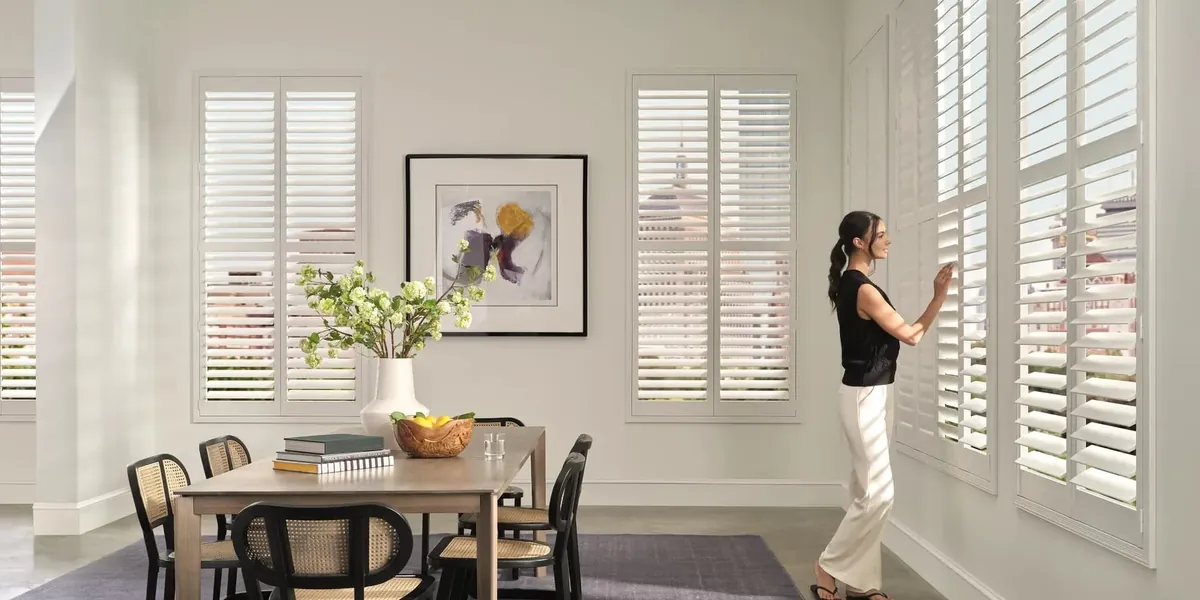
A hidden tilt moves the louvers from the edge of the panel instead, so there is nothing down the middle. You simply push or pull a blade and the rest follow. The face of the shutter stays clean and the view through the glass stays clear, which suits a ranch picture window or a modern family room.
Both options come in each collection, and plenty of houses use both: the classic rod on the front windows, where the shutters show from the street, and the hidden tilt at the back, where the view of the yard matters most. We bring both so you can feel the difference with your own hand before choosing plantation shutters in Bellingham, MA.
Standard openings still get measured one by one
Because most Bellingham houses have modern replacement windows, it is tempting to think every bedroom window is the same size. Often they are close, but close is not the same as identical, and shutters are made to the opening rather than cut down from a stock size. A small difference that would never show on a shade can leave a gap down the side of a shutter or stop its panels from meeting.
So each opening is measured on its own. We check width at the top, middle and bottom and height at both sides and the center, then look at the depth where the frame will sit and note any crank, lock or alarm sensor the louvers must clear. On a vinyl replacement window the frame is often shallower than the old wood one it replaced, which affects whether an inside mount works. We tell you which windows can take an inside frame and which need one mounted on the casing.
The benefit of all that care is that plantation shutters in Bellingham, MA, look built in rather than added on, with the narrowest possible gap between frame and opening.
Small original sash in the old village houses
Here and there among the post-war houses stands an older village house, with small original sash, thick casings and walls that are not quite plumb. Those windows are often smaller than any modern opening in town, and sometimes a pair of windows in the same room are not the same size.
A small opening like that suits a single panel or a narrow pair, with the slimmest louver size we offer, so the shutter keeps the proportions of the window. Where the original glass has a slight wave or divided panes, a shutter with fewer, slimmer blades lets the glass stay the feature. If the opening has moved out of square over time, the frame is made to take up the difference so the panels still close evenly. Our guide to shutters for older windows explains how we handle those openings.
Bathrooms, the laundry and the kitchen sink
Every house in town has a few windows that live a harder life than the rest. In a cape it is usually the one bathroom upstairs, under the roof, with a small window and not much air moving. In a ranch it is the bath at the end of the bedroom hall and the window over the kitchen sink. In a newer colonial there may be two or three baths, a laundry room off the garage and a mudroom by the back door.
Steam, splashes and damp air are hard on fabric and can make natural wood swell over time. That is why we point those windows toward Palm Beach. It is made from polysatin, holds its shape in a humid room, and wipes clean with a damp cloth. Painted the same color and given the same louver size as the NewStyle or Heritance in the hallway, it looks like part of one set.
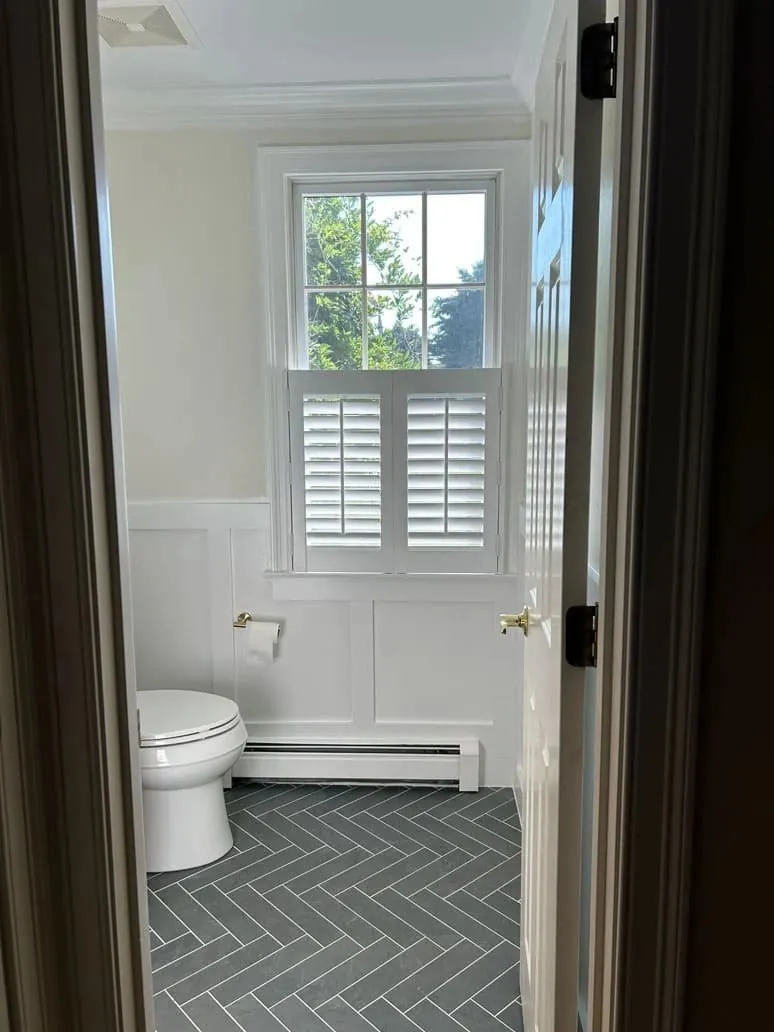
A powder room or a bath on the street side is also a good spot for a cafe layout, with panels covering only the lower sash. You get privacy where you need it and daylight above, and the window can still be opened for air without moving the shutters at all.
Light, privacy and the yard
Shutters handle light differently from shades. A shade moves up and down; a shutter stays in place and you tilt the louvers. That means you can block glare on the television while still seeing out, or let in daylight while keeping the room private from the street.
In a ranch living room facing west, tilting the louvers upward in the late afternoon sends the light to the ceiling instead of straight across the room. In a cape bedroom facing the road, closing the lower louvers and opening the upper ones gives privacy and sky at once. And at night, closed fully, the shutters make a solid panel across the glass.
Choosing plantation shutters in Bellingham, MA, often starts with one problem room like that, and then the rest of the house follows once people see how well the louvers work.

The visit, in three parts
Our vans carry samples of all three collections, every louver size and the main frame styles, so we can bring the showroom to you. A visit has three parts.
Before we arrive
You request a consultation online or through the call button and choose a time. It helps to think about which rooms bother you most, and whether you want to treat one room now or the whole house over time.
While we are there
We walk the house with you, look at each window and talk about light, privacy and how you use the room. You hold samples against your own trim and compare louver sizes in your own light. Then we measure every window you are considering.
After we leave
You get a free estimate for the shutters you discussed, with no pressure to decide that day. When you are ready, we place the order, and our certified Hunter Douglas installers fit every panel once it arrives.
You can read more about what happens at an in-home consultation, and if you would like help with color or the rest of the room, ask about our interior design consultations too.
How installation goes
- Our installer checks each window against the order before fitting a frame.
- Each frame is set square and level, shimmed where the opening is not.
- The panels are hung and the hinges adjusted until each pair meets cleanly.
- Every louver is tilted open and closed to check it moves freely and closes flush.
- We show you how to work the tilt, open the panels for cleaning and wipe them down.
Choosing between the three collections
Palm Beach is the one for any room that gets wet. In a Bellingham cape that is usually the single upstairs bath; in a newer colonial it might be two or three baths and the laundry room.
NewStyle is the everyday choice for living rooms, bedrooms and family rooms. It looks like painted wood and handles the wide panels of a ranch picture window well.
Heritance is solid hardwood with the widest range of paint and stain finishes. It is the natural pick for an old village house with natural wood trim, or a front room in a colonial where you want real wood.
Many houses end up with two of the three, matched in color and louver size so nobody can tell them apart. The main plantation shutters page compares them side by side.
Why buy shutters from a Gallery dealer
- The full range. As a Hunter Douglas Gallery dealer, we offer all three shutter collections with every louver size, frame and finish.
- Certified installation. Our installers are certified by Hunter Douglas, so the shutters go up the way they were designed to.
- One consultation for the whole house. We also carry Hunter Douglas shades, blinds and drapery, so a room that suits a shade better can be planned at the same visit. See our cellular shades in Bellingham or custom blinds in Bellingham.
- Help later on. If a shutter or shade ever needs attention, we handle repairs as well.
For everything we offer in town, see our Bellingham page.
Questions from Bellingham
Will shutters suit the dormer windows in my cape?
Yes. Dormer windows usually have plenty of depth for an inside mount, which tucks the shutter neatly into the alcove. A narrower louver keeps it in scale with a small opening under a sloping ceiling.
How do you handle a wide ranch picture window?
We divide it into three or four panels hinged in pairs, so they fold back to the sides. A wide louver gives the clearest view when the blades are open.
My windows are modern replacements. Do they still need measuring?
Yes. Replacement windows that look the same are often a little different, and shutters are made to the opening. We also check the frame depth, since vinyl windows are often shallower than the wood ones they replaced.
Are shutters hard to keep clean?
Not at all. A duster or a damp cloth along the louvers is usually enough, and Palm Beach can be wiped down in a bathroom or kitchen without worry.
Is there a charge for the estimate?
There is not. After we measure, you receive a free estimate for the shutters you are considering.
Start with one room
You do not need to plan the whole house at once. Request a consultation and we will bring shutter samples to your door, look at the room that bothers you most, measure and give you a free estimate. If you would rather call first, use the call button, or visit our Franklin showroom.