
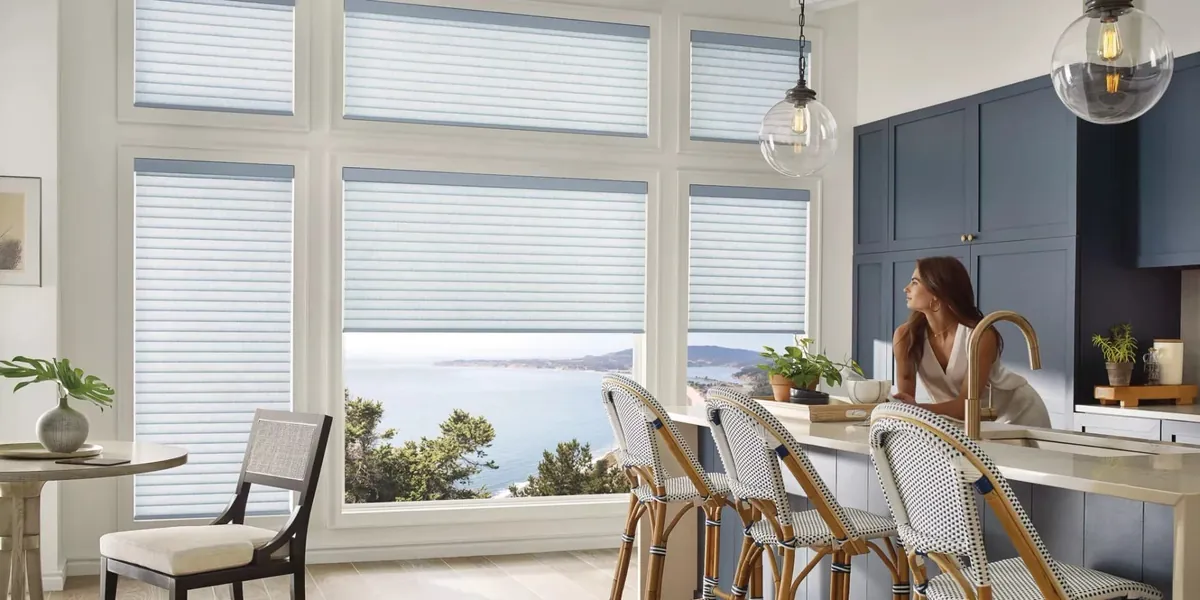
Two kinds of house, one long bay light
Dennis has two quite different housing stories. Up on 6A, Dennis Village keeps its antique captains’ houses: square, dignified, with symmetrical fronts, center chimneys and rows of tall sash set in heavy frames. Down on the sound, Dennis Port is mostly close-set cottages and condominium blocks, small footprints packed together, with windows that look straight into a neighbor’s or straight out at the water. Roller shades in Dennis, MA, have to answer to both.
What ties the two halves of town together is the light. Rooms on the bay side take the sun late in the day, long and low across the water, and that kind of light is the hardest of all on fabric. Upholstery, rugs and floors on a west-facing bay wall can lose color in a single summer. Add the fact that many houses here sit empty for part of the year, and the job becomes clear: a shade that controls glare and fading, works without fuss, and still looks right in an old room.
Where roller shades in Dennis, MA, earn their keep
When we plan roller shades in Dennis, MA, these are the Hunter Douglas options we reach for most often, on both sides of 6A. All three travel in the van to your door.
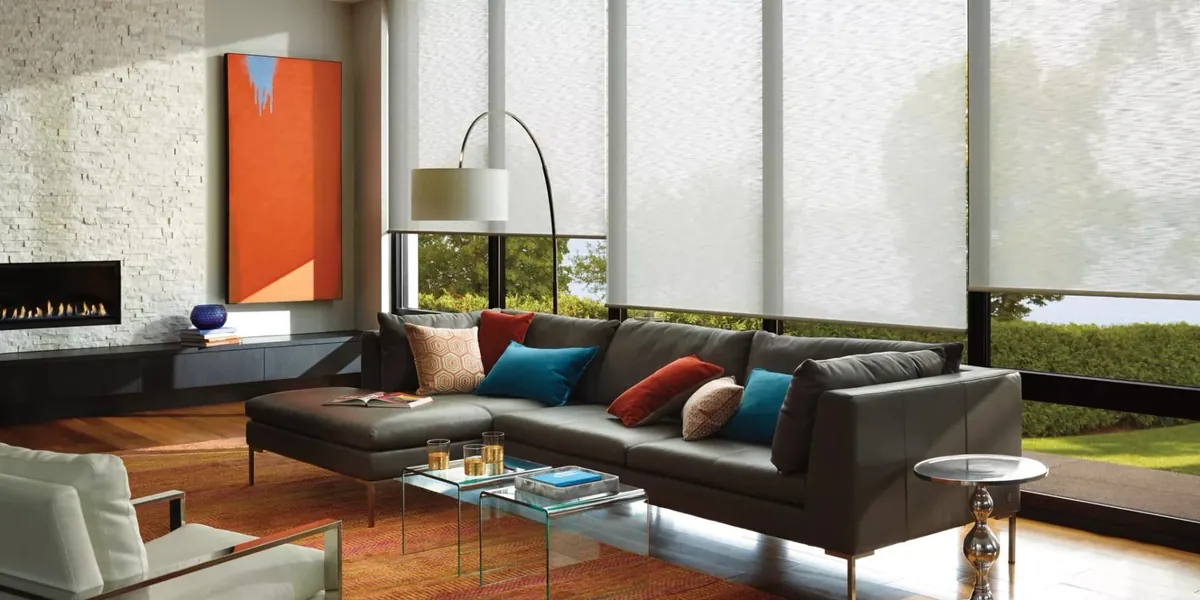
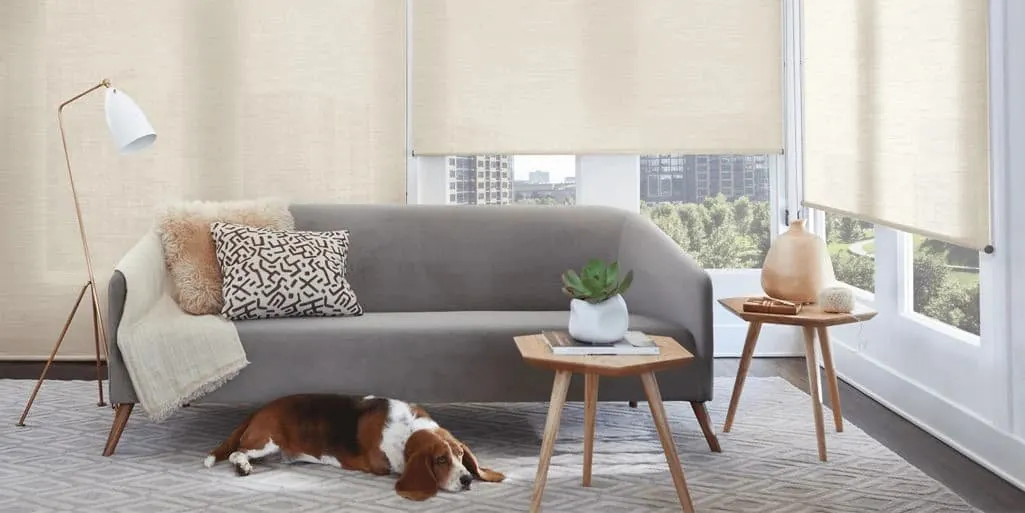
Solar screen for the bay wall
A Designer Screen weave cuts the late-day glare and slows fading while the water stays in sight. The obvious first choice for a living room facing the bay.
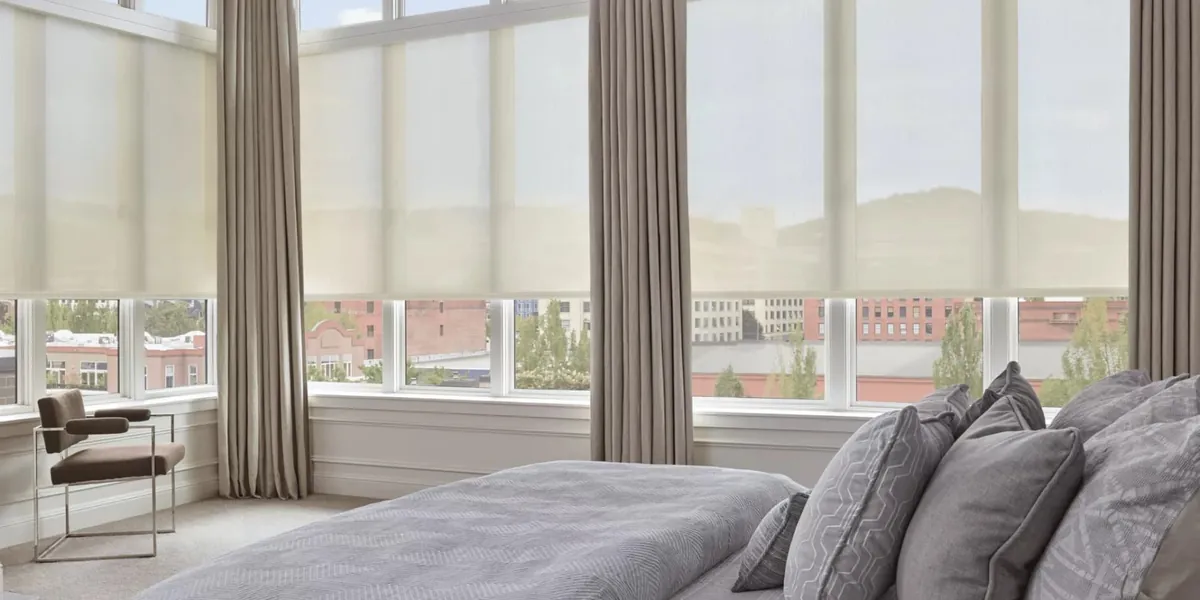
Blackout for summer bedrooms
Long summer evenings and early dawns call for a fabric that shuts the light out. Pair a blackout roller with a screen on the same window if you want both.
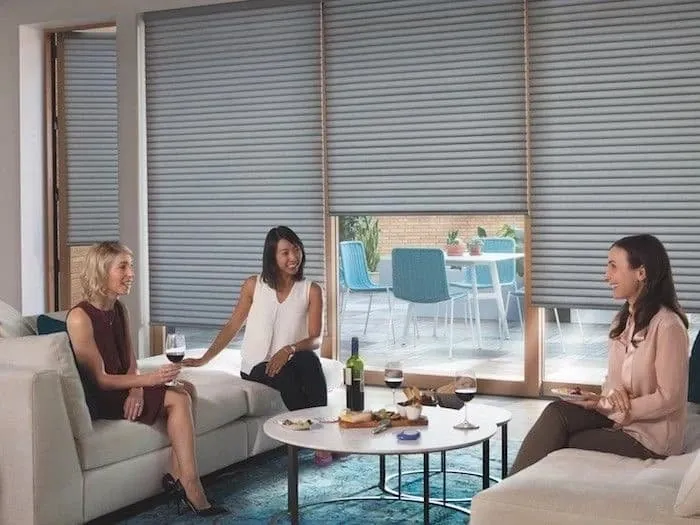
Sonnette for softer rooms
A roller with a gently curved face and a pocket of air behind it. It suits a captain’s house parlor where a flat fabric would feel too modern.
Fading: the real enemy on the bay side
Most people who call us from the bay side of Dennis are not worried about privacy first. They are worried about the sofa. Late afternoon sun comes in at a shallow angle, reaches deep into the room, and sits on the same cushions and the same patch of floor every day from spring into autumn. Strong light like that bleaches dyes and dries out wood finishes far faster than the overhead midday sun does.
A roller shade is a simple, effective tool for that problem. Lowered in the afternoon, a screen fabric filters out a good share of the direct light while you keep the view. A denser light filtering fabric does more, and a blackout fabric stops it altogether. Many houses on the water use a screen through the day and drop it further, or switch to a room-darkening layer, when they leave for a stretch.
The choice of weave and color matters. A tighter weave blocks more light and gives a softer view of the water. A more open weave keeps the outlook crisp but lets more sun through. Darker screen colors are easier to see through from inside, because they cut the reflection on the fabric; lighter ones bounce back more of the heat. We bring a spread of openness levels so you can stand in the room at the time of day the sun is worst and see each one against the bay. Our guide to choosing fabric for a sunny room goes further into how color and weave behave in strong light.
Captains’ houses along 6A
The old houses in Dennis Village were built to last and built to impress from the road. Inside, the front rooms have tall double-hung windows, often with their original panelled reveals and wide casings. Some still have the thick, slightly wavy glass that catches the light so nicely. Owners of these houses tend to want two things from a window treatment: that it protects the room, and that it hides nothing of the woodwork.
A roller suits that brief. Mounted inside the frame, the roll sits at the head of the window and the fabric drops in a single clean plane, leaving the casings and reveals fully on show. When it is raised, it tucks almost out of sight. The depth in a captain’s house frame is usually generous, but the openings are rarely perfectly square after so many years, so we measure each window at the top, middle and bottom before we decide whether an inside mount will run true.
For a formal front room, an Alustra fabric with a richer texture often sits more comfortably beside old paint and mahogany than a plain modern weave. A fabric-wrapped bottom bar or a tailored hem adds to the effect. In the kitchen and back rooms, where the woodwork is plainer, a Designer fabric does the everyday work just as well.
Close quarters in Dennis Port
The cottages and condominiums near the sound tell a different story. Houses stand close together, sometimes only a driveway apart, so a side window often faces a neighbor’s side window. Front windows open onto a busy summer street. Living space is compact, and every window counts for light.
Here, the balance is between privacy and brightness. A light filtering roller does both in daylight: the fabric glows, the room stays bright, and nobody outside can see in. After dark, when the lamps are on, that same fabric shows silhouettes, so for a bedroom or a street-side living room we often suggest a denser light filtering weave or a room-darkening fabric instead.
Condominium rules can matter too. Some associations ask for a uniform color facing out. Many roller fabrics come with a neutral back, so the street sees a calm, even row of windows while the room side carries whatever color you like. If your building has guidelines, bring them along to the consultation and we will choose with them in mind.
Shades for a house that sits empty part of the year
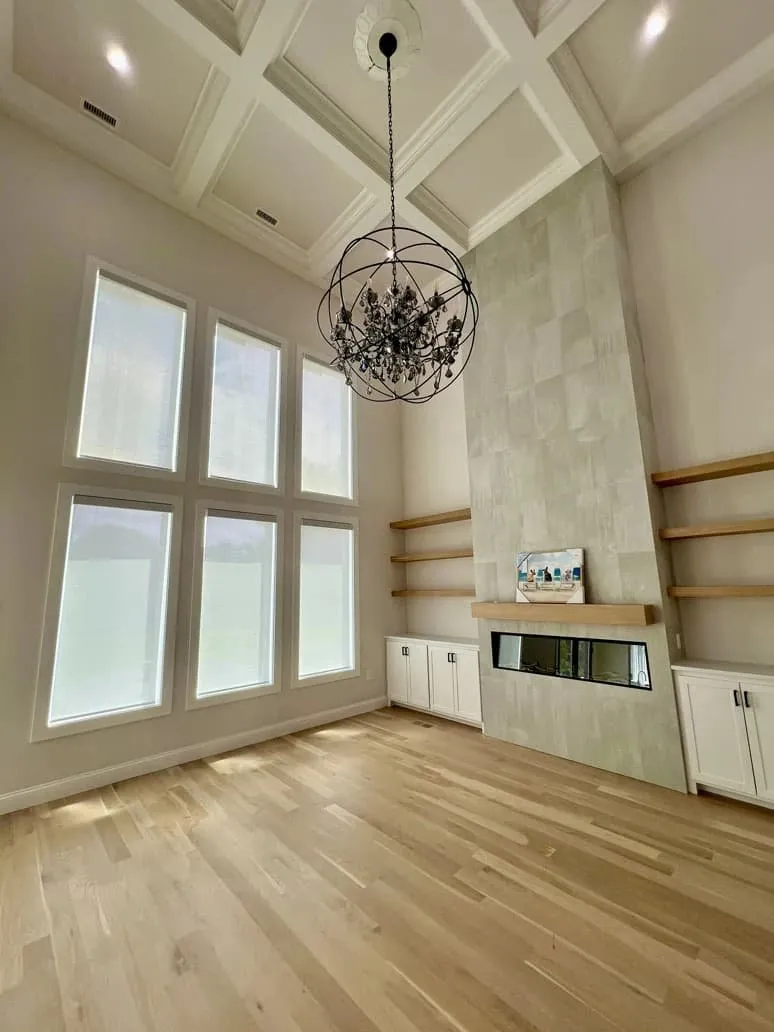
A lot of Dennis houses are lived in hardest from June to September and opened only now and then the rest of the year. That pattern changes what you want from a window covering.
- Sun protection while you are away. A room left with its shades up through a bright autumn can fade badly. Lowering a light filtering or blackout roller before you close the house protects the furniture.
- Simple, sturdy operation. A cordless roller or a continuous cord loop with a tensioner has very little to go wrong over a quiet winter.
- A house that looks lived in. PowerView motorization can raise and lower shades on a schedule, so the windows change through the day even when nobody is home.
You can read more about schedules and remote control in our guide to how motorized shades are controlled, or ask us about it during the visit. We plan how each motor is powered when we see the windows.
Sliders and French doors onto the deck
Plenty of Dennis houses, old and new, open onto a deck or a patio facing the water. In a converted cottage it may be a single slider off the kitchen; in a newer condominium a whole wall of glass doors. Those doors take the same strong late light as the windows beside them, and they are opened and closed far more often.
A roller works well on a slider when it is mounted above the frame rather than inside it. Mounted high, the fabric rolls up clear of the door handle, so you can step out without lifting anything. On a wide pair of doors we can hang two shades side by side, one per door, so you can leave one side down against the sun and walk through the other. For French doors that swing inward, a shade fixed to each door, top and bottom, keeps the fabric in place as the door moves.
Matching the fabric on the doors to the windows on either side keeps the bay wall reading as one calm surface. If the doors face due west, a screen fabric there and a light filtering fabric in the bedrooms is a combination that works for a lot of houses near the sound.
Old rooms, new hardware
A captain’s house was never designed with window treatments in mind, so we take care with what goes on the frame. Brackets are small, and on an inside mount they fix to the head jamb where they are hidden by the roll. Where you would rather avoid fixing into original trim at all, we look for a spot on the head of the opening that has already been used, or suggest a shallow board on which the shade can sit.
Cord choices matter here too. A cordless roller leaves the window completely clear, which suits a room where the trim is the point. On a tall front window that is hard to reach, a continuous loop with a tensioner fixed to the casing is easier to use day to day, and we place it on the side that is least visible from the room. PowerView takes cords out of the picture altogether, and it is worth thinking about for any high glass over a stair, where no hand can reach without a ladder. We look at every awkward window during the visit and suggest the simplest way to work each one.
Measuring an old frame and a new slider
Dennis houses give us everything from a captain’s house sash to a condominium slider in a single week. Each takes its own approach.
- For an old sash window, we measure width at the top, middle and bottom and use the narrowest for an inside mount, so the fabric rolls without catching.
- We check depth along the head of the frame, noting pulleys, stops and anything that could interfere with the roll.
- On a slider or a patio door, we measure above the frame so the shade can mount high and clear the door handle when it is raised.
- For a wide bay window, we decide with you whether to use one wide shade, several shades on one bracket, or separate shades for each sash.
- We confirm the mount, the fabric, the lift and the hem for every window, and only then is anything ordered.
Once the shades arrive, our certified Hunter Douglas installers fix each bracket into solid wood, level the roll and test the lift with you before they leave.

Light filtering, room darkening and screen: the difference
Roller fabrics run along a scale, and knowing the steps makes the choice easier.
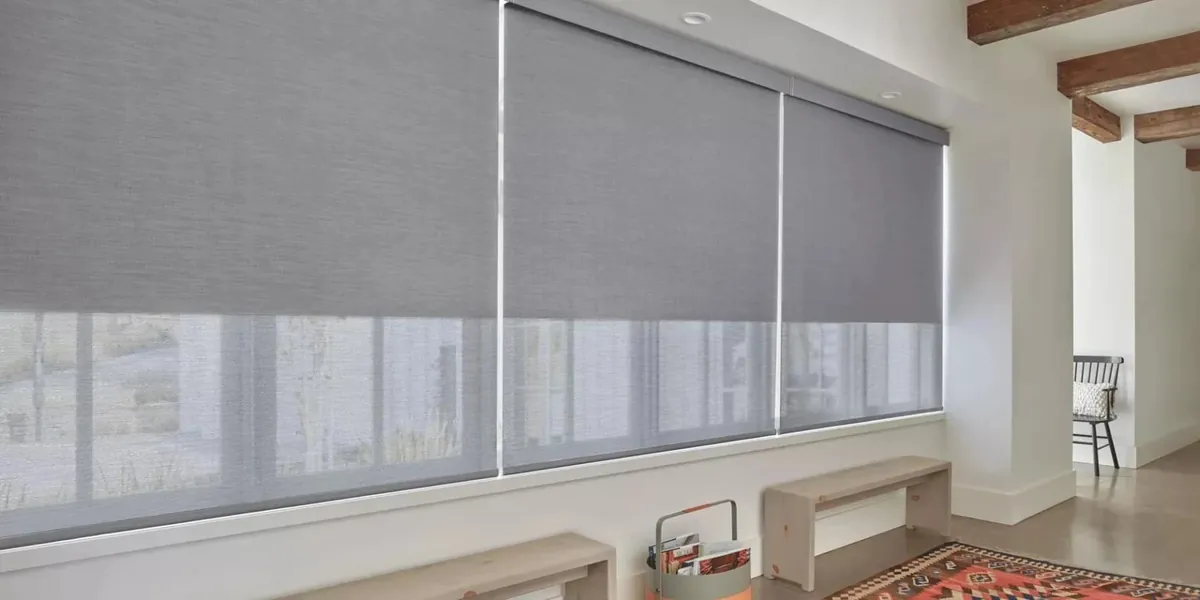
Screen fabrics are woven with small, regular openings. They are the only rollers that keep a view through the fabric. They take the edge off glare and slow fading, but they do not give privacy at night.
Light filtering fabrics are solid enough to block the view but let light through evenly. A room stays bright and the fabric looks soft when it is lowered. This is the everyday choice for living rooms, kitchens and dining rooms.
Room-darkening and blackout fabrics stop most or nearly all light. They belong in bedrooms and in rooms with a television. A blackout roller in an inside mount still lets a thin line of light round the edges, so in a bedroom that must be properly dark we may suggest mounting it on the face of the trim instead.
Plenty of rooms on the bay side need two of these at once. A dual roller puts a screen and a blackout fabric on one bracket: the screen for the afternoon, the blackout for the night.
Banded shades for a room you adjust all day
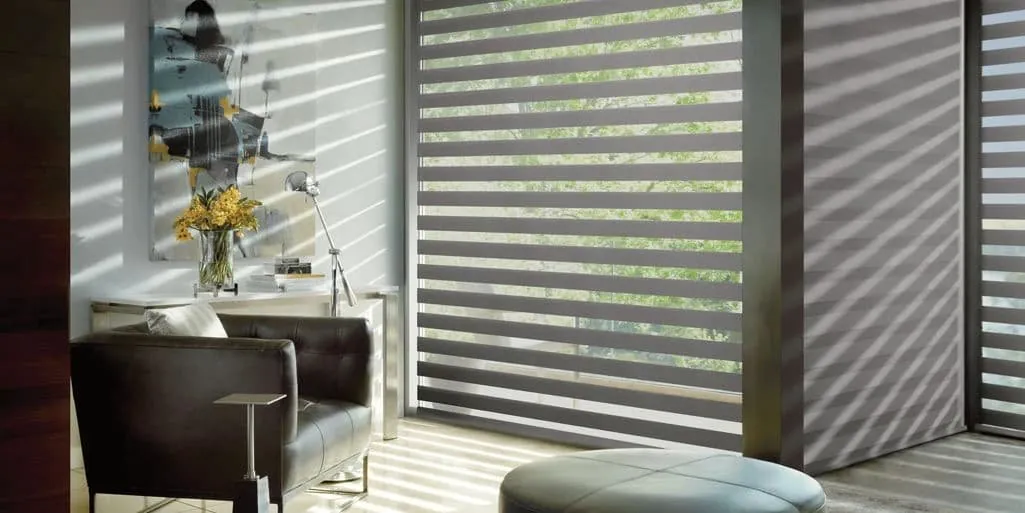
Designer Banded shades are another roller worth a look, especially in a Dennis Port condominium where the main room does duty as living room, dining room and office. The fabric alternates sheer and solid stripes on one continuous loop. With a small pull the stripes slide past each other: line them up and light and a view come through the sheer bands, offset them and the room closes.
That makes it easy to adjust privacy or glare a little at a time without raising the shade, which suits a window that faces the street in the morning and the sun in the afternoon. See Designer Banded for more.
Designer and Alustra side by side
Hunter Douglas divides its rollers into two collections. Designer is the broad one: a long run of plain, textured and patterned fabrics in every opacity, with every lift system. Alustra is the smaller, more tailored collection, with richer materials and refined hems and headrails.
In practice, a captain’s house on 6A often takes Alustra in the front parlor and dining room, where the fabric sits beside the best woodwork, and Designer through the kitchen, bedrooms and baths. A Dennis Port cottage usually goes Designer throughout. When we visit with roller shades in Dennis, MA, we lay both collections out so you can see them in your own light. The main roller shades page and the Alustra Architectural page have more on each.

What a Gallery dealer brings to your door
Blinds & Designs is a Hunter Douglas Gallery dealer. For a house on the bay, that means the whole roller family at one visit: every screen openness, every light filtering and blackout fabric, banded shades, Sonnette, both collections and PowerView.
The installers who hang your shades are certified by Hunter Douglas. We also offer interior design consultations if you want help with color and fabric across a room, and we repair blinds and shades you already own.
For the rest of the house, see cellular shades in Dennis for the draughtier rooms, motorized blinds in Dennis for high or out-of-reach glass, or everything we do in town on the Dennis page.
Questions from Dennis
Which roller does the most to stop the bay light fading my furniture?
A blackout or dense light filtering fabric blocks the most light when it is down. If you want to keep the water in view, a screen fabric with a tighter weave is the best compromise. Many households lower a screen in the afternoon and a blackout layer when they close the house.
Will an inside mount work on my captain’s house windows?
Usually. Old frames tend to be deep enough, but they are rarely square, so we measure at several points first. Where the frame has shifted too much, a slim mount on the face of the casing looks neat and works smoothly.
Can I keep a uniform look from the street on a condominium?
Yes. Many roller fabrics have a neutral back, so the outside stays even while the room side carries the color you choose. Bring any association guidelines to the visit.
Can my shades open and close while the house is empty?
With PowerView motorization, shades can follow a schedule and be controlled from your phone. We go through the options and plan how each motor is powered when we see the windows.
Do you charge for the estimate?
No. The estimate is free. We measure every window at the consultation and give you an estimate for the shades you are considering.
Ready when you are
The quickest way to settle on roller shades in Dennis, MA, is to hold real fabric against your own glass at the hour the sun is strongest. Request a consultation and we will bring the range to you, measure every opening and leave you with a free estimate. If you would rather look at working shades first, our Sagamore showroom is the closest to Dennis, or use the call button to talk it through.