
Three housing eras in one town
Few towns pack as much history into their houses as Uxbridge. Along the Blackstone River stands mill-era housing, much of it with its original narrow openings. Out on the farther roads are antique farmhouses, older still, with small sash in thick walls. And off Route 16, newer colonials bring modern plans and standard-sized windows. Three eras, three kinds of window, often within a short drive of one another.
A Hunter Douglas dealer in Uxbridge, MA has to be at home in all three. The mill houses call for careful fitting and street privacy. The farmhouses call for respect for old trim and for every bit of daylight a small window lets in. The colonials call for sun control and a plan for windows out of reach. No single answer suits the whole town, which is exactly why we bring the full range to the house.
Hunter Douglas for every Uxbridge era
We are your Hunter Douglas dealer in Uxbridge for every family below. Each card links to that product’s Uxbridge page.
Custom blinds
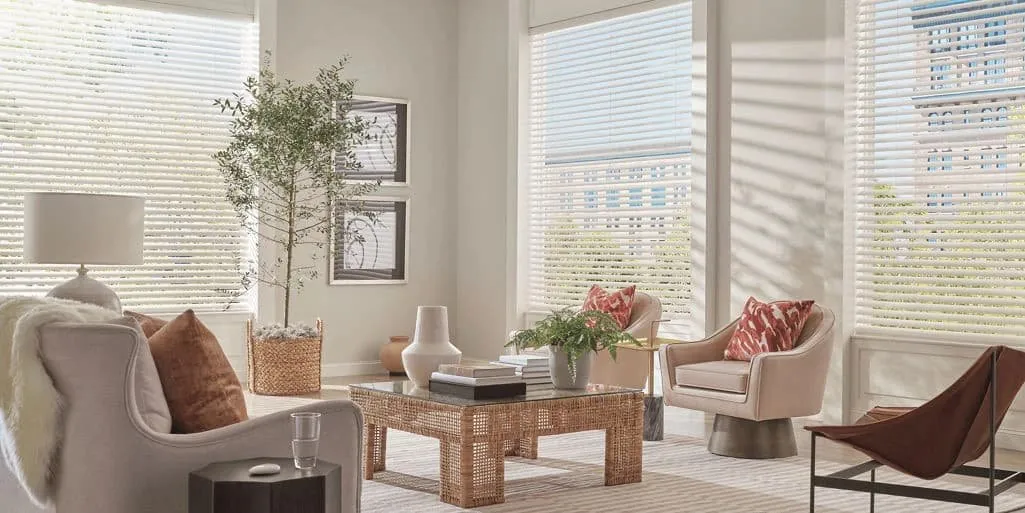
Wood, faux wood, metal and vertical blinds, chosen first by material and then by how they tilt and lift.
Cellular shades
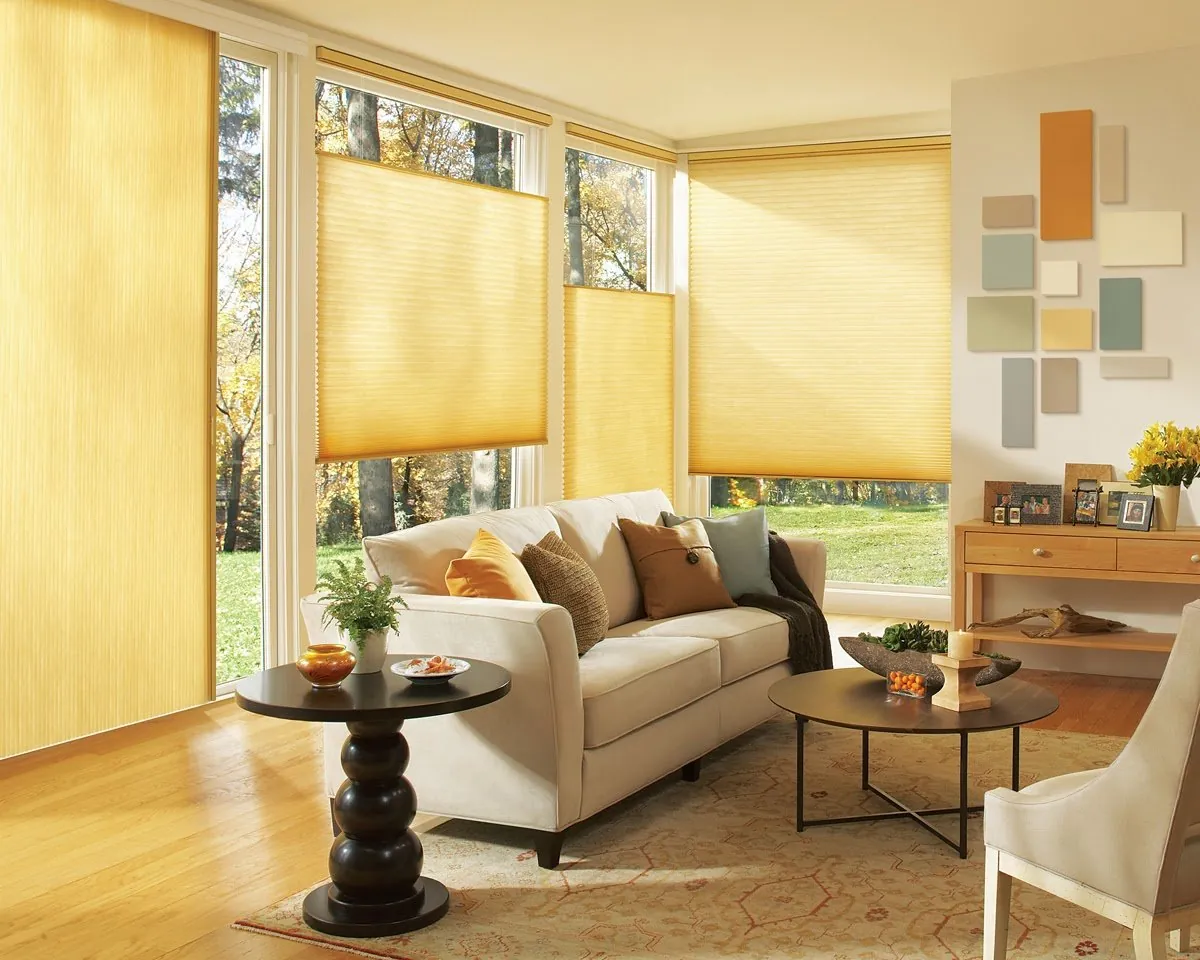
Honeycomb shades from Duette and Applause. Air caught in each cell is the reason the room keeps its warmth.
Roller shades
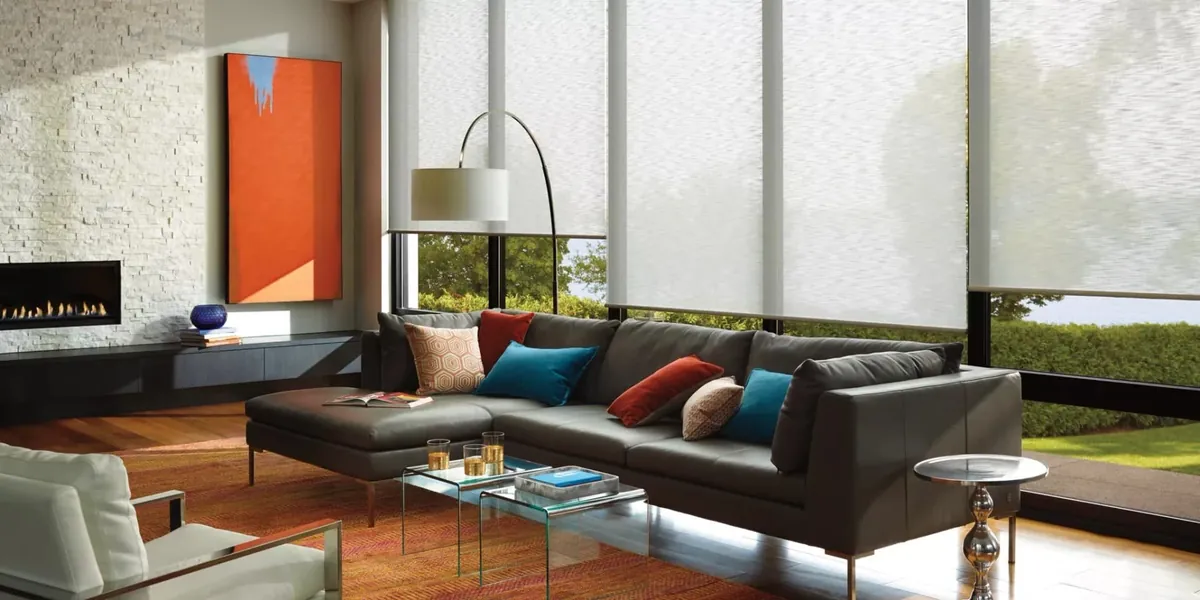
Designer and Alustra roller shades and solar screens, where openness sets the balance of view and glare.
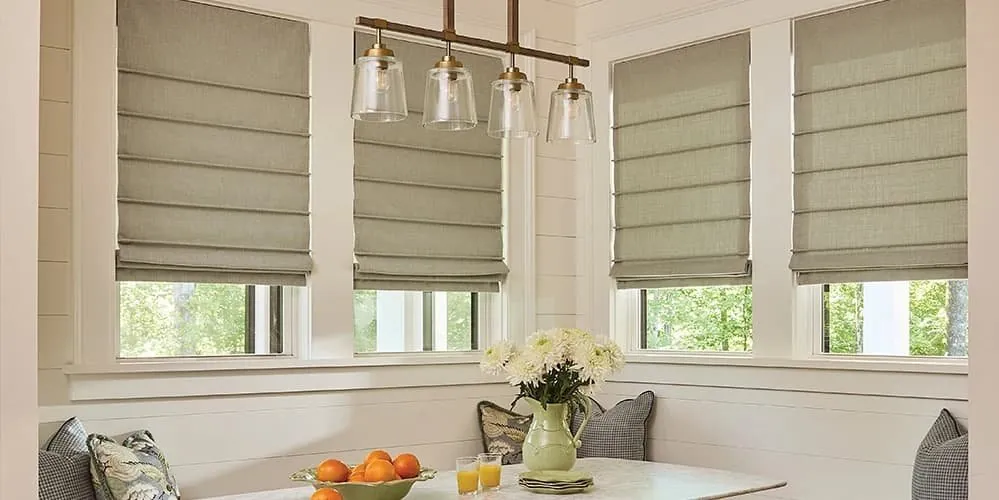
Roman shades
Vignette and Carole Roman shades in flat and folded styles, for rooms that suit soft fabric.
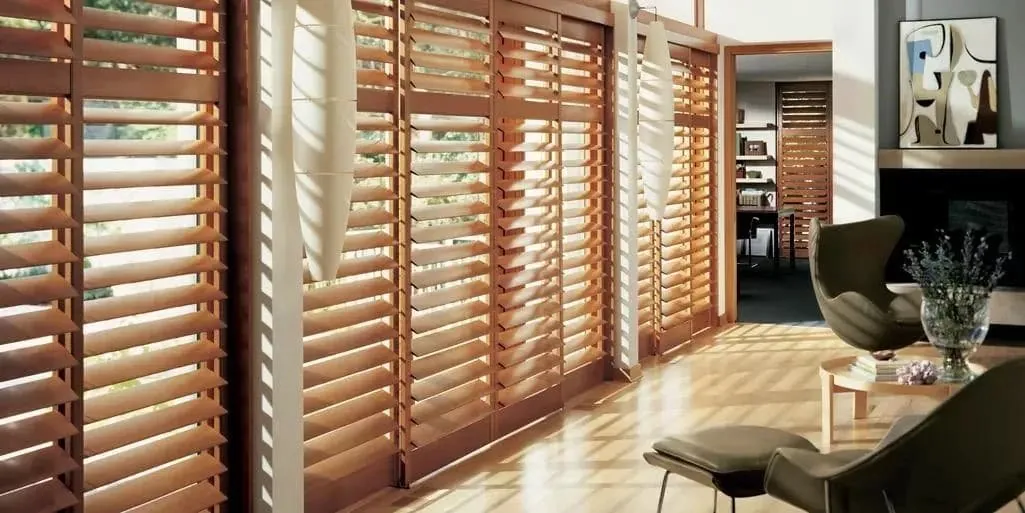
Plantation shutters
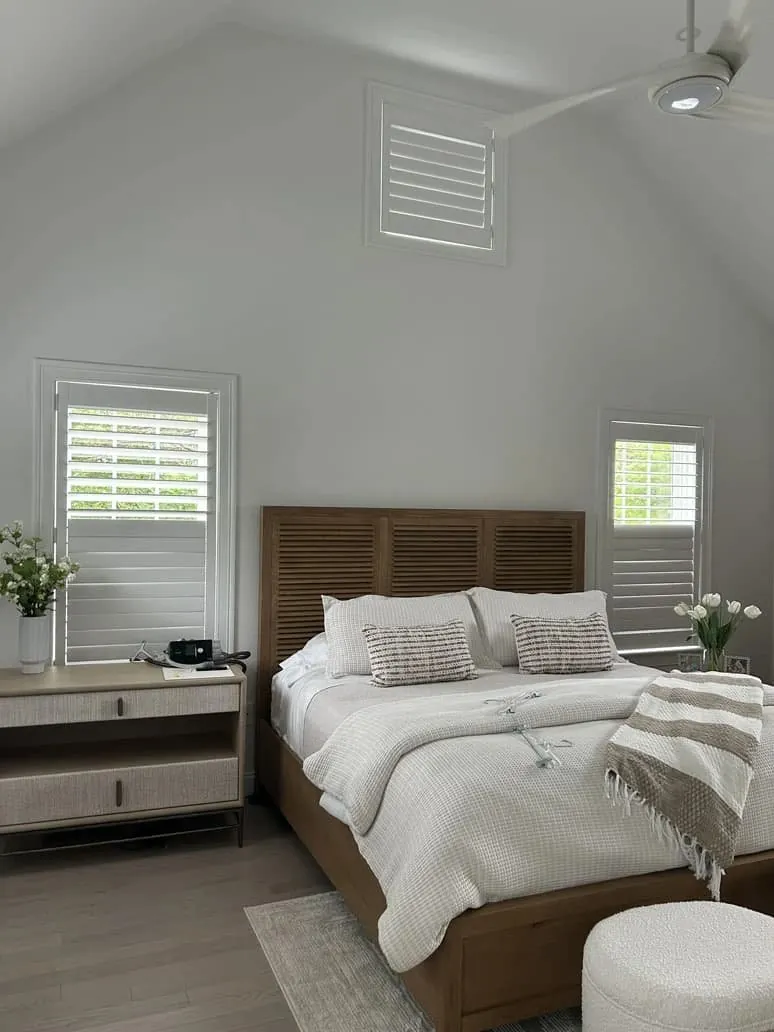
Palm Beach, NewStyle and Heritance shutters, with louver size and frame style chosen for the era of the house.
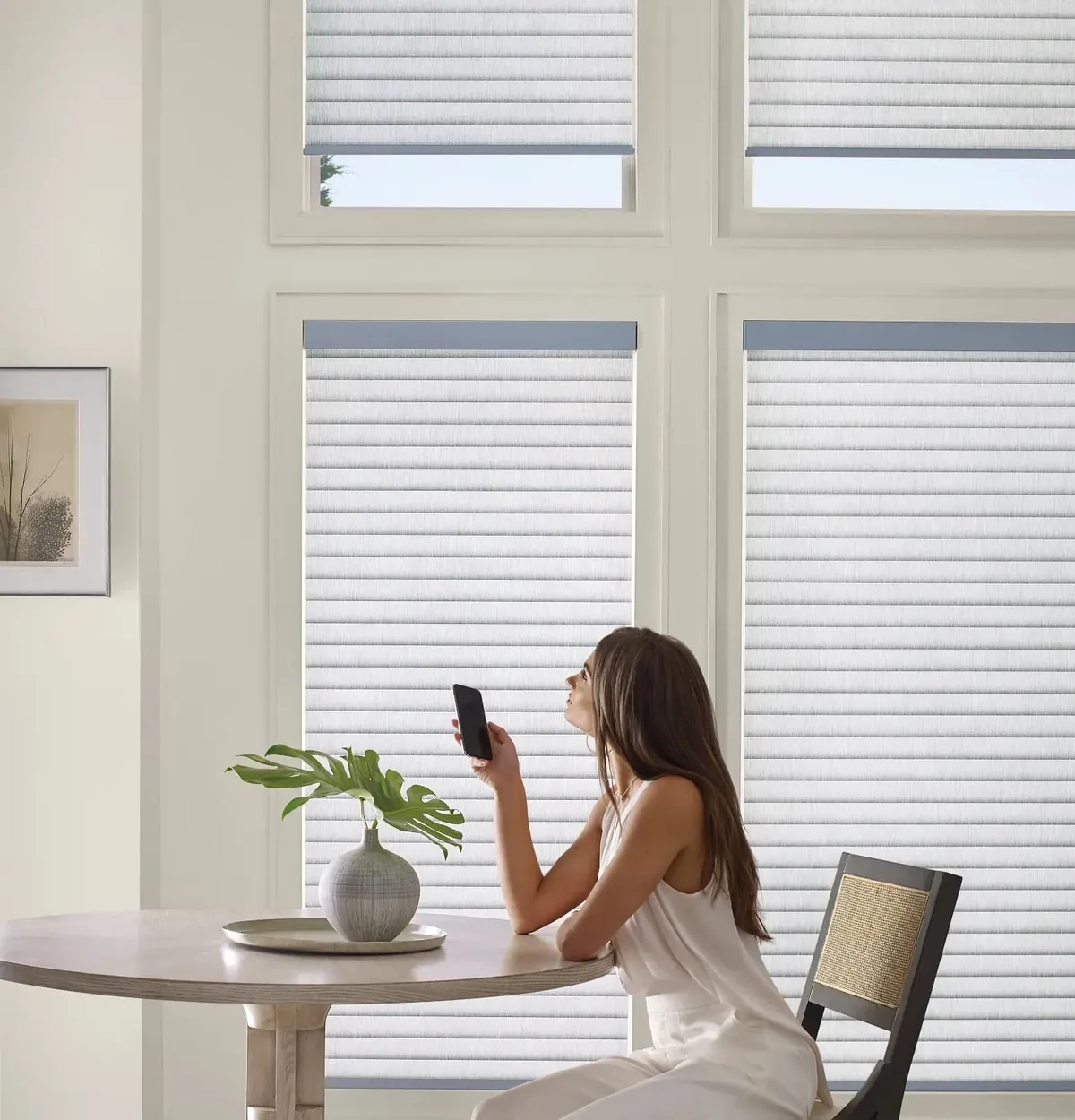
Motorized blinds and shades
PowerView, controlled by remote, by app or by the schedules you set.
The mill-era houses by the Blackstone
The housing beside the Blackstone River went up for the mills, and a lot of it still has its first narrow openings. These houses are the most closely spaced of Uxbridge’s three eras, with fronts near the street and side walls near the neighbors.
The fitting is the careful part. An old narrow frame has little to spare and has usually moved out of square, so we read it at several points across and down, gauge the depth in front of the glass and look for hardware that sticks out. Window by window, that decides whether a covering tucks inside the frame or sits on the casing face.
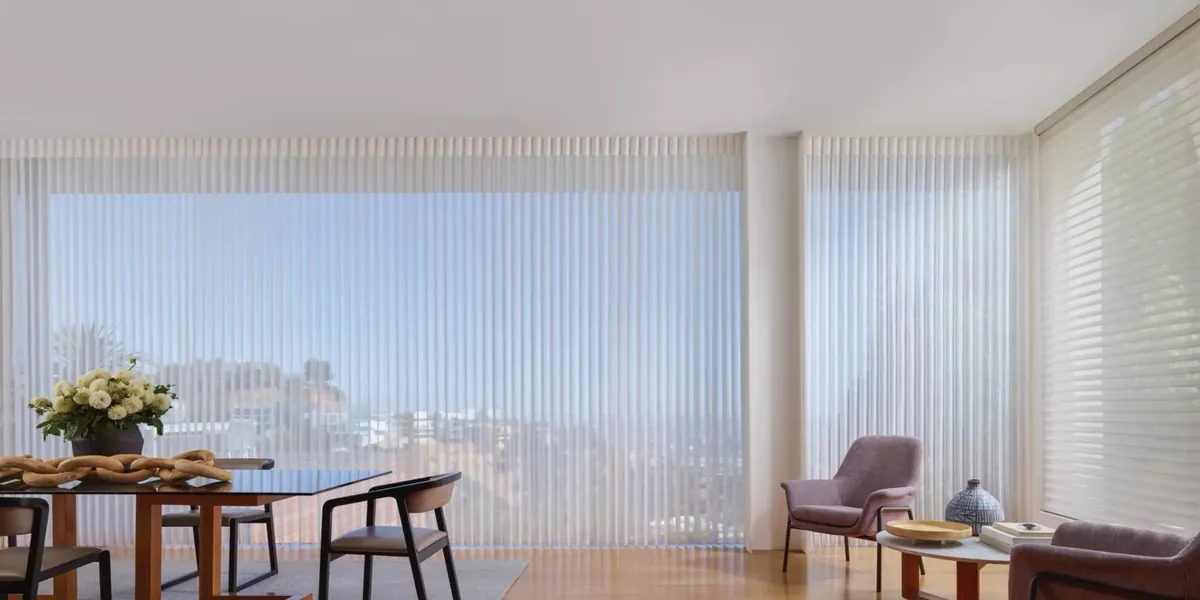
Privacy is the next question. Fabric that filters light, such as a honeycomb or a Silhouette sheer, keeps a river-street room bright while hiding it from the sidewalk. Shutters let you tip the louvers so the passer-by sees slats and you see sky. A narrow window also needs a covering that keeps its slim shape, so we hold samples to the frame and let you judge the proportion by eye.
Antique farmhouses on the outer roads
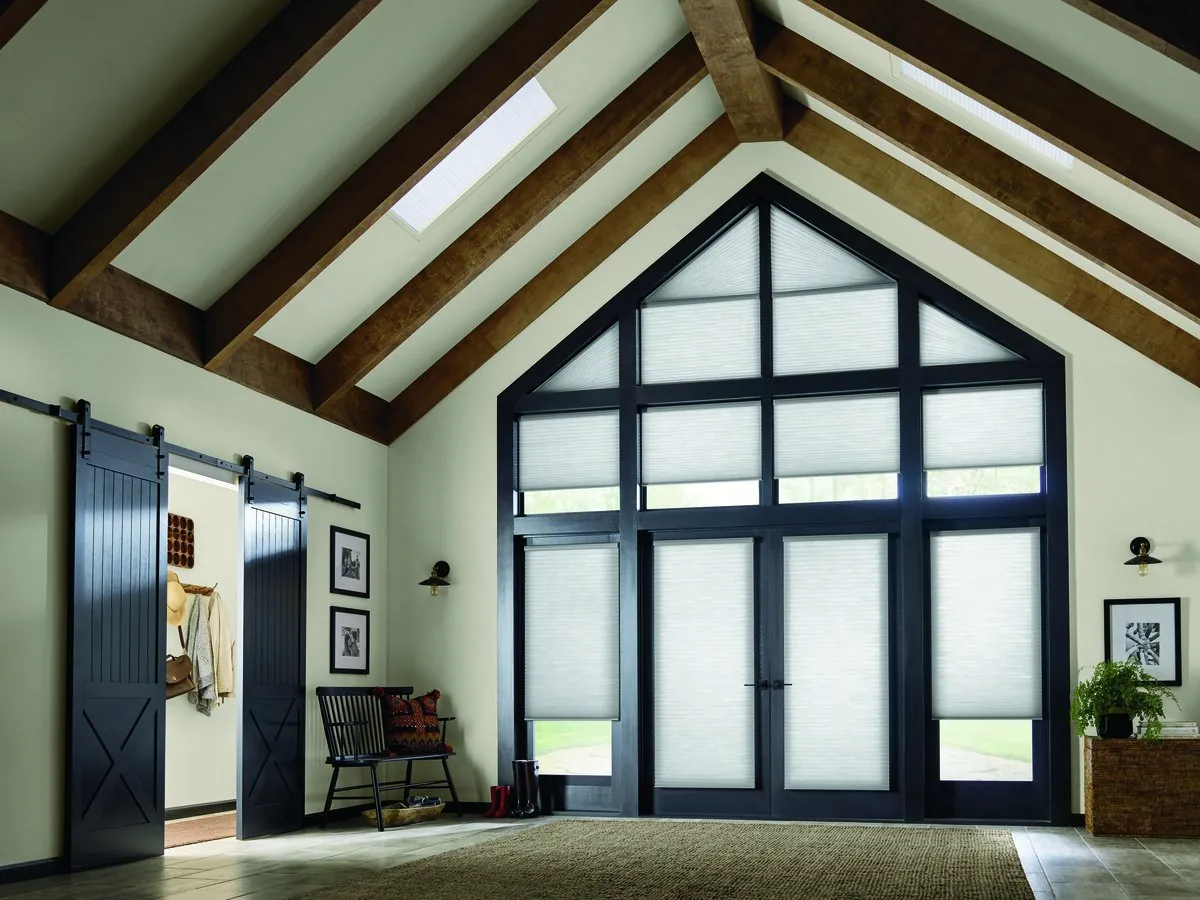
Further out of town, on the outer roads, are the oldest houses of the three: farmhouses with small divided-pane sash, wide casings and walls so thick the sill doubles as a shelf. Many sit alone on open land.
In a farmhouse, a small window may be the only light a room gets, so we are careful about anything that hangs in front of the glass even when raised. We look at how compactly each product gathers at the top, and on a shallow frame we may mount above the opening so the glass is fully clear when the shade is up. A light-filtering fabric keeps a small room bright and private at once.
The deep recesses are a gift. Most products can sit inside them with the old trim fully showing, and a painted shutter panel set into one looks entirely at home. On the exposed side of a farmhouse, a honeycomb shade also helps a room stay warmer on a windy night, since the cells hold a layer of air against the glass.
Newer colonials off Route 16
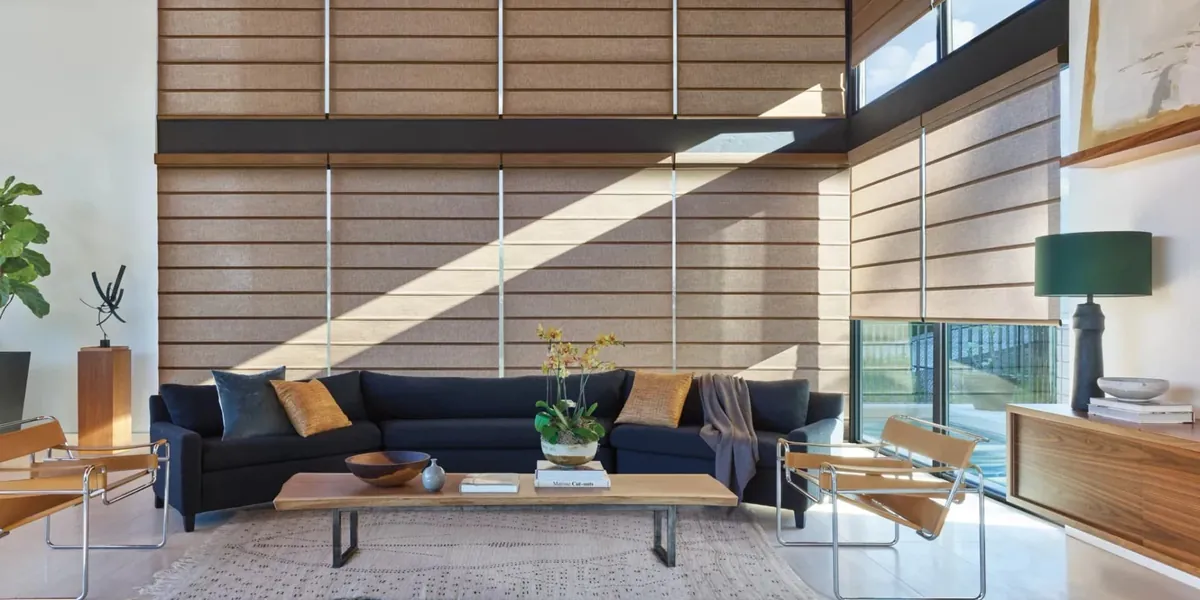
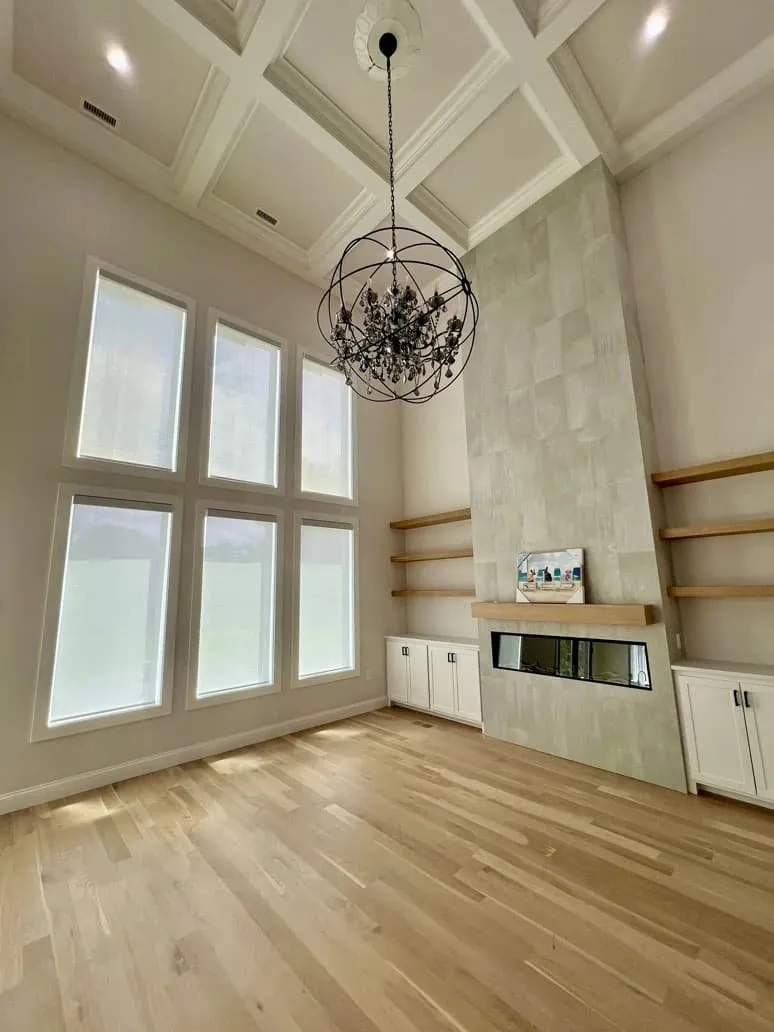
The colonials off Route 16 are Uxbridge’s newest housing. Rooms are generous, ceilings tall, windows standard, and most have a family room with plenty of glass and a slider out to the back. Fit is rarely a question here; how you use each room is.
A tall family room window facing west is the usual problem, too bright to sit by on a summer afternoon and hard on a television. A Designer Screen shade keeps the outlook and cuts the glare. Bedrooms take room-darkening honeycomb. A window high above the foyer or the stair is a natural place for PowerView.
Which era is your house?
Most Uxbridge houses are easy to place, and knowing the era tells us a lot before we even open the sample cases.
- River-street mill housing. Close to the street and the neighbors, with tall narrow openings that have shifted over time. Usually needs careful fitting and daytime privacy.
- Outer-road farmhouses. Small panes, wide casings, deep recesses and open land around. Usually needs coverings that keep daylight and suit old trim.
- Route 16 colonials. Standard windows, bigger rooms, taller glass and a slider. Usually needs sun control and a plan for high windows.
If your house is a mix, or you are not sure, we will work it out on the visit by looking at the frames themselves. The age of the sash, the depth of the recess and how far the house sits from the road usually tell the story within a few minutes of walking in.
When a house mixes the eras
Some Uxbridge houses belong to more than one era at once: a farmhouse with a newer wing, a river-street house with replacement windows in half its rooms, an older core with a colonial added on. You can find a slim original sash and a standard modern window side by side.
We treat that as one project rather than two. The older openings may need products suited to a small or slim frame while the newer ones can take nearly anything, but the outward color and the headrail finish can match throughout. Sometimes a single family covers every window, sized to each; sometimes two families that sit comfortably together do it better.
Privacy, light and how far the neighbors are
The three eras sit at very different distances from their neighbors, and that changes how much privacy each window needs. In the mill housing, side and front windows need attention at every hour. On a farmhouse lot, many windows face only fields and need covering for light and comfort rather than privacy. In the colonials, the front faces the road at a moderate distance and the back often faces a yard.
That is why a Hunter Douglas dealer in Uxbridge asks about privacy room by room rather than house by house. A light-filtering fabric covers most daytime needs. A room-darkening fabric handles bedrooms. Shutters and blinds give angle control where the line of sight matters. And on a lit evening, any window facing a road or a neighbor will show the room unless something is lowered.
Upstairs under a farmhouse roof
The bedrooms on the upper floor of an outer-road farmhouse tend to have the smallest windows in the house, set low under the eaves with the sill not far above the floorboards. They are charming rooms and often bright very early, because the open land around the house does nothing to hold back the sunrise.
The usual plan for these is a room-darkening fabric fitted inside the recess, so the window is closed off cleanly at night and the old trim still shows by day. Where a room is used as a study or sitting room instead, a light-filtering fabric keeps it bright. Because a low small window is so close to eye level when you sit, we pay attention to how the covering looks when raised, not just when it is down.
A visit at your house
Whatever era your house belongs to, choosing at home with a Hunter Douglas dealer in Uxbridge is the surest way to get it right. We load the van with samples from across the Hunter Douglas range and bring the showroom to your door.
- Send a request through Request a Consultation, or press the call button and reach the Franklin showroom.
- We agree a visit and arrive with samples that suit the era of your house.
- We walk through with you and talk about each room’s light, privacy and use.
- You see the samples against your own windows, old or new.
- We measure every opening, giving the older frames extra attention.
- You receive a free estimate and decide in your own time.
- Hunter Douglas builds the order to our measurements, and our certified installers fit it.
The in-home consultations page tells you more about the first visit, and an interior design consultation is there for help with color and fabric.
Decks and back yards behind the colonials
Behind most Route 16 colonials is a deck or patio reached through a slider, with the family room alongside. That side of the house often faces the afternoon sun, and the back yard beyond it is private enough that the view out matters more than the view in.
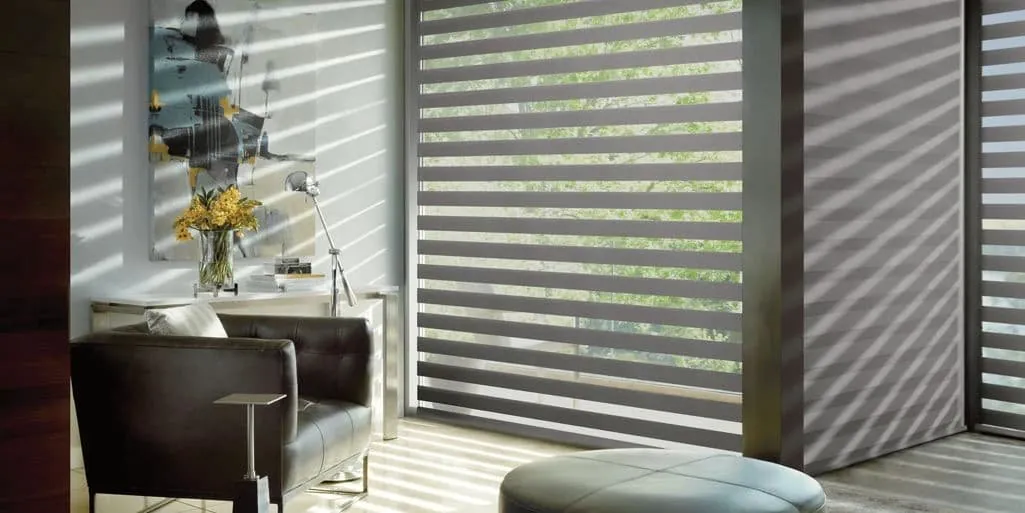
The slider needs a covering that moves to one side of the door, and we bring a few to compare on your own track. The family room windows beside it usually do best with a screen fabric that cuts the glare and keeps the yard in view. If you want the slider and the windows to look alike, we can match the fabric color across both even when the products differ.
One family across three eras
A question we hear in Uxbridge is whether one product can work all through a house that mixes eras. Quite often it can. A honeycomb shade, for example, comes in sizes for a slim river-house sash, a small farmhouse pane and a tall colonial window, and the same fabric and color can run through every room.
Where one family does not suit every room, we pick a small set that sits well together: perhaps shutters in the oldest rooms and honeycomb or roller shades in the newer ones, all with the same pale color facing out.
Where shutters suit each era
Shutters suit each era for its own reason. In a farmhouse, a panel inside a deep recess looks original to the window. On a river street, shutters give the angle control that keeps a front room private. In a Route 16 colonial, they give tall windows a finished, built-in look. We bring Palm Beach, NewStyle and Heritance samples and check that any panel meant for a small old window will sit comfortably in its opening.
Motorization in Uxbridge
In the Route 16 colonials, PowerView is mostly about reach and sun: lowering a shade over the foyer without a ladder, or closing the west windows on a schedule before the afternoon glare. In the older houses it is more about routine, such as closing every bedroom at dusk from one remote. We plan how each motor is powered at the visit. See motorized blinds in Uxbridge and window covering automation.
Halls and stairs in the river-street houses
The mill-era houses along the river often have a narrow stair with a single small window on the landing, and a front hall that gets little light of its own. Those windows deserve a light touch, because a dark stair is the last thing an old house needs. A sheer or a light-filtering shade keeps the stair bright and still gives some privacy from the street, and an inside mount keeps the covering out of the way on a tight landing where people brush past every day.
A look that suits the era
Each era has a character worth keeping. River-street mill houses are plain and practical, and calm whites suit them. Farmhouses, with wide boards and old trim, take woven woods, linen-look Roman shades and painted shutters well. The colonials leave more room for color and pattern. Whatever the era, a single pale color facing the street keeps the front of the house calm.
Front porches on the river streets
Some of the river-street houses have a front porch, and a porch roof changes the light in the room behind it. The front parlor can be dimmer than its windows suggest, while the porch itself brings visitors and passers-by right up to the glass.
For a room behind a porch we lean towards coverings that keep as much daylight as possible, such as a light-filtering fabric or shutters that open wide, and keep the room-darkening fabrics for the bedrooms.
A farmhouse parlor or a colonial family room first
Many Uxbridge projects begin with one room that is clearly not working: a farmhouse parlor that feels chilly by the windows, or a colonial family room that is too bright on summer afternoons. Starting there is fine. We choose with the rest of the house in mind, so a later order looks planned together, and each stage gets its own free estimate.
Gallery dealer status, certified installation
Being a Hunter Douglas Gallery dealer means every family is ours to offer, whichever era your house is from: the full range of shades, blinds in wood, faux wood, metal and vertical styles, the three shutter lines, drapery and PowerView.
The fitting is done by our own Hunter Douglas certified installers. On an old river-street or farmhouse frame, that means each bracket set true, the old hardware cleared and every product tried before they go.
The main Hunter Douglas page explains more about our dealer work, and the Hunter Douglas online catalog shows each line.

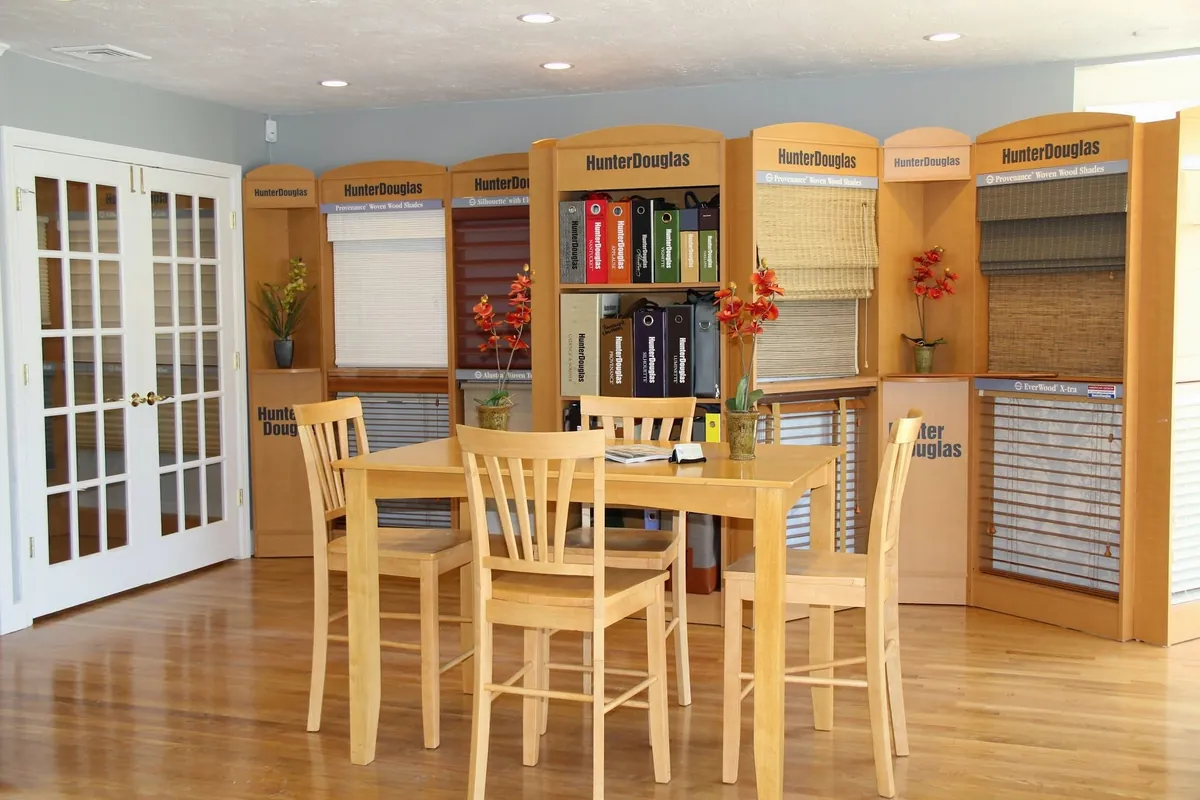
Our Franklin showroom
Franklin is where our nearest showroom to Uxbridge is. Stop in if you would like to go over the house in person before the visit.
Most decisions still get made at home, against the windows themselves, with a free estimate once we have measured.
Address and hours are on the Franklin showroom page, and the Uxbridge page shows everything we offer in town.
Questions from Uxbridge
My house is one of the old mill houses by the river. What fits the narrow windows?
Most families can, sized correctly. We measure each frame in several places, check its depth and suggest an inside or outside mount. Slim honeycomb shades, flat Roman shades, narrow blinds and shutters all suit narrow openings.
Will coverings make my farmhouse’s small windows darker?
Not if chosen with care. We look at how each product sits when raised and favour light-filtering fabrics that let daylight through when lowered.
My colonial off Route 16 has a tall foyer window. How do I reach it?
PowerView lets you raise and lower a high shade from a remote, an app or a schedule.
My house has an old part and a new part. Can the windows match?
Yes. We size each covering to its own opening and match colors and headrails, so old and new rooms look as if they belong together.
Do I pay anything for the estimate?
No. The estimate is free, and when you order, our certified installers do the fitting.
Your next step in Uxbridge
Old or new, river street or outer road, the next step with a Hunter Douglas dealer in Uxbridge is to request a consultation. We bring the samples, measure each window and leave a free estimate. If you would like to talk first, the call button reaches the Franklin showroom.