
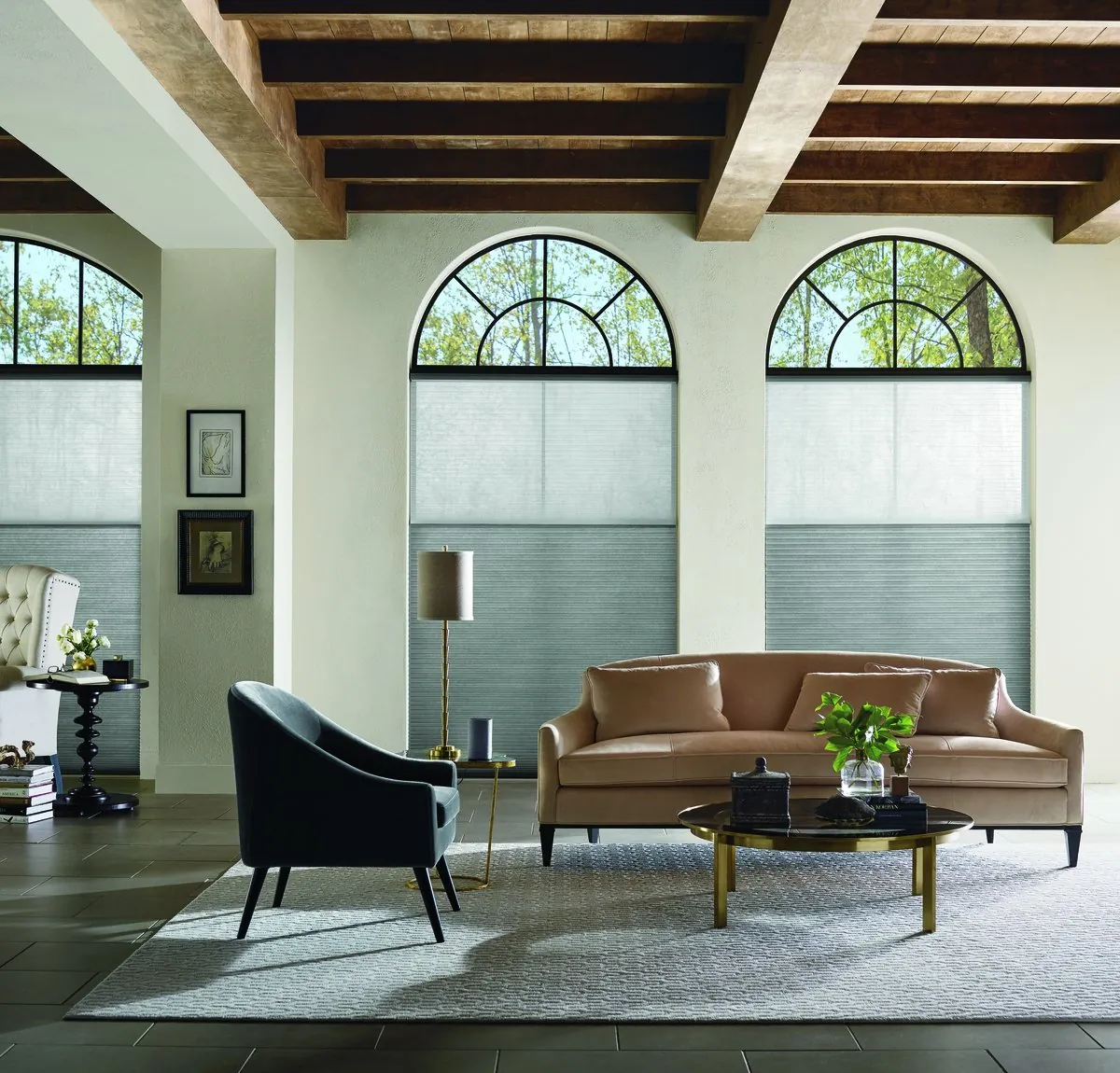
Deep reveals around the historic center
The antique colonials and Victorians clustered around the center of town have walls you can feel. Stand at one of their windows and there is often a deep reveal between the room and the glass, a box of wood and plaster that frames tall, narrow sash. Those reveals are one of the nicest features of the historic stock, and they make a real difference to what fits.
A deep reveal gives a covering somewhere to live. A shade, a blind or even a shutter can sit right inside the opening, leaving the casing and the wall around it untouched. Getting that right is the first job of a Hunter Douglas dealer in Holliston, MA, because the reveals vary from window to window and the old frames are seldom perfectly square.
Blinds & Designs is a Hunter Douglas Gallery dealer, with every Hunter Douglas family available, and our installers hold Hunter Douglas certification. Out in the newer colonials off Washington Street, the openings are standard sizes and the questions change; we cover those too.
Hunter Douglas lines we fit in Holliston
Every card opens our dedicated page for that product in town.
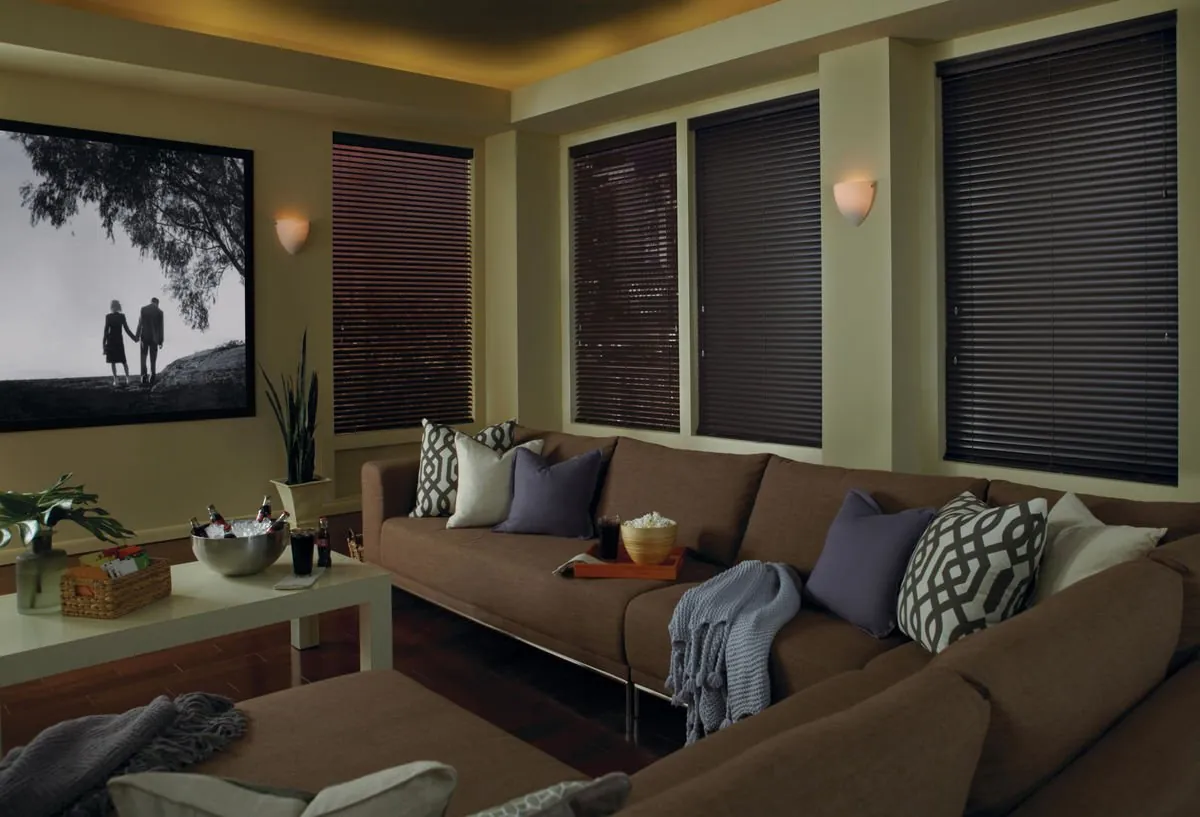
Custom blinds
Real wood from Parkland, EverWood faux wood, metal or verticals, chosen for the room and for how the slats should work.
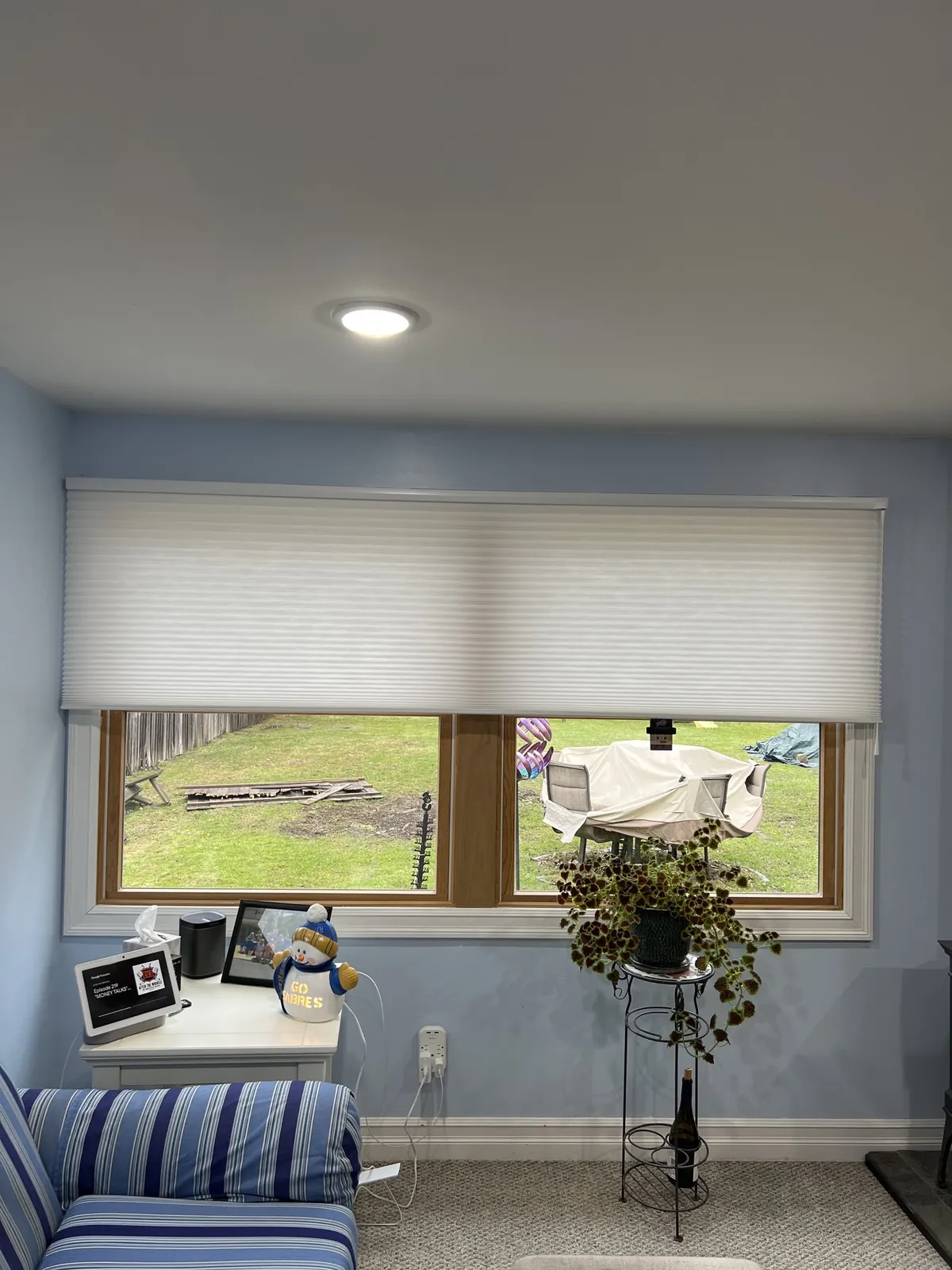
Cellular shades
Duette and Applause honeycomb, whose cells hold still air to keep the room warmer.
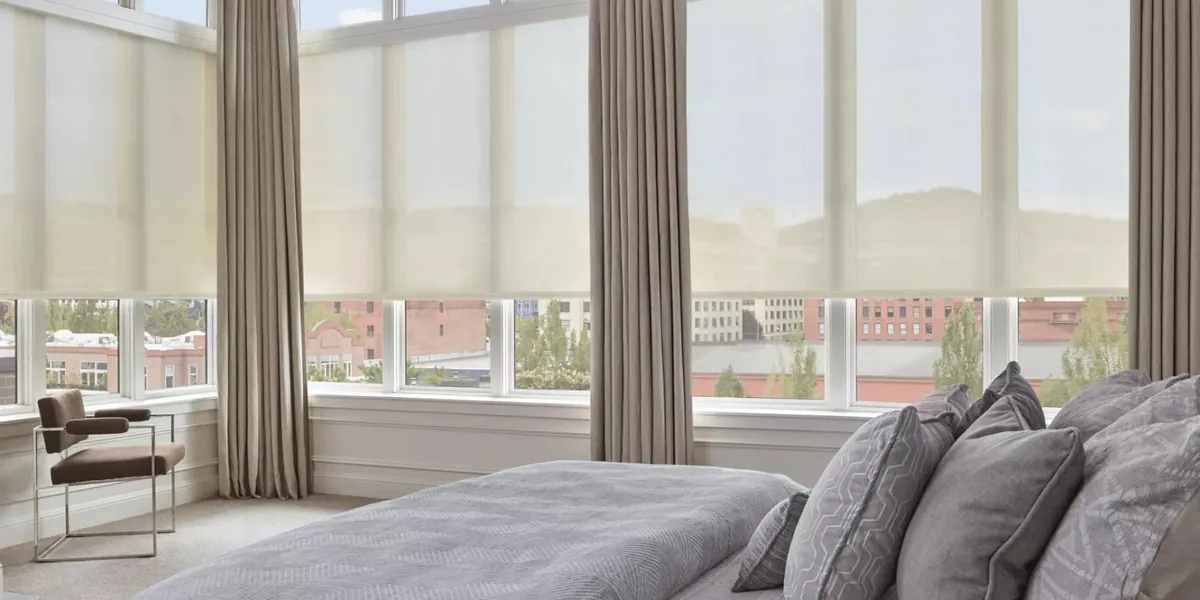
Roller shades
Designer and Alustra rollers and screens; how open the weave is decides your view and your glare.
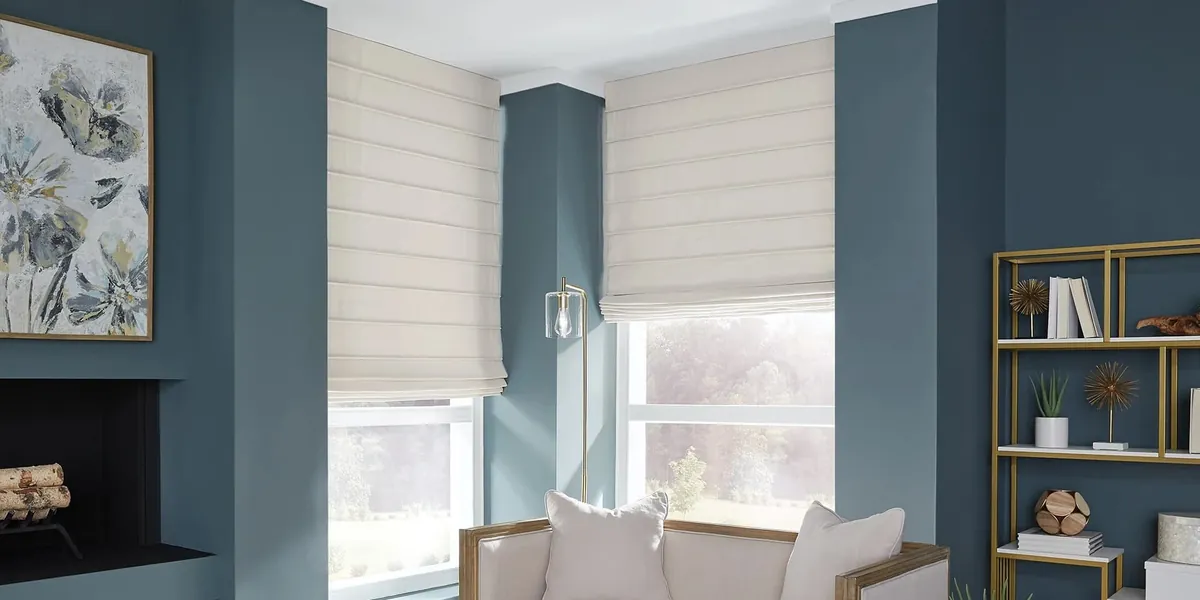
Roman shades
Vignette and Carole Roman, with flat and folded styles for a gentler look.
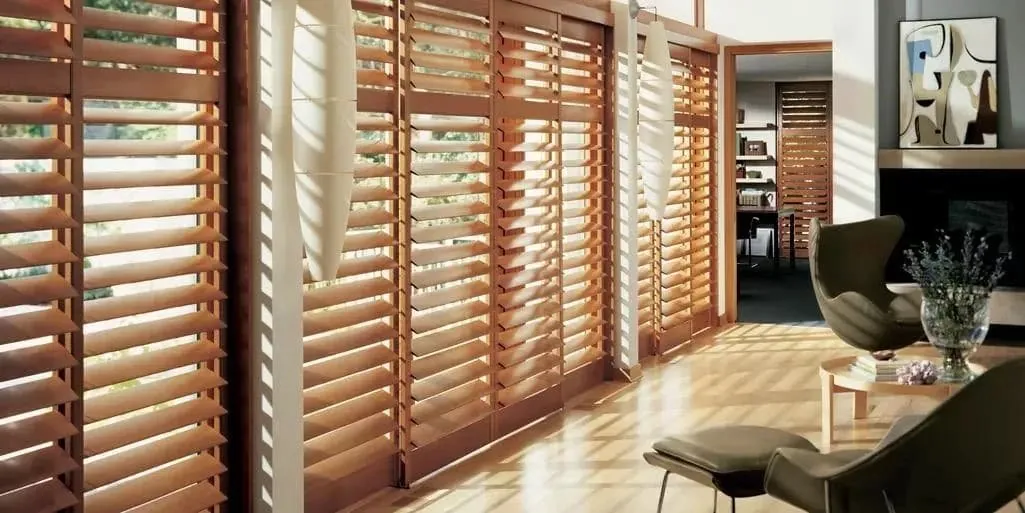
Plantation shutters
Palm Beach, NewStyle and Heritance, built to fit tall narrow sash or a modern bedroom window.
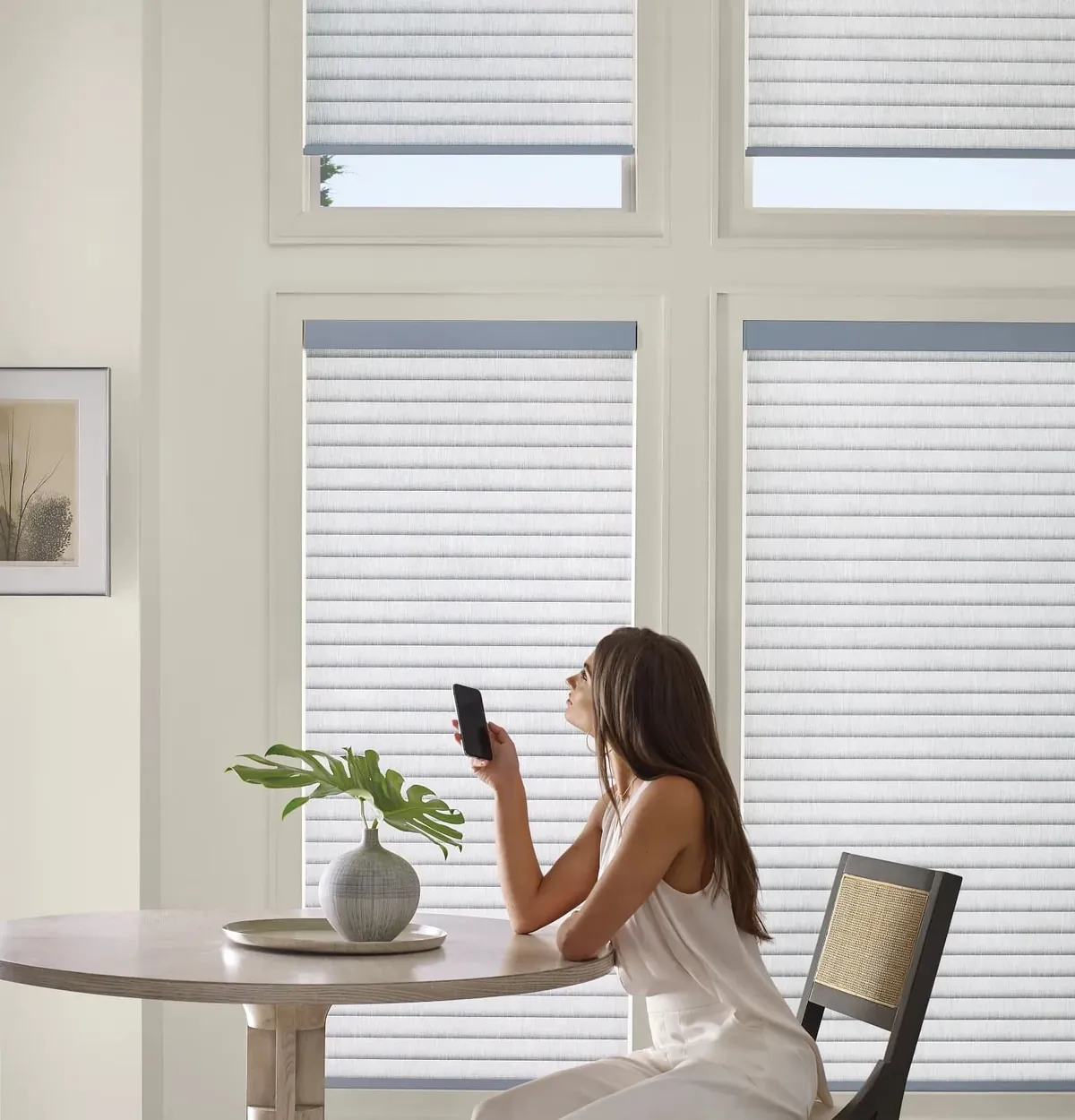
Motorized blinds and shades
PowerView, worked from an app, a remote or a set timetable.
Tall, narrow sash in the antique houses
The windows of the historic center are tall and slim, a shape that suits the high rooms of a Victorian and the upright fronts of the older colonials. Narrow glass brings light down deep into a room without taking up much wall, and it gives these houses their elegant, vertical look from the street.
That shape is easy to spoil. On a narrow window, a covering that bunches up when raised can swallow a third of the glass. A wide louver or a chunky headrail can look out of scale. The products that suit these windows best are the slim ones: honeycomb and rollers that rise into a narrow band, shutters with a louver sized to the sash, and sheers that keep the light coming in even when lowered.
Making the most of a deep reveal
A deep reveal is the friend of a tidy installation. Here is what it allows, and what we check before relying on it.
- An inside mount for almost anything. Honeycomb, rollers, blinds and Roman shades can all sit inside a deep reveal, leaving the old casing completely clear.
- Shutters within the opening. With enough depth, a shutter frame can be set inside the reveal, so the panels look like part of the original joinery.
- Room for a sheer. Silhouette or Pirouette needs some depth for its vanes; a deep reveal usually provides it.
- A clear sill. With the product inside the reveal, a deep sill stays usable for plants or a lamp, if the shade is set to stop just above it.
What we check: the depth at the top and the bottom, whether the jambs lean, and whether the head of the opening is level. An old reveal can be deeper at one end than the other, and the order is made to suit.
When the reveal is shallow or out of true
Not every old window cooperates. Some reveals have been reduced by later trim or storm windows, and some frames have twisted enough that an inside mount would leave visible light gaps. In those cases we have choices.
A different product may fit where another would not; a roller needs less depth than some shades, for instance. Or the covering can be mounted outside the reveal, overlapping the casing slightly to close the gaps. That changes the look, so we hold samples up both ways and let you decide. Our guide to window measuring terms explained covers the inside and outside mount language you may hear.
Parlors and front rooms facing the road
Many of the older houses near the center sit fairly close to the road, so their front rooms see foot traffic and passing cars. These rooms are usually the formal ones: a parlor, a dining room, a front sitting room with tall sash on two walls.
Privacy by day without darkness is the common wish. A shutter with a divider rail can close its lower louvers and leave the upper ones open to the sky. Silhouette sheers soften the view in while keeping the room bright. At night, with lamps on, a fuller fabric or closed shutters give real privacy. As a Hunter Douglas dealer in Holliston, MA, we look at how each front room is used, by day and after dark, before suggesting anything.

Shutters for narrow openings
Shutters are a favorite in the historic houses because they become part of the room. On tall narrow sash, the details matter more than usual.
- Louver size. A smaller louver suits the scale of a slim window and a period room. A larger one opens up more view, which may suit a wider window in an addition.
- Panel layout. A narrow window may take a single panel or a pair; we look at how each swings and whether it clears furniture or a radiator.
- Divider rail. Placed where it lines up with the sash meeting rail, so the shutter looks made for the window.
- Frame style. Chosen to sit gracefully inside or around the old casing.
Palm Beach, NewStyle and Heritance give us a choice of materials and looks. Our guide to shutters for older windows is worth reading if you are considering them.
Stair halls and landings
The older houses near the center usually have a front stair hall, and the stair often turns at a landing lit by a tall window of its own, set in the same deep reveal as the rooms. Seen from the hall below and from the floor above, that window carries daylight through the middle of the house.
Our instinct is to keep it as clear as we can. A slim honeycomb or roller set inside the reveal can stay raised nearly all the time and come down only when afternoon sun is a problem. If the landing faces a neighbor, a sheer softens the view while the light keeps falling down the stairs. In a Victorian with a decorative window on the landing, the right answer is often to leave the glass alone and dress the plainer windows around it.
Additions behind the historic front
Many antique houses here have grown at the back: a kitchen wing, a family room, a mudroom, a bedroom over a later garage. Those rooms usually have modern windows with shallower reveals and wider proportions than the tall sash at the front.
They do not need to match the front rooms product for product. A wide window in a kitchen addition might suit a roller or a honeycomb, while the parlor keeps its shutters. What ties the house together is color: the same soft white or warm wood tone carried from front to back, so walking through the house feels like one home rather than two.
Newer colonials off Washington Street
The newer colonials on wooded lots off Washington Street are a different world. The openings are standard modern sizes with square frames, rooms are larger, and there is more glass: family rooms with several windows, kitchens opening to a deck, often a high entry or a window over the stairs.
Fitting is straightforward, which leaves more time for planning. A large colonial has a lot of windows, and choosing well room by room, while keeping the outside view consistent, is where the effort goes.
The modern subdivisions here also tend to repeat a few window sizes through the house, which is useful: a bedroom window upstairs may be the same size as the dining room window below. That makes it easy to keep the look consistent from outside, and it means a product you like in one room can follow you into the next without surprises. We still measure every opening, because builders’ sizes are not always as uniform as the plans suggest.
Trees and soft light
The wooded lots change how rooms feel. Light filters through leaves for much of the year, so a family room with plenty of glass can still feel gentle in summer, and brighter in winter once the trees are bare.
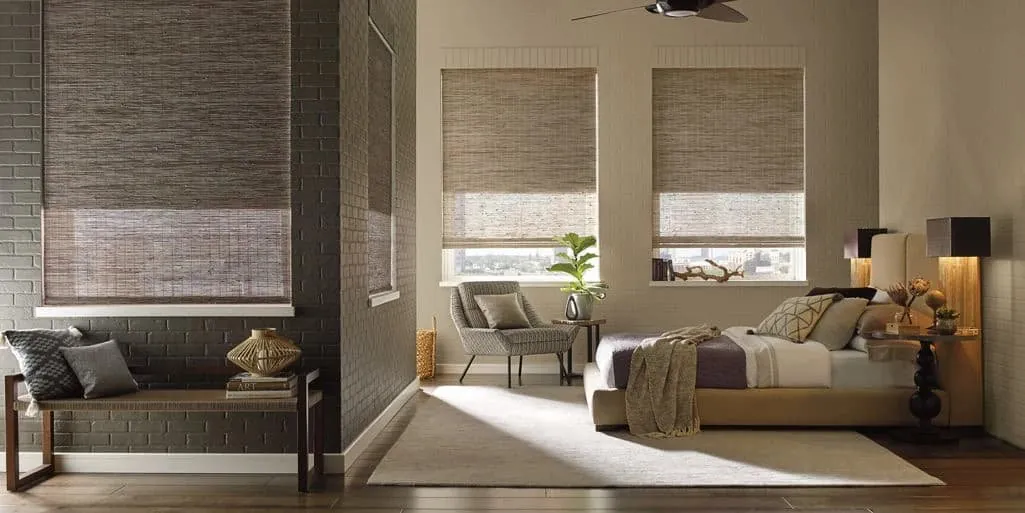
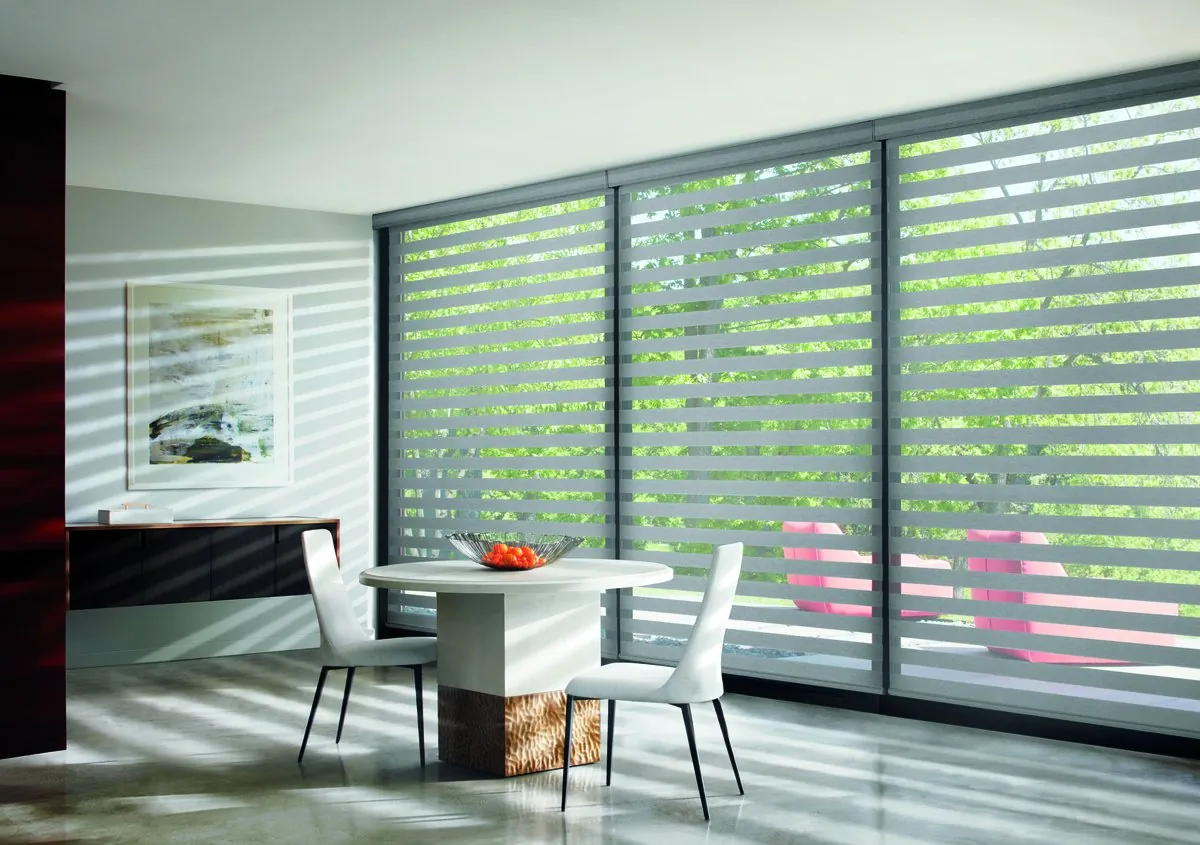
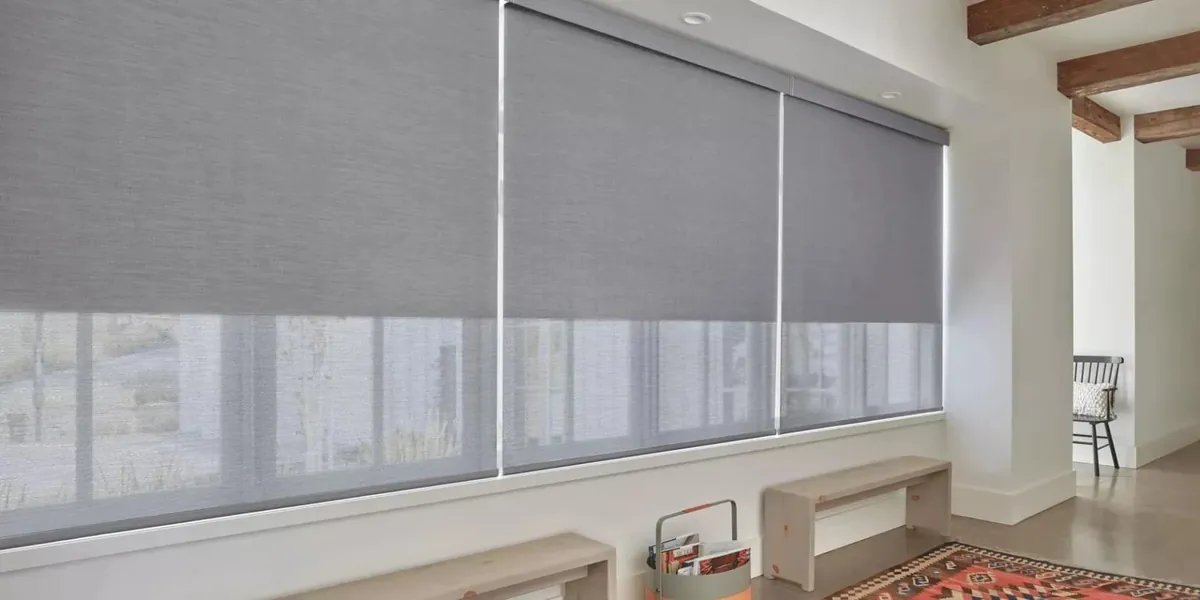
We usually suggest lighter fabrics for living spaces here, so the rooms do not become gloomy: a light-filtering honeycomb, a sheer, or a roller in a pale weave. Where one side of the house is more open, a solar screen controls glare while keeping the view of the woods, and the openness of the weave sets how much of that view you keep.
Family rooms with a long row of glass
The family room is usually the brightest room in a newer colonial: a long run of windows, sometimes a second row above, often a pair of doors to the deck. It is also where people watch television and work on laptops, so glare matters as much as daylight.
We plan the whole wall together. One fabric and color, every shade stopping at the same line, and a covering on the deck door that moves sideways so the doors open freely. On a sunny wall, a solar screen keeps the view of the trees while easing the glare; on a shadier one, a light honeycomb keeps the room soft and warm. As a Hunter Douglas dealer in Holliston, MA, we bring samples of both so you can compare them in the room at the time of day it matters.
A newer colonial, room by room
Most newer colonials off Washington Street share a similar plan. These pairings are a good starting point.
- Family room: light-filtering honeycomb or sheers along the main row of windows, all set to one height.
- Kitchen: faux wood blinds or a half-height shutter over the sink.
- Deck door: Luminette, a vertical honeycomb or vertical blinds that stack to one side.
- Dining room: Roman shades or wood blinds for a richer look.
- Bedrooms: darkening honeycomb or shutters.
- Home office: a roller or sheer to cut screen glare.
- High entry or stair window: PowerView.
Every family uses rooms differently, so at the visit we adjust the plan to how you live.
High windows and PowerView
Many of the newer houses have glass that is hard to reach: above the front door, high on a family room wall, at the turn of the stairs. PowerView lets those shades move from a phone, a remote or a timetable, so the windows are useful rather than a nuisance.
In the antique houses, PowerView can still earn its place, for example raising every tall front sash together each morning. We decide with you which windows suit a motor and plan how each one is powered. Our guide to how motorized shades are controlled explains it simply.
Bedrooms in both kinds of house
Upstairs in an antique colonial or Victorian, bedrooms keep the tall narrow sash and deep reveals of the floor below, sometimes with a smaller window under the roof. In a newer colonial, bedrooms are larger with standard windows looking into the trees.
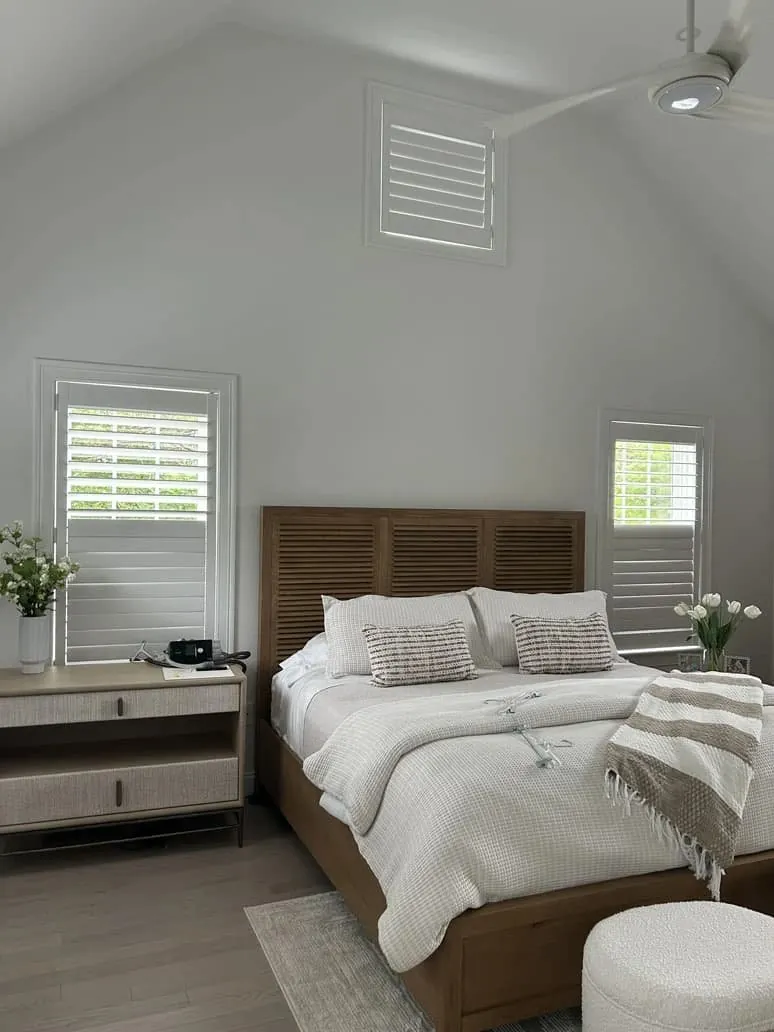
A darkening honeycomb inside a deep reveal makes an old bedroom properly dark while staying slim when raised. Shutters set within the reveal close tight at night and suit a period room. In the newer houses, almost any product fits, and the choice comes down to the look you want: crisp shutters, soft Roman shades or simple honeycomb.
Keeping a historic front looking right
From the road, the front of an antique house is part of the streetscape. Tall narrow windows in a regular pattern, with coverings that match, look as they should. Mismatched colors or products at different heights stand out.
We suggest one color for every window on the street side, set to consistent heights, even if the rooms behind them use different products. A Hunter Douglas dealer in Holliston, MA can lay that out at the visit so the front of the house stays calm, then help you choose freely for the rooms at the back.
Patience with the old, precision with the new
A deep old reveal that leans a little and a long row of new windows ask for different skills, and our installers bring both. Their work is certified by Hunter Douglas, and as a Gallery dealer we offer its complete family of shades, blinds and shutters.
With us you also get:
- A consultation in your own rooms, samples carried in our vans so the showroom comes to you
- A free estimate
- Interior design consultations whenever a room needs a fuller plan
- Window covering automation where it makes life easier
- Repair help for blinds and shades you already own
What happens, in order
- Reach out. Use Request a Consultation, or the call button on this page.
- We visit. A van of samples comes to your house, and we look at each room with you.
- You choose at the glass. Fabrics, slats and louvers held against your own windows.
- We measure. Every reveal and frame, by us, with the mount agreed for each.
- Your estimate. Free, and yours to consider for as long as you like.
Hunter Douglas then makes each piece to our figures, and we come back to install it. Our guide to what happens on installation day covers that last visit.
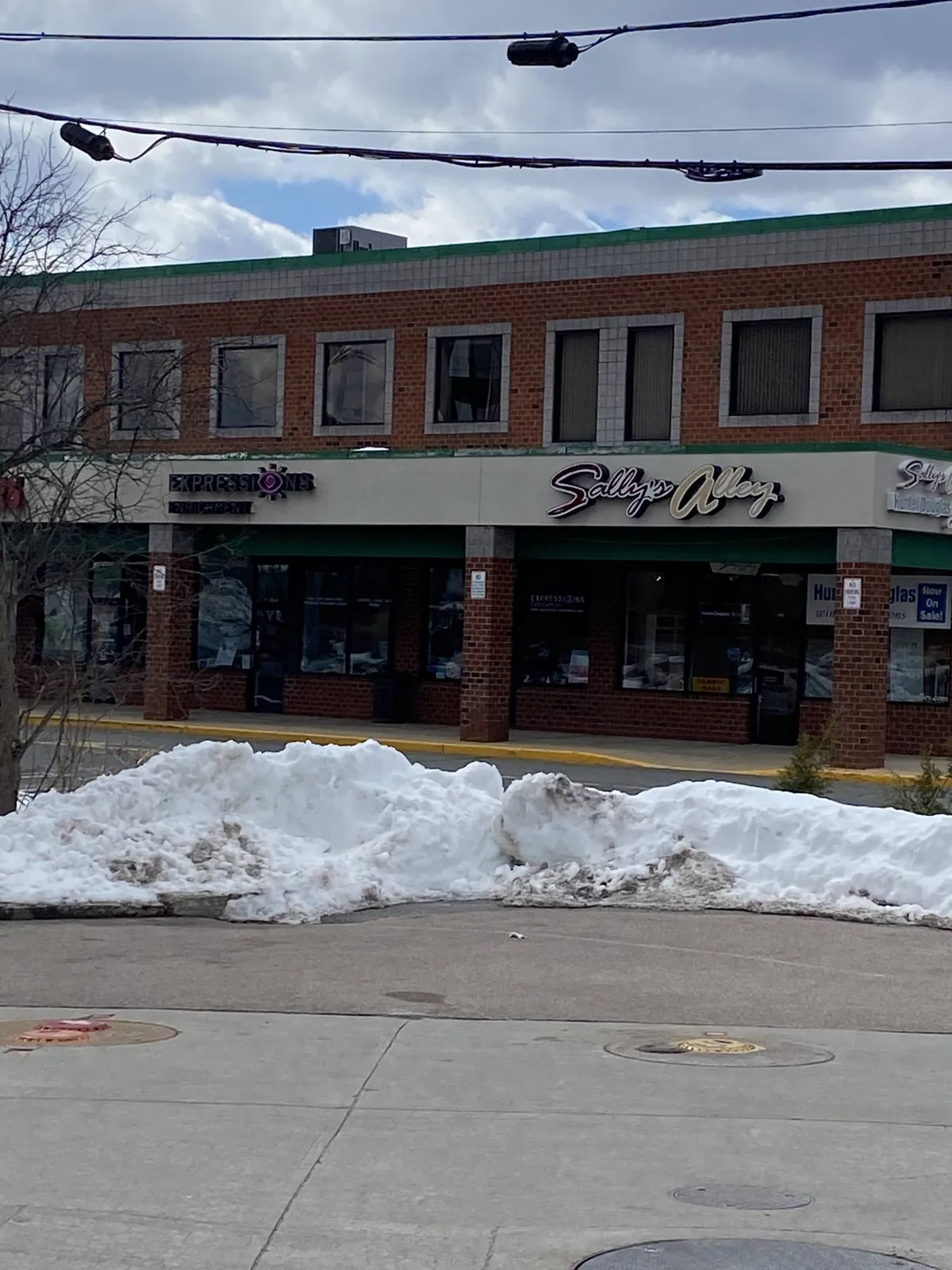
Visit us in Franklin
The Franklin showroom is the closest of ours to Holliston. Some people come in first to look around, others never need to, choosing everything from the samples we bring.
For more on the brand, see our Hunter Douglas page or the Hunter Douglas catalog. Everything we offer locally is on our Holliston page.
Questions from Holliston
My old windows have deep reveals. Can the shades sit inside them?
Usually, yes. A deep reveal can hold honeycomb, rollers, blinds and often shutters, leaving the casing clear. We check the depth at several points first.
Will a shade swallow my tall narrow sash when it is raised?
Not if it stacks slim. Honeycomb and rollers rise into a narrow band, and shutters swing fully away from the glass.
What if my frame is out of square?
We measure at several points. If an inside mount would leave gaps, we may suggest an outside mount and show you both looks first.
Do the newer colonials off Washington Street need anything special?
Their standard sizes make fitting easy. The main decisions are light, privacy and keeping the street side consistent.
Do I pay anything for the estimate?
No. Your estimate is free and covers each window we measured.
Begin with a visit
Request a consultation, and we will come with samples, measure every window and reveal, and leave a free estimate. You can also speak to your Hunter Douglas dealer in Holliston, MA through the call button, or look at products first in Franklin.