
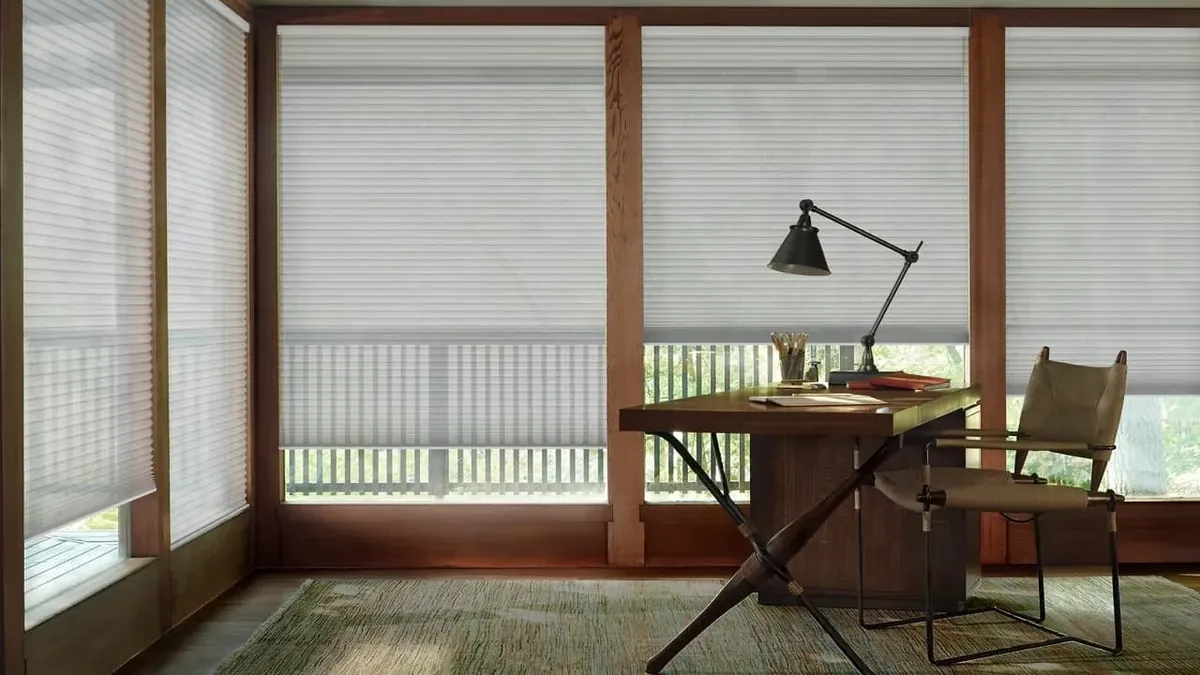
Open land, old sash and a long winter
Along New Bedford Road and around Snipatuit Pond, Rochester’s houses sit on big lots with fields, woods or cranberry bogs running right up to the yard. Antique colonials and old farmhouses stand next to newer builds set well back from the road, and there is often no neighbor close enough to see in. With so little to screen, a window covering here is less about privacy and more about holding the heat in, softening the light and making a room feel finished. That is the job we plan for when we fit cellular shades in Rochester, MA.
The older houses have small sash set deep into thick walls. The newer houses have large panes of modern glass. Both lose warmth through the window on a cold night, and in open country the wind across a bog or a field makes that loss easy to feel.
A honeycomb shade answers that with air. Its pleats form hollow cells, and each cell holds a pocket of air that stays put between the glass and the room. That quiet layer is what makes a cellular shade the warmest option Hunter Douglas offers for a cold room.
The honeycomb shades we fit most in Rochester
Of all the fabrics and features available, these three cover most of what Rochester houses need. We bring samples of every one so you can judge them at your own windows.
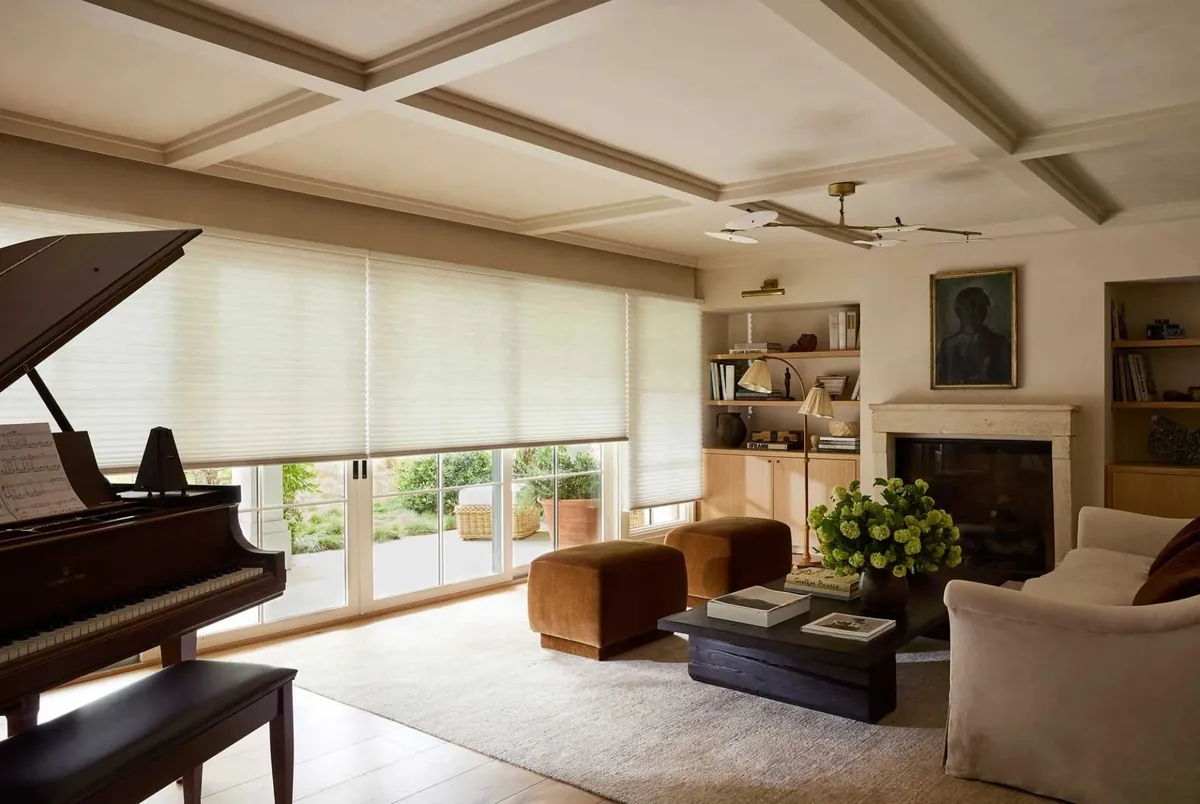
Duette in deep window wells
A compact headrail and a wide fabric range make Duette a natural fit inside the deep reveal of an antique sash, where it sits back in the wall and leaves the trim clear.
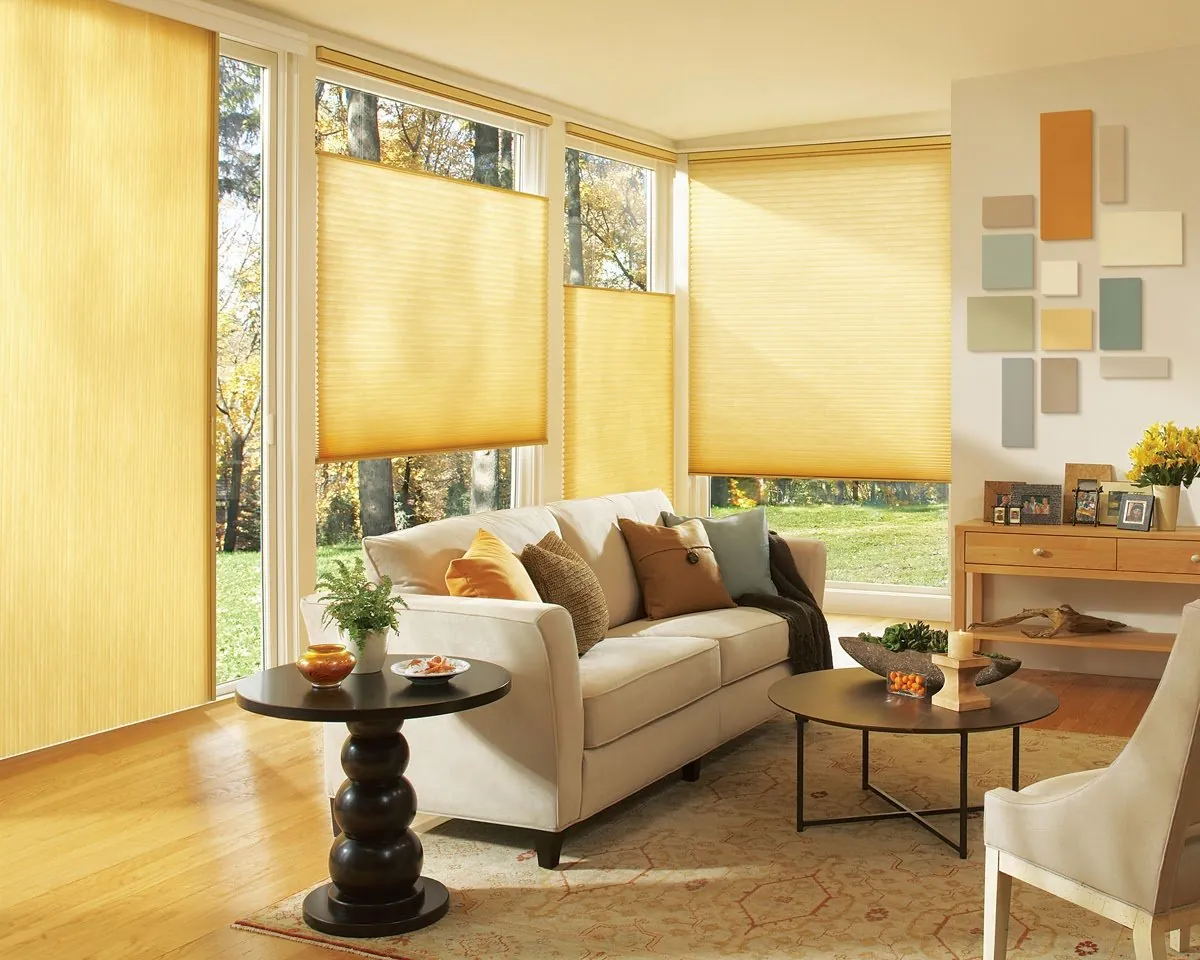
Top-down, bottom-up across the fields
Lower the top edge to cut low winter sun coming across open land and keep the lower glass clear for the view of the pond or the bog.
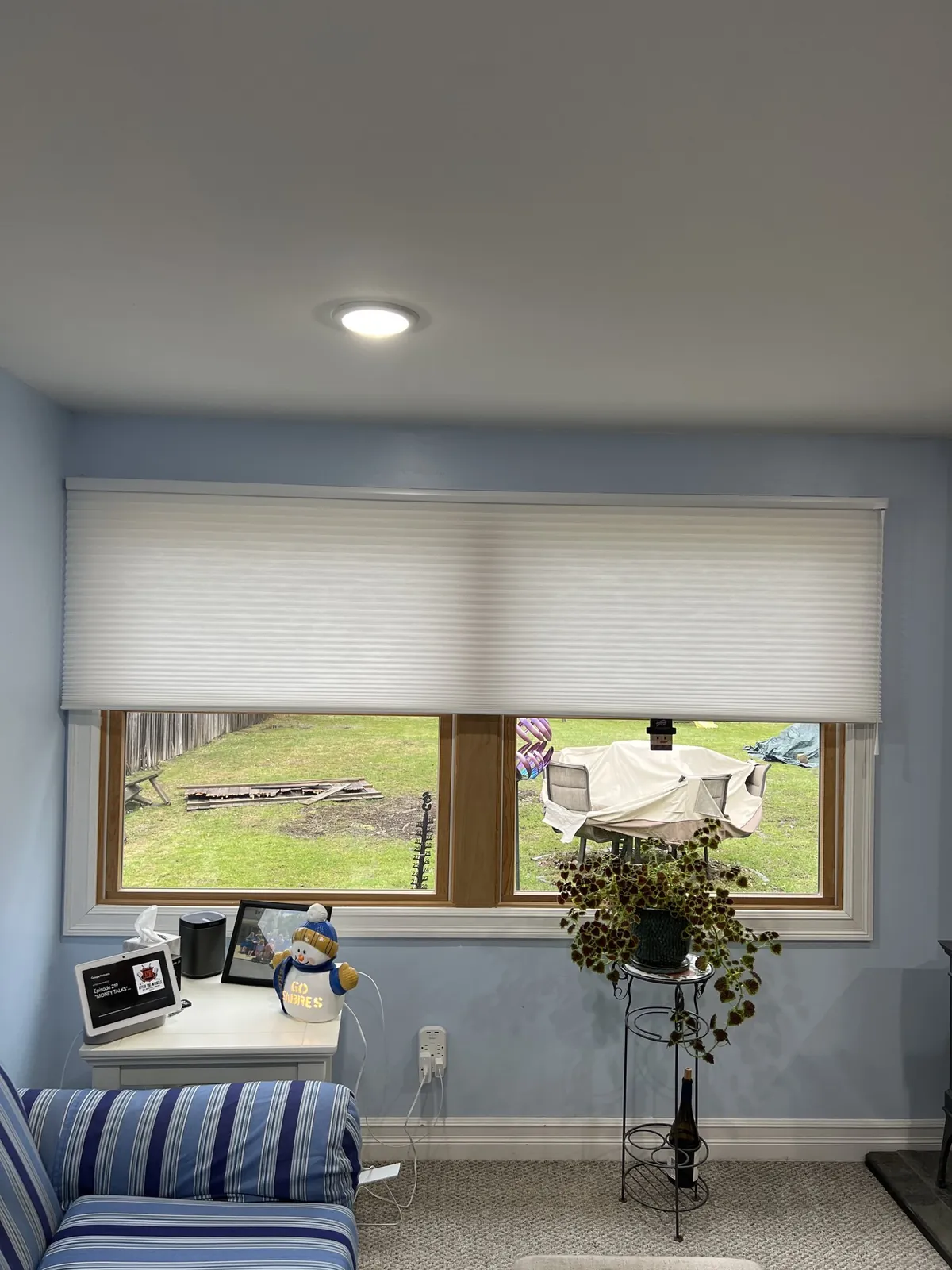
Applause for everyday rooms
Hunter Douglas’s second honeycomb line, with its own palette. It suits the kitchen, the mudroom and the bedrooms of a newer build.
Deep-set sash in antique colonials
The oldest houses in Rochester were built with heavy timber frames and thick walls. Their windows are small by modern standards, set well back in the wall, often with six or more panes in each sash. That deep reveal is good news for a honeycomb shade. It usually gives plenty of depth for an inside mount, so the headrail disappears into the opening and the shade sits snug against the glass, where it does the most good.
There are things to check. Antique frames are rarely square or level, and two windows in the same room can differ by more than you would guess. Interior shutters, old sash locks and the remains of storm window hardware sometimes sit in the way. We measure each window at several points, look at what is fixed inside the reveal and tell you which mount will look right.
When the shade is raised, a honeycomb shade stacks very small at the top of the window. On a short antique sash you keep nearly all the daylight, and the muntins and the old glass stay in view.
Farmhouses on large lots
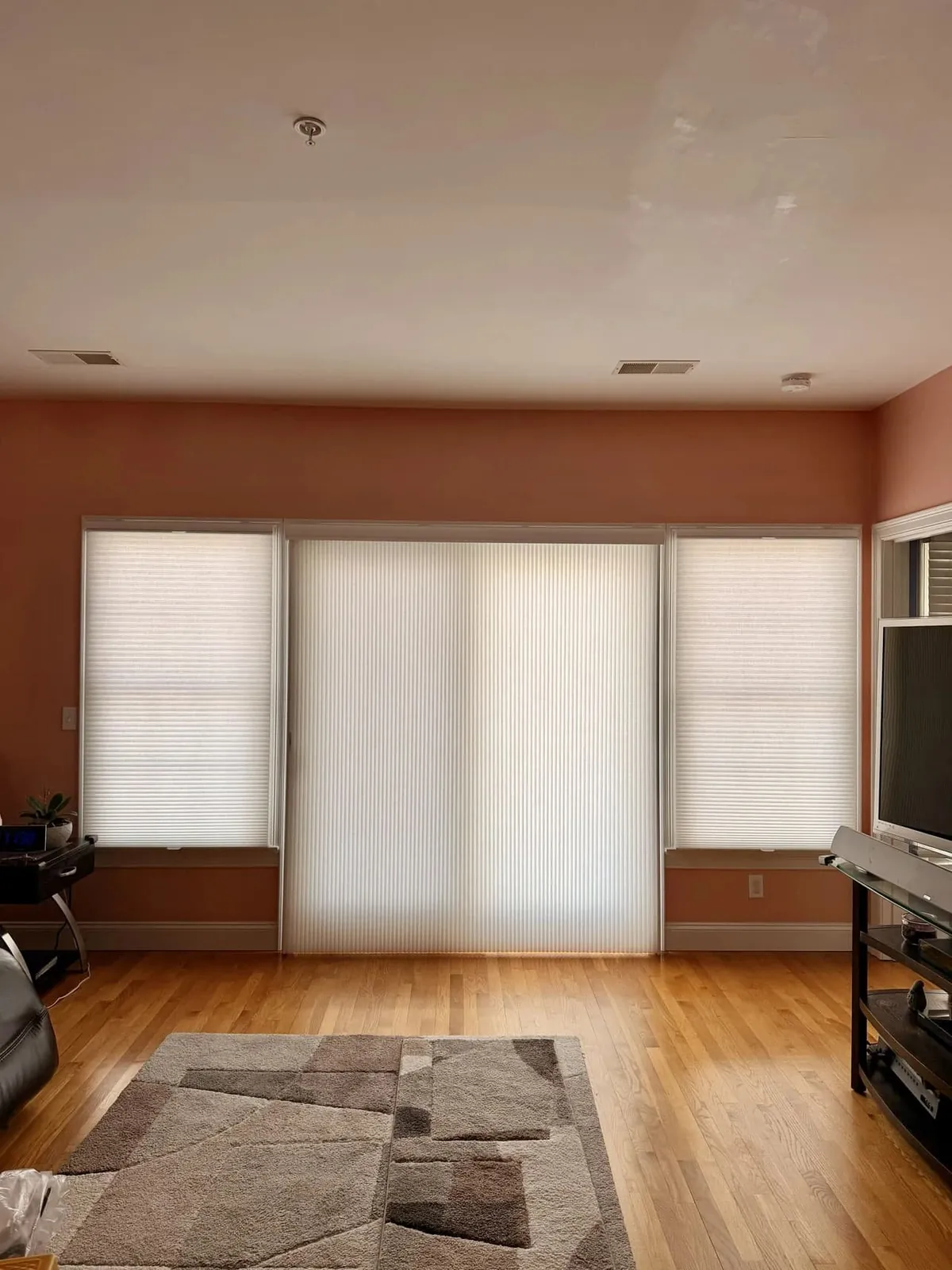
A Rochester farmhouse has usually grown in stages: the original block, a kitchen ell, maybe a family room or a garage with a room over it added much later. Each stage brought a different style of window, from narrow old sash to a wide replacement unit or a slider onto a back deck.
Cellular shades let you treat every one of those windows the same way. The fabric and color can be matched throughout, while each shade is built for its own opening, so the house looks consistent from inside and out. On a slider, a vertical honeycomb shade crosses the glass and folds to one side. On a wide family room window, two or three shades share one headrail.
Rooms in an old farmhouse often have windows on more than one wall, which means the light changes completely from morning to evening. A light-filtering fabric evens that out, spreading daylight across the room instead of throwing a hard bright patch on the floor.
Wind across the bogs and fields
Cranberry bogs are flat and open, and so are the fields around many Rochester houses. With nothing to break it, winter wind presses straight against the side of the house that faces the open ground. You feel it as a cool draught near the glass even when the window is closed and latched.
A honeycomb shade lowered in the evening calms that. The cells hold their air steady against the pane, so the cold that radiates off the glass does not spread into the room as quickly. In a living room that faces the bog, the change shows most at the end of the day, when the heat would otherwise drain away through the window.
The same open land brings strong, low sun in winter. It is welcome warmth on a cold afternoon, but it can be harsh on a screen or a dining table. A top-down, bottom-up shade lets you take the top edge down just far enough to stop the glare while the rest of the window keeps working for you.
Choosing between Duette and Applause
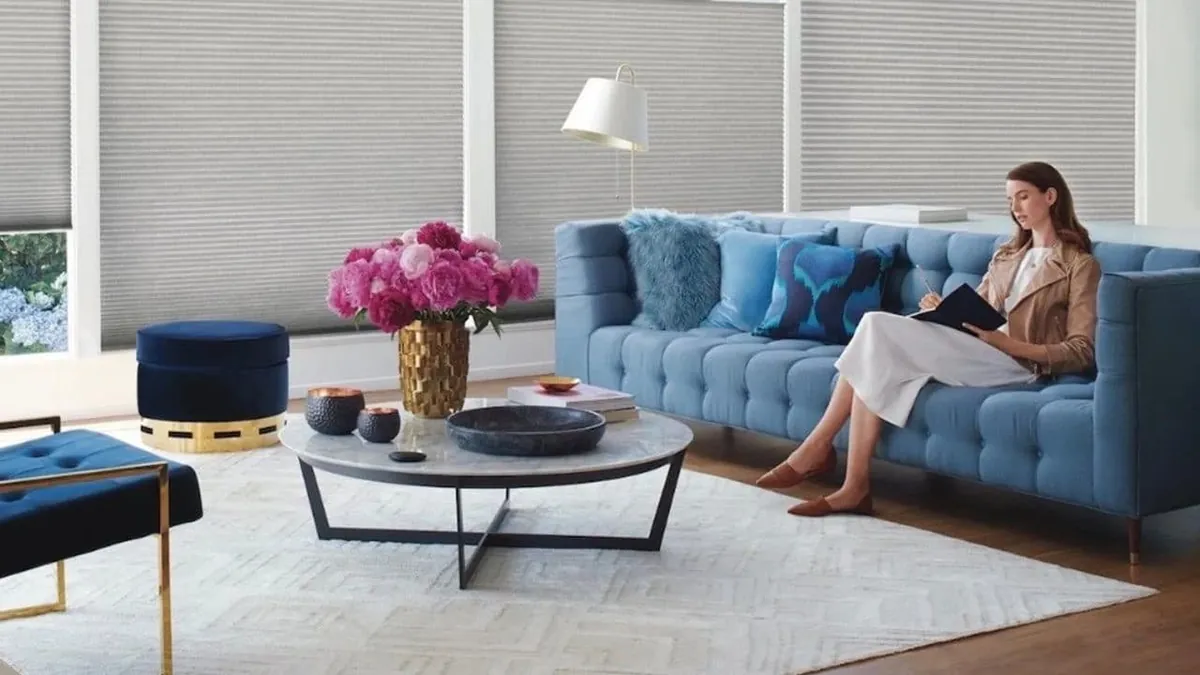
Both are Hunter Douglas honeycomb lines, and both hold air in their cells the same way. The choice is mostly about range. Duette has the larger selection of fabrics, textures and cell sizes, plus specialty shapes for arched windows and the vertical shade for sliders and French doors. Applause offers its own set of colors and fits standard windows very well.
In a Rochester house with old and new parts, many people mix the two: Duette in the front rooms of the antique house, Applause in the bedrooms and kitchen of the newer wing. Our Duette honeycomb shades and Applause honeycomb shades pages go into each line, and our main cellular shades page covers the whole family.
Modern glass in the newer builds
Newer houses in Rochester are often designed to take in the land around them. You see great rooms with tall windows, walls of glass facing a pond, and bedrooms with wide windows looking over the fields. Modern double glazing is far better than an antique sash, but a large pane still loses heat on a cold night and gains a lot of it on a sunny day.
Cellular shades can be made very wide and very tall, so even a big window can take one or two shades. Duette also comes in shapes for arches and angled tops, so a feature window in a gable can be covered without leaving a bare triangle above. For windows out of reach, PowerView motorization lets you lower the shades with a remote, the app on your phone or a schedule. Our page on motorized blinds in Rochester explains how that works.
With no close neighbors, many owners of newer builds leave their windows bare. That works until the first January heating bill, or the first August afternoon when the great room bakes. A sheer or light-filtering honeycomb shade keeps the view soft and the room comfortable without closing the house off from the land.
Rooms that look over Snipatuit Pond
Houses near Snipatuit Pond tend to turn their best rooms toward the water. A sitting room or kitchen on that side might have a run of windows or a pair of French doors opening onto a lawn that slopes down to the shore. The view is the reason the room exists, so any covering has to step aside in daylight and still do real work after dark.
Honeycomb shades suit that brief. Fully raised, they shrink to a narrow band at the head of the window and the pond is in full view. Lowered on a winter evening, they put a blanket of trapped air across glass that has been facing the cold water all day. In summer, a sheer or light-filtering fabric takes the glare off the surface of the pond in the late afternoon without turning the room dim.
French doors are worth a mention. A shade can be mounted on each door leaf, with hold-down brackets at the bottom so it does not swing when the door opens. When we plan cellular shades in Rochester for a pond-side room, we look at how often each door is used and suggest a lift that makes sense for it.
A dark night with no streetlights
Out on a quiet road, the countryside is properly dark at night. A lit room with bare windows becomes the brightest thing for a long way, visible from the road, the bog paths and the far side of the pond. Privacy may not matter in daylight, but at night most people want the windows covered.
A light-filtering honeycomb fabric gives you that in the evening without making the room feel boxed in. Lamplight glows softly through the fabric, and shapes inside are hidden. For bedrooms, a room-darkening fabric keeps out the early sun in summer, when dawn comes across the fields long before you want to be up.
Mudrooms, stairwells and back halls
Every country house has rooms that get forgotten until winter: the mudroom by the side door, the back hall to the barn, the stairwell window halfway up, the little bathroom tucked into the ell. They are often the coldest spaces in the house, because they sit on outside corners or over unheated ground, and they are the ones left with an old roller blind or nothing at all.
These small windows are a good place to start with cellular shades in Rochester. A single honeycomb shade in a mudroom or back hall takes the edge off the cold coming through the glass, and in a bathroom a light-filtering or room-darkening fabric gives privacy without a heavy look. On a stairwell window you cannot easily reach, a cordless top-down shade or a motorized one avoids leaning over the banister. We include these rooms in the walk-through, because they are easy to overlook and quick to put right.
Measuring an old window properly
Small deep-set sash rewards careful measuring, and a misjudged inside mount shows straight away. When we measure cellular shades in Rochester, every window gets the same routine.
- Width at the top, middle and bottom of the reveal, working to the narrowest figure.
- Height on the left, in the middle and on the right, because old frames are seldom even.
- Depth of the reveal at several points, noting locks, shutter hinges or old storm hardware.
- A check that the shade will clear the window when you open the lower sash in summer.
- Your choice of mount, fabric and lift, confirmed before anything is ordered.
When the shades arrive, our certified Hunter Douglas installers set the brackets into solid wood, level each headrail and run every shade up and down with you before they leave.
Lifts and controls for a country house
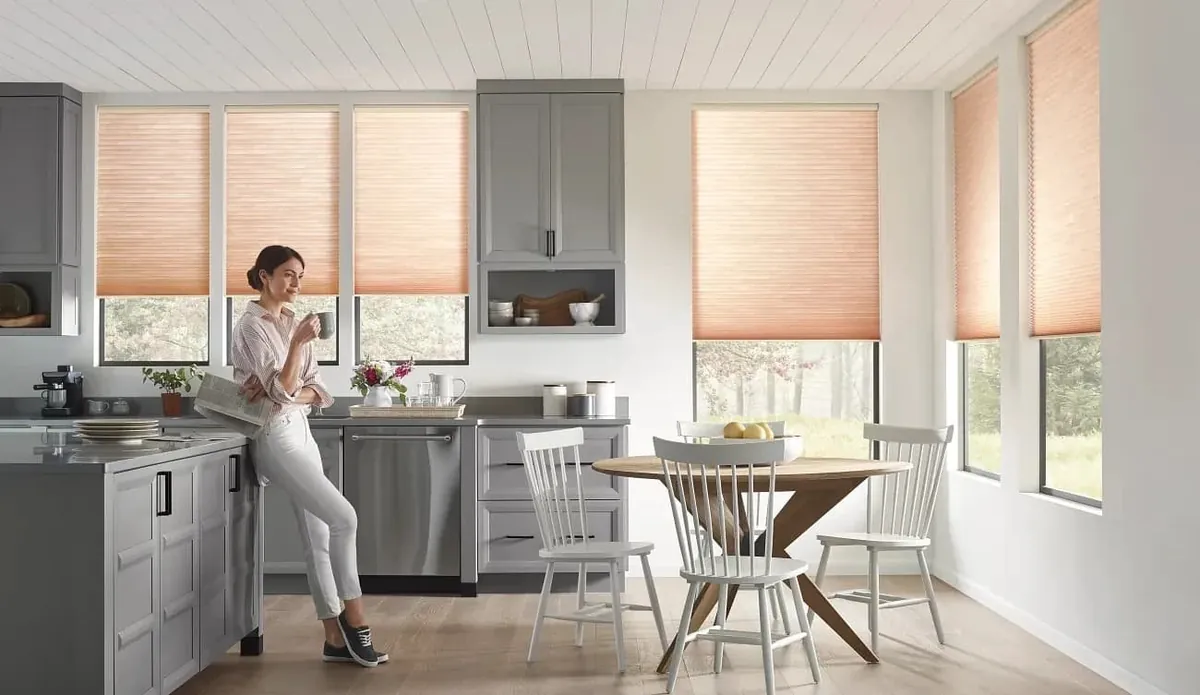
A cordless lift suits most Rochester windows. You raise and lower the shade by its bottom rail, and there is no cord hanging beside an antique window or within reach of a child or a dog. A continuous cord loop or a top-down, bottom-up rail gives you more control on taller windows, and we bring examples so you can try them.
Motorization makes sense for the high glass in a great room, a window behind a deep kitchen counter, or a house you leave empty for a week at a time. PowerView can raise the shades in the morning and lower them at dusk on a schedule, and you can change it from the app wherever you are.
Fabric for strong country light
With open land all around, many Rochester rooms take full sun for much of the day. Fabric color and opacity matter here. Paler, neutral fabrics hold up best to strong daily sun. Light-filtering fabrics give an even, glare-free light in living rooms and kitchens. Sheer fabrics keep more of the view, which suits a room that looks out on the pond.
Color from outside matters too. Many owners pick one backing color for every shade on the front of the house, so from the road the windows look even even when the fabric facing each room is different.

What a Gallery dealer brings to the job
Blinds & Designs is a Hunter Douglas Gallery dealer, the designation Hunter Douglas uses for dealers who meet its standards. You get the whole honeycomb range from us: every Duette and Applause fabric, every lift option, vertical shades and PowerView.
Our installers are certified by Hunter Douglas, and we take care of blind and shade repairs too, including on coverings you already have. We also offer interior design consultations if you want help with color and fabric across a whole room.
An old farmhouse often wants more than one kind of window treatment. Look at our roman shades in Rochester for a softer look in a dining room, or custom blinds in Rochester for a kitchen or mudroom. Everything we offer in town is on the Rochester page.
Samples in your own rooms
Light in Rochester changes with the land around each house, so we prefer to choose with you at home. Our vans carry the honeycomb range, so we can bring the showroom to you. We walk through the rooms with you, starting with the coldest or brightest, and you hold real fabric against your own windows. We measure every opening and leave you with a free estimate for the shades you are considering, with time to think it over. Read about what happens at an in-home consultation before we arrive.

Questions from Rochester
My antique windows are set deep in the wall. Is that good or bad for a shade?
Usually good. A deep reveal gives room for an inside mount, so the shade sits back in the wall and close to the glass. We check for locks, hinges and old hardware inside the reveal before recommending it.
I have no neighbors nearby. Do I really need shades?
For privacy in daylight, perhaps not. For warmth, glare and night-time, yes. A honeycomb shade holds a layer of air at the glass, softens strong sun across open land and covers the windows once the lamps go on.
What can I do about the wind on the side of the house facing the bog?
Lower a honeycomb shade in the evening. The cells keep air still against the pane, which slows the cold coming off the glass. A double-cell fabric adds another layer if that room is the coldest in the house.
Can you cover the tall windows in a newer great room?
Yes. Honeycomb shades are made very wide and tall, and Duette has shapes for arched and angled tops. PowerView motorization takes care of windows you cannot reach.
How do I get an estimate?
Request a consultation. We come to your house with samples, measure every window and give you a free estimate.
Book a visit for your coldest room
The best way to judge cellular shades in Rochester is at your own windows, in your own light. Request a consultation and we will bring the honeycomb samples, measure each opening and give you a free estimate. You can also use the call button, or see Hunter Douglas shades in person at the North Dartmouth showroom.