
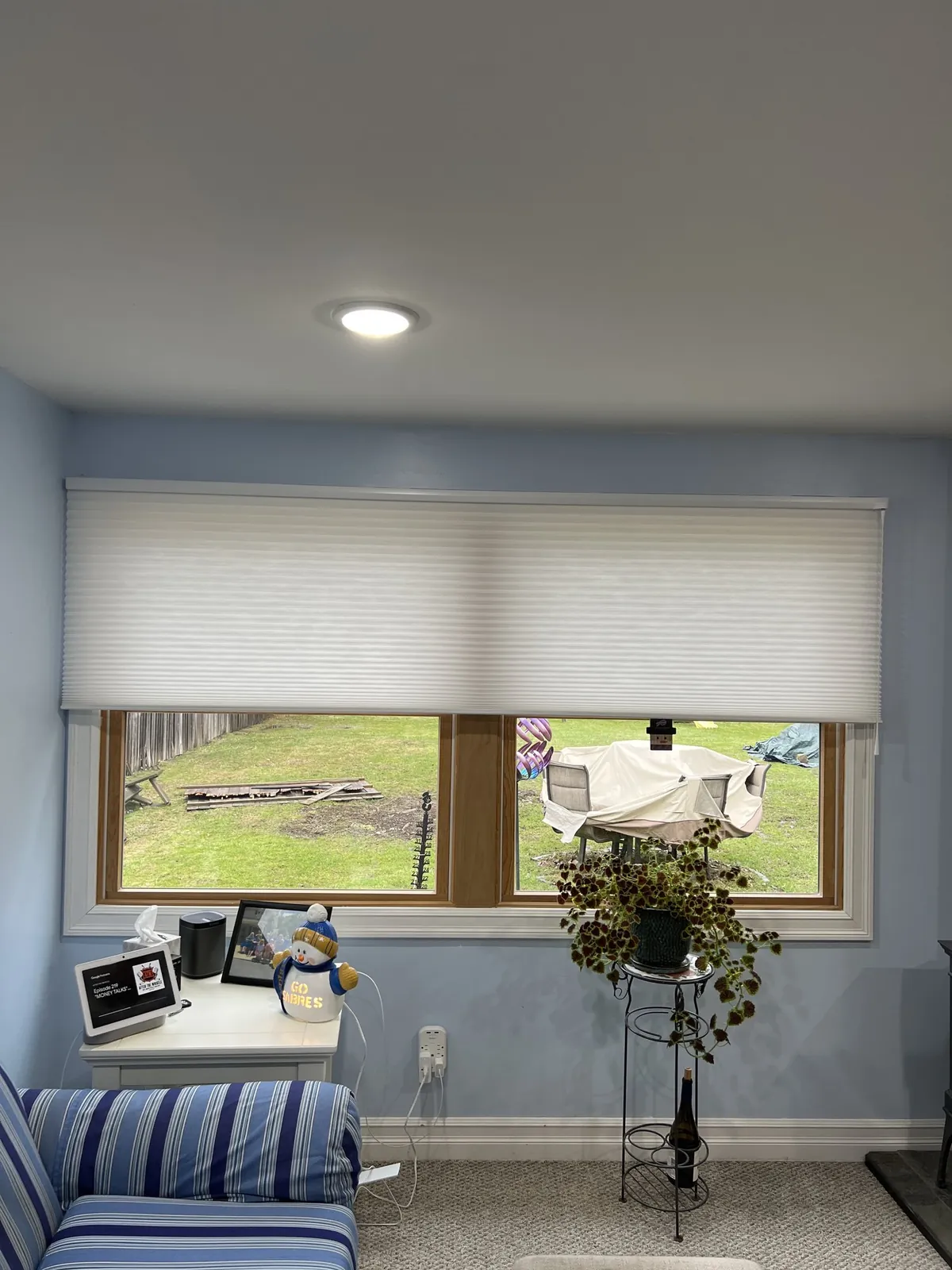
Old sash, close sidewalks and cold front rooms
Dedham Village and Oakdale hold some of the oldest houses we work in: antique colonials and Victorians with tall, narrow sash, many of them standing only a few paces back from the street. Toward Riverdale the picture changes to post-war capes and ranches with plainer openings. Both kinds of house lose warmth through the glass in January, and both want a covering that respects how the house looks. That is the job we take on when a family asks us about cellular shades in Dedham, MA.
The honeycomb shape is the reason these shades suit an older house so well. Each pleat is a closed pocket, and when the shade is down those pockets hold still air between the cold pane and the room. A front parlor where the chill used to creep off the window keeps more of its warmth through the evening, and the sash itself stays exactly as it was.
In the village there is a second concern beside warmth. Houses set this close to the sidewalk put their front rooms on view to anyone walking by, so the fabric has to give privacy without making a historic room feel shut in.
Honeycomb shades for Dedham houses
The cellular shades in Dedham, MA, that we fit most often come down to three choices. Three ways the Hunter Douglas honeycomb range shows up in Dedham, from a village colonial to a ranch near Riverdale. We bring samples of all of them to the house.
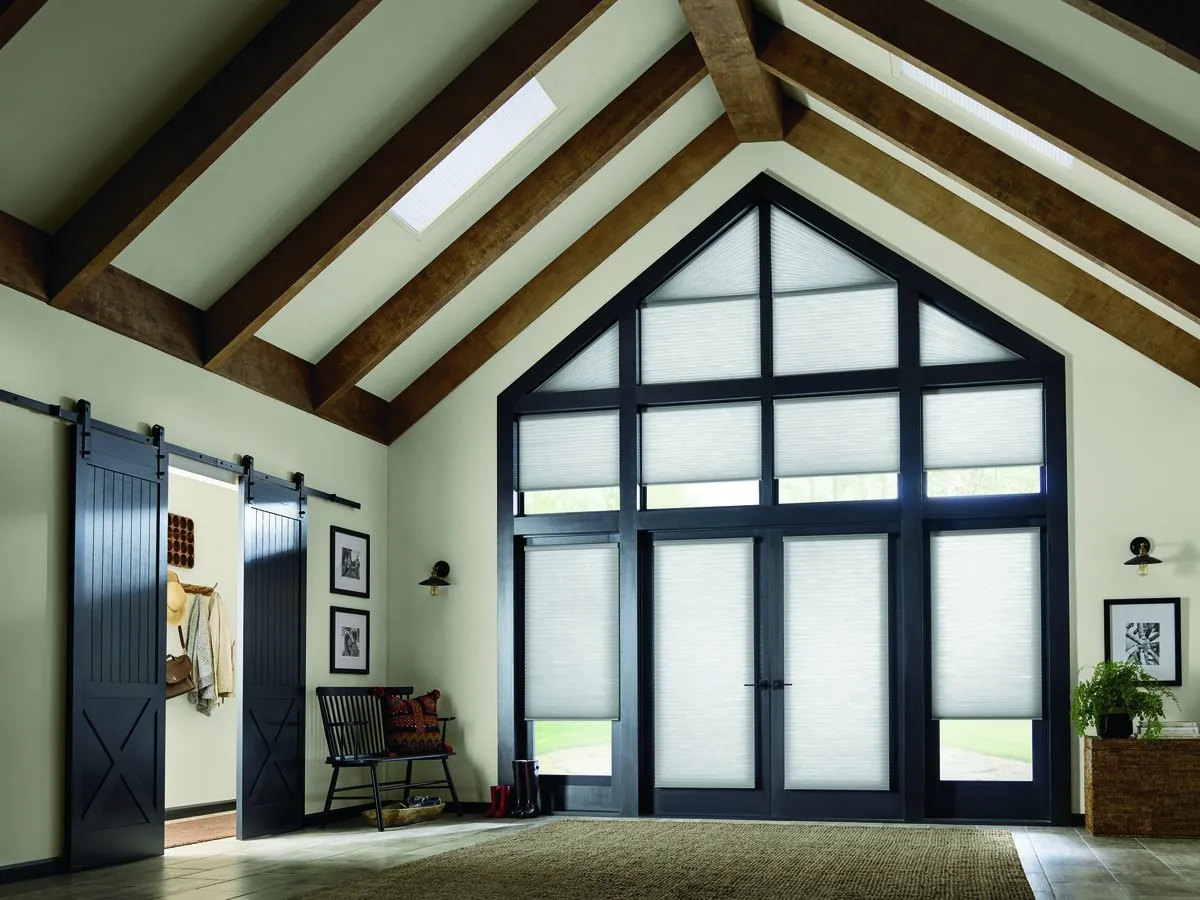
Duette honeycomb shades
The broadest Hunter Douglas honeycomb collection, and our usual starting point for the tall front windows of an antique colonial where the fabric is on show.
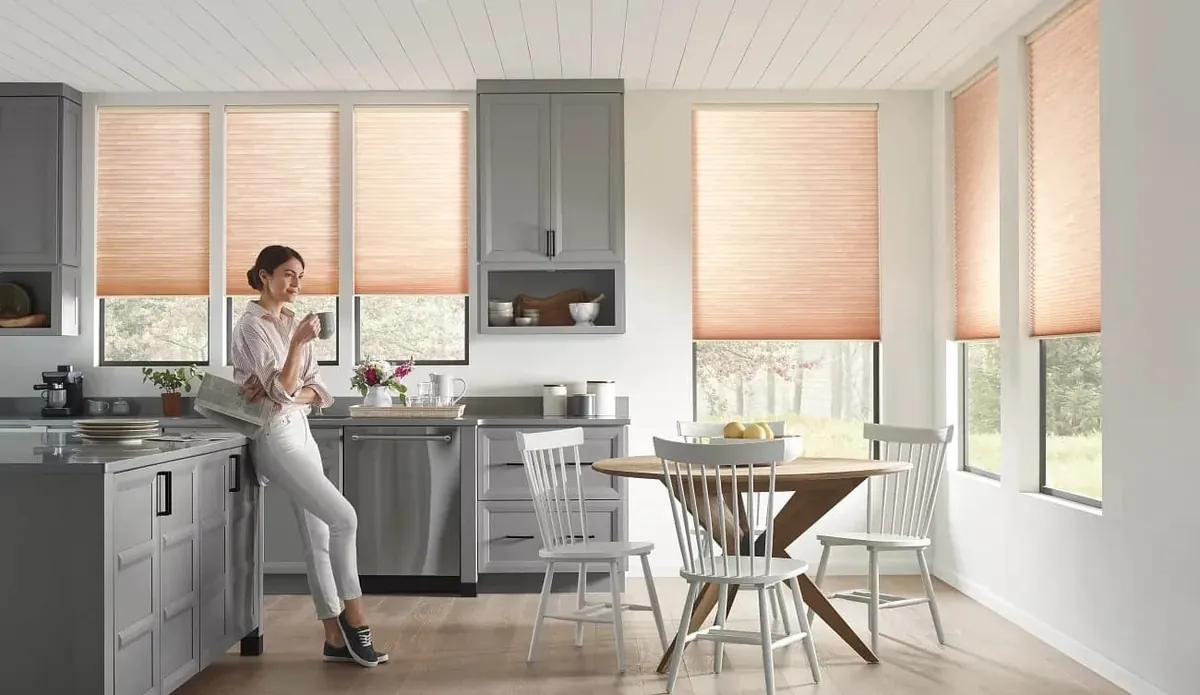
Applause honeycomb shades
The second Hunter Douglas honeycomb line, with a palette of its own. It suits the standard openings in a Riverdale cape or the back rooms of a village house.
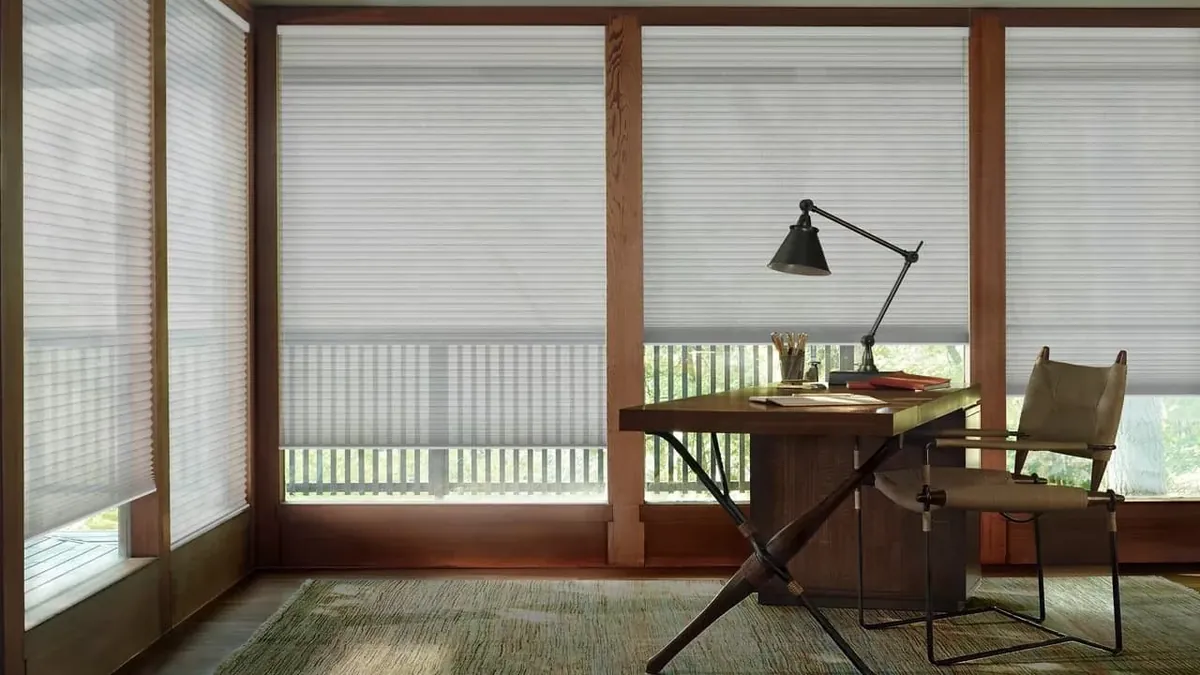
Motorized Blinds and Shades in Dedham
Honeycomb shades with PowerView motors, run from a remote, the app or a schedule. Handy for the upper sash of a tall stair window.
Tall, narrow sash in the antique colonials
The colonials around Dedham Village were built with windows that are taller than they are wide, often in rows of matching pairs across the front, with deep wood casings and sometimes interior shutters long since painted shut. The trim in these houses has often been stripped, repaired or carefully matched over the years, and a covering that hides it undoes that work.
A honeycomb shade can sit inside the window opening so that when it is raised it all but vanishes into the top of the frame, leaving the casing in full view. Whether that works depends on the window. Old sash often has pulleys, weights and parting beads close to the face of the frame, and a century of settling means the opening may be a little narrower at the top than at the sill. Before we recommend a mount we measure across the top, the middle and the bottom, check how much depth the frame offers, and look for anything that would catch the headrail.
When there is room, the inside mount is usually the choice. When there is not, we say so and mount the shade just above the frame, a little wider than the opening, so it still looks deliberate. Either way the shade is made to the window, not to a standard size, which matters when the openings in an old house only look identical from the street.
Victorians in Oakdale
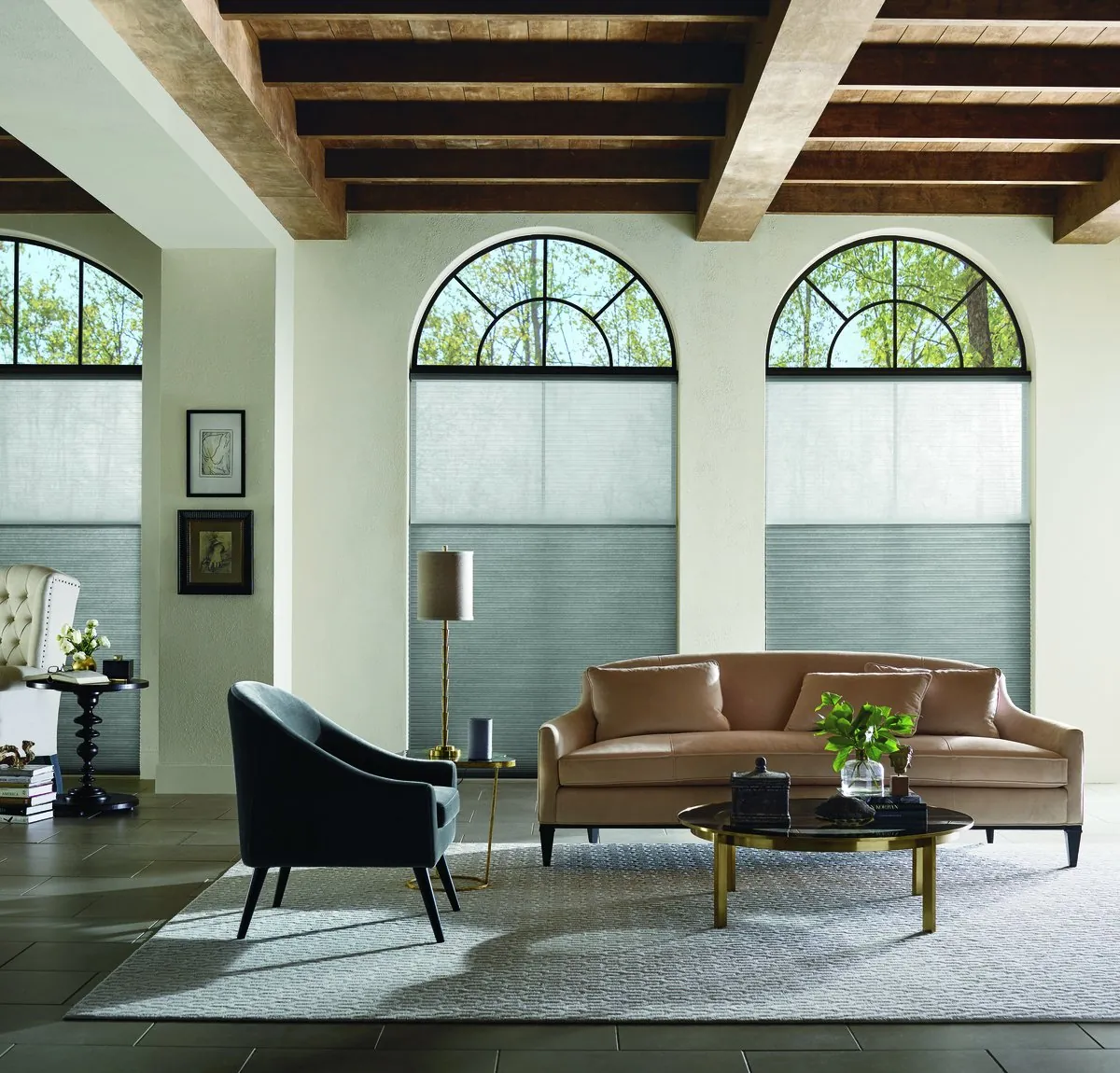
Oakdale’s Victorians bring their own windows into the mix. You find bays that push out from the parlor, narrow lights flanking a front door, stair windows set halfway up a landing and the odd round or arched top in a gable. These are the windows that make a Victorian worth owning and the ones that make covering it a puzzle.
Honeycomb shades handle much of it. Each face of a bay can take its own shade, all in one fabric and hung at one height, so the bay reads as a single window when the shades are raised together. Narrow side lights get shades made to their own width. A landing window that nobody can reach from the stairs is a natural place for a PowerView motor, so the shade actually moves instead of staying wherever it was left.
For the shaped tops, we look at each one with you. Some are better left open to the sky while the rectangular sash below is covered, which keeps the character of the window and still warms the room.
Historic expectations and the view from the street
In Dedham Village the front of an old house is part of the streetscape, seen from the sidewalk every day. That shapes the fabric choice as much as the warmth does.
From outside, a honeycomb shade shows a clean, even face. We suggest keeping the street-facing windows of a village house in one color, usually a soft white or a warm neutral, so the front of the house looks calm and consistent whatever is going on behind it. The rooms at the back, which nobody sees from the street, are free to take whatever color suits them. We show you how each choice looks from both sides by holding samples at the glass.
Because the houses sit so close to the street, we also talk about evening privacy. Once the lamps go on, a thin fabric can show more than you want. A denser fabric in the front rooms keeps them private after dark while still letting soft light through by day.

Post-war capes and ranches toward Riverdale
The houses toward Riverdale were built in a different spirit: post-war capes and ranches with standard openings, a picture window in the living room, and bedrooms tucked under the eaves in the capes. Here the windows are simpler, and the decisions are quicker.
Standard openings repeat from room to room, so one fabric and one mount can carry through most of the house. That keeps an order of cellular shades in Dedham straightforward when the house is a cape: measure each window, confirm the depth, and choose a fabric for the living spaces and one for the bedrooms. The picture window can be split into two or three shades on one headrail so the whole width moves together or each part moves on its own.
Cape bedrooms under the roof are often the coldest rooms in the house in winter and the warmest in summer. Dormer windows are small but they sit in a room with sloping walls and little insulation, so a honeycomb shade there earns its keep in both seasons.
How the honeycomb holds a room’s warmth
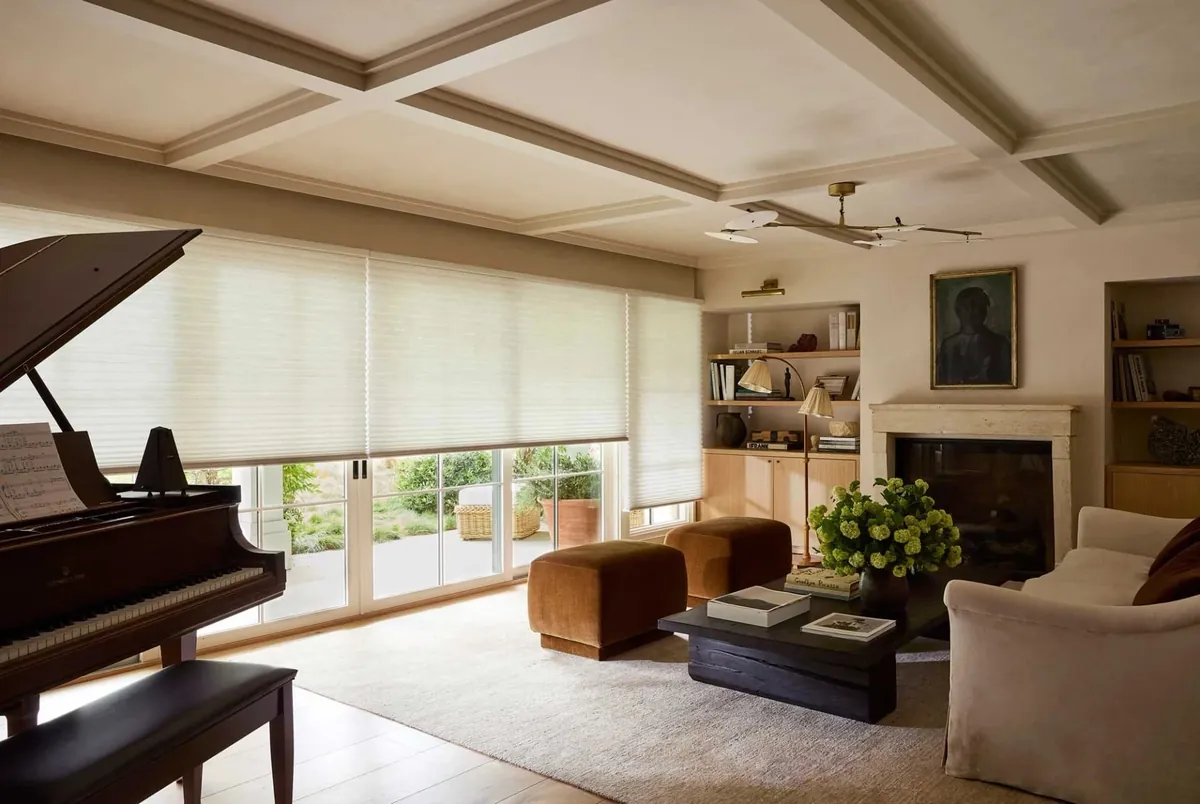
From the front a cellular shade looks like a soft, pleated fabric. Seen from the side, it is a row of hollow cells running the width of the window. Lowered, those cells hold air that barely moves, and still air is slow to pass heat. The cold coming off a single pane of old glass has a harder time reaching the room, and the warmth from the radiators has a harder time reaching the glass.
In an antique colonial that difference is easy to feel, because the old sash is thin and the rooms are often small, so you are never far from a window. In a ranch the gain is on the big picture window, which can make a living room feel draughty on a still night even when nothing is actually leaking. Our guide to cellular shades and winter heat goes into this in plain terms.
The same cells help in summer. Lowered through the hottest hours on the sunny side of the house, a honeycomb shade slows the heat coming through the glass, so the rooms stay more comfortable without the house being shut up in darkness.
The consultation comes to your door
For Dedham we lead with an in-home consultation. Our nearest base is the Canton shop-at-home service, which works entirely in your house: the vans carry samples, so we can bring the showroom to you. That suits an old house especially well, because a fabric looks different against painted trim, under a north-facing window or in a room shaded by the house next door.
- Request a consultation online or with the call button, and choose a time that works for you.
- We arrive with Duette and Applause samples in a spread of colors and fabric weights.
- You show us the rooms that worry you most, often the cold front parlor or a bright bedroom.
- We hold samples at each window so you see the color in your own light, on the street side and the garden side.
- We measure every window you want covered and check the frame depth for each mount.
- You get a free estimate for the shades you are considering, and time to think it over.
If you would like help pulling the whole room together, ask about our interior design consultations. We can look at color, fabric and the other window treatments at the same visit.
Choosing between Duette and Applause in an older house
Duette and Applause are both true honeycomb shades from Hunter Douglas, and both keep a room comfortable the same way. What separates them is the fabric range and the feel of each collection. Duette is the larger of the two, which often decides it for the formal front rooms of a village colonial where the shade is seen from both inside and out. Applause has a palette of its own and is often chosen for kitchens, back bedrooms and the plainer openings of a cape.
Many orders mix both lines, one for the rooms on show and one for the rest of the house. We lay the samples side by side at your window so you can judge each one in the room where it will hang. The main cellular shades page covers the whole Hunter Douglas honeycomb range if you want to read ahead.

PowerView for high windows and quiet mornings
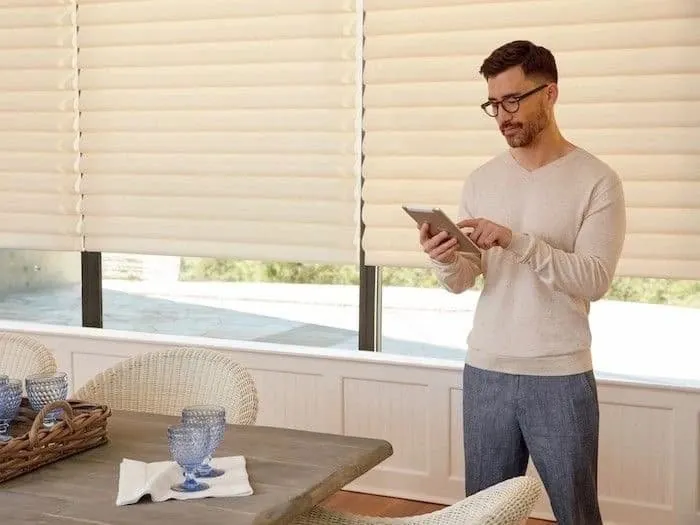
Older houses tend to have windows in awkward places: the upper sash of a stair window, a transom over a door, a gable window lighting an attic room. PowerView motorization puts those shades on a remote or the app, so they rise and fall without anyone reaching or climbing.
Schedules are useful in a village house too. The street-facing shades can lower at dusk without anyone remembering, and the bedroom shades can rise at the hour you choose. We plan how each motor is powered at the visit, window by window. Our guide on how motorized shades are controlled explains the remote, the app and schedules.
Measuring an old window and hanging the shade
Old windows reward patience. The steps we follow for honeycomb shades in an antique house are simple, but we do not skip any of them.
- We measure the width of each opening at the top, middle and bottom, and the height at the left, center and right.
- We note the frame depth and any sash hardware, latches or weights that would sit in the way of a headrail.
- We agree an inside or outside mount for each window with you before anything is ordered.
- Once the shades are made, our certified Hunter Douglas installers fix each bracket into sound wood, level every headrail and check that each shade runs smoothly.
- Before they leave, they show you how everything works, including any PowerView remotes or schedules.
A shade made to the exact opening fills it edge to edge, which looks better on period trim and also leaves less of a gap for cold air at the sides.
Kitchens, ells and the back of the house
Antique houses often grew from the back over time. Where a Dedham house has a kitchen ell, a mudroom or a later addition, it often has windows of a different size and age from the front of the house, sometimes replacement units set into an older wall. These rooms see the most daily use and the least attention when it comes to window coverings.
Cellular shades for Dedham kitchens and ells need to be easy to live with. A shade over the sink should rise out of the way of the faucet, and a breakfast table by a window wants soft light rather than a hard patch of sun across the plates. Because the openings at the back rarely match the front, each shade is made to its own window, but the fabric can stay the same so the rooms flow into one another. The ell is also where a family is most likely to sit beside the glass on a winter morning, so the warmth of the honeycomb is felt here first.
In a ranch, the equivalent is the back slider or the kitchen window over the yard, and the same thinking applies: one fabric through the busy rooms, made to fit each opening exactly.
A Gallery dealer for Dedham houses
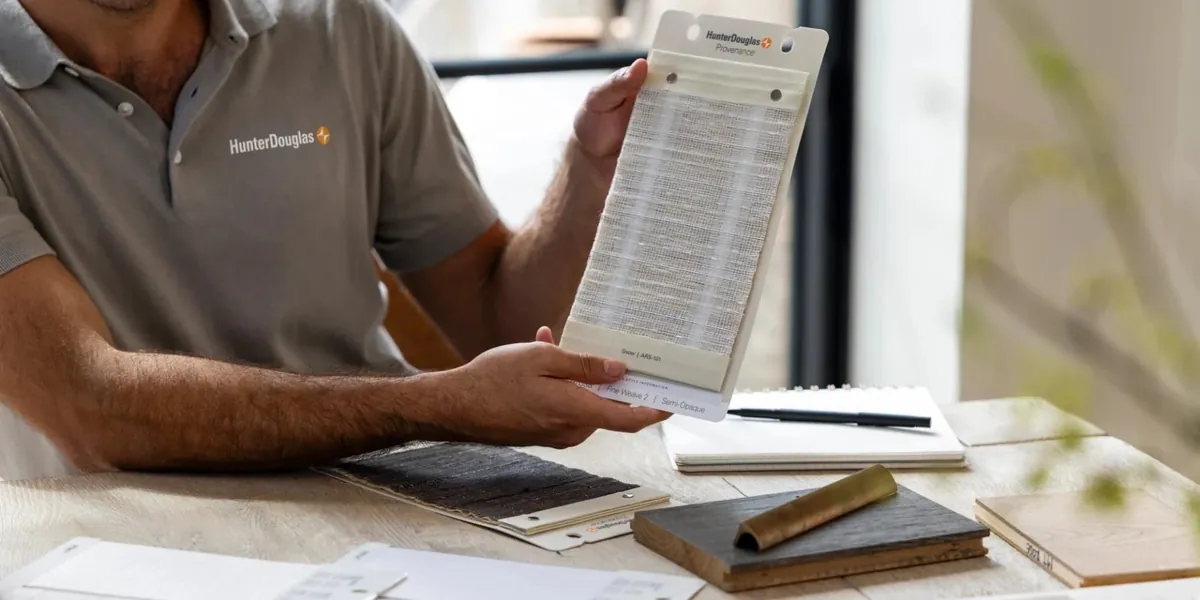
Blinds & Designs is a Hunter Douglas Gallery dealer, and our installers are certified by Hunter Douglas. For a Dedham house that means the full honeycomb range is open to you, every Duette and Applause fabric along with PowerView motors, chosen and fitted by the same company.
We carry Hunter Douglas blinds, shutters, roller and roman shades and drapery as well, so a whole house can be planned in one visit. A formal dining room in the village might suit plantation shutters in Dedham, and a family room might want roller shades in Dedham. Everything we offer in town is on our Dedham page.
If you would rather see Hunter Douglas products in person before the visit, our nearest showroom is in Franklin. The Franklin showroom page has the details.
Questions from Dedham
Can honeycomb shades go inside the old sash frames in Dedham Village?
Often, yes. It depends on how much depth the frame has and whether pulleys, weights or stops sit in the way. We measure each window at several points and recommend an outside mount on any opening where an inside mount would be too tight.
Will the front of my house look uneven with different shades in each room?
Not if the street-facing windows share one color. Keeping the front rooms in a single soft neutral makes the house look consistent from the sidewalk, and the rooms at the back can take any color you like.
What about the bay windows in an Oakdale Victorian?
Each face of the bay gets its own shade, made to that panel’s width and hung at the same height as its neighbors. Raised together, the bay reads as one window.
Do cellular shades suit a post-war cape as well as an antique house?
They do. Standard openings make the order simple, and the honeycomb cells are useful in cape bedrooms under the roof, which tend to run cold in winter and warm in summer.
What does the estimate cost?
Nothing. After we measure, you get a free estimate for the shades you are considering, with no pressure to decide that day.
Book a visit for your Dedham house
Whether it is a village colonial with tall old sash or a ranch near Riverdale, the right cellular shades in Dedham, MA, are easiest to pick with the fabric in your hand at your own window. Request a consultation and we will bring the honeycomb samples to you, measure each opening and leave you with a free estimate. A question first is welcome too: the call button reaches us directly.