
Old sash, open land
East Bridgewater is a town of space. The antique colonials and farmhouses sit on larger lots, some well back from the road, with plenty of open ground between one house and the next. In the older houses the windows are small and set deep into thick walls, the kind of sash that frames a view like a picture. Closer to Route 18 and Central Street, post-war capes and newer colonials bring standard openings and a more familiar layout. When we plan plantation shutters in East Bridgewater, MA, we are usually working with one of those two kinds of house, and the plan for each is quite different.
What they share is low density. Privacy from the neighbors is rarely the first concern here, the way it is in a city. Instead, the questions are about light: how much to let in, from which direction and at what time of day, and how to make a small antique window feel generous rather than dim.
We start every plan with an in-home consultation, because a sample only makes sense set into your own deep sill, with your own field or tree line outside.
Two eras of house, two kinds of window
Most East Bridgewater homes we see fall on one side or the other of a line between old and new. Each card is one of the window types we meet most.
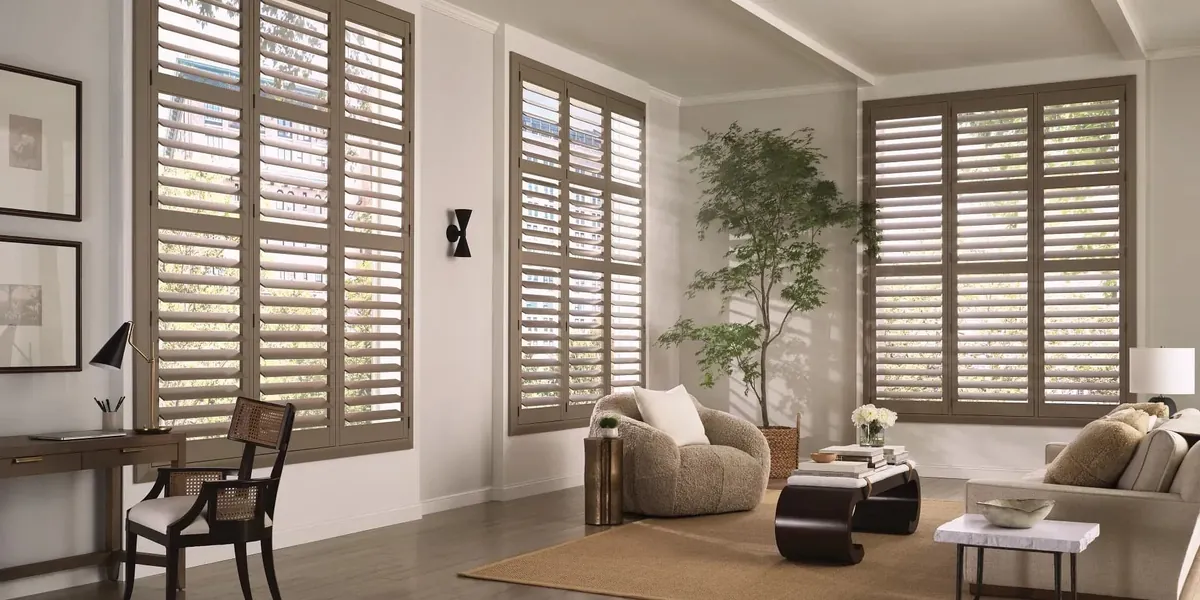
Deep-set antique sash
Small panes in thick walls, with a wide sill and a deep reveal. The shutter has to suit the depth as much as the width.
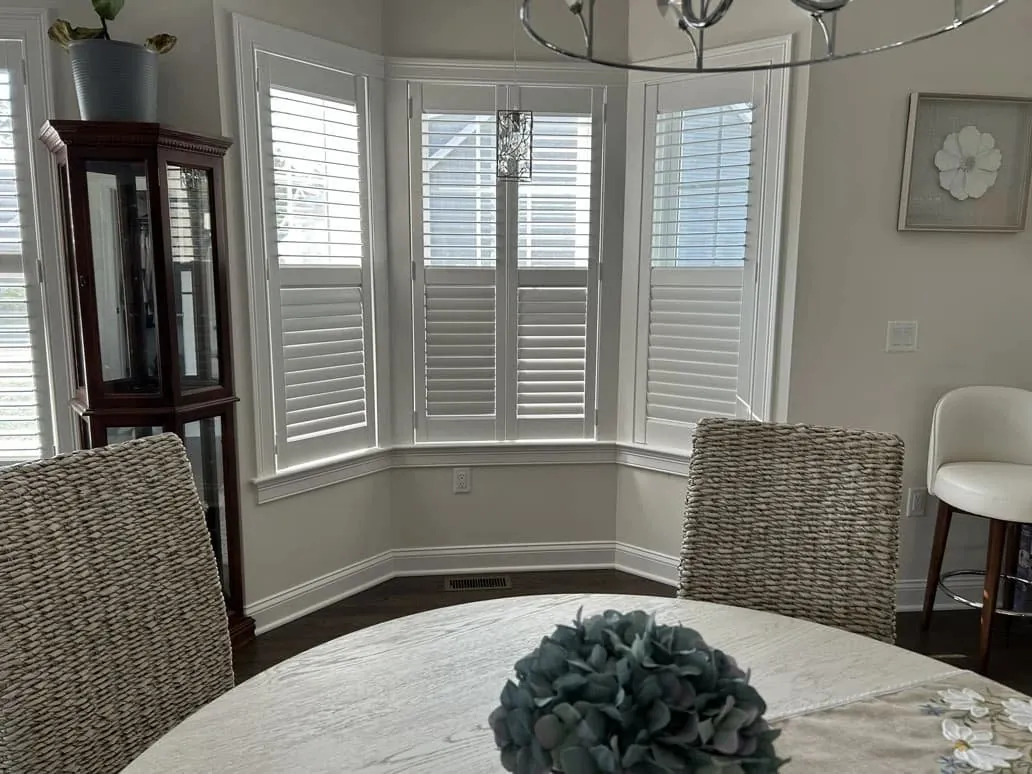
Farmhouse rooms with windows on several sides
Kitchens and keeping rooms that take light from more than one direction, where louvers help balance the day.
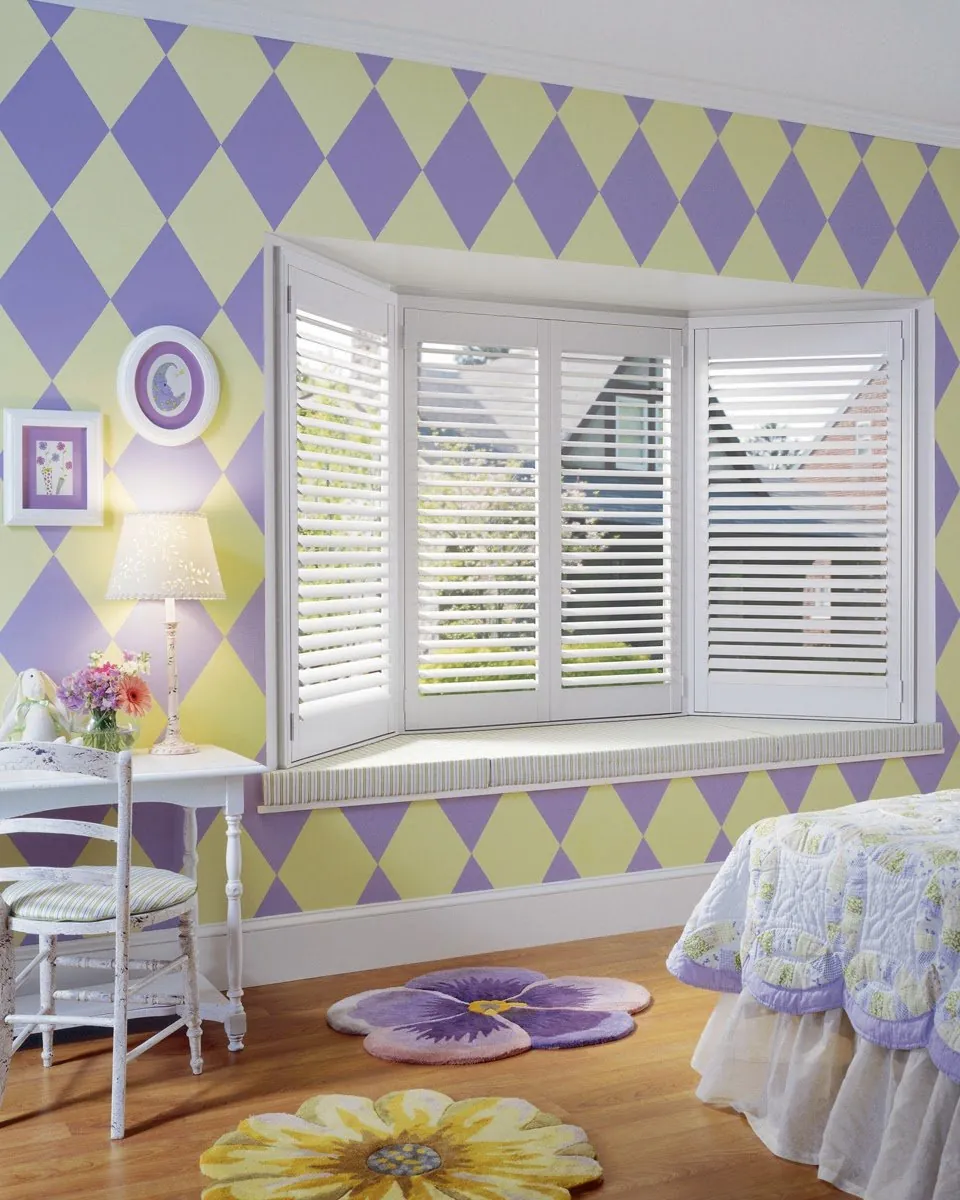
Standard openings near Route 18
Capes and newer colonials off Route 18 and Central Street, where regular windows make a whole-house look simple.
Why deep-set sash needs a careful plan
In an antique colonial or farmhouse, the walls are thick and the windows sit back inside them. From inside, each window is a small box: a deep reveal on either side, a wide sill at the bottom and a head above, all trimmed in old woodwork. It is one of the most attractive features of an old house, and any window covering should respect it.
How a shutter relates to that box is the first question. The depth of the opening, how square it still is after many years, and how the original casing is shaped all affect where the panels and frame should sit. We look closely at each opening and measure it individually, because in an antique house no two windows are quite the same, even on the same wall. For background on fitting old openings, see shutters for older windows.
The other consideration is size. Small sash means small panels, and small panels look best with a narrower blade. Put a broad louver on a little antique window and the panel ends up with just a handful of blades, which tends to look clumsy. A narrow louver gives a finer rhythm that suits the old glass and the detailed trim.
Light, not privacy, on a larger lot
With so much space between the houses, few East Bridgewater windows look directly into a neighbor’s. That changes what a shutter is for. In a dense town, the louvers spend much of their time tilted for privacy. Here, they spend it managing light.
Small, deep-set windows already let in less light than a modern window of the same size, because the reveal shades the glass for part of the day. Shutters that can fold fully back out of the opening leave all of that light free to come in. When the sun is low and strong, often in the morning on the east side and the evening on the west, tilting the louvers partly closed softens it without shutting the room in.
In the evening, the question of privacy does return. A lit room is visible from the road even at a distance, especially on a dark country lane. Closing the louvers at night gives the house a quiet, closed-up feeling without heavy curtains.
Farmhouse kitchens and keeping rooms
Old farmhouses often have a large kitchen or keeping room at the back, with windows on two or three sides. That arrangement brings in light all day, but it also means one window or another is catching direct sun at almost any hour.
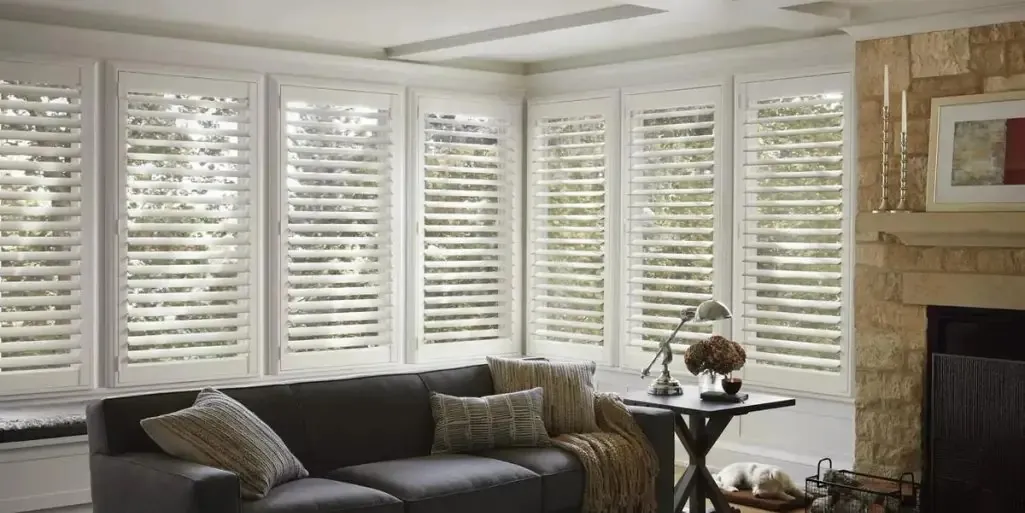
Shutters suit these rooms well because each window can be set differently. In the morning, the east windows might be angled while the south and west windows stand open. By late afternoon, the reverse. Over a sink or a work counter, a shutter on just the lower part of the window, the cafe style in our own portfolio photos, keeps the work surface shaded while the upper panes stay open to the sky.
For plantation shutters in East Bridgewater, MA, in a farmhouse kitchen, we usually suggest the same finish and blade width on every window in the room, so the room reads as one space even when the panels are set at different angles.
Antique colonials and the street face
An antique colonial has a strong, formal front: a central door, windows arranged symmetrically on either side and the same arrangement repeated upstairs. Even set back from the road, that symmetry is what you see first.
Matching shutters on every front window support it. When the front windows all share a finish and blade width, the facade looks orderly and complete, and the small antique panes read as a deliberate pattern rather than a scatter of openings. If the front rooms are formal parlors, a soft white or another quiet finish that sits well with the old trim usually suits them best.
Inside, the front rooms of an old colonial are often smaller than you expect, with low ceilings and several windows. Shutters in those rooms help them feel finished, and the ability to fold the panels back fully keeps them bright.
The center hall deserves a look too. Many antique colonials have a narrow window or two beside the front door, or a small pane above it, letting light into the hall and the foot of the stairs. Those openings are often the smallest in the house and the easiest to overlook. A slim shutter beside the door, matched to the parlor windows on either side, completes the symmetry from the road and keeps the hall private after dark without taking away its daylight.
Upstairs under low ceilings
Climb the stairs in an antique colonial and the rooms get smaller and the ceilings lower. The bedrooms on the second floor often have two small windows each, sometimes set close to the floor, sometimes tucked under the eaves. Their sills are deep because the walls are thick.
Those windows ask for restraint. A heavy covering makes a low-ceilinged bedroom feel cramped, while a shutter sized to the opening, in a finish close to the trim, all but disappears into the woodwork when the panels are open. With the louvers shut, the room settles down for the night. For plantation shutters in East Bridgewater, MA, on an antique second floor, the narrower blade and a light finish nearly always look most at home, though we hold up both sizes so you can judge for yourself.
Because these bedrooms sit at the corners of the house, many have windows on two walls. Matching both walls keeps the room calm, even if one side faces the morning sun and the other faces the road.
Sun across open ground
On a larger lot with little to block it, the sun reaches a house from more directions and for longer than it does on a crowded street. There is no house across the way to shade the front windows in the afternoon, and no tall neighbor to cut off the morning light at the back.
That openness is part of the appeal of the town, and shutters let you enjoy it on your terms. On the east side, louvers tilted partly closed take the edge off early sun in a bedroom without blacking out the day. On the west side, the same tilt keeps late light off the dinner table or the television. On the north side, where the light is gentle all day, the panels can stay folded back. We look at the orientation of every room during the visit, because on open ground it matters more than in town, and it shapes how plantation shutters in East Bridgewater, MA, are laid out room by room.
Capes and newer colonials off Route 18 and Central Street
Away from the older farms, the housing changes. Post-war capes and newer colonials along the roads off Route 18 and Central Street have standard openings, lighter trim and more regular room layouts. Lots are still generous by suburban standards, but houses are closer together than out in the farmland.
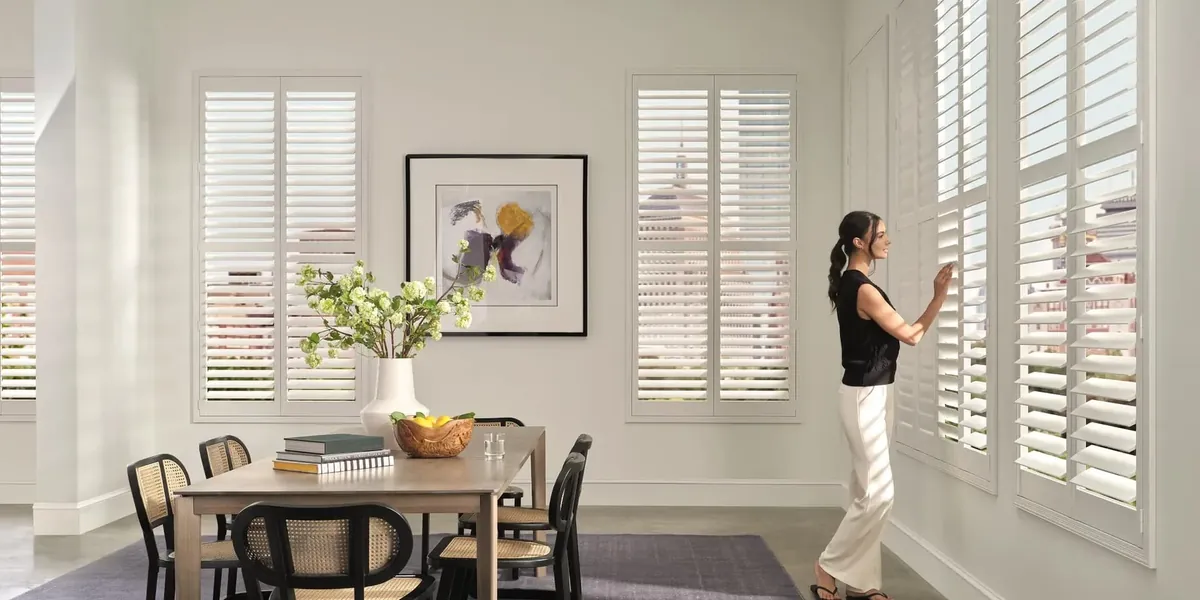
These houses make shutter planning straightforward. With regular windows, one look can run from room to room, and a single blade width and finish can suit the whole house. A middle louver size suits most of these standard openings; a wider blade suits a large living room window.
The capes have dormers upstairs, which are small and deep and suit a shutter fitted within the dormer opening. The newer colonials have two floors of matching windows, where consistency from the road matters, and usually a stair landing window that is easy to forget.
How we plan your windows, start to finish
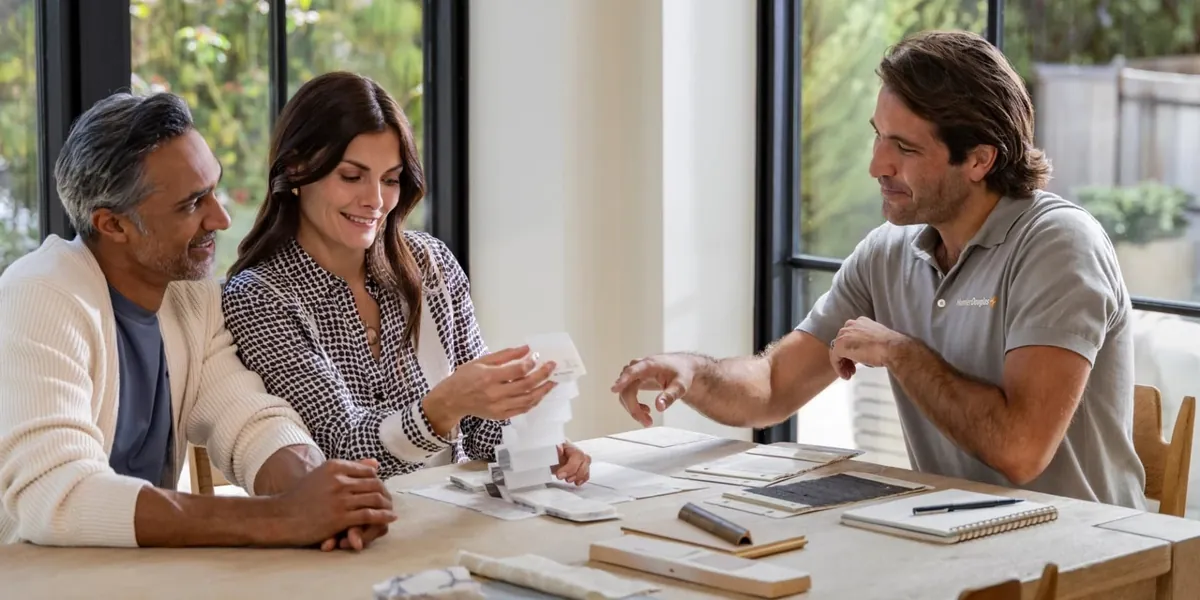
East Bridgewater belongs to the territory our Canton shop-at-home team covers, so the choosing happens under your own roof. A consultant arrives in a sample van and carries the Hunter Douglas range indoors; the Canton shop-at-home page tells you more. Our way of putting it is that we can bring the showroom to you, and that, in a town with farmhouses well back from the road, saves you a long drive and lets you see each sample in your own deep sill.
Here is the order of a typical first visit:
- Pick a date with Request a Consultation, or ring through on the call button.
- Palm Beach, NewStyle and Heritance samples come in from the van.
- We walk the rooms together, noting which way each window faces and how deep each opening is.
- You set samples into the windows and compare blade widths, frames and finishes in your own light.
- Each chosen window is measured.
- A free estimate follows, covering just the windows on your list.
If you like to know what is coming, what happens at an in-home consultation runs through it.
Choosing a frame for old woodwork
The frame is what holds the shutter panels at the window opening, and on an antique house it sits right beside some of the oldest woodwork in the house.
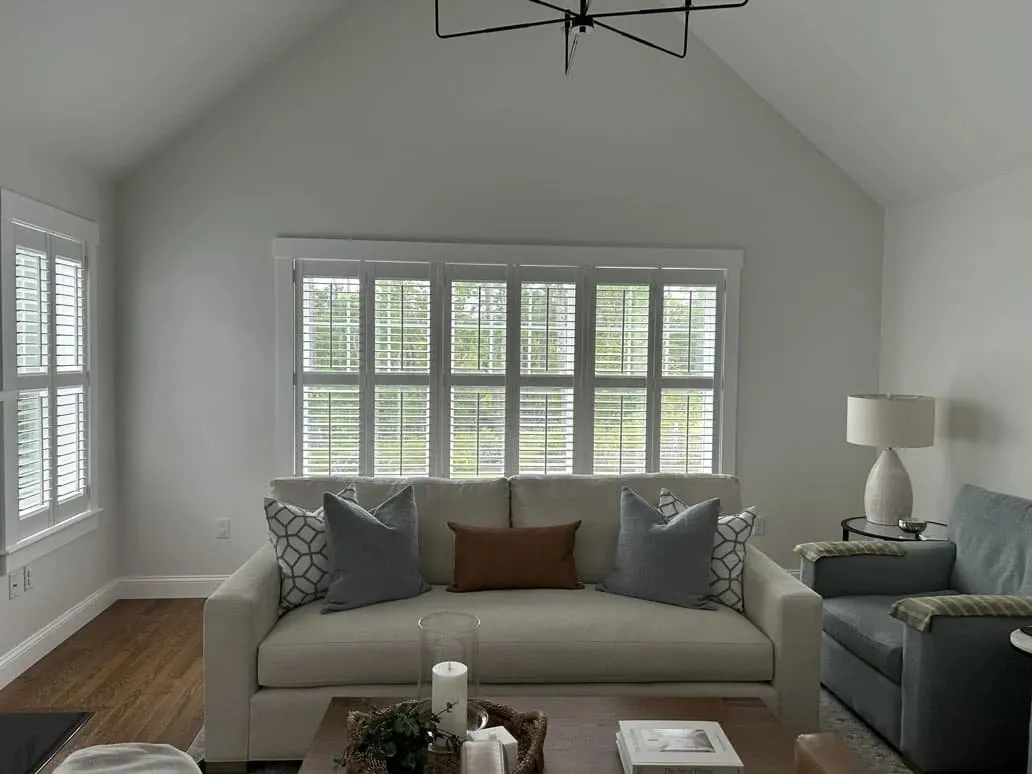
Where the original casing is in good shape and you want it to stay the focus, a slim frame keeps the shutter from competing with it. Where the old trim has been painted over many times, or the opening has moved out of square over the years, a heavier frame profile draws a crisp new line around the window. We compare frame samples against your own trim during the visit, so you can see how each one sits with the woodwork.
In the newer capes and colonials, the trim is usually simple modern casing, and a modest frame is all that is needed.
Finishes that suit an old house
White and soft white are the usual finishes in East Bridgewater, picked to sit beside the trim you already have. Antique woodwork has often mellowed toward cream after so many coats of paint, and a soft white often sits more comfortably beside it than a bright one.
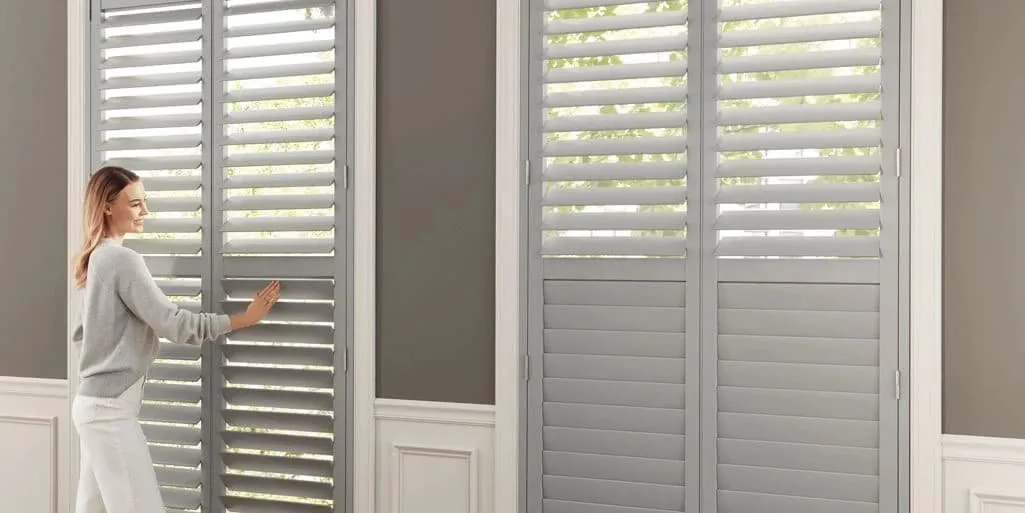
There are other choices. The painted colors in the Hunter Douglas range include grays and taupes that can suit a room with dark walls or a library with built-in shelves. In a farmhouse, where rooms can be more relaxed, a muted color sometimes looks right. We bring finish samples along so you can compare them against your trim in your own light, which in a house with deep-set windows may be softer than you expect.
Palm Beach, NewStyle and Heritance in an old house
All three Hunter Douglas shutter collections come with us on the visit: Palm Beach, NewStyle and Heritance. We set samples of each in your windows, so you can compare them in the rooms where they would hang.
In an antique house, you may want one collection for the formal front rooms and another for the kitchen, a bathroom or a mudroom. In a newer cape or colonial, a single collection throughout is often the simplest choice. Either way, keeping the finish and blade width consistent where rooms open onto each other helps the house feel unified. An overview of the range sits on our plantation shutters page.
Rooms that might suit something else
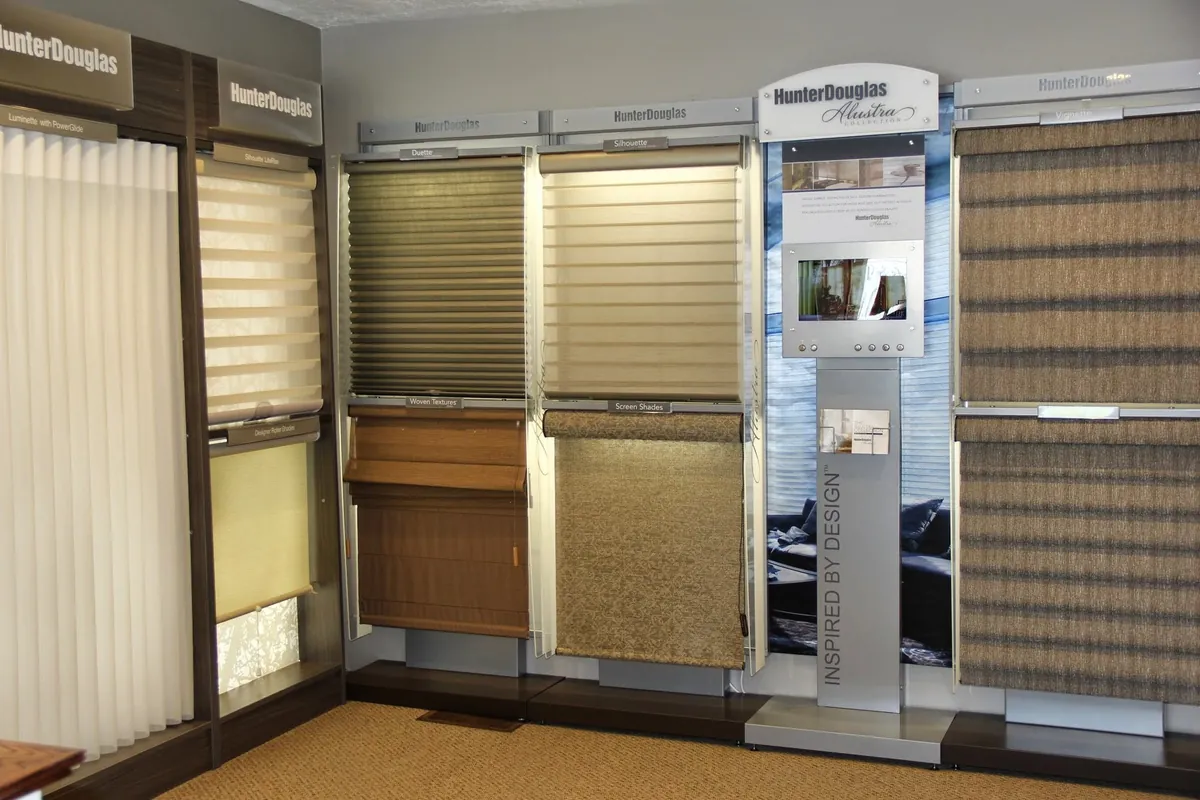
Old houses rarely want one covering everywhere. An upstairs bedroom under the eaves may sleep better behind cellular shades in East Bridgewater, and a big family room window can take roman shades happily. The consultant can mix and match on the same visit, and the East Bridgewater page gathers all our services in town.
Hunter Douglas Gallery dealer, certified installation
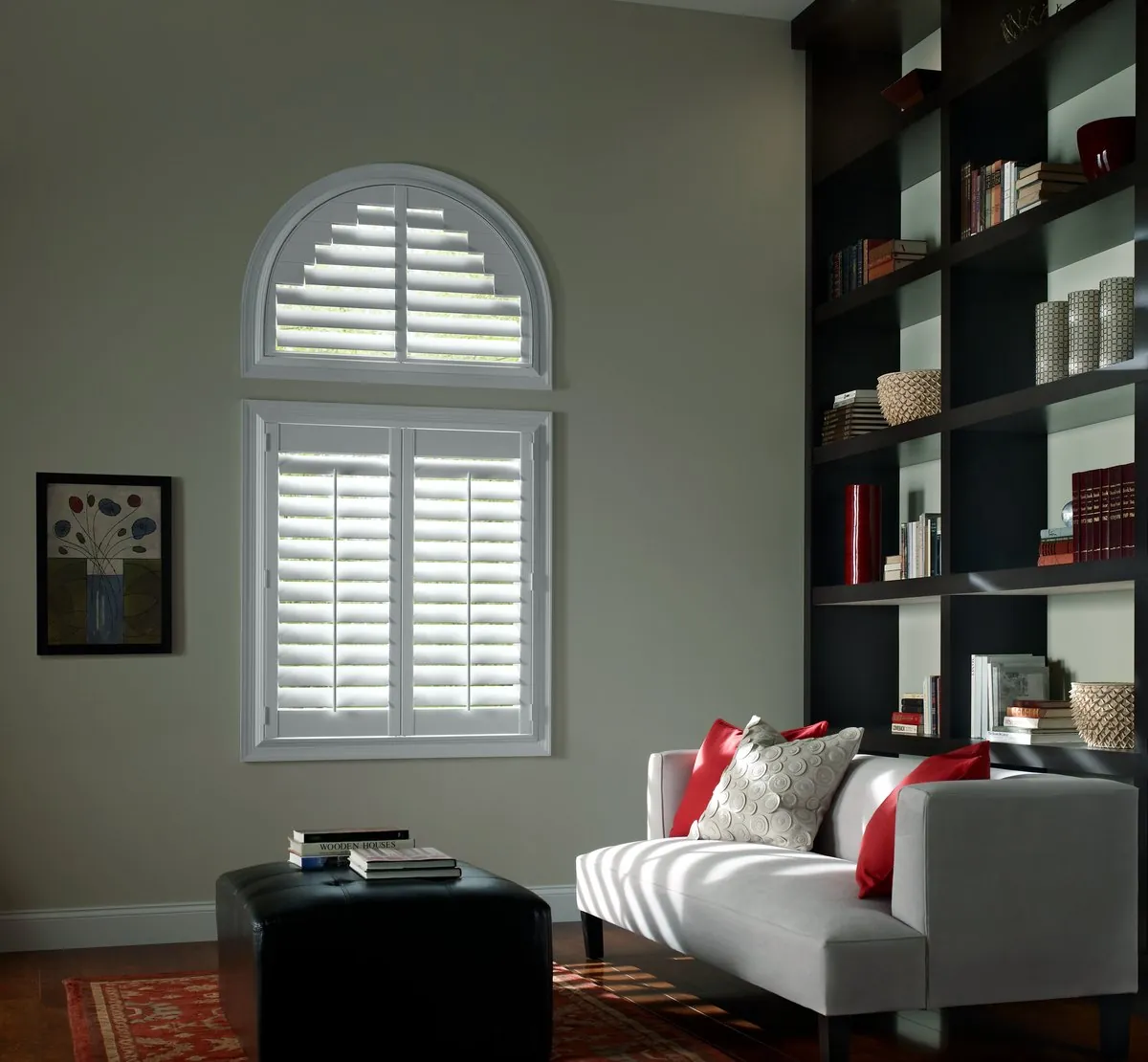
As a Hunter Douglas Gallery dealer, Blinds & Designs puts every East Bridgewater shutter in through certified Hunter Douglas installation. In thick-walled antique openings that have shifted over the years, that standard of fitting counts.
Choosing at home is the normal route here. For anyone who wants a showroom trip as well, the closest are Franklin and North Dartmouth. The same team takes on interior design consultations, mends blinds and shades you already own, and sets up window covering automation.
Questions from East Bridgewater
My antique house has small, deep-set windows. Can they take shutters?
Yes. We measure each opening individually and plan the panels and frame around its depth and shape. A narrower blade usually suits small antique sash best.
My house is set well back from the road. Do I still need privacy?
During the day, often not, and the panels can fold fully back to let the light in. At night, closing the louvers keeps a lit room from being on view from the road.
Can I use different shutters in the old part of the house and the newer addition?
Yes. Many old houses have rooms from different eras. We can vary the collection while keeping the finish and blade width consistent where the rooms connect.
Which showroom is nearest to East Bridgewater?
Franklin and North Dartmouth are the nearest. You can also choose without leaving home, because our Canton shop-at-home team brings samples to the house.
Is there a charge for the estimate?
None. Estimates are free, worked out once the windows you picked have been measured.
A small window, a deep sill, a time that suits you
Pick the antique window you love most, or the one that frustrates you most, and tell us about it when you book. That is where the samples go first, set right into the deep sill so you can see how each one sits with the old woodwork and the view outside. Whether your house is a farmhouse well back from the road or a newer colonial near Central Street, plantation shutters in East Bridgewater, MA, get worked out one room at a time, and a free estimate follows. Request a Consultation is below; the call button works too if something needs answering first.