
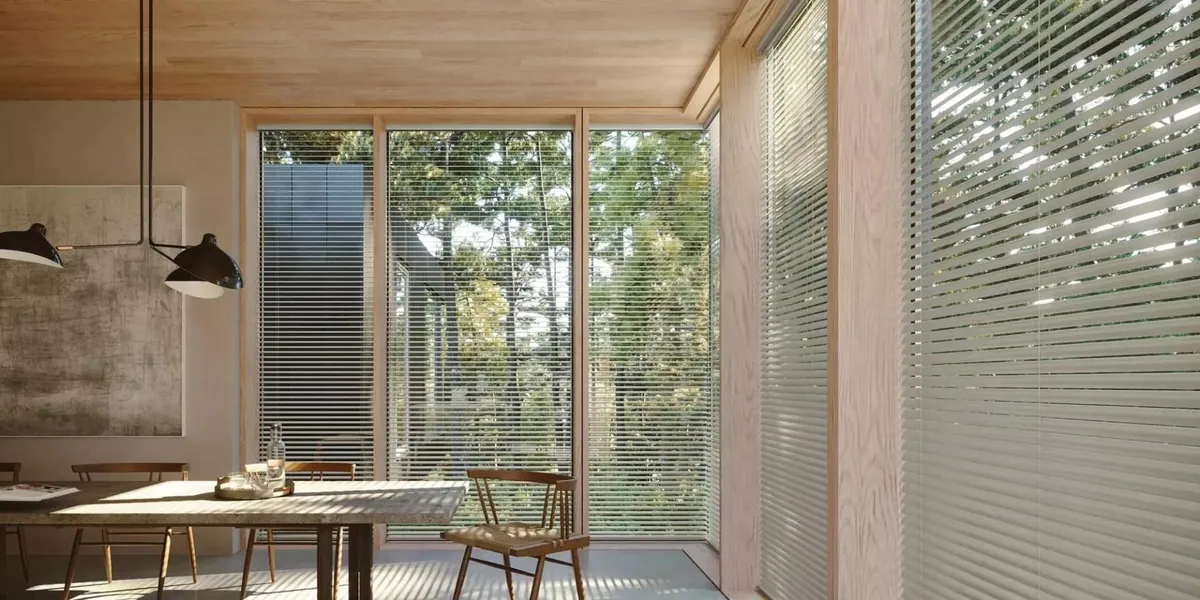
Hard light and tall glass on the outer Cape
Orleans is where the Cape turns north, and the light changes with it. Out here the sun comes in hard and direct, with little haze to soften it, and it bounces off the bays and the marsh on its way through the glass. Near the village center, antique capes sit low and solid with small windows set into their walls. Out toward Nauset and Pleasant Bay, the newer houses take the opposite approach, with bay-facing glass that often runs from floor to ceiling. Fitting custom blinds in Orleans, MA means handling both extremes.
Much of the town is seasonal. Houses open up for the summer and close again in the autumn, and whatever is on the windows has to cope with months of strong sun on empty rooms as well as the busy weeks when the house is full.
The tall glass is the big question in the newer houses. A blind for a window that runs to the floor has to be planned for its size and weight, for how it lifts, and for how it looks when the room is open to the view.
Blinds for Orleans houses, old and new
All of our blinds come from the Hunter Douglas range and are built to the measurements we take at your windows. For custom blinds in Orleans, these three choices cover most rooms, and we carry samples of each to the house.
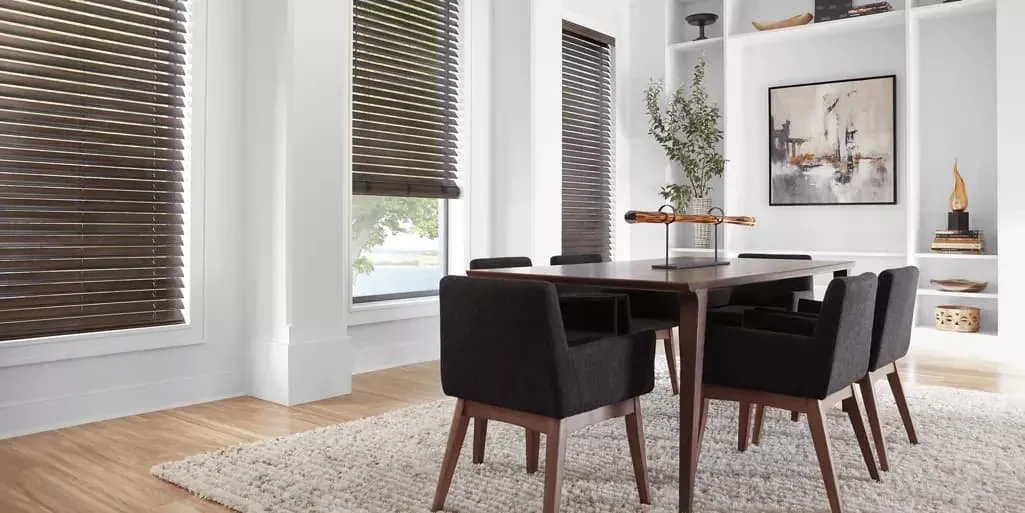
Wood for the antique capes
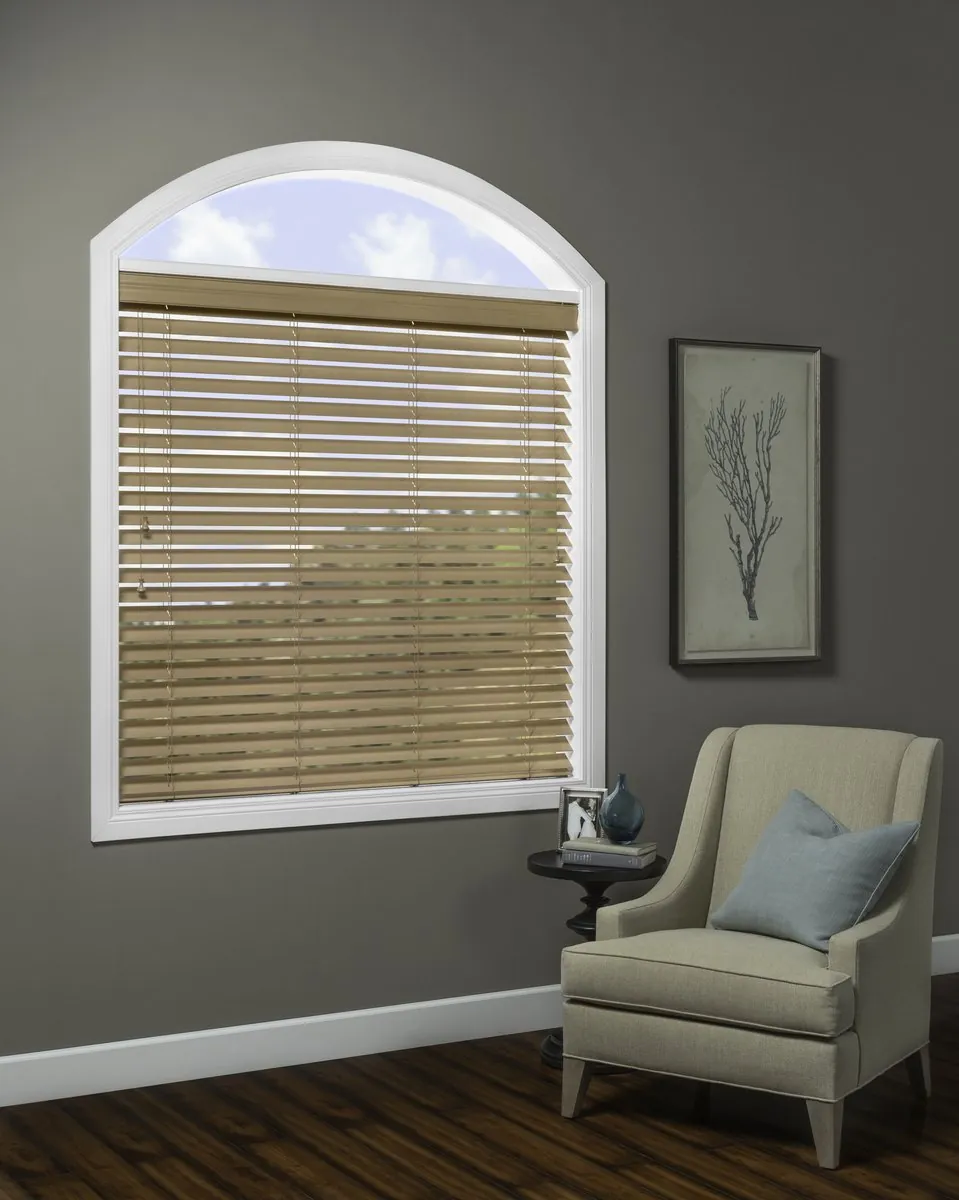
Stained or painted wood slats that belong with old pine floors, low ceilings and a center chimney. Light enough to lift easily, warm enough for a period room.
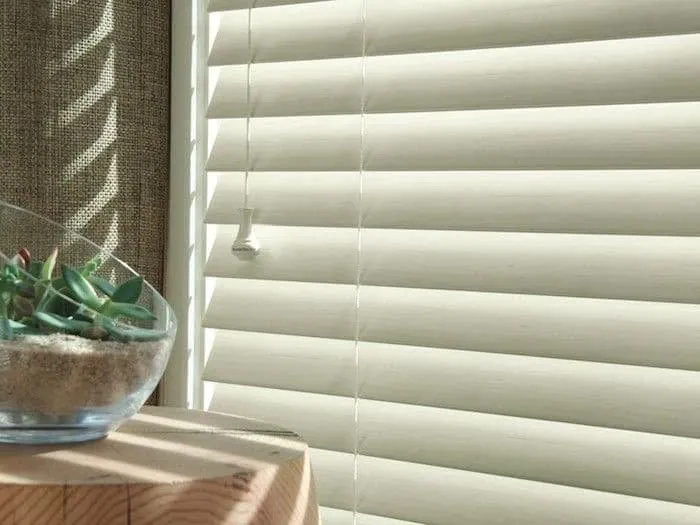
Faux wood for the seasonal house
Painted-wood looks in a material that copes with a damp, closed house over the winter and with bathrooms and kitchens all year.
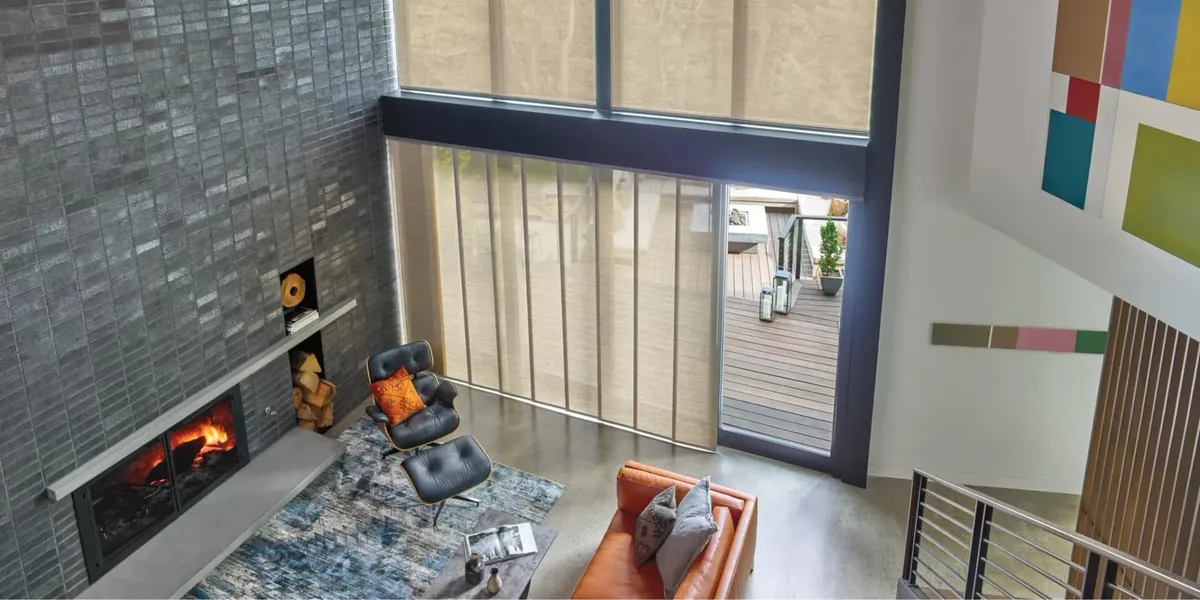
Gliding panels for the tallest glass
Wide fabric panels that slide across on a track and stack to the side, for floor-to-ceiling glass and sliders facing the bay.
Floor-to-ceiling glass toward the bay
The newer houses near Pleasant Bay and out toward Nauset were designed to bring the outside in. Living rooms open onto decks through wide sliders, and the glass beside them often runs the full height of the wall. The view is the reason the house was built that way, so any window covering has to be able to get almost entirely out of the way.
Tall glass suits a few approaches. Horizontal blinds can work on a tall window, but they are heavier the longer they get, and the stack at the top grows with the length of the blind. Splitting a tall window into two blinds stacked one above the other, or choosing a lighter material such as aluminum or real wood, keeps them manageable. On the sliders and the tallest openings, vertical blinds or gliding panels are often the better fit: they move sideways rather than up, stack neatly at one end, and leave the whole height of the glass clear when they are open.
On the widest walls, several blinds side by side give you control over each section, so you can shade the glass that is catching the sun and leave the rest open to the water.
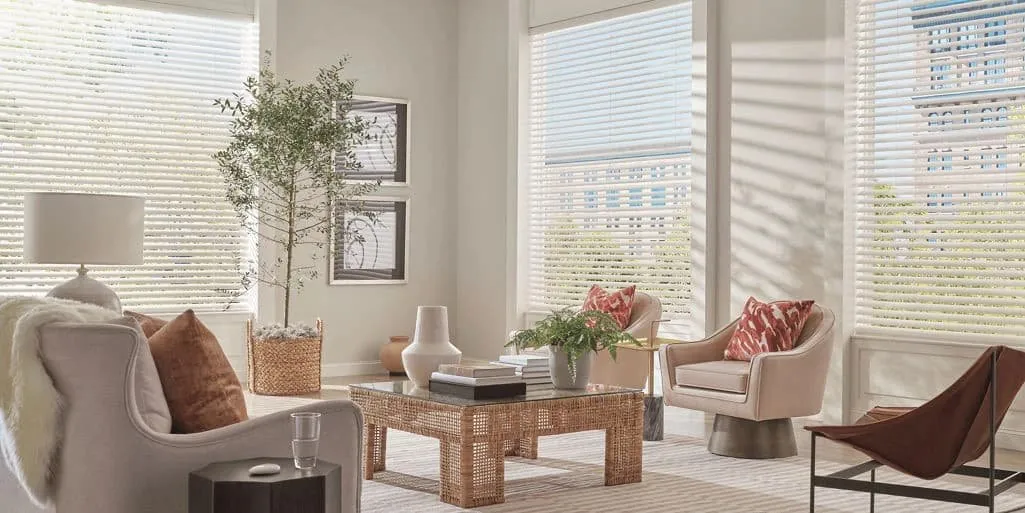
Why the outer Cape light is different
Further up the Cape the land narrows and the water closes in on both sides. The air is clearer, and the sun comes through it with a sharpness the inland towns rarely see. On a bright day it throws hard-edged shadows across a floor and lights up every surface it reaches.
That light is lovely in a room with a view, and hard on what is inside. Floors, rugs, upholstery and artwork in a room facing the bay take it day after day, and over a few summers the colors fade. A seasonal house is especially exposed, because the rooms can sit in full sun through the spring and autumn with nobody there.
Blinds give you plenty of ways to manage it. Tilt the slats upward and the direct beam goes to the ceiling, lighting the room without striking the furniture. Close them and the room drops into soft shade. Choose a lighter slat and the room stays airy even when the blinds are shut. Our guide on choosing fabric for a sunny room has more on sun and color.
Antique capes near the village center
Around the village center the oldest houses are capes: low, broad and symmetrical, with a door in the middle and a pair of windows on either side. The windows are small, the walls are thick, and the rooms behind them can be quite dim, especially on the side away from the sun.
In rooms like that, you want a blind that gives every bit of glass back when it is raised. A compact headrail and a narrow slat keep the stack small at the top of a short window. Inside-mounted in a deep old frame, the blind can disappear almost completely into the opening, leaving the trim and the sill clear.
The frames themselves need care. Old capes have settled over their lifetimes, and their openings drift out of square. We measure each one at several points and make an inside-mounted blind to the narrowest, so it moves freely without leaving a wedge of light at one side. Where a frame is too far out, a blind mounted on the casing hangs straight and hides the irregularity. Upstairs, under the roof, the small windows in the gable ends suit slim aluminum blinds that fit the tight space.
The capes’ kitchen ells and back rooms
Behind the front rooms of an old village cape there is usually a kitchen ell or a run of back rooms added in later years. Those rooms tend to have plainer, more modern windows, sometimes a slider to a garden, and a different light from the front of the house. They are also where the steam and the washing up happen.
For the windows over a sink or a tub, faux wood is the sensible choice: it keeps the painted-wood look that suits an old house and does not mind getting wet. In a back sitting room that opens to the garden, real wood in the same color as the front rooms keeps the house consistent. A slider at the back takes vertical blinds that draw aside cleanly. Planned this way, custom blinds in Orleans capes look like one set from the front door to the back step, even though the material changes where the water is.
Privacy on the road side
Many of the newer houses near the bays put all their glass on the water and keep the road side plain, with small windows in bathrooms, halls and bedrooms. Those windows are where privacy matters most. A blind tilted with the curved side of its slats facing into the room hides the interior from the road while still letting light in above. For a bathroom, faux wood in a soft white is a tidy, practical choice. Getting the road side right is as much a part of custom blinds in Orleans, MA as dressing the big glass.
Seasonal houses: opening up and closing down
When a house in Orleans is shut for the off-season, its blinds become its caretakers. A few habits help them do the job well.
- Close every blind on the sunny side before you leave. Rooms facing the bay take strong light even in winter, and a closed blind keeps it off the floors and furniture.
- Choose faux wood for any room that gets damp. Kitchens, baths and rooms on the shaded side of the house can turn cool and moist when the heat is low, and faux wood keeps its shape.
- Think about how the house looks from the road. Blinds lowered to an even height make the house look cared for rather than empty.
- Consider a schedule. With PowerView motorization the blinds can open and close on their own while you are away. More on that below.
When you open up in late spring, a wipe with a damp cloth is usually all the slats need, and a quick tilt and lift on each blind tells you everything is moving as it should before the first guests arrive.
Newer houses out toward Nauset
The newer houses toward Nauset tend to have bigger rooms, higher ceilings and more glass than the capes in the village. A great room might have a vaulted ceiling, a tall window wall, and smaller windows set high in the gable. Bedrooms may open onto their own deck.
Fitting blinds in a house like that is a matter of planning for scale. Large, regular windows take generous slats and look best with consistent color throughout. Sliders and the tall glass beside them suit vertical blinds or gliding panels. High gable windows are out of reach for anyone without a ladder, and they are the obvious place for motorization. Bedrooms that face the morning sun do well with deeper-colored slats that close tight.
The frames in newer houses are square and deep, so inside mounts are usually straightforward and every blind can sit neatly within its opening.
Lifting a tall or heavy blind
The bigger a blind gets, the more thought goes into how it lifts. A long horizontal blind carries a lot of slats, and on a tall window that is real weight to raise.
There are several ways to make it easy. Cordless lifting lets you raise and lower the blind by the bottom rail, with no cord to pull and no cord lock hanging at the side. Real wood and aluminum are lighter than faux wood, which matters on the tallest windows. Splitting one tall opening into two blinds halves the weight of each. And on the tallest glass of all, vertical blinds and gliding panels move sideways, so there is nothing to lift at all.
We look at each tall window with you, talk through how often you will raise it, and suggest the combination of material, size and control that will be easiest to live with.
PowerView for the high and the hard to reach
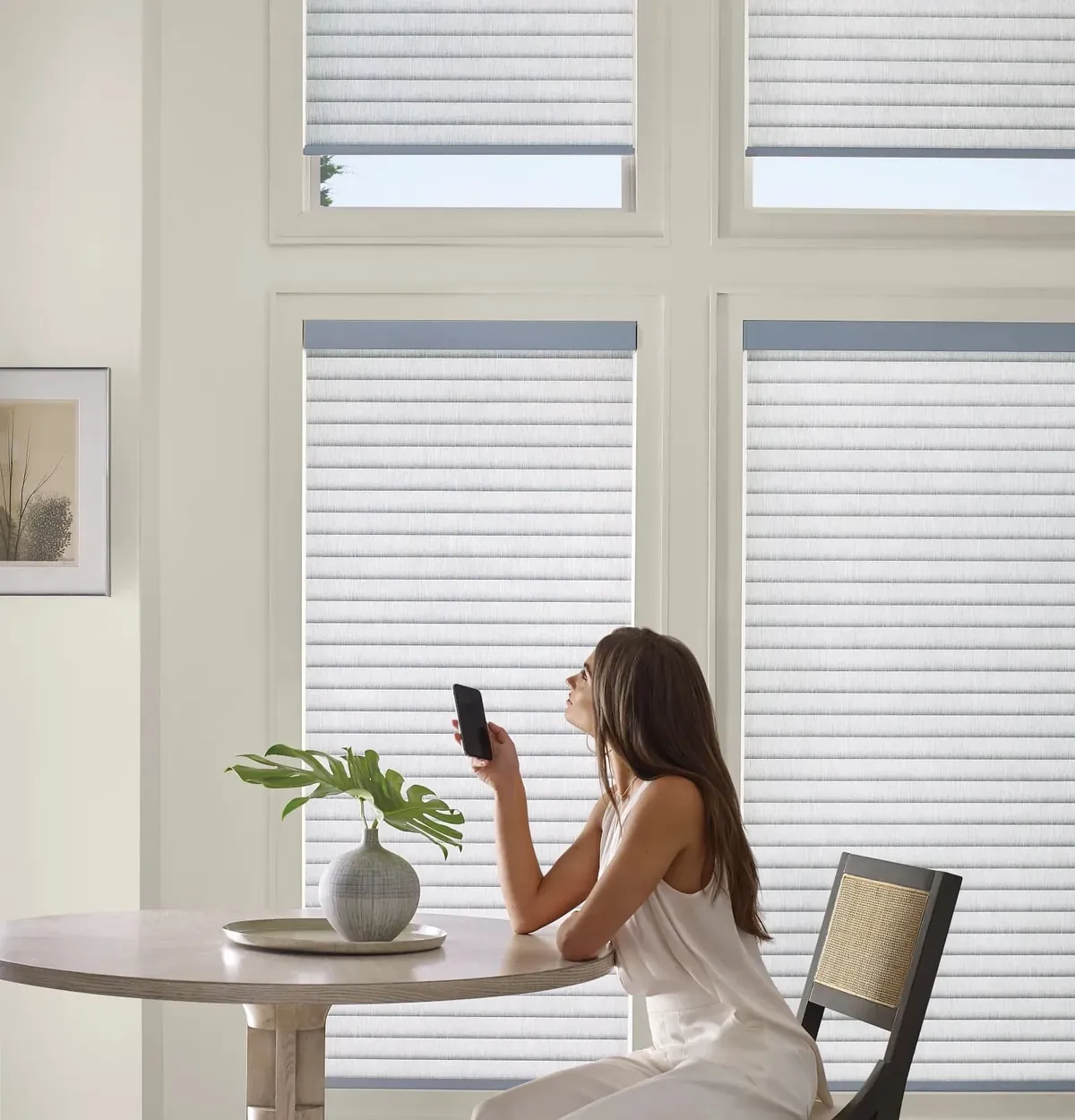
Hunter Douglas PowerView motorization lets your blinds tilt and lift from a remote or from an app on your phone. It is especially useful in the newer Orleans houses, with their high gable windows and tall glass walls, and in seasonal houses that sit empty for weeks at a time.
You can set blinds to close as the strong midday sun reaches the bay-facing rooms and open again in the evening, so the furniture is protected even when nobody is home. We cover how each motor is powered and where controls go during the visit. Our page on motorized blinds in Orleans goes further.
Before we visit
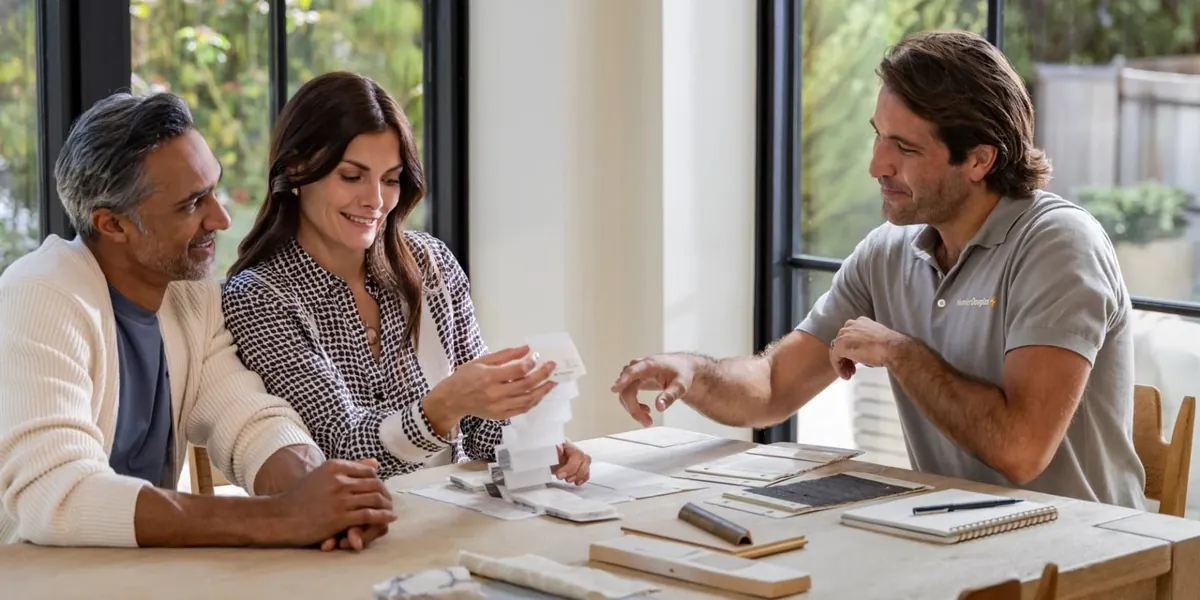
Our vans carry samples of every material, so we can bring the showroom to you. A little thought beforehand makes the visit more useful. It helps to know:
- which rooms get the strongest sun, and at what time of day
- which windows you open most in summer
- whether the house is closed for part of the year
- any rooms where privacy matters more than light
- whether you want the same color throughout or a different look in some rooms
At the visit we go through the house with you, hold samples up at your own windows, and talk about each room in turn. In the capes we look at depth and proportion; in the newer houses, scale and weight. Then we measure. Before we leave, you have a free estimate for the blinds you are considering, with no pressure to decide that day. Interior design consultations can be added if you want help with color or with how blinds work beside other window treatments. Our page on what happens at an in-home consultation explains more.
How the blinds are measured and fitted
- Each width is taken at the top, middle and bottom of the opening, and inside-mounted blinds are made to the narrowest.
- Heights are taken on both sides and in the center, and frame depth is checked against the headrail.
- Mounts, materials, colors and controls are agreed window by window before anything is ordered.
- When the order comes in, our certified Hunter Douglas installers fix each bracket into sound framing, level the blinds, check every tilt and lift, and walk you through the controls.
That way custom blinds in Orleans houses sit straight in a settled cape and carry their length well on tall glass. See what happens on installation day for more.
Finishes and colors
The hard light of the outer Cape shows color honestly, so it is worth choosing finishes in it. Whites and soft creams sit quietly behind the small panes of an antique cape and look tidy from the street. Pale woods and grays suit the newer houses, where they echo weathered shingle and the dunes. Darker stains bring warmth to a study or a dining room and dim a bedroom well.
Lighter finishes also handle strong sun better over time on windows that face the bay. We bring a range of each and hold them against your trim, so you see them in your own light rather than under shop lighting.
For each material in depth, see our wood blinds, EverWood, vertical blinds and Skyline gliding panels pages, or the main custom blinds page.
Our nearest showroom: Sagamore
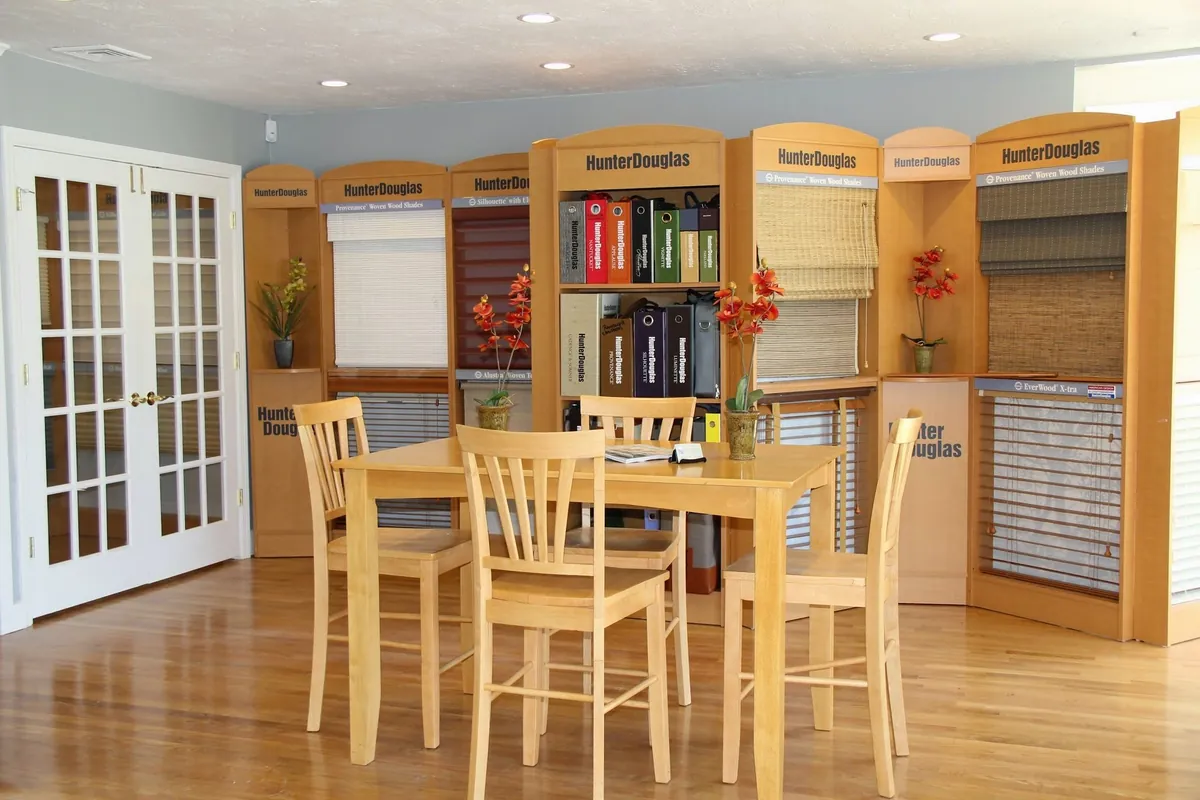
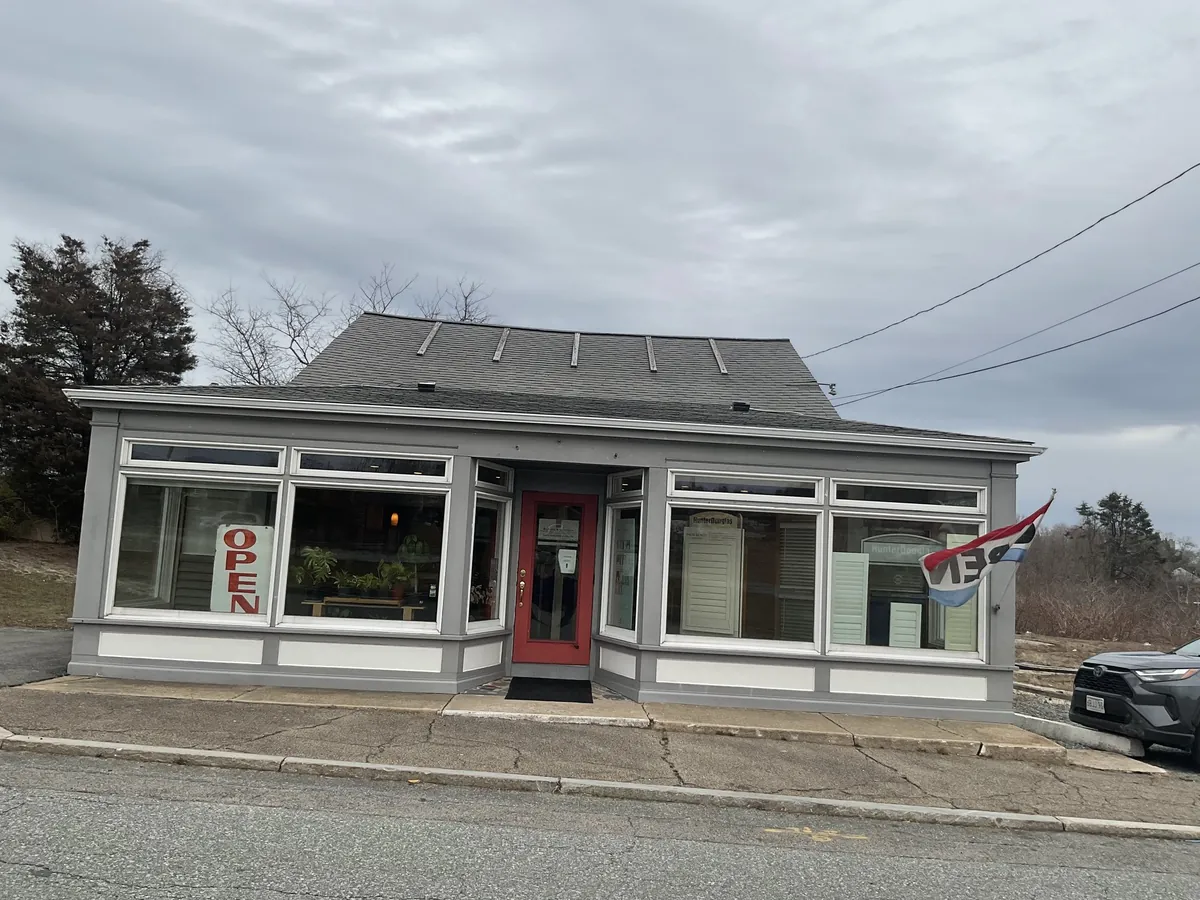
The Sagamore showroom, by the canal, is our nearest to Orleans if you would like to see blinds in person before we come to you.
Blinds & Designs is a Hunter Douglas Gallery dealer, the brand’s designation for dealers who meet its standards. That gives you the full Hunter Douglas range of blinds, plus shades, shutters and drapery for rooms where something else suits better. Our installers are certified by Hunter Douglas, and we repair blinds and shades you already own through our blind and shade repair service.
For other rooms, look at cellular shades in Orleans or plantation shutters in Orleans, or see everything we do in town on our Orleans page.
Questions from Orleans
What works on floor-to-ceiling glass facing the bay?
Vertical blinds or gliding panels are often best, because they move sideways and leave the whole height of the glass clear. Horizontal blinds work too if the window is split into sections or a lighter material is chosen.
My antique cape is quite dark. Will blinds make it darker?
Not when they are up. A compact headrail and narrow slat leave nearly all the glass clear, and tilting the slats upward sends daylight onto the ceiling.
How do I protect the furniture while the house is closed?
Close the blinds on the sunny side before you leave, or set a PowerView schedule to do it for you.
Are long blinds hard to lift?
They can be, which is why we suggest cordless lifting, lighter materials or splitting a tall window into two blinds. On the tallest glass, verticals or gliding panels avoid lifting altogether.
Is there a charge for the estimate?
No. Once every window is measured, the estimate for the blinds you are considering is free.
Your next step
The hard Orleans light is the best place to judge a blind. Request a consultation and we will bring samples to your windows, measure each one and leave you a free estimate. Or use the call button to reach the Sagamore showroom and arrange a visit.