
Big openings without the fuss
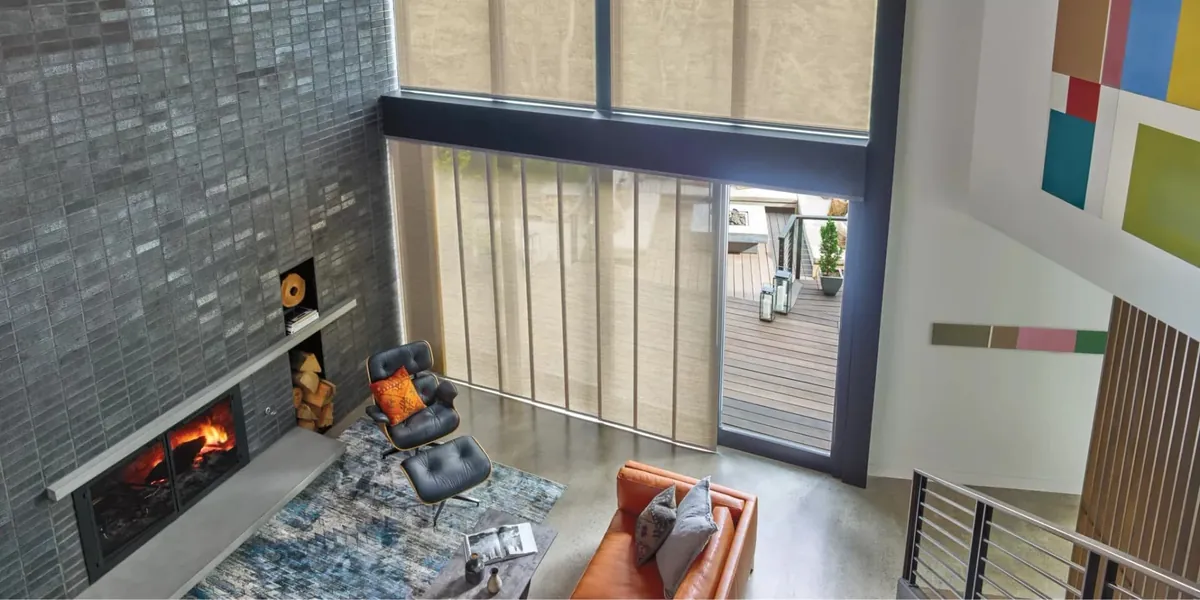
Skyline gliding panels suit the widest glass in the houses we visit from our North Dartmouth showroom. The ranches off Faunce Corner Road and Slocum Road often pair a slider with a long picture window, and a run of flat fabric panels can cover both in one clean line. Family rooms added onto Padanaram colonials and shingled capes often have glass doors to the garden that need something lighter than drapery.
In South Dartmouth, rooms that face Apponagansett Bay may have whole walls of windows taking hard afternoon glare. Panels that slide across in seconds let you block the low sun and then stack them away to get the view back. Even out toward Russells Mills, where the farmhouses keep their deep nineteenth-century sash at the front, a back room with a newer slider is a natural place for panels.
Planning a set of panels
Skyline is made to order, and three choices decide how it looks and works in the room.

The fabric
Panels come in the same families of fabric used for roller and screen shades: light-filtering, room-darkening and see-through screen weaves.
The layout
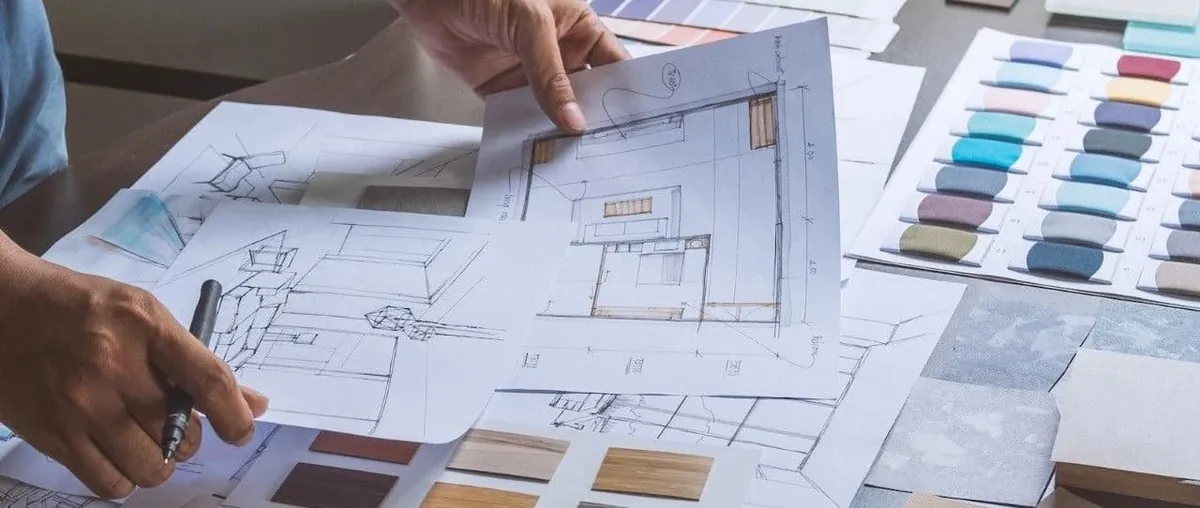
How many panels, how wide, and where they stack when open. We sketch it with you so the door and the view stay clear.

A softer alternative
If you want something closer to drapery, Luminette vertical sheers cover the same kind of opening with soft vanes.
How gliding panels work
Instead of many narrow vanes, Skyline gliding panels use a few wide sheets of fabric hung from a multi-channel track. When you open them, the panels slide behind one another and gather into a slim stack at the side. When you close them, they spread out across the opening like sliding screens. A weighted bottom bar keeps each panel straight and helps them move smoothly together.
Because each panel is flat and wide, there are far fewer lines across the window than with vertical vanes. The effect is calm and architectural, which suits modern rooms, open-plan living areas and big windows where a busy pattern of vanes would feel cluttered.
Matching the rest of the room
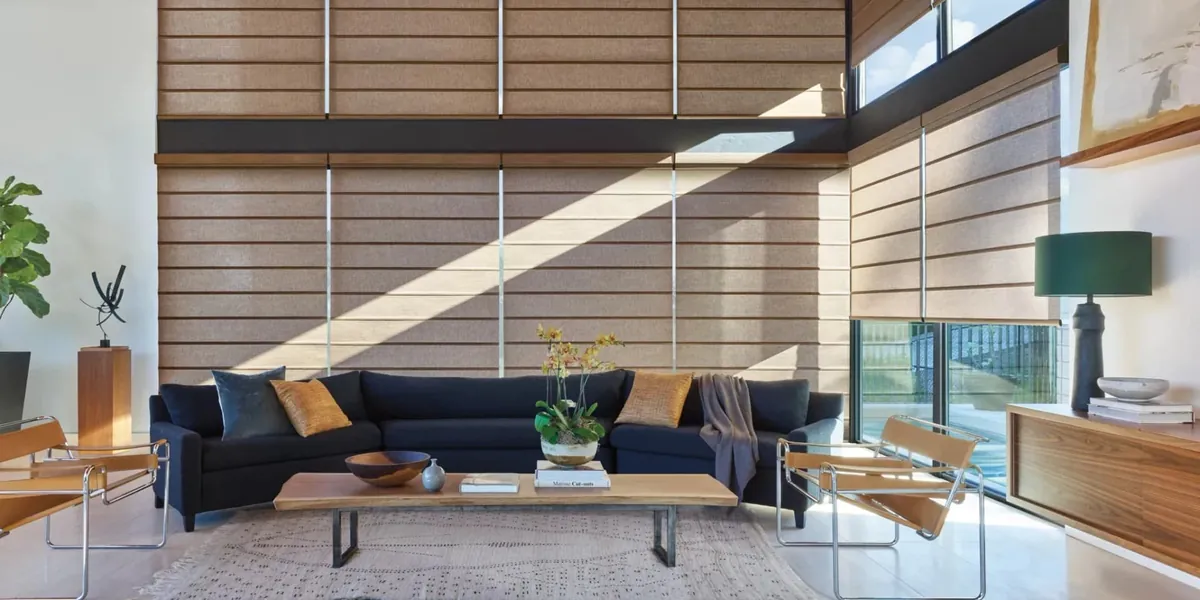
A big slider rarely stands alone. Often there is a window beside it, or a run of windows along the same wall. Because Skyline gliding panels use fabric families shared with roller and screen shades, you can cover the slider with panels and the windows beside it with roller shades in a matching fabric. The wall reads as one design, but each opening has the covering that works best for it.
Choosing the fabric for the light you get
- Screen weaves cut glare and heat from strong sun while keeping a view out, which suits a bay-facing family room.
- Light-filtering fabrics soften daylight and give privacy without making the room dim.
- Room-darkening fabrics suit a media room or a bedroom slider.
We bring fabric samples to the house so you can hold them up at the glass in the light the room actually gets. A fabric that looks pale in the showroom can read quite differently against a west-facing slider at four in the afternoon, so it is worth seeing it in place.
Room dividers and top treatments
Mounted on the ceiling, Skyline gliding panels can screen off part of a room: a home office corner, a guest area in an open loft, or a play space off the kitchen. Panels slide closed to separate the space and open to bring it back together. On windows, a fabric-covered top treatment can hide the track for a more finished look.
From measuring to fitting
- Request a consultation online or with the call button.
- We visit with fabric samples, or you start at the North Dartmouth showroom.
- We plan the number of panels and the stacking side with you.
- We measure the opening ourselves and give you a free estimate.
- Certified Hunter Douglas installers fit the track and panels and check that every panel glides cleanly.
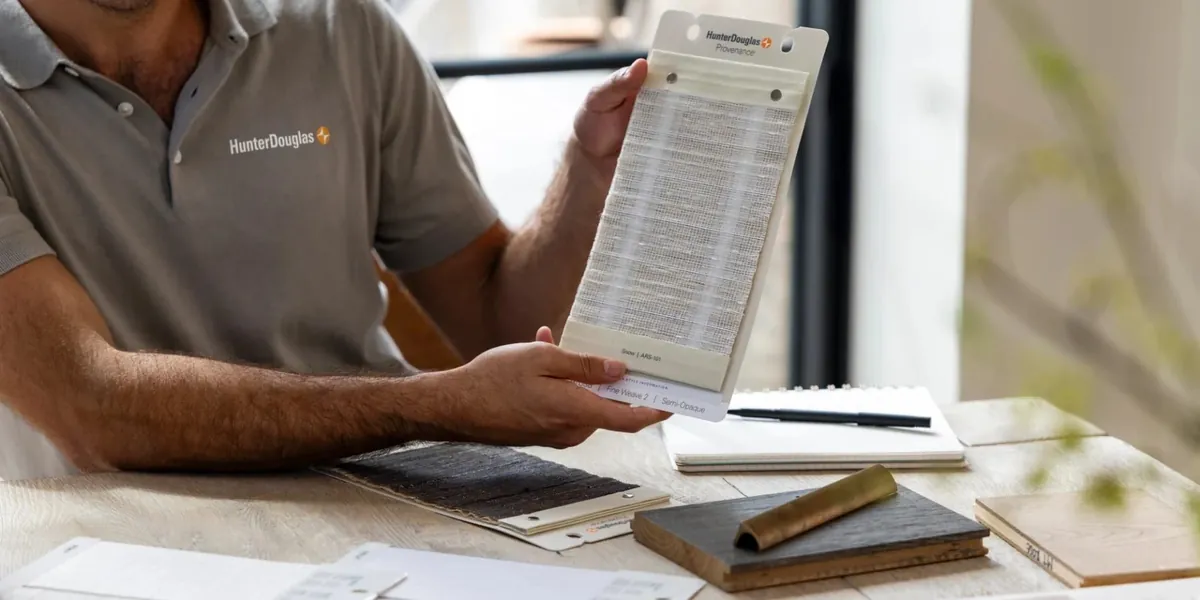
Skyline gliding panels from a Gallery dealer
As a Hunter Douglas Gallery dealer, Blinds & Designs takes care of the whole order: choosing, measuring, ordering and certified Hunter Douglas installation. We offer in-home consultations with sample vans, free estimates and interior design consultations, and we repair window coverings you already own.
Browse the fabrics in the Hunter Douglas catalog, or compare panels with other styles on our vertical blinds page. Town pages for blinds include New Bedford, Barnstable, Duxbury and Westport.
Skyline questions
What is the difference between Skyline and vertical blinds?
Vertical blinds use many narrow vanes that rotate. Skyline uses a few wide flat panels that slide past each other, with fewer lines across the window.
Can panels cover a slider and the window next to it?
Yes. One track can run across both, or you can cover the slider with panels and the window with a roller shade in matching fabric.
Can I see out through the panels?
With a screen weave, yes. Screen fabrics cut glare while keeping a view; light-filtering and room-darkening fabrics give more privacy.
Can Skyline divide a room?
Yes. Mounted on the ceiling, the panels can screen off part of a room and slide open when you want the space back.
Which way do the panels stack?
Left, right or split, depending on the opening. On a slider we usually stack them clear of the doorway.
Do you charge for an estimate?
No. We measure and give you a free estimate with nothing to commit to.
Plan your panels with us
Request a consultation and we will bring fabric samples and plan the layout at your window, or visit the North Dartmouth showroom first.
Every Hunter Douglas line we carry is on our Hunter Douglas Gallery dealer page.