
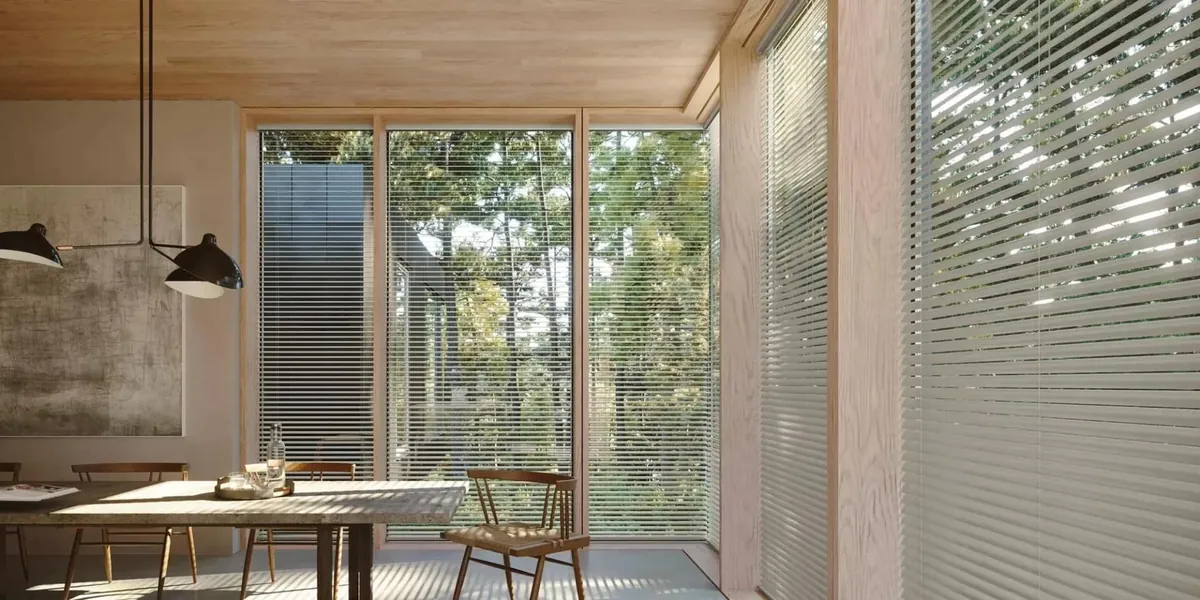
Harbor glass and inland ranches
Harwich has two very different sets of windows. Down in Harwich Port, the shingled houses near the harbor have been opened up toward the water over the years, and the rooms facing the sound are often more glass than wall: big picture windows, runs of casements, sliders onto a deck. Inland, through the quieter villages, the houses are mostly post-war ranches and newer colonials, with windows of a standard size repeated from room to room. Planning custom blinds in Harwich, MA means treating those two groups differently.
On the harbor side the windows are exposed. Sun comes off the water from early morning, wind drives salt against the glass, and a heavily glazed room can be bright, hot and on show to anyone passing on the water or the road. The blinds there have to manage a lot of light and still look good when they are open.
Inland, the problem is simpler and the scale is smaller. Frames are square, openings repeat, and the questions are about material, color and how each room is used.
Three ways to dress a Harwich window
Every blind we sell is from the Hunter Douglas range and is built to the size of your opening. Most custom blinds in Harwich houses fall into one of these three groups, and we bring samples of each when we visit.
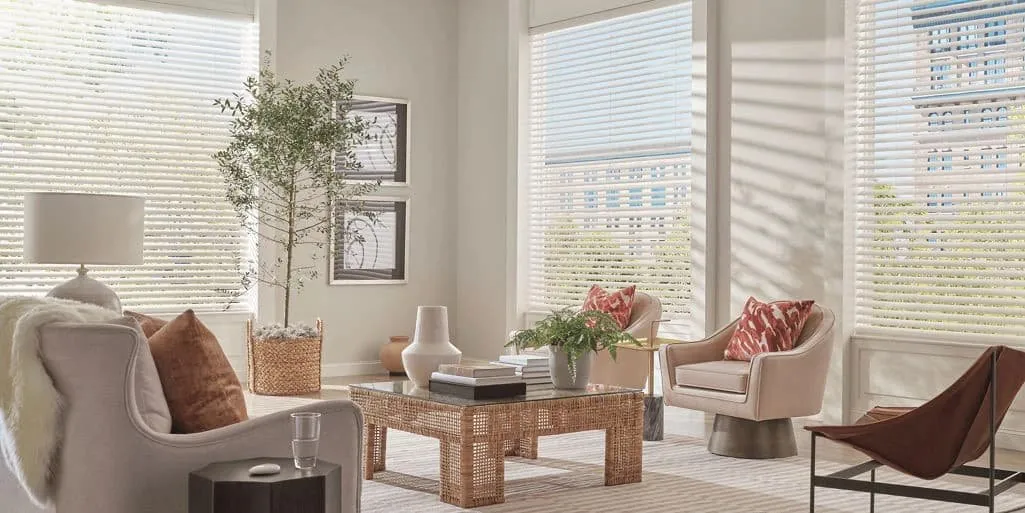
Faux wood for the hard-working rooms
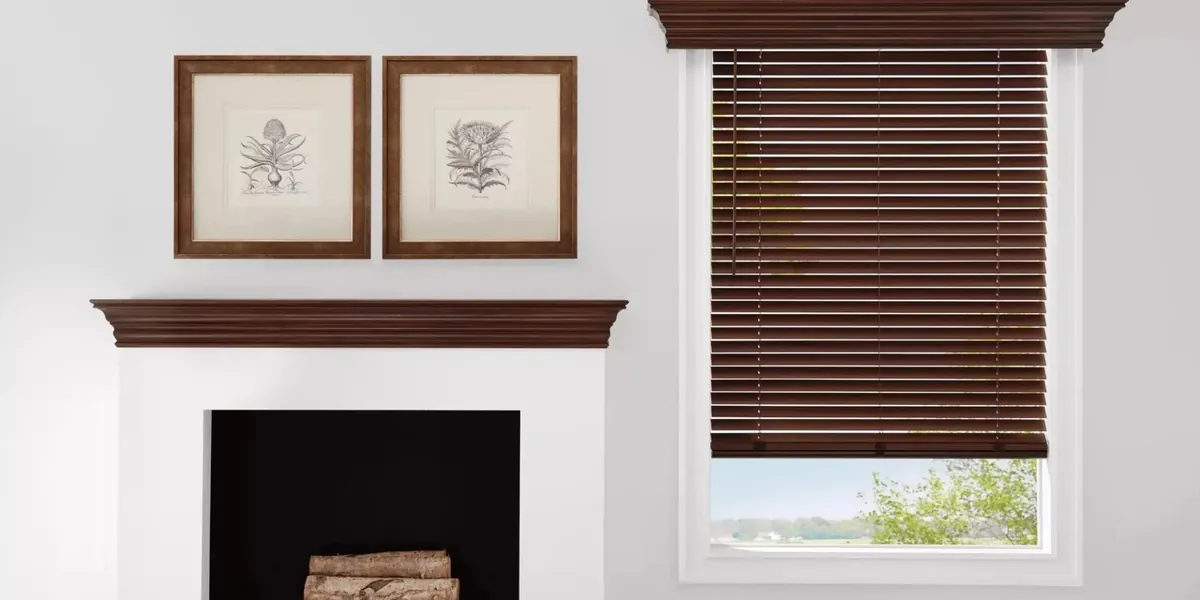
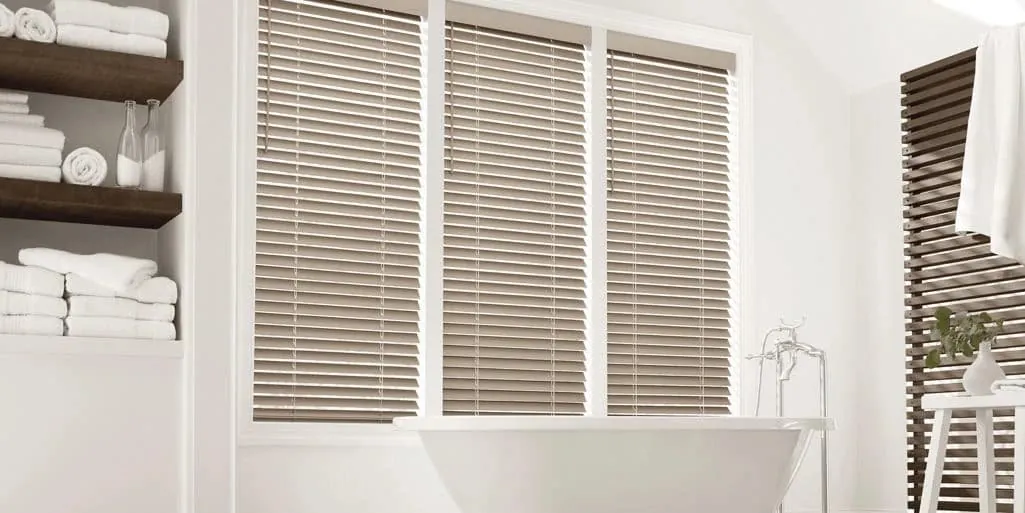
A painted-wood look that stands up to sun, steam and sea air. It suits a shingled house near the harbor and the kitchens and baths of an inland ranch alike.
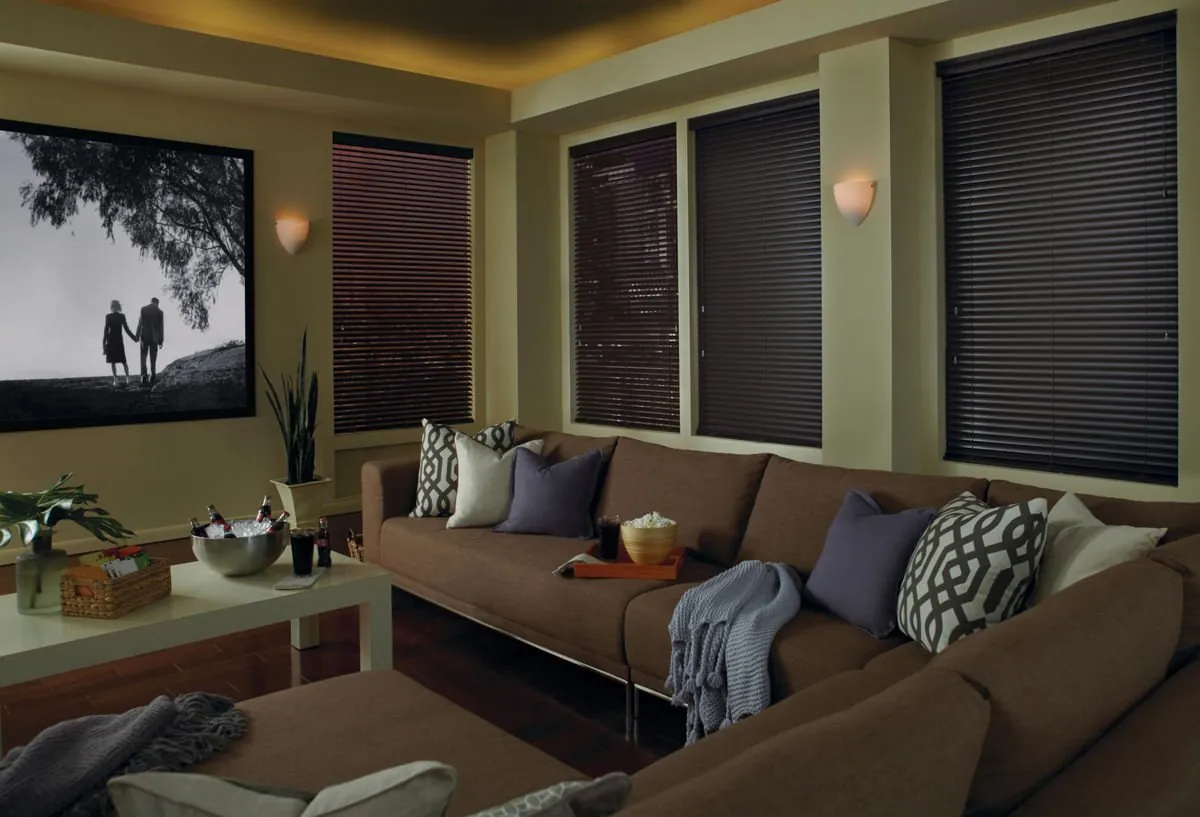
Darker wood for bedrooms
Deep-toned wood slats close tightly and dim a room well, a good match for a bedroom facing the morning sun over the sound or a den used for films.
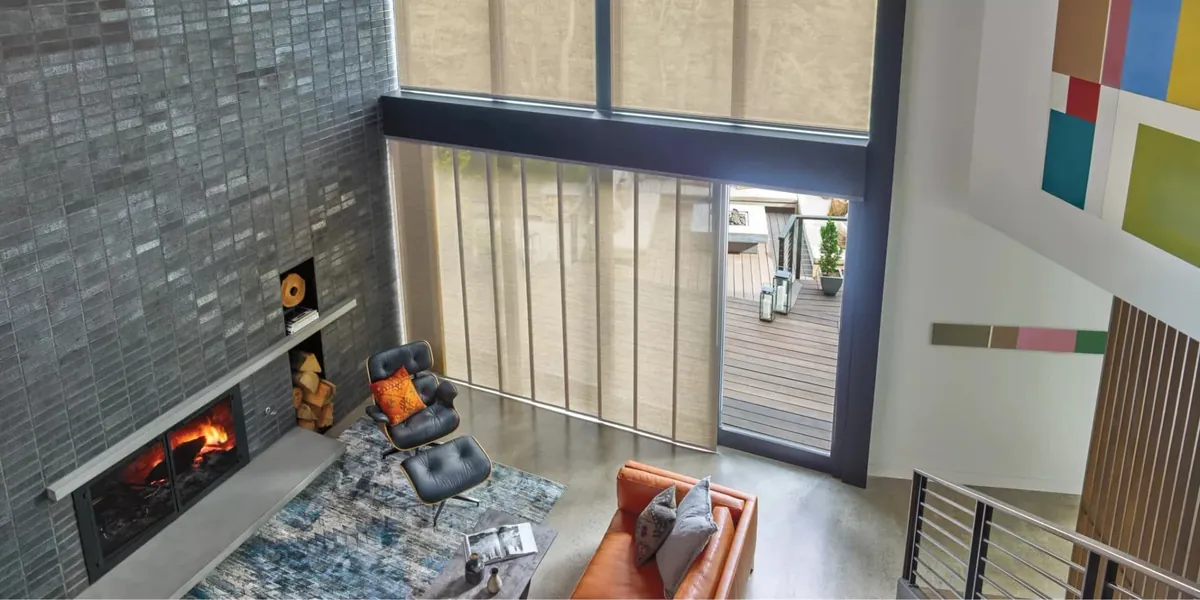
Gliding panels for wide doors
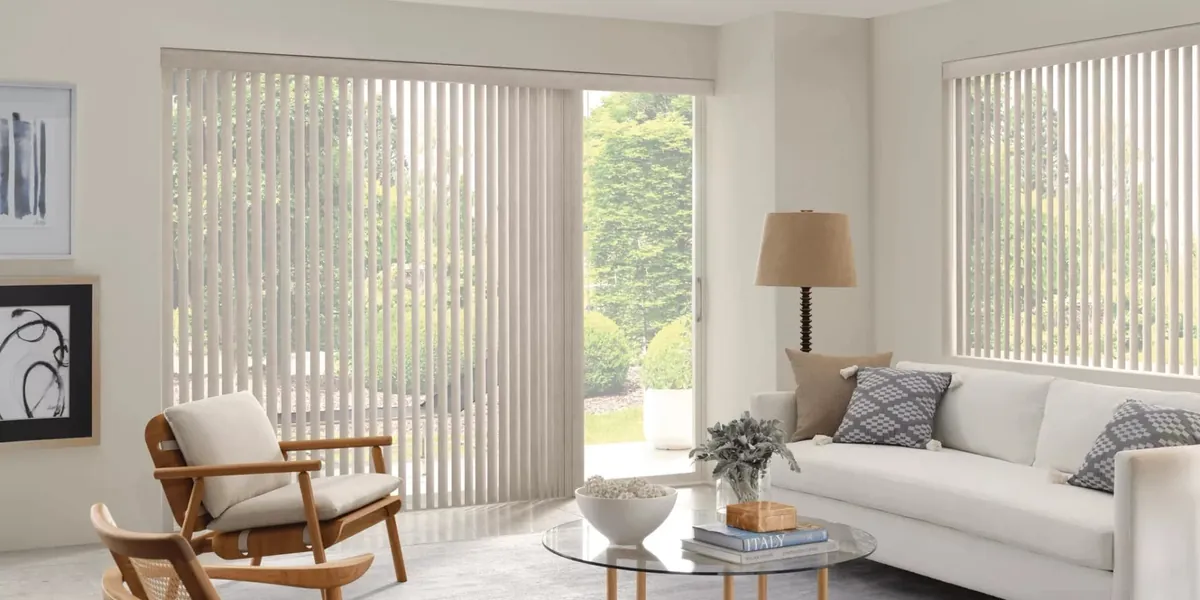
Broad fabric panels that slide aside on a track, for the deck door or patio slider. A softer alternative to vertical vanes.
Rooms that face the sound
The best rooms in a harbor-side house are usually the ones looking south across Nantucket Sound. They are also the hardest rooms to furnish, because so much of the wall is glass and so much sun comes through it. By midday a room like that can feel like a greenhouse, and the glare off the water makes it hard to read a page or see a screen.
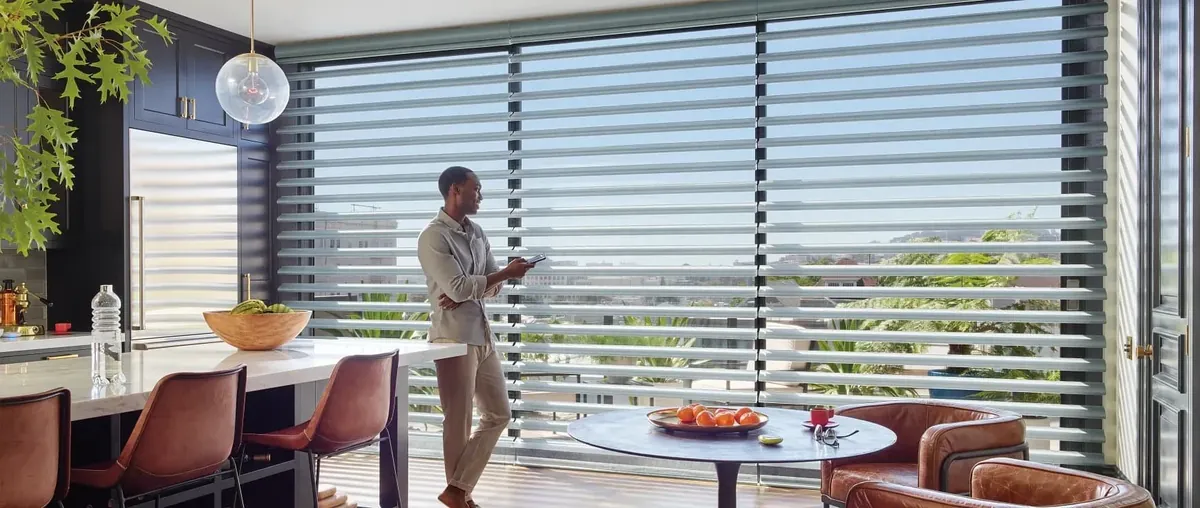
Blinds work well here because you can adjust them by degree rather than all or nothing. With the slats level you look straight out between them and most of the direct sun is blocked. Tilt them a little further and the room settles into a soft, even light. Tilt them up and the light is thrown onto the ceiling, so the room stays bright without the glare landing on the sofa or the table.
Big openings need some planning. A run of windows is often better as several blinds than as one, so each can be raised or tilted on its own, and you can open the view straight ahead while shading the window that catches the low sun. Where a window is very wide, the blinds can share a color and a height so the run looks like one piece when everything is closed.
For more on the sun, see our guide to the best shades for sun and glare.
Shingled houses around Harwich Port
Not every house near the harbor is a wall of glass. The older shingled houses in the village have kept their original proportions in the front rooms: double-hung windows with painted trim, often a bay or two, and small windows under the eaves upstairs. Many have later rooms added at the back toward the water, which is where the big glass tends to be.
That makes for a house with two characters. In the original rooms, a painted faux wood or wood blind in white or cream sits naturally against the trim and suits the cottage feel. Upstairs, under the slope of the roof, a slim metal blind with a compact headrail suits the small, low windows. At the back, the wide openings call for the planning described above.
Keeping one color across the house ties the two halves together. From the street, the front windows look orderly. From the water, the back rooms read as part of the same house.
Bay windows in the village houses
Bays turn up again and again in the older houses around Harwich Port. A shallow three-sided bay looks onto the street from a front parlor, or a deeper one bumps out from a dining room toward the garden. They are lovely to sit in and slightly tricky to dress, because each face of the bay is its own window at its own angle.
The neat answer is a separate blind for every face, each made to its own width, with the headrails meeting closely at the corners so there is no wide gap of light. Raised together, they line up across the bay. Lowered, you can tilt the center panel open for the view and keep the side panels closed against a neighbor or the afternoon sun. Inside-mounted, the blinds leave the bay’s trim and any window seat clear.
When we measure a bay we take every face separately and check the angles where they meet, because those corners decide how close the headrails can sit. Custom blinds in Harwich bays look best when they are planned as a set rather than three separate windows.
Salt, wind and sun on the harbor side
A house close to the water lives with salt in the air. It settles on anything near an open window and, over time, works on exposed metal and on materials that absorb moisture. The working parts of a modern blind sit mostly inside the headrail, which helps, and cordless lifting removes the cord lock and the dangling cord at the side altogether.
Material counts as well. Faux wood is well suited to a damp, salty room because it does not swell or warp, and it wipes clean. Real wood is fine in sheltered rooms and gives a warmer look, but in a sunroom with sliders that stand open all summer, faux wood is the more forgiving choice.
Sun is the other factor. Strong daily light off the sound is hard on colors, and lighter slat finishes hold up best on windows that take it all day. We point out the finishes that suit a bright, exposed window when you are choosing.
Post-war ranches in the inland villages
Away from the harbor, the houses in the inland villages are mostly single-story ranches built after the war, with a picture window in the living room, a kitchen window over the sink, bedrooms with standard double-hung or slider windows, and often a slider to a back patio. The frames are square, the depth for an inside mount is usually there, and the windows repeat in size.
That makes them easy houses to fit well. A living room picture window can take two blinds side by side, each lifting on its own. Bedrooms can have darker slats that dim the room in the morning. The kitchen and bath suit faux wood. On the patio slider, vertical blinds draw aside so the door stays usable and turn to control the afternoon sun.
Newer colonials and whole-house orders
The newer colonials in Harwich’s inland neighborhoods have more windows than the ranches, spread over two floors, but they are just as regular. Most windows on a floor share a size, the frames are deep enough for an inside mount, and there may be a two-story entry or a family room with taller glass.
Houses like this often take blinds throughout in one go. Choosing one color and slat size for every street-facing window gives the front a tidy, finished look, and the inside feels consistent as you move from room to room. Where a room needs something different, such as darker slats in a bedroom or faux wood in a bath, the color can stay the same while the material changes.
The two-story entry is the one window that needs extra thought. Its upper glass is out of reach, which is where motorization earns its place.
Wood or faux wood: how to decide
For most Harwich houses the real choice is between wood and faux wood, and the answer often turns out to be both. They look alike from across a room, especially in painted finishes, but they behave differently.
Real wood is lighter in weight, so it suits larger windows where a heavy blind would be hard to lift, and it has the grain and warmth that stained finishes show off. It is happiest in the dry rooms of the house: living rooms, dining rooms and bedrooms that are heated and aired.
Faux wood is heavier and tougher. It shrugs off moisture, so it belongs in kitchens, baths, laundry rooms and any summer room near the harbor that stands open to the salt air for months. It also cleans with a damp cloth and keeps its color in strong sun.
Choosing custom blinds in Harwich, MA usually ends with wood in the main rooms and faux wood where the water is, in matching colors so nobody can tell from the street.
Light and privacy, room by room
Each room in a house asks a slightly different question of its blinds. In a living room facing the sound, the question is glare. In a bedroom on the east side, it is the early sun. In a bathroom near the road, it is privacy.
Blinds answer all three with the same simple control. Tilt the slats with the rounded side facing into the room and you get privacy with light still reaching the ceiling. Close them fully and a darker slat makes the room dim. Open them level and you have the view. Raise them and the window is clear.
For bedrooms where you want a properly dark room, a tight-closing wood or faux wood blind in a deeper color does most of the work. Our guide on choosing between shades and blinds explains where a shade might suit a room better.
Samples at your windows
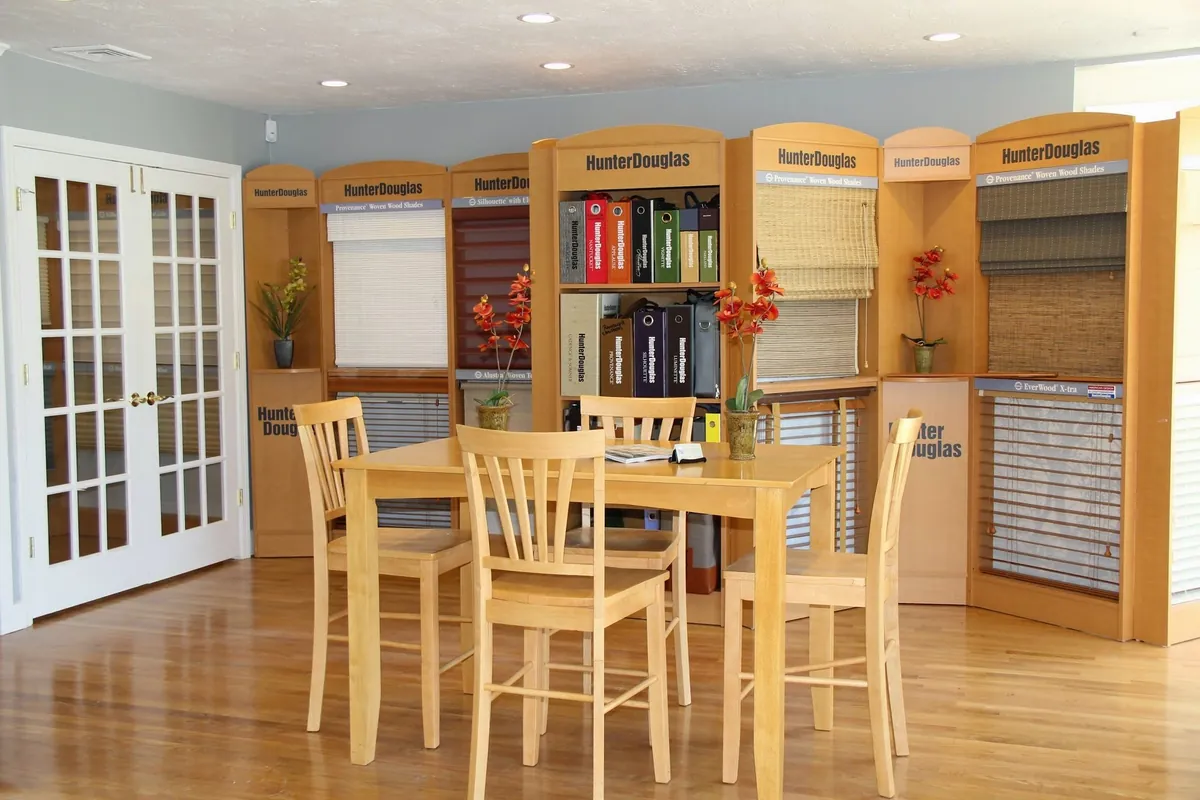
A slat color picked from a tiny chip under shop lighting can look quite different against a shingled wall with the sound behind it. That is the reason we come to you. Our vans are loaded with samples of every material, so we can bring the showroom to you, and the choice gets made where the blinds will actually hang.
- Book through Request a Consultation, or ring through on the call button, and pick a day that works.
- Our consultant brings the full spread: wood in several stains and paints, faux wood, aluminum in a few slat widths, and vertical and gliding panel options for the doors.
- The bright rooms go first. We look at the harbor-facing glass, or the bedroom that catches first light, and talk about how you live in each one.
- Slats go up against your own window trim, so you see each color on the sunny side of the house and the shaded side.
- Each opening is measured and its depth checked, with any crank handles, locks or storm panels written down.
- You are left with a free estimate covering the blinds you like, and nobody asks you to sign that day.
Interior design consultations can be folded into the same appointment if you want a hand with color, or with how blinds will sit next to drapery or shades. Our guide to what happens at an in-home consultation explains it at more length.
Motorized blinds for the high and the wide
A two-story entry in an inland colonial, a high transom over the harbor-side sliders, a window behind a deep counter: some windows are simply awkward to reach. Hunter Douglas PowerView motorization lets those blinds tilt and lift from a remote or from your phone. You can also set them on a schedule, closing the sound-facing rooms as the midday sun arrives and opening them again in the evening.
For a house that is used mostly in summer, a schedule keeps the rooms shaded while nobody is home. We talk through how each motor is powered and where its controls sit when we visit. See motorized blinds in Harwich for more.
Fitting day
When your blinds arrive, our certified Hunter Douglas installers put them up. They fix each bracket into solid wood, level every headrail, and on a run of windows line the blinds up so they sit at one height. Every tilt and lift is tested, and you are shown how the controls work before they leave.
On a harbor-side room with sliders that stand open all summer, they make sure the blinds clear the door and the window hardware. On an old shingled house, they check that each blind tilts without catching on a sash lock. Our page on what happens on installation day covers the visit in more detail.
Each material has its own page if you want the detail: wood blinds, EverWood, metal blinds and vertical blinds pages, all gathered under our main custom blinds page.
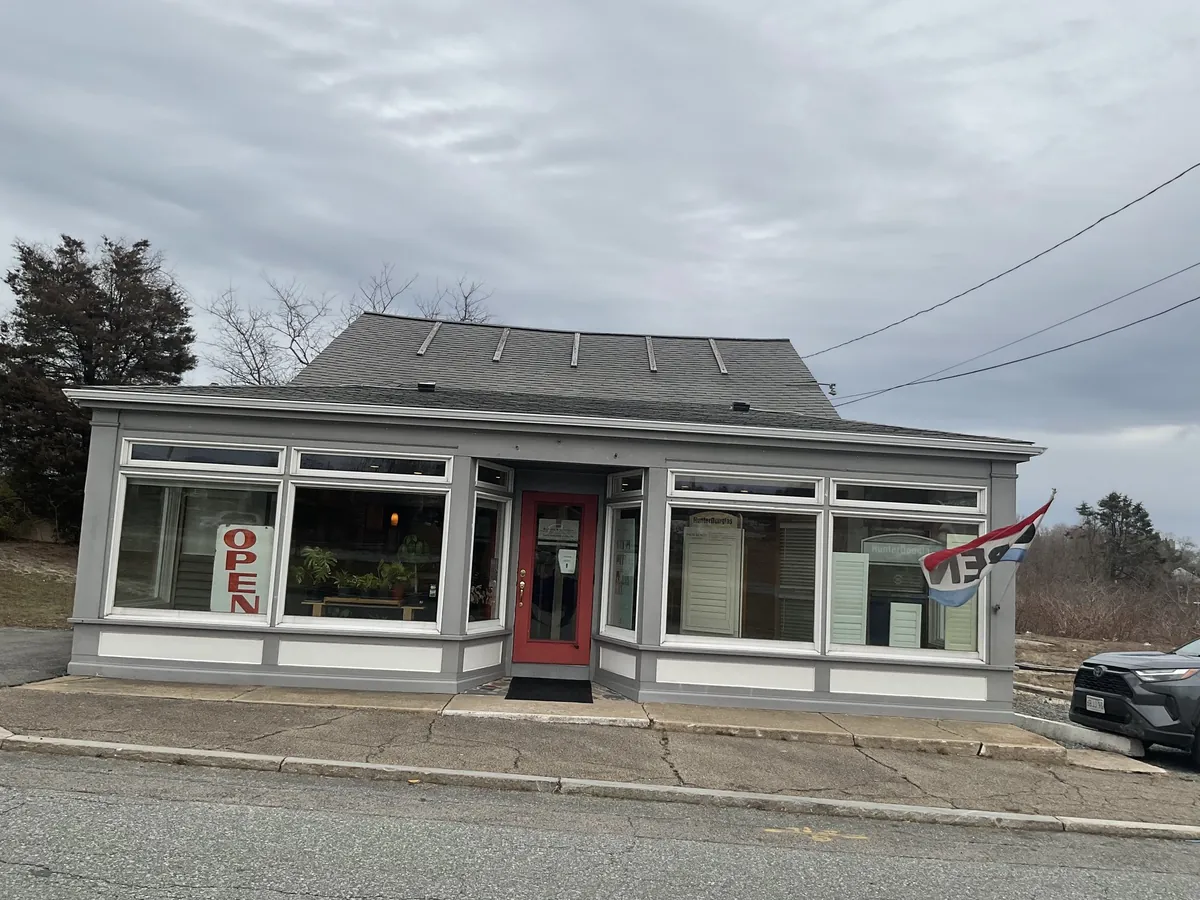
Sagamore is our closest showroom
If you would like to see blinds in person before we come out, our Sagamore showroom is the nearest to Harwich, by the canal at the start of the Cape.
Blinds & Designs is a Hunter Douglas Gallery dealer, the designation the brand gives dealers who meet its standards. You get the full range of Hunter Douglas blinds, plus shades, shutters and drapery for other rooms, and installers certified by Hunter Douglas. We also repair blinds and shades you already own; see blind and shade repair.
For the rest of the house, look at roller shades in Harwich or plantation shutters in Harwich, or see everything we do in town on our Harwich page.
Questions from Harwich
What works on a room toward the sound that is mostly glass?
Several blinds rather than one, so each window can be tilted or raised on its own. Level slats keep the view, upward-tilted slats send the glare to the ceiling, and lighter finishes cope best with all-day sun.
Which material handles salt air best?
Faux wood copes well with damp, salty rooms because it does not swell or warp and it wipes clean. Cordless lifting also removes the exposed cord lock.
Do blinds fit the windows in an inland ranch?
Almost always. Ranch frames are usually square with enough depth for an inside mount. Sliders get vertical blinds or gliding panels so the door still opens easily.
Can blinds make an east bedroom dark in the morning?
A deeper-colored wood or faux wood blind that closes tightly dims the room well. If you want it darker still, we can show you a shade alongside the blind.
Do you charge for the estimate?
No. The estimate is free, written up after every window has been measured, and covers whichever blinds you are weighing up.
When you are ready
Whether it is a bright room facing the harbor or a ranch inland that needs every window done, start with samples at your own windows. Request a consultation and we will bring them, measure each opening and leave a free estimate for custom blinds in Harwich, MA. Or use the call button to reach our Sagamore showroom.