
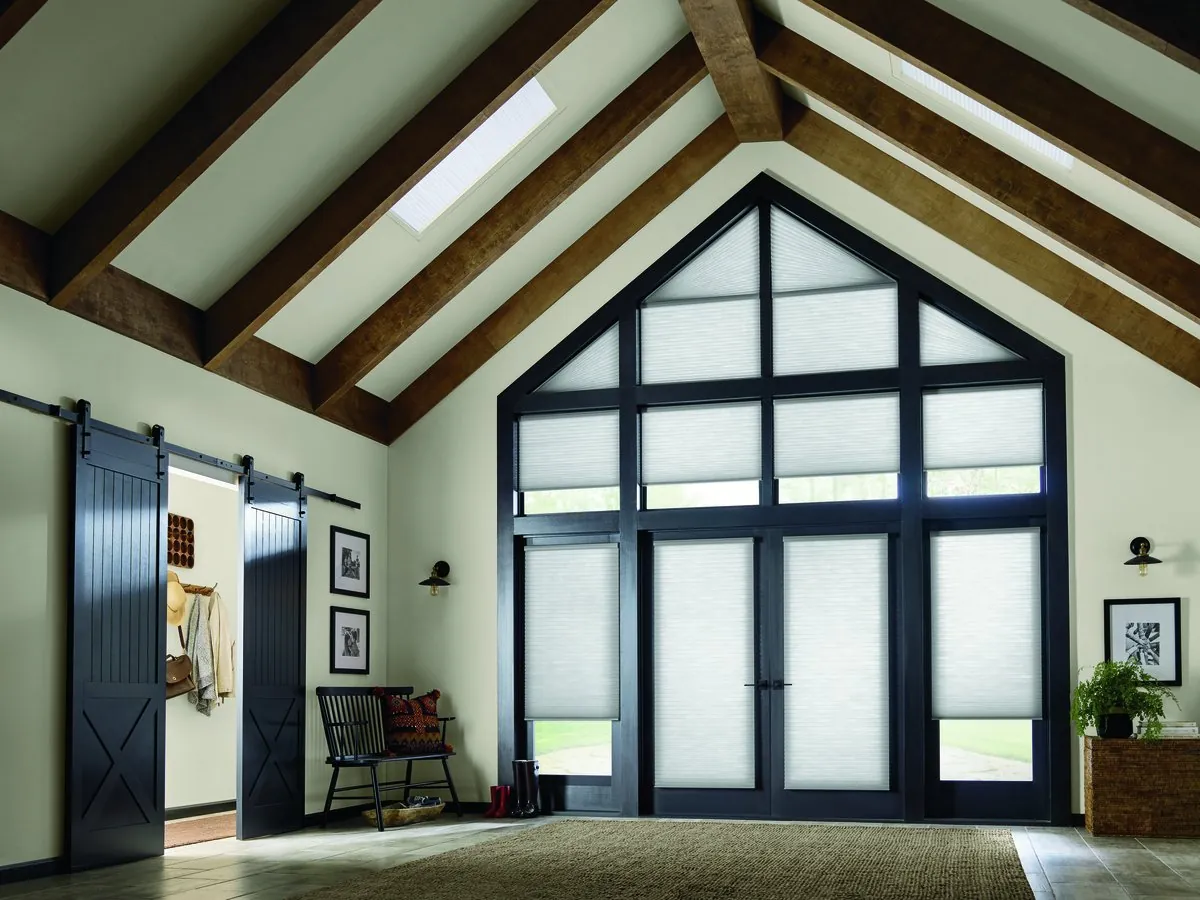
Hard outer-Cape light on old and new glass
Out here on the outer Cape the light is different. It is hard, direct and bright, with little haze to soften it, and it comes off the ocean on one side of Orleans and off Pleasant Bay on the other. The houses meet it in two very different ways. Near the village center, antique capes hold it back with small sash and low ceilings. Out toward Nauset and around Pleasant Bay, the newer houses invite it in, with bay-facing glass that often runs from floor to ceiling. Planning cellular shades in Orleans means taming that light in both.
Much of the town is seasonal. Many houses are opened for the summer and shut for the rest of the year, so a shade has two jobs: making the house comfortable when you are there and protecting it while you are not.
A honeycomb shade fits both. The air caught in its cells keeps a room’s warmth from slipping out through the glass, and its fabric can soften the outer Cape’s glare without blocking the view the newer houses were designed around.
What we fit in Orleans houses
Each of these options comes with us as a sample, so you can try it against your own glass. These are the honeycomb choices we recommend most for cellular shades in Orleans homes.
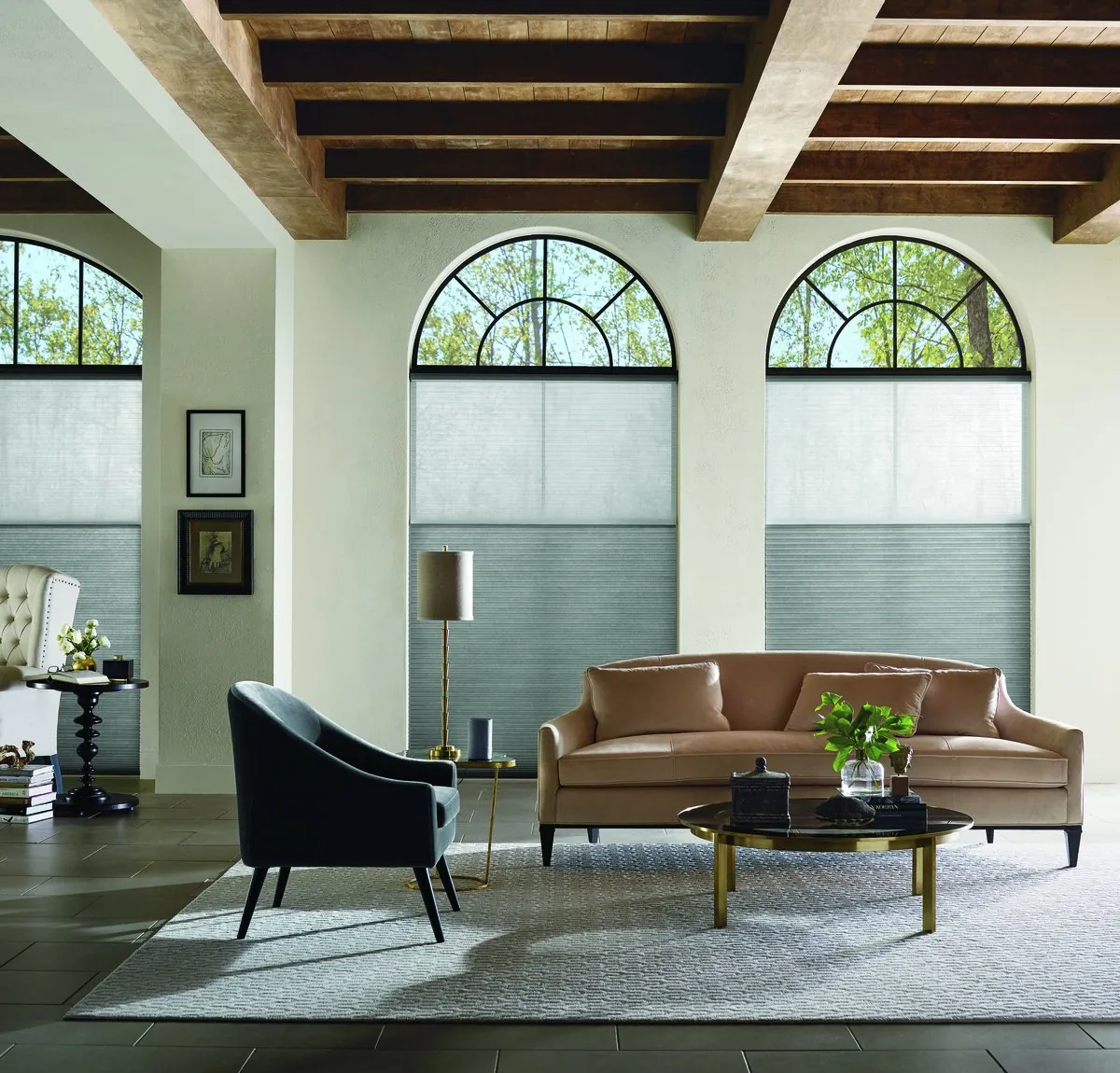
Top-down for tall glass
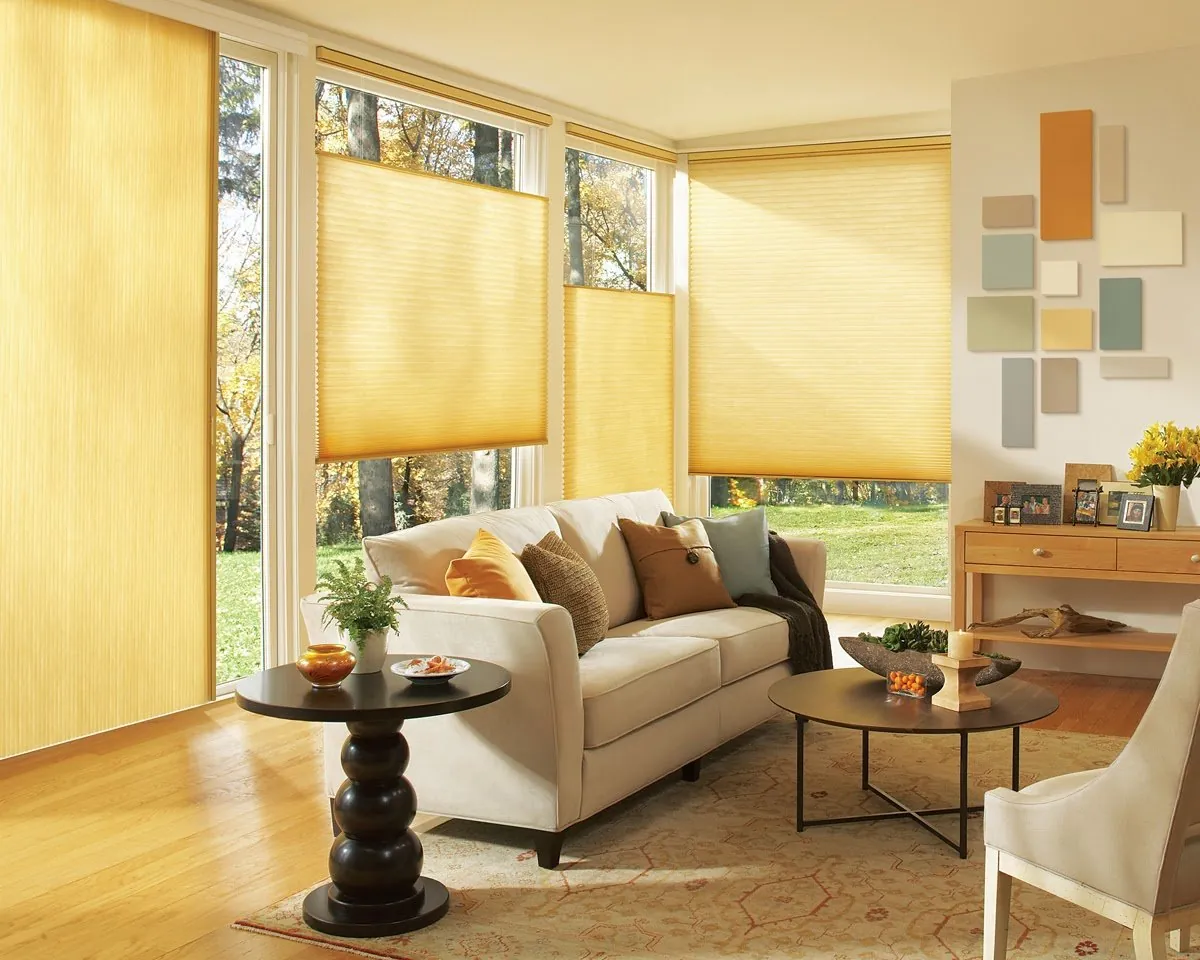
Lower the shade from the top to cut the sun overhead and keep the lower glass open to the bay.
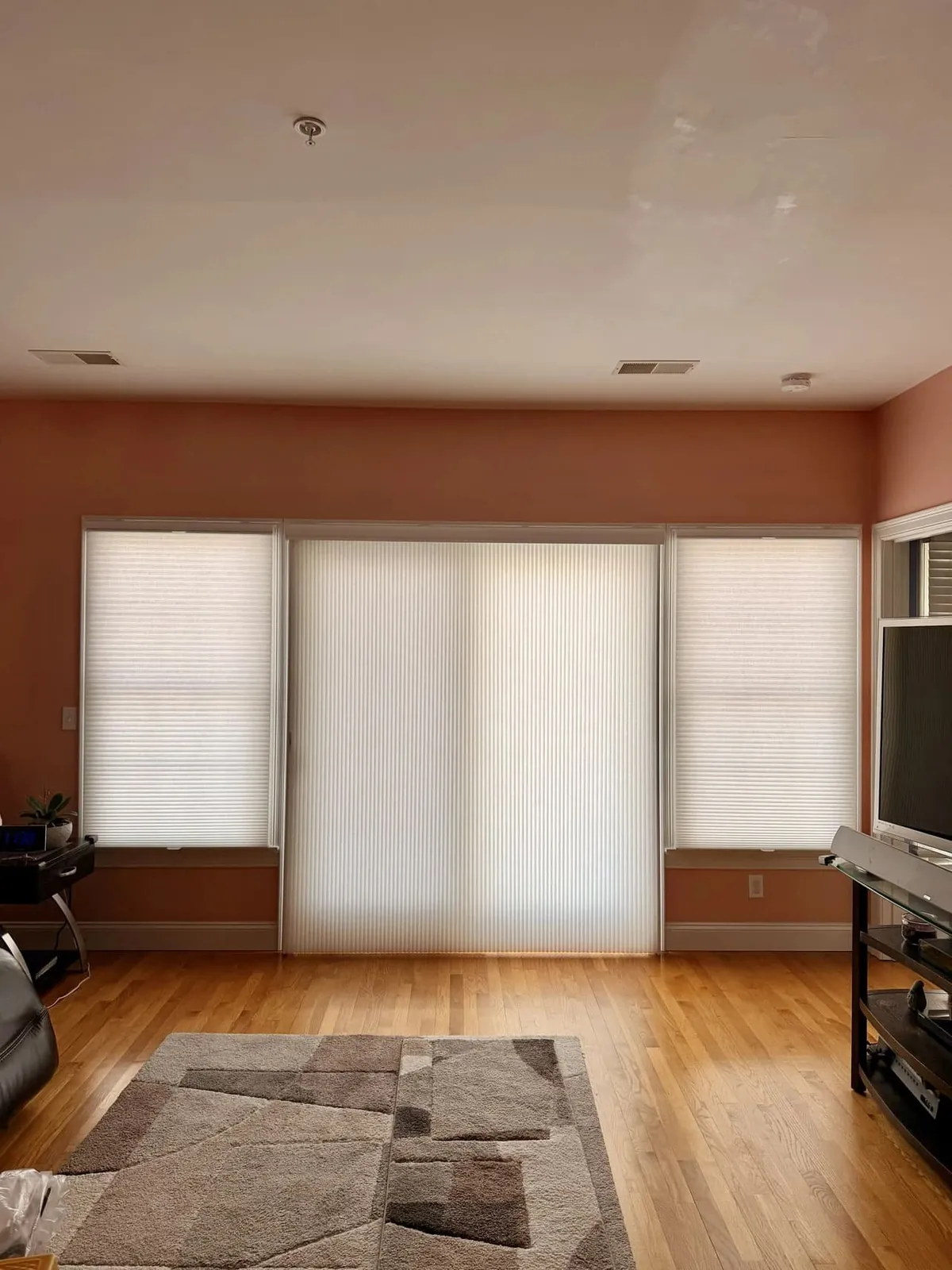
Vertical shades for sliders
A honeycomb shade that travels sideways for the sliders and glass doors in the newer houses.
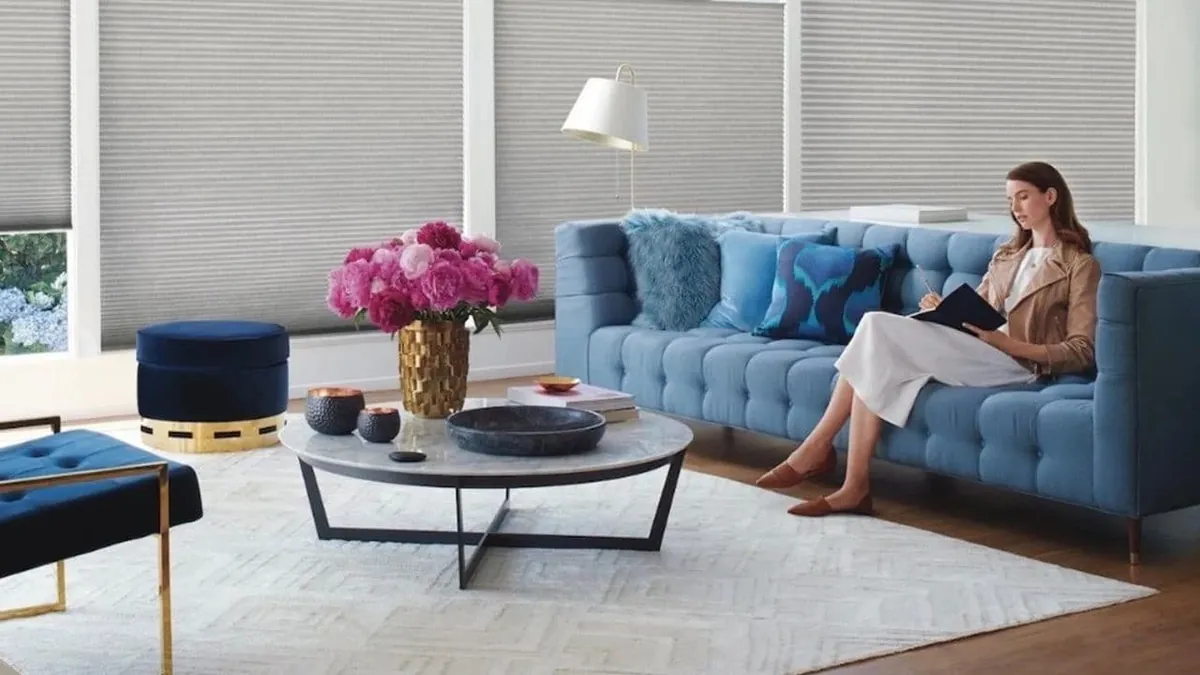
Applause in a cape
Hunter Douglas’s second honeycomb line, often used through the smaller rooms of an antique cape.
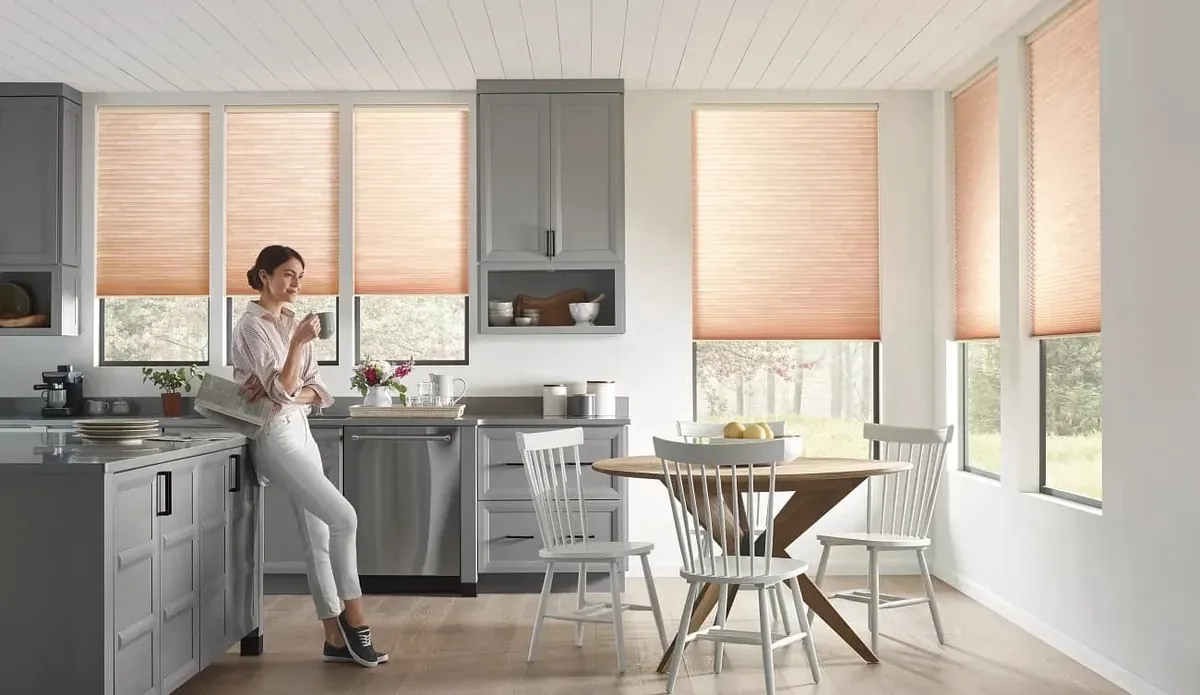
Light-filtering kitchens
A fabric that keeps a kitchen bright and glows in the sun, rather than throwing hard patches of light across the counter.
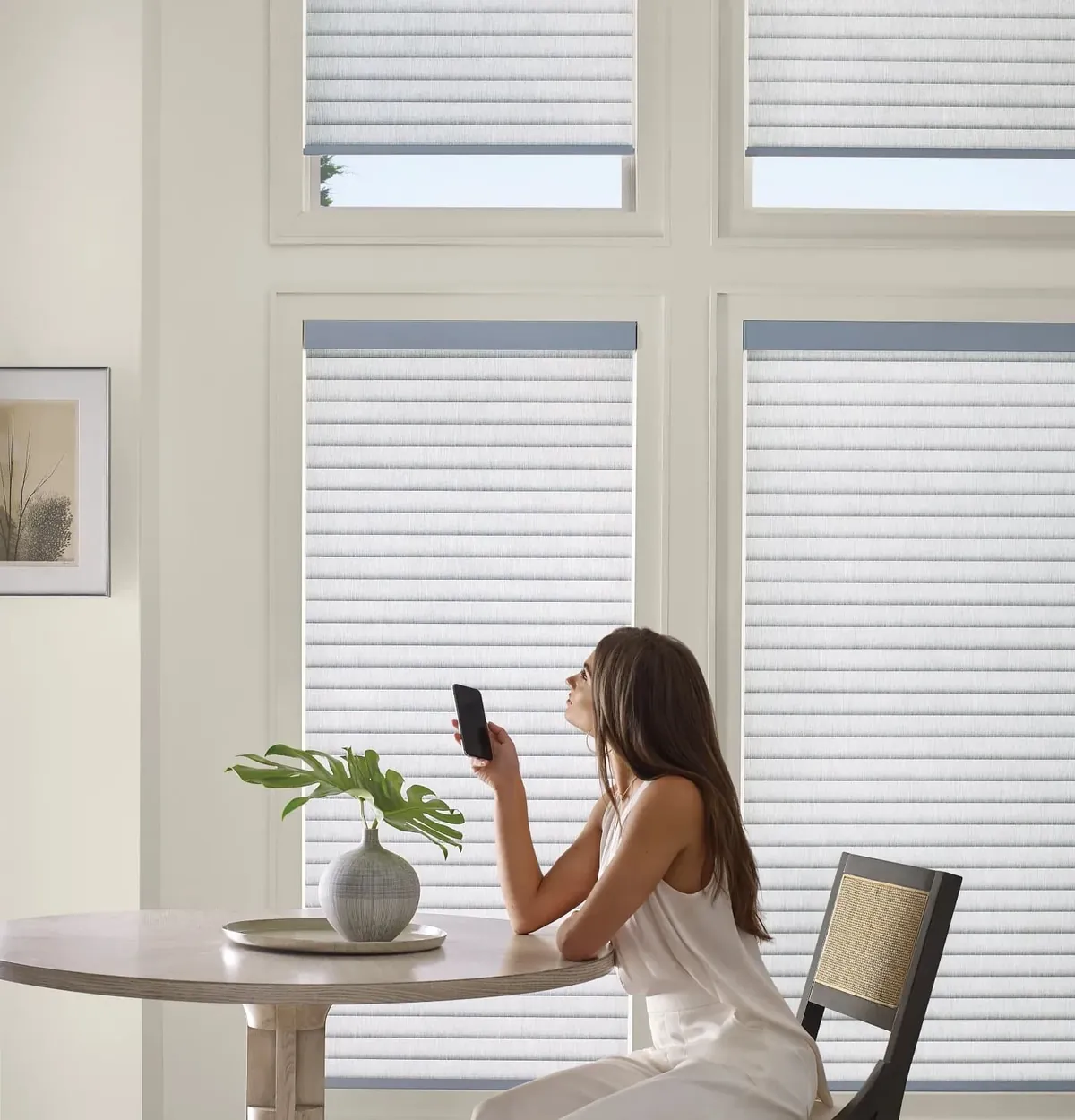
PowerView for big glass
Move tall shades with the app or a remote, or put them on a schedule while the house is closed.
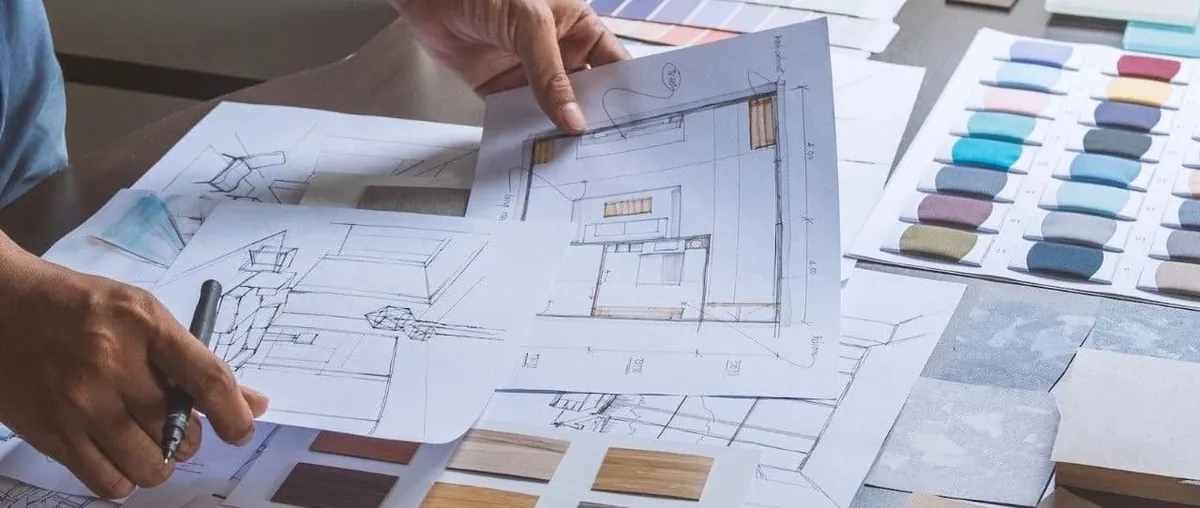
Design help at the visit
Ask for an interior design consultation alongside the shade visit when a new house is being furnished.
Floor-to-ceiling glass toward Nauset and Pleasant Bay
The newer houses on the edges of town are built for the water. Living rooms face the bay with glass from floor to ceiling, sometimes topped with transoms or a gable window, and sliders lead out onto decks. In good weather nothing beats them. In hard noon light, or on a January night, those same rooms can be hard to live in.
Honeycomb shades are one of the few coverings that work across a wall like that. They can be made tall, they stack tightly when raised so the glass is almost clear, and a shade can be split into sections on a single headrail so a long run moves as one or in parts. For the tallest panels, PowerView motorization raises and lowers them at the touch of a button, and they can be grouped so a whole wall moves together.
Top-down, bottom-up shades suit these rooms especially well. On a bright afternoon you can lower the top of each shade to block the sun high in the sky, and the bay stays in full view below. We plan how each motor is powered for these walls at the visit, opening by opening.
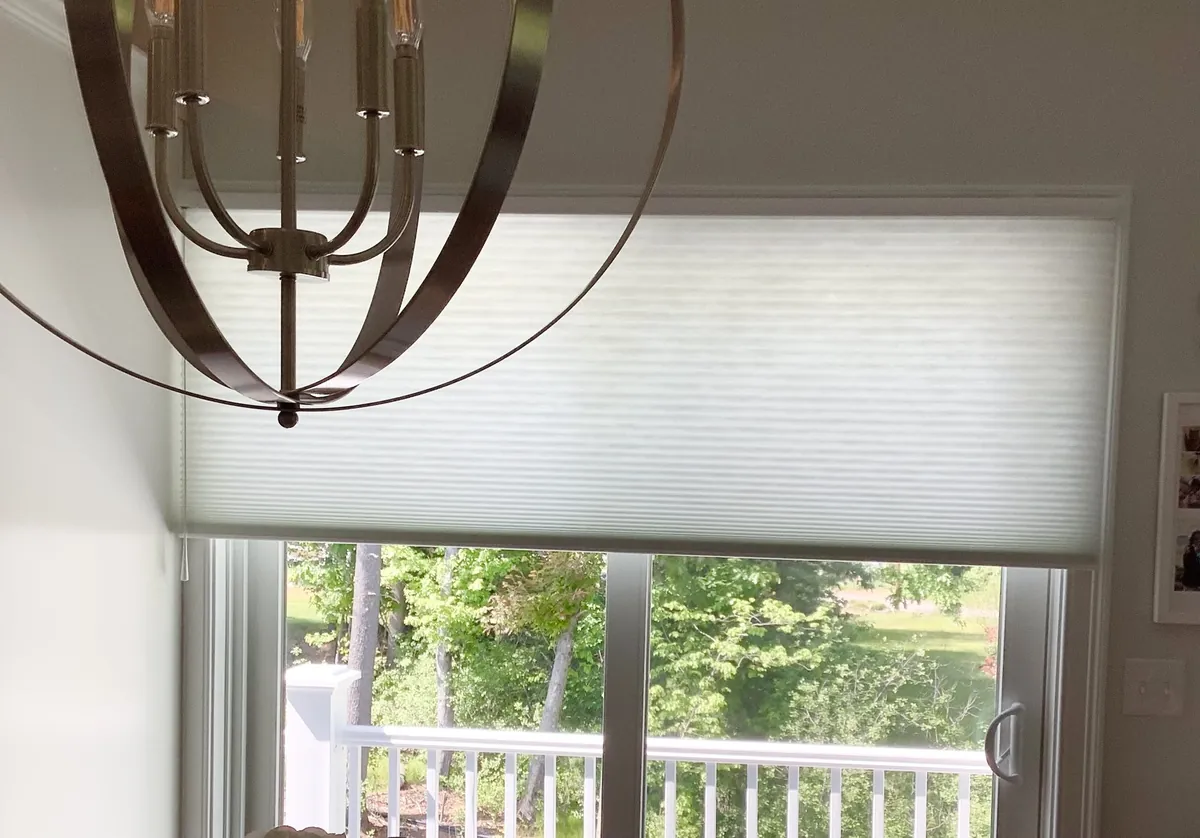
Antique capes near the village center
Closer to the middle of town, the older capes sit low and compact, with a central chimney and small rooms around it. The windows are short and narrow, with small panes, and the frames have shifted over the years. Upstairs, rooms sit under the roof with dormers and gable-end windows.
A honeycomb shade suits these small windows because each is made to size and the fabric stacks very tightly. Raised, it takes up little of a short sash. Lowered, it fills the pane with barely any light at the sides. An inside mount keeps the old trim visible, as long as the frame has the depth for it. We check that at each window, and where the depth is not there, we mount on the casing instead and explain why.
The small rooms of a cape also make the cold more noticeable. When a chair is never far from a window, a cold pane affects the whole room. A lowered honeycomb shade makes that chair comfortable again on a winter afternoon.
Taming the outer Cape’s hard light
The light in Orleans is notably sharp. With open water on more than one side, it bounces back into rooms off the bay and off pale sand, and it arrives with little to soften it. A room that looks pleasant at breakfast can be uncomfortable by noon, and a fabric that seems too light in the evening may be exactly right for the middle of a July day. That is why we test fabrics at more than one hour when we can.
A honeycomb fabric deals with it in a few ways.
- Light-filtering fabric spreads the light evenly, so a room is bright without glare on the floor, the table or a screen.
- Room-darkening fabric keeps a bedroom dark when the sun is up early over the ocean.
- Top-down, bottom-up cuts the high sun while leaving the view below open.
- Lighter colors keep their color longer on glass that takes this light every day.
We hold samples up to your own glass, on the sunniest side and the shadiest, so you see each fabric in the light it will face.
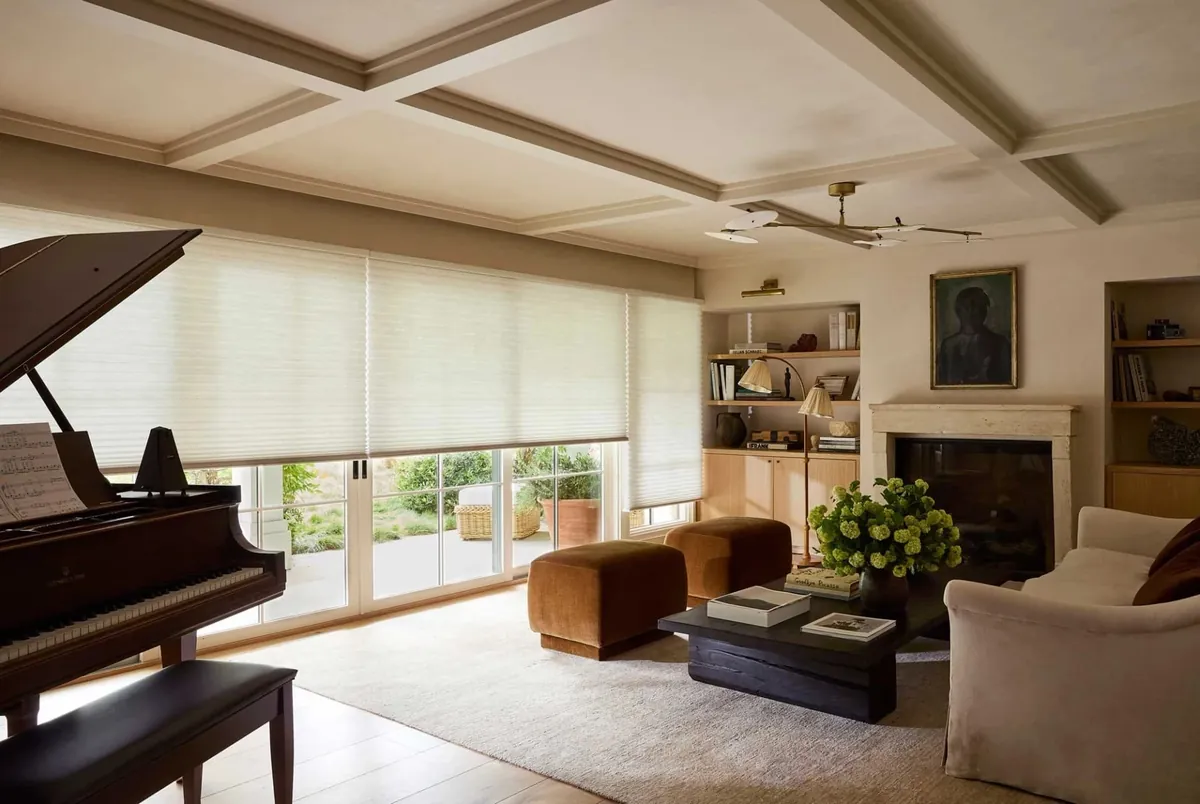
A house that is closed much of the year
With so many Orleans houses used mainly in summer, the shades spend many months on duty in an empty house. In those months they keep strong sun off floors, rugs and furniture, and in winter they help a cold room hold whatever warmth it has.
Here is a setup that works well for many seasonal houses.
- Light-filtering fabric in the main rooms, so the house is bright when you open it up.
- Room-darkening fabric in the bedrooms for long summer mornings.
- PowerView on the bay-facing glass, set to lower during the strongest sun even when no one is home.
- Cordless lifts on the rest, so closing the house is quick.
You set and adjust PowerView schedules from your phone, so you can change them from wherever you spend the off-season.
How a honeycomb cell holds warmth
From the front, a honeycomb shade looks like a soft pleated shade. From the side, you see rows of hollow cells running across the window. Lowered, each cell holds a pocket of air that barely moves, and that still air slows the cold coming off the glass and the heat leaving the room.
That matters in both kinds of Orleans house. In an antique cape, it takes the chill off small windows close to the seating. In a newer house, it helps with the sheer amount of glass, which can make a big room feel cold on a winter evening and hot on a summer afternoon. Double-cell fabrics add another row of cells, and the guide to cellular shades and winter heat explains how they compare.
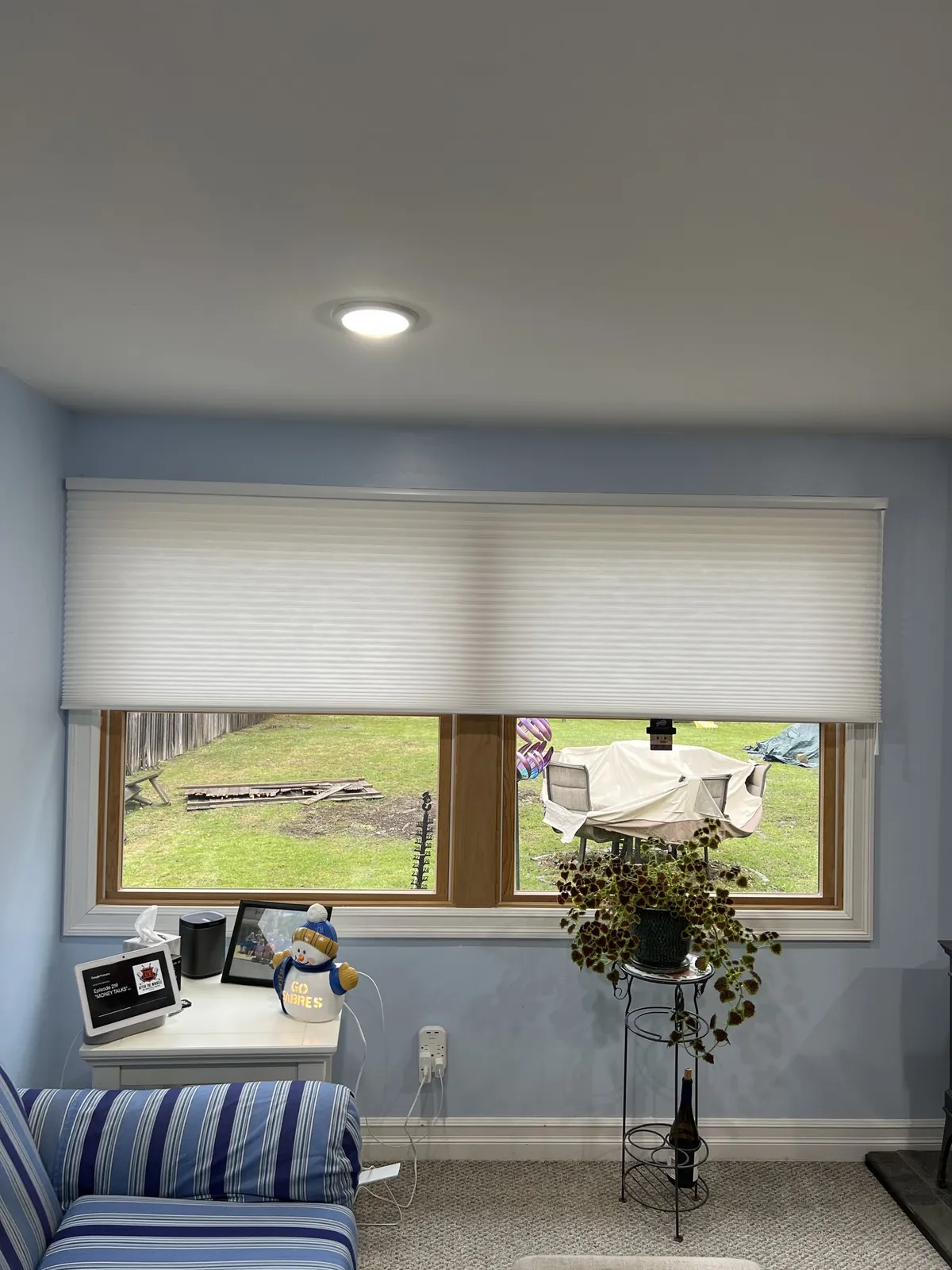
Transoms, gables and the windows above the doors
The newer houses often have glass above the main windows: transoms over sliders, triangular gable windows in a vaulted living room, a half-round window over the front door. These are the windows that let the most sun in during the middle of the day and are the hardest to reach.
Honeycomb shades come in specialty shapes for some of these openings, and a fixed shade can cover a gable that you never need to open. For transoms that need to move, PowerView motorization lets you lower them on a schedule or from a remote. Where a shape simply cannot take a shade, we tell you so and suggest the best way to treat the windows beneath it.
When you are planning cellular shades in Orleans for a newer house, it helps to list these upper windows before the visit, because they are easy to forget until the summer sun pours through them.
Lofts and open stairs in the newer houses
The larger houses built toward the water often open up inside. A living room rises the full height of the house, a loft or balcony looks down into it, and a staircase climbs past a tall window on its way up. These are dramatic rooms, and their windows are some of the hardest in town to reach.
A stair window set halfway up a flight cannot be reached from the floor or from the landing without leaning out over the rail. A loft may have a long, low window under the eaves at knee height, and a row of clerestory windows above the main glass. Each of these takes the outer Cape’s sun at a different time of day, and each one heats up the open space when it does.
For the windows nobody can reach, PowerView motorization is the practical answer: a remote on the landing or the app on your phone does the work, and a schedule can lower them before the room overheats. For the low loft windows, a cordless honeycomb shade is easy to raise by hand. Because the shades are all made to their own openings, a stair window, a loft window and the main glass can share one fabric and look like a set from below. Planning cellular shades in Orleans for a house like this usually starts with standing in the middle of the big room and looking up.
Mixing an old cape with a new addition
Many antique capes in town have been extended, with a new family room or kitchen built onto the back and opened up to the light. The result is a house with two kinds of window side by side: small, old sash in the original rooms and large, modern glass in the new part.
We size each window on its own, then match the fabric so the old and new rooms feel like one house. The original front rooms might take an inside-mounted shade within the deep old frames. The addition might take wide shades, a vertical shade on the slider, and PowerView on any tall glass. Choosing one fabric family across both parts ties them together, while the opacity can change from room to room.
What a home visit looks like
Most Orleans customers begin with a visit at home, because the outer Cape’s light is easiest to judge in your own rooms. Our vans carry samples, so the showroom comes to you.
- Book through Request a Consultation, choosing a day that falls in your weeks at the house.
- We bring the honeycomb samples: fabrics, colors, opacities and lift options.
- We walk the house with you, starting with the rooms facing the bay or the sunniest side.
- You hold samples up to your own glass and see how each handles the light.
- We measure every window, including transoms and gables, and check each frame’s depth.
- You receive a free estimate for the shades you are considering.
For more on what to expect, read what happens at an in-home consultation.
Duette and Applause in Orleans
Duette and Applause share the same cellular construction, so either one will warm a room. Where they part ways is choice: Duette reaches further, with taller and wider sizes, more textures, odd shapes and a sideways shade for a slider, while Applause brings a separate set of colors that sits comfortably on an ordinary window.
A newer house toward Pleasant Bay will often lean on Duette for the tall glass, sliders and gable shapes. An antique cape may use Applause in the bedrooms and Duette in the front rooms. Orders for cellular shades in Orleans regularly mix the two lines, decided one window at a time. Our Duette and Applause pages describe each line, and the cellular shades page covers the full range.
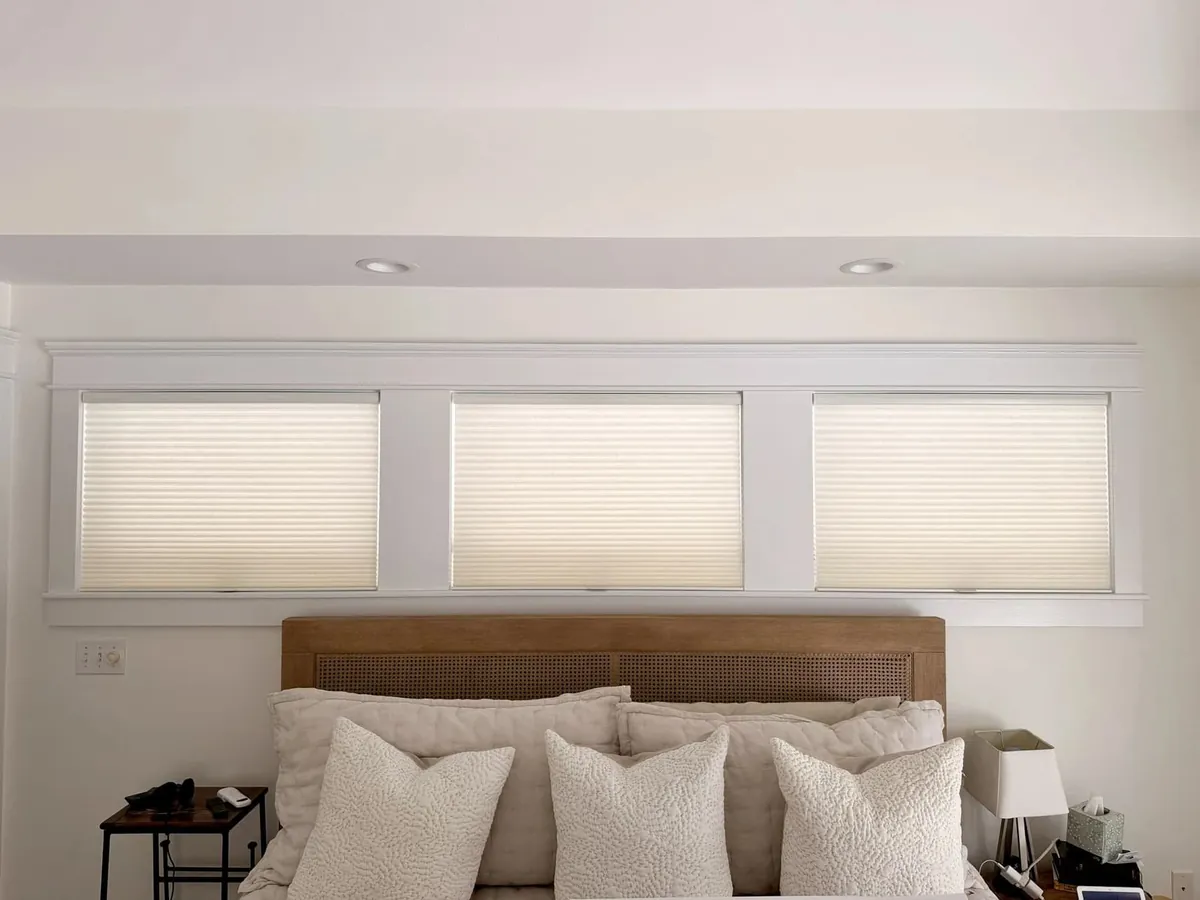
Installation by certified Hunter Douglas installers
Tall glass and old frames both need careful fitting. Our installers are certified by Hunter Douglas, and on installation day they work through the house one window at a time.
- Brackets go into solid framing, which matters most on a tall, heavy shade.
- Each headrail is levelled, so a row of shades or a wall of glass lines up.
- Every lift is tested, and PowerView shades are paired to your phone or remote and set to your schedule.
- You are shown how each shade works before they leave.
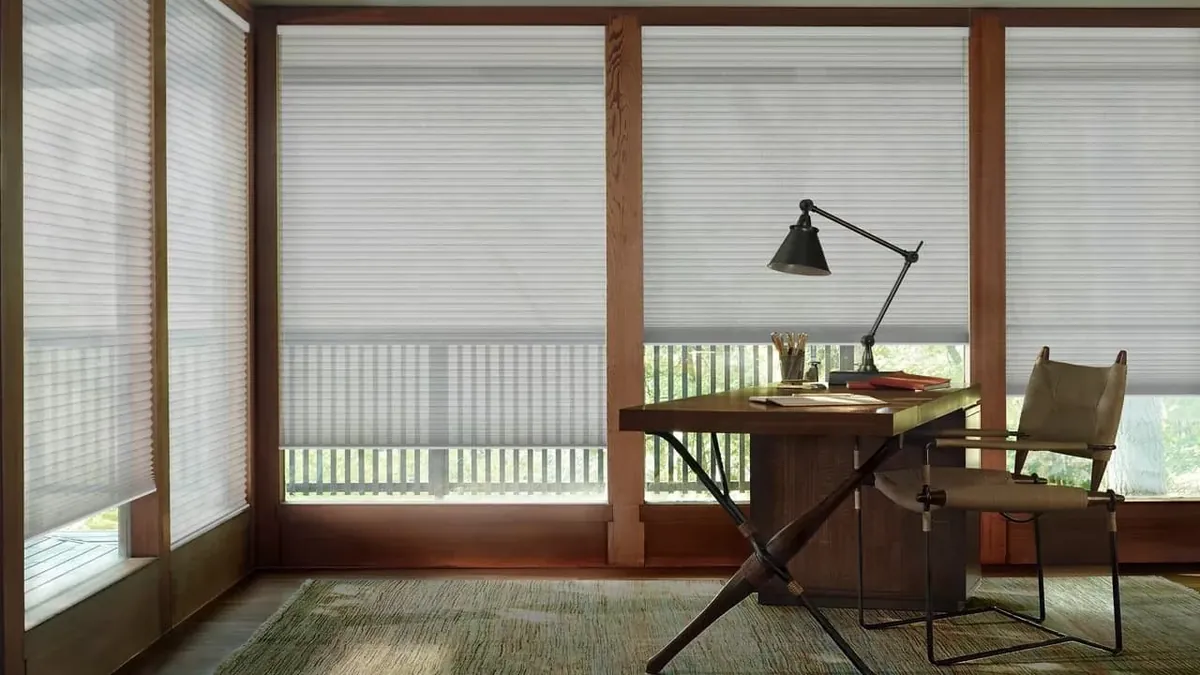

A Gallery dealer for the whole outer Cape house
Blinds & Designs is a Hunter Douglas Gallery dealer, a title Hunter Douglas gives dealers who meet its standards. That puts the complete honeycomb range in one place for you: every Duette and Applause fabric, the specialty shapes, the vertical shades and PowerView.
Hunter Douglas has certified the installers who fit them, and should a shade ever stick or sag later, blind and shade repair is part of our work.
Shutters, blinds, roller and roman shades from Hunter Douglas are part of what we offer as well, so a single visit can look at every room. See our motorized blinds in Orleans, roman shades in Orleans, or everything we do in town on our Orleans page.
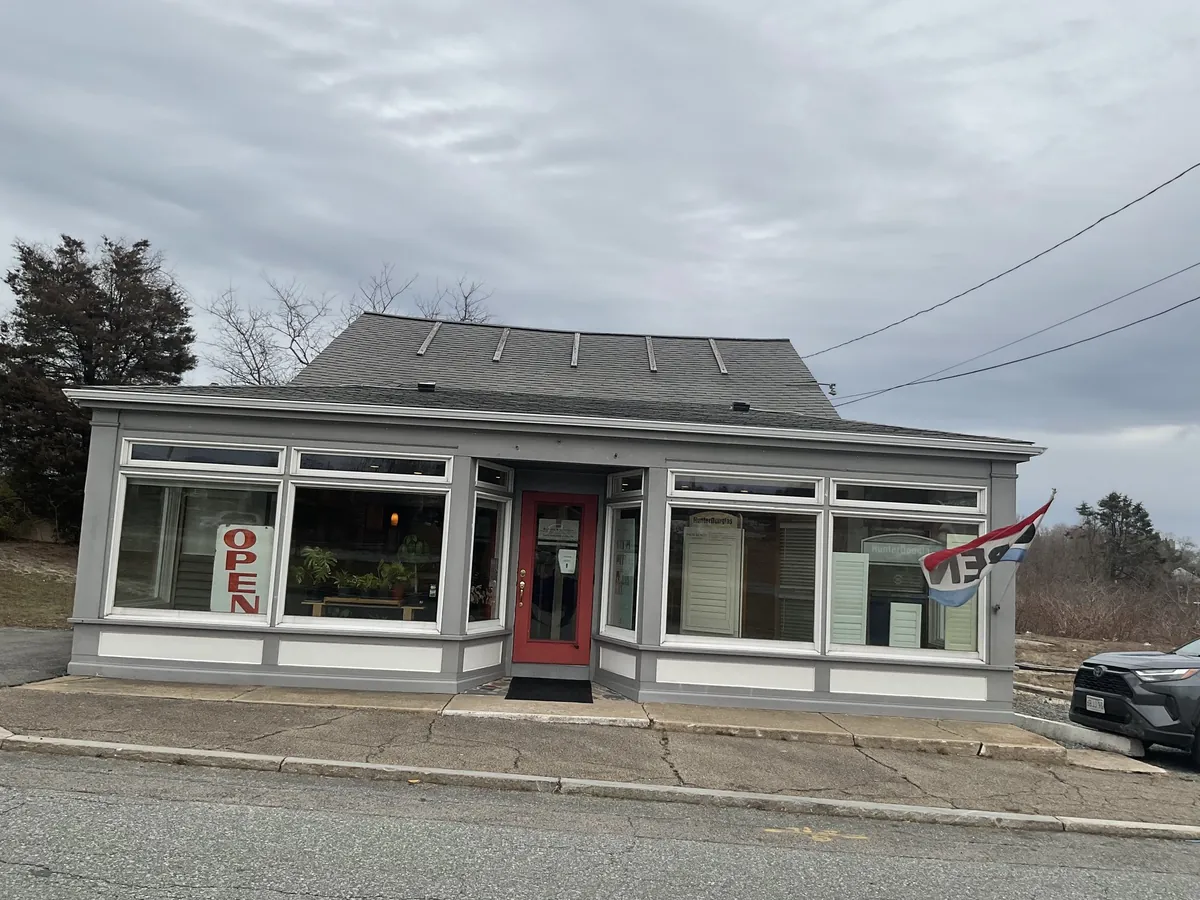
Our nearest showroom is Sagamore
Our vans come to Orleans with the full honeycomb range, so most customers never need to travel. If you would like to see shades in person first, the Sagamore showroom is our closest location, at the canal end of the Cape.
Whichever you choose, the visit ends with every window measured and a free estimate in hand.
Questions from Orleans
Can honeycomb shades cover floor-to-ceiling glass?
Yes. They can be made tall and wide, split into sections on one headrail, and motorized with PowerView so a whole wall moves together. Top-down, bottom-up shades let you block the high sun and keep the view below.
What do you suggest for the small windows in an antique cape?
A made-to-measure honeycomb shade, often inside-mounted so the old trim stays visible. The fabric stacks tightly, so very little of a short sash is lost when it is raised.
Is it worth fitting shades in a house we only open for summer?
Many seasonal owners find it is. While the house is shut, lowered shades stop the sun bleaching rugs and wood, and in winter they slow the cold coming through the glass. PowerView can lower the bay-facing shades on its own in the strongest months.
What about the transoms and gable windows above the glass?
Some can take a specialty-shaped or fixed honeycomb shade, and transoms that need to move can be motorized. We look at each one during the visit and tell you plainly if a shape cannot take a shade.
Do I pay anything for the estimate?
No. Once every window is measured, the estimate is free, and there is nothing to sign at the visit.
Choose them in your own light
The outer Cape’s light is easiest to judge where you live with it. Ask for a consultation, and our van arrives with honeycomb fabrics for every room, from the cape’s small front windows to the tall glass toward the bay. Each opening is measured and a free estimate follows. Prefer a conversation first? The call button reaches us, and the Sagamore showroom is open to visitors.