
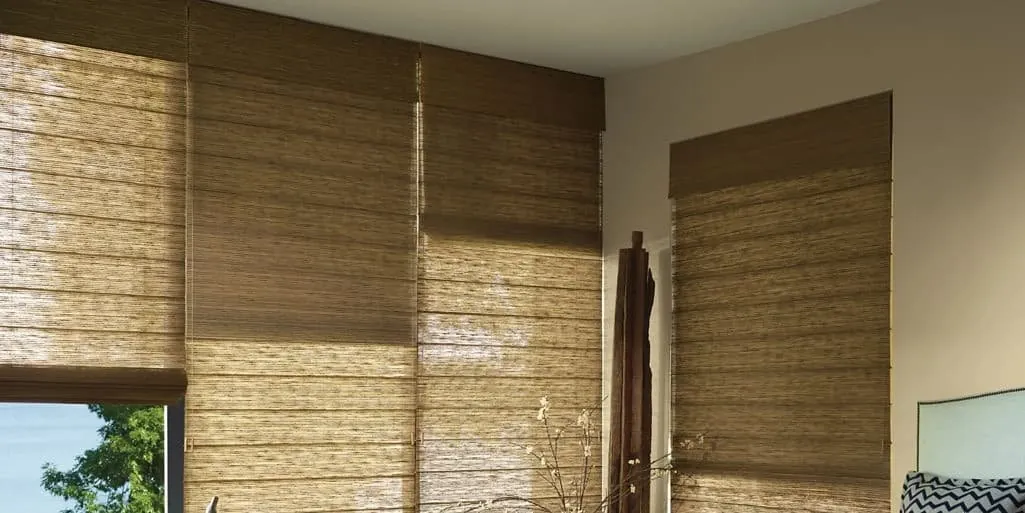
Rooms that take light from three sides
Most of Norfolk’s housing went up from the 1980s onward: colonials and capes set well back on large wooded lots, with plenty of space between one house and the next. Because nothing crowds them, the rooms tend to have windows on two or even three walls. A family room might look east over the garden, south across the drive and west toward the trees. That is a lovely way to live, and it is also the main thing we plan around when we fit roman shades in Norfolk, MA.
Light from several sides means the sun is always arriving somewhere. A room can be soft and even at breakfast, hot and bright on one wall by lunchtime, and glaring through a different window at the end of the afternoon. One shade cannot solve all of that on its own, but a set of roman shades, chosen to work together, can.
The good news is that the openings are standard modern sizes, square and true, with depth for an inside mount. So the planning can go into fabric, lining and how the shades are lifted, rather than into wrestling with old frames.
Roman shades for every side of the house
We carry two Hunter Douglas roman lines and a woven roman, and we bring samples of each so you can see them against the light in your own rooms.
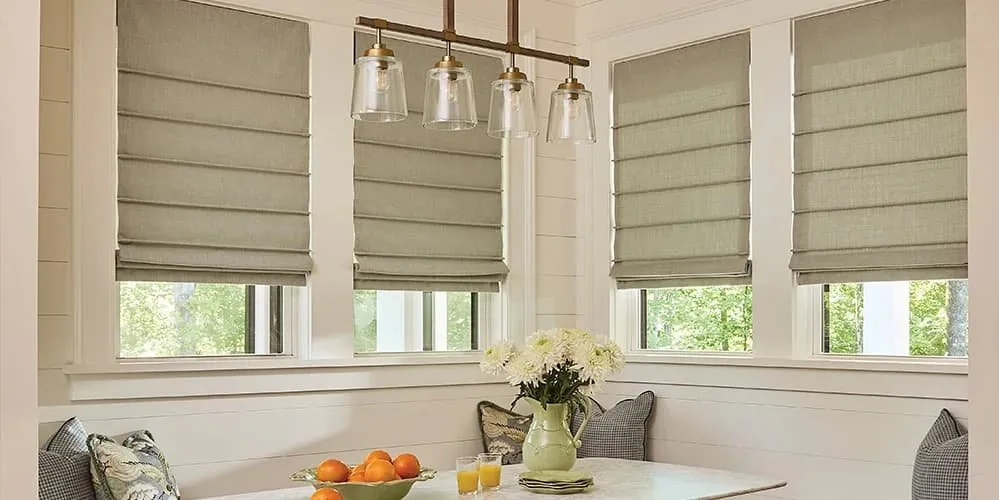
Vignette Modern Roman Shades
Crisp, regular pleats that disappear into the top rail when the shade goes up. A good choice for the bright kitchens and family rooms of a newer colonial.
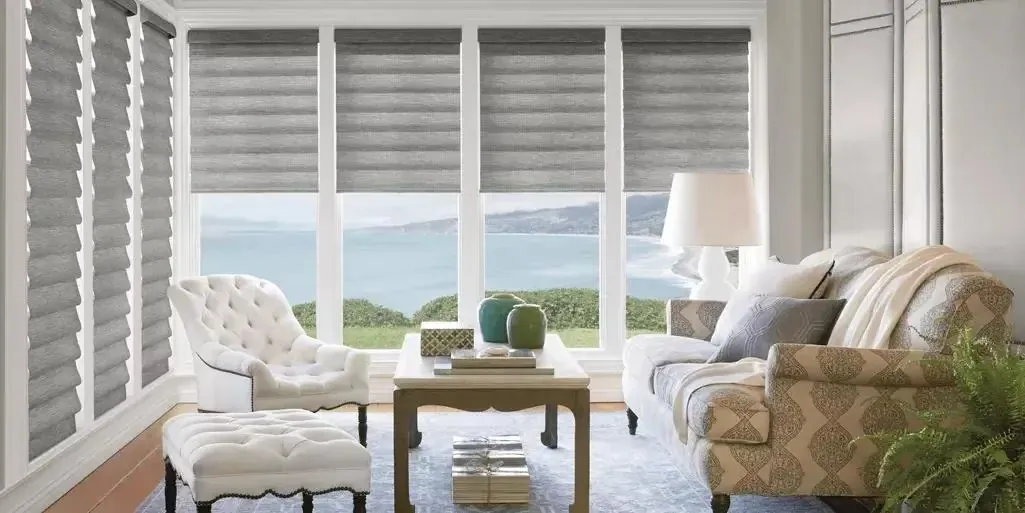
Carole Fabrics Roman Shades
Custom sewn from an extensive fabric collection, smooth-faced or softly looped, for living rooms, dining rooms and bedrooms that want a tailored look.
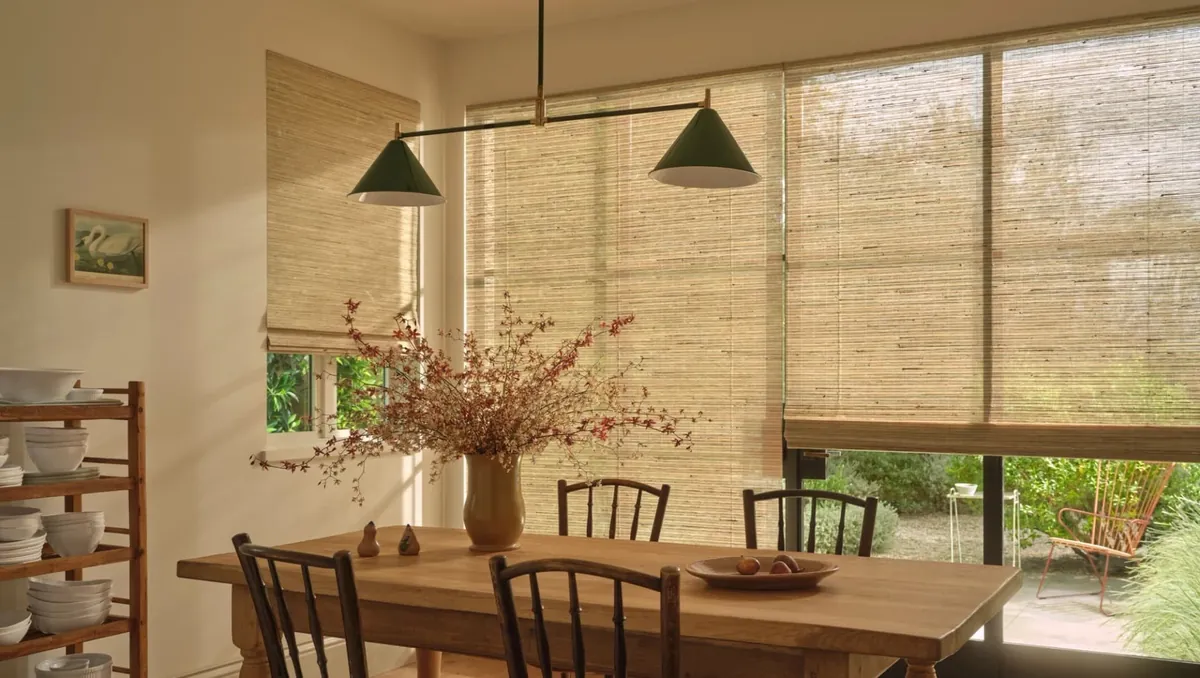
Alustra Woven Textures Roman
Woven natural materials in a roman fold. On a wooded lot, the texture sits well with the view of the trees.
One room, several kinds of light
Think of a corner living room in a Norfolk colonial. The east windows get the morning sun low and bright. The south windows get the strongest light in the middle of the day, high in summer and low and long in winter. A west window catches the late afternoon sun, which is often the most uncomfortable because it comes in flat, straight into your eyes and across a television screen.
Each of those windows wants something slightly different. The east window may be fine with a light, unlined fabric, because morning sun is gentle and welcome in a living room. The south windows might need a lined shade to protect a rug and a sofa from hours of strong light. The west window might need to come down for an hour or two at the end of every sunny day.
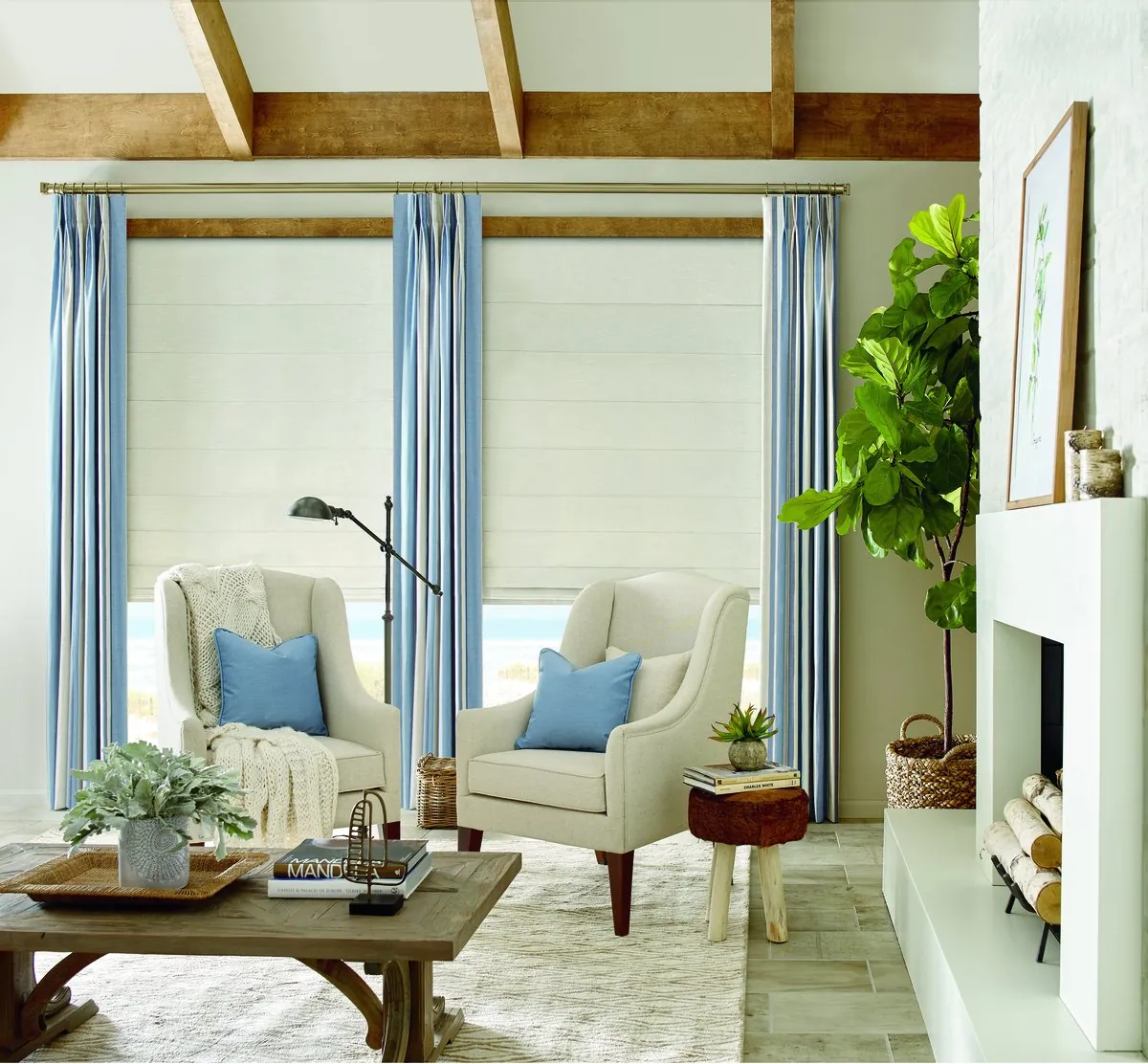
Yet the room still has to look like one room. So we usually choose one face fabric and one fold for every window in the space, and vary only what you cannot see from the room: the lining behind the fabric. From inside, the shades match. From outside, each window is doing its own job.
Colonials: the formal front and the family room behind
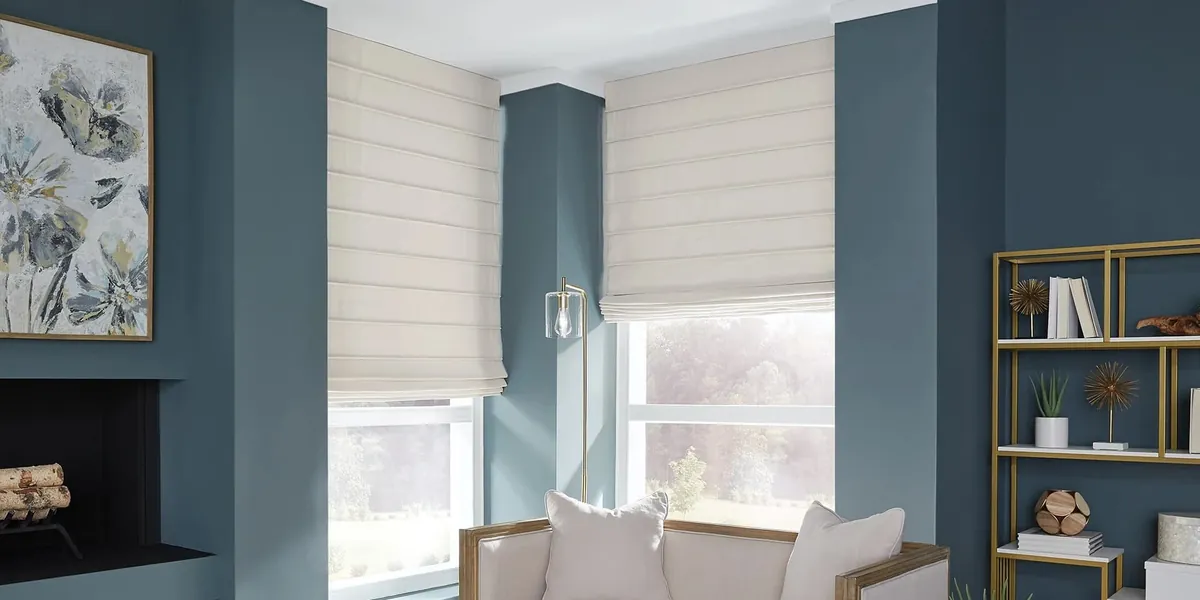
A typical Norfolk colonial has a pair of formal rooms at the front, a living room and a dining room either side of the hall, and a kitchen and family room across the back. The front rooms tend to be used less, often for guests and holidays, and they suit a more tailored treatment. A Carole flat fold in a refined solid, a stripe or a small pattern gives them a finished look, and a flat fold lets that pattern read clearly when the shade is down.
The back of the house is where everyday life happens. The family room often opens to the garden through a wide window or a run of windows, and the kitchen has a window over the sink. Vignette suits those rooms: its even pleats look clean and modern, and when it is raised it gathers so neatly that the view of the garden is barely interrupted. A cordless lift keeps the kitchen window easy to use, even when you are leaning over a counter to reach it.
Upstairs, bedrooms in a colonial usually have two windows, sometimes on two different walls. A room-darkening lining keeps them dim on summer mornings, and a folded style in a soft fabric makes a bedroom feel calm and restful.
Capes on wooded lots
Norfolk’s capes are more compact, with the main rooms downstairs and bedrooms under the roof, lit by dormers. Downstairs, roman shades give a cape a polished look without crowding rooms that are smaller than a colonial’s. Matching shades on the front windows, set to stop at the same height, keep the house looking balanced from the drive.
Dormer windows are set back into small alcoves, which suits an inside mount, but they are often shorter than the windows below. A shorter window makes the stack of a raised shade more noticeable. A lighter fabric, or Vignette with its fold that tucks away into the headrail, keeps more of that window clear. And because the dormers often face different directions on each side of the roof, the same lining logic applies: one look from inside, the right lining for each exposure.
On a wooded lot, trees filter much of the light in summer and then let it pour in once the leaves fall. Many of the rooms in a cape will feel very different in November than in July, so we often suggest a fabric that looks good both raised and lowered, since you will use both.
Space between houses, and what it changes
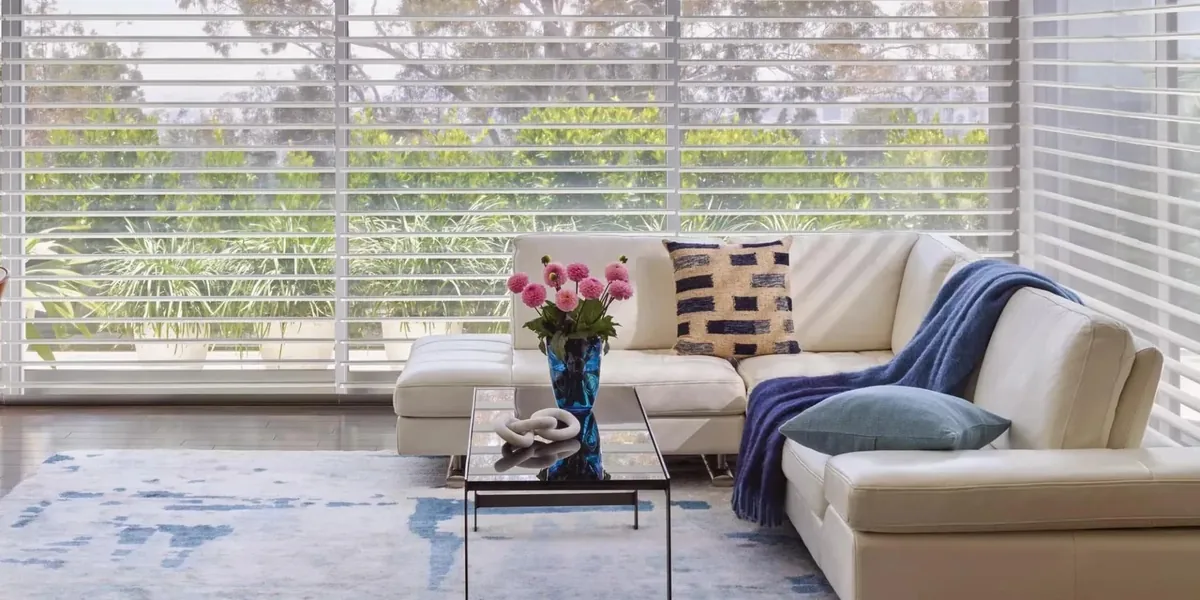
With low density and real setbacks, most Norfolk houses are not overlooked. The nearest neighbor may be hidden behind trees, and the road may be a long way from the front door. That shifts the purpose of a window covering. In a close-set town, a shade is mainly there for privacy. Here it is mainly there for light, comfort and the look of the room.
It means you can often leave shades raised most of the day without feeling on show, and choose lighter, unlined fabrics that let the most daylight through. It also means the evening matters more than the daytime. A house set back on a dark wooded lot is invisible by day and very visible at night, when every lit window glows across the lawn. A privacy lining on the rooms you use after dark solves that without making the room gloomy during the day.
Space between houses also lets in more sun from low angles, since there is nothing nearby to block the early and late light. On a summer evening the west side of a colonial can take direct sun right up until it sets behind the trees, and on a winter morning the east bedrooms are lit long before anyone wants to be up. For roman shades in Norfolk that makes bedroom linings and west-window glare control the two most common requests, more than street privacy. We plan roman shades in Norfolk, MA, with that balance in mind, room by room, and point out where a lighter fabric will serve you better than a heavy one.
Making a corner room look like one design
When a room has windows on more than one wall, small details make the difference between shades that look planned and shades that look like a collection.
- One fabric, one fold. Every shade in the room matches from inside, even if the linings differ.
- Matching heights. Where the windows are the same height, the headrails sit at one line and the bottom rails stop together when half raised.
- Consistent mounts. Inside mounts throughout, or outside mounts throughout, but rarely a mix in one room.
- The same lift. A room with cordless shades on every window is easier to live with than one with three different systems.
On a wide window, two or three matching shades side by side keep the folds even and stay easy to lift. We plan the splits so they line up with the window’s own divisions.
Fabric and lining by exposure
Here is how the side of the house usually shapes the choice. Treat it as a starting point; we fine-tune it at your windows.
- North-facing rooms get soft, steady light all day. An unlined, light fabric keeps them as bright as possible.
- East-facing rooms get early sun. Fine unlined in a kitchen, but a bedroom usually wants a room-darkening lining.
- South-facing rooms get the most light overall. A lining protects furniture, floors and the face fabric itself.
- West-facing rooms get hot, low afternoon sun. A light-filtering lining cuts the glare while keeping the room usable.
Color matters too. Strong light softens bright dyes over time, so on a south or west window a lighter or more neutral fabric, or a lined shade, keeps its color longer. On a north window, there is more freedom to use a stronger color. For more on this, read our page on choosing fabric for a sunny room, or the guide to the best shades for sun and glare.
Automating by side of the house
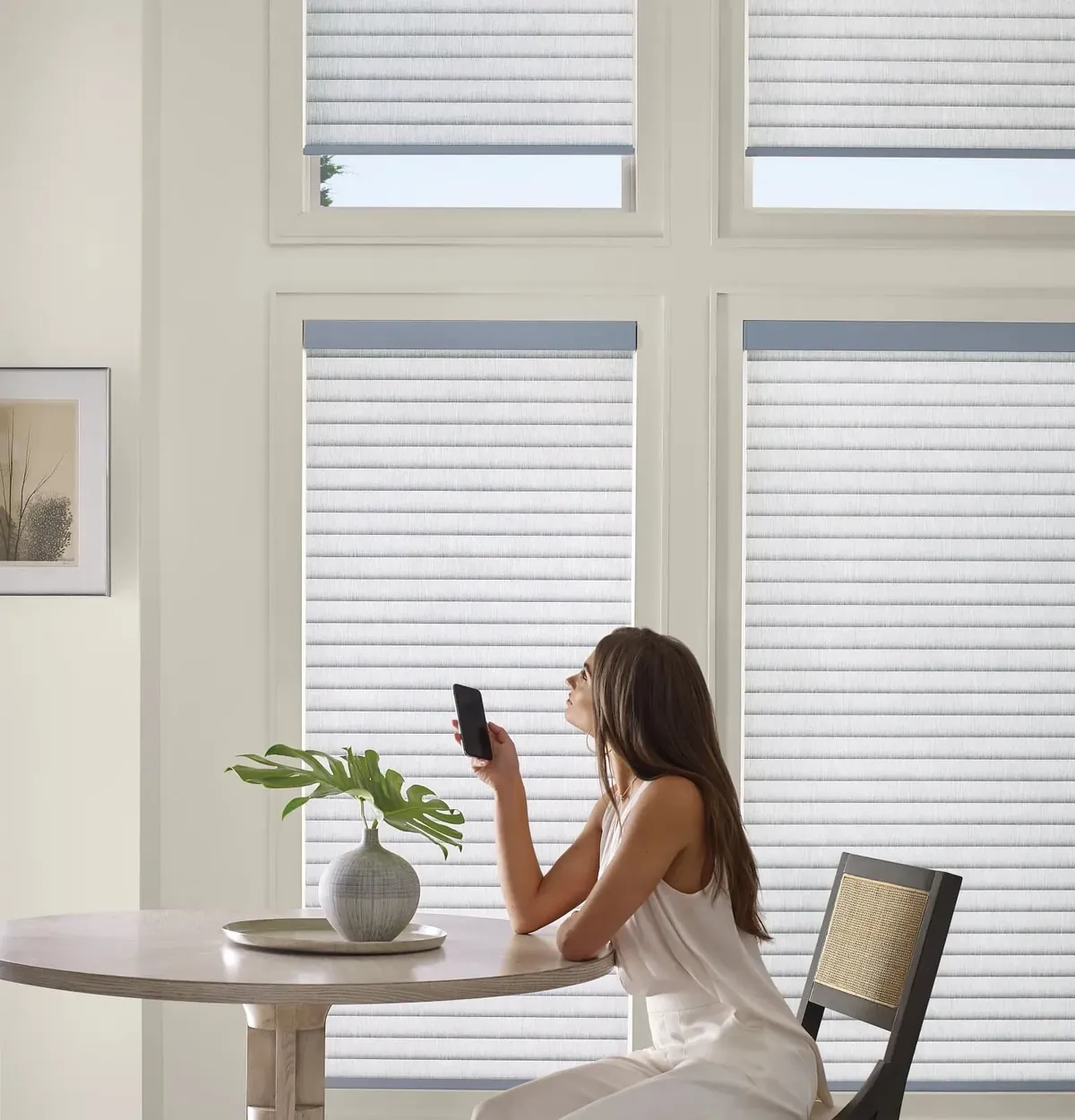
When the light moves around a house from one side to the next, motorization becomes genuinely useful rather than a luxury. With PowerView, roman shades can be grouped and scheduled by the direction they face.
A common plan in a Norfolk colonial looks something like this: the east bedroom shades open gently in the morning; the south-facing family room shades lower part way during the brightest part of a summer day; the west-facing shades come down in the late afternoon and rise again after sunset. You can still override any of it from a remote or the app on your phone whenever you like.
It is also the easy answer for a high window, such as one over a two-story entry or above a staircase, where no one can reach the shade by hand. How each motor will be powered is something we work out with you when we visit. The guide on how motorized shades are controlled has more on remotes, the app and schedules.
Planning at home
Light that changes from one wall to the next is impossible to judge in a store, which is why we plan roman shades in Norfolk houses in the rooms themselves. Our vans carry the sample range, so the showroom effectively comes to your drive.
- Choose a time through Request a Consultation, or reach us with the call button.
- A consultant brings Vignette, Carole Fabrics and woven roman samples, linings and lift options.
- We start with the rooms that have windows on several walls and talk through how the light moves through the day.
- You hold fabrics and linings up at different windows to see how each exposure changes them.
- Each opening is measured and its depth checked for an inside mount.
- You receive a free estimate and are free to take whatever time you need.
If you would like help with color and pattern across the house, ask for an interior design consultation at the same appointment. Our guide to what happens at an in-home consultation explains the visit.

Modern frames and inside mounts
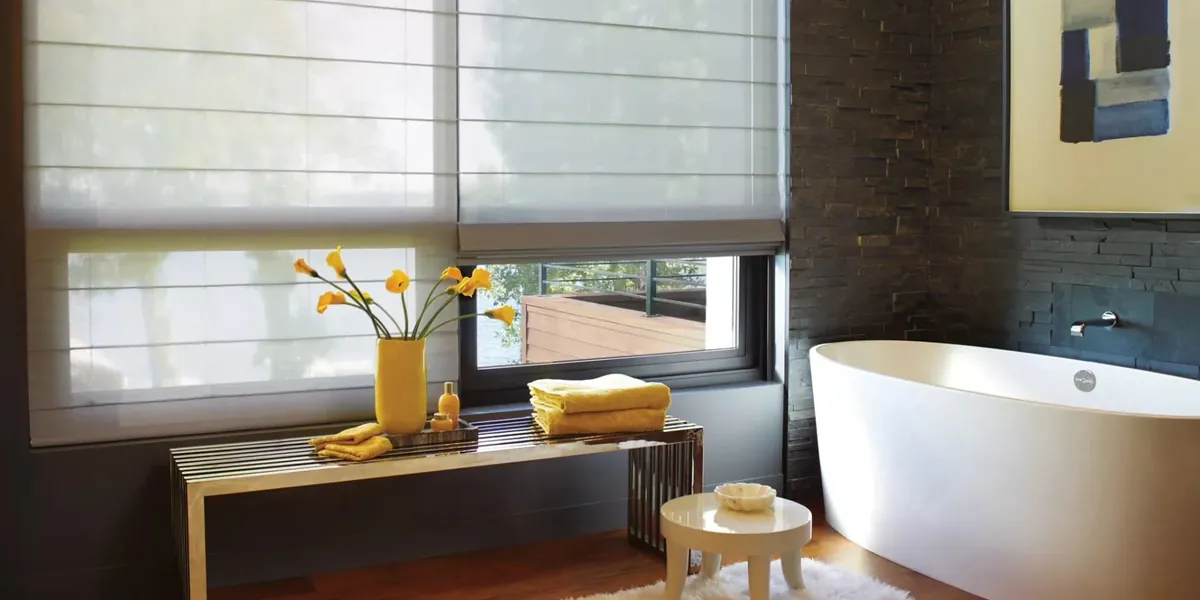
Because Norfolk’s openings are mostly standard modern sizes, an inside mount is nearly always possible. The headrail sits within the frame, the shade hangs close to the glass, and the window trim stays fully on show. It is the cleanest look and it keeps a row of windows tidy.
There are still a few things we check. A casement crank or a window lock can sit where the headrail needs to go. A shallow frame on a replacement window can be too tight for a lined, heavier shade. And on a bedroom where you want the darkest result, an outside mount that overlaps the frame blocks the thin strips of light that an inside mount leaves at the edges. We take widths at the top, middle and bottom of each opening, and the frame depth in several places, then recommend the mount that suits each window.
Fitting day
Once the shades are made, our certified Hunter Douglas installers come back to hang them. Brackets are fixed into solid framing so the shades stay level on windows that are opened every summer. Each headrail is checked with a level, matched to the shades beside it, and every shade is raised and lowered a few times so the folds train evenly. Motorized shades are paired with their remote or the app, and your schedules are set up before the installer leaves. If you want to know more first, read what happens on installation day.
Later on, if a cord loop frays or a lift stops working, we repair blinds and shades too. Treated sensibly, roman shades in Norfolk, MA, last as long as the room’s decoration.
What a Gallery dealer means for you
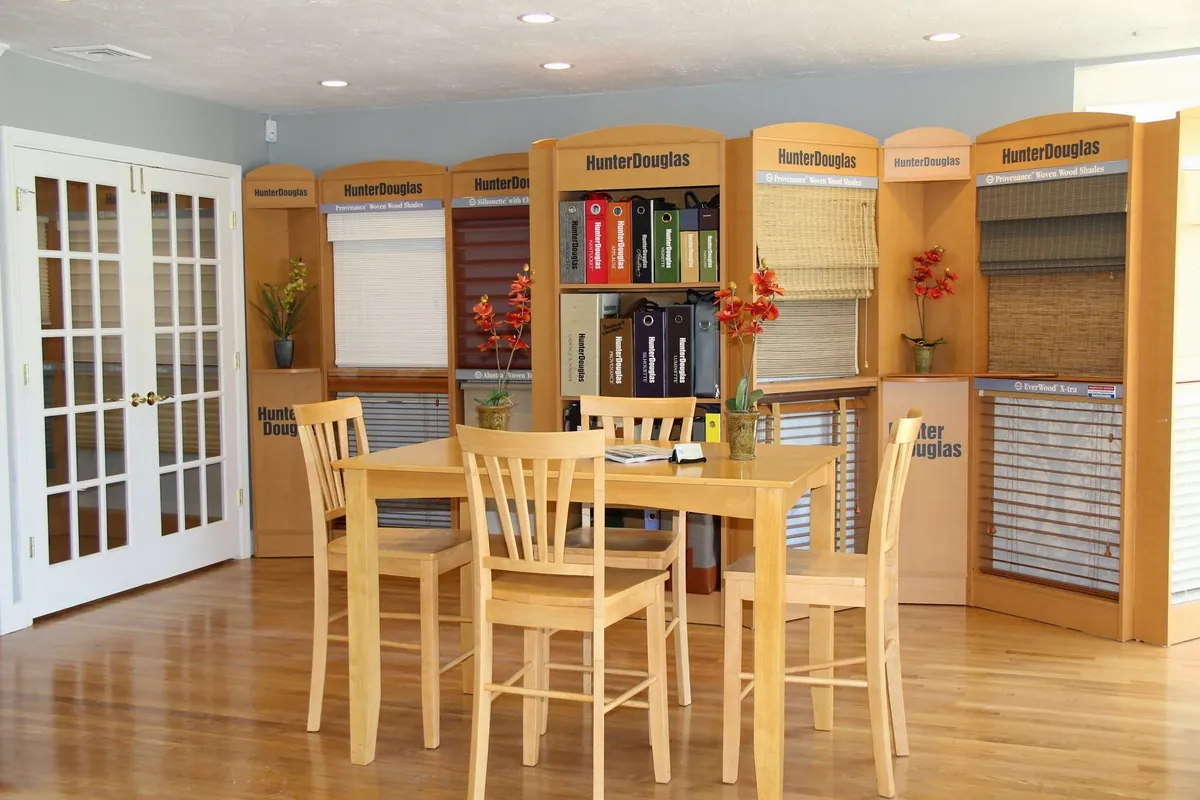
Hunter Douglas names dealers who meet its standards Gallery dealers, and Blinds & Designs is one of them. That opens up the full roman range, from Vignette to Carole Fabrics to Alustra Woven Textures, and the rest of the Hunter Douglas family as well: honeycomb shades for a cold bedroom, sheers for a wall of glass, shutters for a formal front room.
Every installation is carried out by Hunter Douglas certified installers. For other rooms, take a look at our cellular shades in Norfolk, everything we offer on our Norfolk page, or the complete roman shades collection.
Franklin is the closest showroom
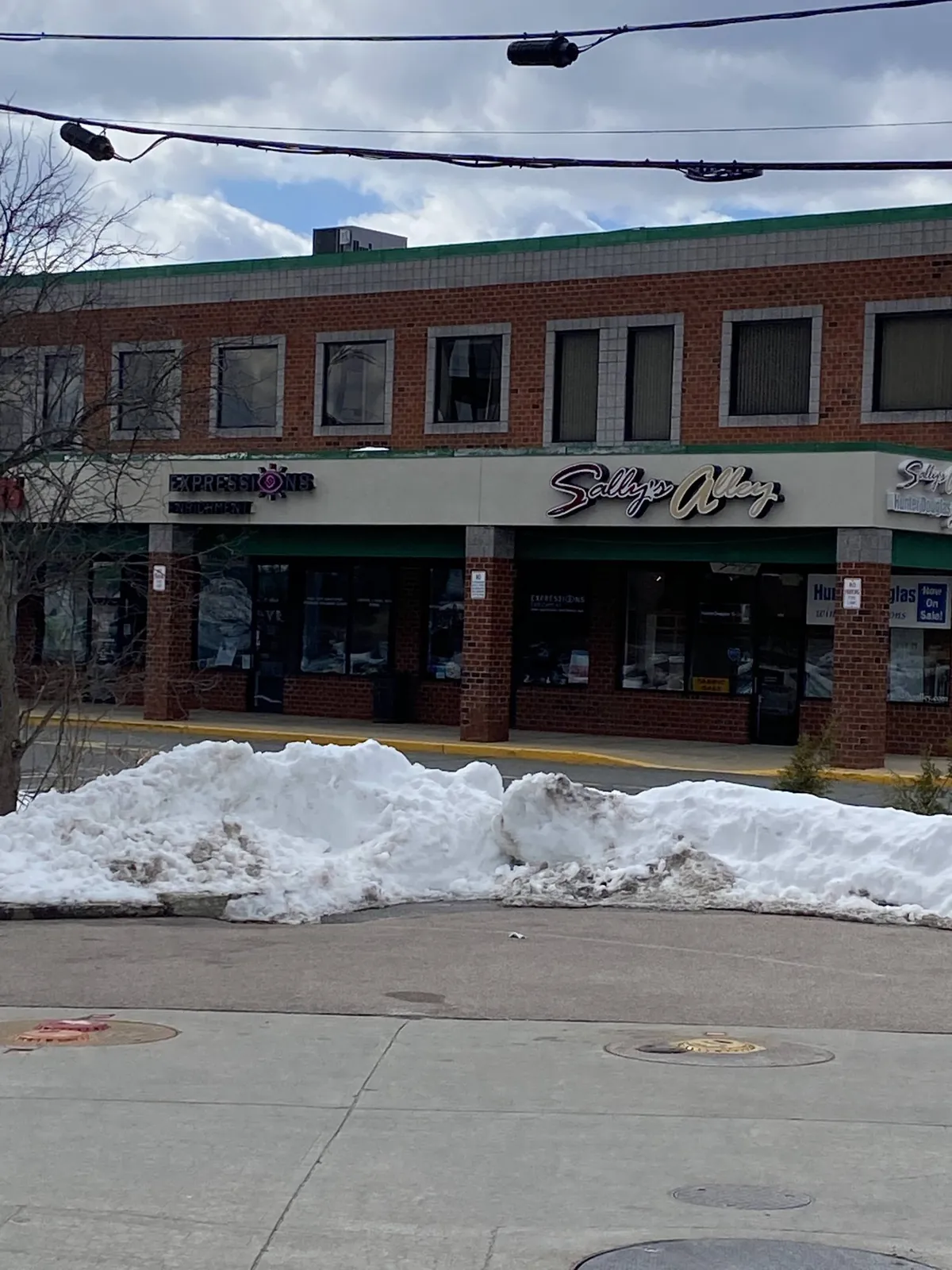
Franklin is the nearest of our showrooms to Norfolk, a short drive away, and you are welcome to stop in while it is open. Most people still find the home visit the most useful step, because a corner room with light on three walls is far easier to plan from the middle of the room than from memory.
Questions from Norfolk
Our family room has windows on three walls. Do all the shades have to be the same?
From inside, ideally yes: one fabric and one fold keeps the room looking like a single design. Behind the fabric, each window can have a different lining, so the west window cuts more glare than the north one.
Can shades lower themselves when the afternoon sun comes round?
Yes. PowerView lets you group shades by the side of the house they face and set schedules for each group, with a remote or the app to override them any time.
Will an inside mount work on our windows?
On most standard modern openings, yes. We check for cranks, locks and shallow frames at each window, and suggest an outside mount where it gives a better result.
Which fabric holds its color on a south-facing window?
Lighter and more neutral fabrics hold up best under strong sun, and a lining protects the face fabric. On a north-facing window you can be bolder.
How much does the estimate cost?
Nothing. The estimate is free, given after we have measured your windows at the consultation.
Start with a visit
A corner room is best planned standing in it. Request a consultation and a consultant will bring the samples to your house, measure each window and give you a free estimate. To ask a question first, use the call button, or call in at the Franklin showroom.