
Wind off the canal, light off the water
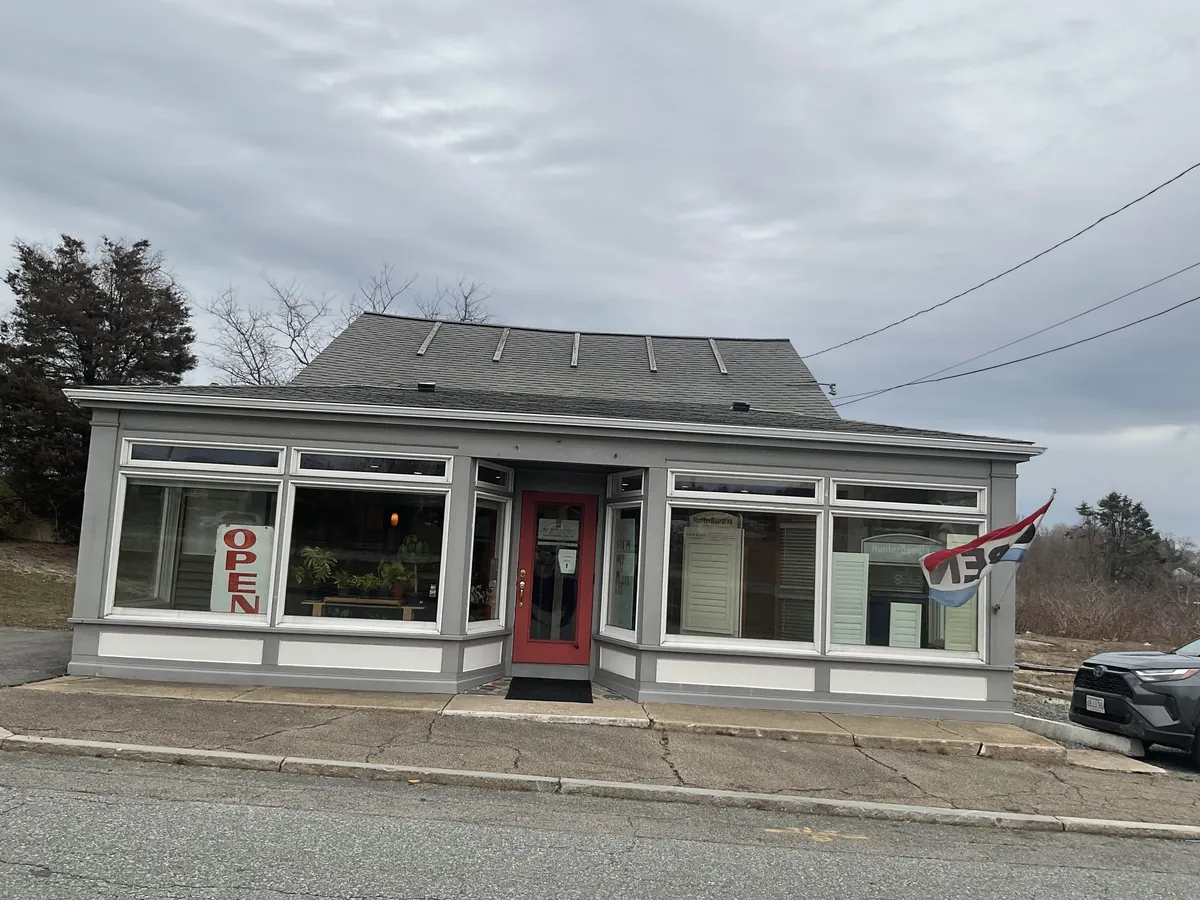
Our Sagamore showroom sits in Bourne, so this is the town on our own doorstep. Bourne is really several places in one. There are the summer-born cottages of Monument Beach and Pocasset, the older housing of Buzzards Bay village, and the newer colonials set back from the shore in the wooded inland neighborhoods. Each kind of house needs something different, which is why window treatments in Bourne, MA, are rarely a one-product answer.
The canal ties much of it together. Rooms that face the water take weather that the wind drives straight at the glass, and on a clear day the light bounces off the canal and the bay with a hard, flat glare. A shade that is fine on a sheltered street can rattle, fade or simply fail to cope in a room like that.
Come into the showroom to look around, or ask us to bring the samples to you. Either way, the same company measures, orders and fits every window.
Window treatments in Bourne, MA: what we offer in town
Each service has its own Bourne page with more on the product and the houses it suits best.
Custom blinds in Bourne
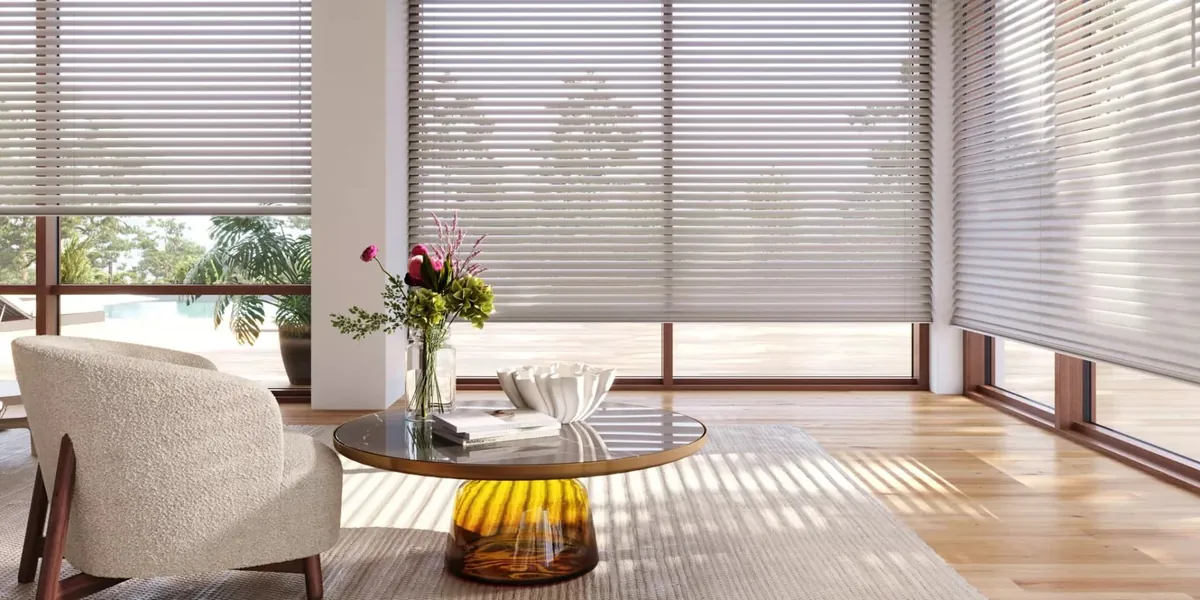
Real wood, faux wood, metal and vertical blinds. Slats angle the reflected glare up and away from a canal-side room.
Cellular shades in Bourne
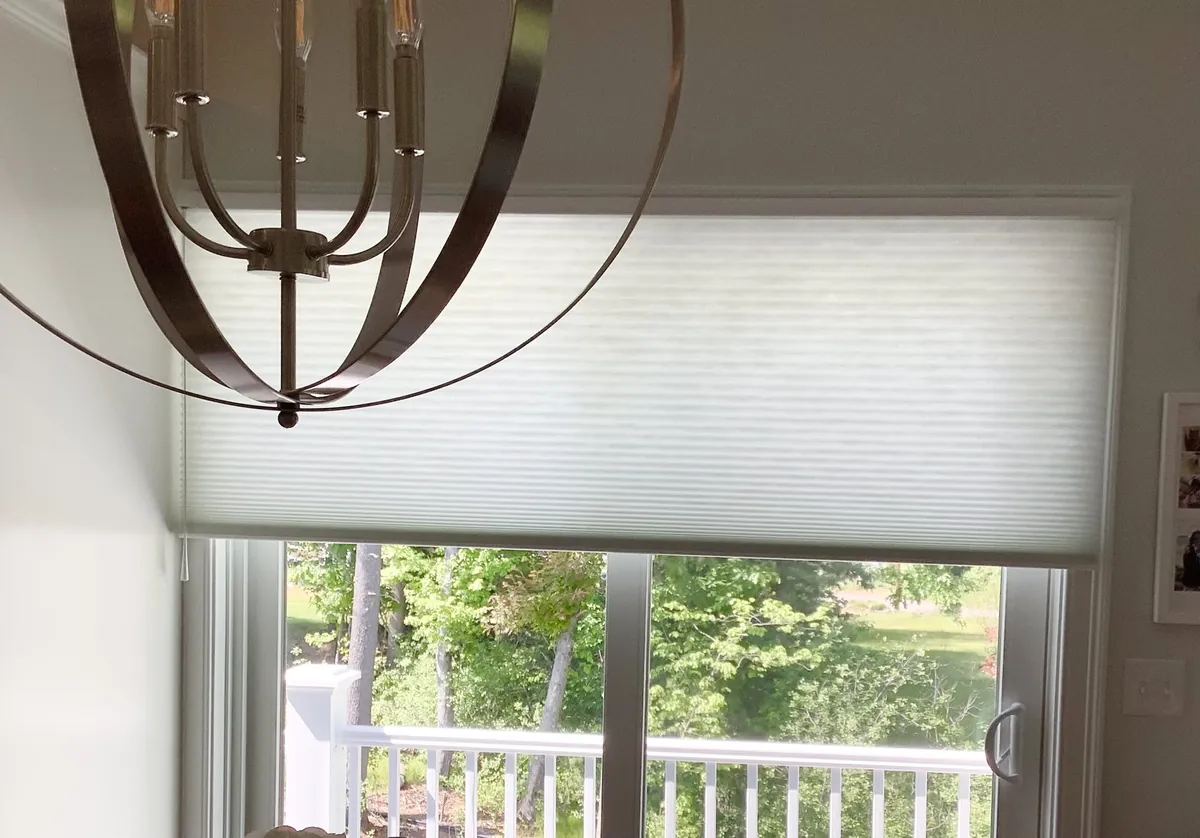
Honeycomb shades from Duette and Applause. The cells hold air against the glass, which helps a cottage built for summer stay warm in winter.
Roller shades in Bourne
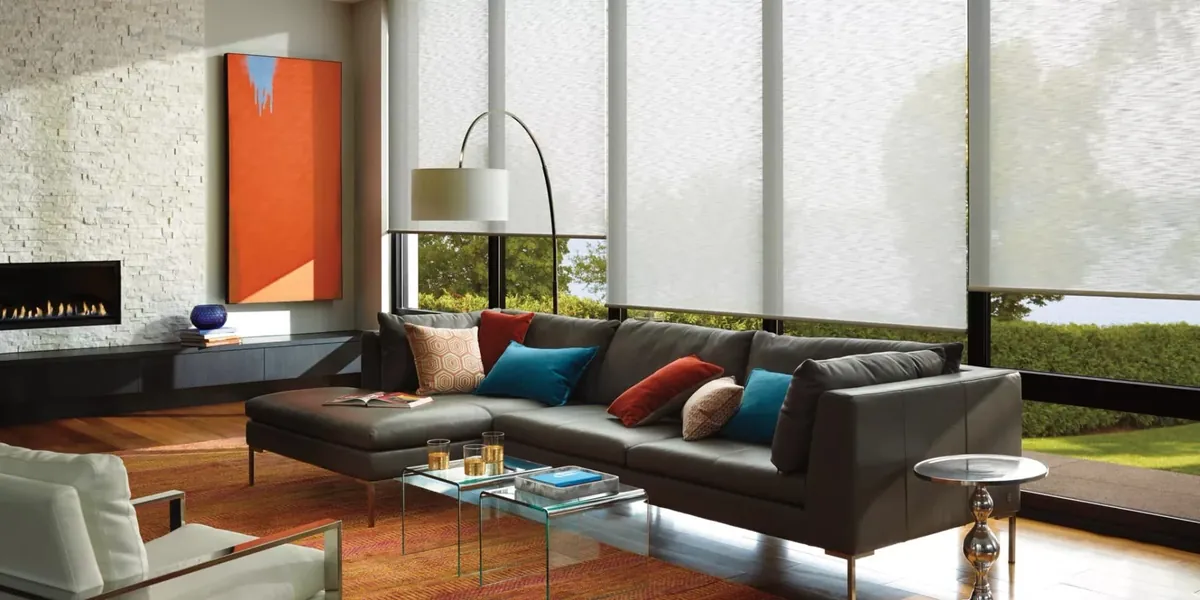
Designer and Alustra rollers and screens. Pick the weave by how much glare you want gone and how much water you want to see.
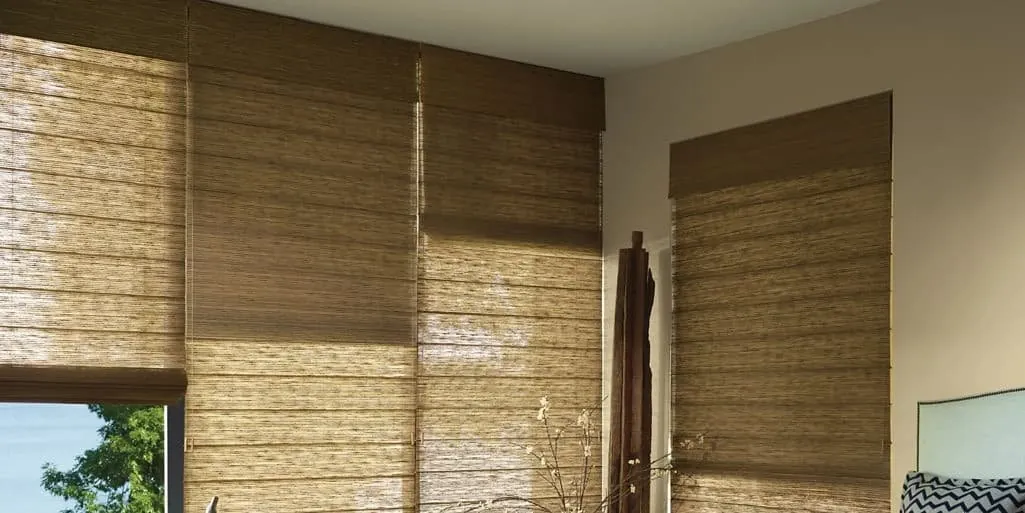
Roman shades in Bourne
Flat and folded romans from Vignette and Carole Fabrics, for a colonial dining room or a cottage bedroom.
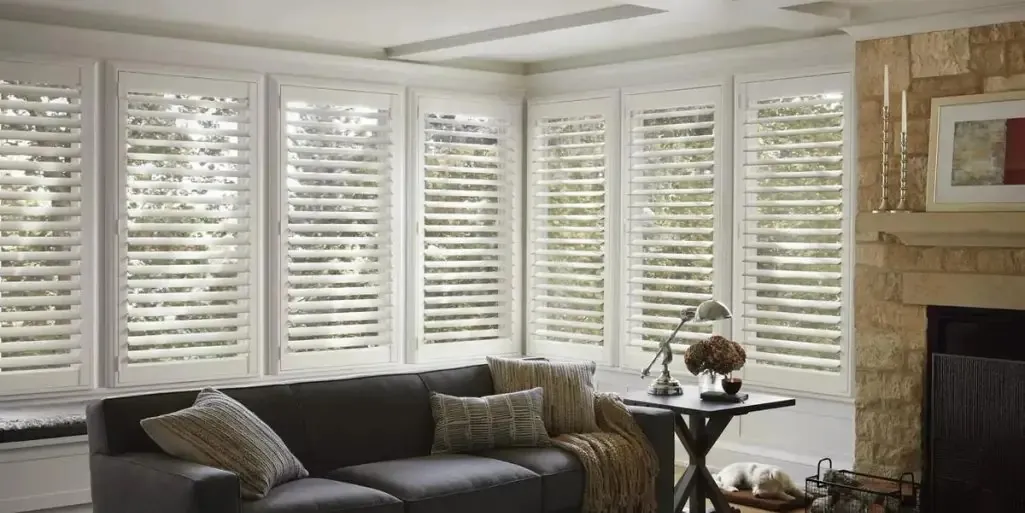
Shutters in Bourne
Palm Beach, NewStyle and Heritance plantation shutters: sturdy panels that sit firm in a window the wind leans on.
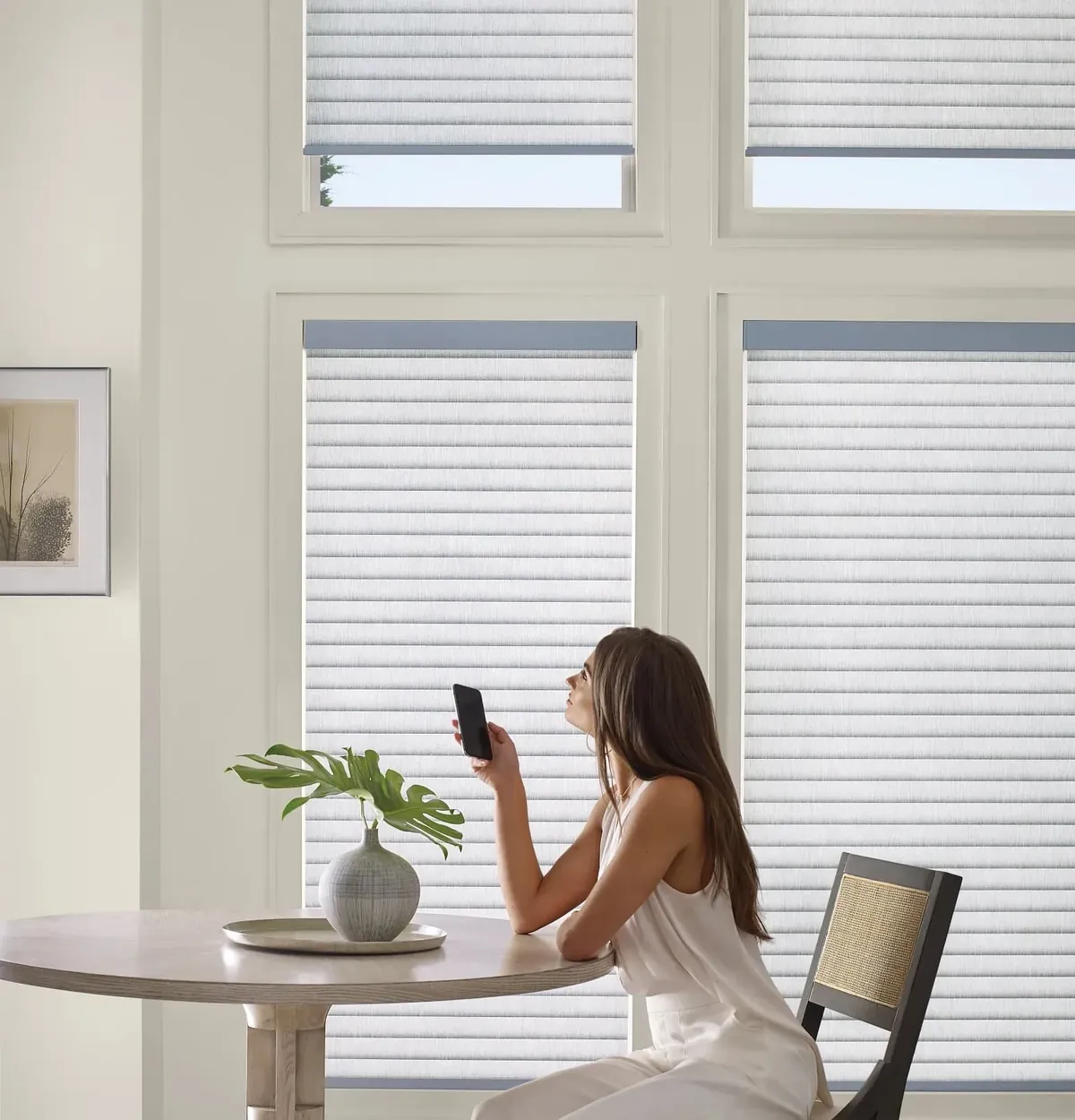
Motorized shades in Bourne
PowerView, run from an app, a remote or a timetable, so the shades close on the canal side before the glare peaks.
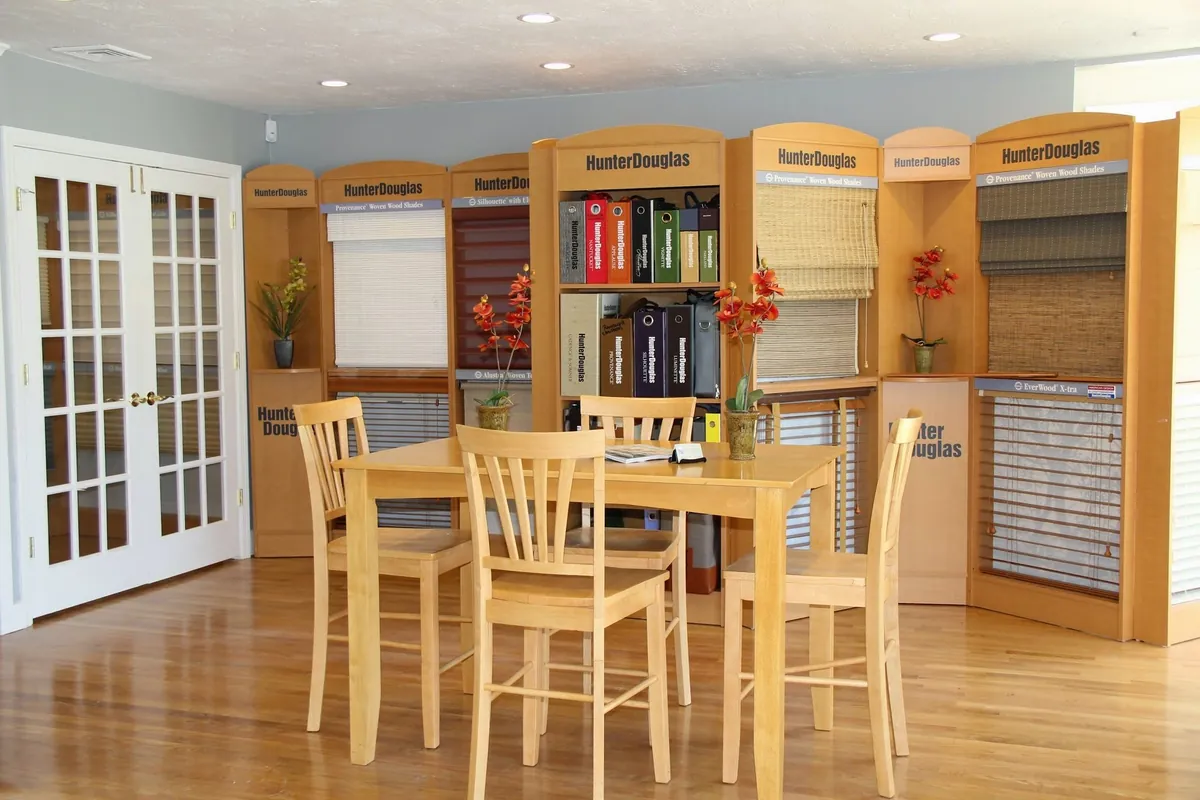
Hunter Douglas in Bourne
A Gallery dealer for the brand, with installation by certified Hunter Douglas installers.
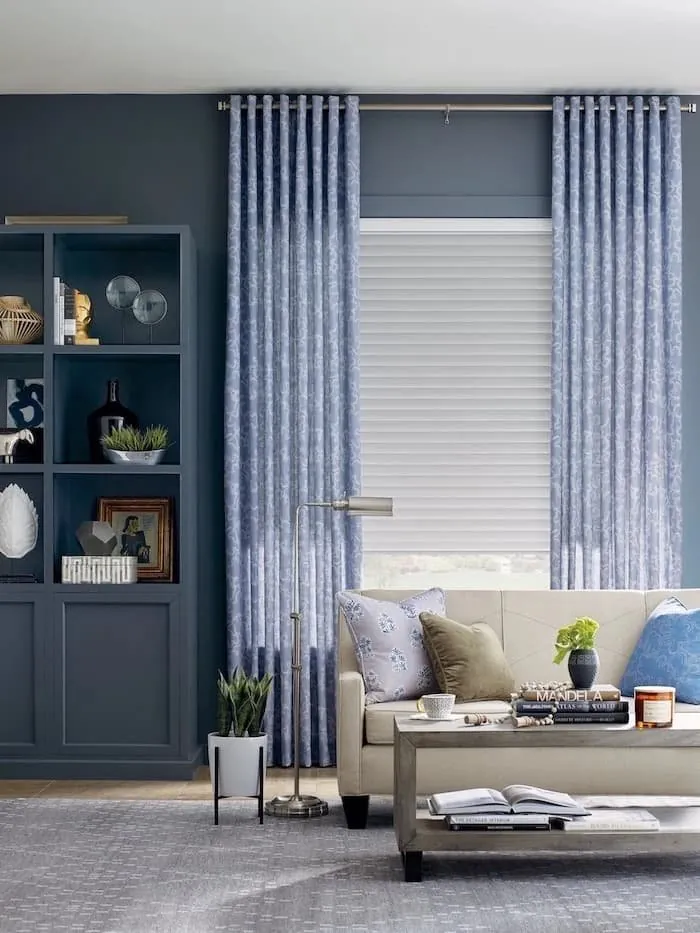
Drapery in Bourne
Hunter Douglas drapery to soften a big living room window and close out a cold night.

Repairs in Bourne
If a shade you already own has stopped working, we are glad to look at it before you think about replacing it.
Weather that comes at the glass sideways
A canal-side room is exposed in a way an inland room is not. The wind funnels along the water, and on a stormy day rain and spray are driven hard against the windows. Even in a well-sealed house, a window on the weather side gets cold to the touch, and older cottage windows let the draught in around the sash.
That shapes the choice of treatment in a few ways. First, warmth: a honeycomb shade lowered on a cold evening holds a still layer of air between the glass and the room, which is the single most useful thing you can hang on a window that takes the wind. A double-cell fabric adds a second layer for the most exposed rooms. Drapery over it, lined, closes off the cold that spills around the edges.
Second, sturdiness. A window that gets opened to the breeze on a summer day sees a shade swing and knock. Bottom rails with hold-down brackets keep a shade from flapping. Shutters, hinged into a solid frame, do not move in a breeze at all. Rollers in a cassette with side channels stay put too.
Third, the fixings. On a coastal house our certified Hunter Douglas installers fix every bracket into solid framing, because a window that the weather works on will loosen anything that is only held by plaster.
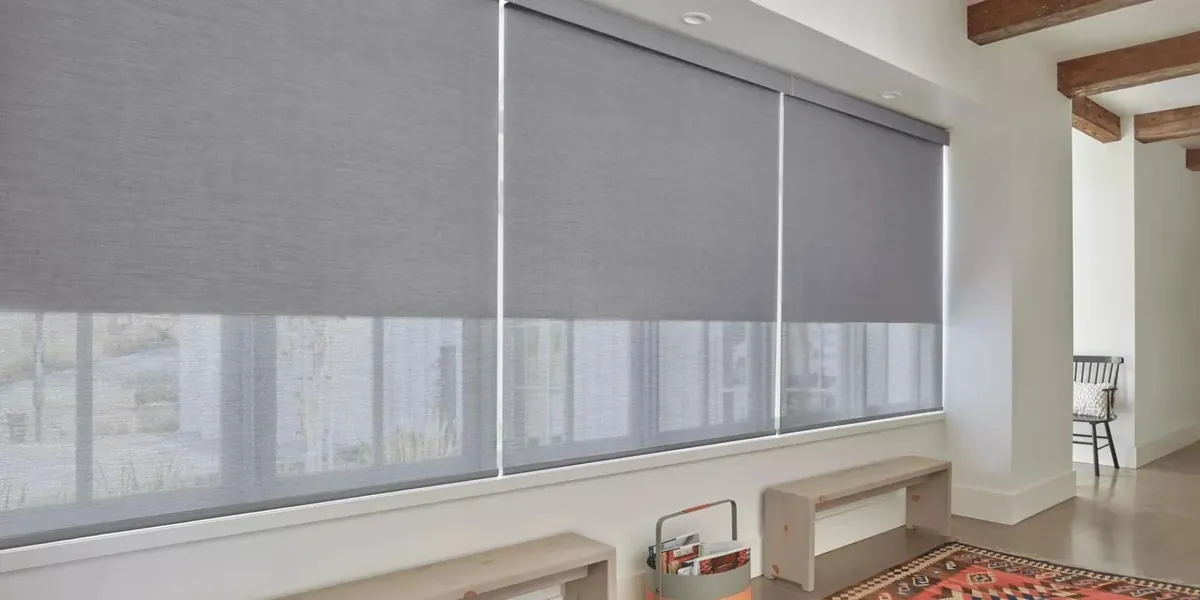
Reflected light off the canal and the bay
The glare in a water-facing room in Bourne is not only from the sun overhead. Water acts as a mirror, so light comes up from below as well, flat and bright, and it reaches deep into a room. It is the kind of light that makes a television hard to watch and leaves a pale patch on a rug.
Solar screen roller shades are the usual answer. The screen is a woven fabric with small openings; lowered, it cuts the glare and some of the heat while you still see the water. Each screen comes in several openness levels, and the choice is a trade between view and glare control. On a canal room we bring several and hold them up on a bright day.
Blinds are the other good option. With the slats tilted upward, the reflected light is thrown at the ceiling rather than across the room, and the slats can be closed tight when the sun is at its worst. Sheer shades with tilting vanes do something similar in a softer way.
Motorization is especially handy for this. Glare off the water comes at predictable times, and a set of PowerView shades on a schedule can lower themselves before it starts and rise again once it has passed, without anyone needing to be home.
Monument Beach and Pocasset cottages
Many of the cottages around Monument Beach and Pocasset began as summer places and have been winterised, added to and opened up over the years. That gives them a character all their own: low ceilings, small rooms, windows of every size and age, and often a porch closed in to make an extra room.
The windows in a cottage like that rarely match. A front room may have a pair of old double-hungs, a newer bay, and a door to the porch, all within a few feet of each other. Measuring each opening on its own and making each shade to fit is what makes the room look calm. Keeping one fabric and one color across the different windows does the rest.
Small rooms reward treatments with a slim profile. A honeycomb shade lifts into a narrow stack. A roller rolls almost out of sight. Plantation shutters, swung open against the wall, clear the whole window. A closed-in porch with glass on three sides is a good place for screen shades in summer and honeycomb shades for the shoulder seasons, sometimes both on one bracket.
Cottages close to the road or a neighbor often want privacy without darkness. A top-down, bottom-up shade covers the lower half and keeps the sky open, and a light-filtering fabric gives daytime privacy without blocking the light.
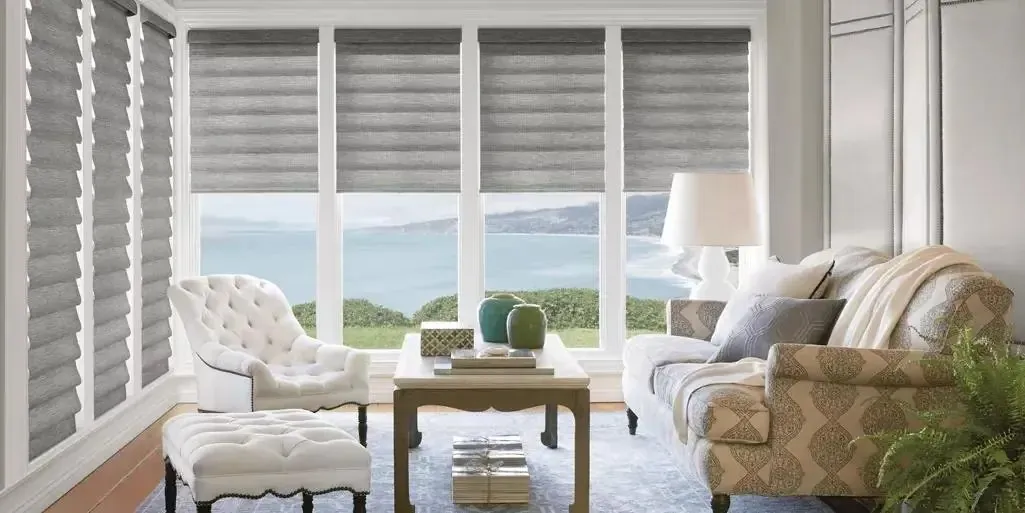
Newer colonials inland
Away from the shore, much of Bourne’s newer housing is colonials and capes on wooded lots. These houses are more regular: standard window sizes, consistent trim, two stories, a family room with a bigger window or a slider to the deck.
That regularity makes it easy to plan a whole house at once. A common plan is shutters or wood blinds in the front rooms facing the street, honeycomb shades in the bedrooms for warmth and quiet, a roman shade in the dining room for softness, and a roller or faux wood blind in the kitchen. With standard windows, everything lines up neatly and the house looks consistent from outside.
Two-story foyers and family rooms with tall windows are where these houses get trickier. A window above a stair landing or high in a vaulted room is out of reach by hand. PowerView motorization solves it, with the shade raised and lowered from a remote, a phone or a wall switch. A trees-and-shade lot can also mean darker rooms, so light-filtering fabrics often suit better than heavy ones.
Bedrooms over the garage or at the back of the house often catch early or late sun. Room-darkening honeycomb shades or blackout rollers with close side gaps keep them dark when they need to be.
Decks, sliders and French doors
Almost every Bourne house, cottage or colonial, has a door out to a deck, a patio or a yard, and in summer it barely closes. The treatment on it has to move out of the way completely, survive being brushed past a dozen times a day and still give privacy and shade when it is drawn.
Sliders take a covering that travels sideways. A vertical honeycomb shade stacks tightly to one side and adds warmth in winter. Gliding panels, such as Skyline, move in overlapping tracks and give a clean, modern look on a wide opening. Vertical blinds tilt their vanes for light without drawing back, and Luminette privacy sheers combine the softness of drapery with vanes that rotate. Each is a different look on the same door, so we bring samples of each.
French doors are a different case, because each door swings. Shades or shutters mounted on the doors themselves, with hold-down brackets at the bottom, move with the door and stay flat against the glass. A shutter panel on each door gives a tailored finish that matches shutters on the windows beside it. When we plan window treatments in Bourne houses with a busy back door, we treat that door as the most used window in the house, because it usually is.
From your first call to a finished room
Being based in town means the in-home visit is easy to arrange, and we can bring the showroom to you. Here is the usual order of things.
- You send a request through the Request a Consultation form or reach us with the call button, and pick a time.
- A consultant drives over with the van, which is stocked with fabric books, screen samples, blind slats and shutter louvers.
- Together we look at each room and what you would like to change: the glare, a draught, privacy, or the look.
- You compare samples on your own windows, on the water side and the sheltered side.
- Every window is measured, with notes on depth, trim and anything that sticks out.
- You are given a free estimate, and the decision is yours to make when you are ready.
- After the order arrives, our certified Hunter Douglas installers put everything up, level it and show you the controls.
Help with color, fabric and the look of a room is available through our interior design consultations. The in-home consultations page covers the visit itself.

Village houses near the canal
Buzzards Bay village, at the western end of the canal, has its own page, but the older housing there and in the other village centers has a character worth mentioning. These are older, closer-set houses, often with smaller original windows and neighbors a short distance away.
Privacy usually comes first in those rooms. Light-filtering fabrics, top-down, bottom-up shades, cafe shutters and sheer shades all give privacy without turning a small room dark. You can read more on our Buzzards Bay page.
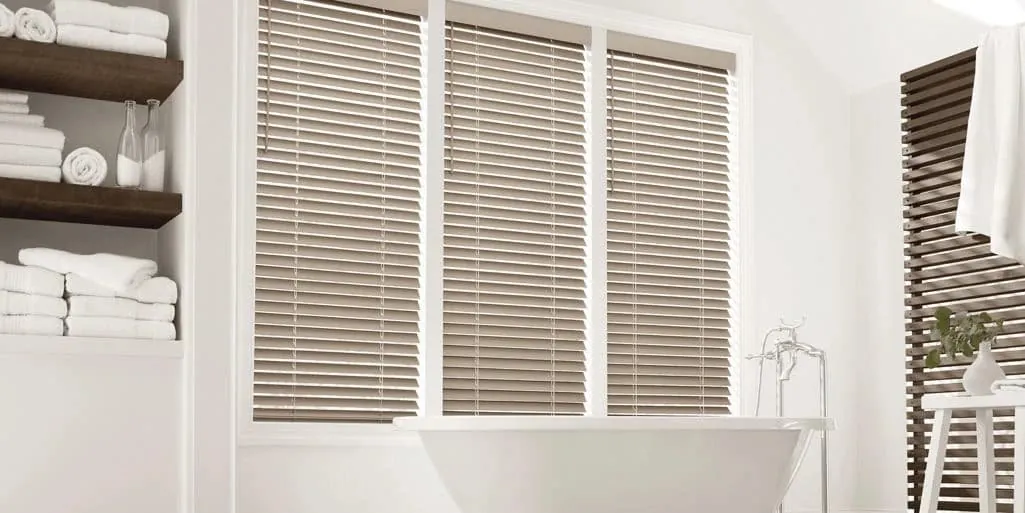
Kitchens, baths and the rooms that get wet
Every house has rooms where steam, splashes and sandy feet are part of daily life. In a Bourne house that includes the kitchen and bathrooms, and often a mudroom or an outdoor shower room by the back door.
Faux wood blinds are a practical favorite: they look like wood, wipe clean and cope with humidity. Palm Beach polysatin shutters do well in a bathroom too, with louvers that tilt to let light in while blocking the view. Roller shades in a wipeable fabric work in a kitchen where a plain line suits. For a window right over a tub or a sink, a cordless top-down, bottom-up shade or a cafe shutter keeps the lower part covered and the top open.
Fabric and finish in strong light
A room facing the water takes more sun than most, and strong, daily sun is hard on dyed fabric. Over a few summers, a bright color on a south or west window can fade unevenly.
Lighter and neutral fabrics tend to keep their color longest in these rooms. Shutters and blinds, which have no dyed fabric, are another option where a window takes sun all day. Screen shades protect what is behind them, so a screen lowered during the brightest hours helps the floors and furniture as well. Our guide to choosing fabric for a sunny room has more.
When we plan window treatments in Bourne for a water-facing room, we keep the fabric facing the glass light and consistent, and save the stronger colors for the room side or for drapery that can be drawn back out of the sun.
Houses that sit closed for part of the year
Some Bourne houses, especially near the water, are shut up for weeks or months at a time. A house left with its shades open faces the sun every day with nobody there to close them, and a house left with everything closed looks shut from the road.
Motorization helps on both counts. PowerView shades can follow a schedule whether anyone is in the house or not: down during the brightest hours to keep the sun off floors and upholstery, part-way up in the morning and evening so the house does not look closed. The app lets you change the schedule from wherever you are.
For houses that are not motorized, screen shades left lowered on the sunny side protect the room while still letting some light in. Shutters with the louvers angled can be left in a position that blocks direct sun without shutting the room off completely. And cordless shades, with no cords hanging loose, are one less thing to tidy when the house is closed for the season.
Why a Hunter Douglas Gallery dealer
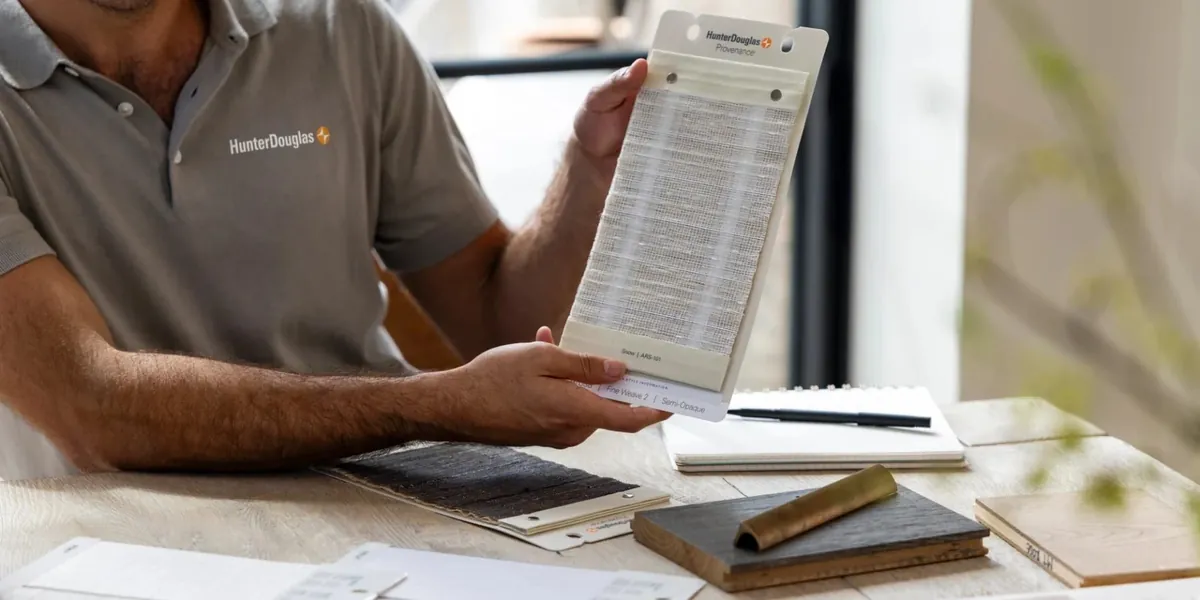
Blinds & Designs is a Hunter Douglas Gallery dealer, with showrooms in North Dartmouth, Franklin and Sagamore. That puts every Hunter Douglas product within reach of a Bourne house: honeycomb, roller, screen, roman, sheer and woven shades, the full range of blinds, three shutter collections, drapery and PowerView automation.
Installation is carried out by installers Hunter Douglas has certified. Repairs to coverings you already own, and interior design consultations, are part of what we do as well.
See the brand overview on our Hunter Douglas page, or start with window treatments.
The Sagamore showroom, here in Bourne
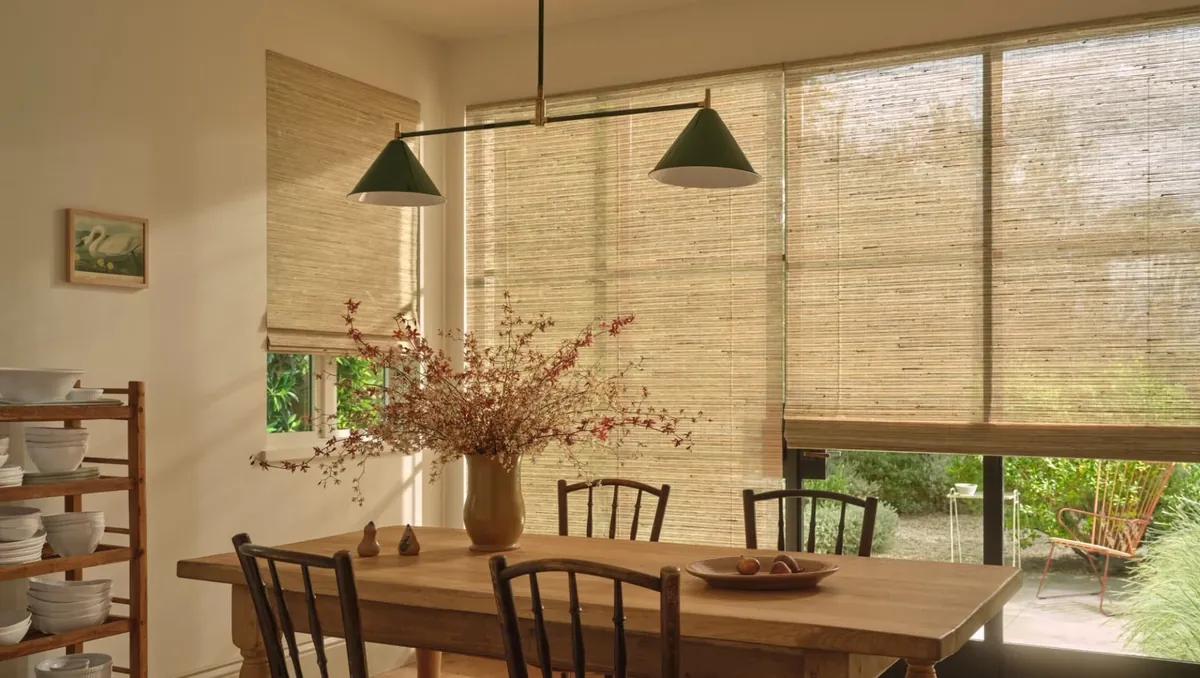
For a Bourne house, our Sagamore showroom is the closest of our locations. Stop in to see the range, or have us come to the house, where we can see the windows and the water for ourselves.
Questions from Bourne
What helps most on a window that takes the weather off the canal?
A honeycomb shade lowered in the evening holds still air against the cold glass, and lined drapery over it stops the draught at the edges. Shutters and shades with hold-down brackets stay put when the window is open to the wind.
How do I cut the glare off the water but keep the view?
A solar screen roller shade. It cuts the glare and some heat while you see out. Blinds tilted up and sheer shades also help, and motorized shades can lower on a schedule when the glare is at its worst.
My cottage windows are all different sizes. Is that a problem?
Not at all. Each window is measured and made to its own size, and keeping the same fabric and color across them makes the room look consistent.
Can you reach the high windows in a two-story foyer?
Yes. PowerView motorized shades are raised and lowered by remote, app or wall switch, so high windows need no ladder after installation day.
Is the estimate free?
Yes. We measure every window, talk through the choices and give you a free estimate to consider.
Your next step
The surest way to get window treatments in Bourne, MA, right is to see the options in the rooms that need them. Request a consultation and a consultant will come to the house with samples, measure up and leave a free estimate. Or use the call button, or drop in at the Sagamore showroom.