
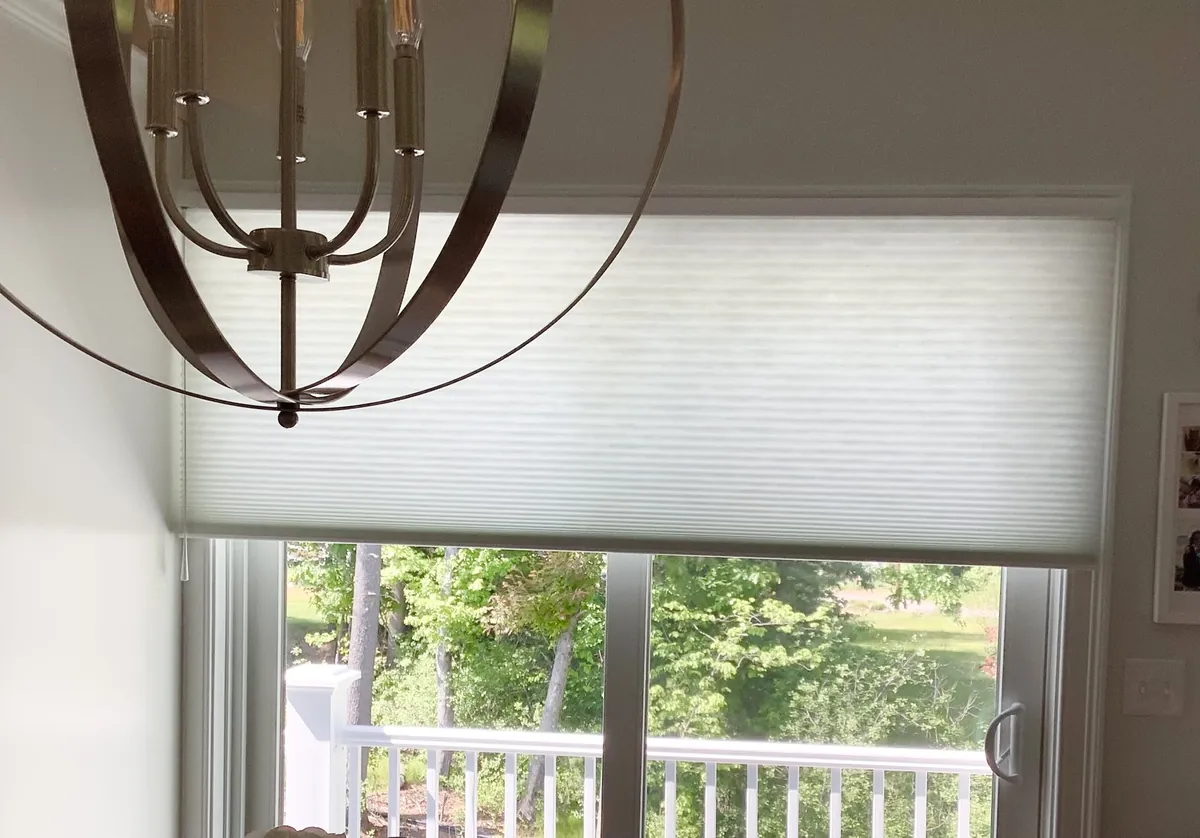
Regular windows, set back among the trees
Hanover’s houses are, for the most part, easy to fit and interesting to plan. The post-war capes and ranches and the newer colonials off Washington Street and around the Four Corners were nearly all built with standard modern openings: double-hung units, a picture window or two, a slider to the yard. Most of them sit on wooded lots with a real setback from the road.
So the question in a Hanover house is rarely whether something will fit. It is what each room should do, and how the windows should look together. As a Hunter Douglas dealer in Hanover, MA, Blinds & Designs answers that from the full Hunter Douglas family. We are a Hunter Douglas Gallery dealer, and our installers are certified by Hunter Douglas.
The trees and the setback shape the answer. With the road at a distance and woods around the yard, many rooms need light control more than privacy, and the light itself shifts with the leaves through the year.
The Hunter Douglas range, room by room
Each card goes to our page for that product in Hanover. Most houses we see use three or four of them, picked for what each window has to do.
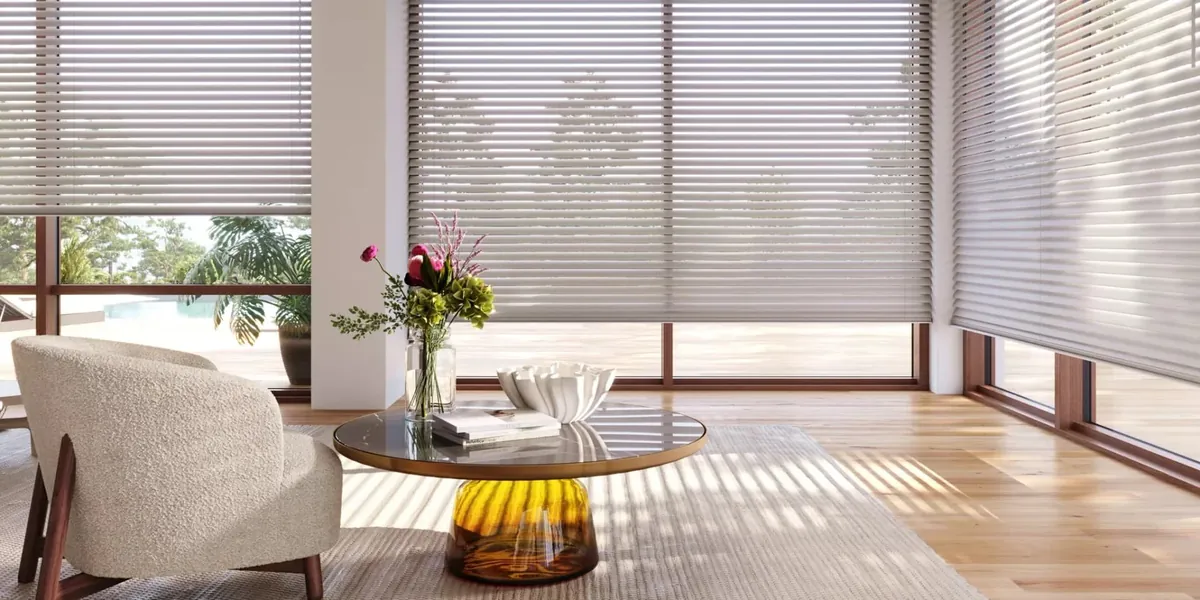
Custom blinds
Parkland wood, EverWood faux wood and metal, for precise light and easy cleaning.
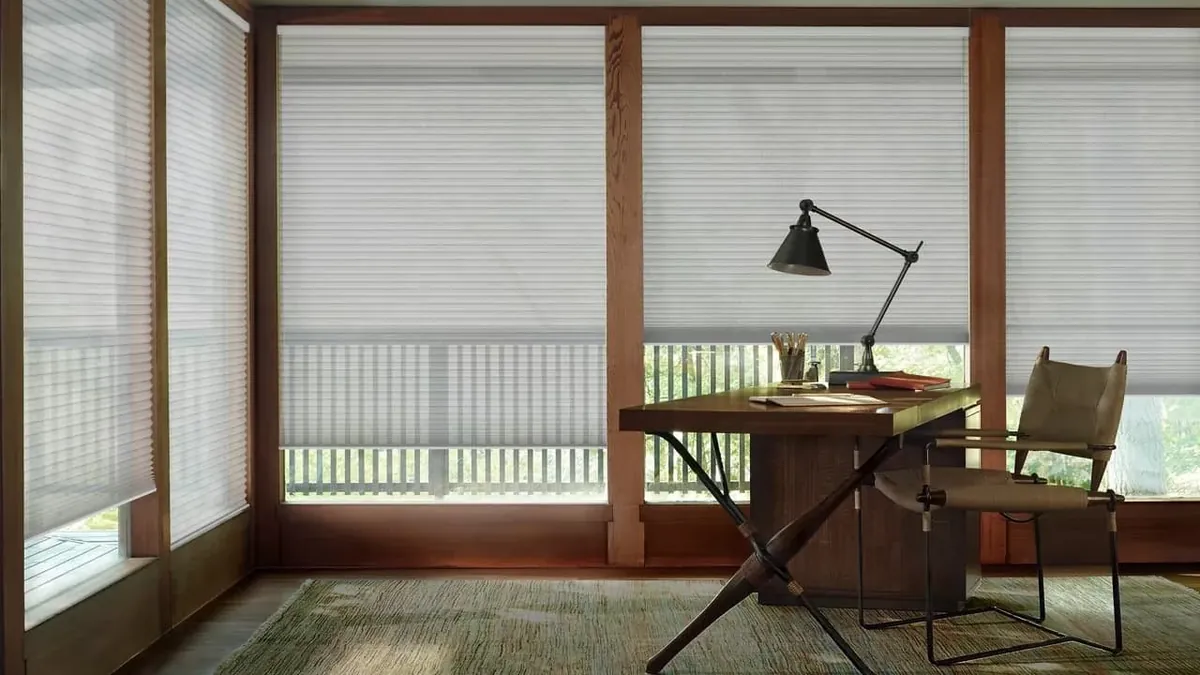
Cellular shades
Duette and Applause honeycomb, with top-down, bottom-up and room-darkening options.
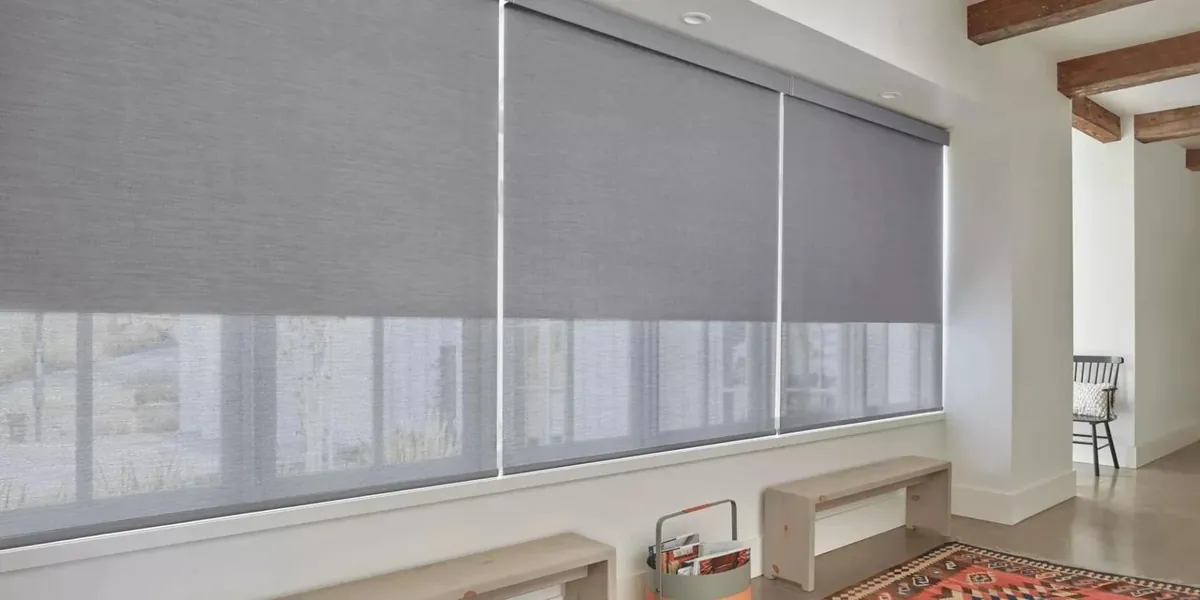
Roller shades
Designer and Alustra rollers and screens, clean lines for a long row of windows.
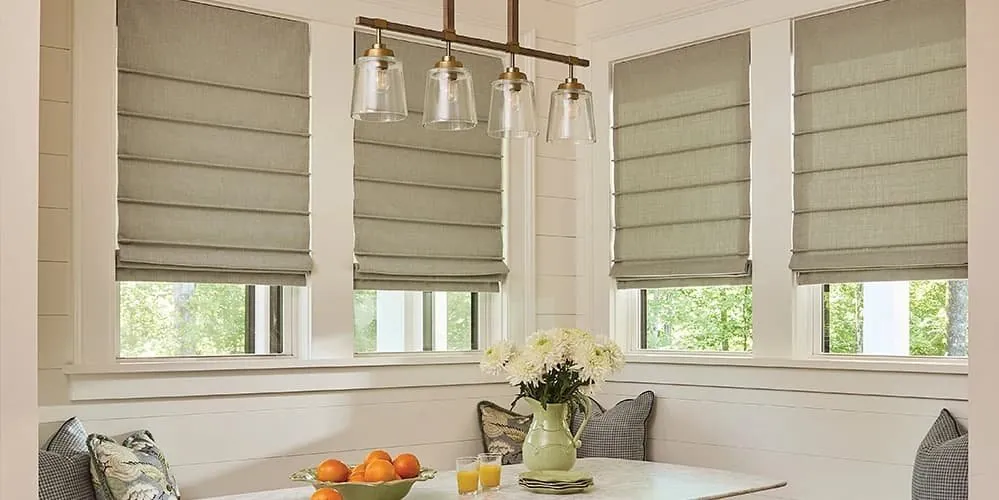
Roman shades
Vignette and Carole Roman, flat or relaxed folds for a kitchen nook or a living room.
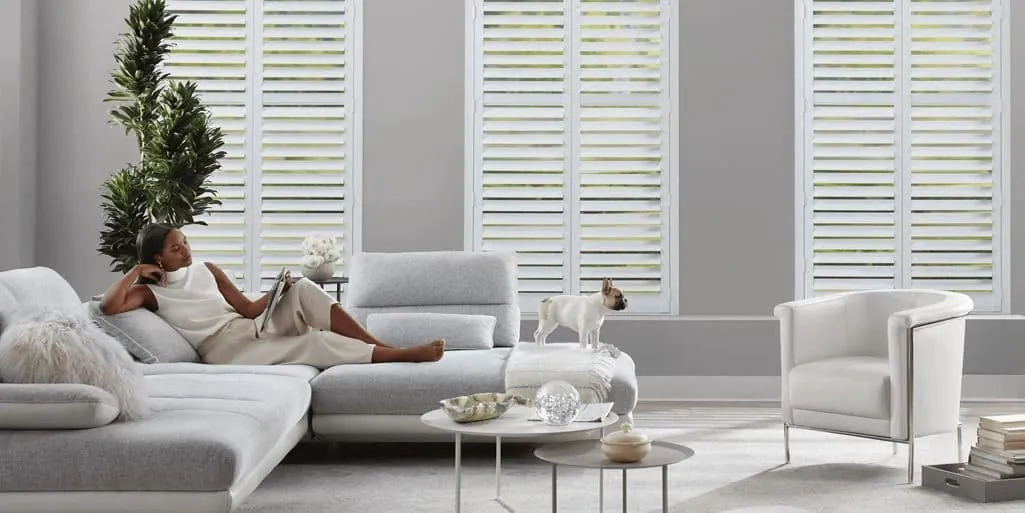
Plantation shutters
Palm Beach, NewStyle and Heritance, with a louver size and frame chosen for the room.
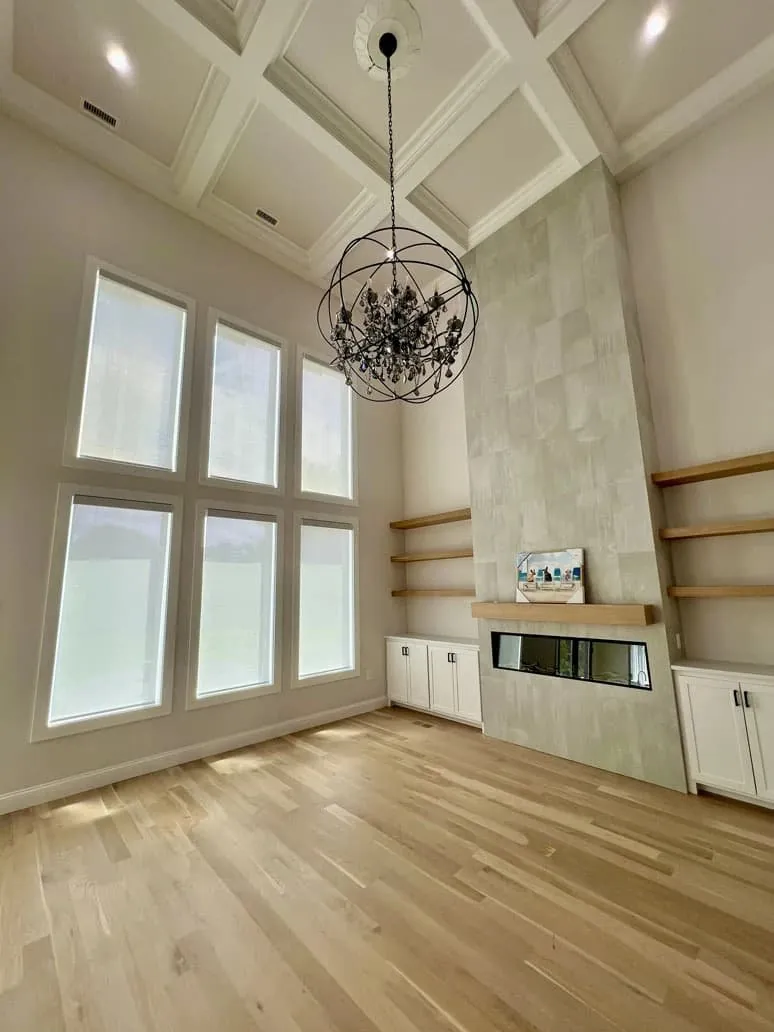
Motorized blinds and shades
PowerView control by phone, remote or schedule, ideal for a tall foyer window.
Three house types, three different plans
Walk down almost any road in town and you will pass the same three kinds of house. A Hunter Douglas dealer in Hanover plans each of them a little differently.
The post-war ranch
One story, windows close to the ground, and a living room built around a large front window. The bedrooms run along one side with wide, low units, and the kitchen often looks out to the backyard. Because everything is on the ground floor, a ranch is the house where light and privacy most often pull against each other.
- Living room. A top-down, bottom-up Duette covers the lower half of the big window and leaves the sky open. Silhouette sheers do the same with tilting vanes.
- Bedrooms. Room-darkening honeycomb or a blackout roller, inside the frame for a tidy line.
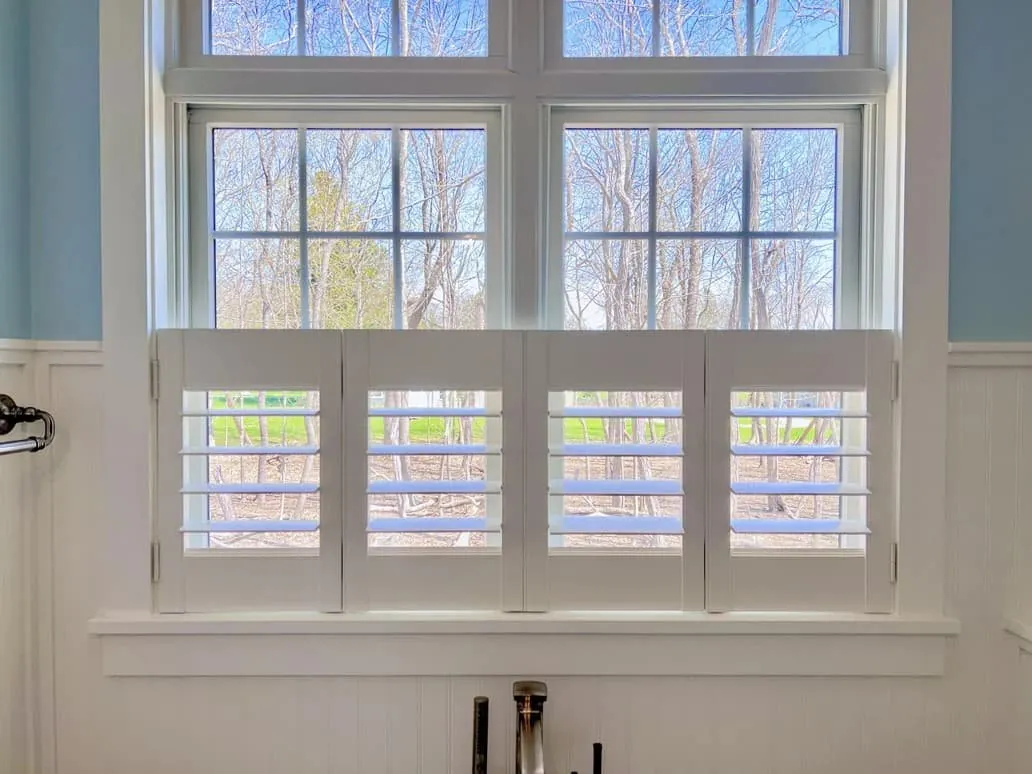
- Kitchen. EverWood faux wood blinds or a café-height shutter over the sink, where steam is a factor.
The cape
A cape has regular double-hung windows downstairs and dormers upstairs, set into the slope of the roof. Dormers tend to be narrow and fairly deep, which suits an inside mount very well. A honeycomb shade stacks small, so the little dormer keeps most of its light when the shade is up. Bedrooms under the roof can get warm in summer and cool in winter, and the cells in a honeycomb shade help even that out at the glass.
The newer colonial
Two stories, more windows, and a regular rhythm across the front. Behind, a family room opens to a deck, and a two-story foyer or stair landing may have a window nobody can reach. These houses benefit most from a whole-house plan: one look for the street side, the right product room by room, and PowerView where the glass is high.
Standard openings, and why they help
When the openings are regular, almost every Hunter Douglas line mounts inside the frame. That is worth a lot. An inside mount keeps the window trim visible, lets the shade sit flush with the wall, and looks the same from the street as from the room.
It also means the house can be planned with consistency in mind. Many Hanover homeowners choose one line and one color for every window facing the road, so the house reads as one from outside, then vary opacity indoors: light-filtering in the living spaces, room-darkening in the bedrooms, all in the same white or cream.
Where things are less regular, it is usually because of a later change. A sunroom added to the back of a ranch, a picture window cut into a cape, or a primary suite over the garage of a colonial may have different window sizes from the rest of the house. We measure those openings on their own and plan how they line up with the rest.
Light on a wooded lot through the year
The setbacks and the trees make Hanover rooms behave in a particular way. In summer, leaves filter the sun and the light inside is soft and often a little green. In late autumn and winter, the trees are bare and low sun comes straight across the yard into rooms that were shaded for months.
That swing is a good reason to choose products that adjust rather than simply open and shut:
- Sheer shades let you tilt the vanes from open to closed, so the same shade handles a soft summer morning and a sharp winter afternoon.
- Top-down, bottom-up honeycomb blocks low winter sun at the bottom of the window while the top stays open to the sky.
- Shutters steer light with their louvers, up toward the ceiling or down to the floor.
- PowerView schedules can lower the shades on a sunny side at the same time each afternoon, whichever season it is.
Stained trim, painted trim
Some of the older capes and ranches in town still have their original stained wood trim, while most newer colonials have painted white casings. That small detail decides a lot. Against stained trim, a Parkland wood blind or a Heritance hardwood shutter in a matching stain can look as if it came with the house, and a warm cream fabric usually sits better than a stark white. Against white trim, almost anything works, and a white or soft gray shade inside the frame almost disappears. We bring finish samples so you can hold them against your own casings, because wood tones are very hard to judge from a photograph.
Getting the family room and the slider right
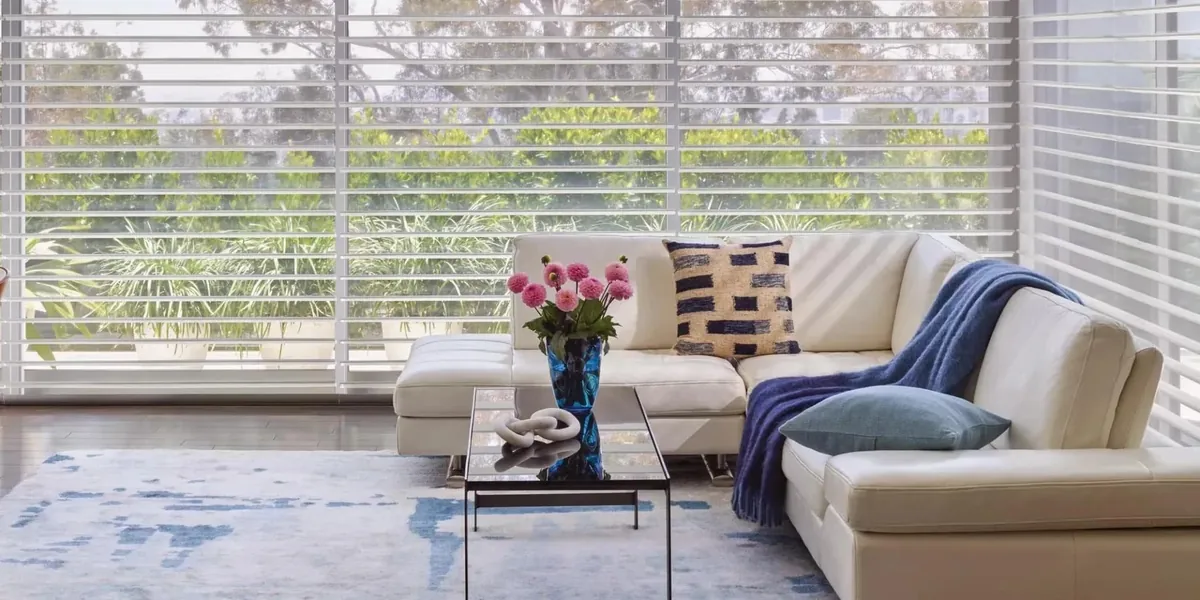
In most Hanover colonials and many updated ranches, the family room is the busiest room in the house and it opens to the yard through a slider or French doors. It usually has the largest glass, faces the woods at the back, and is where the television, the sofa and the dog all compete for the light.
For the slider, a product that moves sideways keeps the door easy to use. A vertical honeycomb shade, Luminette sheers or vertical blinds all stack to one side. If the family room has windows either side of the slider, we match heights and color so the whole wall reads as one. For French doors, a shade on each door, fixed top and bottom, moves with the door rather than swinging loose.
For glare on a television, the usual answer is a screen shade or a light-filtering honeycomb on the windows that catch the sun at the hour you watch, rather than darkening the whole room.
The room over the garage
Many of the newer colonials off Washington Street have a bonus room over the garage, and plenty of older capes and ranches have gained one since. These rooms are rarely regular. The ceiling slopes, the windows may be small gable units at each end, a dormer may break the roof on one side, and some have a skylight let into the slope.
That mix is where a Hunter Douglas dealer in Hanover earns the visit. Gable windows usually take an inside-mounted honeycomb or a small shutter. A dormer is treated much like a cape’s. A skylight can take a honeycomb shade made to run in side channels, and on PowerView it opens and closes from a remote, which is far easier than a pole on a sloped ceiling. Because these rooms heat up under the roof in summer, light-filtering or room-darkening honeycomb is the usual starting point, and we keep the whole room to one color so the odd windows still look planned.
Matching the product to the job
If you are not sure where to start, think in terms of the job each window has to do.
- Soften light, keep the view. Silhouette, Pirouette, Designer Screen.
- Total privacy at night. Honeycomb, Roman shades, closed shutters.
- Dark bedrooms. Room-darkening Duette or a blackout roller.
- A warmer room by the glass. Honeycomb, especially in a double-cell fabric.
- Steam and splashes. EverWood faux wood, Palm Beach shutters.
- Glass that is hard to reach. PowerView motorization.
Our guides on the best shades for sun and glare and cellular shades and winter heat go further on two of these.
A home office facing the woods
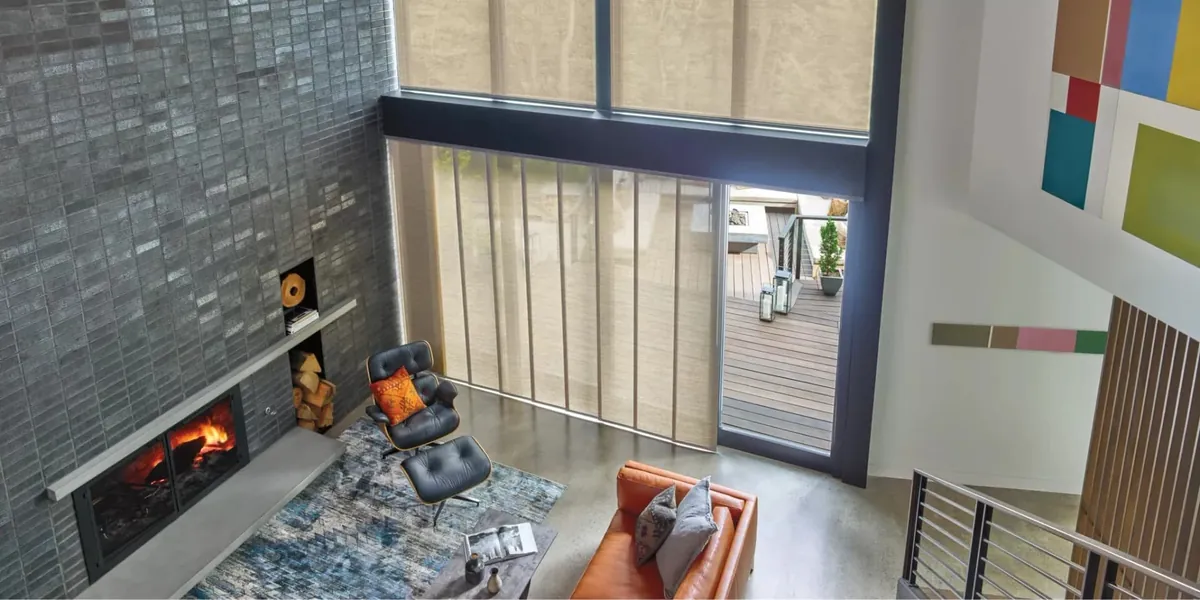
A lot of Hanover houses now have a room set aside for work, often a first-floor study at the front of a colonial or a spare bedroom at the back of a ranch. The trouble is nearly always glare on a screen at a particular hour, not too much light overall.
The best answer is usually the lightest product that stops the glare. A Designer Screen shade cuts the sharp light while keeping the trees in sight, and its openness can be chosen to suit the room. A light-filtering honeycomb spreads the light more evenly, so the room stays bright without a hot spot on the monitor. Top-down, bottom-up operation is worth a look here too: lower the top of the shade to the height of the screen and leave the bottom open to the yard. For a desk that sits right against the window, Parkland or EverWood blinds tilt to throw light up to the ceiling and away from the screen.
How an in-home visit runs
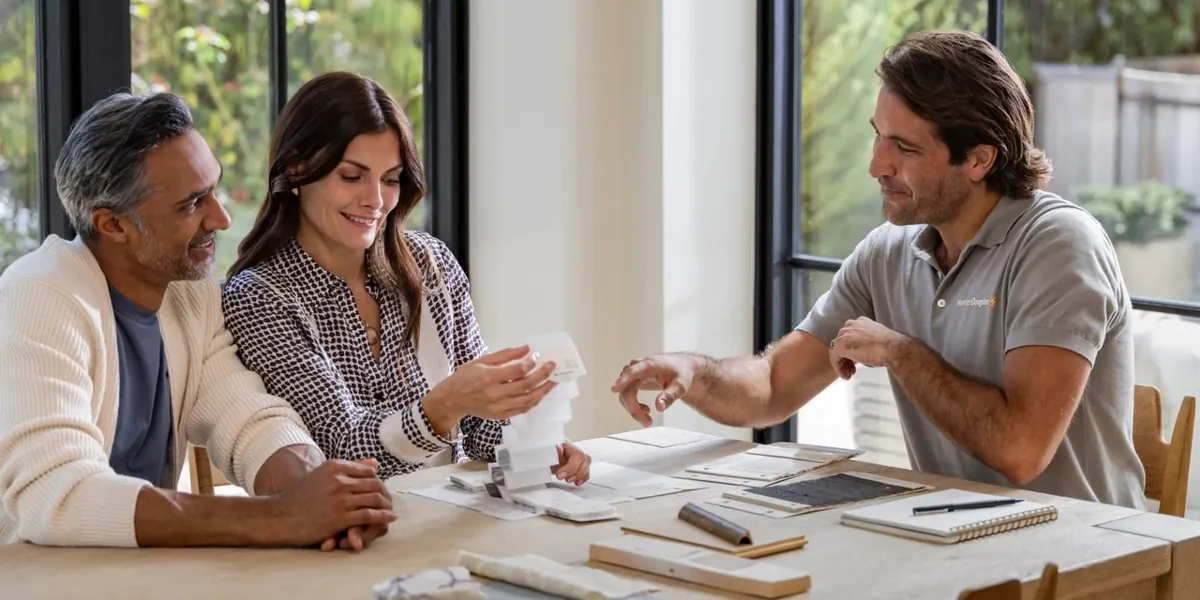
We bring the showroom to you, which matters on a wooded lot where the light inside your house is nothing like a showroom’s. Our vans carry samples of the lines that suit your windows.
- Book a time with Request a Consultation, or through the call button.
- We start in the room you most want to get right, often the family room or the front living room.
- Samples go straight onto your glass, so you see each fabric in your own light, at your own time of day.
- We talk through how each window should open and close, and which rooms need darkness, privacy or just softer light.
- Every window is measured, and we note how each one should mount.
- You get a free estimate to consider at your own pace.
If you would like a fuller plan for color, fabric and layering, ask about our interior design consultations. The in-home consultations page explains the visit in more detail.
Kitchens and baths
The kitchen in a Hanover ranch or cape usually has a window over the sink, and sometimes a second by the table. The bathroom window is often small and set high, and it has to give privacy without leaving the room dark. Both rooms deal with steam.
For the window over the sink, EverWood faux wood blinds and Palm Beach shutters are the safe choices, because they handle moisture and wipe clean. A café-height shutter on the lower half keeps the view of the yard at the top. By the kitchen table, away from the water, a Roman shade or a honeycomb in a washable fabric adds some softness. In a bathroom, a top-down, bottom-up honeycomb covers the lower glass for privacy and leaves daylight coming in above, and a shutter with louvers tilted upward does much the same. As your Hunter Douglas dealer in Hanover, MA, we point out which fabrics suit damp rooms and which are better kept elsewhere.
Woven wood, drapery and texture
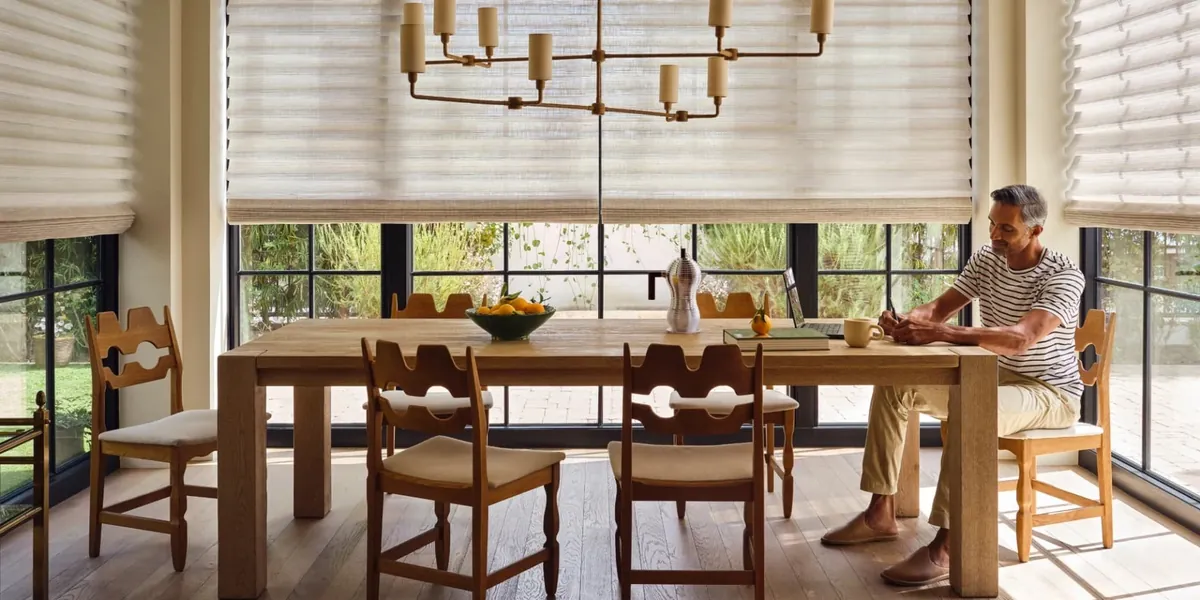
Not every room wants a crisp modern line. A dining room or a den in a cape often looks better with something softer. Hunter Douglas woven shades bring natural texture to a window and filter the light through the weave. Carole drapery can frame a window or layer over a shade for warmth and color. Both suit the wooded setting of many Hanover houses, where natural materials sit well with the view. See our Hunter Douglas shades and Hunter Douglas drapery pages for the collections.
What Gallery status means in practice
Gallery is the designation Hunter Douglas gives to dealers who meet its standards. For a Hanover house, that means one visit can cover every room: honeycomb for the cape bedrooms, shutters on the front of the colonial, screens in the family room and PowerView on the foyer window, all from one dealer and planned together.
It also means certified Hunter Douglas installation. Our installers set each headrail level, line up bottom rails across a row of windows, fit sliders so they stack clear of the handle, and pair and test every motorized shade before leaving.
Your Hunter Douglas dealer in Hanover, MA also offers blind and shade repair on window coverings you already own, so the same people can look after the house in later years.
PowerView in a Hanover colonial
The tall foyer or stair-landing window in a newer colonial is the window most often left in one position for years, because nobody can reach it. PowerView changes that. The shade moves from a phone, a remote or a wall control, and it can follow a schedule.
Motorization also helps on a long family room wall, where several shades can move together as one group, and in bedrooms, where shades can open gently at the time you get up. We plan where controls go and how each motor is powered during the visit. Read how motorized shades are controlled, or see our motorized blinds in Hanover page.
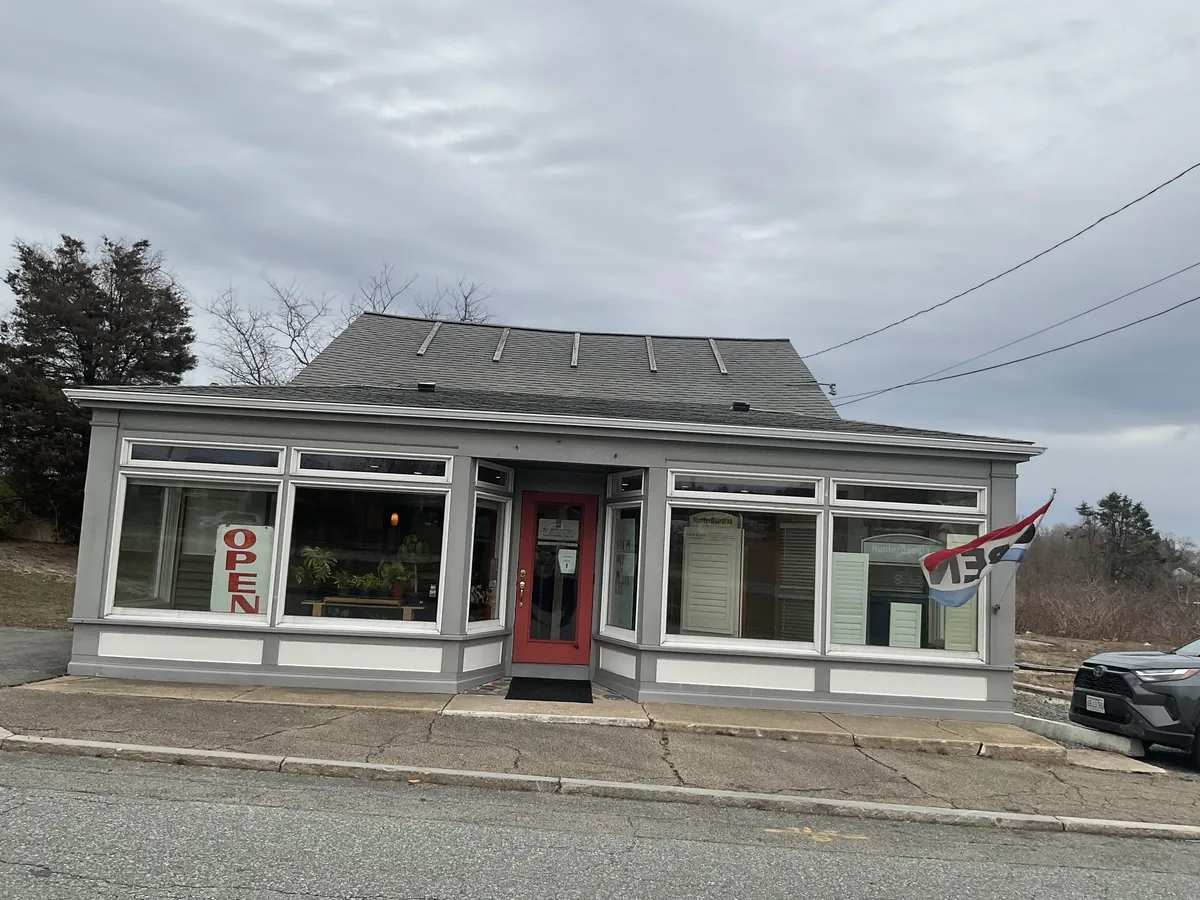
Sagamore is our nearest showroom
Most Hanover customers start with a visit at home. If you would like to see Hunter Douglas products before then, the Sagamore showroom is the closest of our showrooms.
You can learn more about the brand on our Hunter Douglas page, browse the full Hunter Douglas catalog, or see all of our services in town on our Hanover page.
Questions from Hanover
Will Hunter Douglas shades fit inside my standard windows?
Almost always. Most Hanover houses have regular modern openings with enough depth for an inside mount. We check each one when we measure.
What do you suggest for the dormers in a cape?
An inside-mounted honeycomb shade is a common choice, because it stacks small and keeps a narrow dormer bright when raised. Room-darkening fabric suits a bedroom under the roof.
How do I deal with low winter sun coming through bare trees?
Top-down, bottom-up shades, sheer shades with tilting vanes and shutters all let you block the low angle while keeping some light. PowerView schedules can adjust the shades for you.
Can the front of the house look uniform if each room has a different shade?
Yes. Use one line and color on the street side, then choose fabric and opacity room by room. From outside, the house looks consistent.
What does the estimate cost?
Nothing. Estimates are free and based on our measurements of your own windows.
Book your visit
Request a consultation and we will bring samples to your house, measure every window and leave you a free estimate. The call button connects you with us, or you can stop by the Sagamore showroom to look at products first.