
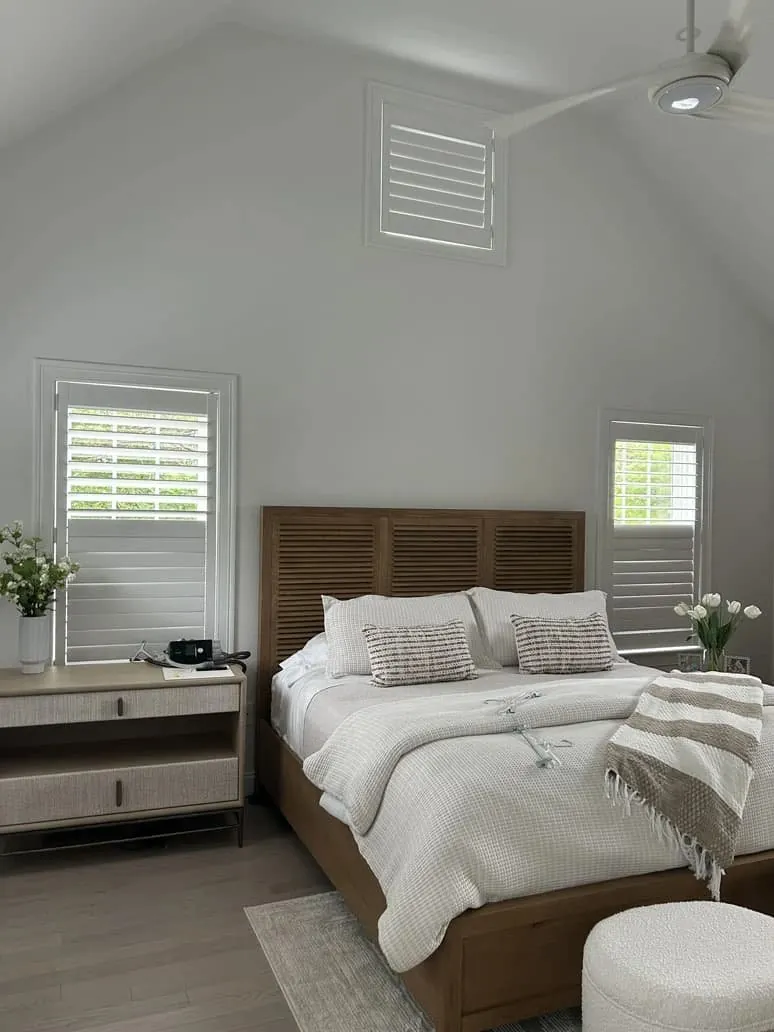
Small openings, old houses and the river between them
Drive up Main Street from the New Bedford line and the houses tell their own story. Old farmhouses sit back from the road with a barn or a shed behind them. Capes with steep roofs and dormers line the stretch near the Acushnet River. In the lots between, post-war ranches filled in the gaps, each on its own patch of lawn. As a Hunter Douglas dealer in Acushnet, MA, we see all three kinds of house in a single week, sometimes on a single road.
What they share is the window. Much of the town is older stock, and older houses were built with small original openings: narrow sash in a farmhouse parlor, short dormer windows under a cape roof, a modest pair of double-hungs in a ranch bedroom. Those openings are rarely a standard size, and very few of them are square any more.
That is the whole reason to buy made-to-measure rather than off a shelf. A blind sized for a typical window either hangs past the frame or leaves a strip of light down one side. A Hunter Douglas product built to the exact opening fits it edge to edge.
What the full range looks like on an Acushnet window
As a Gallery dealer and your Hunter Douglas dealer in Acushnet, MA, we can show you every family the brand makes. These six cover most of what Acushnet houses ask for, and each links to its own page for the town.
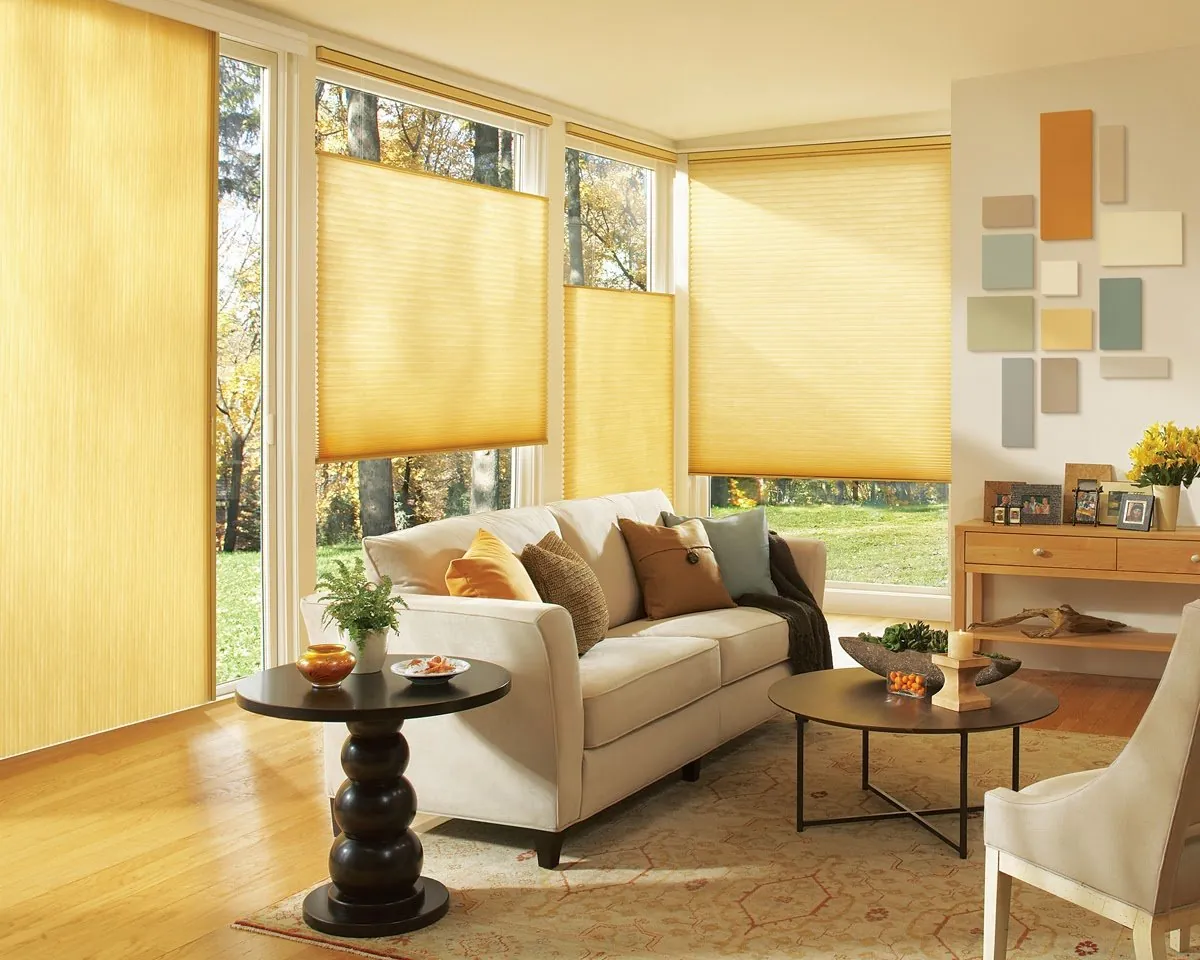
Honeycomb shades
Duette and Applause hold a layer of still air in every cell. In a drafty farmhouse room that still air sits between you and the cold glass.
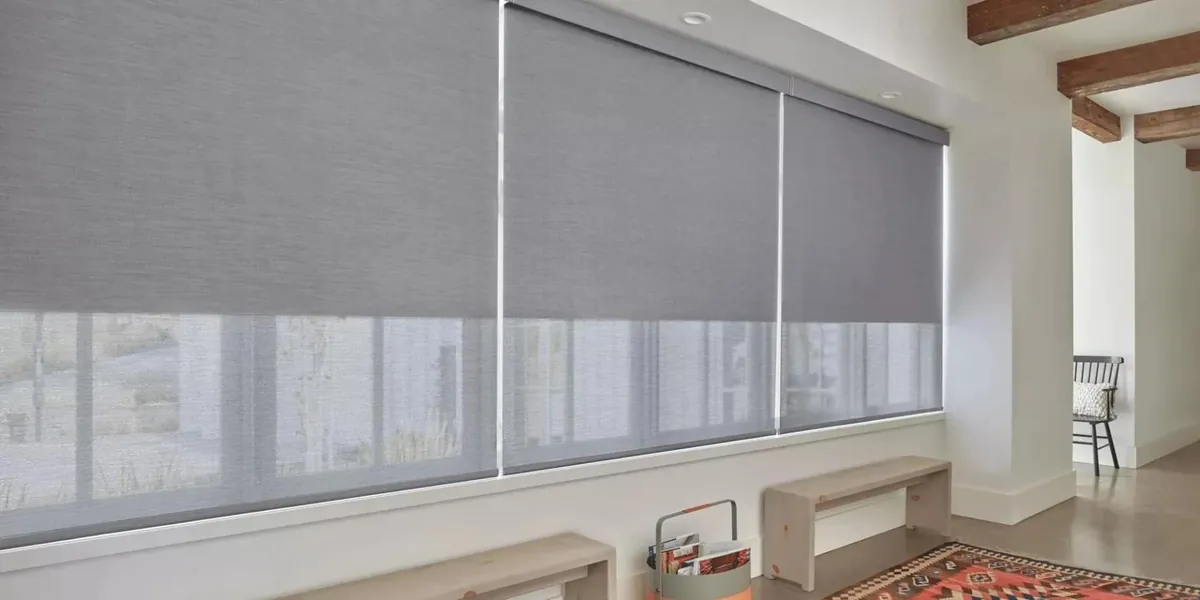
Roller and screen shades
Designer roller fabrics and solar screens for a ranch picture window or a hallway that catches the late sun.
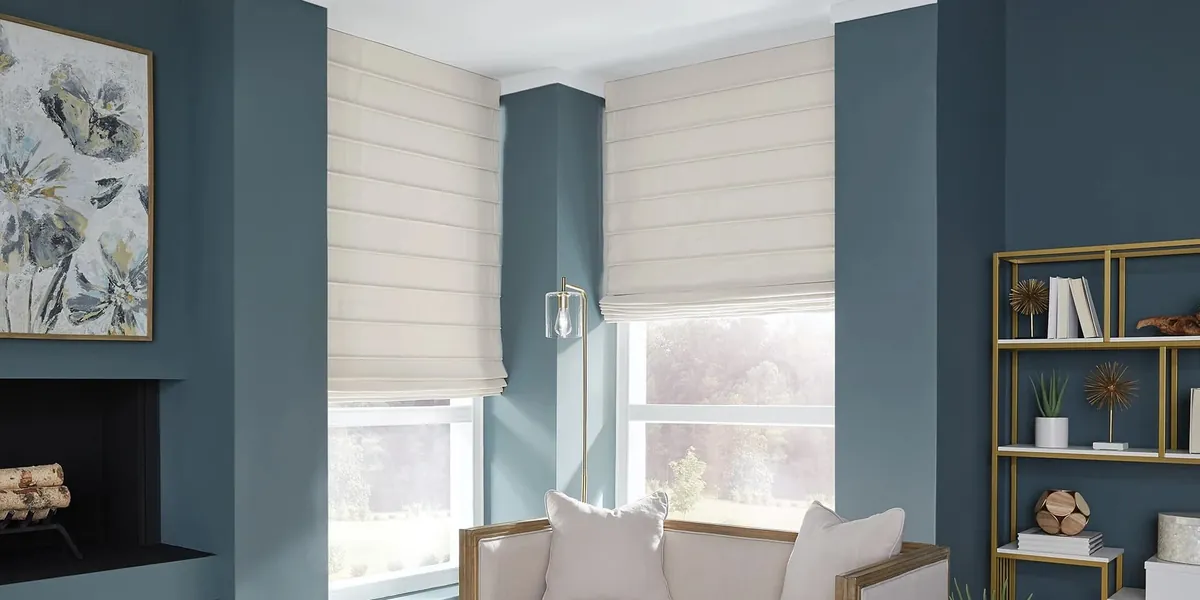
Roman shades
Vignette and Carole Roman shades in flat or soft folds, a tailored look that suits a cape living room or a farmhouse dining room.
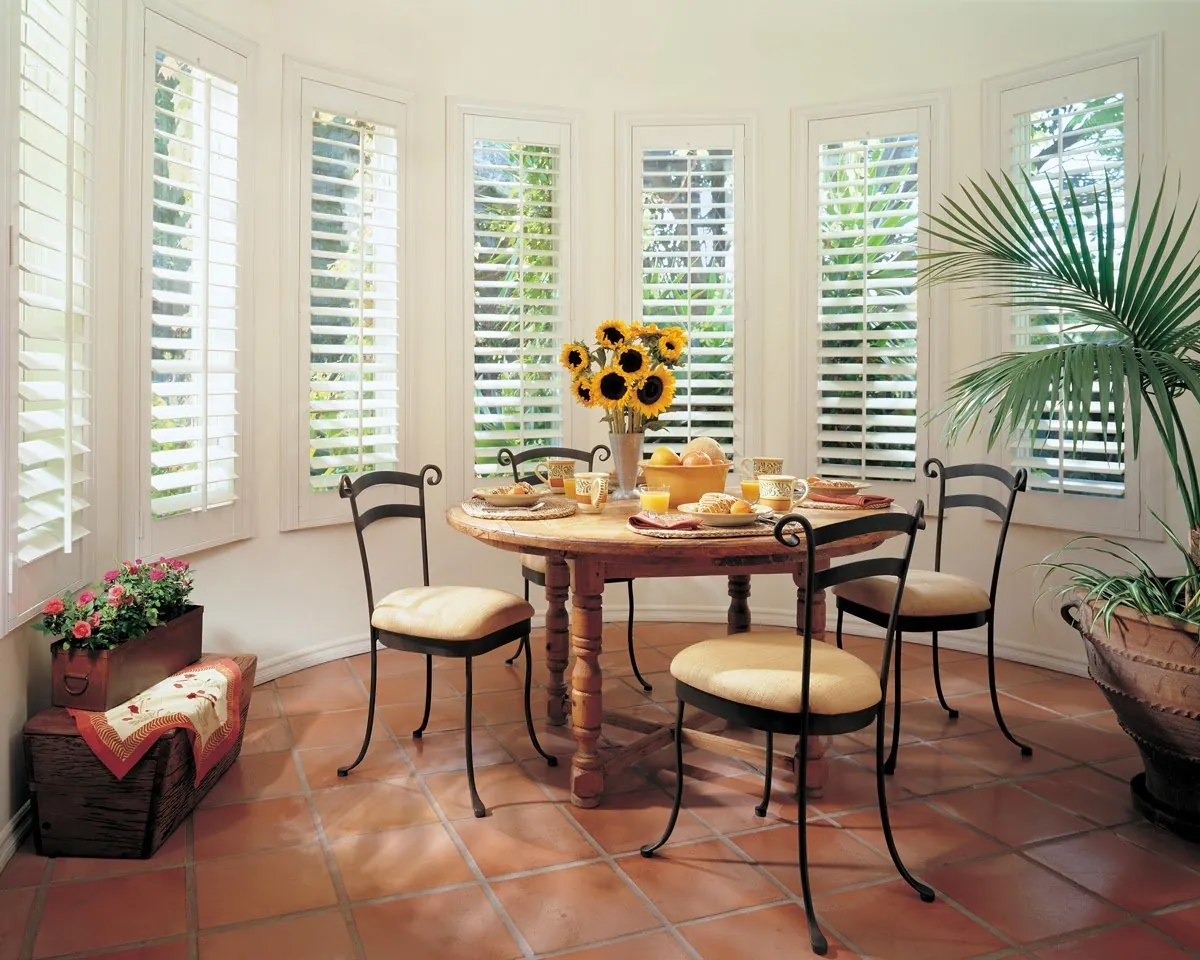
Plantation shutters
Palm Beach, NewStyle and Heritance, each frame built to the opening, so a crooked old window still gets a shutter that closes true.
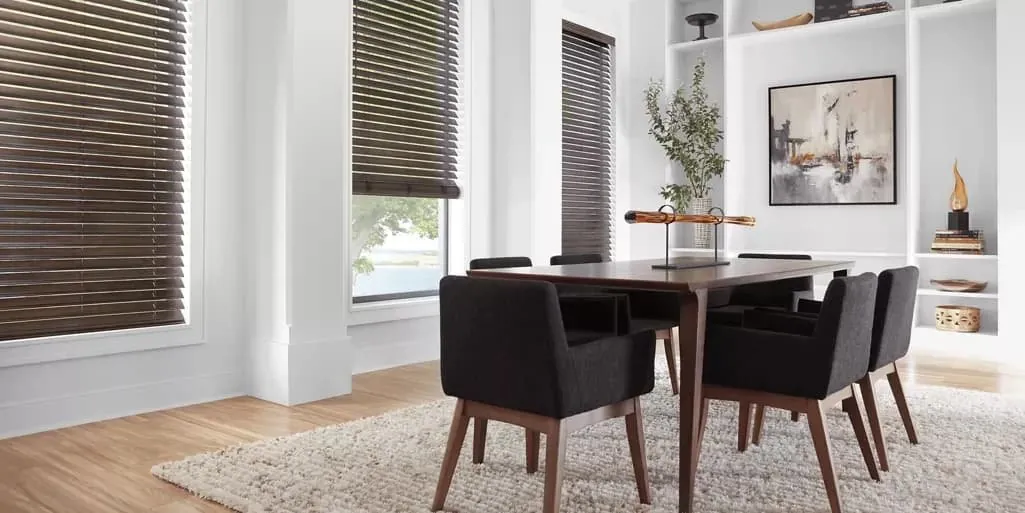
Wood and faux wood blinds
Parkland wood and EverWood faux wood, with slat sizes that suit narrow sash as well as wider ranch windows.
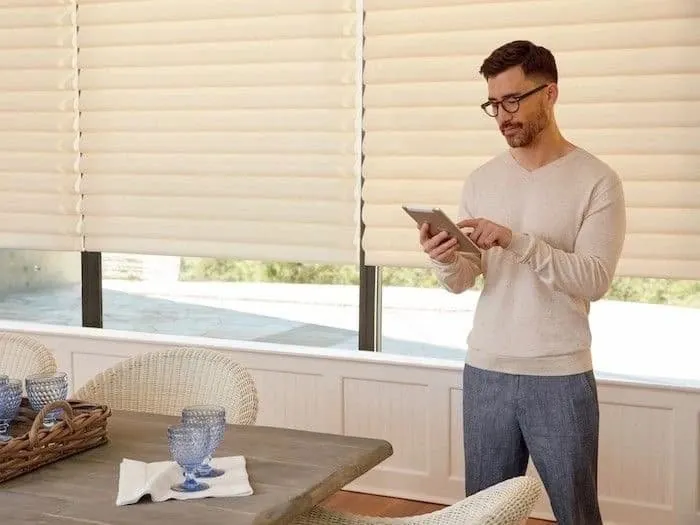
Motorized shades
PowerView lets you raise and lower shades from a remote, an app or a schedule, handy for a dormer you cannot easily reach.
Made to the opening, not bought to the nearest size
The phrase “custom” gets used loosely, so here is what it means with Hunter Douglas. Every shade, blind and shutter is built after we measure, to the width and height of that one window, with the mount and the lift system already chosen. Nothing is cut down from a stock size in the back of a truck.
In a newer house the difference can be small. In an Acushnet farmhouse it is the difference between a window that looks finished and one that looks patched. Old sash openings drift: wider at the top than the bottom, or a little out of plumb after many winters of the frame settling. A made-to-measure product follows the narrowest point so it clears the frame, and the headrail or shutter frame is sized so the gap at each side stays as small as the product allows.
Small openings are where off-the-shelf goods let you down most. A narrow parlor window or a short dormer often falls below the smallest stock size, so people end up with a shade that overhangs the trim. Hunter Douglas builds many of its lines down to very narrow widths, and we can tell you at the visit which lines will go inside a particular frame and which need to mount on the casing.
Farmhouses along Main Street
The older farmhouses in town were built to be heated by a stove and lived in through hard winters. Their rooms are modest, the ceilings are lower than you might expect, and the windows are deliberately small. Many still have their original trim, plain painted boards or a simple moulded casing, and owners who have kept it rarely want to cover it.
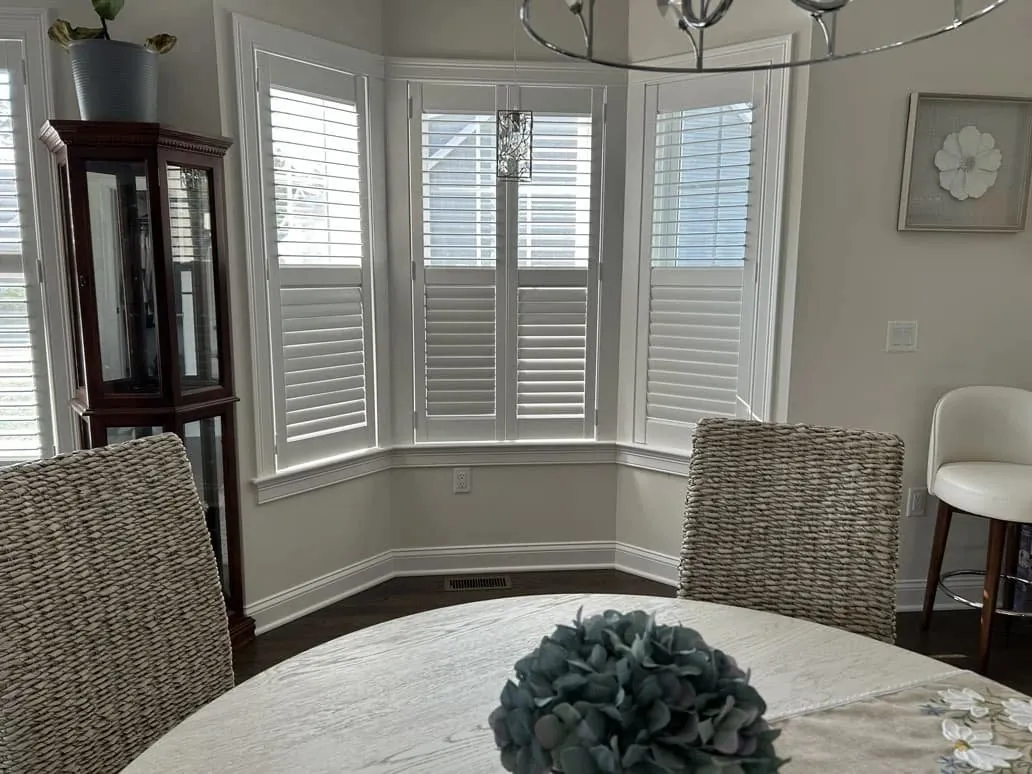
That points to inside mounts wherever the depth allows. A honeycomb shade tucked inside the frame lifts into a slim stack at the top and leaves the casing completely visible. A Parkland wood blind in a narrow slat looks right against old painted trim. For a kitchen that faces the road, a café shutter over the lower sash gives privacy while the top half stays open to the yard.
The depth of an old frame is the deciding factor. Sash cords, pulleys and later storm windows all take up room inside the opening. Where there is not enough depth for a clean inside mount, we will show you how the same product looks mounted on the casing instead, and let you decide with both in front of you.
Rooms that face north
Farmhouses were often set square to the road rather than to the sun, which leaves some rooms with very little direct light. A north-facing sitting room wants a fabric that keeps every bit of daylight it gets. Light-filtering honeycomb or a sheer shade such as Silhouette softens the glass without darkening the room, and still holds some warmth in the evening.
Capes near the river
The capes along the river side of town follow a familiar shape: a center chimney or a central hall downstairs, and bedrooms tucked under the roof upstairs. That upper floor is where window coverings get tricky. Dormers set the windows back into a small alcove, knee walls cut the room’s height at the sides, and a gable end may hold a single window high above the stairs.
Dormer windows suit an inside-mounted shade almost perfectly, because the alcove frames the window like a box. A cellular or Roman shade sits neatly in it and does not fight the sloping ceiling around it. For the gable window over a stairwell, the one nobody can reach without a ladder, PowerView motorization means the shade moves from a remote or on a timer.
Downstairs, the front rooms of a cape usually have pairs of windows either side of the door. Matching treatments on those pairs keep the front of the house balanced from the street, which is worth thinking about when you choose fabric color and mount style.
The post-war ranches in between
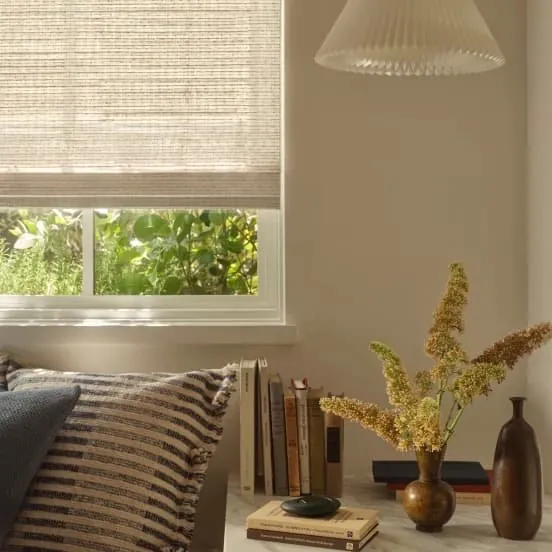
Between the older houses, a later generation of homes filled the lots: single-story ranches with a living room picture window, a kitchen at the back and a row of bedrooms down a hall. They are simpler to fit than a farmhouse, but they bring their own questions.
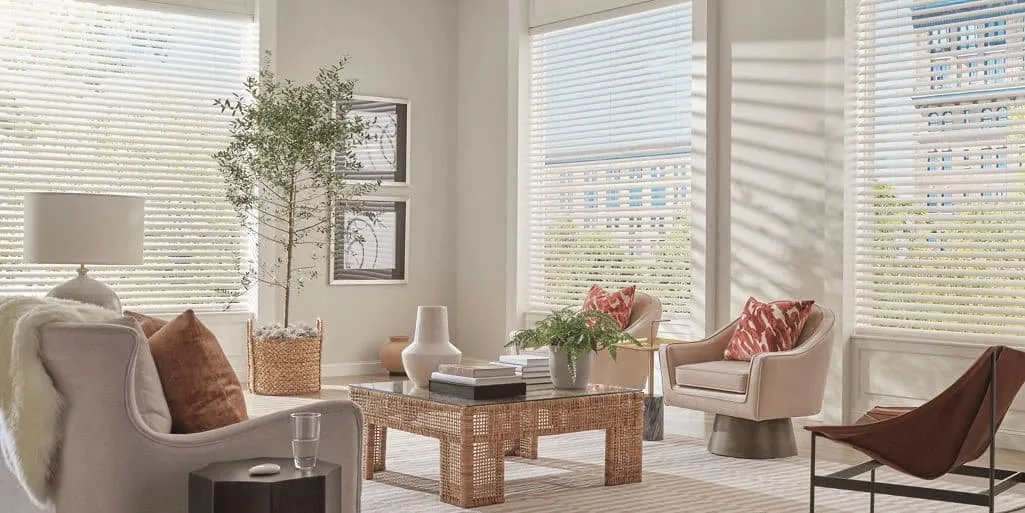
The picture window is the big one. It is usually the largest piece of glass in the house, and it often faces the street. A roller or screen shade can cover it in one piece and roll up out of sight. If the window is too wide for one shade, two or three shades on a shared headrail can move as one or separately. For a softer look, Silhouette sheer shades let you tilt the fabric vanes to open the view or close it for privacy.
Ranch bedrooms tend to have wider, shorter windows set higher on the wall. A room-darkening honeycomb or a Vignette Roman shade with a blackout lining suits them, and a top-down, bottom-up lift lets the top of the window stay open for air and light while the lower part stays covered.
The slider or back door to the yard is the other common window. A vertical honeycomb or Luminette panel slides across it on a track and stacks to one side, out of the way of the door.
A walk through a typical Acushnet house, room by room
Every house is different, but the same few questions come up again and again. Here is how we tend to think about each room.
- Living room. Usually the room with the most glass and the most time spent in it. Sheer shades or roller shades if the view matters; honeycomb if the room runs cold; shutters if you want something that feels part of the house.
- Kitchen. Steam, splashes and grease. Faux wood blinds and Palm Beach shutters wipe clean and are not bothered by humidity. Café shutters cover the lower sash over a sink.
- Dining room. A good place for a Roman shade or drapery, where a tailored fabric adds color and the room is not used at the crack of dawn.
- Bedrooms. Darkness and warmth. Room-darkening honeycomb is the usual choice, with top-down, bottom-up for a ground-floor room.
- Bathrooms. Privacy first, moisture second. Shutters with tilting louvers or faux wood blinds hold up well.
- Upstairs under the roof. Inside-mounted shades in dormers, motorization for anything high.
You do not have to pick one product for the whole house. Most of the homes we fit end up with two or three Hunter Douglas families, chosen room by room.
Light from the river and the fields
Because Acushnet is low-density, a lot of houses have open land around them: a field behind, a stretch of river in front, or simply a deep lot with no neighbor close by. That changes what a window covering is for. Privacy matters less in a room that looks out over open ground, and light control matters more.
A room facing west across open land takes the full afternoon sun with nothing to break it. A solar screen shade cuts the glare and keeps the outlook. A room facing the river in the morning can be bright enough to make the television hard to see, which is where a light-filtering roller or a sheer shade earns its place.
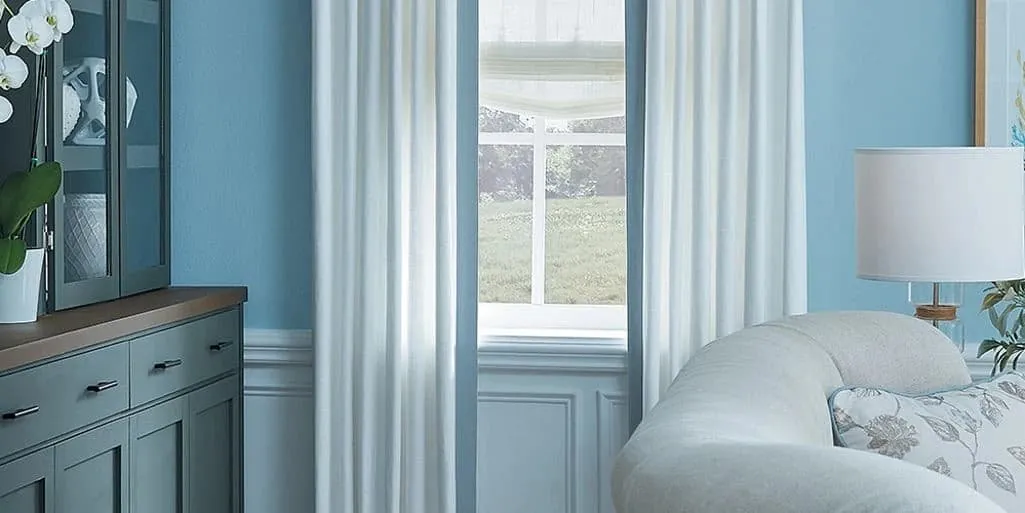
Where a room faces the road, the opposite applies. A front parlor a few steps from Main Street wants daytime privacy, and a light-filtering fabric gives that while keeping the room bright.

Gallery status, in plain terms
Gallery is Hunter Douglas’s own designation for dealers who meet its standards, and Blinds & Designs holds it. For you it means one thing above all: the whole range is on the table. We are not steering you toward the two or three lines a smaller dealer happens to stock.
Our installation is certified by Hunter Douglas. The people who measure your windows and fit your order are trained to the maker’s standard, which matters when the product is built to a measurement and has to go up level in an old frame.
That combination is why choosing a Hunter Douglas dealer in Acushnet carefully matters as much as choosing the product. The brand makes the shade; the dealer decides whether it was the right shade, measured correctly and hung well.
How we measure and fit an older house
Measuring is the step that decides how the finished window looks, and in a farmhouse or an old cape it takes patience.
- We look at each window first, checking the trim, the sash hardware and any storm panel that might take up depth.
- We measure the width in three places and the height in three places, because old frames are seldom square.
- We check the frame depth where a headrail or shutter frame would sit.
- We agree the mount, the lift and the fabric or finish with you, window by window, before anything is ordered.
- When the order arrives, our certified installers fit each piece into solid wood, set it level, and run every shade, blind or shutter through its full movement with you.
If a window is too shallow or too uneven for the product you first wanted, we will tell you before ordering, not after.
Seeing the samples at home
You can read about fabrics and slat sizes all day, but nothing replaces seeing them in your own rooms. Our vans carry Hunter Douglas samples, so we can bring the showroom to you. In a town as spread out as Acushnet, that saves you the drive and lets you judge each sample against your own trim and your own light.
A visit usually starts in the room that bothers you most, whether that is a cold bedroom, a glaring living room or a kitchen that needs privacy. We look at how the room is used and at the window itself, show you two or three suitable products, and measure. You get a free estimate afterwards, and there is no pressure to decide on the day.
If you would also like help with color and fabric across a whole room, our interior design consultations can happen at the same visit. To see what the visit involves in more detail, read what happens at an in-home consultation.
Keeping a farmhouse room warm
Winter is when the windows in an older Acushnet house make themselves felt. Original sash and single glazing let the cold radiate into the room, and the chair nearest the window is the one nobody wants on a January evening.
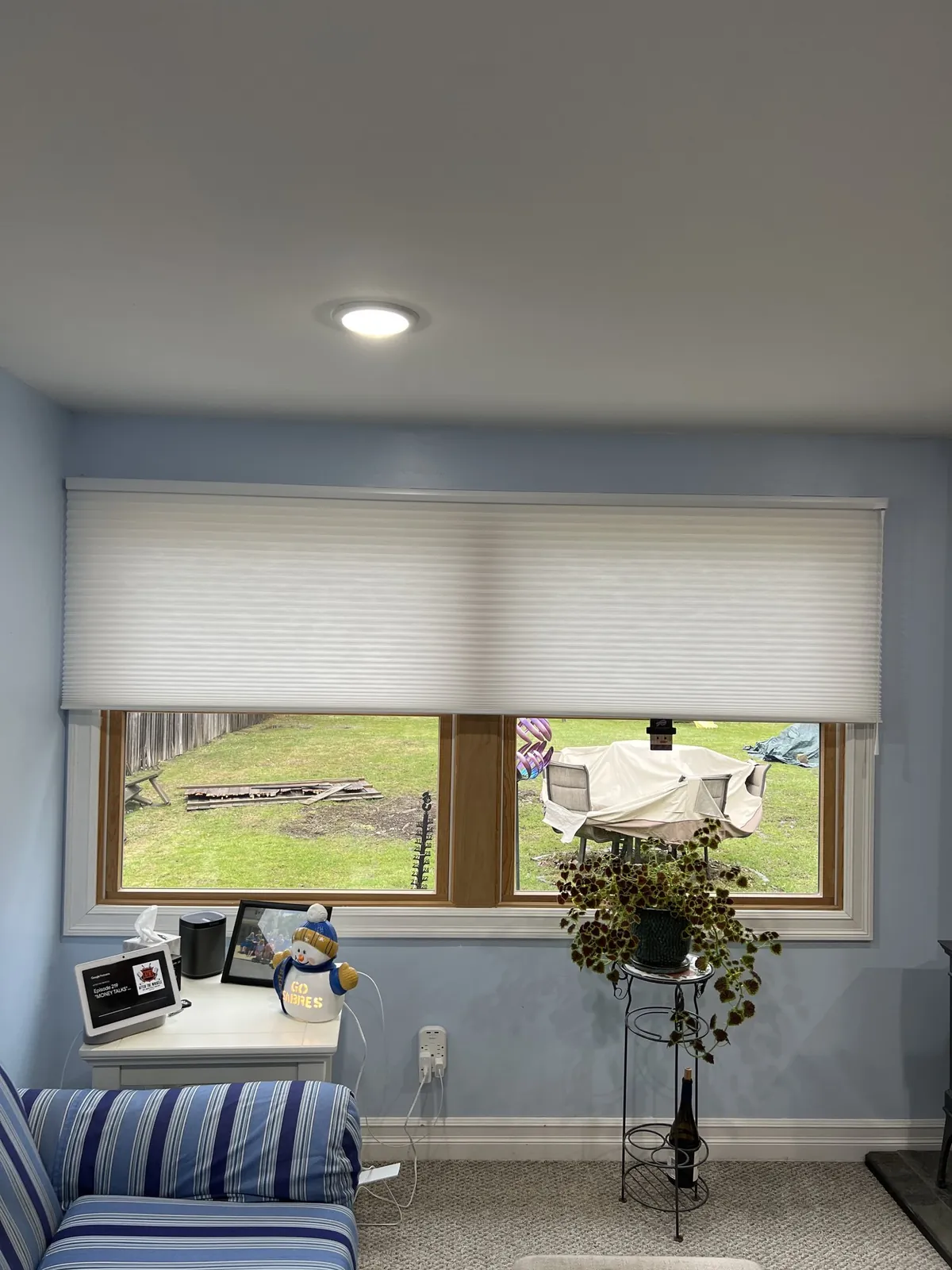
A honeycomb shade lowered at dusk puts a layer of trapped air across the glass. It will not replace a new window, but it makes the room noticeably more comfortable, and it does it without changing the look of the house from outside. For a whole house of old sash, many people pair honeycomb in the bedrooms with shutters or Roman shades downstairs.
Other Hunter Douglas families help too. Shutters close tight against the frame. Drapery over a shade adds another layer in a dining room or living room. We can talk through which combination suits each room.
Repairs and later changes
Working with a Hunter Douglas dealer in Acushnet does not end on installation day. Window coverings last a long time, and over the years a cord wears, a lift stiffens or a family wants to add motorization to shades they already have. We handle blind and shade repairs, so if something you own needs attention we are glad to look at it.
The same goes for changing your mind about a room. A bedroom that becomes a nursery or a home office may want a different fabric or a darker one. Because we are a full-line dealer, swapping one Hunter Douglas product for another is straightforward.
For more on the brand and every product family, see our main Hunter Douglas page; Hunter Douglas also keeps its full catalog on its own website if you want to browse first. To see every service we offer in town, visit our Acushnet page, and for full-length panels see custom drapery in Acushnet.
Questions from Acushnet
Can you fit the small original windows in my farmhouse?
Yes. Hunter Douglas builds many shades, blinds and shutters to very narrow widths, and everything is made to the measured opening. The limit is usually frame depth rather than width, so we check that at each window and tell you whether an inside or outside mount suits it.
What should I put on the dormer windows upstairs?
An inside-mounted honeycomb or Roman shade usually works best, because the dormer alcove frames the window neatly. For a high gable window you cannot reach, PowerView motorization lets you move the shade from a remote or a schedule.
My ranch has one large picture window facing the street. What works?
A roller shade, a solar screen or a sheer shade can cover it in one piece and lift out of sight. If it is very wide, two or three shades on one headrail can move together or separately, so you choose where the light comes in.
Do I have to choose one product for the whole house?
No. Most houses end up with a mix, such as shutters in the bathroom, honeycomb in the bedrooms and a Roman shade in the dining room. As a Gallery dealer we can show you every family at one visit.
How do I get an estimate?
Request a consultation and we will come to your house with samples, measure every window you want covered and prepare a free estimate.
Starting with your own windows
The best way to work with a Hunter Douglas dealer in Acushnet, MA is to let us see the house. Request a consultation and we will bring the samples, measure the openings and give you a free estimate. For a quick question, use the call button, or stop in at the North Dartmouth showroom, the closest to town.