
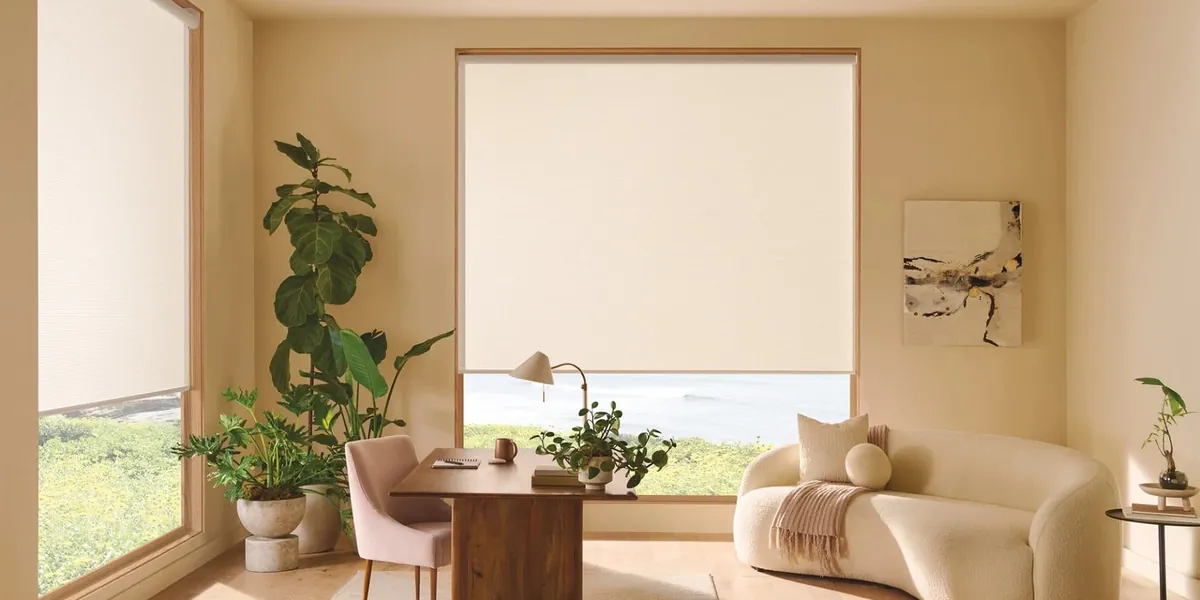
Walls of glass facing the water
The houses around Osterville village and out toward Wianno and Oyster Harbors are, for the most part, large shingled houses on generous lots, and many of them are built around the water. Living rooms open onto the harbor or the Sound through whole walls of glass. Bedrooms and studies look the same way. Much of the town is seasonal and finished to a high specification, and the window treatments are expected to match the house. That is the setting for nearly all the roller shades in Osterville, MA, that we plan.
Those walls of glass bring their own challenges. Sun and glare off the water flood the rooms for hours, salt air settles on everything, and the formal rooms at the front of the house usually call for drapery, which means the shade behind it has to be all but invisible.
A roller shade is the most discreet way to control light on a big window. It rolls up into a slim line at the top and leaves the glass and the view untouched. Lowered, it can be an open screen you look straight through, a soft light filtering panel or a fully dark blackout. In a house of this calibre, the details of fabric, finish and mounting make the difference.
How we approach roller shades in Osterville, MA
Most rooms in town draw on three approaches. We bring full samples of each, including the finishes.
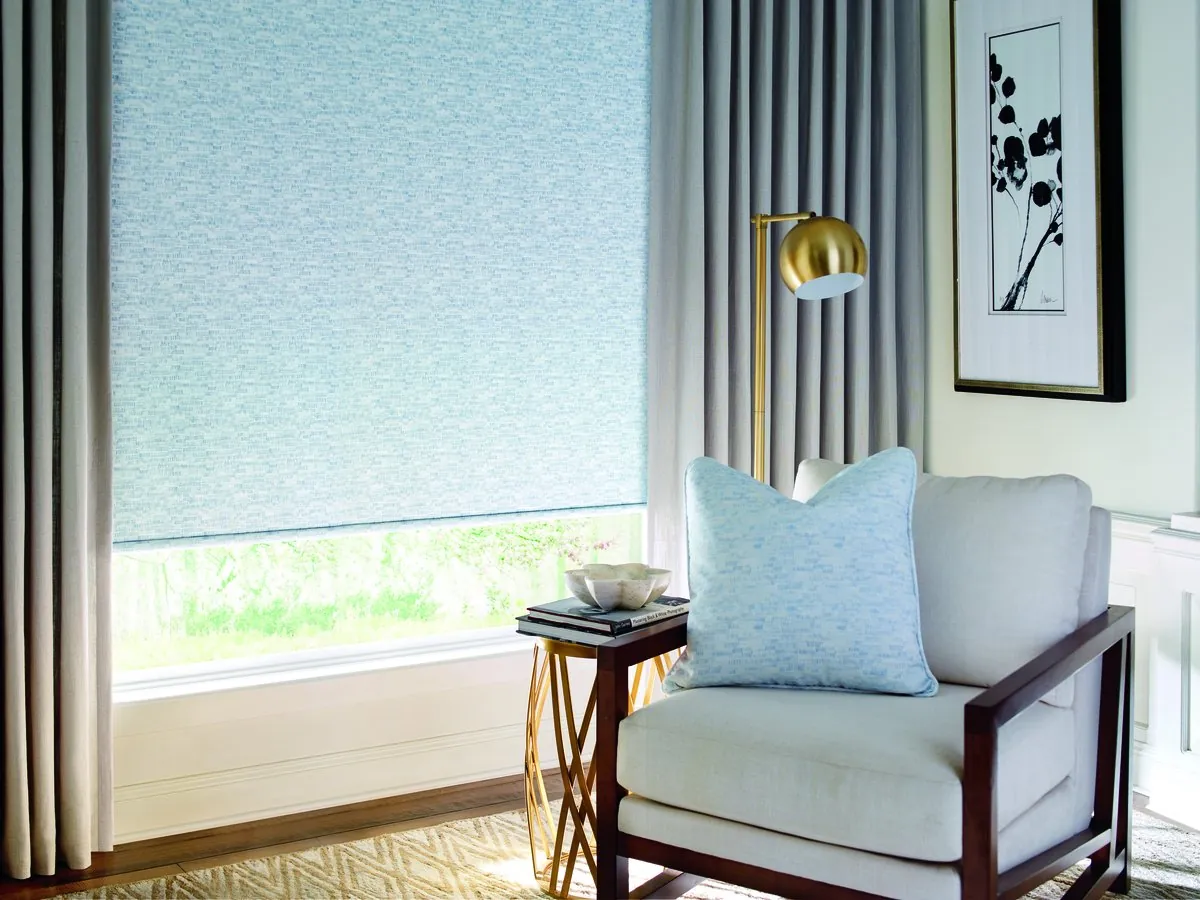
Rollers behind drapery
A roller tucked behind side panels or full drapery does the daily work of privacy and light while the drapery dresses the room.
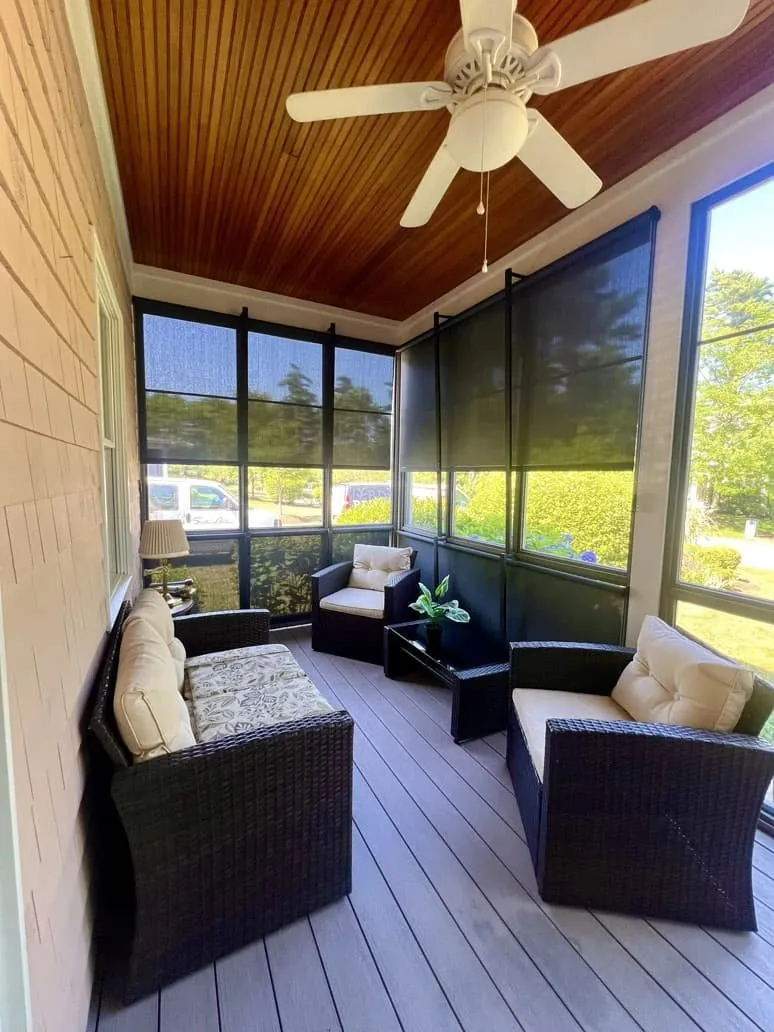
Screens for the water side
Designer Screen fabrics that take the glare off the harbor while keeping the view, from the great room to the porch.
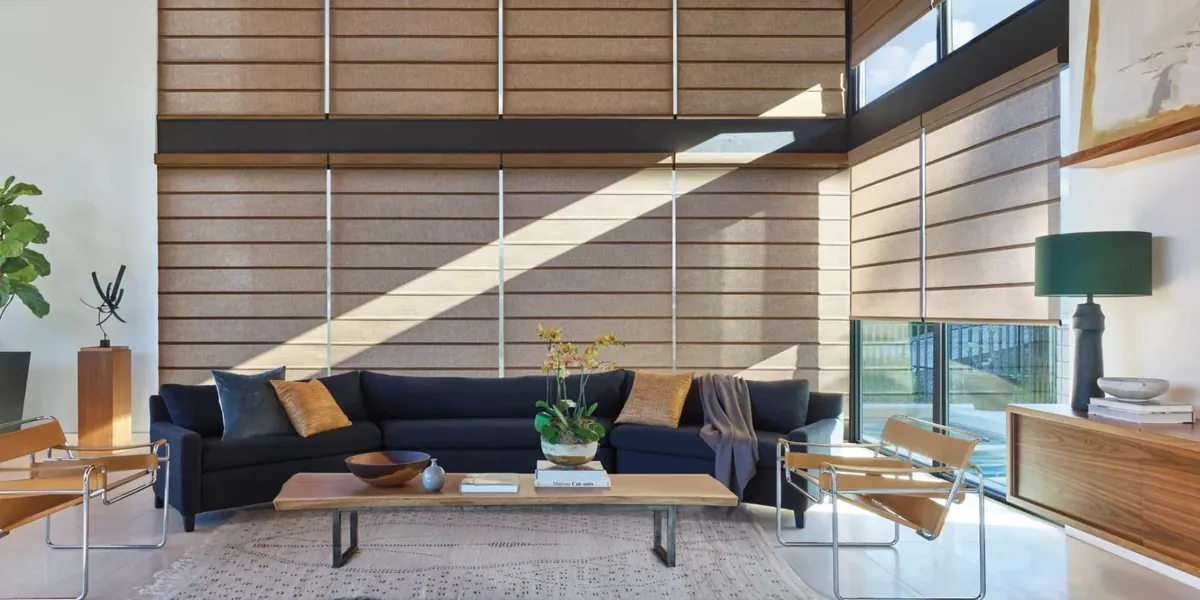
Alustra for the principal rooms
Hunter Douglas’s most refined roller fabrics and finishes, for living rooms and main suites where every detail is on show.
Water-facing walls of glass
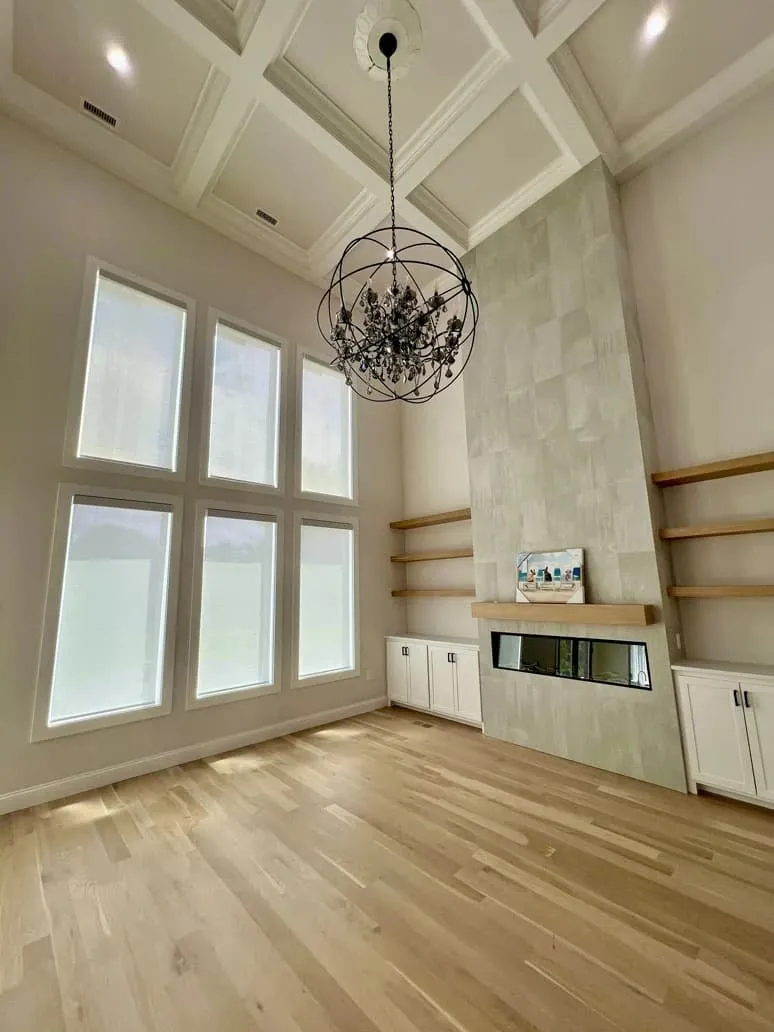
A wall of glass is a different job from a row of windows. The openings are wide, often tall, and usually broken only by slim mullions or the frames of sliding doors. Covering them well means thinking about the wall as a whole.
Width is the first question. Every roller fabric comes on a roll of a set width, and a large opening may need more than one shade. We divide the wall so the breaks fall on the mullions, where the frame hides them, and we link the shades so they rise and fall together with every hem level. On a slider wall, we usually give each door panel its own shade so you can open the doors you use without lowering the whole wall.
The second question is what you see at the top. A run of rollers has a run of rolled fabric at the head. A fascia or cassette across the top hides it behind a clean, finished front. In a house being built or renovated, it is sometimes possible to plan a recess above the windows so the shades disappear entirely when raised; if that is on the table, we are glad to talk it through early with you or your builder.
Third is alignment. In a room where the shades are a long, visible line, their hems should meet at exactly the same height. PowerView motorization makes that easy, since grouped shades move together and stop at the same point every time.
Formal rooms where drapery is expected
Many Osterville houses have formal living and dining rooms at the front, often with tall windows, fine trim and a sense of occasion. In those rooms drapery is expected, and it brings a softness and finish a shade alone cannot. The question is what does the daily work behind it.
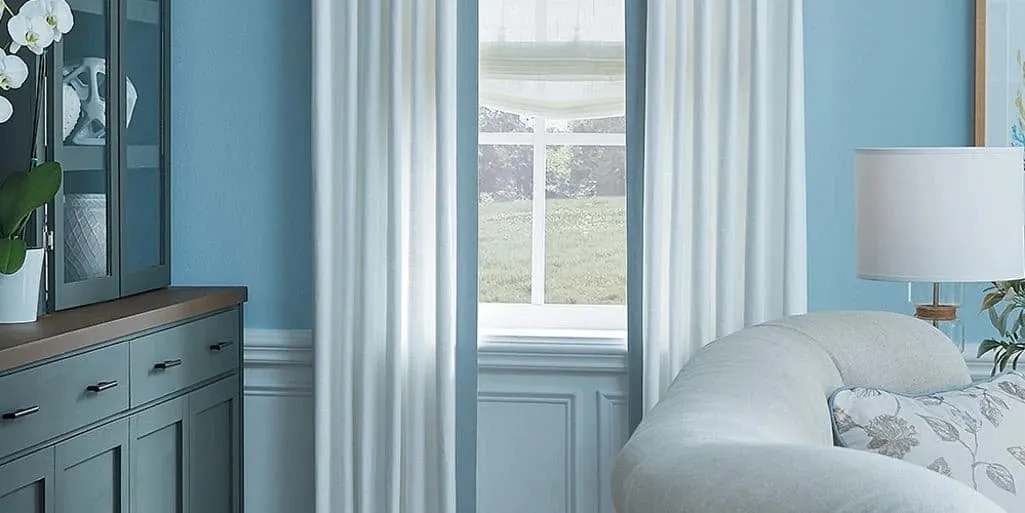
The usual answer is a roller. Drapery panels frame the window and stay put; behind them, a roller shade handles privacy, glare and darkness. Because a roller is so slim, it sits neatly inside the window frame or just above it without crowding the drapery hardware. When the drapery is open and the roller is raised, the window looks entirely uncluttered.
For dining rooms and living rooms, a light filtering roller behind drapery keeps the room bright and private during the day. For a main bedroom, a blackout roller behind the drapery gives true darkness, and the drapery’s overlap at the edges helps block the light that would otherwise slip around the shade. If the roller is motorized, it can be scheduled or run from the same app as the rest of the house, so you never have to reach behind the panels.
Alustra for high-specification rooms
The Alustra collection is Hunter Douglas’s premium roller range. It brings a more refined choice of fabrics and textures, and finishes on the hardware chosen to sit well beside fine millwork and furniture. For the principal rooms of a high-specification house, it is the line we usually suggest first.
The advantage in a large house is coordination. With Alustra across the living room, study and main suite, and Designer Roller or Designer Screen in the secondary rooms, the whole house has a consistent look without every room having the same fabric. We lay the options side by side at your windows so you can see how they sit against your trim, floors and walls.
The Alustra Woven Textures fabrics are worth seeing too. They add a natural, woven look to a roller, which suits a shingled house with a relaxed coastal interior.
Wianno and Oyster Harbors: strong salt exposure
Out at Wianno and on Oyster Harbors, the houses sit right on the water, and salt exposure is constant. Windows are opened to the breeze all summer, and salt air settles on frames, sills and anything near them. Over time it stiffens cords and dulls exposed hardware.
A roller’s working parts are concentrated at the head of the window, away from the sill. Choosing a cordless or motorized lift takes the cord out of the picture entirely. On water-facing walls, motorization is the norm in houses here, both for the reach and because it keeps hands off the fabric.
Sun on the water is just as relentless. A wall of glass facing the harbor takes a great deal of direct and reflected light through a summer day, which is hard on floors, rugs and upholstery. Lowering screens through the brightest hours makes a real difference to how the room feels, and PowerView can do that on a schedule whether or not anyone is home.
A seasonal house that looks after itself
Because so many houses here are open for part of the year, automation is the most valued part of a roller order. PowerView lets you control every shade from your phone, a remote or a wall control, and it lets you set schedules and scenes that run on their own.
Typical scenes for a seasonal Osterville house include lowering the water-side screens as the afternoon sun swings round, closing every bedroom shade at dusk, and raising the house at sunrise. Shades can be grouped by room, by floor or by side of the house. When the house is closed, a schedule keeps the rooms out of the worst of the sun and makes the house look lived in; when you are on your way down, you can open it up from the road. We plan how each motor is powered at the visit, and we set up and test every scene with you.
How we work with you
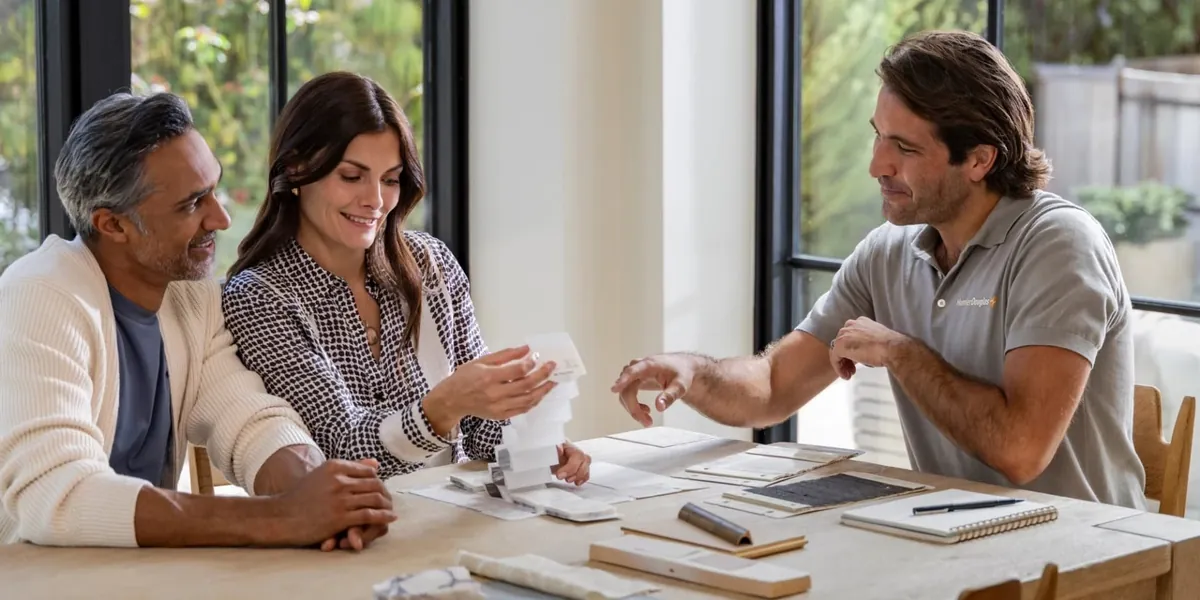
Our work in Osterville begins at the house, because nowhere else shows how a fabric looks against your water and your rooms. Our vans carry samples, so we can bring the showroom to you. If you have an architect, builder or designer, we are happy to work alongside them.
- Arrange a time with Request a Consultation or by the call button.
- We bring roller, screen, banded and blackout fabrics, the Alustra finishes and the motor options.
- We walk the house with you, wall of glass by wall of glass, and talk about how each room is used and when.
- You look through screens toward the water and hold fabrics against your drapery and trim.
- We measure every opening and check the mounting surfaces and any drapery hardware.
- You receive a free estimate for the shades under consideration, to review at your own pace.
Our interior design consultations can look at drapery, fabric and color alongside the shades. See what happens at an in-home consultation for more on the visit.
Choosing openness for a big view
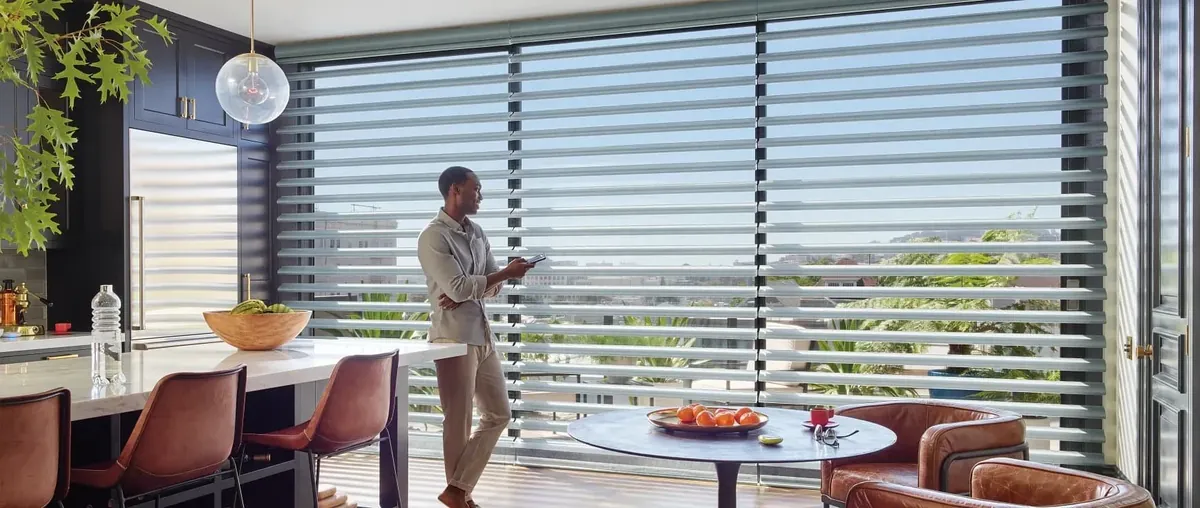
On a wall of glass facing the water, the screen fabric’s openness is the most important decision. Openness is the amount of space in the weave. A more open fabric keeps the harbor crisp and lets more light through; a tighter fabric controls more glare and adds daytime privacy, with the view softened behind it. Color matters as much: a darker screen is usually easier to see through than a light one.
In big view rooms we often find a darker, fairly open screen keeps the room comfortable while preserving the outlook. In a study where glare on a screen matters, a tighter weave is better. We bring a range so you can compare at the window at the hour the sun is strongest.
At night a screen lets people see in. On walls where that matters, a second shade behind the screen, light filtering or blackout, covers the evening.
Main suites and guest bedrooms
Bedrooms in these houses usually face the water too, and they get the early sun in summer. A blackout roller is the starting point, ideally behind drapery or mounted outside the frame so less light comes around the edges. Side channels can close the gap further where total darkness matters.
Dual rollers are popular in main suites: a screen for the daytime view and a blackout for sleep on one bracket. Guest suites, which may sit empty for weeks, benefit from schedules that keep them shaded when unused.
Choosing roller shades in Osterville for a house that fills with family and guests through the summer means thinking about who sleeps where in high season, not just the quiet months.
Studies, media rooms and libraries
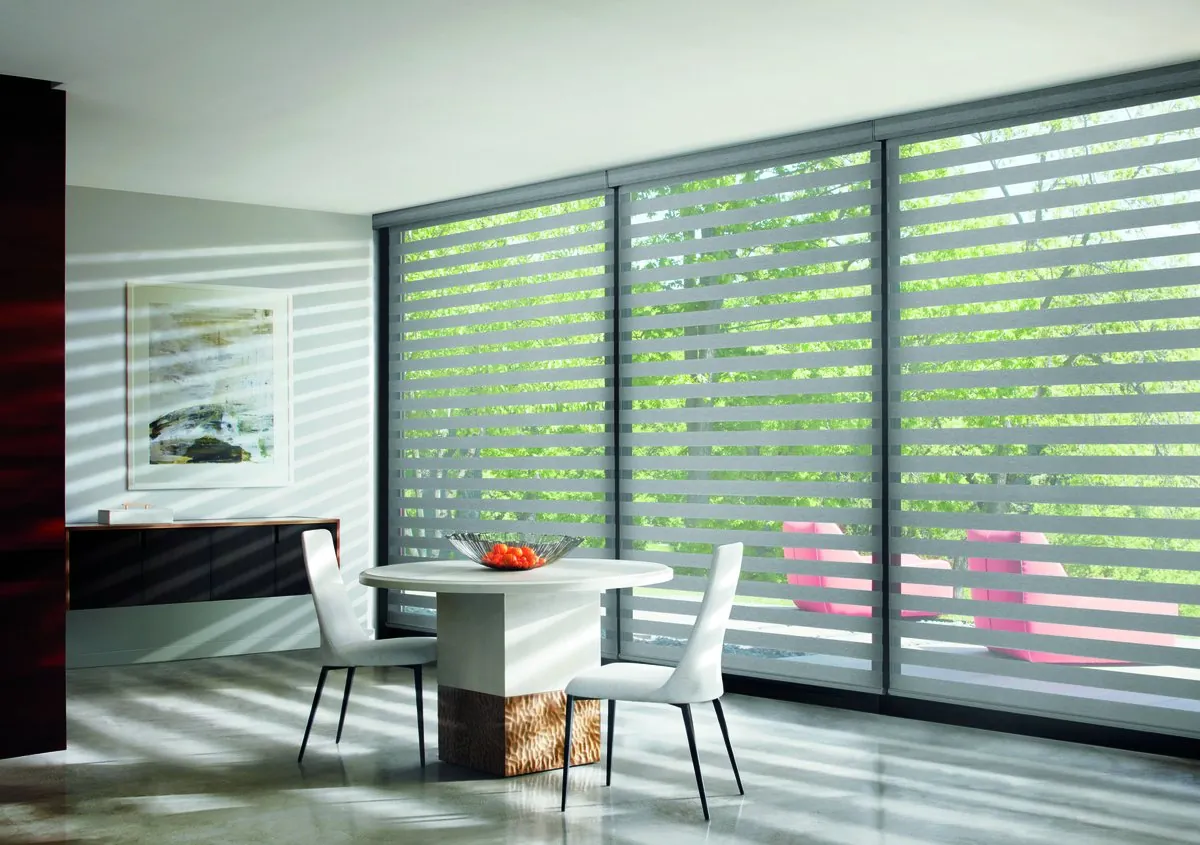
Large houses here often have rooms with very particular needs. A study or home office wants even light without glare on a screen, so a screen fabric with a closer weave behind the desk usually suits it. A media room or home theater wants real darkness at any hour, which calls for blackout rollers mounted outside the frame, with side channels where the room must be fully dark. A library with valuable books and art benefits from shades that are lowered whenever the sun is on that wall.
With PowerView, each of those rooms can follow its own routine. The media room shades close when you choose a movie scene; the library shades follow the sun on a schedule. Roller shades in Osterville houses tend to be part of a whole-house plan like this rather than room-by-room purchases, and we are glad to map it out with you.
Porches, sunrooms and pool houses
Glassed-in porches, sunrooms and pool houses are common on the larger lots. With glass on three sides, they are often the brightest and warmest rooms on the property by early afternoon. A solar screen on every opening brings the glare down and keeps the garden or the water in view, so the room is usable through the middle of a summer day.
Pool houses and outbuildings are often closed for much of the year. Motorized shades on a schedule keep them shaded while empty, without anyone having to visit. In a pool house, where damp air and wet towels are part of daily life, a fabric that wipes clean and a lift with no cord to handle make the shades far easier to live with. We point out the fabrics that suit those rooms when you are choosing.
Planning during a build or renovation
Many projects in town happen while a house is being built or renovated, and that is the ideal time to plan shades. Brackets for large rollers need solid wood above the opening, and planning blocking before the walls are closed makes installation simpler and stronger. Any recess or pocket for the shades has to be built in at framing stage. How each motor is powered is something we plan with you at the visit.
If you are at that stage, bring us in early. A short conversation with you and your builder can save a lot of compromise later.
Certified installation
When the shades are made, our certified Hunter Douglas installers fit them, fixing each bracket into solid framing, levelling every headrail and checking that each shade rolls true and stops at the right height. On motorized shades, they pair them with the app, set up the groups and scenes, and show you how everything works.
For other rooms, we also fit plantation shutters in Osterville and motorized blinds in Osterville, and the full list for town is on our Osterville page. The whole range is on our main roller shades page.
The Gallery dealer difference
Blinds & Designs is a Hunter Douglas Gallery dealer, the title Hunter Douglas gives to dealers who meet its standards. For a high-specification house, that means every roller line, every Alustra fabric and finish, every screen openness and full PowerView automation, all from one place.
Our installers are certified by Hunter Douglas, so the shades are fitted to the maker’s standard. Beyond rollers we carry cellular, roman and sheer shades, blinds, shutters and drapery, and we welcome blind and shade repairs on coverings you already own.
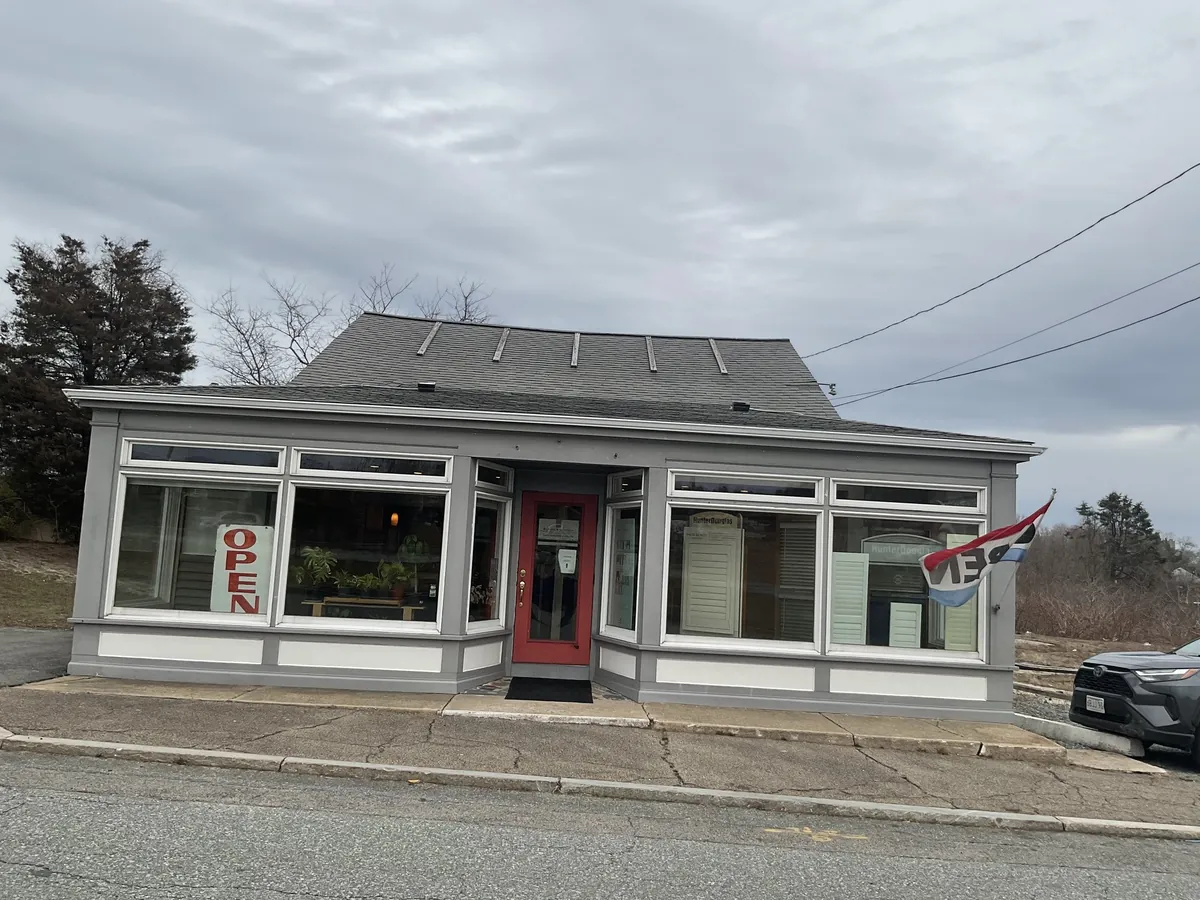
Sagamore, our showroom nearest Osterville
Our closest showroom is in Sagamore, near the bridge. It is a good first call if you would like to talk about a project before we come out.
For houses like these, though, a home visit is where the real decisions are made, at your own walls of glass with the water behind them.
Questions from Osterville
Can a roller shade sit behind drapery?
Yes, and it is one of the most common setups in formal rooms here. The drapery frames and softens the window while the roller handles privacy, glare or darkness. A motorized roller means you never reach behind the panels.
How do you cover a very wide wall of glass?
We divide it into several shades with the breaks on the mullions and link them so they move together and stop level. A fascia or cassette across the top gives a clean finish.
Will the shades stand up to salt air on the water?
Most of a roller’s mechanism sits at the head of the window, away from the sill. Cordless and motorized lifts remove the cord entirely, which is simpler in a salty setting.
Can the shades run while the house is closed?
Yes. PowerView schedules lower and raise the shades on their own, and you can control them from the app wherever you are.
Do you charge for an estimate?
No. Estimates are free. We measure, discuss the options and give you a written estimate with no obligation.
Start with a visit
The right roller shades in Osterville, MA, are chosen at your own windows, with the water behind them and your drapery beside them. Request a consultation and we will bring the full range, Alustra finishes included, measure every opening and give you a free estimate. You can also use the call button, or visit the Sagamore showroom.