
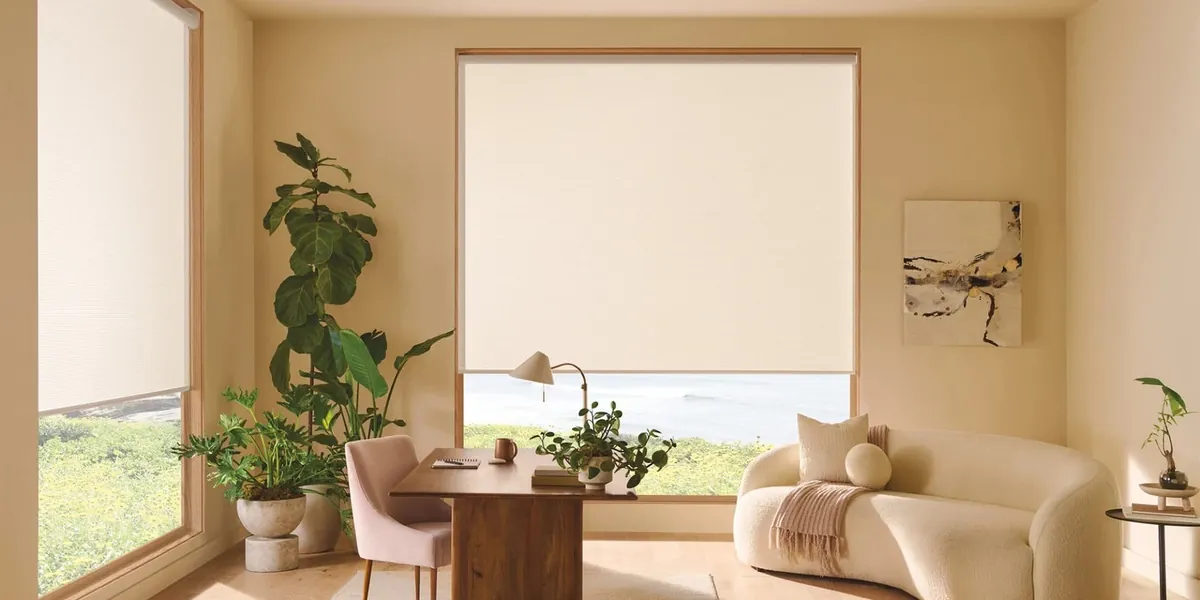
Houses built around the view
Around Assawompset and Long Pond, the best room in the house is usually the one facing the water, and it was built that way on purpose. Older camps that started as summer places and have since been converted for year-round living sit close to the shore, with their windows turned toward the pond. The newer colonials on larger lots set back from the water often have a wall of glass on the pond side. Either way, the view is the point of the room.
That sets the first rule for window treatments in Lakeville, MA: nothing heavy on the pond-facing glass. A thick drape, a bulky valance or a shade that hangs half-down even when raised all take away the reason you bought the house. What works there is a treatment that disappears when you do not need it and does one job well when you do, whether that is cutting the afternoon glare, keeping the room warm on a winter night or giving you privacy once the lights are on.
The other sides of the house are another matter, and they can take whatever suits the room. Good window treatments in Lakeville, MA, usually split the house in two: light and nearly invisible toward the water, practical and private toward the road. Once you see it that way, the choices for each room narrow quickly.
Window treatments in Lakeville, MA, by service
Each card leads to a Lakeville page for that service. Read up on one, or book a single visit that takes in every window from the pond side to the road.
Blinds
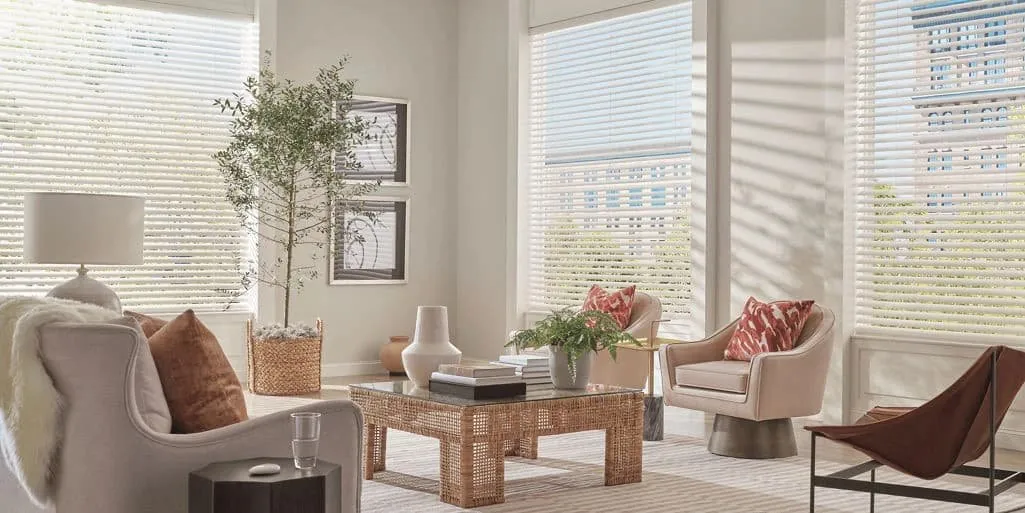
Wood, faux wood, metal and vertical blinds, for the road-side rooms or a kitchen that wants wipe-clean slats.
Cellular shades
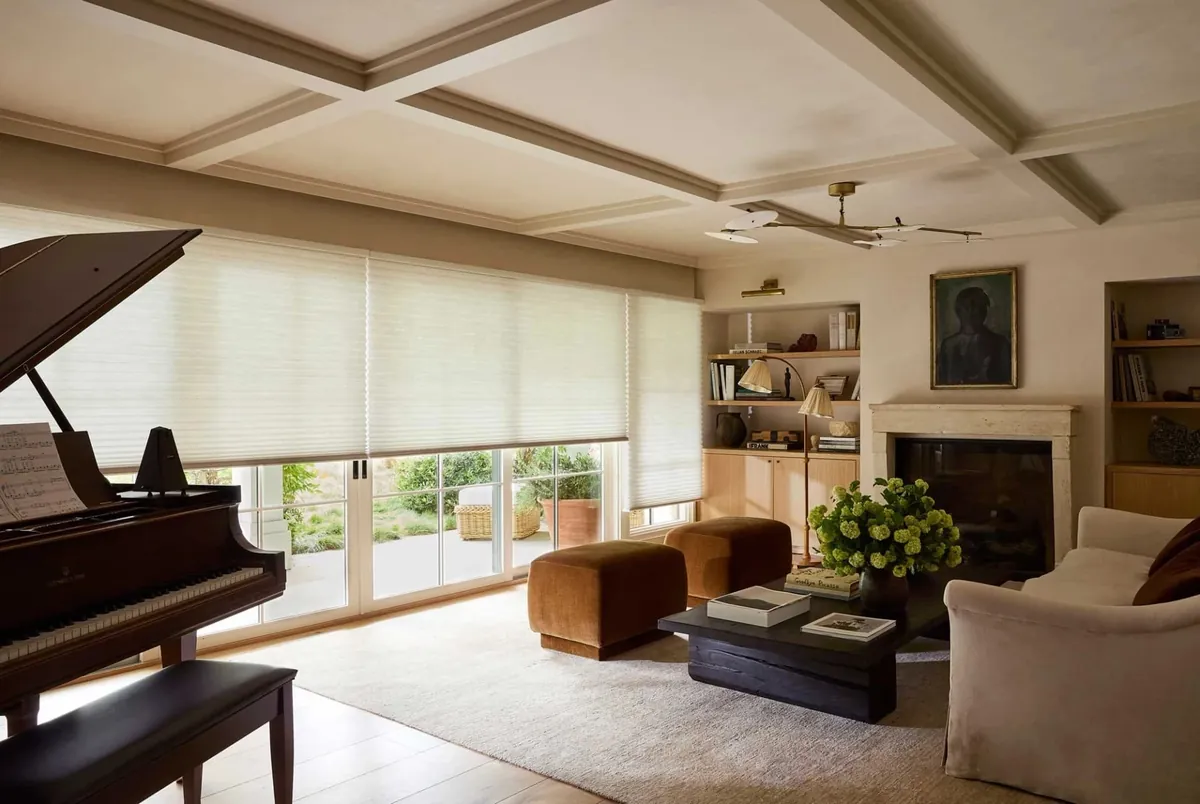
Duette and Applause honeycomb lifts into a slim band, then holds warmth at the glass when it comes down at night.
Roller and screen shades
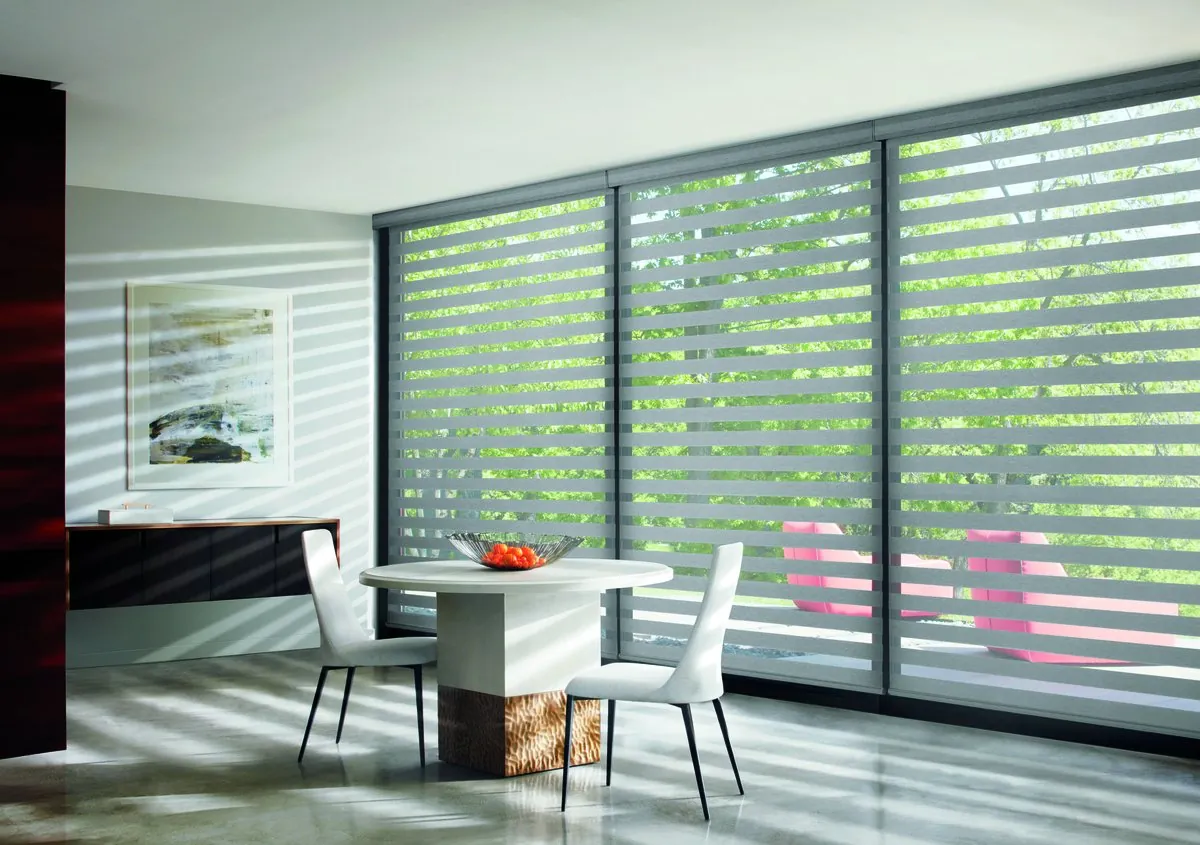
Designer and Alustra rollers, with solar screens that soften the water glare while the pond stays in sight.
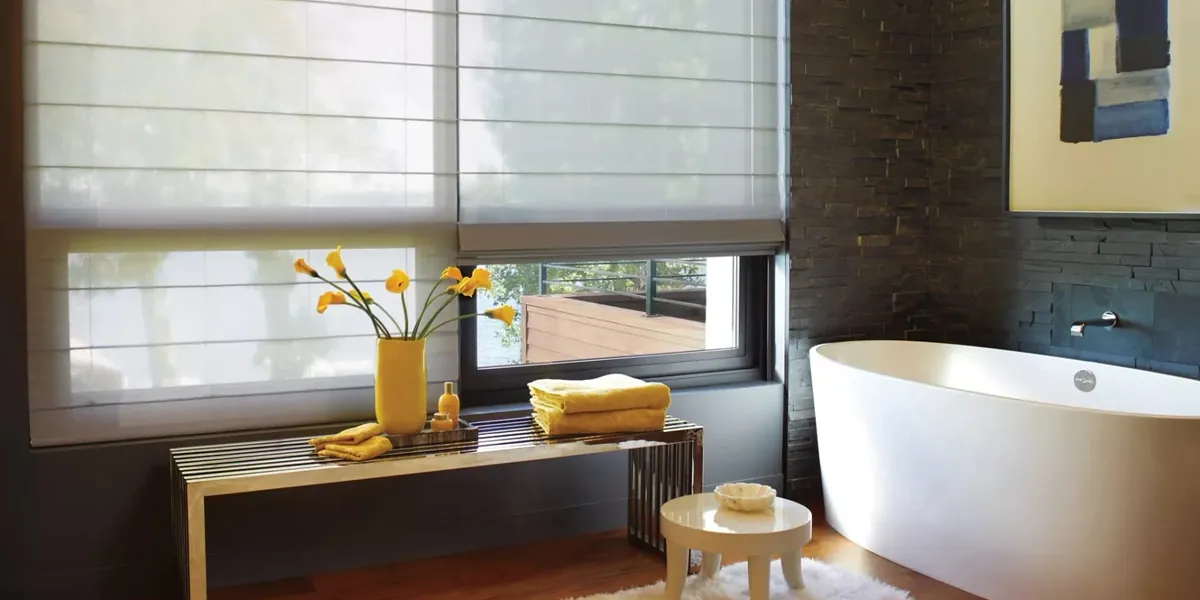
Roman shades
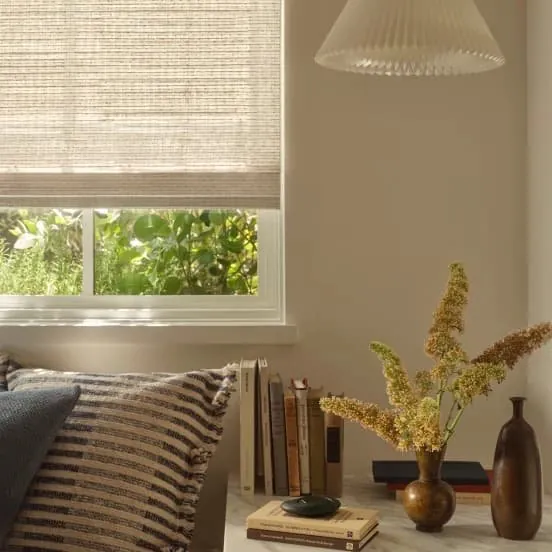
Vignette and Carole Fabrics romans, including sheer fabrics that soften a room without blocking the light.
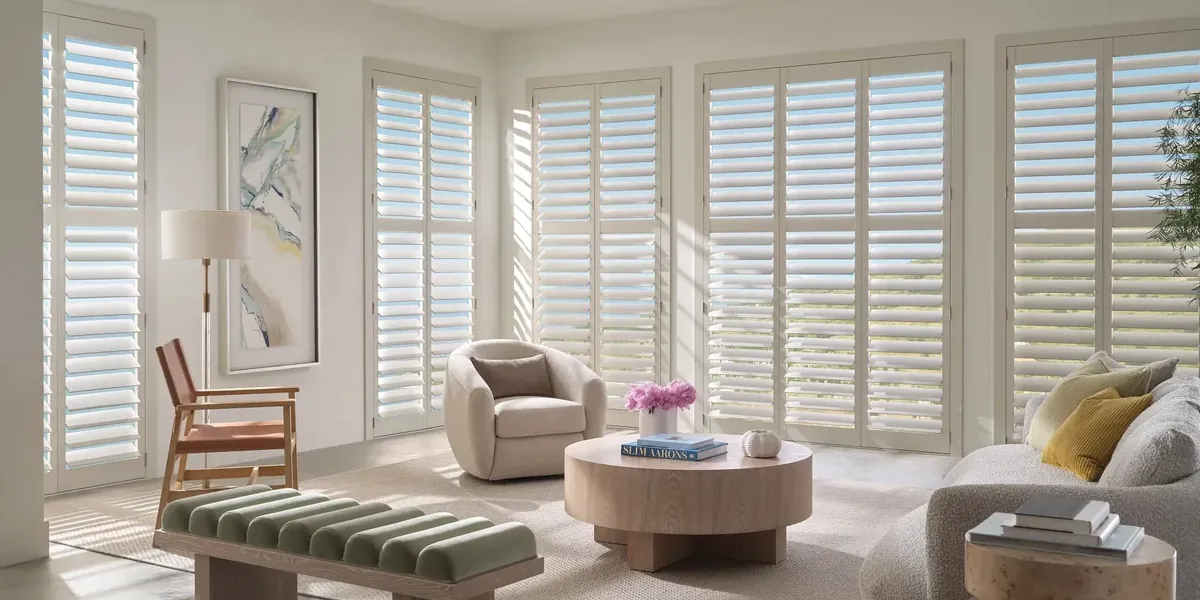
Plantation shutters
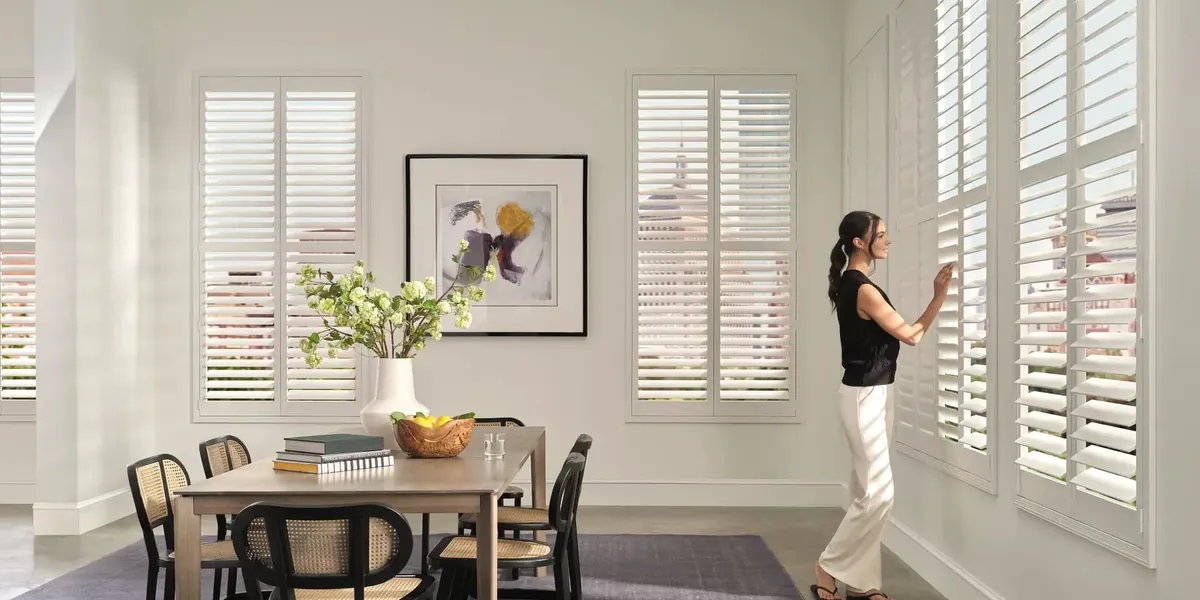
Palm Beach, NewStyle and Heritance shutters for a colonial’s formal rooms, swung fully clear when you want the view.
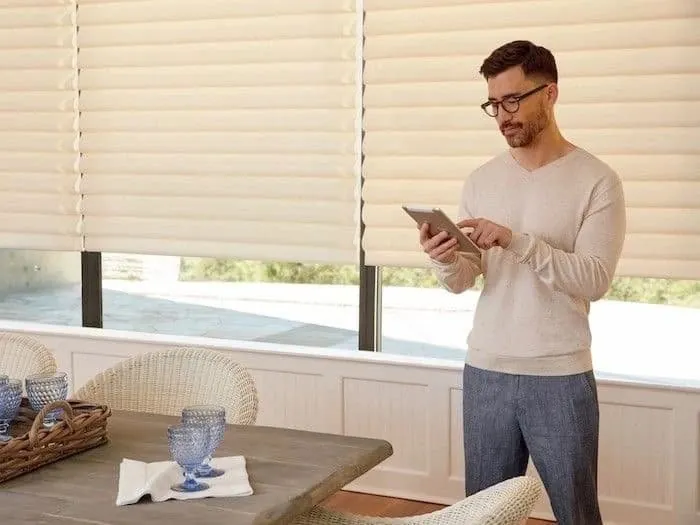
Motorized shades
PowerView shades with no cords on the view window, run from a remote, the app or a schedule.
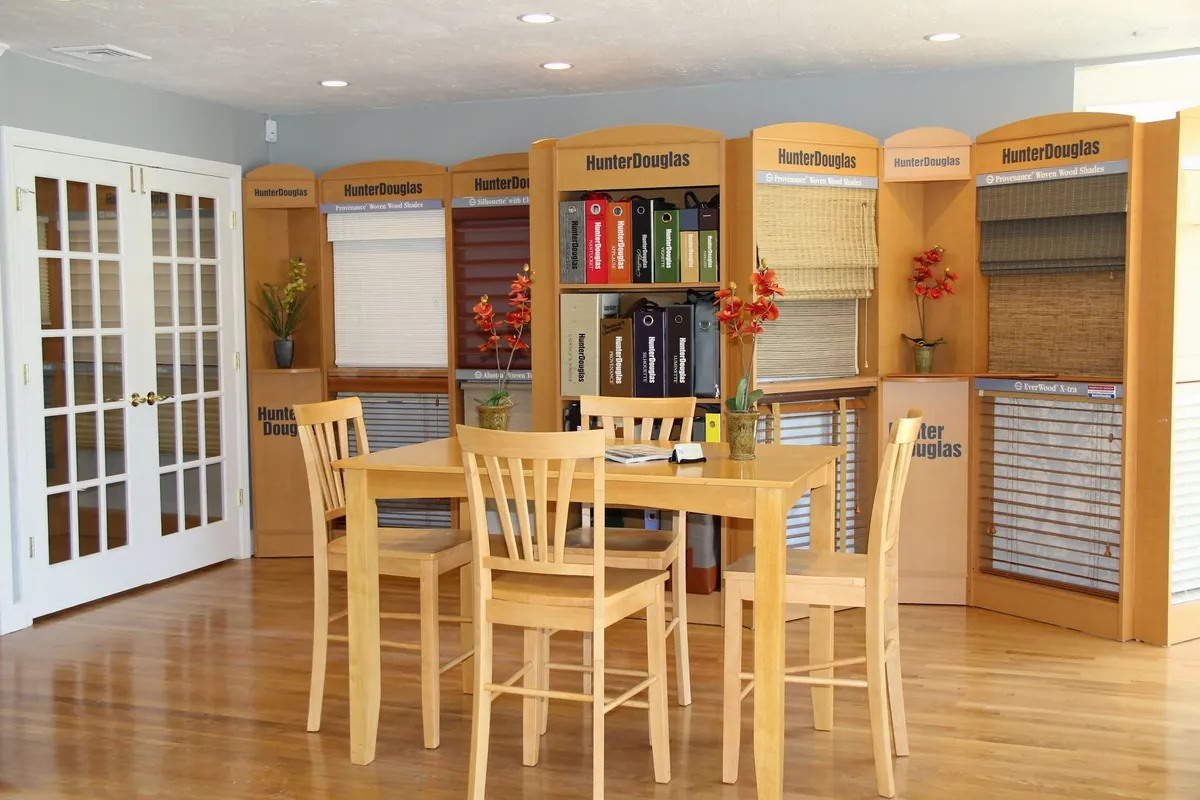
Hunter Douglas dealer
A Gallery dealer for the full Hunter Douglas range, with certified Hunter Douglas installation.
Drapery
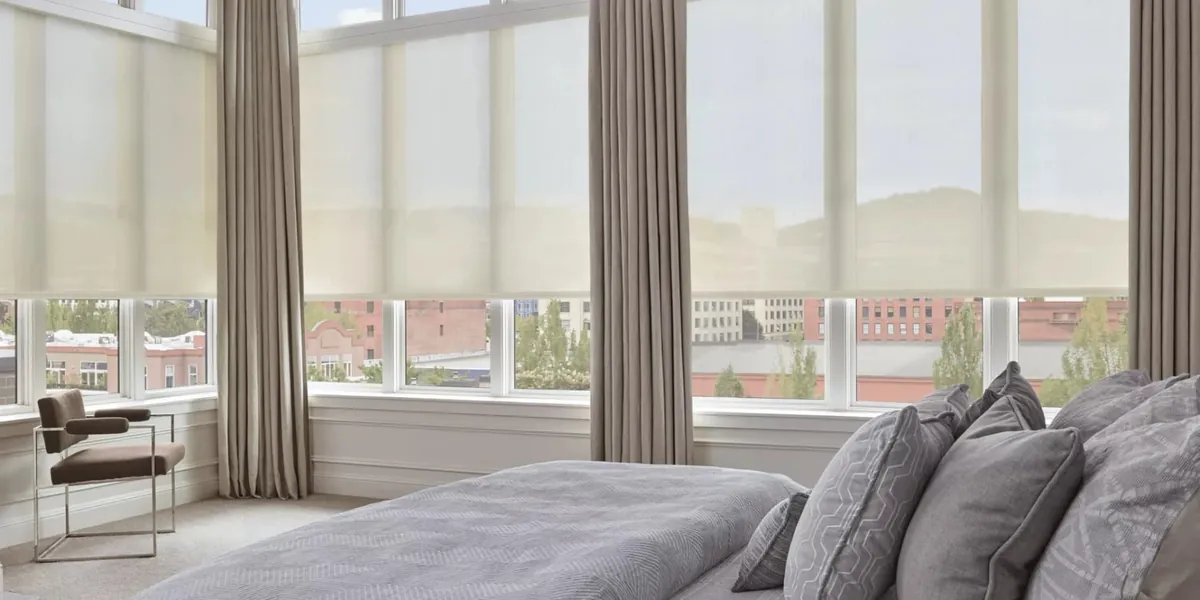
Hunter Douglas drapery for a colonial’s living or dining room, hung so it stacks back clear of the glass.
What light on the glass really means
When we say a pond-facing room wants nothing heavy, we mean three things.
First, the stack. When a shade is raised, it gathers at the top of the window, and that bundle covers some of the glass. Cellular and roller shades gather into a narrow band. A roller can also be mounted so the fabric rolls up behind a slim fascia above the window, so almost nothing shows when it is up. A roman stacks deeper and is better kept for windows where it can rise above the glass.
Second, the headrail and hardware. A wide valance or a cornice box frames a window in a formal room, but on a view window it acts like a lowered eyebrow. A slim headrail, or a shade mounted inside the frame, keeps the top edge clean.
Third, the fabric. When the shade is down, a sheer or screen fabric lets you see out, while an opaque one does not. On the pond side, the shades that get lowered most during the day should be the ones you can see through, saving the opaque fabrics for night and for the rooms that need darkness.
Put together, a pond-facing room can be fully covered for glare, warmth or privacy and still look, most of the day, as if it had nothing at the windows at all.
Screens and openness on the water side
On a sunny afternoon, light comes off the pond as well as from the sky, and a water-facing room can be too bright to sit in or to see a screen. Solar screen roller shades are the usual answer, because they cut that glare while you keep looking out.
Every screen has an openness, which is simply how loose the weave is. Loose means more pond, more daylight and a little more warmth getting in; tight means less glare and a far shore that looks softer and further off. The color of the weave counts as much: charcoal or bronze tends to be easier to look through than white, since it throws less light back at you. The consultant leaves a handful of weaves and colors at your window so you can test them during the brightest part of a pond afternoon.
Banded shades, with alternating sheer and solid stripes, are another option for a room where you want a choice between view and privacy in one shade. Line up the sheer stripes to see out; offset them to close the view.
Sheers for evening privacy
During the day, a pond-facing room rarely needs privacy: the view in is from the water, and it is a long way off. After dark, that changes. A lit room on the shore can be seen from across the pond, from a boat or from houses on the far side, and the big glass that is so good in daylight turns into a stage.
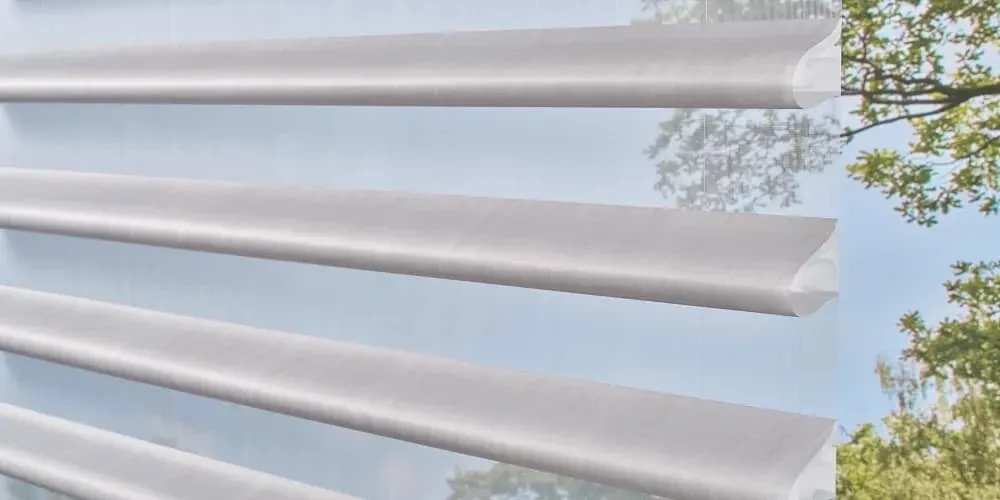
Sheer shades suit that pattern well. Their fabric vanes hang between two layers of sheer: tilt them open in daylight and the pond shows through a soft veil while the room fills with gentle light. Tilt them shut after supper and the far shore can no longer look in. Pulled all the way up, they tuck into a small roll.
For a pond room where you want warmth as well as privacy at night, a light-filtering cellular shade does both: lowered at dusk, it closes the view and holds a layer of air against the cold glass. A top-down, bottom-up version lets you keep the sky and the treetops in view while covering the lower glass.
Camps that became year-round houses
Many of the houses close to the water started as camps: simple summer places with knotty pine walls, low ceilings, small windows and frames that were never built very deep. Over the years many have been winterised, extended and turned into year-round homes, but the original windows often remain in the oldest part.
Those frames are the first thing we check. A shallow camp window may not have room for a shade inside it, and the trim may not be square. Where the depth is there, a cellular shade or roller mounted inside keeps the knotty pine trim on show. Where it is not, the shade goes on the face of the frame, often just above it, so the window still looks neat.
Winter is the other question. Single glass in an old camp window is cold, and a cellular shade is the best thing we sell for that, because the cells hold air against the glass. Roman shades in a warm fabric suit the cosy feel of a camp’s main room. Additions built later often bring a slider or a picture window to the pond, which can take a screen roller or a vertical cellular shade.
Colonials on the larger lots
The newer colonials set back on larger lots are more formal houses: a center hall, a dining room and living room either side, a family room at the back facing the pond, and bedrooms upstairs. Their windows are usually standard and symmetrical, which makes them easier to fit and rewarding to dress well.
The front rooms are where a colonial can take a more tailored treatment. Plantation shutters across the living and dining room windows suit the architecture and look the same from the road on every window. Wood blinds are a good match for a study. Drapery panels in a dining room add softness and frame the windows, hung wide enough that they stack back clear of the glass.
The family room facing the pond follows the light-touch rule. Large glass there can take two or three shades on one headrail, raised together or one at a time, in a screen or light-filtering fabric. A two-story foyer or great room often has a high window that suits a motorized shade.
No cords on the view window
Cords dangling in front of the best window in the house spoil it, and on a big run of glass they multiply. Cordless lifts take care of that on most shades: you raise and lower them by the bottom rail.
On large or high windows, PowerView motorized shades go further. The shades move from a handheld remote, the app on your phone or a schedule, so the pond-side shades can drop on a sunny afternoon and rise again at evening without anyone touching them. Shades across a wide window can move together, keeping the line even.
Schedules suit a pond house well, because the glare on the water follows the sun. Our page on how motorized shades are controlled explains remotes, the app and schedules, and our motorized blinds and shades page covers the range.
The road side of a pond house
While the pond side of a Lakeville house is all about the view, the road side usually faces neighbors, a driveway or a lane, and it can take a more ordinary treatment. Front bedrooms, a home office or a downstairs bathroom on that side want privacy first.
Plantation shutters give privacy with the louvers closed and light with them tilted. Faux wood blinds suit a bathroom or a mudroom, and they wipe clean. Room-darkening cellular shades work in the front bedrooms, fitted close to the frame. Keeping the color facing the glass the same as on the pond side helps the house look consistent from the road even though the products differ.
Kitchens open to the pond
Open-plan kitchens facing the water are common in both the converted camps and the newer houses. The window over the sink, a slider to the deck and perhaps a wide breakfast window all face the view, and the room gets a lot of use.
A wipeable roller or a screen shade over the sink copes with steam and splashes and leaves the view clear when raised. The slider can take a vertical cellular shade or gliding panels that stack to the side so the doorway stays clear. A breakfast window that catches a low morning sun across the pond suits a top-down, bottom-up cellular shade.
How a consultation works
Choosing fabric for a pond room is hard to do away from the pond. Our consultants bring the showroom to you, with samples in the van.
- Book through Request a Consultation or the call button.
- A consultant arrives with screen weaves, sheers, cellular and roman fabrics, blind slats, shutter louvers and drapery swatches.
- You start in the pond-facing rooms and talk about glare, warmth, privacy and the view.
- Screens and sheers are held up at the glass so you can see how much of the pond each one keeps.
- The rest of the house follows, from the road-side rooms to the bedrooms upstairs.
- Every window is measured, and you receive a free estimate to consider in your own time.
Our guide to what happens at an in-home consultation explains more, and our interior design consultations help when you want guidance on color across the house.
Bedrooms that face the water
A bedroom looking over the pond is a fine place to wake up, but the summer sunrise over open water can be early and very bright. If you want to sleep past it, the bedroom is the one pond-facing room where something heavier is worth it at night.
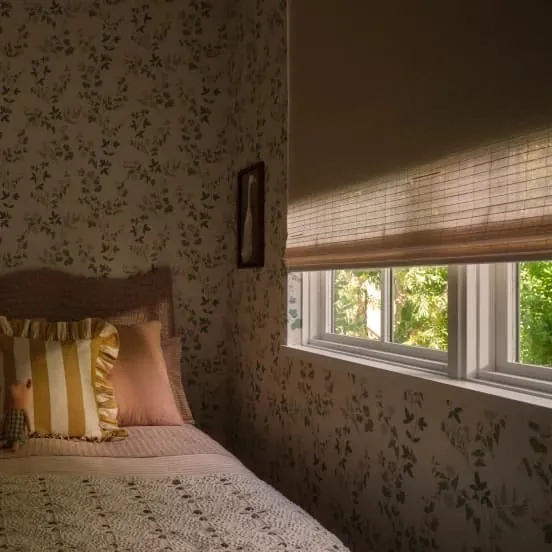
Darkening cells or a blackout roller, sized tight to the opening, hold the room dim until you choose otherwise. A roller that winds up behind a narrow fascia hands the pond back to you each morning with nothing left on the glass. If you prefer to wake with the light, a light-filtering fabric or a sheer shade softens the morning without blocking it, and a motorized shade can open gently at a set time.
Drapery without weight
Drapery has a place in a Lakeville house, as long as it does not crowd the view. In a colonial’s living or dining room, panels frame the windows and add warmth to the room. On the pond side, a pair of light panels hung wide of the frame, with a rod that extends past the glass, can soften a large window while leaving all of it clear when drawn back.
Layering helps. A screen or cellular shade does the daily work against the glass, and the drapery is there for the look and for drawing closed on a cold night. Seen this way, window treatments for a Lakeville pond house can be soft and finished without taking anything from the view. The full range is on our window treatments page.

What a Gallery dealer offers
Gallery is a status Hunter Douglas gives dealers who handle its entire catalog, and Blinds & Designs carries it. That is how a single appointment can put a screen on the pond window, darkening cells in the bedroom and shutters in a colonial’s dining room without shopping around.
Certified Hunter Douglas installers fit what we sell. Ask about design consultations if color is the sticking point, and about repairs if an older shade in the camp has stopped lifting. The Hunter Douglas page has more about the maker.
The showroom nearest Lakeville
Of our showrooms, North Dartmouth sits nearest to Lakeville. Pond houses are usually planned right at the water-facing glass with swatches in hand, though some like to watch a sheer or screen shade move before the visit.
Either route ends with one crew doing the measuring, the ordering and the fitting, after an estimate that costs nothing.
Lakeville questions
What can go on our pond-facing windows without blocking the view?
Shades that stack small and lower to a see-through fabric: solar screen rollers, sheer shades and light-filtering cellular shades. Mounted inside the frame or behind a slim fascia, they all but disappear when raised.
How do we cut the glare off the water in the afternoon?
A solar screen roller in an openness that keeps enough of the view for you. A darker screen color is often easier to see through. We hold several samples at your glass to compare.
Our camp windows have very shallow frames. Can they still take a shade?
Usually, yes. Where there is not enough depth inside, the shade mounts on the face of the frame or just above it.
Can the pond-side shades lower themselves in the afternoon?
Yes. PowerView shades can run on a schedule, so they drop when the glare arrives and rise in the evening, and you can still use the remote or app at any time.
Do you plan the road side and the pond side at the same visit?
Yes. The consultant measures every window and gives one free estimate, with the right product for each side of the house.
Book a visit
Hold a screen against your own pond glass on a bright afternoon and the choice usually makes itself. Ask for a consultation, and we will bring the weaves and sheers, measure camp windows and colonial windows alike, and write a free estimate for window treatments in Lakeville, MA. The call button is there for a quick question first.