
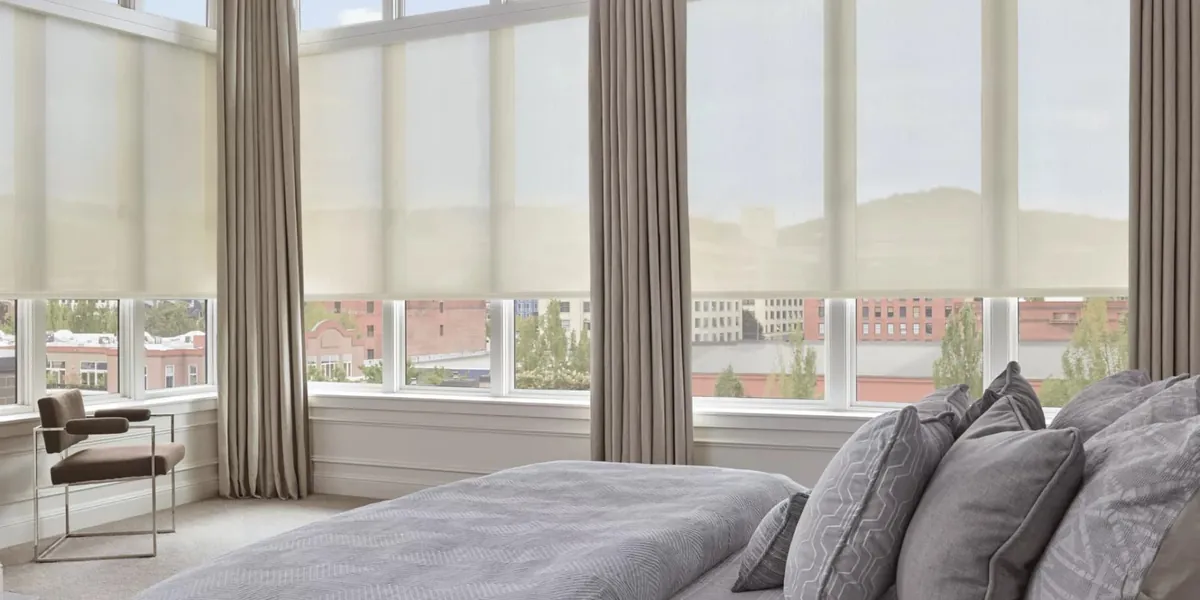
Brownstone sash and tower glass
Boston asks for two very different kinds of window covering. Through the Back Bay, Beacon Hill and the South End, the brownstones and row houses have tall, narrow sash set into deep masonry reveals, on streets where historic district review shapes what the building shows to the sidewalk. A few blocks away, the new high-rise condominiums are wrapped in floor-to-ceiling glass, with whole walls of window looking out over the city and the harbor.
Both ends of that market have the same everyday problem: a lot of shades to move, often in places that are awkward to reach. A row of tall parlor windows, each with its own cord, or a living room where the glass runs from the floor to the ceiling for the full width of the room. Motorized blinds in Boston, MA, let you run all of them from a remote, an app or a schedule, so the shades actually get used as the light changes rather than being left wherever they were last pulled.
Because the two kinds of home are so different, we plan them differently. The sections below take each in turn.
Styles that suit a motor in old brick and new glass
The motor itself comes from Hunter Douglas under the PowerView name. Choosing motorized blinds in Boston, MA, starts with the look of each room; when we visit, we point out which of your favorite styles can be fitted with PowerView, and the rest is fabric, color and light.
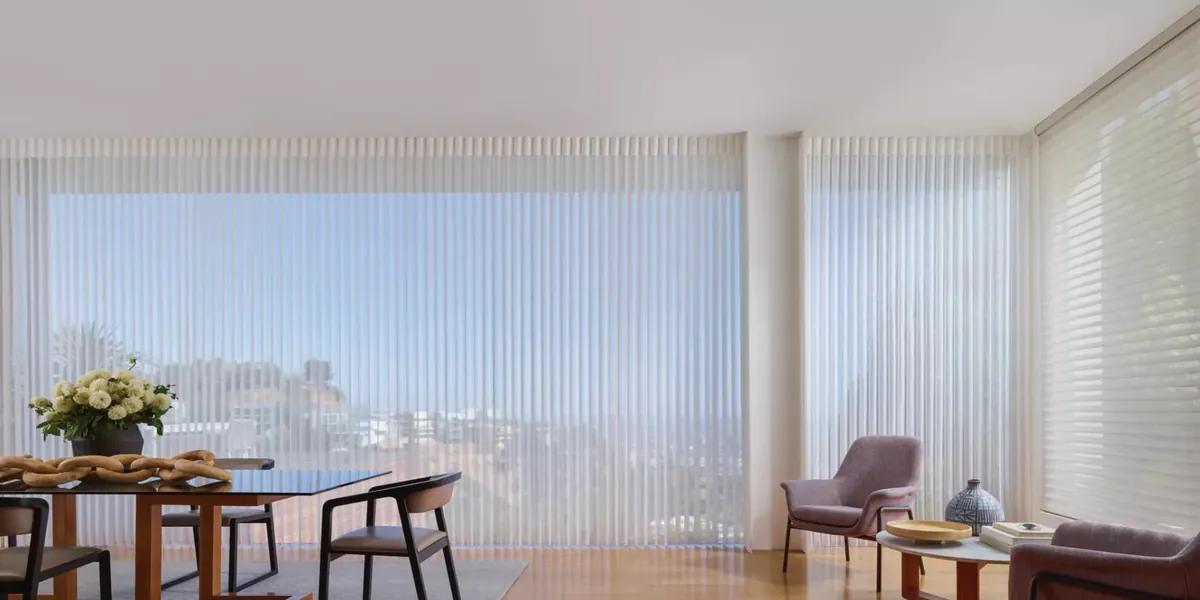
Sheer vertical panels
Luminette runs the full height of a condominium window wall and softens the city light.
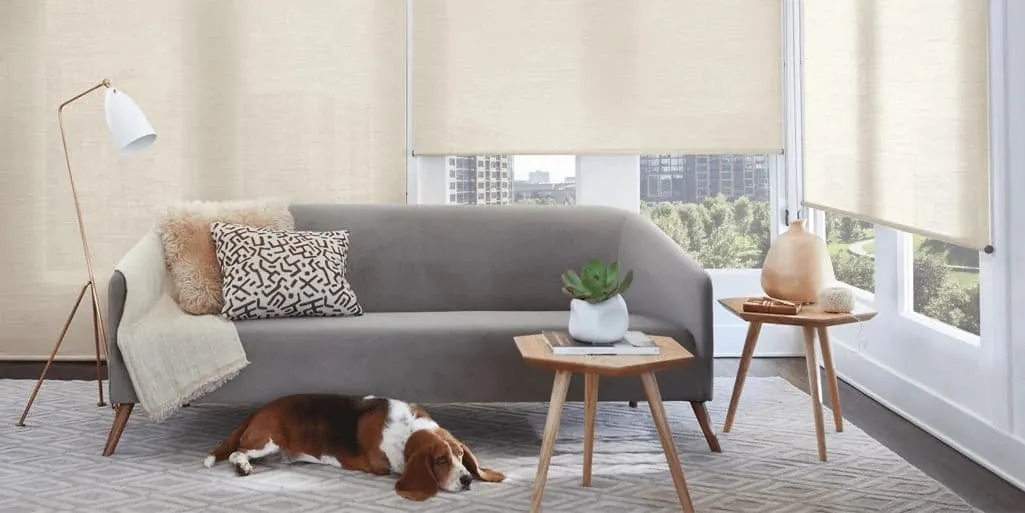
Roller shades
Designer Roller shades roll up out of sight, leaving the skyline clear when they are raised.
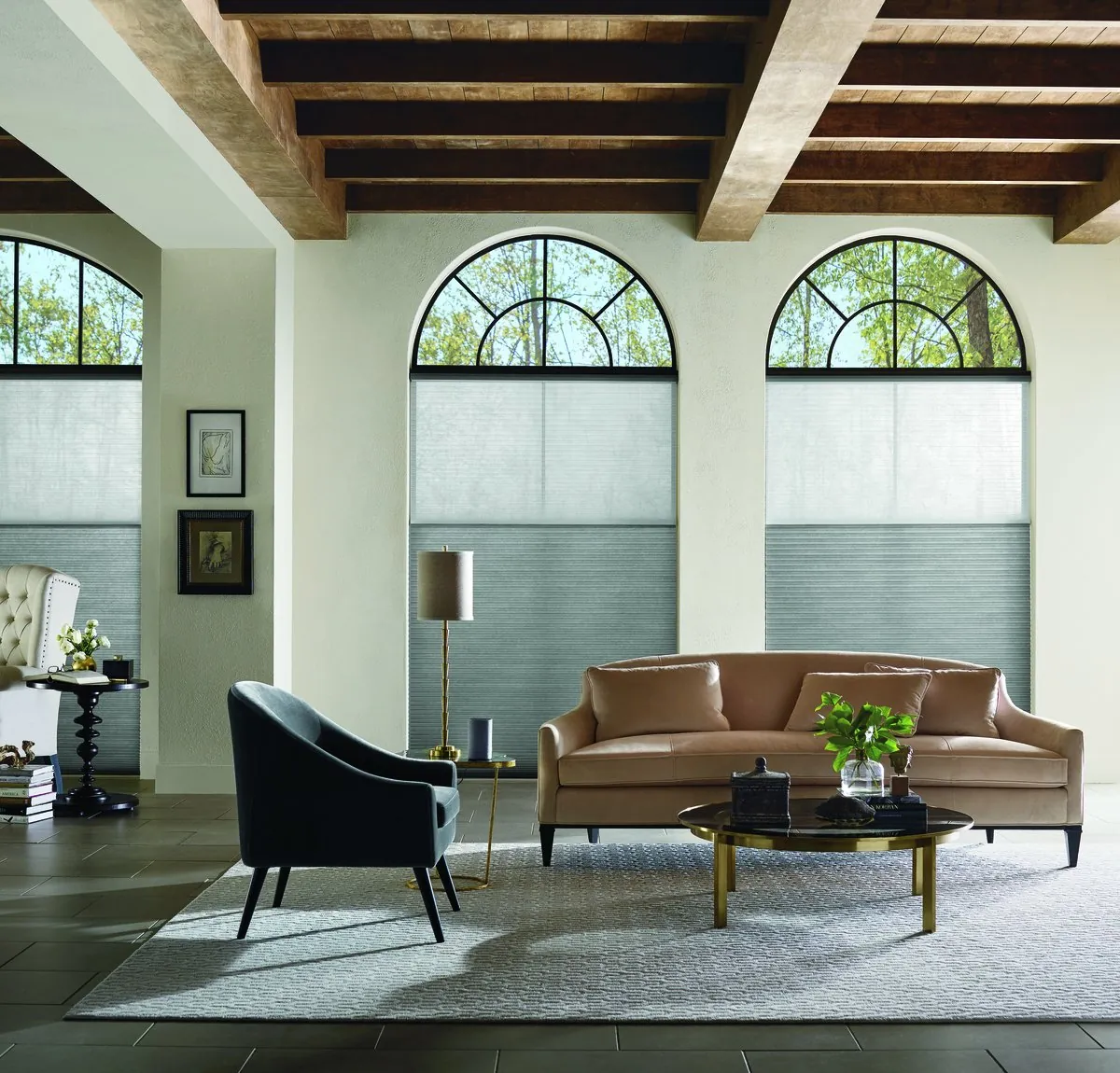
Honeycomb shades
Duette and Applause make a slim stack on tall, narrow sash where every inch of glass counts.
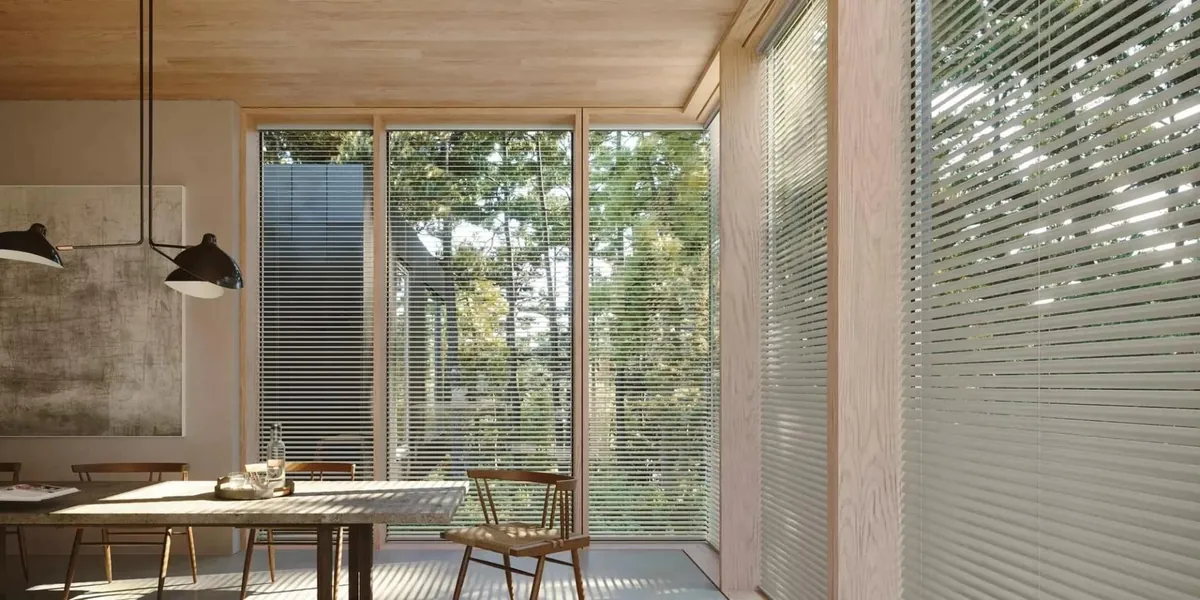
Metal blinds
Slim metal slats on tall glass, tilted from the remote to angle the city light.
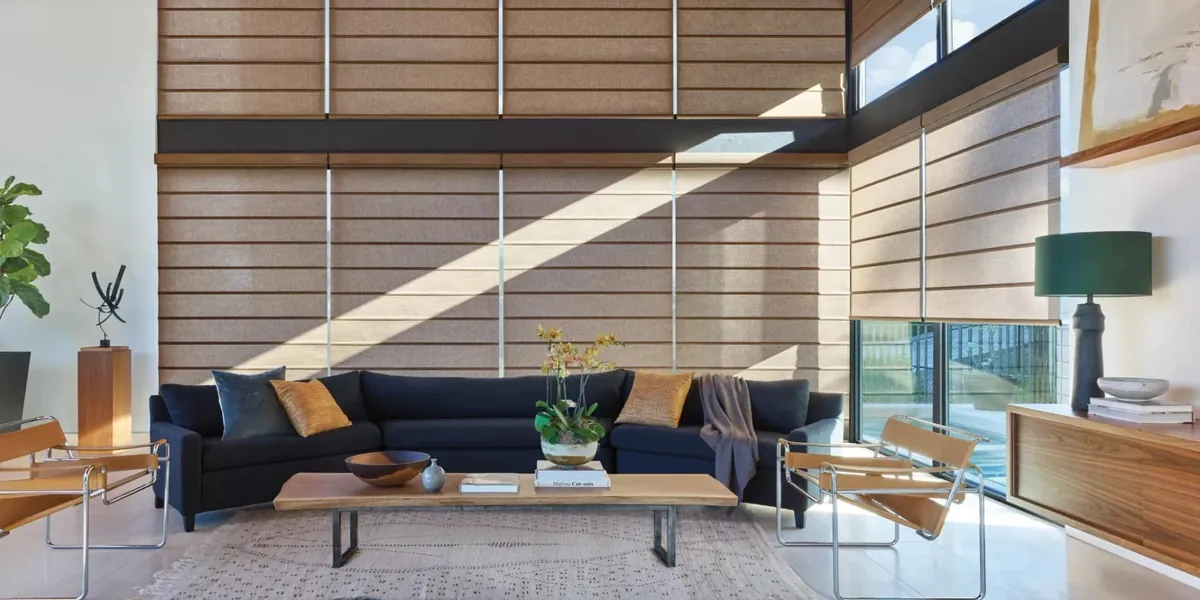
Banded shades
Alternating stripes that open the outlook when aligned and screen it when shifted.
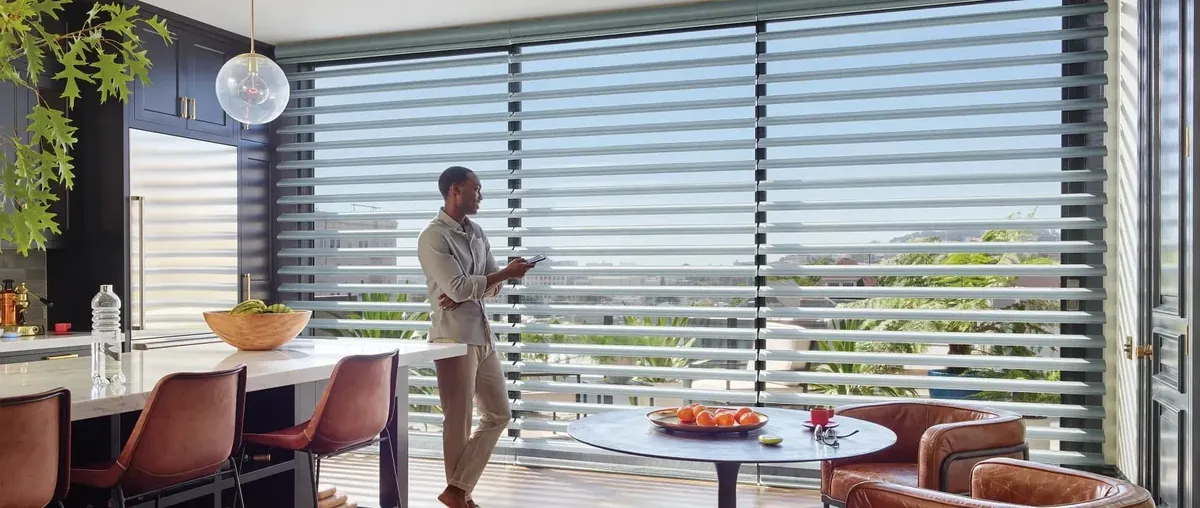
The PowerView app
Your whole home’s shades listed on one screen, ready to move from the sofa or from the office.
Tall, narrow sash in the Back Bay and the South End
The row houses of the Back Bay and the South End were built with tall windows to bring daylight deep into narrow rooms. A parlor floor might have three or four sash windows across the front, each one far taller than it is wide, with the top of the window well above anyone’s reach. In a bow front, those windows curve around the bay, every one at a slightly different angle to the street.
Tall sash is exactly where a motor helps. A manual shade on a very tall window means a long cord and a lot of pulling, and the top of the shade is often out of reach for adjusting. On PowerView, a shade that tall moves as easily as a small one. In a bow front, all the shades in the bay can move together, so they stop at the same line and the front of the house reads evenly from the street.
The narrow width matters too. With no cord hanging at the side of the sash, nothing crowds the frame or catches on the shutters and trim that many of these rooms still have.
Deep reveals and the inside mount
Brick and brownstone walls are thick, and the windows sit well back in them. Those deep reveals are one of the best features of the older houses, and they are also a gift for shades: there is usually room to mount the shade inside the opening, with the headrail tucked up out of sight and the trim left fully visible.
An inside mount keeps the window looking like the original. From the room you see the reveal, the trim and the shade within it, rather than a headrail sitting on the face of the wall. Older openings are rarely identical, so each reveal gets measured for depth when we come, and the way each motor gets its power is worked out then too, opening by opening.
Garden levels, rear ells and the narrow back rooms
The front of a row house gets all the attention, but much of daily life happens at the back. In many South End and Back Bay houses, the kitchen sits on the garden level or in a narrow rear ell, with windows looking onto a small yard, a fire escape or the back of the next street. Those rooms are close to their neighbors on every side, so privacy matters there at all hours, not only after dark.
A garden-level room has its own puzzle. Its front windows sit at or just below sidewalk height, so anyone walking past sees straight in, yet the same windows are the room’s only daylight. A sheer shade can stay down through the day, softening the view in from the sidewalk while daylight still comes through, and a schedule can close the room fully once the lamps go on. That happens every day without anyone thinking about it.
The back rooms also tend to have the odd windows: a small sash over a sink, a transom above a door to the yard, a window halfway up the back stair. They are the openings most likely to be left closed because reaching them is a bother. A motor in each, run from the same remote as the kitchen, brings them back into use.
Beacon Hill and what the street sees
On Beacon Hill and in the other neighborhoods under historic district review, the outside of the building is the part the street lives with. Shades are inside the glass, but they still show from the sidewalk, especially at night when the rooms are lit.
That makes consistency worth thinking about. When every shade across the front of a row house is the same color and stops at the same height, the facade looks calm and orderly. Manual shades rarely manage that, because each one ends up wherever it was last pulled. Motorized shades grouped across the front stop together, every time.
When we visit, samples go up at your front windows and we step back to look at them from the room and from outside, so you can choose a color that suits both the interior and the street. A schedule that lowers the street-facing shades at dusk then keeps the house private in the evening without anyone climbing the stairs to do it.
Floor-to-ceiling glass on the high floors
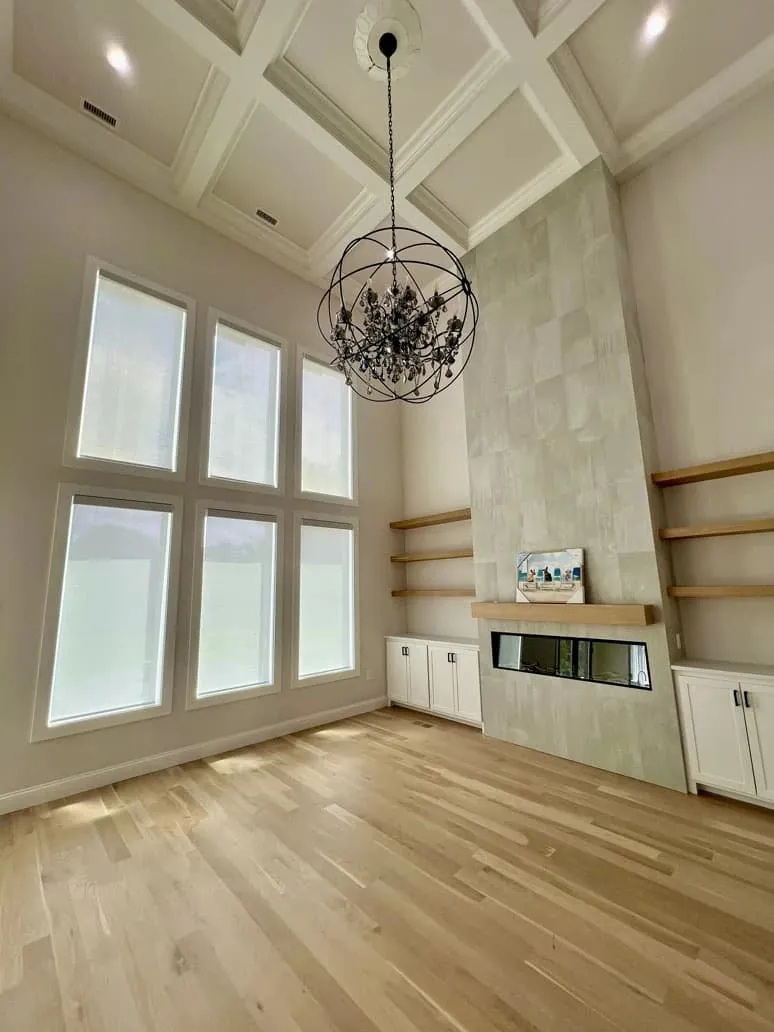
The new high-rise condominiums are the other extreme. Instead of small, tall openings in thick walls, a living room might have one continuous wall of glass from the floor to the ceiling, often on two sides, with nothing outside but sky and the city below. The views are the point of these homes, and so is the light, which on a high floor can be intense.
Pulling a dozen cords across a window wall is tiresome, and the shades on a window wall are often too wide and too tall to manage comfortably. Motorized blinds in Boston, MA, condominiums let you lower a whole wall at once against afternoon glare, then raise it again for the evening view with a single press.
Fabric choice matters more here than almost anywhere. A sheer or a pale roller fabric tames glare and still lets the skyline show through, so the view never disappears. In a bedroom facing east, a heavier fabric does the opposite job and keeps the room dark when the sun comes up over the harbor.
Remote, app and schedules in a city home
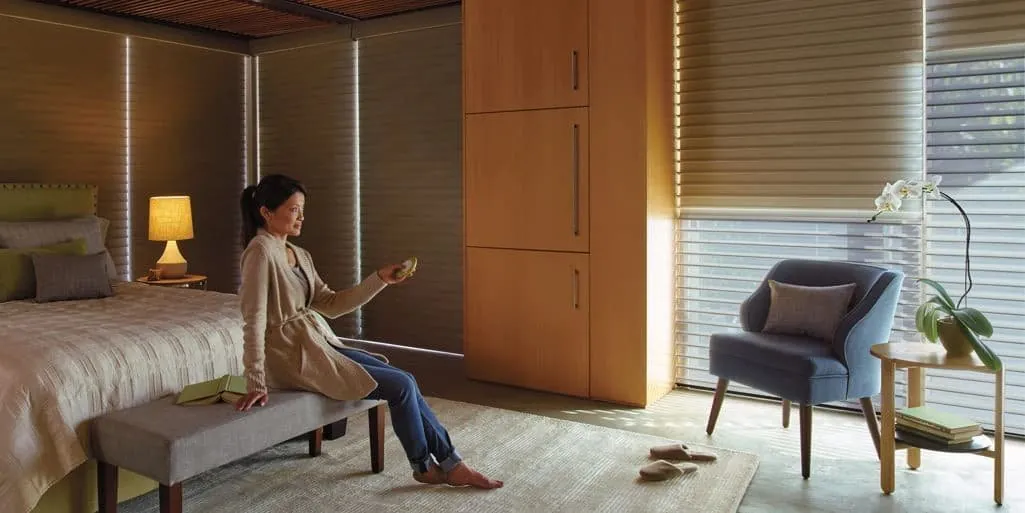
In a city home, PowerView gives you a handheld remote, an app and timed schedules, and they all work side by side.
- A handheld remote sits on the coffee table or the nightstand. Guests and visiting family can use it without being shown anything, and one button can cover a single window or the whole bow front.
- The PowerView app puts the home’s shades on your phone, sorted by room. It is where groups and schedules are set up, and it reaches the shades whether you are on the couch, at work downtown or away for the weekend.
- Timed schedules repeat each day on their own. A condominium might bring the west wall down early in the afternoon; a row house might drop the street-facing shades at a set evening hour.
The app earns its keep in a condominium: from your desk at work you can lower a sunny window wall before the afternoon light pours in. For the detail on each kind of control, read how motorized shades are controlled, and for the bigger picture see window covering automation.
Samples brought to your door
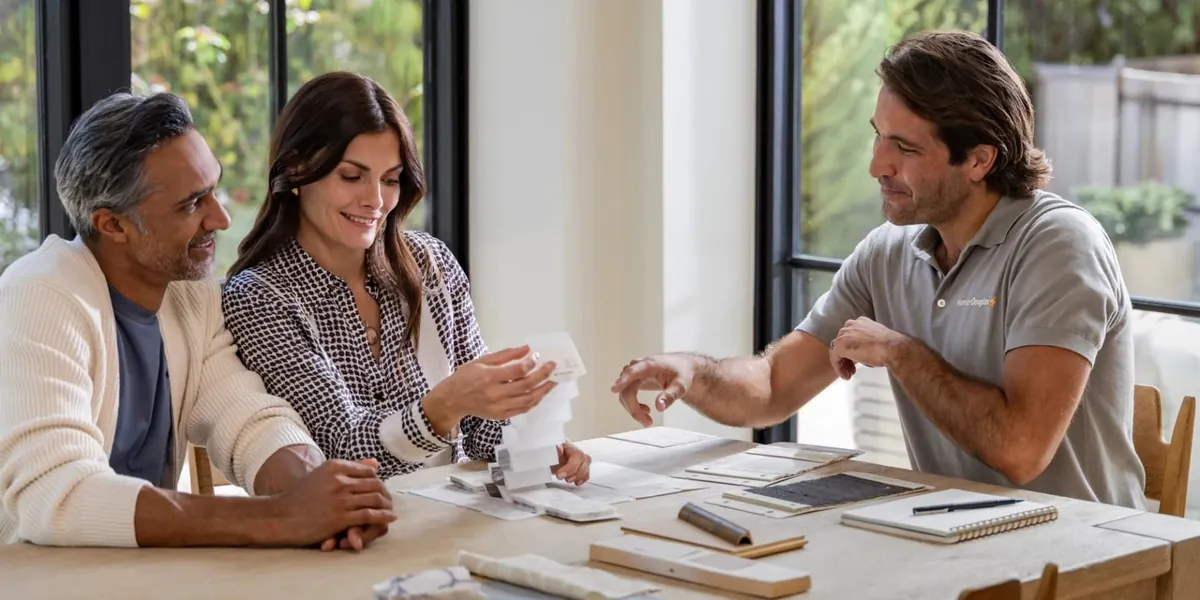
City homes start with a visit from us. Samples travel in our vans, which means the showroom comes to your street: no sample books carried on the T, and every fabric judged against your own brick or glass in the light your rooms really get. Read how it works on our Canton shop-at-home page.
- Book through Request a Consultation, or tap the call button.
- A consultant arrives with the van’s samples and goes through the home room by room.
- Fabrics are tried right at your windows, whether that is a brownstone sash or a pane of tower glass.
- Together we settle which windows should move as one and how you want to control them.
- Every opening is measured, with the depth of each reveal noted for an inside mount.
- A free estimate follows, covering the shades and the installation you have in mind.
- When the shades are ready, a certified Hunter Douglas installer puts them up and pairs them with your remote and the app.
Our in-home consultations page tells you more, and you can read what goes into an estimate on the free estimates page.
Parlor floor to top floor in a row house
A brownstone or row house stacks its rooms vertically, and each floor has its own light. Planning motorized blinds in Boston, MA, row houses floor by floor makes sense.
The parlor floor, with its tallest windows, is usually the first priority. These are the windows most visible from the street and the hardest to reach, so grouping them on one remote button gives the most immediate benefit. Behind them, a dining room or kitchen at the back of the house often faces a garden or a rear alley, with a different light and different privacy needs, so it keeps its own control.
The upper floors are bedrooms and studies. Their windows are a little smaller but still tall, and a bedroom at the front faces the street directly. A schedule that keeps those shades down in the morning until the hour you choose, and lowers them again in the evening, takes care of both sleep and privacy.
The top floor may have dormers, a skylight-lit stair or windows under a sloping roof, all of which are awkward places for a cord. Top-floor openings like these are prime candidates for PowerView, while the easy windows below can stay manual if you prefer.
If the home has been divided into flats, the plan simply follows your own floor. A garden-level flat has its own concerns about privacy from the sidewalk, while a top-floor flat gets the most light. We plan each one on its own terms.
Privacy among the towers
In a high-rise, privacy runs sideways as much as down. The neighbors in the next tower may be looking straight across at your living room, and at night, with the lights on, a window wall makes the whole room visible. During the day, the reflection on the glass usually hides the interior, but once it gets dark that reverses.
Shades that close on a schedule as evening falls handle this without anyone having to remember. Sheer shades and banded shades also give you a middle setting: with sheer shades lowered and the vanes open, you keep a soft view out while the room is screened from the tower opposite. Banded shades with the stripes offset close the view entirely, then line up again to open it.
Bedrooms usually want full privacy and darkness, while living rooms want light and view during the day. Planning the two separately, with their own schedules, is usually the most comfortable way to live with all that glass. Our roller shades in Boston and cellular shades in Boston pages show more of those styles.
Why a Hunter Douglas Gallery dealer
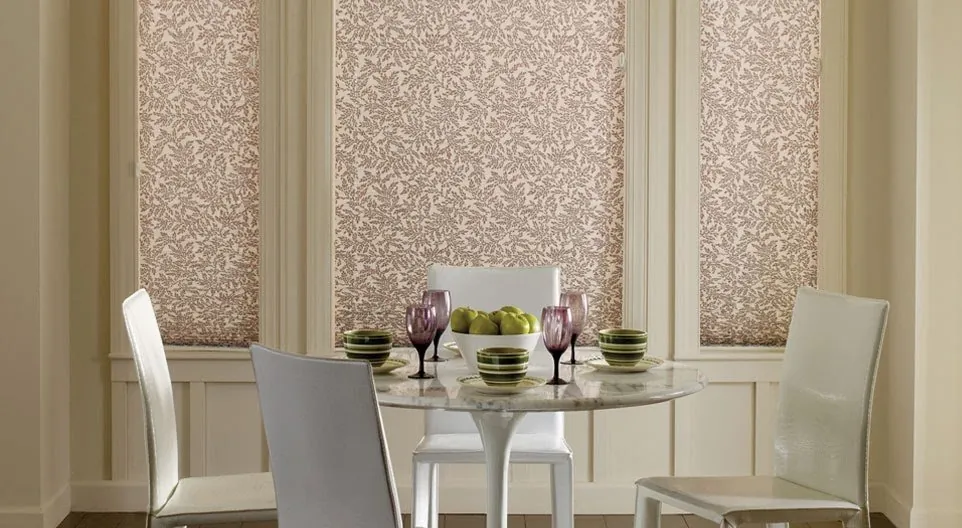
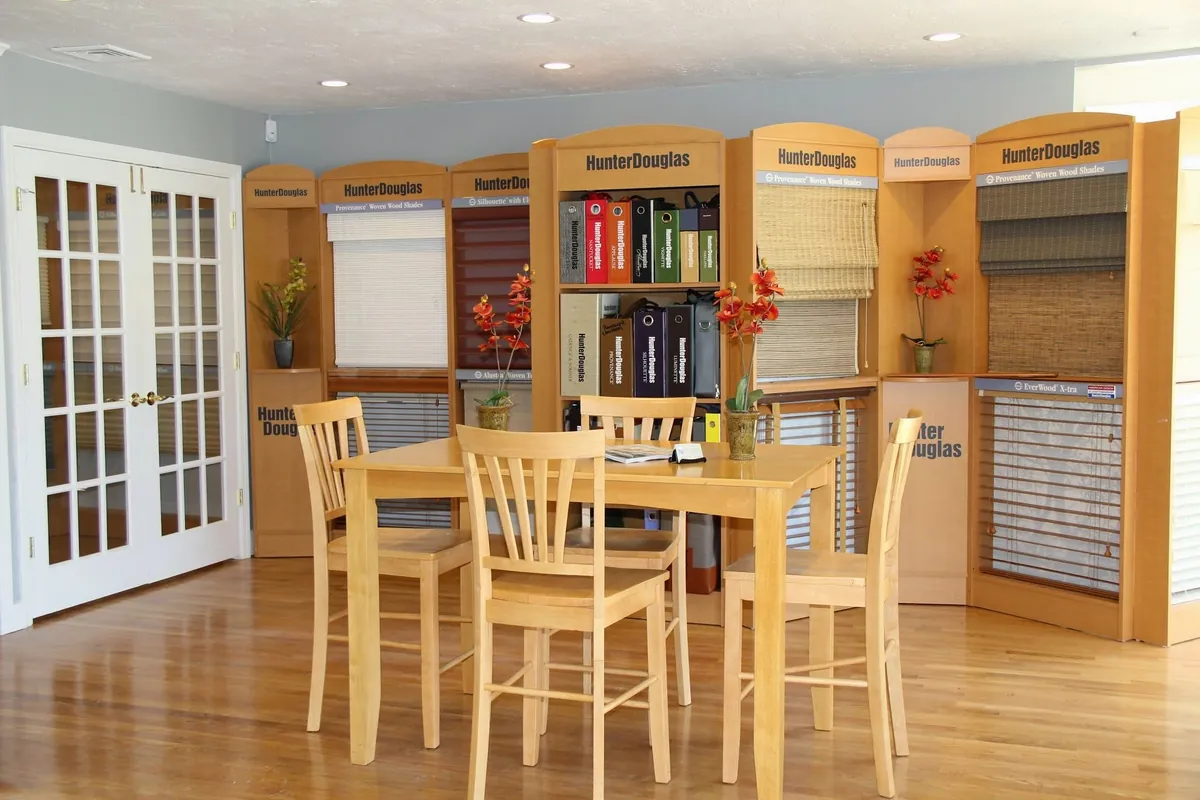
As a Hunter Douglas Gallery dealer, Blinds & Designs can handle both halves of the city’s housing in one plan. Honeycomb shades and blinds for a brownstone parlor, sheers and rollers for a glass-walled condominium: they can all answer to one PowerView system.
Certified Hunter Douglas installers do the fitting, whether the shade is going into a masonry reveal or across tower glass. If the room itself needs thinking through, ask about our interior design consultations. Every estimate is free.
Browse the motorized blinds and shades range, or read about the brand on our Hunter Douglas page.
More for your Boston home
Nearly every city order is settled at the kitchen table with the van’s samples. For anyone who wants a showroom visit too, our closest is the Franklin showroom.
Beyond motorization, the city pages cover custom blinds in Boston, roman shades in Boston and plantation shutters in Boston, plus our Hunter Douglas dealer page for Boston. The Boston page gathers all of it in one place.
A garden-level flat on a quiet side street and a corner unit high above the harbor ask for very different things, and choosing motorized blinds in Boston, MA, works best when the plan starts from the home itself rather than from a product list. Tell us which of the two you live in when you get in touch, and we will bring the samples that suit it.
Questions from Boston
Can very tall, narrow brownstone windows be motorized?
Yes. Tall sash is one of the best places for a motor, because the top of a tall shade is hard to reach by hand. Our certified installers fit the shade, and from then on it runs from the remote, the app or a schedule.
Our windows sit deep in brick walls. Will the shade go inside the opening?
Usually, yes. Deep reveals often leave room for an inside mount, which keeps the headrail out of sight and the trim visible. We check each opening at the visit.
We live in a historic district. Can the shades all look the same from outside?
Shades across the front can be grouped, so they always stop at the same height, and we help you choose one color for the street-facing windows.
Can a whole condominium window wall be lowered at once?
Yes. Group the shades on that wall and a single tap brings the whole lot down together, or let a schedule drop them ahead of the afternoon sun.
Do you come to the home, or do we visit a showroom?
A visit to your home is where it starts: samples, measurements and a free estimate. If a showroom visit appeals as well, Franklin is closest.
Pick the window that bothers you most
It might be the parlor window you can never reach, the bow front that never lines up, or the wall of glass that turns the living room into a sun trap every afternoon. Request a consultation and tell us about it, and we will bring samples to your home, measure, and give you a free estimate. If you would rather ask a question first, use the call button.