
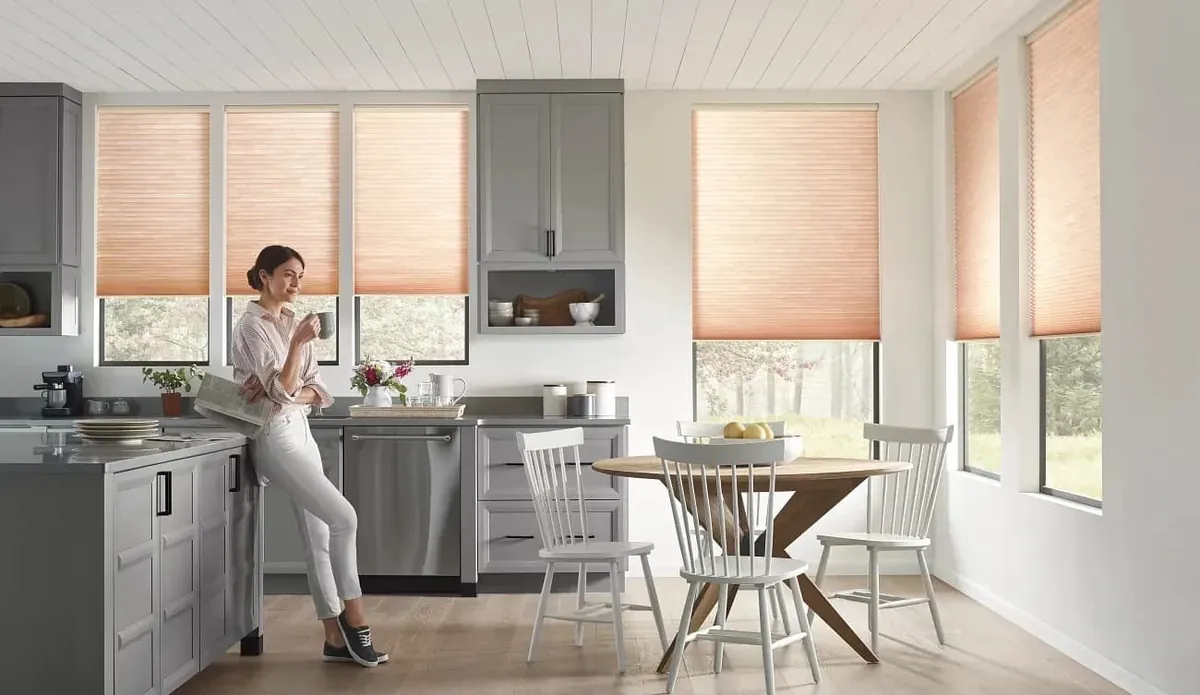
Standard windows, so the choices are fabric and lift
Most Hanson houses share one helpful trait: their windows are standard sizes. The post-war capes and ranches on generous lots, and the newer colonials off Main Street and around Maquan Pond, were built with ordinary modern openings, so a honeycomb shade drops into the frame with a close, even fit. Since fit is rarely the problem, the questions that matter when you choose cellular shades in Hanson, MA, are about material and operation: which fabric, how much light, and how each shade moves.
The reason to choose honeycomb in the first place is the cell. Each pleat of fabric forms a hollow chamber, and when the shade is lowered those chambers hold air that barely stirs. That trapped air puts a buffer between the cold window and the room, which is why a bedroom with a honeycomb shade feels warmer on a January night than one with a flat shade or a blind.
So this page spends less time on measuring tricky openings and more on the decisions you will notice every day: the opacity of the fabric, its color, the size of the cell and the way you raise and lower each shade.
How you can operate your shades
Operation is the choice people live with most. These are the options we bring to every Hanson consultation, each one working with Duette and Applause honeycomb shades.
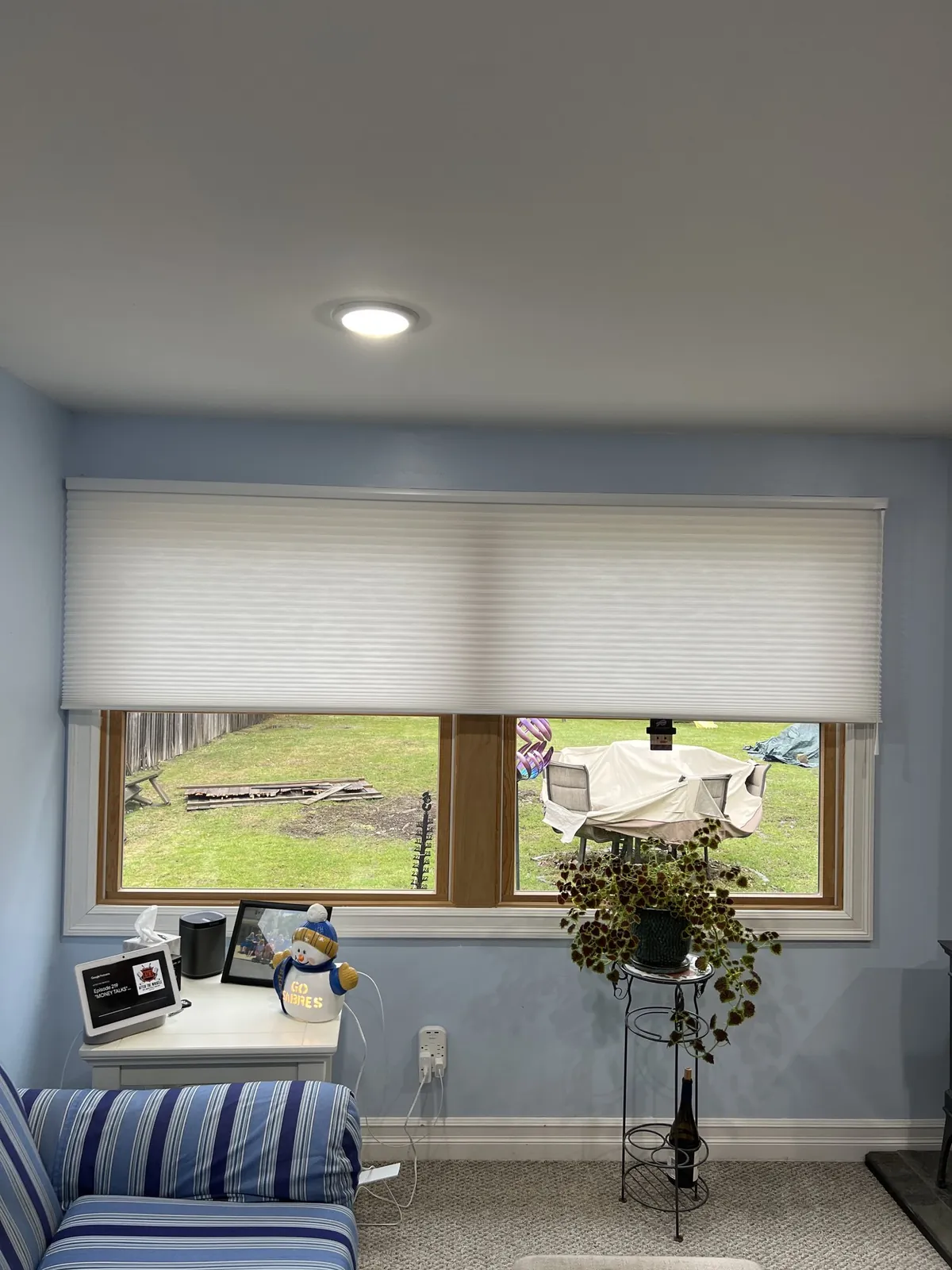
Cordless lift
Lift or lower the bottom rail by hand and the shade stays where you leave it, with no cord hanging at the window.
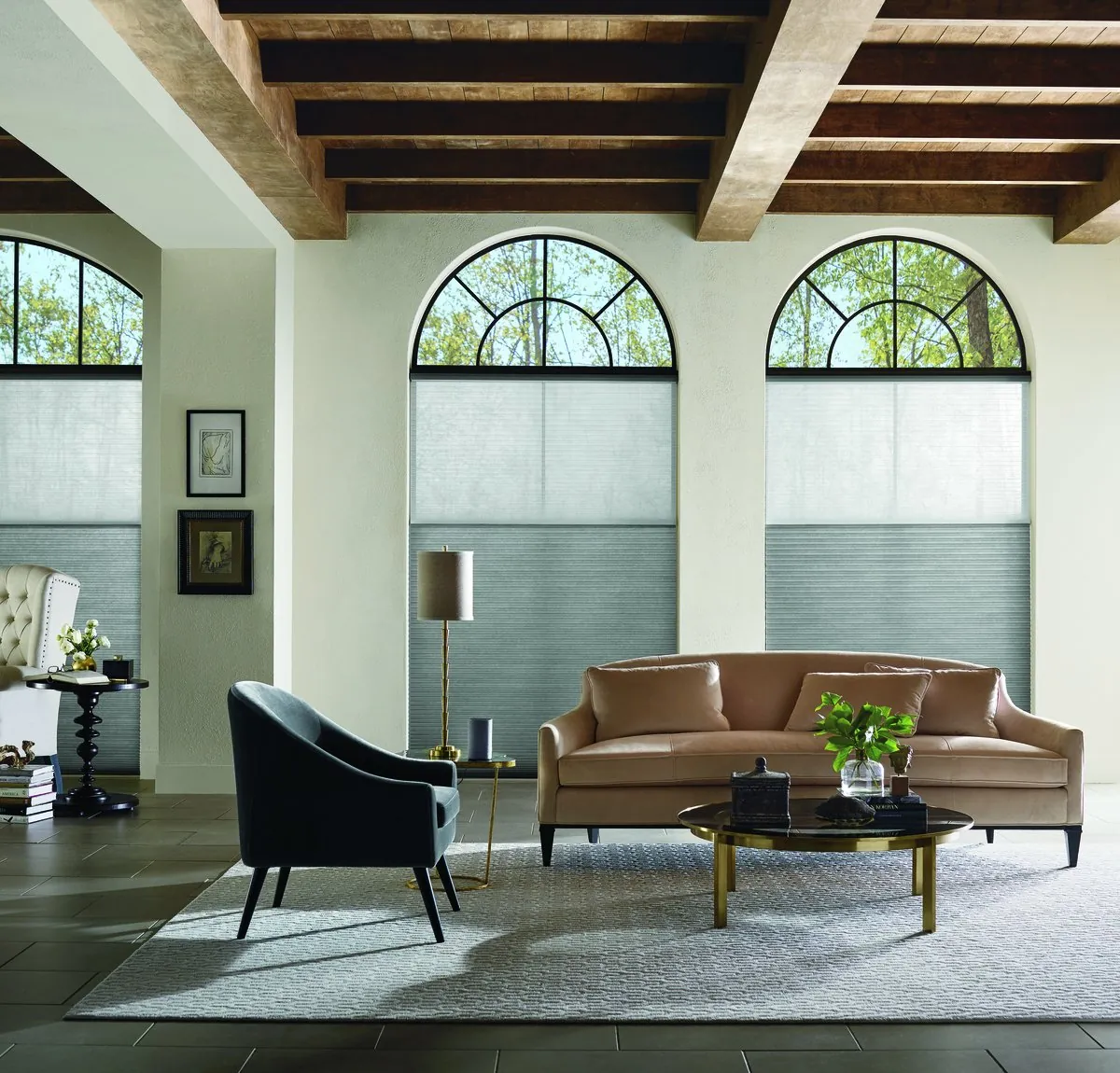
Top-down, bottom-up
Two rails, so the shade opens from the top for daylight or from the bottom in the usual way.
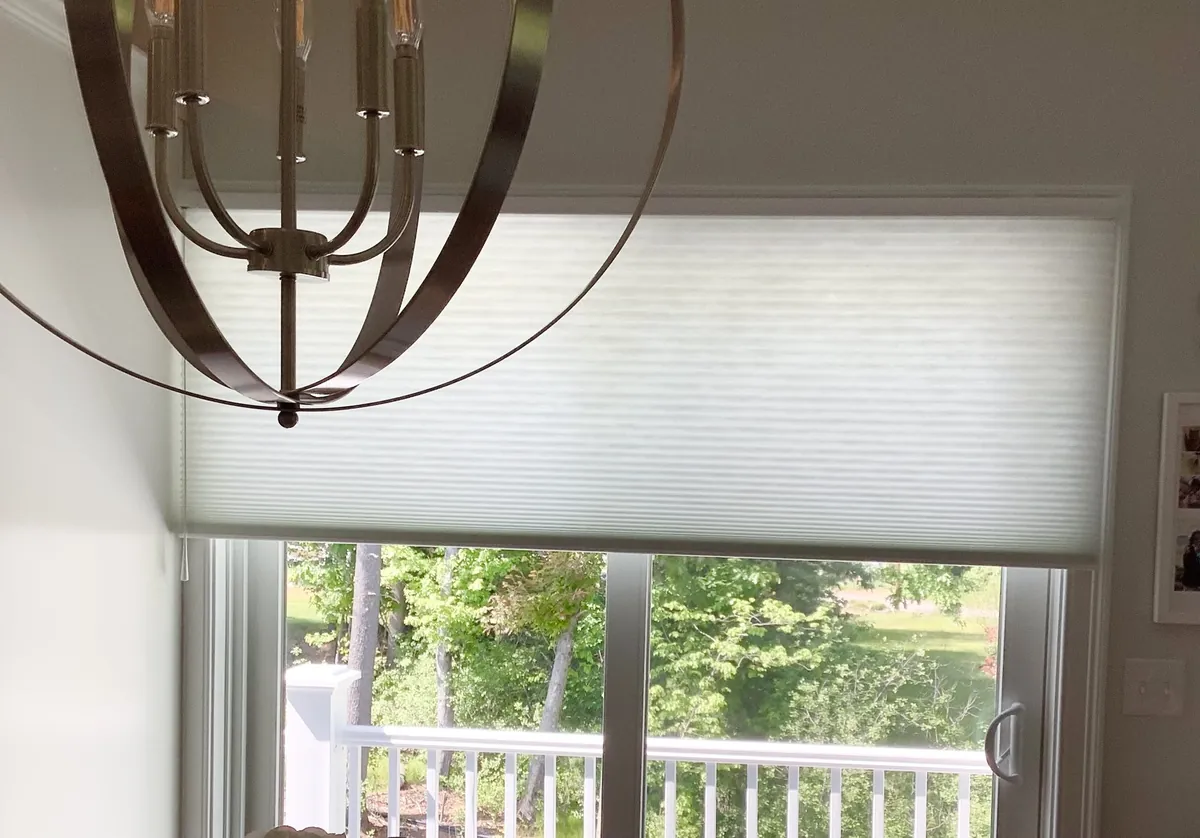
Side-to-side for sliders
A vertical honeycomb shade that travels across the slider and gathers at one edge.
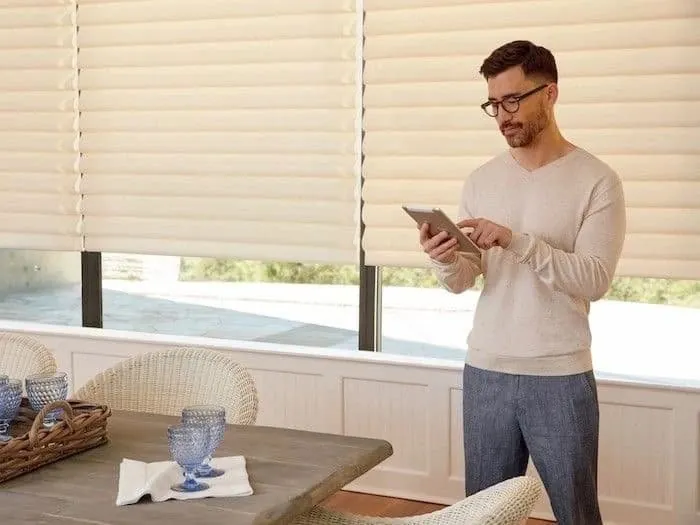
PowerView motorization
Phone, tablet, remote or wall control, plus schedules that move the shades for you.
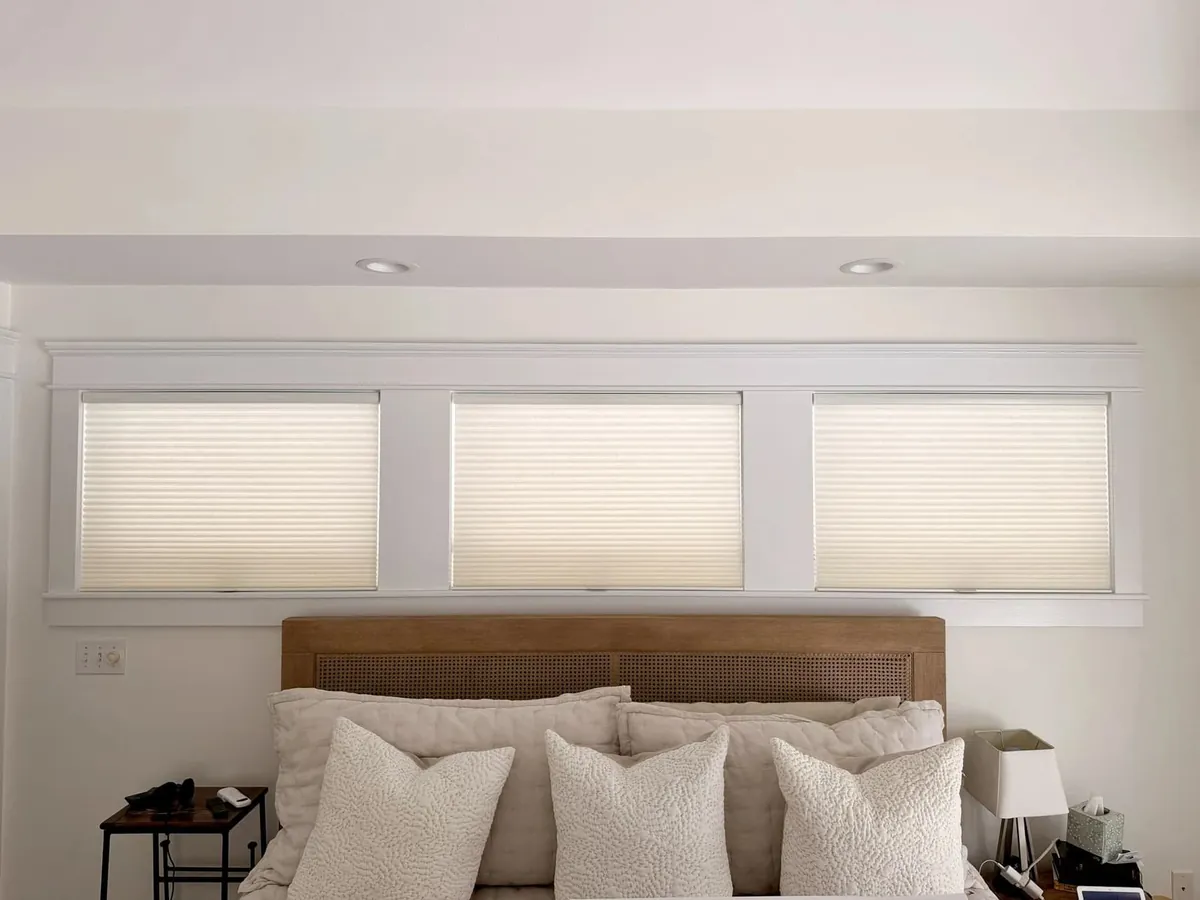
Room-darkening fabric
A dense fabric that keeps a bedroom dim, with the cells still holding air against the glass.
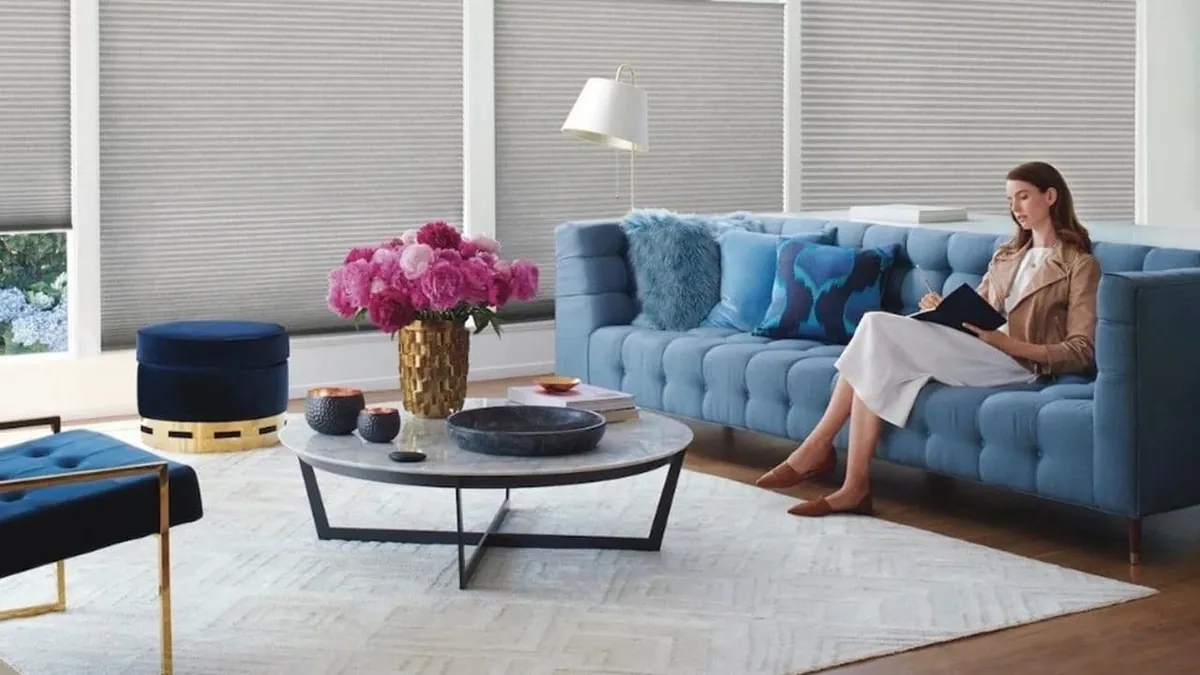
Light-filtering fabric
Soft, even daylight with daytime privacy, the most popular choice for living rooms and kitchens.
Post-war capes on generous lots
The capes are a big part of Hanson’s older housing. Downstairs there is usually a living room, a kitchen and sometimes a bedroom; upstairs, bedrooms sit under the roof with dormer windows. The lots are generous, so the house often has windows facing the yard on several sides.
Dormer windows are where the honeycomb cell really earns its place. A room under the roof takes the full effect of the weather, cold in winter and warm in summer, and its small windows are often the main place heat escapes or gets in. An inside-mounted honeycomb shade fits a dormer recess neatly, and with a cordless lift it is easy to raise even when you have to reach over a bed or a dresser.
Downstairs, the front windows of a cape usually face the road, and many owners want the shades on those windows to match so the house looks even. Behind the house, where the windows face the yard, there is more freedom to choose fabrics room by room.
Ranches and their long front rooms
A ranch spreads everything on one floor: a living room across the front, a kitchen behind it, and a hall of bedrooms. The living room usually has a picture window, sometimes with narrower windows on each side, and the bedrooms each have one or two standard double-hung windows.
For the picture window, a single wide honeycomb shade or two or three shades on one headrail are the usual choices. Split into separate shades, the window can be open at the driveway end and shaded at the sunny end. With a top-down, bottom-up lift you can lower the top for light while keeping the lower glass covered from the road.
Ranch bedrooms are on the ground floor, close to the yard and sometimes close to the driveway, so privacy and early sun both come up. Room-darkening fabric handles both at night and first thing in the morning. A top-down shade gives daytime privacy without shutting out the daylight.
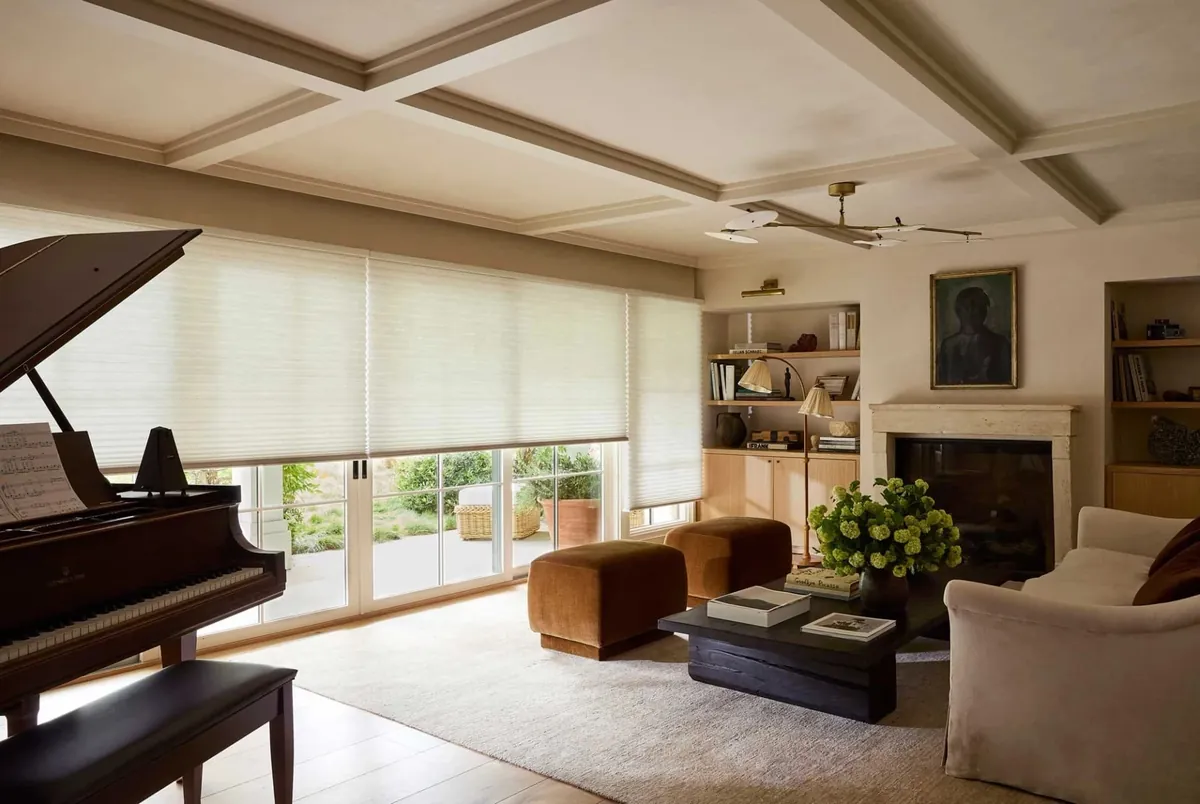
Newer colonials off Main Street and around Maquan Pond
The newer colonials in town bring two stories and more rooms, with matching double-hung windows across the front, an open kitchen and family room at the back, and a slider to a deck. Houses near Maquan Pond often have their family room facing the water.
These are the houses where a whole-house plan makes the most sense. Because the windows match, one fabric and color can run across the front so the house looks tidy from Main Street. Inside, each room gets the fabric that suits it: light-filtering in the kitchen and family room, room-darkening in the bedrooms, something in between for a home office. The slider gets a vertical honeycomb shade in the same fabric as the windows beside it.
For a pond-facing family room, a top-down, bottom-up shade keeps the view across the water while the lower part of the window is shaded from the afternoon glare.
Cords, children and pets
Operation is also a safety question. In a house with young children or a dog that likes to sit at the window, a hanging cord is one more thing to worry about. Every honeycomb shade we bring can be made without one. A cordless lift moves by its bottom rail. A top-down, bottom-up shade uses two rails, both cordless. PowerView needs no hands at the window at all.
For a nursery, a cordless room-darkening shade is the usual pairing: nap time happens in a dim room, and there is nothing within reach of the crib. In a family room where a dog keeps watch over the yard, a top-down shade leaves the lower glass covered and the shade itself out of the way.
Choosing the fabric: opacity first
With fit taken care of, fabric is the biggest decision, and opacity is the first part of it. Honeycomb fabrics range from sheer through light-filtering and semi-opaque to room-darkening.
Light-filtering fabric is the one most people choose for living rooms, kitchens and family rooms. It lets daylight in and softens it, so a room stays bright without glare, and from outside it shows a glow rather than the room behind. Semi-opaque sits in the middle, dimmer than light-filtering and more private after dark. Room-darkening fabric shuts out nearly all daylight, which is why bedrooms and nurseries usually get it.
Most Hanson houses end up with two or three opacities, and that is fine. The shades can still look like a set from outside if the color is kept consistent on the street side.
Color and texture
Color comes next. A pale fabric, a soft white or warm cream, lets the most light through and looks neat from the street. A deeper color gives a room more warmth and character, but it lets less light in and shows the sun’s effect sooner on a south or west window.
Texture matters too. Some honeycomb fabrics are smooth and crisp, others have a woven or linen look that softens the room. Seeing the texture up close and with light coming through it is the only way to judge, which is why we bring the samples to your windows.
When we plan cellular shades in Hanson, we usually suggest choosing the color for the street-facing windows first, then picking freely for the rooms at the back of the house.

Adding rooms over time
Not everyone covers the whole house at once. Many Hanson customers start with the rooms that bother them most, often the dormer bedrooms in a cape or the slider in a colonial’s family room, then add the rest after a winter of living with the first shades. With standard windows that is easy. The later shades are made in the same fabric, color and cell size, so they match the first ones exactly, and from the road nobody can tell which went up first.
It also lets you test a choice before committing the whole house to it. Live with a light-filtering fabric in the family room for a season, see how it handles the low winter sun and the long summer evenings, and you will know whether to carry it through the rest of the ground floor or try a slightly denser fabric in the rooms that face the yard.
Cell size and construction
Honeycomb shades come with different cell sizes and constructions. Larger cells give a bolder, more tailored look on a big window. Smaller cells look finer and stack more compactly when the shade is raised, which suits smaller windows such as a dormer.
Some fabrics include an inner layer inside each cell, and some shades have two rows of cells, one behind the other. More layers mean more trapped air, which helps a cold room hold its warmth. We bring examples of each so you can feel the difference in weight and see how the light comes through.
For a cape’s dormer bedroom, a double-cell shade can be a good choice, because the room takes the full force of the weather. For a sunny family room, a single-cell light-filtering fabric may suit you better because it lets in more daylight.
Operation, room by room
Since Hanson’s windows fit so easily, how each shade opens deserves real thought. Here is how most of our customers in town decide.
Living rooms and family rooms: a cordless lift is simple and tidy. Add top-down, bottom-up if the room faces the road or if you want daylight without glare. Bedrooms: cordless with room-darkening fabric, or top-down for privacy during the day. Kitchens: top-down, bottom-up over the sink, so you never lean across the counter to adjust it. Sliders: a vertical honeycomb shade. Hard-to-reach windows: PowerView.
PowerView suits a whole room as well as a single tricky window. You can group shades so they move together, set them to lower when the afternoon sun arrives and rise in the morning, and control them from your phone. We plan how each motor is powered at the visit. See motorized blinds in Hanson for more on automation.
Summer heat on the yard side
Generous lots often mean a house with open yard on its south and west sides and few trees close by. In July those windows take a lot of sun, and a family room or kitchen at the back can turn warm by mid-afternoon.
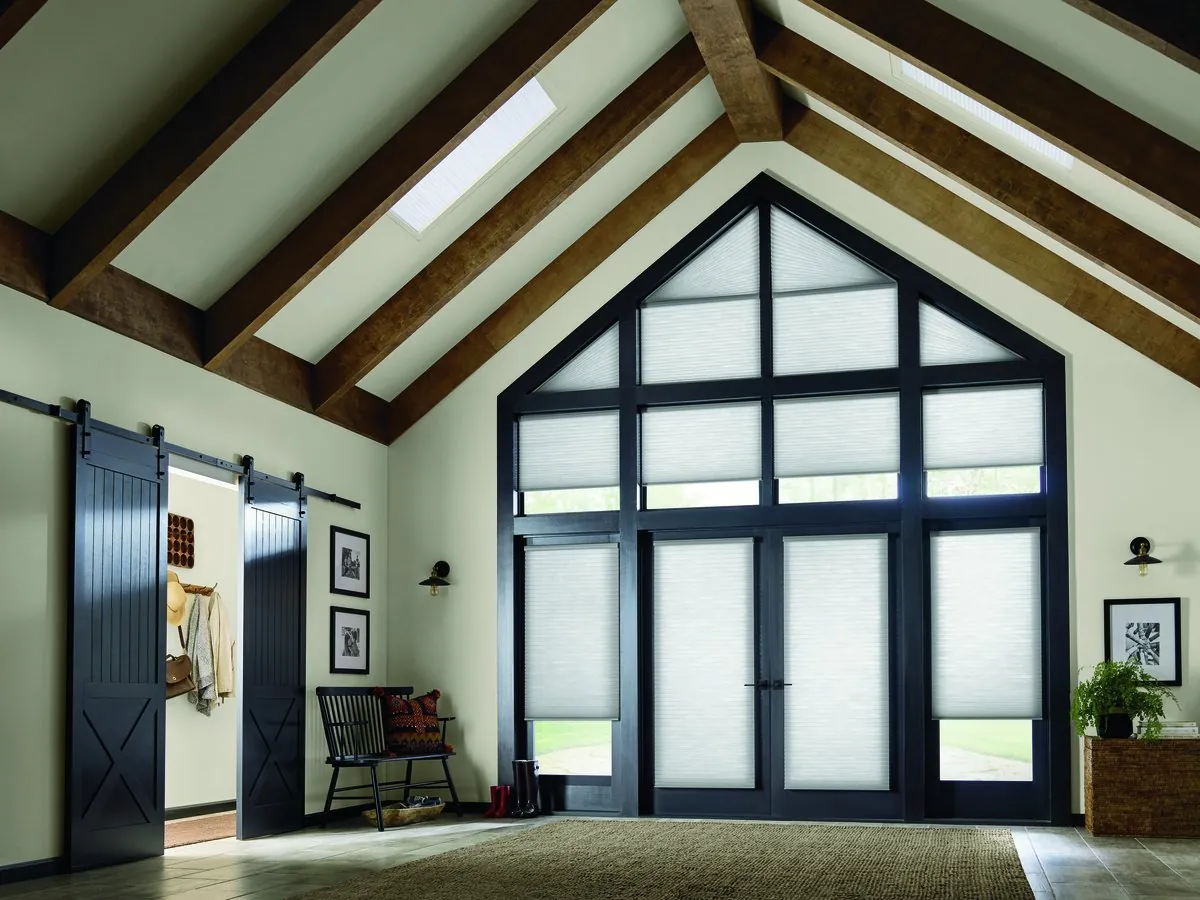
The honeycomb cell works in summer too. With the shade lowered across a sunny window, the trapped air holds much of the heat at the glass rather than letting it into the room. Choose a light-filtering fabric and the room stays bright enough to use. Opening a top-down shade from above lets you shade only the strip of glass taking direct sun. With PowerView, you can tell the back-of-house shades to drop at a set hour every summer afternoon and lift again after dinner, and the yard stays in view the rest of the day.
Measuring and fitting
Standard windows still get measured properly, because a close fit is part of what makes a honeycomb shade hold its air.
- Three widths per opening, high, middle and low, and three heights, left, center and right.
- A depth reading at the head of the frame, plus a note of any lock or crank handle in the way.
- A final run through each window with you, agreeing fabric, color, lift and mount, before the order goes in.
- Certified Hunter Douglas installers fix every bracket into solid framing and set each headrail level.
- Every shade is raised and lowered before we leave, motors are linked to your phone, and you get a walk-through.
Done this way, cellular shades in Hanson hug the frame with only a hairline of space at the edges, which looks tidy and keeps the trapped air where it belongs.
Duette and Applause
Hunter Douglas makes two honeycomb lines and we carry both. Duette has the larger collection, with more fabrics and textures, more cell sizes and constructions, and the vertical shade for sliders. Applause has a color collection of its own and fits standard windows very well, which makes it a natural choice for many rooms in town.
A typical whole-house order for cellular shades in Hanson might use Duette on the slider and the living room window, and Applause in the bedrooms and kitchen. See the Duette and Applause pages, or the cellular shades page for the whole range.

A consultation in your own rooms
The quickest way to settle fabric and operation is to try them where you live. Our vans carry samples, so we bring the showroom to you.
- Ask for a visit online or through the call button.
- We go through the house with you, room by room, and talk about how you use each one.
- You hold fabrics to the glass and try each kind of lift.
- We measure every window and slider.
- We write up a free estimate on the shades you like, and you decide in your own time.
If you would like a second eye on colors for the whole house, our interior design consultations can join the same visit. Read more about what happens at an in-home consultation.
Gallery dealer, certified installers, nearest showroom in Sagamore
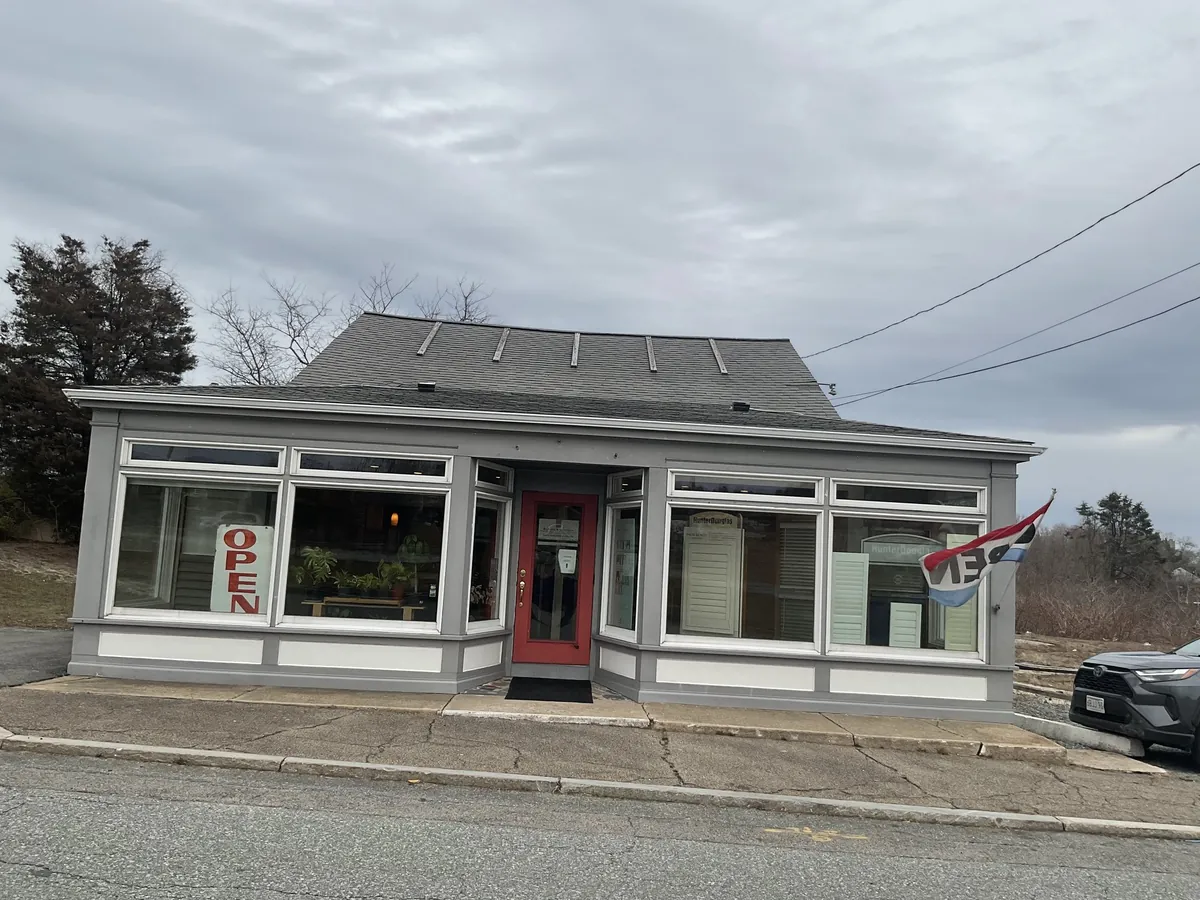
Blinds & Designs is a Hunter Douglas Gallery dealer, a standing Hunter Douglas grants only to dealers who meet its standards. That opens the full honeycomb collection to you: every fabric, cell size, lift and PowerView option.
Our installers are certified by Hunter Douglas. They fix each bracket into solid framing, set every headrail level, test each lift and pair any motors. If a shade ever needs attention, we offer blind and shade repair as well.
For Hanson the closest showroom is Sagamore, where you can find the address and opening times. For more of what we do in town, see roman shades in Hanson, custom blinds in Hanson or our Hanson page.
Questions from Hanson
My windows are standard sizes. What should I focus on?
Fabric and operation. With a close fit taken care of, the choices that matter are how much light each fabric lets in, its color and texture, and whether each shade is cordless, top-down, bottom-up or motorized.
Which lift is best over the kitchen sink?
Top-down, bottom-up. You can lower the top of the shade for light and privacy without reaching across the sink. PowerView is another option if the window is hard to reach.
What suits a cape’s dormer bedroom?
An inside-mounted honeycomb shade with a cordless lift and room-darkening fabric. A double-cell construction gives a room under the roof more trapped air.
Can the shades look the same from the street?
Yes. Keep one color on the street-facing windows and choose different opacities inside as each room needs. From the road the house looks even, while each room gets the light it should have.
Is the estimate free?
Yes. After measuring, we give you a free estimate for the shades you are considering, room by room, so you can start with a few rooms and add the rest later if you prefer.
Try the samples at home
Choosing cellular shades in Hanson, MA, comes down to fabric and how each shade opens, and both are easiest to judge in your own rooms. Request a consultation and we will bring the Duette and Applause samples, measure every window and leave you with a free estimate. Our nearest showroom is in Sagamore if you would like to call or visit there.