
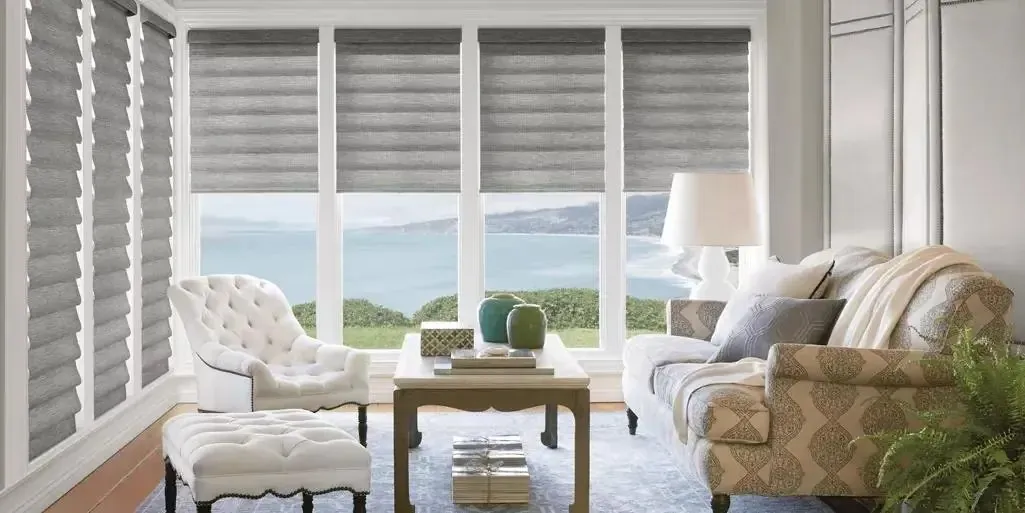
Where the view comes first
Some Westport rooms are built around a single thing: what you see out of the window. On the harbor, the larger newer houses have living rooms and bedrooms that open onto the water through wide runs of glass. Along Main Road and out toward Horseneck and the Westport River, older shingled capes and farmhouses have smaller windows, but many of them still look across fields, marsh or water. Whatever we fit as roman shades in Westport, MA, has to respect that view.
A folded fabric shade is a good partner for a view. Raised, it sits as a neat band at the head of the window and leaves the glass clear. Lowered partway, it trims the glare off the water without shutting the scene out. Fully down, it gives the room privacy and warmth once the light goes.
The other thing every Westport house shares is the weather off the water. Salt air and coastal exposure govern almost every choice we make with you here, from the fabric to the lift system to how the shade is mounted.
Matched to the room, not just the window
Roman shades in Westport tend to fall into three kinds of room, each with its own needs. These are the starting points we bring to a visit.
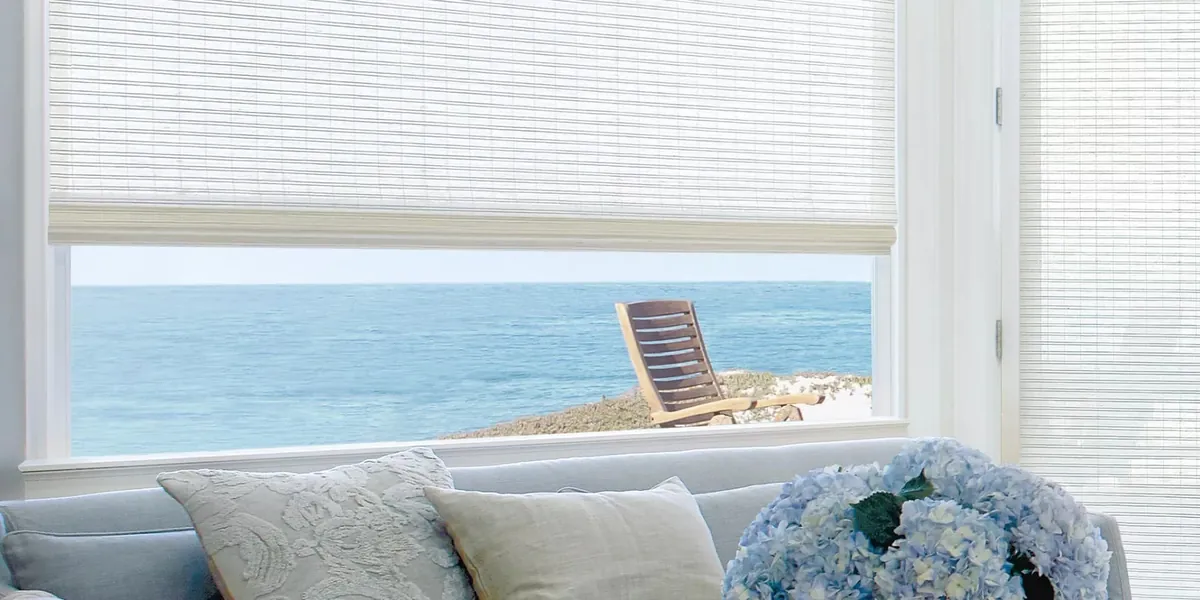
Harbor living rooms
Wide glass facing the water. A shade that stacks compactly, in a light-filtering fabric, keeps the view open and the glare under control.
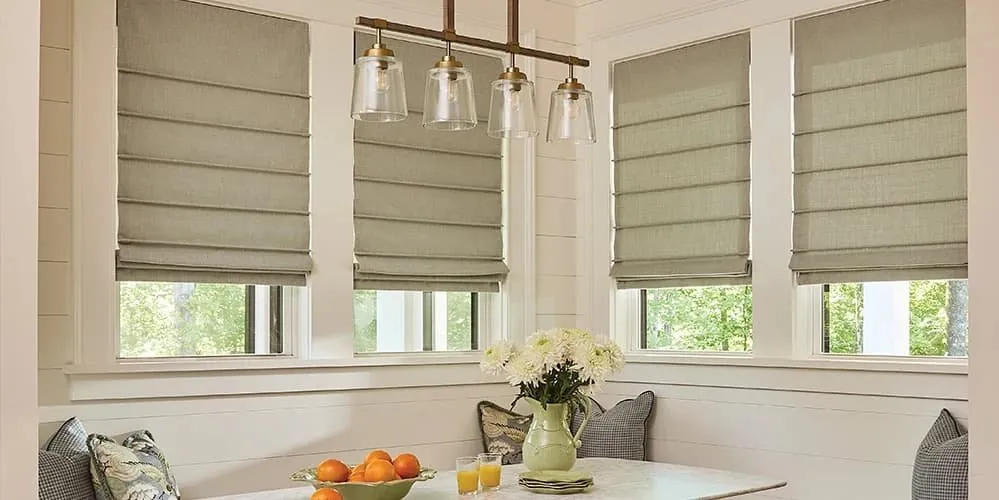
Farmhouse kitchens
Smaller windows over a sink or a breakfast table. An easy cordless lift and a fabric that lives happily in a working kitchen.
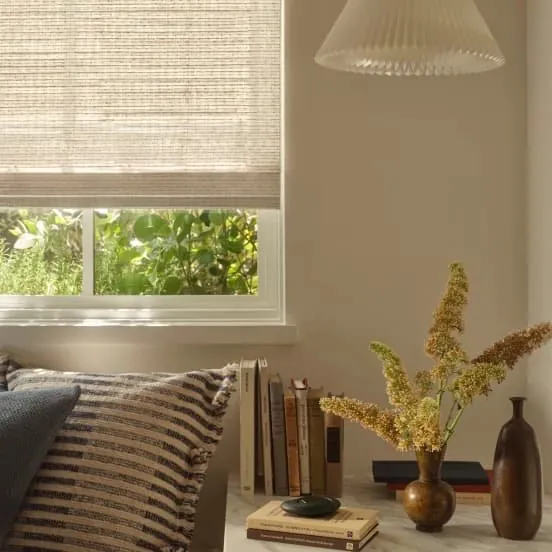
Cape bedrooms under the eaves
Dormers and short windows near a sloped ceiling. A compact headrail and a lining that keeps the early light out.
Capes and farmhouses along Main Road
Main Road runs through the heart of town, and the older houses along it set the tone: shingled capes with a central chimney and a pair of windows either side of the door, and farmhouses that have grown over time, with an ell or a barn joined on at the back. The windows are modest in size, usually double-hung, and set in plain wooden casings.
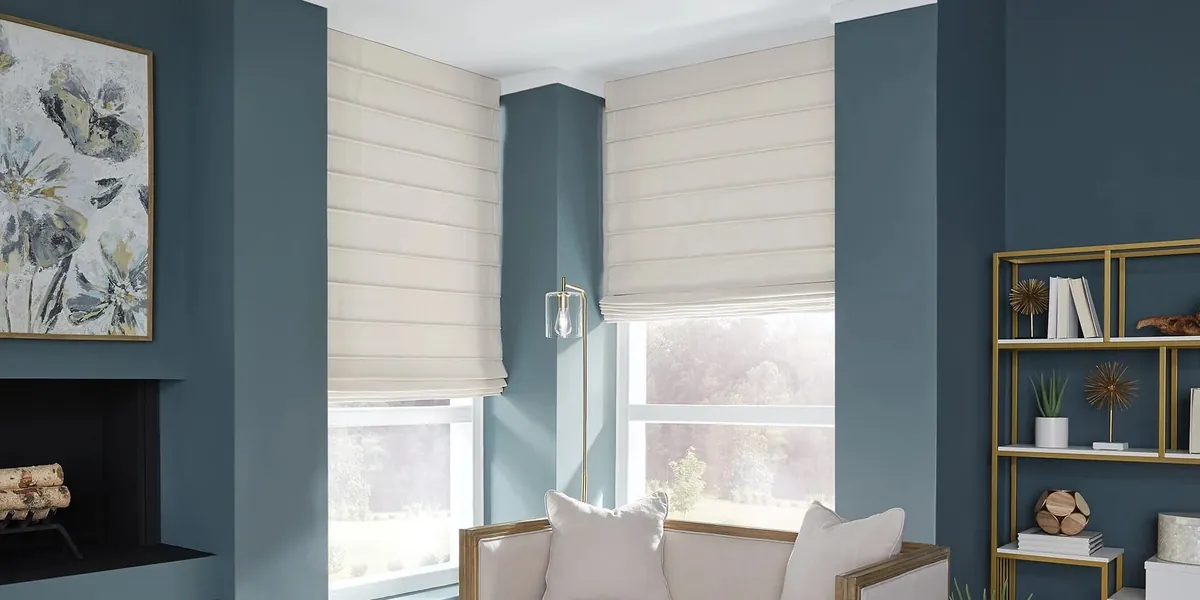
In houses like these, the window treatment should feel simple. A Carole Fabrics flat fold in a plain linen or a cotton ticking suits a cape front room without looking fussy, and an inside mount keeps the plain casing in view. In a farmhouse kitchen or a dining room in the ell, a soft fold adds a little warmth to a room with painted floorboards and simple furniture.
The challenge in these houses is often the windows themselves. Older sash has settled, frames are rarely square, and replacement windows added over the years may sit at a different depth from the originals in the same room. We measure each window on its own and size every shade to its opening, so a room with mixed windows still looks consistent once the shades are up.
Upstairs, a cape’s bedrooms sit under the roof, with short knee walls and dormer windows that are often small and set deep into the slope. A shade there needs a slim headrail and a fabric that folds tightly, so it does not hang down across a window that is only a couple of panes tall. A room-darkening lining helps in a dormer bedroom that faces east toward the morning sun.
Toward Horseneck and the river
The closer you get to Horseneck Beach and the mouth of the Westport River, the more the weather matters. Houses there take the wind straight off the water, and when windows are open on a summer day the air coming through is damp and salty. Cottages and capes in this part of town often have windows on several sides of a small room, so the shade is never far from the breeze.
That changes what we recommend. Cordless is the better choice here: a dangling pull cord and its lock beside an open sash are one more thing for salt to coat. Vignette tucks its mechanism up in the headrail, out of the damp air. We also look at fabrics with you that cope well with a damp sea breeze, and steer the most delicate decorator fabrics toward rooms where the windows usually stay closed.
Sun is the other factor. Light reflected off the water and the sand is bright, and over many summers it fades strong colors. A lining protects the face fabric, and lighter, neutral colors hold up best on a window that faces the beach or the river mouth.
Harbor houses built around the view
The larger, newer houses on the harbor were designed with the water in mind. Their living rooms often have a wall of windows, sometimes with transoms above and wide sliders or French doors to a deck. Bedrooms upstairs may have their own run of windows looking out to the water. These are big openings, and a shade on them has to be planned with the view as the priority.
The big question is the stack. Raise a sewn flat fold and its pleats gather in a band across the head of the glass, and along a whole wall of windows that band can shave the top off the view. Hang the shades on the wall higher up and the gathered fabric rests against the wall, clear of the panes. Vignette solves it differently: the fabric winds up into a slim headrail, so a raised shade barely shows.
On a wide run of windows, we usually plan a series of shades that line up along the top and move together. With PowerView motorization, one button raises the whole run, and you can set the shades to lower as the afternoon sun comes round over the harbor and rise again in the evening for the sunset. Our motorized blinds and shades page has more on how it works.
Fabric for a room that faces the water
Choosing fabric for a view room is a balance. You want enough softness to take the glare off the water, enough privacy for the evening, and as much of the view as possible during the day.
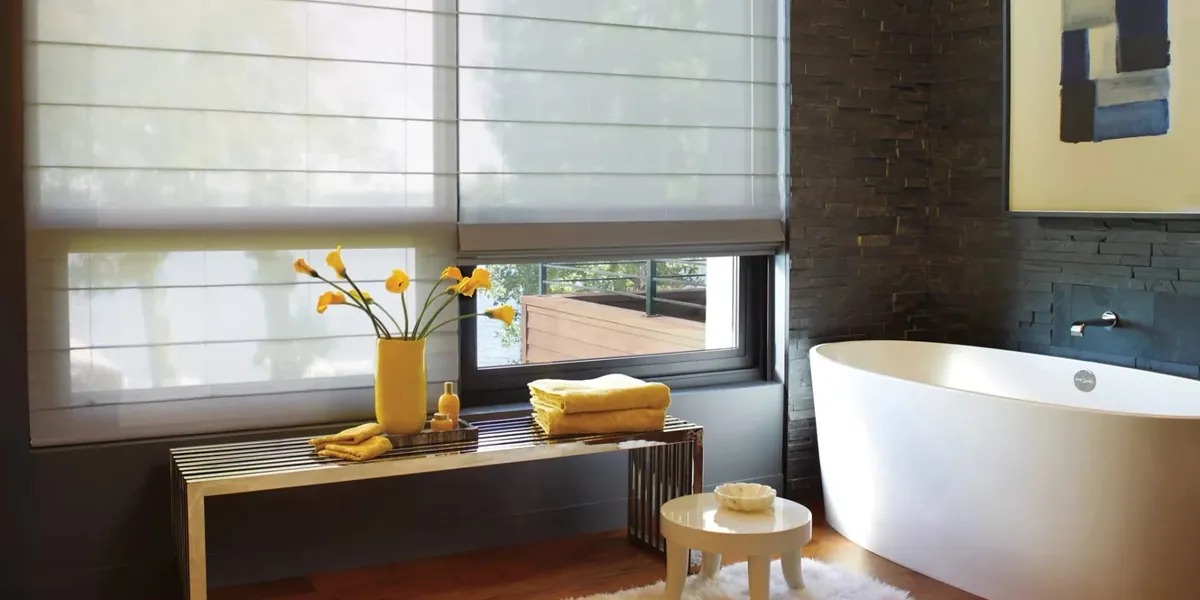
A light-filtering fabric is the usual answer. Lowered partway, it softens the light coming in off the water without blocking the horizon, and the room stays bright. A sheer fabric goes further toward the view, letting you see shapes and color outside even with the shade down. For bedrooms that face east over the water, a room-darkening lining keeps the room dim until you raise the shade.
Think about the evening too. With the lamps on inside and darkness outside, a light fabric shows silhouettes from the water or the road. If a bedroom or a bathroom faces a public stretch of shore, a lined fabric gives you privacy at night that an unlined one cannot.
Color is the last piece. Harbor rooms tend to be full of blues, grays and sandy neutrals borrowed from outside, and a shade in one of those tones lets the window blend into the view rather than framing it in a hard edge. A warmer fabric, such as an oatmeal linen, makes a big glass room feel cosier on a gray February afternoon. We bring both so you can see which you prefer with the water behind it.
How a home visit runs
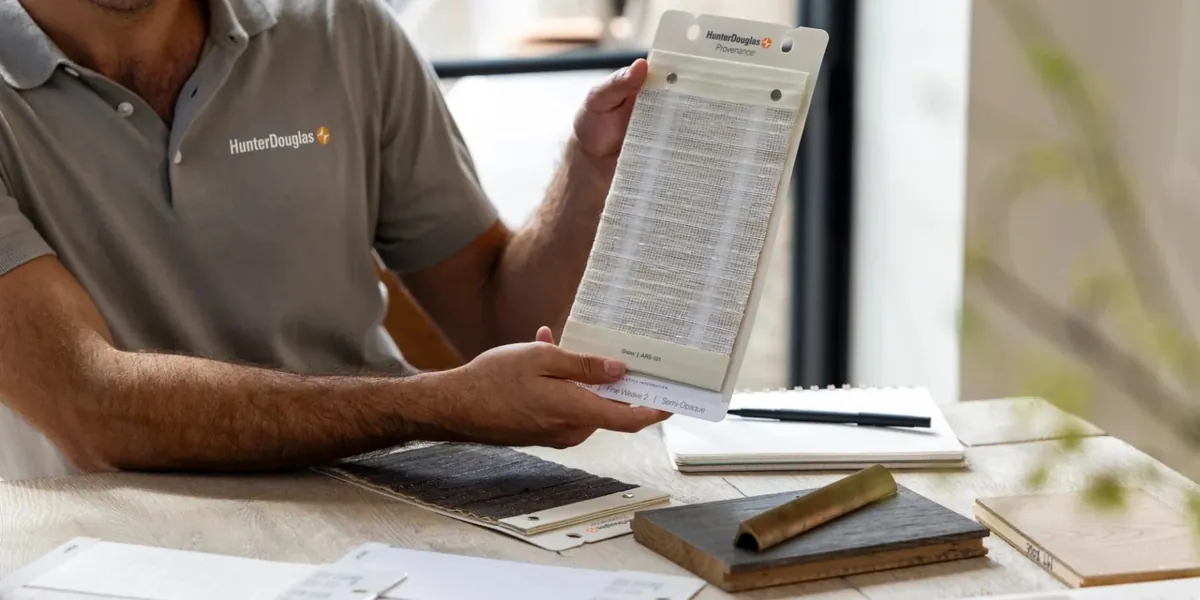
Most Westport customers start at home, because the light on the harbor at four in the afternoon cannot be recreated in a store. Our vans carry samples, so we can bring the showroom to you.
- Book through the Request a Consultation form or the call button, and pick a day that suits.
- A consultant comes out with the sample van: sheer, light-filtering and room-darkening fabrics, both fold styles, and the cordless and motorized lifts.
- Together we go room by room, starting with whichever window looks at the water, and talk about glare, privacy and how late the sun reaches each room.
- The swatches go up against your glass, so every color is judged in that room’s own daylight.
- Each opening is measured, its depth checked and the height of every stack planned around the view.
- A free estimate follows for the shades you are weighing, and there is no deadline for deciding.
Curious about the visit itself? Our page on what happens at an in-home consultation walks through it.
Vignette and Carole Fabrics, side by side
Both families make handsome roman shades in Westport houses, but they suit different rooms.
Vignette is the modern option. Each fold is formed as part of the fabric and keeps the same depth down the shade, and raising it winds the fabric up out of the way instead of piling it. Seen from the deck or a boat, the back is plain and cord-free. For a harbor living room where the view is everything, that compact roll is often the deciding factor.
Carole Fabrics shades are sewn individually from whichever decorator fabric you pick, in a flat, soft or relaxed fold. You get much more freedom with color, pattern and texture, and the shade can be matched to cushions, upholstery or drapery in the room. In a cape front room or a farmhouse dining room, where the shade is part of the decoration, it is often the better fit.
Plenty of Westport houses end up with a mix. For more on each family, see Vignette and Carole Fabrics, or step back to everything on our roman shades page.
Summer rooms, porches and the ell
Many Westport houses have rooms that come into their own in summer: a sunporch on the side of a cape, a glassed-in porch facing the river, or a back room in the farmhouse ell that opens onto the garden. These rooms often have more glass than wall, with windows on three sides, and they can turn hot by midday.
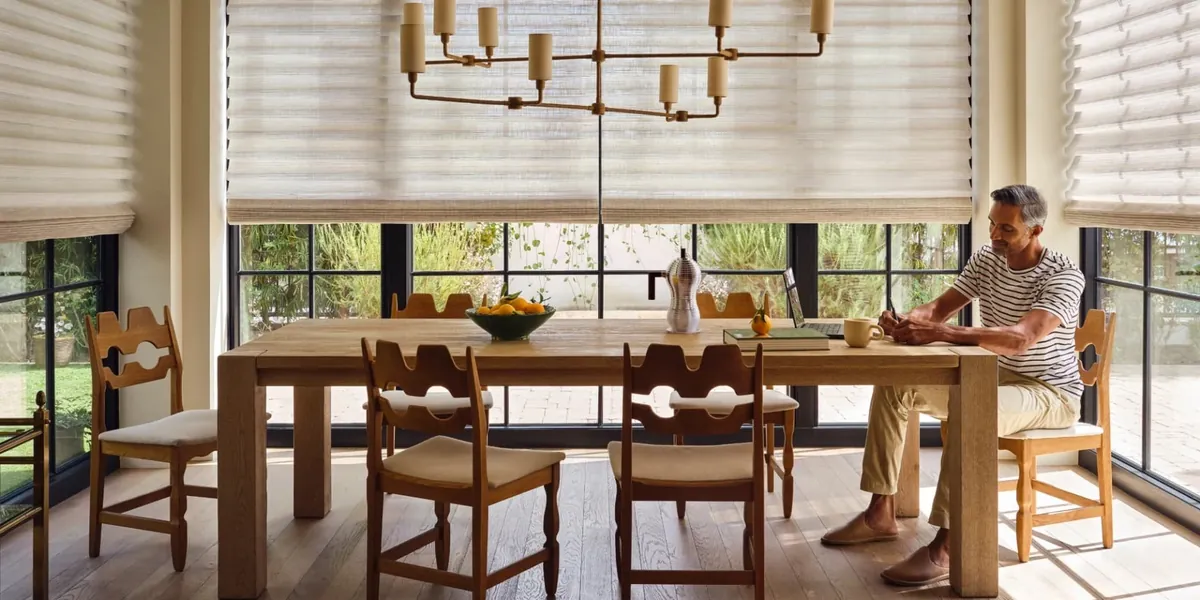
A folded shade suits them when the windows are double-hung or casement rather than sliding doors. On a porch with a long row of windows, a set of shades in one light-filtering fabric gives the room a single, calm look and takes the heat out of the afternoon sun without making the room dark. A soft fold feels right in a relaxed summer room, and natural textures such as linen pick up the colors of the marsh and the water outside.
Because these rooms are often closed up for part of the year, the shades sit in sun for long stretches with nobody adjusting them. A lining protects the face fabric from fading, and motorized shades on a schedule can lower during the brightest hours even when the house is empty. When we plan roman shades for Westport porches, we also look at whether a window is ever opened, because a room shut for the winter and thrown open for the summer sees the most salt air of any room in the house.
Pairing shades with drapery
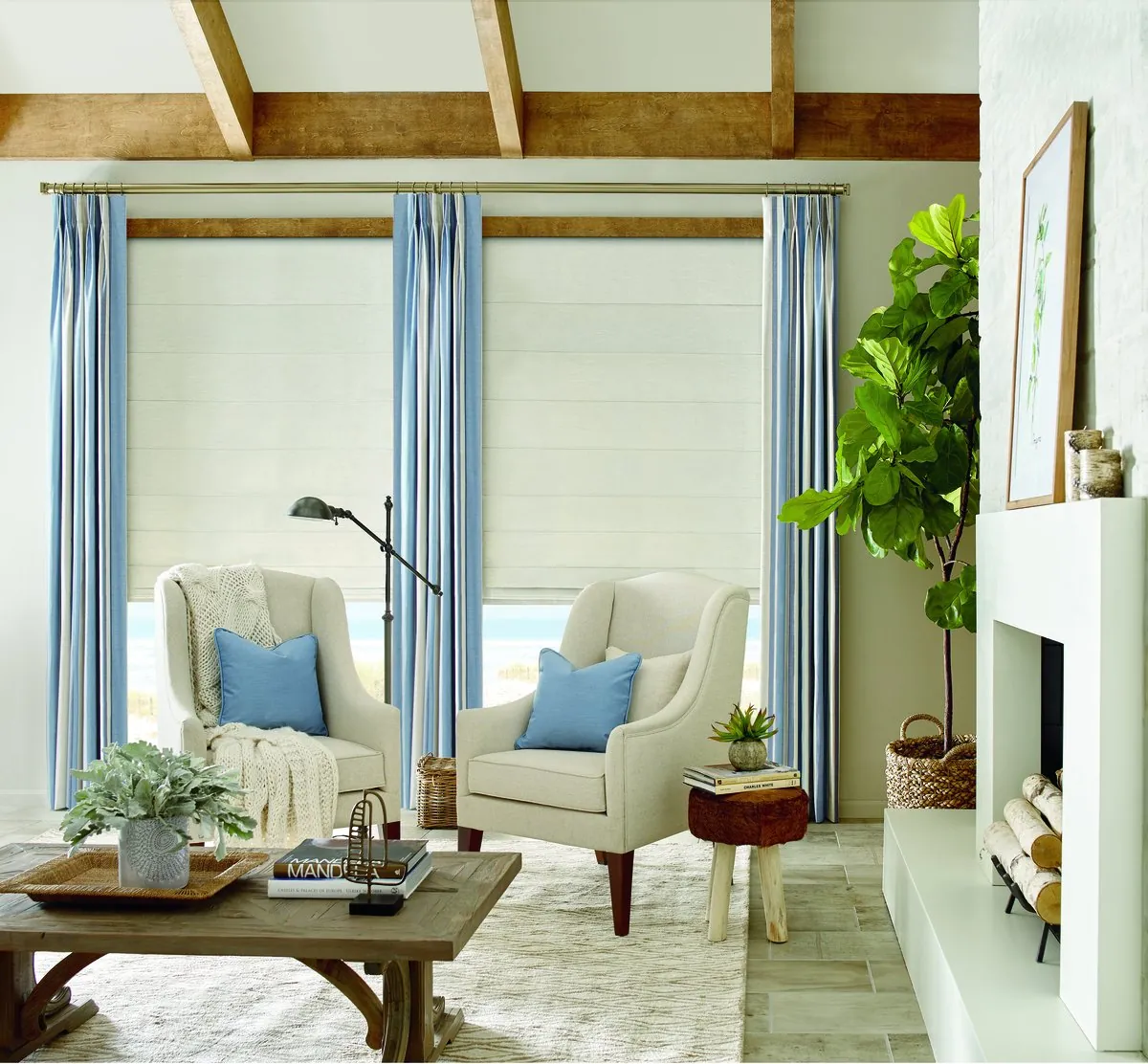
Some rooms want more than a shade. A formal living room in a newer harbor house, or a front parlor in a farmhouse, can take drapery panels at the sides of the window with a roman shade inside the frame. The shade does the daily work of light and privacy, and the panels add height, softness and color.
The trick is choosing fabrics that work together. A plain shade with a patterned panel, or a textured shade with a plain panel, usually looks better than two busy fabrics competing. If you are redoing the room, our interior design consultations can help with color and pattern on the same visit.
Measuring and certified installation
A shade looks built in only when it fits the opening closely, and on an older Westport house that takes care. Widths are taken at three heights and lengths at both edges, since a frame that has settled is seldom true. Frame depth gets checked too, along with anything that could catch a headrail, such as sash locks, crank handles on casements or the edge of a storm window.
On harbor houses with tall runs of glass, we plan the mounting height for the whole run so the shades line up. Once the order arrives, a certified Hunter Douglas installer screws each bracket into sound wood, levels the shade, runs the lift up and down and walks you through it. A shade on a window that is opened every summer day needs to stay put, and that starts with a sound fixing.
Why a Hunter Douglas Gallery dealer
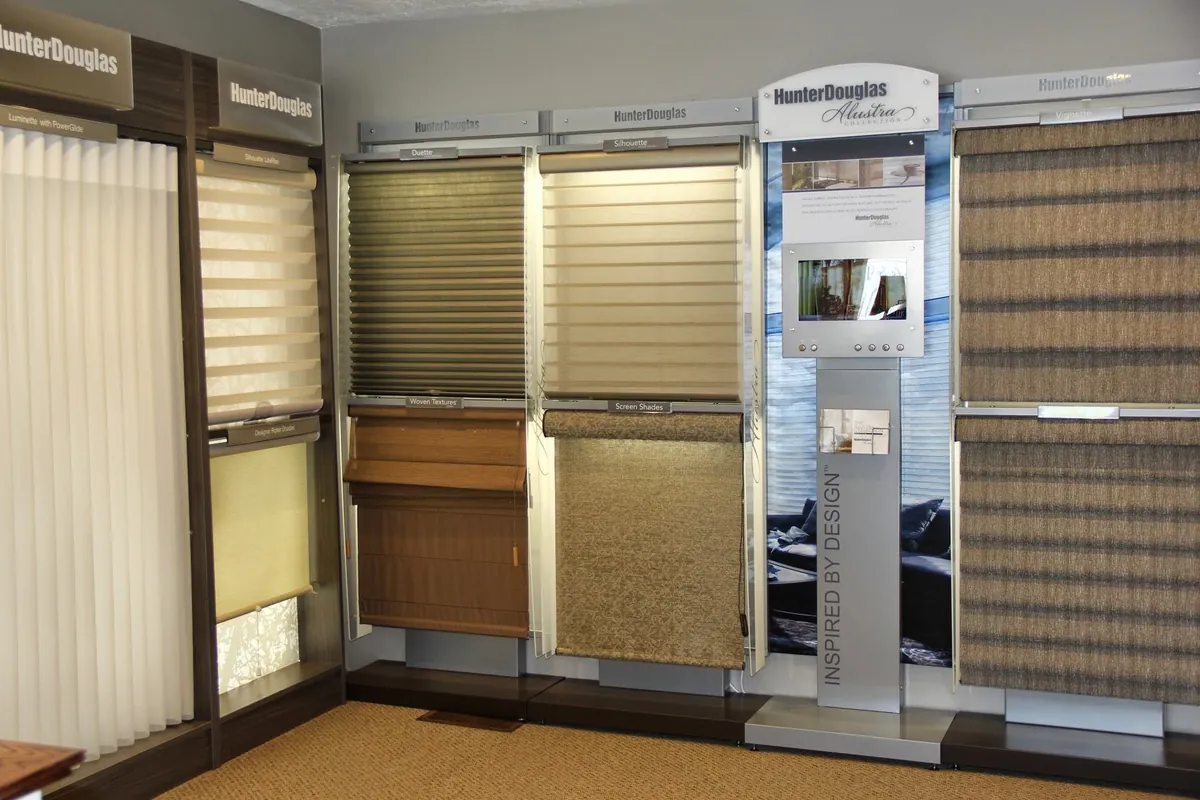
Hunter Douglas names only some of its dealers as Gallery dealers, and Blinds & Designs is one of them. In practice that puts the whole folded range on your table at a single appointment: Vignette, the full Carole Fabrics library, and every lift and motor.
Hunter Douglas has certified the people who install for us, and we take on repairs to blinds and shades already in your house. Planning other rooms as well? Look at cellular shades in Westport, plantation shutters in Westport, or the full list on our Westport page.
Samples brought to Main Road and the harbor
Our nearest location is the North Dartmouth showroom, just up the road from Westport. Visit if you would like to see a folded shade move before you choose.
For most people, though, the best place to decide is at home. A fabric held against your own window, with the harbor or the fields behind it, shows you exactly how it will look and how much of the view it keeps. We bring the samples to you, take the measurements while we are there and follow up with a free estimate.
Questions from Westport
Will a roman shade block my view of the harbor?
Not when it is raised. A Vignette shade rolls into a slim headrail, and a sewn shade can be mounted above the window so its stack sits over the trim. Lowered partway, a light-filtering fabric cuts the glare and keeps the horizon in view.
How do fabric shades cope with salt air near Horseneck?
A cordless lift removes the cord and cord lock from the side of the window, and Vignette keeps its working parts inside the headrail. We also suggest fabrics that suit a damp sea breeze and keep the delicate ones for rooms where the windows stay closed.
Can you fit shades to old windows that are not square?
Yes. We measure each window at several points and size every shade to its own opening. Where a frame is badly out of true, an outside mount on the casing can hide the difference.
Can a whole wall of windows move together?
Yes. We plan a run of shades that line up, and with PowerView motorization one button raises or lowers them all. You can also set them on a schedule.
Do I pay for the estimate?
No. Once the windows are measured, the estimate for your shades is free.
Ready when you are
Pick your fabric with the swatch in your hand and the water in front of you. Fill in Request a Consultation and the sample van brings the full range of roman shades in Westport, MA, to your door, with every window measured and a free estimate to follow. Prefer a conversation first? The call button reaches us, and the North Dartmouth showroom is close by.