
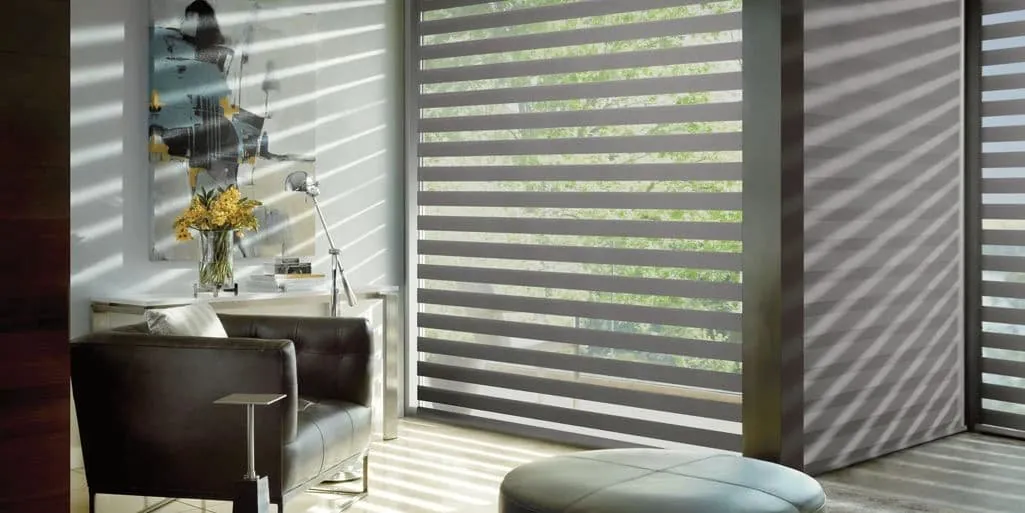
Norwood’s close-set houses and tall sash
Around Norwood’s common and the streets near the center, the older houses stand shoulder to shoulder. Victorians and two-families with tall sash sit close to the sidewalk and closer still to each other, so light comes in at angles and privacy depends on the window you are looking through. Further out, the post-war capes and ranches on the newer streets have standard window sizes and a little more room around them.
Both kinds of house are good candidates for motorized blinds in Norwood, MA. In the older stock, a motor puts the tall sash within reach and makes it easy to adjust a shade many times a day as the light and the view of the neighbors change. On the newer streets, standard openings make it straightforward to put a whole floor, or the whole house, on one system.
Every shade is moved by a remote, by the PowerView app or by a timetable. The motor sits in the headrail, out of sight, and nothing hangs at the window.
Motorized blinds in Norwood, MA: what can take a motor
PowerView is not a separate kind of shade. Think of it as an engine that fits under many Hunter Douglas styles: settle on the look for each room, then specify the motor.
Honeycomb shades
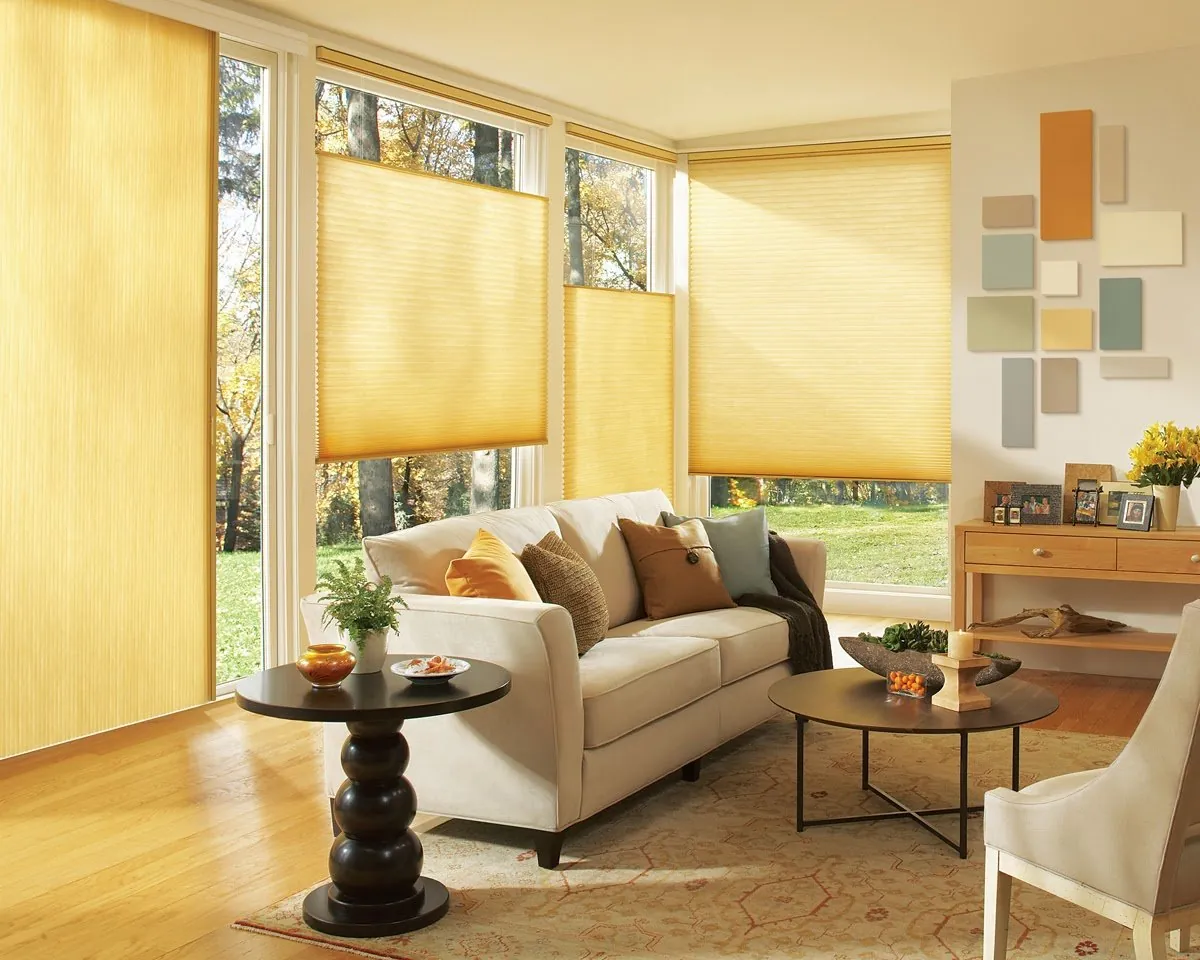
Duette and Applause cells hold a layer of still air at the glass, and the top-down option lets daylight in high while the lower window stays covered.
Vertical sheers
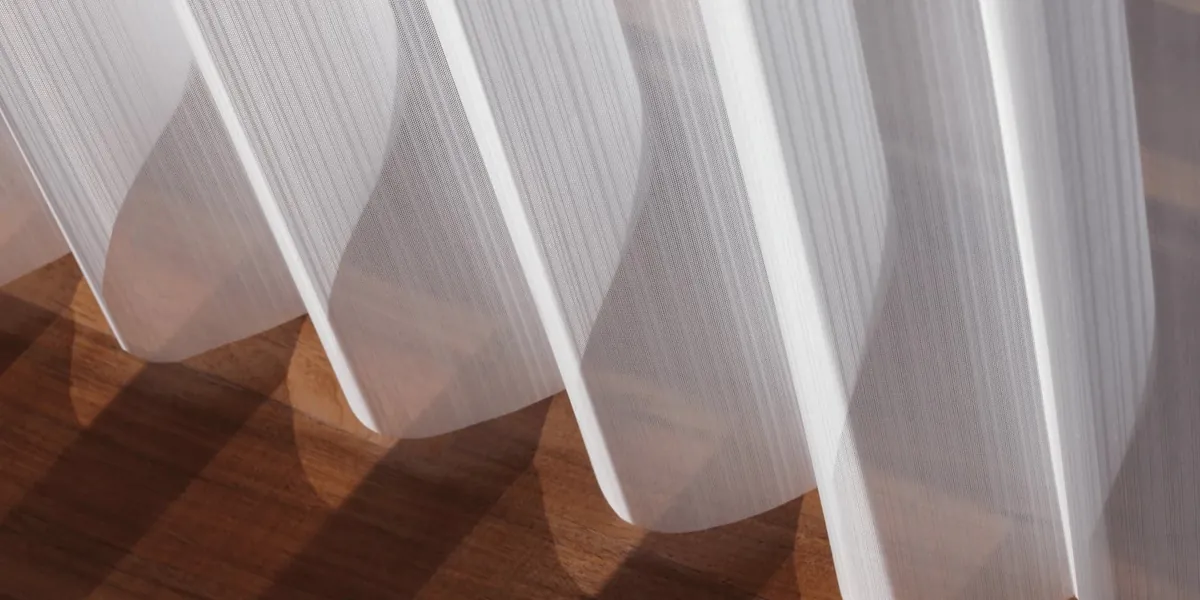
Luminette’s soft vertical vanes suit a wide opening or a door, turning to let light in or close the view.
Roman shades
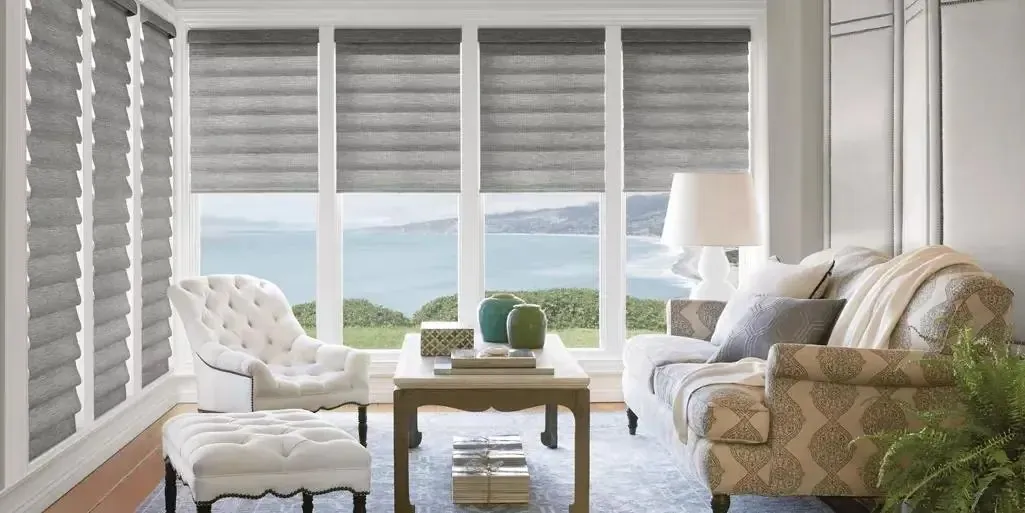
Vignette folds give a tailored look in a Victorian’s front rooms, and a row of them can rise as one.
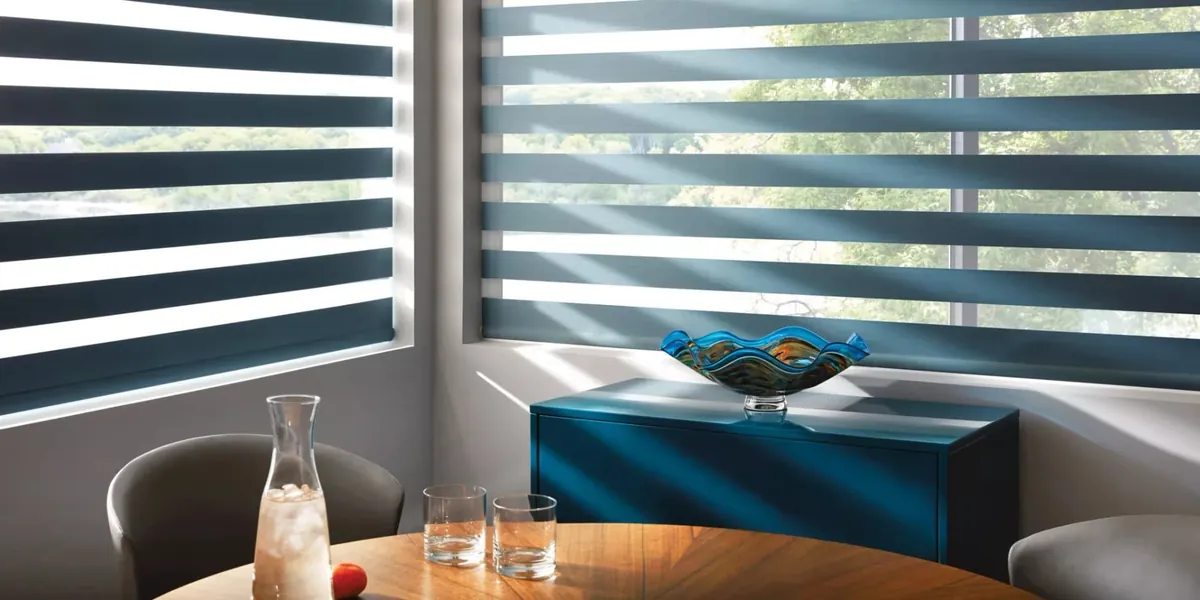
Banded shades
Sheer and solid stripes slide past each other for fine light control on a kitchen or dining window.
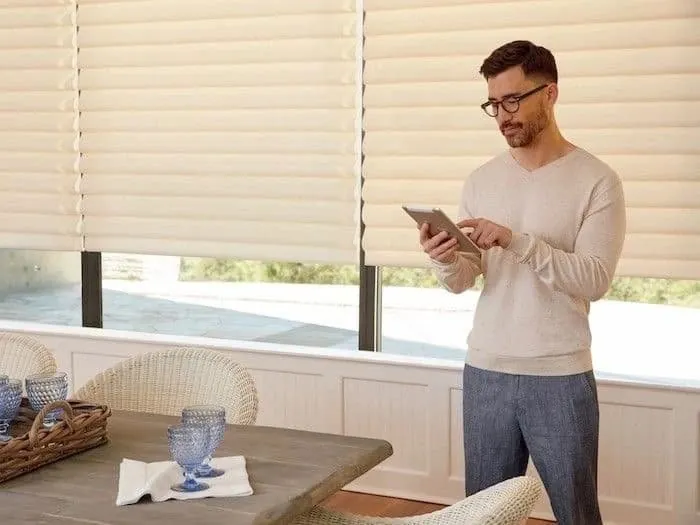
The PowerView app
Each room’s shades on a phone or tablet, ready to move singly, as a group or on a timetable.
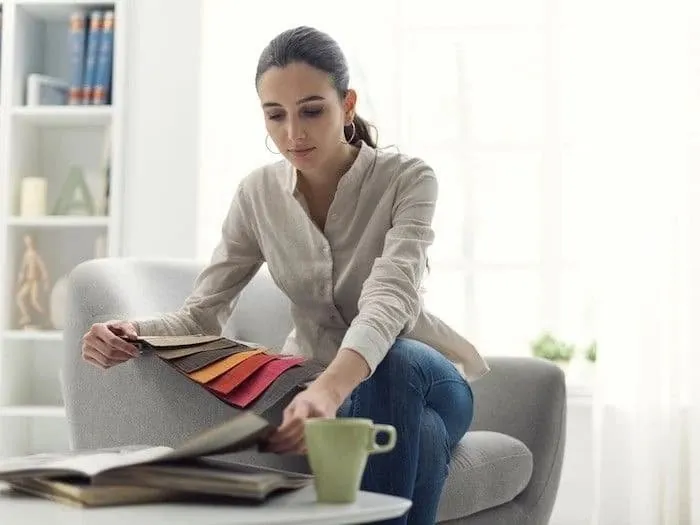
Fabrics chosen at home
Our vans carry the samples, so you compare fabrics in your own chair, in your own light.
Making the most of daylight between close houses
In the close-set streets near the center, the house next door can be only a few strides from your side windows. That cuts two ways. It limits how much daylight reaches the rooms, and it means the windows that do bring light in often look straight across at the neighbors.
The usual compromise is to keep the side shades down and live with a dimmer room. Motorized shades allow something better, because they are easy to adjust as often as you like. A top-down shade can drop from the head of the window just far enough to admit the sky, while the lower glass, level with the neighbor’s windows, remains screened. Save that position in the app and it comes back with one press. On the brighter side of the house, the shades can rise fully out of the way during the day so no daylight is wasted.
Light-filtering fabrics help too. The room glows, yet anyone glancing over from next door sees only soft fabric. Silhouette sheers go further: rotate the vanes one way and the outlook clouds over, rotate them back and it clears.
Come evening, a lit room on a tight street is on show, so an automatic routine brings the side shades down. That one routine is often enough to convince Norwood households that motorization is worth it.
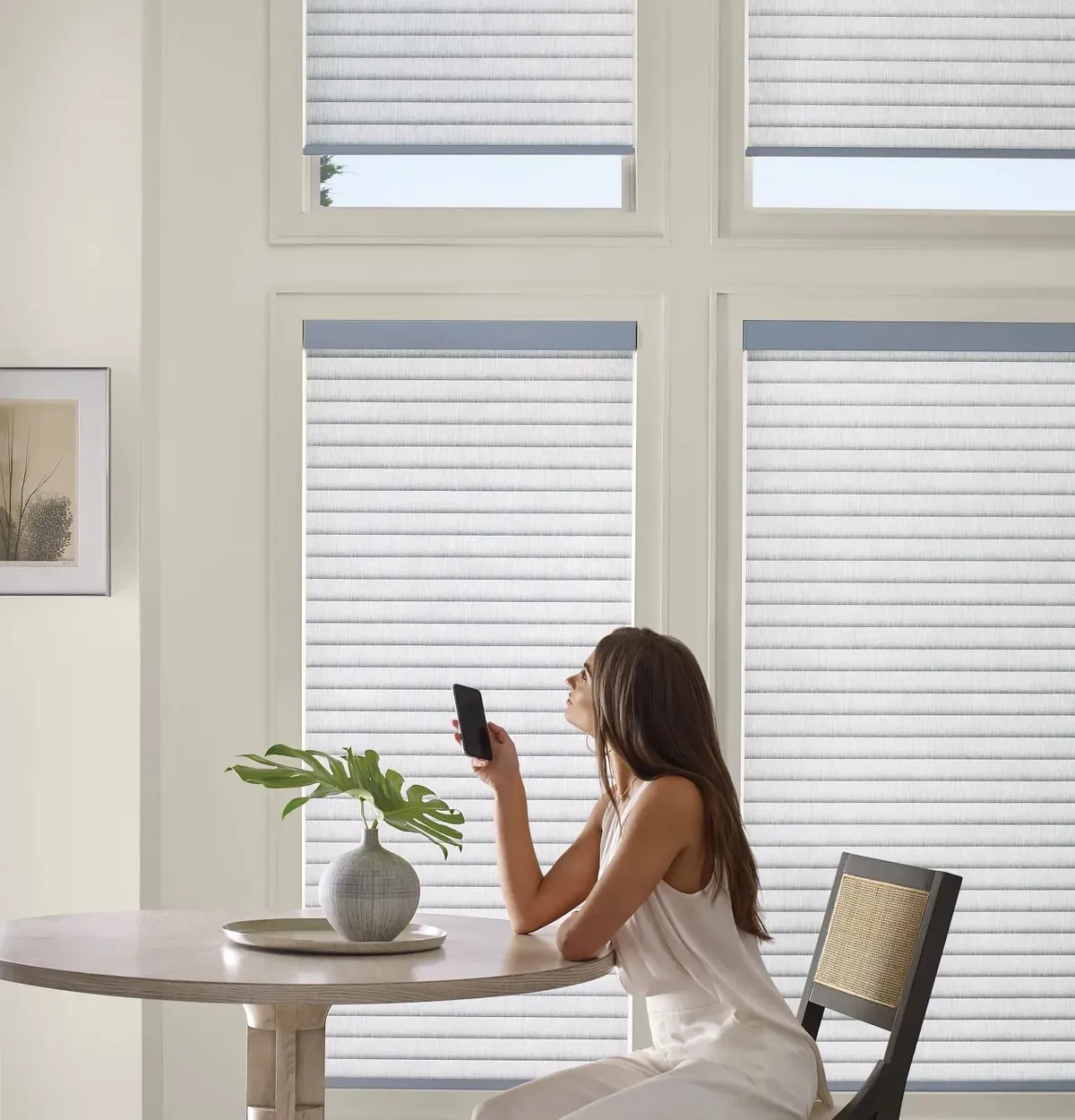
Porches and the first floor of a Victorian
Many of Norwood’s Victorians and older two-families have a deep front porch, sometimes on two levels. Porches are lovely to sit on, but they shade the first-floor windows behind them, so the front rooms downstairs are often darker than the rooms above.
That changes how shades get used on each floor. Downstairs, under the porch, most households want the shades fully open through the day to catch every bit of light, then fully closed at night because the porch puts passers-by close to the glass. Upstairs, above the porch roof, the windows take much more direct sun and benefit from shades lowered part way in the afternoon.
Timetables handle both floors without anyone thinking about it: the porch-side rooms open in the morning and close at dusk, and the upstairs rooms lower part way when the sun comes round. Because these windows are tall, the motor also saves a stretch on every one.
Porch ceilings bring one more consideration. The upper sash of a first-floor window behind a porch is often in shadow all day, while the lower sash catches reflected light off the porch floor and the street. A top-down shade suits that pattern well: leave the shaded upper glass open for whatever daylight it gives, and cover the lower glass when the porch is in use or people are passing. On a motor, that split position is saved once and recalled whenever you want it, and the shade returns to fully open with another press when you want every bit of light back.
The tall sash itself needs careful measuring. Old frames settle, paint builds up and sash hardware can crowd the opening. We check width and height at several points and the depth at each window before we recommend an inside mount. When a frame proves too shallow, the shade goes on the face of the casing instead, which still looks neat.
Bays and the odd-shaped rooms
Victorian houses love a bay window, and some have a turret room or a rounded corner with several narrow windows set at angles. Each window in a bay needs its own shade, and keeping them all at the same height by hand is close to impossible.
Motorized, the shades in a bay can be grouped so they move as one and finish level, and they can still be moved individually when you want light from one side only. In a turret room, the same approach turns a ring of narrow windows into a single, simple control.
Bays often sit behind a window seat or a piece of furniture, which makes reaching them by hand awkward anyway. With a motor, the seat stays a place to sit rather than something to climb over.
One house, several styles, one remote
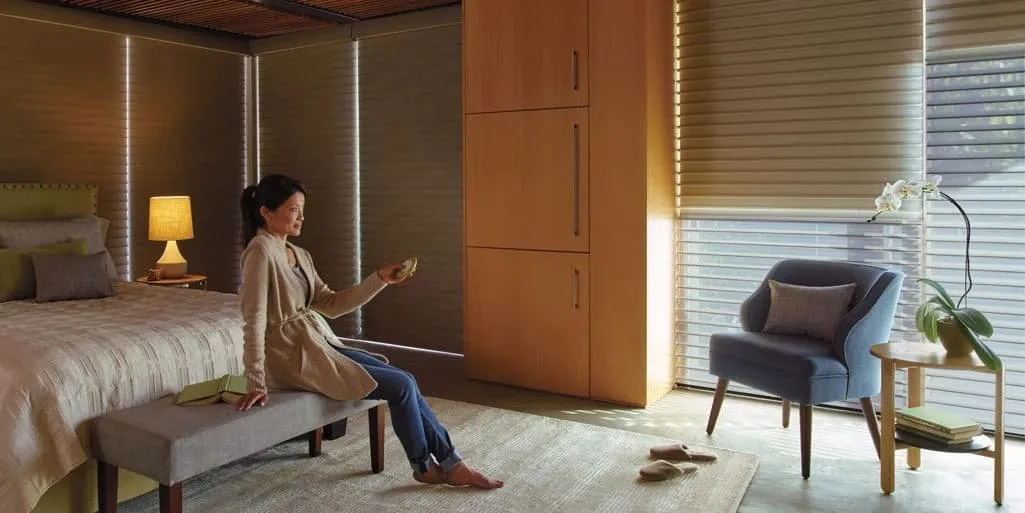
A Norwood Victorian rarely calls for the same shade in every room. The formal front rooms suit tailored roman folds that sit well against period trim. A kitchen that has been updated might want banded or roller shades with a cleaner, more modern look. The bedrooms upstairs often do best with honeycomb, for the air the cells hold against old glass and the choice of room-darkening fabrics.
With PowerView, mixing styles does not mean mixing controls. Romans, banded shades, honeycomb and blinds can all sit on the same remote and appear together in the app, grouped by room or by side of the house. A single goodnight scene can lower every one of them, whatever its style.
That flexibility makes motorized blinds in Norwood’s older houses easier to plan. You choose each room on its own terms, and we make sure everything works as one system. During the consultation we lay samples from each style side by side so you can see how they look together from room to room.
Stair halls and third floors in older two-families
The older two-families near Norwood Center often have a long shared stair hall with a tall window at the landing, and some have a third floor tucked under the roof with small windows in the gables. Both are hard to reach.
The landing window is usually set over the stairs, where no one wants to lean out. A motorized shade there, fitted once by our installers from proper staging, can be moved from the bottom of the stairs or set on a timetable to open in the morning and close in the evening. In a building shared by two households, a shared stair hall on a simple timetable means nobody has to take charge of it.
Third-floor rooms are often bedrooms or home offices. The gable windows are small and high, and the rooms run warm in summer. Honeycomb shades on a motor help keep those rooms more comfortable, and a timetable can lower them before the heat of the afternoon builds under the roof. Each floor’s shades can be set up on their own remote and their own timetable.
Easier windows for anyone who finds cords hard
A motorized shade is easier for everyone, but for some people it makes the difference between using a window and leaving it alone. Anyone who finds it hard to stretch, grip a cord or lean over furniture gets full control of every window from a remote or a phone.
That matters in houses where an older relative lives on the ground floor, or where someone uses a wheelchair or is recovering from an injury. Tall Victorian sash, bays behind window seats and windows over sinks and tubs all become reachable from wherever the person is sitting. A timetable can take care of the daily routine entirely, so the shades open in the morning and close at night without anyone having to do anything at all.
It matters for children too, in a different way. With no cords hanging at the window, there is nothing for a small child to reach or tangle, and nothing for a cat to play with.
What you will actually press
PowerView gives you a choice of controls, and most households use more than one.
- A handheld remote runs a single shade, a group or several rooms with simple up, down and stop buttons. A wall bracket keeps it by the door.
- The PowerView app on a phone or tablet shows every shade by room. Move any of them, stop them part way and build scenes and timetables.
- A timetable moves shades at set times every day, even when the house is empty, and the remote can override it for the moment.
- A scene remembers an arrangement, say side windows dropped from the top with the front windows wide open, and restores it on request.
Want the fuller explanation? Try how motorized shades are controlled, then window covering automation for routines in depth.
The newer streets: a whole house on one system
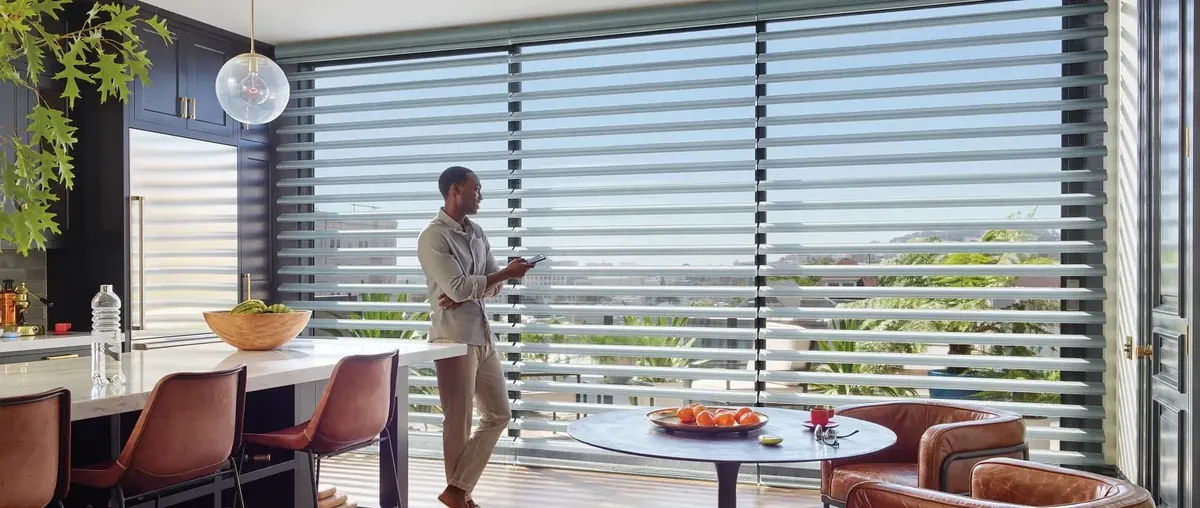
Away from the center, Norwood’s capes and ranches have standard window sizes, square frames and good depth for a headrail. That makes them the easiest houses in town to motorize, and many households take the opportunity to do the whole house at once rather than a few awkward windows.
A whole-house system makes simple routines possible. One scene opens the house in the morning and another closes it at night. The bedrooms can stay dark a little longer at weekends while the kitchen opens on time. The west-facing living room can lower its shades in late afternoon to protect the floors and furniture, and lift them again after the sun has set.
If doing everything at once is more than you want, start with the windows that are hardest to reach or most often adjusted. More shades can join the same system later. For other styles in these houses, see our cellular shades in Norwood and roman shades in Norwood pages.
A home visit instead of a showroom trip
Norwood projects begin at your kitchen table. Samples travel in our vans, which means we bring the showroom to you. That is the right way to choose motorized shades anyway, because the decisions depend on your rooms, your light and how close the neighbors are.
- Request a consultation online, or use the call button, and pick a time.
- A consultant arrives with the sample van and goes through the house with you.
- You compare fabrics at your own windows and decide which shades should move together.
- Each window is measured and its frame depth checked.
- A free estimate arrives covering the shades on your list and their fitting.
- Hunter Douglas builds the order; our installer, certified by Hunter Douglas, hangs it, programs the stops, links remote and app and enters your routines.
Our pages on in-home consultations and what happens at an in-home consultation explain more. Franklin is home to the closest of our showrooms, should you want to drop in as well.
Motorized blinds in Norwood, MA, for bedrooms on tight streets
On the close-set streets near the center, bedrooms rarely get true darkness at night. A streetlight outside, a porch light next door or the neighbor’s kitchen window a few strides away all send light into a room whose shade does not quite fit or has been left half open. In the morning, an east window on a two-family’s upper floor lets in the first light long before anyone wants to be up.
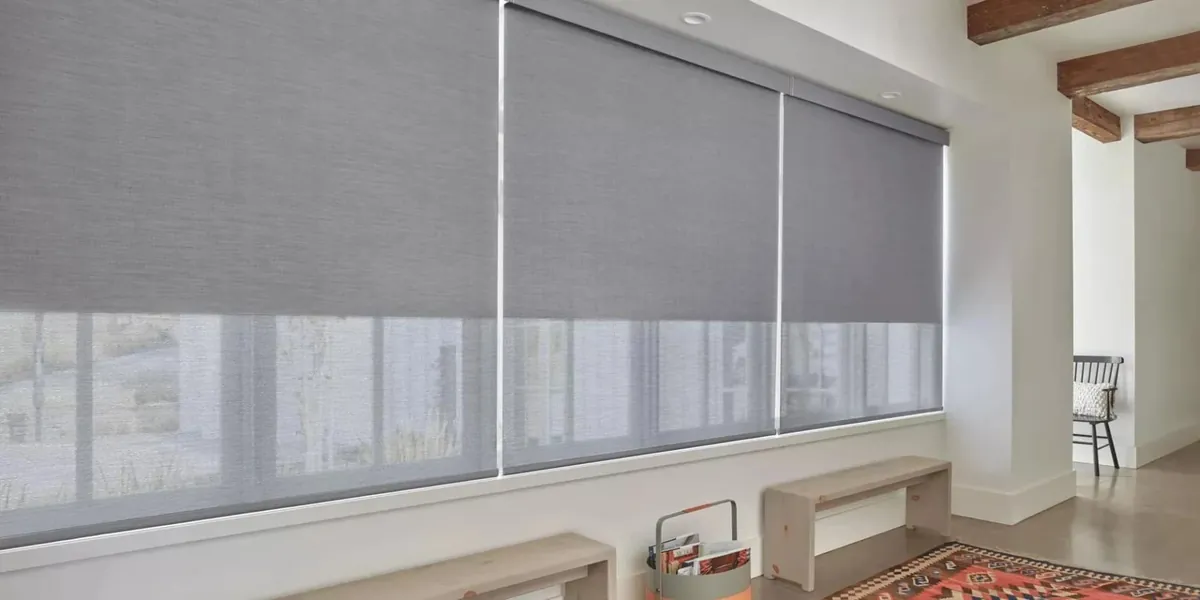
Room-darkening fabrics, made to the exact size of each opening, deal with most of that. A motor deals with the rest, because the shade is always closed when it should be. A timetable lowers the bedroom shades at a set time every evening and raises them gently at the hour you choose, later at weekends. If you want to read in bed with the lamp on and the shade open, the remote on the nightstand changes it without getting up.
For children’s rooms, the same routine helps with early bedtimes on summer evenings, when it is still light outside long after the lights should be out. And with a motor doing the lifting, there is no cord at the window for a small child to reach.
Kind to the fabric, kind to the trim
A motor lifts both sides of a shade evenly, every time. Over years of daily use, that keeps the fabric hanging straight, without the uneven wear that comes from a cord pulled at an angle. In a Victorian with restored trim, the absence of cords and cleats at the side of the window keeps the casings clean and uncluttered.
Got an existing shade that sticks, sags or refuses to move? Blind and shade repair in Norwood is something we gladly take on.
Gallery dealer status and certified installers
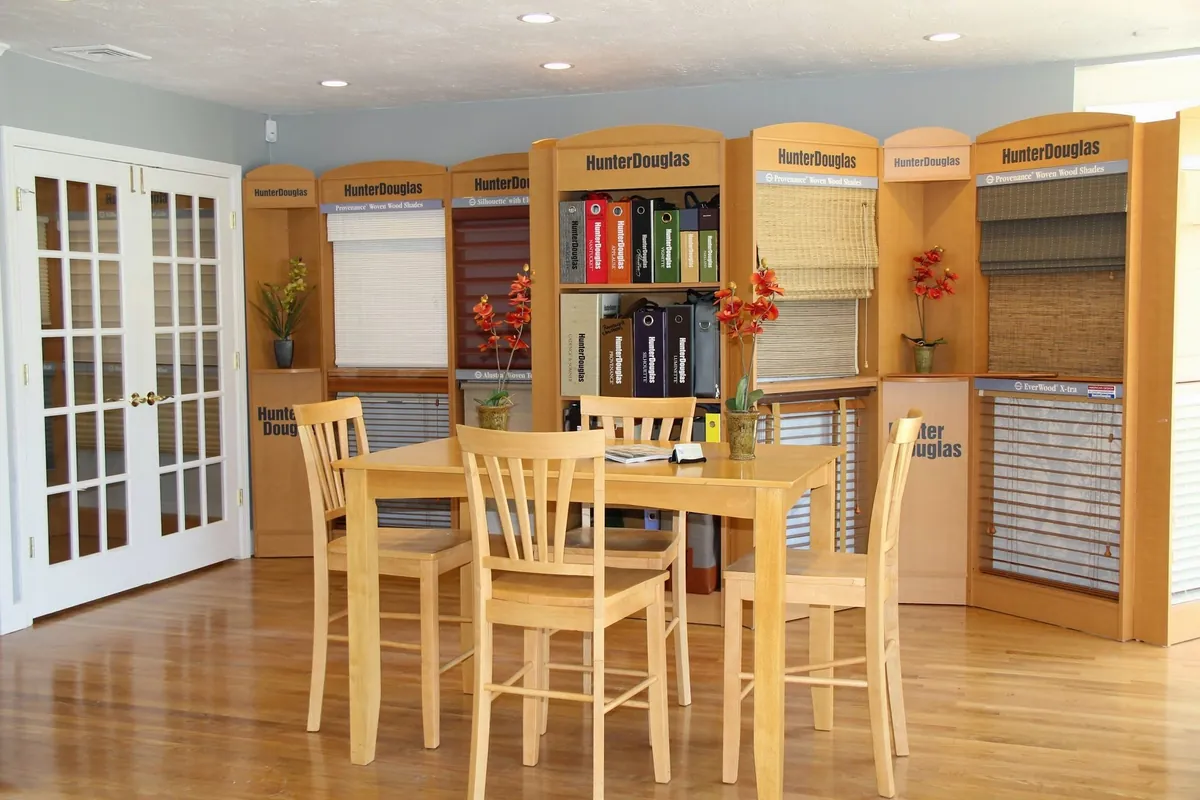
Gallery is the title Hunter Douglas keeps for dealers who meet its standards, and we carry it. The practical upshot for motorized blinds in Norwood: whichever style suits a room, whether honeycomb, sheer, roller, banded, roman or blind, PowerView is on offer, and every room joins the same network.
The people who hang your shades hold Hunter Douglas certification, and they try every motor before packing up. Interior design help is available, and estimates cost nothing. See the wider range under motorized blinds and shades, or everything we offer locally on the Norwood page.
Questions from Norwood
Our house is very close to the neighbors. How do motorized shades help?
Drop a top-down shade a short way from the head of the window and store that setting: sky comes in, the neighbor’s view does not. Then let an evening routine close the side windows when the lamps come on. More daylight, same privacy.
Can the shades in a bay window move together?
Yes. Each window in the bay has its own shade, and they can be grouped to move as one and stop level, or moved one at a time when you want light from one side.
Can a motorized shade go on the landing window over our stairs?
Yes. Our installers fit it from safe staging and set its stopping points. After that it runs from the remote at the bottom of the stairs, from the app or on a timetable.
Is motorization helpful for an older relative who lives with us?
Very often. A remote or a timetable gives full control of every window without stretching, gripping a cord or leaning over furniture.
Is there a charge for the estimate?
None at all. We measure, then write up the shades and fitting you have in mind on a free estimate.
Ready when you are
Tell us which windows are the hardest to live with, whether that is a side window a few strides from next door, a tall sash behind a porch or the landing over the stairs, and we will plan the visit around them. Request a consultation, or use the call button if you would like to talk first.