
Capes, ranches and the colonials in between
Along Hartford Avenue and South Main, much of Bellingham is post-war capes and ranches, with newer colonials built on the lots that filled in around them. Most of those houses have standard modern window openings, often replacement units, and the older village houses still have small original sash. It is a practical mix, and it makes cellular shades in Bellingham, MA, a practical choice: they fit almost any opening neatly, and they do more for a room’s comfort than any other soft shade.
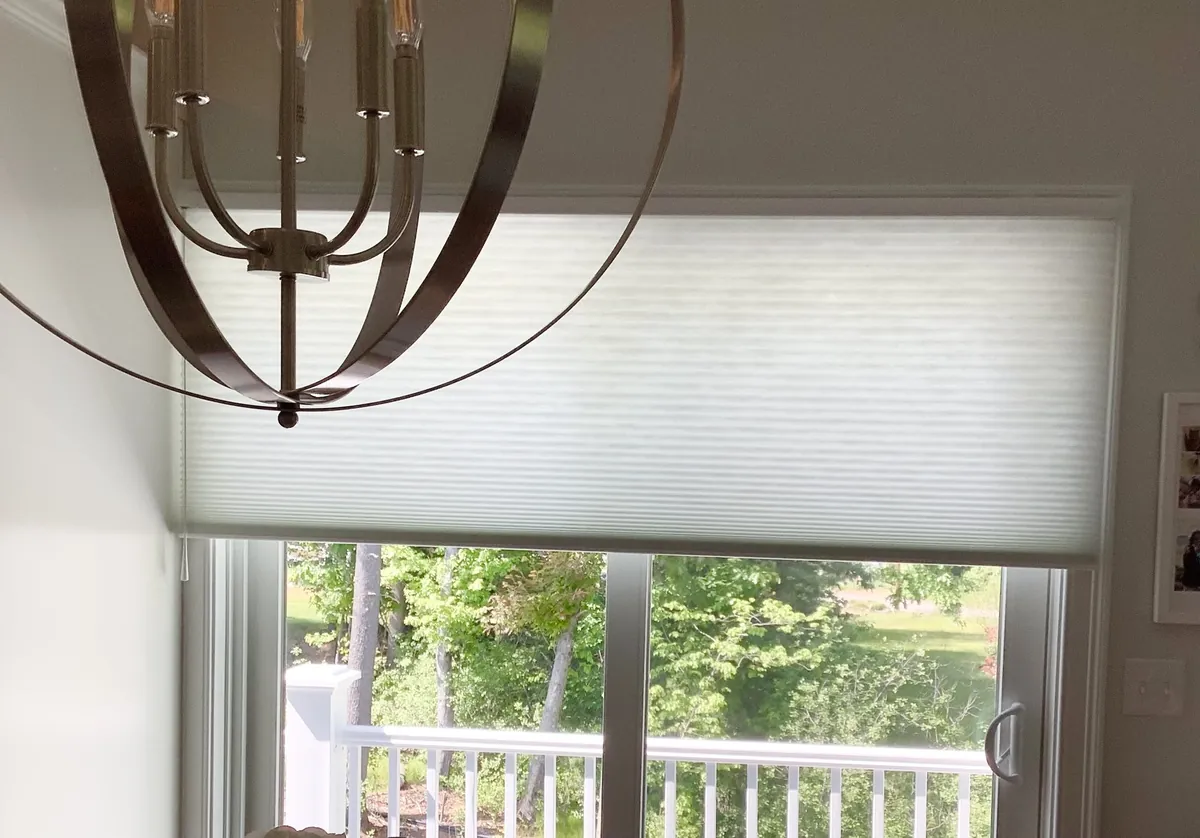
A honeycomb shade looks like a pleated fabric shade from the room, but in cross-section it is a chain of hollow pockets. Lower it and those pockets fill with air that has nowhere to go. That quiet layer sits between you and the glass, so less of the room’s warmth escapes through the window in winter, and less of the summer sun’s heat makes it in.
In a cape, where the upstairs rooms sit right under the roof, and in a ranch, where the living room picture window may be the biggest piece of glass in the house, that layer makes a difference you notice the first cold night.
Three features we suggest most in Bellingham
Most of the houses in town share the same handful of needs. When we plan cellular shades in Bellingham, these three options cover nearly all of them.
Cordless lifting
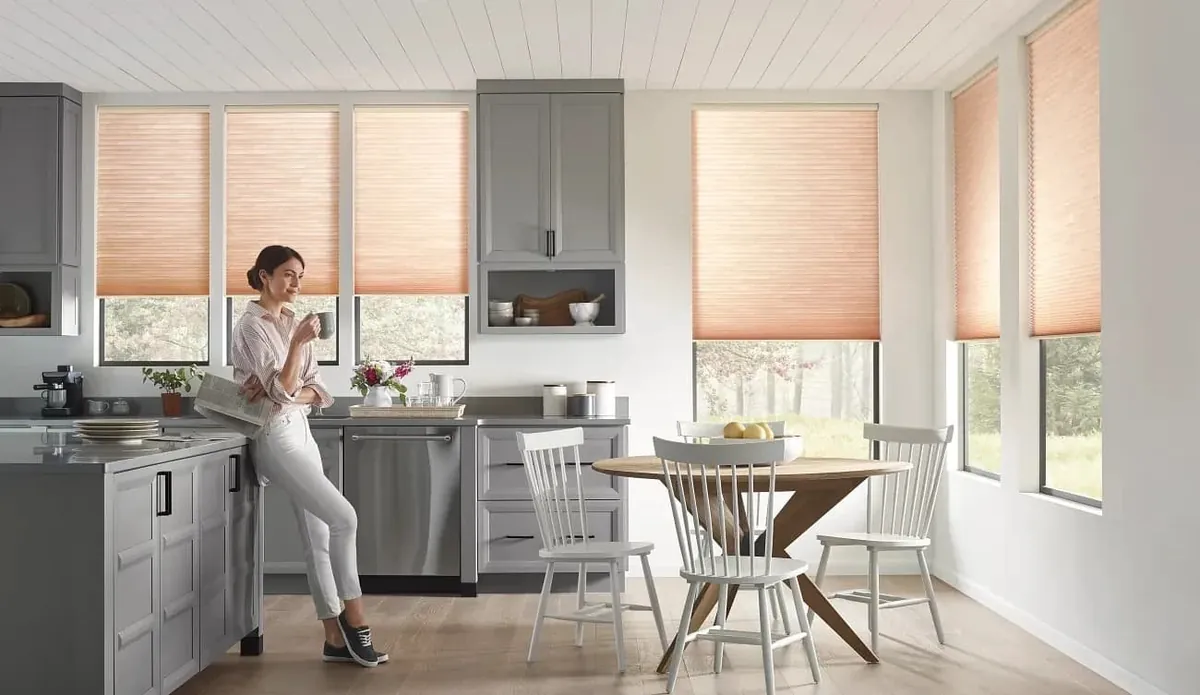
Push the bottom rail up or pull it down and the shade stays exactly where you leave it. No loops or tassels hanging at the side of the window, which keeps kitchens and children’s rooms tidy.
Open from the top
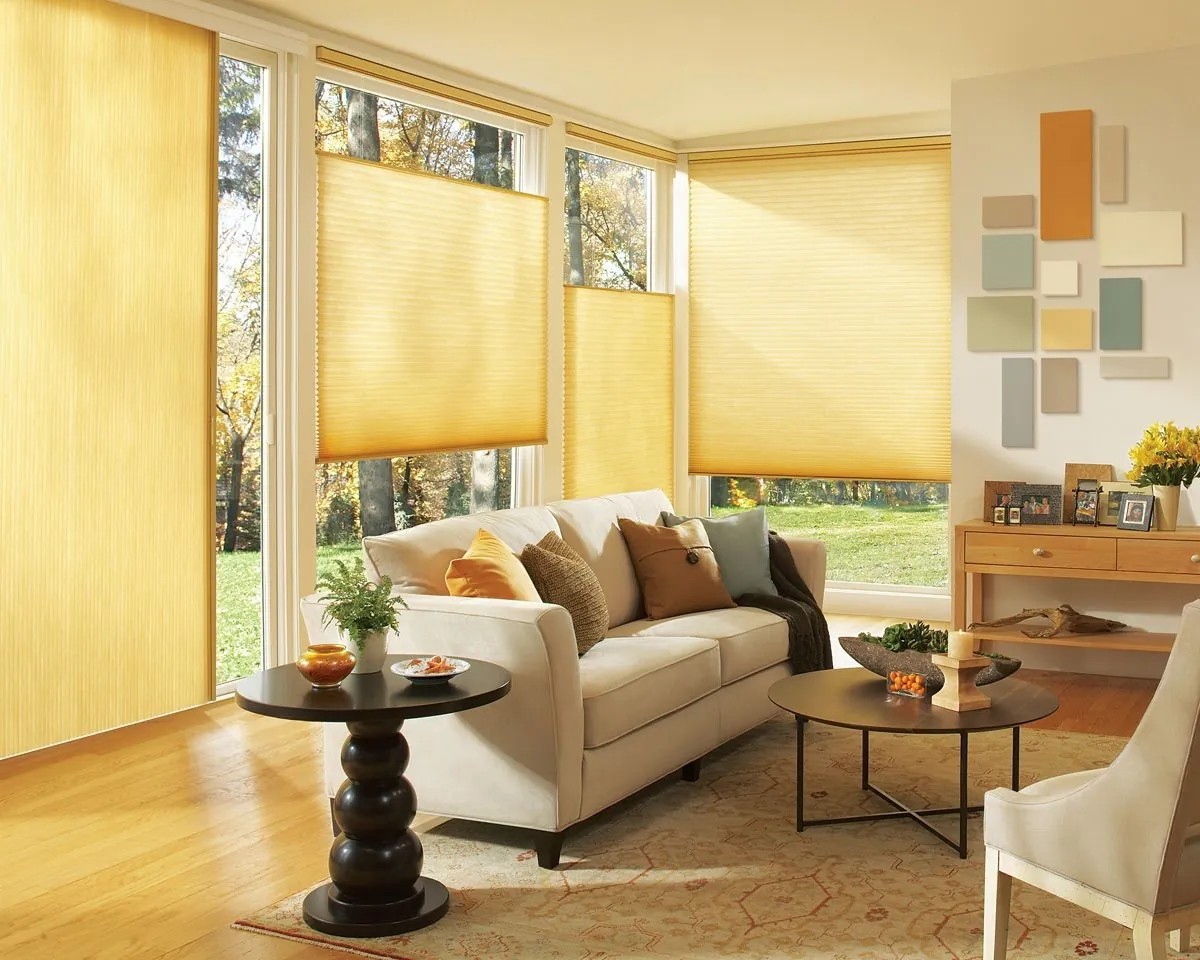
A top-down, bottom-up shade drops from the headrail as well as rising from the sill. On a ranch close to the road, you get sky and daylight while the view in stays blocked.
Darkening fabric upstairs
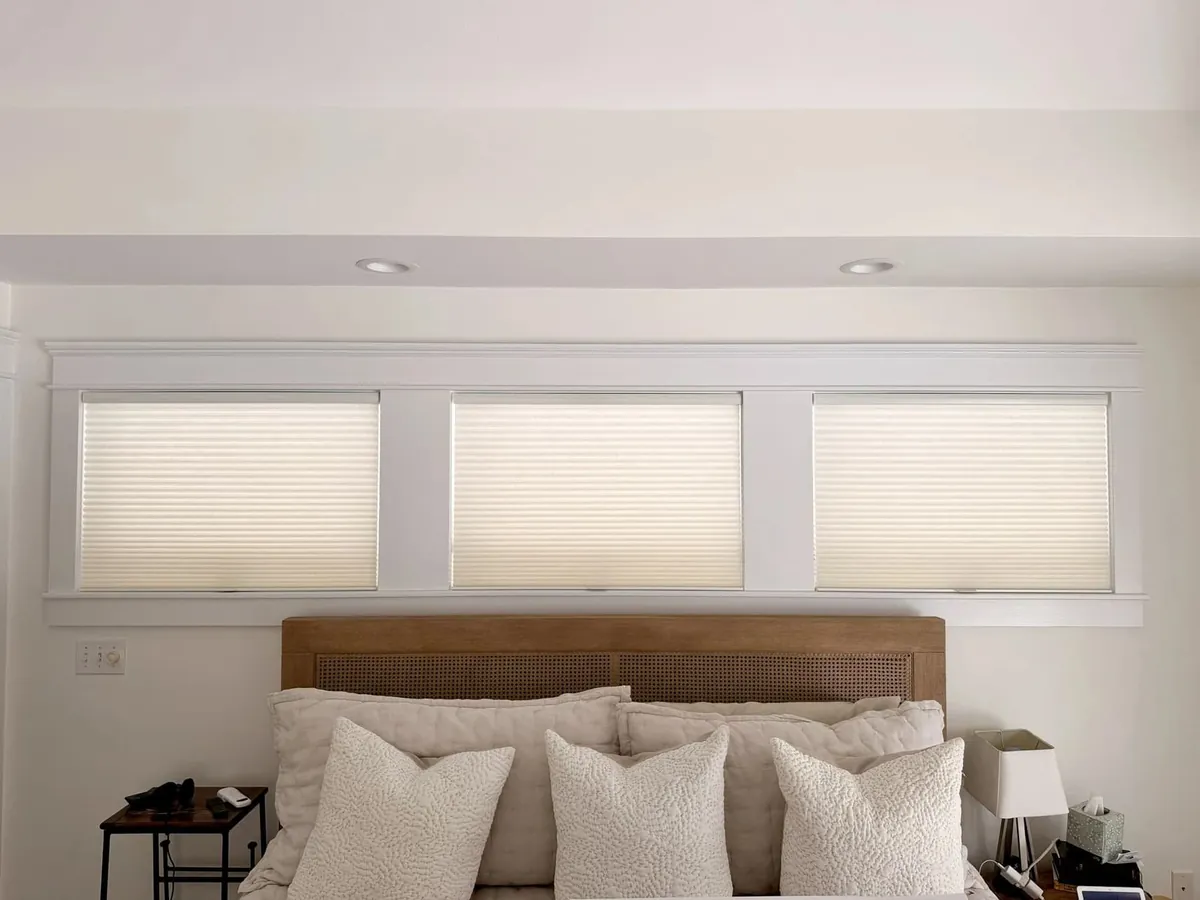
For the bedrooms under a cape roof, which tend to brighten early. The fabric holds back the light, and the cells still keep the room’s temperature steadier.
Upstairs in a Bellingham cape
The upstairs of a classic cape is a set of rooms tucked under the roof, lit by dormers. Those rooms take the full effect of the weather above them: warm in July, cool in January, and quick to change with the sun. The dormer windows are usually small and set back into a little recess, which is good news for a honeycomb shade.
That recess often gives enough depth for the shade to sit right inside the dormer opening. Raised, it folds into a narrow band at the top and leaves the small window as clear as possible, which matters when the dormer is the room’s only daylight. Lowered, it closes off the glass completely, and the trapped air in the cells helps the room hold whatever warmth the heating gives it.
Because the room is small, color matters more than you might expect. A dark fabric can make a dormer bedroom feel closed in, while a pale light-filtering fabric lets the window glow and keeps the room feeling larger. When you want true darkness for sleeping, a room-darkening fabric in a soft neutral is the usual compromise.
Ranch living rooms and the big front window
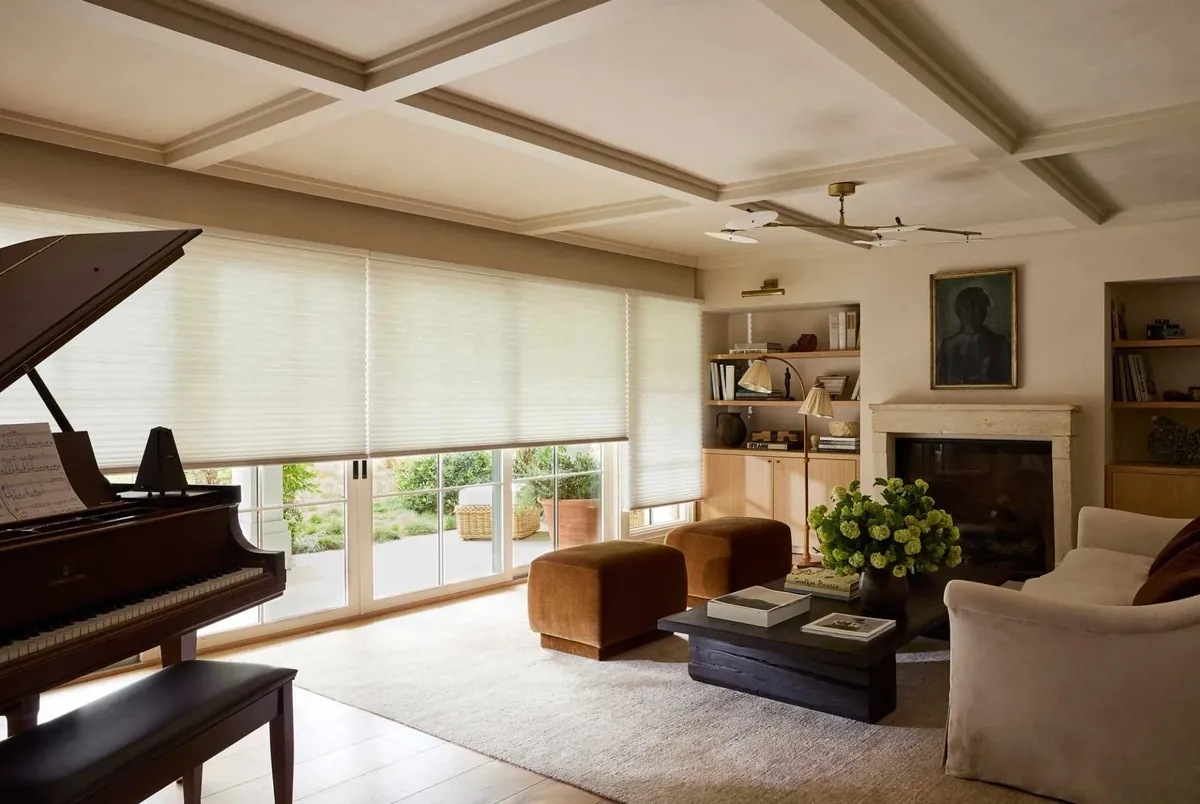
The single-story ranches along South Main and the side streets near it usually put the living room at the front, with a wide picture window looking at the street. It is a cheerful room in daylight, but it is also the room that feels coldest on a winter evening and the one most exposed to the road once the lamps go on.
For a window that wide, we often split the covering into two or three honeycomb shades that share a headrail. They can be set to move as one, so the window still reads as a single piece, or separately, so you can open the end nearest the chair and keep the rest closed. A top-down, bottom-up option on each panel adds another layer of control.
Many ranches also have a slider from the kitchen or family room to a back deck or patio. A vertical honeycomb shade runs sideways across the door on a track and folds back against one side, so the slider gets the same comfort and the same look as the windows beside it.
Replacement windows and standard openings
A great many Bellingham houses have had their original windows replaced at some point, and the newer colonials were built with standard modern units. That makes measuring straightforward, but it comes with one detail worth checking: replacement frames are sometimes shallow. A honeycomb headrail needs a certain depth to sit inside the opening, and some replacement units have very little before you reach the sash locks or the tilt latches.
When there is room, an inside mount gives the cleanest look. When there is not, we mount the shade just above the opening and size it to overlap the frame slightly, which also blocks the strips of light that would otherwise show around the edges. We check this window by window, because the front of a house and the back are not always the same vintage.
Standard openings have a real advantage, too. When every bedroom window is the same size, a whole floor can be ordered in one fabric and one style, and the house looks consistent from the street without any special work.

Newer colonials on the in-fill lots
The colonials that went up between the older capes and ranches are a different shape of house: two full stories, a center hall, and bedrooms upstairs with matching windows front and back. Many have a family room off the kitchen with a bank of windows or a slider, and some have a bonus room over the garage.
That room over the garage is often the hardest in the house to keep comfortable. It has outside air below it as well as beside it, and it usually has windows on more than one wall. A double-cell honeycomb, with two rows of pockets instead of one, is the shade we point to for that room, because it puts more still air between the glass and the space you are trying to heat.
The rest of a colonial tends to be simple. With matching openings across the upstairs, a single fabric and style ordered for every bedroom gives the house an even face to the street, and the family room can take a lighter fabric to keep it bright. Ordering cellular shades in Bellingham for a whole colonial at once is common, because the openings make it easy.
Small sash in the village houses
The older houses in the village have a different problem: small original sash, sometimes with deep sills and narrow casings. A shade that is too bulky swallows a little window, and a heavy stack at the top can block a surprising share of the glass.
Single-cell honeycomb is the answer most of the time. It folds very compactly, so when it is raised it takes up little of the opening, and it can be made narrow enough for the smallest sash. Where the casing is old and uneven, we measure in several places and build the shade to the tightest point, so it runs freely without catching on the jambs. On a village house where the sash has been kept, an inside mount also keeps the outside of the house looking as it always has, because from the street the raised shade is barely visible behind the old glass.
Kitchens, bathrooms and the back of the house
The rooms at the back of a cape or ranch are where daily life happens, and they get hard use. A kitchen window over the sink is awkward to reach across, so a cordless shade with a light touch, or a motorized one, saves a lot of leaning. Light-filtering fabric keeps the kitchen bright while taking the edge off the morning or afternoon sun, depending on which way the back of the house faces.
Bathrooms want privacy first. A top-down, bottom-up honeycomb shade lets you keep the lower glass covered and still open the top for light and air. In a small cape bathroom with one window, that single feature makes the room far more pleasant to use. Honeycomb fabrics are made for everyday rooms, and we suggest the right fabric for a room that sees steam.
For a family room at the back, the question is usually glare on the television in the afternoon. A room-darkening fabric, or simply a heavier light-filtering one, deals with it without making the room feel shut off. Many orders for cellular shades in Bellingham, MA, include exactly this mix: bright and soft at the front, private in the bathroom, darker where the screen is.
Working through the house in stages
Not every household wants to do every window at once, and with honeycomb shades there is no need to. A common approach in Bellingham is to start with the rooms that are hardest to live in: the cape bedrooms that bake in summer, the living room with the big front window, the slider that lets the cold in. The rest of the house can follow later.
The trick is to choose the fabric family and lift style with the whole house in mind, even if you only order a few rooms to begin with. Then the next rooms match without a second round of decisions. We note your choices at the first visit so it is simple to pick up where you left off.
Duette or Applause in a Bellingham house
Hunter Douglas makes two honeycomb collections, and we fit both. They insulate in the same way, through the air held in their cells, so the decision is mostly about looks and options.
- Duette offers the widest spread of fabrics and textures, extra-wide and extra-tall sizes, specialty shapes and the sideways version for sliders.
- Applause has a palette of its own and suits the standard openings that make up most of the houses in town.
- Both come in light-filtering and room-darkening fabrics, and both can be cordless or motorized.
In a cape or ranch, we often see Duette in the main living spaces and on the slider, and Applause in the bedrooms. More on each line is on the Duette and Applause pages, and the full range sits on our cellular shades page.
When motorization is worth it
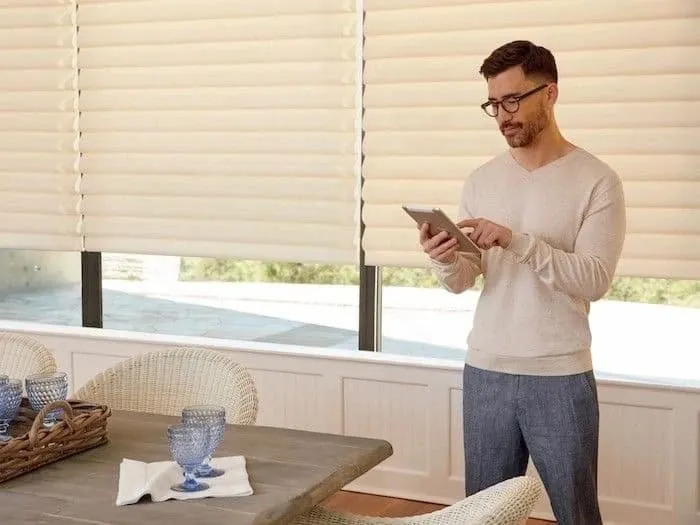
Most windows in a cape or ranch are easy to reach, so a cordless lift does the job. Motorization comes into its own in a few places: a window over the kitchen sink, a dormer behind a bed, a run of living room shades you would like to move together. With PowerView, the shades respond to a remote, the app on your phone or a schedule, so the living room can close itself at dusk without anyone touching it.
If you think you may want motors later, say so at the start. Planning for it means the shades you choose now can match the motorized ones you add. Our page on motorized blinds in Bellingham explains the options in more detail.
What we do at your home
Our vans carry samples, so we can bring the showroom to you, and most Bellingham customers find that easiest. Here is the usual order of a visit.
- You pick a time through Request a Consultation or the call button.
- We start in the rooms you mentioned, usually the coldest or the brightest.
- You compare honeycomb fabrics at the actual windows, so you see how each one handles your light.
- Together we settle on how each shade will operate and whether it mounts inside or outside the frame.
- Every window is measured, including the depth of any replacement frames.
- You get a free estimate for the shades you want, with time to think it over.
If you want help with colors and fabrics across a room, ask about our interior design consultations. You can also read what happens at an in-home consultation before the visit.
Installation day
- Our certified Hunter Douglas installers check each shade against its window before they start.
- Brackets go into solid framing, so the headrail sits level and stays put.
- Every shade is hung, raised and lowered to make sure it runs smoothly and stacks evenly.
- Any PowerView shades are paired with your remote or the app.
- Before leaving, the installer shows you how each shade works and answers your questions.
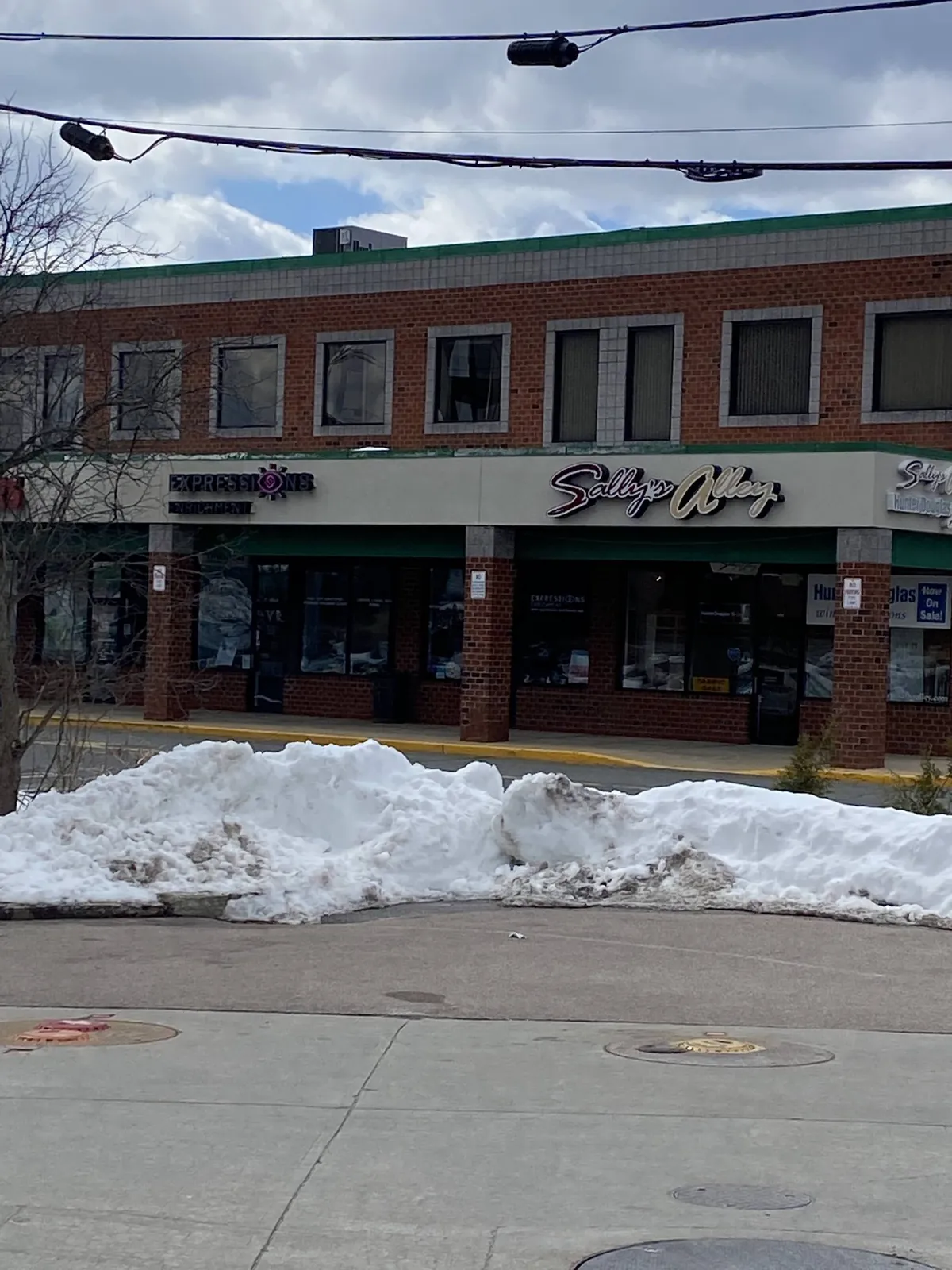
The nearest showroom is in Franklin
If you like to see things in person before anyone comes to the house, our Franklin showroom is the closest to Bellingham, a good place for a first look at Hunter Douglas honeycomb and a conversation about your house.
You can use the showroom to narrow your choice and then book a home visit to measure and see the shortlist in their own rooms. Whichever order suits you, the estimate is free.
A Gallery dealer for the whole house
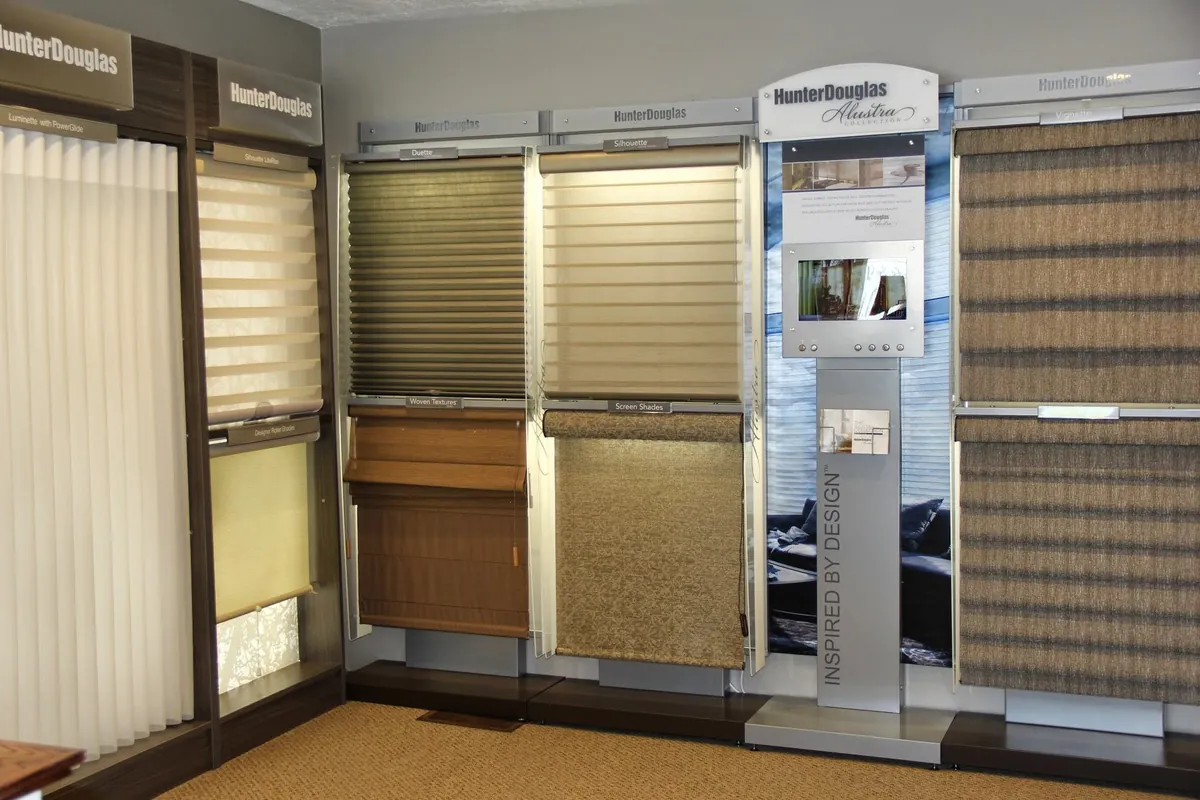
Gallery dealer is the status Hunter Douglas gives the dealers at the top of its network, and Blinds & Designs is one of them. That gives you the whole Duette and Applause collection to choose from, along with the vertical honeycomb for sliders and PowerView automation.
The people who hang your shades are Hunter Douglas certified installers. Beyond honeycomb, we carry blinds, shutters, roller and roman shades and drapery, so the rest of the house can be planned at the same visit. Older window coverings that need attention are welcome too, through blind and shade repair in Bellingham. For everything we offer in town, see our Bellingham page, or compare with roller shades in Bellingham for a kitchen or sunroom.
Questions from Bellingham
My windows were replaced. Can the shades still mount inside the frame?
Often, but replacement frames can be shallow, with sash locks and tilt latches close to the front. We check the depth of each window. Where an inside mount would not clear the hardware, the shade mounts just above the opening and overlaps the frame a little.
What is the best choice for the bedrooms under a cape roof?
A room-darkening honeycomb fabric, usually in a pale neutral so the small room does not feel closed in. The cells help the room stay more even in temperature, which these rooms need more than most.
How do you handle a wide ranch picture window?
We usually divide it into two or three shades on one headrail. They can move together or separately, and each can open from the top for daylight without losing privacy from the road.
Can I do a few rooms now and the rest later?
Yes. We record the fabric and style you choose, so later rooms match the first ones exactly.
Is there a charge for the estimate?
No, the estimate is free once we have measured.
Getting started
The quickest route to the right cellular shades for Bellingham homes like yours is a look at the samples in your own rooms. Request a consultation and we will come with the honeycomb range, measure each window and give you a free estimate. To see the shades first, the Franklin showroom is the nearest, and the call button reaches it.