
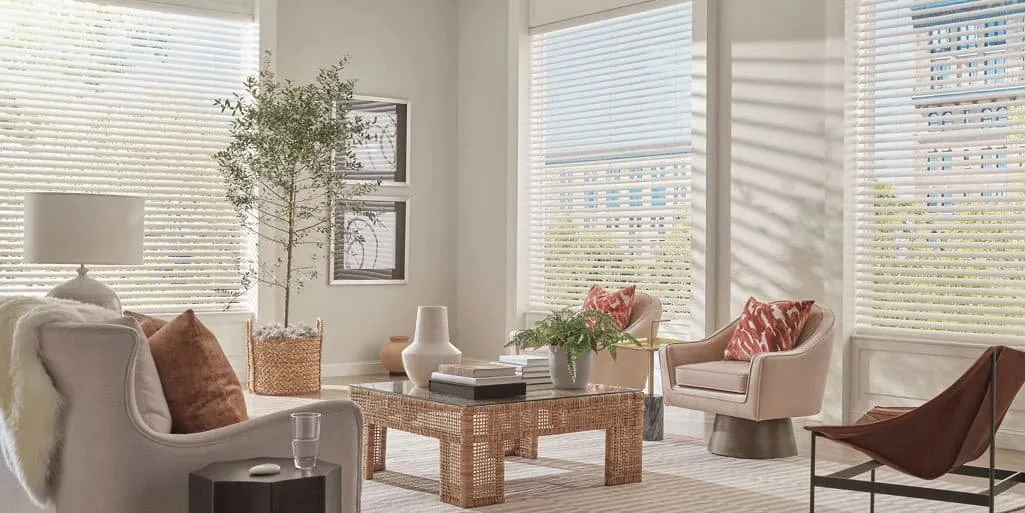
Rooms built around the harbor
Along Scituate Harbor, the shingled houses face the water on purpose. Their main rooms look out over the boats and the channel, and the windows on that side are there for the view first and everything else second. Out toward Minot and Peggotty Beach the same is true, with one difference: that stretch is among the most exposed on the South Shore, and the houses take wind, salt and sun straight off the open sea. Inland, the newer colonials have ordinary modern windows and a quieter set of needs. Choosing custom blinds in Scituate, MA means respecting the view on the water side and the weather that comes with it.
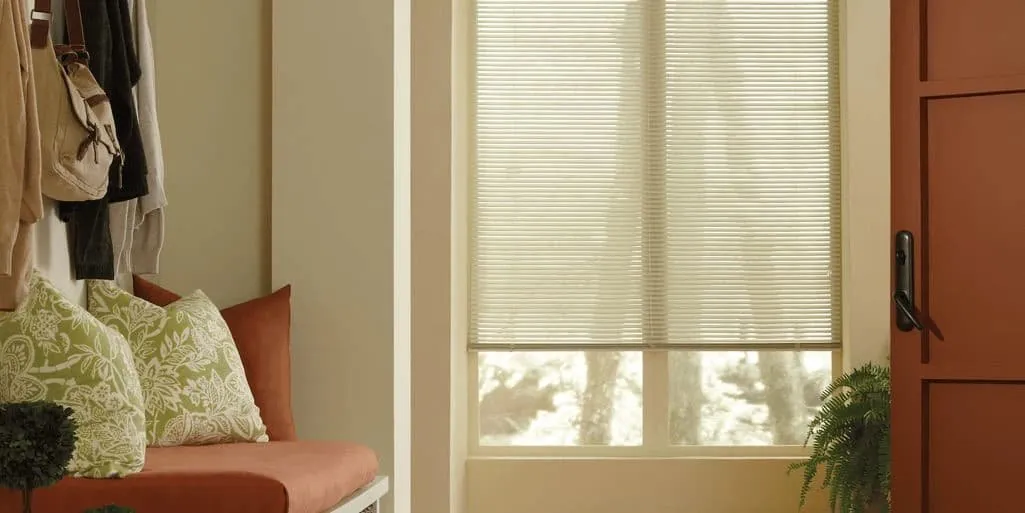
A blind is a natural fit for a view-first room. With the slats level, the harbor is right there through the glass. Raised, the blind gathers into a neat stack at the head of the window. Tilted, it turns the hard morning or evening glare into soft light on the ceiling. None of that requires giving up the reason the house was built where it was.
The weather is the other half of the job. Salt and damp reach inside a shore house over every season, and strong light off the water is hard on finishes. Hunter Douglas makes wood, faux wood, metal and vertical blinds, and we match the material to how exposed each room really is.
Blinds for each room of a Scituate house
We bring the full Hunter Douglas blind range to every visit. Room by room, these are the answers we reach for most often.
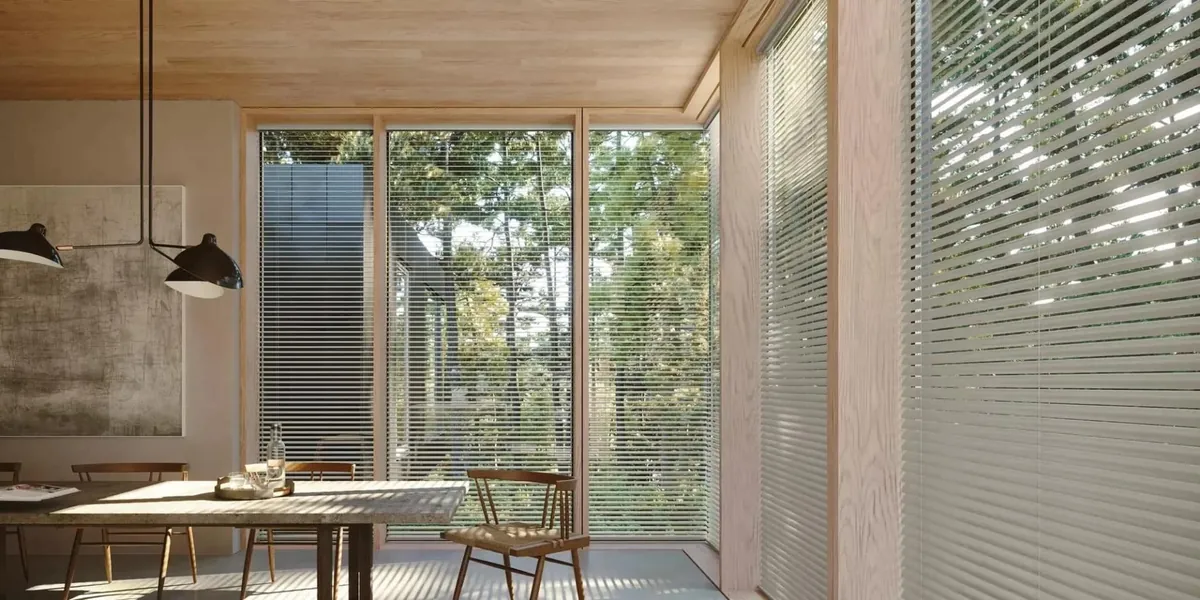
The harbor-view living room
Slim aluminum slats that almost disappear when level and shrug off salt air. The view stays the main event.
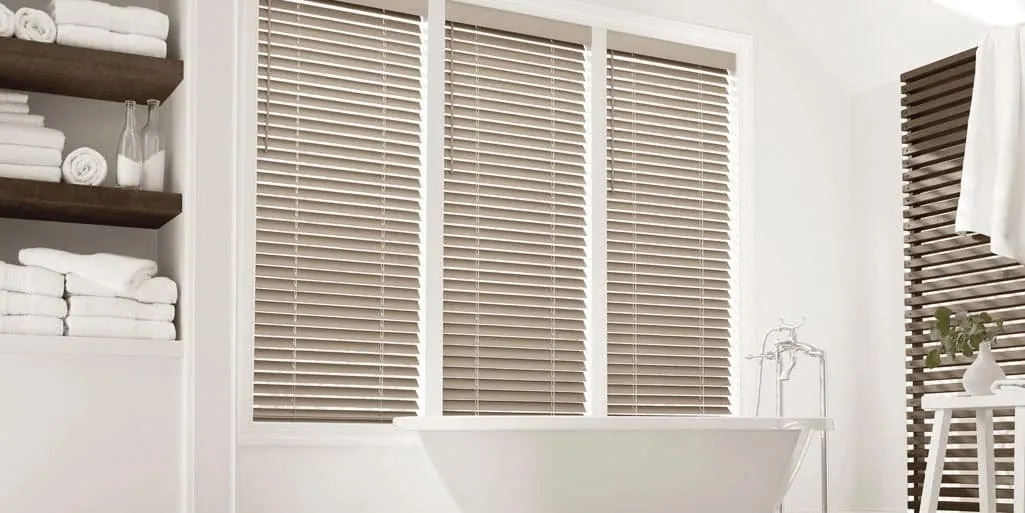
Kitchens and baths
Faux wood, made for steam and damp, in a color matched to the blinds in the rest of the house.
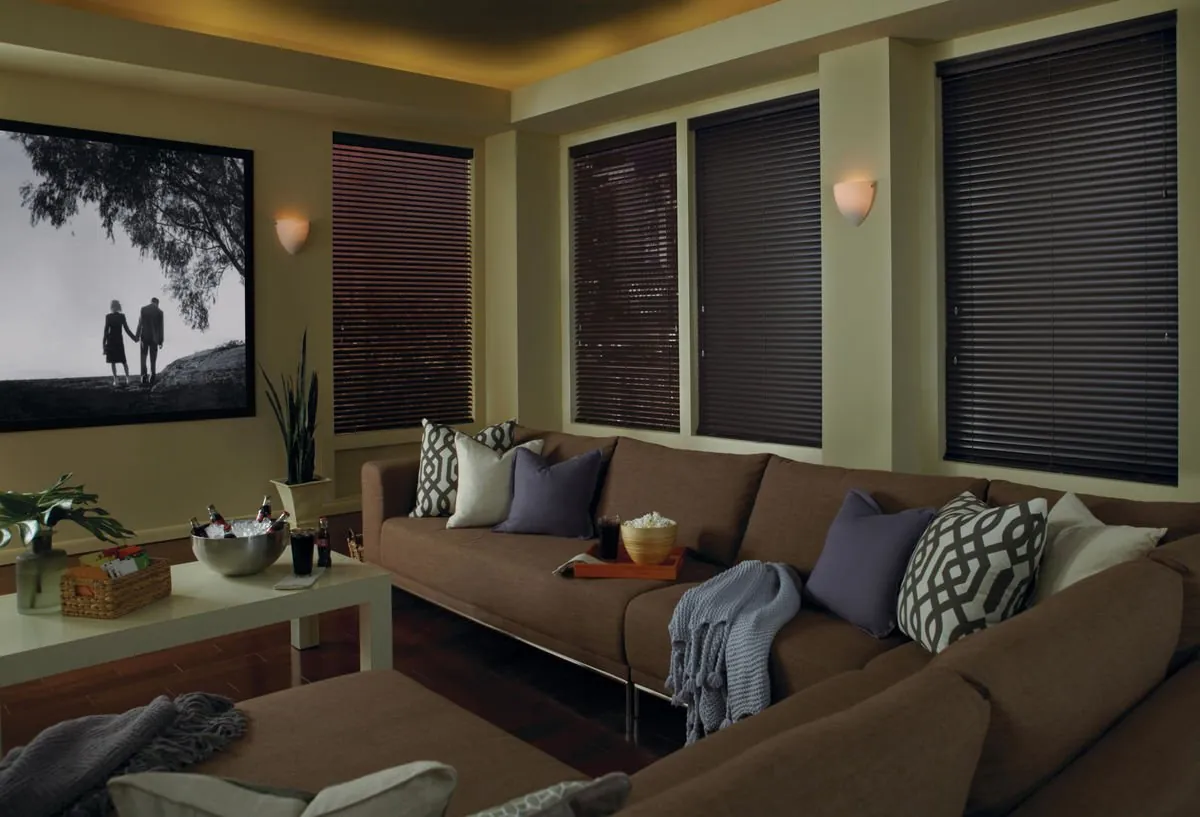
Bedrooms facing the water
Deeper slats that close tight against the early sun over the sea, with an outside mount to cut light at the edges.
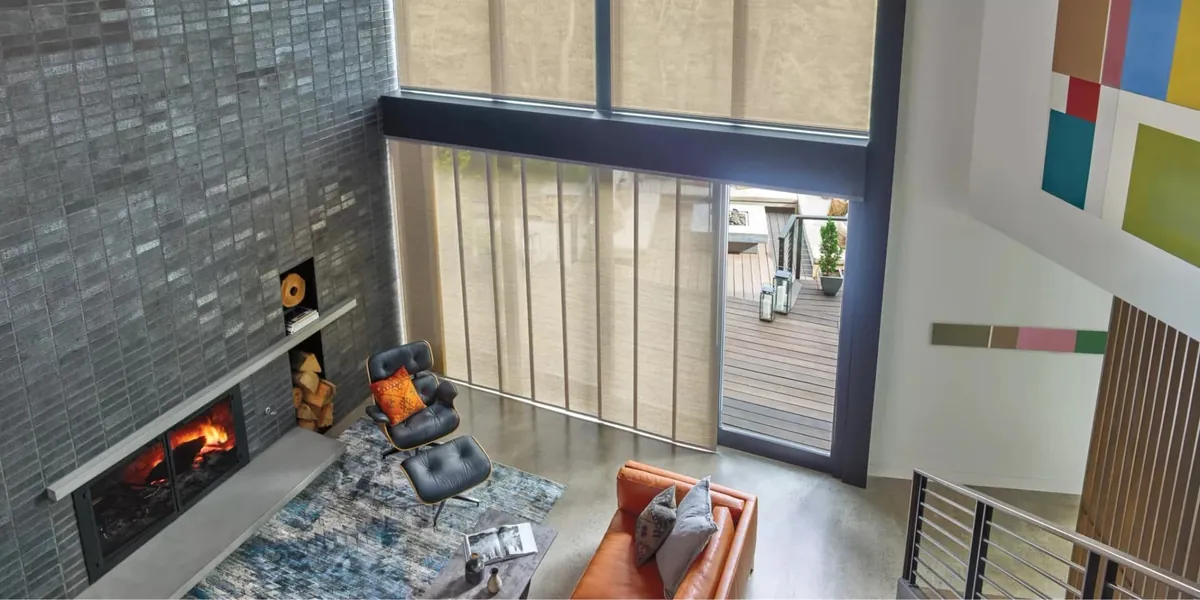
The slider to the deck
Vertical blinds or gliding panels that draw fully aside, so the deck door opens without lifting anything.
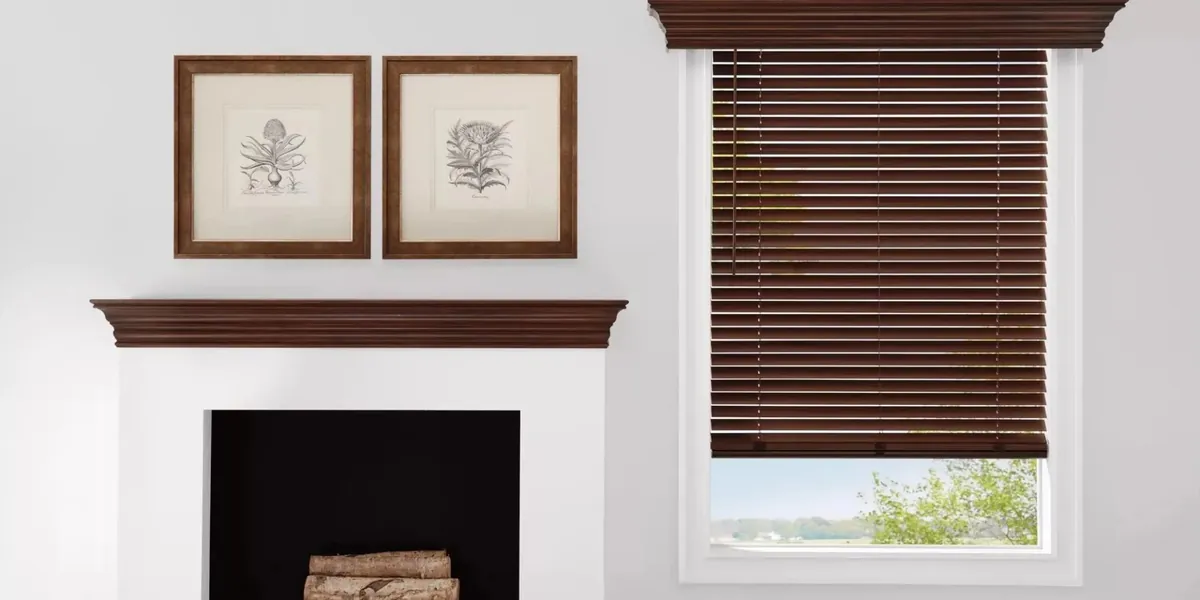
Studies and dens inland
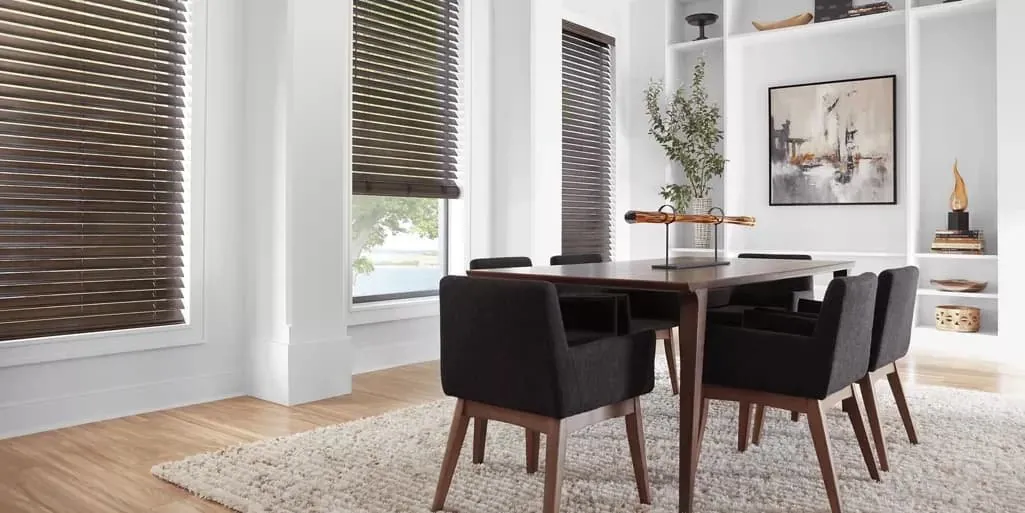
Real wood with a rich stain for the drier rooms of a newer colonial, where warmth and grain matter most.
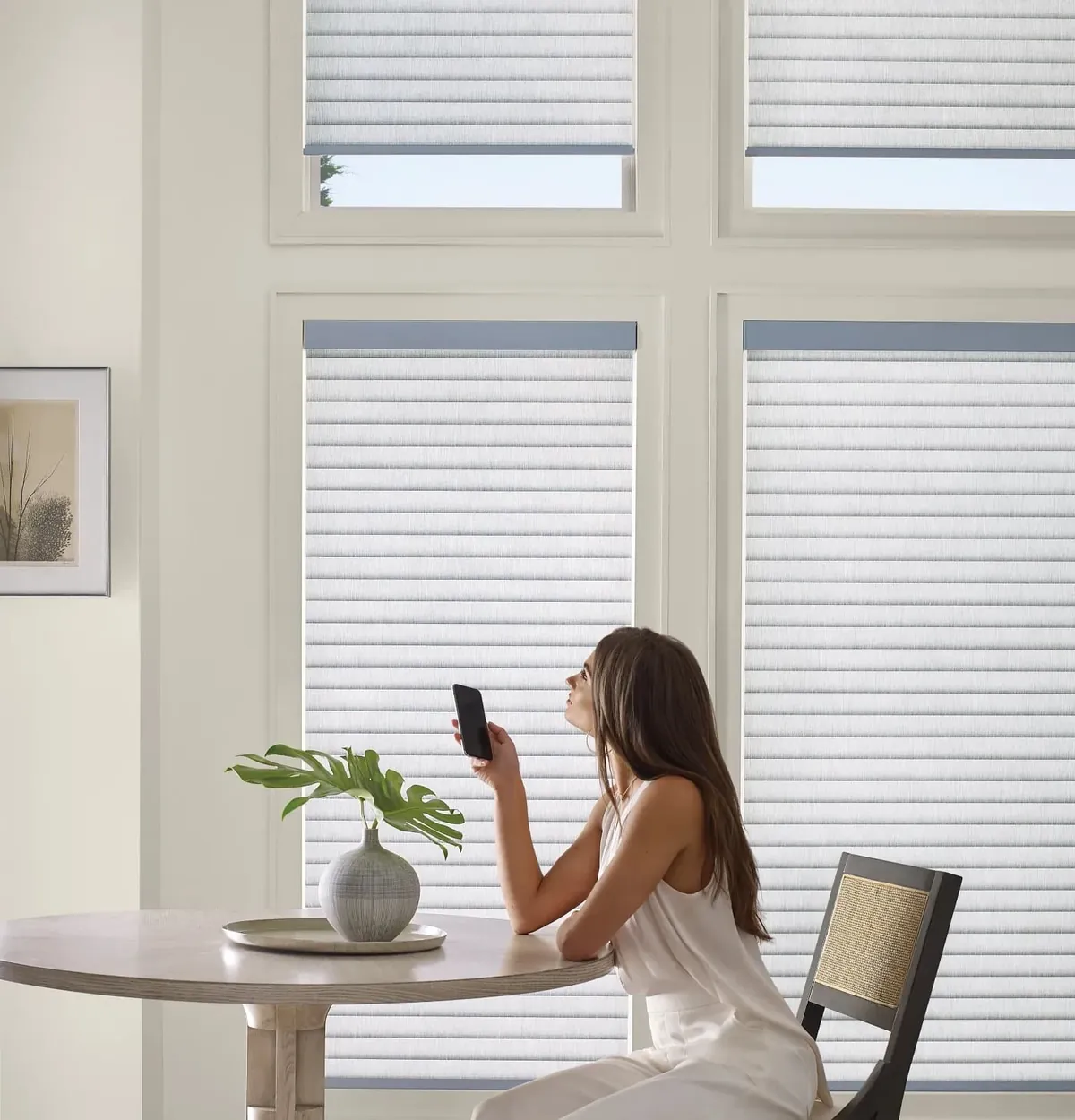
Glass out of reach
PowerView motorization for high windows and transoms, raised and tilted from a phone, remote or schedule.
Shingled houses along the harbor
The shingled houses near the harbor come in many shapes. Some are compact and old, some are larger and rambling, many have been added to over the years. What they have in common is variety at the windows: double-hung sash in the main rooms, smaller windows in dormers and gables, perhaps a bay looking down the harbor, and newer glass in a later addition. It is rare for two openings in the same house to match exactly.
That is where a made-to-measure blind earns its keep. Each opening gets a blind built for it, so a small gable window and a wide harbor window can both look right. To stop the house looking patched together, we hold the color and slat style steady across each elevation, and line up the headrails where windows sit side by side. The water side, seen from boats and the opposite shore, reads as one calm face.
Inside, the mix of materials follows the rooms. The harbor-facing living room and kitchen usually take aluminum or faux wood, which cope with the damp near the water. A bedroom or study at the back might take real wood. Each choice is matched in color, so walking through the house you see one consistent look.
Out toward Minot and Peggotty Beach
Minot and the streets above Peggotty Beach take the weather head-on. Winter storms drive salt spray against the glass, summer brings strong sun and humid sea air, and the light off the open water is intense on a clear day. Houses here need window coverings that can live with all of it.
Material comes first. Faux wood holds its shape in humid air where real wood can move, and aluminum is unbothered by damp. For the rooms facing the sea we nearly always suggest one or the other. A cordless lift is the next choice to make: no cord lock or hanging cords means less exposed hardware for salt to work on, and a tidier window.
Taken together, those two choices are what make custom blinds in Scituate, MA last on the exposed side of town: the right material for the damp, and the fewest exposed parts for the salt.
Color comes next. Light from the open water is hard on finishes over the years, and lighter, neutral slats show it least. They also keep a sea-facing room feeling bright when the blinds are lowered. Darker slats are better kept for rooms on the land side of the house.
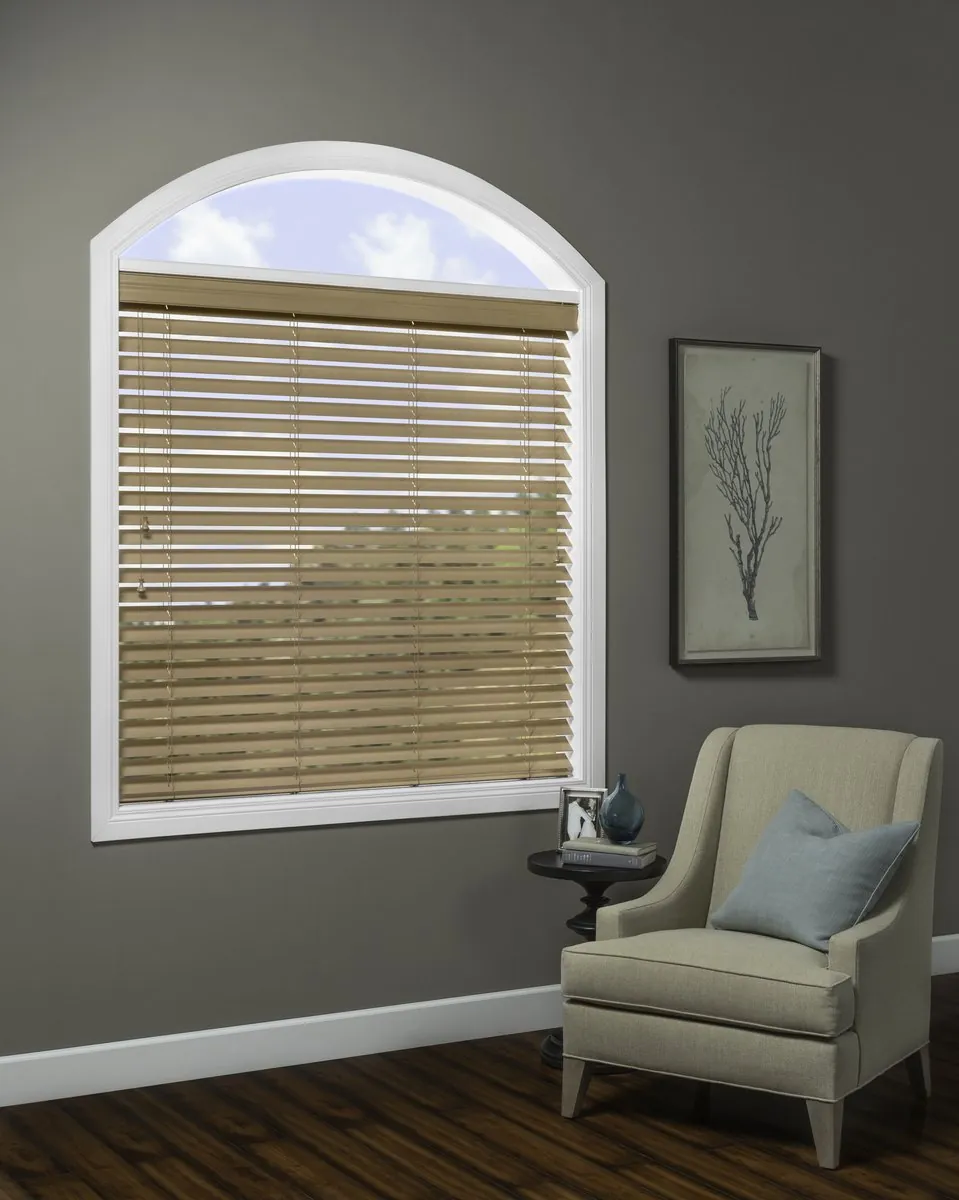
Keeping the view: the slat as a dial
On the harbor side, think of the slats as a dial rather than an on and off switch. Level, they give an almost unbroken view, especially with a wider slat, because fewer slats cross the glass. A few degrees up, they block the direct sun while the harbor stays visible below the line of sight. Further up, they turn the room private while still letting light in over the top. Closed, they shut out the night.
Where the blind goes when raised matters too. A raised blind stacks at the head of the window, and on a view window we plan the headrail so that stack sits above the line you see from the sofa or the kitchen table. On a tall window, a slat that stacks compactly keeps the upper glass clear.
Several windows side by side, as in many harbor living rooms, are usually best covered with one blind per window rather than one long blind. Each is lighter to lift, the slats stay straight, and you can leave the center window open while the ones in the sun are tilted. Custom blinds in Scituate harbor rooms are planned around that kind of everyday flexibility.
Glare, fading and the open water
Sun off the water is not just bright, it is reflected, so it reaches into a room from below as well as above. On an east-facing harbor room the morning can be dazzling, and a west-facing room catches the last light of the day. Over time, that light fades floors, rugs and upholstery nearest the glass.
Tilted slats are one of the simplest ways to manage it. Angle them up and the reflected light is caught and thrown to the ceiling, which spreads it around the room instead of laying a hot bright patch on the floor. On days you are out, closing the slats on the sunny side protects the furniture. With PowerView, that can happen on a schedule without anyone remembering to do it.
Newer colonials inland
Inland, away from the harbor and the beaches, the newer colonials are two-story houses with standard modern windows in neat rows, an open kitchen and family room at the back, and often a slider to a deck. Fit is simple. The questions are about color, material and control.
We usually suggest one color across the street-facing windows for a tidy front, real wood in the living and dining rooms, faux wood in the kitchen and baths, and vertical blinds or gliding panels on the slider. A home office takes a precise metal slat that keeps the sun off a screen, and a bedroom takes a deeper color that closes tight. Where the family room has a long row of windows, PowerView lets you tilt the whole row at once.
Because inland rooms are drier and further from the spray, the choice of material is wider than on the shore. That makes custom blinds in Scituate’s inland colonials more about taste: a stained wood that picks up the floors, a soft white that disappears into the trim, or a mix of both, chosen room by room and matched where rooms open into each other.
Harbor house or inland colonial: what changes
It helps to picture the two side by side. In a shingled harbor house, almost every window is a different size; most rooms face the water and need faux wood or aluminum; slats are chosen to keep the view; and color leans light to cope with the sun. In an inland colonial, the windows match; the rooms are drier, so real wood is welcome; the street side is about consistency; and the family room slider is the main event.
The products are the same Hunter Douglas families in both houses. What changes is how they are chosen. If you would like to read about each before we visit, our custom blinds overview is the place to start, followed by Hunter Douglas metal blinds, EverWood faux wood blinds, Parkland wood blinds and vertical blinds.
Bay windows and unusual shapes
Many shingled houses have a bay looking down the harbor or out to sea, and some have small windows in odd places: a narrow window beside a chimney, a little square window in a gable, a window on a stair landing. Blinds handle most of these well.
In a bay, each panel gets its own blind, made to that opening, and the headrails are set at the same height so the bay reads as one. When the blinds are raised together, the stacks line up across the top. A narrow window beside a chimney takes a narrow blind with a slim headrail. On a gable window that is round or arched, we tell you plainly what can be covered well and what is better left open or treated another way.
Bays with a built-in window seat need one more thought. A blind hanging inside the frame clears the cushion, but the controls must be easy to reach from the seat or from the room. A cordless lift you can push up from the cushion, or a motor worked from a remote, keeps you from kneeling on the seat to reach a wand at the far side.
Controls for exposed rooms
On the sea side of a house, the controls need to be simple and durable. A cordless lift is the cleanest option: you raise and lower the blind by the bottom rail, with no cords to tangle in the breeze from an open window or to wear in salt air. A tilt wand turns the slats without reaching across the window.
PowerView motorization adds two things that matter on the coast. The first is reach: a high window or a run of glass over a built-in seat can be worked from a remote, a wall switch or your phone. The second is timing: schedules can close the sunny side of the house through the brightest hours to protect floors and furniture, and open it again for the evening view. We plan how each motor is powered at the visit, and our page on how motorized shades are controlled explains the options.
What the visit looks like
The best place to choose a blind for a harbor room is in that room, looking at that view. Our vans carry samples, so the showroom comes to your house.
- Get in touch through the Request a Consultation form or the call button, and we agree a day.
- We bring faux wood, aluminum, real wood and vertical samples, with tapes, valances and the controls to try.
- We start with the water side: you sit where you usually sit and we check the view through each slat width.
- You tilt samples at your own windows and see how each handles the glare off the harbor.
- Every opening is measured, including the bays and the odd shapes, with depth checked for an inside mount.
- We put together a free estimate for the blinds you are weighing up, and you take your time.
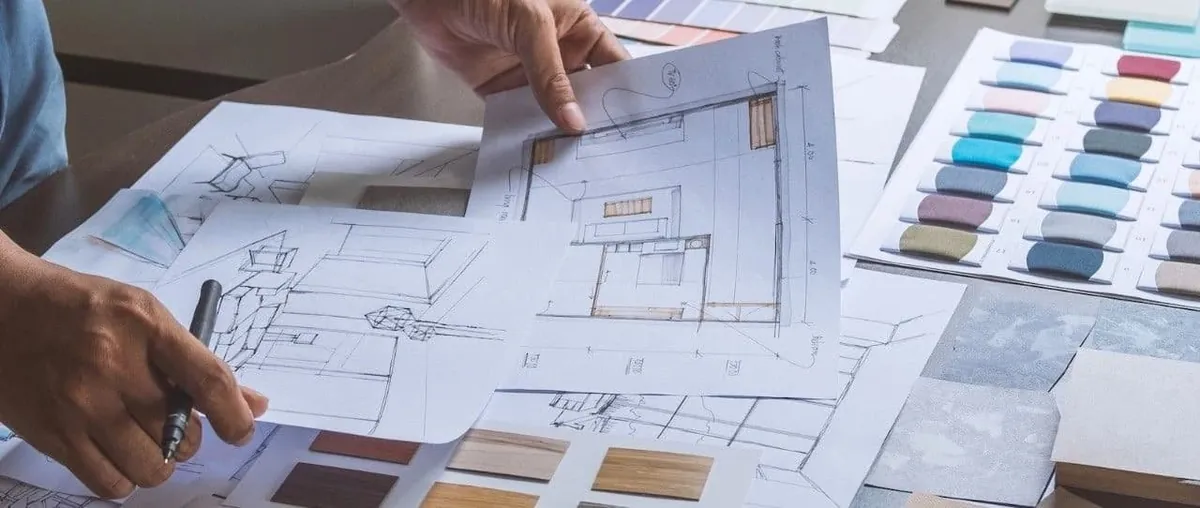
If you would like help with colors or how blinds sit with curtains and furniture, interior design consultations are available at the same visit. The what happens at an in-home consultation page has more.
Fitting on the coast
Our Hunter Douglas certified installers fit every blind. In a shingled harbor house that can mean finding solid framing in walls altered over many years, packing a headrail level in a frame that has moved, and lining up a bay of blinds so the tops match exactly. On the exposed streets toward Minot, brackets go into sound wood so the blinds stay firm on windows that are opened through the summer.
Each blind is tested through its lift and tilt before we leave, motorized blinds are paired and scheduled, and we show you how everything works. That care is why custom blinds in Scituate, MA look settled in the house from the first day. The what happens on installation day page walks through it.

Why a Hunter Douglas Gallery dealer
Gallery dealer is the title Hunter Douglas gives dealers who meet its standards, and Blinds & Designs carries it. That means the complete range of Hunter Douglas blinds, controls and PowerView motorization, all from one place, along with shades, shutters and drapery for the rest of the house.
Our installers hold Hunter Douglas certification. If an older blind in the house needs a cord or a tilt mechanism replaced, we offer blind and shade repair as well.
For other rooms, look at roller shades in Scituate, plantation shutters in Scituate or motorized blinds in Scituate, or see everything we do in town on our Scituate page.
Our nearest showroom
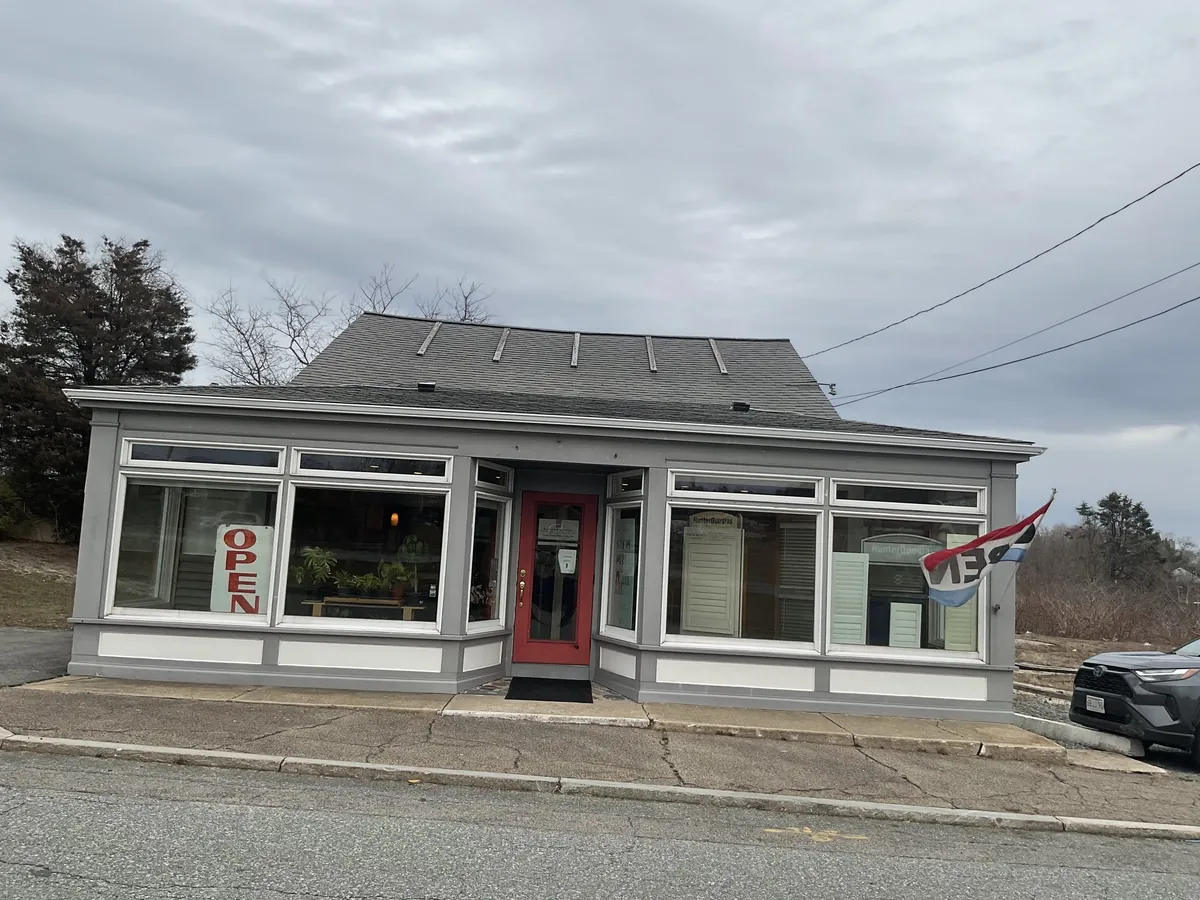
Sagamore is the closest of our showrooms to Scituate. You will find its address and hours on the Sagamore showroom page.
For a harbor room, though, the home visit usually tells you more, because the only true test of a slat is the view and the light at your own window.
Questions from Scituate
Will blinds get in the way of my harbor view?
Not when they are open. Level slats give an almost clear view, especially with a wider slat, and a raised blind stacks above your line of sight. Tilted, they cut glare while the water stays in view.
Which blinds stand up to the weather near Minot and Peggotty Beach?
Faux wood and aluminum. Both cope with salt and damp far better than real wood, and lighter colors show the effects of strong sun least. A cordless lift leaves less hardware exposed.
Can you fit blinds in a bay window?
Yes. Each panel of the bay gets its own blind, made to its opening, with the headrails at one height so the bay looks like a single window when the blinds move together.
Can the blinds close themselves when the sun is strongest?
Yes, with PowerView. Schedules can tilt or lower the blinds on the sunny side through the brightest hours and open them again later.
Is the estimate free?
Yes. After we measure your windows, you receive a free estimate for the blinds you are considering.
Bring the samples to your harbor window
The view is the reason for the room, and the right blind keeps it. Request a consultation and we will bring the Hunter Douglas blind range to your house, check every window, measure each opening and leave a free estimate. The call button reaches our Sagamore showroom, which you are also welcome to visit.