
Close neighbors and tall old sash
Much of Stoughton is built on modest lots. Capes, ranches and two-family houses stand fairly close together, so a side window often looks across a driveway straight at the house next door. Nearly all of them were built with ordinary modern window sizes, easy to fit. Around the town center the picture changes: Victorians with tall, narrow sash that reach almost from floor to ceiling.
A blind is a good match for both. On the close-set houses, its tilting slats give you daylight and privacy at the same time, which is exactly what a side window a few steps from the neighbors needs. On the Victorians, a made-to-measure blind can be as long and slender as the window, hanging straight in a frame that may have shifted over the years. For both reasons, custom blinds in Stoughton, MA, are worth ordering to the exact opening rather than off a shelf.
We start every Stoughton job with a visit to your house. Our vans carry the samples, so we bring the showroom to you, and you choose with your own windows and your own neighbors’ houses in view.
What we fit in Stoughton houses
Every blind below is a Hunter Douglas product, built to the measurements we take at your windows. These are the jobs they do most often in Stoughton.
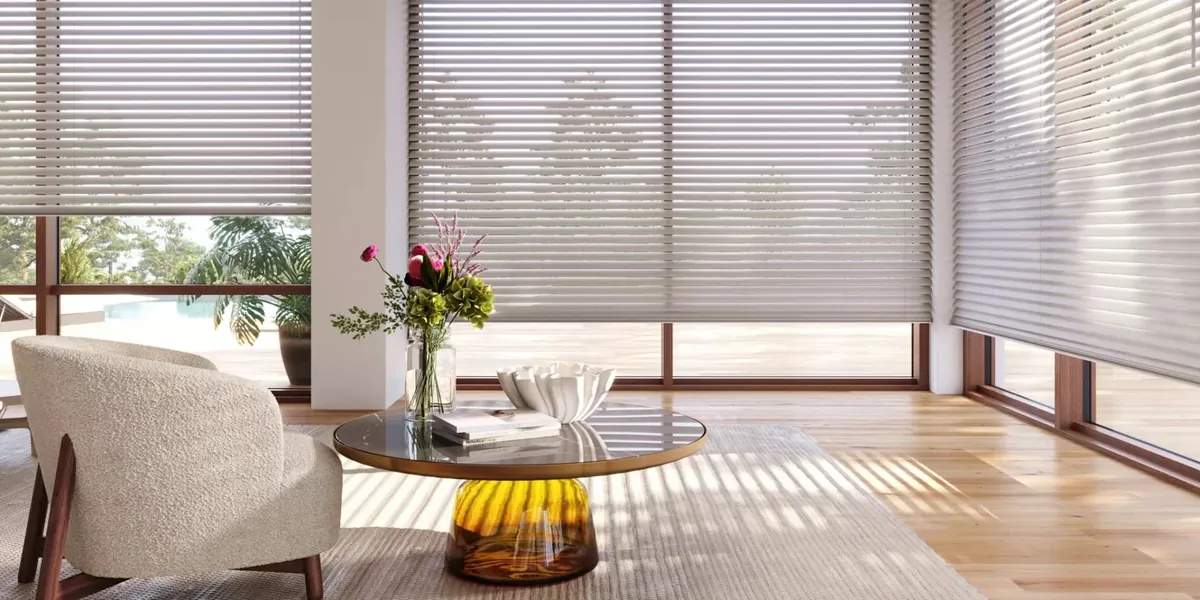
Privacy on side windows
Slats angled down let daylight in while the house next door sees mostly blind. Ideal across a narrow driveway.
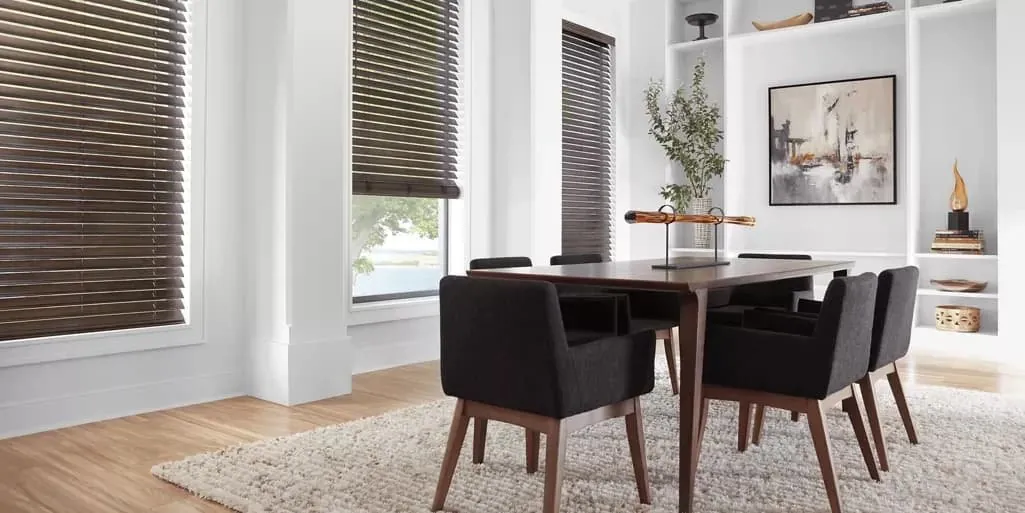
Long blinds for tall sash
Parkland wood or a slim metal blind made to the full height of a Victorian window near the center.
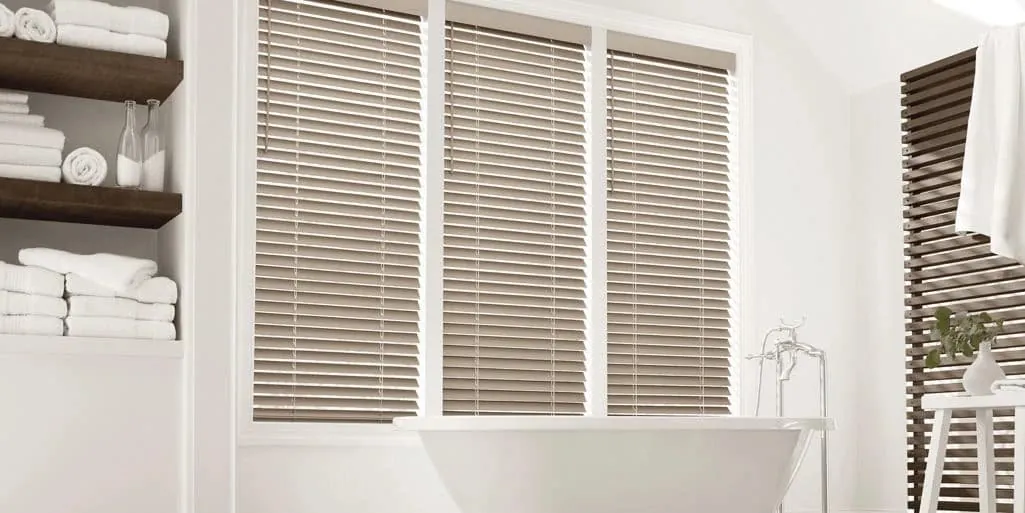
Faux wood for damp rooms
EverWood keeps its shape over the kitchen sink and in a steamy bathroom, and wipes clean.
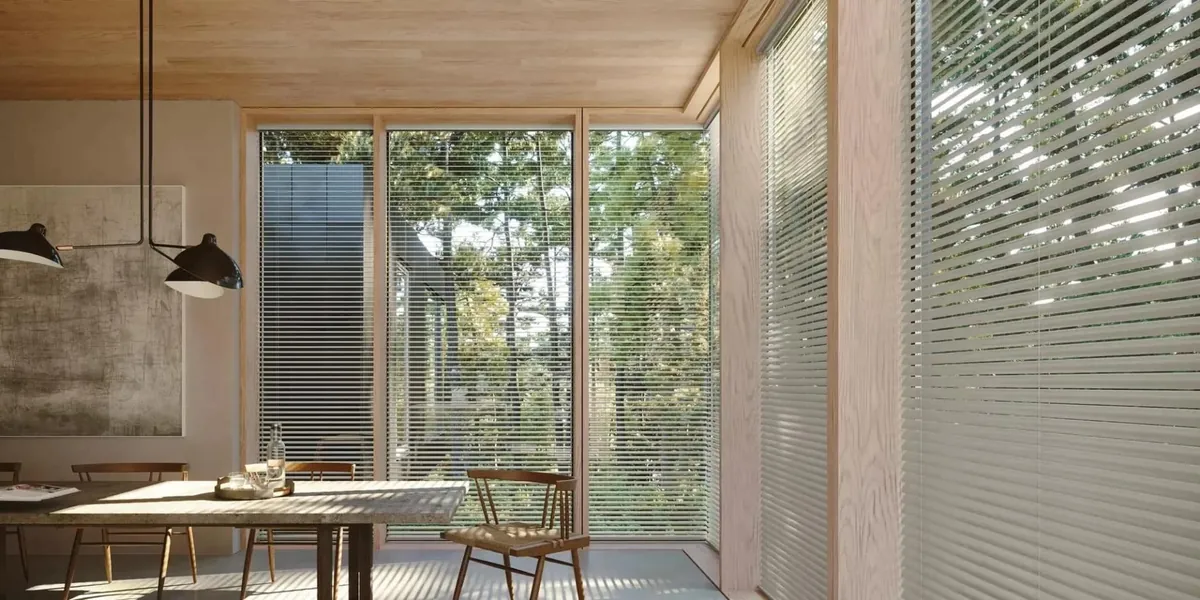
Clean fit on standard frames
A blind mounted inside a modern opening sits flush with an even gap each side, from the front room to the back bedroom.
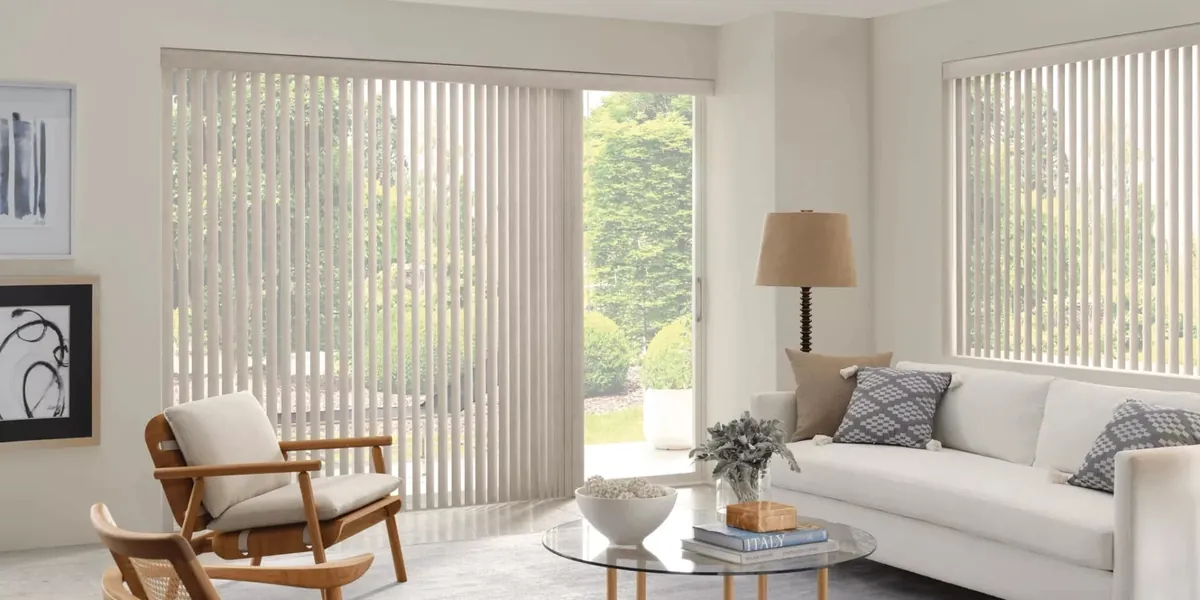
Verticals for the back slider
A vertical blind draws to one side so you can step out to the yard without raising anything.
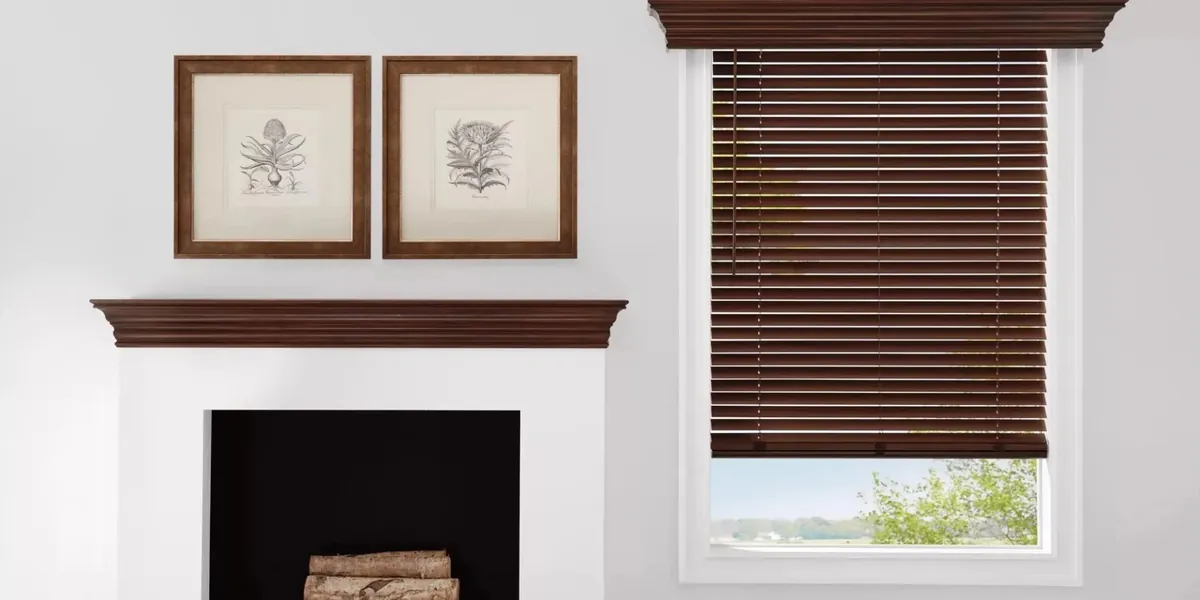
Matching sets, floor by floor
On a two-family, the same color and slat on both floors keeps the front of the house looking like one building.
Two-family houses
Stoughton has a good number of two-family houses, one flat stacked over another, each with its own front room, kitchen and bedrooms. From the street, the front windows line up in two rows, one above the other, and anything that does not match shows straight away.
If you are fitting both floors, ordering the blinds together makes the front of the house look calm and deliberate. We use the same color and slat width on every street-facing window, top and bottom, and set the headrails at the same height on each floor. Inside, each floor can still differ: real wood in one living room, faux wood in both kitchens, a cordless lift in a child’s bedroom upstairs.
Two-families also tend to have a lot of side windows, because the long side walls face the neighboring houses. Those windows are where a blind earns its keep. With the slats tilted, light floods in across the room while the view from next door is broken up. Set a side blind halfway and it can stay like that from breakfast to bedtime.
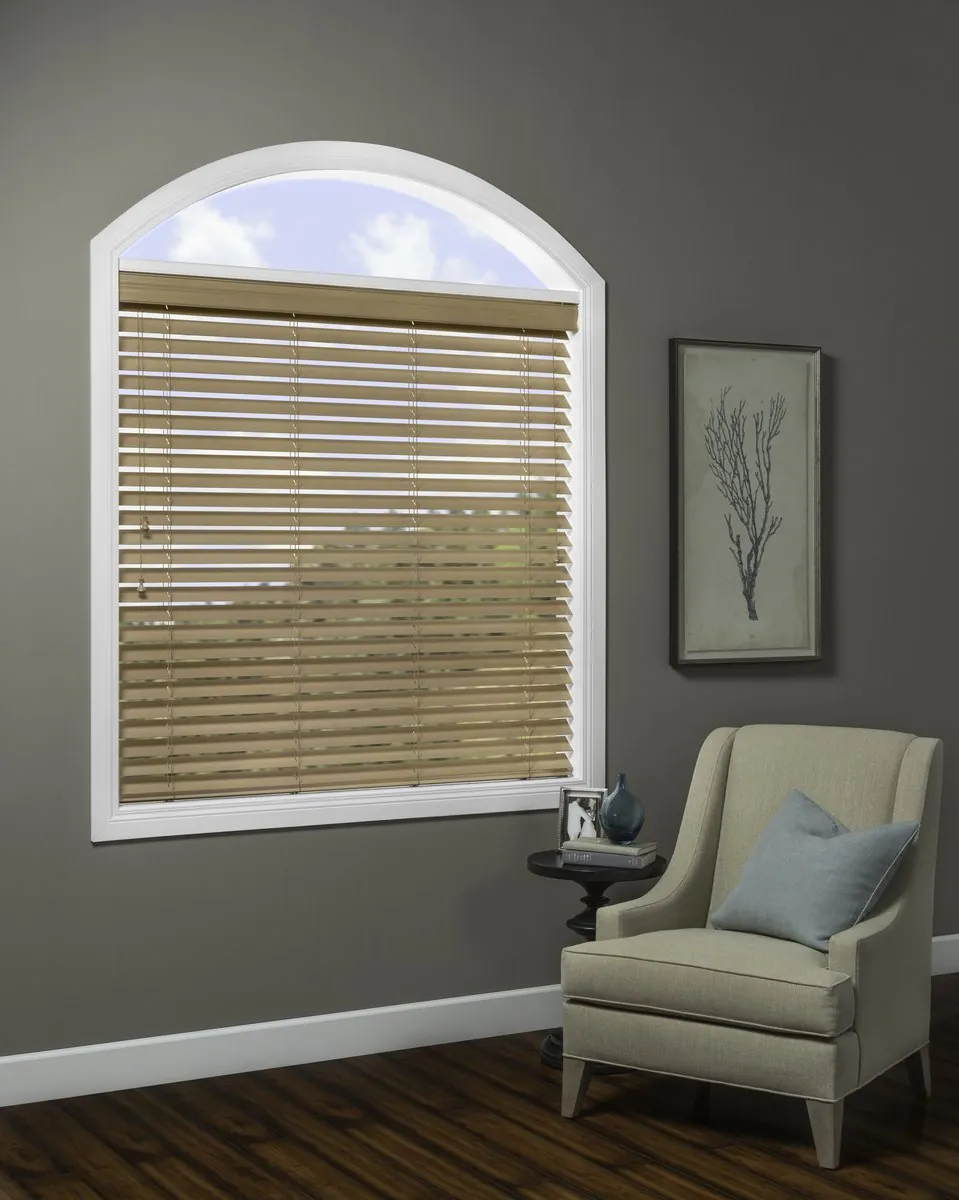
Living close to the house next door
On a modest lot, a ranch’s bedroom window or a cape’s dining room window may sit only a short distance from the neighbor’s kitchen. A shade would force a choice between light and privacy. A blind does not.
Here is why. The slats can be angled in two directions. Tilted with the room-side edge down, they let you look out and slightly down while blocking a straight-across view in. Tilted the other way, they send daylight up toward your ceiling and block the view from below. Half closed, they break up any view into a pattern of light and shadow while the room stays bright. Fully closed, the room is private.
Because you can adjust the angle through the day, the same window can be open in the morning, partly closed when the neighbors are on their deck, and shut at night with the lights on. For bathrooms that face a neighbor, EverWood faux wood with the slats closed handles both the privacy and the steam.
Victorians around the town center
Close to the center, Stoughton’s Victorians have the tall, narrow sash that defines the style. In a front parlor or dining room the windows may be very tall, in pairs or threes, with deep casings and sometimes a little lean from settling.
Fitting them takes patience. We measure the width at three heights and the height at three points, because an old frame is almost never perfectly square, and the blind is made to the tightest width so it never rubs. We check the depth of the frame as well, since sash weights and stops can leave less room than a headrail needs. Where an inside mount will not fit, the blind goes on the face of the casing instead, and we tell you why.
A long blind also needs the right slat. On a slender window, a narrower slat keeps the proportions right and stacks into a shorter bundle when raised, which matters when the bundle would otherwise cover the top of the glass. Real wood suits these rooms beautifully, especially where the trim is stained.
Many of these Victorians also have a bay on the front or side, three tall windows set at angles. Each face of the bay gets its own blind, sized separately because the side panels are rarely the same width as the center, and the headrails are aligned so the three raise to the same height. With the slats tilted together, the bay reads as one window from the street and from the room.
Capes and ranches with standard openings
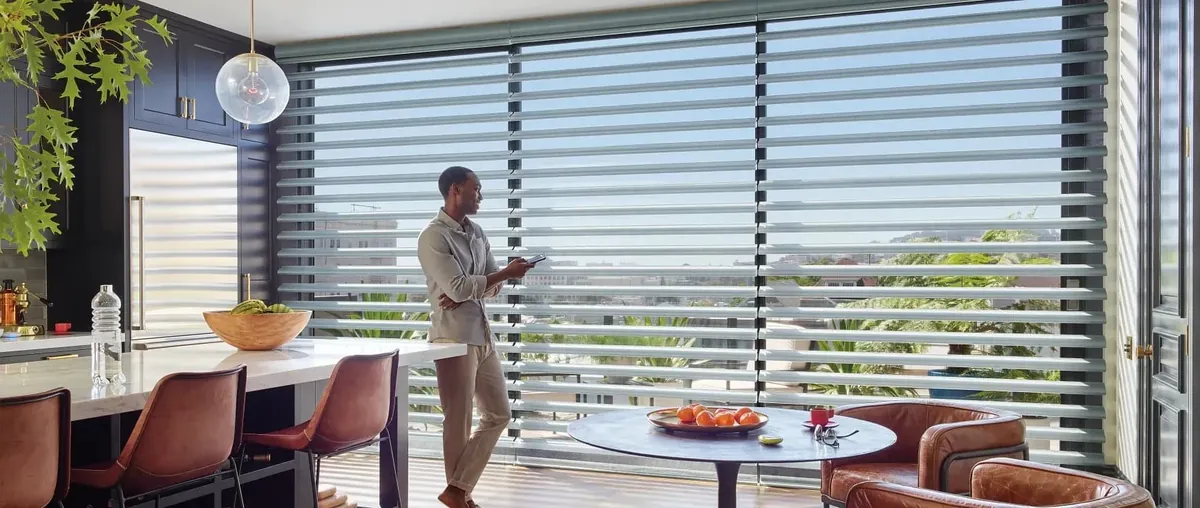
The capes and ranches on so many Stoughton streets are kind to a fitter: square frames, regular sizes, the same window repeated room after room. Each blind drops neatly into its opening, and across the house the rows of slats sit at the same level, so every room feels part of one plan.
In a cape, the upstairs bedrooms are lit by dormers, small windows set into alcoves under the roof. An inside-mounted blind tucks into the alcove and clears the glass completely when raised. A ranch’s broad front window rarely takes one blind; it is usually divided into a pair or a trio, each raised on its own, and the kitchen slider gets a vertical blind.
With openings this regular, choosing custom blinds in Stoughton for a cape or ranch comes down to what the slats are made of, what color they are and how you work them. That makes it a straightforward job, and a satisfying one when every window in the house finally matches.
Kitchens and baths in a busy house
In a cape, a ranch or either floor of a two-family, the kitchen is usually at the back and the bathroom window is small and often on the side, facing the neighbors. Both rooms take steam, splashes and constant use, and both need privacy as much as light.
EverWood faux wood is built for this. Its slats look like painted wood from across the room, but they hold their shape in humid air and wipe clean after cooking. In a bathroom, closed slats give full privacy while the room still feels light, and a cordless lift keeps the window clear of dangling cords near the tub. Over a kitchen sink, an inside mount keeps the blind out of the way of the tap.
Because EverWood comes in colors that match Parkland wood, the kitchen and bath can carry the same look as the front rooms. That consistency is one of the reasons whole-house orders for custom blinds in Stoughton tend to mix the two materials so freely.

It all begins at your house
For Stoughton, we lead with in-home consultations. It is simply the best way to choose a blind. You see each color against your own walls and trim, in the light your rooms actually get, and you can stand at a side window and judge exactly how much a tilted slat hides from next door.
Our vans carry samples of every blind material and color, the vertical vanes and the lift and tilt controls, so there is nothing you need to go and look at first. If you would like to see blinds in person as well, the nearest showroom is in Franklin. Read more about our in-home consultations.
The visit, step by step
- Pick a time using Request a Consultation, or ring us with the call button.
- We arrive with samples and talk through the rooms you want to cover.
- We stand at the windows with you, especially the side windows and the street-facing ones, and try the slats at different angles.
- You pick materials and colors room by room, with the samples against your own walls.
- We measure every window carefully, with extra checks on the older frames.
- You receive a free estimate and take whatever time you need to decide.
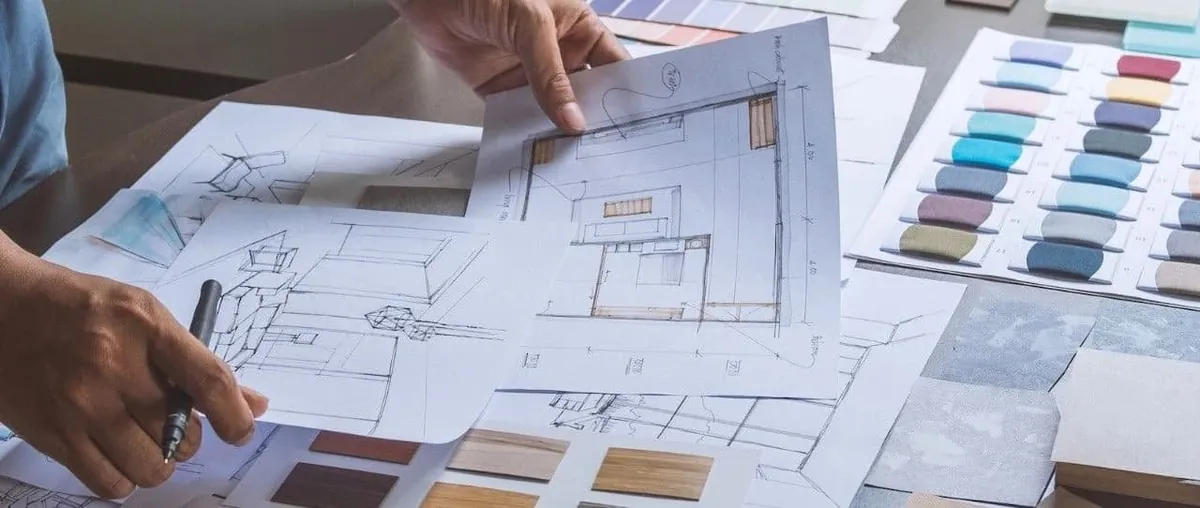
Rethinking a whole room? We offer interior design consultations too, and can combine them with this visit. Our page on what happens at an in-home consultation has more detail.
Four materials, four jobs
All Hunter Douglas blinds are made to measure, but the material decides which rooms each suits best.
- Parkland wood. Genuine hardwood with a warm grain. The natural choice for a Victorian parlor or a front room with oak floors.
- EverWood faux wood. A painted look that humidity cannot spoil. Kitchens, bathrooms, laundry and any room with a lot of coming and going.
- Metal. Slim slats, slim headrail, many colors. Good for shallow frames and for glass in a door.
- Vertical. Vanes on a top track, pulled aside like a curtain. Sliders and extra-wide spans.
In a two-family it is common to see all four: wood in the front rooms, faux wood in the kitchens and baths, metal on a back door, and verticals on the slider to the yard.
Color on a street of close-set houses
When houses stand close together, the street sees a lot of windows at once. White blinds are popular for a reason: they match most trim, they look tidy from outside and they reflect light into the room. On a two-family, white on both floors is the simplest way to make the front look cared for.
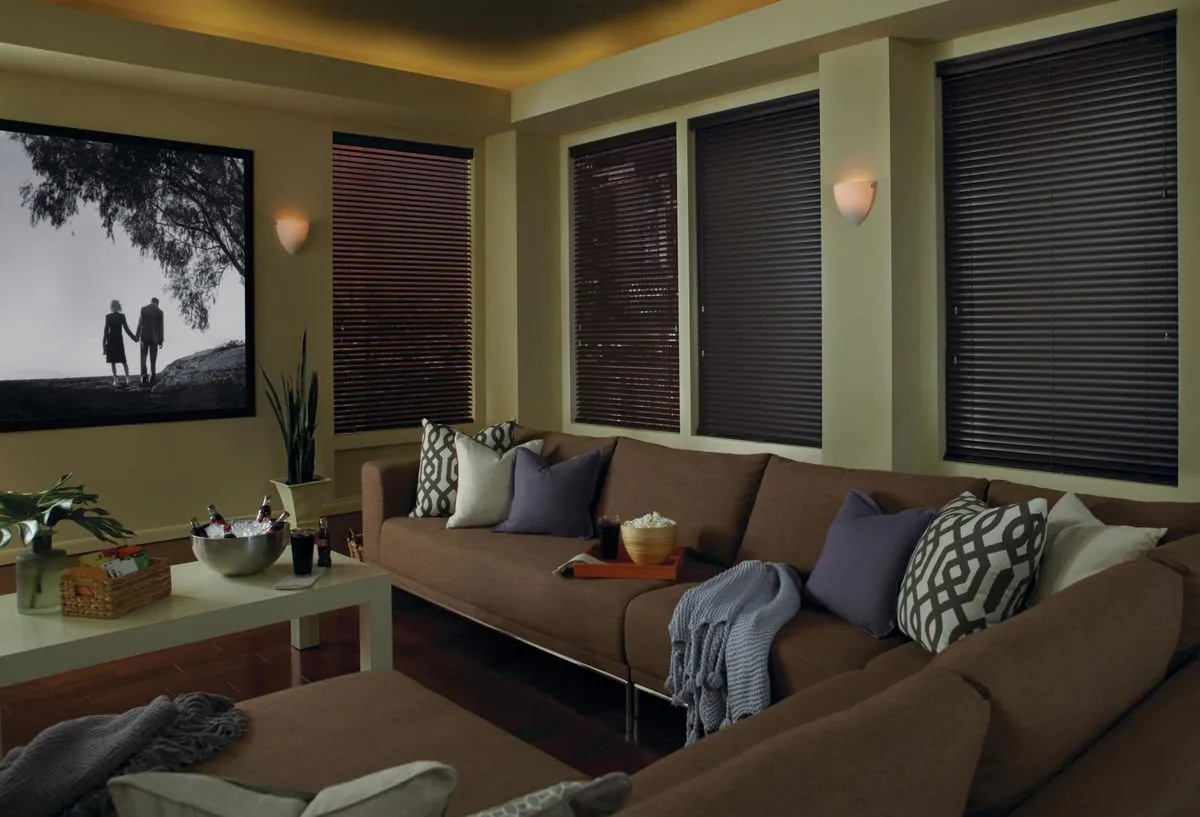
Inside, there is more freedom. A stained wood blind suits a dining room with a wooden table. A soft gray suits a modern kitchen. A darker slat helps a bedroom feel calm and makes the most of closed slats at night. We bring a good range of each so you can compare them where they will hang.
Light through the year
On a close-set street, neighboring houses shade each other for part of the day, and the light in a side room can change a lot from morning to afternoon and from summer to winter. A blind adjusts to all of it. On a bright winter morning, an upward tilt throws the low sun onto the ceiling and spreads it through the room. On a summer afternoon, a steeper angle blocks the heat on the sunny side while the shaded side stays open.
Front rooms facing south or west get the strongest sun, and a slightly darker or wood-toned slat can soften the glare without making the room gloomy. For a north-facing room, white or cream slats reflect as much daylight as possible. Getting these choices right for custom blinds in Stoughton, MA, is easier at your own windows than anywhere else, which is why we bring the samples to you.
Lifts, wands and PowerView
How you raise and tilt a blind is part of the choice.
Cordless is the neat choice: no string at the side of the window, just a hand on the bottom rail to raise or lower it, and a slim wand for the tilt. Children’s rooms and pet-friendly rooms get this version first.
For a big, heavy blind, a traditional cord pull remains available where lifting by hand would be awkward.
PowerView puts the blinds on an app, a handheld remote or a timetable. In a Stoughton house it is most useful on a wide picture window, on the tall sash of a Victorian, or on any window tucked behind furniture. Side blinds can even be set to tilt shut in the evening on their own.
Measuring and fitting
A blind made to order is only right if the numbers are right, so measuring is never rushed. We record several widths and several heights per window, check whether the frame is deep enough to hold the blind inside it, and note any lock, crank or alarm sensor that could get in the way. Every mount and control is confirmed with you before the order is placed.
On fitting day, installers certified by Hunter Douglas fix the brackets into solid wood, level each blind, run every lift and tilt, and walk you through the controls. Done properly, custom blinds in Stoughton, MA, look like part of the original house.
Why a Hunter Douglas Gallery dealer
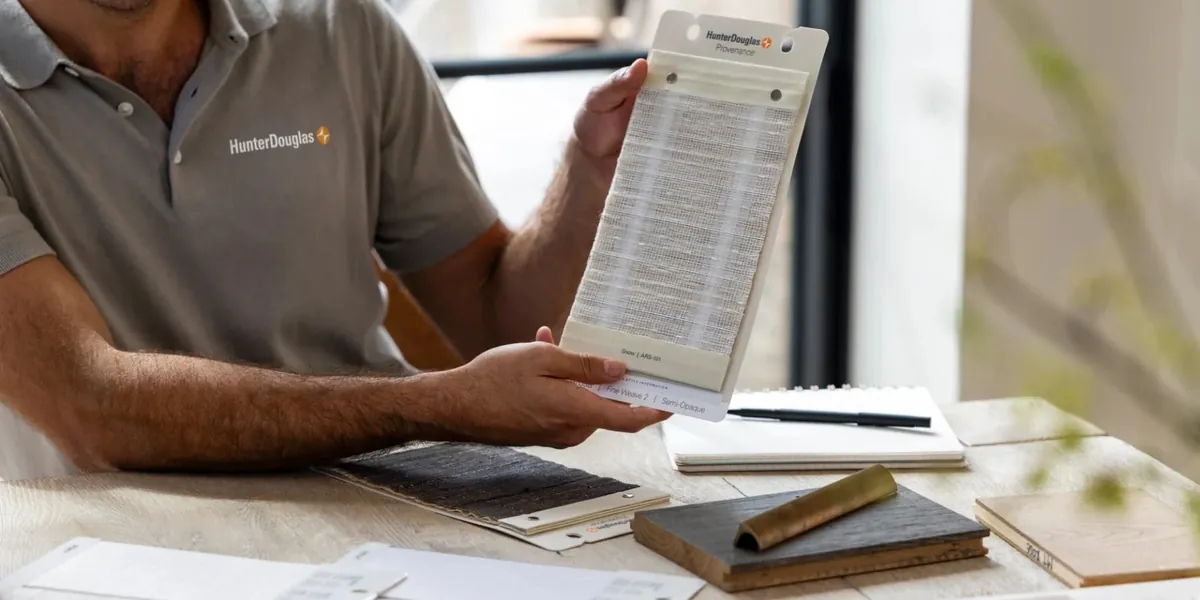
Hunter Douglas gives its Gallery dealer designation to dealers who meet its standards, and Blinds & Designs holds it. That gives you the full range of Hunter Douglas blinds through one company: Parkland, EverWood, metal and vertical blinds, with all the colors, slat sizes and controls, plus PowerView.
Every installer we send holds Hunter Douglas certification, and blind and shade repair is part of our service if something fails years from now.
Other rooms might suit something else: try our cellular shades in Stoughton, roller shades in Stoughton or motorized blinds in Stoughton, or the full list of what we offer locally on the Stoughton page. The custom blinds page has the entire range, plus detail on Parkland wood blinds and metal blinds.
Questions from Stoughton
How do blinds help with a window that faces the house next door?
The slats tilt, so you can angle them to block a straight view in while daylight still comes through. Half closed, they break up the view entirely and the room stays bright.
I own a two-family. Can both floors match?
Yes. We use the same color and slat on every front window, upstairs and down, and set the headrails at matching heights, while each floor can choose its own material inside.
Will a blind fit the tall windows in a Victorian near the center?
Each blind is made to the window, so height is no obstacle. If the frame is too shallow for an inside mount, we fit the blind to the casing face.
Do I need to visit a showroom?
No. We bring the samples to your house. If you would like to see blinds in person too, our Franklin showroom is the nearest.
Is the estimate free?
It is. After measuring, we hand you an estimate at no charge.
Book your visit
Samples in your own rooms make the decision easy. Request a consultation, and we will bring Hunter Douglas blinds to your Stoughton house, measure each window, and leave a free estimate behind. The call button reaches us if you would like to talk first, and the Franklin showroom is there if you want to see blinds in person.