
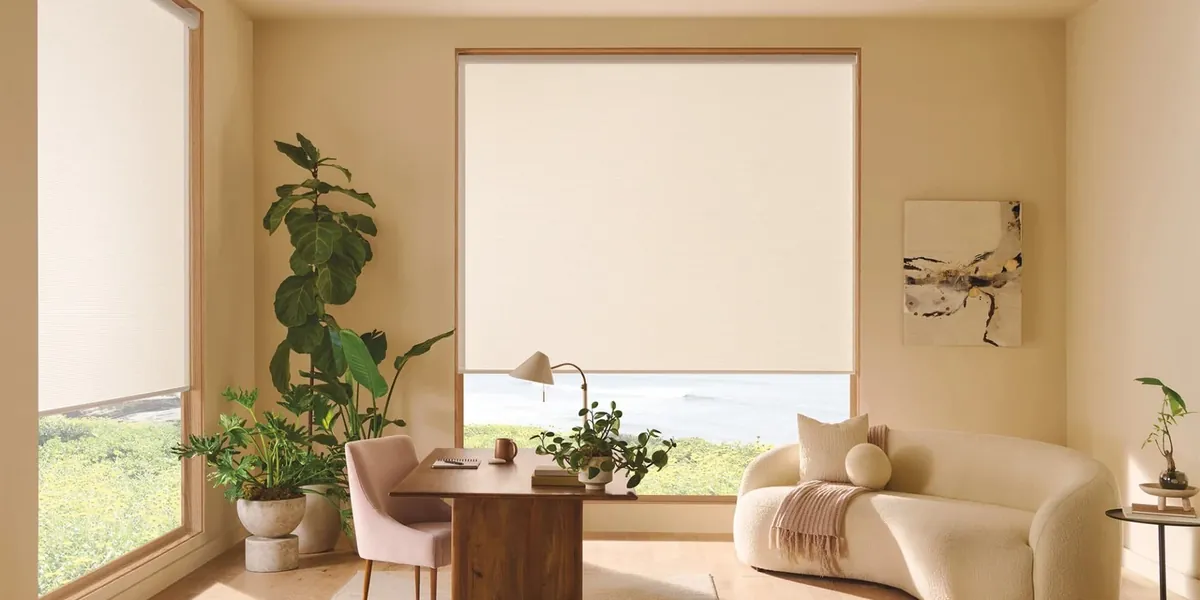
Salt air, open water and the view in Westport
Along the Westport River, out toward Horseneck and on the harbor, the water decides how a house is lived in. The newer homes by the harbor are planned around the view, with long runs of glass facing the water. The shingled capes and farmhouses along Main Road sit further back, but they still feel the coastal weather on every window. Salt air and strong light off open water are the two things that shape every window treatment we suggest in town.
Motorized blinds in Westport, MA, make sense against both. With Hunter Douglas PowerView, the motor and the lifting parts live inside the headrail, away from the damp, salty air that settles on anything exposed. And because a motorized shade can move on a schedule, a room facing the water can soften the glare at the brightest hour and open the view again when the light eases, without anyone getting up from the chair.
You control each shade from a remote, from the PowerView app on a phone or tablet, or from a schedule that runs by itself. There are no cords hanging at the glass, and nothing to tug on that might wear or stiffen in the sea air.
Shades that suit a coastal house
Each of these can be ordered with a PowerView motor. We bring samples of all of them, so you can see how they handle the light at your own windows.
App control for the whole house
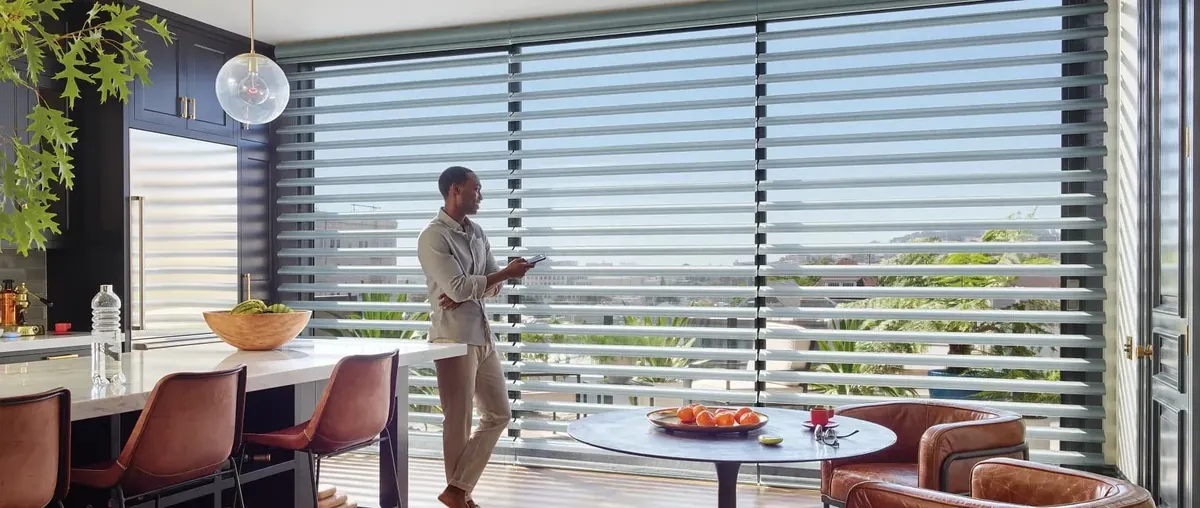
Every motorized shade in the house on one screen. Move the harbor side from the kitchen, or check the bedroom shades from downstairs.
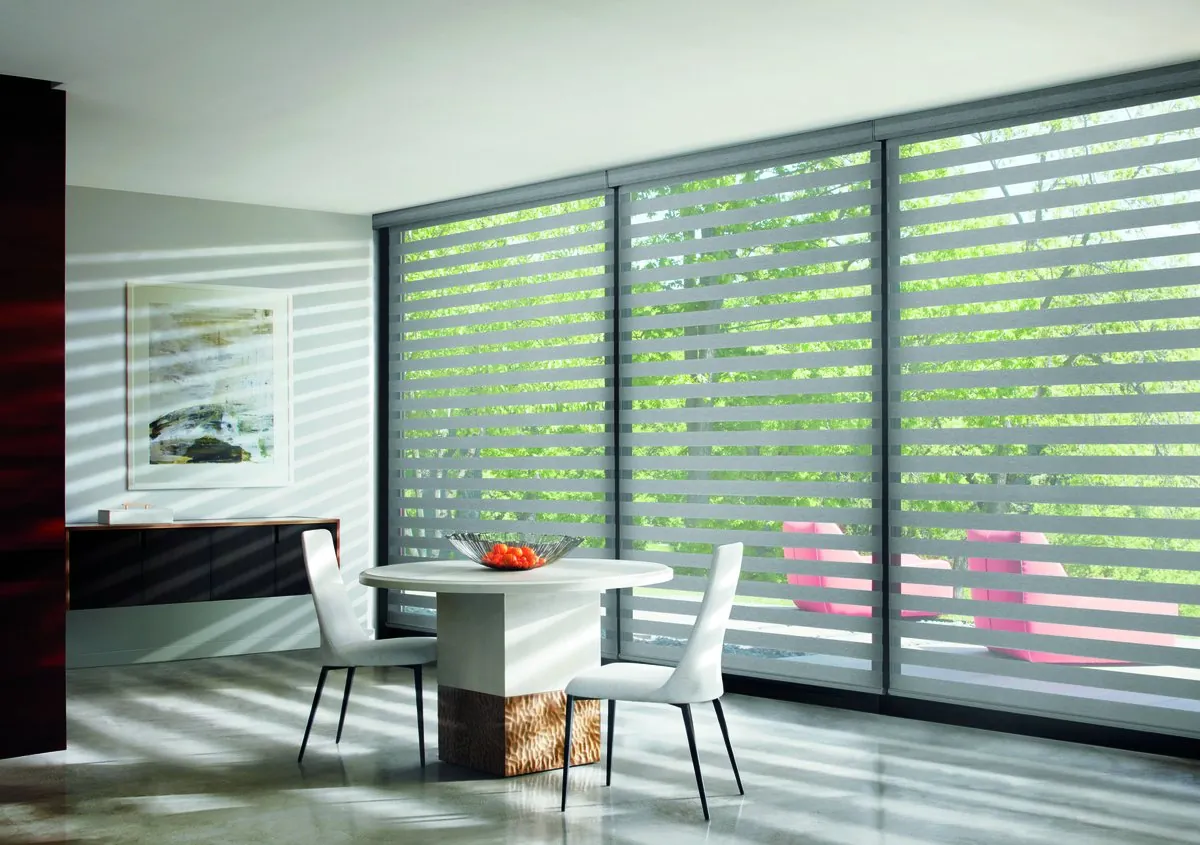
Silhouette sheer shades
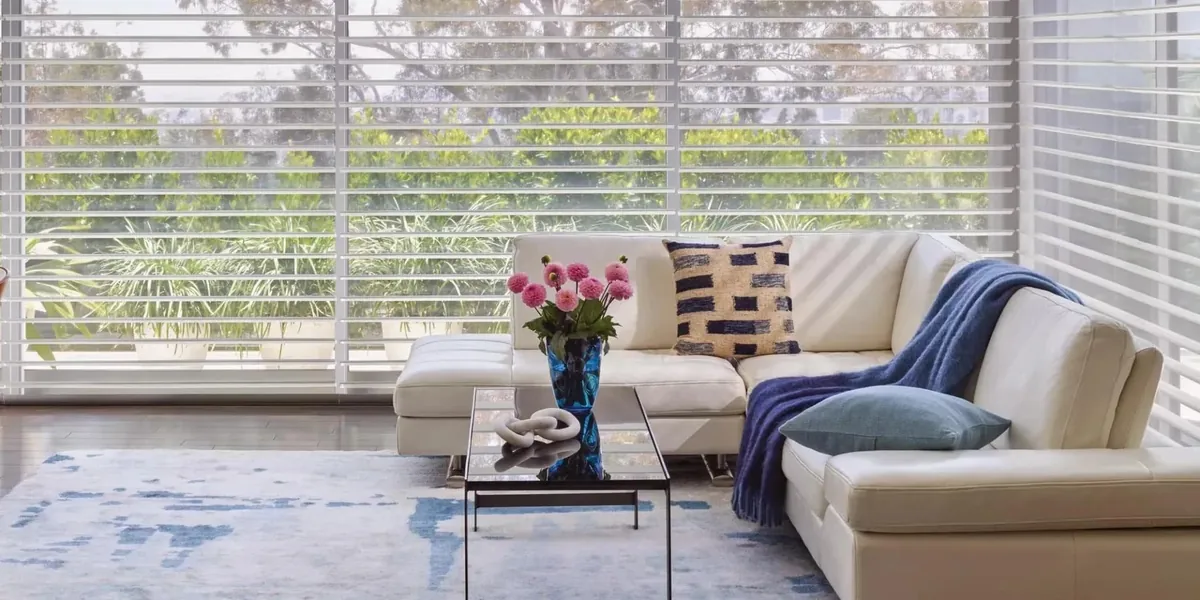
Fabric vanes between two sheer layers. Tilt them to soften glare off the water and the view stays visible through the sheer.
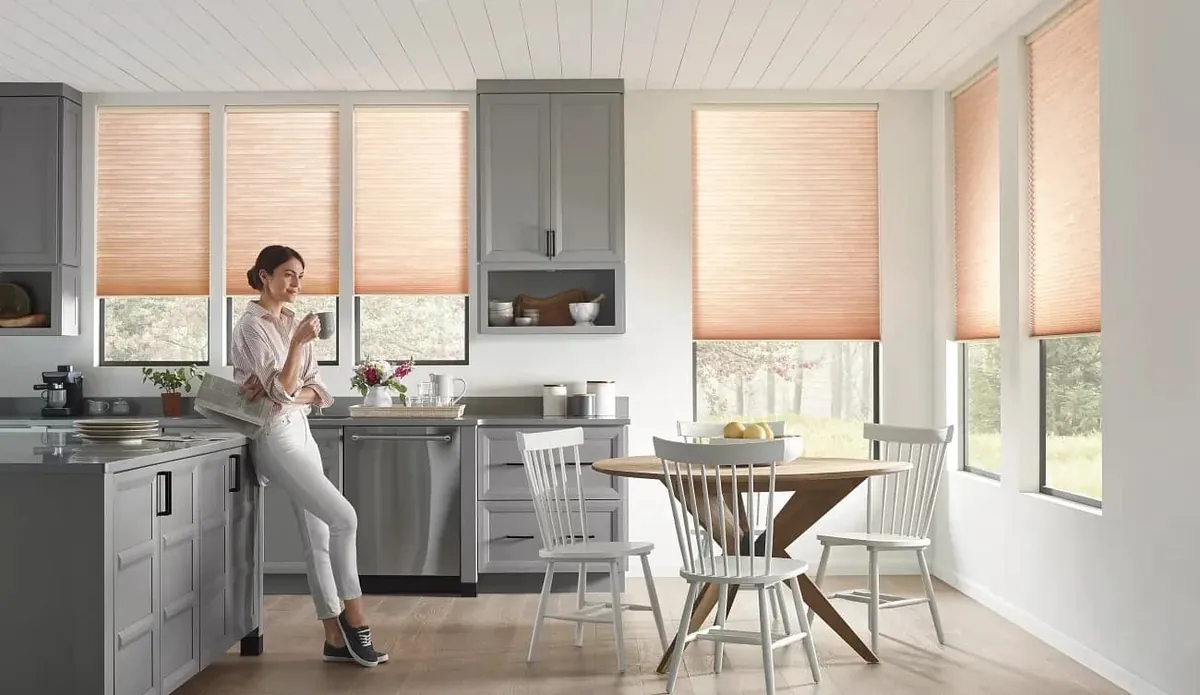
Top-down, bottom-up honeycomb
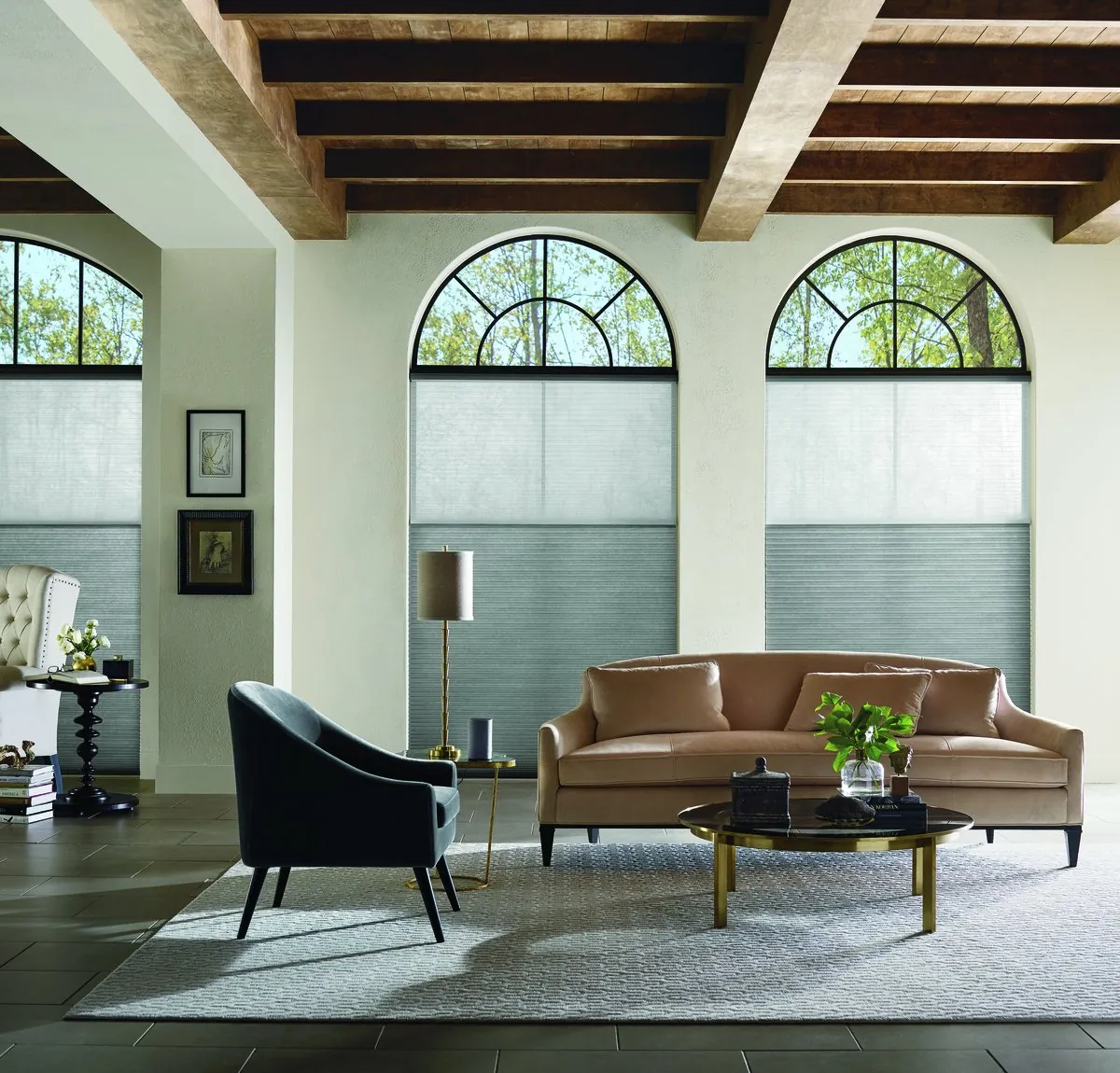
Lower from the top to let sky and light in while the lower glass stays covered. A motor sets the split to any height you like.
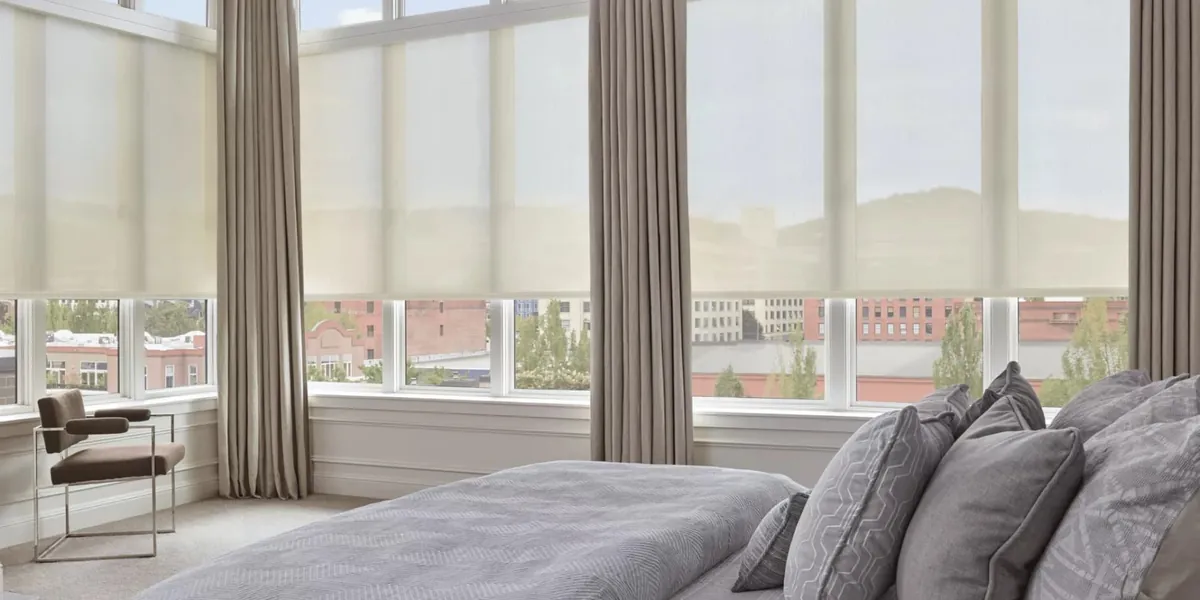
Solar screen shades
A woven screen fabric that cuts brightness and heat while keeping the outside in view. The openness of the weave decides how much you see.
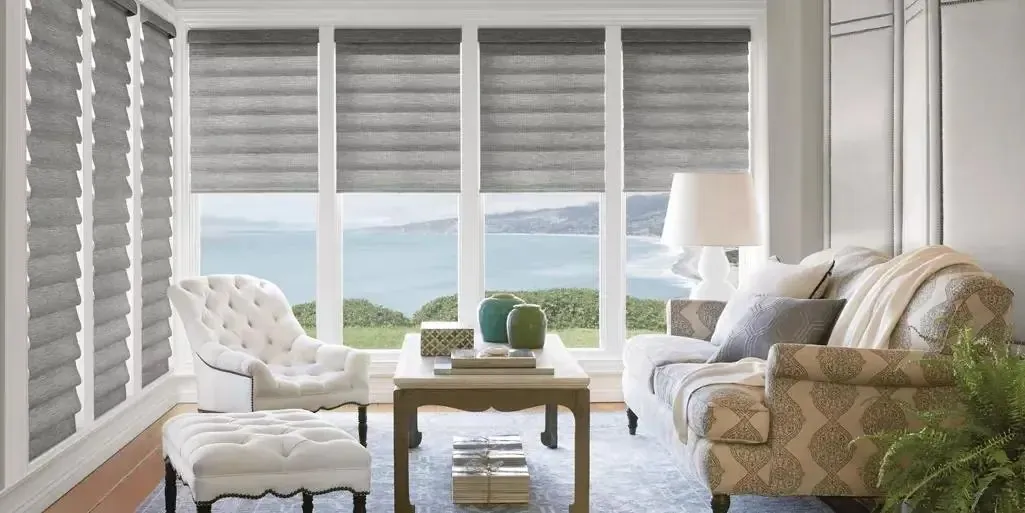
Soft Roman folds for a sunroom
Vignette Roman shades bring fabric and folds to a sunroom full of glass, and a motor keeps every fold even as the shade rises.
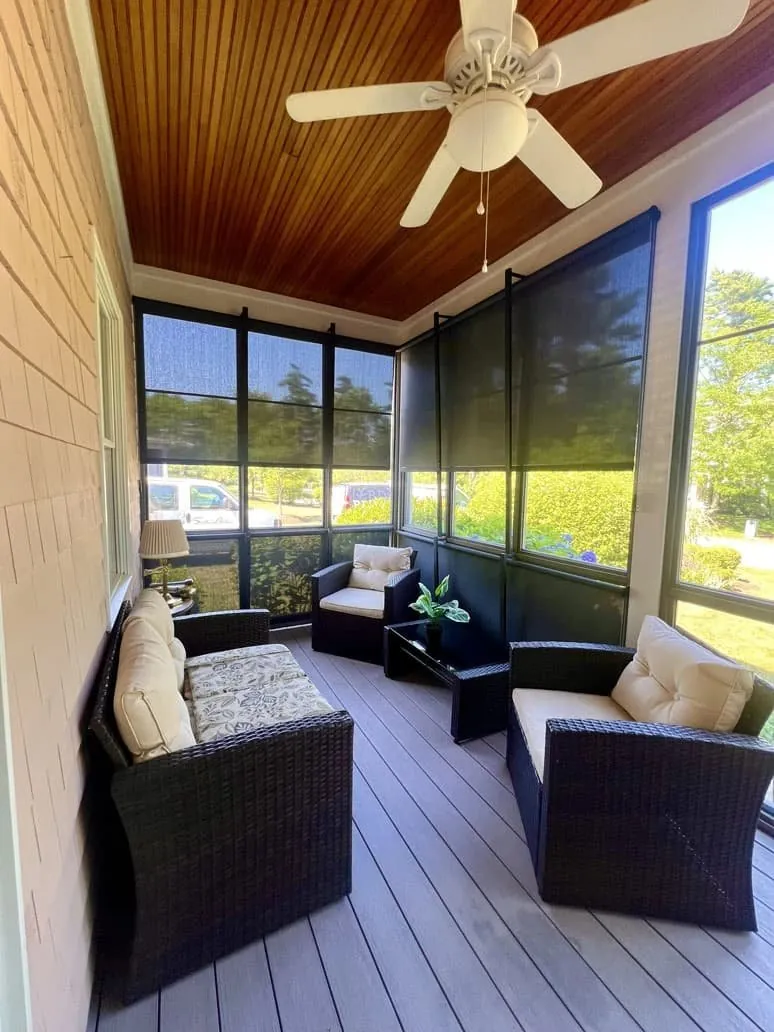
Screens for porches
One of our own installs: dark screen shades around a screened porch. We talk through which porch openings suit a motor at the visit.
Harbor rooms built around the view
The newer houses near the harbor were designed to look at the water. Living rooms open onto decks, kitchens have wide windows over the sink, and the main bedroom often faces the same way. That glass is the point of the house, so the last thing anyone wants is a heavy covering that blocks it.
The trouble comes at certain hours. On a clear afternoon the sun bounces off the water and into the room with real force, glaring on screens, warming the floor and fading upholstery. In the early evening the light drops low and level, straight into your eyes at the dinner table. The view is lovely at both times, but you cannot sit facing it comfortably.
A motorized sheer or screen shade solves this without giving up the view. Set a schedule to lower the harbor-side shades partway through the brightest stretch and raise them again once the sun has moved. The sheer or screen fabric keeps the water visible the whole time, just with the glare taken out. When friends are over and you want the view wide open, the remote overrides the schedule in a second.
Two-story glass is common in these houses, with windows high above a stair or across the top of a great room. Those upper windows are out of reach by any other means. With PowerView, they lower on the same schedule as the windows below, so the whole wall works together.
Why salt air matters
Anything metal that is handled and exposed near the shore takes a beating from salt over time. On a traditional corded shade, the cord lock, the cord itself and the tilt mechanism are all out in the air and gripped by hand every day. Open the windows through the summer and that air comes straight in.
A motorized shade keeps its working parts tucked inside the headrail. There is no cord lock to stiffen, no cord to fray and no wand to grip. Fewer exposed parts and less handling are the two things that help a window covering last in coastal air, and a motor gives you both.
Fabric matters too. Strong light off the water is hard on color, so we point you toward fabrics that hold up on a window taking direct sun every day. Lighter neutrals tend to fare best, and a screen or sheer that filters the sun protects the room behind it as well.
Our certified Hunter Douglas installers fix every bracket into solid framing. In a house where windows are opened often and the wind off the water can be strong, a shade held firmly to the frame stays level and quiet.
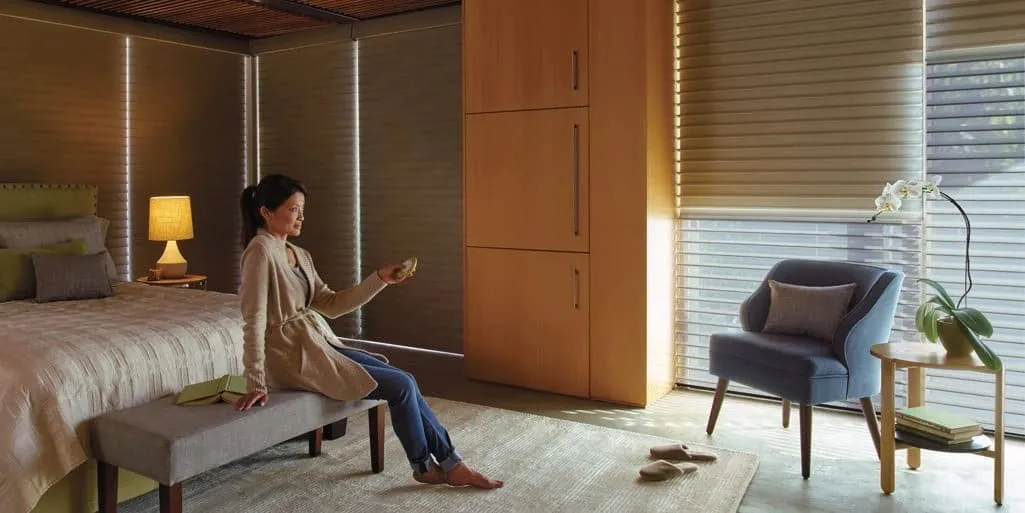
Capes and farmhouses along Main Road
Inland along Main Road, the houses change. Shingled capes and old farmhouses have smaller windows, low ceilings upstairs and dormers set back into the roof. The challenges here are less about the view and more about reach. A dormer window behind a bed, a kitchen window over the sink, a small window high in a gable end: each one is awkward to adjust by hand.
A motorized shade on those windows is a quiet improvement you notice every day. The dormer shade lowers from a remote on the nightstand. The kitchen shade rises without anyone leaning across the counter. In a farmhouse with thick walls and deep sills, an inside-mounted honeycomb or Roman shade sits well back in the frame, and a motor means you never have to reach into that depth.
Older farmhouse windows are rarely square after years of settling. We measure every opening at several points and the shades are made to those exact figures, so they fit closely even on a frame that is not quite true.
Out toward Horseneck and the river
The houses toward Horseneck and along the Westport River take the full force of the coastal weather, and many have generous windows on more than one side. A house that faces water on two sides has two sets of glare at two different times of day, which is hard to manage by hand.
Here schedules really earn their place. The east side can lower in the morning and the west side in the afternoon, each on its own timing, while the rooms in between stay open. You set it once in the app and adjust it as the seasons change and the sun moves along the horizon.
If the house sits empty for part of the week or part of the year, schedules keep the shades rising and lowering on their usual pattern. The house looks lived in from the road, and rooms facing the sun stay shaded through the hottest hours whether anyone is there or not.
Porches, sunrooms and screened rooms
Westport houses often have a porch, a sunroom or a screened room facing the water or the garden. These rooms are full of glass or open screen, and they can be the hottest and brightest in the house on a summer afternoon.
Screen shades are the usual answer. A dark screen fabric cuts the glare and keeps the outlook clear, and it turns a porch that is too bright to sit in after lunch into a room you can use all day. In a glassed sunroom, a soft Roman shade or a sheer adds warmth and softness to the room as well as filtering the light.
Many of these rooms have a lot of openings in a row. Raising and lowering eight or ten shades by hand is a chore, which is why a motor makes so much sense. One press moves the whole room, and a schedule can close the west-facing side through the heat of the afternoon and open it again for the evening, when the light over the water is softer and the room is at its best. We look at each opening during the consultation and tell you which ones suit a motor and how the shades will be mounted.
Winter wind off the water
The coast is not only about summer glare. From late autumn the wind comes in hard off Buzzards Bay and the river, and a house with a lot of glass facing the water feels it at the windows. An older cape with original sash can be draughty on the windward side, and even a newer harbor house loses warmth through its big panes once the sun goes down.
Honeycomb shades help here, because each cell holds a layer of still air between the cold glass and the room. With a motor they can close on a schedule at dusk, early in December and later as spring comes on, so the warmth stays in without anyone going round the house at four in the afternoon. That is one of the quieter benefits of motorized blinds in Westport: the house responds to the season even on the days you forget.
On a bright winter morning the schedule can do the opposite, lifting the shades on the sunny side to let the low sun warm the rooms, then closing them again as the light fades.
The three ways to run them
PowerView gives you a choice in how you control your shades. Most people use a mix.
By hand, with a remote. A small remote sits on the table or mounts on the wall. Choose a shade or a group and press. Nothing to install on your phone, nothing to learn.
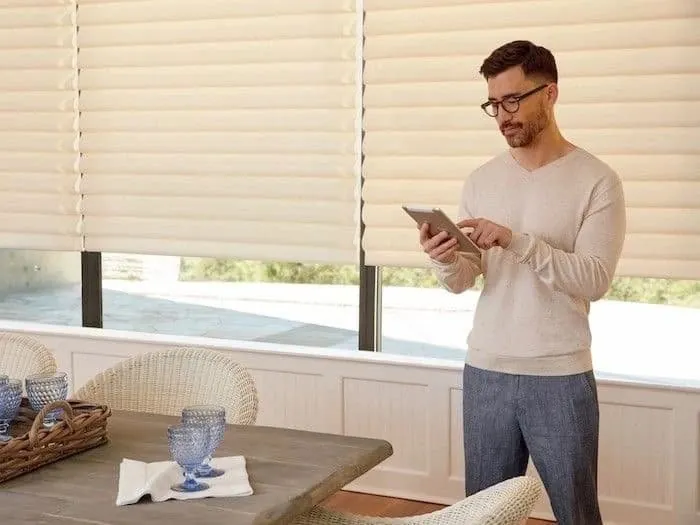
From your phone. The PowerView app lets you move any shade in the house from any room, stop it at any height and gather shades into groups. It is handy in a house with two floors of windows on the water side.
On their own. Scenes save an arrangement of shades; schedules run that scene at a set time. A harbor house might have a morning scene, an afternoon glare scene and an evening privacy scene.
Our guide to how motorized shades are controlled covers all three in more detail, and our window covering automation page explains schedules and scenes.
Motorized blinds in Westport or motorized shades
Some rooms want slats, some want fabric. A wood or faux wood blind lets you angle the light, so a home office facing the water can keep the sun off a screen and still see the boats. Blinds also have a crisp, traditional look that suits a cape or a farmhouse. If motorized blinds in Westport are what you have in mind for a particular room, tell us and we will confirm which blind lines and operating options suit that window.
Shades give you more ways to handle the light. A sheer softens glare, a screen cuts brightness while keeping the view, a honeycomb adds insulation for the winter, and a room-darkening fabric makes a bedroom properly dark. Many houses mix both, and they all sit in the same app.
Safer, cleaner windows
With no lift cord, there is nothing hanging at the window for a child or a pet to catch. That is a real reason to choose motorization for bedrooms and playrooms, and it also leaves the window looking clean from inside and out.
A motor also lifts the shade evenly from both sides, so the fabric is not pulled unevenly each day, and the bottom rail stays level with the sill.
How the visit and installation work
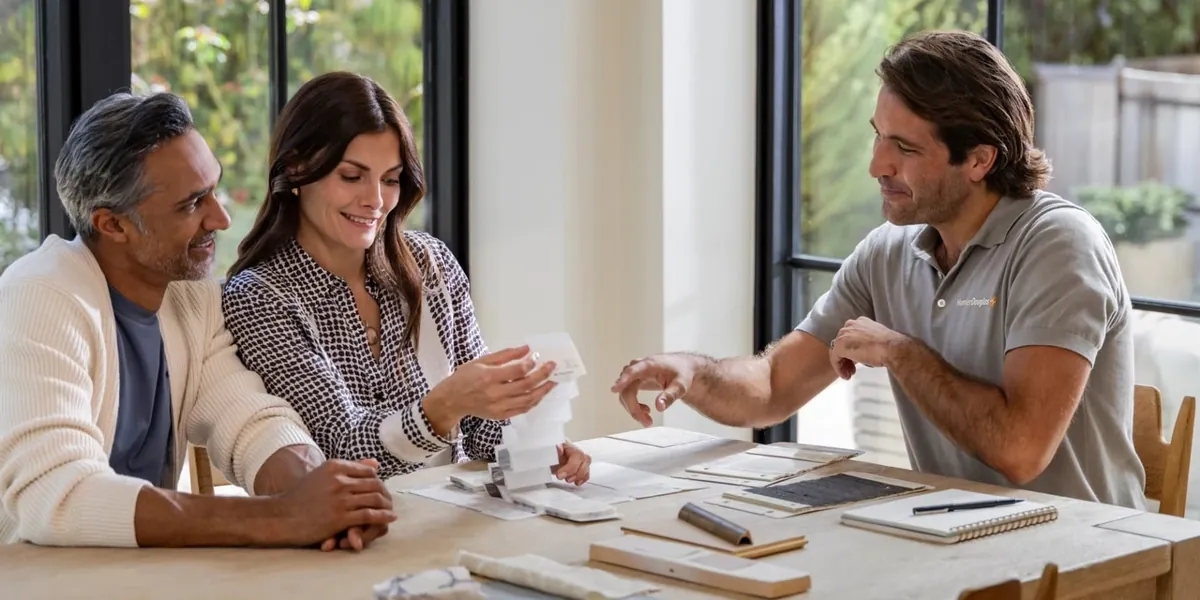
We start at your house, because a coastal room is all about its light, and the only way to judge a fabric is to hold it at the glass. Our vans carry samples, so we bring the showroom to you. We walk through the rooms with you, look at which way each window faces, note the high ones and the ones you reach over, and talk about how you want each room to behave through the day. Then we measure, and you get a free estimate for the shades and motors you are considering, with no pressure to decide at the table.
Once the shades are made, installation follows a set routine.
- Brackets go into solid framing so each headrail sits level and firm.
- Every shade is hung, and its top and bottom limits are set for that window.
- Each shade is paired with its remote and added to the PowerView app.
- Shades are grouped into rooms and the first schedules are set up with you.
- You are shown the remote and the app before the installer leaves.
If you want to know more beforehand, read about what happens at an in-home consultation.
From a Hunter Douglas Gallery dealer
Blinds & Designs is a Hunter Douglas Gallery dealer, a designation Hunter Douglas gives dealers who meet its standards. For motorization that means the whole range is open to you: sheers, screens, honeycombs, rollers, Romans and blinds, all able to run on PowerView. We choose for each window rather than fitting one product everywhere.
Our installation is certified by Hunter Douglas, and the installer who hangs the shades also pairs them and sets up the schedules. We offer interior design consultations for rooms that need a broader plan, and blind and shade repair in Westport for coverings you already own.
Planning other rooms? See our roller shades in Westport, plantation shutters in Westport or the full Westport page. The main motorized blinds and shades page covers the range as a whole.
North Dartmouth is our nearest showroom
The North Dartmouth showroom is the closest of our locations to Westport, a short drive east. Stop in to talk through ideas, or book a visit at home and we will bring the samples to you.
For a house on the water, the home visit is usually the better place to start. Seeing a screen fabric against your own view at the time of day the glare is worst tells you more than any sample book, and it is the surest way to plan motorized blinds in Westport around the way the light really falls.
Questions from Westport
Will motorized shades stand up to the salt air?
The motor and the lifting parts are inside the headrail, so far less is exposed than on a corded shade, and there is no cord lock or wand to handle. We also suggest fabrics that suit windows taking strong daily sun off the water.
Can I cut the glare without losing the view of the water?
Yes. Sheer and screen shades filter the glare while the view stays visible, and a schedule can lower them partway at the brightest hour and raise them again once the light eases.
Can the high windows above my great room be motorized?
Yes. Two-story windows are one of the best uses for PowerView, since they are out of reach otherwise. They can lower on the same schedule as the windows below.
Can the shades keep moving when the house is empty?
Yes. Schedules run whether anyone is home or not, so the shades keep their usual pattern and the sunny rooms stay shaded through the hottest hours.
Is there a charge for the estimate?
No. Estimates are free. We measure at your house and give you a free estimate for the shades and motors you are considering.
See it against your own view
The best way to judge a shade for a waterfront room is to hold it up to the glass when the glare is at its worst. Request a consultation and we will bring samples to Westport, measure every window and give you a free estimate. You can also use the call button or visit the North Dartmouth showroom.