
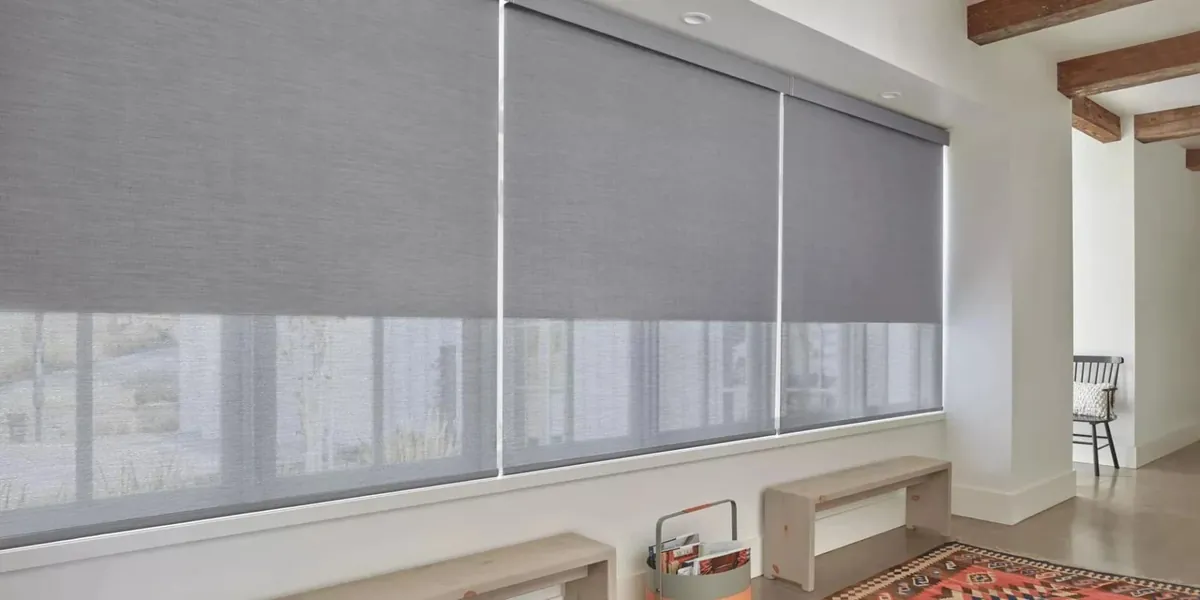
Mixed eras, mixed windows
Drive from the center out to the edges of town and you pass through several building eras in a few minutes. Near the center, Victorians and older colonials keep their tall sash, the kind of window that reaches well up the wall and brings daylight deep into a room. Through East Walpole, rows of post-war capes sit on tidy lots, with upstairs bedrooms under the roof. Further out, larger newer houses stand on wooded lots, with standard modern openings and plenty of glass.
That mix is the main thing we keep in mind when planning roller shades in Walpole, MA. A tall old sash, a small cape dormer and a big modern family room window each need a different fabric, a different mount and sometimes a different line from the Hunter Douglas range. One house can even hold more than one era, where an older home has been extended.
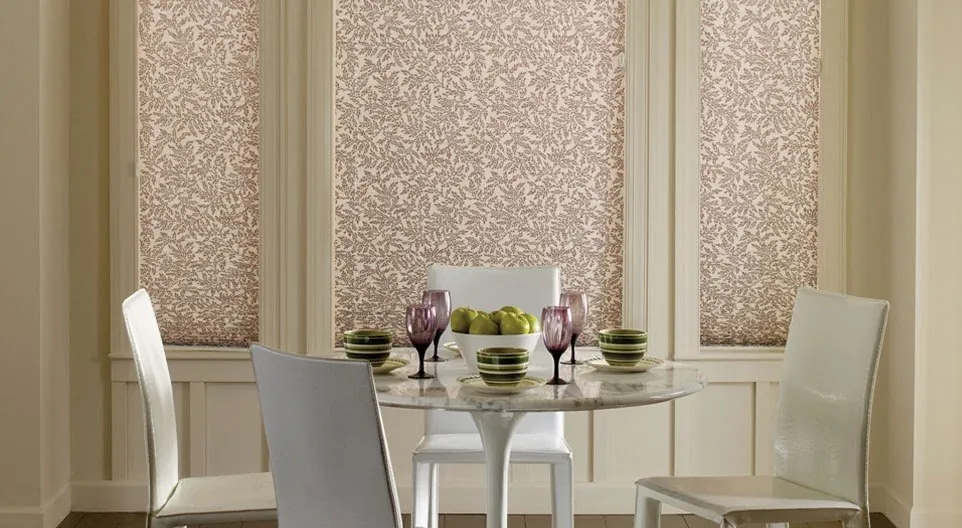
A roller handles the variety because it is so adaptable. It is a single flat panel of fabric, made for its own opening, that lowers over the glass and rolls up out of sight. Change the cloth and the same simple shade can be a soft light-filtering screen in a front room, a solar screen in a sunny kitchen or a blackout shade in a bedroom.
Roller shades in Walpole, MA, and what sits beside them
Our sample vans carry every roller line. These are the ones we show most often in Walpole houses, along with two related pages for rooms that may suit something else.
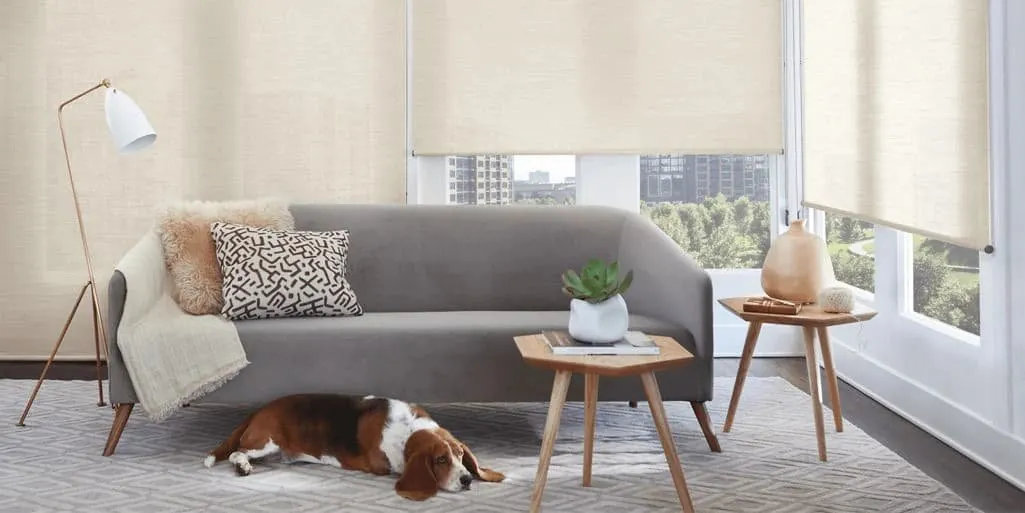
Designer Roller
The core roller, with plain, textured and patterned cloths across light filtering, room darkening and blackout. At home in a tall Victorian sash or a cape bedroom.
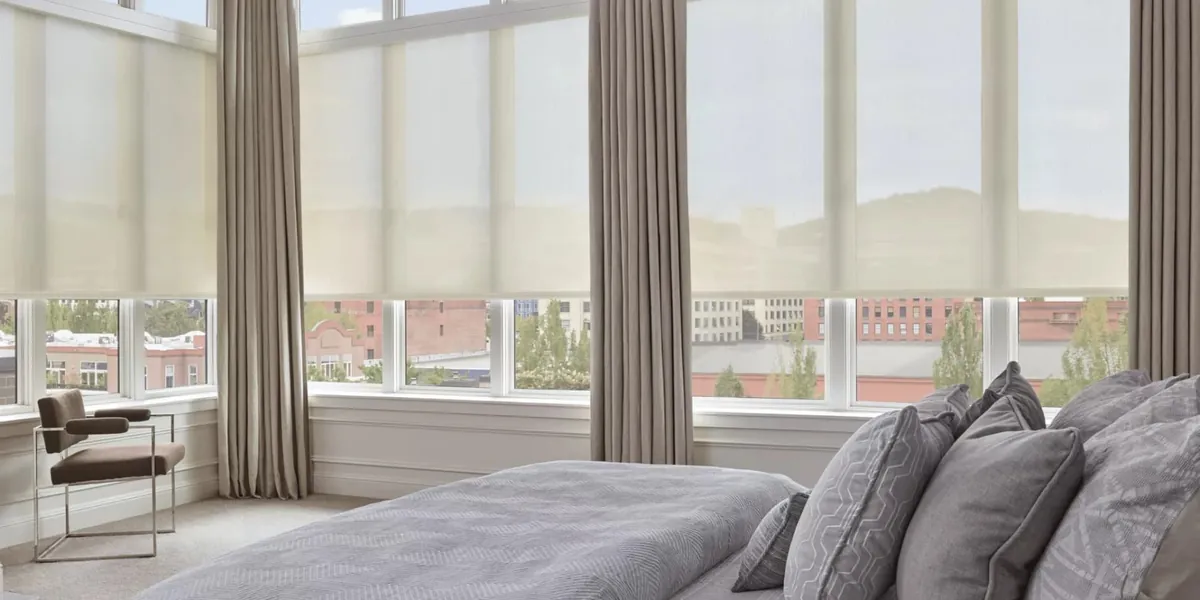
Designer Screen
Solar screens in several openness levels, so you choose the balance between keeping the view and cutting glare.
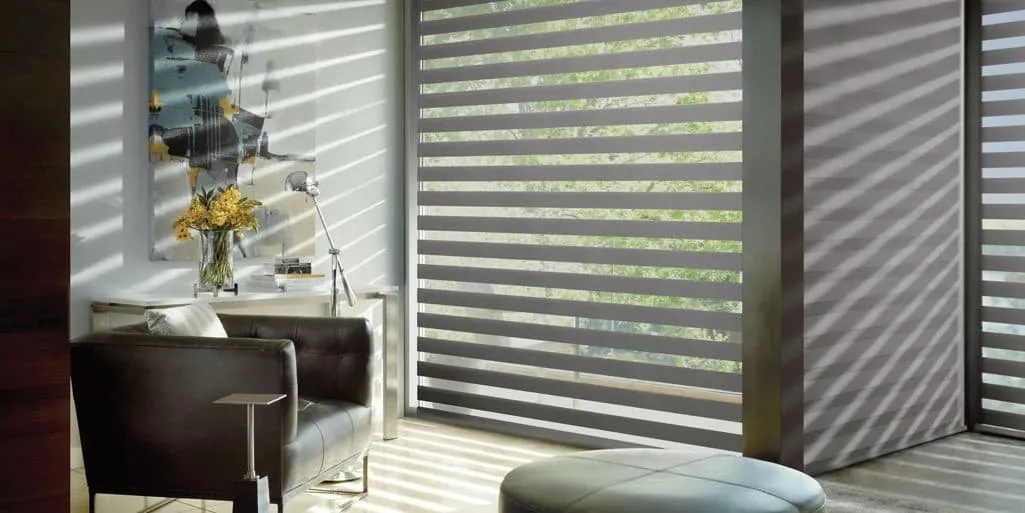
Designer Banded
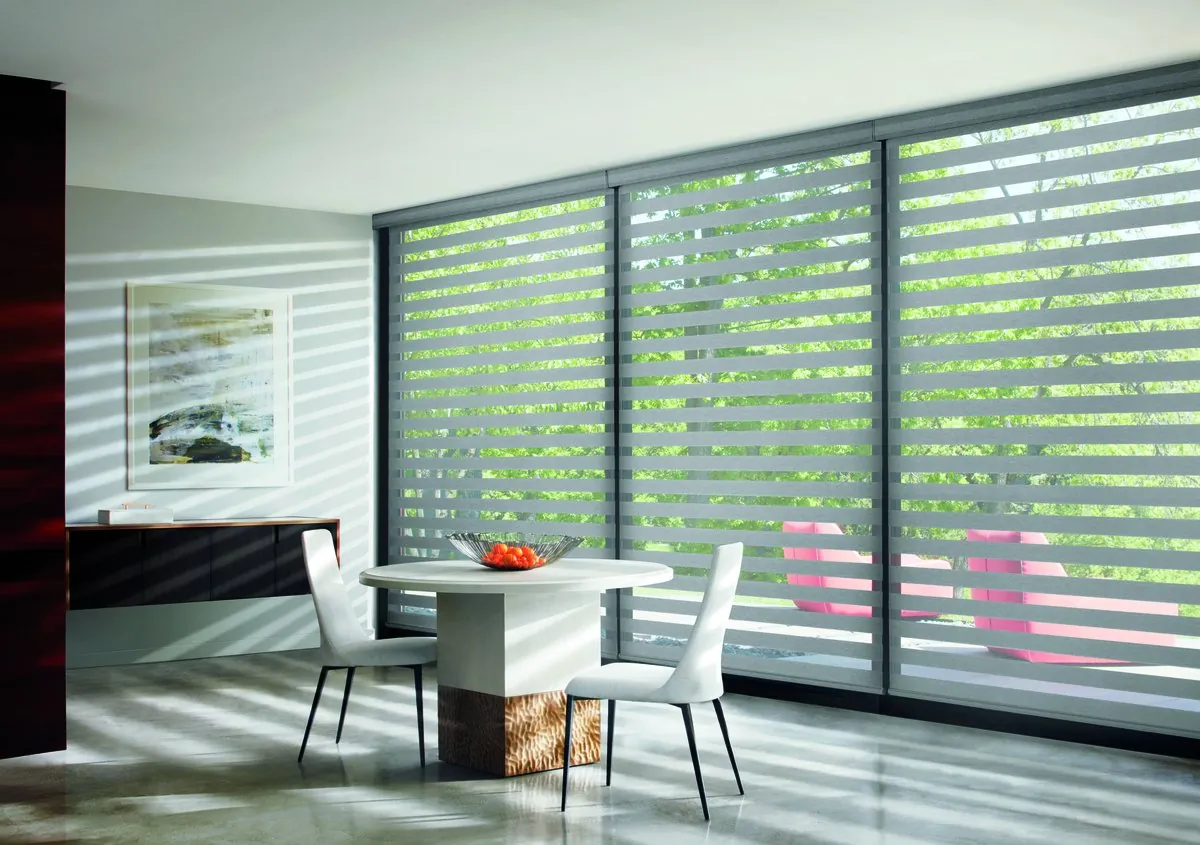
Alternating sheer and solid bands in one shade, to open the view or close the room with a small movement.
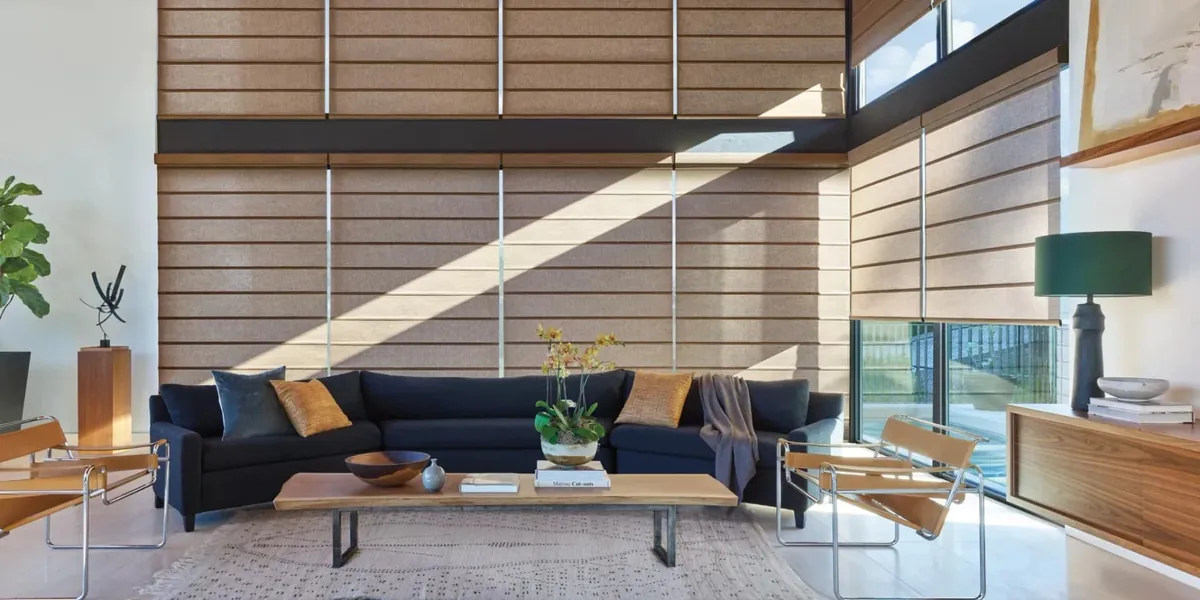
Alustra Architectural
The finest roller collection Hunter Douglas makes, often chosen for the main room of a larger house on the wooded edges of town.
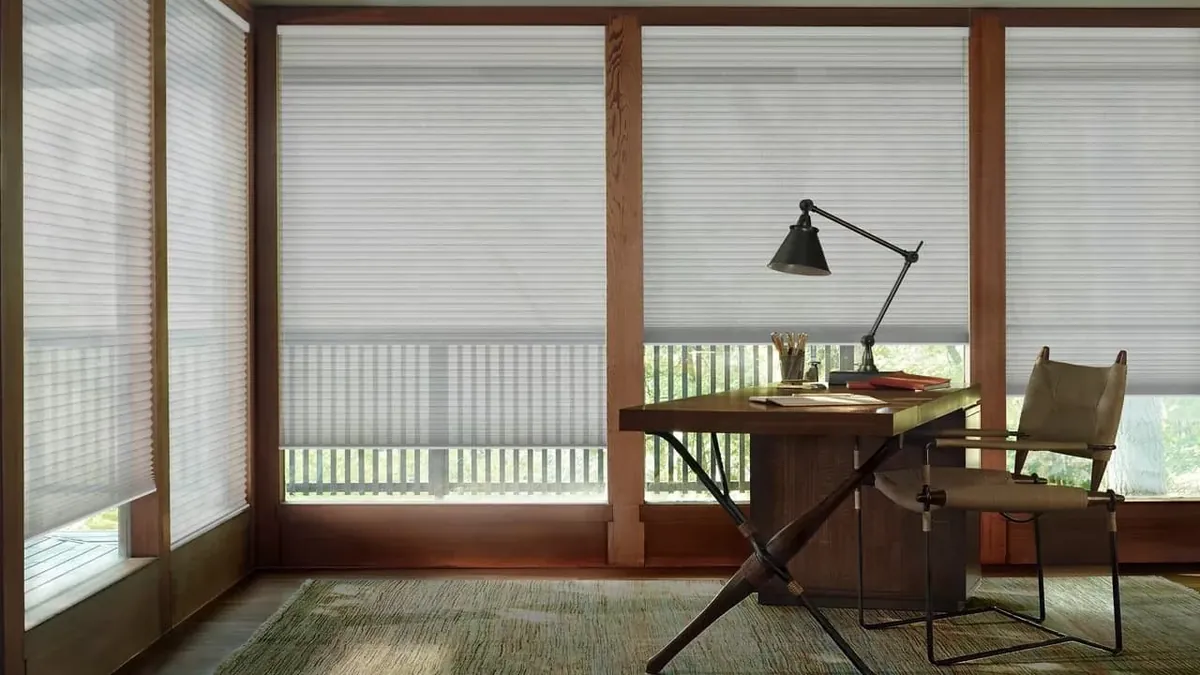
Cellular Shades in Walpole
For a cold room where warmth matters more than a flat look, a honeycomb shade may be the better choice.
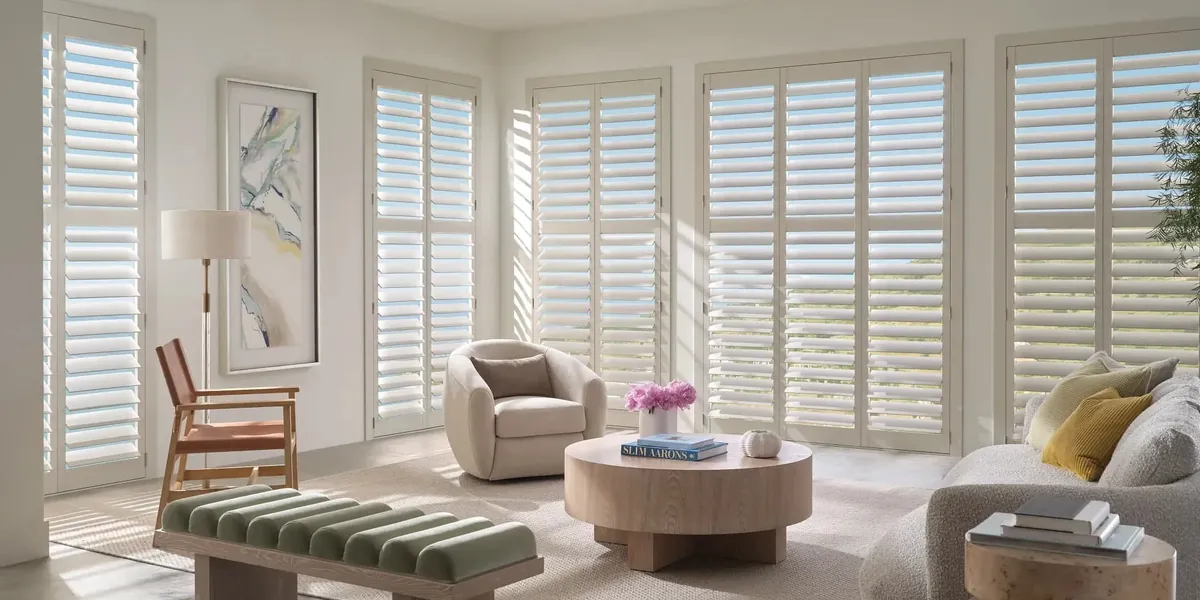
Plantation Shutters in Walpole
Some owners pair rollers upstairs with shutters on the ground floor of a Victorian or colonial.
Tall sash around the center
The Victorians and older colonials near the center were designed around their tall windows. In a front parlor the sash may run from a low sill up close to the ceiling, often in pairs, framed by deep casings that the house’s owners have kept painted and sound over the years. The windows give the rooms their light and much of their character.
A roller mounted inside the frame is usually the most respectful way to cover them. The fabric hangs within the opening, every inch of casing remains on view, and once raised it tucks up at the head of the frame. Because each shade is made to its own window, it hangs straight even where an old frame has shifted slightly over the years, and it covers the glass closely edge to edge.
Old frames can hide obstacles. Sash cords, pulleys and old locks sometimes intrude into the space a shade needs at the top. We check the depth at several points and look for anything in the way before we suggest a mount. Where the inside of the frame will not take a shade comfortably, mounting it on the face of the casing is the better answer, and we will show you how that looks.
Tall sash also invite a useful habit: leaving the shade halfway down. Covering the lower panes keeps the room private from the sidewalk, while the upper panes stay open to the sky. A light-filtering cloth on the lower half keeps the whole room bright.
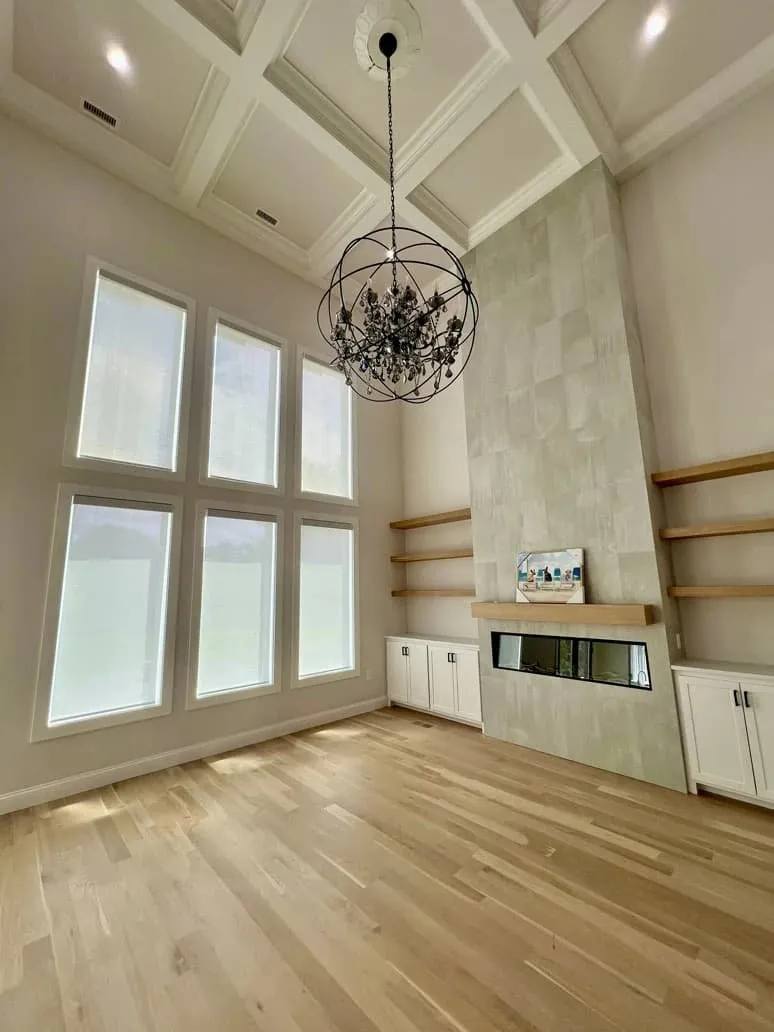
Front rooms on the older streets
The houses near the center often sit closer to the road and to each other than the newer houses outward. A front room with tall windows is lovely in daylight and very visible after dark. Light filtering is the usual fabric for those rooms: it hides the room from outside in the day and keeps it bright. For full privacy in the evening, a room-darkening cloth does it.
Side windows facing a neighbor’s driveway are a good place for Designer Banded. With the sheer bands lined up you see out and let light in; offset the bands and the window closes. One shade, two moods, and no need to choose between light and privacy.
Capes through East Walpole
East Walpole has a lot of post-war capes. They share a familiar plan: living room and kitchen downstairs, often with a small dining area, and two bedrooms upstairs under the slope of the roof, lit by dormers or by windows in the gable ends. Downstairs windows are usually standard double-hung units; upstairs, the dormer windows sit in small recesses with walls close on either side.
Dormers suit an inside-mounted roller particularly well. The shade lives inside the window opening and takes no space from the dormer, which matters in a room where every inch under the roof counts. Bedrooms upstairs in a cape can heat up under a summer roof and get early sun, so room-darkening and blackout cloths are popular choices there.
Downstairs in a cape, the front windows face the street across a modest front lawn. Light filtering keeps the living room bright while screening it from passers-by, and a kitchen window at the back often takes a screen so the garden stays in view.
Kitchens at the back of a cape
The kitchen in an East Walpole cape usually sits at the back, with a window over the sink and often a door or slider out to the yard. It is a working room, used from early morning, and its windows tend to catch either the first sun or the last, depending on which way the house faces. A roller over the sink is easy to raise and lower as you lean across the counter, and the flat fabric stays well clear of the taps when it is down.
For most cape kitchens we suggest one of two fabrics. A light-filtering cloth keeps the room bright and hides it from the yard at night. A solar screen keeps the garden in view and takes the glare off the counters when the sun is low. If the kitchen opens onto a small dining area, the same fabric there ties the two together. Many requests for roller shades in Walpole start with exactly this room.
Larger houses on wooded lots
On the wooded edges of town, newer houses sit back among the trees with standard modern windows, often in large sizes: a family room with a row of tall windows to the back, a kitchen opening onto a deck, a primary bedroom with windows on two walls, sometimes a high window over the stairs. With trees around them, these rooms can be dappled and shaded in summer and much brighter in winter, when the leaves are down and the sun is low.
A solar screen is usually the starting point for the big rooms. The openness of a screen, the share of the weave that is open, decides two things you will notice every day: how clearly you see the woods, and how much glare the shade removes. A more open weave keeps the trees crisp; a tighter one is better at taming the low winter sun. Seeing two or three weaves together on the same pane makes that choice far easier than any sample book.
A family room with a row of tall windows looks best with one fabric repeated across the whole row. A slider to the deck usually takes one shade across the full door. If the television faces one window, that window can take a slightly tighter screen than the rest.
Modern openings make fitting simpler
The standard-size windows in the newer houses are generally square and true, which makes them quick to measure and simple to fit. An inside mount works on most of them, keeping the trim visible and the shade neat within the frame. We still measure every opening, because two windows that look identical can differ slightly, and a shade made even a little too wide will not sit inside the frame.
Simpler fitting also means that more of the conversation in a newer house can go to fabric, color and motorization, which is often where the real decisions are.
Sleeping late in a Walpole bedroom
Whatever the age of the house, someone usually wants one bedroom properly dark. The fabric books split the darker cloths into two groups. Room-darkening cloth dims a bright room to a soft gloom, which suits many people. Blackout cloth goes further and lets no daylight through the material itself, the better pick for a shift worker or a nursery.
Darkness also depends on how the shade meets the window. Inside a frame, a shade needs a whisker of clearance at each side so it can roll freely, and on a sunny morning that clearance shows as a pale line. Mounted on the wall above and beyond the frame instead, the fabric overlaps the opening and the lines mostly disappear. In a Victorian bedroom with handsome casings, that overlap hides woodwork you may want to see, so some owners there choose the inside fit anyway. In a cape dormer, where the recess is tight, an inside fit is often the only sensible one, and a blackout cloth still makes a big difference. We talk through both at the window.
Stair windows and entries in the older houses
The older houses near the center often have a window on the stair landing, set high and sometimes larger than you would expect, and a front door with glass beside or above it. Both bring welcome daylight into a hall that would otherwise be dark, and both can be tricky. The landing window may be out of easy reach; the entry glass shows the hall to the street once the lights are on.
A light-filtering roller made to the landing window can usually be set at one height and left, softening the sun on the stairs without darkening the hall. If you want to move it often, motorizing it saves a stretch over the banister. For the glass by the front door, a slim made-to-measure roller in the same cloth gives the hall privacy in the evening and keeps the daylight during the day.
Fronts that look settled from the road
On a street where a Victorian, a cape and a newer colonial can sit within sight of one another, what makes any one house look cared for is consistency across its own front. A row of front windows in one quiet color, all lowered to about the same height, looks settled. For roller shades in Walpole we usually pick that front color before anything else, then let the back rooms go their own way, where a darker screen might be chosen simply because it is easier to see the garden through.
It helps to judge color from where the street sees it. We can hold a sample in a front window while you stand on the sidewalk, which tends to settle a choice between two close shades of white very quickly.
PowerView where reaching is a chore
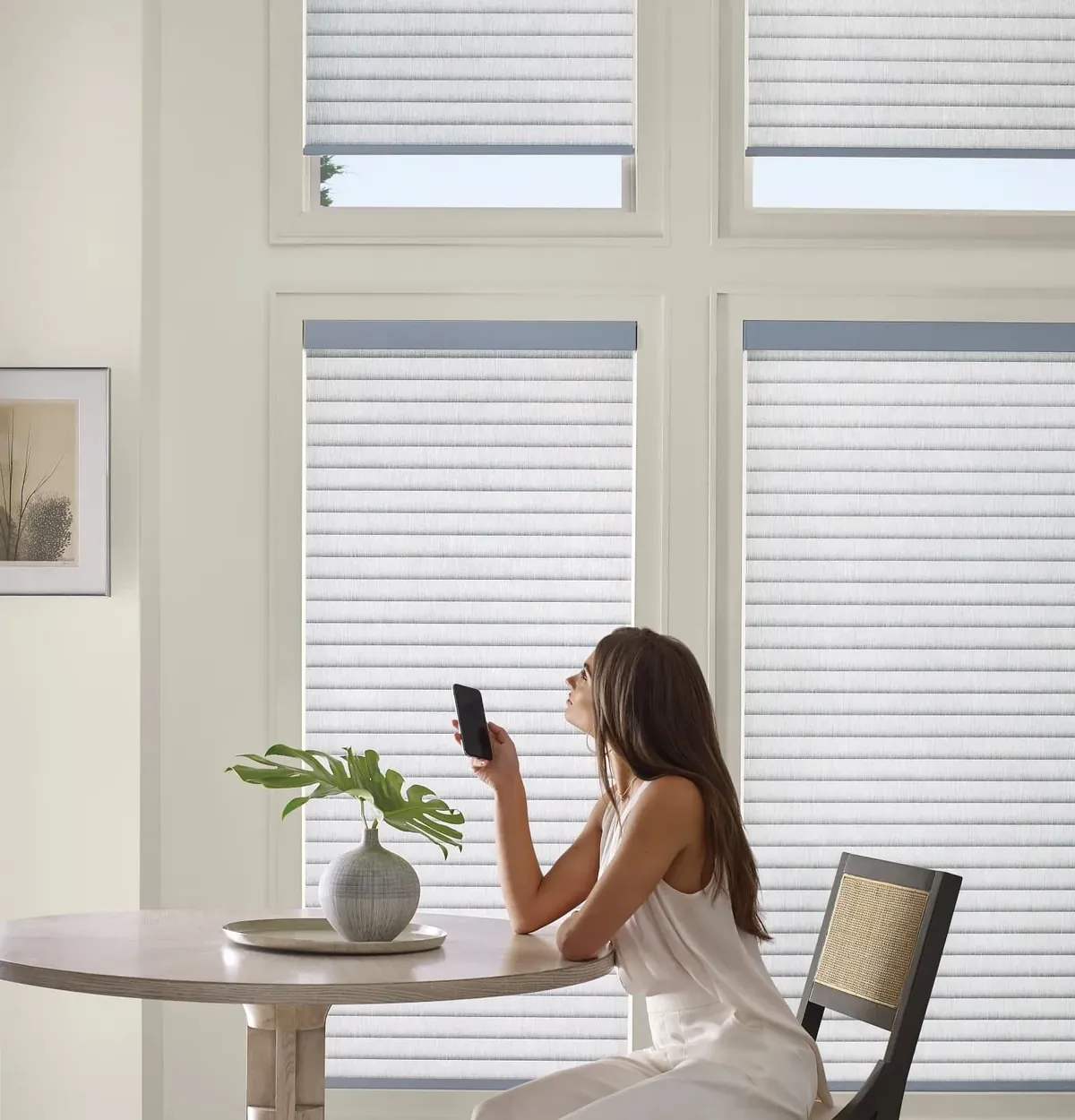
High stair windows, the tall glass in a newer family room and long runs of shades all make sense to motorize. With PowerView, roller shades can be moved from a remote or an app, grouped by room, and set to follow a schedule: the back screens dropping when the afternoon sun comes through the bare winter trees, bedroom shades rising at a set time. How each motor is powered is planned at the visit, window by window. Our motorized blinds in Walpole page has more.
How we work in your home
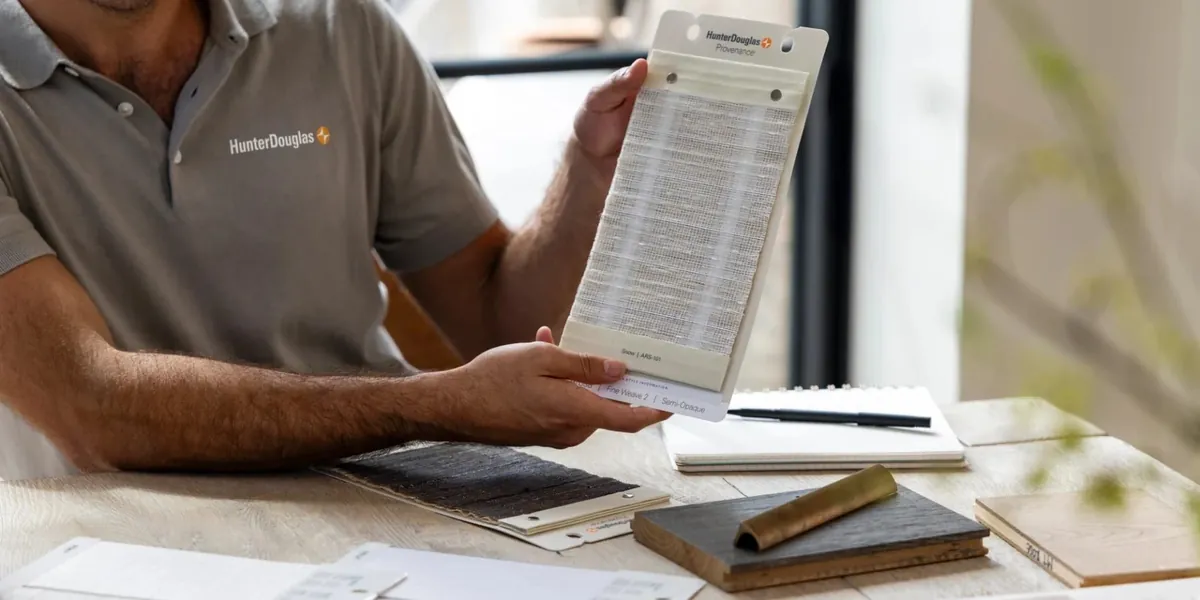
Light in your own rooms is what decides a roller fabric, so we start at your house. Our sample vans mean we can bring the showroom to you, which is the whole idea.
- You choose a time through Request a Consultation, or reach us with the call button.
- We walk the house together, room by room, from the old front parlor to the newest addition, and talk about how each room is used.
- Fabrics come out at each window, light filtering to blackout, with screen weaves in several openness levels.
- Every opening gets measured carefully, with special attention to old frames near the center.
- A free estimate follows for the shades you are leaning towards, and the decision is yours to make in your own time.
For help with color across a whole house, we also offer interior design consultations, which can be part of the same visit. If you like to know the steps in advance, see what happens at an in-home consultation.
Gallery dealer, certified fitting
Hunter Douglas names dealers who meet its standards Gallery dealers, and Blinds & Designs is one. In a town with this many kinds of house, that breadth helps: the tall sash, the cape dormers and the big wooded-lot windows can each take the roller line that suits them, all in one order.
Hunter Douglas certifies the installers who fit our shades; they set each one level and check it runs cleanly before they leave. We repair existing blinds and shades too, and supply commercial blinds and shades for offices and shops.
Other pages for Walpole include our roman shades in Walpole and custom blinds in Walpole, and the Walpole page brings together everything we do in town. Every roller line is on the main roller shades page.
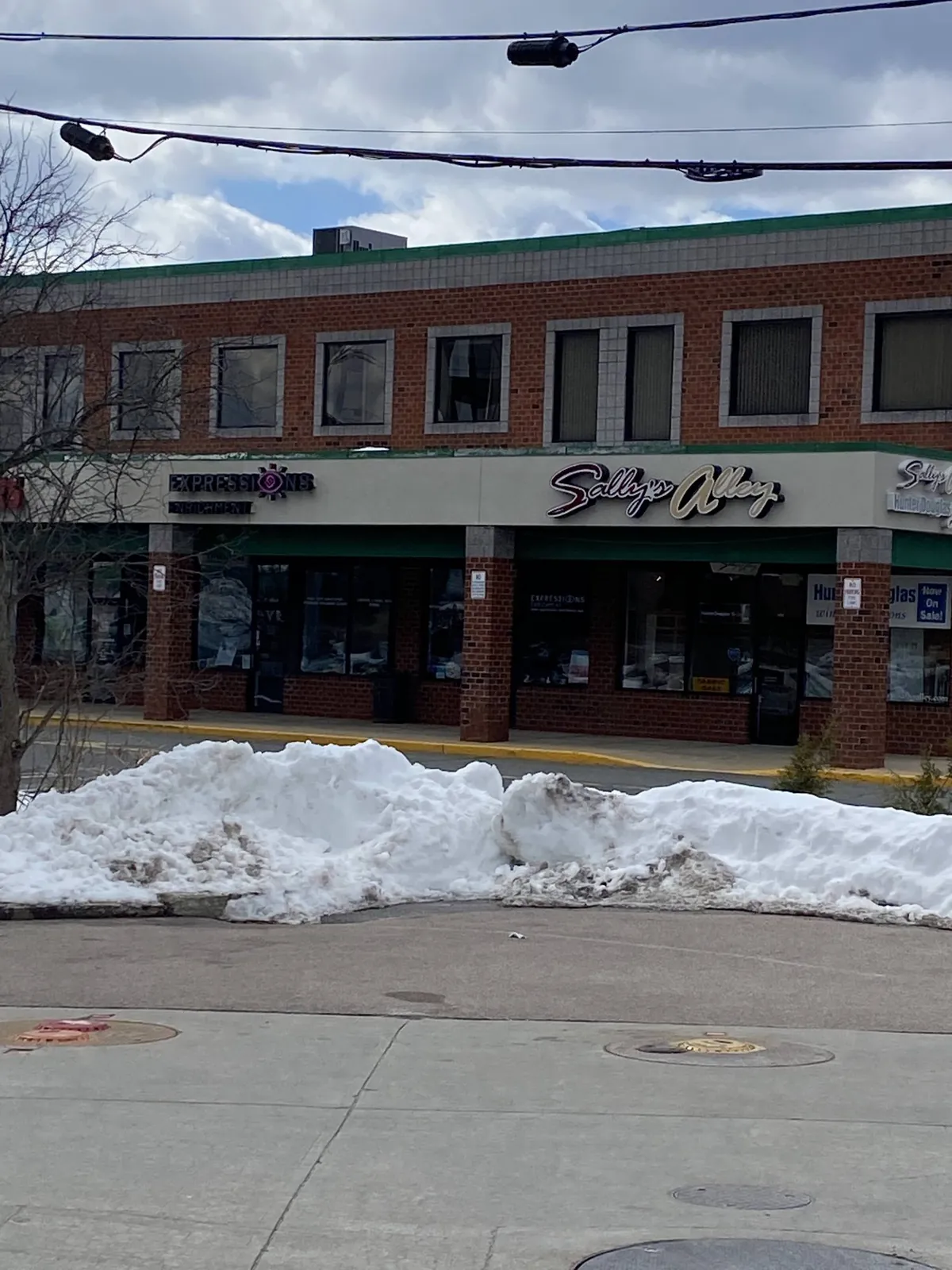
Seeing the range in Franklin
Our nearest showroom to Walpole is in Franklin. It is there for anyone who likes to see shades in person before a visit, and we are happy to bring any fabric you liked there to your own windows afterwards.
Questions from Walpole
My Victorian has tall windows with old sash cords. Can a roller fit inside?
Often it can. We check the frame depth at several points and look for cords, pulleys or locks that might be in the way. If an inside mount would be tight, we mount on the casing instead.
What works in a cape’s upstairs dormer?
An inside-mounted roller is a good fit, because the shade stays within the opening and takes no room from the dormer. Room-darkening or blackout cloths suit the bedrooms up there.
Which fabric suits a room with trees outside?
A solar screen chosen for the brighter winter months usually works all year round. A tighter weave handles the low winter sun; a more open one keeps the view of the trees clearer.
Can different rooms have different fabrics?
Yes, and most houses do. We keep the color consistent across the front windows and choose the opacity for each room behind.
How much is the estimate?
There is no charge. After measuring, we give you a free estimate for the shades you are considering.
Let us bring the samples
Roller shades in Walpole are simplest to choose in the rooms they are meant for. Request a consultation, and a van of samples suited to every era of house comes to you; we measure each window and follow up with a free estimate. If you prefer, use the call button or look first at our Franklin showroom.