
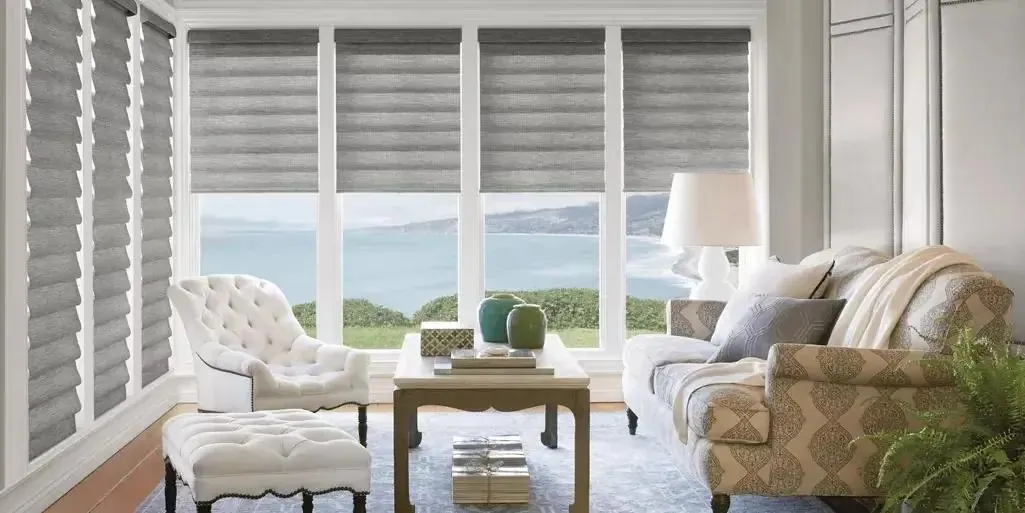
Long runs of glass under heavy tree cover
Around Lake Massapoag, colonials and mid-century contemporaries sit on wooded lots, set well back from the road under tall trees. Many of them were designed around glass: long runs of windows across a living room, sills that sit low to the floor, and in the contemporaries whole walls that open the house to the woods. Yet step inside on a summer afternoon and the rooms are often dimmer than all that glass would suggest. The canopy and the deep setbacks take a good share of the daylight before it reaches the window.
That combination shapes how we plan roman shades in Sharon, MA. On one hand, the shades must not steal light that the trees have already rationed: raised, they should all but disappear. On the other, a long wall of glass with a low sill shows a lit room to the dark woods at night, and needs real cover after sunset.
A soft fabric shade made to the size of each window answers both. It gathers neatly at the head of the glass by day and drops to a clean panel at night, and it brings a warmth to a long run of windows that hard blinds seldom do.
We bring the samples to Sharon
For Sharon, the consultation comes to you. Our shop-at-home service is run from Canton: the vans carry sample books of every roman line we supply, so we can bring the showroom to you and you choose with your own trees, your own light and your own furniture in view. There is no storefront to visit in Canton; everything happens in your house. You can read how it works on our shop-at-home page.
Choosing in your own rooms matters more than usual for these houses. A fabric that looks bright under shop lighting can look heavy in a living room shaded by oaks, and the only way to know is to hold it up against the glass you have. The visit is also when we measure the long runs and low sills properly, so every shade is made to its own opening. Bringing roman shades to Sharon, MA, houses this way means nothing is guessed: the fabric, the drop over a low sill and the split of a long run are all settled with you in the room, and the van leaves with the measurements it needs.

Roman shades we bring to Sharon
Both lines are made to order for each window. Their samples travel in the van.

Carole Fabrics Roman Shades
Decorator fabrics sewn to the size of each window, in a flat or a folded style. Well suited to the dining rooms and bedrooms of a colonial.
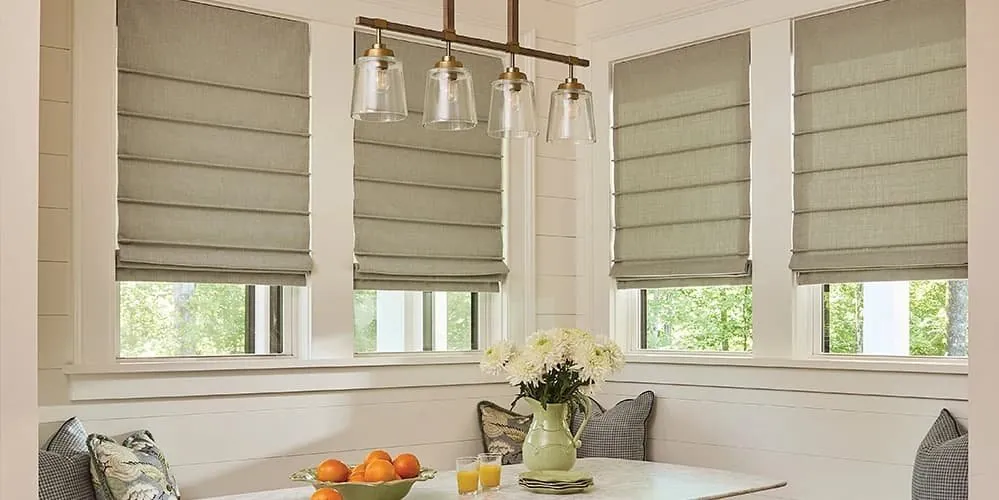
Vignette Modern Roman Shades
Clean, modern lines that sit naturally with the long windows and simple interiors of a mid-century contemporary.
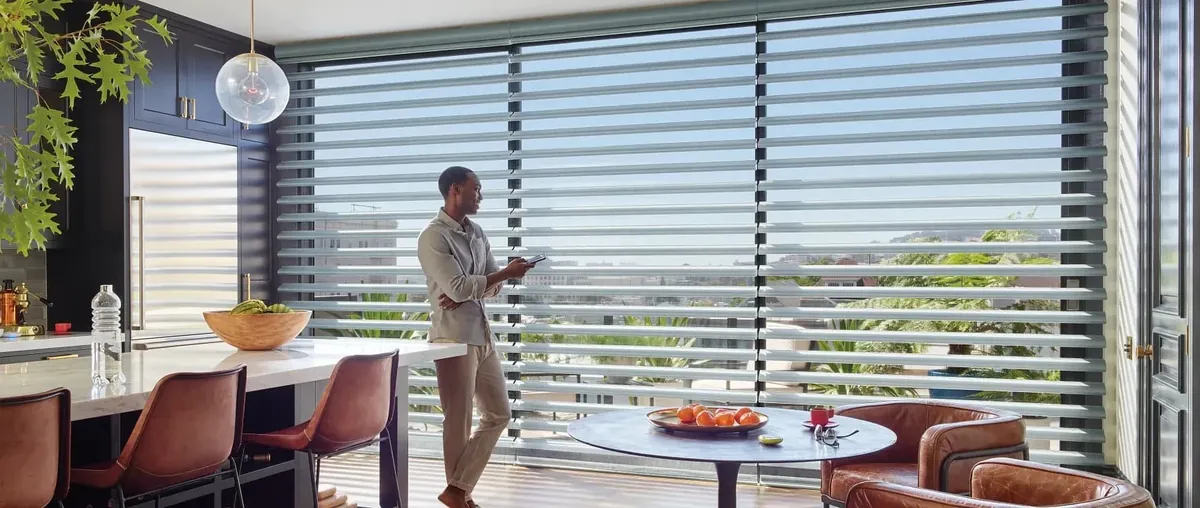
Motorized Blinds and Shades in Sharon
A long run of shades can rise and fall together from the PowerView app, a remote or a schedule.
Mid-century contemporaries: glass from wall to wall
The mid-century contemporaries near the lake were built to bring the outdoors in. Their living rooms often have a continuous band of windows across one or two walls, sometimes broken only by slim mullions, and many have a sliding door out to a deck or a patio. Ceilings may slope, and the interiors are usually plain and open, with the view doing the decorating.
A treatment for a room like that has to respect its lines. Bulky drapery would fight the architecture, and a mixture of different products along one wall would break up the long horizontal run the architect intended. A row of matching roman shades keeps that line intact: one fabric, one headrail height, one fold spacing, so the shades read as a single band when lowered and almost vanish when raised.
We generally make a long run as several shades rather than one very wide one, with each shade sized to a window or a pair of windows between mullions. That keeps each shade light and easy to raise, lets the folds stay even, and means you can lower the sections facing the afternoon sun while the rest stay open. Vignette is often the natural choice here, because its tidy, modern folds suit a plain mid-century interior.
The slider is a separate question. A roman shade is made for windows, so the door itself may suit another Hunter Douglas product, chosen so it sits comfortably beside the shades along the rest of the wall.
Low sills and the furniture beside them
Low sills are a feature of many Sharon houses, the contemporaries especially. The glass starts close to the floor, which is lovely for the view from a sofa but brings its own practical questions.
The first is where the shade stops. On a low-sill window, a fully lowered shade comes down close to the floor, often behind a sofa, a radiator cover, a bench or a row of plants. We look at what sits in front of each window and plan the drop so the shade clears it, or so it stops at a sensible point above it.
The second is reach. A low sill means the bottom of the shade is easy to reach, but the top of a tall window above it may not be, and on a long run there may be furniture between you and the glass. That is where PowerView motorization earns its place: each shade, or the whole run, can be raised and lowered from a remote, the app or a schedule. How each motor is powered is decided at the visit, once we see the walls and the windows. Our guide on how motorized shades are controlled explains the controls in everyday terms.
The third is how a low window looks from outside. With a lit room and a low sill, much more of the interior shows to the woods and the drive at night than with a standard window. A fabric that gives proper cover once lowered matters more on these windows than on most.
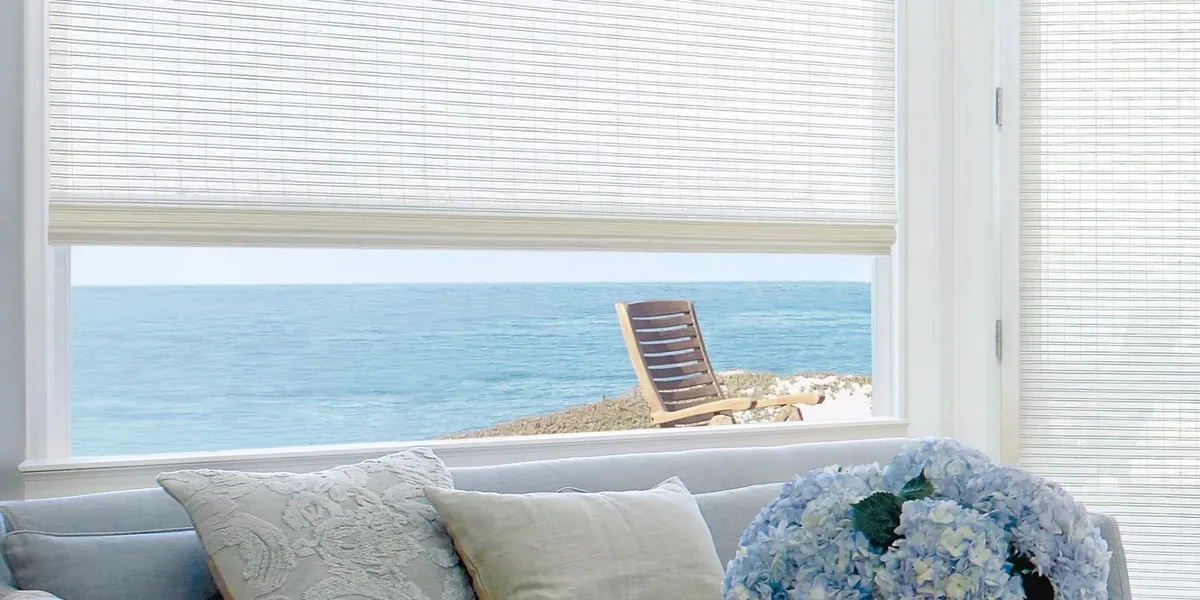
Colonials on the wooded lots
Alongside the contemporaries, Sharon’s wooded lots hold plenty of colonials: two-story houses with evenly spaced windows on the front, formal rooms either side of the entry, and a family room and kitchen at the back. Their windows are more conventional than a contemporary’s, with standard sizes and normal sill heights in most rooms, though many have a long run of glass in the family room facing the back of the lot.
In a colonial, roman shades are usually planned floor by floor. The front windows share one headrail height and one outward color, so the house looks even from the drive. Inside, the dining room might take a Carole Fabrics flat style in a quiet pattern, the living room a plain fabric in a softer folded style, and the bedrooms whatever suits each one. The family room at the back, with its larger windows looking into the trees, is often treated much like a contemporary’s living room, with a matched row of shades.
Many colonials also have a window on the stair landing or a tall window in a two-story entry. Those are good candidates for motorization, since they are awkward to reach. Choosing roman shades for Sharon colonials room by room on one visit keeps the whole house consistent.
Why a wall of glass can still feel dark
People are sometimes surprised that a room with so many windows can feel dim. On a wooded lot, the answer is overhead. A tall canopy filters the sky, and a deep setback puts more trees between the house and the open sky. Much of the light reaching the glass is soft and green rather than direct, and in summer it can fade early in the afternoon.
That has two consequences for shades. First, they need to clear the glass completely when raised, or close to it. A roman shade does that well, because it gathers into a compact band at the head of the window. Where there is room, mounting the headrail just above the frame lets the gathered fabric sit against the wall rather than over the glass, so every bit of window stays open.
Second, the fabric color matters. A deep color that looks rich in a sunny room can look heavy in a shaded one, and a fabric that blocks a lot of light when lowered will make a dim room darker still during the day. For the main living spaces we often suggest lighter colors and fabrics that glow softly when lowered. Bedrooms can take something with more body, especially on the east side where the morning sun does break through.
Seasons change all of this. When the leaves come down, rooms that were green and soft all summer can suddenly take low winter sun across the floor. A shade you can lower partway on those bright days, and raise fully on the dull ones, handles both.

Rooms facing Lake Massapoag
The houses closest to the lake often turn their main rooms toward the water, with larger windows or a long run of glass looking across it. Those are the rooms where the view matters most, and where light behaves differently from the rest of a wooded lot. With open water in front, the sky is wider, and late-day sun can come straight across the lake into the room.
For a lake-facing room we usually plan shades that stay fully raised most of the time, leaving the view clear, and come partway down when the sun is low over the water. On a long run, you can lower only the sections the sun reaches. A lighter fabric keeps the room bright even when the shades are down, so the lake still shows faintly through. If the room is also the one people sit in after dark, the same shades give cover once the lamps are lit and the water outside goes black.
When we plan roman shades in Sharon, MA, for a lake-facing room, we often bring a few extra fabric samples, because the light off the water changes how colors read.
Flat panels or soft folds
Both Hunter Douglas lines we bring come in two looks. A flat shade lowers to a smooth face of fabric and lifts in neat, stacked pleats. It shows a pattern clearly and suits a formal colonial room or the clean lines of a contemporary. A folded shade holds soft curves of fabric even at full length, which reads as warmer and more relaxed, and gives a plain fabric some depth.
In a mid-century contemporary, the flat style or Vignette usually suits the long runs best, because their crisp lines echo the architecture. In a colonial, many people use the flat style downstairs and the folded style in the bedrooms. Some choose one fabric for the whole house and let only the style change from room to room. We bring both looks so you can compare them at your own windows.
A few pointers for fabric:
- Shaded living rooms: light colors and fabrics that glow softly when lowered.
- Low-sill windows: a fabric that gives real cover at night, when more of the room shows.
- Lake-facing rooms: colors tested against the light off the water.
- Bedrooms on the sunny side: more body for the mornings.
Our guide to choosing fabric for a sunny room goes into more detail. For help across the house, ask about an interior design consultation as part of the visit.
The consultation, in order
- Ask for a visit through Request a Consultation, or press the call button.
- A van arrives with Vignette and Carole Fabrics samples, flat and folded.
- We look first at the long runs, the low sills and any windows facing the lake.
- You hold fabrics against the glass to see how they behave in your shaded light.
- Every opening is measured, and we note what sits in front of each low window.
- Hard-to-reach windows and long runs get a PowerView plan.
- You receive a free estimate to consider at your own pace.
There is more about the visit in what happens at an in-home consultation.
What our Gallery dealer status means for you
Blinds & Designs is a Hunter Douglas Gallery dealer. For a Sharon house with long runs of glass, a slider and a few out-of-reach windows, it means the whole Hunter Douglas range is available in one consultation, so roman shades on the windows and the right product on the door can be planned together.
Our installers are certified by Hunter Douglas and fit every shade with care, from the long matched rows in a contemporary to the tall landing window in a colonial.
Everything else we do in town is on our Sharon page, and the roman shades collection page compares the lines.
Prefer to start at a showroom

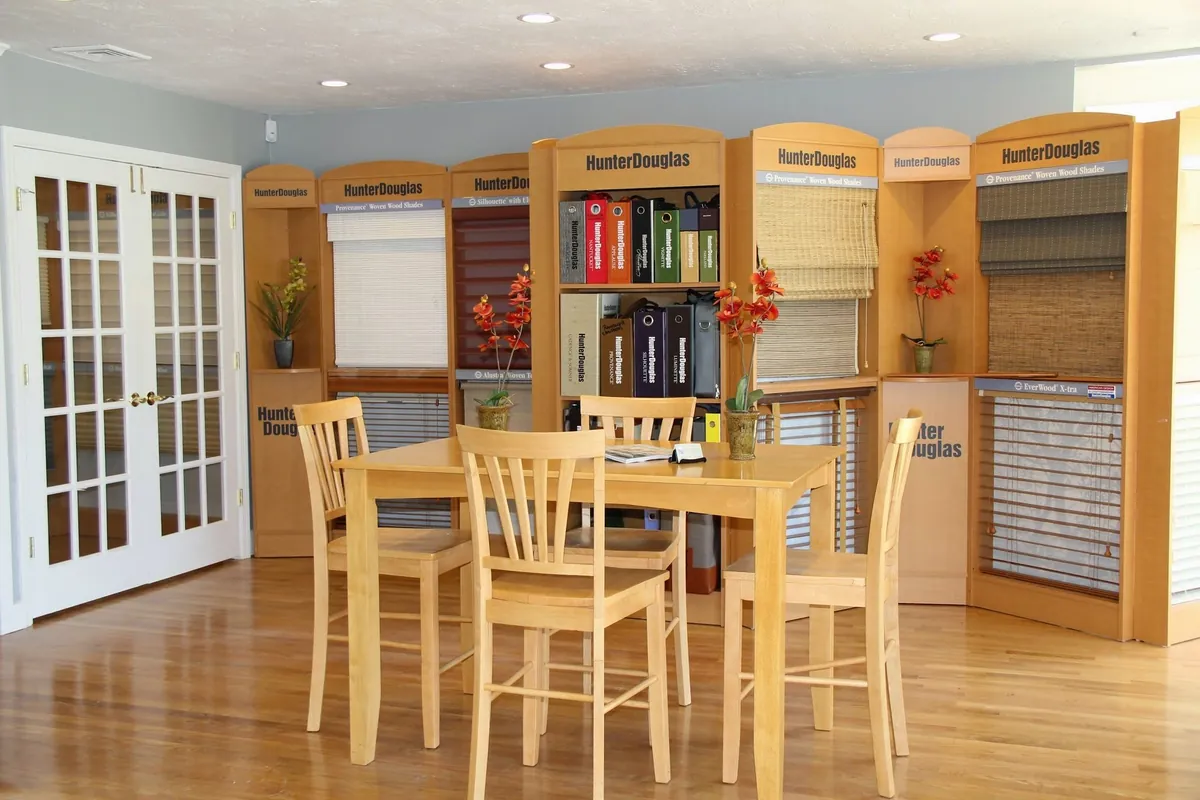
If you would like to talk in person before a home visit, our nearest showroom to Sharon is in Franklin, and you are welcome during its opening hours. For long runs and low sills, though, the measuring and the final choices happen at your house.
Fitting your shades
A Hunter Douglas certified installer fits the order once it is ready. In a contemporary, that means hanging a long row of shades so the headrails run in one straight line and the bottoms stop at the same height. In a colonial, it means matching the front windows and setting up any motorized shades on the landing or in the entry. Every shade is worked with you before the installer leaves, and PowerView controls are set up in the room. Read what happens on installation day beforehand if you like. If a shade ever needs fixing later, our blind and shade repair service can help.
Questions from Sharon
Is there a showroom in Canton we can visit?
No. Canton runs our shop-at-home service, so the samples come to your house. If you would rather visit a showroom, Franklin is the nearest one to Sharon.
Our living room has a long run of windows. One shade or several?
Usually several, each sized to a window or a pair between mullions. They match in fabric and height, so they read as one band, and you can lower only the sunny sections.
Our sills are very low. Will the shades hit the furniture?
We note what sits in front of each window and plan how far each shade drops so it clears sofas, benches and plants. If you move furniture around with the seasons, tell us at the visit and we will plan the drop around the arrangement you use most.
Our rooms are already dim from the trees. Will shades make them darker?
Not when raised, because a roman shade gathers at the top of the glass. For daytime use we suggest lighter fabrics that glow softly when lowered.
Do you charge for the estimate?
No. The windows are measured during the visit and the estimate is free.
Book your home visit
The best place to choose roman shades in Sharon, MA, is your own living room, with the trees outside and the samples in your hands. Request a consultation and a van will bring them to you, every window will be measured and a free estimate will follow. Questions first? Use the call button, or visit our Franklin showroom.