
Water on both sides of the island
Portsmouth sits at the top of Aquidneck Island with the Sakonnet River off one shore and Narragansett Bay off the other, so a great many houses here look out at water in one direction or another. That view shapes almost every decision about window treatments in Portsmouth, RI. The rooms facing the open water take the full sun and the glare bouncing up off the surface, while the rooms on the far side of the same house stay cooler and dimmer for most of the day.
The houses themselves cover a wide span. Down in Island Park and out on Common Fence Point the streets are lined with cottages, many first built for summer and closed in over the years, with windows of every size. Off East Main Road the newer colonials have regular, evenly spaced openings and a family room at the back. Toward Carnegie Abbey the houses grow larger, with tall glass turned toward the bay.
A plan that works treats the two sides of the house as two different jobs. We bring the samples to your door, so you can see each fabric in the bright room and the shaded room before you choose.
Window treatments in Portsmouth, RI, product by product
Each of these has a page of its own for Portsmouth with more on the products and the houses they suit. Start with whichever room is bothering you most, or ask us to plan the whole house in one visit.
Blinds for every room
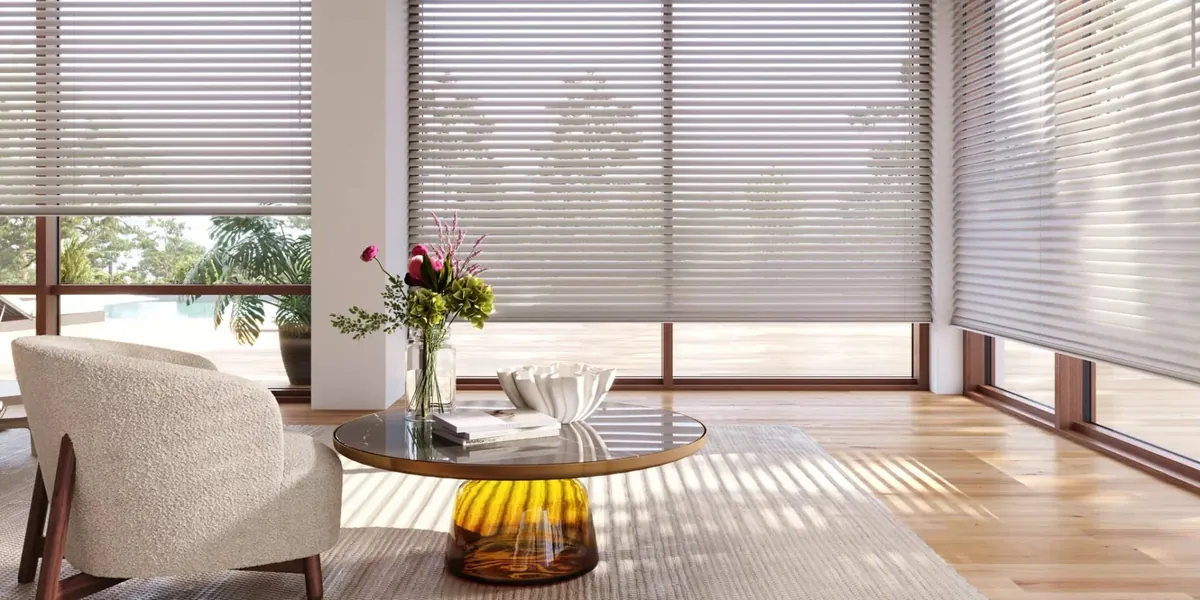
Wood, faux wood, metal and vertical blinds. Tilting slats bend the bay glare up toward the ceiling in a colonial’s sunny family room.
Honeycomb shades
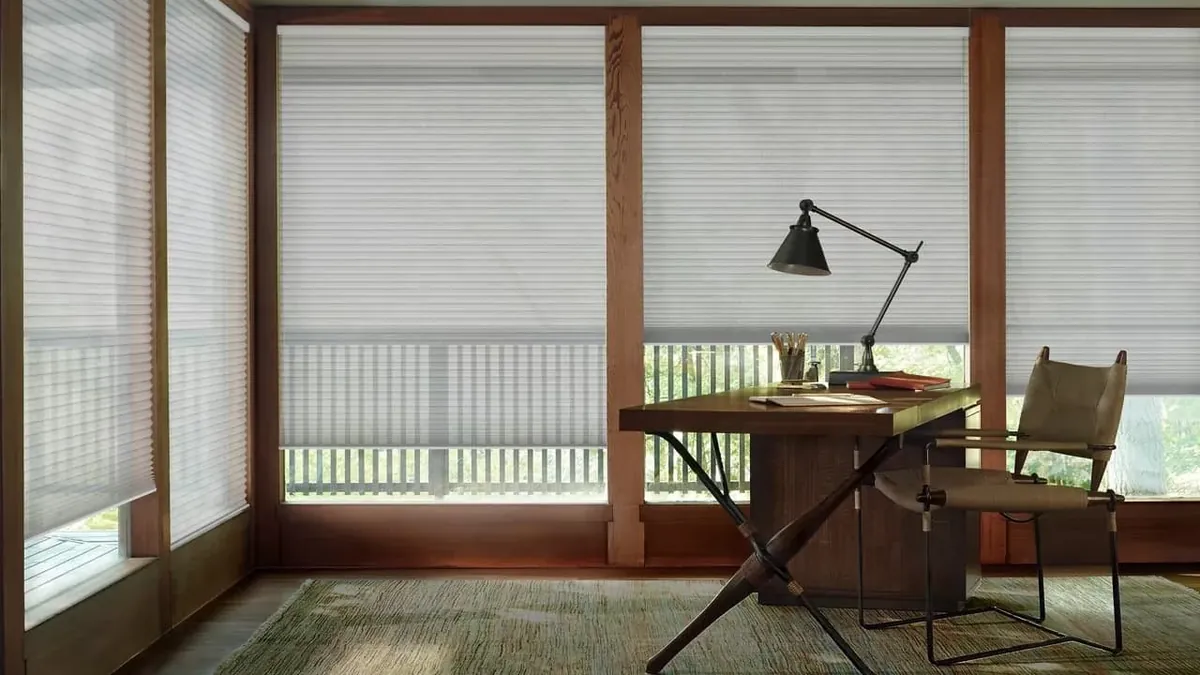
Duette and Applause cells hold still air against the glass, which helps a closed-in cottage room that was never built for a winter wind off the river.
Rollers and solar screens
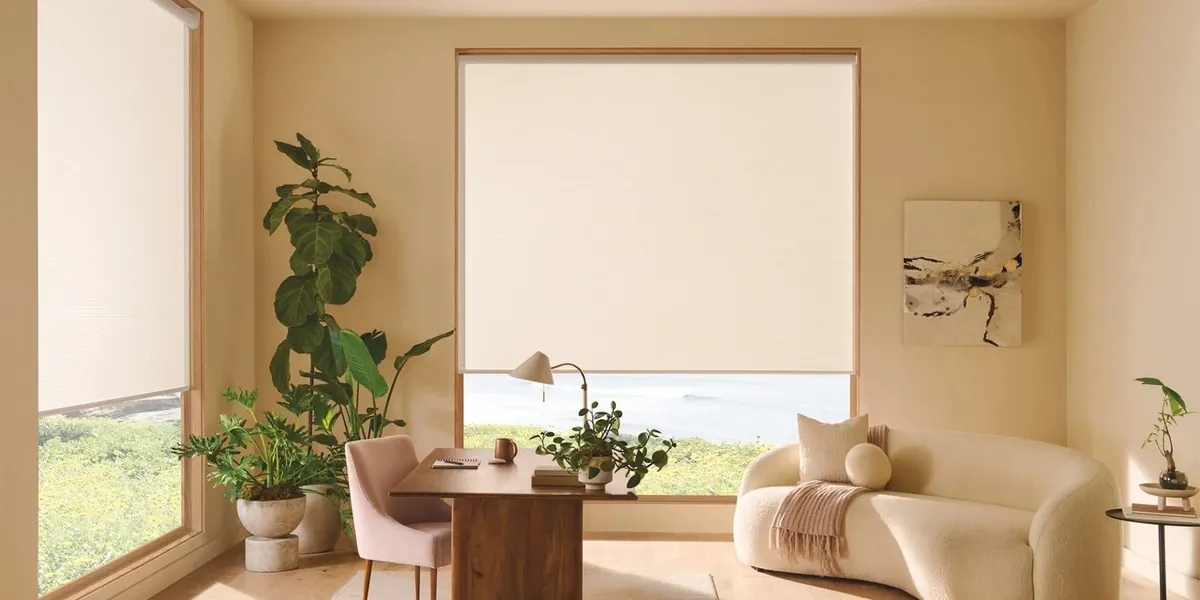
Designer and Alustra rollers, with screen fabrics picked by openness so the water stays in sight from the bright side of the house.
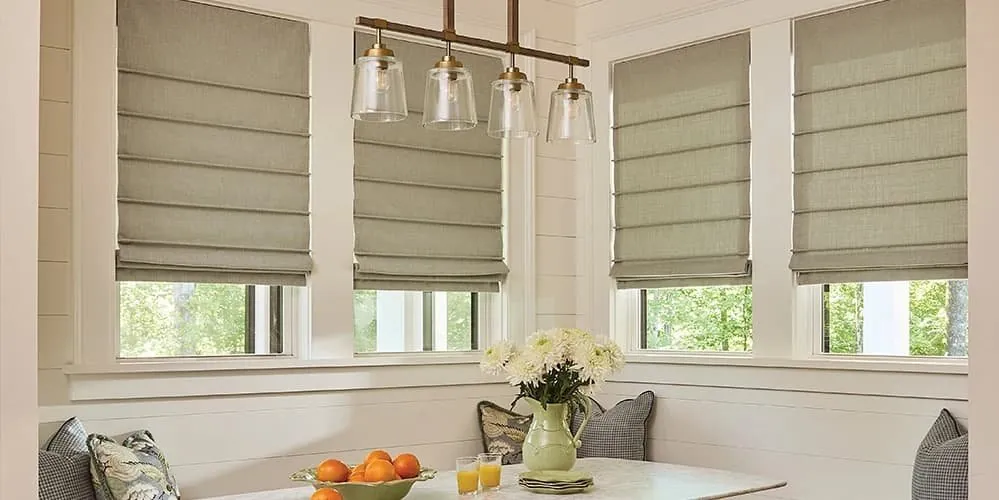
Roman shades
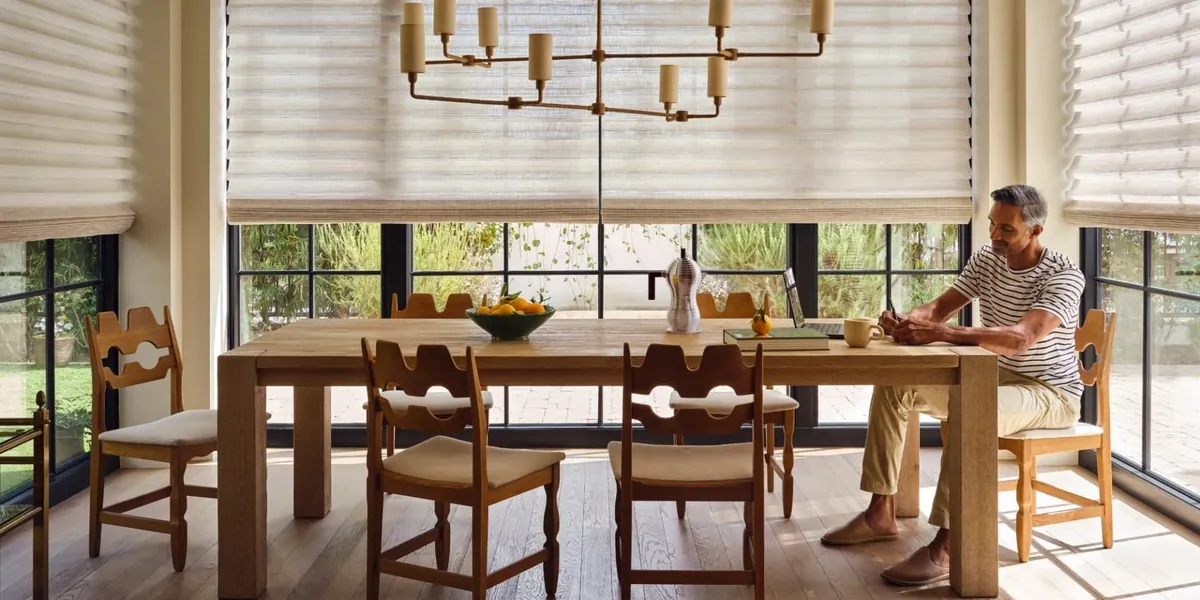
Vignette and Carole Fabrics romans in flat or looped folds, a soft finish for a colonial dining room or a cottage kitchen.
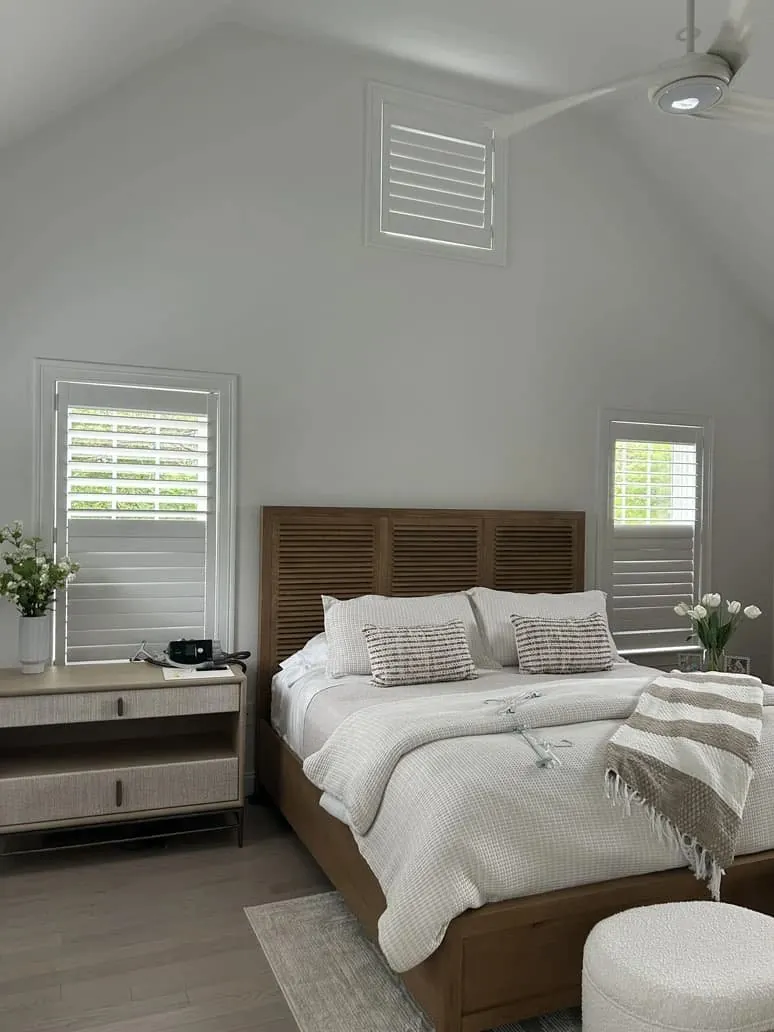
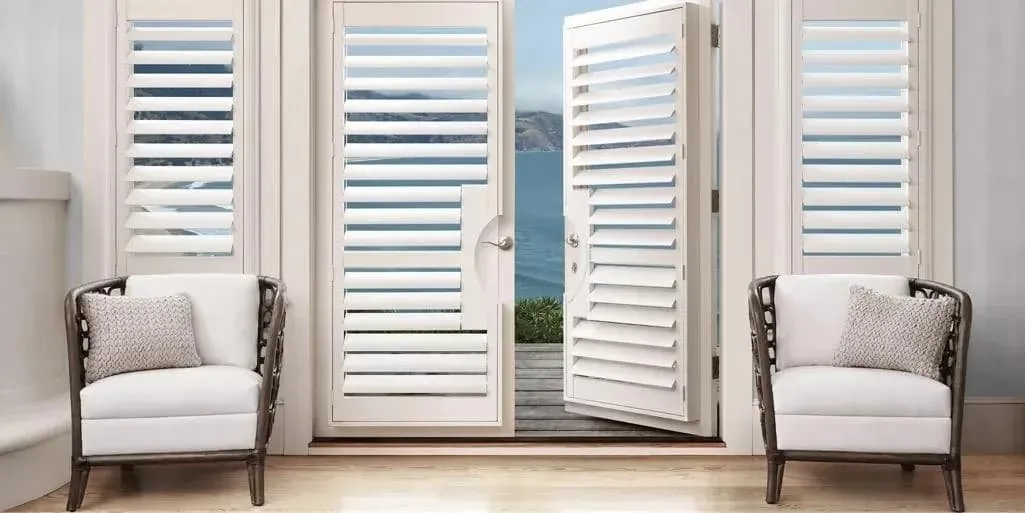
Plantation shutters
Palm Beach, NewStyle and Heritance, with louver widths chosen for a small cottage sash or a tall pane facing the bay.
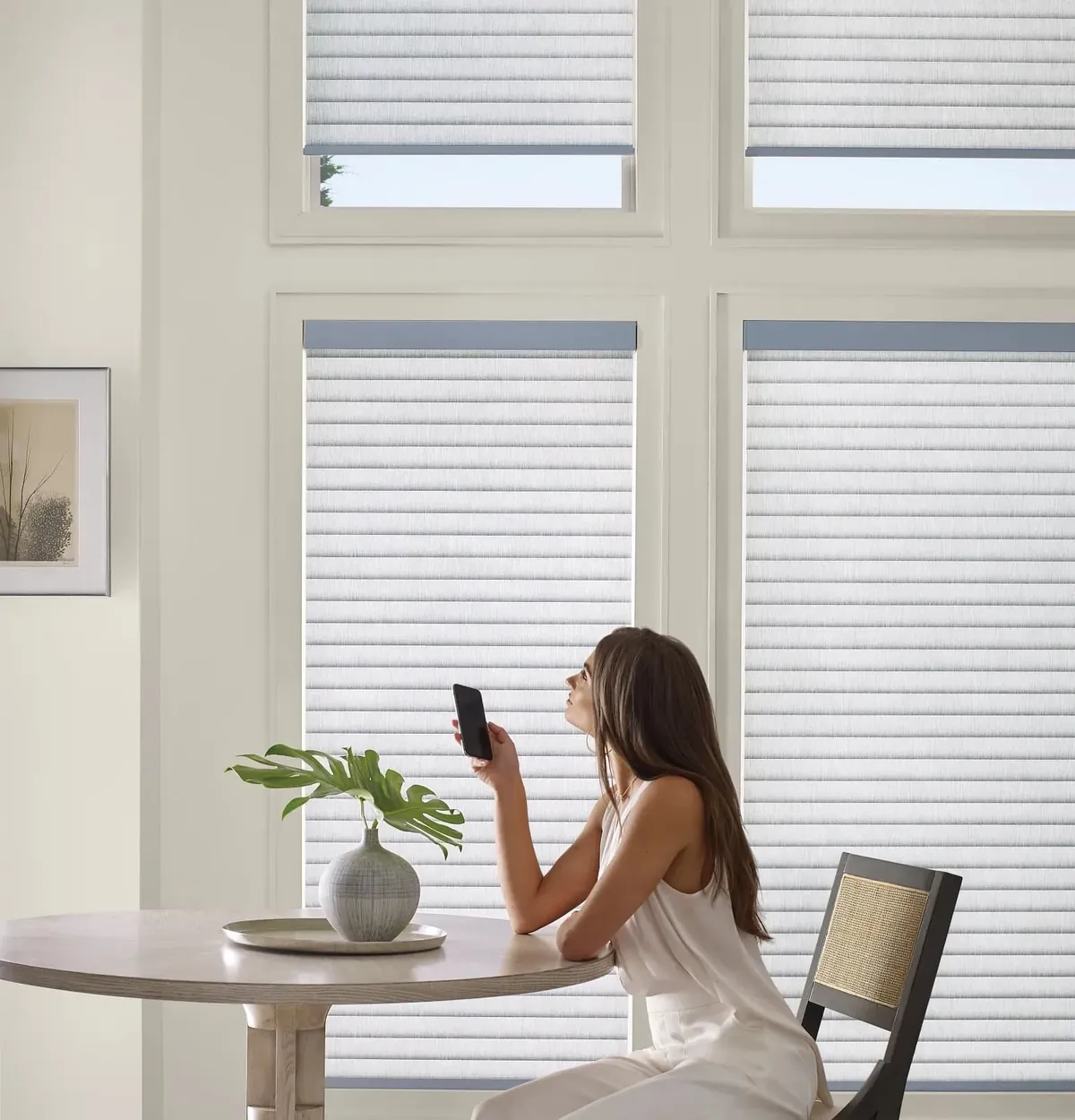
PowerView motorization
Shades that lower on a schedule when the sun comes round to the water side, run from a remote, a phone or the app.
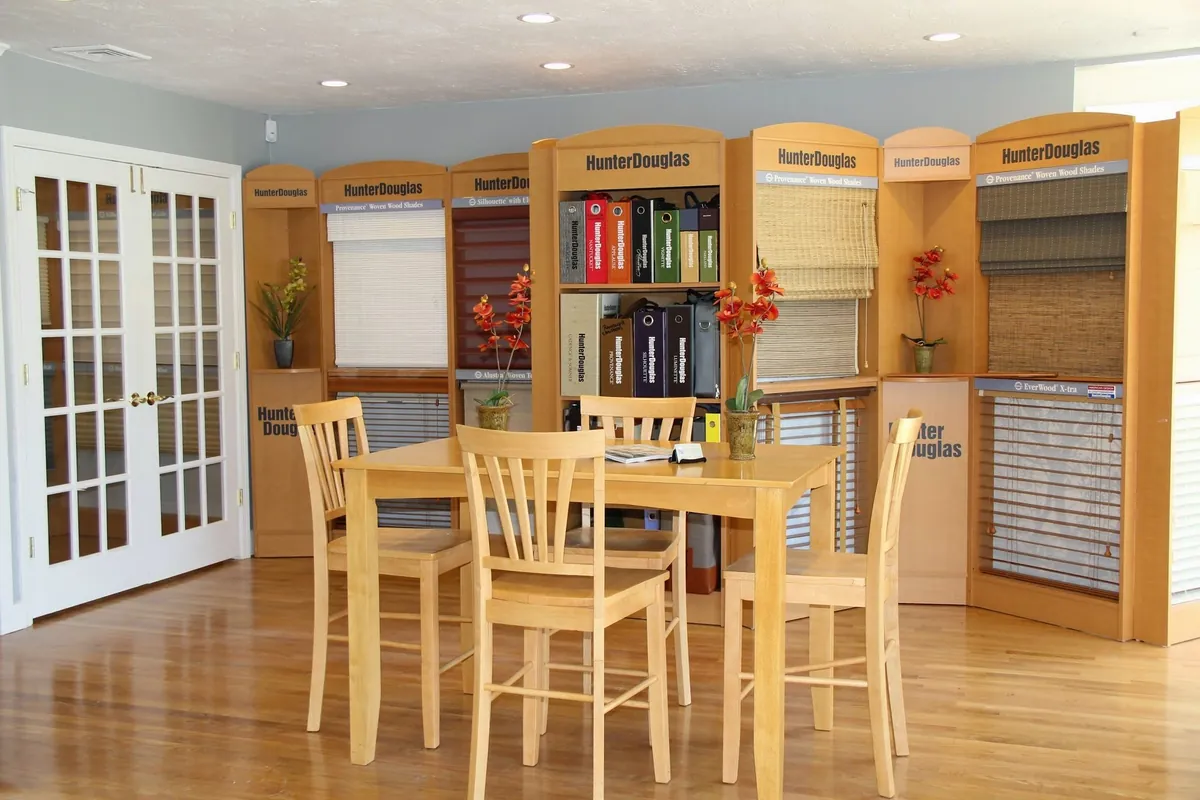
The Hunter Douglas range
A Gallery dealer carries the full line, so the shaded rooms and the sunny ones can be planned in the same conversation.
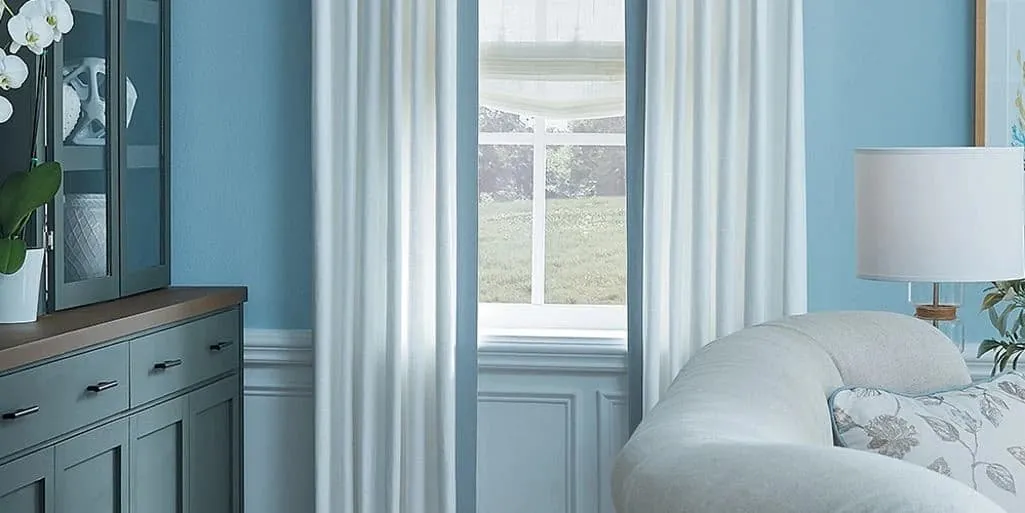
Drapery
Hunter Douglas drapery to soften a tall living room window near the Abbey, often hung over a shade that handles the daily light.
The bright side of the house
Most Portsmouth houses with a view have one wall that takes the brunt of the weather and the light. Depending on which shore you live near, that may be the morning sun rising over the Sakonnet or the long afternoon sun sliding down over the bay toward Prudence Island. Either way, the light reaches the room twice: once from the sky and once again off the water.
That reflected light is what catches people out. A shade that is perfectly comfortable on a window looking at a lawn can feel thin on a window looking at open water, because the glare arrives low and from below as well as from above. When we plan window treatments in Portsmouth for a water-facing room, three questions come first. How much of the view do you want to keep while the sun is on the glass? Does the room need to go dark, or only calmer? And does the fabric facing the window need to stand up to strong light day after day?
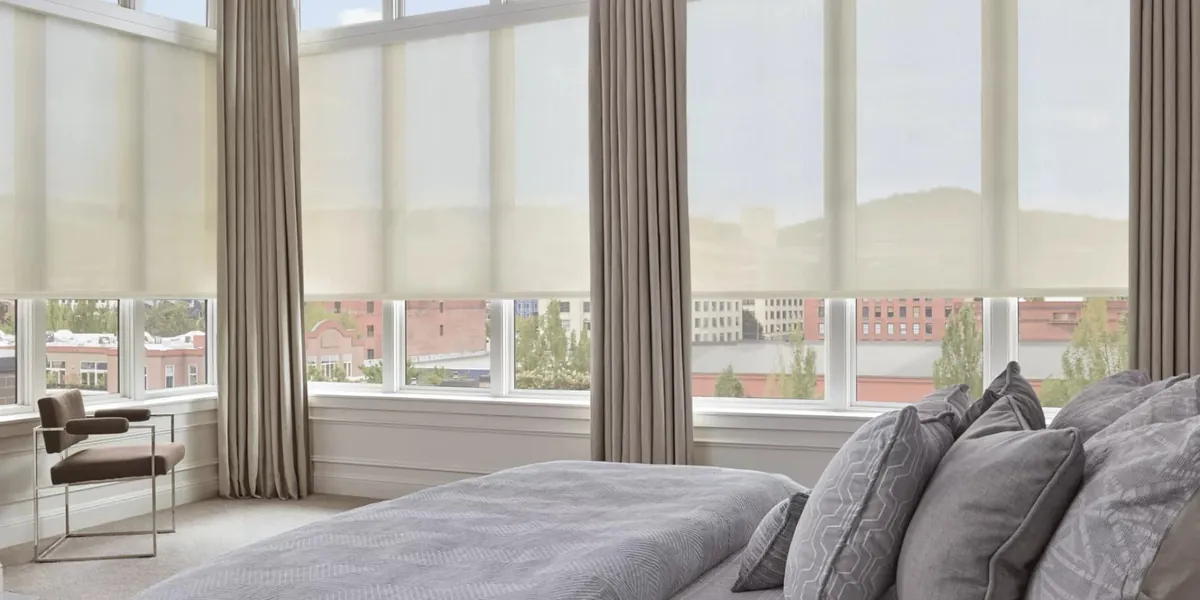
For keeping the view, a solar screen roller is usually the first thing we hold up. The weave lets you see out while it cuts the glare, and screens come in several levels of openness: the more open the weave, the more of the water you see, and the more light comes with it. For calming a room without closing it off, sheer shades with soft fabric vanes or a light-filtering honeycomb spread the light across the room instead of letting it fall as a hard patch on the floor. For rooms that need real dimming in the afternoon, a room-darkening fabric does the work, and drapery can add a second layer for evenings.
And the shaded side
Walk through to the rooms facing away from the water and the problem flips. These rooms can feel dim even at midday, and in winter they are often the coolest in the house. The worst thing we could do is hang the same heavy fabric there that suits the sunny side.
On the shaded side, the goal is to let in every bit of light you can while keeping the room private and warm. A top-down, bottom-up honeycomb shade lowers from the top to bring in sky while the lower half covers the view in from the street or the neighbors. Light-filtering fabrics keep the room bright with the shade down. Where the room runs cold, the honeycomb’s cells hold a layer of still air between the glass and the room, and that makes a noticeable difference on a January evening.
Keeping a sense of order matters too. You may choose different fabrics for the two sides, but from the street the house still looks like one house if the color facing the glass stays the same all the way round. We usually suggest a single white or neutral backing toward the window, with the room side of each fabric chosen for that room.
Cottages in Island Park and Common Fence Point
The cottages near the water at the island’s northern tip are full of character and short on standard sizes. Many were built for summer and added to bit by bit over the years, a porch closed in here, a dormer lifted there, so one house can hold windows from several different eras. It is common to find a small original sash beside a much larger replacement window, or a row of porch windows that are each a little different in width.
None of that is a problem for a made-to-measure product. Every opening is sized on its own, and we line up the head rails so a row of mismatched windows still looks tidy when the shades are raised. Honeycomb and roller shades come in slim widths for the narrow openings. Plantation shutters can be built to fit a window that has gone slightly out of square, and on a cottage close to the road, shutters give privacy at street level without shutting out the light.
Closed-in porches are often the brightest rooms in these cottages and the hardest to furnish. They have glass on three sides and little wall between the panes. A run of solar screens or light-filtering rollers, each sized to its own pane and mounted at the same height, turns a porch that was too bright to sit in after lunch into a room you can use all afternoon.
Colonials off East Main Road
Further inland, along the roads branching off East Main Road, the houses are newer colonials, built with regular windows set in neat rows across the front and a larger family room or kitchen opening at the back. These houses are easier to measure, and they reward a consistent plan.
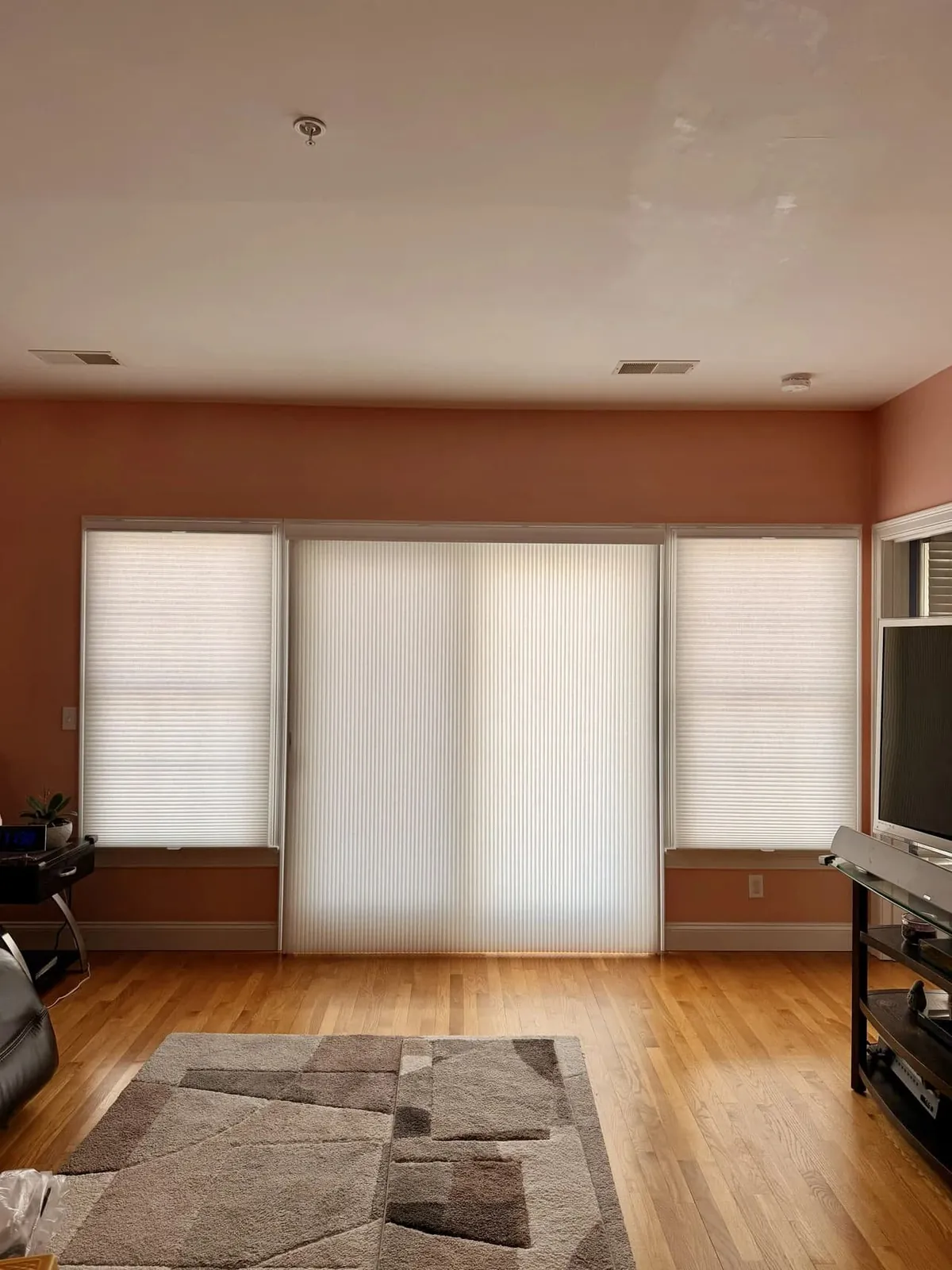
A common approach is the same product and color across all the front windows, which gives the house a finished look from the road, and then a more relaxed mix at the back where the family spends most of its time. Shutters suit the formal front rooms of a colonial very well. Faux wood blinds wipe clean in the kitchen. The family room often has a slider or French doors to the deck, and that opening needs a product that stacks out of the way: a vertical honeycomb shade, gliding fabric panels or vertical blinds.
Bedrooms upstairs on the bright side of a colonial benefit from a room-darkening honeycomb or a blackout roller fitted inside the frame, so the room stays dark until you want it light. Children’s rooms are a good place for cordless lifts, which leave no cord hanging by the window.
How a visit to your house works
Seeing the samples against your own windows is the only reliable way to judge them, and a waterside house shows that more than most, because the light changes so much from one side to the other. Here is how a consultation runs from first contact to a finished estimate.
- Ask for a visit using the Request a Consultation form, or press the call button, and pick a day that suits you.
- A consultant drives over with the van, which carries samples of shades, blinds, shutter louvers and drapery fabric.
- Together we walk the house, starting with whichever rooms are causing trouble: glare, cold glass, privacy or simply a bare window.
- You hold the samples up in the bright rooms and the shaded rooms, so you see each fabric in the light it will actually live in.
- We measure every window on your list, including the depth of each frame and anything in the way, such as a crank or a lock.
- You receive a free estimate, and you take whatever time you need to decide.
If choosing colors and fabrics across a whole house feels like a lot, our interior design consultations can help pull it together. The guide to what happens at an in-home consultation goes into more detail.

Bigger houses toward Carnegie Abbey
The larger houses toward the Abbey bring a different scale of window. Great rooms with two stories of glass facing the bay, wide sliding walls onto a terrace and long runs of windows down a hallway are typical. Here the challenge is less about fitting odd sizes and more about controlling a great deal of glass that faces a great deal of light.
Tall windows are where motorization pays for itself. PowerView shades on a two-story wall can be raised and lowered with a remote or the app, grouped so a whole wall moves as one, and set on a schedule so they lower before the afternoon sun hits the bay side and rise again in the evening. When you are planning motorized shades, we look at each window and plan how its motor is powered at the visit.
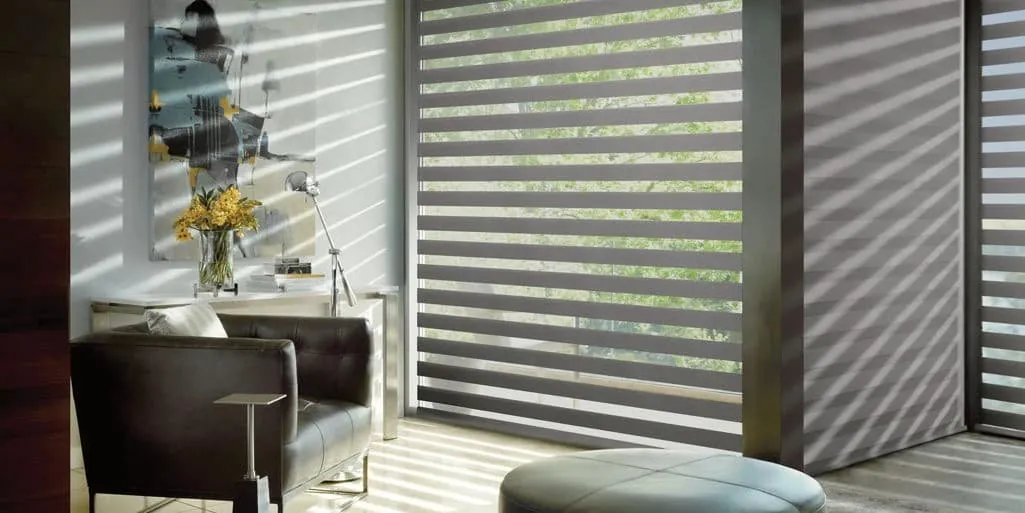
Where the windows are very wide, one shade may not span the opening, so we split it into two or three shades on a shared head rail. They can move together or one at a time. Banded shades, which alternate sheer and solid stripes, are another good choice for a wide modern opening: you can line up the sheer bands for a filtered view or close them for privacy.
Formal rooms in these houses often call for drapery. Floor-length panels hung high above the frame frame a tall window and draw closed in the evening, and they pair well with a shade underneath that does the daily lifting.
Wind, salt and windows that open
Portsmouth houses near either shore get salt carried in on the breeze whenever the windows are open. It settles on metal hardware over time. That does not rule out any type of treatment, but it does steer a few choices for the windows you open most.
A honeycomb or roller shade keeps its lifting gear hidden in the head rail, out of the salty air. Going cordless takes away the cord lock, which is often the first part to stiffen. A shutter has hinges and hardly anything else. If you have your heart set on metal blinds for a window you keep open, we go over the finishes with you first. And because a breezy summer means a shade gets nudged all day, we fix the brackets into solid wood framing so it hangs level for good.
Measuring and the day of installation
Good window treatments in Portsmouth look as if they came with the house, and that starts with careful measuring. Cottages that have been altered over many years rarely have square openings, and even a newer colonial can have a window that sits slightly out of line.
We measure each opening in several places across and down, note the depth of the frame, and check for anything that sticks out. Mount, color and lift are agreed window by window before anything is ordered. On installation day our certified Hunter Douglas installers fit and level each piece, try every shade and shutter, and show you how everything works, including the app if you chose PowerView. The page on what happens on installation day explains the visit step by step.
Keeping one look across a whole house
Very few houses need the same product in every room, and a Portsmouth house with a bright side and a shaded side almost never does. A typical plan might be shutters across the front of a colonial, screens on the bay side, honeycomb shades in the bedrooms and a roman shade in the dining room. A cottage might have rollers on the porch, honeycomb in the bedrooms and a cafe shutter over the kitchen sink.
What keeps it looking deliberate is a few things held constant: the color facing the glass, the head rail color and the mount style on each floor. If you plan the whole house at once, you can also add motorization later and run every room from the same app. Our window treatments overview shows the full range, and the Hunter Douglas page explains more about the brand.

What a Gallery dealer brings to an island house
Blinds & Designs is a Hunter Douglas Gallery dealer. For a house with water on one side and shade on the other, that means every option in one place: honeycomb, roller, screen, roman and sheer shades, wood and metal blinds, three shutter collections, drapery and PowerView.
Our own Hunter Douglas certified installers do the fitting. Interior design consultations help with color and fabric, and if a blind or shade you already own stops working, we look after repairs as well.
North Dartmouth, the closest showroom
Most customers choosing window treatments in Portsmouth, RI, decide at home, because the samples come in the van and the light in your own rooms is what counts. If you would rather see the products first, our North Dartmouth showroom is the nearest to the island, and the people you meet there are the same ones who measure and install.
Questions from Portsmouth
Our living room faces the bay. How do we cut the glare without losing the view?
A solar screen roller is the usual answer. Screens come in several openness levels, so you choose how much of the water you see against how much glare you stop. We bring a few to hold up at the window.
The rooms on the other side of the house feel dark. What should go there?
Light-filtering fabrics and top-down, bottom-up honeycomb shades keep those rooms bright while still giving privacy. Honeycomb cells also help a cool room hold its warmth.
Our Island Park cottage has windows of all different sizes. Can they match?
Yes. Every shade or shutter is made to its own opening, and we set the head rails at a common height so the row looks even when the shades are raised.
Can you plan the whole house in one visit?
We can. We walk every room, measure every window and give you one free estimate for the lot, even if the bright side and the shaded side end up with different products.
Can tall windows in a great room be motorized?
Yes. PowerView shades can be grouped and run from a remote, a phone or a schedule, so a two-story wall of glass moves together without anyone reaching for a cord.
Ready when you are
The simplest next step is a consultation at your house, where you can see the samples in both the sunny rooms and the shaded ones, have every window measured and receive a free estimate. Request one below, use the call button if you would like to talk first, or visit the North Dartmouth showroom.