
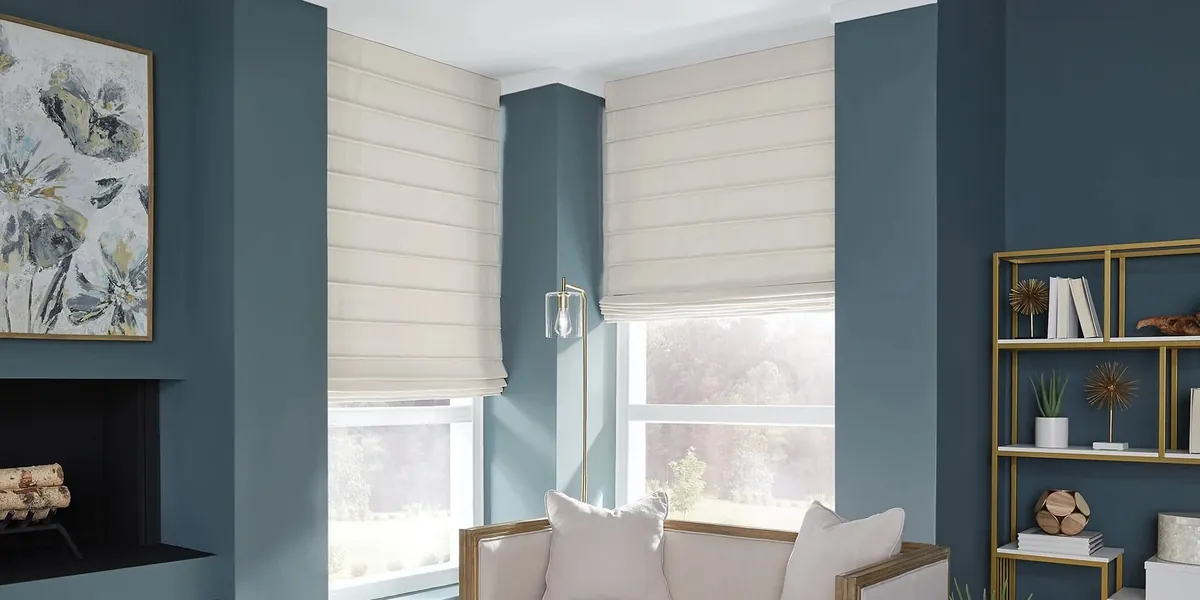
Bays and transoms on Oak Hill and around downtown
Drive up Oak Hill or walk the side streets off downtown and the windows tell you how old the houses are. Victorians push their front rooms out into bays, and the colonials set transoms above doors and tall sash. Neither shape comes in a catalog size. Each angled bay panel and each transom has its own width, its own height and its own quirks, so every shade has to be made for the exact opening. That is where we begin when we plan motorized blinds in Attleboro, MA, for one of these houses.
Those same shapes are hard to run by hand. A bay crowds several shades into one alcove, and pulled by hand they always end up a little out of line. A transom sits so high that a manual shade on it is usually left in one position for good. With PowerView, each of them gets steady, even control: a bay that moves as one piece, a transom that opens and closes from a handset or on a schedule.
The split-levels off Route 123 and the ranches in South Attleboro bring simpler openings and a different reason for a motor, which we come to further down.
Motorized blinds for Attleboro’s trickiest windows
Across Attleboro the same handful of openings come up again and again at our consultations. Each one has its own answer, and in each case the motor is chosen around the window rather than the other way round.
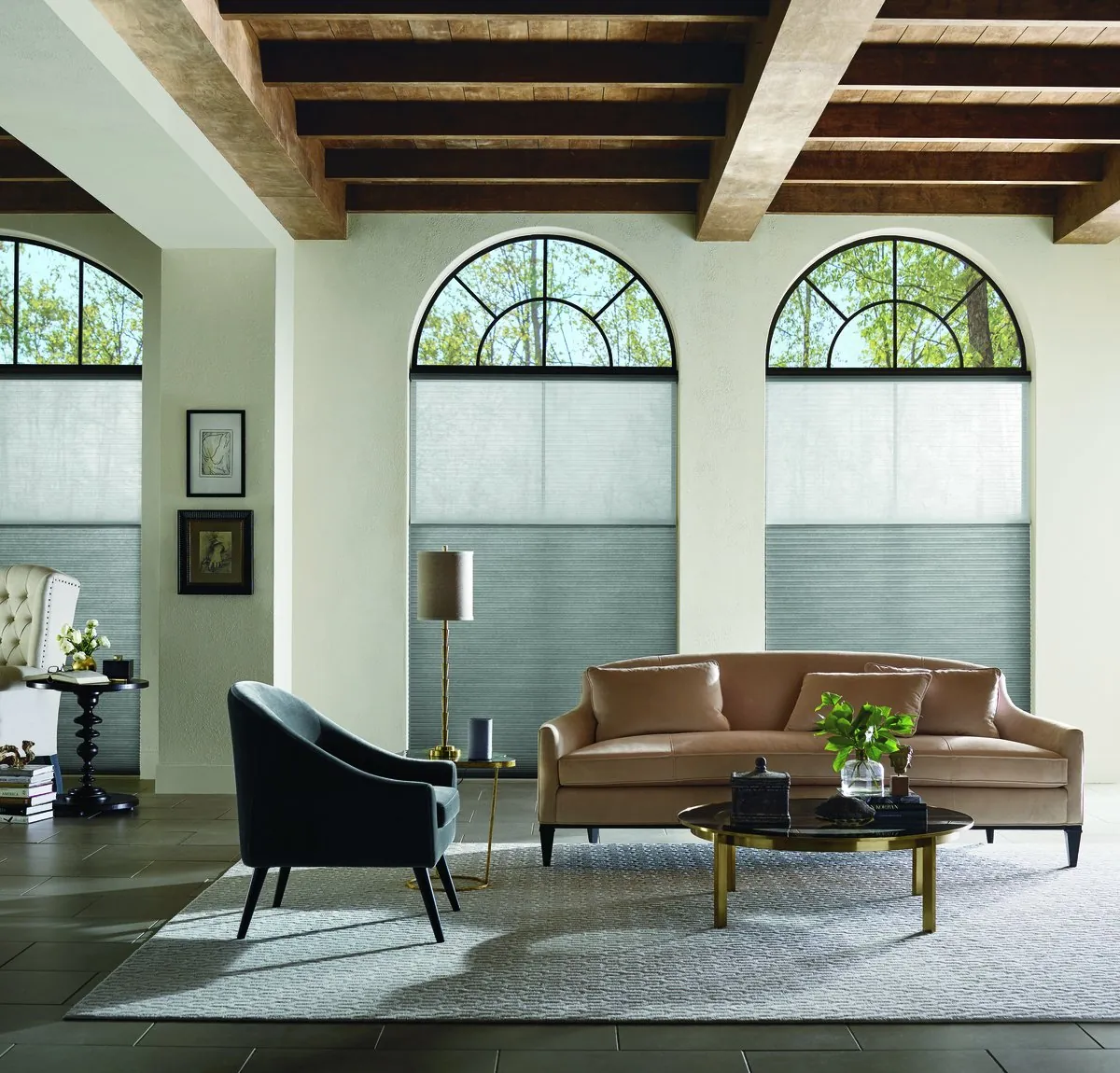
The front bay
Every panel measured on its own, then grouped so the whole bay rises and settles level.
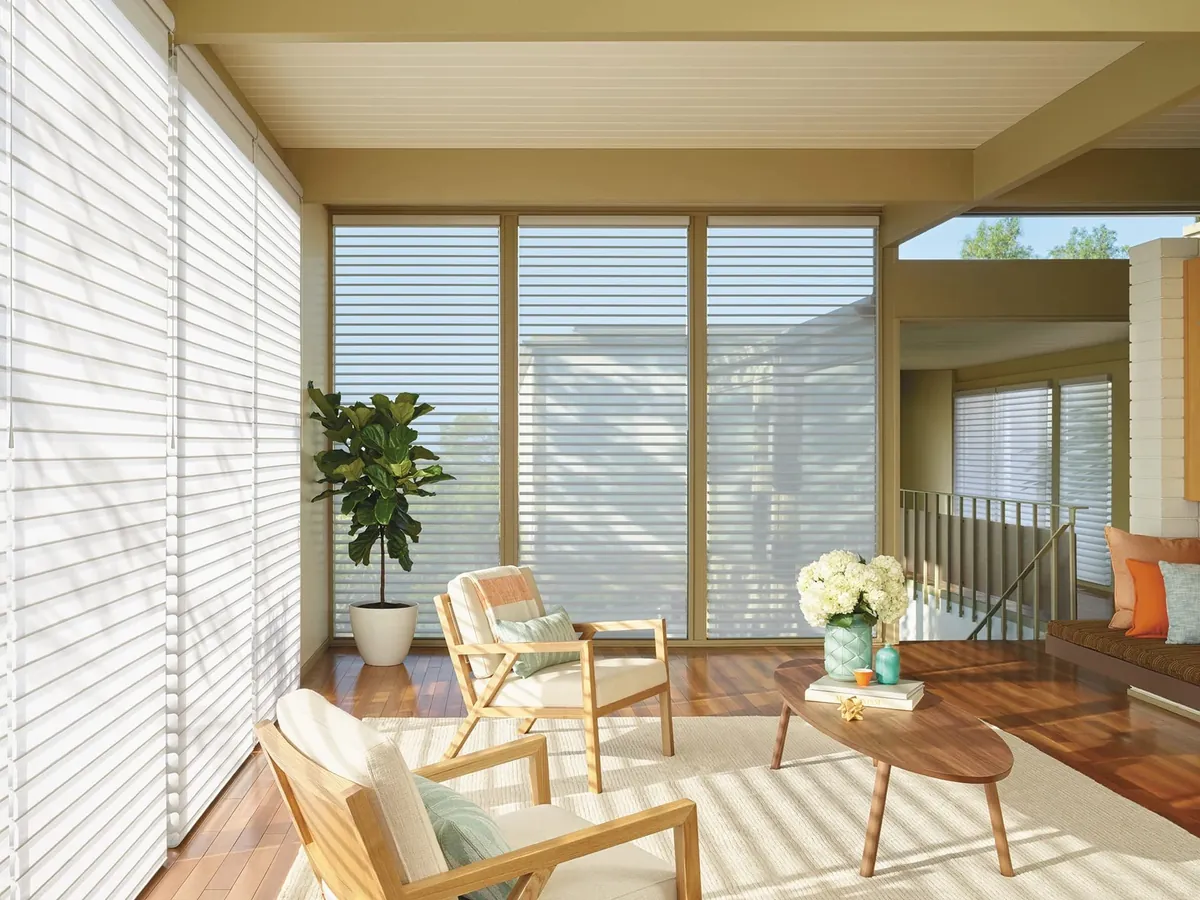
The transom
Left clear as a feature or covered and motorized, depending on what light it lets in and when.
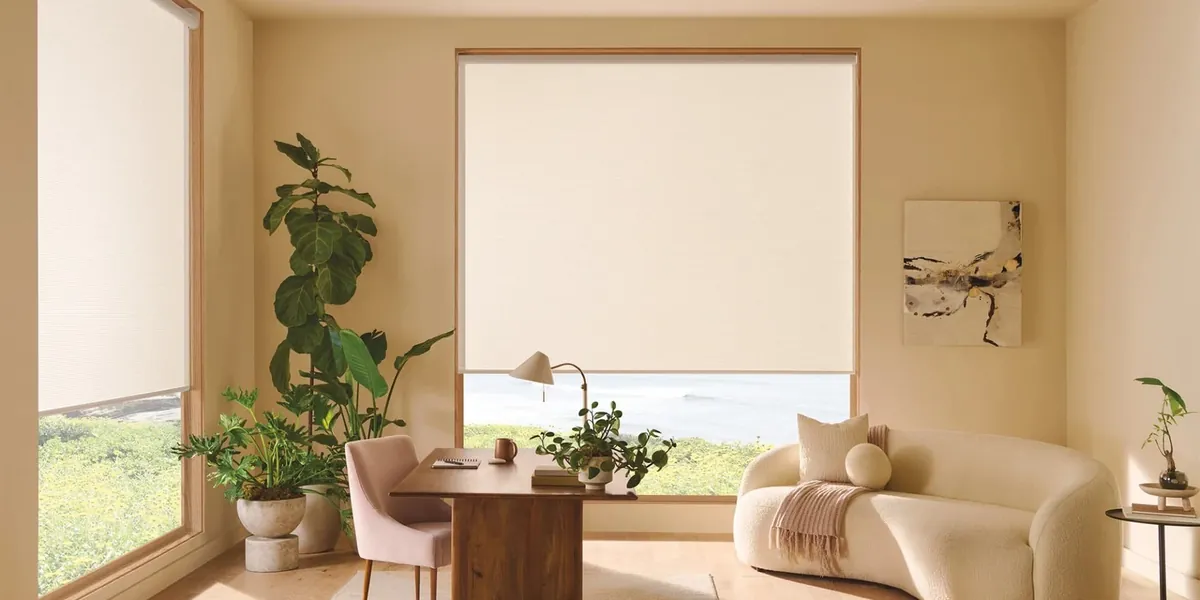
The split-level stair
A tall window at the half-landing, over the steps, where there is nowhere comfortable to stand.
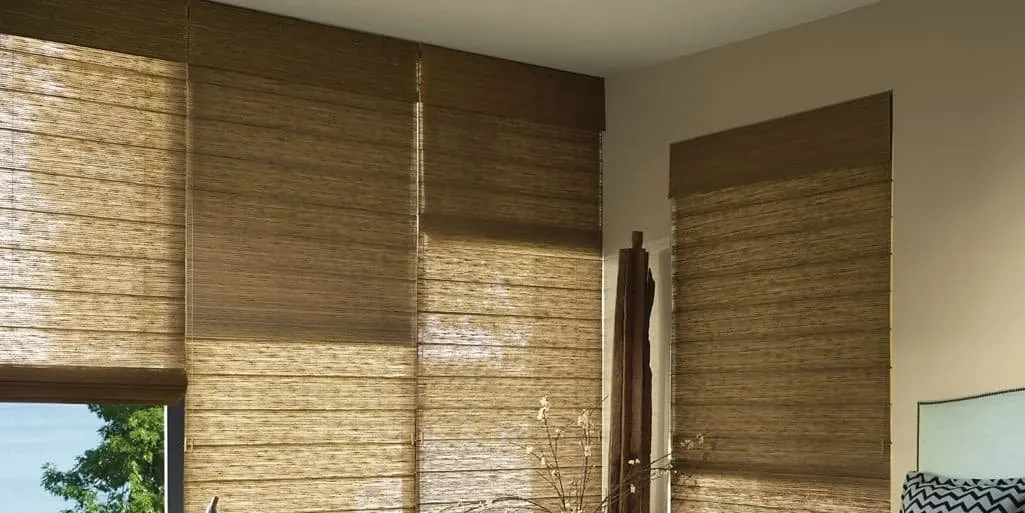
The ranch picture window
Several shades side by side across one wide pane, moving together and stopping at one line.
Why a bay needs measuring three times over
A Victorian bay looks like one window from the street. Inside, it is usually three, sometimes five, and the angled side panels are rarely the same width as the center one. On an older house the bay may also have settled a little, so the head of one panel sits higher than the next. A shade sized from the middle panel and copied across will look wrong the first time the bay is raised.
We measure each panel on its own, at the top, middle and bottom, and check the height on both sides. Then we look at the corners where two panels meet, because the shades need room to pass each other without rubbing. On a deep bay the headrails can sit inside each frame. On a shallow one, or one with trim that projects, a mount on the casing may be the cleaner answer. We go through those choices with you at the window.
Once the shades are made to those numbers, grouping does the rest. Press once and every panel climbs at the same pace and parks on the same line; press again and they all come down to their sills together. Sitting in the bay, you see one even sweep of fabric. Out on the sidewalk, the house reads as cared for.
Transoms: a feature or a nuisance
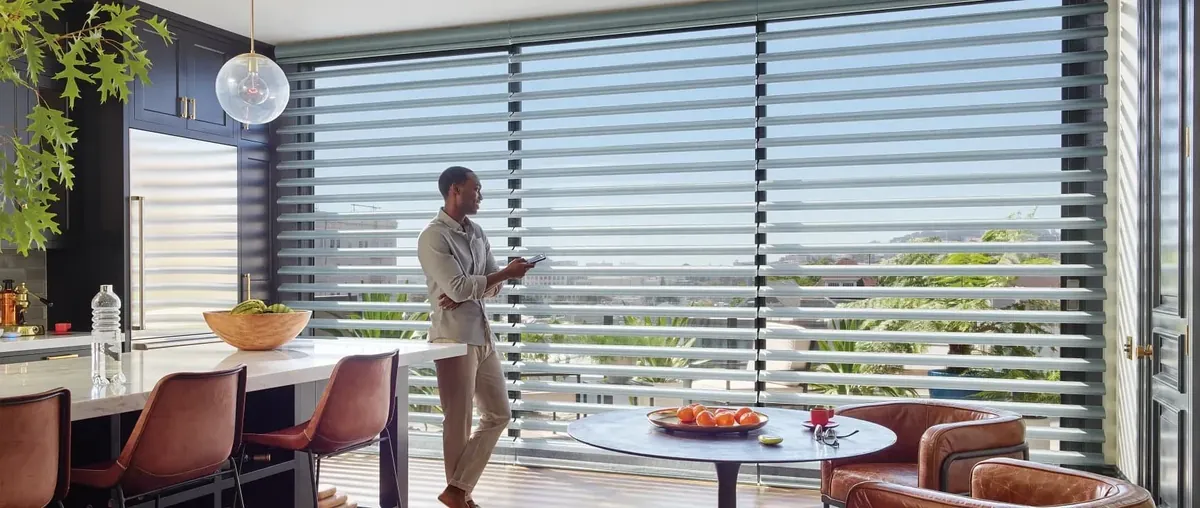
Transoms were put in to carry daylight deep into a room, and plenty of the older Attleboro houses keep theirs, glass and all. Over a front door in a hallway, that band of light is a pleasure, and most people would sooner see it bare. Over a bedroom window facing east, or across from a streetlight, it can be the one pane that wakes you up.
So we decide room by room. A bare transom needs nothing from us beyond a shade below it that sits neatly under the upper glass. A dressed transom is another matter, because nobody reaches that high by hand. On a motor it can rise and fall in step with the shade underneath, giving one clean movement for the whole opening, or keep its own hours, staying shut overnight while the lower shade lifts at breakfast. Arched heads and other odd shapes are judged one by one. Some suit a motorized covering, some are happier with a fixed treatment, and some look best untouched, and we tell you which is which.
Split-levels off Route 123
The split-levels off Route 123 sort their rooms onto half floors, and their windows follow that pattern. A big window lights the living room on the upper half level, the bedrooms sit a few steps above, and a family room tucked half below ground has wider, shorter windows near the ceiling. The stair between levels often has a tall window of its own.
Several of those windows are awkward by hand. The lower-level windows sit high on the wall, above a sofa or a desk. The stair window sits over the steps. A motor makes each of them simple, and grouping lets you treat each half level as its own zone: one command for the living floor, one for the bedrooms, one for the family room. That keeps motorized blinds in Attleboro split-levels as easy to live with as the house is to walk through.
Roller shades suit the wide, short lower-level windows well, with fabrics from sheer to room-darkening. In the living room, sheer shades or honeycomb shades are popular, and blinds work anywhere you want to tilt light rather than block it.
South Attleboro ranches
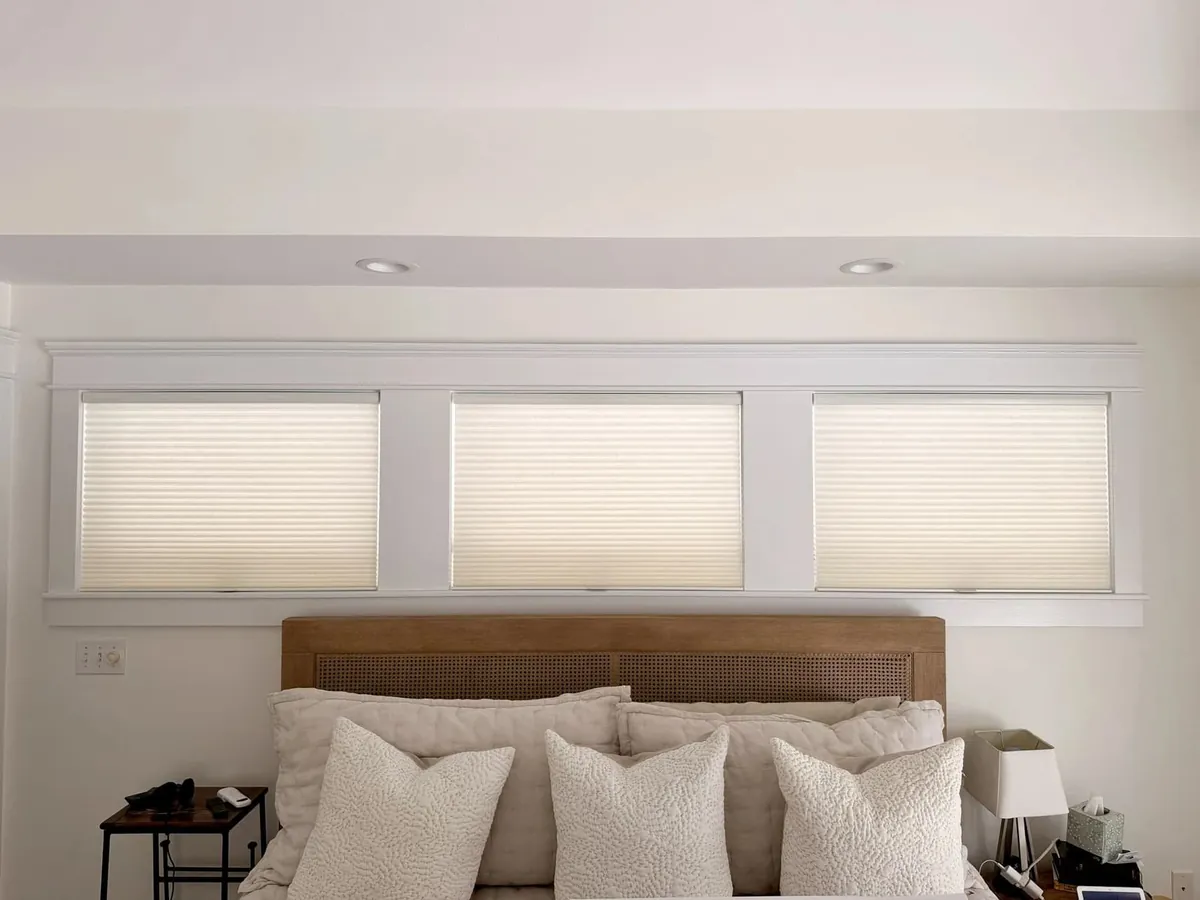
In South Attleboro the houses sit low and wide. A typical ranch has a living room picture window, bedrooms along one side and a slider or a set of windows at the back. The openings are standard, the frames are square, and inside mounts go in cleanly.
What these houses ask for is coordination. A picture window often carries two or three shades that should move together, and a row of bedroom windows looks best when every shade sits at one height. A group handles both. A morning schedule can lift the bedroom shades at the time you choose, and an evening one can close the whole front of the house without anyone walking from room to room.
Back rooms that face the afternoon sun are where a motor gets noticed most in a ranch. A shade that lowers part way on a schedule keeps the glare off the screen and the sofa, and screen fabrics soften the brightness and leave the yard visible.
How you control the shades
There are three ways to tell a PowerView shade what to do, and most houses use each of them somewhere.
- Handsets stay in the room. They raise, lower and stop the shades, and anyone can use them without instructions.
- The PowerView app lets you move single shades or groups to any height from your phone or tablet and holds your scenes, such as one that opens the whole bay and leaves the transoms closed.
- Schedules move shades at the times you set, on the days you choose, so the routine carries on without you.
For a fuller picture, read how motorized shades are controlled, and see window covering automation for scenes and schedules. How each motor gets its power is something we work out together at the visit, one window at a time.
What happens at the house
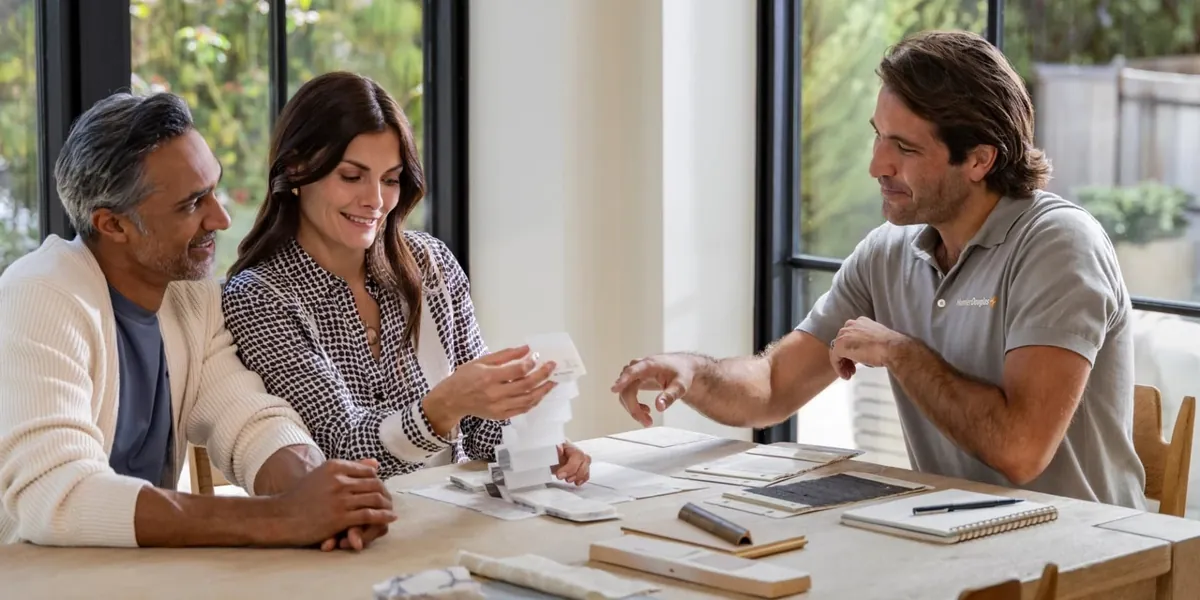
With bays, transoms and half-level stairs to think about, there is no substitute for standing at the window. Our consultations come to you, with a van full of samples, so you choose fabrics in your own light.
- Request a consultation online, or ring our Franklin showroom through the call button.
- We start with the opening you are least sure about, often the bay or a transom.
- Samples go up against your glass and your trim, so you judge color and light where they will live.
- We agree which shades move together, which transoms stay clear, and which rooms get handsets, the app or schedules.
- Width, height and depth are taken on every panel, along with anything that might catch the fabric.
- You receive a free estimate for the shades and the installation.
- Each shade is built by Hunter Douglas to the numbers from your house.
- Our Hunter Douglas certified installer hangs the shades, pairs each one with its controls and sets up your first groups and schedules with you.
Curious about the day itself? See what happens on installation day.
Downtown colonials and their tall sash
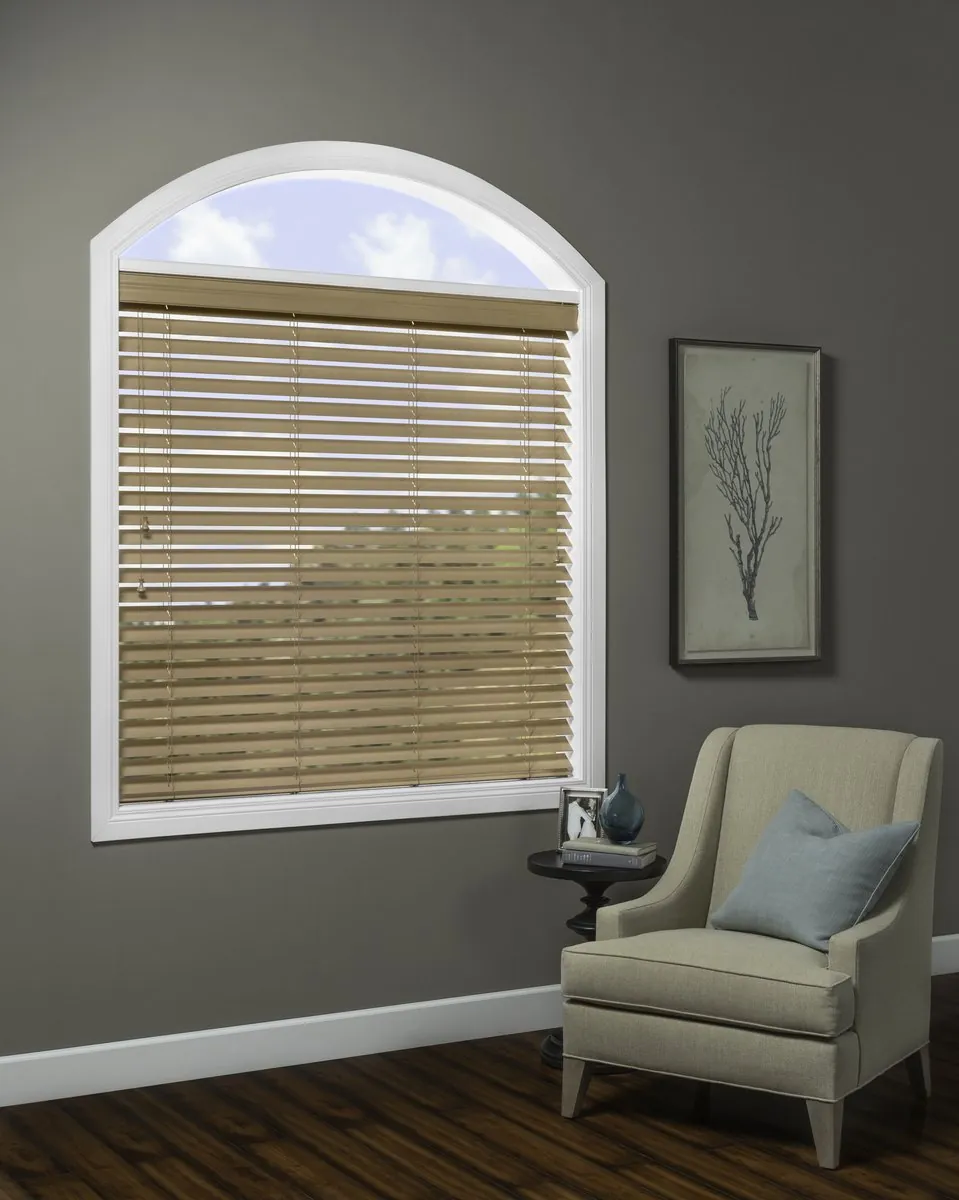
The colonials around downtown tend to have tall, evenly spaced sash, often with deep window stools and original casings worth showing off. Those windows let in a lot of light and show a lot of the room after dark.
On a motor the shade covers the whole height of the sash and halts at any point, so you can block the view from the sidewalk at night while the upper glass stays clear by day. Roman shades fold neatly at the head of the window and suit the formal rooms in these houses. Wood blinds, with slats turned to bounce light onto the ceiling, are another period choice, and on a motor the long cords that used to hang beside them disappear.
On the stair of a downtown colonial there is often a landing window lit from the side of the house. It is a natural spot for a motor, and it can join the front group so it opens and closes with the rest of the house.
Bedrooms in every kind of house
Bedrooms bring the same question in every era: how to keep early light out and still wake to daylight. A room-darkening fabric cut to fill the opening handles the first part. A schedule handles the second, raising the shade at your own wake-up time, and a different one on Saturday if you like.
In a Victorian bedroom with glass above the hall door, the transom can stay covered overnight while the window shade follows the morning schedule. In a split-level, where the bedrooms sit on their own half level, they can form their own group. In a South Attleboro ranch, the whole bedroom side of the house can be set to one routine.
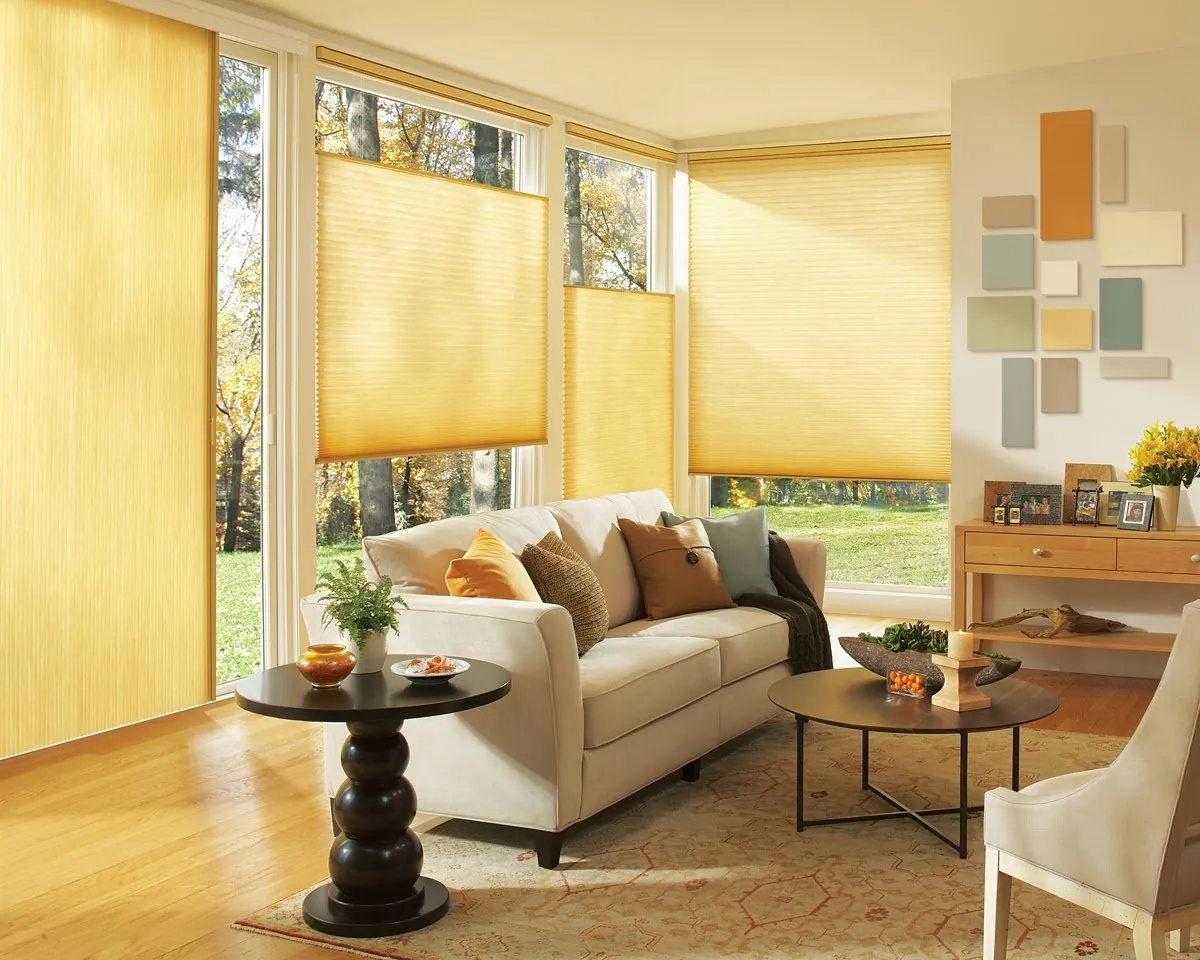
Shades that suit the age of the house
Choosing a style for an older Attleboro house is partly about light and partly about looking right. A Victorian parlor with a bay and heavy trim often suits roman shades, whose folds stack at the head of each panel and leave the woodwork on show. Honeycomb shades work well in the same rooms when you want a slimmer, quieter look. A colonial dining room with tall sash can carry wood blinds or sheer shades equally well. In the split-levels and ranches, roller shades and screen fabrics give clean lines across wider glass.
The motor does not change those choices. It goes with the shade rather than replacing it, so you pick the look first and add PowerView to it. That is why motorized blinds in Attleboro do not all look alike: a bay of roman shades on Oak Hill and a row of rollers in a South Attleboro ranch can run on the same system and the same app, while each suits its own house. At the consultation we bring samples of each style that fits your openings, so you can compare them side by side against your own walls and trim.
Sliders and back doors
Many of the ranches and split-levels open onto a deck or patio through a slider. A vertical shade or a vertical honeycomb shade suits those doors, stacking to the side when you want to step outside. Motorized, the slider can join the back-room group, so the whole wall of glass opens and closes together in the evening.
On a downtown Victorian, the back door is more likely to be a single door with a window and perhaps a transom above it. The door glass can take its own shade, and the transom can follow the same choices as any other in the house.
Kitchens in the older houses often have a window over the sink, set deep in a thick wall, with the counter in the way. It is the window people reach for most and reach most awkwardly. A small motorized roller or honeycomb shade there is a modest change that gets used every single day, and it can join the morning schedule with the rest of the back of the house.
Adding shades as you go
Not every project covers the whole house at once. Plenty start with the bay, the transoms or the stair window, and more rooms follow later. New PowerView shades pair with the ones already installed, so the first shades stay in place as the system expands.
The motorized blinds and shades page covers the full range, and our Attleboro page lists every service in town. For the bays in particular, many homeowners also compare roman shades in Attleboro, and for the ranches, roller shades in Attleboro.
One dealer for every shape in the house
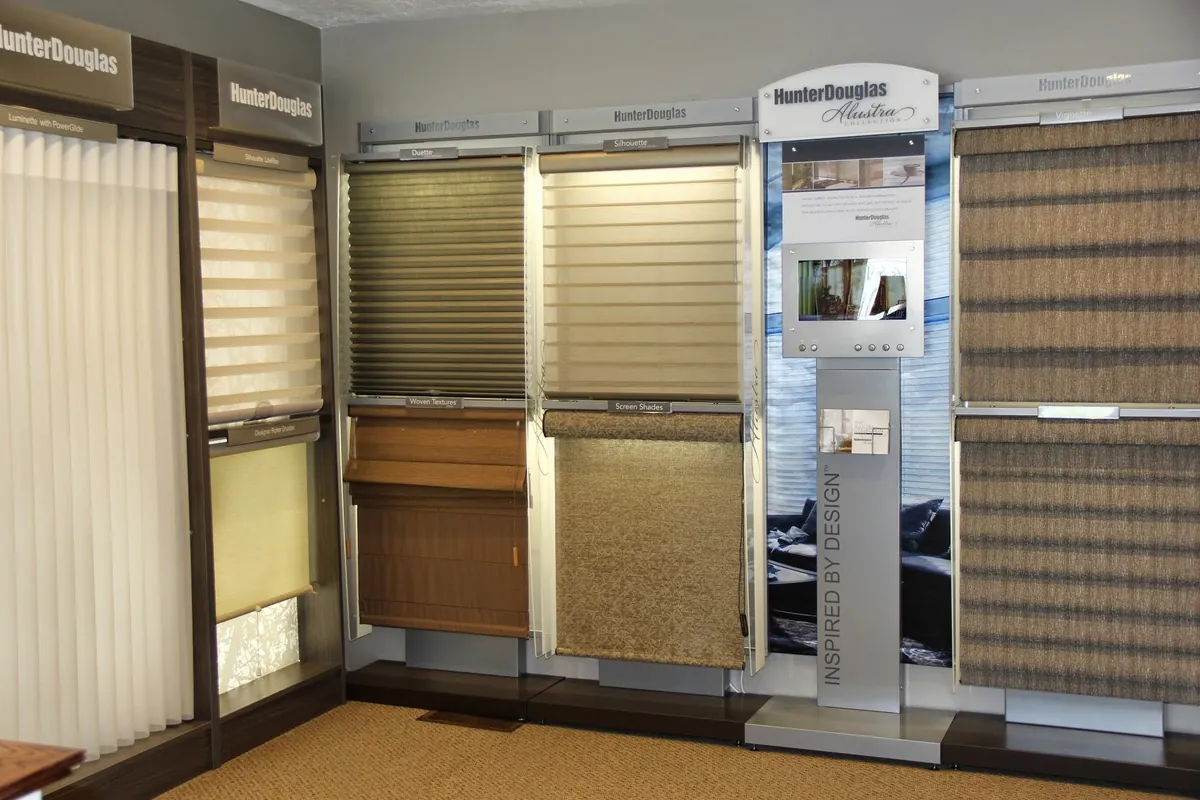
Blinds & Designs is a Hunter Douglas Gallery dealer. A house with bays, transoms and half-level stairs rarely suits one style throughout, so it helps to plan honeycomb fabric for one room, a roman fold for another and slatted blinds for a third, all from one dealer and all able to run on PowerView.
Every job is fitted by Hunter Douglas certified installers. Estimates cost nothing, and we offer interior design consultations when the whole room is up for a rethink. Shades you already own that need fixing can come to us for repair too.
Seeing samples before the visit
Franklin is our nearest showroom to Attleboro, and some people like to look there before we come out. Most Attleboro projects, though, are settled at the house, where the bay and the transoms can be measured and the samples held up against the real glass.
Questions from Attleboro
Our bay has three panels of different widths. Can the shades still move together?
Yes. Each panel gets a shade made to its own measurements, and the shades are grouped so the bay rises and lowers as one, finishing at a single height.
Is it worth covering a transom?
That comes down to the room. In a living room, many people leave the transom clear. In a bedroom that catches early light, covering it often makes sense, and a motor is the only practical way to reach it.
Which shades suit the lower level of a split-level?
Roller shades are a common choice for the wide, short windows set high on the wall, with fabrics from sheer to room-darkening. Grouping lets that level move on its own.
Are the South Attleboro ranches straightforward to fit?
Usually, yes. The frames are square and the openings standard, so the planning is mostly about which shades move as a group and which schedules suit each room.
What does the estimate cost?
Nothing at all. We work it out from your own windows once they are measured, and it is free.
Tell us about the bay first
If there is one window in the house you would change first, it is usually the bay or a transom you cannot reach. Mention it when you request a consultation for motorized blinds in Attleboro, and we will bring samples picked for that opening, measure every panel and show you how a motor would run it. Questions before booking? Tap the call button and our Franklin showroom will pick up.