
Small old openings that need a made-to-size shade
Drive Main Street from the village toward the river and the houses tell you how the town grew. First come the farmhouses and capes that stood here when the land around them was still worked, with low ceilings and windows sized for the stove-heated rooms of their day. In between, on lots carved out later, sit the post-war ranches with their wider, plainer glass. Very little of that stock was built to a standard window size, and that is the first thing to know about roller shades in Acushnet, MA.
A shade from a store comes in a handful of fixed widths. An original sash in a farmhouse parlor rarely matches any of them, and the frame around it has often moved a little over the years. A made-to-measure Hunter Douglas roller is cut to the opening you actually have, so it sits inside the frame without a wide gap down each side and without the fabric dragging on the trim.
That is the job we do here more than anything else: careful measuring of small, slightly irregular windows, then a shade that looks as if it was always meant to be there.
Roller shades in Acushnet, MA, from light filtering to blackout
Everything below is Hunter Douglas, from the Designer and Alustra collections, and we bring samples of each to your house so you can judge them in your own rooms.
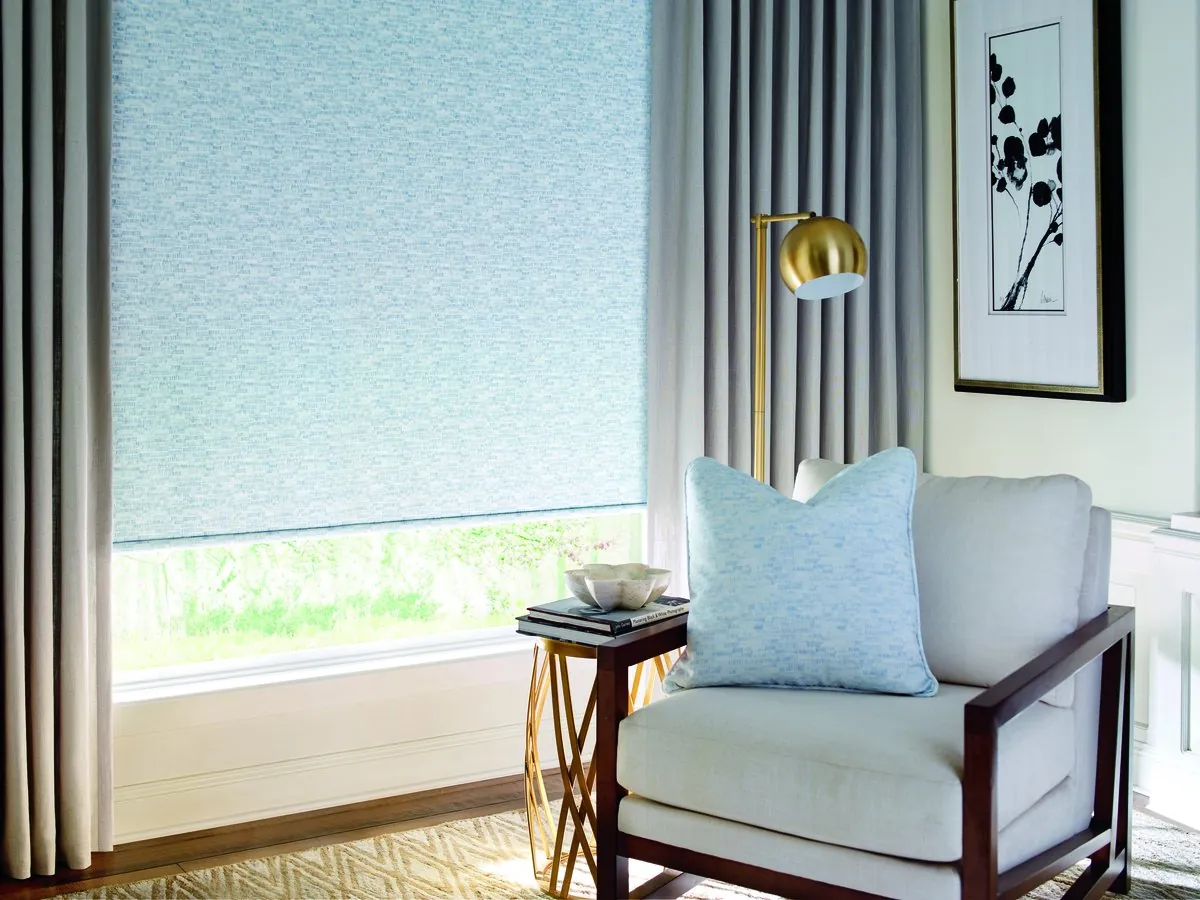
Designer Roller in light filtering fabrics
A soft, even light for living rooms and kitchens, with a wide choice of colors and textures. Rolled up, the shade tucks into a slim tube at the head of the window.
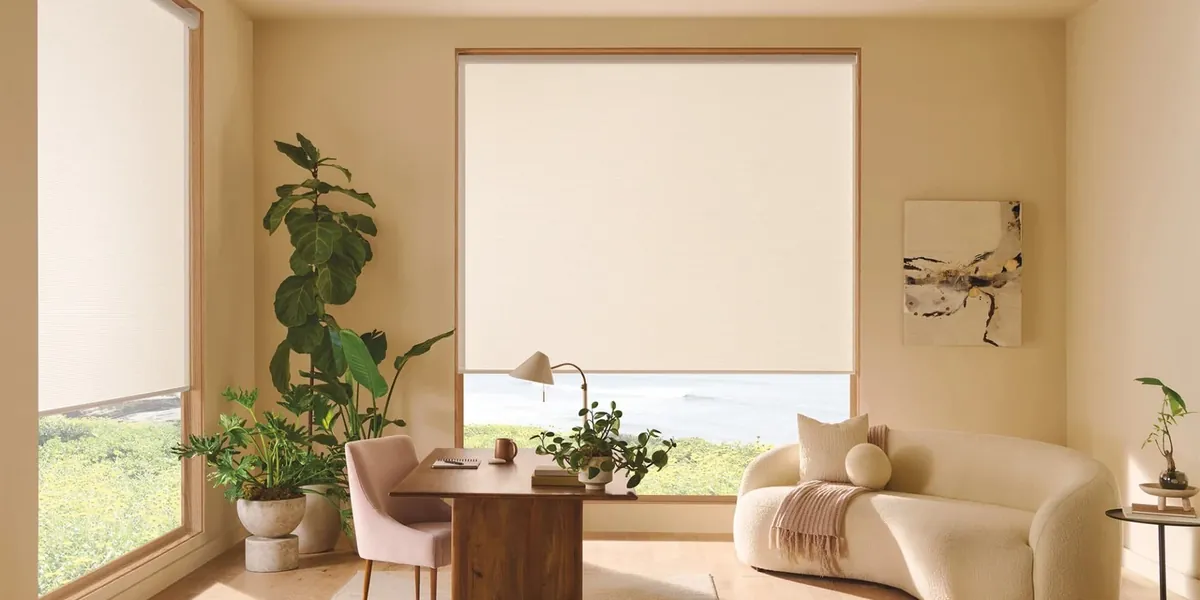
Room-darkening and blackout rollers
Opaque fabrics for bedrooms, nurseries and a den used for television. On a small farmhouse window, an inside mount keeps the light gaps narrow.
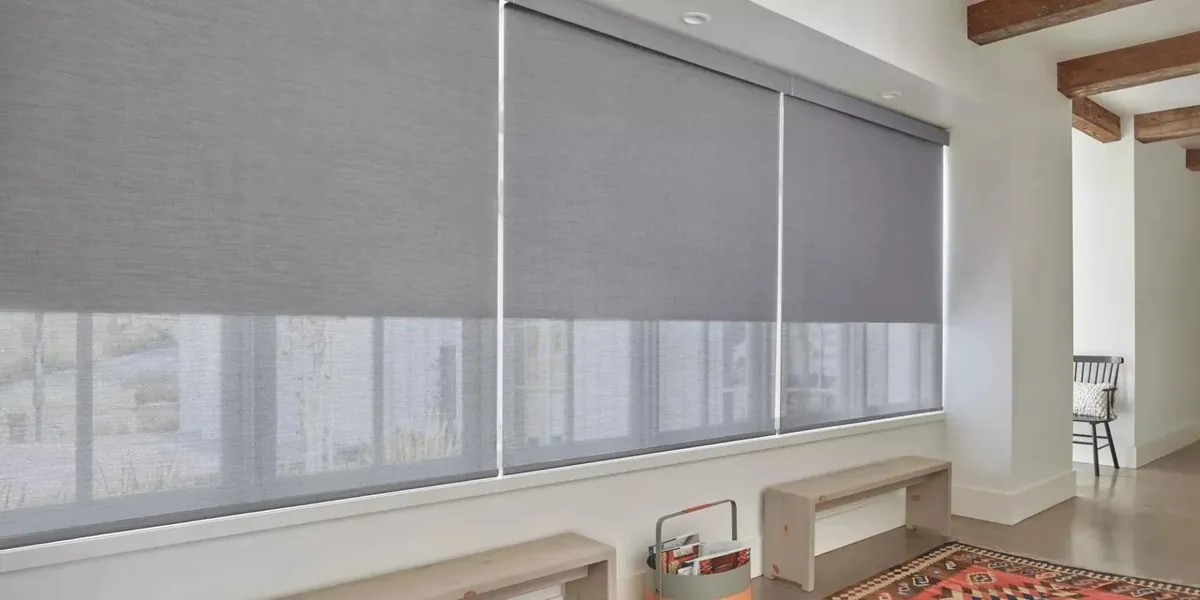
Designer Screen for the river side
Woven solar screen that cuts the glare off the water and the afternoon heat while you still see out. The openness of the weave decides how much.
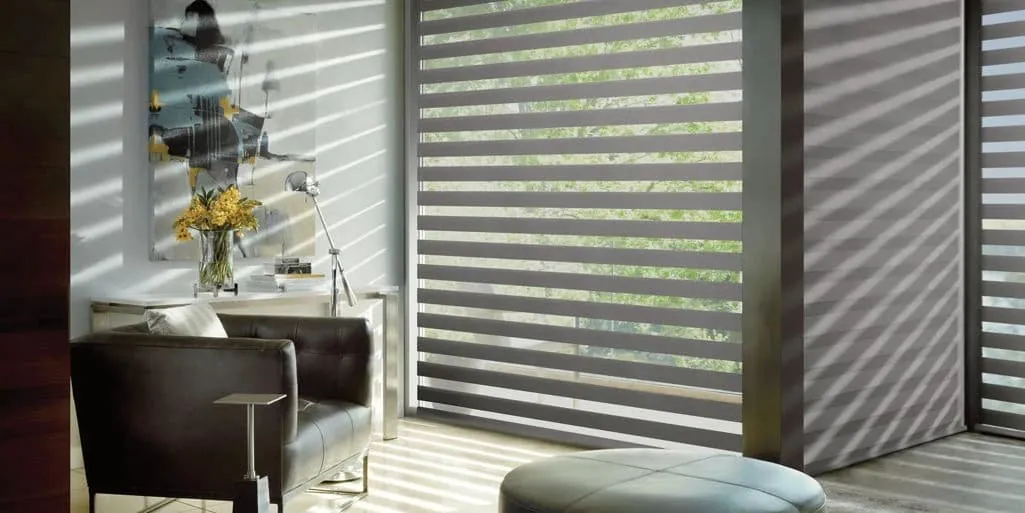
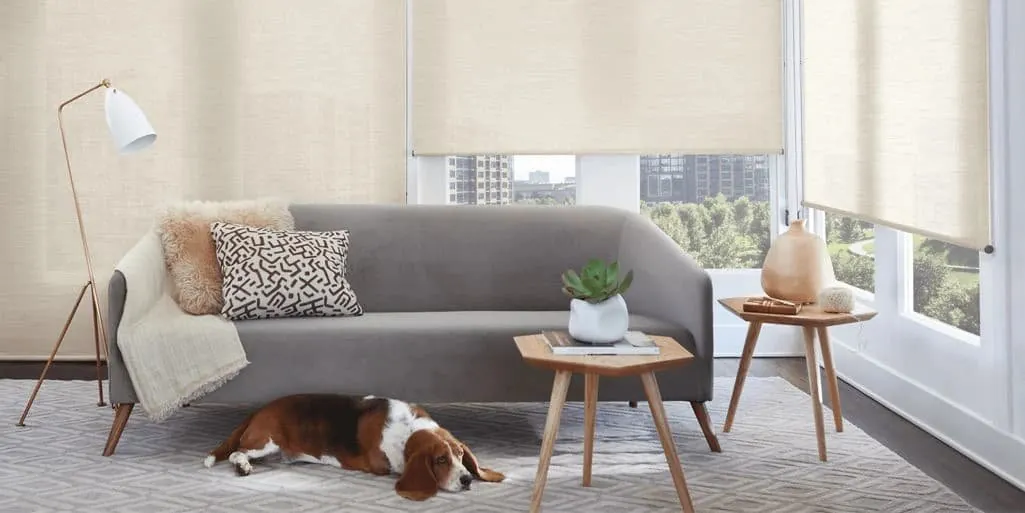
Banded shades
Sheer and solid stripes that slide past each other. Line them up for a view, offset them for privacy, all without raising the shade.
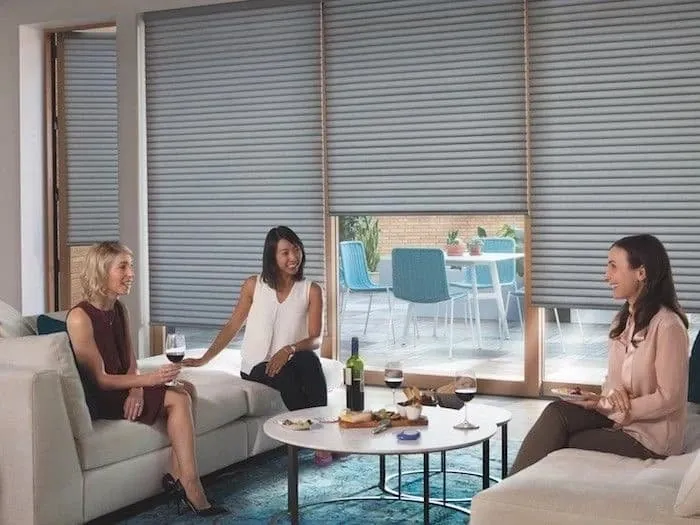
Sonnette cellular rollers
A roller built from a curved cellular fabric, so it rolls up clean but brings the insulating cell into the room. A good pick for a ranch slider.
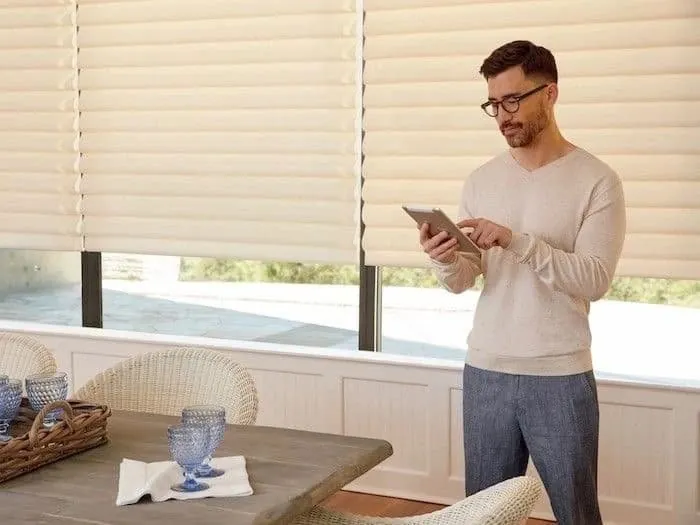
PowerView control
Raise and lower shades from a phone, tablet or remote, or put them on a schedule. Handy on a window behind a sink or above a stair landing.
Why a store-bought roller rarely fits an old frame
The farmhouses and capes along Main Street were built by hand, and their windows were framed one at a time. Two openings that look the same from the yard can differ in width by enough to matter, and a century of settling often leaves a frame a little out of square. Hang a fixed-width shade in that opening and you get a bright line of light down one side and a fabric edge that scuffs the trim on the other.
A made-to-measure roller avoids both. We measure the width at the top, middle and bottom and the height at both sides and the center, and the shade is cut to the narrowest point so it rolls freely. On a window that has settled badly, we will tell you whether an inside mount will still look right or whether a slim outside mount across the casing is the better answer.
Depth is the other thing we check. Old sash often sits in a shallow frame, with weights and pulleys taking up space at the top. A roller needs very little depth compared with most window coverings, which is one reason it suits these houses, but there still has to be room for the bracket. We check it at every window before anything is ordered.
Farmhouse and cape windows along Main Street
Inside an older Acushnet farmhouse the windows are usually the smallest thing in the room. Double-hung sash with narrow muntins, deep sills that hold a plant or two, and wood trim that someone has probably painted many times. Upstairs in a cape, the knee walls bring the windows down low and the gable-end openings are often smaller still.
For rooms like that the shade should stay out of the way. A light filtering Designer Roller in a warm white or soft neutral, mounted inside the frame, keeps the trim on show and rolls up so far that the window looks bare during the day. In a bedroom under the eaves, a room-darkening fabric does the same job at night, and because the opening is small, very little light finds its way around the edges.
On these smaller windows the choice of fabric texture shows more than you might expect. A linen-look weave sits well against painted trim and wide pine floors, while a smooth, flat fabric can look a little too modern in a room with old plaster walls. We bring a range of textures so you can see each one against your own woodwork.
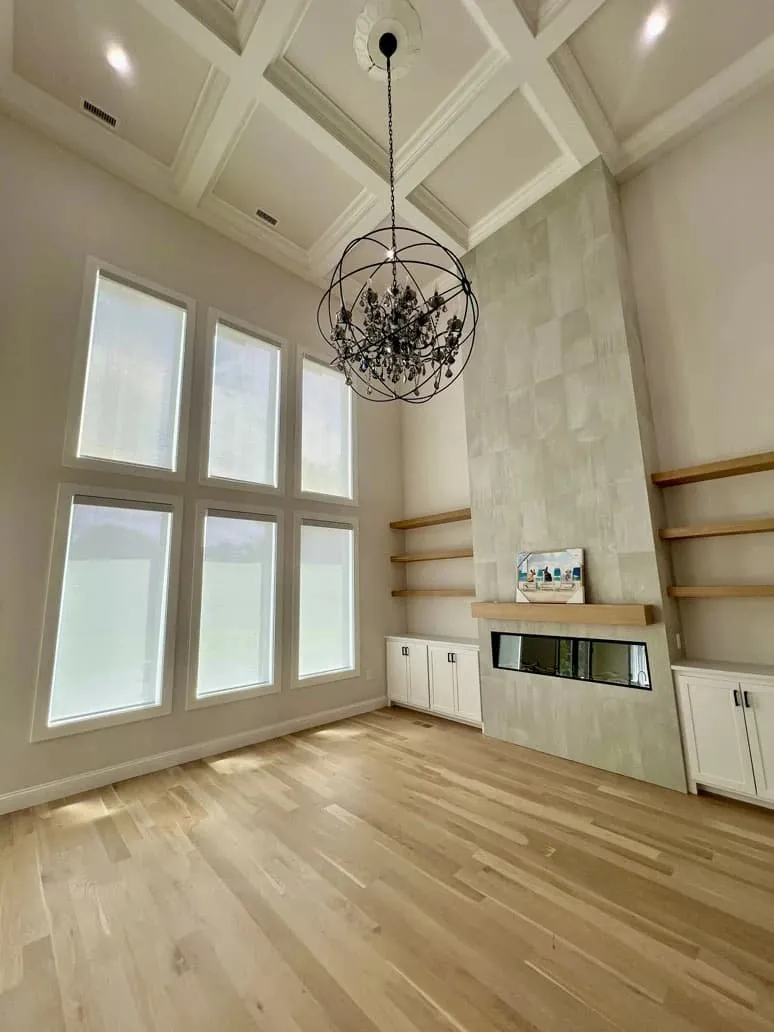
Post-war ranches between the older houses
The ranches that filled the lots along the side roads were built quickly and simply. Most have a living room picture window, often with narrow side lights, a kitchen window over the sink, a slider out to the back, and bedrooms with wider horizontal windows set a little higher on the wall.
Each of those calls for something different. A picture window is often wider than one shade looks good across, so we split it into two or three rollers that share a bracket and line up at the bottom. The side lights get their own narrow shades in the same fabric. Over the sink, where it is awkward to reach a cord, a cordless lift or a motor makes daily use easier. For the slider, a roller mounted above the frame clears the handle and rolls up out of the way when you step outside.
Bedrooms in a ranch usually face the street or the neighbor’s yard, so privacy matters as much as darkness. A blackout roller handles both. If you want daylight in the room without being seen from the road, a banded shade lets you keep the sheer stripes lined up during the day and close them at night.
Many of these ranches have had replacement windows put in at some point, and that changes the fit. Vinyl replacement frames are often shallower than the wood they replaced, and most have tilt latches along the top of the lower sash that a shade must not block. When we fit roller shades in Acushnet ranches with replacement glass, we check where those latches sit and choose a mount that leaves the sash easy to tilt in for cleaning. Sometimes that means mounting the bracket slightly forward in the frame, and sometimes it means moving to the casing.
Light off the Acushnet River
Houses along the river get a different kind of light from those set back among the trees. Water reflects the sun, and on a bright afternoon the glare from the river can wash out a television, fade a rug and make a west-facing room uncomfortable to sit in. That is where solar screen earns its place.
A screen fabric is woven with small openings between the threads. The proportion of open space, the openness factor, decides what you see and how much glare gets through. A more open weave keeps more of the river in view but lets more light in. A tighter weave cuts more glare, and the view softens behind it. Color matters just as much: a darker screen is easier to see through and calms glare better, while a lighter screen glows in direct sun and hides more of the view.
For a riverside sitting room we often start with a darker screen in a middle openness and hold it up at the window in the afternoon, when the glare is at its worst, so you can judge it in real conditions. Our guide to the best shades for sun and glare goes into the choice in more detail.
How a visit to your house works
We do most of our work in Acushnet through in-home consultations, because the fit of a roller depends so much on the window in front of you. Our vans carry samples, so we can bring the showroom to you.
- You request a consultation online or with the call button, and we settle on a time.
- We walk the house with you room by room, starting with the windows that bother you most, whether that is a bedroom that gets light too early or a river room that glares in the afternoon.
- You hold light filtering, room-darkening and screen samples against your own glass and see how each changes the room.
- We measure every opening carefully, including the depth of the frame, and note anything that affects the mount.
- You get a free estimate for the shades you are considering, and you decide in your own time.
If you want help choosing colors and fabrics across several rooms, ask about our interior design consultations. We can cover them at the same visit.

Choosing an opacity room by room
Most houses end up with more than one fabric. A light filtering roller suits a kitchen or living room where you want daylight and a little privacy. The fabric glows softly during the day and hides the inside of the room from the road, though with lamps on at night a lit room shows through it. Room-darkening fabric blocks most light and suits bedrooms. Blackout blocks it fully, and on a small window with an inside mount the light gaps at the edges stay very thin.
Screen fabric is the outlier. It is about view and glare more than privacy, so it belongs in rooms where seeing out matters most, like a back room facing the river or a sunporch. If you want a screen by day and privacy at night in the same window, a dual roller puts two fabrics on one bracket.
When people ask us where to begin with roller shades in Acushnet, we usually suggest choosing for the darkest and the brightest rooms first. Once those are settled, the rest of the house tends to fall into place around them.
Designer or Alustra
Both collections come from Hunter Douglas and both roll on the same simple principle, but they are aimed at different rooms. Designer Roller and Designer Screen cover the broad middle of the range: plenty of colors, textures and opacities, practical for any room in a farmhouse or a ranch. Designer Banded is the striped version for flexible privacy.
Alustra is the more tailored end of the range, with fabrics and hardware chosen for a finished, architectural look. Alustra Woven Textures gives a roller the natural character of a woven shade, which can look right at home in a cape with exposed beams or a farmhouse kitchen. We bring both so you can compare them side by side. You can read more on our pages for Designer Roller shades, Designer Screen shades and Alustra Woven Textures, or start from the main roller shades page.
Lift systems and safety
How you raise the shade matters as much as the fabric. A cordless roller lifts with a gentle push or pull on the bottom rail, and with no cord hanging down it is the tidy choice for a bedroom or a room where children play. A continuous cord loop gives a smooth, controlled lift on a larger shade and is anchored to the wall. PowerView motors take the lifting off your hands entirely.
For the high gable windows in a cape or a hard-to-reach window over a kitchen sink, motorization is worth considering. A motorized roller can be raised from the phone, from a small remote on the wall, or on a schedule that lowers the bedroom shades at night and raises them in the morning. Our page on motorized blinds in Acushnet covers how that works across a whole house.
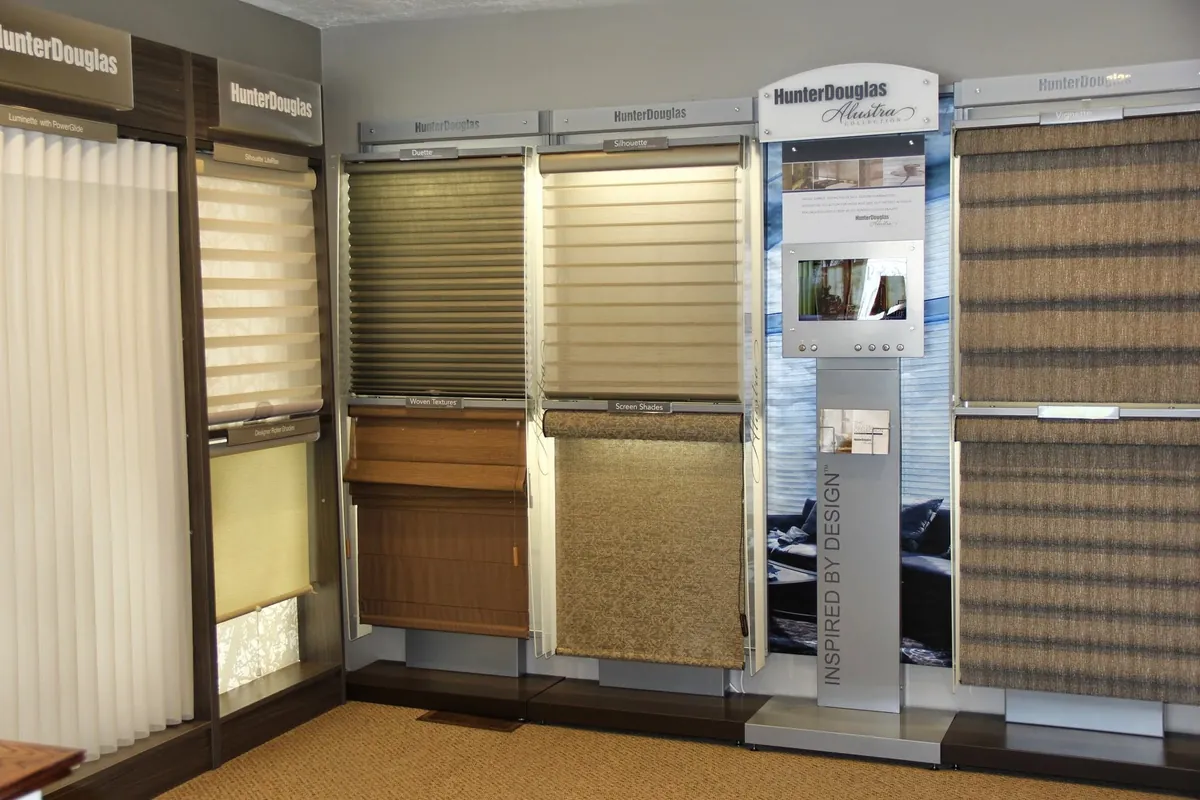
A Hunter Douglas Gallery dealer close to home
Blinds & Designs is a Hunter Douglas Gallery dealer, a designation Hunter Douglas gives dealers who meet its standards. For you that means the whole roller range in one place: Designer Roller, Designer Screen, Designer Banded, Sonnette and Alustra, with PowerView motorization across all of them.
Our installers are certified by Hunter Douglas. They mount each bracket into solid wood, check that the shade rolls straight and level, and show you how every lift works before they leave. If a shade needs attention later on, we handle blind and shade repairs as well.
We carry the rest of the Hunter Douglas line too, so one visit can cover a whole house. You might pair rollers in the bedrooms with cellular shades in Acushnet for a drafty parlor, or look at plantation shutters in Acushnet for a front room. Our Acushnet page brings every service in town together.
Fitting day
Once your shades are made, our certified installers come back to fit them. On an older farmhouse frame they find the solid wood behind the plaster for each bracket so the shade stays level when the house moves with the seasons. They test every shade through its full travel, adjust the bottom rail so it sits evenly on the sill, and walk you through the lift system or the PowerView app. If you want to know what to expect, our guide to what happens on installation day covers it step by step.
Roller fabrics need very little care. A soft brush or a vacuum with a brush head on the low setting keeps dust down, and our guide to caring for fabric shades covers the rest.
Questions from Acushnet
My farmhouse windows are all slightly different sizes. Is that a problem?
Not at all. Every Hunter Douglas roller we order is made to its own measurements, so each window gets a shade cut to fit. We measure each opening at several points and note which ones are out of square.
Will a roller fit inside a shallow old frame?
Usually. Rollers need less depth than most window coverings. Sash hardware can take up room at the top of the opening, so we check the depth at every window, and where it is too tight we recommend a slim outside mount on the casing.
What should I use on the windows facing the river?
A solar screen roller is the usual answer. It cuts glare and some of the heat while you keep the view. A darker color is easier to see through. We bring several openness levels so you can compare them at your own window.
Can I get one shade across my ranch picture window?
Very wide windows often look better split into two or three rollers that share one bracket and line up at the bottom. Narrow side lights get their own matching shades. We will show you both layouts.
How much does the estimate cost?
Nothing. The estimate is free. Request a consultation and we will measure your windows and give you a free estimate at the same visit.
Ready when you are
The best way to choose roller shades in Acushnet is to hold the samples up at your own windows, small farmhouse sash and wide ranch glass alike. Request a consultation and we will bring the full Designer and Alustra range to you, measure every opening and leave you with a free estimate. If you would like to see the shades in person first, the North Dartmouth showroom is close by, or use the call button to talk it through.