
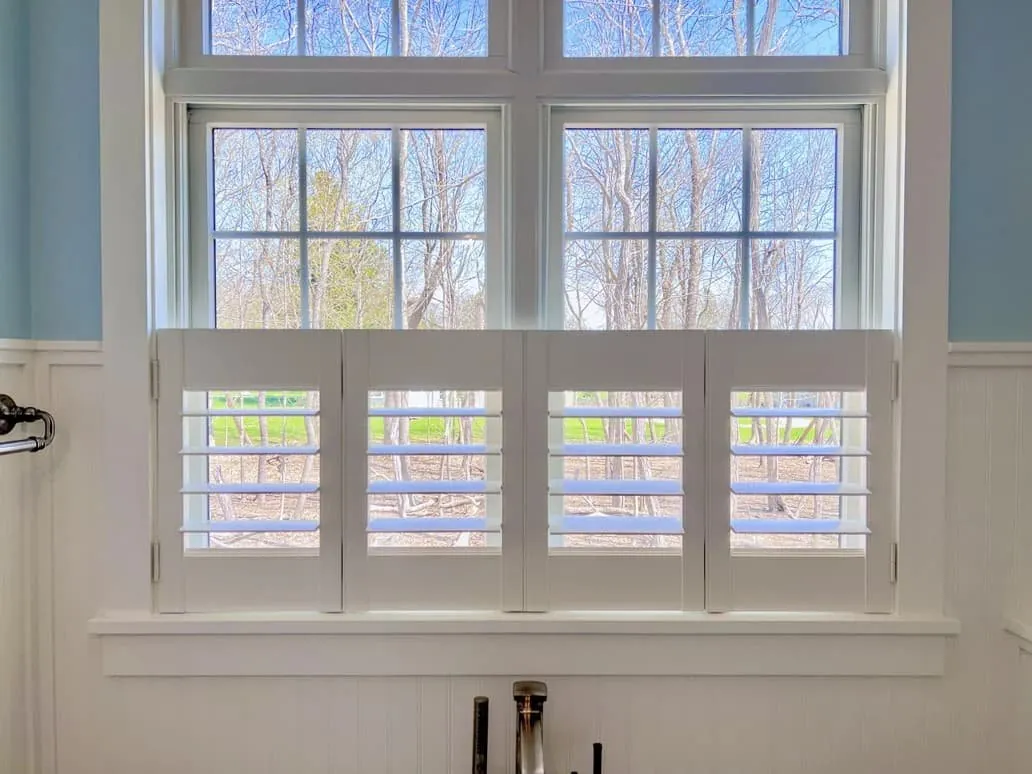
Small original sash in the oldest houses
The antique colonials gathered around the center of town were built long before standard window sizes existed. Many still have their original sash, and in the oldest houses those windows are very small: modest openings set in thick walls, sized for a time when glass was precious and heat was hard won. They are part of what makes these houses special, and they are easy to spoil with the wrong covering.
That is the first thing we think about as a Hunter Douglas dealer in Medfield, MA. A small antique window needs a product that covers it when wanted and almost disappears when not, made to its exact size and fitted so the old trim stays on show.
Blinds & Designs is a Hunter Douglas Gallery dealer, and Hunter Douglas certifies our installation. The town’s other face, large newer houses on wooded lots off North Street and Route 27, asks for something quite different, and we cover that too.
Hunter Douglas in Medfield, by product
Pick a card to see our page for that product in town.
Custom blinds
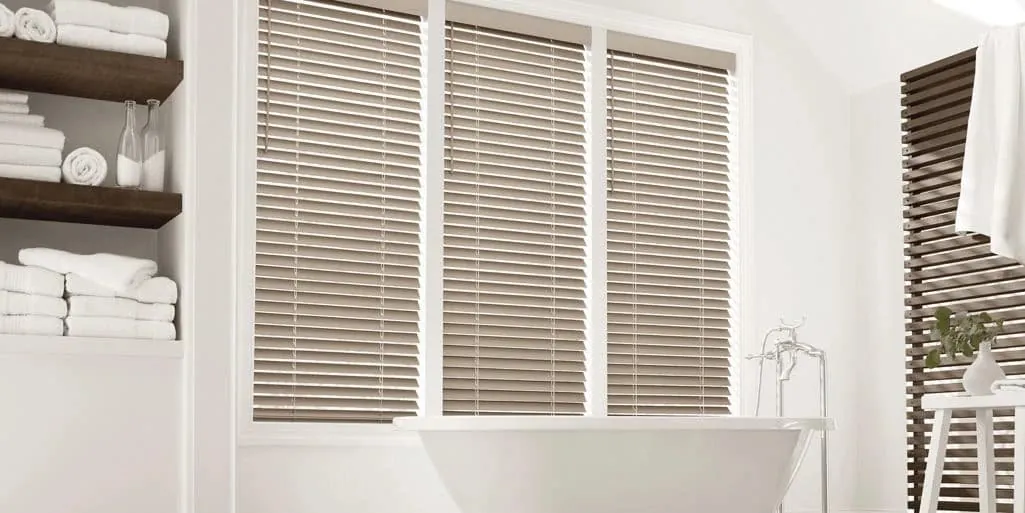
Parkland real wood, EverWood faux wood, metal and verticals: decide on the material, then on how the slats should work.
Cellular shades
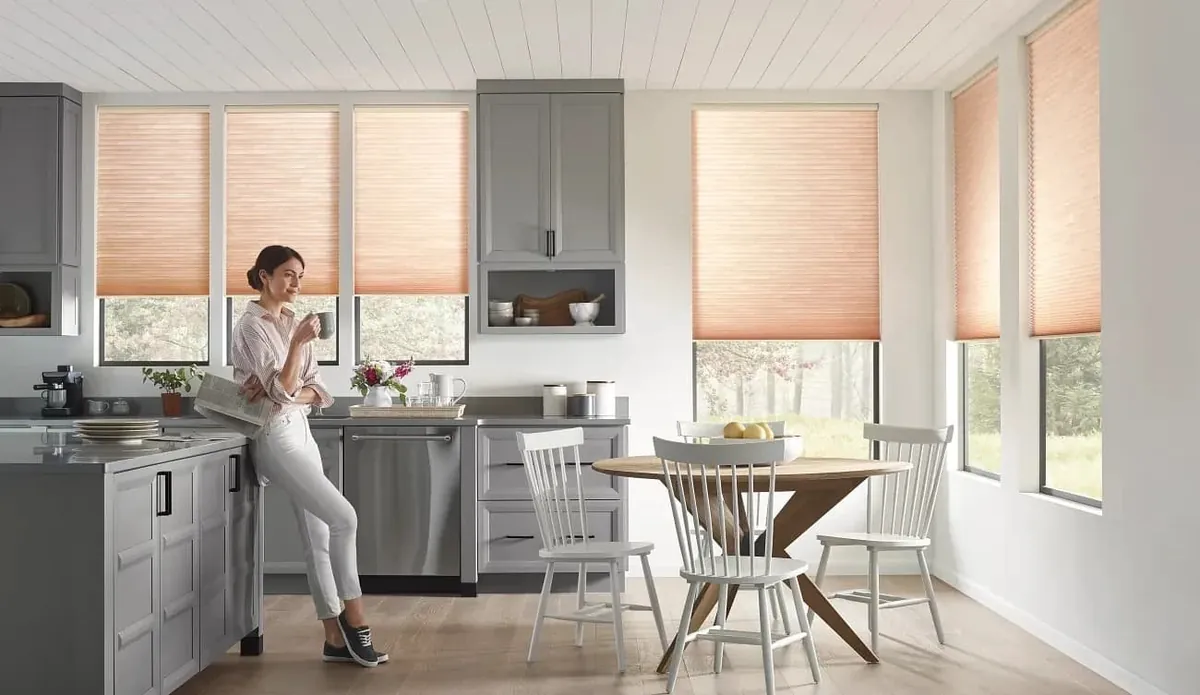
Duette and Applause. The honeycomb holds a pocket of air, and that is what keeps the warmth in.
Roller shades
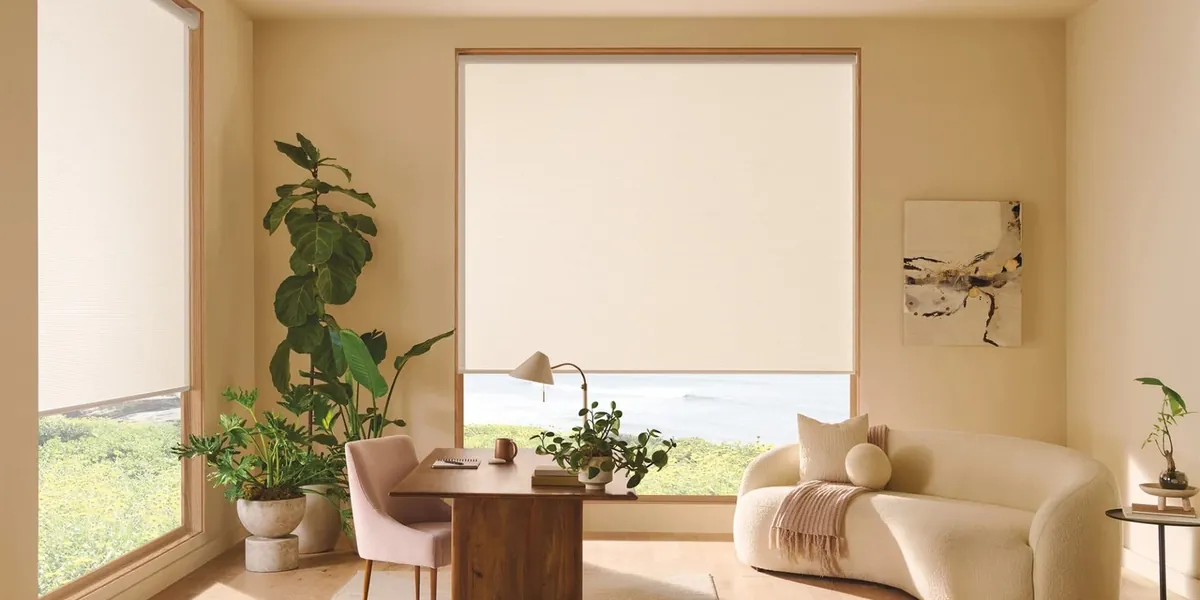
Designer and Alustra rollers and screens; a screen’s openness balances the view against the glare.
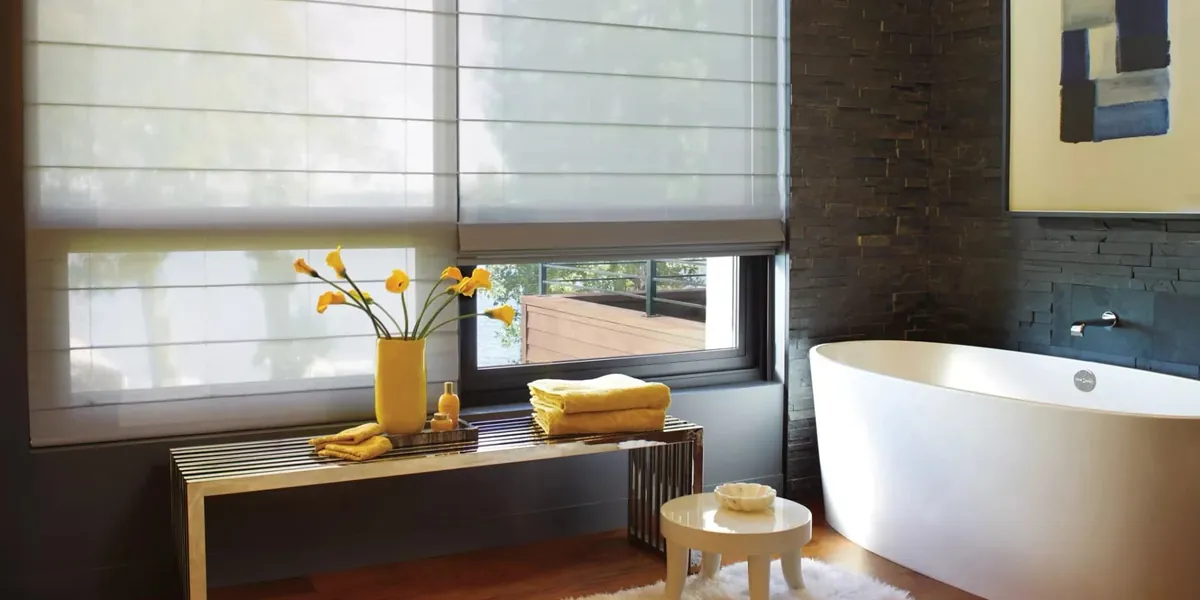
Roman shades
Vignette and Carole Roman, folded or flat, for a softer finish.
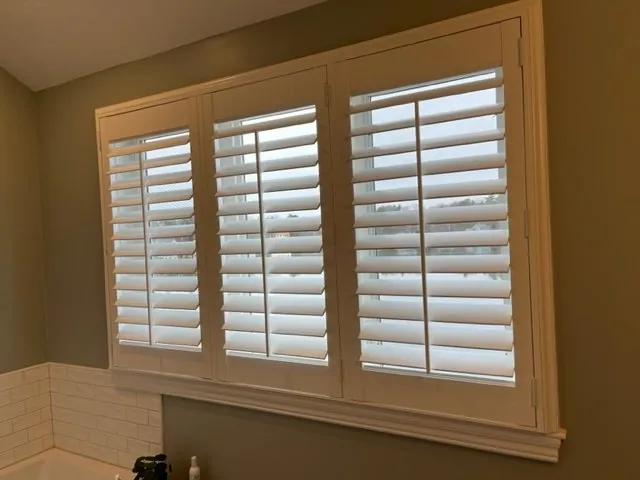
Plantation shutters
Palm Beach, NewStyle and Heritance, with the louver and frame picked for a small antique window or a big new one.
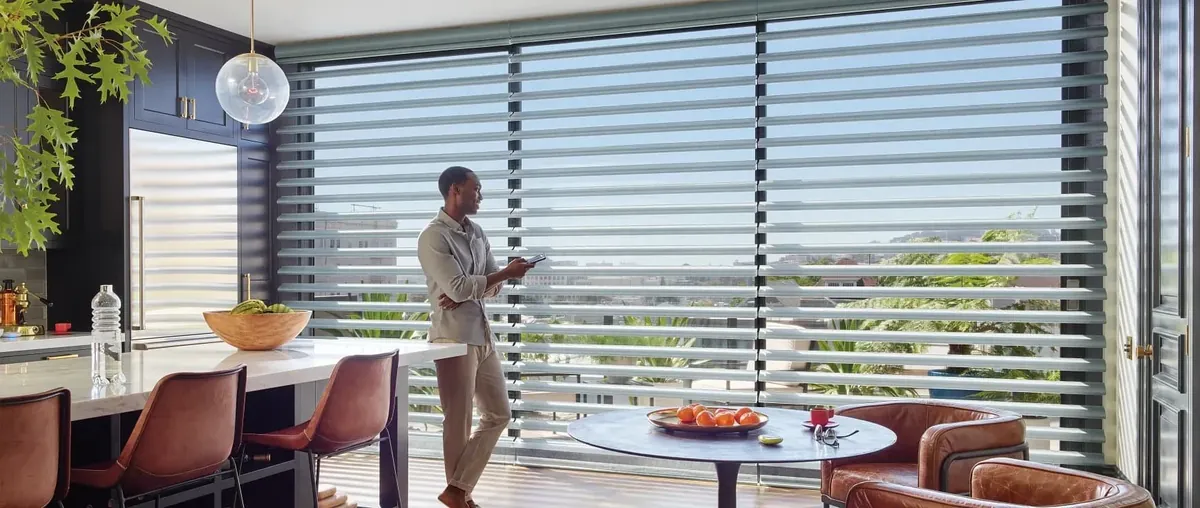
Motorized blinds and shades
PowerView from a phone, a remote or a schedule, ideal for the tall glass in newer houses.
The antique colonials around the center
The oldest houses near the center share a family resemblance. Rooms are compact, ceilings are often lower than in later houses, and the windows are small and regularly spaced across a plain front. The walls are thick, which gives many windows a deep reveal between the glass and the room. Original sash, where it survives, may have divided lights and old glass with a gentle ripple to it.
None of that suits a stock blind. The openings vary from one to the next, sometimes by a surprising amount, and frames that have stood for so long are rarely square. We measure each one at several points and order to the tightest figure, so the product sits cleanly inside the reveal.
The deep reveal is a help. It often has room to hold a shade or shutter entirely within the window opening, which keeps the face of the wall and the old casing untouched. That matters to anyone who has chosen an antique house for its character.
Covering a small window without crowding it
A small window has little glass to spare, so the covering must not eat into it. Three things decide whether a product suits a small antique opening.
- The stack. When a shade is raised, it gathers at the top. A bulky stack can hide a real share of a small window. Honeycomb and roller shades rise into a slim band; shutters swing fully away.
- The headrail. A slim headrail inside the reveal is all but invisible from across the room.
- The scale. A wide louver or a heavy fabric can look oversized on a small window. A smaller louver, a fine slat or a light fabric keeps the proportion right.
Café shutters, covering only the lower part of a window, are an elegant answer in a kitchen or a dining room facing the road. They give privacy at sitting height and leave the top of the window open to the sky.
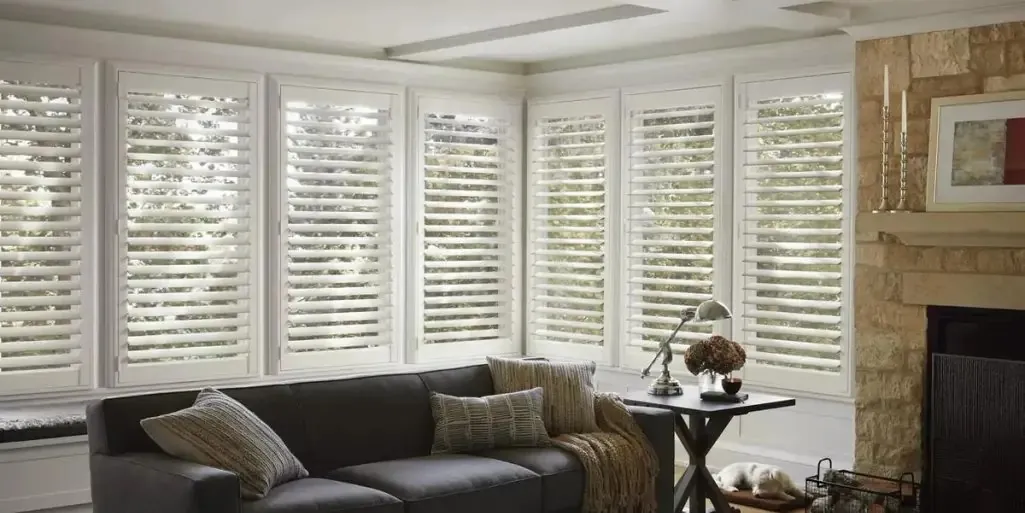
Keeping the old trim on show
In an antique house, the casing around a window may be original, hand-planed and many coats of paint deep. Most people want to see it. That is why we start with an inside mount wherever the reveal allows, so nothing is screwed into the face of the trim.
Where a reveal is too shallow, or a frame too far out of square, we talk through the options with you. Sometimes a slightly different product fits inside where another would not. Sometimes an outside mount is the better result, and then we choose brackets and placement to disturb the trim as little as possible. You see the choices at the window before anything is ordered.
Lower ceilings and what sits above the glass
Many of the antique rooms have a modest ceiling height, with the top of the window close to the ceiling or a beam. That leaves little room above the glass for anything to sit, and it is another reason to keep the product inside the window opening.
A heavy treatment hung above the window can make a low room feel lower. A slim shade or a shutter within the reveal keeps the eye on the window and the wall around it. If you want softness in a sitting room, a Roman shade in a light Vignette fabric adds it without weight.
Divided lights and old glass
Where original sash survives, it often has several small panes divided by thin wooden bars, and sometimes old glass with a slight wave in it. Those details are worth seeing. A covering that hides them all day long takes away exactly what makes the window lovely.
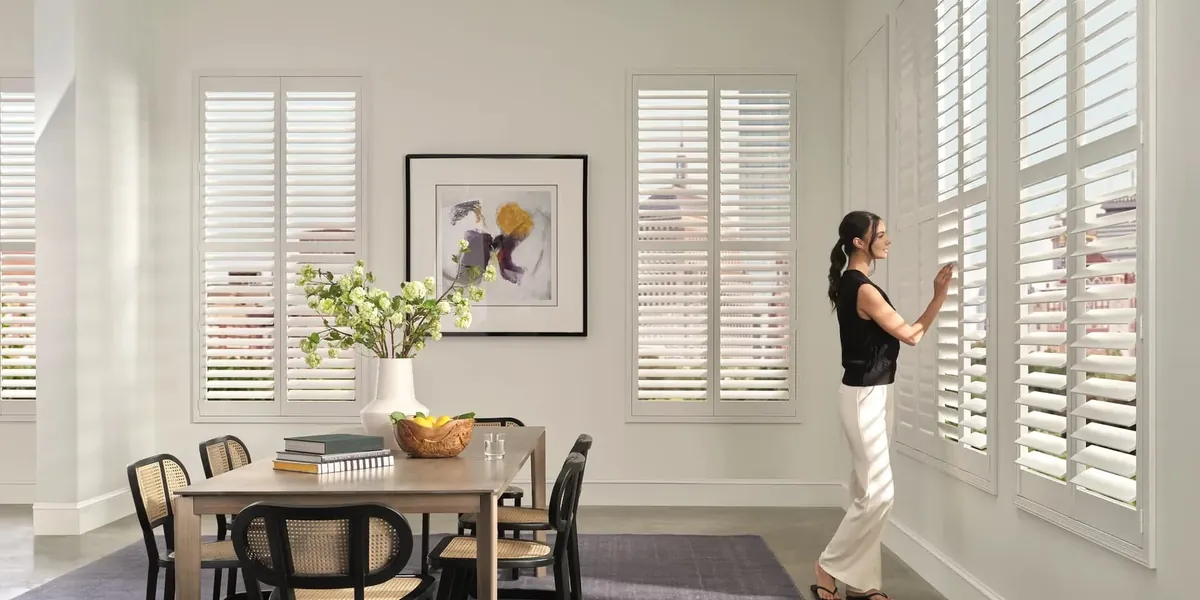
So in rooms with original sash we often lean toward products that can clear the glass completely. A shutter opens like a pair of small doors and leaves the panes fully visible. A slim honeycomb raised to the top shows almost the whole sash. If a room needs constant privacy, a sheer softens the view in while still letting the pattern of the bars read from inside. As a Hunter Douglas dealer in Medfield, MA, we would always show you the window open as well as covered before you decide.
Kitchens and baths in the old houses
Kitchens and bathrooms in the antique colonials have usually been updated, sometimes more than once, and their windows may be newer than the rest of the house or set in a later addition. They still tend to be small, and they are often the windows closest to a neighbor or a driveway.
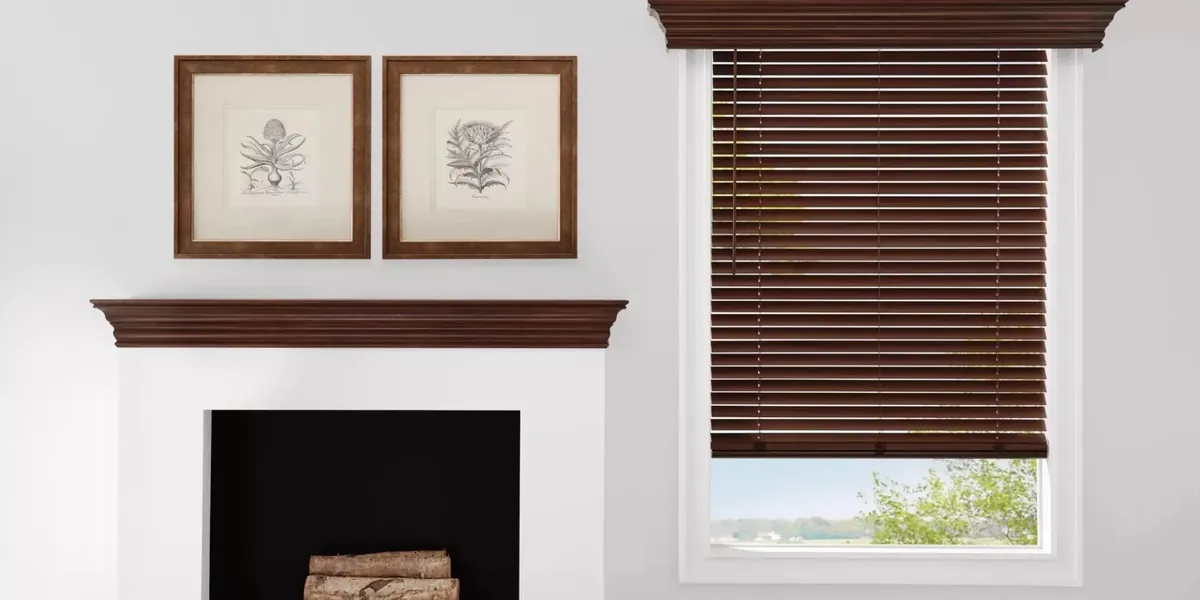
A café shutter on the lower half suits a kitchen window over a sink and keeps the top open. In a bathroom, a shutter or a faux wood blind gives privacy with louvers or slats you can tilt for light. Where the window is in a newer addition, we match color to the original rooms so the house still feels like one. Many people ask a Hunter Douglas dealer in Medfield, MA to start with exactly these rooms, because they are used every day and often have nothing on the glass at all.
Large newer houses off North Street and Route 27
Head out along North Street or Route 27 and the houses grow, the lots open up and the trees close in. The newer houses here are big, set far back on generous wooded lots, with large windows, family rooms full of glass and often a high entry. Windows are standard modern units with square frames and plenty of depth.
These houses are easy to fit and rewarding to plan. The decisions are about light rather than awkward openings, and the light here is shaped by the trees. Our job as a Hunter Douglas dealer in Medfield, MA is to choose fabrics that work with the shade the woods already give.
Wooded lots and gentle light
A house surrounded by trees often gets dappled, softer light than its window area suggests. In summer, a wall of glass under heavy canopy can feel quite dim, and in winter, with the leaves down, the same room can be bright and open.
That has two effects on what we suggest:
- Lighter fabrics in living areas. A light-filtering honeycomb or a sheer keeps a room bright when the trees are in leaf, rather than darkening an already shaded space.
- Glare control where the trees thin. On the side of the house where the canopy is lighter, or in winter, low sun can still reach deep into a room. A solar screen or a sheer handles that without closing off the view of the woods.
We look at which sides of the house are most shaded when we visit, and suggest fabrics for each. Seasons matter here more than in an open neighborhood, so it helps to tell us how the room feels in winter as well as on the day we call. A fabric that seems just right under full summer leaves can feel different once the branches are bare, and we would rather plan for both.
Deep setbacks and privacy
Both kinds of house here tend to sit well back from the road. On a deep lot, privacy from the street matters less during the day, and many people are happy to leave living room windows uncovered for hours at a time. Evenings change that, because a lit room is visible from a long way off.
A product that adjusts through the day suits this pattern. Sheer shades can be left with their vanes open during the day for the view, then closed at dusk. Shutters tilt open by day and close tight at night.
Big rooms and long walls of glass
The family rooms and kitchens in the newer houses often have long runs of windows, a set of patio doors to a deck, or windows stacked one above another. Rooms like these look best when every product lines up: same fabric, same height, same mount.
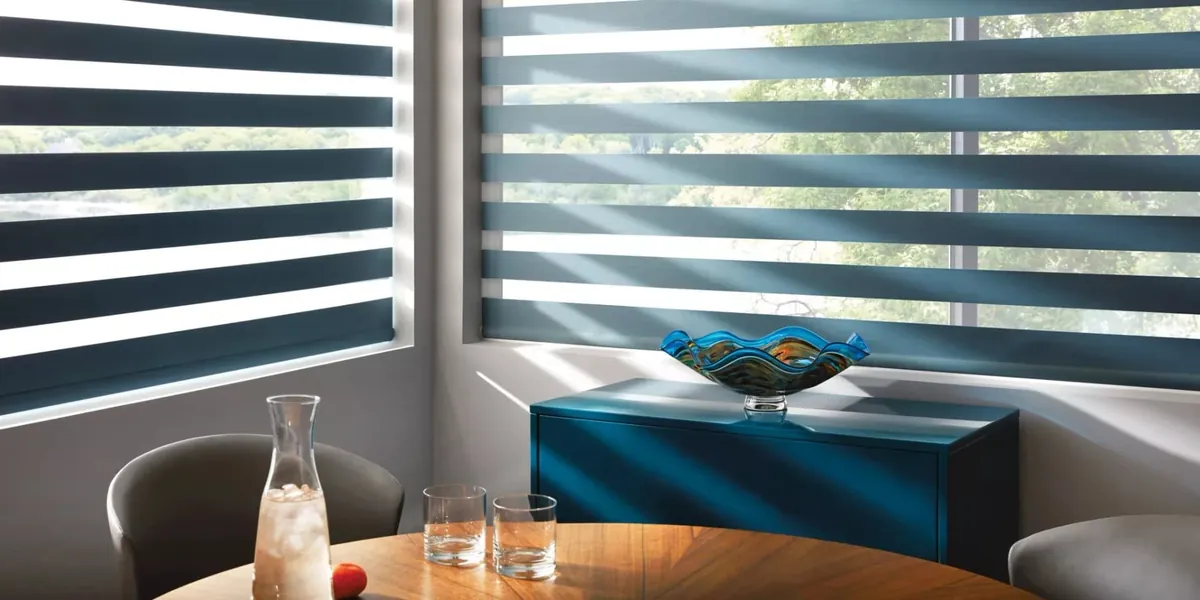
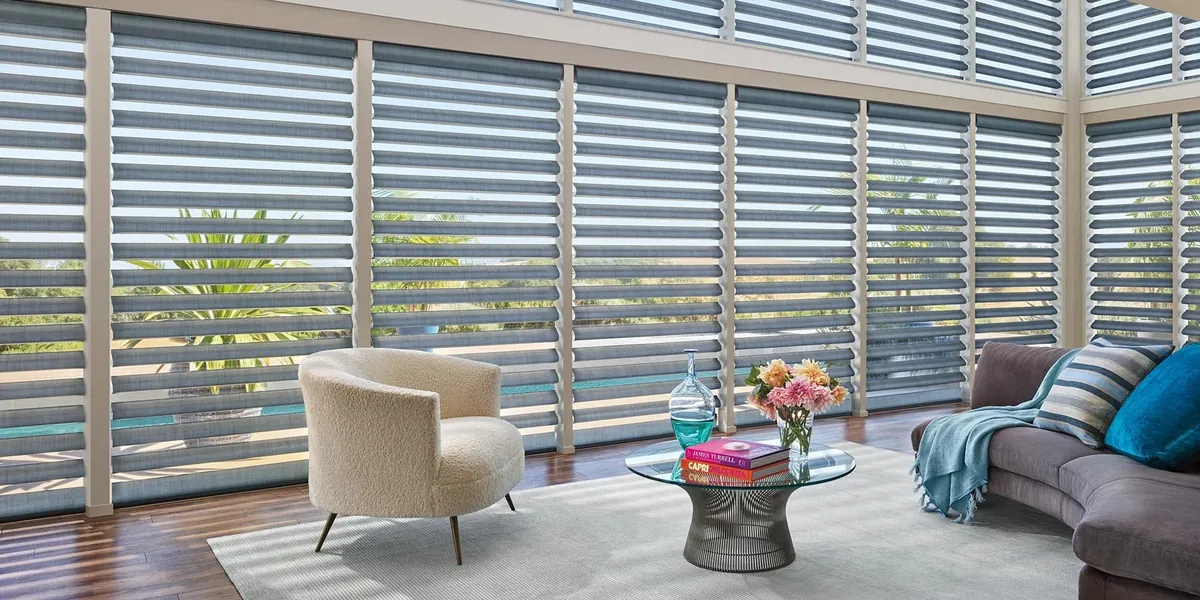
On a wall with a second row of windows high up, PowerView makes the upper row usable. A slider gets a covering that moves sideways, such as Luminette or a vertical honeycomb. Banded rollers, with stripes of sheer and solid fabric, are another option on a long wall, letting you adjust light by shifting the bands rather than raising the shade.
Bedrooms, old and new
Bedrooms in the antique colonials are often under the eaves or tucked into the second floor with small windows, sometimes only one or two per room. Bedrooms in the newer houses are generous, with standard windows and often a view into the trees.
In both, the wish is usually the same: dark at night, bright in the morning. In the old houses, a slim darkening honeycomb inside a small reveal gives darkness without bulk. In the new ones, shutters or a darkening honeycomb are common, and a Roman shade suits a primary bedroom that wants a softer look.
Two eras on one street
Some streets near the center mix antique colonials with houses built much later, and some antique houses have had additions with newer, larger windows. Treating the old rooms and the new ones the same rarely works. The small sash wants a slim product scaled to it; the new windows can carry more.
Our approach is to keep a consistent color across the house, especially on the walls facing the road, while letting each room have the product that suits its windows. A shutter on an antique sash and a honeycomb on a modern slider can look entirely at home in the same house if the colors agree. We bring samples for both kinds of room to the same visit, so you can see them side by side and judge the whole house at once.
Patient work for old frames and new
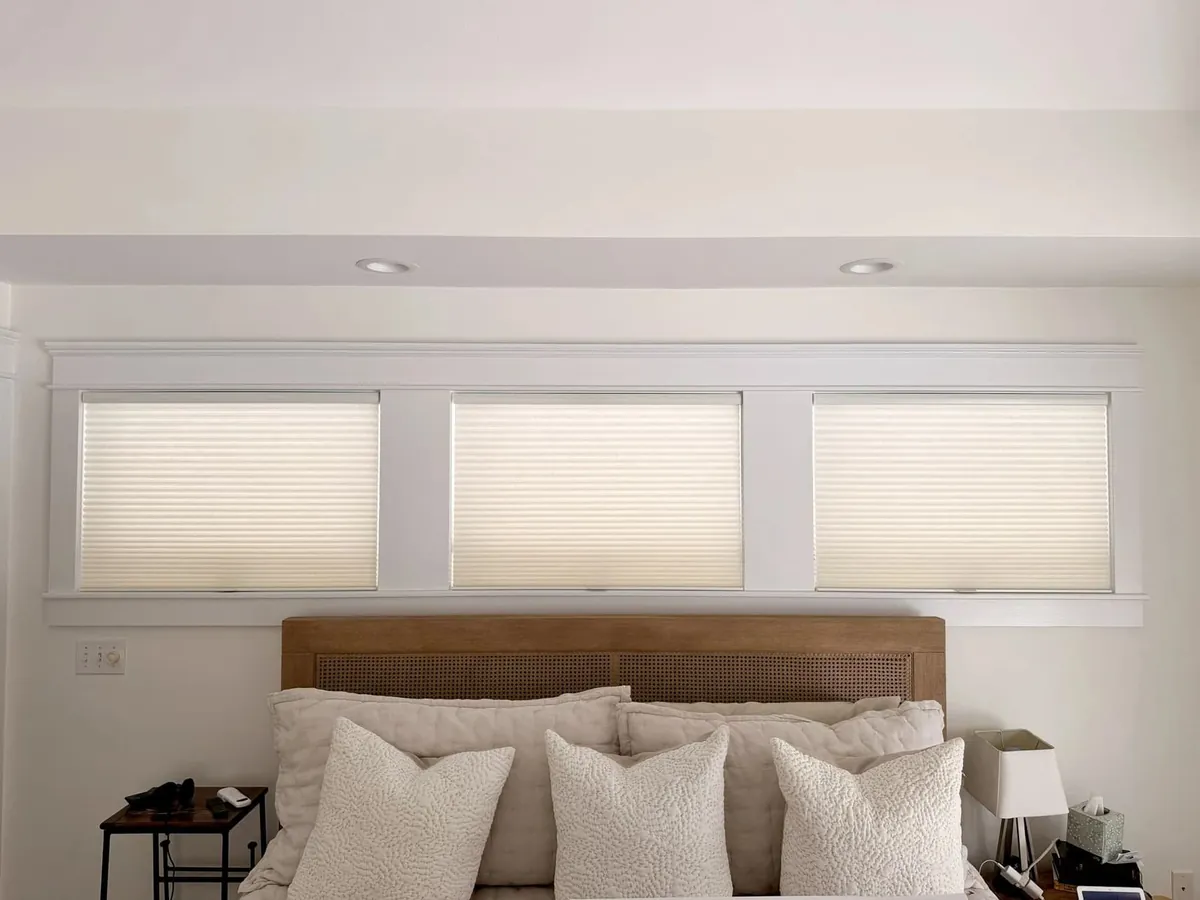
Old houses and new houses ask different things of an installer. An antique frame needs patience: brackets shimmed so a headrail sits level on a sill that slopes, products scaled to small openings, trim left undisturbed. A big new house needs precision across long rows of windows, so every shade stops on one line.
Hunter Douglas certifies our installation, and as a Gallery dealer we carry the full Hunter Douglas family. What else comes with it:
- Consultations held at your house, our van packed with samples, so the showroom comes to you
- No charge for the estimate
- Interior design consultations when a room needs a fuller plan
- Window covering automation for the hard-to-reach glass
- Help with blinds and shades you already own, through blind and shade repair
PowerView in the newer houses
In the large houses on the wooded lots, PowerView usually starts with the windows nobody can reach: an upper row in a family room, glass above an entry, a window over a stair. From there it often spreads, because once a few shades move on a schedule, it is pleasant to have the rest join them.
Control is by phone app, remote or schedule. We look at which windows suit a motor during the visit and plan how each one is powered. Our guide to how motorized shades are controlled covers the basics.
A visit, told plainly
- You ask for a visit through Request a Consultation, or use the call button.
- We arrive with samples and look at every window you want covered, from the smallest antique sash to the tallest new pane.
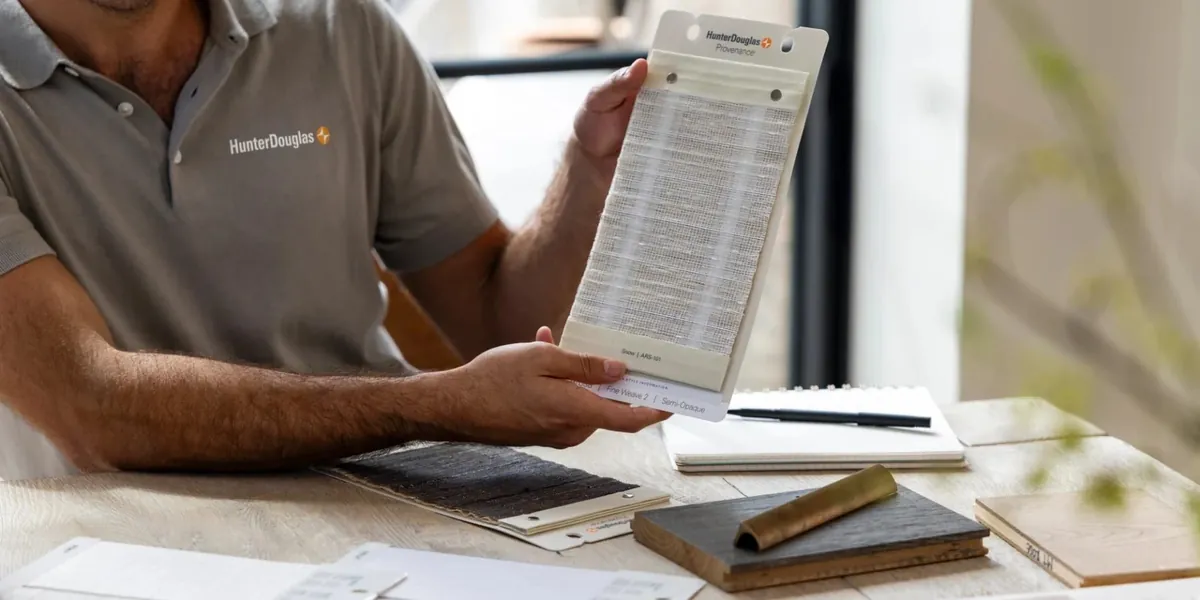
- You hold fabrics, slats and louvers up to the glass and see them in your own light.
- We measure everything ourselves and agree the mount for each window with you.
- You receive a free estimate to think over at your own pace.
Then Hunter Douglas makes each piece to our measurements, and we return to fit it. Our guide to shutters for older windows is useful for antique sash, and window measuring terms explained covers the words you will hear.
Franklin, our nearest showroom
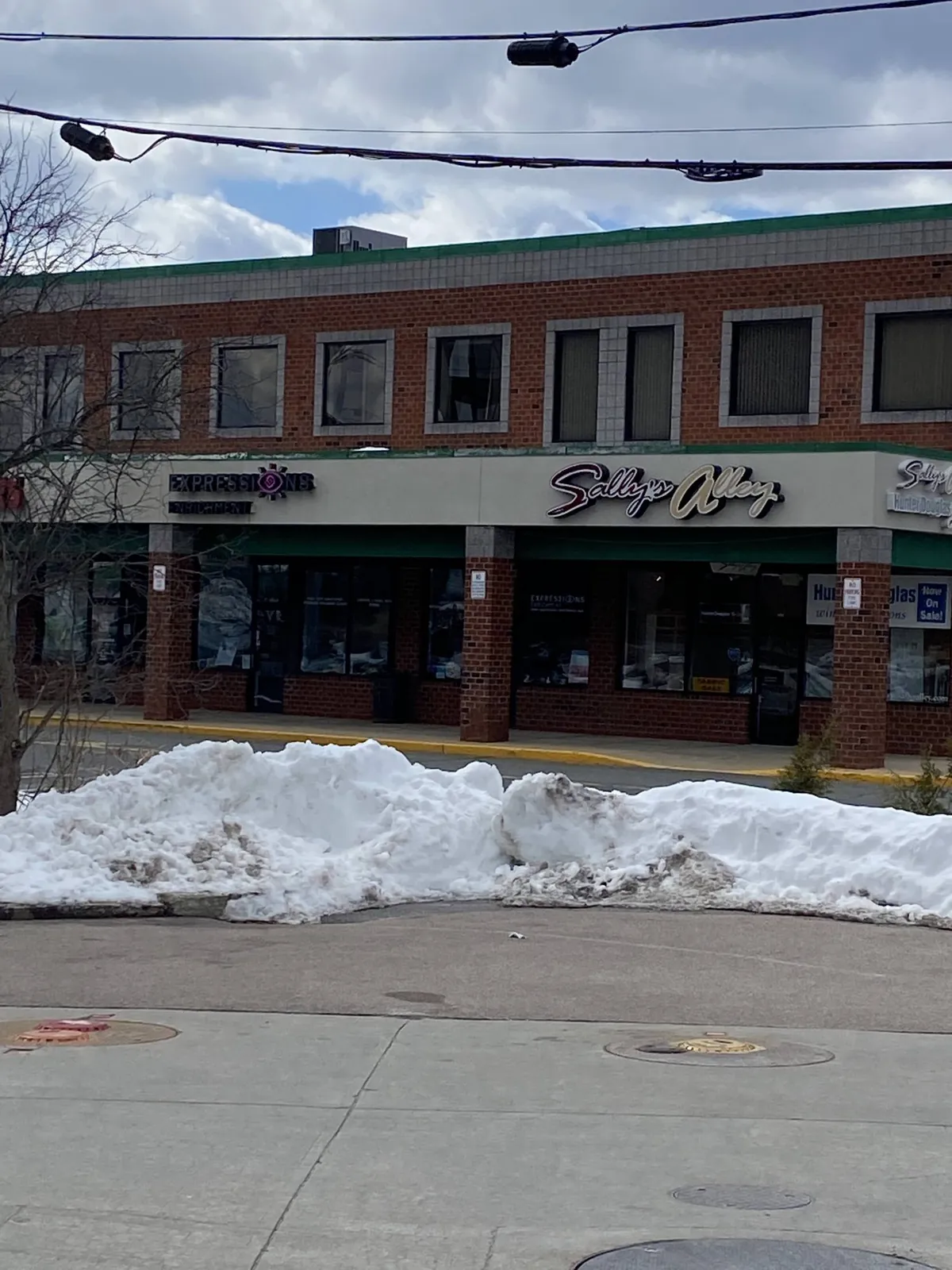
Of our showrooms, Franklin is the one closest to Medfield. Some people like to look there first; others choose everything at home from the samples in our van.
There is more on the brand on our Hunter Douglas page, the full range on the Hunter Douglas website, and every service we offer in town on our Medfield page.
Questions from Medfield
My antique colonial has very small windows. Will a shade make them look smaller?
Not if it is the right one. A honeycomb or roller fitted inside the reveal rises into a slim band, and shutters swing fully clear, so the glass stays open when you want it.
Can you avoid drilling into my original trim?
Where the reveal is deep enough, yes: we mount inside the window opening and leave the casing alone. If that is not possible, we show you the options first.
Our house is deep in the trees. Should we choose dark fabrics?
Usually lighter ones. Wooded lots already soften the light, so light-filtering honeycomb or sheers keep rooms bright while still giving privacy.
What do you suggest for the high windows in a newer house?
PowerView, so the shades move from a phone, a remote or a schedule instead of a ladder.
What does an estimate cost?
Nothing at all. It is free and covers every window we measured.
Whenever you are ready
Request a consultation and we will come to the house with samples, measure each window, small sash and tall glass alike, and leave a free estimate. The call button reaches your Hunter Douglas dealer in Medfield, MA too, and the Franklin showroom is the nearest place to look in person.