
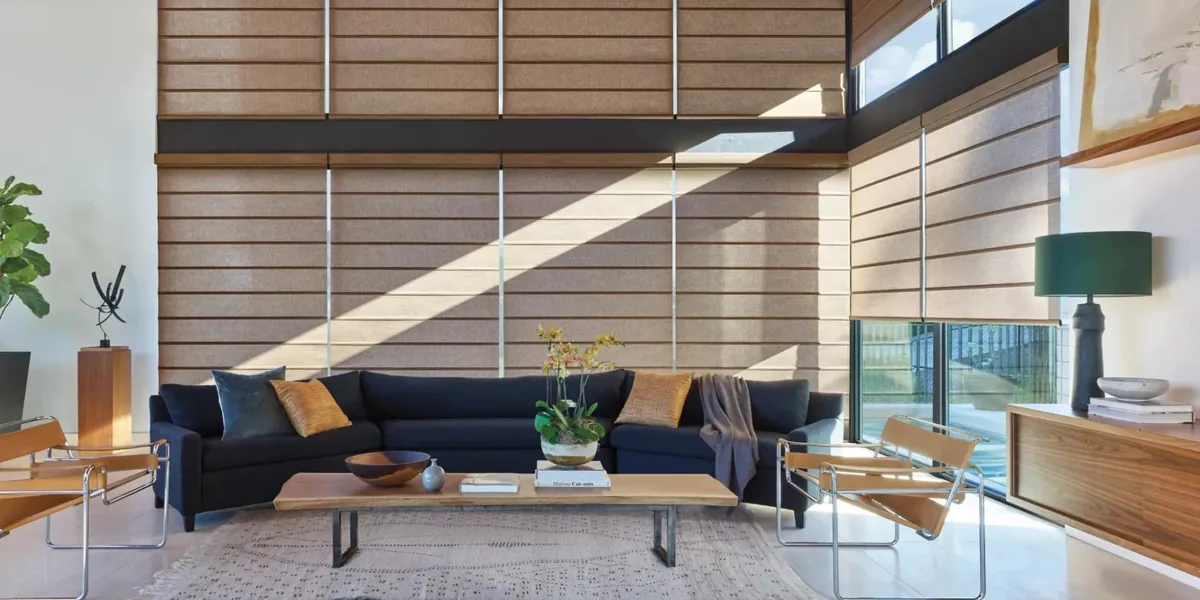
Glass on the sound, standard windows inland
Harwich splits neatly into two kinds of window. Down in Harwich Port, the shingled houses near the harbor were built or rebuilt to face the water, and their sound-facing rooms are heavily glazed: wide picture windows, banks of casements, sliders and sometimes whole walls of glass. Those rooms are exposed to everything the sound sends their way, from hard summer sun to the glare coming off the water on a bright winter morning. Inland, in the villages away from the shore, the houses are mostly post-war ranches and newer colonials with windows of a much more standard size.
Roller shades in Harwich, MA, have to do two quite different jobs. On the water side, the task is taming a great deal of light without giving up the view that the house was designed around. Inland, it is about privacy, comfort and a tidy, consistent look across a house full of ordinary, regular openings. The same family of shades handles both, but the fabrics, the mounts and the way we size each shade change completely from one street to the next.
Three roller types we bring to Harwich
These cover most of what we fit across town, from the harbor to the inland villages. Each one is in the van when we visit with roller shades in Harwich, MA.
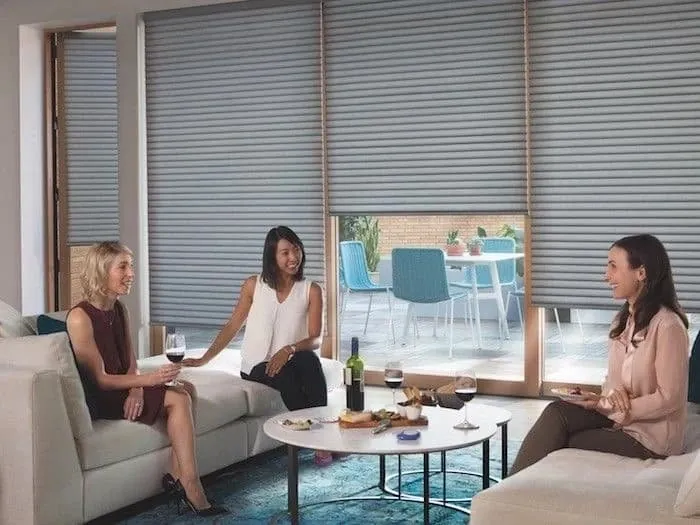
Screen fabric for the water side
Designer Screen and its relatives cut glare from the sound and slow fading while the harbor stays in view through the weave.
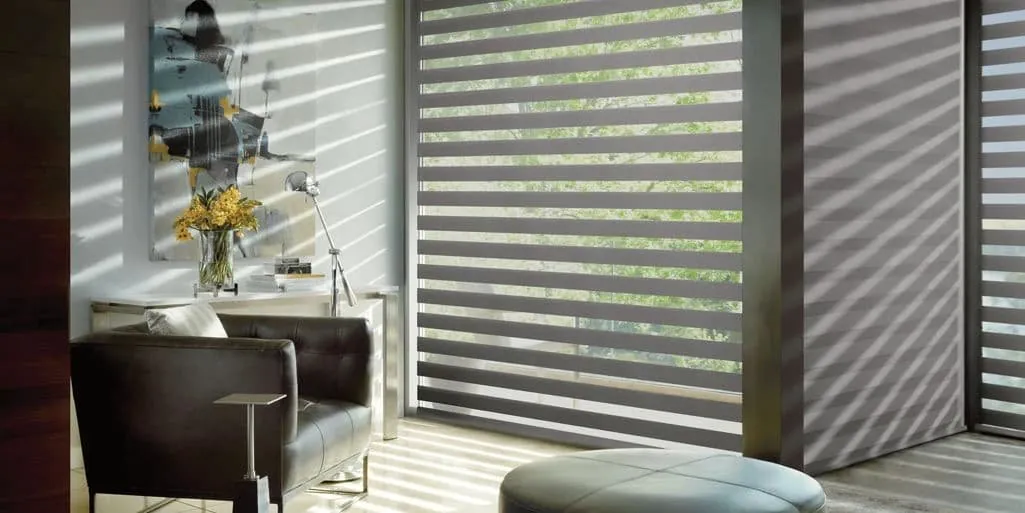
Banded shades for street-side rooms
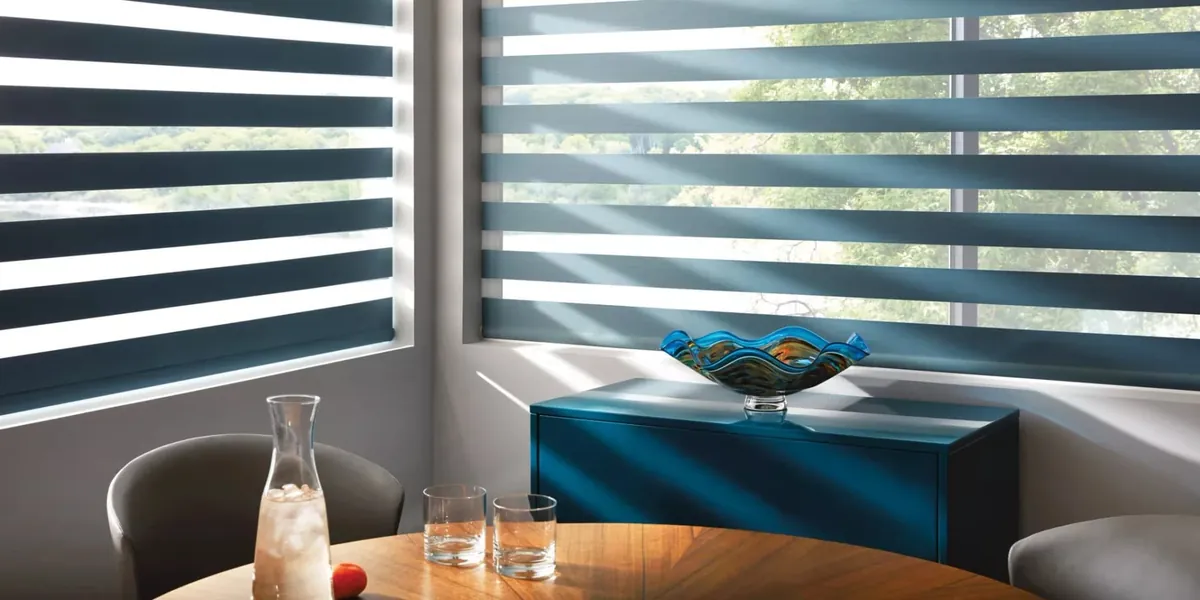
Alternating sheer and solid stripes let you open the light a little or close the room without raising the shade.
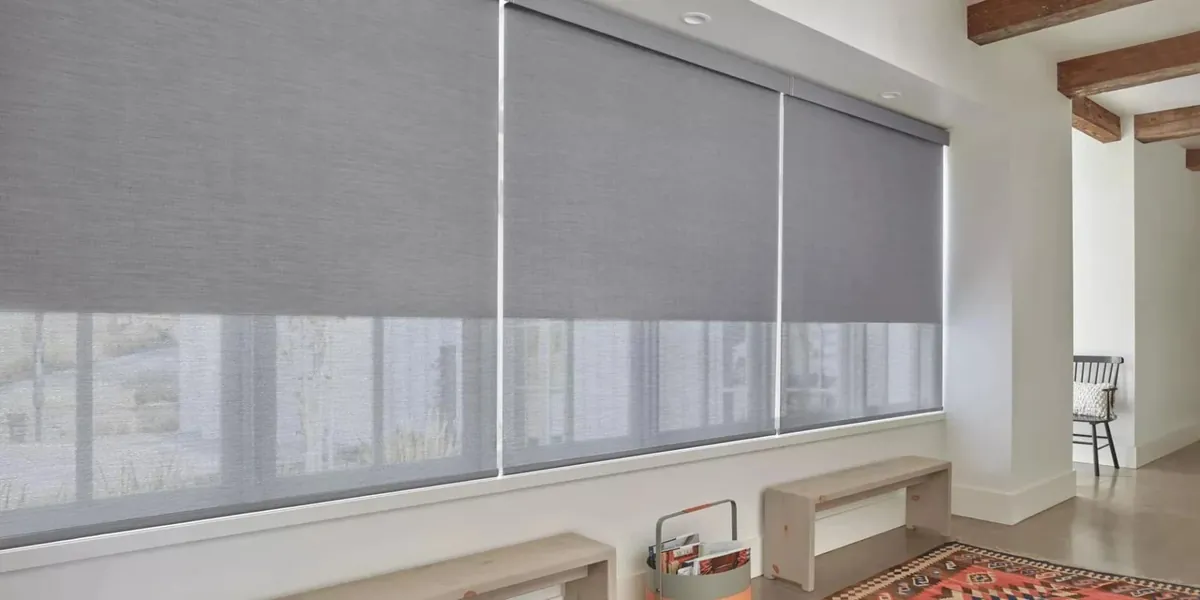
Light filtering rollers for the inland house
A Designer Roller fabric in one color across every standard window gives a ranch or colonial a calm, finished look.
Living with a wall of glass in Harwich Port
When a room is mostly window, the window covering becomes part of the architecture. A heavily glazed sound-facing living room has a lot of light coming in from one direction, and on a clear day it can be hard to read a screen, watch television or even see the faces of the people across the room. The floor and furniture nearest the glass take the brunt of the sun, and they fade.
The roller shade is the natural answer for this kind of room, for a simple reason: it is the only common window covering that can keep the view while it cuts the glare. A screen fabric is woven with small, even openings. Lowered, it takes the hard edge off the light and slows the fading, but you can still see the boats and the water through it. Raised, it rolls away to a narrow tube and leaves the glass completely clear.
The detail is in the choice of screen. The openness of the weave decides how much light and view come through: tighter for more protection, looser for a clearer outlook. Color matters as much. A darker screen is easier to see through from inside because it cuts the reflection on the fabric, while a lighter one reflects more heat back toward the glass but looks brighter in the room. On a wall facing the sound, we often suggest a mid-tone or darker screen in a moderate openness as the place to start, then hold samples at the glass so you can judge it for yourself. For more background, see our guide to the best shades for sun and glare.
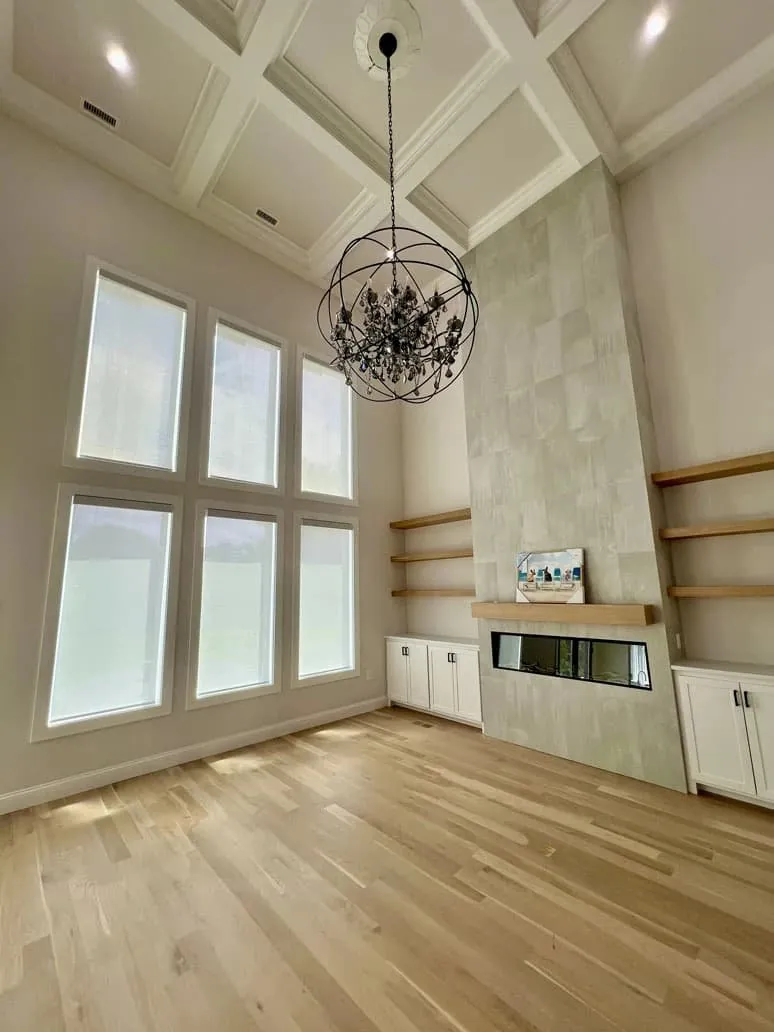
Sizing shades for very large openings
Big glass brings practical questions as well as light ones. A single roller can be made wide, but beyond a certain width the fabric and the tube have to be heavier, and a very wide shade is harder to raise by hand. On a large sound-facing window we look at a few approaches with you.
- One shade per section of glass. If the window is made of several panes with mullions between them, a separate shade for each pane lets you lower the sunny side and leave the rest open.
- Several shades on one bracket. Two or three rollers can share a single mounting system, so their hems line up and they can be raised together or one at a time.
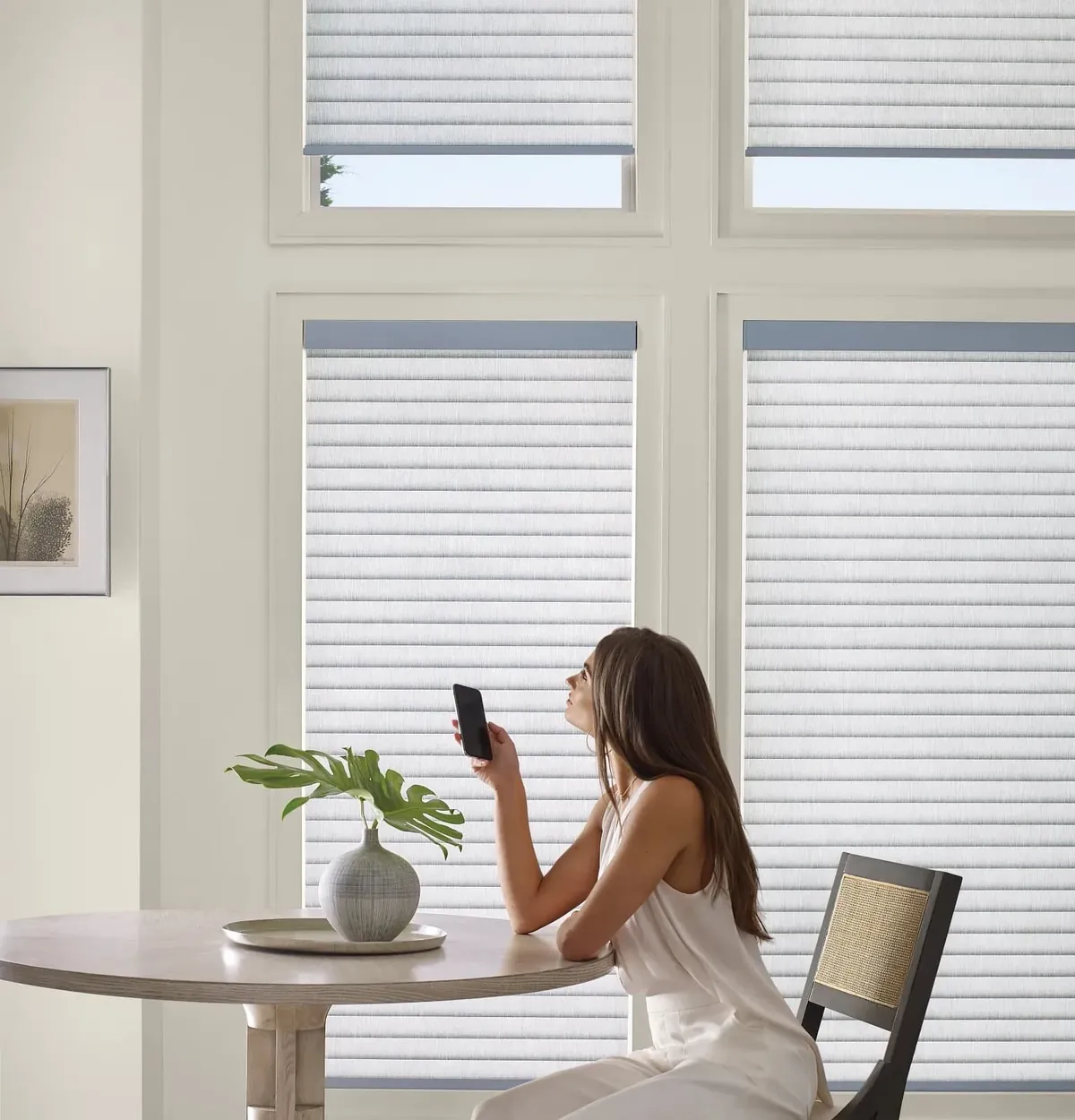
- A single wide shade. Where the glass is one unbroken pane, a wide roller gives the cleanest look, and PowerView takes the effort out of lifting it.
For walls of glass that run up into a gable or a vaulted ceiling, we look at whether the upper glass needs covering at all. Often the high windows are left clear and only the lower band, where the sun hits the furniture and your eyes, gets a shade.
Salt air on the harbor streets
Houses close to the harbor live with salt in the air. It drifts in through open windows in summer and settles on anything near the glass. With a roller shade, most of the mechanism is hidden inside the tube and the brackets, so less metal is exposed than with older corded blinds, and a cordless or motorized lift removes the cord lock at the side altogether.
On the harbor side we also think about fabric. Screen fabrics in particular are made to cope with strong sun day after day, and a fabric with a smooth surface is easy to keep clean with a soft brush or a vacuum on low. Our guide to caring for fabric shades covers the routine. During the visit we point out which fabrics in the range we would put on a window that gets salt air and sun together.
Shingled houses close to the street
Not every house in Harwich Port is a big modern glass box. Many of the older shingled houses sit close to the road on small lots, with windows on the street side that look straight onto the sidewalk and side windows that face a neighbor across a narrow yard. For those rooms, privacy is the first concern.
A light filtering roller gives privacy in the daytime while keeping the room bright, because the fabric glows instead of showing what is inside. At night, with lamps on, a light filtering fabric can show shapes, so for a street-side bedroom or living room we often suggest a room-darkening fabric, or a dual roller that pairs a screen for the day with a blackout layer for the evening.
Many of these houses have kept their original smaller sash on the street side and opened up only the back toward the water. That gives you two kinds of window in one house, and it is common to use a plain light filtering roller in the front rooms and a screen on the back.
Sliders onto the deck
Most sound-facing houses in the port have at least one slider onto a deck, and many inland ranches have one off the kitchen. A slider is opened far more often than a window, so the shade has to stay out of the way. We mount the roller above the door frame, a little wider than the opening, so that when it is raised it clears the handle and the track completely. On a pair of sliders, two shades side by side let you keep the fixed panel shaded and the moving panel open. Matching the fabric to the windows beside it keeps the wall looking like one surface.
Ranches in the inland villages
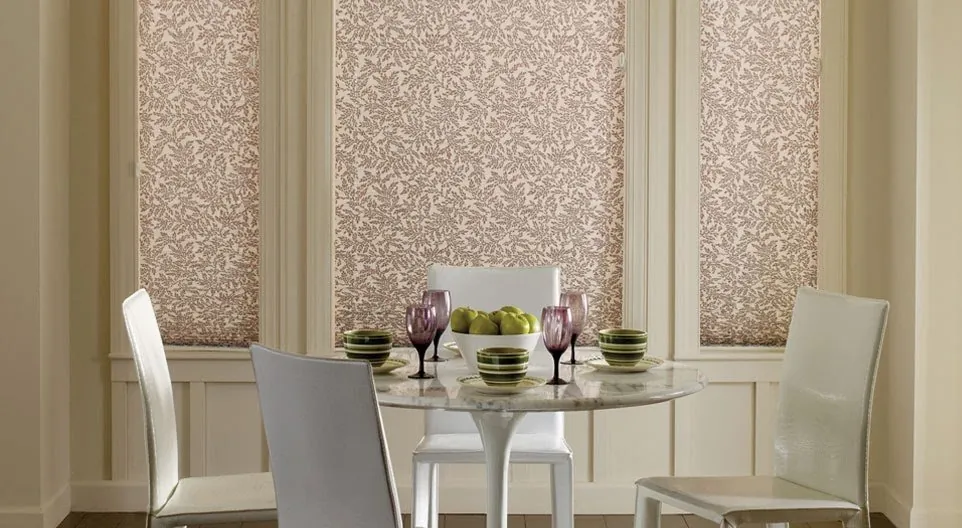
Away from the shore, the post-war ranches of the inland villages present a familiar layout: a living room with a picture window facing the street, a kitchen window over the sink, a slider to the back yard, and bedrooms with wider, shorter windows set high in the wall. The windows are standard in size and usually square, which makes them straightforward to fit.
A ranch suits a consistent approach, and it is where roller shades in Harwich, MA, are at their simplest. One fabric and color across every window gives the house a calm look from the road, and matching hems help the rooms flow into each other on a single floor. In the living room, a light filtering roller keeps the picture window bright while blocking the view in. In the bedrooms, a room-darkening fabric makes early summer mornings easier. On the slider, a roller mounted above the frame clears the door handle when raised.
The picture window in a ranch living room often faces west or south and takes a lot of afternoon sun. If that is the case, a screen fabric on that one window, in a color that matches the rest, can make the room much more comfortable without breaking the look.
Newer colonials and their regular rows
The newer colonials in the inland villages tend to have tall, regular double-hung windows in neat rows across the front, often with enough depth for an inside mount. That makes them ideal for rollers, which sit neatly inside the frame and roll up out of sight.
Because the windows are so consistent, it is easy to carry one fabric across the whole front of the house, with a different weight or opacity inside where each room needs it. A family room with a wider window may take two shades on one bracket. A kitchen bay can have a shade on each panel. A tall stair window or a two-story entry is a good candidate for PowerView, so you are not reaching from the stairs. You can read more about how motorized shades are controlled.
In a newer house, the roller also works well as one layer of a combination: a roller for light and privacy, with drapery panels or a valance for softness. We can talk about the whole room at an interior design consultation if you would like help putting it together.
Light filtering, room darkening or screen?
It helps to think of roller fabrics as steps along one scale.
- Screen keeps a view through the fabric. Best on the sound side and on any window where the outlook matters more than privacy.
- Light filtering blocks the view in but lets light through evenly. The everyday choice for living rooms, kitchens and dining rooms in both the port and the inland villages.
- Room darkening and blackout stop most or nearly all light. For bedrooms, media rooms and any room you want dark in the middle of a summer morning.
Inside mounts let a thin line of light past the edges of any roller. In a bedroom that has to be properly dark, mounting the shade on the face of the trim, a little wider than the opening, closes that gap.
Choosing how each shade lifts
Three lift systems cover almost every window in town, and the right one depends on the size of the glass and how often you move the shade.
Cordless. You push the bottom bar up or pull it down by hand, and the shade stays where you leave it. Nothing hangs at the side, which suits the small sash in the older shingled houses and any room where children play.
Continuous cord loop. A loop at one side turns the tube, with a tensioner fixed to the frame to keep it taut. Easier on a tall colonial window or a wide ranch picture window, where lifting the whole weight by hand would be awkward.
PowerView motorization. A motor inside the tube, worked by remote, phone or a schedule. The obvious choice for the very large panes on the sound side, for gable glass, and for any window behind a sofa or a kitchen counter. We plan how each motor is powered at the visit.
Many sets of roller shades in Harwich, MA, mix all three: cordless in the bedrooms, a loop on the tall windows and PowerView on the big glass.
What happens when we visit
We bring the shades to you because fabric looks so different in a room on the sound than it does in a sample book. Here is how a typical Harwich visit runs.
- Book a time online or with the call button.
- We arrive with the roller range in the van and walk the house with you, starting with the rooms that give you the most trouble with glare or privacy.
- You hold screen, light filtering and room-darkening samples at your own glass at the time of day the problem is worst.
- We measure every window, checking width, height and depth, and look at how each one is made.
- We suggest a fabric, a mount and a lift for each window, including any that would suit PowerView.
- You receive a free estimate, with no need to decide on the day.
You can read more about what happens at an in-home consultation before we come.
Designer and Alustra
Hunter Douglas groups its rollers into two collections. Designer covers the widest range of fabrics, colors, textures and opacities with every lift system. Alustra is a smaller collection with richer materials and a more tailored finish. Sonnette, a roller with a soft, curved cellular face, is another option where a gentler look suits the room.
A sound-facing great room might take Designer Screen on the big glass and Alustra on the windows nearest the seating, while an inland ranch is usually best served by Designer throughout. When we plan roller shades in Harwich, MA, we bring both so you can compare them in your own light. The main roller shades page covers the whole family.

Gallery dealer, certified installers
Blinds & Designs is a Hunter Douglas Gallery dealer. That puts every roller, screen, banded and Sonnette fabric and PowerView automation within reach at one consultation, whether the house is on the harbor or in the inland villages.
Our installers are certified by Hunter Douglas, and on a big glass wall that care shows: brackets fixed into solid framing, wide shades levelled across long openings and every lift tested with you. We also repair blinds and shades you already own.
For the rest of the house, see cellular shades in Harwich, motorized blinds in Harwich for high glass, or everything we offer in town on the Harwich page.
Questions from Harwich
Can I keep the harbor view and still cut the glare?
Yes. That is exactly what a screen fabric does. You see out through its fine weave while the glare and much of the fading light are held back. We bring several openness levels to compare at your glass.
How do you handle a whole wall of windows?
Usually with a shade for each section of glass, or several shades on one bracket so the hems line up. For very wide or high glass, PowerView makes raising and lowering effortless.
Will rollers stand up to salt air near the harbor?
The working parts are mostly inside the tube and brackets, so far less is exposed than with corded blinds. A cordless or motorized lift removes the cord lock altogether.
What suits a ranch picture window that faces the afternoon sun?
A screen fabric on that window, in a color matching the light filtering rollers elsewhere, keeps the room comfortable without breaking the look from the street.
Is the estimate free?
It is. We measure every window at the consultation and give you a free estimate for the shades you are considering.
Your next step
Seeing a screen fabric against the sound, or a light filtering roller on a ranch picture window, settles most questions in a minute. Request a consultation and we will bring the samples to you, measure the house and leave a free estimate. If you would like to see working shades first, the Sagamore showroom is the nearest to Harwich, or tap the call button.