
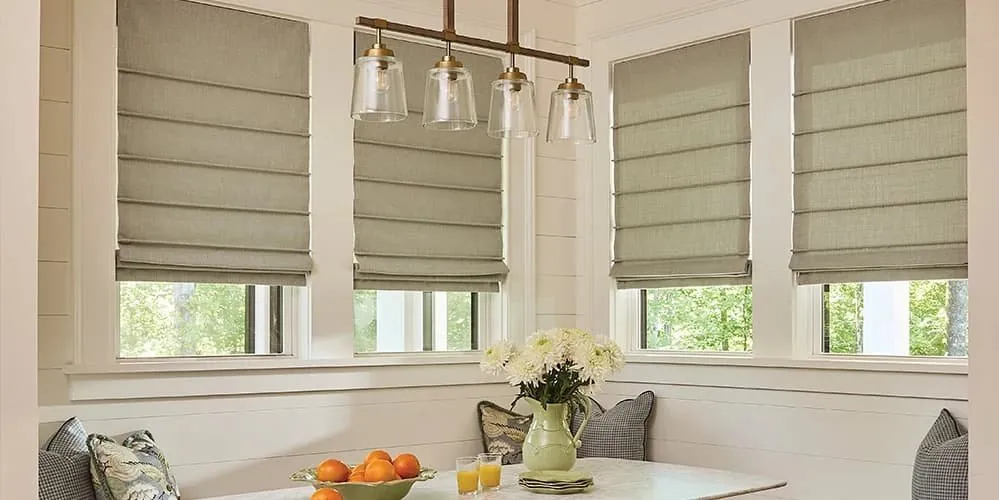
Tall sash by the common, simpler windows further out
Norwood’s housing changes as you move out from the center. Around the common the older stock is close-set: Victorians and two-families with tall sash windows, standing near enough to one another that a side window can look onto a neighbor’s clapboards a few strides away. Further out, the post-war capes and ranches sit on their own lots, and in the newer streets the windows come in standard sizes. Roman shades in Norwood, MA, have to work across all of it.
Near the common, the questions are about daylight and privacy at the same time: how to cover a window that faces the house next door without losing what little light reaches it. On the outer streets, the questions are more about comfort, glare and a tidy, matching look. A folded fabric shade answers both kinds of question better than most coverings, because the fabric can be chosen to let in as much or as little light as each room needs.
We start every Norwood project with a visit to your house, where the samples can be held up at the real windows. The two Hunter Douglas lines we bring are Vignette, whose fold winds up out of sight, and Carole Fabrics, tailored in flat and folded styles.
A shade for each kind of Norwood house
Here is how roman shades usually suit the different housing in town. We carry samples of every option on the van.
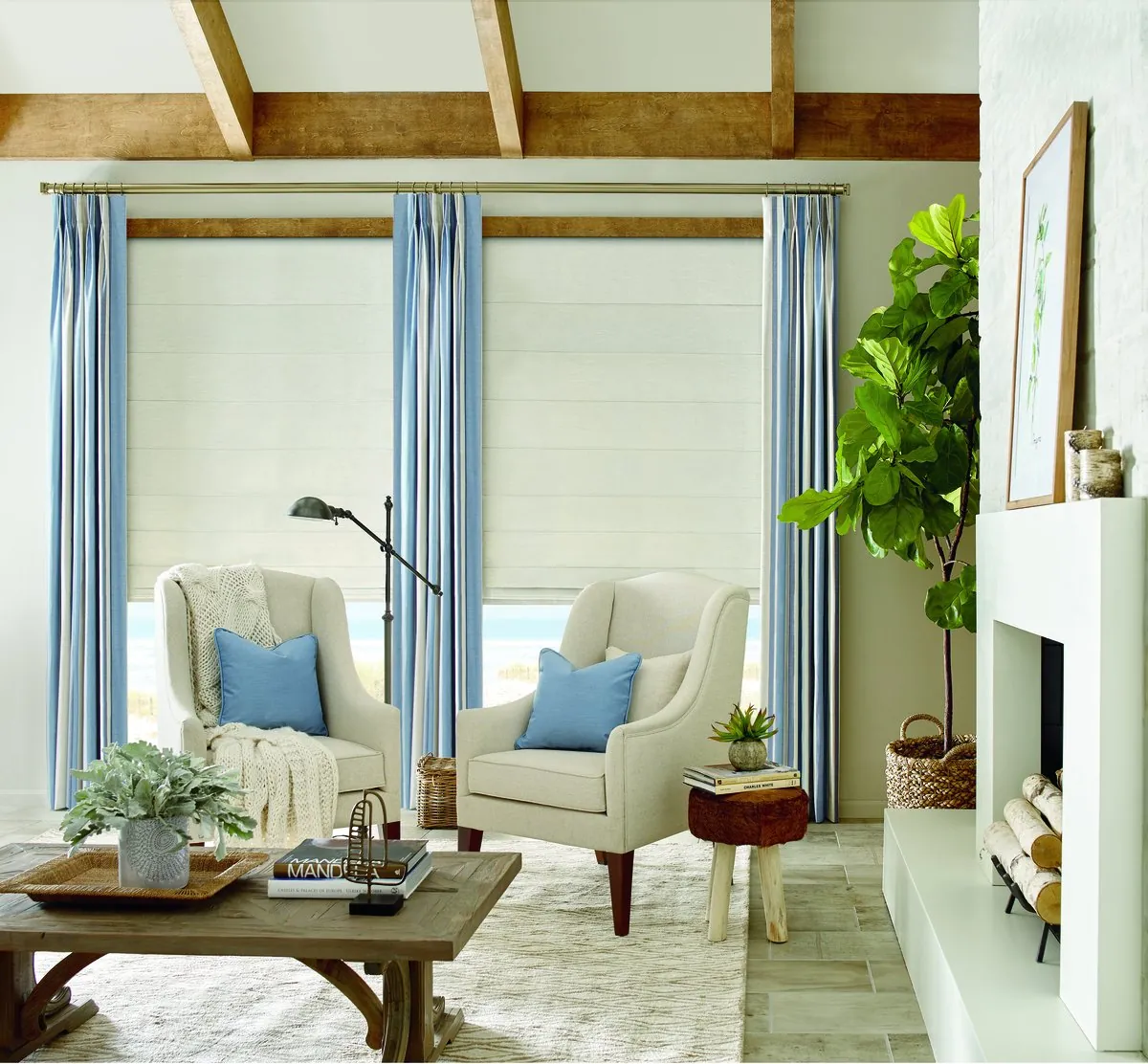
Victorians near the center
Tall sash with old casings. A Carole folded style or flat fold, spaced to the window’s height, keeps the trim on show.
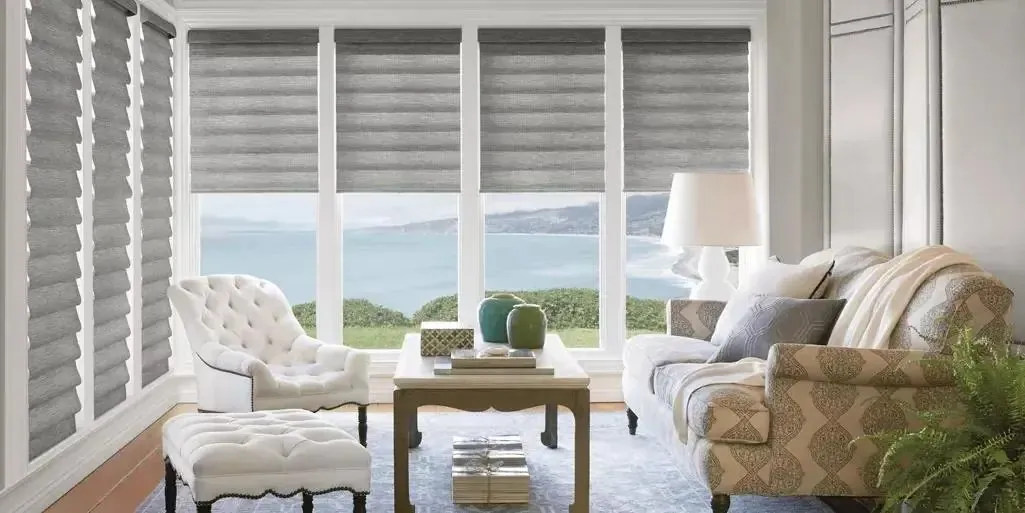
Two-families
Each floor gets different light. Shades chosen floor by floor, with a common look from the street.
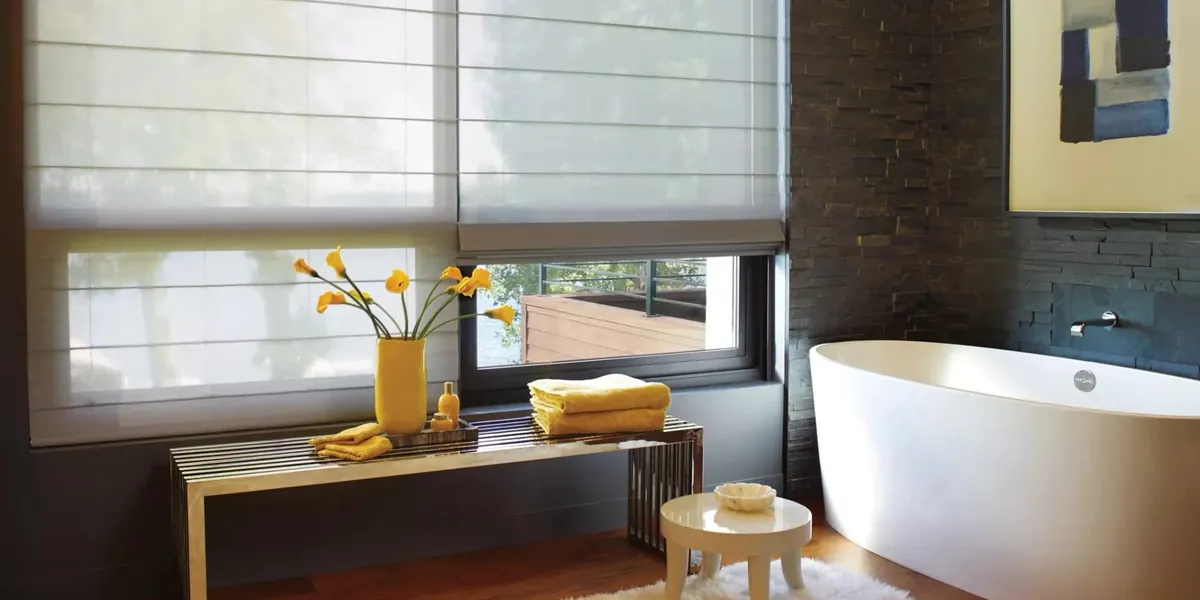
Close-set houses by the common
Sheer and light-filtering fabrics keep side rooms bright while screening the view from next door.
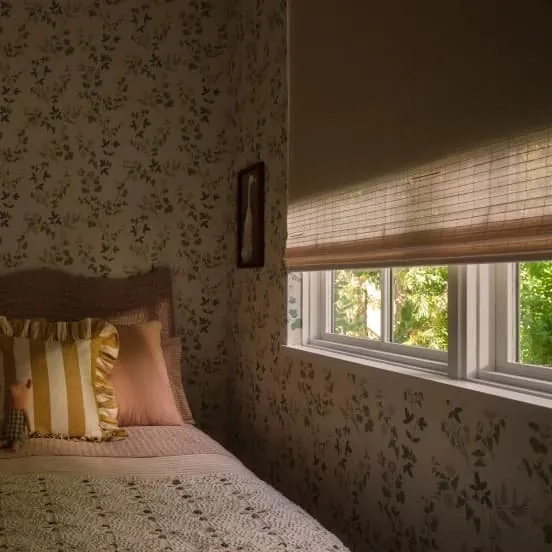
Capes on the outer streets
Short dormer windows upstairs, where a compact Vignette or a light Carole fabric keeps more of the glass open.
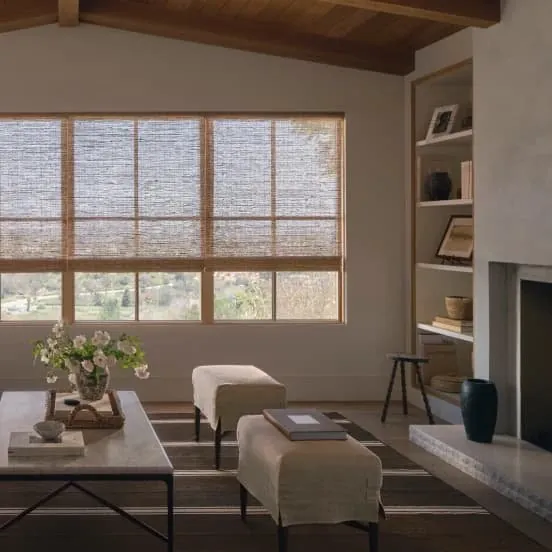
Ranches
A broad living room window split across a few shades, each easy to lift and move on its own.
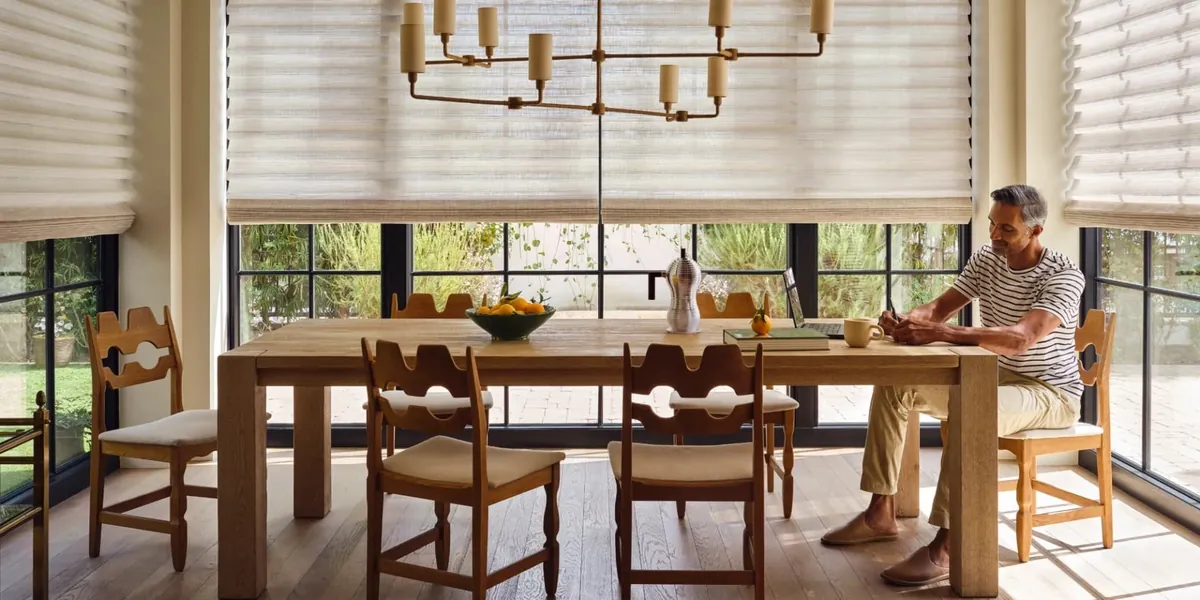
Newer streets
Standard openings and good frame depth, so a whole house of matching shades sits at one height.
Daylight between close-set houses
Around the common, many houses stand only a short side yard apart. The windows on those sides get very little direct sun, because the house next door blocks it for most of the day, and they look straight across at a neighbor’s windows. The usual reaction is to cover them with something heavy and leave them closed, which makes an already dim room darker still.
A roman shade gives you a better compromise. The trick is to choose the fabric for the light, not just for privacy. A sheer or light-filtering fabric, in a pale color, lets the daylight that does arrive pass through and spread across the room, while the view in from the next house is blurred. Because those side rooms are rarely in bright sun, a pale fabric glows rather than glares. Only the rooms you use after dark, such as a bathroom or a bedroom, need a lining behind the fabric.
Where the stack is mounted makes a difference too. On a window starved of light, every bit of glass counts, so we often suggest fixing the headrail on the wall above the casing. When the shade is raised, the gathered fabric then sits above the glass instead of across the top of it, and the whole window is open to the sky. Vignette is helpful on these windows as well, because its fabric winds away into the headrail and leaves very little at the top.
Two-families: different light on each floor
The two-families near the center are stacked homes, one on top of the other, often with the same window layout on each floor. The layout may match, but the light does not. The lower floor sits in the shadow of the neighboring houses and the street trees for much of the day, while the upper floor is above much of that and takes far more sun, especially on the south and west sides.
That means the same fabric is rarely right for both. A lower floor often wants a light, unlined fabric to make the most of limited daylight. An upper floor may want a lining on its sunny side to slow the heat and protect the fabric from fading. To keep the building looking unified from the street, the two floors can share a color family and a fold style, even when the weights differ. We plan each floor separately but with the whole front of the building in mind.
Tall sash on both floors means fold proportion matters here as much as in a Victorian. A few deep folds suit a long window; tight folds look fussy on it. On the lower floor, where the neighboring houses cut the light, a pale fabric keeps the rooms from feeling closed in. The upper floor, with more sky in front of it, can carry a richer color or a bolder pattern on a flat fold without the room turning dark, and it is the floor where a lining earns its keep on sunny afternoons.
Proportion and mounting on tall sash
The Victorians near the center, like the two-families, have tall, narrow sash, often with original casings that are worth keeping in view. On a window like that, a roman shade looks its best inside the frame, with its folds spaced to the height of the window. Carole Fabrics shades are tailored to each opening, so the fold depth can be set to suit.
Old frames are not always generous, though. Weights, pulleys and stops take room inside the frame, and a frame that has moved may be narrower at the top than the bottom. We record the width at the top, middle and bottom and look at the depth in more than one place before recommending a mount. If the frame will not take the headrail cleanly, the shade goes on the casing, just above the glass, which also clears the top panes when the shade is raised.
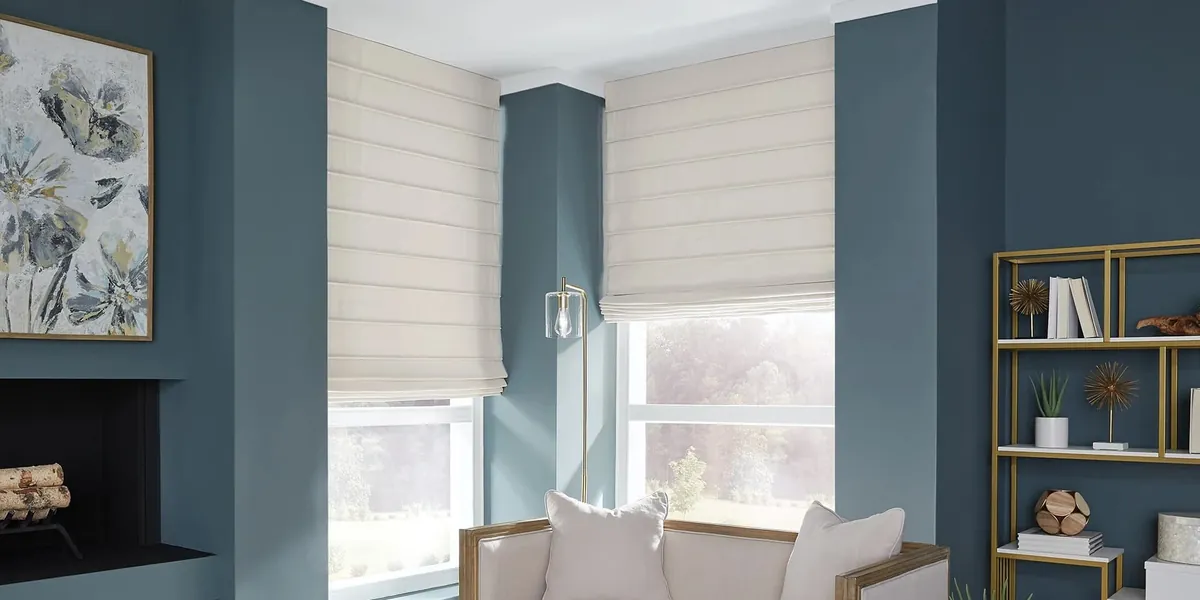
Front rooms near the sidewalk
The close-set houses around the common also tend to sit near the street, so the front parlor of a Victorian or the front room of a two-family can be only a few steps from people walking by. By day an unlined, light-filtering fabric is usually enough, since the brighter light outside keeps passers-by from seeing in. In the evening the situation flips, and a lit front room shows clearly through a thin fabric. For a room used after dark, a privacy lining behind the face fabric keeps it private without making it gloomy by day. When we plan roman shades in Norwood front rooms, we often line only the street-facing windows and keep the side and back windows unlined, so the house keeps its daylight where privacy matters less.
Stair landings and halls
Where an older house has a window on a stair landing or at the end of an upstairs hall, it is often the window people forget, partly because it is awkward to reach over the stairs. A roman shade there can be motorized so it is never a stretch, or simply fitted with a cordless lift if the sill is within reach of the landing. A plain light-filtering fabric suits these windows: it softens the light on the stairs and stops the landing from being lit up like a display case at night, without darkening a space you walk through. Including these windows in the plan keeps roman shades in Norwood houses consistent from the front door to the top floor.
What happens when we visit
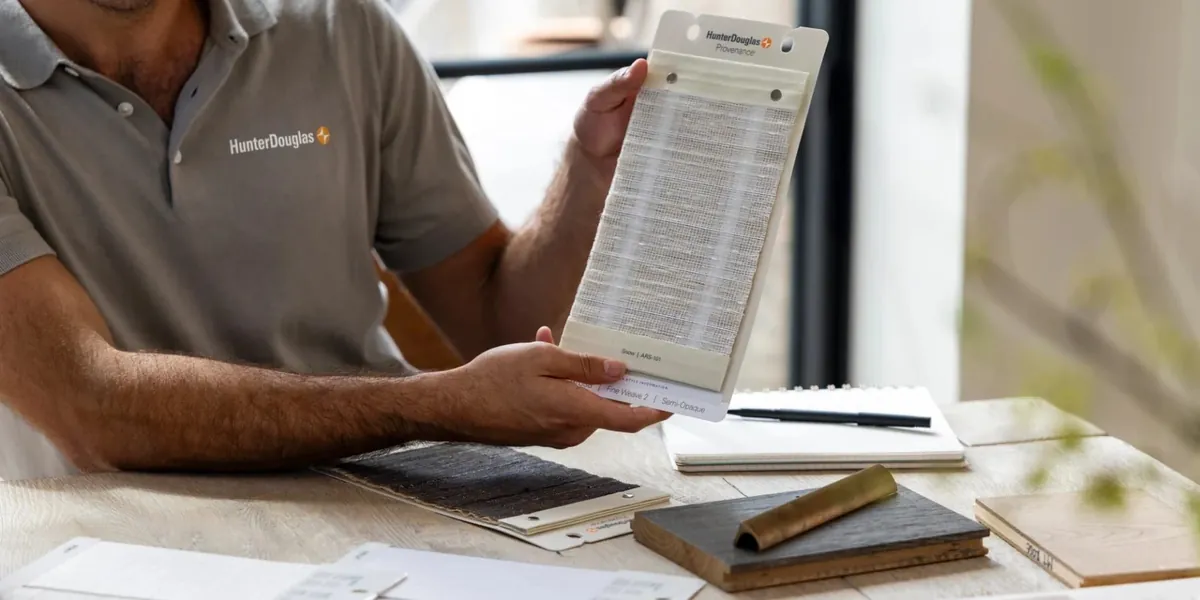
In Norwood we lead with the in-home consultation. It is the only way to see how a fabric behaves on a dim side window or a bright upper floor, and our vans carry the samples, so the visit has everything with it.
Before we arrive, it helps to think about which rooms bother you most, and whether any windows are hard to reach. Then:
- We walk the house with you and look at each window, starting with the ones that matter most.
- Fabric samples go up at the glass, so you can compare sheer, light-filtering and lined weights in your real light.
- We talk through the fold and the lift for each room, from cordless to PowerView.
- Every window is measured, with the mount and the depth recorded on its own line.
- You are given a free estimate, broken down by room, to consider at your own pace.
Our in-home consultations page explains the service, and what happens at an in-home consultation answers the common questions.
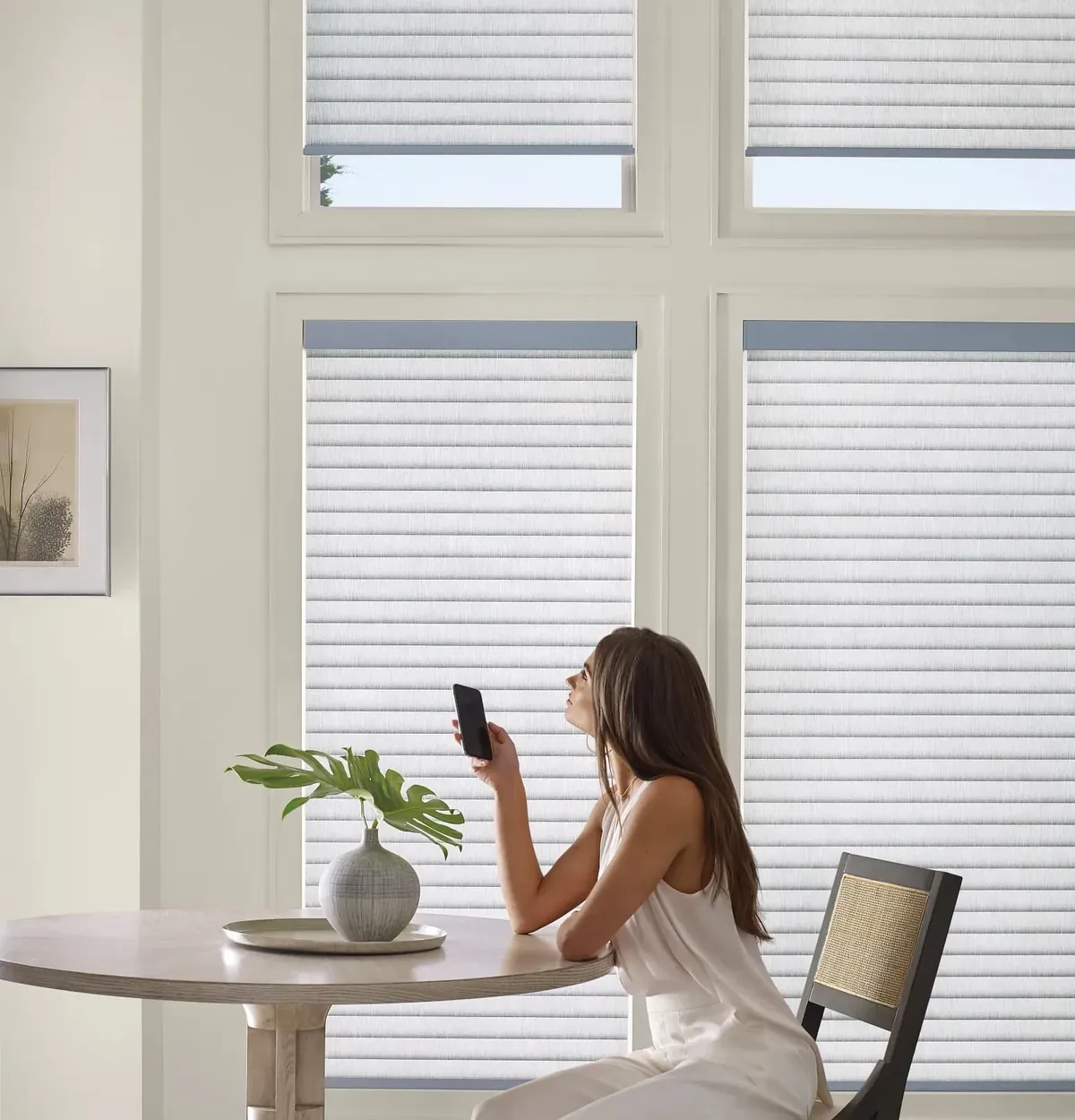
Capes and ranches on the outer streets
Moving out from the center, the post-war capes and ranches have simpler windows on their own lots, with more space around them and more daylight. Here roman shades are less about rescuing a dim room and more about comfort and looks.
In a cape, the upstairs bedrooms are in dormers with short windows. The stack of a raised shade covers more of a short window than a tall one, so we keep it compact with Vignette or a light, unlined Carole fabric. A bedroom that needs darkness can still have a lining; we show you the trade-off between darkness and stack size at the window.
In a ranch, the big front window is the feature. Splitting it into two or three shades keeps each one light to lift and lets you open the middle while the sides stay down. When we plan roman shades in Norwood ranches, we line up the joins with the window’s own frame divisions, so the run looks deliberate.
Standard sizes in the newer streets
The newer streets have standard window sizes, square frames and plenty of depth. That makes an inside mount simple and lets every shade on a floor sit at the same height. In an open kitchen and family room, matching shades across the space keep it calm, and with the light on these streets more open than near the common, a privacy lining on the street side is often the only lining a house needs. Vignette tends to suit these houses: its folds are even, it looks neat from outside, and it leaves very little fabric at the top of the window when raised.
Why fabric rather than blinds
Many Norwood houses still have the blinds that came with them, and a common question is whether roman shades are worth the change. The difference is mostly in how the room feels. A blind is made of slats; even open, it lines the window with hard edges. A fabric shade brings in texture and color, softens the light rather than slicing it, and makes a room with hard floors and plaster walls feel quieter and more furnished.
There are practical differences too. A roman shade has no slats to tilt or to gather dust between, and a lined shade gives fuller privacy and darkness than most blinds. Blinds still have their place, in a kitchen where you want to tilt light up, or a bathroom where moisture is constant, and we carry Hunter Douglas blinds for those rooms. We can mix the two in one house so each room has what suits it. If you are unsure which to choose, our guide to shades or blinds sets out the differences.
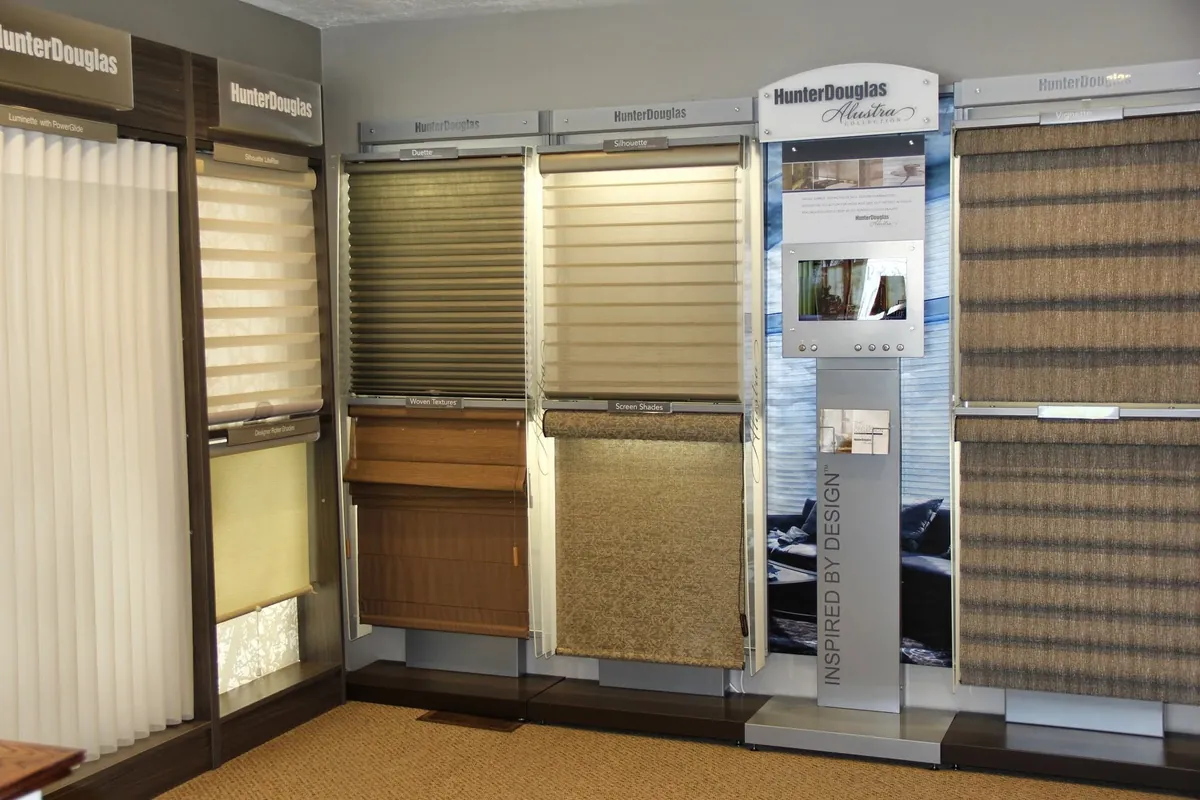
Choosing the fold
The fold sets the character of the window. A Carole flat fold drops as one smooth panel and lifts into crisp, layered pleats; it is tailored, and it shows a print or a stripe at its best. A Carole folded style keeps soft loops down its full length, for a traditional, relaxed window in a plain or textured cloth. Vignette’s fold is engineered to wind away evenly, which gives a modern, uniform look.
In Norwood the Victorians and two-families near the center often suit the Carole styles, and the outer streets often suit Vignette, though there are plenty of exceptions. Read more on our Vignette and Carole Fabrics pages, or compare the whole family, including Alustra Woven Textures, on the roman shades page.
Raising the shade
On most Norwood windows a cordless lift is all that is needed: the shade is pushed up or pulled down by its bottom rail and stays where it is left, with no cord on show. On a wide, lined shade, a continuous cord loop takes the effort out of lifting. And on windows behind furniture, high on a stair, or anywhere you would rather not reach, PowerView raises and lowers the shade from a remote, the app or a timetable. Our guide to how motorized shades are controlled explains the options, and our motorized blinds in Norwood page covers the whole house.

Why a Hunter Douglas Gallery dealer
Blinds & Designs is a Hunter Douglas Gallery dealer, a title Hunter Douglas gives dealers who meet its standards. For a Norwood house that brings the whole range of roman shades, with every fabric, fold, lining and lift, alongside Hunter Douglas blinds, shutters, other shades and drapery for rooms that suit them better.
Installation is carried out by installers certified by Hunter Douglas, who set every shade level and test it before leaving. Estimates are free, and we look after blind and shade repairs on coverings you already own.
Our Norwood page lists everything we offer in town, and our cellular shades in Norwood page covers a shade often used in bedrooms beside roman shades in the main rooms.
Questions from Norwood
My side windows face the house next door. Will a shade make the room too dark?
Not if the fabric is chosen for the light. A pale sheer or light-filtering fabric lets daylight through and blurs the view in. Mounting the shade above the casing also lets the raised fabric clear the glass completely.
Should both floors of my two-family have the same shades?
Usually not exactly. The lower floor often wants a lighter fabric and the upper floor a lining on its sunny side. Sharing a color family and fold keeps the building looking unified from the street.
Will a roman shade fit my tall Victorian sash?
In most cases. It depends on the frame depth once the sash hardware is allowed for. If the frame is too shallow, the shade goes on the casing above the glass.
Are roman shades better than blinds?
They are different. Fabric softens a room and gives fuller privacy when lined; blinds let you tilt the light. We can use both in one house.
Is the estimate free?
Yes. We measure every window you are considering and give you a free estimate, with no obligation.
Start at home
The best way to judge roman shades in Norwood, MA, is to see the fabric on your own windows, whether that is a dim side window by the common or a bright ranch front. Request a consultation and we will come to your house with the Vignette and Carole Fabrics books, measure every opening and leave you with a free estimate. The call button reaches us too.