
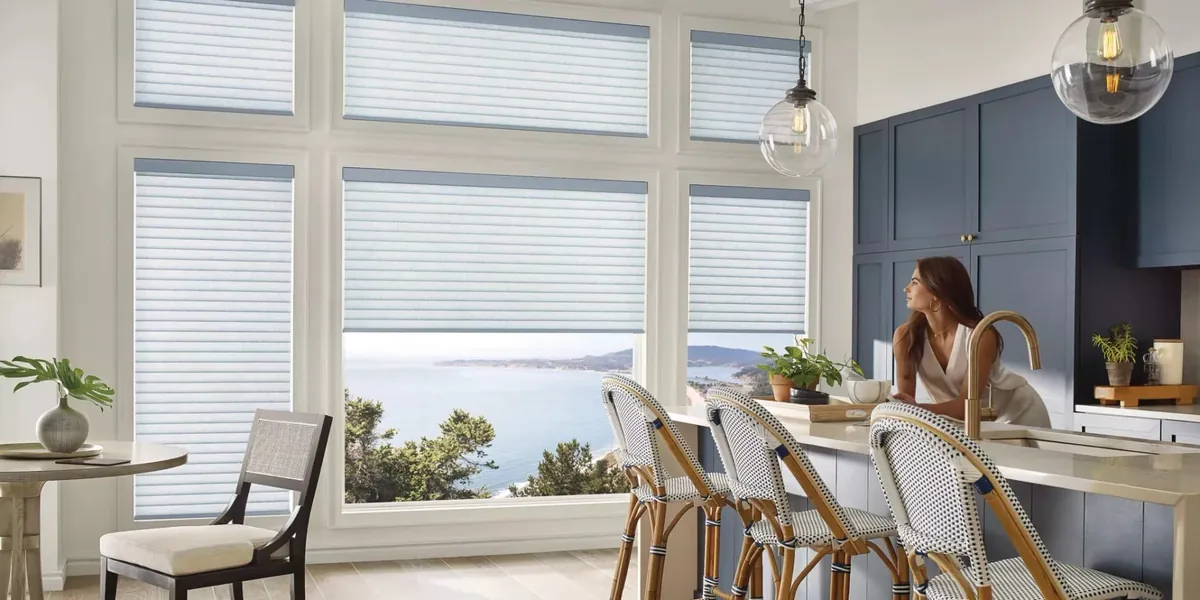
Glass facing the harbor, salt in the air
Around the harbor and out along the road to Ned’s Point, the shingled cottages were built to catch the water, and the rooms that face it are glazed heavily. Many of those cottages began as summer places and have since been converted for year-round living, which usually meant new windows, bigger windows and more of them on the harbor side. Further inland the houses are larger and newer, but the same pattern holds: the best rooms look toward the water and take its light all day.
That much glass is exactly why roller shades in Mattapoisett, MA, make sense. A roller has no slats to collect salt film and no stack of folds at the top. Lowered, it controls glare and heat; raised, it rolls into a slim tube and the window is all view again.
The salt air is the other half of the story. It is constant here, it settles on anything near an open sash, and it shapes the fabric, hardware and lift system we suggest for each window.
What we fit for harbor and inland rooms
Every one of these is a Hunter Douglas shade from the Designer or Alustra collections. We carry samples of all of them in the van.
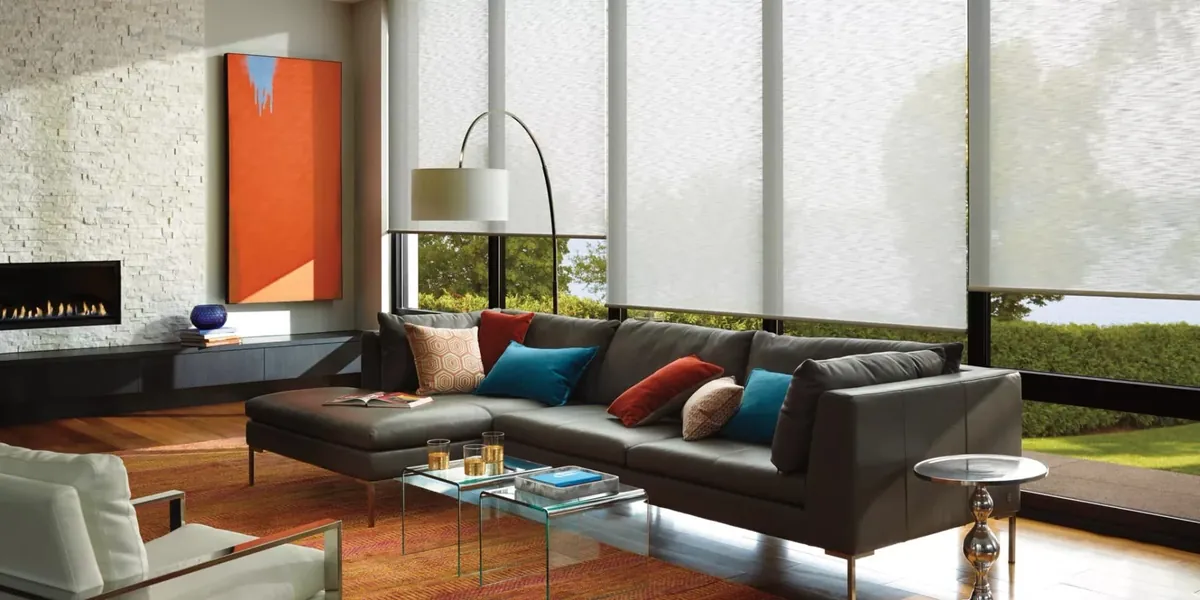
Screen shades for the water view
Designer Screen and Alustra screen weaves soften the glare coming off the harbor while the boats and the far shore stay visible through the fabric.
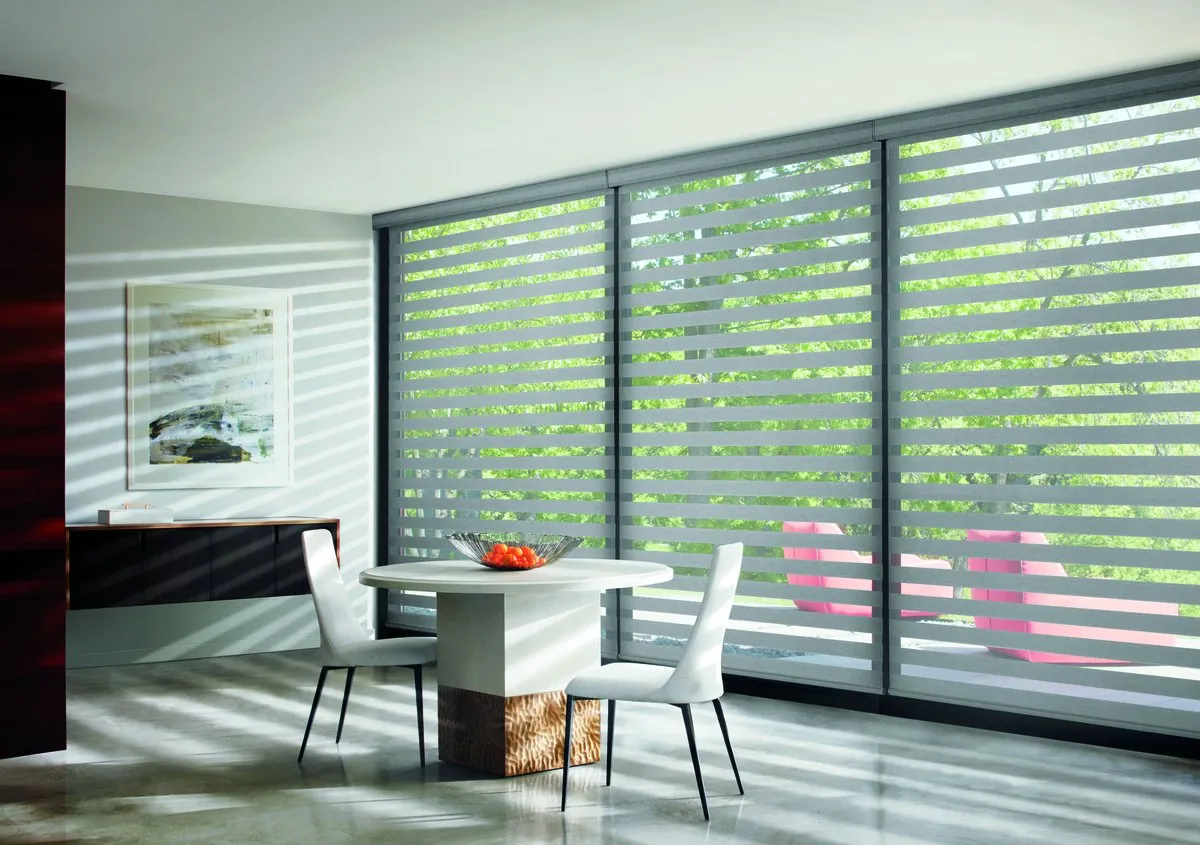
Banded stripes for changing privacy
Designer Banded layers sheer and solid stripes. Shift them to open a view or close the room, without rolling the shade up.
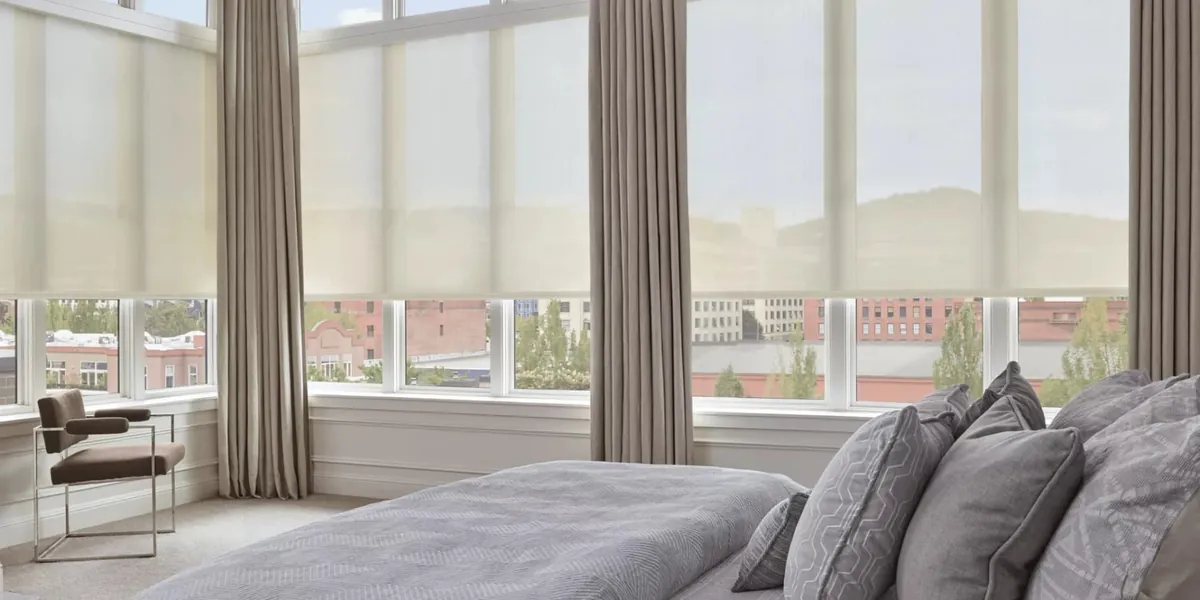
Blackout for the bedrooms
Opaque fabrics for rooms that catch first light over the water. Pair a blackout roller with a screen on the same bracket for both day and night.
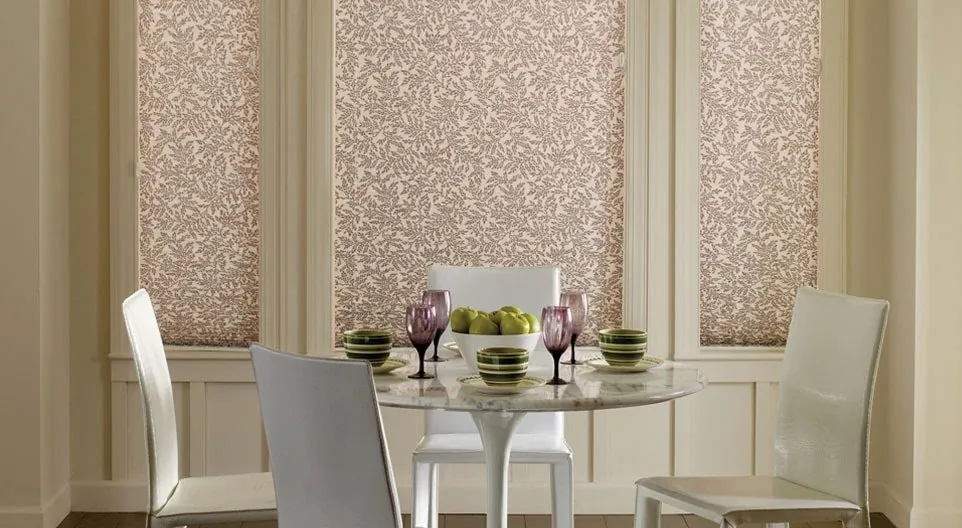
Patterned and printed fabrics
For a cottage dining room or a converted sunporch, a pattern on the shade can carry a room the way a rug does.
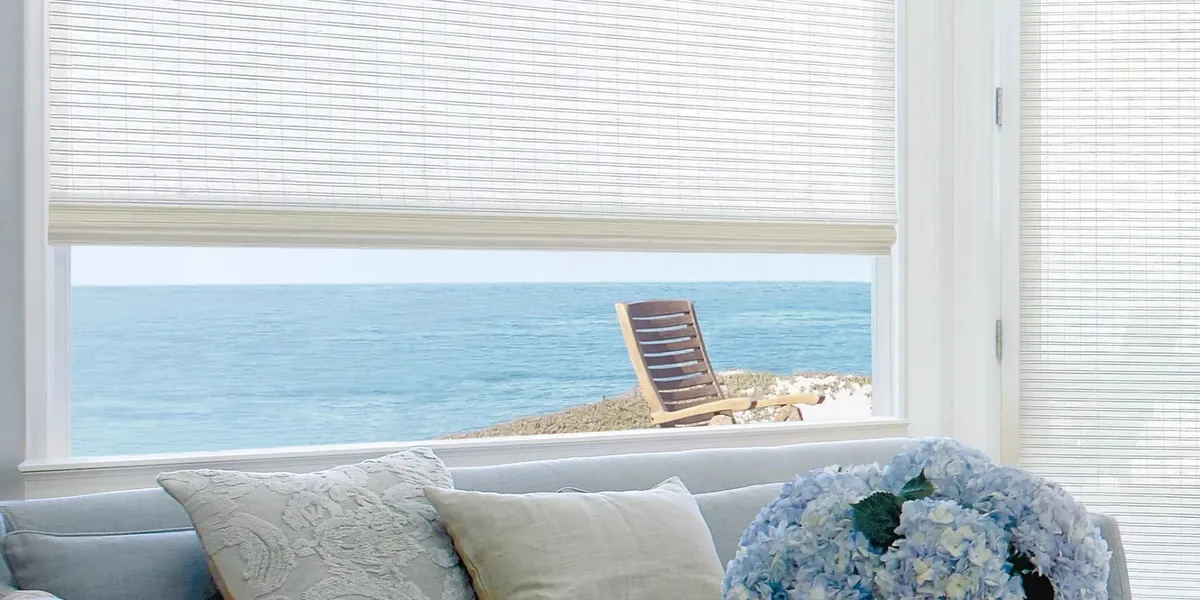
Woven textures on a roller
Alustra Woven Textures puts a natural woven look on a roller. It suits shingle, beadboard and painted floors.
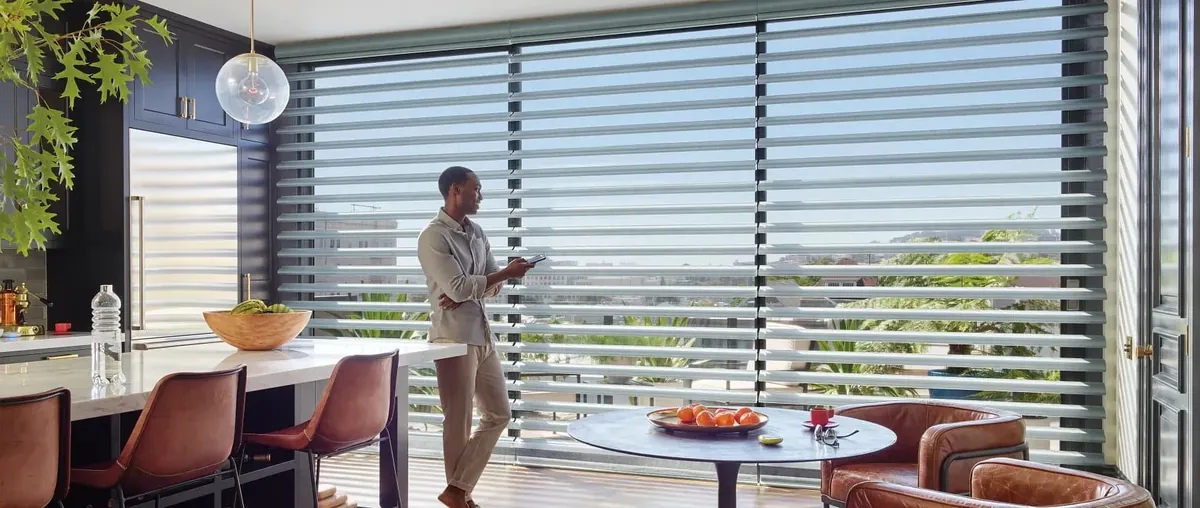
PowerView motorization
Lower every harbor-side shade at once from the app, or let a schedule bring them down when the sun swings onto the glass.
Reading the harbor light
On a clear day the light in a waterfront room comes from two places: the sky, and the harbor itself. Water throws back sunlight at a low angle, straight into the room, which is why a sitting room facing the harbor can be uncomfortable at midday even when the sun is high and behind the house. Screens, televisions and computer screens wash out, and rugs and upholstery fade over a few summers.
A solar screen is built for exactly that. Its woven fabric has small, regular openings, and the openness factor tells you how much of the fabric is open space. A more open weave keeps more of the harbor in view and lets more light through. A tighter weave cuts more glare and heat, and the view behind it becomes softer. On the water side of a cottage, the choice is really about what you would rather keep: the clearest possible view of the moorings, or a calmer, cooler room.
Color is the other lever. Darker screens are easier to look through, because they do not light up in the sun, and they knock down glare better. Lighter screens reflect more heat away but turn brighter in direct sun, so the view fades more. A charcoal or bronze screen is often where we start for a harbor room, and we hold it up at the window during the brightest part of your visit so you can judge for yourself.
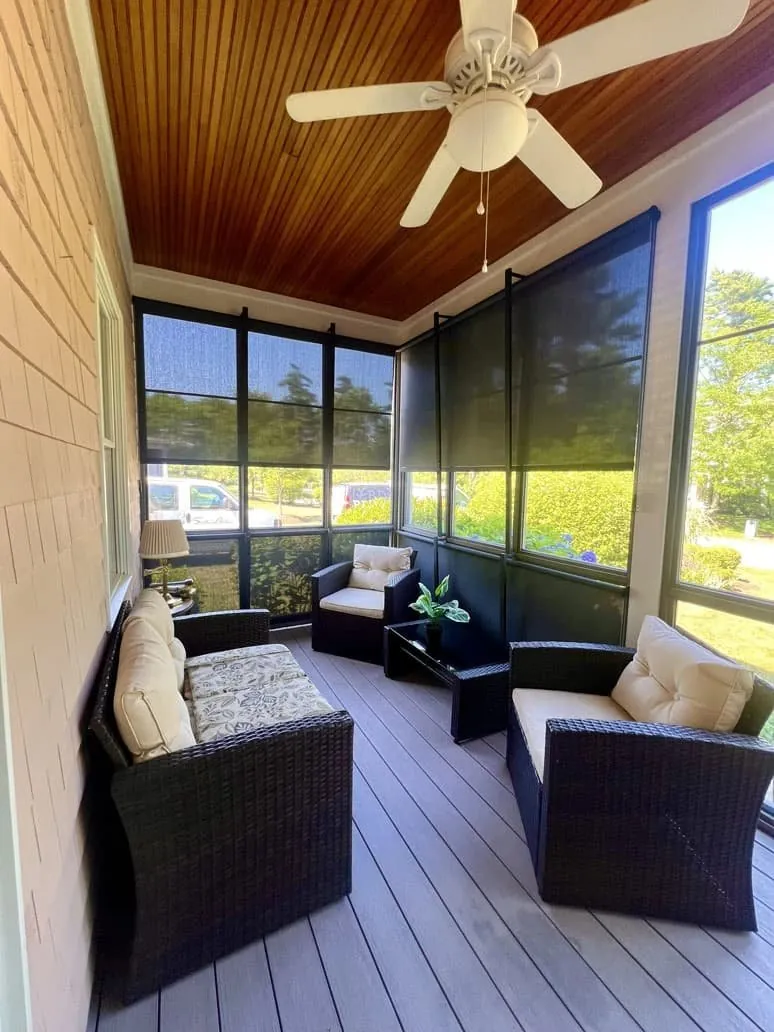
Cottages near the harbor and Ned’s Point
The older shingled cottages are small and close to the ground. Their rooms are often low, with windows on two or three walls and a porch or sunroom facing the water. Inside you find beadboard, painted trim and floors that have seen a lot of sand over the years.
For houses like these we usually recommend rollers mounted inside the frame, in fabrics that look relaxed rather than formal. A light filtering roller in a warm white or a pale linen color lets the room stay bright while hiding it from a neighbor’s porch a few yards away. An enclosed sunporch is often the best place for a screen, because it is the room most exposed to sun and the one where you most want to see out.
Cottage windows tend to be divided, with small panes and narrow muntins. A roller mounted inside sits behind them and disappears when raised. Where a window is too shallow for an inside bracket, a slim outside mount on the trim is a neat alternative.
Year-round conversions and mixed windows
When a summer cottage becomes a full-time house, the windows often change in stages. You may find original sash in a bedroom, newer replacement units in the kitchen, a wide slider where a porch used to be, and a bank of tall picture windows in an addition facing the harbor. That mix is one of the trickiest things we see in Mattapoisett.
The answer is a shade plan for the whole house rather than one window at a time. We pick a small family of fabrics, perhaps a light filtering roller for the older rooms, a screen for the addition and a blackout for the bedrooms, and keep the colors related so the house reads as one. Where windows of different heights sit side by side, we can line the shades up at the same bottom height so the room looks orderly even when the glass does not match.
Sliders and French doors in a converted porch get a roller mounted above the frame, high enough to clear the handle and roll fully clear of the opening when you walk out to the deck.
Salt air and the working parts
Salt is part of life in a harbor town. On warm days, with windows open to the breeze, it drifts onto everything near the glass and leaves a fine film over time. Window coverings with many exposed moving parts collect that film in places you cannot easily clean.
A roller shade is about as simple as a window covering gets. The fabric winds around a tube, and the lift mechanism sits inside or at the end of that tube. With a cordless lift there is no cord or cord lock hanging at the side. With a cassette or fascia across the top, the rolled fabric and the hardware are covered as well. Fewer exposed parts means less for the salt to settle on.
When the shades go up, our certified Hunter Douglas installers mount each bracket into solid wood so it holds firm on a window that is opened and closed all summer. If you choose PowerView, we talk through how the motors are powered and where the power for each motor will come from, so it stays tidy on a coastal window. Our guide to caring for fabric shades covers simple cleaning that keeps the fabric looking right.
Larger houses inland
Away from the water the houses tend to be newer and bigger: colonials and shingle-style houses with two-story entries, open kitchens and family rooms with tall windows and transoms. The problems here are scale and height rather than salt. A great room may have a window wall that would take a ladder to reach, and an open-plan kitchen gets strong sun through a run of tall windows in the afternoon.
Rollers handle big openings well. The fabric spans wide without sagging, and several shades can share a bracket and move together. High windows and transoms are where motorization pays off, because a schedule can bring those shades down in the afternoon and raise them in the evening without anyone climbing up. Our page on motorized blinds in Mattapoisett explains the options for a whole house.
The two-story entry is a common puzzle in these houses. A tall window above the front door or on the stair landing lets in a lot of light, but it is also the window most visible from the street at night, and the hardest one to reach. A roller in a light filtering fabric, motorized and set to close at dusk, solves all three. In a home office or a media room off the kitchen, where glare on a screen is the main complaint, a tighter screen weave or a room-darkening roller gives you control without closing off the room for good.
Kitchens in the newer houses often have a long run of windows over a counter, where reaching across to a cord is awkward. A cordless roller lifts with a light touch on the bottom rail, and a motor takes even that away.
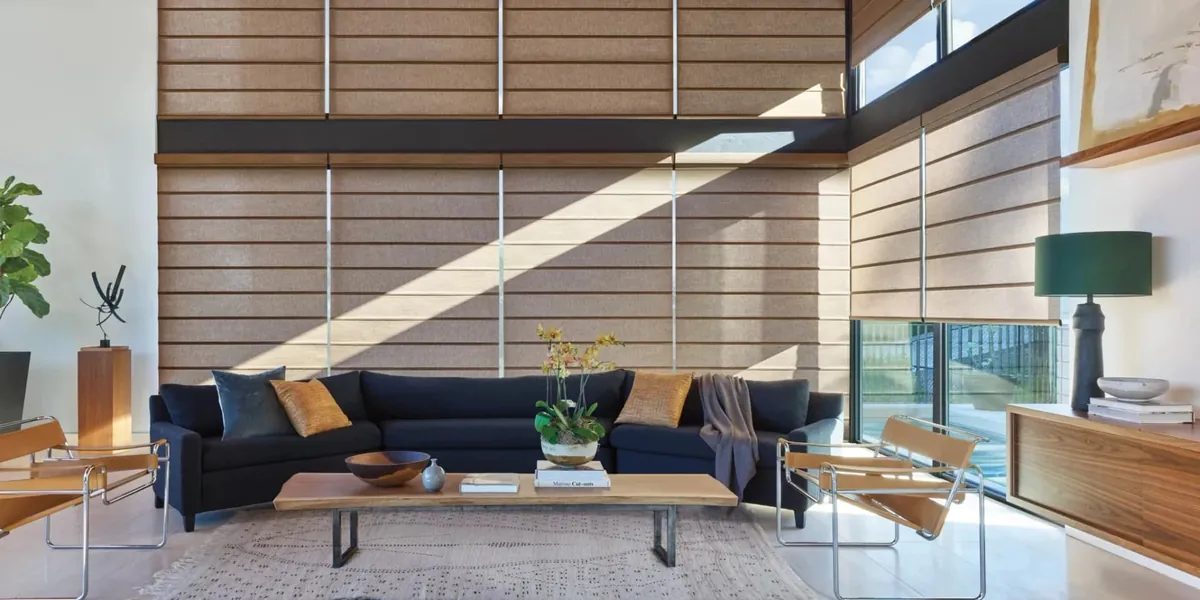
Choosing fabric for a sunny water room
The harbor side of a house takes more sun than any other wall, and that sun is reflected as well as direct. Over time it is hard on fabric. Colors that look rich in a sample book can soften after a few summers on a south window facing the water, and very dark solid fabrics can feel warm to the touch on a hot afternoon.
A few habits help. Neutral and mid-tone colors tend to hold their look longest in strong light. Screen fabrics, because they are partly open, handle sun well and keep a room from building up heat. Where a room needs color, it can come from a patterned roller on a window that sees less sun, or from cushions and rugs, while the harbor windows stay calm. When we plan roller shades in Mattapoisett harbor rooms, we sort the fabrics by which wall they will face before you fall in love with a color. Our guide to choosing fabric for a sunny room goes further.
Day and night in a waterfront bedroom
A bedroom facing the harbor gets light very early in summer, and a light filtering fabric will not keep it dim. A blackout roller does. Mounted inside the frame, it leaves only a thin line of light at the edges; mounted outside with a little overlap, it closes even that.
Many of these bedrooms also have the best view in the house, and nobody wants to lose it during the day. A dual roller solves that. One bracket carries two shades: a screen in front for daytime glare and a blackout behind for night. You lower whichever one the hour calls for. For a room where you want soft daytime privacy instead, a banded shade gives you a range between open and closed in one fabric.
These are the choices that come up most often when we plan roller shades in Mattapoisett bedrooms, and seeing the fabrics against your own early light makes the decision much easier.
What happens when we come to the house
We bring the showroom to you. The vans carry the Designer and Alustra ranges, so you can choose with the harbor light, your own trim and your own furniture in front of you.
- Request a consultation online or by the call button, and we agree a time.
- We start with the rooms that face the water, because they usually decide the rest of the plan.
- You compare screen openness levels, light filtering and blackout fabrics at your own windows.
- We measure every window, including the depth of each frame and any crank handles or latches in the way.
- You receive a free estimate, with no pressure to decide that day.
If you want a hand with color and fabric across the whole house, our interior design consultations can be part of the same visit. Read what happens at an in-home consultation for more.
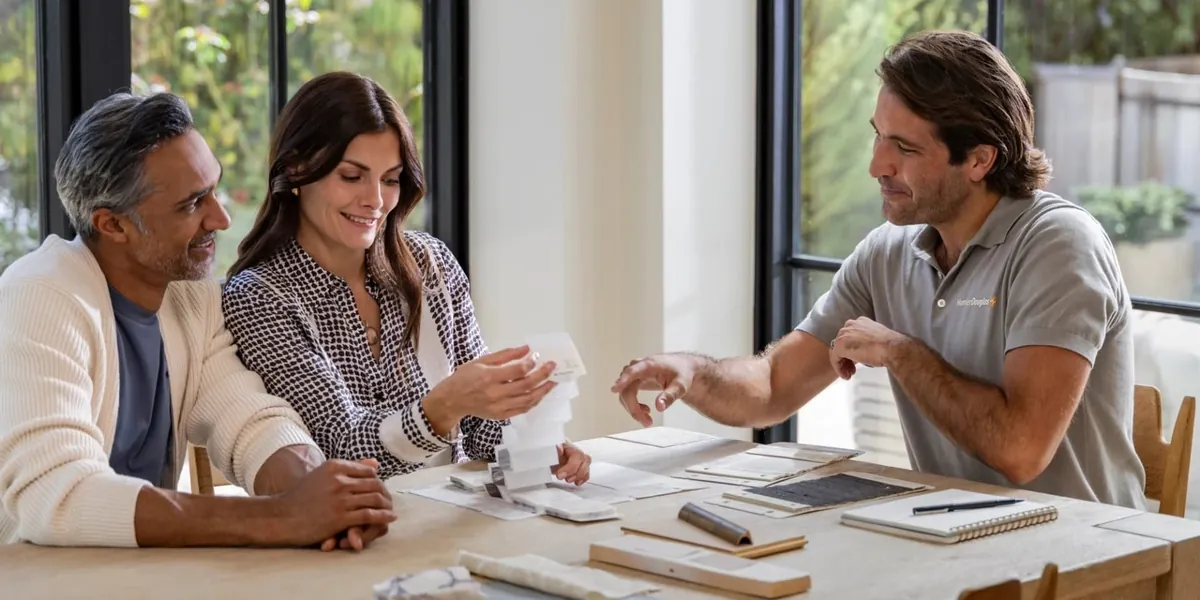
Designer, Alustra and Sonnette compared
Designer Roller is the workhorse of the range, with a broad choice of colors, textures and opacities that suit any room in a cottage or a newer house. Designer Screen is the solar screen line, and Designer Banded is the striped shade for flexible privacy. Alustra brings more tailored fabrics and hardware, including Alustra Woven Textures for a natural look. Sonnette is a cellular roller, a curved cell that rolls up like any roller but brings some of the warmth of a honeycomb shade, useful in a converted cottage that still feels cool in winter.
Learn more on our Designer Screen, Designer Banded and Sonnette pages, or the main roller shades page.
The day the shades go up
When your shades arrive, our certified Hunter Douglas installers return to fit them. In a cottage that means finding solid framing behind old plaster or beadboard so each bracket holds square. In a newer house with tall glass it often means working at height and lining up several shades so their bottoms sit at one level across the room.
Each shade is run through its full travel and adjusted so it rolls straight, without drifting toward one side of the tube. Cordless shades are set so they stop where you leave them. If you chose PowerView, the installers pair the motors, set up any schedules you want and show you the app and remote. Fitting roller shades in Mattapoisett houses near the water also means checking that nothing catches when a sash is raised for the breeze. Our page on what happens on installation day has the full picture.
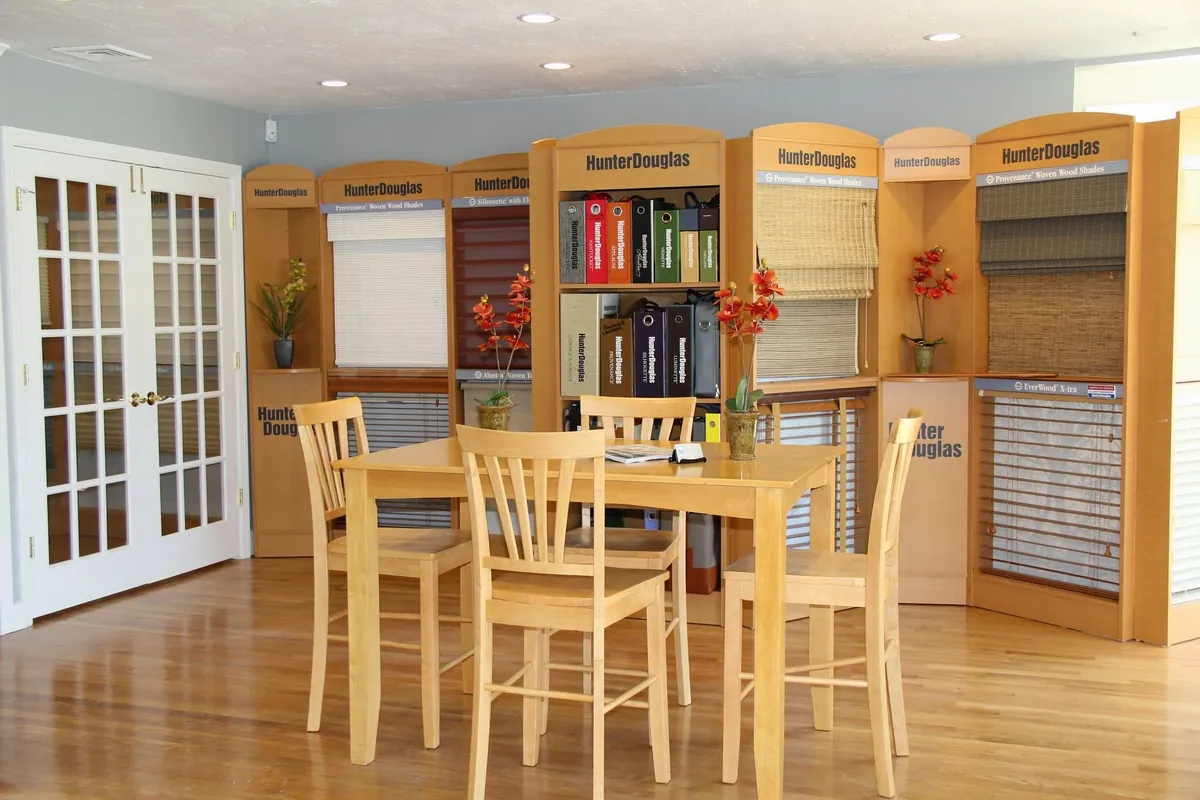
Why work with a Gallery dealer
Hunter Douglas names dealers who meet its standards Gallery dealers, and Blinds & Designs is one of them. In practice that gives you every roller collection, every fabric family and PowerView automation from one source, and installers who are certified by Hunter Douglas to fit them.
We also look after shades once they are up. If a roller stops tracking straight or a lift wears out, we handle blind and shade repairs.
Rollers are rarely the only thing a house needs. Some rooms may suit roman shades in Mattapoisett or cellular shades in Mattapoisett, and our Mattapoisett page brings every service in town together.
Questions from Mattapoisett
Will a screen shade block my view of the harbor?
No. A screen softens the view rather than hiding it. A more open weave and a darker color keep it clearest. We bring several so you can compare them at your own window.
How do roller shades hold up in salt air?
Better than most coverings, because there are so few exposed parts. A cordless lift removes the side cord, and a cassette across the top covers the rolled fabric and hardware.
Can I keep the view by day and have darkness at night?
Yes. A dual roller carries a screen and a blackout shade on one bracket. Lower the screen during the day and the blackout at night.
My converted cottage has every kind of window. Can the shades still match?
They can. We choose a small family of related fabrics and line the bottoms up where windows of different heights sit together, so the house looks consistent.
Is there a charge for the estimate?
No, the estimate is free. We measure your windows and give you a free estimate at the in-home consultation.
Start with your water-facing rooms
The quickest way to settle on roller shades in Mattapoisett, MA, is to stand in your brightest harbor room with the samples in your hand. Request a consultation and we will bring the full range to you, measure every window and give you a free estimate. You can also visit the North Dartmouth showroom, our nearest, or use the call button to ask a question first.