
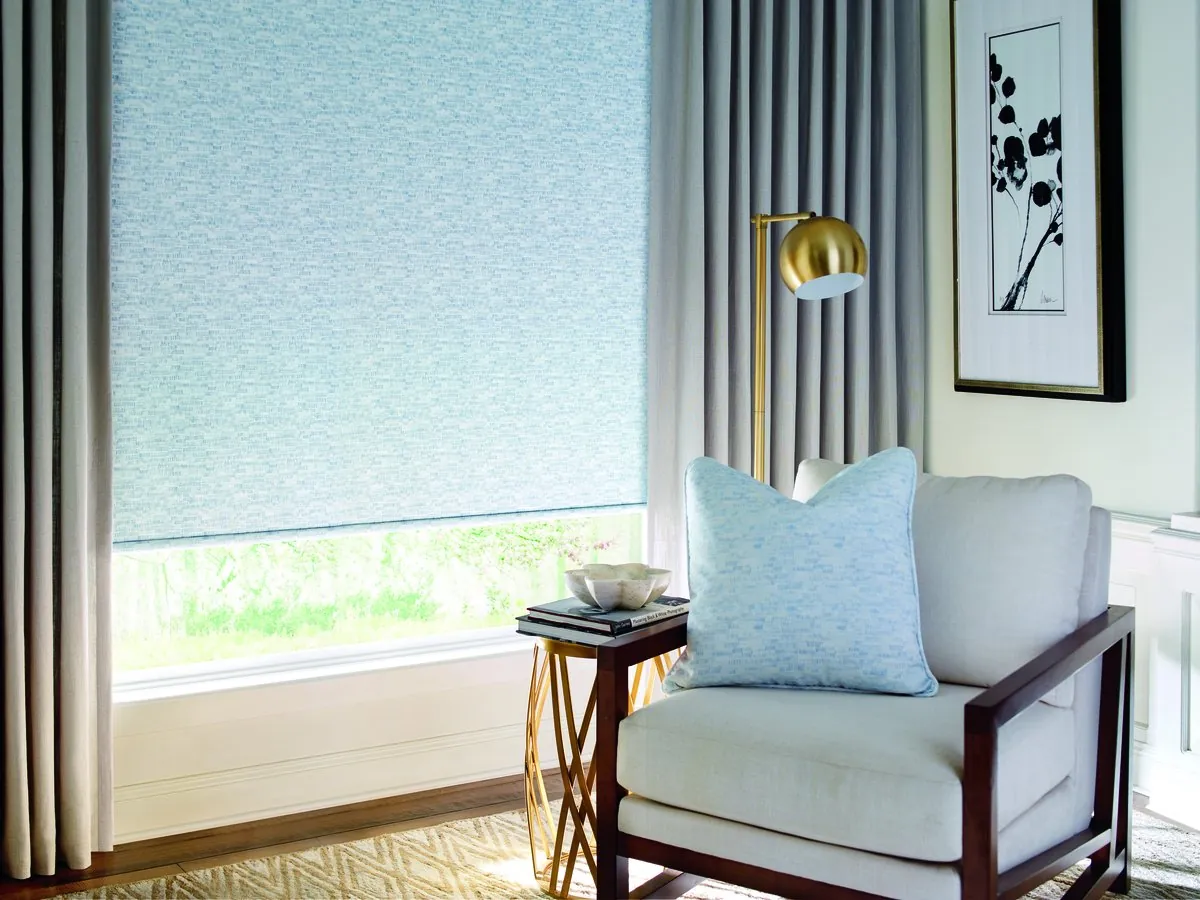
Tall, narrow windows and close neighbors
Walk any block in the North End or the West End and the pattern repeats: triple-deckers shoulder to shoulder, each floor its own apartment, each with a row of tall, narrow double-hung windows and a ceiling well above what newer houses have. Closer to the waterfront, the historic district adds Federal houses with carefully proportioned sash and trim worth protecting. Roller shades in New Bedford, MA, suit both, because a roller is slim, flat and quiet, and it rolls up to almost nothing at the top of a tall opening.
The windows here share a few traits that shape every recommendation. They are taller than they are wide, so the drop is long. The side yards between triple-deckers are narrow, so a neighbor’s window may be only a few steps from yours. And the depth of the window reveal varies a great deal, from shallow wood frames in the mill-era houses to deeper openings in the older buildings near the harbor.
That depth, and what the house looks like from the street, decides how a shade can be mounted. We look at both before suggesting anything.
The roller options we bring
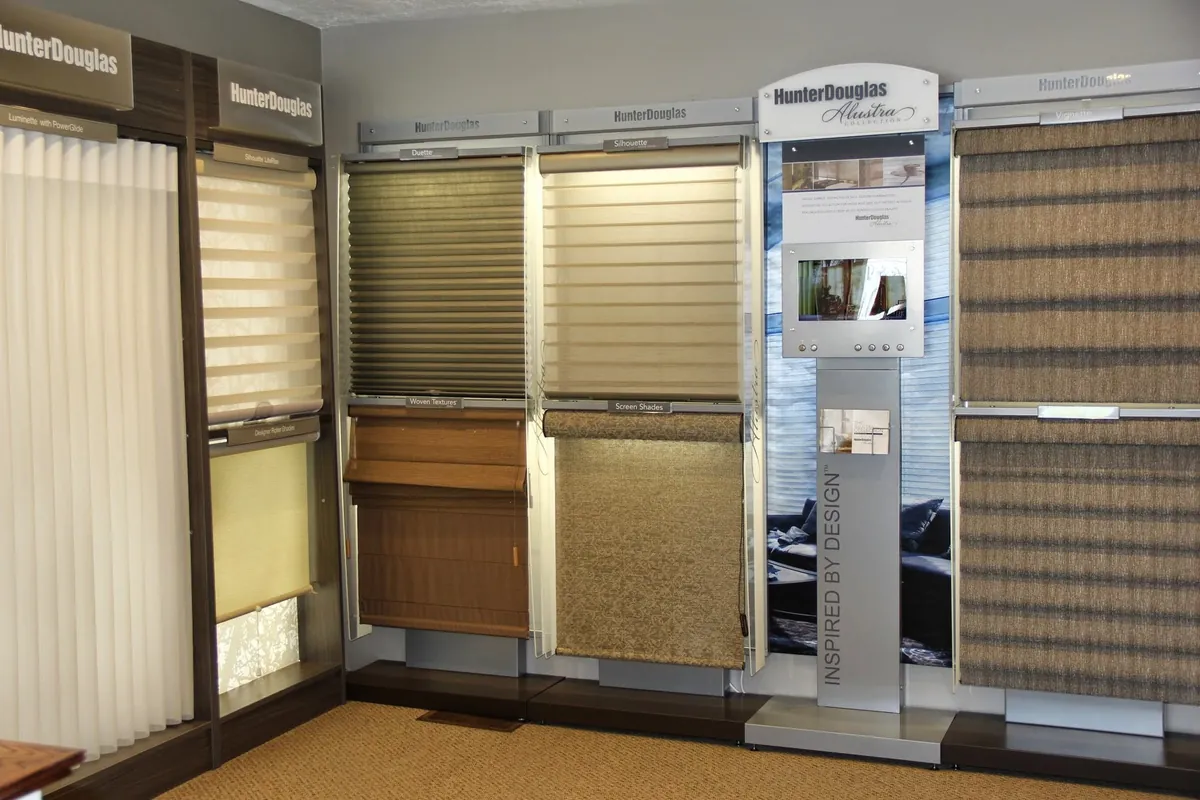
Every one of these is a Hunter Douglas product, and samples of each come with us in the van.
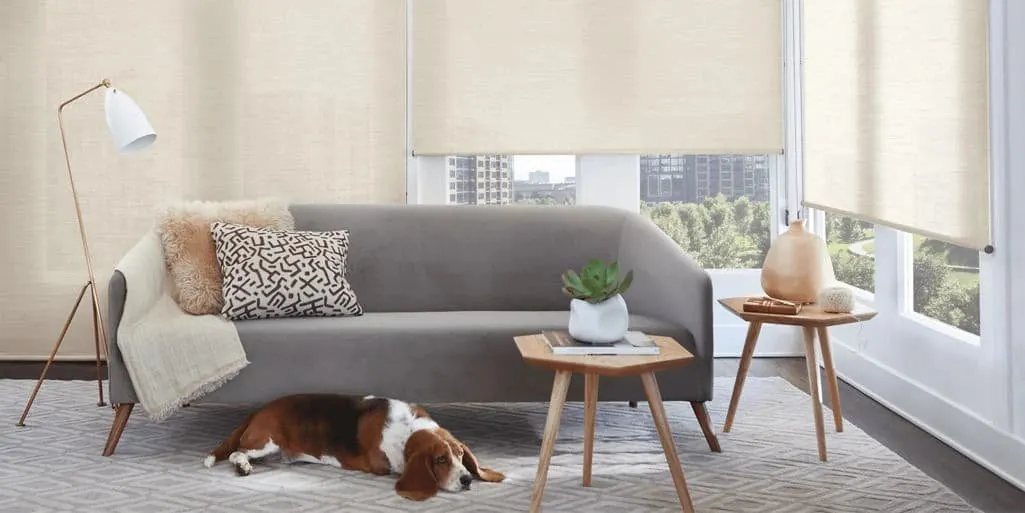
Light filtering Designer Roller
Soft daylight with privacy from the house next door. A sensible default for living rooms and kitchens on any floor of a triple-decker.
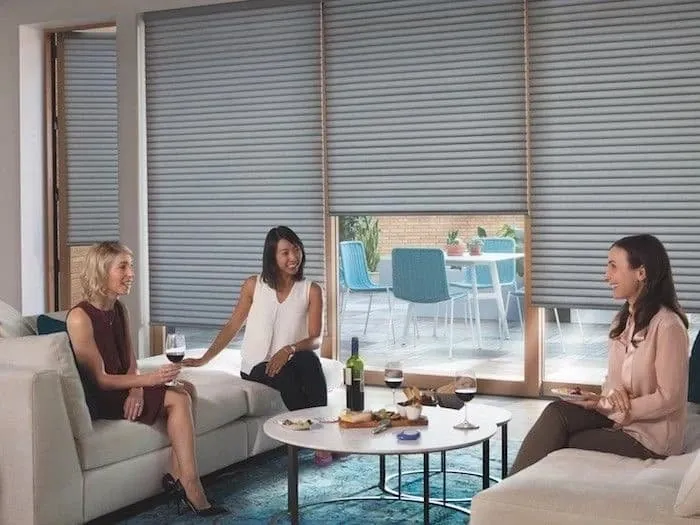
Sonnette cellular rollers
A roller with a soft curved face and an air pocket behind it. A little more body at the window, still rolling up out of the way.
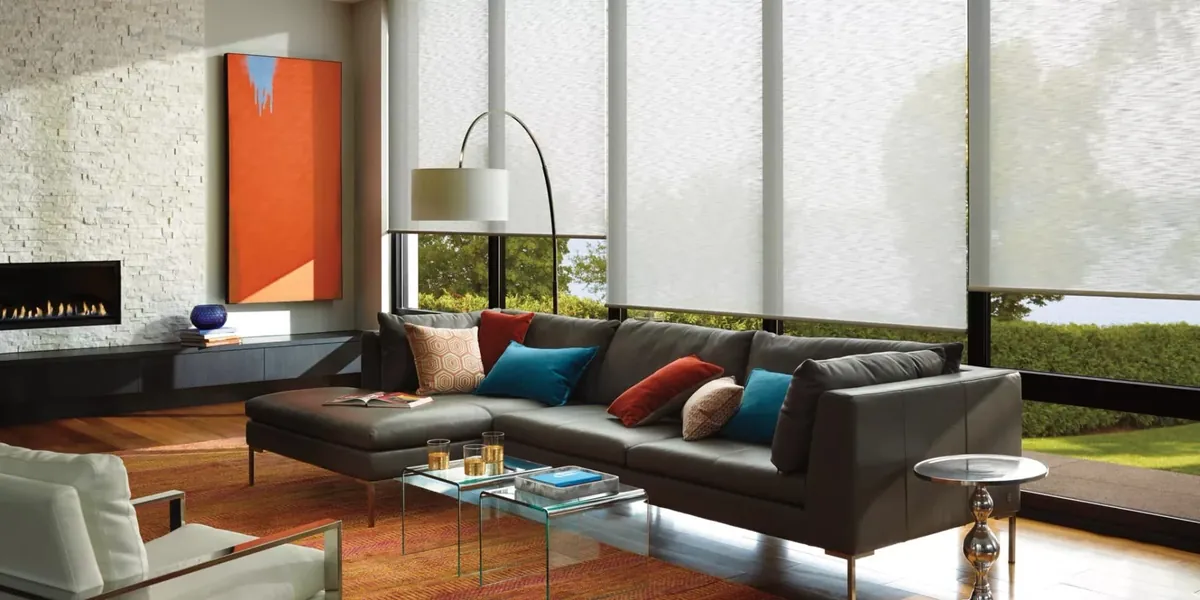
Screens for the harbor side
On the slopes above the waterfront, a solar screen cuts glare while the view down to the harbor stays in sight.
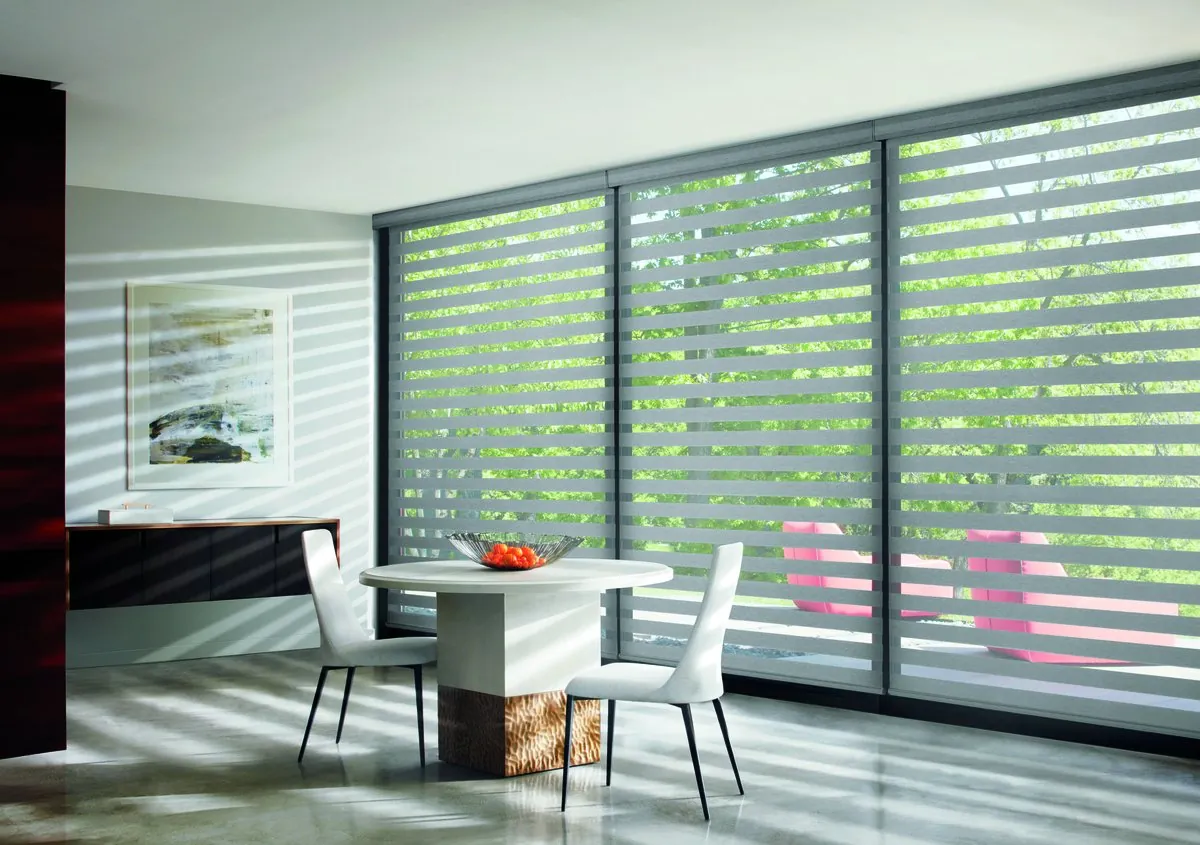
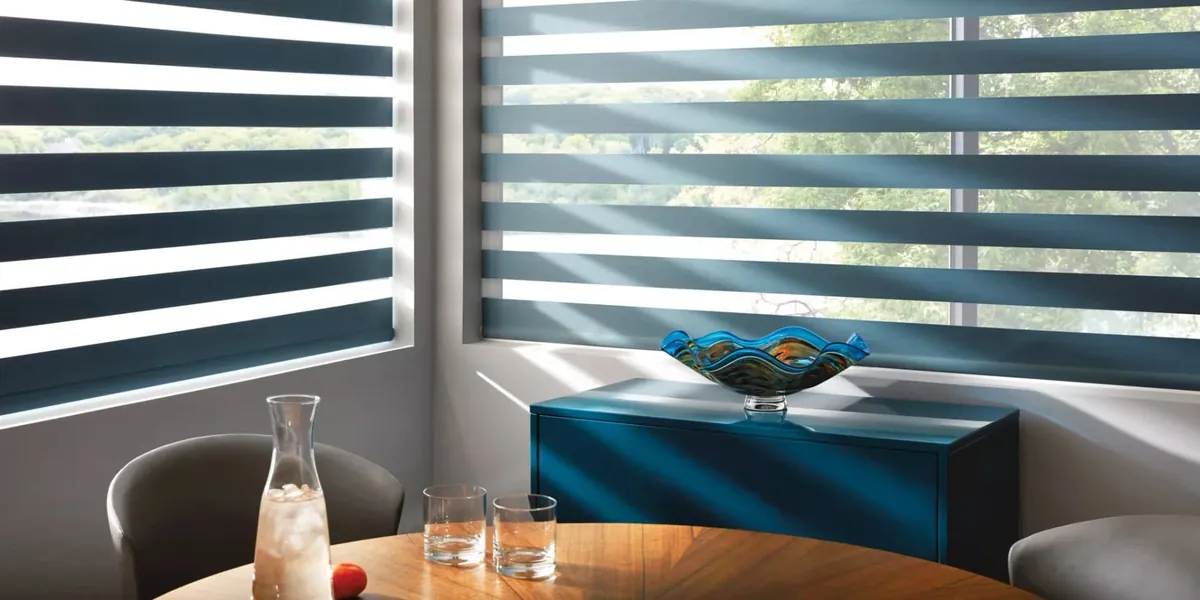
Banded shades
Sheer and solid stripes on one shade. Slide them into line for light, offset them for privacy, without lifting the shade.
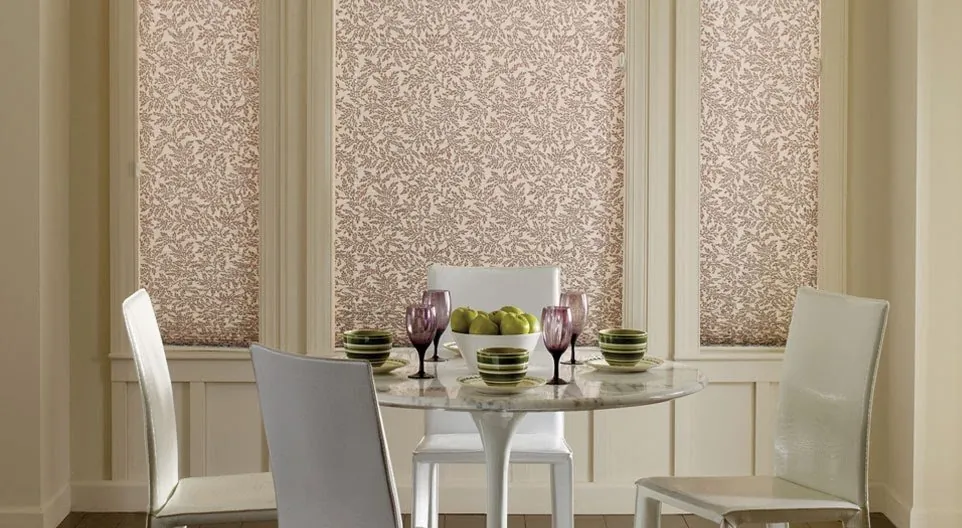
Patterned Alustra fabrics
For a Federal dining room or a front parlor where the shade is meant to be noticed, the Alustra range offers richer fabrics and details.
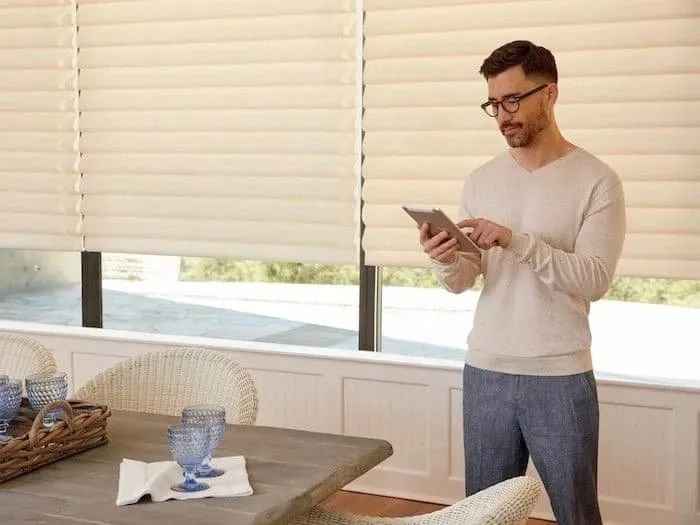
PowerView for high sash
When the top of a window is well out of reach, a motor in the tube raises and lowers the shade from a remote, the app or a schedule.
Roller shades in New Bedford, MA, on long drops
A high ceiling usually means a tall window, and a tall window means a long length of fabric. That changes a few things. The fabric itself has to hang flat over a long drop without curling at the edges, which is one reason we steer toward fabrics we know behave well in tall sizes. The tube has to be stiff enough not to sag across the width. And the lift has to cope with the weight.
On a short window a cordless lift is ideal, but at the top of a tall sash you may not be able to reach the bottom bar comfortably once the shade is fully raised. A continuous cord loop solves that, with the loop held tight by a small tensioner screwed to the frame. For a run of tall windows in a front room, PowerView is often the cleanest answer: no loops, no reaching, and every shade stops at the same height.
Long drops also give you something useful. You can lower a roller just far enough to block the sun or a sightline while leaving the top of the glass open to the sky, which keeps a room with high ceilings feeling as tall as it is.
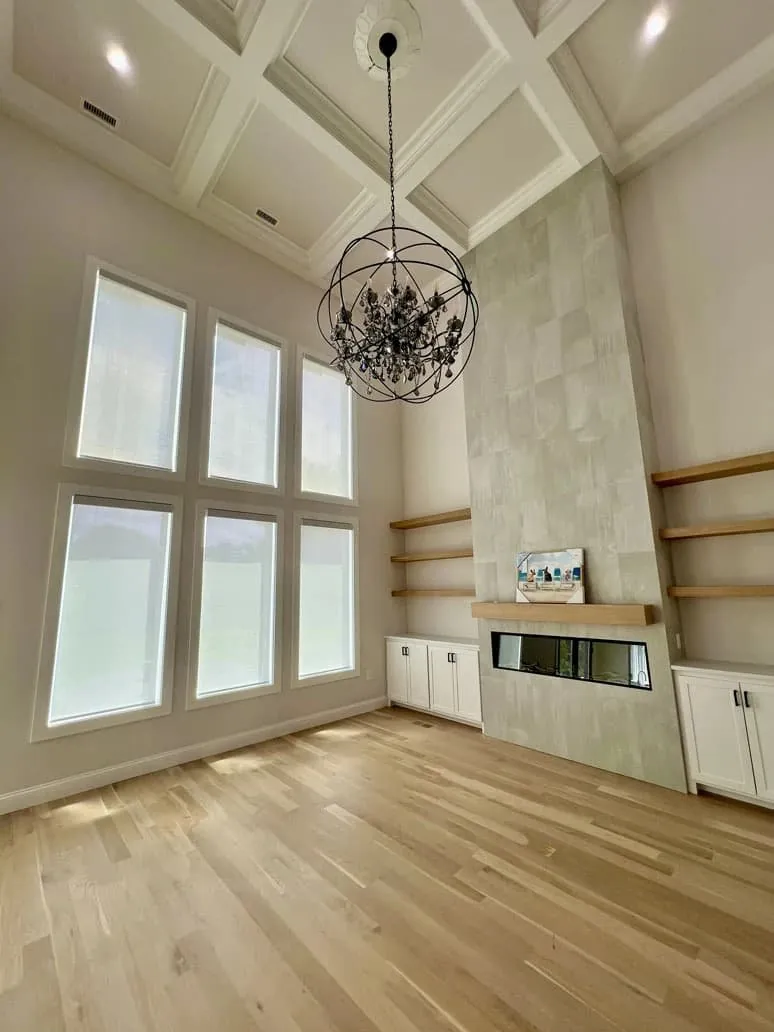
Triple-deckers in the North End and West End
A triple-decker floor runs front to back, with windows on the street, windows on the back porch and a row of side windows facing the next building. Those side windows are where privacy matters most. The house next door may be close enough that you can see across into its kitchen, and the same is true the other way.
A light filtering roller handles that well. It lets daylight in but blurs the view through the fabric, so the room stays bright without anyone looking in. At night, with lamps on, a heavier light filtering fabric or a room-darkening roller keeps the room private, which a solar screen cannot do once it is darker outside than in.
The front windows usually face the street and often a front porch, and the back windows face the back porch and yard. Each side can take a different fabric, but we usually keep the color that shows outward the same, so the house looks orderly from the sidewalk. Whether you are fitting one floor or the whole building, that consistency is worth planning for.
Bedrooms on the side of the house, close to a streetlight or a neighbor’s porch light, often need a blackout roller. The narrow gaps at the sides of an inside-mounted shade let a little light through, so in a bedroom we often suggest mounting over the trim instead.
Federal houses in the historic district
The streets above the waterfront hold some of the finest early houses in the city, many with six-over-six sash, deep interior trim and, in some cases, interior shutter pockets beside the window. Owners in the historic district tend to care about how a house reads from the street as much as how it feels inside.
A roller shade is one of the least intrusive treatments you can put in a window like that. Raised, it is a slim roll at the head of the opening. Lowered, it is a single flat plane, and the color of its back is what the street sees. We usually suggest a neutral, light outward face on the street side, whatever the color facing the room.
If your house is in the local historic district and you are unsure what the city expects to see from the street, it is worth asking before you order; the shades we fit sit inside the glass, but the color facing out is visible. We are happy to show you samples from the outside of the window, standing on the sidewalk, so you can judge the look for yourself.
Reveal depth decides the mount
The depth of the window reveal, the distance from the face of the trim back to the sash, is what decides whether a roller can sit inside the opening. It varies more in this city than almost anywhere we work.
Many mill-era triple-deckers have fairly shallow wood frames, with sash weights, pulleys and stops taking up part of what depth there is. An inside mount may still fit, but only with a compact headrail and careful measuring. Older brick and Federal houses can have much deeper openings, where a roller disappears completely within the frame.
When there is not enough depth, the shade mounts on the face of the trim or on the wall above it. An outside mount has advantages too: it covers the whole frame, cuts the light gaps at the edges, and makes a narrow window look a little wider. We measure the depth at several points along the head of each window, since old frames are rarely even, and recommend the mount that fits the window and the look you want.
Back porches, kitchens and stairwells
The back of a triple-decker is its own small world. Each floor usually opens onto a porch, and the kitchen window and back door look out over it and down into the yard. Those windows get used hard: steam from the stove, a door opened a dozen times a day, washing hung out on the porch rail. A roller shade copes with that better than most treatments, because it has no slats to collect grease and nothing to snag when the door swings.
On a back door with glass, a roller can be mounted on the door itself, with hold-down brackets at the bottom so the fabric does not swing as the door opens and closes. For the kitchen window over the sink, a cordless shade is easy to raise with one hand, and many fabrics wipe clean with a damp cloth.
The shared stairwells and hallways in older multi-family houses often have a single tall window on a landing, well out of reach from the stairs. That is a natural place for a motor or for a cord loop that hangs within reach of the landing, and for a fabric that holds up to strong light, since nobody is there to raise and lower it through the day.
Fitting a whole floor, or a whole building
Because each floor of a triple-decker is laid out much like the next, roller shades in New Bedford, MA, are often ordered a floor at a time, or for the whole building at once. That has real advantages. The windows on each floor tend to be similar sizes, so the shades can share fabric, color and hardware, and the house looks consistent from the street from top to bottom.
It is still worth measuring every window separately. Years of settling mean the third-floor windows rarely match the first-floor ones exactly, even when they look identical from the sidewalk. We measure each opening on its own and keep a clear record of which shade goes where, so installation day is straightforward. If some rooms need blackout and others light filtering, choosing fabrics that look alike from outside keeps the whole front tidy.
Glare and the waterfront slopes
The streets that climb from the harbor look east over the water, and the morning sun comes up over Fairhaven and straight into those front rooms. On the upper floors of a triple-decker the view can be wide, with the light to match.
A solar screen is the tool for that. Its weave has a measured amount of open space, called its openness. A tighter weave cuts more glare and keeps more heat out, while a looser one keeps the view clearer. Dark screen colors are easier to see through; light colors reflect more sun but glow in direct light. For a front room with a harbor view, a medium weave in a darker color is a common choice, but the right answer depends on how you use the room. Our guide to the best shades for sun and glare explains it further.
Where a room needs a view by day and privacy at night, a dual shade puts a screen and an opaque fabric on one bracket. You lower one or the other as the light changes.
What happens when we visit
Seeing a fabric in your own rooms, at your own windows, is the only reliable way to choose. Our vans carry the samples, so we bring the showroom to you, whether you are fitting one floor or a whole house.
- Request a consultation online or with the call button, and we arrange a time that suits you.
- We go through each room with you and note what each window needs: privacy from next door, glare from the harbor, darkness for sleep.
- You hold roller, screen and blackout fabrics up to your windows and see how each one looks in your light.
- We measure each opening at several points, check the reveal depth and look at the trim and any hardware that affects the mount.
- We talk through lift options for the tall windows, from cord loop to PowerView.
- You get a free estimate, and you decide in your own time.
To learn more before we come, read what happens at an in-home consultation.
Designer, Alustra and the rest of the family
Both main collections are Hunter Douglas roller shades, and both run from light filtering to blackout with screen fabrics as well. Designer is the broad range, with a large choice of colors, textures and weaves and every lift. Alustra is the premium collection, with more distinctive fabrics and refined headrail details for the rooms where the shade is part of the design.
Many orders for roller shades in New Bedford, MA, combine them: Alustra in a Federal front parlor or dining room, Designer through the kitchen, bedrooms and back rooms. The rest of the family includes Designer Banded and Sonnette. Each has its own page: Designer Roller, Sonnette cellular and Alustra Architectural, all under the main roller shades page.
Measuring and installation
Tall old windows reward careful measuring. Two windows side by side on a triple-decker front can differ noticeably once you put a tape on them.
- We measure the width at the top, middle and bottom of each opening; for an inside mount the shade is made to the narrowest point.
- We measure the height at the left, center and right.
- We check the reveal depth along the head of the window and note pulleys, stops and locks.
- We confirm the mount, fabric and lift for each window with you before ordering.
- When the shades arrive, our certified Hunter Douglas installers fit them, level each tube and run every shade through its full travel.
Brackets go into solid wood, not just plaster or lath, so a long, heavy shade on a tall window stays level. More is on what happens on installation day.

A Gallery dealer for the whole house
Blinds & Designs is a Hunter Douglas Gallery dealer, the brand’s own mark for dealers who meet its standards. For your roller shades in New Bedford, MA, that means the full Designer and Alustra ranges, screen weaves, banded and Sonnette shades and PowerView, all from one consultation.
Our installers are certified by Hunter Douglas, and we also repair blinds and shades, so the shop that sold the shade is the shop that looks after it.
Other rooms may want something else. See custom blinds in New Bedford for the kitchens and baths, or cellular shades in New Bedford for the draughty windows, and everything we do in the city on the New Bedford page.
Questions from New Bedford
Can roller shades fit the shallow frames in a triple-decker?
Often, with a compact headrail and careful measuring. Where sash hardware leaves too little depth, the shade mounts on the face of the trim instead, which also covers the light gaps at the sides.
How do I raise a roller on a very tall window?
A continuous cord loop is easier than a cordless lift once the shade is high, and PowerView removes the reaching altogether. We suggest the right lift for each window when we measure.
Will a roller suit my house in the historic district?
It is one of the least intrusive choices, because it is flat and rolls up out of sight. We usually suggest a light, neutral color facing the street. If you are unsure what the city expects from the outside, ask before you order.
What gives privacy from the house next door?
A light filtering roller lets daylight in but blurs the view through the fabric. For night privacy, choose a heavier fabric or a room-darkening one; a solar screen alone shows the room once it is dark outside.
Do I get a free estimate?
Yes. After we visit and measure, you get a free estimate for the shades you are considering.
Take the next step
The surest way to find the right fabric for a tall, narrow window is to see it against your own glass. Request a consultation and we will bring roller and screen samples to you, measure every window and give you a free estimate. If you want to see working shades first, the North Dartmouth showroom is close by.