
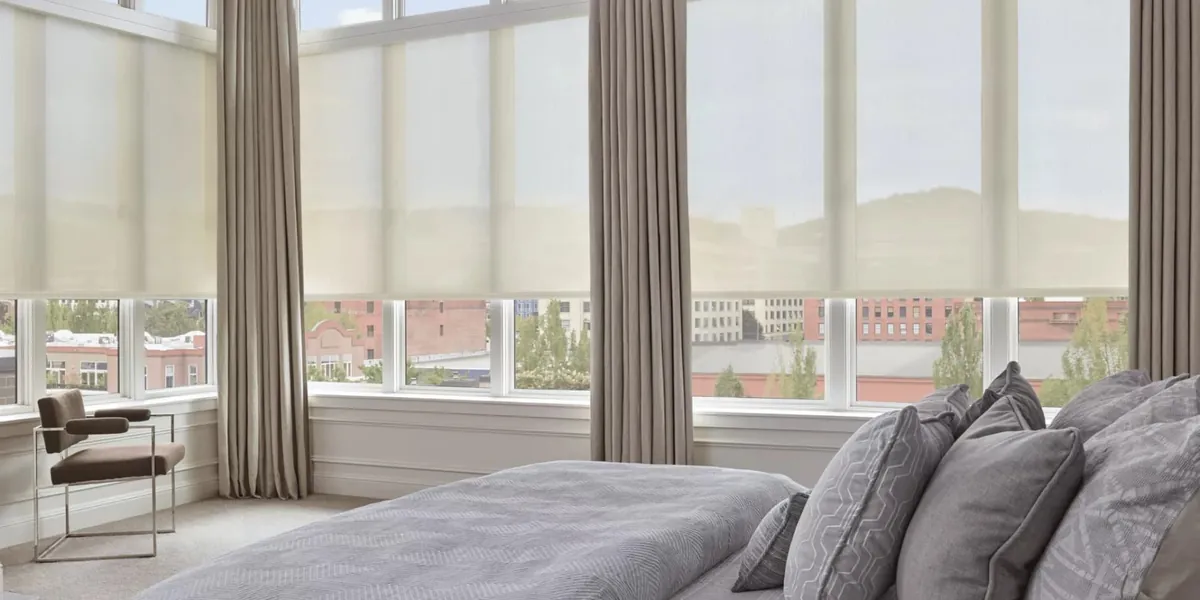
Steep streets and houses that look into each other
Down by the river, the mill-era houses stand shoulder to shoulder, and their original windows are narrow openings set into walls that sit close to the street and close to each other. Climb the hill and the houses change to post-war capes and ranches, but the slope keeps them stacked: one house’s front windows can look straight down into the back yard of the house below. That mix of narrow sash, tight spacing and steep streets is what we plan around when we fit roller shades in Blackstone, MA.
On flat ground, privacy is mostly about the house next door. On a hillside it is also about the house above you and the street below you, and each one sees into a different part of your window.
A roller copes with all of it. It is a single layer of fabric on a slim tube, it fits a narrow frame, and it lowers from the top, which turns out to be useful on a slope. The real choice is the fabric: how much light, how much view and how much privacy each room needs.
A roller for each room of the house
Planning roller shades in Blackstone, MA, works best room by room, because a dormer bedroom and a river-side parlor want very different things. These are the rooms we are asked about most, with the Designer and Alustra fabrics that tend to suit them.
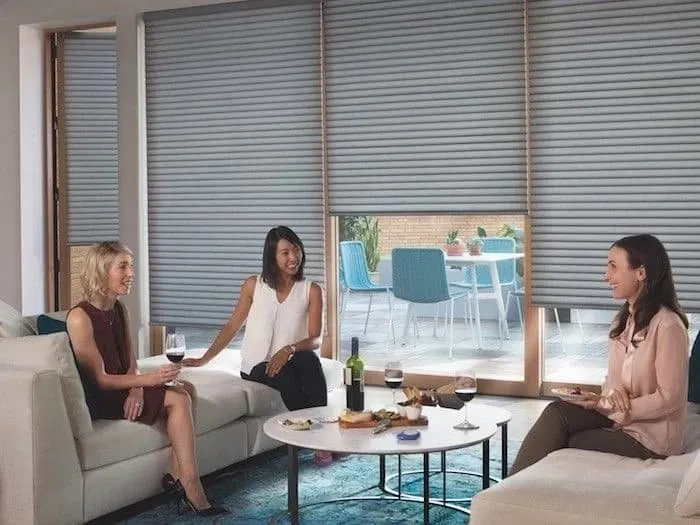
Front room on a steep street
A light filtering cloth by day, with a denser one where the sidewalk passes at eye level or above the sill.
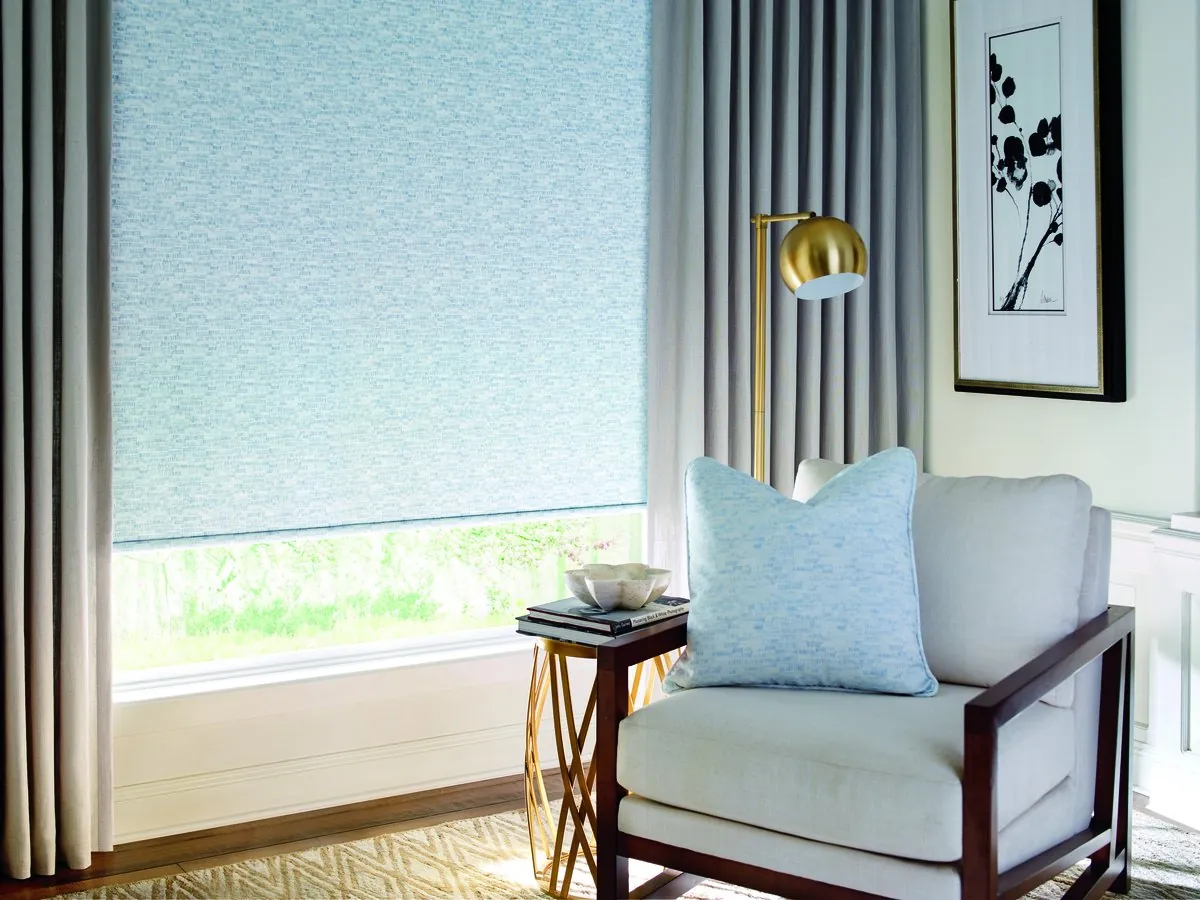
Bedroom under the roof
Room darkening or blackout in a cape’s dormer, where the small window catches the morning sun.
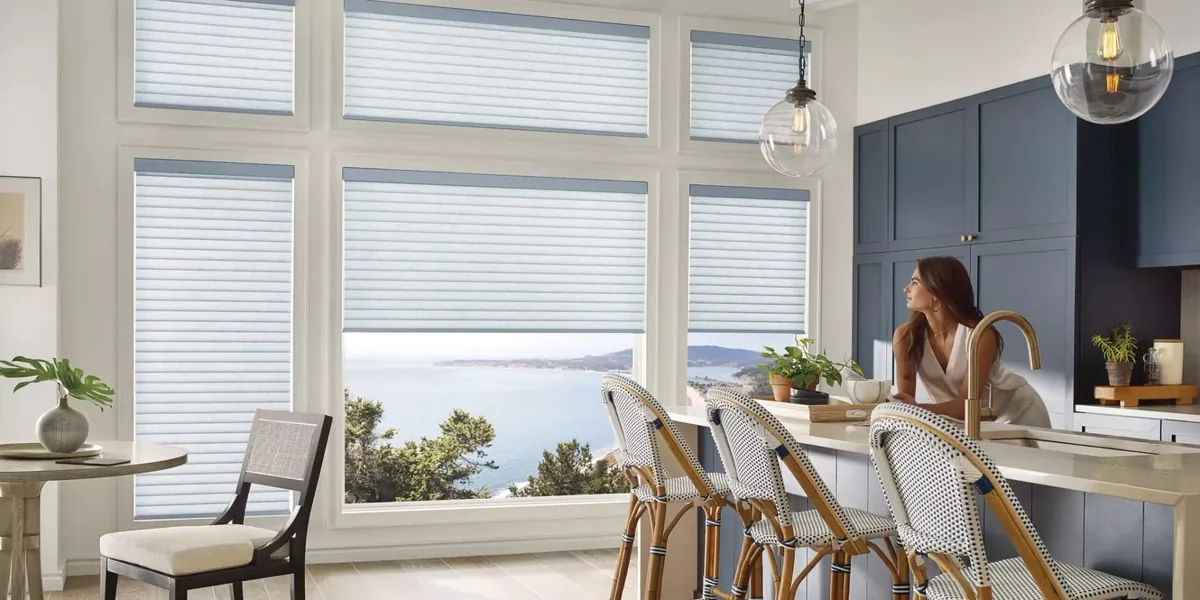
Kitchen at the back
A pale light filtering roller that keeps a narrow kitchen bright while blurring the view of the next house.
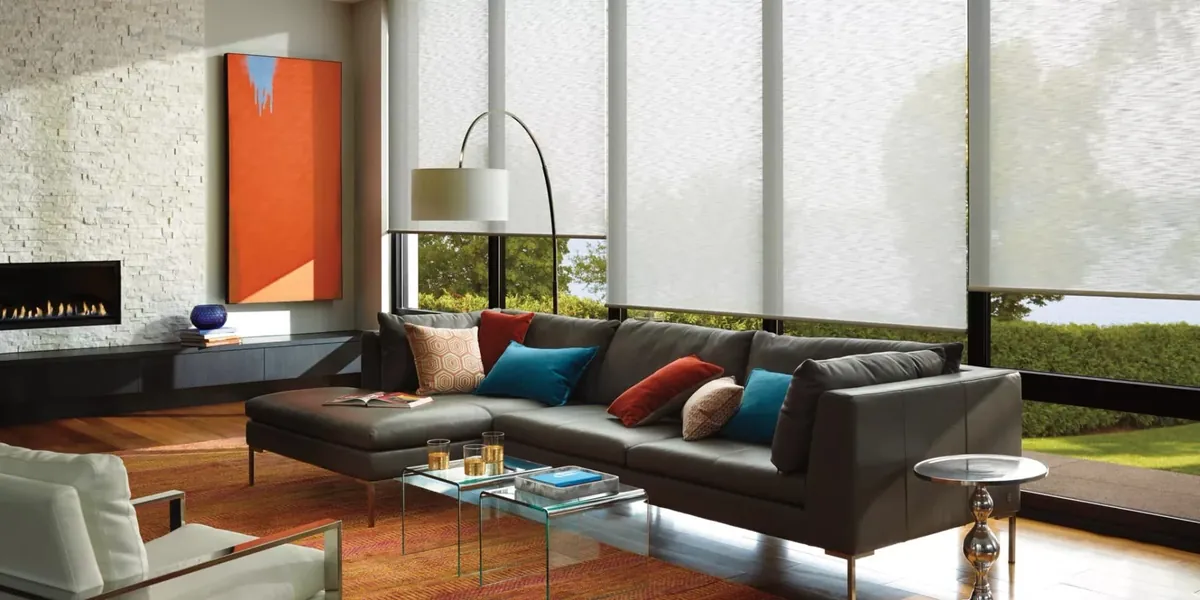
Ranch living room
A solar screen across a wide picture window, set to the openness that keeps the outlook down the hill.
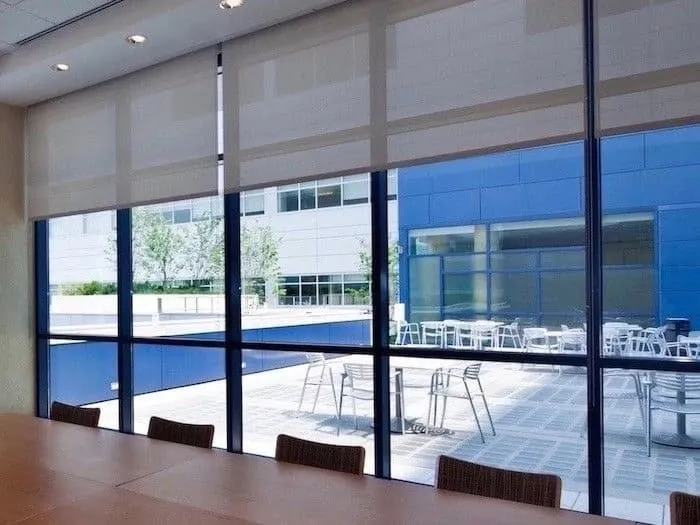
Home office
A screen fabric that takes glare off the monitor while the room stays bright enough to work in.
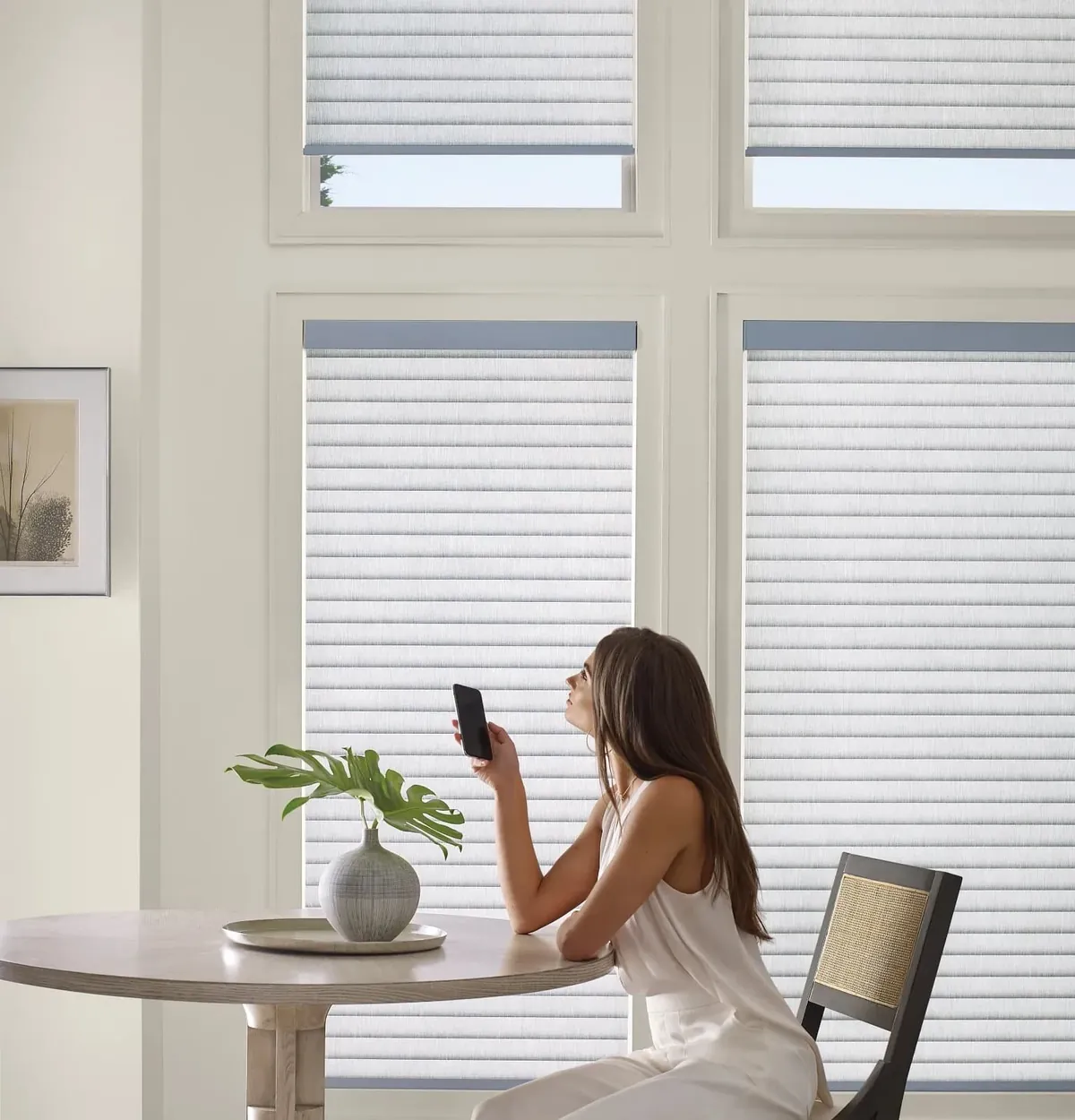
Stairwell and landing
PowerView motorization for a window halfway up the stairs, raised and lowered from an app or remote.
Narrow openings in the river houses
The houses closest to the river were built when mill work drew families into the valley, and many keep their first windows: narrow, upright sash in plain wooden frames. They suit a roller well. The shade needs little depth, so it can usually sit inside the frame with the casing left in view, and a roller raised fully takes up only a few inches at the head of the window.
Old frames do ask for care. Over many winters a frame can twist slightly, so the width at the head may not match the width at the sill. The stops, pulleys and weight pockets inside the frame eat into the depth in places. We measure every opening across at three heights and down at three points, check the depth where the bracket will sit, and make the shade to the narrowest width so it rolls without rubbing.
A narrow window has one quirk worth knowing. Every roller leaves a slim gap at each side, and on a narrow opening those gaps are a bigger share of the glass. In a living room nobody notices. In a bedroom you want dark, or a bathroom facing the next house, a mount on the face of the casing covers the edges and closes those gaps. We point out which windows would benefit when we measure.
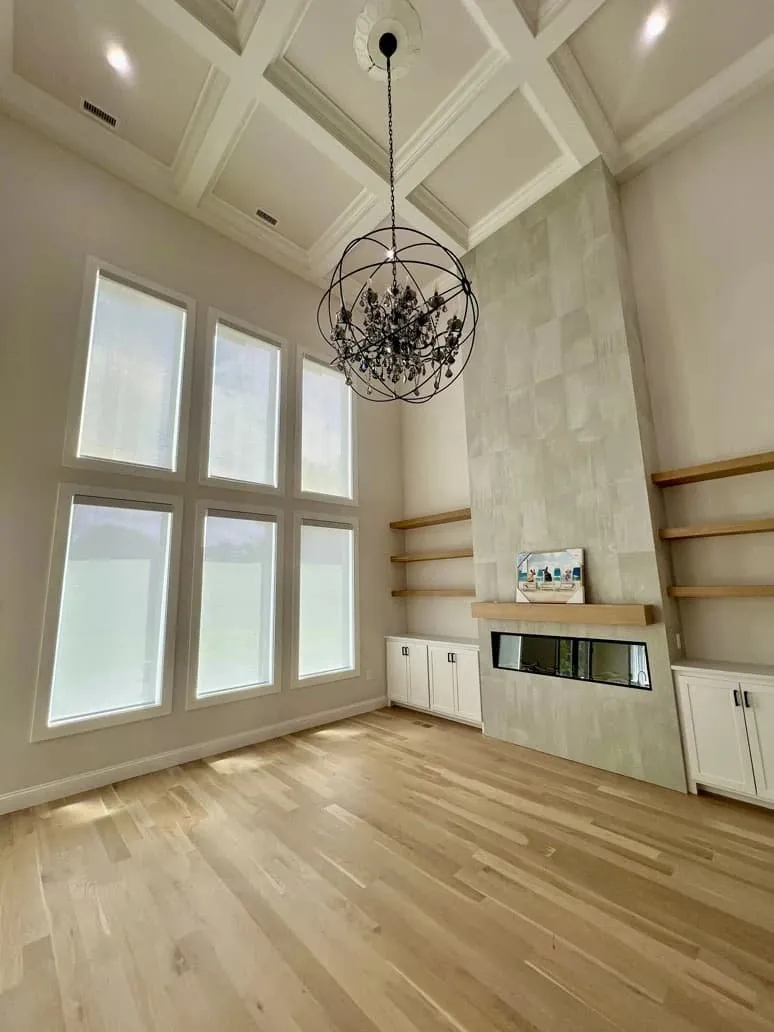
When the street is above you, or below you
This is the part of a Blackstone house that flat-town advice misses. On a steep street, where the view into your house comes from matters as much as how close the neighbors are.
If a road or a house sits above you, people up there look down into your rooms through the top half of the window. A roller lowered partway covers exactly that part first, because it unrolls from the head down. You can block the view from above and still keep the lower glass open for light and for your own outlook across the slope.
If the street runs below you, the problem flips. People walking up the hill see in through the lower half, often from close to the foundation. Here the shade has to come most or all of the way down, and a denser fabric does more than a light one. Some rooms face both ways, with a house above at the back and a sidewalk below at the front, and end up with a different fabric on each wall. Keeping those fabrics in one color stops the room from looking mismatched.
We look at this at the window with you, standing where you sit and checking the sight lines, then again from the sidewalk if it helps. It is one of the reasons we prefer to plan a hillside house in person rather than from a list of sizes sent over.
Close-set village houses after dark
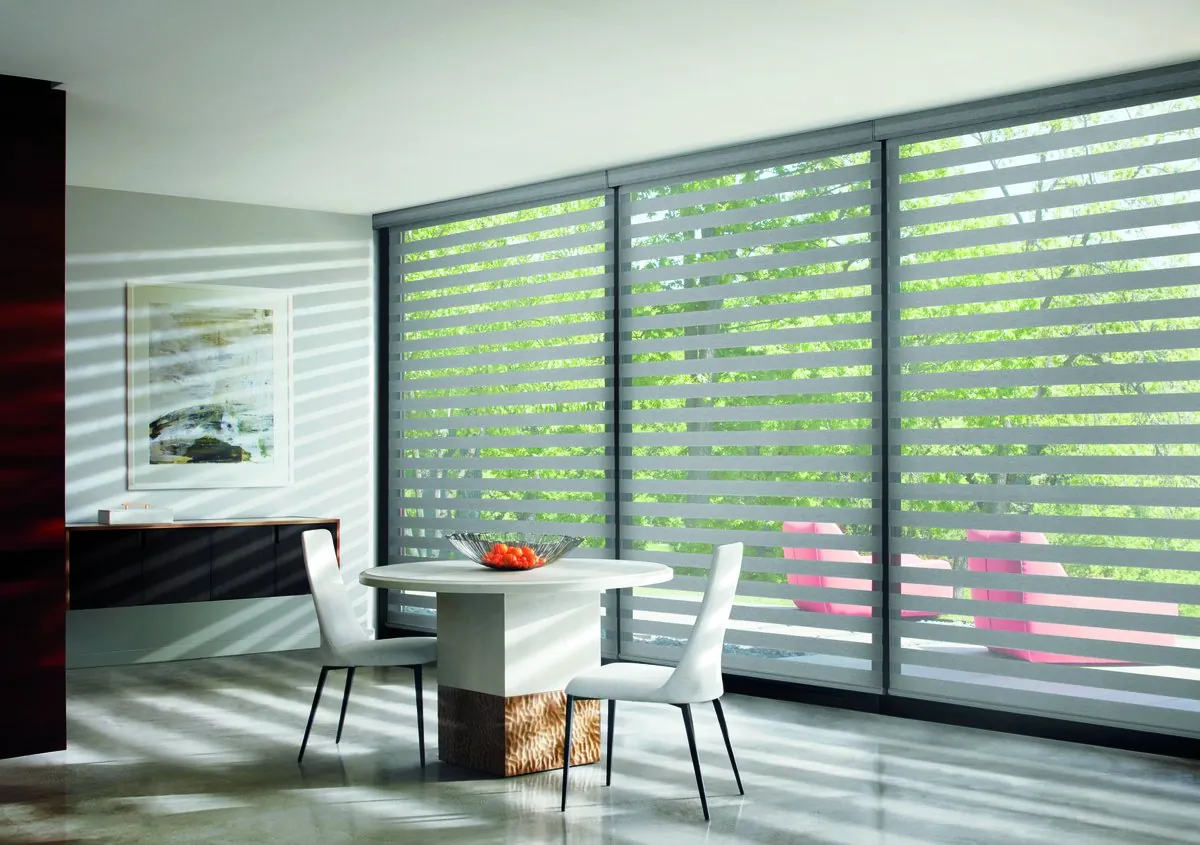
Side windows in the village often face the side windows of the next house across a narrow strip of ground. By day that is easy to manage. Daylight outside is far stronger than the light in your room, so a light filtering roller glows and hides the interior while you still see out through a soft haze.
In the evening, once the lamps are lit, your room becomes the brighter side. A thin cloth or an open screen then lets the neighbors make out movement inside. For side rooms used at night, three answers work well:
- Room darkening cloth, or a thicker light filtering weave that stays solid when the lamps are on.
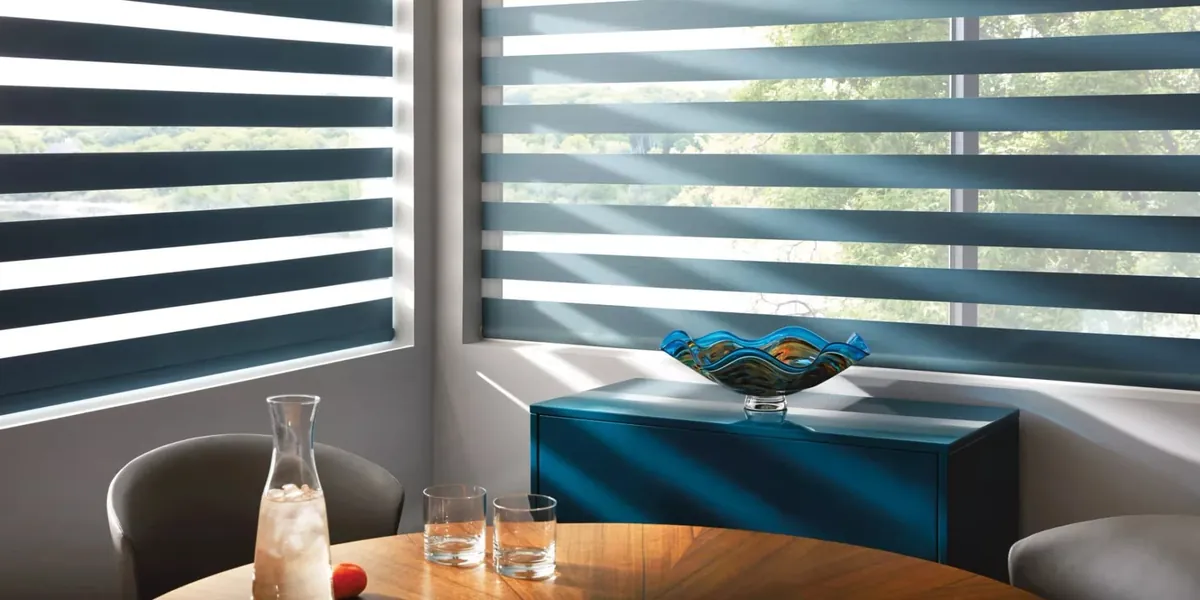
- Designer Banded, whose stripes shift from see-through to solid as you adjust them.
- Two layers: a daytime screen, with curtains or a denser second roller behind for night.
Each option gets tried in the room with your own lamps before you commit.
Capes on the hillsides
The post-war capes above the river usually have bedrooms upstairs under the roof, lit by dormer windows. A dormer window is small, sits at the end of a short tunnel through the roof, and often faces east or west. It brings in a surprising amount of early or late sun for its size.
A roller suits a dormer better than almost anything, because it fits snugly inside a small opening and needs no room at the sides. For a bedroom, a room darkening or blackout fabric keeps the room dim through a summer sunrise. Inside a dormer, the short walls of the tunnel help block light at the edges, so a blackout roller there does a very good job.
Downstairs, a cape’s front windows face the street, and on a slope that street may sit above or below the sill. The advice above about sight lines applies here too.
A cape’s upstairs can also have a small window in each gable end, high under the peak. Those catch the last of the evening sun and can heat a bedroom on a summer night. A light filtering or screen roller there takes the edge off without closing the room in, and a blackout cloth is the answer if the gable window sits beside the bed. Because these windows are often hard to reach over furniture, they are good candidates for a motor.
Ranches with an outlook down the hill
Higher up, some of the ranches have broad picture windows facing out across the slope. Where a lot looks down the hill, the view is worth keeping, and the sun on those windows can be strong, with nothing above to shade them.
Solar screen fabric handles both. Think of its openness as a slider between outlook and glare. Slide towards open and the hillside view stays crisp while more light pours in. Slide towards tight and the glare drops, at the cost of a softer, hazier view. Screen color plays a part too, since deep tones are usually easier to see through from the sofa and pale tones throw more sun back outside. Swatches of each sit side by side on your sill at the visit so the difference is plain.
On a broad picture window, splitting the glass between several narrower shades gives you control: drop only the panel the sun is striking and keep the rest of the view. For roller shades in Blackstone, MA, on the upper slopes this split is one of the most common requests. The best shades for sun and glare guide has more background.
A home visit, one step at a time
Sight lines on a slope, the light in a dormer and the gaps on a narrow sash all have to be seen to be judged. Our vans carry samples, so we can bring the showroom to you.
- Send a note on the Request a Consultation page, or tap the call button, and settle on a day.
- The van pulls up with roller, screen and banded fabric swatches in every opacity.
- Together we stand at each window and note which way the eyes come in: uphill, downhill, from beside or not at all.
- Swatches go up against the glass on both the sunny and the shady sides, and again with the lamps lit.
- Each frame gets its widths, heights and depth recorded, along with any old sash hardware.
- A free estimate follows for whatever you are leaning towards, and the decision stays yours, in your own time.
There is a fuller walk-through in what happens at an in-home consultation. Should you want a second opinion on color across the room, an interior design consultation can be folded into that visit.

Fabric families at a glance
Every Hunter Douglas roller we fit comes down to how much the fabric lets through:
- Light filtering: soft, even daylight and daytime privacy. Kitchens, living rooms and back rooms.
- Solar screen: a woven fabric with a set openness, for glare and view. Picture windows and sunny rooms.
- Room darkening: much less light and better privacy at night. Front rooms used in the evening.
- Blackout: the darkest cloths. Dormer bedrooms, nurseries and media rooms.
- Banded: sheer and solid stripes that switch between the two. Side windows facing the next house.
A house usually ends up with two or three of these. Choosing one color across them keeps the windows looking consistent from the street, which matters on a slope where the house is seen from above and below. Our guide to choosing fabric for a sunny room explains color and light in more detail.
Motorized shades for awkward windows
On a split-level hillside house, where half the windows sit up a short flight of stairs, motorized roller shades in Blackstone, MA, save a lot of climbing. Stairwell windows, a high window over a tub and the far side of a wide picture window can all be awkward to reach. PowerView motorization lets you raise and lower them from an app or a handheld remote, set them on a schedule, or move a group of shades together. On a hillside house, a schedule that lowers the downhill shades at dusk takes care of evening privacy without anyone thinking about it. We plan how each motor is powered at the visit.
Few houses motorize the lot. The common pattern is the hard-to-reach glass plus one or two rooms that benefit from a timer. To learn more, read how motorized shades are controlled.
Fitting and certified installation
An older wall can hold a bracket firmly or not at all, depending on what is behind the plaster. Our installers are trained and certified by Hunter Douglas. They fix each bracket into sound wood, set the tube level even where the frame has moved, and run every shade through its full travel before they leave. If a window turns out to need a casing mount rather than an inside mount, they explain why before drilling. See what happens on installation day.
Keeping them clean
Houses near a road on a steep street pick up more grit at the window than most, especially in spring when the sand from winter dries out. Rollers shrug that off well. Dust the cloth lightly with a feather duster or a soft attachment every few weeks, wipe small marks with a barely damp cloth, and let the shade unroll fully every so often so it keeps its shape. The caring for fabric shades page goes into fabric by fabric detail. Should a tube ever start to drift or roll crooked, our repair service can set it right.
More for the same house
Rollers rarely have to do every job alone. A cold back bedroom might take cellular shades in Blackstone, a dining room roman shades in Blackstone, and a front room plantation shutters in Blackstone. We also fit custom blinds in Blackstone. Our Blackstone page brings every service together, and the Hunter Douglas roller shades page explains each line in turn.
Many houses begin with roller shades in Blackstone, MA, on the windows that face the street or the house above, and add the rest later.
Franklin, the nearest showroom
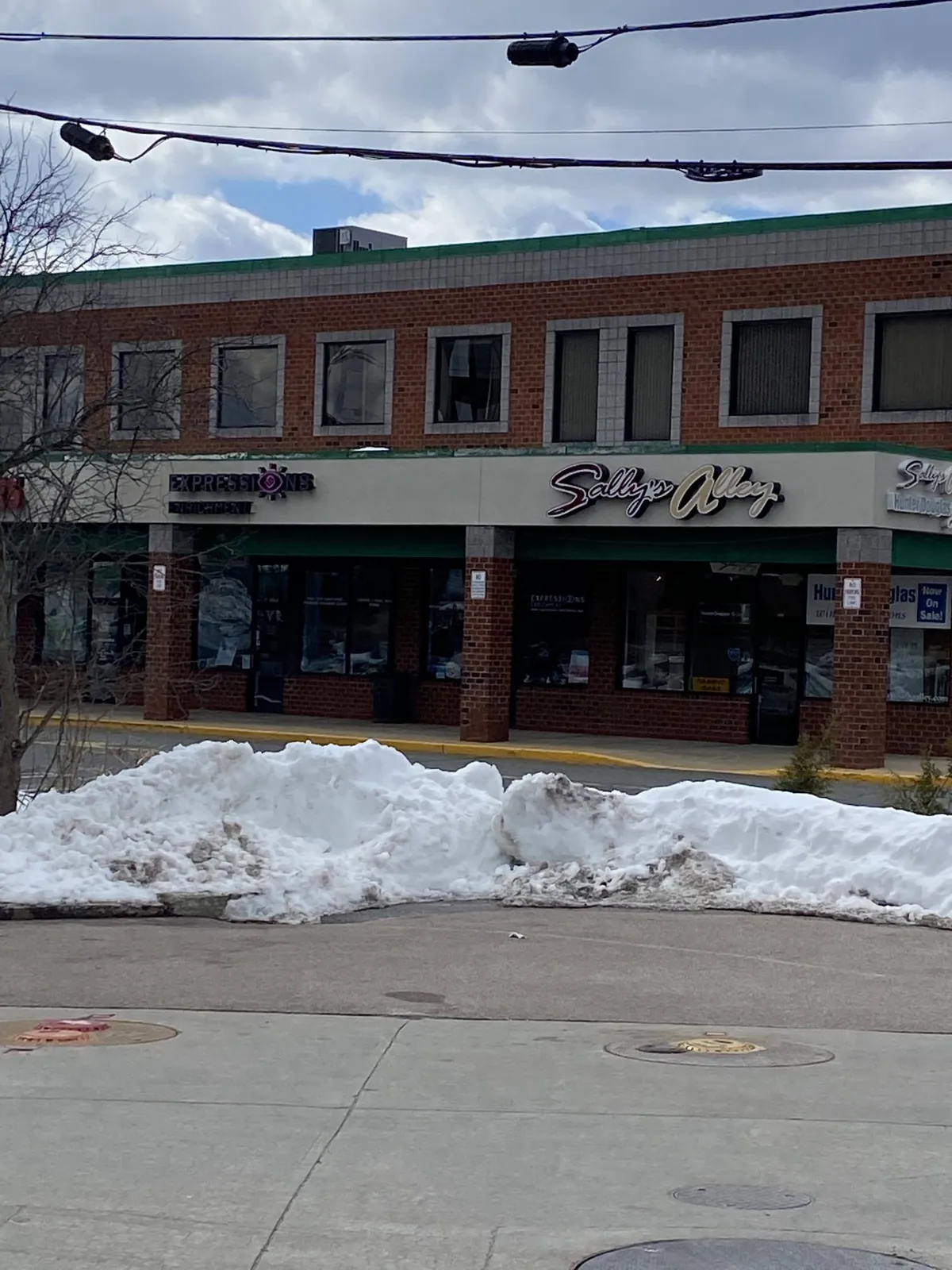
For Blackstone, our Franklin showroom is the closest. If you want to handle the fabrics before a home visit, it is a good starting point.
The decision itself is easiest at home, where you can check each sample against your own sight lines.
The Gallery dealer difference
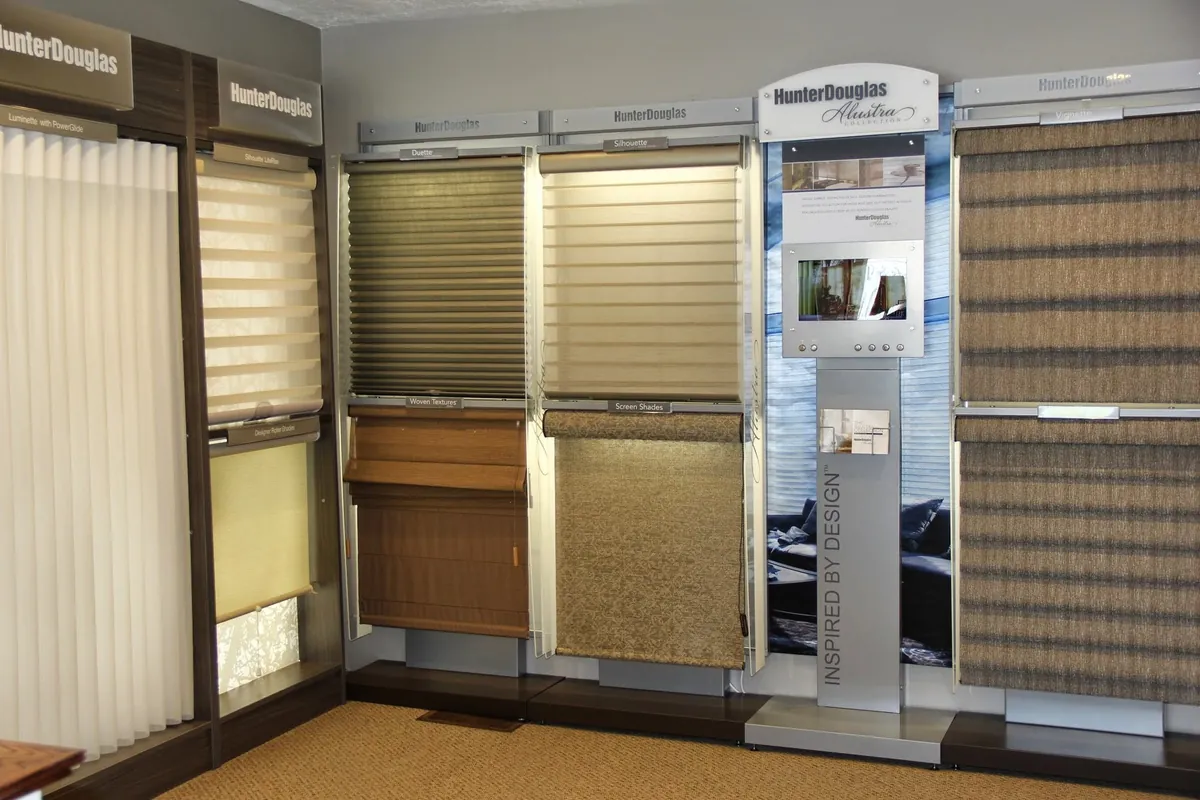
Gallery dealer is a status Hunter Douglas gives, and Blinds & Designs holds it. What it means at your kitchen table is simple: every roller line, from the Designer fabrics to the Alustra range, plus PowerView, can be chosen in a single sitting.
Hunter Douglas certified installers hang every shade, and when an older covering of yours needs mending, our blind and shade repairs cover that too. Our page as a Hunter Douglas dealer in Blackstone tells you more.
Questions from Blackstone
The house above mine looks down into my living room. What helps?
A roller lowered partway. It unrolls from the top, so it covers the upper glass first, which is where the view from above comes in, while the lower half stays open for light.
Will a roller fit the narrow original sash in a river house?
Usually, inside the frame. We measure at several points because old frames move. On a bedroom or bathroom window, a casing mount can close the small side gaps.
What works in a small dormer bedroom?
A room darkening or blackout roller mounted inside the dormer. The short walls of the dormer help block light at the edges.
How do I keep the view from my picture window and lose the glare?
Pick a solar screen by its openness. Open weaves favour the outlook; tight weaves favour glare control. Swatches of each come to the visit.
Do you charge for the estimate?
No. The estimate is free, and we measure at the consultation.
Book your consultation
A slope changes how every window in the house is seen, so the right roller is easiest to choose standing at your own glass. Request a consultation and we will bring the samples, check the sight lines, measure every opening and leave a free estimate. Or use the call button, or visit the Franklin showroom.