
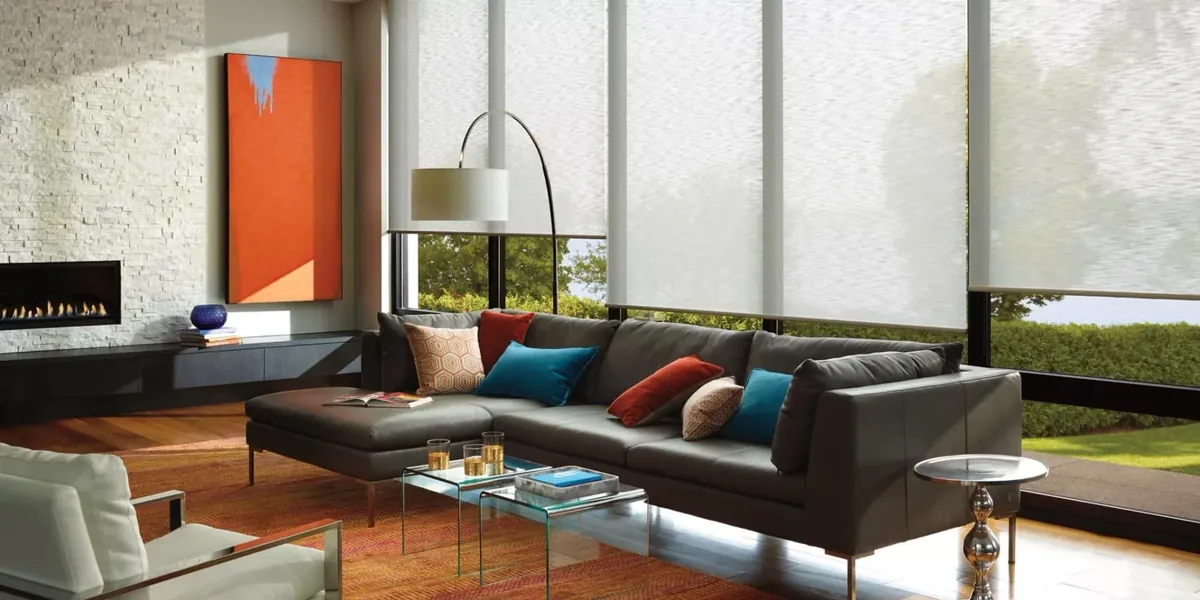
Water on three sides, and every room facing it
Chatham sits on an elbow of coast with water to the east, the south and the west, and that geography decides how its houses were built. The shingled captains’ houses and cottages through the village, and the ones strung out along Shore Road and toward Morris Island, nearly all put their best rooms where the water can be seen. Living rooms, kitchens and main bedrooms look out over the harbor, the sound or the open ocean, and the windows in those rooms are there for the view first and everything else second.
That makes roller shades in Chatham, MA, a particular kind of job. A water view brings light from more than one direction across the day, with sun reflecting off the water as well as coming straight through the glass. Salt air reaches every window, not just the ones on the shore. And nobody who chose a house for its outlook wants a window covering that hides it. The shades we suggest here are chosen to manage the light and the weather while keeping the water in sight for as much of the day as possible.
The roller options that suit a house on the water
These are the Hunter Douglas choices we plan around most often when we bring roller shades in Chatham, MA, to a village house or a cottage on the shore.
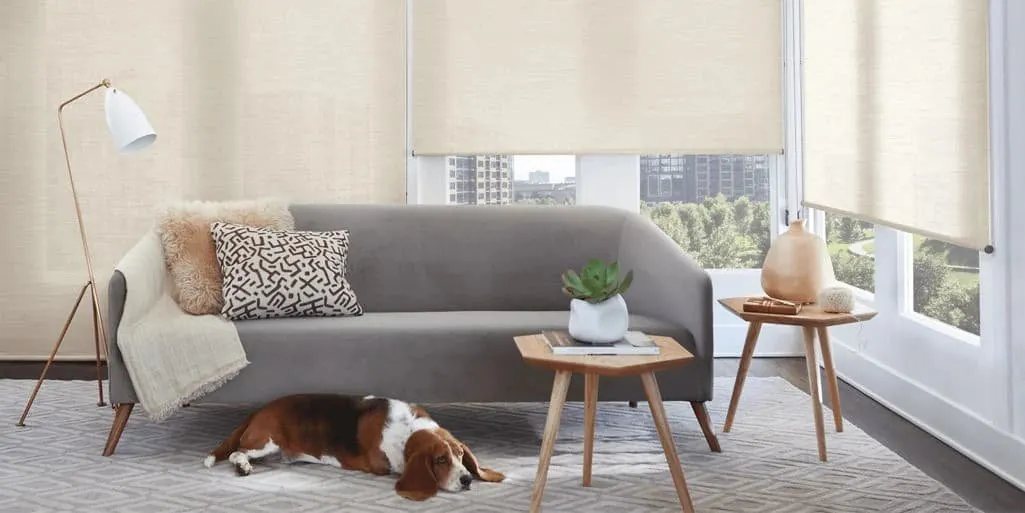
Screen weaves for the view
A solar screen lets you see the water through the fabric while it takes the glare down and slows fading on furniture by the glass.
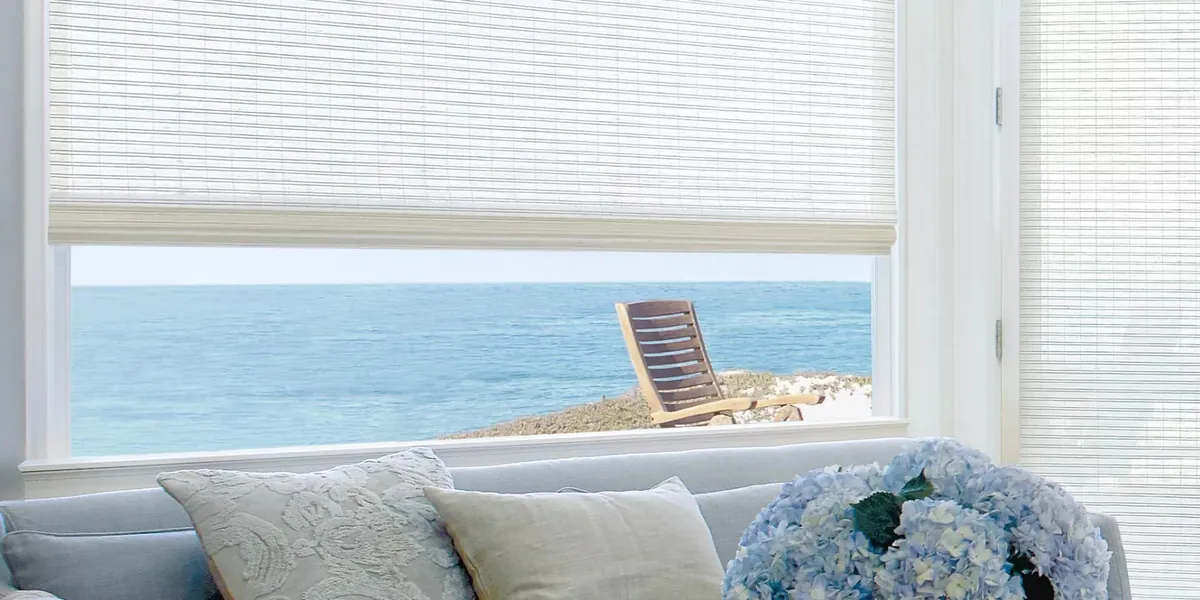
Woven textures for a cottage
Alustra Woven Textures rollers bring a natural, textured look to a shingled cottage while rolling away as neatly as any roller.
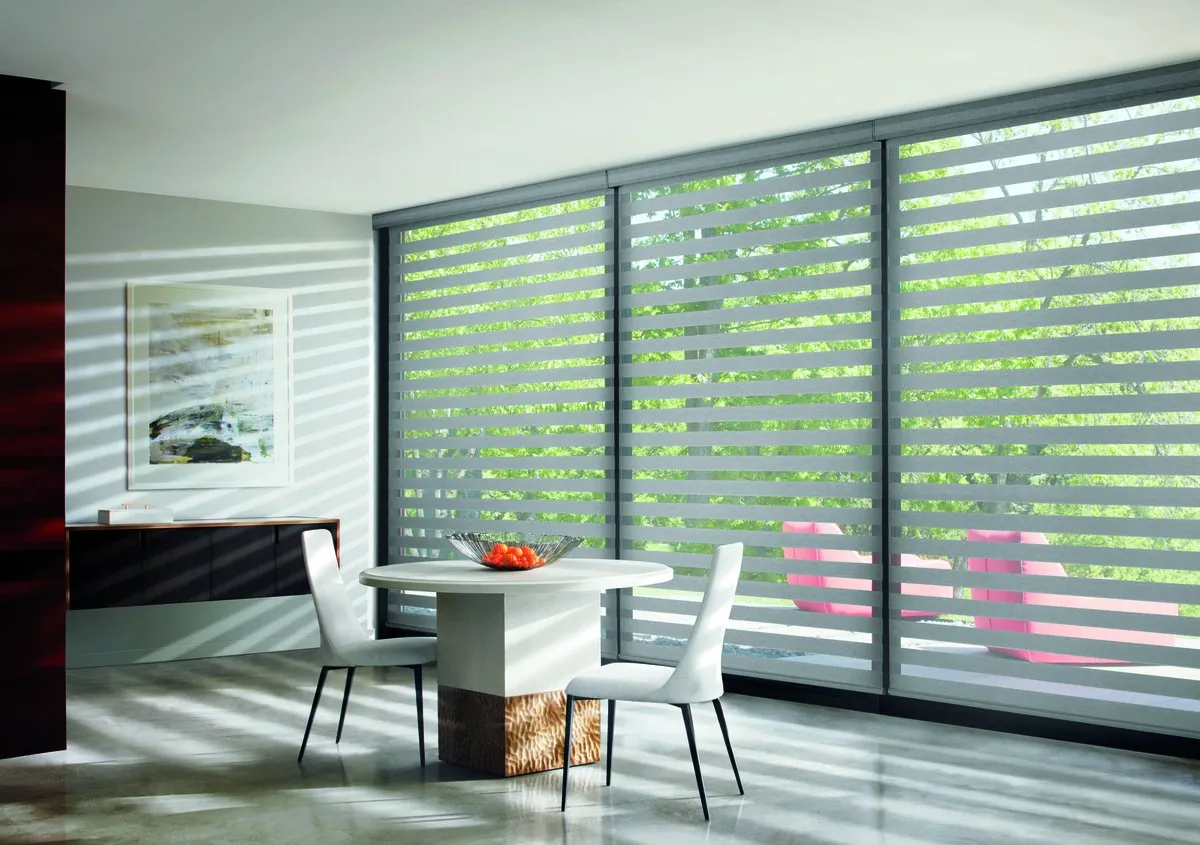
Banded shades for fine control
Sheer and solid stripes slide past each other, so you trim the light from the water a little at a time without raising the shade.
Light from the east, the south and the west
On most stretches of coast, a house faces the water in one direction and the sun crosses it once a day. On an elbow of land with water on three sides, it is not that simple. A house near the village may have the harbor to one side and open water to another, and the sun can come off the water in the morning on one wall and in the late afternoon on another.
Reflected light is part of the challenge. Sun bouncing off water arrives at a low angle and reaches well into the room, even when the sun itself is high. It is what makes it hard to see a screen at the kitchen table, and what fades a rug in a spot the direct sun never seems to touch.
Because of that, we often plan rollers in Chatham wall by wall rather than room by room. The east wall of a living room may take a screen fabric for the morning glare, the west wall a slightly tighter weave for the late sun, and the street side a light filtering fabric for privacy. Choosing the same color for all of them keeps the room looking like one piece. We bring a spread of openness levels so you can compare them on each wall, ideally at the time of day the light is at its worst.
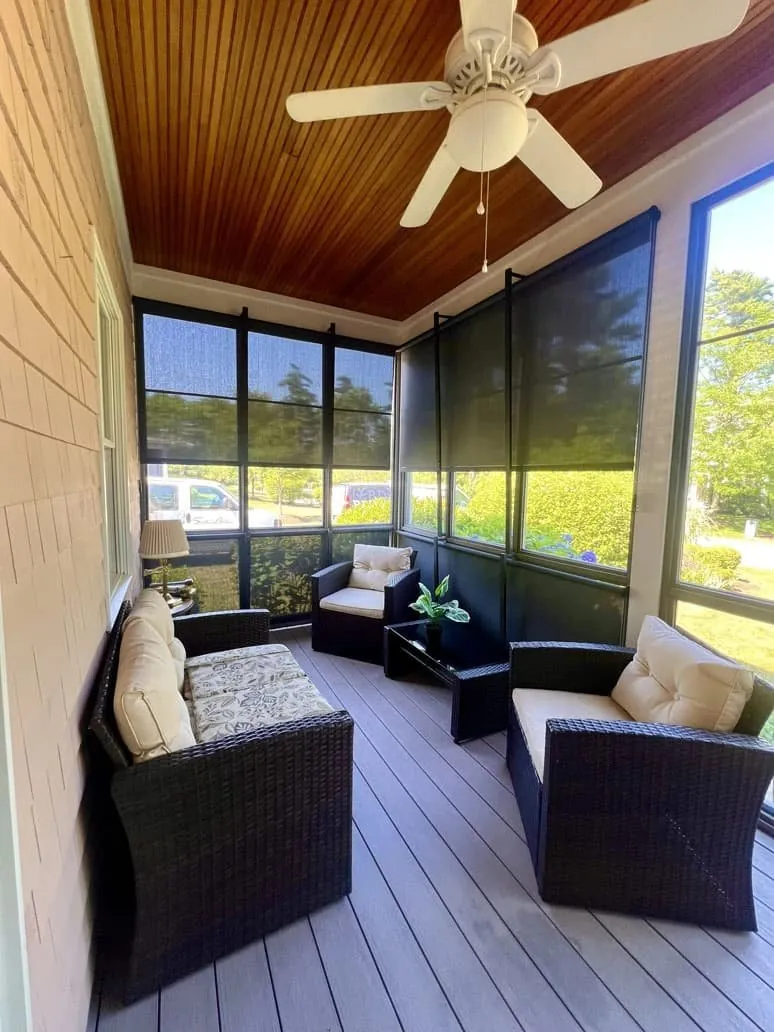
Choosing a screen when the view is the point
Screen fabric is the heart of most Chatham roller orders, so it is worth understanding how it works. A screen is woven with a regular pattern of tiny openings. The share of open space is called the openness factor, and it decides how much you see and how much light comes through. That is all it is: a measure of view and glare, not a technical figure you need to worry about.
A more open weave gives you a crisper view of the water and lets more light into the room. A tighter weave blocks more of the glare and the fading light, but softens the view, a little like looking through a light mist. Color changes things as much as openness. Dark screens are easier to see through, because the dark fibers do not catch the light in front of your eyes. Light screens look brighter in the room and reflect more of the sun’s heat back toward the glass, but the view through them is a little hazier.
The usual approach on a water-facing wall is a mid-tone or dark screen in a moderate openness, which keeps the view while making the room comfortable to sit in. If a room also needs privacy at night, a second, solid fabric can share the same bracket as a dual roller. Our guide to choosing fabric for a sunny room goes into more depth.
Salt air, every day of the year
On a piece of coast this exposed, salt air does not stay on the shore. It reaches the village and the inland side of every house, and it settles on anything near a window that has been opened. That is hard on old-fashioned corded blinds, with their exposed cords, ladders and cord locks.
A roller is a much better fit. The fabric rolls on a tube, the mechanism sits inside the tube and the brackets, and there is very little exposed metal. A cordless roller has nothing at the side at all, and a PowerView roller is worked from a remote, a phone or a schedule, so nobody needs to touch the shade. On a continuous loop roller, the tensioner fixes to the frame and keeps the loop from swinging in a breeze through an open window.
Fabric care is simple. A soft brush or a vacuum on a low setting removes salt and dust, and many fabrics can be wiped gently. See caring for fabric shades for the details.
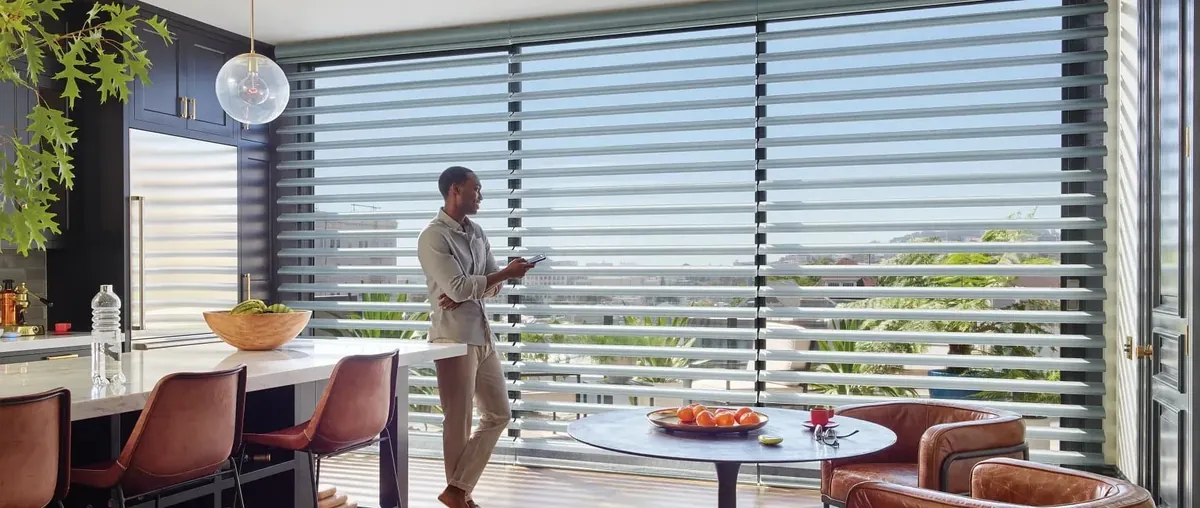
Captains’ houses in the village
The old captains’ houses through the village are shingled, often with a symmetrical front and a center entrance, and a mix of original sash and later additions toward the back. The front rooms tend to keep their older, smaller windows with deep, painted trim, while additions built to catch the water view have bigger glass and plainer frames.
For the older front windows, an inside-mounted roller is usually the best choice: it sits inside the frame, rolls up out of sight, and leaves the trim fully visible. We measure each opening at several points, because older frames are often slightly out of square, and the shade has to roll true. An Alustra fabric with a subtle texture often suits these rooms, sitting comfortably beside painted woodwork and older furniture.
In the additions at the back, the windows are larger and the view is the reason they exist. A screen fabric is usually right there, with the same outward-facing color as the front windows so the house reads well from the street.
Protecting what sits nearest the glass
Rooms built around a view tend to put the best furniture right where the view is: the sofa facing the harbor, the reading chair in the corner window, the dining table along the glass. Those are exactly the pieces that take the most light, direct and reflected, through the brightest months. Over a few seasons, a wood table top can dull and a cushion facing the water can turn noticeably paler than its back.
Part of choosing roller shades in Chatham, MA, is deciding how much protection those pieces need and when. Some households lower a screen through the middle of the day and raise it in the evening when the light softens. Others leave a tighter screen down whenever the room is empty. With PowerView, the shades on a sunny wall can drop on their own as the sun comes round and rise again at dusk, so the furniture is covered even when nobody remembers.
A screen will never block every bit of light, and it is not meant to. If a room holds something truly precious, such as old family pieces or artwork, we will suggest a light filtering or room-darkening fabric for the hours the room is not in use.
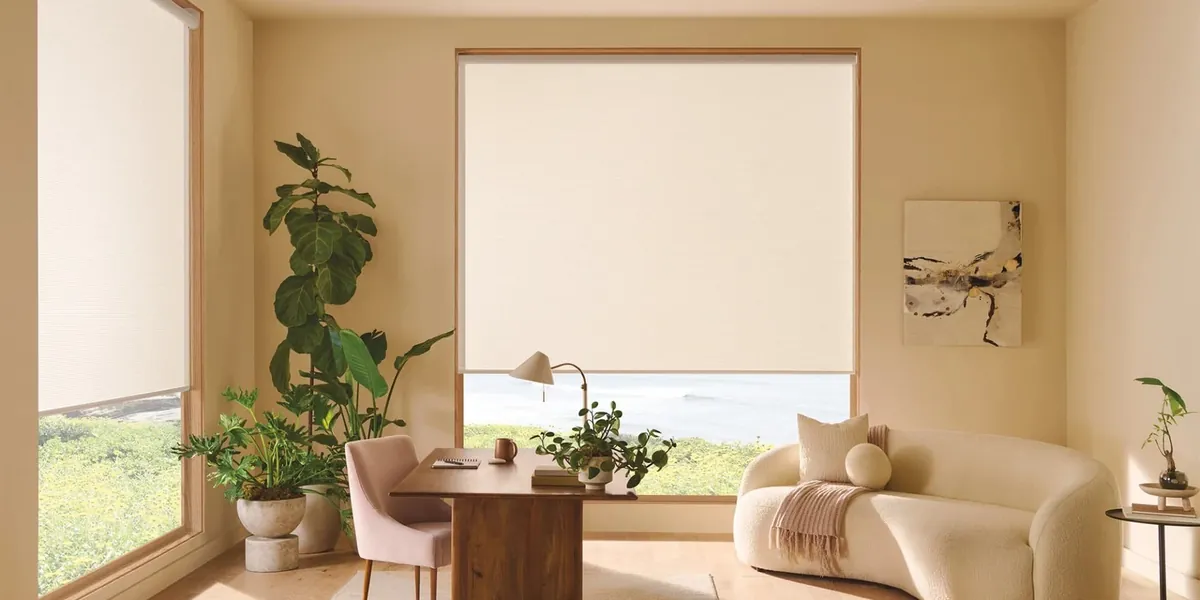
Privacy on the village streets
Through the village, houses sit close to the sidewalk and to each other, and summer brings plenty of people walking past. The street-facing rooms of a captain’s house often need privacy more than glare control. A light filtering roller is the usual answer: lowered, it lets the room stay bright while hiding what is inside, and from the street every window shows the same calm, neutral face. For a front bedroom, a room-darkening fabric keeps lamplight from showing at night. We often pair these street-side choices with screens at the back, so one set of roller shades in Chatham, MA, handles privacy at the front and the view behind. Inside, each room can still carry its own color on the face of the fabric.
Cottages along Shore Road and toward Morris Island
The cottages along Shore Road and out toward Morris Island sit closer to the weather. Many are smaller houses with rooms that take in the view from several windows at once, and porches or decks facing the water. Sun, wind and salt reach them more directly than the houses in the village.
In a compact cottage, light control and privacy have to be balanced carefully. Rooms are small, so every bit of light counts, but houses close to the road or to a neighbor need some privacy too. A light filtering roller in a pale color keeps a small room bright while blocking the view in. On the water side, a screen roller keeps the view.
Cottage bedrooms often face the water and catch the first light. A room-darkening or blackout roller makes for later mornings, and a dual roller with a screen on one tube and a blackout fabric on the other gives you both the daytime view and a dark room at night. For a natural, textured look that suits a shingled cottage, the Alustra Woven Textures roller is worth seeing.
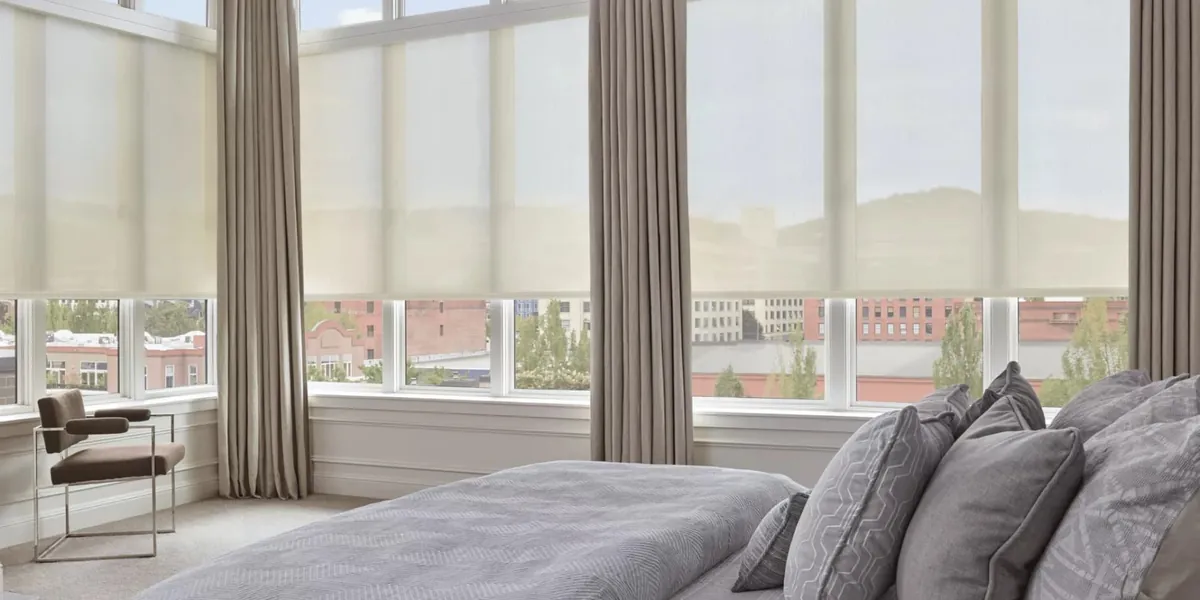
Rooms built around the view
In many Chatham houses, the main room is designed entirely around a window: a long run of glass facing the water, sometimes a wall of sliders, sometimes a corner of windows meeting at an angle. These rooms deserve a careful plan.
- Decide what needs covering. Often only the lower band of glass, where the sun hits your eyes and the furniture, needs a shade. High transoms can stay clear.
- Split long runs sensibly. A shade per section of glass, or several shades on one bracket, lets you lower the sunny end and leave the rest open.
- Line up the hems. Shades that stop at the same height look calm from inside and from the water.
- Mind the corners. Where two walls of glass meet, we set the shades so they meet neatly without a gap of light.
- Consider automation. PowerView lets you lower every shade on a wall together, or set them to drop as the afternoon sun comes round.
You can read more about how motorized shades are controlled.
Porches, decks and sliders
Most water-facing houses in town open onto a porch or deck through a slider or a pair of French doors. These doors take the same reflected light as the windows beside them and are used constantly in summer.
A roller mounted above a slider, a little wider than the opening, clears the handle when it is raised so you can walk straight through. A shade on each door of a French pair, held top and bottom, stays put as the door swings.
Designer, Alustra and the rest of the family
Hunter Douglas groups its rollers into two main collections. Designer is the broadest, with plain, textured and patterned fabrics in every opacity, including the full screen range. Alustra is the more tailored collection, with richer materials and finishes, plus the Woven Textures roller. Banded and Sonnette shades round out the family.
A Chatham house often uses several. Designer Screen on the big water-facing glass, Alustra in the front rooms of a captain’s house, a Woven Textures roller in a cottage living room, a blackout roller in the bedrooms. When we visit with roller shades in Chatham, MA, we bring them all so you can compare them side by side. The main roller shades page shows the whole range.
Your consultation at home
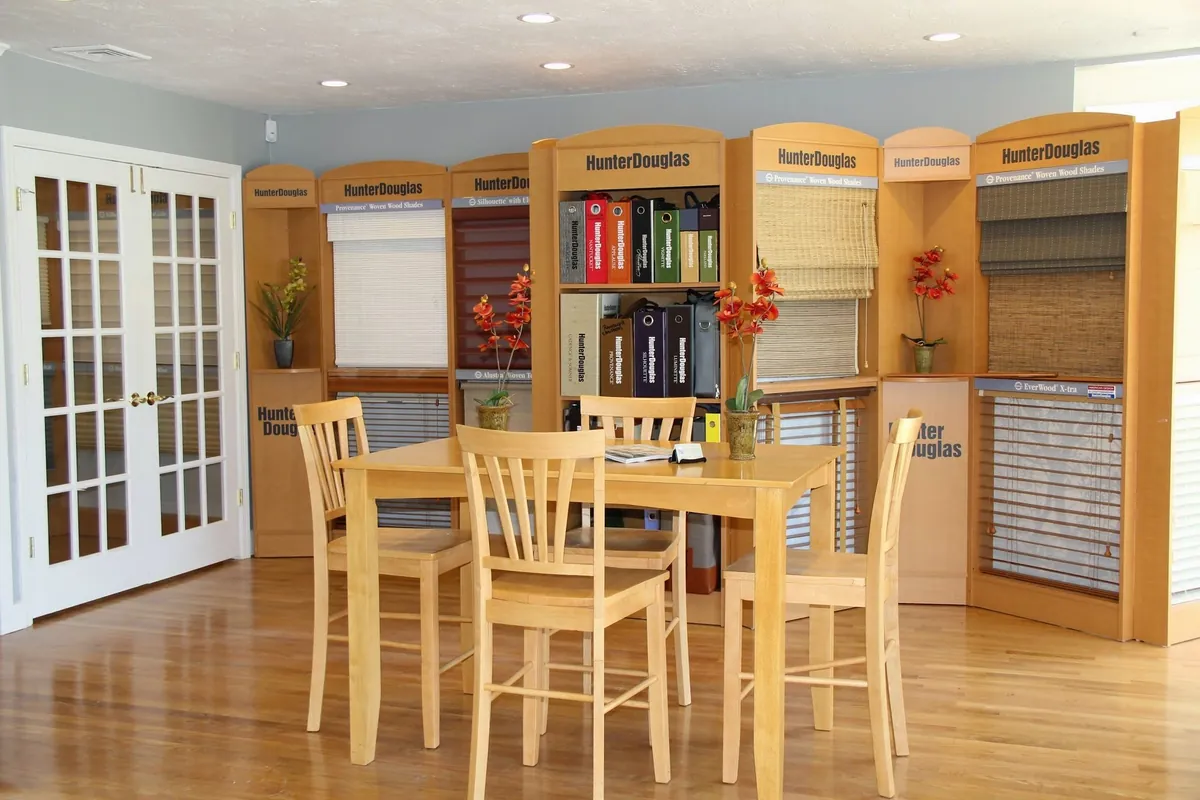
A screen fabric looks different in front of open water than it does anywhere else, which is why we bring the samples to your windows. Our vans carry the range, so the showroom comes to you.
- Book a time with the Request a Consultation form or the call button.
- We walk the house with you, wall by wall, and note where the light comes from at different times of day.
- You hold screen, light filtering, woven and blackout samples at the glass, with the water behind them.
- We measure every window and door, check depths and corners, and look at how each opening is built.
- We suggest a fabric, a mount and a lift for each window and talk through PowerView where it would help.
- You get a free estimate and take as long as you like to decide.
Read more about what happens at an in-home consultation.

Why choose a Hunter Douglas Gallery dealer
Blinds & Designs is a Hunter Douglas Gallery dealer. For a house on the water, that means every screen openness and color, both roller collections, the woven, banded and Sonnette shades and PowerView, all at one visit.
Our installers are certified by Hunter Douglas. On a long run of glass that means brackets fixed into solid framing, shades levelled so their hems line up, and every lift tested with you before we leave. We also offer interior design consultations and repairs on blinds and shades you already own.
For other rooms, see cellular shades in Chatham, motorized blinds in Chatham or everything we do in town on the Chatham page.
Questions from Chatham
Which screen keeps the most view of the water?
A more open weave in a darker color is the easiest to see through. A tighter weave blocks more glare but softens the view. We bring several to compare at your glass.
My living room gets sun off the water on two walls. Do I need two fabrics?
Often the same color in two openness levels works best: a little tighter where the late sun is strongest. The room still looks like one set.
How do rollers cope with salt air?
Better than most window coverings. The mechanism is inside the tube and brackets, and a cordless or PowerView roller has no cord or cord lock exposed at the side.
Can I have the view by day and a dark bedroom at night?
Yes. A dual roller puts a screen and a blackout fabric on one bracket, so you lower whichever you need.
Do you charge for the estimate?
No. The estimate is free. We measure every window at the consultation and give you an estimate for what you are considering.
Let us bring the samples
The only way to judge a screen against your own stretch of water is to hold it up at the glass. Request a consultation and we will bring the range, measure each window and leave you with a free estimate. Our Sagamore showroom is the nearest to Chatham if you would like to see working shades first, or use the call button to ask a question.