
Two Tivertons: Four Corners and the waterfront
Inland, around Four Corners, the town is old farmhouses and shingled capes, set along stone walls with fields behind them. Along the Sakonnet River and around Nanaquaket, the houses turn to face the water, and their water-side rooms are glazed from floor to ceiling in places. As a Hunter Douglas dealer in Tiverton, RI, we often go from one kind of house to the other in the same morning.
The waterfront rooms set the toughest test. All that glass faces open water with nothing to shade it, so the sun hits hard and stays all afternoon. The air carries salt every time a window is open. Whatever hangs at those windows has to cope with both, and the fabric you pick decides how well it does.
The farmhouses ask quieter questions: small windows, old frames, rooms that run cold. Both kinds of house are well served by the full Hunter Douglas range.
Choosing Hunter Douglas for river light and farmhouse rooms
Being a Gallery dealer, we carry every Hunter Douglas family. When people ask a Hunter Douglas dealer in Tiverton what suits their house, these six come up most, and each card leads to its own Tiverton page.
Screen and roller shades
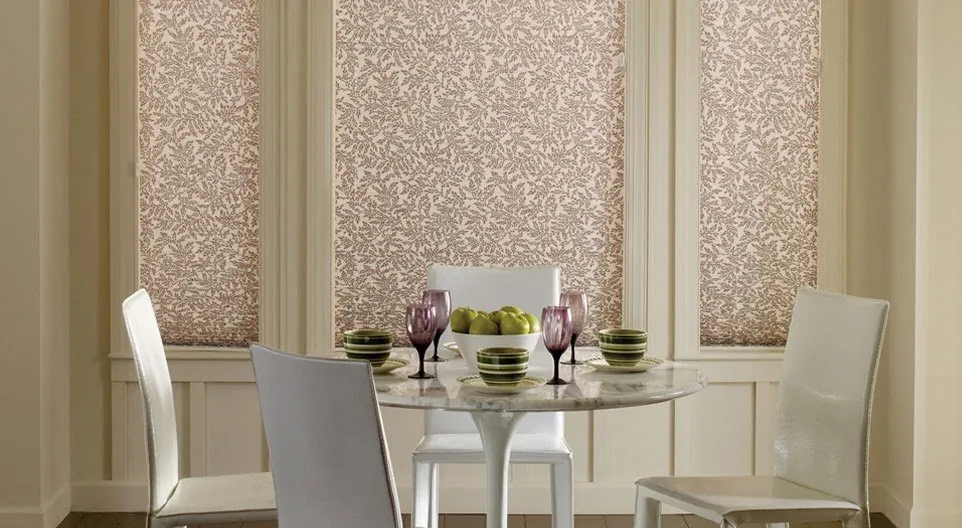
Designer roller and solar screen fabrics come in many weaves and colors, which is exactly what you need to balance river view against strong sun.
Honeycomb shades
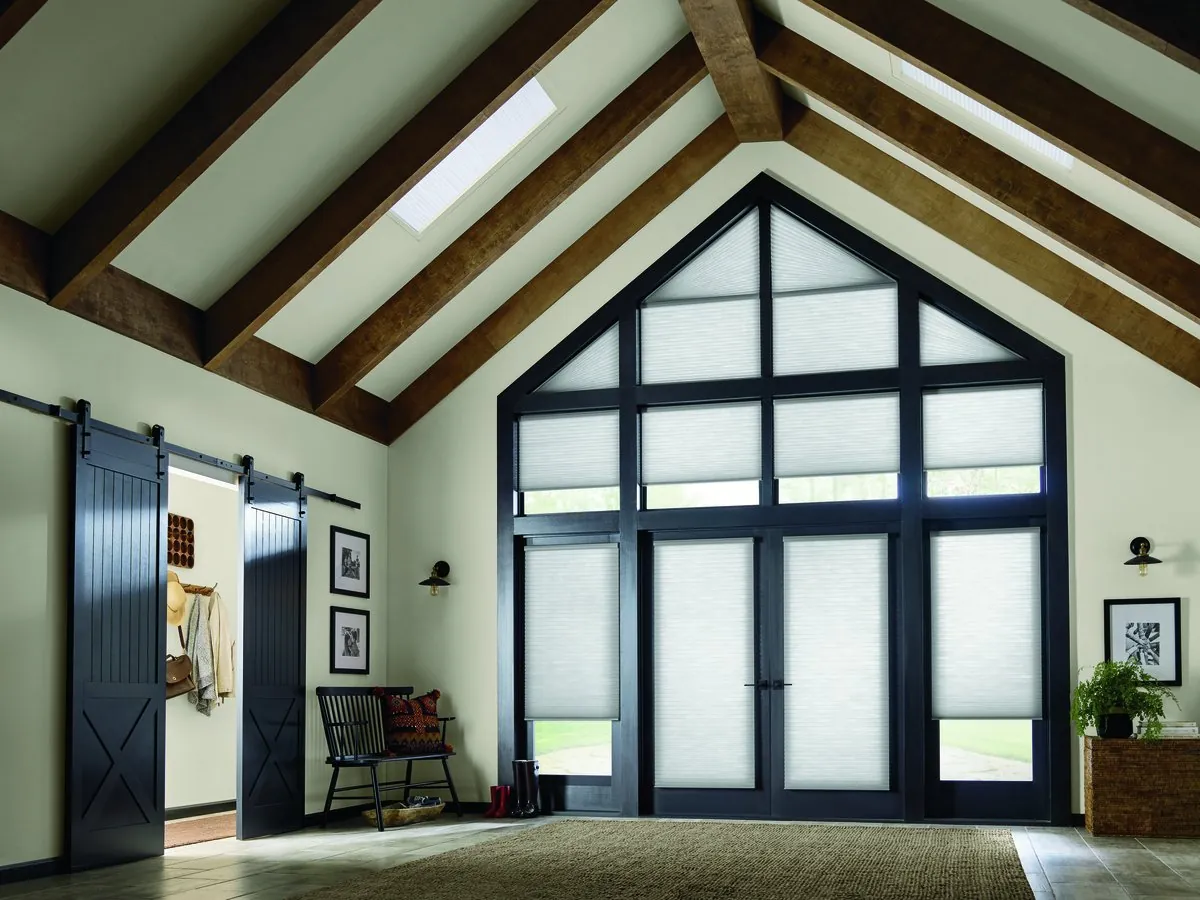
Duette and Applause cells hold air against the glass, a help both in a farmhouse bedroom and behind a wall of river-facing glass at night.
Sheer shades
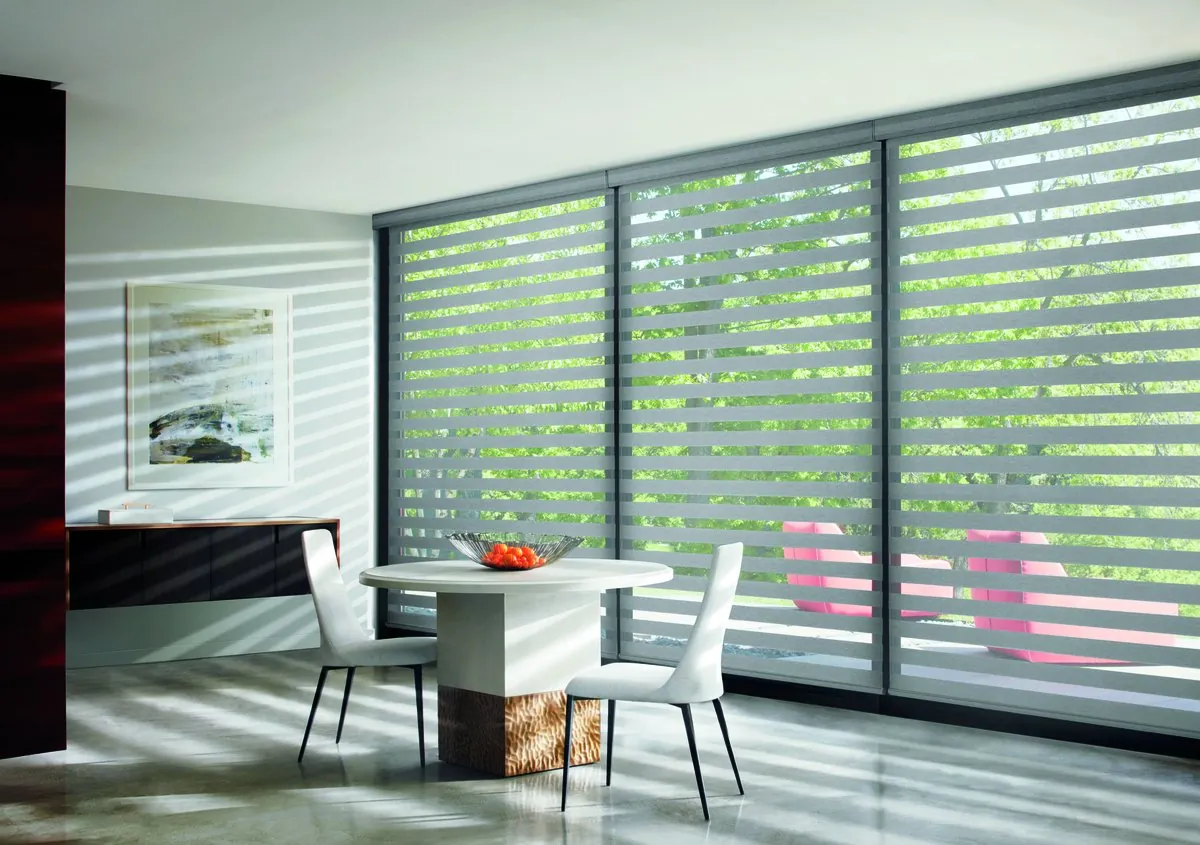
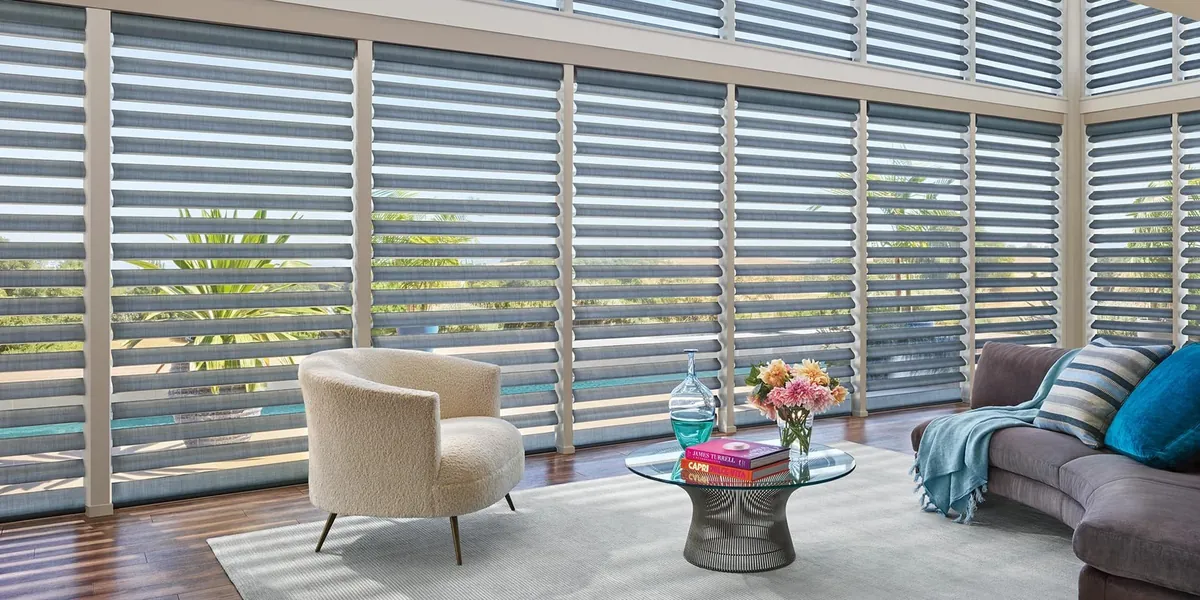
Silhouette and Pirouette diffuse bright light off the water and tilt closed for privacy once the lamps are on.
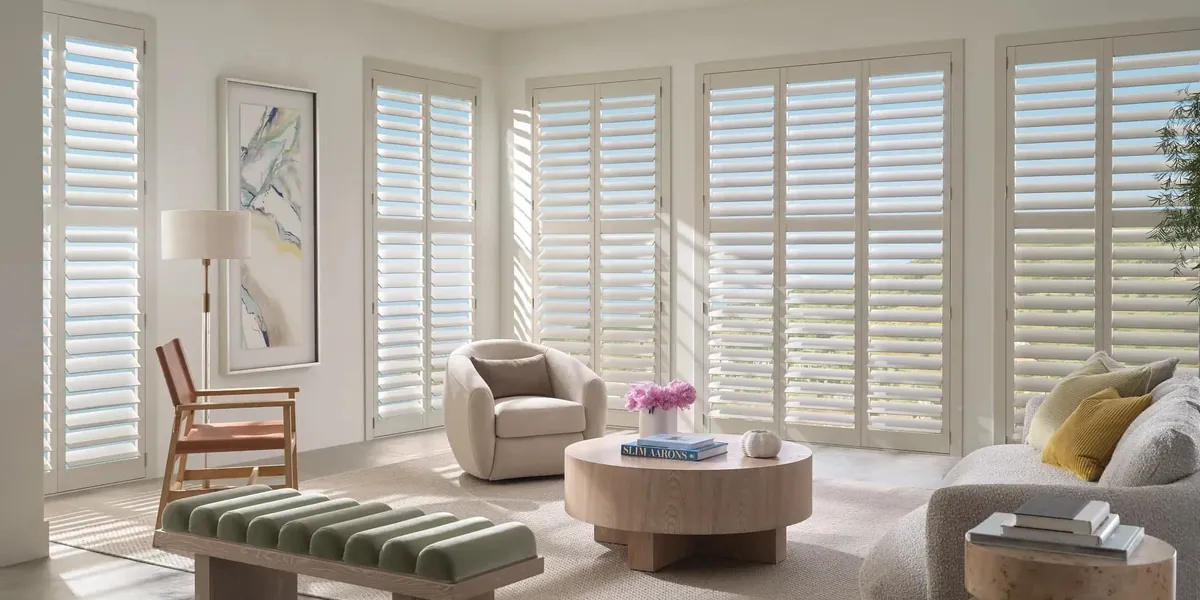
Plantation shutters
Palm Beach polysatin for exposed, damp rooms; Heritance hardwood and NewStyle for drier farmhouse parlors.
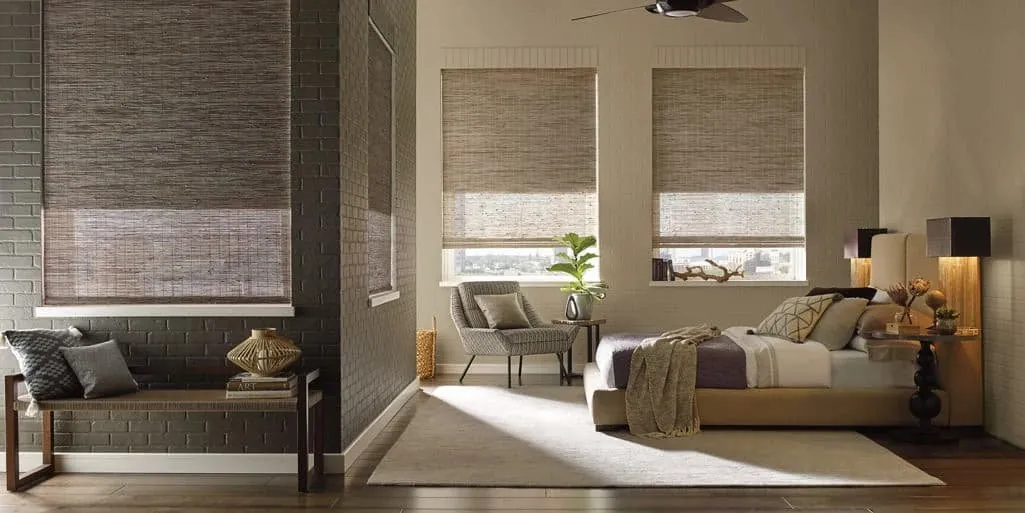
Woven wood
Provenance woven wood adds texture to a shingled cape and filters light softly through its natural weave.
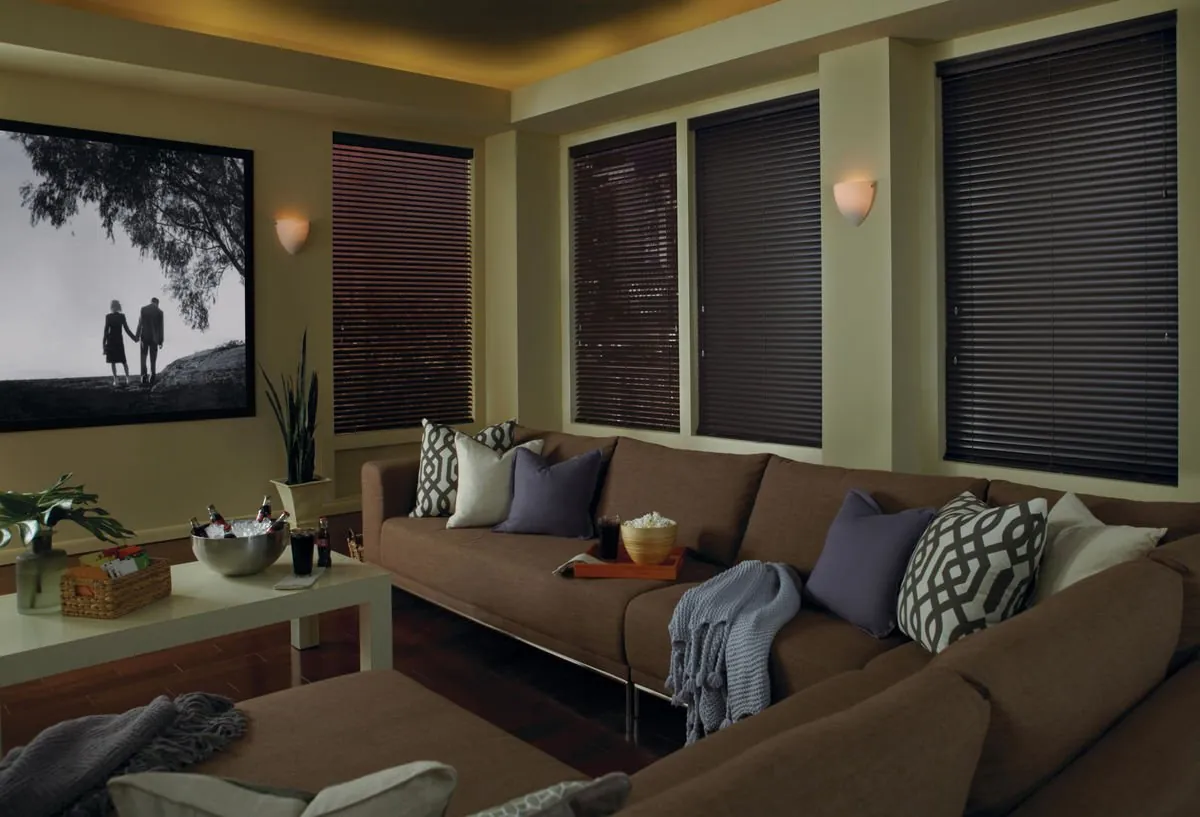
Wood and faux wood blinds
Parkland wood and EverWood faux wood blinds tilt to steer light; faux wood is the one for a steamy kitchen or a bath by the shore.
Fabric is the decision that matters on the water
On a waterfront window, most of the real choices come down to fabric. The product family sets how a covering moves; the fabric sets how it handles sun, how much of the river you keep, how private the room is and how long the color lasts. Here is how we think it through with you.
Openness
Screen fabrics are woven with a set amount of openness, the small gaps that let you see through. A more open weave keeps more of the view and lets more light and heat in. A tighter weave blocks more sun and gives more daytime privacy, at the cost of a dimmer outlook. On a west-facing river room, people often choose tighter than they expect once they have seen the afternoon light come through.
Color
Color changes how a screen performs. Darker screen fabrics usually make the view through them clearer, because they cut reflection on the inside surface. Lighter ones reflect more of the sun’s heat back toward the glass and look softer from inside the room. Neither is wrong. It depends whether the view or the brightness bothers you more.
Fading
Any fabric that faces strong sun every day will fade over time. Lighter, neutral colors tend to keep their look longest on an exposed window, and we point out the fabrics that suit a window facing open water when you choose. Strong, saturated colors are usually better saved for a shadier room.
Salt and moisture
Fabric itself copes with salt air well enough; it is the hardware that suffers. That steers us toward shades whose workings are enclosed, and toward cordless or motorized lifts. In damp rooms, polysatin shutters or faux wood blinds take the place of fabric altogether.
Waterfront houses on Nanaquaket
Around Nanaquaket the water is close and calm, and the houses are built to look at it. Living rooms and kitchens open onto decks through wide sliders, and upstairs bedrooms often have big windows facing the same way.
Calm water acts like a mirror. On a sunny afternoon light comes in from the sky and bounces up off the surface, so a room can feel bright from below as well as above. That is when a solar screen earns its place, lowered partway or fully to cut the reflection while the water stays in view. A top-down, bottom-up honeycomb does the reverse, covering the lower glass where the reflection comes in while leaving the sky open above.
The sliders onto the deck want something that travels sideways. A vertical honeycomb stacks to one side and holds air like any honeycomb. Luminette gives a soft, sheer version of the same idea.
Once evening comes, a lit room facing the pond is visible to anyone on the water or across it. A sheer shade with closing vanes or a dual shade with a solid fabric behind the screen gives privacy at night without spoiling the daytime view.
Along the Sakonnet River
The river houses are more exposed. The Sakonnet is wide, the wind comes across it with little to slow it, and the afternoon sun sits over the water on the west side for hours. Water-facing rooms here are heavily glazed and take the weather full on.
For the main river room, a screen roller shade is usually the starting point, chosen with the openness and color discussion above. For bedrooms, a dual shade with a screen and a room-darkening fabric covers both day and night. A sunroom with glass on three sides can take a shade on every panel, so you lower only the side the sun is on.
High glass is common in newer river houses, with transoms and gable windows above the main run. PowerView motorization lets those shades move with the ones below, from a remote, the app or a schedule. A schedule is useful on the river side: shades lower for the late afternoon sun and rise again for the evening.
Wind matters in one more way. A window left open on a breezy day can set an ordinary shade swinging. Bottom rails with enough weight, side-mounted products such as shutters, or simply a habit of lowering the shade only when the window is closed all help. We talk this through at the window.
Farmhouses and capes around Four Corners
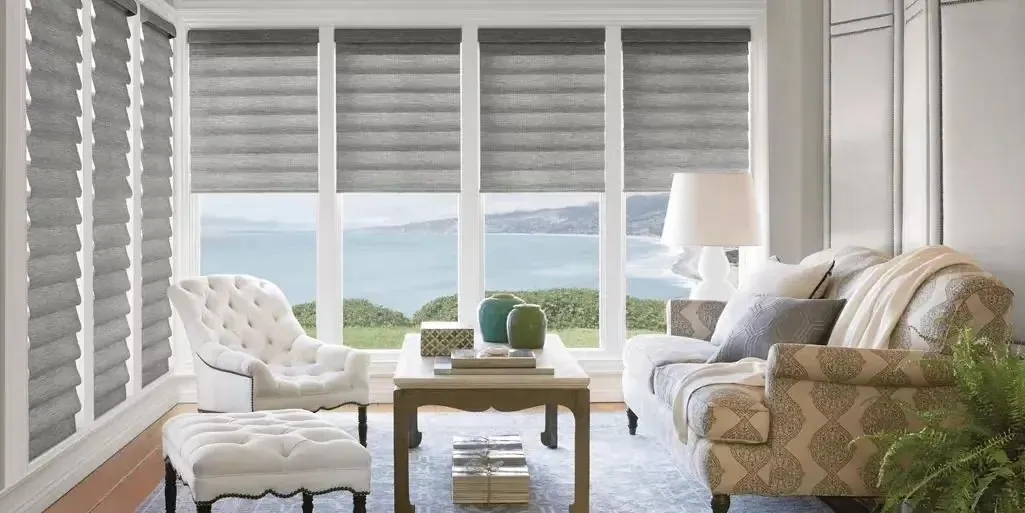
Inland, the older houses around Four Corners are a different job. Farmhouses with a main block and a kitchen ell, shingled capes with a central door and dormers upstairs. The windows are small and evenly spaced, the frames have settled, and the rooms were sized to stay warm.
Inside mounts keep the old trim on view where the frame is deep enough. A honeycomb shade tucked inside the opening lifts into a slim stack and holds heat when lowered. A café shutter on the lower half of a kitchen window keeps the road out of sight while the top stays open to the fields. Woven wood suits a farmhouse kitchen or sitting room, with texture that sits well against wide boards and plain painted casings.
Because the frames are old, we measure at several points across each window. Where the depth runs out, a slim mount on the casing is the honest answer, and we show you how it looks before you decide.
Upstairs in a cape, dormers suit an inside-mounted shade because the alcove frames the window like a box. The gable window over the stairs, out of reach, is a natural place for a motorized shade.
Rooms that face the road
Not every Tiverton window faces water or fields. Front rooms of the farmhouses near Four Corners often sit close to the road, and once the lamps are on, a bare window shows the whole room to passing cars. Daytime privacy comes easily with light-filtering honeycomb or a sheer shade, which glow from inside without showing detail. For evenings, a room-darkening fabric, a shutter closed tight, or drapery drawn across gives full privacy.
Top-down, bottom-up honeycomb is the everyday answer in a front room. Lower the top for light, keep the bottom closed for privacy, and adjust through the day as you like.
Bedrooms that wake with the water
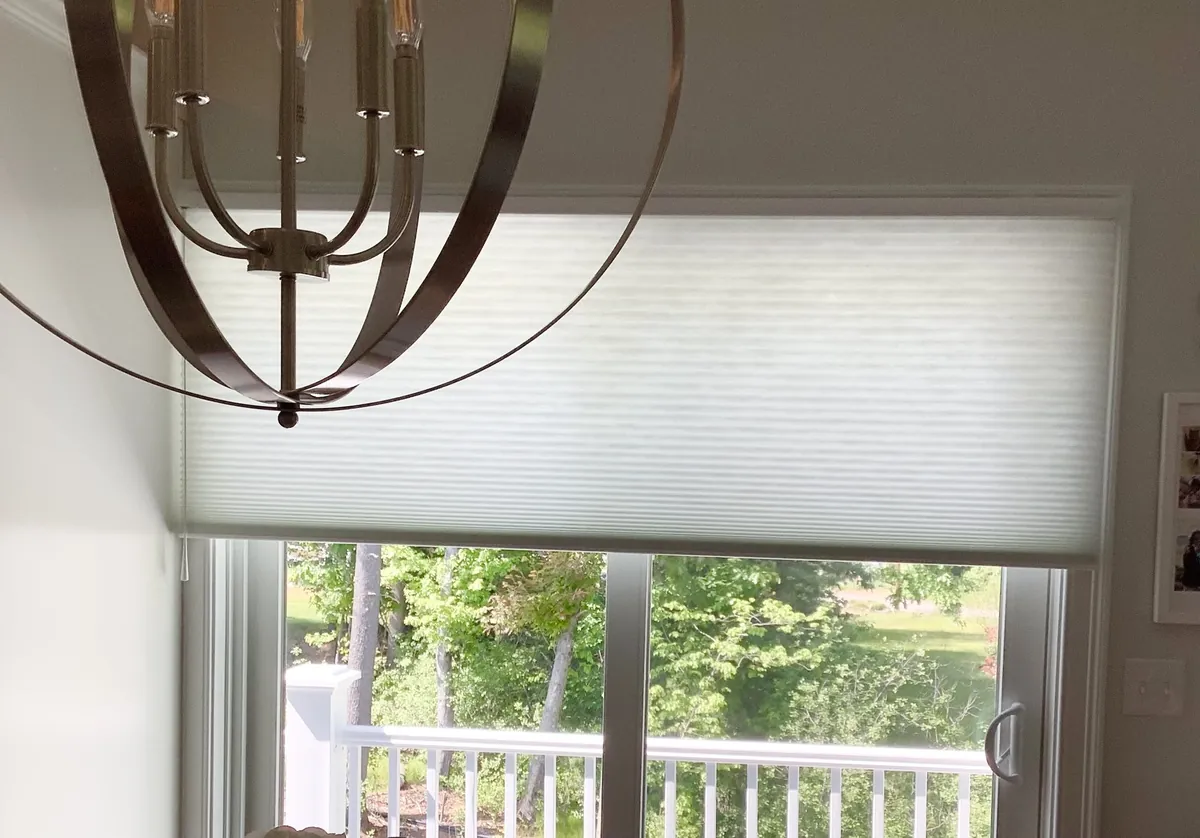
On the Nanaquaket side many bedrooms look east, and sunrise over the water comes straight in at a low angle, bright enough to wake anyone. On the river side the bedrooms often face west, where the problem is heat late in the day rather than early light. The products are the same family; the fabric changes.
For an east bedroom, a room-darkening honeycomb holds the room dim until you raise it, and side channels can be added on some lines to close the thin gaps at the edges. If the view from the bed matters, a dual shade with a screen behind the darkening fabric lets you keep the water in sight once you are up. For a west bedroom, a light-filtering fabric lowered during the hottest hours keeps the room cool for the night, and PowerView can do it on a schedule while you are out.
Guest rooms in a waterfront house deserve the same thought. They are often used only in summer, when the sun is at its strongest and earliest, and visitors rarely know how to work an unfamiliar shade. A simple cordless lift or a single remote keeps it easy for them.
On installation day
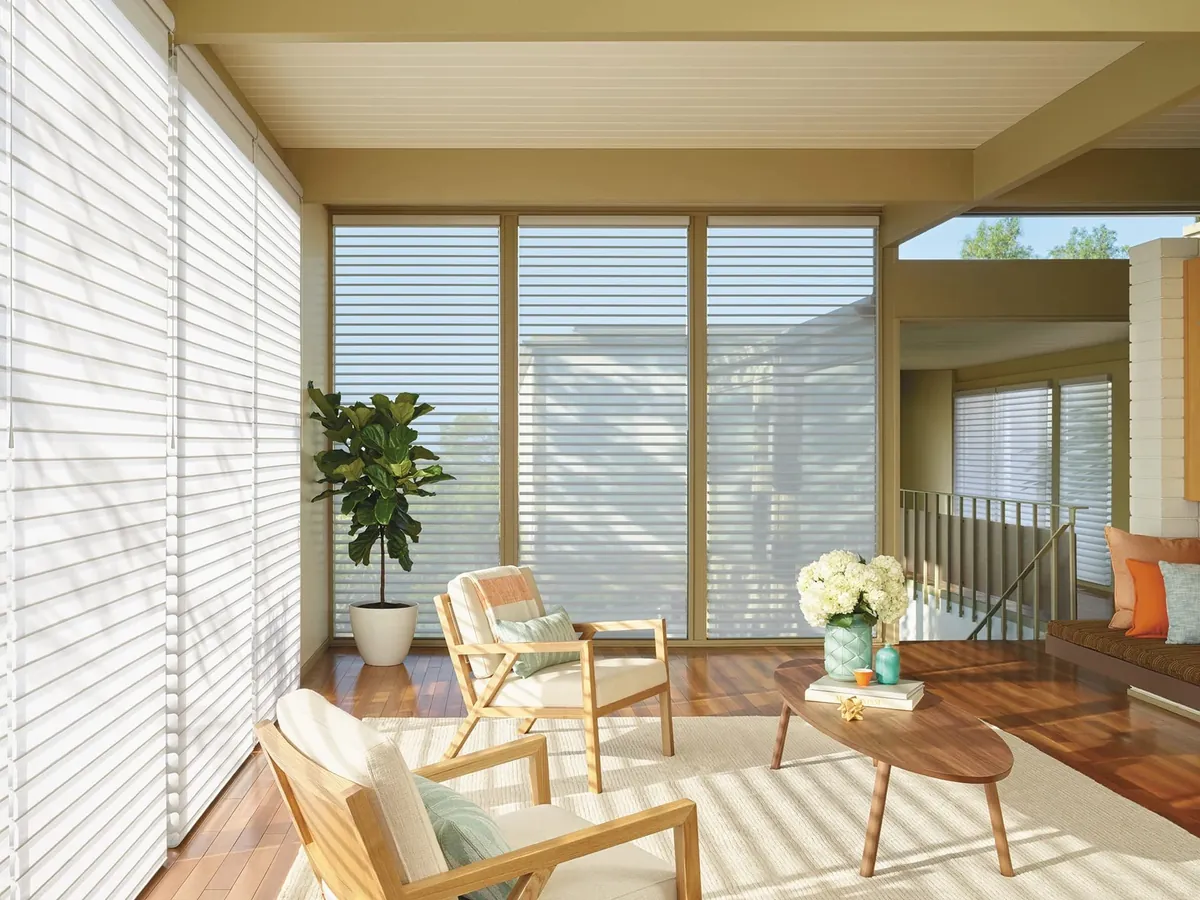
Fitting a long run of waterfront glass, or a farmhouse full of small old frames, is the step that makes the order look right or wrong. This is how our certified installers handle it.
- Every bracket is fixed into solid framing, never trusted to plaster or drywall alone.
- Headrails along one wall are levelled against each other, so the whole run lines up when raised.
- Shutter frames are fitted to the opening as it really is, which in an old farmhouse is rarely square.
- PowerView motors are paired with your remote, phone or wall switch, and any schedules are set before we go.
- Each shade, blind or shutter is run through its full movement with you, and we show you how to clean and look after it.
That is the standard to ask of any Hunter Douglas dealer in Tiverton, RI before you order.
The house as a whole
Many Tiverton houses have both personalities under one roof: an old farmhouse core with a newer addition facing the water. The trick is letting each room have the product it needs while keeping the house consistent.
- Old rooms. Honeycomb, Roman or woven shades mounted inside the frame, or shutters where the depth allows.
- New water-facing rooms. Screen roller shades or sheers, chosen for openness and color.
- Bedrooms. Room-darkening honeycomb, or a dual shade where there is a view.
- Kitchens, baths and mudrooms. Palm Beach shutters or EverWood faux wood blinds.
- High glass. PowerView, grouped with the windows below.
Keeping one color family across every room, even where the products differ, makes the house feel planned. A Hunter Douglas dealer in Tiverton should sketch that plan with you at the first visit, then let you order in stages if you prefer.
How we run a home visit
You cannot choose a screen fabric for a river room from a sample book on a kitchen table at night. It has to be held to the glass in daylight. Our vans carry the Hunter Douglas samples, so the showroom comes to your door.
- Book through Request a Consultation, or ring through on the call button.
- We bring screen fabrics in several openness levels and colors, plus honeycomb, sheers, shutters and woven samples for the rest of the house.
- We begin with the room that faces the water, ideally in the brightest part of the day.
- You compare weaves and colors side by side at the window, from inside the room.
- We measure each opening and note frame depth and clearances around sliders and doors.
- You get a free estimate afterwards and decide without any pressure.
Our interior design consultations can sit alongside the same visit if you want help with color across a whole room. The guide to what happens at an in-home consultation explains more.

A Gallery dealer that installs its own work
Gallery is the designation Hunter Douglas gives dealers who meet its standards, and Blinds & Designs is one. For a Tiverton house that means you are choosing from every fabric and every product family, which matters a great deal when the right screen for a river room might be one weave tighter than the obvious choice.
Our installers are certified by Hunter Douglas. On an exposed house the details count: brackets fixed into solid framing, headrails levelled across a long run of glass, motors set up and tested with you, and shutter frames fitted to farmhouse openings that are no longer square.
Picking a Hunter Douglas dealer in Tiverton, RI that installs its own orders means the same people answer for the job afterwards. If something you already own has stiffened in the salt air, our blind and shade repair service is glad to look at it.
Motorizing a wall of river glass
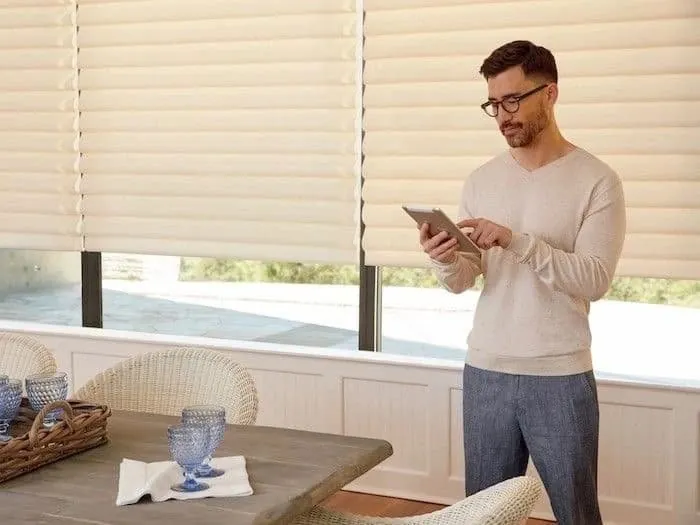
A long run of river-facing windows is hard work by hand. PowerView motorization lets you move them together from a remote, the app or a wall switch, and set schedules that follow the sun: down for the late afternoon over the Sakonnet, up again for the sunset.
Motors sit inside the headrail, out of the salt air, and there is no cord at the side to wear or corrode.
See motorized blinds in Tiverton for more on controls, our main Hunter Douglas page for every family, and Hunter Douglas’s own online catalog for browsing. Everything we do in town is on our Tiverton page, and full-length panels are on custom drapery in Tiverton.
Questions from Tiverton
How do I choose a screen fabric for a river-facing room?
Openness and color are the two levers. A more open weave keeps more view; a tighter one blocks more sun. Darker colors usually give a clearer view through the fabric, lighter ones look softer and reflect more heat. We compare them at your window in daylight.
Will strong sun fade my shades?
Any fabric facing open water every day will fade over time. Lighter neutral colors hold up best on exposed windows, and we point out suitable fabrics when you choose.
Does salt air affect window coverings?
Mainly the hardware. Shades with enclosed workings and cordless or motorized lifts hold up well. In damp rooms, polysatin shutters and faux wood blinds are the better choice.
What suits the small windows in a Four Corners farmhouse?
Inside-mounted honeycomb, Roman or woven shades keep the trim on show, and café shutters suit a kitchen facing the road. We measure carefully because old frames are rarely square.
Is the estimate free?
Yes. Book a visit and we will bring samples, measure and prepare a free estimate.
Book a visit
Request a consultation and we will bring the screen fabrics and the rest of the range to your house, measure every window and send a free estimate. For a quick question, use the call button. The North Dartmouth showroom is our closest location if you would like to see the product families first.