
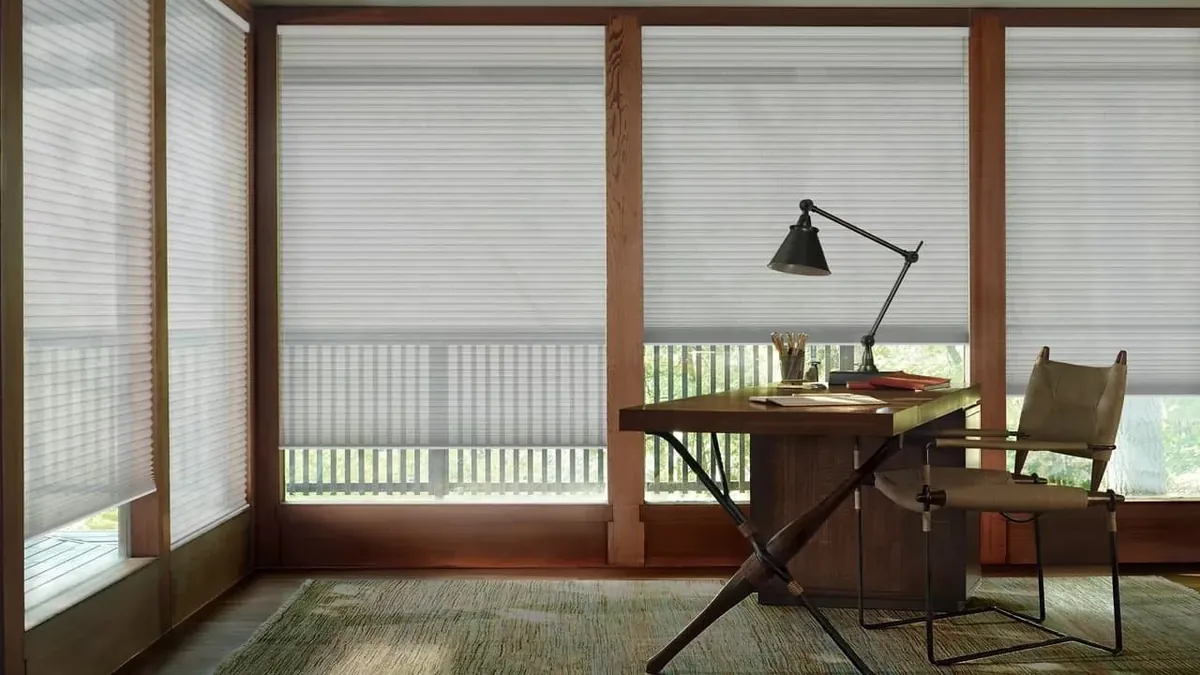
Small lots, plain windows, neighbors close by
Avon is a small town, and its housing is easy to sum up: post-war capes and ranches, each on its own modest lot, with ordinary modern window openings and houses set close together along most streets. That simplicity is a gift when it comes to window coverings. There are few odd shapes to solve and no fragile historic frames to tiptoe around. What matters is keeping each room comfortable as the seasons turn and screened from the house just across the lawn, and that is how we approach cellular shades in Avon, MA.
The honeycomb takes care of comfort. Its fabric forms a stack of sealed cells, and once the shade comes down, those cells keep a calm layer of air pressed to the pane. Heat struggles to cross air that will not move, so a front room with a broad window keeps its warmth after dark, and a bedroom that catches the afternoon sun stays a touch cooler in July.
Screening comes from the fabric. On close-set streets a side window can sit directly opposite a neighbor’s, and the shade needs to let the day in while keeping the room your own.
Where honeycomb shades help most in an Avon house
Three spots in a cape or ranch where the change is easiest to feel. Swatches for each travel with us.
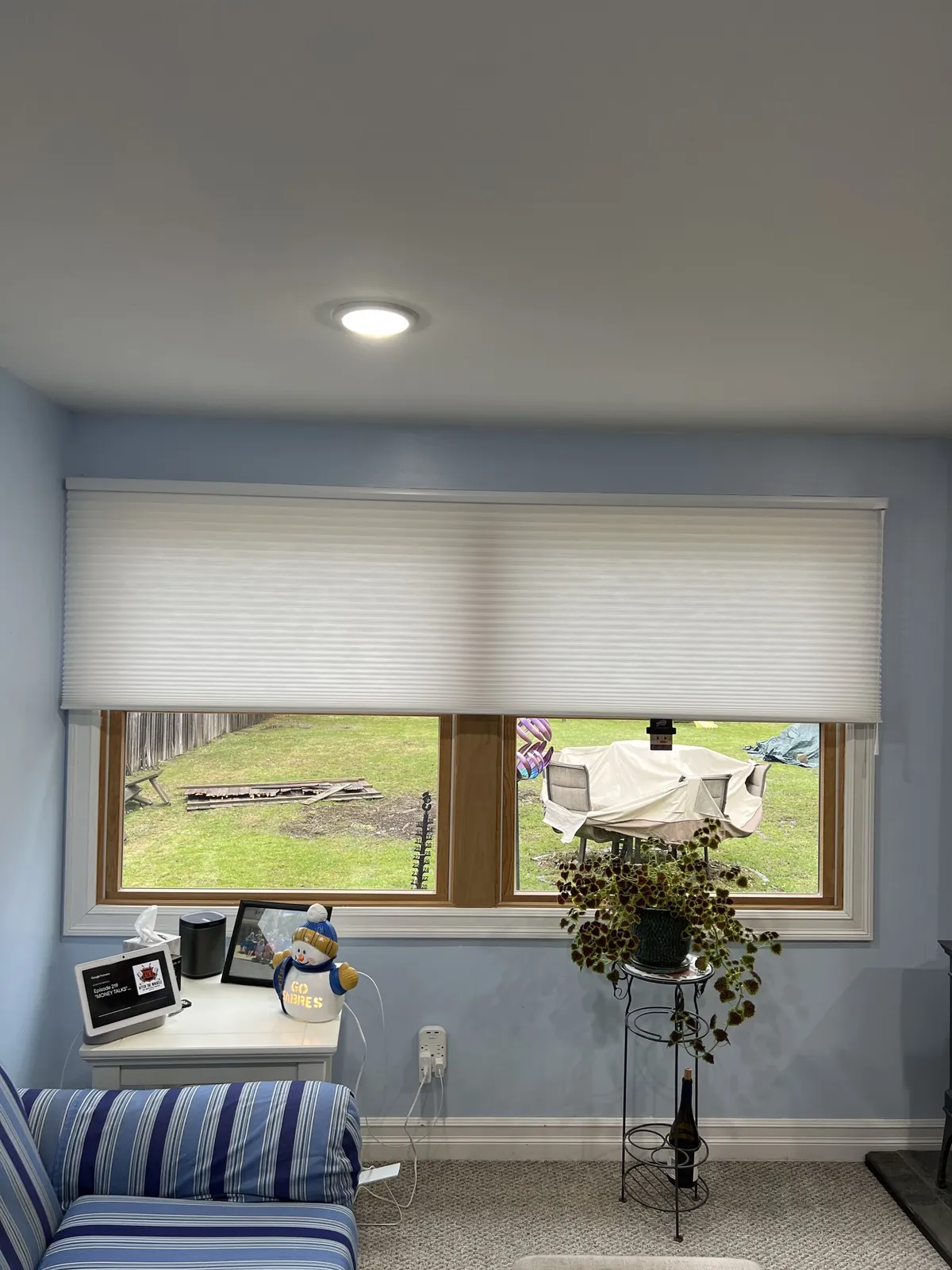
The front living room
Usually the biggest pane in the house and the nearest to the sidewalk. A honeycomb shade warms the room and screens it from passers-by.
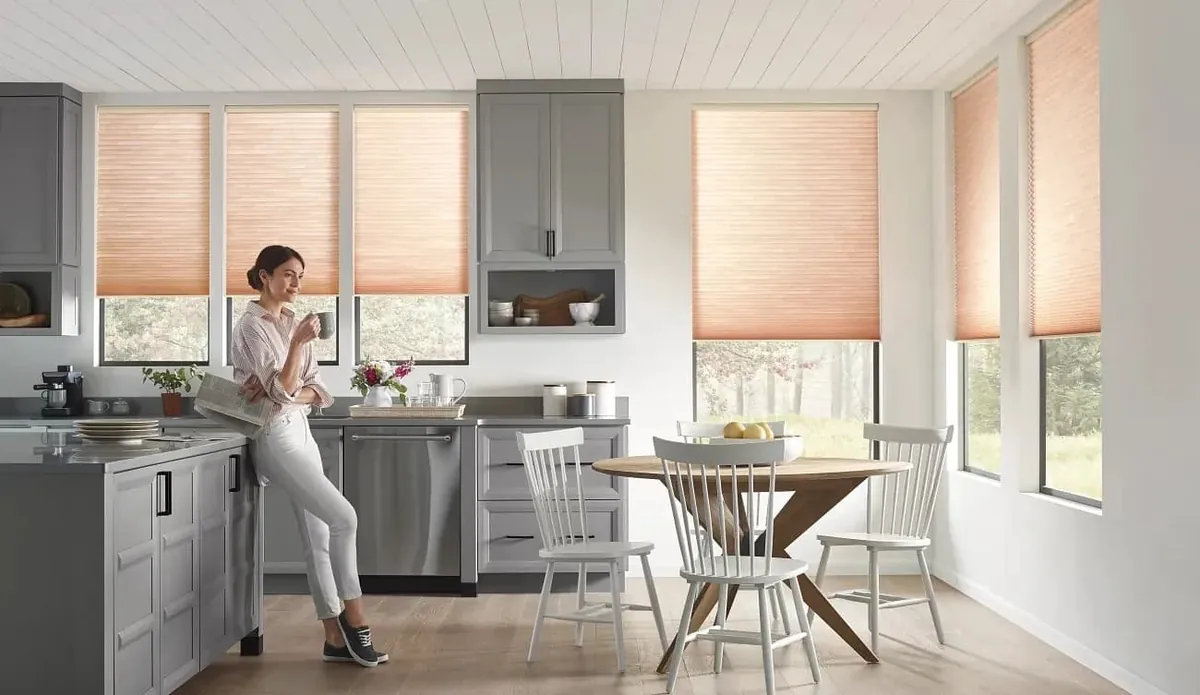
The kitchen window
A shade above the sink that rises out of the way of the tap and tames the low evening sun, in a tone that goes with the cupboards.
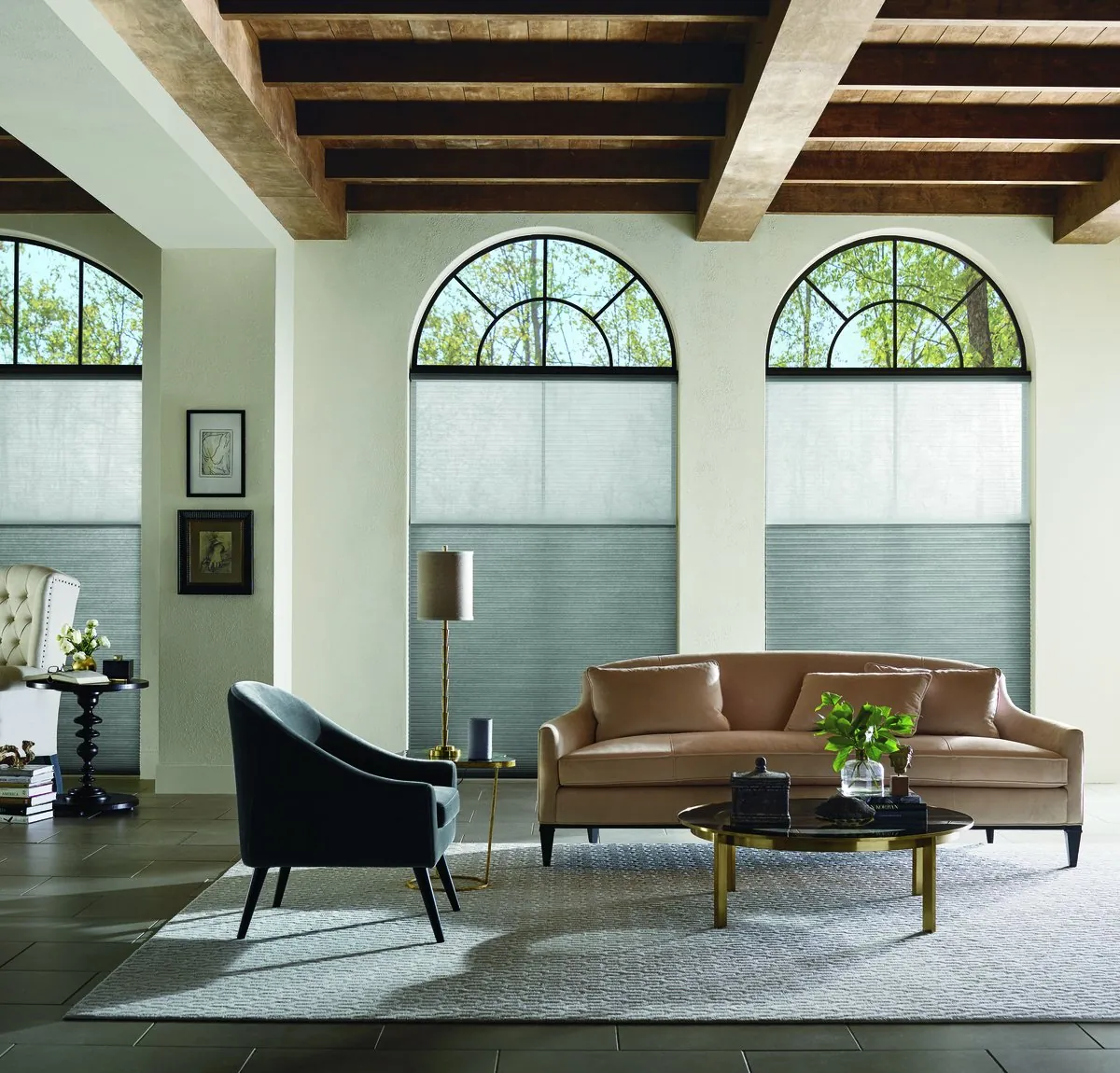
Applause honeycomb shades
The Hunter Douglas honeycomb line with its own color card, well matched to the identical windows that repeat through an Avon ranch or cape.
A ranch, room by room
An Avon ranch keeps everything on one level: a front room with a picture window, a kitchen and dining area toward the back, and a short hall to the bedrooms at one end. Touring a ranch with swatches in hand is the easiest way to plan, and it usually runs like this.
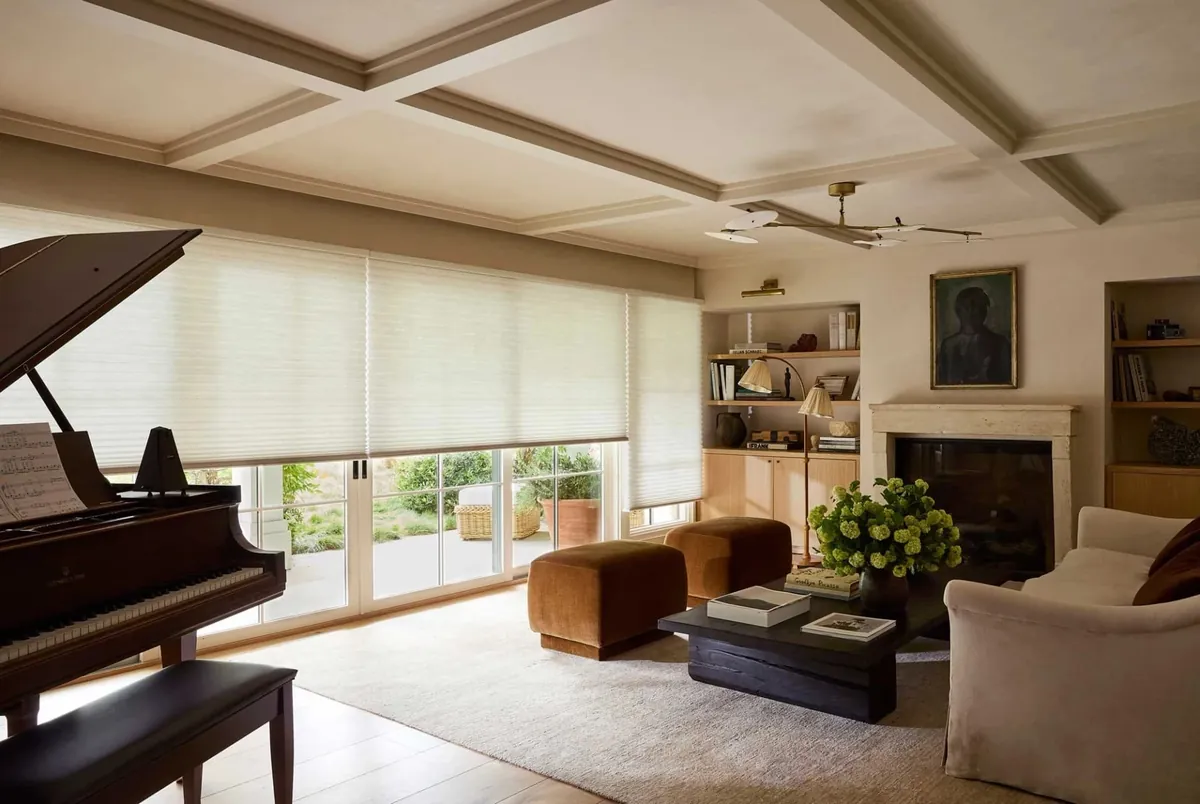
- Living room. The picture window is wide, so it often suits two or three shades in a row rather than one long one. They travel as a set, or one end can come down when the sun swings round to it.
- Kitchen and dining. A translucent fabric keeps the cook’s corner bright. If a sliding door opens to the yard, its honeycomb layout is planned around the comings and goings.
- Bedrooms. A heavier weave keeps mornings dim and evenings private. A bedroom on the corner gets the same shade on both of its outside walls.
- Bathroom. The small window, often toward the side yard, takes a fabric opaque enough for full screening that still lets a glow of daylight in.
Because ranch windows repeat, two or three fabric decisions usually cover the whole house, and measuring takes little time. Even so, each opening gets its own tape measure, because frames that seem matched rarely are.

A cape, up and down
Avon’s capes keep the living space downstairs and tuck the bedrooms up under the roof, with dormers looking out front and back. The ground floor behaves much like a ranch. The upper floor is where a cape is different, and where honeycomb shades prove their worth.
Rooms under a roof are the coldest in the house in January and the stuffiest in August. Dormers sit at the center of that swing: small windows in sloping walls with the roof just overhead. A honeycomb shade on a dormer holds heat in overnight and keeps the early summer sun off the pillows. Since dormers are small and frequently look straight across at a neighbor’s dormers, a heavier weave usually suits them.
The staircase often has a small window of its own. It is easy to overlook, and dressing it in the bedroom fabric makes the upper floor feel complete.
Close-set houses and the window opposite
Along most Avon streets, houses stand near one another, so the side of one faces the side of the next across a strip of grass or a drive. A kitchen may look into the neighbor’s kitchen, and a bedroom may face theirs.
Honeycomb fabrics come in several weights, so screening can be tuned window by window. A translucent weave glows when it is down, letting daylight through while turning the room behind it into a soft blur. That suits a side-facing kitchen or living room during the day. Bedrooms and bathrooms are better with a more opaque weave, because a lamp-lit room is far easier to see into after sunset.
The fastest way to decide is to stand in the room and look across at next door with a swatch held up. That is exactly how we spend part of every visit.
The street side
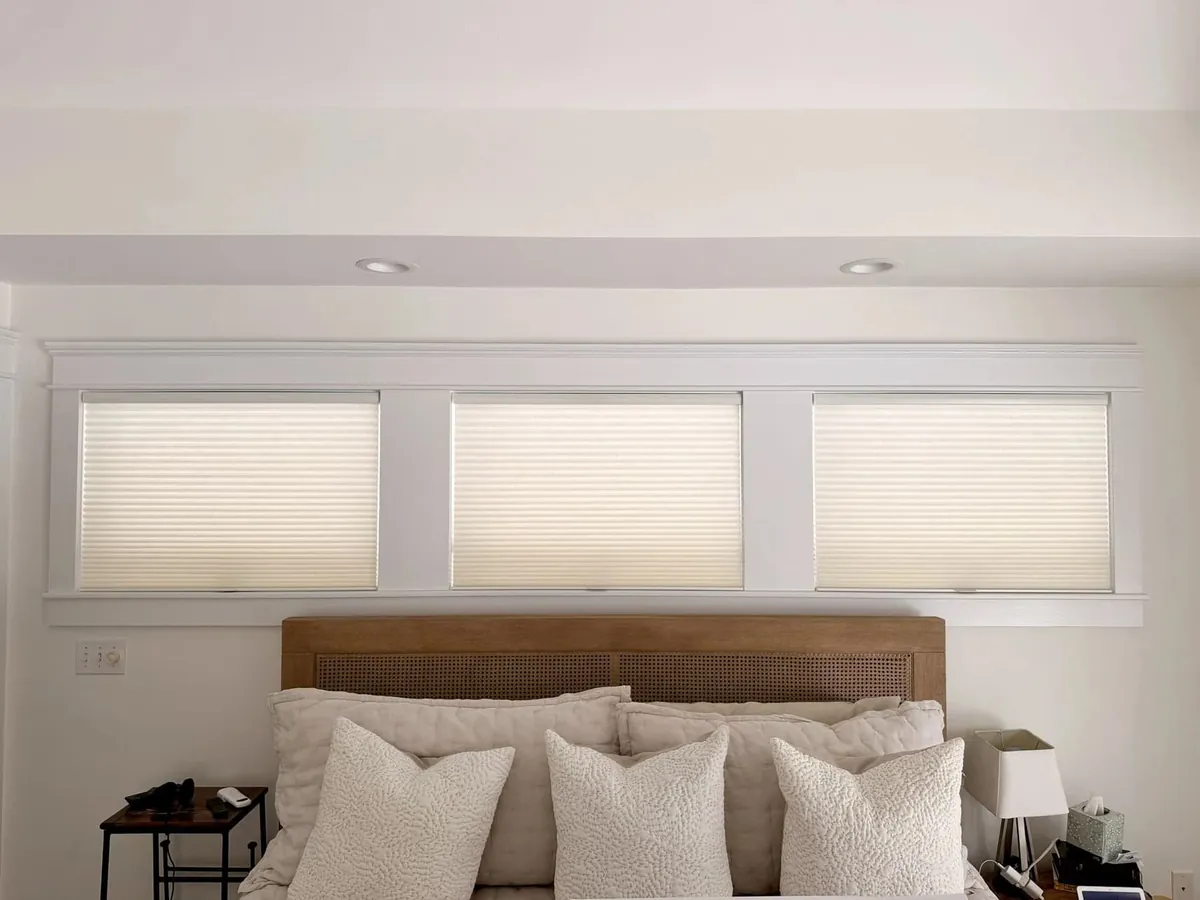
On a short setback, the front of a cape or ranch is near the pavement, and its living room window faces everyone walking by. By day, a translucent honeycomb drawn halfway keeps the room bright and stops anyone seeing straight in. At night, all the way down, it shuts the room off from the street.
From outside, a row of shades in one color gives the house a neat, even face. If the rooms behind need different fabrics, the street-facing windows can still share one color while the rest are chosen freely. A soft white or a warm neutral at the front, with stronger color saved for a kitchen or a child’s room, is a common pattern.
Color in a compact house
In a cape or ranch, rooms open onto one another and you can often see three or four windows from a single spot. That makes color more noticeable than it would be in a larger house. A different fabric at every window can make a small home feel busy, while a steady, quiet palette makes the rooms feel bigger and calmer.
A good rule for cellular shades in Avon houses is to pick one main fabric color for the rooms you see together, the living room, the dining area and the hall, and let the bedrooms and the kitchen go their own way behind closed doors. Pale neutrals keep small rooms bright; a warmer tone in a kitchen adds some life on a gray winter morning. Because color looks different in each room’s light, the swatches go up at the windows before anything is decided.
The back door and the yard
Many ranches and capes in town open to the back yard through a sliding glass door or a door with a large pane, usually off the kitchen or dining area. It is a busy doorway, and on a close-set street it often faces the neighbor’s yard as well as your own.
The honeycomb layout for that door is planned around how often it opens, which way it slides and where the table and chairs sit, so the door stays easy to use. Lowered in the evening, the shade stops the cold that pours off a big pane of glass and screens the kitchen from the yard next door; raised in the day, it clears the way to the garden.
Living with a small house through the seasons
In a small house, every room has at least one outside wall and most have a window, so the whole home feels the weather. A cold snap is felt at the living room sofa and in every bedroom at once; a hot spell builds up on the sunny side by mid-afternoon.
That is where cellular shades in Avon pull their weight across the whole house rather than in one room. Brought down at dusk in winter, they slow the heat draining out through every window at once. Brought down over the sunny side on a summer afternoon, they slow the warmth coming in and keep the rooms on that side bearable without the blinds-drawn gloom of a heavy curtain. Because a honeycomb shade lets light through, you can keep it lowered on a hot day and still read by daylight.
How the shades are mounted on modern frames
Standard openings make mounting simple, but they are not all alike. Plenty of post-war houses now have replacement windows, and those units can leave little depth in front of the sash, with locks and tilt catches set forward.
So at the visit every window is measured three times across and three times down, and its depth is noted. When there is room, the headrail goes inside the frame and the casing stays on show, which keeps a small room uncluttered. When there is not, the headrail sits on the casing above and overlaps the opening a little on each side, which also trims the halo of light round the edges. Every shade is built for the window it hangs in.
What the cells do
The word cellular comes from the shape. Look at the end of the shade and you see hollow cells stacked like a slice of honeycomb. With the shade down, those cells hold their air, and trapped air carries heat poorly. The shade sits between window and room like a quilt. On a single-story ranch, where the living room, kitchen and bedrooms all share the same outside walls, that quilt is working on every side of the house at once. In a cape, it is most welcome upstairs, where the dormers sit closest to the roof and feel the weather first. Either way, the furnace has a little less to make up for on a cold night.
There is a straightforward write-up in our guide, cellular shades and winter heat, for anyone who wants more.
Shop at home: the Avon visit
Avon falls within our Canton shop-at-home service. There is no counter to visit: the consultation takes place in your living room. With swatches on board the van, we can bring the showroom to you, and every fabric is judged at the window it is meant for.
- Book a slot on the Request a Consultation form, or ring through on the call button.
- Your consultant turns up with Duette and Applause swatches, translucent and heavier weaves, in a wide spread of colors.
- You decide where to start, perhaps the chilly front room, the overlooked kitchen or a bright bedroom.
- Swatches go up at each window, so you can see the color from inside and how well it screens from outside.
- The consultant takes measurements for every window on your list and notes each frame’s depth.
- A free estimate is left behind, and there is no deadline for deciding.
For a hand with color and the other window treatments in a room, our interior design consultations can be added to the visit. What happens at an in-home consultation describes the appointment in more depth.
Duette or Applause
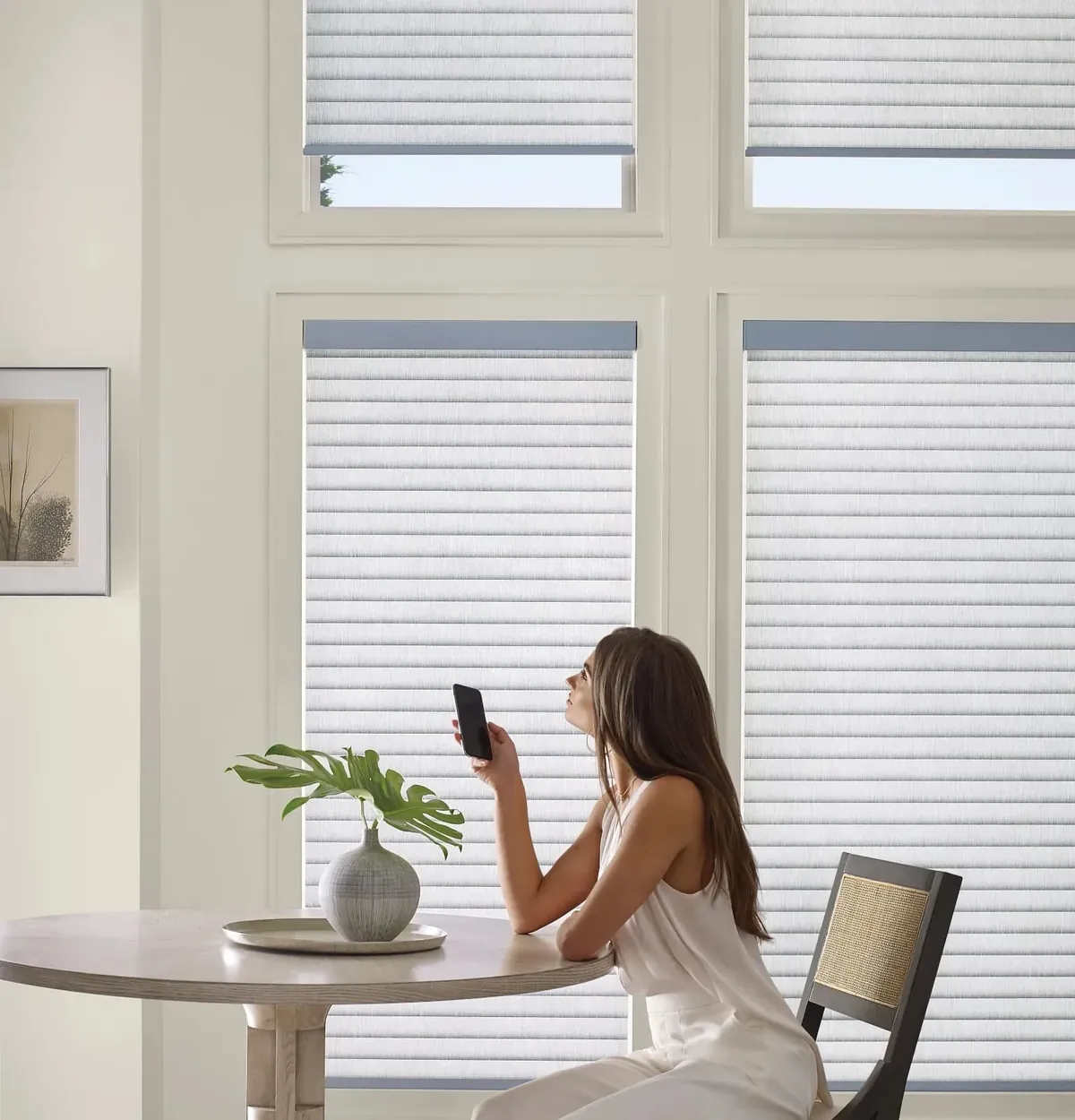
Hunter Douglas offers two honeycomb lines, Duette and Applause, and the air-holding cell is the same in each. Fabric is what separates them. Duette has the wider library of textures and colors and is often picked for the front room, the window everyone sees. Applause has a color card of its own that sits well in bedrooms, kitchens and the repeating windows of a cape or ranch.
Plenty of cellular shades in Avon, MA, mix the pair, with Duette at the front and Applause through the rest, and you compare both books at the window before deciding. The Duette honeycomb shades page tells you more, and the main cellular shades page covers the whole Hunter Douglas honeycomb family.
PowerView in a cape or ranch
Motors are not only for big houses. PowerView lets a honeycomb shade answer to a handheld remote, a phone app or a timetable. In a ranch, a timetable can bring the street-side shades down each evening and lift the kitchen shade at breakfast, so nobody tours the house twice a day. In a cape, a dormer shade above a bed, or a stair window that is hard to reach, can be worked from below.
One shade or every shade can be motorized, and more can join later. If motors are on your wish list for the future, say so at the consultation, so the shades bought now are ready for them. How each motor is powered is settled at the house, window by window. Motorized blinds in Avon covers PowerView in more depth.
Installation
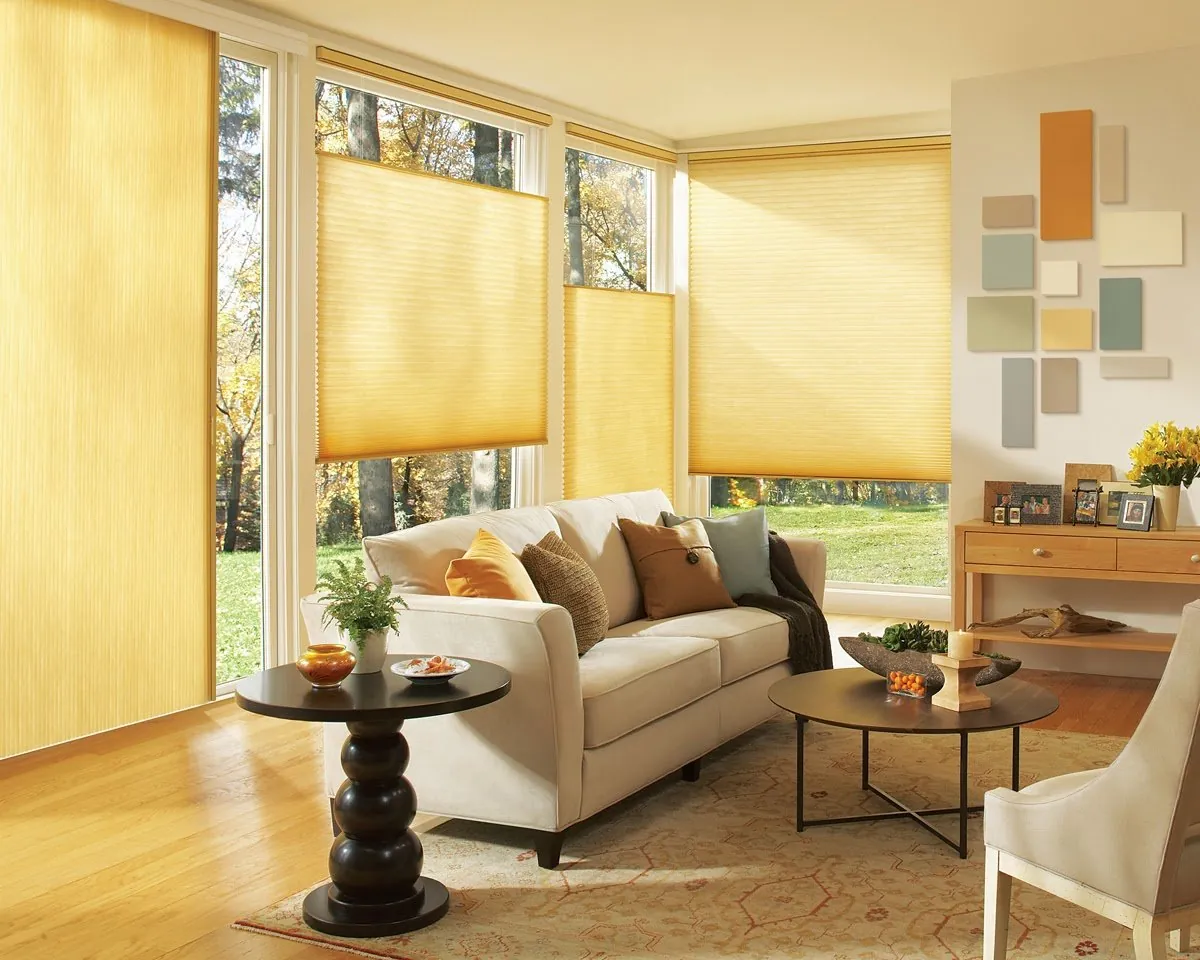
Once your shades have been made to the measurements, certified Hunter Douglas installers come back to hang them.
- Brackets go in firmly at every window, inside the frame or on the casing, as agreed.
- Headrails clip in and are set level, and the row of shades on a picture window is lined up.
- Every shade is run up and down to check it travels evenly.
- PowerView motors are paired with their remote and the app, and timetables are set.
- You get a quick tour of how everything works before the crew packs up.
Built for its own window, each shade fits snugly, which looks tidy in a compact room and keeps the edge gaps slim.

A Gallery dealer for a small town
Hunter Douglas names Blinds & Designs a Gallery dealer, and Hunter Douglas certifies our installers. In an Avon cape or ranch, that means every Duette and Applause fabric and PowerView are on the table, with measuring, ordering and installing all handled by us.
Other rooms can be sorted at that same appointment, since our Hunter Douglas range also takes in blinds, shutters, roller shades, roman shades and drapery. Custom blinds in Avon are a practical fit for a busy kitchen, and plantation shutters in Avon suit a bathroom window well. The complete local list is on the Avon page.
Franklin is home to our nearest showroom; the Franklin showroom page has its details.
Questions from Avon
Our kitchen looks straight into the house next door. What fabric do you suggest?
A translucent honeycomb weave. It lets the daylight in and turns the view into the kitchen into a soft blur, so the room stays bright without being on show. Swatches at the window settle it quickly.
Is a picture window better with one shade or a few?
Usually a few, side by side. They move as a set, and one can be lowered on its own when the sun reaches that end of the room.
Do honeycomb shades make sense upstairs in a cape?
Very much so. Rooms under the roof swing between cold and stuffy, and the trapped air in the cells eases both. A heavier weave also screens those rooms from the neighbor’s dormers.
Our windows were replaced. Can the shades still sit inside the frame?
Often, though replacement frames can be shallow. Every frame is checked, and if there is not enough depth, the shade is fixed to the casing above instead.
Do you charge for the estimate?
No, it is free, and it comes once the windows have been measured.
Getting started in Avon
Whether it is a ranch with a wide front window or a cape whose dormers face next door, the right honeycomb is plain to see once the swatch is at the glass. Fill in Request a Consultation and we will bring the samples, take the measurements and write a free estimate for your cellular shades in Avon, MA. A question in the meantime? The call button connects you.