
Knowing what you are booking
Before inviting anyone into your home, it is fair to want to know what happens at an in-home consultation. The short version: we come to you with samples, look at your windows with you, measure what you are leaning toward, and give you a free estimate. Nothing is ordered until you decide.
The longer version is below, step by step, from the moment you ask for a visit to the day the last shade goes up. It is the same for one awkward window as for a whole house, and it works whether you already know what you want or have no idea where to begin.
From first request to finished room
Here is the full sequence most of our customers go through.
- You ask for a visit. Use Request a Consultation or call the showroom. Tell us roughly which rooms you have in mind and anything that is bothering you about them.
- We agree a time. If one room only misbehaves at a certain hour, such as a bay window that glares in late afternoon, say so, and we will try to see it then.
- We walk the rooms with you. We listen first: too bright, too dark, too cold, too exposed, or just tired-looking.
- We look closely at each window. Depth of the casing, how the sash opens, trim, locks and cranks in the way, which way the glass faces.
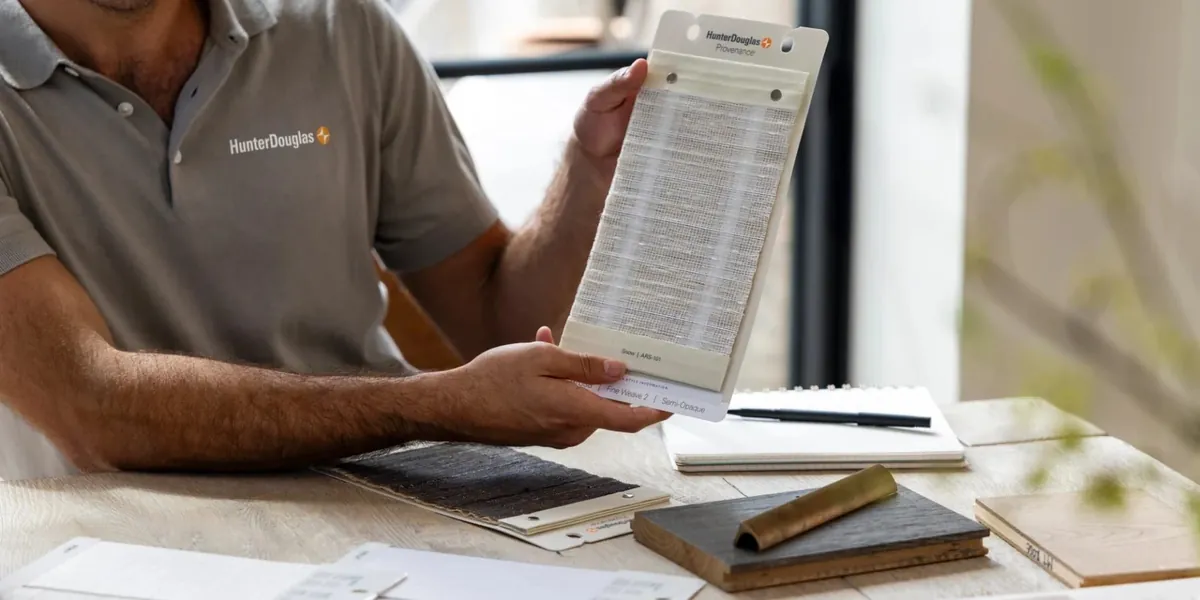
- We show you samples from the van. Fabrics, slats and louvers held up against your own walls, in your own light.
- We measure the windows for the products you are leaning toward.
- You get a free estimate and take whatever time you need to decide.
- Your order is made to our measurements and fitted through certified Hunter Douglas installation.
Before the visit: what helps
You do not need to prepare much, but a little thought makes the visit more useful.
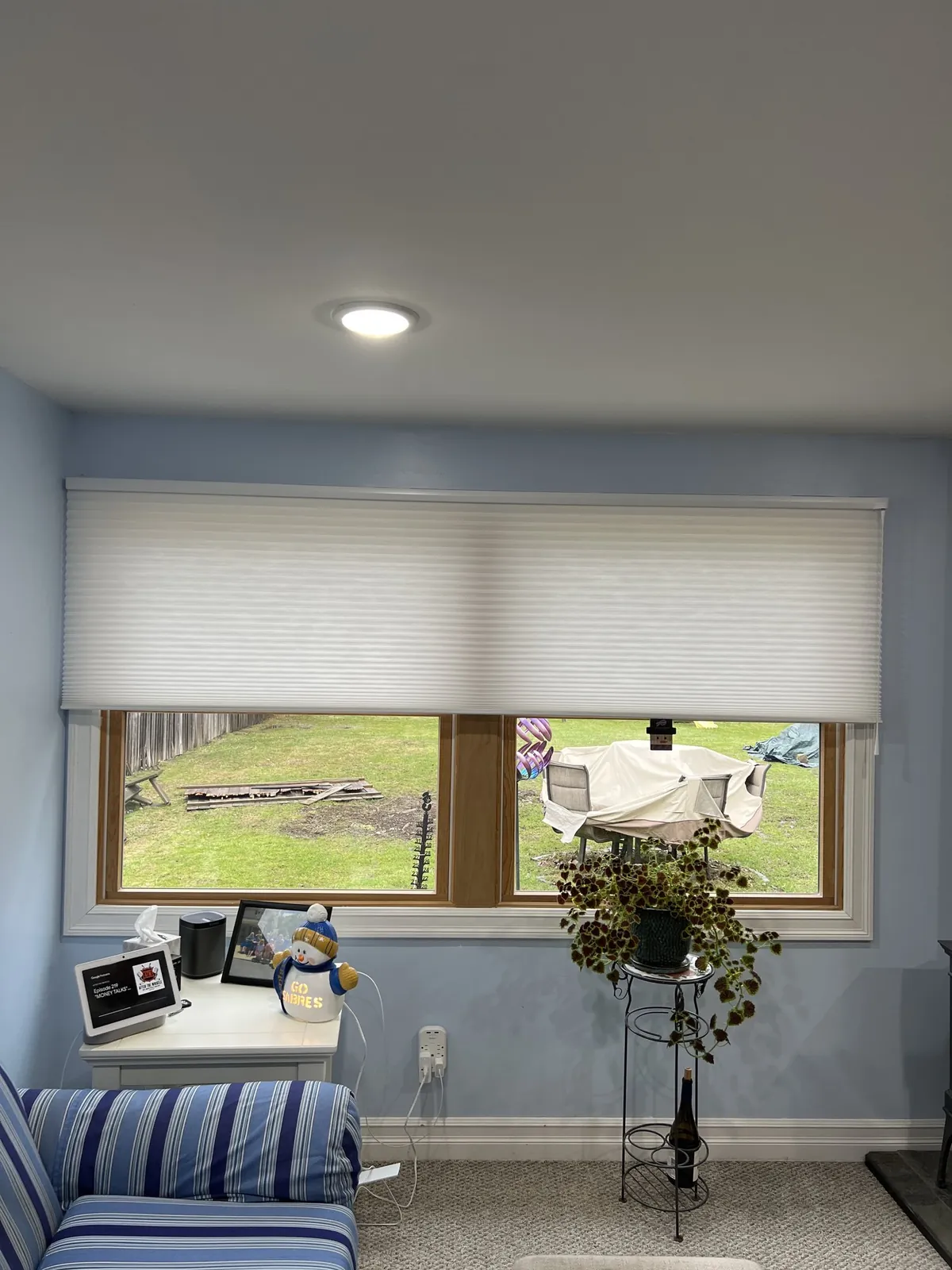
- Make a short list of the rooms that matter most, and what annoys you in each.
- Note any window that is hard to reach, behind furniture or never opened.
- If you have paint colors, fabric swatches or a sofa on order, have them handy.
- Clear enough space at each window for someone to stand close and look at the frame.
That is it. No need to measure anything yourself; that is our job, and it is done for the specific product chosen.
What we look at in different houses
What happens at an in-home consultation shifts a little with the house, because each kind of home raises its own questions.
Antique capes with deep-set sash
Along Route 6A and in Sandwich and Hingham, older capes have small windows set deep into thick walls, rarely perfectly square. We check how much depth the casing actually gives, whether it is true from top to bottom, and whether the trim is worth keeping visible. Those three things often decide between an inside mount and an outside mount before we even open a sample book.
Mill-era triple-deckers
The tall, narrow windows in New Bedford, Fall River and Woonsocket triple-deckers come in rows, often on several floors, and often close to the neighbors. We go floor by floor, because the street-facing front room and the back bedroom facing the next house want different things. Privacy usually leads the conversation.
Water-facing rooms
In Osterville, Chatham and Marion, rooms that face the water can be more glass than wall. Here we spend time on glare and view: holding screen and sheer fabrics up to the glass so you can see how much of the water stays visible as each one cuts the brightness.
Newer colonials with foyer glass
In Franklin, Medway and Needham, larger colonials often have two-story foyers and great rooms with upper windows no one can reach. This is where motorized PowerView shades usually come into the conversation, along with how the upper and lower windows will line up when everything is down.
At the window: choosing in your own light
Most of the visit is spent here, swatch in hand. Fabric reads one way in a sample book and another way once daylight comes through it, and the paint on your walls pulls every color a little warmer or cooler. A sheer that seemed plenty at ten in the morning can feel thin once the afternoon sun swings round. Our vans carry Hunter Douglas samples for exactly this reason: we can bring the showroom to you, and you judge each option where it will actually hang.
This is also the moment for the small, practical worries that are hard to raise over the phone. Does the crank on an old casement get in the way of an inside mount? Is there enough room above a triple-decker window for a shade to tuck up out of sight? Will a shutter panel open fully past a radiator? We check these things with you at the frame, so there are no surprises later.
A good share of homeowners tell us afterward that this part changed their mind. Someone who came in certain about one fabric picks another once they see it in their own front room, and that is exactly what happens at an in-home consultation when it is working well.
Products you may see at the visit
Cellular shades
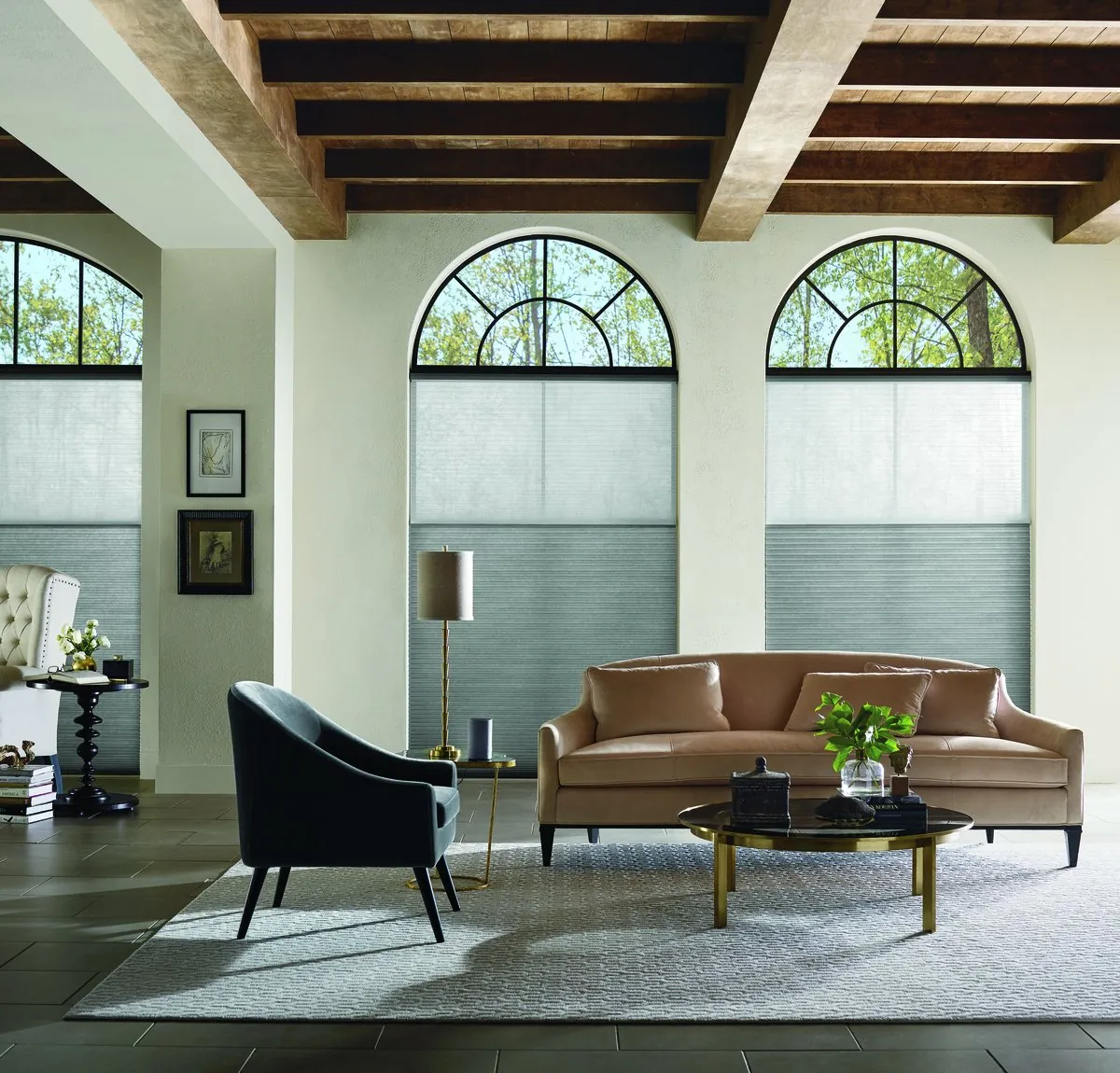
Honeycomb shades for rooms that lose warmth at the window.
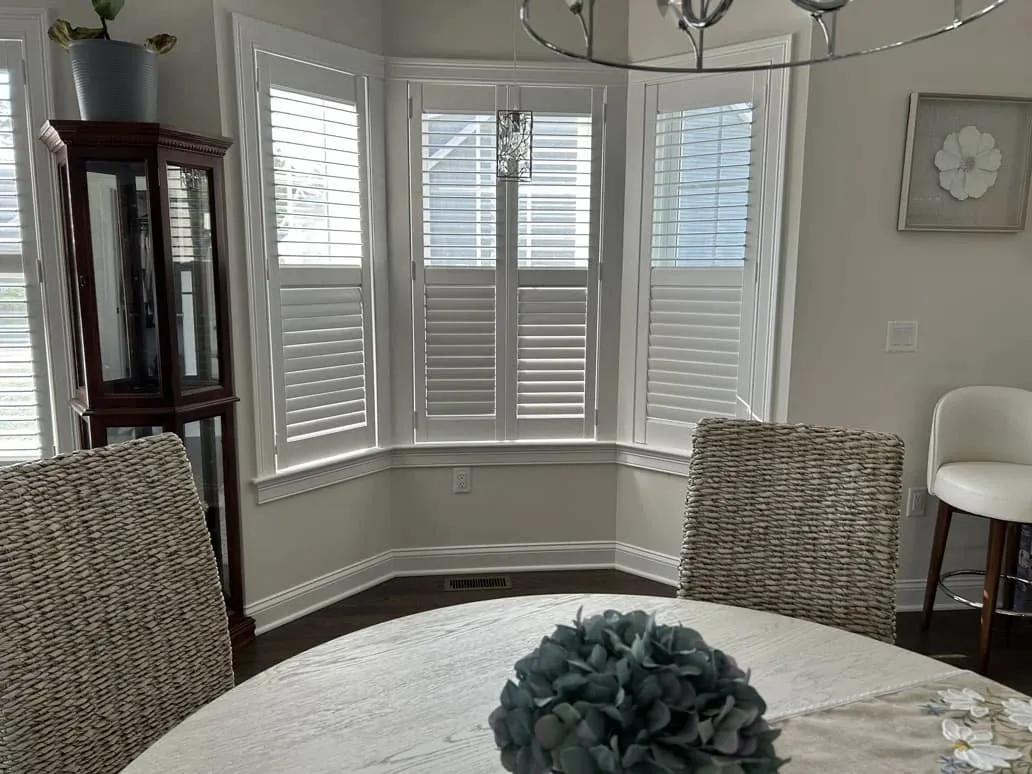
Plantation shutters
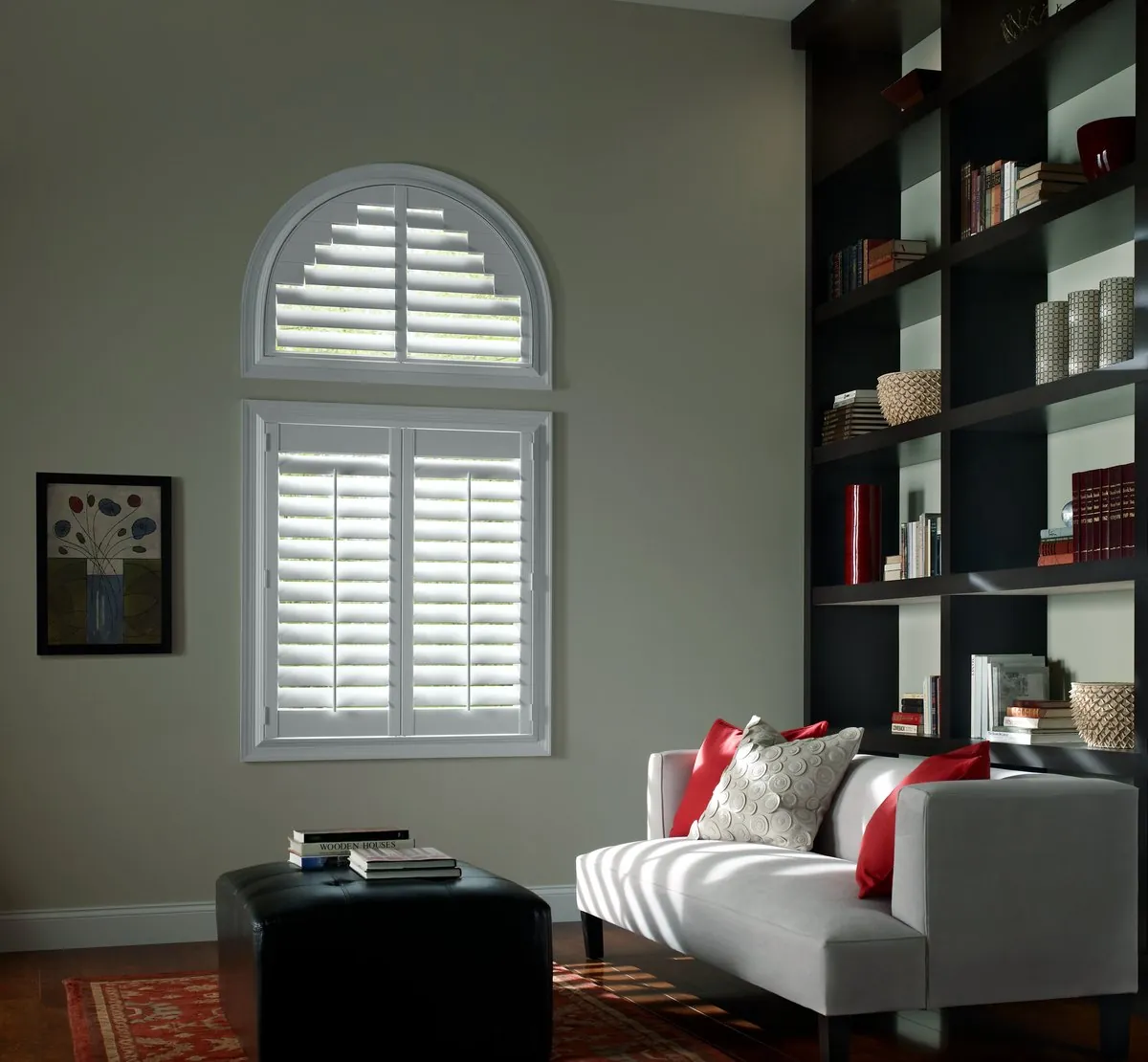
Palm Beach, NewStyle and Heritance, made to the opening.
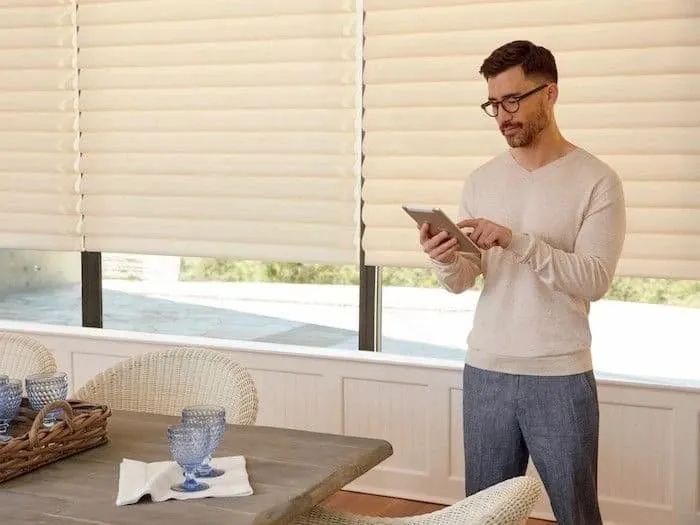
Motorized shades
PowerView control for high glass and busy rooms.
After the visit
With the estimate in hand, you set the pace. Some homeowners go ahead with every window at once; others start with the glaring bay or the cold bedroom and come back for the rest later. There is no deadline from our side. When you give the word, your shades, blinds or shutters are built by Hunter Douglas to the sizes we recorded, and certified Hunter Douglas installation puts them up. Our guide to what happens on installation day covers that last step.
If you want more help with color and fabric across several rooms, ask about our interior design consultations. For an overview of the visit itself, see our in-home consultations page.
Why the visit is worth having
Because we are a Hunter Douglas Gallery dealer, the van holds choices from right across the Hunter Douglas range rather than one favored product. When a front parlor calls for shutters and the back bedroom for a honeycomb shade, both can be shown on the same afternoon.
Estimates cost nothing. The sizes we take are the sizes the order is built to, and certified Hunter Douglas installation fits it. Later on, if a shade needs a repair or you decide to add automation, you already know who to ask.
Questions about the visit
Do I have to buy anything?
No. You get a free estimate and decide in your own time. Nothing is ordered until you say so.
Should everyone in the house be there?
It helps if whoever will make the decision can be there, especially for color, since that is the part that is hardest to describe afterward.
Can you look at just one window?
Yes. What happens at an in-home consultation is the same for one window as for twenty: we look, show samples, measure and give an estimate.
Do you bring samples of everything?
Our vans carry Hunter Douglas samples across shades, blinds and shutters, so most choices can be made at your windows. If something specific is needed, we will tell you.
What if I am still unsure after the visit?
That is normal. Ask us anything, look at the samples again or visit a showroom. See also our guide to window measuring terms for the words you may hear.
Your next step
If you are ready to see what happens at an in-home consultation for yourself, request a consultation and tell us which rooms you have in mind. You can also visit the North Dartmouth showroom first, or use the call button at the top of this page to reach it.