
Tiny cottage windows beside modern additions
Centerville packs a lot of house history into a small area. Older village houses line Main Street, with their tall sash and painted trim. Down toward the beach, Craigville’s cottages sit shoulder to shoulder, many of them with original windows barely bigger than a picture frame. Inland, post-war ranches fill the quieter lots with wide, low windows. And all through the neighborhood, those older houses have been extended with modern rooms and big new glass.
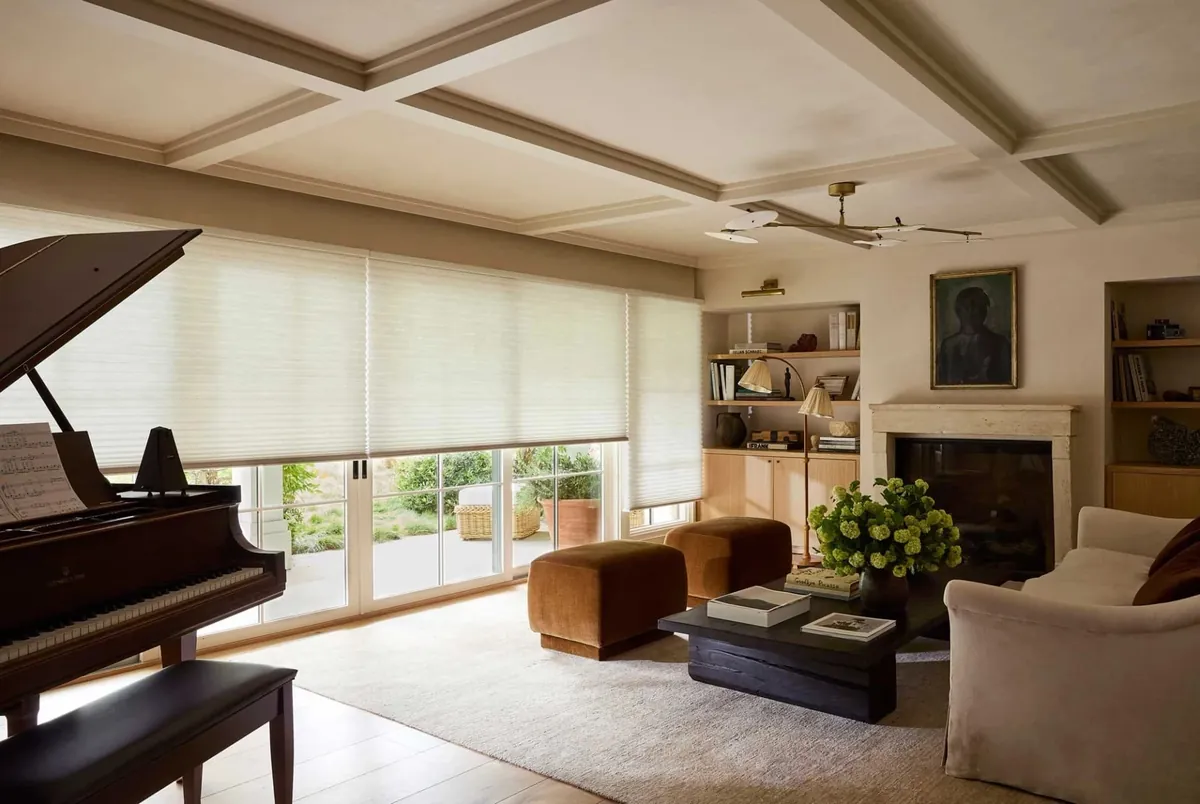
That mix is what makes cellular shades in Centerville, MA, an interesting job. A single house might need a shade for a cottage window a little over a foot wide and another for a family-room slider in the addition next door. Honeycomb shades are one of the few window coverings that can be made for both and still look like they belong together.
They also make the rooms warmer. A honeycomb shade is built from pleated fabric folded into a row of pockets, and when the shade is lowered the air in those pockets has nowhere to go. That quiet layer of air slows the chill from the glass, which is welcome in a cottage first built for summer and now kept open through the winter.
What we can make for a Centerville house
Each of these travels in our sample cases, so you can compare them in your own rooms.
Small and narrow sizes
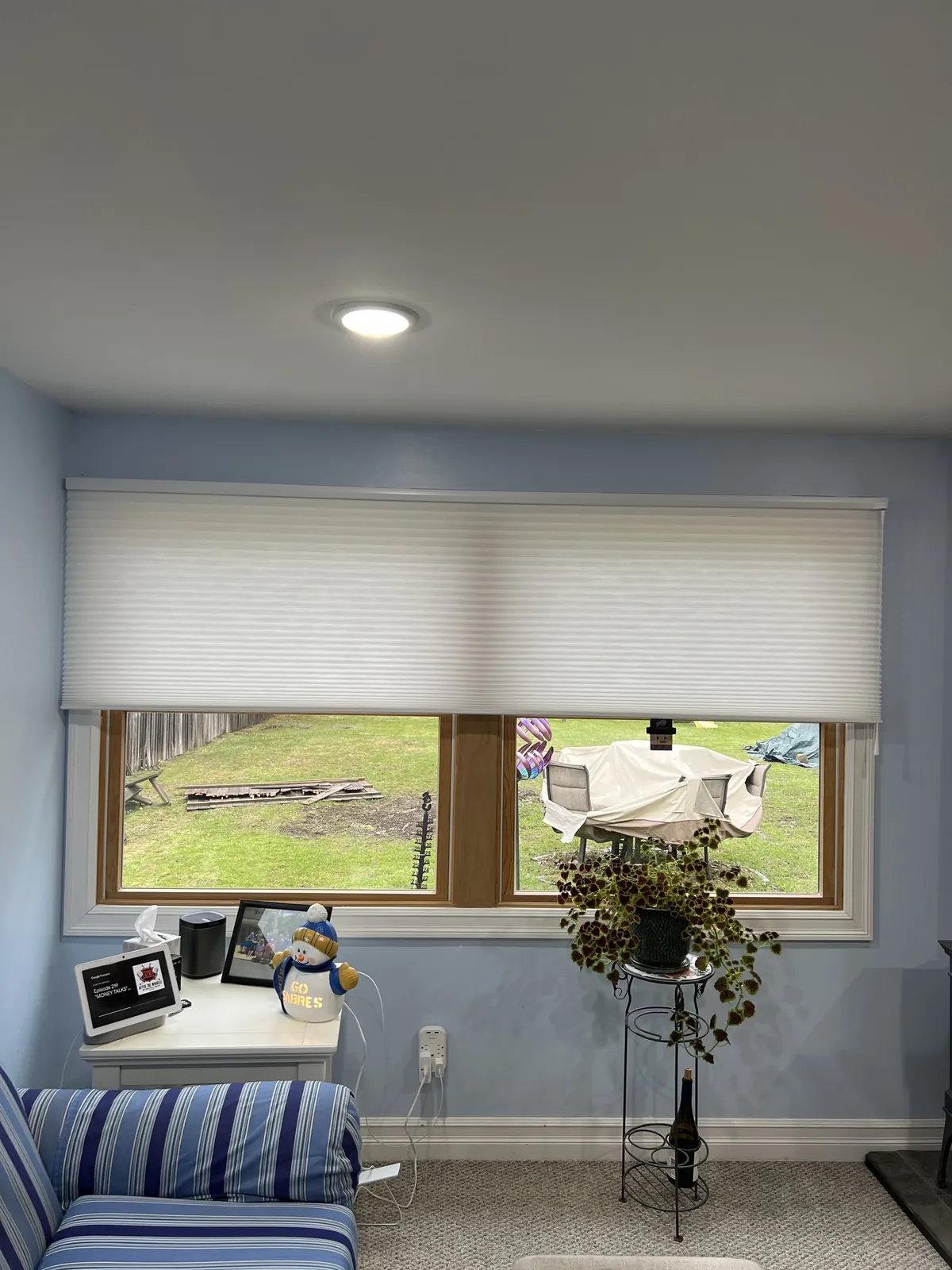
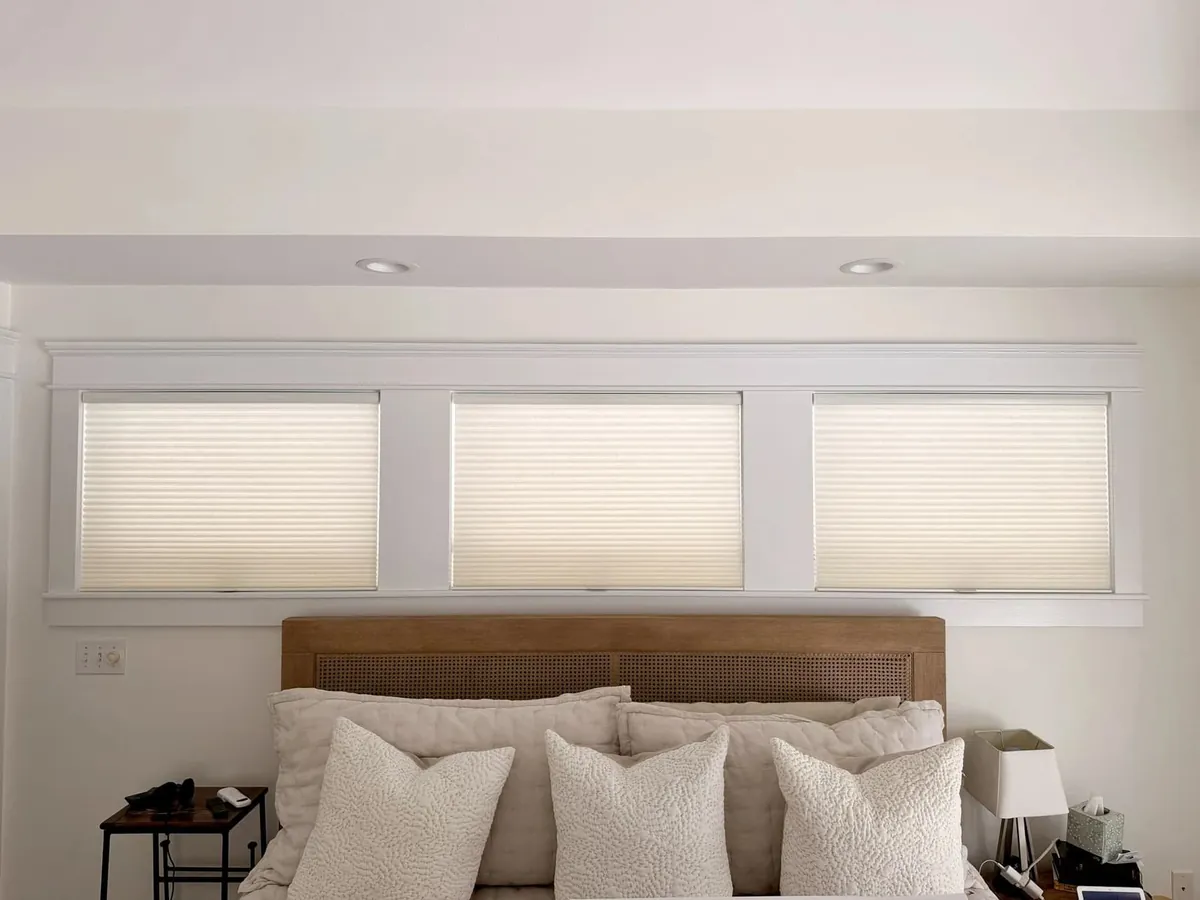
Honeycomb shades made for the smallest cottage openings, so even a tiny bathroom window gets the same fabric as the rest of the house.
Top-down for close neighbors
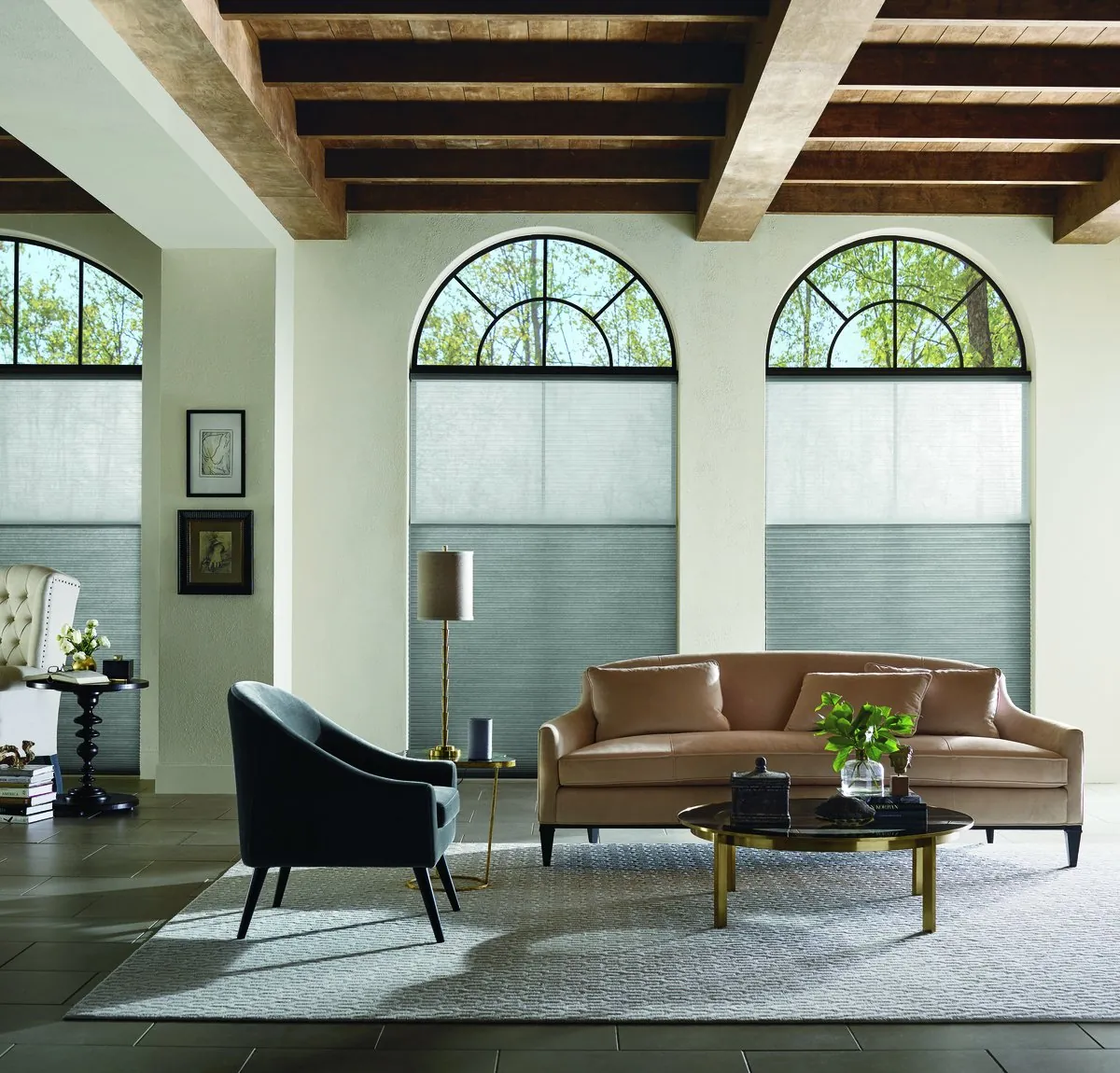
Lower the shade from the head of the window for daylight and sky, and keep the bottom closed toward the cottage next door.
PowerView for the addition
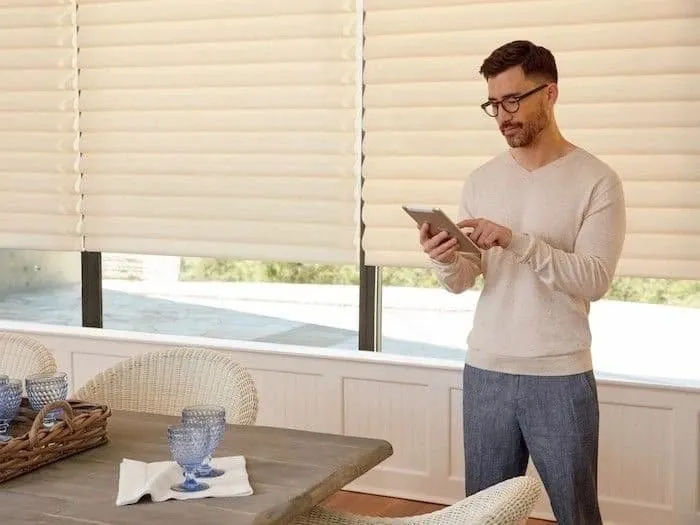
Motorized control for the tall new windows in an addition, from a tablet, a phone or a remote.
Craigville’s close-set beach cottages
Craigville’s cottages were built close together and close to the sand, for long summer days when windows stood open and nobody worried about privacy or heat. Many are still small, with a living room, a couple of bedrooms and a porch, and many still have the original windows: small, low, sometimes only one or two panes.
Today plenty of them are lived in well beyond summer, and the original windows show their age as soon as the weather turns. A small room means the glass is never more than a step or two from where you sit, so a cold pane is something you feel. A double-cell honeycomb, with two layers of air pockets instead of one, puts the most insulation into the slimmest shade, which suits a small window in a small room.
Privacy is the other everyday issue. With the next cottage a few steps away, a side window can look straight into a neighbor’s kitchen. A top-down shade lets you lower the top for light and keep the bottom closed. A light-filtering fabric keeps the room bright by day and screened at night, because it glows with lamplight rather than showing what is inside.
Beach sand and damp sea air are hard on anything with exposed cords and pulleys. A honeycomb shade keeps its mechanism up out of the way, inside the headrail, and a cordless lift does away with dangling cords entirely. In a cottage where the windows are opened every summer day, that keeps things simple.
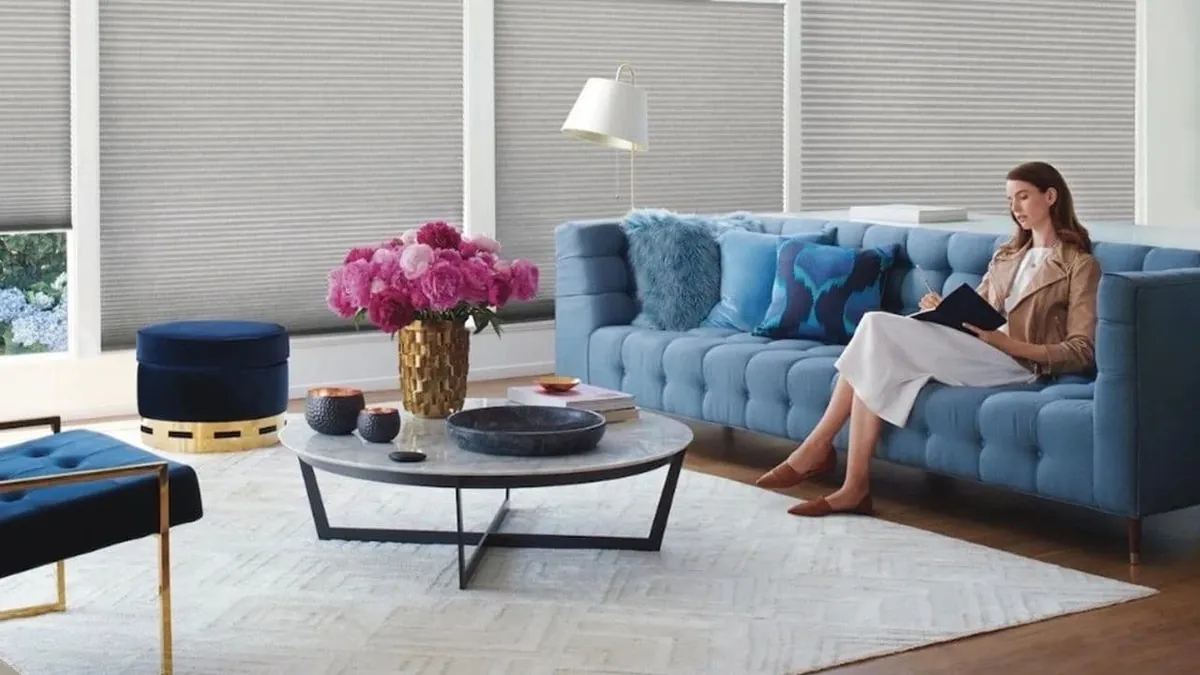
Matching a tiny original window to a big new one
The most common Centerville request we hear is some version of this: the old part of the house has small original windows, the new part has big modern ones, and you want the whole house to look finished. It is a fair challenge, because most window coverings look odd when stretched across very different sizes.
Honeycomb shades handle it well because every one is made to measure. A narrow cottage window and a wide picture window in the addition can share the same fabric and color, and when both are lowered they read as a set. Where the frames allow, we line up the bottom rails at a common height across a room so that windows of different sizes still form one line.
The additions themselves often bring their own puzzles: angled tops under a cathedral ceiling, a transom over French doors, a slider onto a new deck. Duette covers those with specialty shapes and a vertical version that draws sideways across a slider, so the new rooms get the same honeycomb as the old ones.
Light is the other difference between old and new. The original rooms tend to be dim, with small windows and deep porches, so a pale light-filtering fabric keeps them as bright as possible. The additions often have big south-facing glass, so they may need a heavier fabric or a double cell to deal with afternoon sun. Planning cellular shades in Centerville, MA, room by room lets each space have what it needs while the outside of the house stays even.
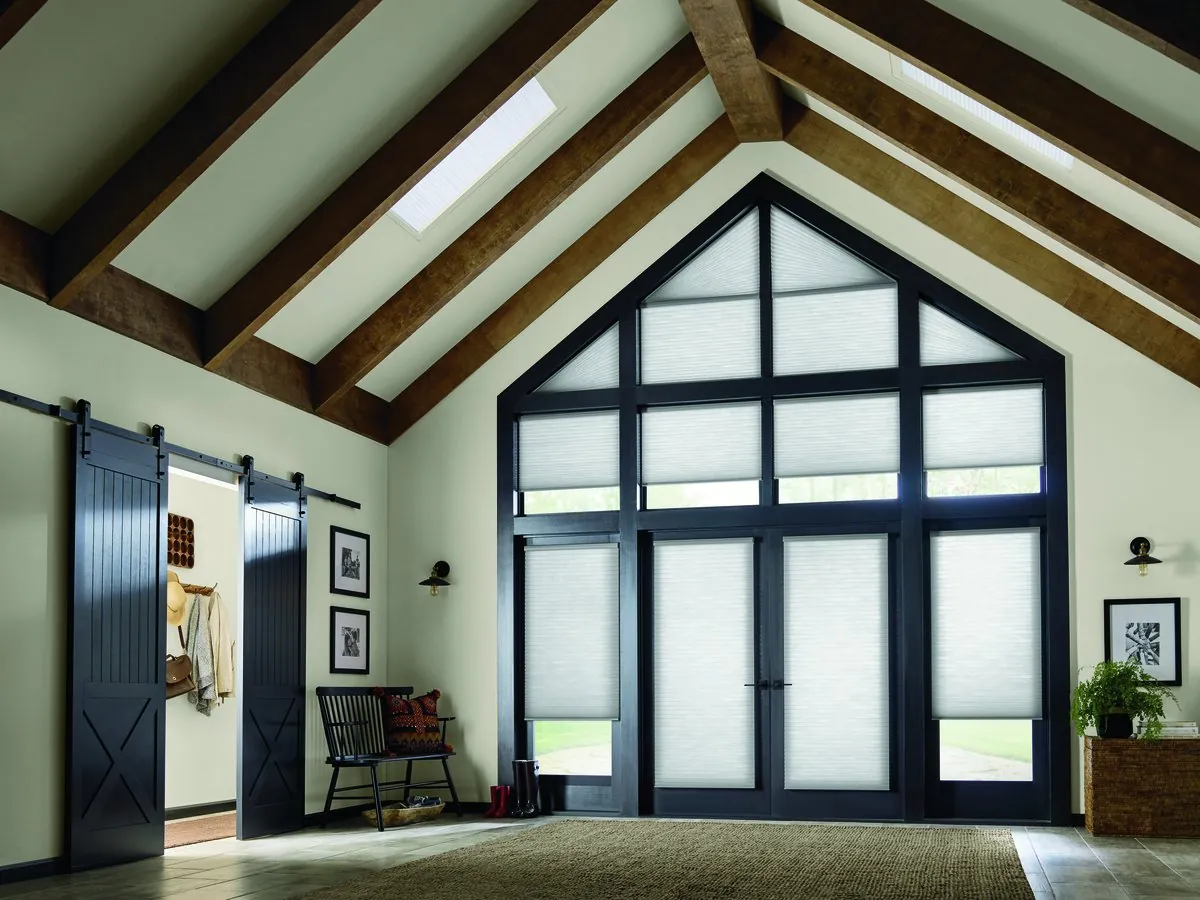
Porches that became rooms
One of the most common additions on a Centerville cottage is the porch that was closed in. What used to be an open veranda with a view down the street becomes a sunroom, a dining area or an extra bedroom, wrapped on three sides by a long run of windows. These rooms are lovely in May and September and difficult at either end of the year: cold in January because there is glass on every side, and hot in July for the same reason.
A long run of windows like that is a good fit for cellular shades in Centerville, MA. Each window can have its own shade, all made in one fabric and lowered to the same line, so the room looks unified rather than patched together. A double-cell fabric holds back the cold on winter evenings, and in summer a light-filtering fabric takes the glare off the afternoon sun while the room stays bright.
Converted porches often have windows set at slightly different heights, or a slope in the floor and ceiling from when the porch was built to shed rain. We measure each window on its own and account for that when we line up the bottom rails. With cellular shades in Centerville, MA, fitted this way, a room that was once usable only in the shoulder seasons can become a room you sit in all year.
Older village houses along Main Street
The houses along Main Street are some of the oldest in the village. Many have tall double-hung windows with original casings, and some still have old glass with a faint ripple in it. They tend to sit fairly close to the street, so front rooms are on view to anyone passing.
A honeycomb shade mounted inside the frame leaves the casing on show and stacks into a slim band when it is raised. Old frames are seldom perfectly square, though, and sash weights and stops can crowd the space a headrail needs. We measure each window at several points across and down, and check the depth along the head, before we recommend a mount. Where the frame is too shallow, a slim headrail on the face of the casing is the tidy alternative.
For the front rooms, a white or neutral backing on the street side keeps the house looking calm from the road, while the room side takes the color you want. Duette and Applause both allow different colors on each face, which is useful on a house where the front windows are seen by everyone walking down Main Street.
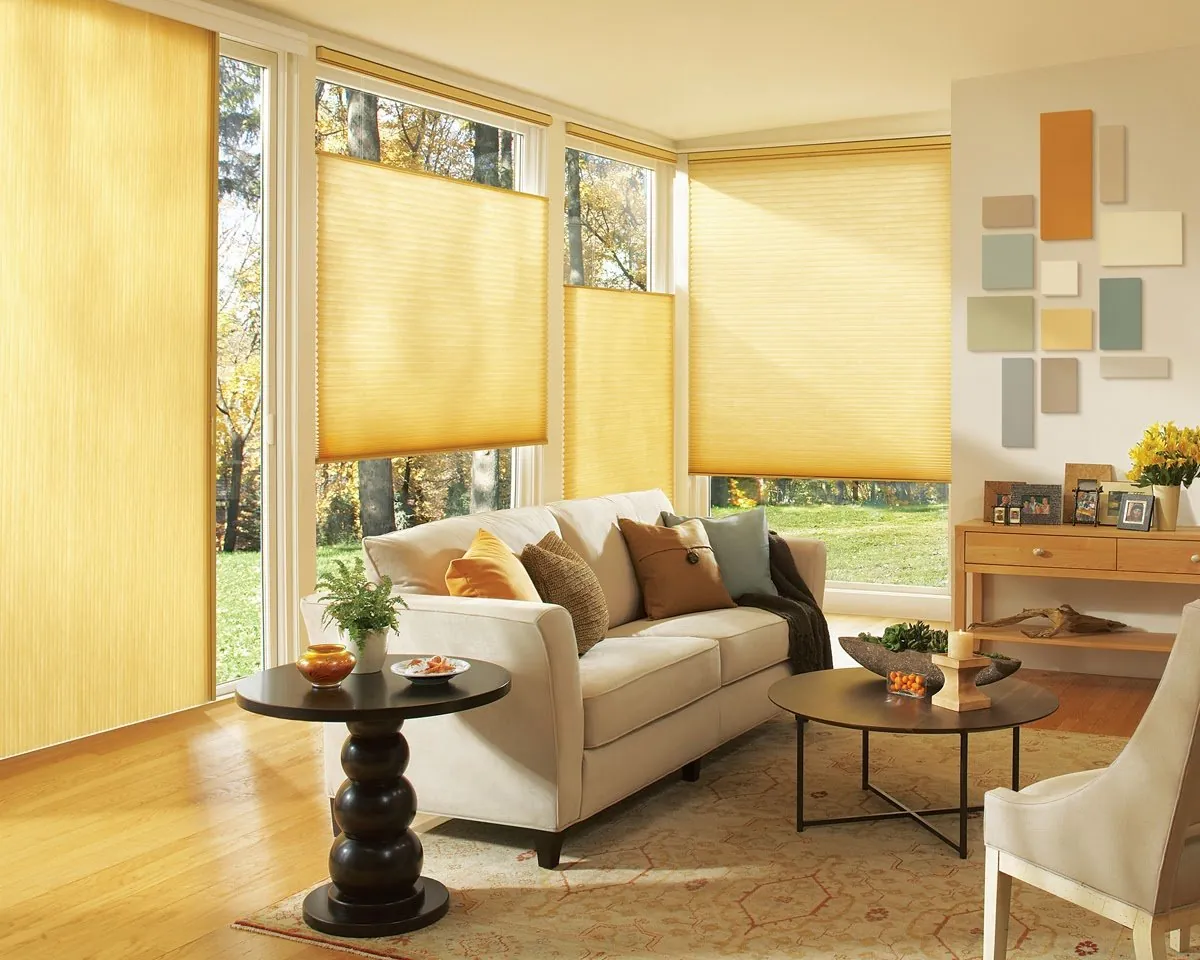
Post-war ranches on the inland lots
Away from the water, the inland lots are filled with post-war ranches: one-story houses with a picture window at the front, wide horizontal windows in the bedrooms and, often, a slider to the back yard. The windows are simple and regular, which makes for a clean, consistent fit.
Ranches lose a lot of heat through that big front window in the winter and gain a lot of heat through it in the summer. A honeycomb shade helps with both. For a picture window wider than a single shade, we can split it into two or three shades on one headrail that move together, or set them to move separately so you can have light at one end and privacy at the other.
Bedrooms in a ranch are usually on the same level as the street or the yard, so privacy and early light both matter. A room-darkening honeycomb keeps a bedroom dim until you choose to raise it, while a light-filtering fabric suits the living room and kitchen. The slider to the yard can take a vertical honeycomb that stacks neatly to one side.
Keeping a summer cottage warm through the winter
A cottage built for summer and now kept open all year has a hard time when the wind comes off the sound. Thin walls, old frames and single glass all let warmth slip away. Cellular shades in Centerville, MA, cannot change the walls, but they make a real difference at the windows, which is where a small cottage loses much of its heat.
Here is why. When the shade is lowered, each pleated pocket traps a band of air that stays still. Heat moves easily through moving air and slowly through still air, so the trapped layer acts as a buffer between the cold glass and the warm room. A double-cell fabric doubles that buffer. Lowering the shades at dusk, when the temperature drops, keeps the room noticeably cosier through the evening.
In summer the same buffer slows the sun’s warmth on its way in, which helps the bright rooms in an addition stay comfortable through the afternoon.
You can fine-tune each shade at the consultation:
- Choose single or double cell, depending on how cold the room gets.
- Choose the fabric weight, from sheer to room-darkening.
- Choose an inside mount where the frame allows, for the snuggest fit at the edges.
- Choose a lift: cordless, top-down or PowerView.
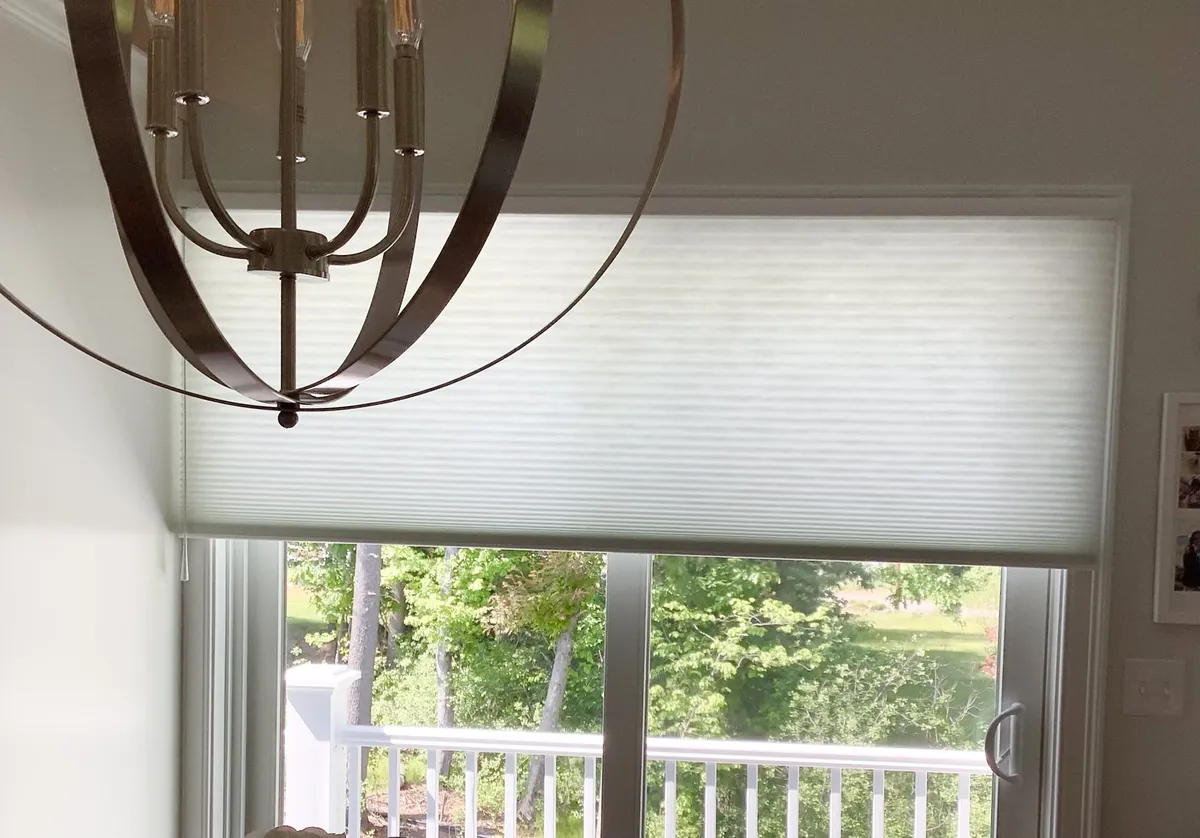
Picking a lift for each window
Cottage windows are often awkward. A window behind a kitchen sink, a tiny one high in a bathroom, a gable window above a staircase: each needs a lift that suits where it is.
- Cordless suits most windows. Push the bottom rail up or pull it down, with no cord hanging at the side.
- Top-down, bottom-up gives you two rails, so light can come in at the top while the bottom stays covered. Ideal for bathrooms and rooms that face a neighbor.
- PowerView motorization suits the high windows in an addition and anywhere you would like the shades on a schedule. We work out at the visit how each motor will be powered.
Many Centerville houses end up with a mix: cordless in the cottage rooms, top-down on the side windows, and motors only on the high glass in the addition.
Duette, Applause or both
Both are Hunter Douglas honeycomb shades, and both use air-filled cells to keep a room comfortable. Duette offers the widest choice, including the very small and very large sizes, specialty shapes for arches and angles, and a vertical shade for sliders. Applause is a separate collection with its own fabrics and textures that suits standard windows well.
In a Centerville house with an old core and a new addition, Duette often covers the odd shapes and the slider, while Applause handles the regular windows. Matching colors keep the outside consistent. See our Duette honeycomb shades and Applause honeycomb shades pages for more on each, or the cellular shades page for the full range.
A consultation at your house
Seeing a fabric in your own light, against your own trim, is worth more than any catalog. Our vans carry the samples, so we can bring the showroom to you.
- Book through Request a Consultation or ring us with the call button.
- We bring honeycomb samples in many colors and weights, single and double cell, plus the lift options.
- We look at each room with you: the old cottage windows, the addition, and any rooms that are too cold, too bright or too exposed.
- You hold the samples up to each window and see how they change the room.
- We measure everything, from the smallest original opening to the widest new slider.
- A free estimate follows, and you decide when you are ready.
- Once the shades are made, certified Hunter Douglas installers put them up, check each one and show you how they work.
If you want help with color and fabric across the whole room, our interior design consultations can be part of the same visit. Read more about what happens at an in-home consultation before we arrive.
One dealer for the old part and the new
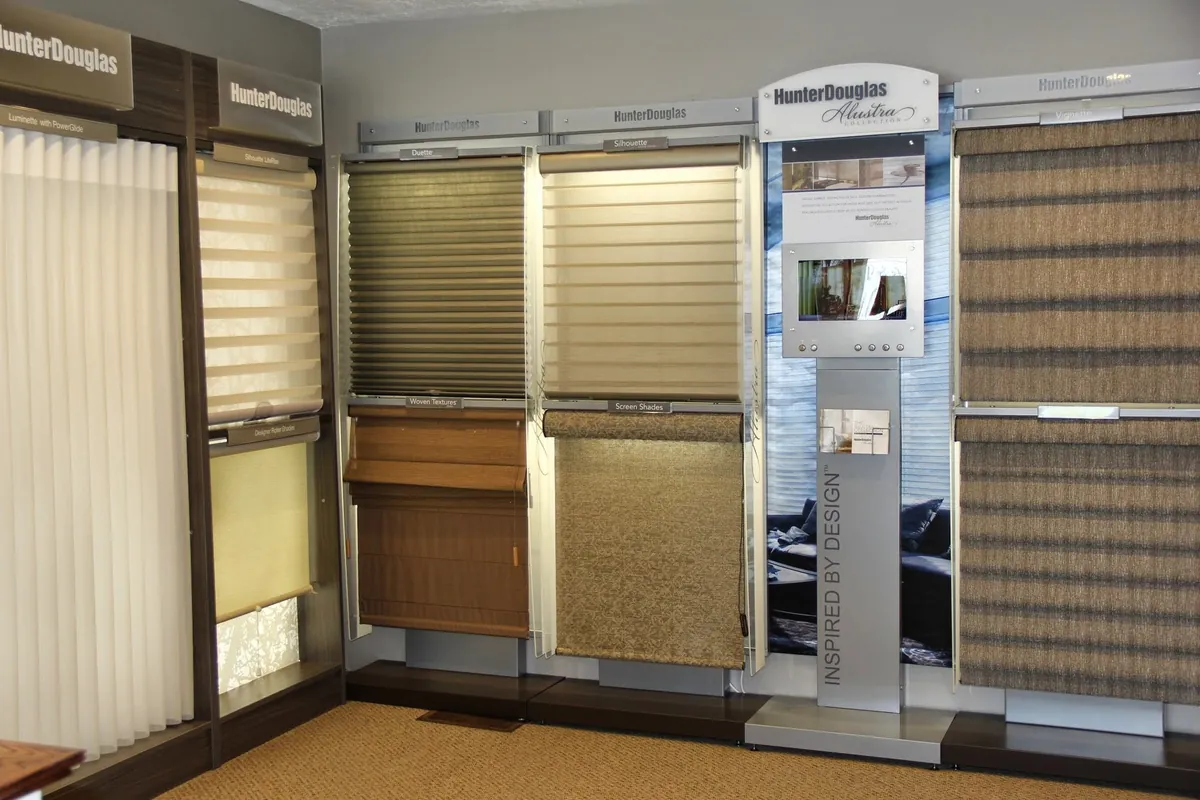
Blinds & Designs holds Hunter Douglas Gallery dealer status, which Hunter Douglas grants only to dealers who meet its standards. For a house that mixes a tiny cottage with a modern addition, that means every size, shape and fabric in the honeycomb range is available from one place.
Hunter Douglas certification covers the people who fit our shades, and we also mend blinds and shades when they wear out or break. Our Hunter Douglas dealer page for Centerville tells you more.
If other rooms need something different, look at plantation shutters in Centerville for a Main Street front room or roller shades in Centerville for a screened porch. Our Centerville page covers everything we do in the village.
See them first at Sagamore
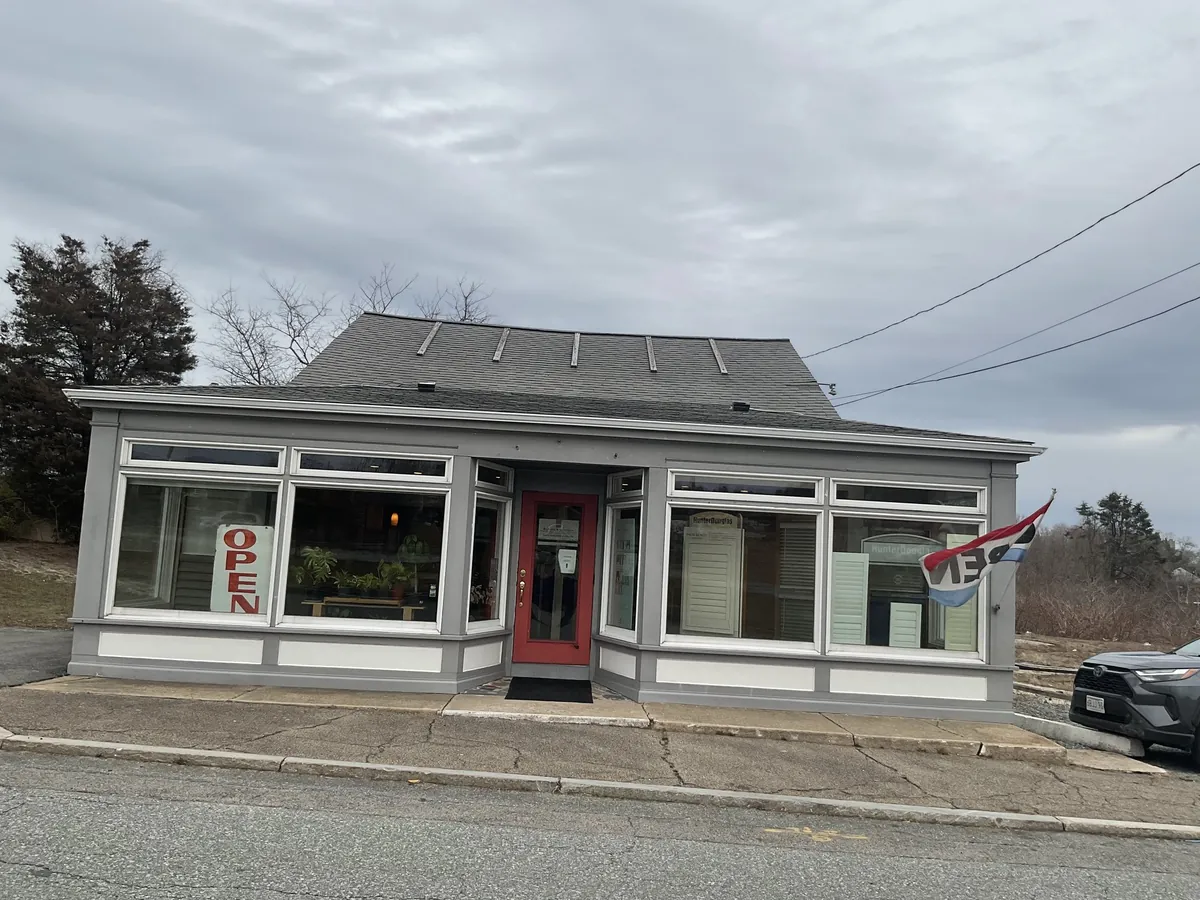
Most Centerville customers do all their choosing at home, which is the right place to match a tiny cottage window to a big new one. Even so, some like to see the shades in person before booking a visit.
For that, the Sagamore showroom is the closest to Centerville. A few photos of the rooms and rough window sizes help us point you to the right samples.
Questions from Centerville
Can you make a honeycomb shade for a very small cottage window?
Yes. Honeycomb shades can be made in very small and very narrow sizes, so even a tiny original cottage window or a little bathroom window can have the same fabric as the rest of the house.
How do I make old and new windows look like they belong together?
Use the same fabric and color throughout, and line the bottom rails up where the frames allow. Because every shade is made to measure, windows of very different sizes still read as a set.
Do honeycomb shades help a summer cottage I now live in all year?
They help a great deal at the windows. Each pocket of the shade traps still air that slows heat loss through old glass, and a double-cell fabric adds a second layer.
My bedroom window faces the cottage next door. What do you suggest?
A top-down shade in a light-filtering fabric lets light in at the top while the lower window stays covered. For a bedroom you want dark in the morning, choose a room-darkening fabric.
Do you charge for the estimate?
No. We measure at the visit and give you a free estimate for the shades you are considering.
Your windows are the best showroom
Old cottage glass, a Main Street sash or a new slider all look different with a honeycomb shade in front of them, and the only way to know is to try it. Request a consultation and we will bring the samples to your house, measure every window and leave you with a free estimate. The call button reaches us if you have a question first, and the Sagamore showroom is there if you would like to look in person.